

The DOI matches its Crossref record; 28 of the 28 references it cites were found in a registry or an index.
Proteins Homologous to p47 and p67 Support Superoxide Production by NAD(P)H Oxidase 1 in Colon Epithelial Cells
Open accessAbstract
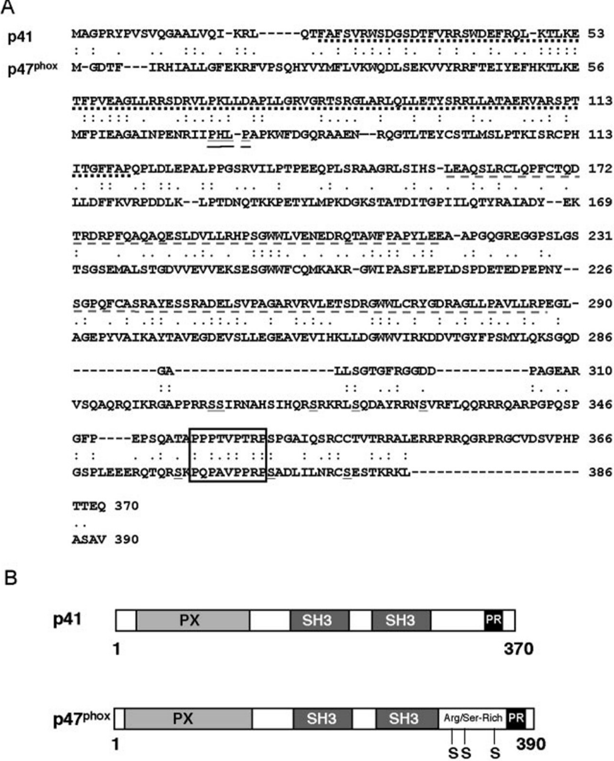
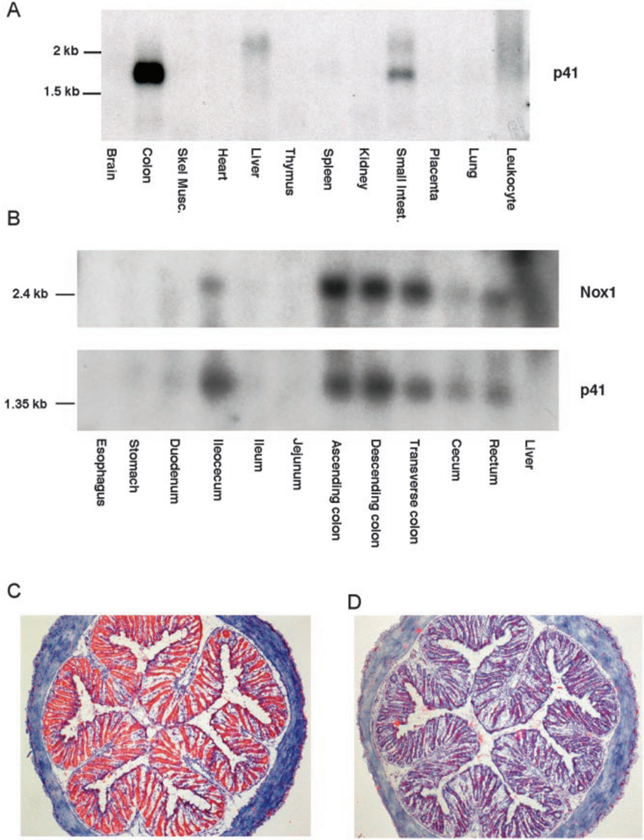
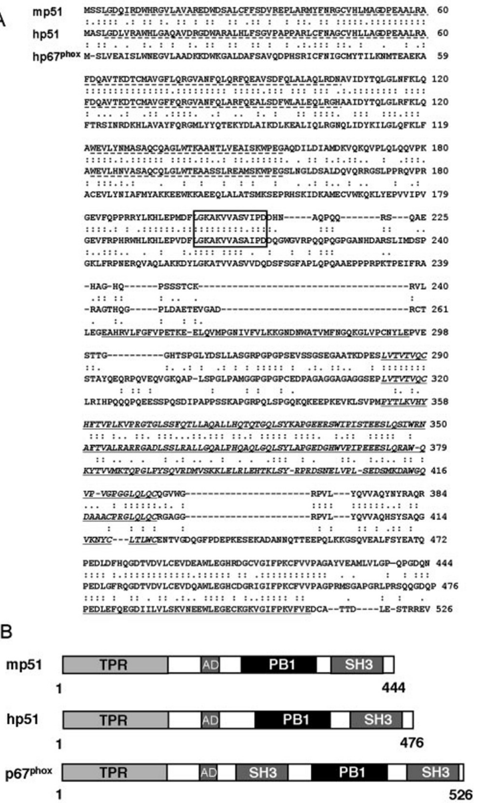
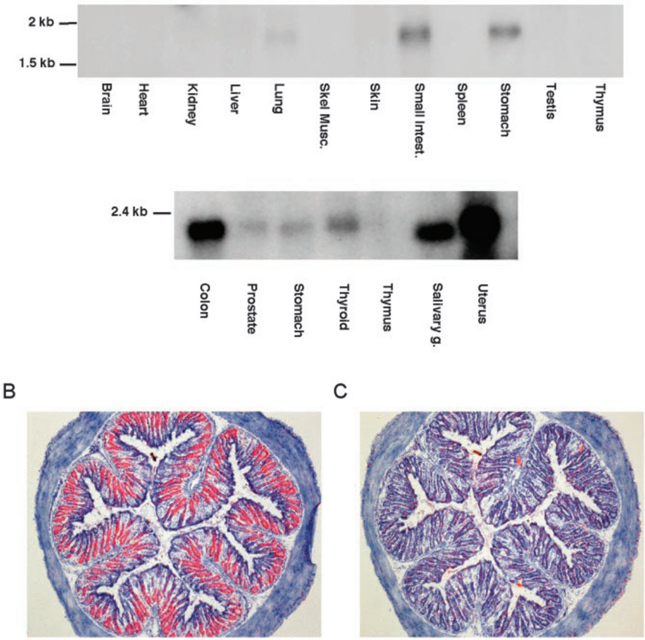
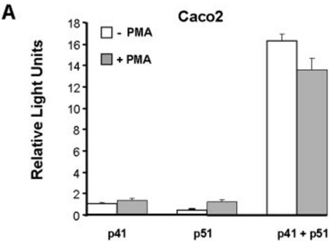
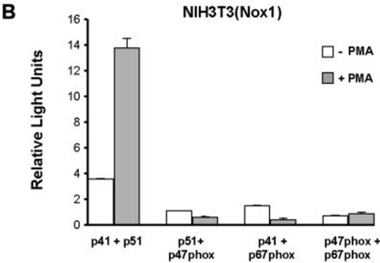
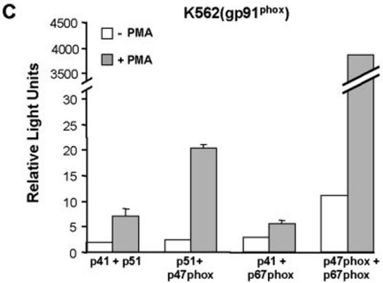
Superoxide production by phagocytes involves activation of a multi-component NADPH oxidase. Recently, several homologues of the catalytic component of the phagocyte oxidase, gp91phox, were identified in various tissues. Here we describe two proteins, p41 and p51, with significant homology to two cytosolic components of the phagocytic oxidase, p47phox and p67phox. Like p47phox, p41 contains an amino-terminal Phox homology domain, two SH3 domains, and a conserved carboxyl-terminal, proline-rich motif. Similarly, p51 is homologous to p67phox, containing four amino-terminal tetratrico-peptide repeats, a conserved "activation domain" motif, a PB1 domain, and a carboxyl-terminal SH3 domain. The highest levels of p41 transcript are detected in the colon and in other gastrointestinal tissues that express Nox1, the predominant gp91phox homologue in these tissues. In contrast, the p51 transcript showed a more widespread expression pattern, suggesting that it may support other tissue-specific oxidases. Mouse colon in situ hybridization detected both transcripts in the epithelial cells of colon crypts. Heterologous co-expression of p41 and p51 significantly enhances the superoxide-generating activity of Nox1-expressing cells; thus, p41 and p51 appear to be novel regulators of Nox1. These proteins also support the activity of gp91phox, albeit at much lower levels than the cytosolic phox counterparts. Our results suggest colon epithelial cells contain a multi-component NAD(P)H oxidase with a molecular architecture similar to the phagocytic oxidase.
Overview
The claims and statistics of this paper haven’t been checked yet.
Run the check — free, no account needed. It reads the open-access text and checks the sources it cites.
Integrity signals
Registry
Cites
Statistics
Figures
Verification
Claims the paper makes
The claims and statistics of this paper haven’t been checked yet.
Run the check — free, no account needed. It reads the open-access text and checks the sources it cites.
Claims other papers make about this one
Each is checked against this paper’s own text: does it say what the citing paper says it does?
In the citing paper
“NOX1 activation requires p22phox, NOX-organizer 1 (NOXO1), NOX-activator 1 (NOXA1), and the GTPase Rac1 (24, 108, 348).”
From Sources of Vascular Nitric Oxide and Reactive Oxygen Species and Their Regulation (2019) · cites this paper as [348]
Self-check
Percentages, sums and reported differences re-computed from the paper’s own numbers.
The self-check needs the paper’s full text.
Citations
Cites
Cell transformation by the superoxide-generating oxidase Mox1
Suh, Y.-A., Arnold, R. S., Lassegue, B., Shi, J., Xu, X., Sorescu, D., Chung, A. B., Griendling, K. K., & Lambeth, J. D. (1999) · Nature · doi:10.1038/43459 · Cited by 1,480
Genetic, Biochemical, and Clinical Features of Chronic Granulomatous Disease
Segal, B. H., Leto, T. L., Gallin, J. I., Malech, H. L., & Holland, S. M. (2000) · Medicine · doi:10.1097/00005792-200005000-00004 · Cited by 887
Self-citationIdentification of Renox, an NAD(P)H oxidase in kidney
Geiszt, M., Kopp, J. B., Várnai, P., & Leto, T. L. (2000) · Proceedings of the National Academy of Sciences · doi:10.1073/pnas.130135897 · Cited by 840
Self-citationCloning of Two Human Thyroid cDNAs Encoding New Members of the NADPH Oxidase Family
Deken, X. D., Wang, D., Many, M., Costagliola, S., Libert, F., Vassart, G., Dumont, J. E., & Miot, F. (2000) · Journal of Biological Chemistry · doi:10.1074/jbc.m000916200 · Cited by 639
A Ca2+-activated NADPH Oxidase in Testis, Spleen, and Lymph Nodes
Bánfi, B., Molnár, G., Maturana, A., Steger, K., Hegedûs, B., Demaurex, N., & Krause, K.-H. (2001) · Journal of Biological Chemistry · doi:10.1074/jbc.m103034200 · Cited by 622
Inflammation: Basic Principles and Clinical Correlates
Ehrlich, G. E. (2000) · JAMA · doi:10.1001/jama.283.1.123 · Cited by 621
A Novel Superoxide-producing NAD(P)H Oxidase in Kidney
Shiose, A., Kuroda, J., Tsuruya, K., Hirai, M., Hirakata, H., Naito, S., Hattori, M., Sakaki, Y., & Sumimoto, H. (2001) · Journal of Biological Chemistry · doi:10.1074/jbc.m007597200 · Cited by 517
Two Novel Proteins Activate Superoxide Generation by the NADPH Oxidase NOX1
Bánfi, B., Clark, R. A., Steger, K., & Krause, K.-H. (2003) · Journal of Biological Chemistry · doi:10.1074/jbc.c200613200 · Cited by 491
Hydrogen peroxide mediates the cell growth and transformation caused by the mitogenic oxidase Nox1
Arnold, R. S., Shi, J., Murad, E., Whalen, A. M., Sun, C. Q., Polavarapu, R., Parthasarathy, S., Petros, J. A., & Lambeth, J. D. (2001) · Proceedings of the National Academy of Sciences · doi:10.1073/pnas.101505898 · Cited by 486
Purification of a Novel Flavoprotein Involved in the Thyroid NADPH Oxidase
Dupuy, C., Ohayon, R., Valent, A., Noël‐Hudson, M., Dème, D., & Virion, A. (1999) · Journal of Biological Chemistry · doi:10.1074/jbc.274.52.37265 · Cited by 464
Research works printed but not linked: 1
- Teshima, 2000, Am. J. Physiol., 279, G1169
Cited by
Sorted by citations
The NOX Family of ROS-Generating NADPH Oxidases: Physiology and Pathophysiology
Bedard, K., & Krause, K.-H. (2007) · Physiological Reviews · doi:10.1152/physrev.00044.2005 · Cited by 6,989
NOX enzymes and the biology of reactive oxygen
Lambeth, J. D. (2004) · Nature Reviews Immunology · doi:10.1038/nri1312 · Cited by 3,125
NADPH oxidases: An overview from structure to innate immunity-associated pathologies
Panday, A., Sahoo, M. K., Osorio, D., & Batra, S. (2015) · Cellular & Molecular Immunology · doi:10.1038/cmi.2014.89 · Cited by 944
Functional analysis of Nox4 reveals unique characteristics compared to other NADPH oxidases
Martyn, K. D., Frederick, L. M., von Loehneysen, K., Dinauer, M. C., & Knaus, U. G. (2006) · Cellular Signalling · doi:10.1016/j.cellsig.2005.03.023 · Cited by 783
Biochemistry, Physiology, and Pathophysiology of NADPH Oxidases in the Cardiovascular System
Lassegue, B. P., Martín, A. S., & Griendling, K. K. (2012) · Circulation Research · doi:10.1161/circresaha.111.243972 · Cited by 780
Metadata
- Authors
- Geiszt, M., Lekstrom, K., Witta, J., & Leto, T. L.
- Affiliations
- Semmelweis University (HU)
- National Institutes of Health (US)
- Uniformed Services University of the Health Sciences (US)
- Corresponding author
- Leto, Thomas L.
- Venue
- Journal of Biological Chemistry
- Publisher
- Elsevier BV
- Published
- 2003-05
- Volume
- 278
- Issue
- 22
- Pages
- 20006-20012
- ISSN
- 0021-9258 (ISSN-L)
- OpenAlex
- W2022385815
- Cited by
- 280
- References
- 28
- Citations by year
- 2026: 1 · 2025: 4 · 2024: 3 · 2023: 5 · 2022: 7 · 2021: 2 · 2020: 5 · 2019: 10 · 2018: 5 · 2017: 5 · 2016: 3 · 2015: 4 · 2014: 11 · 2013: 10 · 2012: 15
- FWCI
- 10.24
- Type
- journal article
- Language
- en
- Open access
- hybrid
- doi.org
- Licence
- Locations
- Journal of Biological Chemistry (publishedVersion, cc-by)
- PubMed (publishedVersion)
- Topics
- Life Sciences › Immunology and Microbiology › Immunology › Neutrophil, Myeloperoxidase and Oxidative Mechanisms
- Life Sciences › Biochemistry, Genetics and Molecular Biology › Molecular Biology › Redox biology and oxidative stress
- Health Sciences › Medicine › Physiology (medical) › Nitric Oxide and Endothelin Effects
- Keywords
- NOX1, p41, p47phox, p67phox, superoxide production, colonic epithelial cells, gp91phox, phox homology domain, SH3 domain, PB1 domain, colonic crypts, gastrointestinal tissue
- MeSH terms
- Amino Acid Sequence, Animals, Colon, DNA-Binding Proteins, Epithelial Cells, Molecular Sequence Data, Phosphoproteins, RNA, Messenger, Superoxides, Transcription Factors, Trans-Activators, Genes, Tumor Suppressor, Sequence Homology, Amino Acid, In Situ Hybridization, NADPH Oxidases, Tumor Suppressor Proteins, Mice
About these checks
Registry, retraction, Cites and statistics results are computed, not judged, with one exception: a printed reference that no index lists is read once by a model before it counts as a citation error. Claims are extracted by a model and kept only when their quote appears verbatim in the text; each cited source is then checked, with a model’s help, for whether it says what the claim relies on. Those verdicts can be wrong — read the claim’s quote and the cited source before relying on one.
Statistics and arithmetic are recomputed, not judged.
Confidence bands are shown only for fields calibrated on our annotated test set. None is calibrated yet, so no band is shown.
What counts as a claim ›How we measure confidence ›How we check this ›
Are you an author, or do you see a problem with this page? Request a review
