

Functional Characterization of Rat Brain-specific Organic Anion Transporter (Oatp14) at the Blood-Brain Barrier
Open accessThe DOI matches its Crossref record; 38 of the 38 references it cites were found in a registry or an index.
Abstract
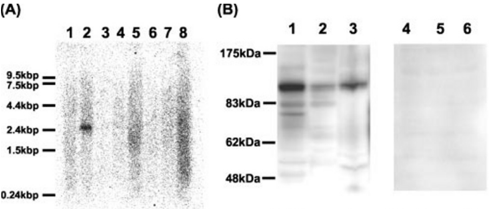
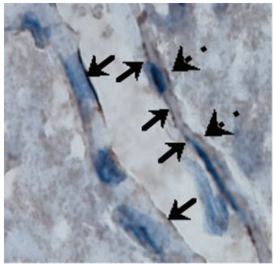
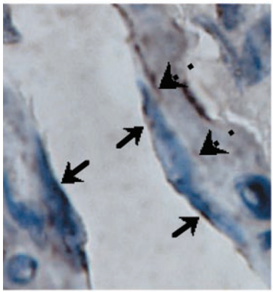
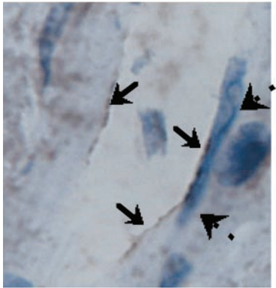
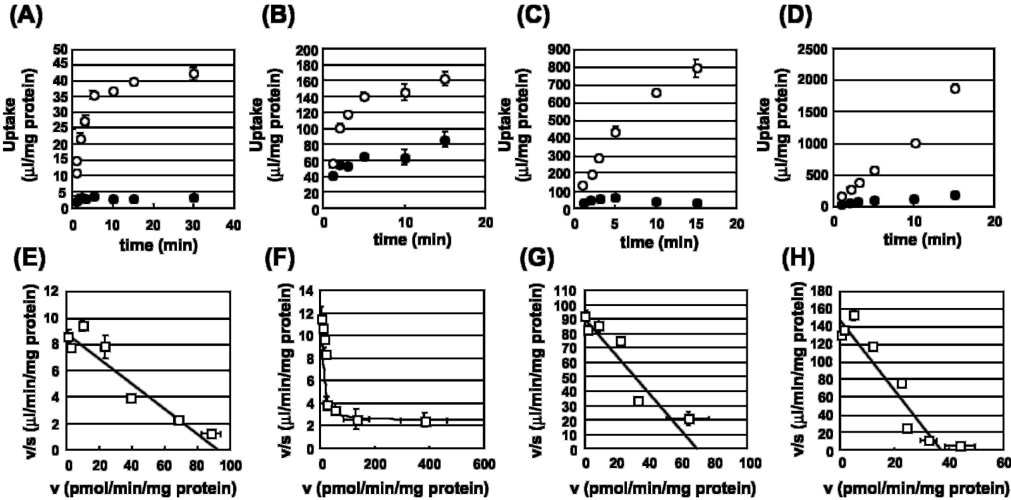
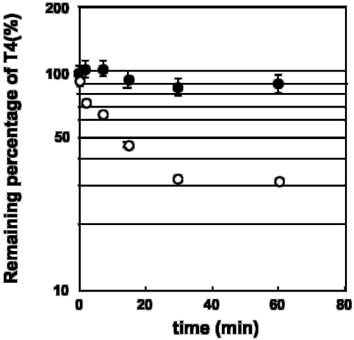
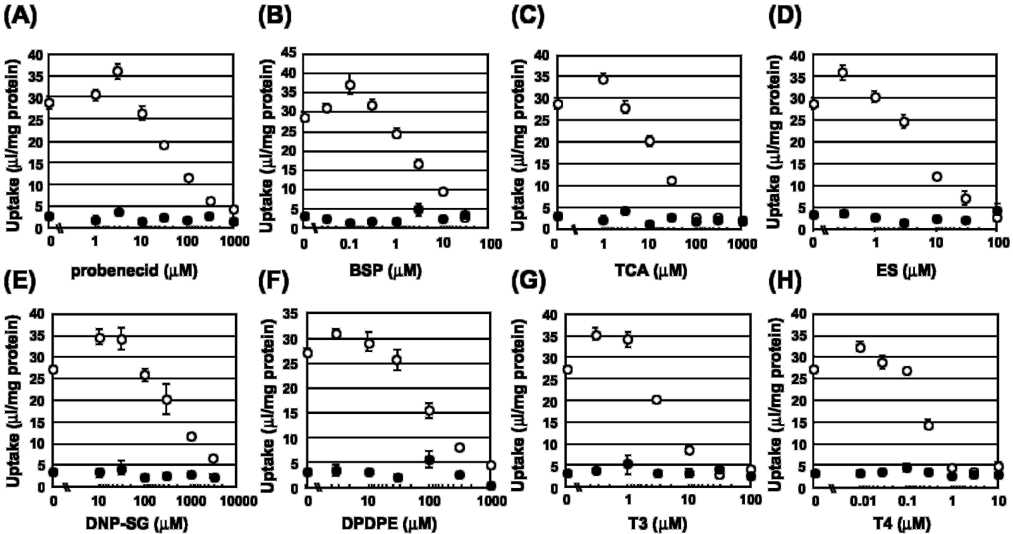
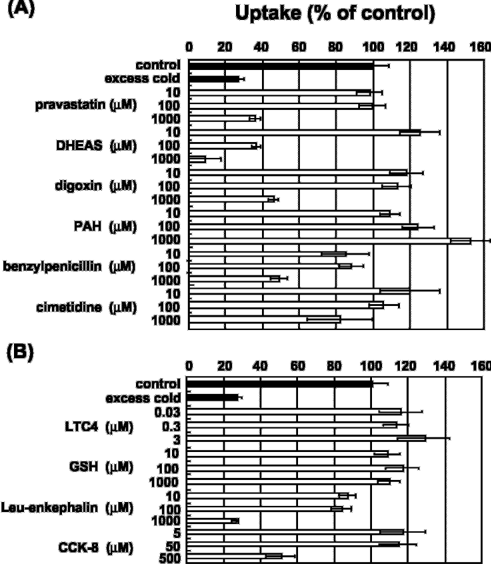
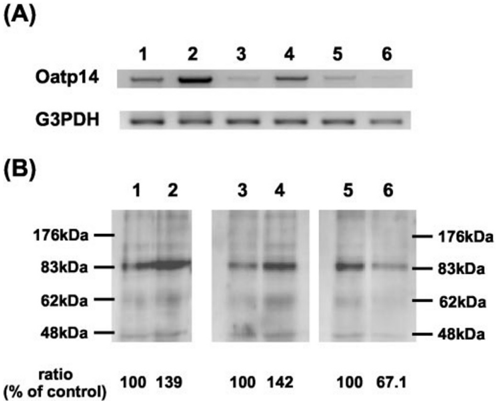
Oatp14/blood-brain barrier-specific anion transporter 1 (Slc21a14) is a novel member of the organic anion transporting polypeptide (Oatp/OATP) family. Northern blot analysis revealed predominant expression of Oatp14 in the brain, and Western blot analysis revealed its expression in the brain capillary and choroid plexus. Immunohistochemical staining indicated that Oatp14 is expressed in the border of the brain capillary endothelial cells. When expressed in human embryonic kidney 293 cells, Oatp14 transports thyroxine (T4; prothyroid hormone) (Km = 0.18 mum), as well as amphipathic organic anions such as 17beta estradiol-d-17beta-glucuronide (Km = 10 mum), cerivastatin (Km = 1.3 mum), and troglitazone sulfate (Km = 0.76 mum). The uptake of triiodothyronine (T3), an active form produced from T4, was significantly greater in Oatp14-expressed cells than in vector-transfected cells, but the transport activity for T3 was approximately 6-fold lower that for T4. The efflux of T4, preloaded into the cells, from Oatp14-expressed cells was more rapid than that from vector-transfected cells (0.032 versus 0.006 min-1). Therefore, Oatp14 can mediate a bidirectional transport of T4. Sulfobromophthalein, taurocholate, and estrone sulfate were potent inhibitors for Oatp14, whereas digoxin, p-aminohippurate, or leukotriene C4, or organic cations such as tetraetheylammonium or cimetidine had no effect. The expression levels of Oatp14 mRNA and protein were up- and down-regulated under hypo- and hyperthyroid conditions, respectively. Therefore, it may be speculated that Oatp14 plays a role in maintaining the concentration of T4 and, ultimately, T3 in the brain by transporting T4 from the circulating blood to the brain.
Overview
The claims and statistics of this paper haven’t been checked yet.
Free: it reads the open-access text and checks the first 5 claims that cite a source we can check. Create a free account to check every claim.
Integrity signals
Registry
Cites
Statistics
Figures
Verification
Claims the paper makes
The claims and statistics of this paper haven’t been checked yet.
Free: it reads the open-access text and checks the first 5 claims that cite a source we can check. Create a free account to check every claim.
Claims other papers make about this one
Each is checked against this paper’s own text: does it say what the citing paper says it does?
In the citing paper
“OATP1C1 has a similar high affinity for T 4 and T 3 and is abundantly expressed in endothelial cells of brain blood vessels, the choroid plexus, and tanycytes (102, 137)”
From Central regulation of hypothalamic-pituitary-thyroid axis under physiological and pathophysiological conditions (2014) · cites this paper as [137]
Self-check
Percentages, sums and reported differences re-computed from the paper’s own numbers.
The self-check needs the paper’s full text.
Citations
Cites
PROTEIN MEASUREMENT WITH THE FOLIN PHENOL REAGENT
Lowry, O., Rosebrough, N., Farr, A. L., & Randall, R. (1951) · Journal of Biological Chemistry · doi:10.1016/s0021-9258(19)52451-6 · Cited by 317,331
Kullak-Ublick, G. A., Ismair, M. G., Stieger, B., Landmann, L., Huber, R., Pizzagalli, F., Fattinger, K., Meier, P. J., & Hagenbuch, B. (2001) · Gastroenterology · doi:10.1053/gast.2001.21176 · Cited by 723
Drug Transporters in the Central Nervous System: Brain Barriers and Brain Parenchyma Considerations
Lee, G., Dallas, S., Hong, M., & Bendayan, R. (2001) · Pharmacological Reviews · doi:10.1016/s0031-6997(24)01513-8 · Cited by 539
Expression cloning of a rat liver Na(+)-independent organic anion transporter.
Jacquemin, E., Hagenbuch, B., Stieger, B., Wolkoff, A. W., & Meier, P. J. (1994) · Proceedings of the National Academy of Sciences · doi:10.1073/pnas.91.1.133 · Cited by 535
Neurotrophic and Neuroprotective Actions of Estrogens and Their Therapeutic Implications
Lee, S. J., & McEwen, B. S. (2001) · Annual Review of Pharmacology and Toxicology · doi:10.1146/annurev.pharmtox.41.1.569 · Cited by 534
Molecular Basis of Thyroid Hormone-Dependent Brain Development*
Oppenheimer, J. H., & Schwartz, H. L. (1997) · Endocrine Reviews · doi:10.1210/edrv.18.4.0309 · Cited by 517
Kullak-Ublick, G. A., Hagenbuch, B., Stieger, B., Schteingart, C. D., Hofmann, A. F., Wolkoff, A. W., & Meier, P. J. (1995) · Gastroenterology · doi:10.1016/0016-5085(95)90588-x · Cited by 428
Gao, B., Hagenbuch, B., Kullak-Ublick, G. A., Benke, D., Aguzzi, A., & Meier, P. J. (2000) · The Journal of Pharmacology and Experimental Therapeutics · doi:10.1016/s0022-3565(24)39041-x · Cited by 412
Isolation of a multispecific organic anion and cardiac glycoside transporter from rat brain
Noé, B., Hagenbuch, B., Stieger, B., & Meier, P. J. (1997) · Proceedings of the National Academy of Sciences · doi:10.1073/pnas.94.19.10346 · Cited by 396
Abe, T., Kakyo, M., Sakagami, H., Tokui, T., Nishio, T., Tanemoto, M., Nomura, H., Hebert, S. C., Matsuno, S., Kondo, H., et al. (1998) · Journal of Biological Chemistry · doi:10.1074/jbc.273.35.22395 · Cited by 337
Pizzagalli, F., Hagenbuch, B., Stieger, B., Klenk, U., Folkers, G., & Meier, P. J. (2002) · Molecular Endocrinology · doi:10.1210/me.2001-0309 · Cited by 320
Gao, B., Stieger, B., Noé, B., Fritschy, J.-M., & Meier, P. J. (1999) · Journal of Histochemistry & Cytochemistry · doi:10.1177/002215549904701005 · Cited by 304
Hepatic Transport of Bile Salts
KULLAK-UBLICK, G. A., STIEGER, B., HAGENBUCH, B., & MEIER, P. J. (2000) · Seminars in Liver Disease · doi:10.1055/s-2000-9426 · Cited by 291
Molecular Basis of Thyroid Hormone-Dependent Brain Development
Oppenheimer, J. H. (1997) · Endocrine Reviews · doi:10.1210/er.18.4.462 · Cited by 274
Oatp2 Mediates Bidirectional Organic Solute Transport: A Role for Intracellular Glutathione
Li, L., Meier, P. J., & Ballatori, N. (2000) · Molecular Pharmacology · doi:10.1016/s0026-895x(24)12069-x · Cited by 227
Sugiyama, D., Kusuhara, H., Shitara, Y., Abe, T., Meier, P. J., Sekine, T., Endou, H., Suzuki, H., & Sugiyama, Y. (2001) · Journal of Pharmacology and Experimental Therapeutics · doi:10.1016/s0022-3565(24)29383-6 · Cited by 199
Self-citationAkita, H., Suzuki, H., Ito, K., Kinoshita, S., Sato, N., Takikawa, H., & Sugiyama, Y. (2001) · Biochimica et Biophysica Acta (BBA) - Biomembranes · doi:10.1016/s0005-2736(00)00355-2 · Cited by 187
Self-citationStrazielle, N., & Ghersi-Egea, J.-F. (1999) · The Journal of Neuroscience · doi:10.1523/jneurosci.19-15-06275.1999 · Cited by 184
Drug metabolizing enzymes in the brain and cerebral microvessels
Minn, A., Ghersi-Egea, J.-F., Perrin, R., Leininger, B., & Siest, G. (1991) · Brain Research Reviews · doi:10.1016/0165-0173(91)90020-9 · Cited by 183
BindingDB (2013) · PubMed · doi:10.7270/q2xw4m2t · Cited by 178
Kusuhara, H., & Sugiyama, Y. (2001) · Drug Discovery Today · doi:10.1016/s1359-6446(00)01632-9 · Cited by 178
Self-citationThe Choroid Plexuses and the Barriers Between the Blood and the Cerebrospinal Fluid
Segal, M. B. (2000) · Cellular and Molecular Neurobiology · doi:10.1023/a:1007045605751 · Cited by 174
Burmeister, L. A. (1997) · Endocrinology · doi:10.1210/en.138.12.5231 · Cited by 170
Li, J. Y., Boado, R. J., & Pardridge, W. M. (2001) · Journal of Cerebral Blood Flow & Metabolism · doi:10.1097/00004647-200101000-00008 · Cited by 164
PARDRIDGE, W. M. (1979) · Endocrinology · doi:10.1210/endo-105-3-605 · Cited by 152
Neurodevelopmental control by thyroid hormone receptors
Forrest, D., Reh, T. A., & Rüsch, A. (2002) · Current Opinion in Neurobiology · doi:10.1016/s0959-4388(02)00289-1 · Cited by 149
Dratman, M. B., Crutchfield, F. L., & Schoenhoff, M. B. (1991) · Brain Research · doi:10.1016/0006-8993(91)90194-z · Cited by 127
Opening of the blood-brain barrier by acute hypertension
Rapoport, S. I. (1976) · Experimental Neurology · doi:10.1016/0014-4886(76)90218-1 · Cited by 114
Suzuki, H., Terasaki, T., & Sugiyama, Y. (1997) · Advanced Drug Delivery Reviews · doi:10.1016/s0169-409x(97)00503-6 · Cited by 102
Self-citationThe entry of antiviral and antiretroviral drugs into the central nervous system
Groothuis, D. R., & Levy, R. M. (1997) · Journal of NeuroVirology · doi:10.3109/13550289709031185 · Cited by 101
Nishio, T., Adachi, H., Nakagomi, R., Tokui, T., Sato, E., Tanemoto, M., Fujiwara, K., Okabe, M., Onogawa, T., Suzuki, T., et al. (2000) · Biochemical and Biophysical Research Communications · doi:10.1006/bbrc.2000.3377 · Cited by 77
Dagenais, C., Ducharme, J., & Pollack, G. M. (2001) · Neuroscience Letters · doi:10.1016/s0304-3940(01)01640-8 · Cited by 75
Brain and Cerebrospinal Fluid Permeability to Intravenous Thyroid Hormones*
HAGEN, G. A., & SOLBERG, L. A. (1974) · Endocrinology · doi:10.1210/endo-95-5-1398 · Cited by 73
Boado, R. J., & Pardridge, W. M. (1991) · Journal of Neurochemistry · doi:10.1111/j.1471-4159.1991.tb06433.x · Cited by 65
Advances in cell biology of blood-brain barrier transport.
Pardridge, W. M. (1991) · PubMed · Cited by 61
Shi, Y., Ritchie, J. W. A., & Taylor, P. M. (2002) · Pharmacology & Therapeutics · doi:10.1016/s0163-7258(02)00219-x · Cited by 49
Izumi, T., Hoshiyama, K., Enomoto, S., Sasahara, K., & Sugiyama, Y. (1997) · Journal of Pharmacology and Experimental Therapeutics · doi:10.1016/s0022-3565(24)36525-5 · Cited by 45
Self-citationBanks, W. A., Kastin, A. J., & Michals, E. A. (1985) · Life Sciences · doi:10.1016/0024-3205(85)90108-0 · Cited by 28
Research works printed but not linked: 7
- Pardridge, W. M. (1991) Semin. Cell Biol. 2, 419 -426
- Gao, B., Hagenbuch, B., Kullak-Ublick, G. A., Benke, D., Aguzzi, A., and Meier, P. J. (2000) J. Pharmacol. Exp. Ther. 294, 73-79
- Sugiyama, D., Kusuhara, H., Shitara, Y., Abe, T., Meier, P. J., Sekine, T., Endou, H., Suzuki, H., and Sugiyama, Y. (2001) J. Pharmacol. Exp. Ther. 298, 316 -322
- Izumi, T., Hosiyama, K., Enomoto, S., Sasahara, K., and Sugiyama, Y. (1997) J. Pharmacol. Exp. Ther. 280, 1392-40021
- Burmeister, L. A., Pachucki, J., and Germain, D. L. S. (1997) Endocrinology 138, 5231-5237 · doi:10.1210/endo.138.12.5602 · Paper page
- Oppenheimer, J. H., and Schwartz, H. L. (1997) Endocr. Rev. 18, 462-475
- Li, L., Meier, P. J., and Ballatori, N. (2000) Mol. Pharmacol. 58, 335-340 · doi:10.1124/mol.58.2.335 · Paper page
Cited by
Maternal thyroid hormones early in pregnancy and fetal brain development
Escobar, G. M. D., Obregón, M. J., & Rey, F. E. D. (2004) · Best Practice & Research Clinical Endocrinology & Metabolism · doi:10.1016/j.beem.2004.03.012 · Cited by 585
Neurodevelopmental and Neurophysiological Actions of Thyroid Hormone
Williams, G. R. (2008) · Journal of Neuroendocrinology · doi:10.1111/j.1365-2826.2008.01733.x · Cited by 559
Thyroid Hormones and Brain Development
Bernal, J. (2005) · Vitamins & Hormones · doi:10.1016/s0083-6729(05)71004-9 · Cited by 471
Ohtsuki, S., & Terasaki, T. (2007) · Pharmaceutical Research · doi:10.1007/s11095-007-9374-5 · Cited by 454
Thyroid function in critically ill patients
Fliers, E., Bianco, A. C., Langouche, L., & Boelen, A. (2015) · The Lancet Diabetes & Endocrinology · doi:10.1016/s2213-8587(15)00225-9 · Cited by 441
Metadata
- Authors
- Sugiyama, D., Kusuhara, H., Taniguchi, H., Ishikawa, S., Nozaki, Y., Aburatani, H., & Sugiyama, Y.
- Affiliations
- The University of Tokyo (JP)
- Research Center for Advanced Science and Technology, The University of Tokyo (JP)
- Corresponding author
- Sugiyama, Yuichi
- Venue
- Journal of Biological Chemistry
- Publisher
- Elsevier BV
- Published
- 2003-10
- Volume
- 278
- Issue
- 44
- Pages
- 43489-43495
- ISSN
- 0021-9258 (ISSN-L)
- OpenAlex
- W2094704242
- Cited by
- 283
- References
- 36
- Citations by year
- 2026: 3 · 2025: 4 · 2024: 6 · 2023: 4 · 2022: 5 · 2021: 8 · 2020: 5 · 2019: 8 · 2018: 7 · 2017: 17 · 2016: 10 · 2015: 15 · 2014: 18 · 2013: 20 · 2012: 15
- FWCI
- 7.33
- Type
- journal article
- Language
- en
- Open access
- hybrid
- doi.org
- Licence
- cc-by
- www.elsevier.com/tdm/userlicense/1.0/ (tdm)
- creativecommons.org/licenses/by/4.0/ (vor, 6206 d)
- Locations
- Journal of Biological Chemistry (publishedVersion, cc-by)
- PubMed (publishedVersion)
- Topics
- Health Sciences › Medicine › Oncology › Drug Transport and Resistance Mechanisms
- Life Sciences › Neuroscience › Neurology › Barrier Structure and Function Studies
- Life Sciences › Pharmacology, Toxicology and Pharmaceutics › Pharmacology › Pharmacogenetics and Drug Metabolism
- Keywords
- organic anion transporting polypeptides, blood-brain barrier, thyroxine transport, triiodothyronine, bidirectional transport, brain microvascular endothelial cells, choroid plexus, thyroid hormone transport, estradiol glucuronide, cerivastatin, taurocholate, estrone sulfate, thyroid function
- MeSH terms
- Animals, Anions, Biological Transport, Blood-Brain Barrier, Brain, Carrier Proteins, Cations, Cell Line, Central Nervous System, Cloning, Molecular, Genetic Vectors, Humans, Immunohistochemistry, Kinetics, Male, Protein Binding, Pyridines, Substrate Specificity, Thyroxine, Time Factors, Tissue Distribution, Transfection, Triiodothyronine, Blotting, Northern, Blotting, Western, Down-Regulation, Rats, Sprague-Dawley, DNA, Complementary, Organic Anion Transporters, Organic Cation Transport Proteins, Rats
About these checks
Registry, retraction, Cites and statistics results are computed, not judged, with one exception: a printed reference that no index lists is read once by a model before it counts as a citation error. Claims are extracted by a model and kept only when their quote appears verbatim in the text; each cited source is then checked, with a model’s help, for whether it says what the claim relies on. Those verdicts can be wrong — read the claim’s quote and the cited source before relying on one.
Statistics and arithmetic are recomputed, not judged.
Confidence bands are shown only for fields calibrated on our annotated test set. None is calibrated yet, so no band is shown.
What counts as a claim ›How we measure confidence ›How we check this ›
Are you an author, or do you see a problem with this page? Request a review
Data sources
Bibliographic data: Semantic Scholar, OpenAlex, Crossref.
Contains information from the Semantic Scholar Academic Graph Datasets, made available under the ODC Attribution License (ODC-BY 1.0).
Semantic Scholar’s data is described in: Kinney, R., et al. (2023). The Semantic Scholar Open Data Platform. arXiv:2301.10140.
