

The Roles of Cyclin-dependent Kinase 5 and Glycogen Synthase Kinase 3 in Tau Hyperphosphorylation
Open accessThe DOI matches its Crossref record; 54 of the 54 references it cites were found in a registry or an index.
Abstract
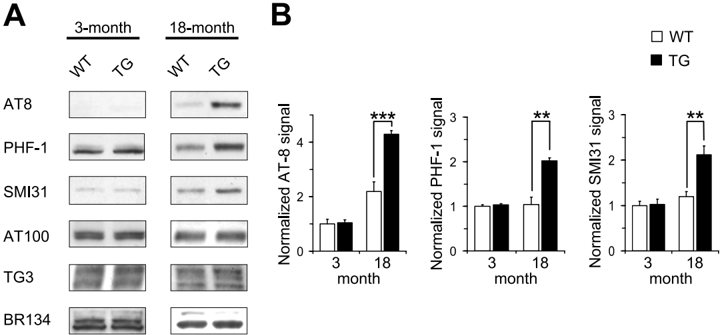
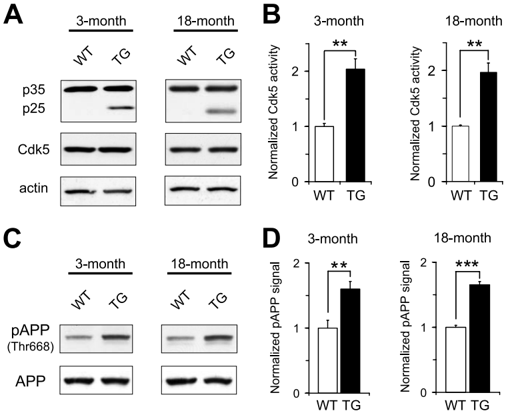
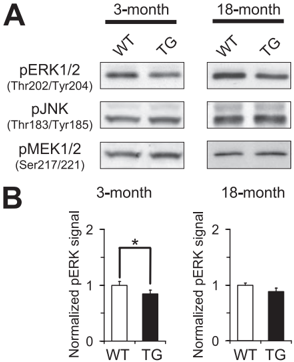
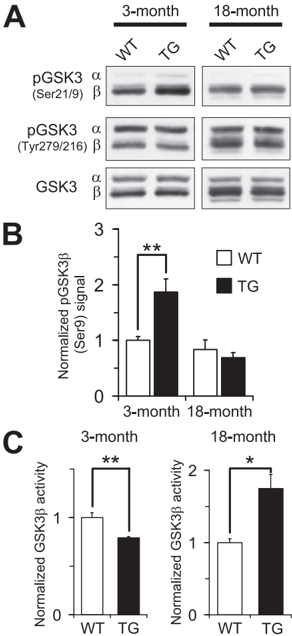
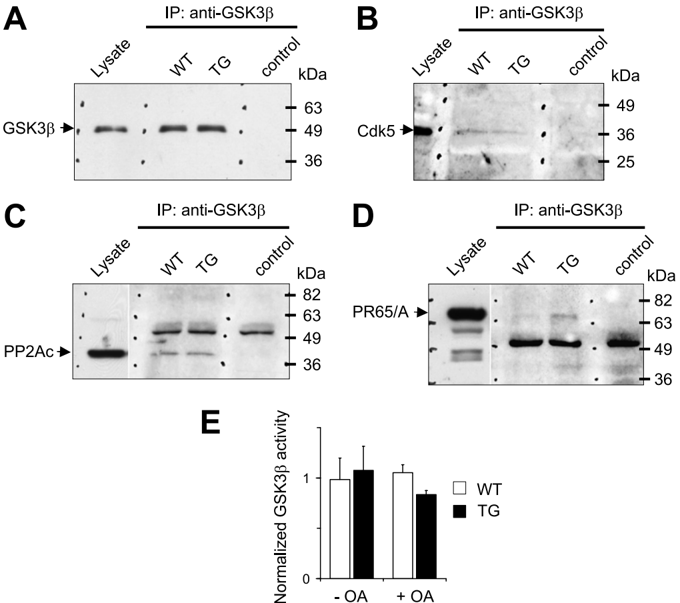
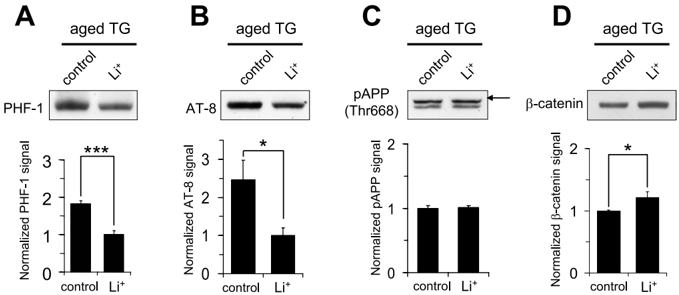
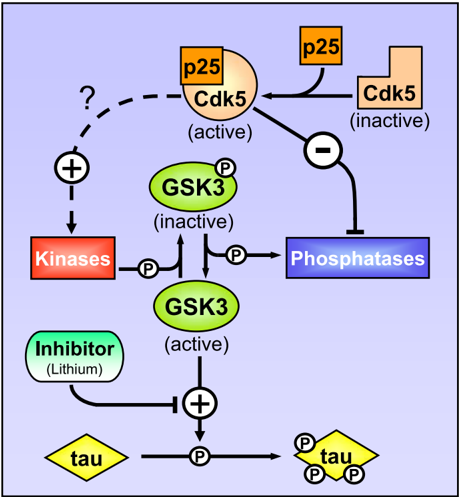
Hyperphosphorylation of the microtubule-associated protein tau is a characteristic feature of neurodegenerative tauopathies including Alzheimer disease. Over-activation of proline-directed kinases, such as cyclin-dependent kinase 5 (Cdk5) and glycogen synthase kinase 3 (GSK3), has been implicated in the aberrant phosphorylation of tau at proline-directed sites. In this study we tested the roles of Cdk5 and GSK3 in tau hyperphosphorylation in vivo using transgenic mice with p25-induced Cdk5 over-activation. We found that over-activation of Cdk5 in young transgenic animals does not induce tau hyperphosphorylation at sites recognized by the antibodies AT8, AT100, PHF-1, and TG3. In fact, we observed that Cdk5 over-activation leads to inhibition of GSK3. However, in old transgenic animals the inhibition of GSK3 is lost and results in increased GSK3 activity, which coincides with tau hyperphosphorylation at the AT8 and PHF-1 sites. Pharmacological inhibition of GSK3 in old transgenic mice by chronic treatment with lithium leads to a reduction of the age-dependent increase in tau hyperphosphorylation. Furthermore, we found that Cdk5, GSK3, and PP2A co-immunoprecipitate, suggesting a functional association of these molecules. Together, these results reveal the role of GSK3 as a key mediator of tau hyperphosphorylation, whereas Cdk5 acts as a modulator of tau hyperphosphorylation via the inhibitory regulation of GSK3. Furthermore, these findings suggest that disruption of regulation of GSK3 activity underlies tau hyperphosphorylation in neurodegenerative tauopathies. Hence, GSK3 may be a prime target for therapeutic intervention in tauopathies including Alzheimer disease.
Overview
The claims and statistics of this paper haven’t been checked yet.
Free: it reads the open-access text and checks the first 5 claims that cite a source we can check. Create a free account to check every claim.
Integrity signals
Registry
Cites
Statistics
Figures
Verification
Claims the paper makes
The claims and statistics of this paper haven’t been checked yet.
Free: it reads the open-access text and checks the first 5 claims that cite a source we can check. Create a free account to check every claim.
Claims other papers make about this one
Each is checked against this paper’s own text: does it say what the citing paper says it does?
The source backs part of the claim, not all of it — or backs it for a different population, condition or comparison.
In the citing paper
“Aβ accelerated the tau hyperphosphorylation by the activation of cyclin-dependent kinase 5 (CDK5) and glycogen synthase kinase 3 (GSK-3).116–118”
From Amyloid β-based therapy for Alzheimer’s disease: Challenges, successes and future (2023) · cites this paper as [116]
Experimental — accuracy not yet measuredThe cited source says what the claim attributes to it.
In the citing paper
“The AT8 sites are not only physiological phosphorylation sites (Kimura et al., 2007;Verwer et al., 2007) but also markers of hyperphosphorylation in Alzheimer's disease (Plattner et al., 2006).”
From Regulation of Mitochondrial Transport and Inter-Microtubule Spacing by Tau Phosphorylation at the Sites Hyperphosphorylated in Alzheimer's Disease (2012) · cites this paper as Plattner et al., 2006
Self-check
Percentages, sums and reported differences re-computed from the paper’s own numbers.
The self-check needs the paper’s full text.
Citations
Cites
Neuropathological stageing of Alzheimer-related changes.
Braak, H., & Braak, E. (1991) · Acta Neuropathologica · doi:10.1007/bf00308809 · Cited by 16,123
Lee, V. M.-Y., Goedert, M., & Trojanowski, J. Q. (2001) · Annual Review of Neuroscience · doi:10.1146/annurev.neuro.24.1.1121 · Cited by 2,480
A molecular mechanism for the effect of lithium on development.
Klein, P. S., & Melton, D. A. (1996) · Proceedings of the National Academy of Sciences · doi:10.1073/pnas.93.16.8455 · Cited by 2,301
Buée, L., Bussière, T., Buée-Scherrer, V., Delacourte, A., & Hof, P. R. (2000) · Brain Research Reviews · doi:10.1016/s0165-0173(00)00019-9 · Cited by 2,015
Conversion of p35 to p25 deregulates Cdk5 activity and promotes neurodegeneration
Patrick, G. N., Zukerberg, L., Nikolic, M., de la Monte, S., Dikkes, P., & Tsai, L.-H. (1999) · Nature · doi:10.1038/45159 · Cited by 1,545
The multifaceted roles of glycogen synthase kinase 3β in cellular signaling
Grimes, C. A., & Jope, R. S. (2001) · Progress in Neurobiology · doi:10.1016/s0301-0082(01)00011-9 · Cited by 1,423
Lithium inhibits glycogen synthase kinase-3 activity and mimics wingless signalling in intact cells
Stambolic, V., Ruel, L., & Woodgett, J. R. (1996) · Current Biology · doi:10.1016/s0960-9822(02)70790-2 · Cited by 1,321
Axonopathy and Transport Deficits Early in the Pathogenesis of Alzheimer’s Disease
Stokin, G. B., Lillo, C., Falzone, T. L., Brusch, R. G., Rockenstein, E., Mount, S. L., Raman, R., Davies, P., Masliah, E., Williams, D. S., et al. (2005) · Science · doi:10.1126/science.1105681 · Cited by 1,214
GSK-3α regulates production of Alzheimer's disease amyloid-β peptides
Phiel, C. J., Wilson, C. A., Lee, V. M.-Y., & Klein, P. S. (2003) · Nature · doi:10.1038/nature01640 · Cited by 1,196
Modulation of the dynamic instability of tubulin assembly by the microtubule-associated protein tau.
Drechsel, D. N., Hyman, A. A., Cobb, M. H., & Kirschner, M. W. (1992) · Molecular Biology of the Cell · doi:10.1091/mbc.3.10.1141 · Cited by 970
Cited by
Items 301–343 of 343
Endocannabinoids and Alzheimer’s disease
Fagan, S. G., & Campbell, V. A. (2015) · Elsevier eBooks · doi:10.1016/b978-0-12-417041-4.00002-3 · Cited by 6
Shah, M.-A., Kang, J.-B., Park, D.-J., & Koh, P. (2023) · Laboratory Animal Research · doi:10.1186/s42826-023-00155-6 · Cited by 4
“Downregulation of PP2A is associated with abnormal tau phosphorylation aggregation in Alzheimer’s disease [29, 30].”
BackgroundMa, J., Yang, Z., Gao, H., Huda, N., Jiang, Y., & Liangpunsakul, S. (2023) · Journal of Investigative Medicine · doi:10.1177/10815589231207793 · Cited by 4
Expression of p25 impairs contextual learning but not latent inhibition in mice
Mizuno, K., Plattner, F., & Giese, K.-P. (2006) · Neuroreport · doi:10.1097/wnr.0b013e328011c715 · Cited by 4
“One of these lines expresses relatively low p25 levels in the forebrain [6], which is still sufficient to overactivate Cdk5 [9].”
BackgroundSelf-citationYagishita, S., Shibata, M., Furuno, A., Wakatsuki, S., & Araki, T. (2024) · Neurology International · doi:10.3390/neurolint16030049 · Cited by 4
Fukiyama, Y., Hirokawa, T., Takai, S., Kida, T., & Oku, H. (2023) · Current Issues in Molecular Biology · doi:10.3390/cimb45090438 · Cited by 3
“Cdk5 exaggerates the actions of GSK3β and these kinases cooperate in causing abnormal phosphorylation of tau [9].”
BackgroundDas‐Earl, P., Schreihofer, D. A., Sumien, N., & Schreihofer, A. M. (2024) · Journal of Neurophysiology · doi:10.1152/jn.00409.2023 · Cited by 3
Zamani, M., Rohampour, K., Rashtiani, S., Dolati, M., Fallahian, F., & Kalhor, N. (2019) · Caspian Journal of Neurological Sciences · doi:10.32598/cjns.5.18.161 · Cited by 4
Lovestone, S., & Killick, R. (2010) · Research and perspectives in Alzheimer's disease · doi:10.1007/978-3-642-04300-0_9 · Cited by 3
TAKESHIMA, Y., Shinojima, N., Fujimoto, K., Yoshii, D., Hayakata, Y., Oya, M., Tasaki, M., Mikami, Y., Uetani, H., Hirai, T., et al. (2025) · Alzheimer s Research & Therapy · doi:10.1186/s13195-025-01927-z · Cited by 2
“Pro-line-directed kinases, such as glycogen synthase kinase 3 (GSK3) and cyclin-dependent kinase 5 (CDK5), mediate aberrant tau phosphorylation [31, 32].”
Tak, C., Bhujbal, S. P., & Hah, J. (2026) · Medicinal Chemistry Research · doi:10.1007/s00044-026-03557-y · Cited by 3
Thomas, R. E., Hernández, A., Benavides, D. R., Li, W., Tan, C., Umfress, A., Plattner, F., Chakraborti, A., Pozzo‐Miller, L. D., Taylor, S. S., et al. (2022) · Journal of Biological Chemistry · doi:10.1016/j.jbc.2022.102245 · Cited by 2
Self-citationPin1 Protects Against Alzheimer's Disease: One Goal, Multiple Mechanisms
Pastorino, L., Kondo, A., Zhen, X., & Lu, K. P. (2013) · InTech eBooks · doi:10.5772/55085 · Cited by 4
“Indeed, tau kinases, such as mitogen-activated protein (MAP) kinases, cyclin-dependent protein kinase 5 (CDK5) and glycogen synthase 3 (GSK3) [142-144] or phosphatases, such as protein phosphatase 2A (PP2A) [145, 146] are deregulated in AD and modulating these enzymes can affect tauopathy [23, 39, 147-155].”
BackgroundPathophysiology and Management Approaches in Alzheimer’s Disease
Jain, S., Goel, D., Nazir, S. S., Yadav, V., & Vohora, D. (2023) · Springer eBooks · doi:10.1007/978-981-99-6807-7_4 · Cited by 5
Chronobiology and Neurodegeneration: The Role of Melatonin in Alzheimer's Disease
Vaja, R., Vohra, M., Ramachandran, A. V., & Baxi, D. B. (2025) · Nutritional Psychiatry · doi:10.1016/j.nupsyc.2025.100001 · Cited by 2
Yakubu, A. O., Atafo, G. I., Nwaze, C. E., Bakare, T. Y., Adeniyi, T. O., Alare, K., Oladele, A. B., & Solagbade, O. S. (2026) · NeuroMarkers. · doi:10.1016/j.neumar.2026.100167 · Cited by 2
Molecular Mechanisms of Synaptic Plasticity and Memory and Their Dysfunction in Alzheimer's Disease
Stephens, G., You, J. C., Fu, C.-H., & Chin, J. (2017) · Elsevier eBooks · doi:10.1016/b978-0-12-809324-5.21126-7 · Cited by 1
Current and Future Therapies for Alzheimer Disease
Chakrabarty, P., Das, P., & Golde, T. E. (2010) · Wiley eBooks · doi:10.1002/9780470572702.ch34 · Cited by 1
Slow-Cycling Cancer Cells: A Dissertation
Moore, N. F. (2012) · The Journal of the American Medical Association (JAMA) Network (American Medical Association) · doi:10.13028/0rvq-7r49 · Cited by 1
“p35 and Implications for Metastasis In the developing brain and postmitotic neurons, p35 plays a key role in regulation of cytoskeletal structures during cell migration (11, 100).”
InfluentialKempermann, G. (2010) · Oxford University Press eBooks · doi:10.1093/med/9780199729692.003.0012 · Cited by 1
Investigación y terapias en la enfermedad de Alzheimer basadas en beta amiloide y tau
López-Camacho, P. Y., Guzmán-Hernández, R. N.-H., Gonzalez, V. H. H., Muñoz, J. E. D., García‐Sierra, F., & Basurto‐Islas, G. (2017) · Archivos de Neurociencias · doi:10.31157/an.v22i2.154 · Cited by 5
Pharmacological and analytical studies of the cyclin dependent kinase inhibitors
Sallam, H. (2009) · Figshare · Cited by 2
Investigating Tau pathology in an in vitro model for Alzheimer’s disease
Powrie, Y. S. L. (2016) · SUNScholar (Stellenbosch University) · Cited by 1
A streptozotocin-induced model of Alzheimer's disease in mice with wild-type human tau
Rudy, C. C. (2014) · The Research Repository @ WVU (West Virginia University) · doi:10.33915/etd.620 · Cited by 1
“growth factor 1 down-regulate GSK-3β (Hong & Lee, 1997), a kinase that is responsible for phosphorylating tau (Plattner et al., 2006).”
BackgroundInfluentialLinking Aβ and tau in the amyloid cascade through the intersection of their proteostasis networksPreprint
Lim, C. M., Hardy, J., & Vendruscolo, M. (2025) · bioRxiv (Cold Spring Harbor Laboratory) · doi:10.1101/2025.03.28.646065 · Cited by 1
Cdk5 May Be an Atypical Kinase, but Not in the Way You Think
Wang, L., Zhang, J., & Herrup, K. (2008) · Springer eBooks · doi:10.1007/978-0-387-78887-6_9
“It should be noted, however, that the activity of other kinases such as Gsk3b is also increased (Noble et al., 2003), leaving a level of uncertainty as to which kinase plays the main role in Ab-related tau hyperphosphorylation and neuronal death (Bian et al., 2002; Hallows et al., 2003; Tandon et al., 2003; Giese et a…”
BackgroundRegulation of synaptic function and plasticity by cyclin-dependent kinase 5
Su, S. C. (2012) · DSpace@MIT (Massachusetts Institute of Technology) · Cited by 1
Orejana, L. (2014) · Depósito Académico Digital Universidad de Navarra (University of Navarra)
Cell cycle regulation in the post-mitotic neuronal cells.
Wang, L. (2007) · OhioLink ETD Center (Ohio Library and Information Network) · Cited by 1
Functional implications of tau-fyn interactions in Alzheimer's disease
Lau, H. W. D. (2015)
Kinesin-1 Traffic Control in Neuronal Highway
Rahmati, M. (2016) · Biotechnology and Health Sciences · doi:10.17795/bhs-35914
“Cyclin-dependent kinase (Cdk5) is another protein kinase that can phosphorylate tau, regulate microtubular stability and kinesin-1 localization (71).”
BackgroundNew Small Molecule Drug Discovery for Alzheimer's Disease
Liu, K., Zhang, M., & Nagappan, G. (2012) · Frontiers in neuroscience · doi:10.1201/b11986-6
Elucidating and Pharmacologically Targeting Secondary Injury Cascades following Neural Injury
Lucke-Wold, B. P. (2016) · The Research Repository @ WVU (West Virginia University) · doi:10.33915/etd.6120
Elucidating Mechanisms of Neurobehavioral Dysfunction in a Rodent Model of Traumatic Brain Injury
Logsdon, A. F. (2016) · The Research Repository @ WVU (West Virginia University) · doi:10.33915/etd.6106
Naderi, A., Saremi, A., & Afarinesh Khaki, M. R. (2024) · Complementary Medicine Journal · doi:10.32592/cmja.14.1.29 · Cited by 2
Verelst, J. (2023) · Lirias (KU Leuven)
Wodrich, A. P. K. (2024) · DigitalGeorgetown (Georgetown University Library)
Tau nucléaire : un acteur clé dans le stress neuronal
Sultan, A. (2010) · theses.fr (ABES) · doi:10.70675/98c582c8z1d31z4edazbbfaz92750b338b46
The Adult Neurogenesis Theory of Alzheimer’s Disease Predicts Where Tauopathy Develops in the Brain
Abbate, C. (2026) · International Journal of Molecular Sciences · doi:10.3390/ijms27198776
“Tau kinase ActivatedGSK-3 β ActivatedGSK-3 β GSK-3 β is the first identified tau kinase [201,203] that plays a key role in AD-like tau hyperphosphorylation [204–209].”
Metadata
- Authors
- Plattner, F., Angelo, M., & Giese, K. P.
- Affiliations
- University College London (GB)
- Corresponding author
- Plattner, Florian
- Giese, K. Peter
- Venue
- Journal of Biological Chemistry
- Publisher
- Elsevier BV
- Published
- 2006-09
- Volume
- 281
- Issue
- 35
- Pages
- 25457-25465
- ISSN
- 0021-9258 (ISSN-L)
- OpenAlex
- W1992491411
- Cited by
- 340
- References
- 54
- Citations by year
- 2026: 3 · 2025: 9 · 2024: 10 · 2023: 15 · 2022: 11 · 2021: 11 · 2020: 15 · 2019: 21 · 2018: 15 · 2017: 12 · 2016: 17 · 2015: 16 · 2014: 24 · 2013: 18 · 2012: 17
- FWCI
- 17.01
- Type
- journal article
- Language
- en
- Open access
- hybrid
- doi.org
- Licence
- cc-by
- www.elsevier.com/tdm/userlicense/1.0/ (tdm)
- creativecommons.org/licenses/by/4.0/ (vor, 5158 d)
- Locations
- Journal of Biological Chemistry (publishedVersion, cc-by)
- PubMed (publishedVersion)
- UCL Discovery (University College London) (submittedVersion)
- Research Portal (King's College London) (submittedVersion, other-oa)
- Funders
- Alzheimer's Research Trust
- Imperial College London
- Ernst Schering Foundation
- University of Illinois at Urbana-Champaign
- Medical Research Council
- Topics
- Life Sciences › Neuroscience › Cellular and Molecular Neuroscience › Alzheimer's disease research and treatments
- Life Sciences › Biochemistry, Genetics and Molecular Biology › Molecular Biology › Protein Kinase Regulation and GTPase Signaling
- Health Sciences › Medicine › Psychiatry and Mental health › Dementia and Cognitive Impairment Research
- Keywords
- tau hyperphosphorylation, cyclin-dependent kinase 5, glycogen synthase kinase-3, tauopathy, Alzheimer's disease, lithium, protein phosphatase 2A, proline-directed phosphorylation, transgenic mice
- MeSH terms
- Animals, Epitopes, Gene Expression Regulation, Heterozygote, Hippocampus, Mice, Inbred C57BL, Mice, Transgenic, Phosphoproteins, Phosphorylation, Proline, tau Proteins, Glycogen Synthase Kinase 3, Cyclin-Dependent Kinase 5, Mice
About these checks
Registry, retraction, Cites and statistics results are computed, not judged, with one exception: a printed reference that no index lists is read once by a model before it counts as a citation error. Claims are extracted by a model and kept only when their quote appears verbatim in the text; each cited source is then checked, with a model’s help, for whether it says what the claim relies on. Those verdicts can be wrong — read the claim’s quote and the cited source before relying on one.
Statistics and arithmetic are recomputed, not judged.
Confidence bands are shown only for fields calibrated on our annotated test set. None is calibrated yet, so no band is shown.
What counts as a claim ›How we measure confidence ›How we check this ›
Are you an author, or do you see a problem with this page? Request a review
Data sources
Bibliographic data: Semantic Scholar, OpenAlex, Crossref.
Contains information from the Semantic Scholar Academic Graph Datasets, made available under the ODC Attribution License (ODC-BY 1.0).
Semantic Scholar’s data is described in: Kinney, R., et al. (2023). The Semantic Scholar Open Data Platform. arXiv:2301.10140.
