

Mediator Subunit Gal11p/MED15 Is Required for Fatty Acid-dependent Gene Activation by Yeast Transcription Factor Oaf1p
Open accessThe DOI matches its Crossref record; 34 of the 34 references it cites were found in a registry or an index.
Abstract
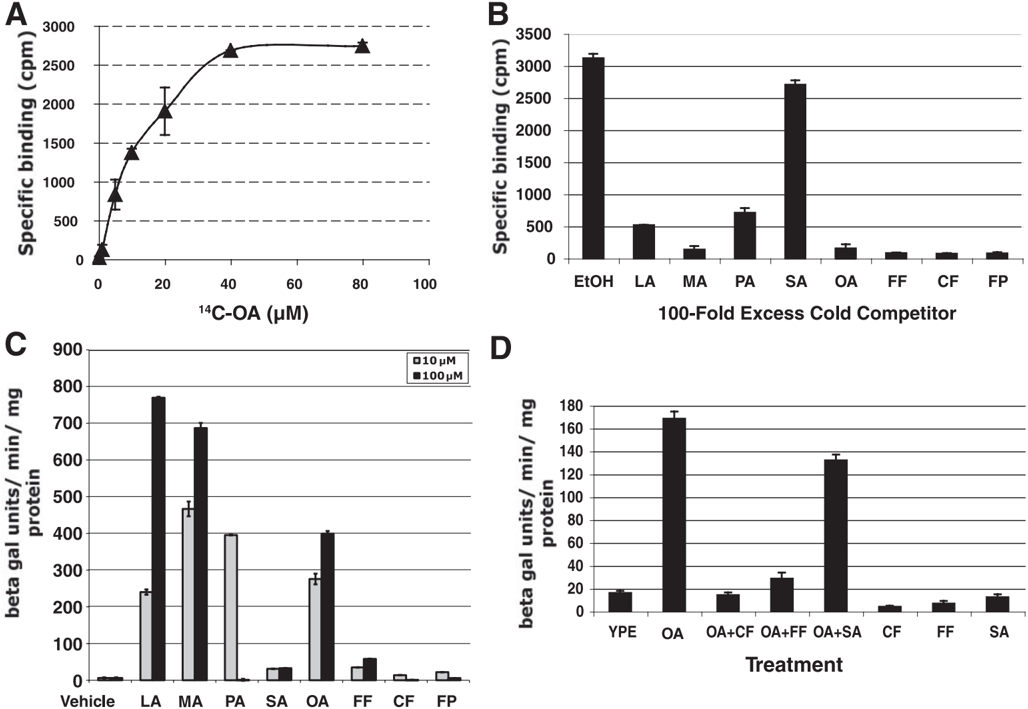
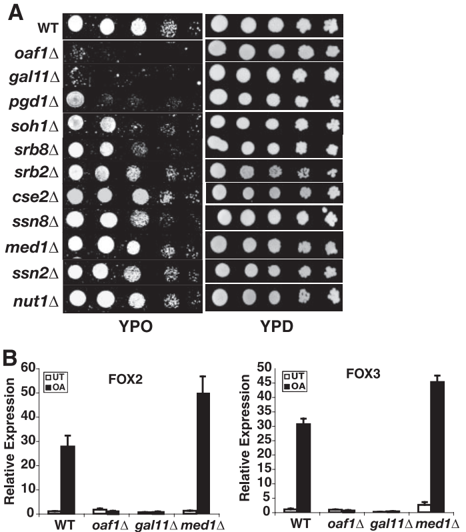
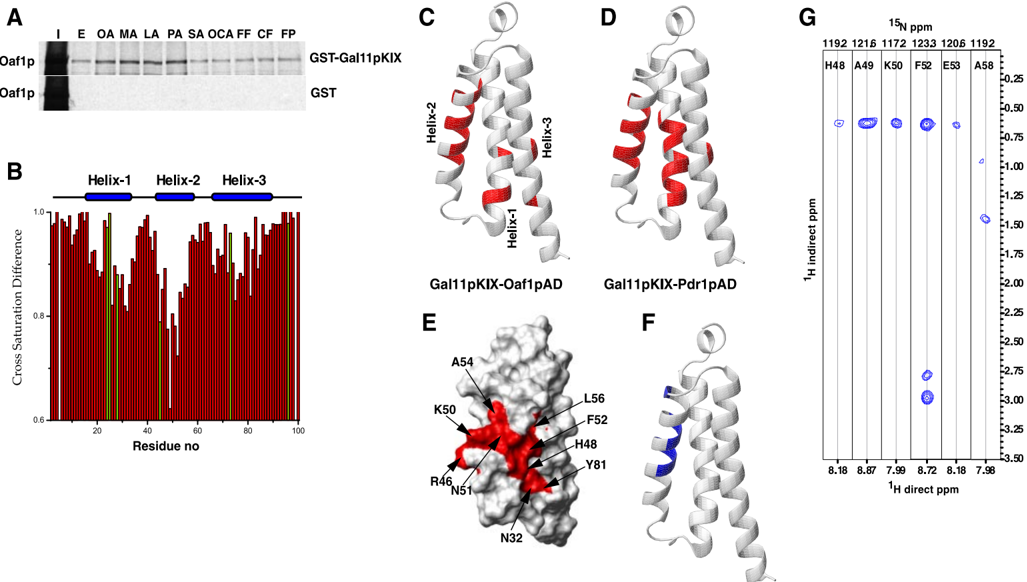
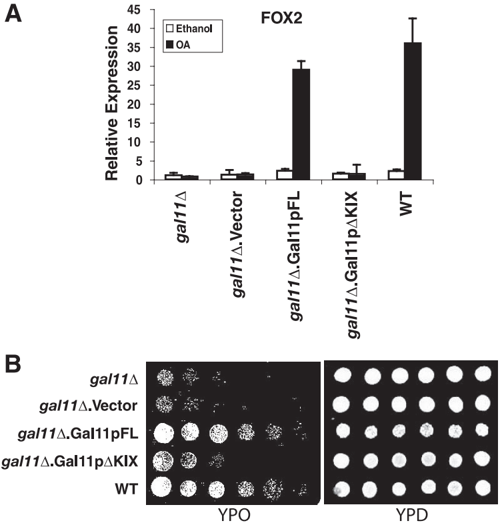
The yeast zinc cluster transcription factor Oaf1p activates transcription of target genes in response to direct binding of fatty acids in a manner analogous to the vertebrate nuclear receptor peroxisome proliferator-activated receptoralpha (PPARalpha). PPARs and other metazoan nuclear receptors productively engage several distinct LXXLL motif-containing co-activators, including p160 family members and the TRAP220/MED1 subunit of the Mediator co-activator, to promote ligand-dependent gene activation. Yeast, however, does not appear to harbor LXXLL motif co-activators, and the mechanism of fatty acid-dependent gene activation by the yeast PPARalpha analog Oaf1p is unknown. Here we show that the yeast Mediator subunit Gal11p/MED15 and its activator-targeted KIX domain plays a critical role in fatty acid-dependent transcriptional regulation of fatty acid beta-oxidation and peroxisomal genes by Oaf1p and for the ability of yeast to utilize fatty acids as a sole carbon source. Moreover, structural studies by NMR spectroscopy reveal that the Oaf1p activation domain interacts with the Gal11p/MED15 KIX domain in a manner similar to the yeast zinc cluster family member and xenobiotic receptor Pdr1p, revealing that the Gal11p/MED15 KIX domain is a key target of several ligand-dependent transcription factors in yeast. Together with previous work showing that the Caenorhabditis elegans Gal11p/MED15 homolog MDT-15 plays a critical role in regulation of fatty acid metabolism by the nematode PPAR-like nuclear receptor NHR-49, the findings presented here provide evidence for an ancient and essential role of a Mediator co-activator subunit in regulation of fatty acid metabolism by nuclear receptor-like transcription factors in eukaryotes.
Overview
The claims and statistics of this paper haven’t been checked yet.
Free: it reads the open-access text and checks the first 5 claims that cite a source we can check. Create a free account to check every claim.
Integrity signals
Registry
Cites
Statistics
Figures
Verification
Claims the paper makes
The claims and statistics of this paper haven’t been checked yet.
Free: it reads the open-access text and checks the first 5 claims that cite a source we can check. Create a free account to check every claim.
Claims other papers make about this one
Each is checked against this paper’s own text: does it say what the citing paper says it does?
The check wasn’t confident either way, so it gives no verdict — never disputed.
In the citing paper
“hyperactivation of MRR1 facilitates Mediator recruitment to target gene promoters in a manner that is dependent on an intact Mediator tail module (Fig. 13).”
From Candida albicans Swi/Snf and Mediator Complexes Differentially Regulate Mrr1-Induced MDR1 Expression and Fluconazole Resistance (2017) · cites this paper as [38]
Experimental — accuracy not yet measured
Self-check
Percentages, sums and reported differences re-computed from the paper’s own numbers.
The self-check needs the paper’s full text.
Citations
Cites
The nuclear receptor superfamily: the second decade
Mangelsdorf, D. J., Thummel, C., Beato, M., Herrlich, P., Schütz, G., Umesono, K., Blumberg, B., Kastner, P., Mark, M., Chambon, P., et al. (1995) · Cell · doi:10.1016/0092-8674(95)90199-x · Cited by 6,964
Activation of a member of the steroid hormone receptor superfamily by peroxisome proliferators
Issemann, I., & Green, S. (1990) · Nature · doi:10.1038/347645a0 · Cited by 3,519
Peroxisome Proliferator-Activated Receptors: Nuclear Control of Metabolism*
Desvergne, B., & Wahli, W. (1999) · Endocrine Reviews · doi:10.1210/edrv.20.5.0380 · Cited by 3,086
The coregulator exchange in transcriptional functions of nuclear receptors
Glass, C. K., & Rosenfeld, M. G. (2000) · Genes & Development · doi:10.1101/gad.14.2.121 · Cited by 2,233
Kliewer, S. A., Sundseth, S. S., Jones, S. A., Brown, P. J., Wisely, G. B., Koble, C. S., Devchand, P., Wahli, W., Willson, T. M., Lenhard, J. M., et al. (1997) · Proceedings of the National Academy of Sciences · doi:10.1073/pnas.94.9.4318 · Cited by 2,164
Lehmann, J. M., Lenhard, J. M., Oliver, B. B., Ringold, G. M., & Kliewer, S. A. (1997) · Journal of Biological Chemistry · doi:10.1074/jbc.272.6.3406 · Cited by 1,110
The Nuclear Pregnane X Receptor: A Key Regulator of Xenobiotic Metabolism
Kliewer, S. A., Goodwin, B., & Willson, T. M. (2002) · Endocrine Reviews · doi:10.1210/er.2001-0038 · Cited by 921
Göttlicher, M., Widmark, E., Li, Q., & Gustafsson, J. A. (1992) · Proceedings of the National Academy of Sciences · doi:10.1073/pnas.89.10.4653 · Cited by 857
Radhakrishnan, I., Pérez-Alvarado, G. C., Parker, D., Dyson, H. J., Montminy, M. R., & Wright, P. E. (1997) · Cell · doi:10.1016/s0092-8674(00)80463-8 · Cited by 728
Mediator and the mechanism of transcriptional activation
Kornberg, R. D. (2005) · Trends in Biochemical Sciences · doi:10.1016/j.tibs.2005.03.011 · Cited by 599
Research works printed but not linked: 1
- Desvergne, B., and Wahli, W. (1999) Endocr. Rev. 20, 649 -688
Cited by
The metazoan Mediator co-activator complex as an integrative hub for transcriptional regulation
Malik, S., & Roeder, R. G. (2010) · Nature Reviews Genetics · doi:10.1038/nrg2901 · Cited by 735
“Remarkably, even the yeast orthologue of MED15, which was identified genetically in screens for selective sugar use and originally called GAL11, serves as the target for a zinc finger-containing activator that senses fatty acid levels in this simple organis”
BackgroundThe Mediator complex and transcription regulation
Poss, Z. C., Ebmeier, C. C., & Taatjes, D. J. (2013) · Critical Reviews in Biochemistry and Molecular Biology · doi:10.3109/10409238.2013.840259 · Cited by 364
Hahn, S., & Young, E. T. (2011) · Genetics · doi:10.1534/genetics.111.127019 · Cited by 342
“To date, X-ray and NMR structures have been determined for five relatively small and wellordered Mediator domains (Baumli et al. 2005; Hoeppner et al. 2005; Lariviere et al. 2006; Koschubs et al. 2009; Thakur et al. 2009).”
BackgroundFunction and regulation of the Mediator complex
Conaway, R. C., & Conaway, J. W. (2011) · Current Opinion in Genetics & Development · doi:10.1016/j.gde.2011.01.013 · Cited by 288
Transcriptional regulation of nonfermentable carbon utilization in budding yeast
Turcotte, B., Liang, X. B., Robert, F., & Soontorngun, N. (2010) · FEMS Yeast Research · doi:10.1111/j.1567-1364.2009.00555.x · Cited by 281
“Activation of the Oaf1/Pip2 heterodimer is mediated by direct binding of oleate to Oaf1 (Phelps et al., 2006; Thakur et al., 2009).”
BackgroundIron Acquisition and Transcriptional Regulation
Kaplan, C. D., & Kaplan, J. (2009) · Chemical Reviews · doi:10.1021/cr9001676 · Cited by 278
The Mediator complex: a master coordinator of transcription and cell lineage development
Yin, J.-W., & Wang, G. (2014) · Development · doi:10.1242/dev.098392 · Cited by 222
“Thakur, J. K., Arthanari, H., Yang, F., Pan, S. J., Fan, X., Breger, J., Frueh, D. P., Gulshan, K., Li, D. K., Mylonakis, E. et al. (2008).”
InfluentialStructural mechanism of ergosterol regulation by fungal sterol transcription factor Upc2
Yang, H., Tong, J., Lee, C. W., Ha, S., Eom, S. H., & Im, Y. J. (2015) · Nature Communications · doi:10.1038/ncomms7129 · Cited by 223
Subunit Architecture and Functional Modular Rearrangements of the Transcriptional Mediator Complex
Tsai, K.-L., Tomomori-Sato, C., Sato, S., Conaway, R. C., Conaway, J. W., & Asturias, F. J. (2014) · Cell · doi:10.1016/j.cell.2014.05.015 · Cited by 218
“, 2012), and Oaf1 (Thakur et al., 2009) activators and involvement of these subunits in RNAPII and TBP recruitment to a promoter (Zhang et al.”
Mathur, S., Vyas, S., Kapoor, S., & Tyagi, A. K. (2011) · Plant Physiology · doi:10.1104/pp.111.188300 · Cited by 184
“Med15 physically interacts with several disparate TFs both in metazoans and S. cerevisiae (Kato et al., 2002; Yang et al., 2006; Thakur et al., 2009).”
BackgroundTail and Kinase Modules Differently Regulate Core Mediator Recruitment and Function In Vivo
Jeronimo, C., Langelier, M.-F., Bataille, A. R., Pascal, J. M., Pugh, B. F., & Robert, F. (2016) · Molecular Cell · doi:10.1016/j.molcel.2016.09.002 · Cited by 129
Sequence-based prediction of intermolecular interactions driven by disordered regions
Ginell, G. M., Emenecker, R. J., Lotthammer, J. M., Keeley, A. T., Plassmeyer, S. P., Razo, N., Usher, E. T., Pelham, J. F., & Holehouse, A. S. (2025) · Science · doi:10.1126/science.adq8381 · Cited by 97
Canet, J. V., Dobón, A., & Tornero, P. (2012) · The Plant Cell · doi:10.1105/tpc.112.103028 · Cited by 139
“Oaf1P is a yeast nuclear receptor that, upon binding fatty acids, interacts with GAL11 and activates the transcription of genes required for the use of fatty acids (Thakur et al., 2009).”
BackgroundMolecular recognition by the KIX domain and its role in gene regulation
Thakur, J. K., Yadav, A., & Yadav, G. (2013) · Nucleic Acids Research · doi:10.1093/nar/gkt1147 · Cited by 134
“…in fungi, where fatty acids such as oleic acid (OA), lauric acid (LA), myristic acid (MA) and palmitic acid (PA) are able to directly bind to transcription factor Oaf1p and activate it to induce expression of Fatty Acid oxidation 2 (FOX2) and FOX3 genes that are involved in metabolism (3).”
BackgroundSelf-citationOrigins and activity of the Mediator complex
Conaway, R., & Conaway, J. W. (2011) · Seminars in Cell and Developmental Biology · doi:10.1016/j.semcdb.2011.07.021 · Cited by 127
“cerevisiae, the tail module includes Mediator subunits MED2, MED3, MED5, MED15, and MED16, which all appear to function in recruitment of Mediator to genes through direct interactions with various DNA binding transactivators [34, 72–78].”
Samanta, S., & Thakur, J. K. (2015) · Frontiers in Plant Science · doi:10.3389/fpls.2015.00757 · Cited by 115
“An analogous situation also happens in yeast where different nuclear receptor-like transcription factors like Oaf1, Pdr1, and Pdr3 target the same Mediator subunit, MED15, to control different processes like fatty acid metabolism and multidrug resistance (Thakur et al., 2008, 2009).”
BackgroundSelf-citationMediator-dependent nuclear receptor function
Chen, W., & Roeder, R. G. (2011) · Seminars in Cell & Developmental Biology · doi:10.1016/j.semcdb.2011.07.026 · Cited by 100
“elegans, and Oaf1, a zinc finger cluster transcription factor that is also a PPARα analog in yeast, have been shown to specifically interact with the KIX domains of MDT-15 and Gal11p in a fatty acid-stimulated manner [85, 86].”
Nuclear hormone receptors in nematodes: Evolution and function
Taubert, S., Ward, J. D., & Yamamoto, K. R. (2010) · Molecular and Cellular Endocrinology · doi:10.1016/j.mce.2010.04.021 · Cited by 113
Herbig, E., Warfield, L., Fish, L., Fishburn, J., Knutson, B. A., Moorefield, B., Pacheco, D., & Hahn, S. (2010) · Molecular and Cellular Biology · doi:10.1128/mcb.01046-09 · Cited by 91
“The polypeptide containing both Gcn4 activation domains (1-134) bound with 3-fold higher affinity than the individual activation domains.”
BackgroundMotahari, Z., Moody, S. A., Maynard, T. M., & LaMantia, A. (2019) · Journal of Neurodevelopmental Disorders · doi:10.1186/s11689-019-9267-z · Cited by 101
Mechanisms of Mediator complex action in transcriptional activation
Ansari, S. A., & Morse, R. H. (2013) · Cellular and Molecular Life Sciences · doi:10.1007/s00018-013-1265-9 · Cited by 92
“These findings indicate that the Med15 KIX domain is a conserved activator binding target [49, 50].”
Evolution of disorder in Mediator complex and its functional relevance
Nagulapalli, M., Maji, S., Dwivedi, N., Dahiya, P., & Thakur, J. K. (2015) · Nucleic Acids Research · doi:10.1093/nar/gkv1135 · Cited by 94
“Unlike in metazoans, ligand-activated transcription factors of yeast and fungi do not interact with Med1 (19,31).”
BackgroundSelf-citationLegras, J., Erny, C., Jeune, C. L., Lollier, M., Adolphe, Y., Demuyter, C., Delobel, P., Blondin, B., & Karst, F. (2010) · Applied and Environmental Microbiology · doi:10.1128/aem.01280-10 · Cited by 98
Kim, S., & Gross, D. S. (2013) · Journal of Biological Chemistry · doi:10.1074/jbc.m112.449553 · Cited by 91
Ansari, S. A., Ganapathi, M., Benschop, J. J., Holstege, F. C. P., Wade, J. T., & Morse, R. H. (2011) · The EMBO Journal · doi:10.1038/emboj.2011.362 · Cited by 90
“…the expression of genes involved in fatty acid metabolism by directly interacting with activators, SREBP a , SBP-1, and Oaf1 in human, C. elegans, and S. cerevisiae, respectively, suggesting functional conservation of this subunit (Taubert et al , 2006; Yang et al , 2006; Thakur et al , 2009).”
Kim, M. J., Jang, I., & Chua, N. (2016) · PLANT PHYSIOLOGY · doi:10.1104/pp.16.00664 · Cited by 92
“The yeast MED15, which also is known as Gal11p (Gal11p/ MED15), is essential for the activation of fatty acid biosynthetic genes through its interaction with the TF Oaf1p (Thakur et al., 2009).”
BackgroundGoh, G. Y. S., Martelli, K. L., Parhar, K. S., Kwong, A. W. L., Wong, M., Mah, A. K., Hou, N. S., & Taubert, S. (2013) · Aging Cell · doi:10.1111/acel.12154 · Cited by 90
“To regulate lipid and drug metabolism genes, Gal11 cooperates with the zinc cluster transcription factors Pdr1 and Oaf1 (Thakur et al., 2008, 2009).”
BackgroundJedidi, I., Zhang, F., Qiu, H., Stahl, S. J., Palmer, I., Kaufman, J. D., Nadaud, P. S., Mukherjee, S., Wingfield, P. T., Jaroniec, C. P., et al. (2010) · Journal of Biological Chemistry · doi:10.1074/jbc.m109.071589 · Cited by 73
The 9aaTAD Transactivation Domains: From Gal4 to p53
Piskáček, M., Havelka, M., Řezáčová, M., & Knight, A. (2016) · PLoS ONE · doi:10.1371/journal.pone.0162842 · Cited by 76
“Some but not all of the 9aaTAD domains interact with multiple mediators and that with different binding affinity e.g. p53, MLL and E2A (MLL-site and Myb-site of KIX domain, sites of TAZ1 and TAZ2, and IBiD) [23,36–40].”
BackgroundInfluentialZhu, J., Zhang, Z.-T., Tang, S.-W., Zhao, B., Li, H., Song, J.-Z., Li, D., & Xie, Z. (2019) · mBio · doi:10.1128/mbio.01691-19 · Cited by 68
“glycerol or oleic acid as the carbon source (49, 50).”
Qi, Y., Liu, H., Yu, J., Chen, X., & Liu, L. (2017) · Applied and Environmental Microbiology · doi:10.1128/aem.01128-17 · Cited by 66
Conservation and Divergence of Mediator Structure and Function: Insights from Plants
Dolan, W. L., & Chapple, C. C. S. (2016) · Plant and Cell Physiology · doi:10.1093/pcp/pcw176 · Cited by 66
Nuclear receptor-like transcription factors in fungi
Näär, A. M., & Thakur, J. K. (2009) · Genes & Development · doi:10.1101/gad.1743009 · Cited by 61
“Peroxisome proliferators/NSAIDs are consequently very weak agonists in yeast on their own, and indeed act as strong antagonists of fatty-acid-induced transactivation mediated by Oaf1p (Fig. 4; Thakur et al. 2008b).”
BackgroundInfluentialSelf-citationAnandhakumar, J., Moustafa, Y. W., Chowdhary, S., Kainth, A. S., & Gross, D. S. (2016) · Molecular and Cellular Biology · doi:10.1128/mcb.00005-16 · Cited by 60
Pukkila-Worley, R., Feinbaum, R. L., McEwan, D. L., Conery, A. L., & Ausubel, F. M. (2014) · PLoS Pathogens · doi:10.1371/journal.ppat.1004143 · Cited by 63
“Likewise, the MED15 homolog in yeast (called GAL11p) serves a similar function [35].”
BackgroundUnraveling framework of the ancestral Mediator complex in human diseases
Claudio Napoli, A., Sessa, M., Infante, T., & Casamassimi, A. (2011) · Biochimie · doi:10.1016/j.biochi.2011.09.016 · Cited by 63
Liu, Z., & Myers, L. C. (2017) · Antimicrobial Agents and Chemotherapy · doi:10.1128/aac.01344-17 · Cited by 51
“data showing direct interactions between activation domains and the Mediator tail module (7, 9, 10, 37, 38), hyperactivation of MRR1 facilitates Mediator recruitment to target gene promoters in a manner that is dependent on an intact Mediator tail module (Fig.”
BackgroundGrants, J. M., Goh, G. Y. S., & Taubert, S. (2015) · Nucleic Acids Research · doi:10.1093/nar/gkv037 · Cited by 54
“How conserved is mdt-15-dependent regulation of lipid metabolism? In yeast, the MDT-15 ortholog Gal11 also regulates genes involved in -oxidation (97).”
BackgroundSnf1 Dependence of Peroxisomal Gene Expression Is Mediated by Adr1
Ratnakumar, S., & Young, E. T. (2010) · Journal of Biological Chemistry · doi:10.1074/jbc.m109.079848 · Cited by 48
Thakur, J. K., Agarwal, P., Parida, S. K., Bajaj, D., & Pasrija, R. (2013) · Molecular Genetics and Genomics · doi:10.1007/s00438-013-0753-9 · Cited by 55
Self-citationMediator Phosphorylation Prevents Stress Response Transcription During Non-stress Conditions
Miller, C., Matić, I., Maier, K. C., Schwalb, B., Röther, S., Sträßer, K., Tresch, A., Mann, M., & Cramer, P. (2012) · Journal of Biological Chemistry · doi:10.1074/jbc.m112.430140 · Cited by 48
“In yeast Mediator, subunit Med15 is targeted byOaf1, a transcription activator involved in sensing fatty acid levels (13).”
BackgroundDynamics of peroxisome abundance: a tale of division and proliferation
Kaur, N., & Hu, J. (2009) · Current Opinion in Plant Biology · doi:10.1016/j.pbi.2009.08.001 · Cited by 49
Emerging functions of multi-protein complex Mediator with special emphasis on plants
Malik, N., Agarwal, P., & Tyagi, A. K. (2017) · Critical Reviews in Biochemistry and Molecular Biology · doi:10.1080/10409238.2017.1325830 · Cited by 42
Anderson, M. Z., Baller, J. A., Dulmage, K., Wigen, L., & Berman, J. (2012) · Eukaryotic Cell · doi:10.1128/ec.00230-12 · Cited by 38
“It is quite unusual that multiple genes encode a single Mediator subunit, but this is not completely unprecedented: plants and some other yeast species encode multiple paralogs of a single Mediator subunit (28, 41).”
BackgroundCommon Functions of Disordered Proteins across Evolutionary Distant Organisms
Wallmann, A., & Kesten, C. (2020) · International Journal of Molecular Sciences · doi:10.3390/ijms21062105 · Cited by 39
Zheng, F., Cao, Y., Yang, R., Wang, L., Lv, X., Zhang, W., Meng, X., & Liu, W. (2020) · PLoS Genetics · doi:10.1371/journal.pgen.1008979 · Cited by 46
“reesei, we focused on the Mediator complex whose tail module subunit GAL11/MED15 has been reported to serve as the target of various transcriptional activators [11, 12, 20, 39, 40].”
BackgroundInteraction map of Arabidopsis Mediator complex expounding its topology
Maji, S., Dahiya, P., Waseem, M., Dwivedi, N., Bhat, D. S., Dar, T. U. H., & Thakur, J. K. (2019) · Nucleic Acids Research · doi:10.1093/nar/gkz122 · Cited by 38
Self-citationFunctional diversification accompanies gene family expansion of MED2 homologs in Candida albicans
Dunn, M. J., Kinney, G. M., Washington, P. M., Berman, J., & Anderson, M. Z. (2018) · PLOS Genetics · doi:10.1371/journal.pgen.1007326 · Cited by 33
Dwivedi, N., Maji, S., Waseem, M., Thakur, P., Kumar, V., Parida, S. K., & Thakur, J. K. (2019) · Biochimica et Biophysica Acta (BBA) - Gene Regulatory Mechanisms · doi:10.1016/j.bbagrm.2019.194432 · Cited by 38
Self-citationSubunit Architecture and Functional Modular Rearrangements of the Transcriptional Mediator Complex
Tsai, K., Tomomori‐Sato, C., Sato, S., Conaway, R., Conaway, J. W., & Asturias, F. J. (2014) · Cell · doi:10.1016/j.cell.2014.06.036 · Cited by 36
Analysis of differential expression of Mediator subunit genes in Arabidopsis
Pasrija, R., & Thakur, J. K. (2012) · Plant Signaling & Behavior · doi:10.4161/psb.22438 · Cited by 34
Self-citationMultilayered control of peroxisomal activity upon salt stress in S accharomyces cerevisiae
Manzanares‐Estreder, S., Bardisa, J. E., Alarcón, B., Pascual‐Ahuir, A., & Proft, M. (2017) · Molecular Microbiology · doi:10.1111/mmi.13669 · Cited by 36
“The Oaf1/Pip2 transcriptional activator seems to act in an analogous manner to the nuclear hormone receptors of higher eukaryotes (Phelps et al., 2006; Thakur et al., 2009).”
BackgroundSelective role of Mediator tail module in the transcription of highly regulated genes in yeast
Ansari, S. A., & Morse, R. H. (2012) · Transcription · doi:10.4161/trns.19840 · Cited by 37
“elegans and Oaf1 in yeast interact directly with Med15 through the conserved KIX domain to regulate fatty acid metabolism.(7,11,35) The Med15 subunit has also been shown to regulate galactose and amino acid metabolism in yeast by directly interacting with activators Gal4 and Gcn4.”
BackgroundMediator tail subunits can form amyloid-like aggregatesin vivoand affect stress response in yeast
Zhu, X., Chen, L., Carlsten, J. O. P., Liu, Q., Yang, J., Liu, B., & Gustafsson, C. M. (2015) · Nucleic Acids Research · doi:10.1093/nar/gkv629 · Cited by 32
“The Mediator Med15 module interacts with a number of different activator proteins, including Gcn4 and Gal4 in yeast and Oaf1 in mammalian cells (39).”
BackgroundMed15: Glutamine-Rich Mediator Subunit with Potential for Plasticity
Cooper, D. G., & Fassler, J. S. (2019) · Trends in Biochemical Sciences · doi:10.1016/j.tibs.2019.03.008 · Cited by 38
Kumar, V., Waseem, M., Dwivedi, N., Maji, S., Kumar, A., & Thakur, J. K. (2018) · Plant Signaling & Behavior · doi:10.1080/15592324.2018.1428514 · Cited by 28
“KIX domain consists of combination of three a-helices arranged in a characteristic fashion to form hydrophobic pockets, which may be exploited as docking site(s) by activation domains (ADs) of transcription factors (TFs).37-42 In yeast, KIX domain of Gal11p/Med15 has been reported to interact with Pdr1p, Oaf1p, Gcn4p…”
BackgroundInfluentialSelf-citationLiu, Z., Rossi, J. M., & Myers, L. C. (2018) · Antimicrobial Agents and Chemotherapy · doi:10.1128/aac.00968-18 · Cited by 28
“(36, 40), and it is interesting that the mammalian bile acid receptor FXR (farnesoid”
BackgroundThe SAGA complex regulates early steps in transcription via its deubiquitylase module subunit USP22
Stanek, T. J., Gennaro, V. J., Tracewell, M., Marcantonio, D. D., Pauley, K., Butt, S., McNair, C. M., Wang, F., Kossenkov, A. V., Knudsen, K. E., et al. (2021) · The EMBO Journal · doi:10.15252/embj.2019102509 · Cited by 28
“However, the tail module is the primary contact between sequence-specific transcription factors bound at enhancers and the promoter of the cognate target gene (Park et al, 2000; Stevens et al, 2002; Zhang et al, 2004; Thakur et al, 2009; Brzovic et al, 2011; El Khattabi et al, 2019).”
Shomer, N., Kadhim, A. Z., Grants, J. M., Cheng, X., Alhusari, D., Bhanshali, F., Poon, A. F.-Y., Lee, M. Y. Y., Muhuri, A., Park, J. I., et al. (2019) · PLoS Genetics · doi:10.1371/journal.pgen.1008508 · Cited by 25
“Of those, its role in regulating lipid metabolism appears to be conserved in yeast and in mammals [49,64], whereas its requirement in detoxifying xenobiotic molecules is conserved in fungi [28,65].”
BackgroundShared structural features of the 9aaTAD family in complex with CBP
Piskáček, M., Vašků, A., Hájek, R., & Knight, A. (2015) · Molecular BioSystems · doi:10.1039/c4mb00672k · Cited by 25
Mediator Engineering of Saccharomyces cerevisiae To Improve Multidimensional Stress Tolerance
Qi, Y., Xu, N., Li, Z., Wang, J., Meng, X., Gao, C., Chen, J., Chen, W., Chen, X., & Liu, L. (2022) · Applied and Environmental Microbiology · doi:10.1128/aem.01627-21 · Cited by 25
“The transcription factor-targeted three-helix bundle KIX domain in Med15 subunit was structurally conserved between mammals and yeast (30, 31).”
BackgroundFunctional Studies of the Yeast Med5, Med15 and Med16 Mediator Tail Subunits
Larsson, M., Uvell, H., Sandström, J., Rydén, P., Selth, L. A., & Björklund, S. (2013) · PLoS ONE · doi:10.1371/journal.pone.0073137 · Cited by 22
“fatty acid media [50], decreased osmotic stress resistance, and growth defect at high salt concentrations [51], decreased resistance to oxidative stress [52].”
BackgroundMajmudar, C. Y., Wang, B., Lum, J. K., Håkansson, K., & Mapp, A. K. (2009) · Angewandte Chemie International Edition · doi:10.1002/anie.200902669 · Cited by 29
Eychenne, T., Werner, M., & Soutourina, J. (2017) · Transcription · doi:10.1080/21541264.2017.1329000 · Cited by 21
“Med15 KIX domain is conserved in eukaryotes and, in fungi, is targeted by Oaf1 and Pdr1 activators.(31,32)”
BackgroundA Mediator subunit imparts robustness to a polyphenism decision
Casasa, S., Katsougia, E., & Ragsdale, E. J. (2023) · Proceedings of the National Academy of Sciences · doi:10.1073/pnas.2308816120 · Cited by 20
“In C. elegans , MDT-15 has multiple roles in responding to environmental stress, including through lipid metabolism (43, 68), xenobiotic detoxification (69), and response to oxidative stress (70).”
BackgroundDynamic regulation of membrane integrity to enhance l ‐malate stress tolerance in Candida glabrata
Liang, G., Zhou, P., Lü, J., Liu, H., Qi, Y., Gao, C., Guo, L., Hu, G., Chen, X., & Liu, L. (2021) · Biotechnology and Bioengineering · doi:10.1002/bit.27903 · Cited by 19
Mediator function in plant metabolism revealed by large-scale biology
Mao, X., Weake, V. M., & Chapple, C. C. S. (2019) · Journal of Experimental Botany · doi:10.1093/jxb/erz372 · Cited by 15
“Notably, although the interacting partners vary, a kinase-inducible domain-interacting (KIX) domain resides in every characterized MED15 and is required for its association with lipid-specific transcription activators (Taubert et al., 2006; Yang et al., 2006; Thakur et al., 2009; Kim et al., 2016).”
BackgroundThe evolution of the 9aaTAD domain in Sp2 proteins: inactivation with valines and intron reservoirs
Piskáček, M., Havelka, M., Jendruchová, K., Knight, A., & Keegan, L. P. (2019) · Cellular and Molecular Life Sciences · doi:10.1007/s00018-019-03251-w · Cited by 15
Nuclear hormone receptors: Ancient 9aaTAD and evolutionally gained NCoA activation pathways
Piskáček, M., Havelka, M., Jendruchová, K., & Knight, A. (2018) · The Journal of Steroid Biochemistry and Molecular Biology · doi:10.1016/j.jsbmb.2018.11.008 · Cited by 13
Awasthi, M., Sushmita, K., Kaushik, M. S., Ranjan, P., & Kateriya, S. (2020) · Life · doi:10.3390/life10110259 · Cited by 12
“This fold is also conserved in the Caenorhabditis elegans orthologue, MDT15, and yeast orthologue GAL11p [57,58].”
BackgroundFunctional Versatility of Multi-Protein Mediator Complex in Plant Growth and Development
Prusty, A., Sharma, S., Malik, N., Kapoor, S., & Tyagi, A. K. (2023) · Critical Reviews in Plant Sciences · doi:10.1080/07352689.2023.2211848 · Cited by 10
Zhou, P., Yuan, X., Liu, H., Qi, Y., Chen, X., & Liu, L. (2020) · Applied and Environmental Microbiology · doi:10.1128/aem.01915-20 · Cited by 11
Protein fluorescent labeling in live yeast cells using scFv-based probes
Tsirkas, I., Zur, T., Dovrat, D., Cohen, A., Ravkaie, L., & Aharoni, A. (2022) · Cell Reports Methods · doi:10.1016/j.crmeth.2022.100357 · Cited by 10
Function and dynamics of the Mediator complex: novel insights and new frontiers
Morse, R. H. (2022) · Transcription · doi:10.1080/21541264.2022.2085502 · Cited by 8
Dahiya, P., Bhat, D. S., & Thakur, J. K. (2016) · Scientific Reports · doi:10.1038/srep27967 · Cited by 11
Self-citationKIXBASE: A comprehensive web resource for identification and exploration of KIX domains
Yadav, A., Thakur, J. K., & Yadav, G. (2017) · Scientific Reports · doi:10.1038/s41598-017-14617-0 · Cited by 6
Self-citationUniversal two‐point interaction of mediator KIX with 9aaTAD activation domains
Hofrová, A., Louša, P., Kubíčková, M., Hritz, J., Otaševič, T., Repko, M., Knight, A., & Piskáček, M. (2021) · Journal of Cellular Biochemistry · doi:10.1002/jcb.30075 · Cited by 6
The Role of Med15 Sequence Features in Transcription Factor Interactions
Cooper, D. G., Liu, S., Grunkemeyer, E., & Fassler, J. S. (2024) · Molecular and Cellular Biology · doi:10.1080/10985549.2024.2436672 · Cited by 5
“21 The N-terminal KIX domain (aa 6–90) mediates interactions between Med15 and the Pdr1/3 and Oaf1 TFs. 22,23 The interactions with other TFs require sequences within the glutam-ine-rich central region of Med15 and are discussed below.”
van Butselaar, T., Schermer, T. A., Bijlmer, F., Elberse, J., van Schie, C. C. N., & den Ackerveken, G. F. J. M. V. (2025) · The Plant Journal · doi:10.1111/tpj.70467 · Cited by 3
“…in specific interactions in yeast with Pdr1 (PLEIOTROPIC DRUG RESISTANCE 1) and Oaf1 (OLEATE-ACTIVATED TRAN-SCRIPTION FACTOR 1) (Thakur et al., 2008; Thakur et al., 2009), in humans with SREBP1 (STEROL REGULA-TORY ELEMENT BINDING PROTEIN 1) (Yang et al., 2006), in Caenorhabditis elegans with…”
Meng, F.-Z., Wei, W.-K., Cai, M.-Z., Wang, Z.-Q., Yin, L., Yin, W., Schnabel, G., & Luo, C. (2024) · mBio · doi:10.1128/mbio.01778-24 · Cited by 4
“In S. cerevisiae , the Gal11/Med15 KIX domain can bind to the Zn 2 Cys 6 transcription factors Oaf1, Gal4, and Pdr1 to promote the expression of fatty acid-dependent genes, galactose-dependent genes, and multidrug resistance genes, respectively (20, 22, 32).”
MedProDB: A database of Mediator proteins
Bhardwaj, R., Thakur, J. K., & Kumar, S. (2021) · Computational and Structural Biotechnology Journal · doi:10.1016/j.csbj.2021.07.031 · Cited by 4
“Similarly, in plants also, Mediator subunits are important for flowering, embryo development, seed development [19–21], phenylpropanoid pathway [22], immunity [23], fatty acid homeostasis [14], non-coding RNA production [24], and hormone signalling [19,25].”
BackgroundSelf-citationPanchal, P., Sutar, R. R., Agrawal, R., & Thakur, J. K. (2024) · Journal of Experimental Botany · doi:10.1093/jxb/erae393 · Cited by 3
Self-citationRole of Plant Mediator Complex in Stress Response
Samanta, S., & Thakur, J. K. (2015) · Springer eBooks · doi:10.1007/978-1-4939-2540-7_1 · Cited by 3
Self-citationMajmudar, C. Y., Wang, B., Lum, J. K., Håkansson, K., & Mapp, A. K. (2009) · Angewandte Chemie · doi:10.1002/ange.200902669 · Cited by 2
The Role of Polyglutamine in Inter- and Intra-molecular Interactions in Med15-dependent RegulationPreprint
Cooper, D. G., & Fassler, J. S. (2022) · bioRxiv (Cold Spring Harbor Laboratory) · doi:10.1101/2022.12.29.522246 · Cited by 2
“The N-terminal KIX domain (aa 6-90) mediates interactions between Med15 and the Pdr1/3 and Oaf1 TFs [22, 23].”
BackgroundMediator Subunit Med15 Regulates Cell Morphology and Mating in Candida lusitaniae
Sabra, A., Biteau, N., Dupuy, J., Klopp, C., Noël, T., & Dementhon, K. (2023) · Journal of Fungi · doi:10.3390/jof9030333 · Cited by 1
“cerevisiae med15 mutants have impaired growth on alternative carbon sources, such as galactose and fatty acid, as well as impaired mating [45,46].”
BackgroundPiskáček, M., Jendruchová, K., Řezáčová, M., Havelka, M., Gašparik, N., Hofrová, A., & Knight, A. (2019) · bioRxiv (Cold Spring Harbor Laboratory) · doi:10.1101/2019.12.15.876706 · Cited by 1
Canet, J. V. (2012) · RiuNet (Universitat Politècnica de València) · doi:10.4995/thesis/10251/16962
Fission yeast Mediator complex and its role in transcriptional regulation
Khorosjutina, O. (2011) · Figshare
Hou, S. (2014) · cIRcle (University of British Columbia) · doi:10.14288/1.0167413
“1/MED15 in mammals) locates to the tail module of the Mediator [3, 28].”
BackgroundInfluentialConvergence of Stress‐Induced Hormone Signaling Pathways on a Transcriptional Co‐Factor
Dwivedi, N., Kumar, V., & Thakur, J. K. (2017) · Wiley eBooks · doi:10.1002/9781118889022.ch28
Self-citationHow to overcome the ATRA resistance with the 9aaTAD activation domains in retinoic acid receptorsPreprint
Piskáček, M., Havelka, M., & Knight, A. (2018) · bioRxiv (Cold Spring Harbor Laboratory) · doi:10.1101/298646
(2009) · Yeast · doi:10.1002/yea.1623
Functional and potentially adaptive role of polyglutamine in S. cerevisiae Med15
Cooper, D. G., Comeron, J., Erives, A. J., Grueter, C. E., Malkova, A., & Fassler, J. S. (2021) · doi:10.17077/etd.005935
Influence of the pre-initiation complex on mediator recruitment in saccharomyces cerevisiae
Knoll, E. R. (2017) · Scholars Archive - University at Albany (University at Albany, State University of New York) · doi:10.54014/rbcb-fpcg
Kinetic and Conformational Characterization of Transcriptional Activator-Coactivator Interactions.
Wang, N. (2013) · Deep Blue (University of Michigan)
Cooper, D. G., Grunkemeyer, E., & Fassler, J. S. (2026) · Microbial Genomics · doi:10.1099/mgen.0.001811
Mécanismes de l'activation de la transcription in vivo par le Médiateur
Eyboulet, F. (2014) · theses.fr (ABES) · doi:10.70675/1fe6e5cczfa96z47ddz8dc2zd52c872377ec · Cited by 1
Structure-function studies of the vitamin D nuclear receptor complex with the coactivator MED1
Belorusova, A. Y. (2015) · theses.fr (ABES) · doi:10.70675/12e3c710z9f5az4e54za786z60b5c1deb746
Metadata
- Authors
- Thakur, J. K., Arthanari, H., Yang, F., Chau, K. H., Wagner, G., & Näär, A. M.
- Affiliations
- Harvard University (US)
- ORCID
- Venue
- Journal of Biological Chemistry
- Publisher
- Elsevier BV
- Published
- 2009-02
- Volume
- 284
- Issue
- 7
- Pages
- 4422-4428
- ISSN
- 0021-9258 (ISSN-L)
- PMC
- PMC3837390
- OpenAlex
- W1966047604
- Cited by
- 96
- References
- 33
- Citations by year
- 2025: 2 · 2024: 4 · 2023: 3 · 2022: 4 · 2021: 4 · 2020: 4 · 2019: 9 · 2018: 6 · 2017: 8 · 2016: 6 · 2015: 7 · 2014: 4 · 2013: 8 · 2012: 6
- FWCI
- 2.88
- Type
- journal article
- Language
- en
- Open access
- hybrid
- doi.org
- Licence
- cc-by
- www.elsevier.com/tdm/userlicense/1.0/ (tdm)
- creativecommons.org/licenses/by/4.0/ (vor, 4256 d)
- Locations
- Journal of Biological Chemistry (publishedVersion, cc-by)
- Europe PMC (PubMed Central) (publishedVersion)
- PubMed Central (publishedVersion)
- PubMed (publishedVersion)
- Funders
- National Cancer Institute (R01CA127990)
- Topics
- Life Sciences › Biochemistry, Genetics and Molecular Biology › Molecular Biology › Peroxisome Proliferator-Activated Receptors
- Life Sciences › Biochemistry, Genetics and Molecular Biology › Molecular Biology › Genomics and Chromatin Dynamics
- Life Sciences › Biochemistry, Genetics and Molecular Biology › Molecular Biology › Fungal and yeast genetics research
- Keywords
- KIX domain, zinc cluster transcription factors, fatty acid beta-oxidation, Pdr1p, ligand-dependent transcription, NMR structure, Saccharomyces cerevisiae
- MeSH terms
- DNA-Binding Proteins, Fatty Acids, Saccharomyces cerevisiae, Transcription Factors, Transcription, Genetic, Trans-Activators, Protein Structure, Tertiary, Nuclear Magnetic Resonance, Biomolecular, Saccharomyces cerevisiae Proteins, Lipid Metabolism, Mediator Complex
About these checks
Registry, retraction, Cites and statistics results are computed, not judged, with one exception: a printed reference that no index lists is read once by a model before it counts as a citation error. Claims are extracted by a model and kept only when their quote appears verbatim in the text; each cited source is then checked, with a model’s help, for whether it says what the claim relies on. Those verdicts can be wrong — read the claim’s quote and the cited source before relying on one.
Statistics and arithmetic are recomputed, not judged.
Confidence bands are shown only for fields calibrated on our annotated test set. None is calibrated yet, so no band is shown.
What counts as a claim ›How we measure confidence ›How we check this ›
Are you an author, or do you see a problem with this page? Request a review
Data sources
Bibliographic data: Semantic Scholar, OpenAlex, Crossref.
Contains information from the Semantic Scholar Academic Graph Datasets, made available under the ODC Attribution License (ODC-BY 1.0).
Semantic Scholar’s data is described in: Kinney, R., et al. (2023). The Semantic Scholar Open Data Platform. arXiv:2301.10140.
