

Metabolic Labeling of Proteins for Proteomics
Open accessThe DOI matches its Crossref record; 67 of the 67 references it cites were found in a registry or an index.
Abstract
Realization of the advantages of stable isotope labeling for proteomics has emerged gradually. However, many stable isotope label approaches rely on labeling in vitro using complex and sometimes expensive reagents. This review discusses strategies for labeling protein in vivo through metabolic incorporation of label into protein. This approach has many advantages, is particularly suited to single cells grown in culture (prokaryotic or eukaryotic), but is nonetheless subject to a number of complicating factors that must be controlled so that meaningful experiments can be conducted. Confounding issues include the metabolic lability of the amino acid precursor, incomplete labeling, and the role of protein turnover in labeling kinetics. All of these are controllable, provided that appropriate precautions are adopted.
Overview
The claims and statistics of this paper haven’t been checked yet.
Free: it reads the open-access text and checks the first 5 claims that cite a source we can check. Create a free account to check every claim.
Integrity signals
Registry
Cites
Statistics
Figures
Verification
Claims the paper makes
The claims and statistics of this paper haven’t been checked yet.
Free: it reads the open-access text and checks the first 5 claims that cite a source we can check. Create a free account to check every claim.
Claims other papers make about this one
Each is checked against this paper’s own text: does it say what the citing paper says it does?
The check wasn’t confident either way, so it gives no verdict — never disputed.
In the citing paper
“For example, the largest mammalian protein copy number dataset comprises only 512 genes 9 .”
From Global quantification of mammalian gene expression control (2011) · cites this paper as [9]
Experimental — accuracy not yet measuredThe check wasn’t confident either way, so it gives no verdict — never disputed.
In the citing paper
“In yeast, mRNA and protein levels show a much higher correlation with mRNA levels already explaining 73% (R 2 =0.73) of the variability in protein levels 8,9,23 .”
From Global quantification of mammalian gene expression control (2011) · cites this paper as [9]
Experimental — accuracy not yet measuredThe check wasn’t confident either way, so it gives no verdict — never disputed.
In the citing paper
“This correlation is considerably higher than in any previous study in mammals 8,9 .”
From Global quantification of mammalian gene expression control (2011) · cites this paper as [9]
Experimental — accuracy not yet measured
Self-check
Percentages, sums and reported differences re-computed from the paper’s own numbers.
The self-check needs the paper’s full text.
Citations
Cites
Perkins, D. N., Pappin, D. J. C., Creasy, D. M., & Cottrell, J. S. (1999) · Electrophoresis · doi:10.1002/(sici)1522-2683(19991201)20:18<3551::aid-elps3551>3.0.co;2-2 · Cited by 8,203
Ong, S.-E., Blagoev, B., Kratchmarova, I., Kristensen, D. B., Steen, H., Pandey, A., & Mann, M. (2002) · Molecular & Cellular Proteomics · doi:10.1074/mcp.m200025-mcp200 · Cited by 5,574 · cited 1×
“For example, protein changes during muscle differentiation were monitored using [(2)H3]leucine as the labeled amino acid (17).”
MethodAndersen, J. S., Lam, Y. W., Leung, A. K. L., Ong, S.-E., Lyon, C. E., Lamond, A. I., & Mann, M. (2005) · Nature · doi:10.1038/nature03207 · Cited by 1,149 · cited 1×
“Use of arginine of three different masses allowed simultaneous quantification of three cellular states; 81 signaling proteins were identified. HeLa cells ( 56 )”
BackgroundClauser, K. R., Baker, P., & Burlingame, A. L. (1999) · Analytical Chemistry · doi:10.1021/ac9810516 · Cited by 1,093
Accurate quantitation of protein expression and site-specific phosphorylation
Oda, Y., Huang, K., Cross, F. R., Cowburn, D., & Chait, B. T. (1999) · Proceedings of the National Academy of Sciences · doi:10.1073/pnas.96.12.6591 · Cited by 1,006 · cited 4×
“(37) observed the differences in abundance of peptides derived from two S.”
BackgroundMethodInfluentialQuantitative Phosphoproteomics Applied to the Yeast Pheromone Signaling Pathway
Gruhler, A., Olsen, J. V., Mohammed, S., Mortensen, P., Færgeman, N. J., Mann, M., & Jensen, O. N. (2005) · Molecular & Cellular Proteomics · doi:10.1074/mcp.m400219-mcp200 · Cited by 763
Proteolytic 18O Labeling for Comparative Proteomics: Model Studies with Two Serotypes of Adenovirus
Yao, X., Freas, A., Ramirez, J., Demirev, P. A., & Fenselau, C. (2001) · Analytical Chemistry · doi:10.1021/ac001404c · Cited by 759
A systematic approach to the analysis of protein phosphorylation
Zhou, H., Watts, J. D., & Aebersold, R. (2001) · Nature Biotechnology · doi:10.1038/86777 · Cited by 714 · cited 1×
“phospho-tyrosine, -threonine, or -serine and immobilized metal (Fe(3) ) affinity chromatography) and three methods that involve chemical modification of phosphate groups (phosphoramidate chemistry (41), -elimination-Michael addition (37), and phosphoprotein ICAT (42)), which then facilitate affinity selection.”
MethodA proteomics strategy to elucidate functional protein-protein interactions applied to EGF signaling
Blagoev, B., Kratchmarova, I., Ong, S.-E., Nielsen, M., Foster, L. J., & Mann, M. (2003) · Nature Biotechnology · doi:10.1038/nbt790 · Cited by 689 · cited 1×
“LC-MS/MS. Identify inter- and intramonomer interactions. HeLa cells ( 15 )”
BackgroundTemporal analysis of phosphotyrosine-dependent signaling networks by quantitative proteomics
Blagoev, B., Ong, S.-E., Kratchmarova, I., & Mann, M. (2004) · Nature Biotechnology · doi:10.1038/nbt1005 · Cited by 681 · cited 2×
“Moreover, sampling at a single time point generated comparable turnover rates (21).”
BackgroundOng, S.-E., Kratchmarova, I., & Mann, M. (2003) · Journal of Proteome Research · doi:10.1021/pr0255708 · Cited by 432 · cited 4×
“For comparative phosphoproteomics, stable isotopes have been incorporated during chemical modification methods ( 37 , 42).”
BackgroundMethodInfluentialAn accurate mass tag strategy for quantitative and high-throughput proteome measurements
Smith, R. D., Anderson, G. A., Lipton, M. S., Pasa-Tolic, L., Shen, Y., Conrads, T. P., Veenstra, T. D., & Udseth, H. R. (2002) · PROTEOMICS · doi:10.1002/1615-9861(200205)2:5<513::aid-prot513>3.0.co;2-w · Cited by 432
Metabolic labeling of C. elegans and D. melanogaster for quantitative proteomics
Krijgsveld, J., Ketting, R. F., Mahmoudi, T., Johansen, J., Artal-Sanz, M., Verrijzer, C. P., Plasterk, R. H. A., & Heck, A. J. R. (2003) · Nature Biotechnology · doi:10.1038/nbt848 · Cited by 408 · cited 1×
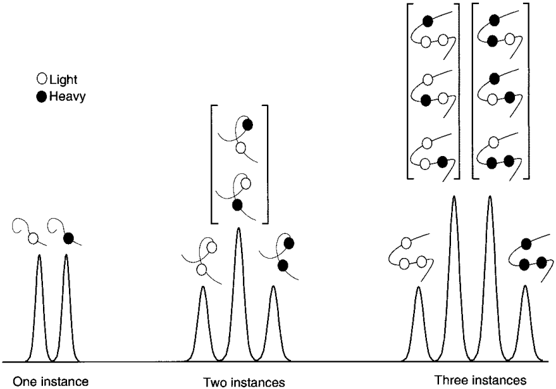
“Likewise, the use of [(15)N]H4Cl as a precursor nitrogen source means that each peptide will incorporate a variable number of nitrogen atoms, depending on the length of the peptide and the number of nitrogen side chain-containing amino acids (19, 20).”
Dynamics of Protein Turnover, a Missing Dimension in Proteomics
Pratt, J. M., Petty, J., Riba-Garcia, I., Robertson, D. H. L., Gaskell, S. J., Oliver, S. G., & Beynon, R. J. (2002) · Molecular & Cellular Proteomics · doi:10.1074/mcp.m200046-mcp200 · Cited by 396 · cited 2×
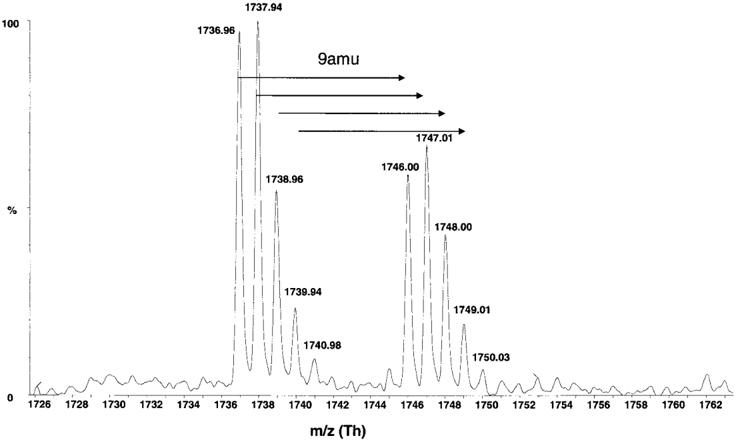
“Although the deuterated amino acid was incorporated into protein, the masses of the products, whether analyzed as intact proteins or as tryptic fragments, were consistent with the incorporation of nine deuterium atoms for each leucine residue (22, 23).”
BackgroundSelf-citationMetabolic Labeling of Mammalian Organisms with Stable Isotopes for Quantitative Proteomic Analysis
Wu, C. C., MacCoss, M. J., Howell, K. E., Matthews, D. E., & Yates, J. R. (2004) · Analytical Chemistry · doi:10.1021/ac049208j · Cited by 386 · cited 2×
“Therefore, the isotope incorporation profiles become more complex, and more rigorous analysis of the mass isotopomers is required (24, 34, 38).”
BackgroundGoshe, M. B., Conrads, T. P., Panisko, E. A., Angell, N. H., Veenstra, T. D., & Smith, R. D. (2001) · Analytical Chemistry · doi:10.1021/ac010081x · Cited by 318 · cited 5×
“Such approaches include ICAT and its modifications (4–7), acrylamide labeling (8), 18O-labeling during proteolysis (9, 10), and guanidination of lysine residues (11–13).”
MethodInfluentialA Novel Proteomic Screen for Peptide-Protein Interactions
Schulze, W. X., & Mann, M. (2004) · Journal of Biological Chemistry · doi:10.1074/jbc.m309909200 · Cited by 298
Hansen, K. C., Schmitt-Ulms, G., Chalkley, R. J., Hirsch, J., Baldwin, M. A., & Burlingame, A. L. (2003) · Molecular & Cellular Proteomics · doi:10.1074/mcp.m300021-mcp200 · Cited by 297
Conrads, T. P., Alving, K., Veenstra, T. D., Belov, M. E., Anderson, G. A., Anderson, D. J., Lipton, M. S., Paša-Tolić, L., Udseth, H. R., Chrisler, W. B., et al. (2001) · Analytical Chemistry · doi:10.1021/ac001487x · Cited by 286 · cited 1×
“D. radiodurans B16 (mouse) cells, ( 50 ) 15 N-enriched medium (98) Celltone 98%”
Hellerstein, M. K., & Neese, R. A. (1992) · American Journal of Physiology-Endocrinology and Metabolism · doi:10.1152/ajpendo.1992.263.5.e988 · Cited by 283
Controlling Deuterium Isotope Effects in Comparative Proteomics
Zhang, R., Sioma, C. S., Thompson, R. A., Xiong, L., & Regnier, F. E. (2002) · Analytical Chemistry · doi:10.1021/ac025614w · Cited by 238
Fractionation of Isotopically Labeled Peptides in Quantitative Proteomics
Zhang, R., Sioma, C. S., Wang, S., & Regnier, F. E. (2001) · Analytical Chemistry · doi:10.1021/ac010583a · Cited by 233
Everley, P. A., Krijgsveld, J., Zetter, B. R., & Gygi, S. P. (2004) · Molecular & Cellular Proteomics · doi:10.1074/mcp.m400021-mcp200 · Cited by 226
Amino acid residue specific stable isotope labeling for quantitative proteomics
Zhu, H., Pan, S., Gu, S., Bradbury, E. M., & Chen, X. (2002) · Rapid Communications in Mass Spectrometry · doi:10.1002/rcm.831 · Cited by 211 · cited 1×
“Tryptic peptides. MALDI-TOF, LC MS. Use inverse labeling of tryptic peptides to confirm very large apparent expression changes. S. cerevisiae Human skin fibroblasts ( 54 )”
BackgroundOptimization of the Isotope-Coded Affinity Tag-Labeling Procedure for Quantitative Proteome Analysis
Smolka, M. B., Zhou, H., Purkayastha, S., & Aebersold, R. (2001) · Analytical Biochemistry · doi:10.1006/abio.2001.5318 · Cited by 186 · cited 1×
“Phenylalanine C:9, N:1, H:(7 1) Ring(13)C6 Phe U(13)C9 -Phe Ring (2,3,4,5,6)(2)H5 Phe , , ,2,3,4,5,6(2)H7 Phe Essential amino acid.”
Doherty, M. K., Whitehead, C., McCormack, H., Gaskell, S. J., & Beynon, R. J. (2005) · PROTEOMICS · doi:10.1002/pmic.200400959 · Cited by 163 · cited 4×
“Therefore, the isotope incorporation profiles become more complex, and more rigorous analysis of the mass isotopomers is required (24, 34, 38).”
BackgroundInfluentialSelf-citationIbarrola, N., Kalume, D. E., Gronborg, M., Iwahori, A., & Pandey, A. (2003) · Analytical Chemistry · doi:10.1021/ac034931f · Cited by 160 · cited 1×
“Labeled and unlabeled cells were then mixed, the protein under study recovered, and differences in modifications established by mass spectrometry (43).”
BackgroundReynolds, K. J., Yao, X., & Fenselau, C. (2002) · Journal of Proteome Research · doi:10.1021/pr0100016 · Cited by 156
Minimizing Resolution of Isotopically Coded Peptides in Comparative Proteomics
Zhang, R., & Regnier, F. E. (2002) · Journal of Proteome Research · doi:10.1021/pr015516b · Cited by 154
Synthesis/Degradation Ratio Mass Spectrometry for Measuring Relative Dynamic Protein Turnover
Cargile, B. J., Bundy, J. L., Grunden, A. M., & Stephenson, J. L. (2004) · Analytical Chemistry · doi:10.1021/ac034841a · Cited by 145 · cited 1×
“For protein labeling, the use of metabolites such as [(13)C]glucose can result in a variable degree of incorporation of carbon atoms into different amino acids, and therefore into protein such that comparative analyses become more complex (18).”
MethodOptimization of Guanidination Procedures for MALDI Mass Mapping
Beardsley, R. L., & Reilly, J. P. (2002) · Analytical Chemistry · doi:10.1021/ac015613o · Cited by 145
Proteome analysis using selective incorporation of isotopically labeled amino acids
Veenstra, T. D., Martinović, S., Anderson, G. A., Paša-Tolić, L., & Smith, R. D. (2000) · Journal of the American Society for Mass Spectrometry · doi:10.1016/s1044-0305(99)00120-8 · Cited by 142 · cited 1×
“(39) used incorporation of [(2)H10]leucine into Escherichia coli proteins and rapid separation by capillary isoelectric focusing.”
MethodTaverner, T., Hall, N. E., O'Hair, R. A. J., & Simpson, R. J. (2002) · Journal of Biological Chemistry · doi:10.1074/jbc.m207370200 · Cited by 119 · cited 1×
“Identification of pepsin-derived peptides in hydrogen exchange studies. E. coli ( 65 )”
BackgroundChen, X., Smith, L. M., & Bradbury, E. M. (2000) · Analytical Chemistry · doi:10.1021/ac9911600 · Cited by 117
Quantitative Analysis of the Yeast Proteome by Incorporation of Isotopically Labeled Leucine
Jiang, H., & English, A. M. (2002) · Journal of Proteome Research · doi:10.1021/pr025523f · Cited by 113 · cited 1×
“The mass alone of a single peptide can be used as a biomarker for unambiguous identification. S. cerevisiae Leucine auxotroph ( 52 )”
BackgroundHellerstein, M. K. (2003) · Annual Review of Nutrition · doi:10.1146/annurev.nutr.23.011702.073045 · Cited by 108 · cited 2×
“Therefore, the isotope incorporation profiles become more complex, and more rigorous analysis of the mass isotopomers is required (24, 34, 38).”
BackgroundNirmalan, N., Sims, P. F. G., & Hyde, J. E. (2004) · Molecular Microbiology · doi:10.1111/j.1365-2958.2004.04049.x · Cited by 107 · cited 1×
“This elegant study also proved that the labeling was efficient, that the degree of incorporation attained nearly 100%, and that by implication the precursor RIA was close to unity (33).”
BackgroundIbarrola, N., Molina, H., Iwahori, A., & Pandey, A. (2004) · Journal of Biological Chemistry · doi:10.1074/jbc.m311714200 · Cited by 105
Differential Proteomics via Probabilistic Peptide Identification Scores
Colinge, J., Chiappe, D., Lagache, S., Moniatte, M., & Bougueleret, L. (2005) · Analytical Chemistry · doi:10.1021/ac0488513 · Cited by 105 · cited 1×
“There may be added complications when product ion spectra are used for quantification (45), but a recent study has confirmed a satisfactory correlation between difference gel electrophoresis and metabolic stable isotope labeling (r(2) 0.”
BackgroundHellerstein, M. K. (2004) · Metabolic Engineering · doi:10.1016/j.ymben.2003.10.005 · Cited by 96 · cited 1×
“However, under circumstances in which the precursor RIA is less than unity, direct analysis of peptide mass isotopomers can yield the RIA of the immediate precursor of the protein irrespective of the chemical nature or specific pool location (34, 40).”
BackgroundMartinović, S., Veenstra, T. D., Anderson, G. A., Paša‐Tolić, L., & Smith, R. D. (2002) · Journal of Mass Spectrometry · doi:10.1002/jms.263 · Cited by 92 · cited 1×
“In this instance, the mass offset between the light and heavy variants can be used to determine the abundance of a particular amino acid in a protein (30).”
BackgroundSmith, R. D., Paša-Tolić, L., Lipton, M. S., Jensen, P. K., Anderson, G. A., Shen, Y., Conrads, T. P., Udseth, H. R., Harkewicz, R., Belov, M. E., et al. (2001) · ELECTROPHORESIS · doi:10.1002/1522-2683(200105)22:9<1652::aid-elps1652>3.0.co;2-e · Cited by 89
Quantitative protein profiling using antibody arrays
Barry, R., & Soloviev, M. (2004) · PROTEOMICS · doi:10.1002/pmic.200300877 · Cited by 83 · cited 3×
“,-2H2-Tyr, ring (2, 3 ,5,6)-2H4-Tyr Degraded to acetyl-CoA.”
BackgroundInfluentialIsfort, R. J., Wang, F., Greis, K. D., Sun, Y., Keough, T. W., Farrar, R. P., Bodine, S. C., & Anderson, N. L. (2002) · PROTEOMICS · doi:10.1002/1615-9861(200205)2:5<543::aid-prot543>3.0.co;2-k · Cited by 75
Berger, S. J., Lee, S., Anderson, G., Paša‐Tolić, L., Tolić, N., Shen, Y., Zhao, R., & Smith, R. D. (2002) · Analytical Chemistry · doi:10.1021/ac020105f · Cited by 72
Double Standards in Quantitative Proteomics
Kolkman, A., Dirksen, E. H. C., Slijper, M., & Heck, A. (2005) · Molecular & Cellular Proteomics · doi:10.1074/mcp.m400121-mcp200 · Cited by 64
Yu, L., Conrads, T. P., Uo, T., Issaq, H. J., Morrison, R. S., & Veenstra, T. D. (2004) · Journal of Proteome Research · doi:10.1021/pr034090t · Cited by 62
Quaranta, S., Giuffrida, M. G., Cavaletto, M., Giunta, C., Godovac‐Zimmermann, J., Cañas, B., Fabris, C., Bertino, E., Mombrò, M., & Conti, A. (2001) · Electrophoresis · doi:10.1002/1522-2683(200105)22:9<1669::aid-elps1669>3.0.co;2-7 · Cited by 60
Stable isotope labelling in vivo as an aid to protein identification in peptide mass fingerprinting
Pratt, J. M., Robertson, D. H. L., Gaskell, S. J., Riba-Garcia, I., Hubbard, S. J., Sidhu, K., Oliver, S. G., Butler, P., Hayes, A., Petty, J., et al. (2002) · PROTEOMICS · doi:10.1002/1615-9861(200202)2:2<157::aid-prot157>3.0.co;2-m · Cited by 55 · cited 2×
“Although the deuterated amino acid was incorporated into protein, the masses of the products, whether analyzed as intact proteins or as tryptic fragments, were consistent with the incorporation of nine deuterium atoms for each leucine residue (22, 23).”
BackgroundZhu, H., Hunter, T. C., Pan, S., Yau, P. M., Bradbury, E. M., & Chen, X. (2002) · Analytical Chemistry · doi:10.1021/ac010853p · Cited by 53 · cited 1×
“In another study, [(2)H3]serine labeling coupled with 1DGE separation was used to allow immediate focus on peptides that could serve as substrates for protein kinase A (32).”
MethodVogt, J. A., Schroer, K., Hölzer, K., Hunzinger, C., Klemm, M., Biefang‐Arndt, K., Schillo, S., Cahill, M. A., Schrattenholz, A. S., Matthies, H., et al. (2003) · Rapid Communications in Mass Spectrometry · doi:10.1002/rcm.1045 · Cited by 53
Brancia, F. L., Butt, A., Beynon, R. J., Hubbard, S. J., Gaskell, S. J., & Oliver, S. G. (2001) · Electrophoresis · doi:10.1002/1522-2683(200102)22:3<552::aid-elps552>3.0.co;2-c · Cited by 52
Self-citationHunter, T. C., Li, Y., Zhu, H., Majidi, V., Bradbury, E. M., & Chen, X. (2001) · Analytical Chemistry · doi:10.1021/ac0103322 · Cited by 48
Papageorgopoulos, C., Caldwell, K., Schweingrubber, H., Neese, R. A., Shackleton, C. H. L., & Hellerstein, M. K. (2002) · Analytical Biochemistry · doi:10.1016/s0003-2697(02)00253-1 · Cited by 44 · cited 1×
“Developed a non-invasive method that uses 15 N in orally administered protein to measure protein synthesis rates in fish. Male Sprague-Dawley rats ( 61 )”
MethodDetermination of protein synthesis in rainbow trout, Oncorhynchus mykiss, using a stable isotope
Carter, C. G., Owen, S. F., He, Z., Watt, P., Scrimgeour, C. M., Houlihan, D. F., & Rennie, M. J. (1994) · Journal of Experimental Biology · doi:10.1242/jeb.189.1.279 · Cited by 43
Cahill, M. A., Woźny, W., Schwall, G., Schroer, K., Hölzer, K., Poznanović, S., Hunzinger, C., Vogt, J. A., Stegmann, W., Matthies, H., et al. (2003) · Rapid Communications in Mass Spectrometry · doi:10.1002/rcm.1046 · Cited by 43 · cited 1×
“Such approaches include ICAT and its modifications (4–7), acrylamide labeling (8), (18)O-labeling during proteolysis (9, 10), and guanidination of lysine residues (11–13).”
BackgroundUse of Deuterium-Labeled Lysine for Efficient Protein Identification and Peptide de Novo Sequencing
Gu, S., Pan, S., Bradbury, E. M., & Chen, X. (2002) · Analytical Chemistry · doi:10.1021/ac0204350 · Cited by 42 · cited 1×
“E. coli HSF (human) cells ( 58 ) L - 2 H 4 lysine (96–98) Induced expression of His-tagged protein in E. coli in minimal medium with 50% labeled lysine.”
BackgroundParker, K. C., Patterson, D. H., Williamson, B., Marchese, J., Graber, A., He, F., Jacobson, A., Juhász, P., & Martin, S. A. (2004) · Molecular & Cellular Proteomics · doi:10.1074/mcp.m300110-mcp200 · Cited by 40
Wang, Y. K., Ma, Z., Quinn, D. F., & Fu, E. W. (2002) · Rapid Communications in Mass Spectrometry · doi:10.1002/rcm.725 · Cited by 38
Pan, S., Gu, S., Bradbury, E. M., & Chen, X. (2003) · Analytical Chemistry · doi:10.1021/ac020482s · Cited by 37 · cited 1×
“L - 2 H 10 leucine (98.5) Continuous culture in glucose limited medium at growth rate of 0.1/h 2DGE, Tryptic peptides MALDI-ToF Use of peptide leucine content to reduce search space for protein identification. HSF ( 31 )”
MethodInfluentialThevis, M., Loo, R. R. O., & Loo, J. A. (2002) · Journal of Proteome Research · doi:10.1021/pr025568g · Cited by 35
Using Stable-Isotope-Labeled Proteins for Hydrogen Exchange Studies in Complex Mixtures
Engen, J. R., Bradbury, E. M., & Chen, X. (2002) · Analytical Chemistry · doi:10.1021/ac011122s · Cited by 25 · cited 1×
“Mapping of peptides to a given protein from mass and leucine content. E. coli ( 28 )”
BackgroundEvidence for the relation of herpes simplex virus type 1 to Down syndrome and Alzheimer's disease
Cheon, M. S., Bajo, M., Gulesserian, T., Cairns, N. J., & Lübec, G. (2001) · Electrophoresis · doi:10.1002/1522-2683(200102)22:3<464::aid-elps464>3.0.co;2-4 · Cited by 24
Self-citationPérez, J. F., & Reeds, P. J. (1998) · Journal of Nutrition · doi:10.1093/jn/128.9.1562 · Cited by 24
Yates, J. R., & Snyder, M. P. (2004) · Current Opinion in Chemical Biology · doi:10.1016/j.cbpa.2003.12.011 · Cited by 24 · cited 3×
“Glycine C:2, N:1, H:(2) U(13)C2 Gly 2,2(2)H4 Gly Maximal 2 amu separation of heavy and light causes difficulty in separation of natural (13)C isotopomer envelopes.”
BackgroundVissers, Y. L. J., MEYENFELDT, M. F. V., Bráulio, V. B., Luiking, Y. C., & Deutz, N. E. P. (2003) · Clinical Science · doi:10.1042/cs20020283 · Cited by 18 · cited 1×
“Male Swiss mice ( 62 ) L -3-methyl- 2 H 3 histidine”
BackgroundHirayama, K., Yuji, R., Yamada, N., NOGUCHI, K., Yamaguchi, Y., Enokizono, J., Kato, K., Arata, Y., & Shimada, I. (1998) · Journal of the Mass Spectrometry Society of Japan · doi:10.5702/massspec.46.83 · Cited by 4
Research works printed but not linked: 1
- Beynon, R. J. (2003) Stable isotope labelling with amino acids (SILAA) as an aid to protein identification in peptide mass fingerprinting, in Proteomics Methods and Reviews (Conn, P. M., ed) pp. 129 -143, Humana Press, Totowa, NJ 15.
Cited by
Global quantification of mammalian gene expression control
Schwanhäusser, B., Busse, D., Li, N., Dittmar, G., Schuchhardt, J., Wolf, J., Chen, W., & Selbach, M. (2011) · Nature · doi:10.1038/nature10098 · Cited by 6,566
Protein labeling by iTRAQ: A new tool for quantitative mass spectrometry in proteome research
Wiese, S., Reidegeld, K. A., Meyer, H. E., & Warscheid, B. (2007) · PROTEOMICS · doi:10.1002/pmic.200600422 · Cited by 800
Mapping protein post-translational modifications with mass spectrometry
Witze, E. S., Old, W. M., Resing, K. A., & Ahn, N. G. (2007) · Nature Methods · doi:10.1038/nmeth1100 · Cited by 792
Krüger, M., Moser, M., Ussar, S., Thievessen, I., Luber, C. A., Forner, F., Schmidt, S., Zanivan, S., Fässler, R., & Mann, M. (2008) · Cell · doi:10.1016/j.cell.2008.05.033 · Cited by 680
“Because proteins can be synthesized from dietary amino acids as well as from amino acids derived by protein catabolism, this value is a lower limit for the true turnover (Beynon and Pratt, 2005).”
BackgroundAdvances in structure elucidation of small molecules using mass spectrometry
Kind, T., & Fiehn, O. (2010) · Bioanalytical Reviews · doi:10.1007/s12566-010-0015-9 · Cited by 480
“Proteomics approaches use labeling studies for the quantification of peptides and proteins [303–305] as well as mass defect isotopomer studies [306, 307].”
Method
Metadata
- Authors
- Beynon, R. J., & Pratt, J. M.
- Affiliations
- University of Liverpool (GB)
- Corresponding author
- Beynon, Robert J.
- ORCID
- Beynon, Robert J.
- Venue
- Molecular & Cellular Proteomics
- Publisher
- Elsevier BV
- Published
- 2005-07
- Volume
- 4
- Issue
- 7
- Pages
- 857-872
- ISSN
- 1535-9476 (ISSN-L)
- OpenAlex
- W2046602608
- Cited by
- 205
- References
- 64
- Citations by year
- 2026: 3 · 2025: 5 · 2024: 3 · 2023: 3 · 2022: 7 · 2021: 5 · 2020: 4 · 2019: 1 · 2018: 5 · 2017: 7 · 2016: 9 · 2015: 2 · 2014: 5 · 2013: 10 · 2012: 24
- FWCI
- 1.70
- Type
- journal article
- Language
- en
- Open access
- hybrid
- doi.org
- Licence
- cc-by
- www.elsevier.com/tdm/userlicense/1.0/ (tdm)
- www.elsevier.com/legal/tdmrep-license (tdm)
- creativecommons.org/licenses/by/4.0/ (vor, 5530 d)
- Locations
- Molecular & Cellular Proteomics (publishedVersion, cc-by)
- PubMed (publishedVersion)
- Topics
- Physical Sciences › Chemistry › Spectroscopy › Advanced Proteomics Techniques and Applications
- Life Sciences › Biochemistry, Genetics and Molecular Biology › Molecular Biology › Ubiquitin and proteasome pathways
- Physical Sciences › Chemistry › Spectroscopy › Mass Spectrometry Techniques and Applications
- Keywords
- metabolic labeling, stable isotope labeling, in vivo protein labeling, amino acid precursors, protein turnover, single-cell proteomics, prokaryotic cells, eukaryotic cells
- MeSH terms
- Amino Acids, Animals, Humans, Isotope Labeling, Isotopes, Proteins, Computational Biology, Proteomics
About these checks
Registry, retraction, Cites and statistics results are computed, not judged, with one exception: a printed reference that no index lists is read once by a model before it counts as a citation error. Claims are extracted by a model and kept only when their quote appears verbatim in the text; each cited source is then checked, with a model’s help, for whether it says what the claim relies on. Those verdicts can be wrong — read the claim’s quote and the cited source before relying on one.
Statistics and arithmetic are recomputed, not judged.
Confidence bands are shown only for fields calibrated on our annotated test set. None is calibrated yet, so no band is shown.
What counts as a claim ›How we measure confidence ›How we check this ›
Are you an author, or do you see a problem with this page? Request a review
Data sources
Bibliographic data: Semantic Scholar, OpenAlex, Crossref.
Contains information from the Semantic Scholar Academic Graph Datasets, made available under the ODC Attribution License (ODC-BY 1.0).
Semantic Scholar’s data is described in: Kinney, R., et al. (2023). The Semantic Scholar Open Data Platform. arXiv:2301.10140.
