

Information Systems and Developing Countries: Failure, Success, and Local Improvisations
Open accessThe DOI matches its Crossref record; 53 of the 53 references it cites were found in a registry or an index.
Abstract
The article develops the design-actuality gaps model to explain why many information systems in developing countries fail totally or partially.
Overview
CoChat Summary
## TL;DR
The paper argues that many information systems in developing countries fail totally or partially, and proposes a contingency-theory-based model of “design-actuality gaps” to explain why. It identifies two high-risk gap types—country context gaps and hard-soft gaps—and also discusses constraints on local improvisation.
## Key findings
- The paper states that, alongside successes, “many information systems in developing countries can be categorized as failing either totally or partially.”
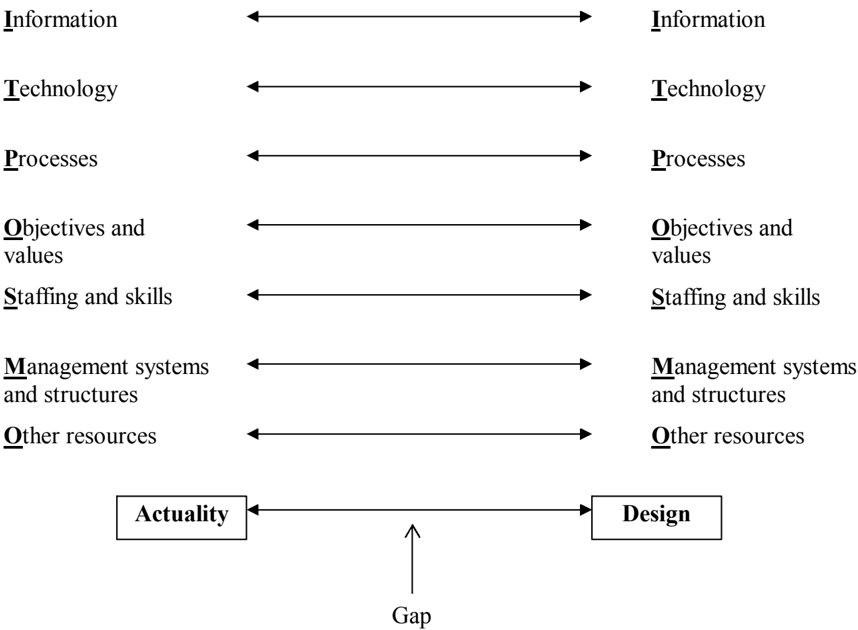
- It develops the notion of “design-actuality gaps,” defined as “the match or mismatch between IS designs and local user actuality.”
- The model highlights two “high-risk archetypes” affecting IS in developing countries: “country context gaps” and “hard-soft gaps.”
- The model is also presented as useful for explaining “the constraints that exist to local IS improvisations in developing countries.”
## Methods
- The paper is a journal article that develops a conceptual model “drawing on contingency theory.”
- The abstract does not specify a dataset, sample, or number of cases; the text only says the article presents “evidence” about IS in developing countries.
- The main analysis appears to be conceptual/theoretical, using the model to interpret IS cases and to refine IS theory.
## Limitations
- The paper does not report a specific sample size, case count, or empirical dataset in the provided text; this limits what can be assessed from the excerpt.
- The abstract does not state formal limitations or boundary conditions of the model beyond noting its focus on developing countries and local user actuality.
- The evidence base is not described in the provided text, so the scope of the claims cannot be independently evaluated from the excerpt alone.
Model-written summary. Check it against the paper before relying on it.
Integrity signals
Registry
Cites
Statistics
Figures
Verification
Claims the paper makes
0 Valid · 0 Not valid · 0 Not checked · 3 Own results and interpretations
A result the paper reports from its own data — it cites no other source for it, so there is none to check. The quote shows it is in the paper.
In the paper
“This article presents evidence that-alongside the successes-many information systems in developing countries can be categorized as failing either totally or partially.”
plain- Asserted: passes — The authors put it forward as true.
- Checkable: passes — It can be checked against evidence.
- Load-bearing: passes — The paper’s conclusions depend on it.
- Based: passes — The paper gives a reason why it holds.
A conclusion the paper draws from its own results — it cites no other source for it, so there is none to check. The quote shows it is in the paper.
In the paper
“The model draws on contingency theory in order to advance the notion of design-actuality gaps: the match or mismatch between IS designs and local user actuality.”
plainstates a possible cause- Asserted: passes — The authors put it forward as true.
- Checkable: passes — It can be checked against evidence.
- Load-bearing: passes — The paper’s conclusions depend on it.
- Based: passes — The paper gives a reason why it holds.
- Rests on an assumption not shown here.
- It may state two separate claims as one. 1
Claims other papers make about this one
Each is checked against this paper’s own text: does it say what the citing paper says it does?
In the citing paper
“This suggests that adoption can be seen as simply the first and perhaps least problematic phase in the drive towards the integration of an innovation into the health system. The greater risk is that of ‘sustainability failure’ [25, 26]”
From Beyond pilotitis: taking digital health interventions to the national level in China and Uganda (2017) · cites this paper as [26]
Citations
Cites
Task-Technology Fit and Individual Performance
Goodhue, D. L., & Thompson, R. L. (1995) · MIS Quarterly · doi:10.2307/249689 · Cited by 6,006 · cited 1×
“IS implementation models drawing on this theme have involved e t between “tool”/“technology” and “task” ( Goodhue & Thompson, 1995; Agarwal & Sinha, 1996), or between multiple factors (Scott Morton, 1991; Southon et al., 1997).”
MethodSoftware Engineering Economics
Boehm, B. W. (2001) · Pioneers and Their Contributions to Software Engineering · doi:10.1007/978-3-642-48354-7_5 · Cited by 5,981
Thompson, V. A., & March, J. G. (1966) · American Sociological Review · doi:10.2307/2090830 · Cited by 3,351
The Concept of Fit in Strategy Research: Toward Verbal and Statistical Correspondence
Venkatraman, N. (1989) · The Academy of Management Review · doi:10.2307/258177 · Cited by 2,367
Suchman, L. A. (1987) · Cited by 2,279
The Concept of Fit in Strategy Research: Towards Verbal and Statistical Correspondence
Venkatraman, N. V. (1988) · DSpace@MIT (Massachusetts Institute of Technology) · Cited by 2,037
Improvising Organizational Transformation Over Time: A Situated Change Perspective
Orlikowski, W. J. (1996) · Information Systems Research · doi:10.1287/isre.7.1.63 · Cited by 1,952
Management strategies for information technology
(1990) · Long Range Planning · doi:10.1016/0024-6301(90)90040-b · Cited by 1,033
Shaping technology/building society
(1993) · Choice Reviews Online · doi:10.5860/choice.30-3774 · Cited by 939
The corporation of the 1990s: Information technology and organizational transformation
(1993) · Futures · doi:10.1016/0016-3287(93)90030-w · Cited by 886
Robey, D., & Boudreau, M.-C. (1999) · Information Systems Research · doi:10.1287/isre.10.2.167 · Cited by 765
Information systems failures—a survey and classification of the empirical literature
Lyytinen, K., & Hirschheim, R. (1988) · Oxford University Press eBooks · Cited by 729
Why information systems fail: a case study approach
Sauer, C. (1993) · Cited by 409
Reinventing government in the information age
(2002) · Reinventing Government in the Information Age · doi:10.4324/9780203204962-7 · Cited by 385
Self-citationPoverty and development into the 21st century
Allen, T., & Thomas, A. (2000) · London School of Economics and Political Science Research Online (London School of Economics and Political Science) · Cited by 278
Designing Organizations: 21st Century Approaches
(2008) · Information and Organization Design Series · doi:10.1007/978-0-387-77776-4 · Cited by 273
(2002) · Routledge eBooks · doi:10.4324/9780203204962 · Cited by 271
The Struggle for District-Based Health Information Systems in South Africa
Braa, J., & Hedberg, C. (2002) · The Information Society · doi:10.1080/01972240290075048 · Cited by 257
Oxford Surveys in Information Technology
(1988) · Telematics and Informatics · doi:10.1016/s0736-5853(88)80077-7 · Cited by 242
Information Technology Development Creativity: A Case Study of Attempted Radical Change1
Cooper, R. B. (2000) · MIS Quarterly · doi:10.2307/3250938 · Cited by 200
Organizations and Their Members: A Contingency Approach.
Johnston, R., Lorsch, J. W., & Morse, J. J. (1975) · Administrative Science Quarterly · doi:10.2307/2392133 · Cited by 177
Cognitive Fit in Requirements Modeling: A Study of Object and Process Methodologies
Agarwal, R., Sinha, A. P., & Tanniru, M. (1996) · Journal of Management Information Systems · doi:10.1080/07421222.1996.11518126 · Cited by 162
Clemons, E. K., Thatcher, M. E., & Row, M. C. (1995) · Journal of Management Information Systems · doi:10.1080/07421222.1995.11518079 · Cited by 162
Lessons from a failed information systems initiative: issues for complex organisations☆
Southon, G., SAUER, C., & Dampney, K. (1999) · International Journal of Medical Informatics · doi:10.1016/s1386-5056(99)00018-0 · Cited by 158
Information Technology and Organizational Transformation
Aubert, B. A., Rivard, S., Patry, M., Paré, G., & Smith, H. (2004) · Routledge eBooks · doi:10.4324/9780080544212 · Cited by 136
Heeks, R. (1996) · Research Explorer (The University of Manchester) · Cited by 100
Self-citationA contingency framework for the investigation of information systems failure
Poulymenakou, A., & Holmes, A. (1996) · European Journal of Information Systems · doi:10.1057/ejis.1996.10 · Cited by 98
Information Technology and Social Transformation: GIS for Forestry Management in India
Sahay, S. (2001) · The Information Society · doi:10.1080/019722401750067397 · Cited by 91
The Productivity Paradox: Is it Resolved? Is there a New One? What Does It All Mean for Managers?
Dedrick, J., & Kraemer, K. L. (2001) · eScholarship (California Digital Library) · Cited by 75
Organizations and Their Members: A Contingency Approach.
Pennings, J. M., Lorsch, J. W., & Morse, J. J. (1977) · Contemporary Sociology A Journal of Reviews · doi:10.2307/2062730 · Cited by 65
Informatics in Africa: Lessons from World Bank experience
Moussa, A., & Schwäre, R. (1992) · World Development · doi:10.1016/0305-750x(92)90088-d · Cited by 57
Montealegre, R. (1999) · Information Technology for Development · doi:10.1080/02681102.1999.9525310 · Cited by 56
Deciding the Future for IS Failures Not the Choice You Might Think
Sauer, C. (1999) · Rethinking Management Information Systems · doi:10.1093/oso/9780198775331.003.0015 · Cited by 56
Information Technology in Context
Oldham, A. (1990) · Electronics Education · doi:10.1049/ee.1990.0051 · Cited by 53
Baark, E., & Heeks, R. (1999) · Information Technology for Development · doi:10.1080/02681102.1999.9525309 · Cited by 45
Self-citationInformation and development: Some reasons for failures
Boon, J. A. (1992) · The Information Society · doi:10.1080/01972243.1992.9960122 · Cited by 42
Technology, Poverty and Development
Heeks, R., Wilson, G. D., Allen, T., et al. (2000) · Research Explorer (The University of Manchester) · Cited by 38
Self-citationThe impact of the transfer of information technology on development
Shields, P., & Servaes, J. (1989) · The Information Society · doi:10.1080/01972243.1989.9960068 · Cited by 34
Jay W.Lorsch,John J.Morse「Organizations and Their Members:A Contingency Approach」1974
二村, 敏. (1975) · 組織科学 · Cited by 33
Understanding Success and Failure of Healthcare Information Systems
Heeks, R., Mundy, D., & Salazar, A. J. (2000) · IGI Global eBooks · doi:10.4018/978-1-878289-62-9.ch005 · Cited by 23
Self-citationTettey, W. J. (2000) · Information Technology for Development · doi:10.1080/02681102.2000.9525322 · Cited by 20
Computer supported collaborative working: challenging perspectives on work and technology
Bannon, L. J. (1998) · John Wiley & Sons, Inc. eBooks · Cited by 20
Veasey, P. (1991) · ITNOW · doi:10.1093/combul/33.2.16 · Cited by 17
Information Technology and Social Transformation
Latham, R. E. (2002) · International Studies Review · doi:10.1111/1521-9488.t01-1-00254 · Cited by 15
Information systems and public sector reform in the Third World
Heeks, R., & Mundy, D. (2001) · Edward Elgar Publishing eBooks · doi:10.4337/9781781952757.00017 · Cited by 15
Self-citationBarriers to electronic mail systems in developing countries
Matta, K. F., & Boutros, N. E. (1989) · The Information Society · doi:10.1080/01972243.1989.9960069 · Cited by 14
Creating a campus network culture in a newly developing economy
Beeharry, A., & Schneider, G. (1996) · Information Technology for Development · doi:10.1080/02681102.1996.9627210 · Cited by 13
Narasimhan, R. (1998) · Information Technology for Development · doi:10.1080/02681102.1998.9525292 · Cited by 13
Uberoi, N. K. (1998) · Paradigm A Management Research Journal · doi:10.1177/0971890719980225 · Cited by 12
Lessons from a Failed Information Systems Initiative: Issues for Complex Organisations
Sauer, C., Dampney, K., & Southon, G. (1997) · APAMI - HIC 1997: Managing Information for Better Health Outcomes in Australia and the Asia Pacific Region: 11 to 13 August 1997, Asia Pacific Association of Medical Informatics, HISA: Conference Proceedings · Cited by 2
Bank, W. (1993) · World Bank country study · doi:10.1596/0-8213-2376-8 · Cited by 1
(1992) · HAL
Research works printed but not linked: 19
- Avgerou, C. 2000. The multiple rationalities of information systems development. In Information ? ows, local improvisations and work practices. Proceedings of the IFIP WG9.4 Conference 2000. Cape Town: IFIP.
- Avgerou C., 2000, Information technology in context, 1
- Bijker W. E., 1992, Shaping tech-nology/building society, 1
- Butler R., 1991, Designing organizations
- Goonatilake, L., Maizza-Neto, O., and Jayawardene, P. 2000. Enhancing enterprise competitiveness in developing countries through the promotion of management information and benchmarking tools. In Information ? ows, local improvisations and work practices. Proceedings of the IFIP WG9.4 Conference 2000. Cape Town: IFIP.
- IFIP WG9.4. 2000. Information ? ows, local improvisations and work practices. Proceedings of the IFIP WG9.4 Conference 2000. Cape Town: IFIP.
- Jayasuriya R., 1995, Medinfo ’95, 1603
- Korac-Boisvert N., 1995, Information Infrastructure and Policy, 4, 131
- Macias-Chapula, C. A. 2000. Issues learned, challenges and opportunities to implement a library automation project at Mexico’s General Hospital. In Information ? ows, local improvisations and work practices. Proceedings of the IFIP WG9.4 Conference 2000. Cape Town: IFIP.
- Calitz, A. P. 2000. Transforming work practices with IT. In Information ? ows, local improvisations and work practices. Proceedings of the IFIP WG9.4 Conference 2000. Cape Town: IFIP.
- Oyomno G. Z., 1996, Global information technology and socio-economic development, 19
- Puri, S. K., Chauhan, K. P. S., and Admedullah, M. 2000. Prospects of biological diversity information management. In Information ? ows, local improvisations and work practices. Proceedings of the IFIP WG9.4 Conference 2000. Cape Town: IFIP.
- Silva L. O., 2000, Outsourcing as an improvisation. In Information ? ows, local improvisations and work practices. Proceedings of the IFIP WG9.4 Conference 2000
- Walsham G., 2000, Information technology in context, 291
- Wynn, E. and deLyra, J. 2000. A strange attractor in the chaos of global IS development. In Information ? ows, local improvisations and work practices. Proceedings of the IFIP WG9.4 Conference 2000. Cape Town: IFIP.
- Cain P., 2001, Reinventing government in the information age, 135
- Kenny C., 2001, The Internet and economic growth in LDCs. Draft paper
- Kitiyadisai, K. 2000. The implementation of IT in reengineering the Thai Revenue Department. In Information ? ows, local improvisations and work practices. Proceedings of the IFIP WG9.4 Conference 2000. Cape Town: IFIP.
- Mundy D., 2001, Reinventing government in the information age, 271
Cited by
Kijsanayotin, B., Pannarunothai, S., & Speedie, S. M. (2009) · International Journal of Medical Informatics · doi:10.1016/j.ijmedinf.2008.12.005 · Cited by 746
Smart city as urban innovation: focusing on management, policy, and context
Nam, T., & Pardo, T. A. (2011) · Proceedings of the 5th International Conference on Theory and Practice of Electronic Governance · doi:10.1145/2072069.2072100 · Cited by 718
“Common reasons include poor planning, weak business case, lack of top management support, lack of leadership, lack of professional skills, misalignment between organizational goals and project objectives, vulnerability to policy swings, too much technology-driven enthusiasm, and political hyper-activism [15,19,25,29,4…”
Information Systems in Developing Countries: A Critical Research Review
Avgerou, C. (2008) · Journal of Information Technology · doi:10.1057/palgrave.jit.2000136 · Cited by 701
“…of the problem in the gap between the professional knowledge and practice of systems development and the actual conditions of organizational practice in developing countries (Heeks, 2002), in effect arguing for socially embedded analyses to understand the reasons and address the risk of IS failure.”
BackgroundICT4D 2.0: The Next Phase of Applying ICT for International Development
Heeks, R. (2008) · Computer · doi:10.1109/mc.2008.192 · Cited by 639
Self-citationeCommerce adoption in developing countries: a model and instrument
Molla, A., & Licker, P. S. (2005) · Information & Management · doi:10.1016/j.im.2004.09.002 · Cited by 598
Metadata
- Authors
- Heeks, R.
- Corresponding author
- Heeks, Richard
- ORCID
- Heeks, Richard
- Venue
- The Information Society
- Publisher
- Informa UK Limited
- Published
- 2002-03
- Volume
- 18
- Issue
- 2
- Pages
- 101-112
- ISSN
- 0197-2243 (ISSN-L)
- 1087-6537
- OpenAlex
- W2136941206
- Semantic Scholar
- dd6c8931d276f258d356e65416018725912d2dbd
- Cited by
- 1,390
- References
- 53
- Citations by year
- 2026: 71 · 2025: 42 · 2024: 37 · 2023: 41 · 2022: 49 · 2021: 60 · 2020: 58 · 2019: 72 · 2018: 39 · 2017: 70 · 2016: 81 · 2015: 114 · 2014: 95 · 2013: 97 · 2012: 97
- FWCI
- 34.02
- Type
- journal article
- Language
- en
- Open access
- Licence
- other-oa
- Locations
- The Information Society (publishedVersion)
- Research Explorer (The University of Manchester) (publishedVersion, other-oa)
- Topics
- Physical Sciences › Computer Science › Information Systems › ICT in Developing Communities
- Social Sciences › Business, Management and Accounting › Management Information Systems › Information Systems Theories and Implementation
- Social Sciences › Economics, Econometrics and Finance › Economics and Econometrics › ICT Impact and Policies
- Keywords
- contingency theory, IS success factors
About these checks
Registry, retraction, Cites and statistics results are computed, not judged, with one exception: a printed reference that no index lists is read once by a model before it counts as a citation error. Claims are extracted by a model and kept only when their quote appears verbatim in the text; each cited source is then checked, with a model’s help, for whether it says what the claim relies on. Those verdicts can be wrong — read the claim’s quote and the cited source before relying on one.
A language model drew the claims from the paper on 2026-10-10, under version 3 of the claim definition (model deepseek-v4.1-flash, prompt extract-v3).
A second model labelled each claim on 2026-10-10 (model jev-1.13-20260917, definition revision gold-guideline-v0.2).
Statistics and arithmetic are recomputed, not judged.
Confidence bands are shown only for fields calibrated on our annotated test set. None is calibrated yet, so no band is shown.
What counts as a claim ›How we measure confidence ›How we check this ›
Are you an author, or do you see a problem with this page? Request a review
Data sources
Bibliographic data: Semantic Scholar, OpenAlex, Crossref.
Contains information from the Semantic Scholar Academic Graph Datasets, made available under the ODC Attribution License (ODC-BY 1.0).
Semantic Scholar’s data is described in: Kinney, R., et al. (2023). The Semantic Scholar Open Data Platform. arXiv:2301.10140.
