

Information Systems and Developing Countries: Failure, Success, and Local Improvisations
Open accessThe DOI matches its Crossref record; 53 of the 53 references it cites were found in a registry or an index.
Abstract
The article develops the design-actuality gaps model to explain why many information systems in developing countries fail totally or partially.
Overview
CoChat Summary
## TL;DR
The paper argues that many information systems in developing countries fail totally or partially, and proposes a contingency-theory-based model of “design-actuality gaps” to explain why. It identifies two high-risk gap types—country context gaps and hard-soft gaps—and also discusses constraints on local improvisation.
## Key findings
- The paper states that, alongside successes, “many information systems in developing countries can be categorized as failing either totally or partially.”
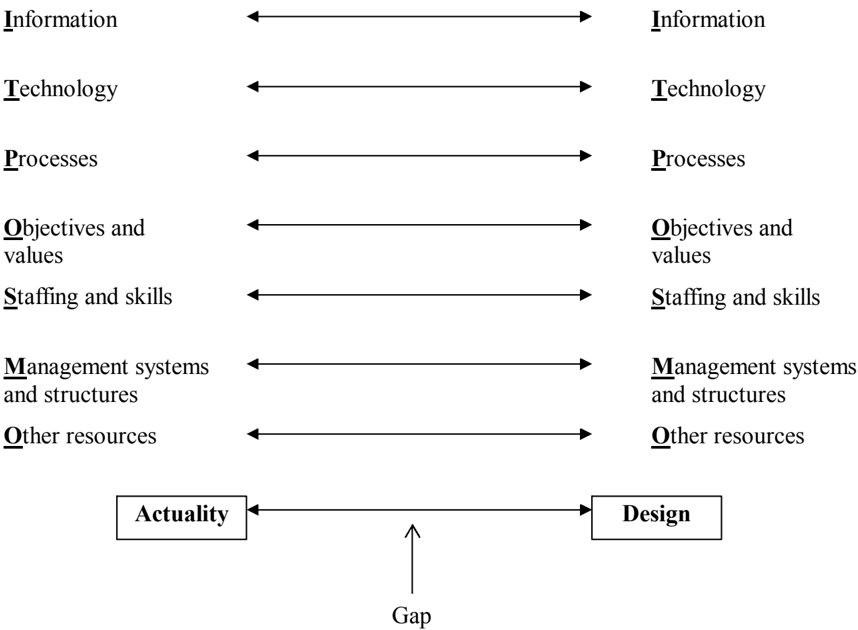
- It develops the notion of “design-actuality gaps,” defined as “the match or mismatch between IS designs and local user actuality.”
- The model highlights two “high-risk archetypes” affecting IS in developing countries: “country context gaps” and “hard-soft gaps.”
- The model is also presented as useful for explaining “the constraints that exist to local IS improvisations in developing countries.”
## Methods
- The paper is a journal article that develops a conceptual model “drawing on contingency theory.”
- The abstract does not specify a dataset, sample, or number of cases; the text only says the article presents “evidence” about IS in developing countries.
- The main analysis appears to be conceptual/theoretical, using the model to interpret IS cases and to refine IS theory.
## Limitations
- The paper does not report a specific sample size, case count, or empirical dataset in the provided text; this limits what can be assessed from the excerpt.
- The abstract does not state formal limitations or boundary conditions of the model beyond noting its focus on developing countries and local user actuality.
- The evidence base is not described in the provided text, so the scope of the claims cannot be independently evaluated from the excerpt alone.
Model-written summary. Check it against the paper before relying on it.
Integrity signals
Registry
Cites
Statistics
Figures
Verification
Claims the paper makes
0 Valid · 0 Not valid · 0 Not checked · 3 Own results and interpretations
A result the paper reports from its own data — it cites no other source for it, so there is none to check. The quote shows it is in the paper.
In the paper
“This article presents evidence that-alongside the successes-many information systems in developing countries can be categorized as failing either totally or partially.”
plain- Asserted: passes — The authors put it forward as true.
- Checkable: passes — It can be checked against evidence.
- Load-bearing: passes — The paper’s conclusions depend on it.
- Based: passes — The paper gives a reason why it holds.
A conclusion the paper draws from its own results — it cites no other source for it, so there is none to check. The quote shows it is in the paper.
In the paper
“The model draws on contingency theory in order to advance the notion of design-actuality gaps: the match or mismatch between IS designs and local user actuality.”
plainstates a possible cause- Asserted: passes — The authors put it forward as true.
- Checkable: passes — It can be checked against evidence.
- Load-bearing: passes — The paper’s conclusions depend on it.
- Based: passes — The paper gives a reason why it holds.
- Rests on an assumption not shown here.
- It may state two separate claims as one. 1
Claims other papers make about this one
Each is checked against this paper’s own text: does it say what the citing paper says it does?
In the citing paper
“This suggests that adoption can be seen as simply the first and perhaps least problematic phase in the drive towards the integration of an innovation into the health system. The greater risk is that of ‘sustainability failure’ [25, 26]”
From Beyond pilotitis: taking digital health interventions to the national level in China and Uganda (2017) · cites this paper as [26]
Citations
Cites
Task-Technology Fit and Individual Performance
Goodhue, D. L., & Thompson, R. L. (1995) · MIS Quarterly · doi:10.2307/249689 · Cited by 6,006 · cited 1×
“IS implementation models drawing on this theme have involved e t between “tool”/“technology” and “task” ( Goodhue & Thompson, 1995; Agarwal & Sinha, 1996), or between multiple factors (Scott Morton, 1991; Southon et al., 1997).”
MethodSoftware Engineering Economics
Boehm, B. W. (2001) · Pioneers and Their Contributions to Software Engineering · doi:10.1007/978-3-642-48354-7_5 · Cited by 5,981
Thompson, V. A., & March, J. G. (1966) · American Sociological Review · doi:10.2307/2090830 · Cited by 3,351
The Concept of Fit in Strategy Research: Toward Verbal and Statistical Correspondence
Venkatraman, N. (1989) · The Academy of Management Review · doi:10.2307/258177 · Cited by 2,367
Suchman, L. A. (1987) · Cited by 2,279
The Concept of Fit in Strategy Research: Towards Verbal and Statistical Correspondence
Venkatraman, N. V. (1988) · DSpace@MIT (Massachusetts Institute of Technology) · Cited by 2,038
Improvising Organizational Transformation Over Time: A Situated Change Perspective
Orlikowski, W. J. (1996) · Information Systems Research · doi:10.1287/isre.7.1.63 · Cited by 1,952
Management strategies for information technology
(1990) · Long Range Planning · doi:10.1016/0024-6301(90)90040-b · Cited by 1,033
Shaping technology/building society
(1993) · Choice Reviews Online · doi:10.5860/choice.30-3774 · Cited by 939
The corporation of the 1990s: Information technology and organizational transformation
(1993) · Futures · doi:10.1016/0016-3287(93)90030-w · Cited by 886
Research works printed but not linked: 19
- Avgerou, C. 2000. The multiple rationalities of information systems development. In Information ? ows, local improvisations and work practices. Proceedings of the IFIP WG9.4 Conference 2000. Cape Town: IFIP.
- Avgerou C., 2000, Information technology in context, 1
- Bijker W. E., 1992, Shaping tech-nology/building society, 1
- Butler R., 1991, Designing organizations
- Goonatilake, L., Maizza-Neto, O., and Jayawardene, P. 2000. Enhancing enterprise competitiveness in developing countries through the promotion of management information and benchmarking tools. In Information ? ows, local improvisations and work practices. Proceedings of the IFIP WG9.4 Conference 2000. Cape Town: IFIP.
- IFIP WG9.4. 2000. Information ? ows, local improvisations and work practices. Proceedings of the IFIP WG9.4 Conference 2000. Cape Town: IFIP.
- Jayasuriya R., 1995, Medinfo ’95, 1603
- Korac-Boisvert N., 1995, Information Infrastructure and Policy, 4, 131
- Macias-Chapula, C. A. 2000. Issues learned, challenges and opportunities to implement a library automation project at Mexico’s General Hospital. In Information ? ows, local improvisations and work practices. Proceedings of the IFIP WG9.4 Conference 2000. Cape Town: IFIP.
- Calitz, A. P. 2000. Transforming work practices with IT. In Information ? ows, local improvisations and work practices. Proceedings of the IFIP WG9.4 Conference 2000. Cape Town: IFIP.
- Oyomno G. Z., 1996, Global information technology and socio-economic development, 19
- Puri, S. K., Chauhan, K. P. S., and Admedullah, M. 2000. Prospects of biological diversity information management. In Information ? ows, local improvisations and work practices. Proceedings of the IFIP WG9.4 Conference 2000. Cape Town: IFIP.
- Silva L. O., 2000, Outsourcing as an improvisation. In Information ? ows, local improvisations and work practices. Proceedings of the IFIP WG9.4 Conference 2000
- Walsham G., 2000, Information technology in context, 291
- Wynn, E. and deLyra, J. 2000. A strange attractor in the chaos of global IS development. In Information ? ows, local improvisations and work practices. Proceedings of the IFIP WG9.4 Conference 2000. Cape Town: IFIP.
- Cain P., 2001, Reinventing government in the information age, 135
- Kenny C., 2001, The Internet and economic growth in LDCs. Draft paper
- Kitiyadisai, K. 2000. The implementation of IT in reengineering the Thai Revenue Department. In Information ? ows, local improvisations and work practices. Proceedings of the IFIP WG9.4 Conference 2000. Cape Town: IFIP.
- Mundy D., 2001, Reinventing government in the information age, 271
Cited by
Kijsanayotin, B., Pannarunothai, S., & Speedie, S. M. (2009) · International Journal of Medical Informatics · doi:10.1016/j.ijmedinf.2008.12.005 · Cited by 746
Smart city as urban innovation: focusing on management, policy, and context
Nam, T., & Pardo, T. A. (2011) · Proceedings of the 5th International Conference on Theory and Practice of Electronic Governance · doi:10.1145/2072069.2072100 · Cited by 718
“Common reasons include poor planning, weak business case, lack of top management support, lack of leadership, lack of professional skills, misalignment between organizational goals and project objectives, vulnerability to policy swings, too much technology-driven enthusiasm, and political hyper-activism [15,19,25,29,4…”
Information Systems in Developing Countries: A Critical Research Review
Avgerou, C. (2008) · Journal of Information Technology · doi:10.1057/palgrave.jit.2000136 · Cited by 701
“…of the problem in the gap between the professional knowledge and practice of systems development and the actual conditions of organizational practice in developing countries (Heeks, 2002), in effect arguing for socially embedded analyses to understand the reasons and address the risk of IS failure.”
BackgroundICT4D 2.0: The Next Phase of Applying ICT for International Development
Heeks, R. (2008) · Computer · doi:10.1109/mc.2008.192 · Cited by 639
Self-citationeCommerce adoption in developing countries: a model and instrument
Molla, A., & Licker, P. S. (2005) · Information & Management · doi:10.1016/j.im.2004.09.002 · Cited by 598
e-Health technologies show promise in developing countries
Blaya, J. A., Fraser, H. S. F., & Holt, B. (2010) · Health Affairs · doi:10.1377/hlthaff.2009.0894 · Cited by 581
Research on information systems in developing countries: Current landscape and future prospects
Walsham, G., & Sahay, S. (2006) · Information Technology for Development · doi:10.1002/itdj.20020 · Cited by 542
“Some have developed new models, such as the design-reality gap model for IS implementation described by Heeks (2002) .”
Do information and communication technologies (ICTs) contribute to development?
Heeks, R. (2010) · Journal of International Development · doi:10.1002/jid.1716 · Cited by 494
Self-citationThe Failure of E‐Government in Developing Countries: A Literature Review
Dada, D. (2006) · THE ELECTRONIC JOURNAL OF INFORMATION SYSTEMS IN DEVELOPING COUNTRIES · doi:10.1002/j.1681-4835.2006.tb00176.x · Cited by 472
“By examining numerous cases of IS and e-government failure in developing countries, Heeks (2002; 2003) states that a The Electronic Journal on Information Systems in Developing Countries http://www.ejisdc.org major reason for these failures is the mismatch between the current reality and the design…”
InfluentialDeveloping Health Information Systems in Developing Countries: The Flexible Standards Strategy1
Braa, J., Hanseth, O., Heywood, A., Mohammed, W., & Shaw, V. (2007) · MIS Quarterly · doi:10.2307/25148796 · Cited by 458
Research on information systems failures and successes: Status update and future directions
Dwivedi, Y. K., Wastell, D., Laumer, S., Henriksen, H. Z., Myers, M. D., Bunker, D., Elbanna, A., Ravishankar, M. N., & Srivastava, S. C. (2015) · Information Systems Frontiers · doi:10.1007/s10796-014-9500-y · Cited by 448
“Heeks ’ (2002, 2006) model of design-actuality gaps seeks to explain such high rates of failure.”
BackgroundConceptualizing smartness in government: An integrative and multi-dimensional view
Gil-Garcia, J. R., Zhang, J., & Puron-Cid, G. (2016) · Government Information Quarterly · doi:10.1016/j.giq.2016.03.002 · Cited by 383
Discourses on ICT and Development
Avgerou, C. (2010) · London School of Economics and Political Science Research Online (London School of Economics and Political Science) · Cited by 568
Foster, C., & Heeks, R. (2013) · The European Journal of Development Research · doi:10.1057/ejdr.2013.7 · Cited by 353
Self-citationPark, N., Roman, R., Lee, S., & Chung, J. E. (2009) · International Journal of Information Management · doi:10.1016/j.ijinfomgt.2008.07.001 · Cited by 329
“Insufficient research on digital library adoption dynamics raises critical questions, particularly when evidence indicates that information systems in developing countries have experienced high rates of failure (Anandarajan, Igbaria, & Anakwe, 2000; Heeks, 2002; Odedra, Lawrie, Bennett,&Goodman, 1993).”
Business-to-business adoption of eCommerce in China
Tan, J., Tyler, K., & Manica, A. (2007) · Information & Management · doi:10.1016/j.im.2007.04.001 · Cited by 326
“Technological resources Refers to the ICT base of an organization and assesses the extent of computerization, the flexibility of existing systems and experience with network based applications [ 33 ,46,63,70,92,93]”
The determinants of home healthcare robots adoption: An empirical investigation
Alaiad, A., & Zhou, L. (2014) · International Journal of Medical Informatics · doi:10.1016/j.ijmedinf.2014.07.003 · Cited by 306
Kumar, R., & Best, M. L. (2006) · The Information Society · doi:10.1080/01972240500388149 · Cited by 299
“Heeks (2002) has noted several more cases of total or partial failure of ICT initiatives in developing countries.”
InfluentialICT4WHAT?—Using the choice framework to operationalise the capability approach to development
Kleine, D. (2010) · Journal of International Development · doi:10.1002/jid.1719 · Cited by 297
Hilbert, M. (2011) · Telecommunications Policy · doi:10.1016/j.telpol.2011.06.012 · Cited by 291
“All of these levels, from the global big picture to local improvisation are important to assure the success of ICT policy (Heeks, 2002).”
Andersson, A., & Grönlund, Å. (2009) · THE ELECTRONIC JOURNAL OF INFORMATION SYSTEMS IN DEVELOPING COUNTRIES · doi:10.1002/j.1681-4835.2009.tb00271.x · Cited by 276
“…plentiful; in many developing countries there is a lack of vital e-learning components such as computers, electricity and skills (Dhanarajan, 2001; Heeks, 2002; Rajesh, 2003); and the active, participative student that is required for interactive learning is also very rare in countries where the…”
Technology as amplifier in international development
Toyama, K. (2011) · Proceedings of the 2011 iConference · doi:10.1145/1940761.1940772 · Cited by 258
“which to analyze interventions, each of which enumerate all of the different classes of things that can go wrong [19][20][21]; spun positively, they become points to address for future projects [21].”
BackgroundFACTORS AFFECTING THE SUCCESSFUL IMPLEMENTATION OF ICT PROJECTS IN GOVERNMENT
Gichoya, D. (2005) · Cited by 242
Embracing Four Tensions in Human-Computer Interaction Research with Marginalized People
Liang, C. A., Munson, S. A., & Kientz, J. A. (2021) · ACM Transactions on Computer-Human Interaction · doi:10.1145/3443686 · Cited by 238
“Researchers in this field have raised questions around technological determinism and active consideration of how technologies may not always be the most appropriate solutions [87, 177, 178].”
Interpreting E-government and Development: Efficiency, Transparency or Governance at a Distance?
Ciborra, C. U. (2009) · Bricolage, Care and Information · doi:10.1057/9780230250611_5 · Cited by 234
Pries-Heje, J., & Baskerville, R. (2008) · MIS Quarterly · doi:10.2307/25148870 · Cited by 229
Fighting Against Windmills: Strategic Information Systems and Organizational Deep Structures1
Silva, L., & Hirschheim, R. (2007) · MIS Quarterly · doi:10.2307/25148794 · Cited by 227
“Unfortunately, benefits of SIS cannot be expected to occur automatically as the implementation of these systems in developing countries often presents different types of challenges such as structural obstacles in organizations (Avgerou 2000), lack of infrastructures (Heeks 2002), and in particular the problem of susta…”
Venkatesh, V., Sykes, T. A., & Venkatraman, S. (2014) · Information Systems Journal · doi:10.1111/isj.12008 · Cited by 227
“…countries, on the digital divide has focused primarily on illustrating specific technology initiatives and illuminating their success or failure (Heeks, 2002; Keniston, 2002; Keniston & Kumar, 2004; Ahmed, 2007) or examining the demographic characteristics of privileged and underprivileged…”
BackgroundInfluentialPower, Rationality, and the Art of Living Through Socio-Technical Change1
Avgerou, C., & McGrath, K. (2007) · MIS Quarterly · doi:10.2307/25148792 · Cited by 219
Identification and classification of ERP critical failure factors in Iranian industries
Amid, A., Moalagh, M., & Zare Ravasan, A. (2012) · Information Systems · doi:10.1016/j.is.2011.10.010 · Cited by 217
Beyond pilotitis: taking digital health interventions to the national level in China and Uganda
Huang, F., Blaschke, S., & Lucas, H. (2017) · Globalization and Health · doi:10.1186/s12992-017-0275-z · Cited by 182
“or gradually diverge so far from their original intentions, with increasing ‘design-actuality gaps’ [26], that many of”
Preliminary insight into cloud computing adoption in a developing country
Senyo, P. K., Effah, J., & Addae, E. (2016) · Journal of Enterprise Information Management · doi:10.1108/jeim-09-2014-0094 · Cited by 202
“Moreover, it is well noted in the general information systems literature that research findings from the developed world do not directly apply to the developing world due to contextual differences (Avgerou, 2001; Effah, 2014; Heeks, 2002).”
BackgroundInterpreting e‐government and development: Efficiency, transparency or governance at a distance?
Ciborra, C. (2005) · Information Technology & People · doi:10.1108/09593840510615879 · Cited by 193
“Since, in general, e-government is about the deployment of a complex ICT infrastructure, it faces a number of risks in relation to implementation, project management and policy, all risks that have to be appropriately managed (Snellen and Van de Donk, 1998; Fountain, 2001a; Heeks, 2002).”
Influentiali‐development not e‐development: special issue on ICTs and development
Heeks, R. (2002) · Journal of International Development · doi:10.1002/jid.861 · Cited by 191
Self-citationCustomers’ perspectives regarding e-banking in an emerging economy
Agarwal, R., Rastogi, S., & Mehrotra, A. (2009) · Journal of Retailing and Consumer Services · doi:10.1016/j.jretconser.2009.03.002 · Cited by 187
Citizens' attitudes towards e‐government and e‐governance: a UK study
Kolsaker, A., & Lee‐Kelley, L. (2008) · International Journal of Public Sector Management · doi:10.1108/09513550810904532 · Cited by 182
“Citizens' use of e-government is less clear, and there is often a gap between e-government design and reality ( Heeks, 2002”
Improving quality and use of data through data-use workshops: Zanzibar, United Republic of Tanzania
Braa, J., Heywood, A., & Sahay, S. (2012) · Bulletin of the World Health Organization · doi:10.2471/blt.11.099580 · Cited by 171
A metatheory of e-government: Creating some order in a fragmented research field
Meijer, A., & Bekkers, V. (2015) · Government Information Quarterly · doi:10.1016/j.giq.2015.04.006 · Cited by 169
“The first dimension of our metatheory, explaining versus understanding e-government, is similar to Heeks and Bailur's (2007) distinction between positivist and social constructionist studies.”
InfluentialKimaro, H. C., & Nhampossa, J. L. (2005) · Information Technology for Development · doi:10.1002/itdj.20016 · Cited by 163
“Donor policies on funding to LDEs are typically short term in nature (Heeks, 2002b; Heeks et al., 2000) and have no clear or explicit sustainability policies or strategies in terms of funding human resource development or IT deployment (Baark & Heeks, 1999; Heeks & Baark, 1998; Lead Team, 2001).”
Implementing public information systems in developing countries: Learning from a success story
Krishna, S., & Walsham, G. (2005) · Information Technology for Development · doi:10.1002/itdj.20007 · Cited by 160
“Heeks (2002) defines success of an IS initiative in developing countries as one in which most stakeholder groups attain their major goals and do not experience undesirable outcomes.”
BackgroundBest, M. L., & Kumar, R. (2008) · Information Technologies and International Development · doi:10.1162/itid.2008.00025 · Cited by 157
“…projects, including the critical success factor (CSF) and critical failure factor (CFF) models (Heeks & Bhatnagar, 1999); the " design-actuality " (Heeks, 2002) or " design-reality " gaps (Heeks, 2003); scenario analysis for long-term sustainability problems (Aichholzer, 2004); economic and…”
Qureshi, S. (2015) · Information Technology for Development · doi:10.1080/02681102.2015.1080428 · Cited by 195
“While they may be well-intentioned, there is a sense that technology development projects also fail the poor by failing to address the challenges that they face (Easterly and Easterly, 2006; Heeks, 2002; Kleine and Unwin, 2009).”
BackgroundAlaiad, A., & Zhou, L. (2017) · IEEE Transactions on Professional Communication · doi:10.1109/tpc.2016.2632822 · Cited by 152
“Research has repeatedly shown that more than 40% of previous information technology (IT) developments in various sectors, including the health sector, have failed or been abandoned [7]–[10].”
BackgroundSteinke, J., van Etten, J., Müller, A., Ortiz-Crespo, B., van de Gevel, J., Silvestri, S., & Priebe, J. (2020) · International Journal of Agricultural Sustainability · doi:10.1080/14735903.2020.1738754 · Cited by 236
“For extension services, maintaining digital services likely requires investments in sta ff training (Heeks, 2002).”
BackgroundInfluentialInclusive Innovation: Definition, Conceptualisation and Future Research PrioritiesPreprint
Heeks, R., Amalia, M., Kintu, R. K. L., & Shah, N. (2019) · SSRN Electronic Journal · doi:10.2139/ssrn.3438439 · Cited by 144
“Very much linked was a concern that can be understood as design-reality gaps (Heeks 2002): based on interviewee experiences that innovation designs they had been involved with were often mismatched to the realities of low-income consumer contexts, causing those innovations to fail to be adopted, or…”
Self-citationOpen innovation and public administration: transformational typologies and business model impacts
Feller, J., Finnegan, P., & Nilsson, O. (2011) · European Journal of Information Systems · doi:10.1057/ejis.2010.65 · Cited by 177
“Twenty years later ‘New Public Management’ (cf. Bellamy & Taylor, 1998; Fountain, 2002; Heeks, 2002) focused on privatisation of public services, performance management and on improvement of public services (cf. Noordhoek & Saner, 2005; Bekkers, 2007; Welp et al ., 2007).”
BackgroundDifferent spaces for e-development: What can we learn from the capability approach?
Zheng, Y. (2009) · Information Technology for Development · doi:10.1002/itdj.20115 · Cited by 234
“Heeks (2002b) proposes that, rather than focusing on e-development, we should be discussing i-development : “information-centered, integral to its environment, integrated with development objectives, intermediated, interconnected, and indigenized” (p. 10).”
BackgroundInfluentialEmeana, E. M., Trenchard, L., & Dehnen‐Schmutz, K. (2020) · Sustainability · doi:10.3390/su12020485 · Cited by 215
Cybersecurity Hazards and Financial System Vulnerability: A Synthesis of Literature
Uddin, M. H., Ali, M. H., & Hassan, M. K. (2020) · Risk Management · doi:10.1057/s41283-020-00063-2 · Cited by 141
“…presents the ways financial institutions can improve cloud service for operation without the data fraud and data breach Empirical paper (survey) Heeks (2002) Information system failure, success and Improvisation The author shows how to improve information system for better operation…”
Krylova, K. O., Vera, D. M., & Crossan, M. M. (2016) · Journal of Knowledge Management · doi:10.1108/jkm-10-2015-0385 · Cited by 190
“Similarly, Heeks (2002) discusses the difficulties of information systems (IS) implementation in developing countries, which applies, for example, for multinational companies transferring IS that have worked in developed companies to developing countries.”
Mtebe, J. S. (2015) · International journal of education and development using information and communication technology · Cited by 222
Ruxwana, N. L., Herselman, M. E., & Conradie, D. P. (2010) · Health Information Management Journal · doi:10.1177/183335831003900104 · Cited by 137
“…that ICTs have the potential to promote rural development in a number of ways, most scholars believe that the mere presence of ICTs, although vital, is not enough to realise development (Heeks 2002; Herselman & Jacobs 2003; Littlejohns, Wyatt & Garvican 2003; Olugbara et al 2006; Uys 2006).”
BackgroundAvoiding an Oppressive Future of Machine Learning: A Design Theory for Emancipatory assistants
Kane, G. C., Young, A., Majchrzak, A., & Ransbotham, S. (2021) · MIS Quarterly · doi:10.25300/misq/2021/1578 · Cited by 178
“Forcing ill-fitted systems on developing communities is unfortunately common (Heeks 2002; Lin et al. 2015; Young 2018).”
Determinants of e-learning adoption among students of developing countries
Boateng, R., Mbrokoh, A. S., Boateng, S. L., Senyo, P. K., & Ansong, E. (2016) · International Journal of Information and Learning Technology · doi:10.1108/ijilt-02-2016-0008 · Cited by 176
“However, a direct transfer of technological experiences from developed to developing countries has been questioned and opposed by authors like Avgerou (2001) and Heeks (2002) due to contextual differences and social idiosyncrasies.”
BackgroundUsing Actor-Network Theory to Analyze E-Government Implementation in Developing Countries
Stanforth, C. (2007) · Information Technologies and International Development · doi:10.1162/itid.2007.3.3.35 · Cited by 138
“We can estimate that perhaps onethird of ICT initiatives in developing countries are total failures, and a further one-half are partial failures (Heeks 2002, 2003).”
Explaining ERP failure in a developing country: a Jordanian case study
Hawari, A., & Heeks, R. (2010) · Journal of Enterprise Information Management · doi:10.1108/17410391011019741 · Cited by 173
“Analysis of the ERP literature cited above and other information systems project research (e.g. Heeks 2002) indicated that seven dimensions – summarised by the ITPOSMO acronym – are necessary and sufficient to provide a comprehensive understanding of design—reality gaps: · Information (data stores,…”
Self-citationE-Government Challenges and the Role of Political Leadership in Indonesia: The Case of Sragen
Furuholt, B., & Wahid, F. (2008) · Hawaii International Conference on System Sciences (HICSS) · doi:10.1109/hicss.2008.134 · Cited by 161
“Heeks [13] points to political support as the critical success factor for sustainability of the described tendering system and Rose [25:224] explains lack of sustainability by the fact that “Governments do not cover routine costs in their budgets for operating and maintaining e-government”, and it is also a matter of…”
InfluentialSeven major challenges for e-learning in developing countries: Case study eBIT, Sri Lanka
Andersson, A. (2008) · The International Journal of Education and Development using Information and Communication Technology (The University of the West Indies) · Cited by 126
Choi, H., Park, M. J., Rho, J. J., & Zo, H. (2016) · Telecommunications Policy · doi:10.1016/j.telpol.2016.03.002 · Cited by 173
Thapa, D., & Sæbø, Ø. (2014) · The Electronic Journal of Information Systems in Developing Countries · doi:10.1002/j.1681-4835.2014.tb00454.x · Cited by 157
Hughes, D. L., Dwivedi, Y. K., Rana, N. P., & Simintiras, A. C. (2016) · Production Planning & Control · doi:10.1080/09537287.2016.1217571 · Cited by 120
How Mobile Phones Contribute to Growth of Small Farmers? Evidence from India
Mittal, S., & Mehar, M. (2012) · Zeitschrift für ausländische Landwirtschaft · doi:10.22004/ag.econ.155478 · Cited by 187
“The conceptual framework on transmission of information from the service provider to the user is presented by HEEKS (2002, 2005) which is later modified and presented in an IFPRI paper (GLENDENNING and FICARELLI, 2012).”
Ortiz-Crespo, B., Steinke, J., Quirós, C. F., van de Gevel, J., Daudi, H., Mgimiloko, M. G., & van Etten, J. (2020) · International Journal of Agricultural Sustainability · doi:10.1080/14735903.2020.1720474 · Cited by 158
“To adjust the novel service to this context, the design process needed to avoid large gaps between design and reality, which have often limited the subsequent adoption of digital services by farmers (Dodson, Ster-ling, & Bennett, 2012; Heeks, 2002; Masiero, 2016).”
Maumbe, B. M., Owei, V. T., & Alexander, H. (2008) · Government Information Quarterly · doi:10.1016/j.giq.2007.08.007 · Cited by 135
“The costs of such failure are high and include direct and indirect financial costs, opportunity costs, and political costs, and can create barriers to future e-government initiatives (Heeks, 2002a).”
InfluentialDHIS2: The Tool to Improve Health Data Demand and Use in Kenya
Karuri, J., Waiganjo, P., Orwa, D., & Manya, A. S. (2014) · Journal of health informatics in developing countries · Cited by 180
A review of the ICT-enabled development literature: Towards a power parity theory of ICT4D
Chipidza, W., & Leidner, D. E. (2019) · The Journal of Strategic Information Systems · doi:10.1016/j.jsis.2019.01.002 · Cited by 150
Innovation and Scaling of ICT for the Bottom-Of-The-Pyramid
Foster, C., & Heeks, R. (2013) · Journal of Information Technology · doi:10.1057/jit.2013.19 · Cited by 108
“One characteristic of this particular context is the significant ‘distance’ in many senses between the designers of new ICT systems and those in poor communities in developing countries, leading to a poor fit between initial designs and contexts of use (Heeks, 2002).”
BackgroundSelf-citationIdentifying critical factors for adoption of e-government
Shareef, M. A., Kumar, U., Kumar, V., & Dwivedi, Y. K. (2009) · Electronic Government an International Journal · doi:10.1504/eg.2009.022594 · Cited by 134
A Usability Study of a Mobile Health Application for Rural Ghanaian Midwives
Vélez, O., Okyere, P. B., Kanter, A. S., & Bakken, S. (2014) · Journal of Midwifery & Women's Health · doi:10.1111/jmwh.12071 · Cited by 105
Datafying anti-poverty programmes: implications for data justice
Masiero, S., & Das, S. (2019) · Information, Communication & Society · doi:10.1080/1369118x.2019.1575448 · Cited by 103
“design-reality gap (Heeks, 2002) between the system and the real access problems from which users are affected.”
BackgroundConsidering failure: eight years of ITID research
Dodson, L. L., Sterling, S. R., & Bennett, J. K. (2012) · International Conference on Information and Communication Technologies and Development (ICTD) · doi:10.1145/2160673.2160681 · Cited by 111
“Heeks (2002) estimates that developing country information systems projects have a failure rate near 80% [4].”
Contextual Explanation: Alternative Approaches and Persistent Challenges1
Avgerou, C. (2019) · MIS Quarterly · doi:10.25300/misq/2019/13990 · Cited by 129
Digital inclusion challenges in Bangladesh: the case of the National ICT Policy
Aziz, A. (2020) · Contemporary South Asia · doi:10.1080/09584935.2020.1793912 · Cited by 130
“This has led to scholarly debates and discussions about the reasons for failure (e.g., Dada 2006; Heeks 2002), including the role of government policies.”
BackgroundThongsri, N., Shen, L., & Bao, Y. (2019) · Behaviour and Information Technology · doi:10.1080/0144929x.2019.1581259 · Cited by 136
“The viewpoints from the developing countries are needed to be studied (Avgerou, 2001; Heeks, 2002).”
Georgiadou, Y., Puri, S. K., & Sahay, S. (2005) · International Journal of Geographical Information Systems · doi:10.1080/13658810500286950 · Cited by 98
“Avgerou, 2002; Walsham, 2002), for reasons which Heeks (2002) describes as the”
ICTs for the Broader Development of India: An Analysis of the Literature
Walsham, G. (2010) · The Electronic Journal of Information Systems in Developing Countries · doi:10.1002/j.1681-4835.2010.tb00293.x · Cited by 121
“Such failures are all too common, as reported in the broader literature on ICTs in developing countries (Heeks 2002).”
BackgroundPredictors of on-line services and e-participation: A cross-national comparison
Gulati, G. J. “., Williams, C. B., & Yates, D. J. (2014) · Government Information Quarterly · doi:10.1016/j.giq.2014.07.005 · Cited by 115
Service delivery through mobile-government (mGov): Driving factors and cultural impacts
Shareef, M. A., Kumar, V., Dwivedi, Y. K., & Kumar, U. (2014) · Information Systems Frontiers · doi:10.1007/s10796-014-9533-2 · Cited by 110
“This is particularly significant for remote areas in many countries where there has been a major problem in expanding land telecommunications; it is also essential for those citizens who do not have the skill and knowledge to take advantage of the enormous benefits of the computer and Internet technology (Heeks, 2002;…”
Success and failure factors for e-government projects: A case from Egypt
ElKadi, H. A. (2013) · Egyptian Informatics Journal · doi:10.1016/j.eij.2013.06.002 · Cited by 115
“These initiatives achieved different levels of success, and only a very limited percentage of the e-government systems in developing countries are successful cases, while the rest are either total or partial failures [10].”
Panchard, J., Rao, S., Prabhakar, T. V., Hubaux, J., & Jamadagni, H. S. (2007) · Information Technologies and International Development · doi:10.1162/itid.2007.4.1.51 · Cited by 97
Steinke, J., Ortiz-Crespo, B., van Etten, J., & Müller, A. (2021) · Agricultural Systems · doi:10.1016/j.agsy.2021.103313 · Cited by 129
“One important reason for these failures has consisted in mismatches between farmers' technological preferences and abilities, their information needs, and the proposed ICT4Ag solutions (Heeks, 2002; Tongia and Subrahmanian, 2006; Qiang et al., 2012; Dodson et al., 2013; Masiero, 2016).”
BackgroundContext and the processes of ICT for development
Hayes, N., & Westrup, C. (2011) · Information and Organization · doi:10.1016/j.infoandorg.2011.10.001 · Cited by 119
“Here the literature suggests that when the designers successfully match the technology to the context, then the design reality gap is averted, while when there is a significant mismatch the gap will result in failure (Heeks, 2002).”
Diffusion of Innovations as a Theoretical Framework for Telecenters
Roman, R. (2003) · Information Technologies and International Development · doi:10.1162/154475203322981969 · Cited by 113
“In any case, it is important to point out that “until very recently, the entire literature on information systems and developing countries would struggle to ªll a single bookshelf” (Heeks 2002b:102). theory is inspiring research questions either.”
InfluentialThe changing landscape of IS project failure: an examination of the key factors
Hughes, D. L., Rana, N. P., & Simintiras, A. C. (2017) · Journal of Enterprise Information Management · doi:10.1108/jeim-01-2016-0029 · Cited by 136
“…continues in many studies where aspects of a methodology are discussed in the context of problems arising due to: requirements management or risk management but the application and suitability of the methodology itself is not covered (Dwivedi et al. 2013b, Heeks 2002, Keider 1974, Nelson 2007).”
Making e-Government systems workable: Exploring the evolution of frames
Azad, B., & Faraj, S. A. (2008) · The Journal of Strategic Information Systems · doi:10.1016/j.jsis.2007.12.001 · Cited by 94
“Traditionally, the practical approaches to implementation emphasize getting the e-Gov requirements right upfront as much as possible to minimize the negative impact of the design-implementation gap (e.g., Heeks, 2002).”
Grönlund, Å., & Islam, Y. M. (2010) · Information Technology for Development · doi:10.1080/02681101003746490 · Cited by 107
“Education is a major factor for development (Soriyan, Mursu, Akinde, & Korpela, 2001; UNDP, 2005; UNESCO, 2005; WSIS, 2005), but education in developing countries is a huge challenge (Dhanarajan, 2001; Evans, 2005; Gro¨nlund, Andersson, & Hedstro¨m, 2005; Heeks, 2002; Rajesh, 2003).”
SQ mGov: A Comprehensive Service-Quality Paradigm for Mobile Government
Shareef, M. A., Dwivedi, Y. K., Stamati, T., & Williams, M. D. (2014) · Information Systems Management · doi:10.1080/10580530.2014.890432 · Cited by 87
“Several researchers (Heeks, 2002; Van Dijk et al., 2008) asserted that due to the unavailability of resources for citizens in rural areas, which sometimes comprise the majority of populations, eGov rather creates a severe digital divide which inhibits the proliferation of good governance, which is…”
BackgroundA sustainable and affordable support system for rural healthcare delivery
Barjis, J., Kolfschoten, G. L., & Maritz, J. (2013) · Decision Support Systems · doi:10.1016/j.dss.2013.06.005 · Cited by 83
“The high rate of failure in ICT programs is explained by Heeks (2002, ) blame poor analysis of the social and cultural dimensions in the user's context for inappropriate outcomes.”
The digitalising state: Governing digitalisation-as-urbanisation in the global south
Datta, A. (2022) · Progress in Human Geography · doi:10.1177/03091325221141798 · Cited by 98
“…the everyday state to a series of digitally mediated transactions, but scholars have identified that these unfortunately failed to include those who were already excluded from digital technologies and infrastructures (Chary, 2010; Heeks, 2002, 2008, 2010; Kumar and Bimal, 2015; Mazzarella, 2006).”
Effective management of information systems function: an exploratory study of Indian organizations
Ranganathan, C., & Kannabiran, G. (2004) · International Journal of Information Management · doi:10.1016/j.ijinfomgt.2004.02.005 · Cited by 75
“Moreover, studies indicate that the increased IS investments in developing countries have not resulted in adequate returns, with firms facing huge risks of IS failures (Kraemer & Dedrick, 2001; Heeks, 2002).”
Oborn, E., Barrett, M., Orlikowski, W., & Kim, A. (2019) · Organization Science · doi:10.1287/orsc.2018.1281 · Cited by 74
“Studies of technological innovation in developing countries have focused on how users’ various ways of understanding and adopting technologies influence outcomes (Heeks 2002; Simanis and Hart 2009; Thompson 2008).”
Technology Tools for Efficiency and Impact
Global, N., & Kazanskaia, A. N. (2025) · doi:10.64357/technology-tools-2025 · Cited by 81
Build it and They Will Come? – Inhibiting Factors for Reuse of Open Content in Developing Countries
Hatakka, M. (2009) · The Electronic Journal of Information Systems in Developing Countries · doi:10.1002/j.1681-4835.2009.tb00260.x · Cited by 110
“Education in developing countries does, however, pose a lot of challenges (Andersson 2008, Heeks 2002, Rajesh 2003) and if the goal should have any chance to be realized Open Educational Resources (OER) will play an important role (Johnstone 2005, D’Antoni 2006).”
Kimaro, H. (2006) · The Electronic Journal of Information Systems in Developing Countries · doi:10.1002/j.1681-4835.2006.tb00171.x · Cited by 95
“Thus, the building of literacy involves cultivation of new cultures of ICT use including ways of processing, analyzing, and using data in HIS (Heeks, 2002; Ingram and Clay, 2000).”
BackgroundMethodInfluentialBrown, D. H., & Thompson, S. (2011) · European Journal of Information Systems · doi:10.1057/ejis.2011.3 · Cited by 73
“Despite this imperative the lack of success in ICT-based projects in developing economies is a dominant theme (Avgerou & Walsham, 2001; Heeks, 2002).”
BackgroundKim, B., & Park, M. J. (2018) · Information Technology for Development · doi:10.1080/02681102.2017.1312244 · Cited by 72
“technical and human infrastructure (Dewan & Kraemer, 2000; Heeks, 2002).”
BackgroundICT4D research: a call for a strong critical approach
Dé, R., Pal, A., Sethi, R., Reddy, S. K., & Chitre, C. (2017) · Information Technology for Development · doi:10.1080/02681102.2017.1286284 · Cited by 94
“Researchers have granted that the success rate of ICT4D projects has been limited (Heeks, 2002; Walsham & Sahay, 2006), pointing to issues that have to be addressed to achieve “ success ” in what-ever manner that is defined.”
BackgroundInfluentialInformation and Communications Technology for Development (ICT4D) ¿ A Design Challenge?
Tongia, R., & Subrahmanian, E. (2006) · International Conference on Information and Communication Technologies and Development (ICTD) · doi:10.1109/ictd.2006.301862 · Cited by 73
“Heeks [14] segments projects as total failures, partial failures (goals partially met, unintended consequences, or sustainability challenges) or successes.”
Manochehri, N., Al‐Esmail, R., & Ashrafi, R. (2012) · The Electronic Journal of Information Systems in Developing Countries · doi:10.1002/j.1681-4835.2012.tb00360.x · Cited by 95
“Heeks (2002) found that ICT project failures in developing countries is higher than developed countries, possibly due to lack of technical and human infrastructure.”
BackgroundScott, M., & Golden, W. (2009) · Arrow@dit (Dublin Institute of Technology) · doi:10.13025/21783 · Cited by 76
Metadata
- Authors
- Heeks, R.
- Corresponding author
- Heeks, Richard
- ORCID
- Heeks, Richard
- Venue
- The Information Society
- Publisher
- Informa UK Limited
- Published
- 2002-03
- Volume
- 18
- Issue
- 2
- Pages
- 101-112
- ISSN
- 0197-2243 (ISSN-L)
- 1087-6537
- OpenAlex
- W2136941206
- Semantic Scholar
- dd6c8931d276f258d356e65416018725912d2dbd
- Cited by
- 1,390
- References
- 53
- Citations by year
- 2026: 71 · 2025: 42 · 2024: 37 · 2023: 41 · 2022: 49 · 2021: 60 · 2020: 58 · 2019: 72 · 2018: 39 · 2017: 70 · 2016: 81 · 2015: 114 · 2014: 95 · 2013: 97 · 2012: 97
- FWCI
- 34.02
- Type
- journal article
- Language
- en
- Open access
- Licence
- other-oa
- Locations
- The Information Society (publishedVersion)
- Research Explorer (The University of Manchester) (publishedVersion, other-oa)
- Topics
- Physical Sciences › Computer Science › Information Systems › ICT in Developing Communities
- Social Sciences › Business, Management and Accounting › Management Information Systems › Information Systems Theories and Implementation
- Social Sciences › Economics, Econometrics and Finance › Economics and Econometrics › ICT Impact and Policies
- Keywords
- contingency theory, IS success factors
About these checks
Registry, retraction, Cites and statistics results are computed, not judged, with one exception: a printed reference that no index lists is read once by a model before it counts as a citation error. Claims are extracted by a model and kept only when their quote appears verbatim in the text; each cited source is then checked, with a model’s help, for whether it says what the claim relies on. Those verdicts can be wrong — read the claim’s quote and the cited source before relying on one.
A language model drew the claims from the paper on 2026-10-10, under version 3 of the claim definition (model deepseek-v4.1-flash, prompt extract-v3).
A second model labelled each claim on 2026-10-10 (model jev-1.13-20260917, definition revision gold-guideline-v0.2).
Statistics and arithmetic are recomputed, not judged.
Confidence bands are shown only for fields calibrated on our annotated test set. None is calibrated yet, so no band is shown.
What counts as a claim ›How we measure confidence ›How we check this ›
Are you an author, or do you see a problem with this page? Request a review
Data sources
Bibliographic data: Semantic Scholar, OpenAlex, Crossref.
Contains information from the Semantic Scholar Academic Graph Datasets, made available under the ODC Attribution License (ODC-BY 1.0).
Semantic Scholar’s data is described in: Kinney, R., et al. (2023). The Semantic Scholar Open Data Platform. arXiv:2301.10140.
