

Large language models in nephrology: applications and challenges in chronic kidney disease management
Open accessThe DOI matches its Crossref record; 70 of the 70 references it cites were found in a registry or an index.
Abstract
Large language models (LLMs) represent a transformative advance in artificial intelligence, with growing potential to impact chronic kidney disease (CKD) management. CKD is a complex, highly prevalent condition requiring multifaceted care and substantial patient engagement. Recent developments in LLMs-including conversational AI, multimodal integration, and autonomous agents-offer novel opportunities to enhance patient education, streamline clinical documentation, and support decision-making across nephrology practice. Early reports suggest that LLMs can improve health literacy, facilitate adherence to complex treatment regimens, and reduce administrative burdens for clinicians. However, the rapid deployment of these technologies raises important challenges, including patient privacy, data security, model accuracy, algorithmic bias, and ethical accountability. Moreover, real-world evidence supporting the safety and effectiveness of LLMs in nephrology remains limited. Addressing these challenges will require rigorous validation, robust regulatory frameworks, and ongoing collaboration between clinicians, AI developers, and patients. As LLMs continue to evolve, future efforts should focus on the development of nephrology-specific models, prospective clinical trials, and strategies to ensure equitable and transparent implementation. If appropriately integrated, LLMs have the potential to reshape the landscape of CKD care and education, improving outcomes for patients and supporting the nephrology workforce in an era of increasing complexity.
Overview
The claims and statistics of this paper haven’t been checked yet.
Free: it reads the open-access text and checks the first 5 claims that cite a source we can check. Create a free account to check every claim.
Integrity signals
Registry
Cites
Statistics
Figures
Verification
Claims the paper makes
The claims and statistics of this paper haven’t been checked yet.
Free: it reads the open-access text and checks the first 5 claims that cite a source we can check. Create a free account to check every claim.
Claims other papers make about this one
Each is checked against this paper’s own text: does it say what the citing paper says it does?
The source backs part of the claim, not all of it — or backs it for a different population, condition or comparison.
In the citing paper
“LLMs may inadvertently memorize and regurgitate personal health information from training or interaction data, especially when not fine-tuned with rigorous privacy-preserving constraints (45).”
From Ethical issues in multi-agent AI systems for healthcare: a narrative review (2026) · cites this paper as [45]
Experimental — accuracy not yet measuredThe source backs part of the claim, not all of it — or backs it for a different population, condition or comparison.
In the citing paper
“Privacy and data security risks | Inter-agent communication requires frequent sharing of sensitive patient data across distributed components, increasing attack surfaces and audit complexity (24, 45, 46, 48).”
From Ethical issues in multi-agent AI systems for healthcare: a narrative review (2026) · cites this paper as [45]
Experimental — accuracy not yet measuredThe source backs part of the claim, not all of it — or backs it for a different population, condition or comparison.
In the citing paper
“(5) privacy and data security risks, stemming from complex data flows among agents;”
From Ethical issues in multi-agent AI systems for healthcare: a narrative review (2026) · cites this paper as [45]
Experimental — accuracy not yet measuredThe source backs part of the claim, not all of it — or backs it for a different population, condition or comparison.
In the citing paper
“From an ethical design perspective, existing research highlights that restoring significant human oversight necessitates systems that maintain interpretability and uphold supervisory control structures.”
From Ethical issues in multi-agent AI systems for healthcare: a narrative review (2026) · cites this paper as [45]
Experimental — accuracy not yet measuredThe source backs part of the claim, not all of it — or backs it for a different population, condition or comparison.
In the citing paper
“Consequently, the reliance on post-hoc reconstruction of decision pathways, which is standard in medical malpractice analysis, becomes technically unfeasible without the implementation of immutable audit trails or “transparent accountability architectures” as proposed by recent literature (45).”
From Ethical issues in multi-agent AI systems for healthcare: a narrative review (2026) · cites this paper as [45]
Experimental — accuracy not yet measured
3 more claims about this paper
Create a free account to see every claim other papers make about this one.
Self-check
Percentages, sums and reported differences re-computed from the paper’s own numbers.
The self-check needs the paper’s full text.
Citations
Cites
Ayers, J. W., Poliak, A., Dredze, M., Leas, E. C., Zhu, Z., Kelley, J. B., Faix, D. J., Goodman, A. M., Longhurst, C. A., Hogarth, M., et al. (2023) · JAMA Internal Medicine · doi:10.1001/jamainternmed.2023.1838 · Cited by 2,613 · cited 1×
“…evidence suggests that ai-generated responses may be perceived as more empathetic in online health forums than those provided by human physicians [41]. these findings highlight the potential utility of LLMs as adjuncts to patient counseling, particularly in delivering repetitive or routine…”
Ethical and regulatory challenges of AI technologies in healthcare: A narrative review
Mennella, C., Maniscalco, U., De Pietro, G., & Esposito, M. (2024) · Heliyon · doi:10.1016/j.heliyon.2024.e26297 · Cited by 1,229 · cited 1×
“…clinical decision-making. from an ethical standpoint, using ai in care also demands transparency and consent. ethicists argue that patients have a right to know if their healthcare provider is consulting an ai model for their case or if the information given to them was generated by ai [62].”
Dave, T., Athaluri, S. A., & Singh, S. (2023) · Frontiers in Artificial Intelligence · doi:10.3389/frai.2023.1169595 · Cited by 1,204 · cited 1×
“…are recognized as promising applications of ChatGPt in medicine, assisting patients in managing their health through conversational interactions [10]. they can provide medication reminders, dosage instructions, and warnings about potential side effects or drug interactions, which is…”
Bedi, S., Liu, Y., Orr-Ewing, L., Dash, D., Koyejo, S., Callahan, A., Fries, J. A., Wornow, M., Swaminathan, A., Lehmann, L. S., et al. (2024) · doi:10.1101/2024.04.15.24305869 · Cited by 738
Large Language Models in Medical Education: Opportunities, Challenges, and Future Directions
Abd-alrazaq, A., AlSaad, R., Alhuwail, D., Ahmed, A., Healy, P. M., Latifi, S., Aziz, S., Damseh, R., Alabed Alrazak, S., & Sheikh, J. (2023) · JMIR Medical Education · doi:10.2196/48291 · Cited by 722 · cited 1×
“…adaptability of LLMs allows for the customization of training modules to address specific educational needs within nephrology, fostering a more personalized learning approach [23]. while the integration of LLMs into nephrology education presents numerous advantages, potential challenges must be.”
Testing and Evaluation of Health Care Applications of Large Language Models: A Systematic Review
Bedi, S., Liu, Y., Orr-Ewing, L., Dash, D., Koyejo, S., Callahan, A., Fries, J. A., Wornow, M., Swaminathan, A., Lehmann, L. S., et al. (2025) · JAMA · doi:10.1001/jama.2024.21700 · Cited by 662 · cited 1×
“…category of artificial intelligence technology capable of generating human-like text on diverse datasets on the basis of extensive training [3]. the introduction of models such as ChatGPt has marked a significant turning point, demonstrating unprecedented capability in understanding and…”
Processes of Self‐Management in Chronic Illness
Schulman‐Green, D., Jaser, S., Martin, F., Alonzo, A., Grey, M., McCorkle, R., Redeker, N. S., Reynolds, N., & Whittemore, R. (2012) · Journal of Nursing Scholarship · doi:10.1111/j.1547-5069.2012.01444.x · Cited by 657 · cited 1×
“…personalized patient education, improving communication between patients and healthcare providers, and reinforcing family support mechanisms [6,7]. effective patient education and engagement are cornerstones of nephrology, in which patients must manage complex regimens (diet, medications, and…”
AI in diagnostic imaging: Revolutionising accuracy and efficiency
Khalifa, M., & Albadawy, M. (2024) · Computer Methods and Programs in Biomedicine Update · doi:10.1016/j.cmpbup.2024.100146 · Cited by 517 · cited 1×
“…educational tools can improve patients’ understanding of and engagement in their treatment plans. the accuracy of image interpretation by ai models still requires rigorous validation, and the integration of such technologies into existing clinical workflows must be approached cautiously [35].”
A review of large language models and autonomous agents in chemistry
Ramos, M. C., Collison, C. J., & White, A. D. (2025) · Chemical Science · doi:10.1039/d4sc03921a · Cited by 274
A revised Self- and Family Management Framework
Grey, M., Schulman-Green, D., Knafl, K., & Reynolds, N. R. (2015) · Nursing Outlook · doi:10.1016/j.outlook.2014.10.003 · Cited by 223 · cited 1×
“…personalized patient education, improving communication between patients and healthcare providers, and reinforcing family support mechanisms [6,7]. effective patient education and engagement are cornerstones of nephrology, in which patients must manage complex regimens (diet, medications,…”
Artificial intelligence and increasing misinformation
Monteith, S., Glenn, T., Geddes, J. R., Whybrow, P. C., Achtyes, E., & Bauer, M. (2024) · The British Journal of Psychiatry · doi:10.1192/bjp.2023.136 · Cited by 208 · cited 1×
“on a societal level, advanced text (and audio) generation raises the specter of misinformation [63]. this is an extension of the ‘deepfake’ problem (widely discussed with ai-generated images or videos) into the realm of medical advice.”
Bibault, J.-E., Chaix, B., Guillemassé, A., Cousin, S., Escande, A., Perrin, M., Pienkowski, A., Delamon, G., Nectoux, P., & Brouard, B. (2019) · Journal of Medical Internet Research · doi:10.2196/15787 · Cited by 202 · cited 1×
“…context. early experiences in other fields suggest that patients often find chatbot explanations articulate and encompassing but not yet perfectly tailored [13]. in nephrology, ongoing pilot studies and patient feedback will be critical to refine LLM communication for this sensitive domain.”
The major global burden of chronic kidney disease
Jadoul, M., Aoun, M., & Masimango Imani, M. (2024) · The Lancet Global Health · doi:10.1016/s2214-109x(24)00050-0 · Cited by 181 · cited 1×
“…world’s population—more than 800 million individuals. the disease is often accompanied by comorbidities such as hypertension, diabetes, and cardiovascular disease, so complex patient management that encompasses frequent monitoring, polypharmacy, and tailored lifestyle modifications is needed [1].”
Ferber, D., El Nahhas, O. S. M., Wölflein, G., Wiest, I. C., Clusmann, J., Leßmann, M.-E., Foersch, S., Lammert, J., Tschochohei, M., Jäger, D., et al. (2025) · Nature Cancer · doi:10.1038/s43018-025-00991-6 · Cited by 175 · cited 1×
“…providers. this continuous monitoring facilitates timely interventions, which are crucial in managing CKD and preventing acute exacerbations. furthermore, the integration of ai agents into clinical decision support systems holds promise for enhancing diagnostic accuracy and treatment planning [38].”
Miao, J., Thongprayoon, C., Suppadungsuk, S., Garcia Valencia, O. A., & Cheungpasitporn, W. (2024) · Medicina · doi:10.3390/medicina60030445 · Cited by 164 · cited 1×
“…information, the potential for ai ‘hal-lucinations,’ and the need for continuous validation against clinical standards must be carefully managed [24]. ensuring that LLMs are used as adjunct tools—complementing rather than replacing traditional educational methods—is crucial for maintaining the…”
He, K., Mao, R., Lin, Q., Ruan, Y., Lan, X., Feng, M., & Cambria, E. (2025) · Information Fusion · doi:10.1016/j.inffus.2025.102963 · Cited by 147
ChatGPT and mental healthcare: balancing benefits with risks of harms
Blease, C., & Torous, J. (2023) · BMJ Mental Health · doi:10.1136/bmjment-2023-300884 · Cited by 122 · cited 1×
“…versatility [11]. in addition to conveying information, LLMs can engage patients in two-way dialog that may improve health literacy and empowerment [12]. a nephrology chatbot could quiz patients about their dietary choices (‘Can you eat this food on a low-potassium diet?’) and provide corrective…”
Yang, Z., Xu, X., Yao, B., Rogers, E., Zhang, S., Intille, S., Shara, N., Gao, G. G., & Wang, D. (2024) · Proceedings of the ACM on Interactive, Mobile, Wearable and Ubiquitous Technologies · doi:10.1145/3659625 · Cited by 120 · cited 1×
“…consistency, and scalability, while human doctors provide critical contextualization, empathy, and the authority to enact medical interventions [46]. in practice, this synergy can manifest in various ways—for instance, LLMs may draft patient education materials or summarize routine…”
Impact of gender and gender disparities in patients with kidney disease
Brar, A., & MARKELL, M. S. (2019) · Current Opinion in Nephrology & Hypertension · doi:10.1097/mnh.0000000000000482 · Cited by 112 · cited 1×
“…for example, if most literature about a kidney disease is based on studies in men, an ai might inadvertently provide less accurate advice for women [59]. ensuring diverse and representative training data is one approach to mitigate this, along with bias testing before deployment. the medical…”
Harvey, H. B., & Gowda, V. (2020) · Academic Radiology · doi:10.1016/j.acra.2019.09.017 · Cited by 112 · cited 1×
“…also emerging discussions about whether an ai system could be considered a medical device subject to regulatory approval (for example, by the fDa) [61]. if an ai is used in a manner that directly influences diagnosis or treatment (especially autonomously), regulators may require it to undergo…”
Miao, J., Thongprayoon, C., Suppadungsuk, S., Garcia Valencia, O. A., Qureshi, F., & Cheungpasitporn, W. (2023) · Clinics and Practice · doi:10.3390/clinpract14010008 · Cited by 111 · cited 1×
“…another facet is plagiarism and intellectual prop-erty—ai can generate text that might inadvertently plagiarize sources or produce content that blurs authorship [64]. academics must be cautious when using ai in writing papers or guidelines, ensuring credit and avoiding copyright infringement.”
Chain of Thought Utilization in Large Language Models and Application in Nephrology
Miao, J., Thongprayoon, C., Suppadungsuk, S., Krisanapan, P., Radhakrishnan, Y., & Cheungpasitporn, W. (2024) · Medicina · doi:10.3390/medicina60010148 · Cited by 101 · cited 1×
“…learning mechanisms, regularly updating their knowledge base with the latest nephrology research findings, guidelines, and clinical protocols [18]. this ongoing adaptability ensures that nephrologists receive the most current information and recommendations, enabling them to consistently…”
Nayak, A., Vakili, S., Nayak, K., Nikolov, M., Chiu, M., Sosseinheimer, P., Talamantes, S., Testa, S., Palanisamy, S., Giri, V., et al. (2023) · JAMA Network Open · doi:10.1001/jamanetworkopen.2023.40232 · Cited by 82 · cited 2×
“…significantly improved insulin dose optimization among patients with type 2 diabetes, leading to better glycemic control and medication adherence [28]. this success highlights the potential for similar applications in nephrology, such as assisting patients in managing medication schedules and…”
Synergy of AI and Blockchain to Secure Electronic Healthcare Records
Rathore, N., Kumari, A., Patel, M., Chudasama, A. S., Bhalani, D., Tanwar, S., & Alabdulatif, A. (2024) · Security and Privacy · doi:10.1002/spy2.463 · Cited by 67
Taylor, R. A., Sangal, R. B., Smith, M. E., Haimovich, A. D., Rodman, A., Iscoe, M. S., Pavuluri, S. K., Rose, C., Janke, A. T., Wright, D. S., et al. (2025) · Academic Emergency Medicine · doi:10.1111/acem.15066 · Cited by 62 · cited 1×
“…relevant text from a medical database to ground its answers) and enhanced training with human feedback specific to medical Q&a are already underway [66,67]. future iterations might approach a level where their answers can be trusted like a well-trained junior physician, at least for certain…”
ChatGPT in Medical Education and Research: A Boon or a Bane?
Jeyaraman, M., K, S. P., Jeyaraman, N., Nallakumarasamy, A., Yadav, S., & Bondili, S. K. (2023) · Cureus · doi:10.7759/cureus.44316 · Cited by 58 · cited 1×
“…conditions—in conjunction with the latest nephrology guidelines, these models can deliver personalized, evidence-based treatment recommendations [16]. for example, ai-driven decision-support systems have been effectively utilized to predict acute kidney injury (aKi), enabling clinicians to…”
Woo, J. J., Yang, A. J., Olsen, R. J., Hasan, S. S., Nawabi, D. H., Nwachukwu, B. U., Williams, R. J., & Ramkumar, P. N. (2025) · Arthroscopy: The Journal of Arthroscopic & Related Surgery · doi:10.1016/j.arthro.2024.10.042 · Cited by 57 · cited 1×
“…techniques, LLMs can access up-to-date medical guidelines and research, ensuring that the information provided aligns with current best practices [21]. they can condense textbook chapters, research articles, or clinical practice guidelines into concise explanations. for example, a nephrology…”
Ng, M. Y., Helzer, J., Pfeffer, M. A., Seto, T., & Hernandez-Boussard, T. (2025) · Journal of the American Medical Informatics Association · doi:10.1093/jamia/ocaf005 · Cited by 57 · cited 1×
“…or allowing it to handle protected health information must comply with health privacy laws such as the hiPaa in the U.S. and the GDPr in europe [48]. a major concern is that many powerful LLMs are hosted on external servers (‘the cloud’), meaning that the data input to them could leave the…”
Assessing the Accuracy of ChatGPT on Core Questions in Glomerular Disease
Miao, J., Thongprayoon, C., & Cheungpasitporn, W. (2023) · Kidney International Reports · doi:10.1016/j.ekir.2023.05.014 · Cited by 53 · cited 1×
“…managing complex chronic diseases (e.g., CKD, dialysis care, and transplantation), stands to both benefit and face challenges from LLM integration [5]. this review examines the impact of LLMs on nephrology clinical practice. we focus on (1) current and emerging applications in nephrology,…”
Heart-to-heart with ChatGPT: the impact of patients consulting AI for cardiovascular health advice
Lautrup, A. D., Hyrup, T., Schneider-Kamp, A., Dahl, M., Lindholt, J. S., & Schneider-Kamp, P. (2023) · Open Heart · doi:10.1136/openhrt-2023-002455 · Cited by 48 · cited 1×
“…text, and it lacks a genuine understanding of the granular details of medicine. this might not be realized when extrapolating beyond evidence [53]. to mitigate this, any LLM-driven tool in nephrology must undergo rigorous validation and ideally constrain itself to well-supported information…”
Large language models: a primer and gastroenterology applications
Shahab, O., Kurdi, B. E., Shaukat, A., Nadkarni, G. N., & Soroush, A. (2024) · Therapeutic Advances in Gastroenterology · doi:10.1177/17562848241227031 · Cited by 48 · cited 1×
“…and summarize patient consultations in real time, automatically generating structured and comprehensive electronic health record (ehr) entries [15]. for example, during dialysis rounds or clinic visits, key clinical details such as patient symptoms, medication adjustments, laboratory results,…”
Redefining Virtual Assistants in Health Care: The Future With Large Language Models
Sezgin, E. (2024) · Journal of Medical Internet Research · doi:10.2196/53225 · Cited by 47 · cited 1×
“…clinician fatigue or scheduling constraints. recent studies demonstrate that these virtual assistants can provide clearer and more guideline-concordant answers to frequently asked medical questions than conventional search-based tools, thus supporting patient needs with enhanced reliability [40].”
Economics and Equity of Large Language Models: Health Care Perspective
Nagarajan, R., Kondo, M., Salas, F., Sezgın, E., Yao, Y., Klotzman, V., Godambe, S. A., Khan, N., Limon, A., Stephenson, G. S., et al. (2024) · Journal of Medical Internet Research · doi:10.2196/64226 · Cited by 43 · cited 1×
“introducing LLMs in clinical pathways creates ambiguity in responsibility [60]. if a nephrologist uses an ai’s recommendation and a patient is harmed by that advice, who is at fault—the physician, the tool, the tool’s manufacturer?”
Artificial intelligence: a new field of knowledge for nephrologists?
de Arizón, L. F., Ramírez, E. R. V., Teran, M. P., Perera-Lluna, A., de Maeztu, G., Nicolau, A., Furlano, M. M., & Torrá, R. (2023) · Clinical Kidney Journal · doi:10.1093/ckj/sfad182 · Cited by 42 · cited 1×
“…LLMs to provide a one-stop resource for patients managing multiple conditions, with appropriate input from their array of human providers. as the role of LLMs solidifies, nephrology training may evolve to include ai literacy—teaching clinicians how to effectively use and supervise ai tools [69].”
Kunze, K. N., Nwachukwu, B. U., Cote, M. P., & Ramkumar, P. N. (2024) · Arthroscopy The Journal of Arthroscopic and Related Surgery · doi:10.1016/j.arthro.2024.12.010 · Cited by 40 · cited 1×
“…further enhance their usefulness in clinical care. three important technical advances are as follows: voice interaction, multimodal input/output, and autonomous ai ‘agent’ behavior [25,26]. each of these advances can be viewed through the lens of how they might contribute to nephrology practice.”
Perioperative application of chatbots: a systematic review and meta-analysis
Lin, S.-J., Sun, C., Chen, D., Kang, Y., Lai, N. M., Chen, K., & Chen, C. (2024) · BMJ Health & Care Informatics · doi:10.1136/bmjhci-2023-100985 · Cited by 39 · cited 1×
“…studies. initial pilots might focus on process measures, such as time savings, the number of errors caught or introduced by ai, and user satisfaction scores. indeed, some studies are already calling for more research on how chatbots could be safely incorporated for patient and clinician use [68].”
Performance of ChatGPT and Bard in self-assessment questions for nephrology board renewal
Noda, R., Izaki, Y., Kitano, F., Komatsu, J., Ichikawa, D., & Shibagaki, Y. (2024) · Clinical and Experimental Nephrology · doi:10.1007/s10157-023-02451-w · Cited by 38 · cited 1×
“…with performance metrics indicating significant improvements when advanced prompting techniques such as chain-of-thought reasoning are employed [19]. in addition to their question-answering capabilities, LLMs have been instrumental in simplifying complex nephrology concepts for both trainees…”
Innovating Personalized Nephrology Care: Exploring the Potential Utilization of ChatGPT
Miao, J., Thongprayoon, C., Suppadungsuk, S., Garcia Valencia, O. A., Qureshi, F., & Cheungpasitporn, W. (2023) · Journal of Personalized Medicine · doi:10.3390/jpm13121681 · Cited by 36 · cited 1×
“LLMs have opened new avenues for enhancing patient care and clinical efficiency [27]. one significant advancement is the development of voice-based conversational ai applications tailored to assisting patients in managing complex treatment regimens. for example, a randomized clinical trial…”
The Problem of AI Hallucination and How to Solve It
Jančařík, A., & Dušek, O. (2024) · European Conference on e-Learning · doi:10.34190/ecel.23.1.2584 · Cited by 33 · cited 1×
“…with generative ai is its tendency to sometimes produce fabricated or incorrect information with a confident tone, known as hallucination [52]. if a kidney patient asks an ai whether a certain herbal supplement will improve their kidney function and if the ai ‘invents’ a reassuring but…”
LLM-based Solutions for Healthcare Chatbots: a Comparative Analysis
Montagna, S., Aguzzi, G., Ferretti, S., Pengo, M. F., Klopfenstein, L. C., Ungolo, M., & Magnini, M. (2024) · IEEE International Conference on Pervasive Computing and Communications Workshops (PerCom Workshops) · doi:10.1109/percomworkshops59983.2024.10503257 · Cited by 29 · cited 1×
“…are hosted on external servers (‘the cloud’), meaning that the data input to them could leave the hospital’s secure environment. in nephrology, if a physician asks an online ai about a specific patient’s case details, that could inadvertently transmit identifiable health data to a third party [49].”
Kreienbrinck, A., Hanft-Robert, S., & Mösko, M. (2024) · BMJ Open · doi:10.1136/bmjopen-2023-079814 · Cited by 28 · cited 1×
“…tools can provide real-time translation and interpretation services, ensuring that language barriers do not impede the delivery of quality care [29]. additionally, the advanced voice mode enables more natural and empathetic communication with patients. this is particularly beneficial in…”
Bo, J. Y., Kumar, H., Liut, M., & Anderson, A. (2024) · Proceedings of the AAAI Conference on Human Computation and Crowdsourcing · doi:10.1609/hcomp.v12i1.31597 · Cited by 28 · cited 1×
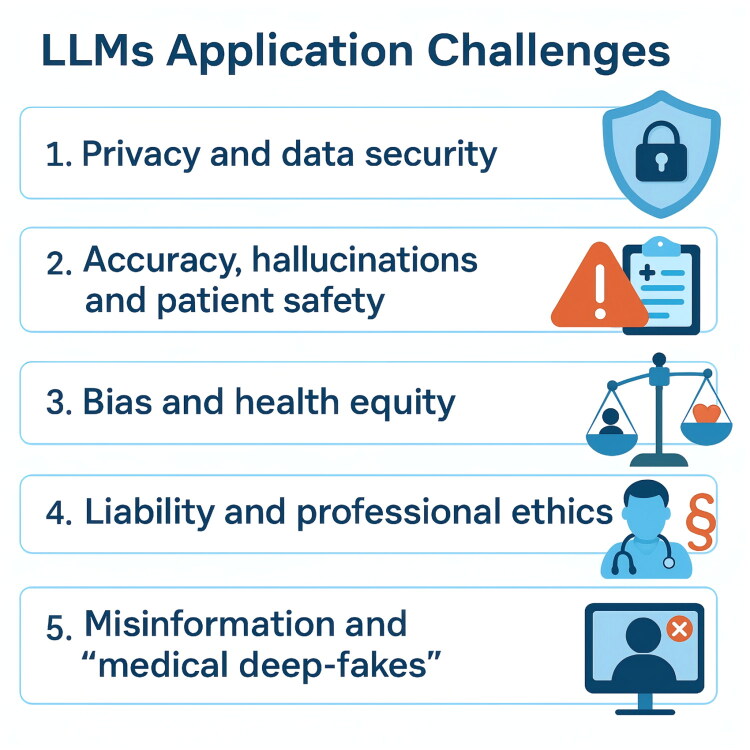
“This infographic summarizes the core challenges that must be addressed to ensure the safe and effective integration of llMs into healthcare and nephrology practice. techniques) to reduce the incidence of harmful or false outputs [54,55].”
Geantă, M., Bădescu, D., Chirca, N., Nechita, O. C., Radu, C. G., Rașcu, Ș., Radavoi, D. G., Sima, C., Toma, C. V., & Jinga, V. (2024) · Healthcare · doi:10.3390/healthcare12151548 · Cited by 27 · cited 1×
“…offer a new way to support patients between visits by answering questions and reinforcing medical advice in an accessible conversational format [9]. for example, an LLM-powered virtual assistant could explain laboratory results or dialysis procedures to a patient in layperson terms, helping…”
Flory, J., Ancker, J. S., Kim, S. Y. H., Kuperman, G. J., Petrov, A., & Vickers, A. J. (2024) · Diabetes Care · doi:10.2337/dc24-1067 · Cited by 22
Generating colloquial radiology reports with large language models
Tang, C. C., Nagesh, S., Fussell, D. A., Glavis‐Bloom, J., Mishra, N., Li, C. H., Cortes, G., Hill, R., Zhao, J., Gordon, A., et al. (2024) · Journal of the American Medical Informatics Association · doi:10.1093/jamia/ocae223 · Cited by 20 · cited 1×
“By generating patient-friendly explanations and translating intricate medical information into more accessible language, these models facilitate better understanding and engagement [20].”
Bingöl, F. G., Ağagündüz, D., & Bingöl, M. C. (2025) · Journal of Renal Nutrition · doi:10.1053/j.jrn.2025.01.004 · Cited by 20 · cited 1×
“…LLM-based agent was able to reliably converse with patients to collect health information across a range of diseases, highlighting its versatility [11]. in addition to conveying information, LLMs can engage patients in two-way dialog that may improve health literacy and empowerment [12]. a…”
AI in Remote Patient Monitoring
Nigar, N. (2025) · Future of business and finance · doi:10.1007/978-3-031-78322-7_18 · Cited by 20
Enhancing Guardrails for Safe and Secure Healthcare AIPreprint
Gangavarapu, A. (2024) · arXiv (Cornell University) · doi:10.48550/arxiv.2409.17190 · Cited by 18 · cited 1×
“…put it, the medical community must ‘put guardrails in place’, even as we explore the exciting possibilities of ChatGPt-like systems in practice [65]. this means establishing accuracy standards, monitoring outcomes, and maintaining human judgment as the final say in patient care decisions.”
Towards AI-Assisted Mapmaking: Assessing the Capabilities of GPT-4o in Cartographic Design
Memduhoğlu, A. (2025) · ISPRS International Journal of Geo-Information · doi:10.3390/ijgi14010035 · Cited by 16 · cited 1×
“…image generation capabilities surpass those of previous models such as DaLL·e 3, offering more accurate and contextually relevant visual outputs [34]. this advancement facilitates the creation of detailed educational materials, such as annotated diagrams of the nephron or visual explanations of…”
Do LLMs Provide Consistent Answers to Health-Related Questions Across Languages?
Schlicht, I. B., Zhao, Z., Sayin, B., Flek, L., & Rosso, P. (2025) · Lecture notes in computer science · doi:10.1007/978-3-031-88714-7_30 · Cited by 13
Haase, A., Stracke, S., Chenot, J., & Weckmann, G. (2019) · Health & Social Care in the Community · doi:10.1111/hsc.12744 · Cited by 12 · cited 1×
“Nephrologists and renal care teams face substantial documentation and data synthesis burdens [14]. integrating LLMs into nephrology practice presents significant opportunities for streamlining clinical documentation and enhancing patient data management. through advanced voice-to-text and natural…”
Khoje, M. (2024) · IEEE International Conference on AI in Cybersecurity (ICAIC) · doi:10.1109/icaic60265.2024.10433801 · Cited by 12 · cited 1×
“…solutions such as federated learning (where the ai comes to the data rather than sending data out) and robust encryption of any communication with ai services [50]. access controls and audit trails are crucial—for example, logging every instance an LLM retrieves patient data and what it outputs.”
Scott, A. J. S., McCuaig, F., Lim, V., Watkins, W., Wang, J., & Strachan, G. (2024) · Studies in health technology and informatics · doi:10.3233/shti240272 · Cited by 12 · cited 1×
“By presenting trainees with diverse case studies and guiding them through diagnostic and treatment processes, these models offer a risk-free environment to develop and refine their clinical skills [22].”
Review of Data Bias in Healthcare Applications
Parate, A. P., Iyer, A. A., Gupta, K., Porwal, H., Kishoreraja, P. C., Rajagopal, S., & Soangra, R. (2024) · International Journal of Online and Biomedical Engineering (iJOE) · doi:10.3991/ijoe.v20i12.49997 · Cited by 12 · cited 1×
“if the data contain biases—which healthcare data and literature often do—ai can perpetuate or even amplify those biases [56].”
Can’t Remember Details in Long Documents? You Need Some R&R
Agrawal, D., Gao, S., & Gajek, M. (2024) · Findings of the Association for Computational Linguistics: EMNLP (Findings of EMNLP) · doi:10.18653/v1/2024.findings-emnlp.742 · Cited by 12
Sensorineural Hearing Loss in Patients With Chronic Kidney Disease: A Comprehensive Review
Agrawal, M., & Singh, C. V. (2023) · Cureus · doi:10.7759/cureus.48244 · Cited by 11 · cited 1×
“…that address these limitations is essential for the equitable and inclusive implementation of conversational ai solutions in nephrology practice [31,32]. on the other hand, the integration of voice recognition technology into electronic health record (ehr) systems has streamlined clinical…”
Hammane, Z., Ben-Bouazza, F.-E., & Fennan, A. (2024) · 2024 International Conference on Intelligent Systems and Computer Vision (ISCV) · doi:10.1109/iscv60512.2024.10620139 · Cited by 11 · cited 1×
“…text from a medical database to ground its answers) and enhanced training with human feedback specific to medical Q&a are already underway [66,67]. future iterations might approach a level where their answers can be trusted like a well-trained junior physician, at least for certain bounded…”
Battle of the bots: a comparative analysis of ChatGPT and bing AI for kidney stone-related questions
McMahon, A. K., Terry, R. S., Ito, W. E., Molina, W., & Whiles, B. B. (2024) · World Journal of Urology · doi:10.1007/s00345-024-05326-1 · Cited by 10 · cited 1×
“…for their responses, most general-purpose LLMs—including widely used models—do not, thereby affecting users’ confidence in the advice received [45]. hybrid systems that combine the fluency of ai with explicit source citation may offer a more robust solution, enhancing traceability and…”
Kurland, D. B., Alber, D. A., Palla, A., de Souza, D. N., Lau, D., Laufer, I., Frempong-Boadu, A. K., Kondziolka, D. S., & Oermann, E. K. (2025) · Neurosurgery · doi:10.1227/neu.0000000000003354 · Cited by 10 · cited 1×
“…by clinician workload. furthermore, the capacity of LLMs for rapid and uniform updates with the latest medical evidence may enable the provision of current, standardized recommendations across large patient populations, provided the underlying models are appropriately maintained and validated [42].”
Speech Recognition Technology for Nursing Charting: A Literature Review
Newton‐Mason, S. M., Chui, C., Hirani, S. S., & Currie, L. M. (2024) · Studies in health technology and informatics · doi:10.3233/shti240301 · Cited by 7 · cited 1×
“Nephrologists can utilize voice commands to input patient data, review medical histories, and update treatment plans efficiently [33]. this reduces the administrative burden on clinicians, minimizes the risk of documentation errors, and allows more time for direct patient care.”
Towards understanding accountability for physicians practice in India
Mathew, M., Klabbers, G., de Wert, G. M. W. R., & Krumeich, A. J. S. M. (2023) · Asian Journal of Psychiatry · doi:10.1016/j.ajp.2023.103505 · Cited by 6 · cited 1×
“…trust, as individuals may rely more readily on the guidance of a dedicated physician, assured by professional over-sight and ethical obligations [44]. another critical consideration in virtual healthcare is the provenance and traceability of medical information. human clinicians, whether in…”
Anees, M., Pervaiz, S., Aziz, S., & Elahi, I. (2024) · Pakistan Journal of Medical Sciences · doi:10.12669/pjms.40.5.7836 · Cited by 6 · cited 1×
“…education, improving communication between patients and healthcare providers, and reinforcing family support mechanisms [6,7]. effective patient education and engagement are cornerstones of nephrology, in which patients must manage complex regimens (diet, medications, and dialysis schedules) [8].”
Revolutionising patient care: the role of AI-generated avatars in healthcare consultations
Loh, B. C. S., Fong, A. Y. Y., Ong, T. K., & Then, P. (2024) · European Heart Journal · doi:10.1093/eurheartj/ehae666.3492 · Cited by 6 · cited 1×
“…model (LLM)-based virtual assistants has stimulated significant interest in their comparison with traditional online doctor–patient interaction modalities, including telemedicine consultations with human clinicians and digital platforms such as symptom checkers and medical search engines [39].”
Intelligent Human Systems Integration (IHSI 2025): Integrating People and Intelligent Systems
Goretti, G., Terenzi, B., & Filieri, J. (2025) · AHFE international · doi:10.54941/ahfe1005804 · Cited by 5
Comparative Analysis of Bias in LLMs through Indian Lenses
Khola, J., Bansal, S., Punia, K., Pal, R., & Sachdeva, R. (2024) · IEEE International Conference on Electronics, Computing and Communication Technologies (CONECCT) · doi:10.1109/conecct62155.2024.10677324 · Cited by 4 · cited 1×
“…has well-known disparities (for example, in access to transplantation among different ethnic groups or sexes). an LLM trained predominantly on english-language, western datasets might perform poorly in understanding cultural contexts or nuances of care relevant to underrepresented populations [57].”
Beyond ChatGPT: It Is Time to Focus More on Specialized Medical LLMs
Wang, S. (2024) · Journal of Endourology · doi:10.1089/end.2024.0374 · Cited by 3 · cited 1×
“This infographic summarizes the core challenges that must be addressed to ensure the safe and effective integration of llMs into healthcare and nephrology practice. techniques) to reduce the incidence of harmful or false outputs [54,55].”
Treatment Adherence/Compliance
Miller, T. A., & DiMatteo, M. R. (2015) · Wiley eBooks · doi:10.1002/9781118625392.wbecp167 · Cited by 2 · cited 1×
“…patients. this is particularly beneficial in nephrology, where complex treatment regimens require clear and compassionate explanations. the model’s ability to detect and respond to nonverbal cues, such as tone and speaking pace, can enhance patient comfort and adherence to treatment protocols [30].”
AI in Remote Patient MonitoringPreprint
Nigar, N. (2024) · arXiv (Cornell University) · doi:10.48550/arxiv.2407.17494 · Cited by 2 · cited 1×
“…can allocate more time to direct patient care, potentially improving overall efficiency and reducing the likelihood of administrative errors. in the realm of patient monitoring, autonomous ai agents can be used to continuously analyze data from wearable devices and electronic health records [37].”
Sound and Renal Health: Understanding the Connection between Chronic Kidney Disease and Hearing Loss
Bedrabettu, R. U., H, S. P. B., & Shantaram, M. (2024) · Biomedicine · doi:10.51248/v44i4.59 · Cited by 2 · cited 1×
“…that address these limitations is essential for the equitable and inclusive implementation of conversational ai solutions in nephrology practice [31,32]. on the other hand, the integration of voice recognition technology into electronic health record (ehr) systems has streamlined clinical…”
Can't Remember Details in Long Documents? You Need Some R&RPreprint
Agrawal, D., Gao, S., & Gajek, M. (2024) · arXiv (Cornell University) · doi:10.48550/arxiv.2403.05004 · Cited by 1 · cited 1×
“…to processing only the information explicitly provided, and may overlook contextual factors or unarticulated concerns unless specifically prompted [43]. while advances in multimodal ai now permit the analysis of both text and images, these models have yet to replicate the nuanced synthesis…”
Research works printed but not linked: 1
- Ferber D, El Nahhas OSM, Wölflein G, et al. Development and validation of an autonomous artificial intelligence agent for clinical decision-making in oncology. Nat Cancer. 2025; 6: 1337– 1349. doi: 10.1038/s43018-025-00991-6. PMC12380607 40481323 · DOI · Paper page
Cited by
Ethical issues in multi-agent AI systems for healthcare: a narrative review
Xie, Z., Wang, H., Dai, L., Wang, Z., Song, H., & Qian, J. (2026) · Frontiers in Public Health · doi:10.3389/fpubh.2026.1792627 · Cited by 11
“The risk is compounded by the tendency of LLMs to memorize sensitive training data, which conflicts with privacy standards such as the right to be forgotten (45).”
InfluentialBezruk, V. V., Ivanov, D. D., Ivanchuk, M., Shkrobanets, І. D., Makarova, O. V., Rynzhuk, L. V., Bulyk, T. S., Maksymiv, О. О., & Ivanova, M. D. (2026) · Journal of Clinical Medicine · doi:10.3390/jcm15114218 · Cited by 1
“At the same time, recent nephrology-focused AI research highlights both the potential and the limitations of LLMs in CKD management [7,22].”
Shankar, R., & Xu, Q. (2026) · Journal of Renal Nutrition · doi:10.1053/j.jrn.2026.04.016 · Cited by 1
Job satisfaction among nephrology nurses: An Italian multicenter cross-sectional study
Ferrara, G., Palomares, S. M., Gazineo, D., Godino, L., Sguanci, M. E., Cangelosi, G., Palmisano, A., Mura, C., Mocco, C., Cappelletti, S., et al. (2026) · Applied Nursing Research · doi:10.1016/j.apnr.2026.152082 · Cited by 1
Chuang, K.-C., Lin, H., & Lin, H.-M. (2026) · medRxiv · doi:10.64898/2026.05.23.26353939
Metadata
- Authors
- Hu, Y., Liu, J., & Jiang, W.
- Affiliations
- Affiliated Hospital of Qingdao University (CN)
- Qingdao Municipal Hospital (CN)
- Corresponding author
- Jiang, Wei
- Venue
- Renal Failure
- Publisher
- Informa UK Limited
- Published
- 2025-09-07
- Volume
- 47
- Issue
- 1
- Pages
- 2555686-2555686
- ISSN
- 0886-022X (ISSN-L)
- 1525-6049
- PMC
- PMC12418797
- OpenAlex
- W4414072461
- Cited by
- 14
- References
- 66
- Citations by year
- 2026: 14
- FWCI
- 0.83
- Type
- journal article
- Language
- en
- Open access
- gold
- doi.org
- Licence
- cc-by
- creativecommons.org/licenses/by/4.0/ (vor)
- doi.org/10.1080/policies-text-data-mining (tdm)
- Locations
- Renal Failure (publishedVersion, cc-by)
- PubMed (publishedVersion)
- PubMed Central (publishedVersion, cc-by)
- DOAJ (DOAJ: Directory of Open Access Journals) (submittedVersion, cc-by-sa)
- Funders
- National Natural Science Foundation of China (82370724)
- Qingdao Key Health Discipline Development Fund
- Qingdao Key Clinical Specialty Elite Discipline project
- Topics
- Health Sciences › Medicine › Health Informatics › Artificial Intelligence in Healthcare and Education
- Health Sciences › Health Professions › Health Information Management › Artificial Intelligence in Healthcare
- Physical Sciences › Computer Science › Artificial Intelligence › Machine Learning in Healthcare
- Keywords
- large language models, chronic kidney disease, nephrology, conversational AI, patient education, health literacy, clinical documentation, clinical decision support, algorithmic bias, patient privacy, data security, ethical accountability, regulatory framework, multimodal AI, autonomous agents
- MeSH terms
- Large Language Models, Artificial Intelligence, Humans, Language, Nephrology, Patient Education as Topic, Disease Management, Renal Insufficiency, Chronic, Health Literacy
About these checks
Registry, retraction, Cites and statistics results are computed, not judged, with one exception: a printed reference that no index lists is read once by a model before it counts as a citation error. Claims are extracted by a model and kept only when their quote appears verbatim in the text; each cited source is then checked, with a model’s help, for whether it says what the claim relies on. Those verdicts can be wrong — read the claim’s quote and the cited source before relying on one.
Statistics and arithmetic are recomputed, not judged.
Confidence bands are shown only for fields calibrated on our annotated test set. None is calibrated yet, so no band is shown.
What counts as a claim ›How we measure confidence ›How we check this ›
Are you an author, or do you see a problem with this page? Request a review
Data sources
Bibliographic data: Semantic Scholar, OpenAlex, Crossref.
Contains information from the Semantic Scholar Academic Graph Datasets, made available under the ODC Attribution License (ODC-BY 1.0).
Semantic Scholar’s data is described in: Kinney, R., et al. (2023). The Semantic Scholar Open Data Platform. arXiv:2301.10140.
