

Gut-brain and brain-gut axis in Parkinson’s disease models: effects of a uridine and fish oil diet
Open accessThe DOI matches its Crossref record; 62 of the 62 references it cites were found in a registry or an index.
Abstract
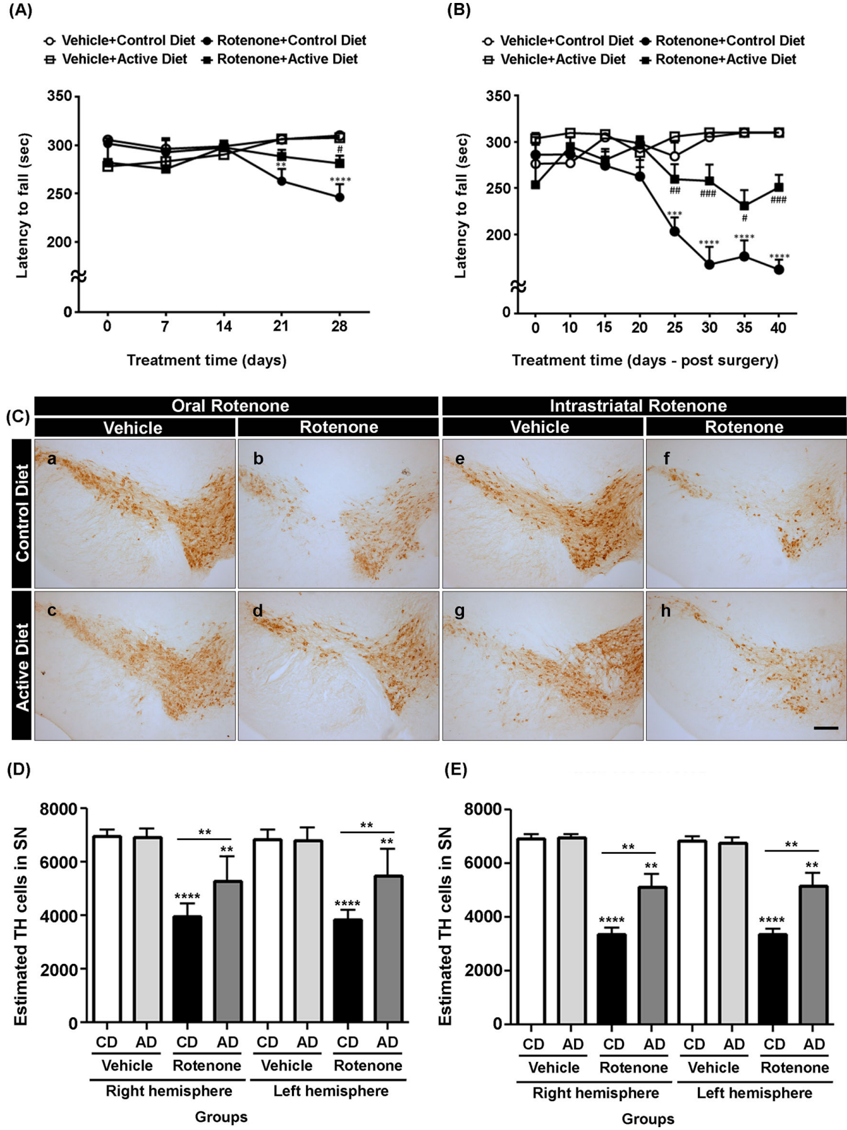
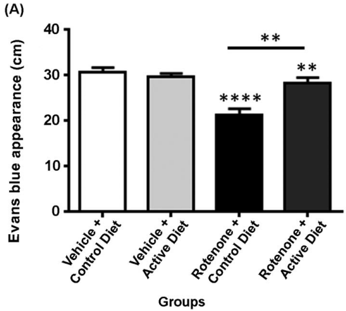
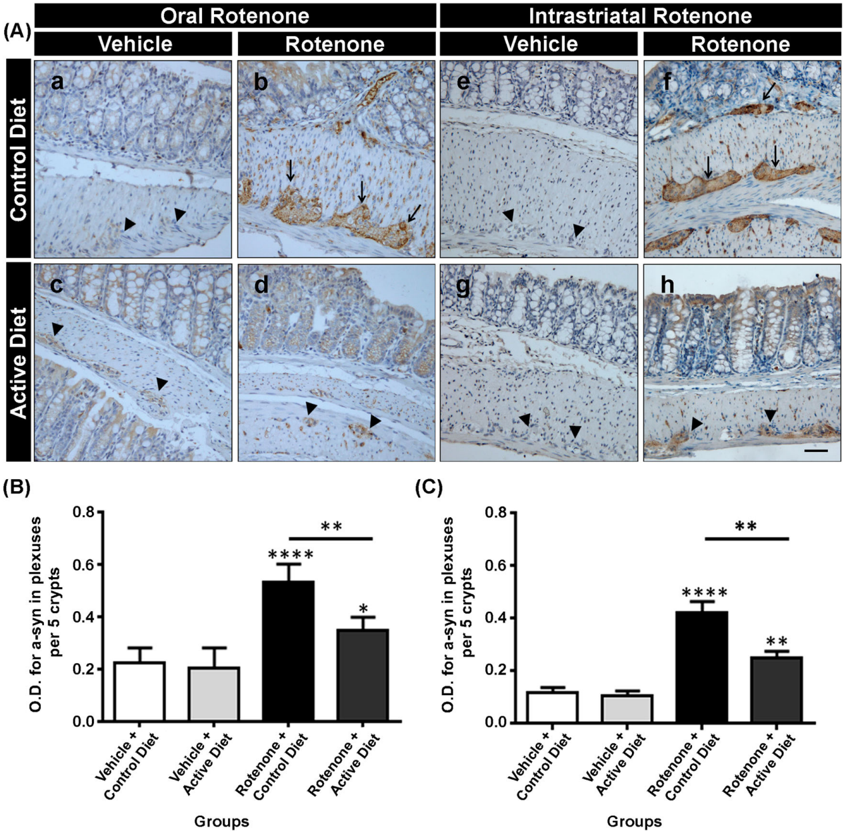
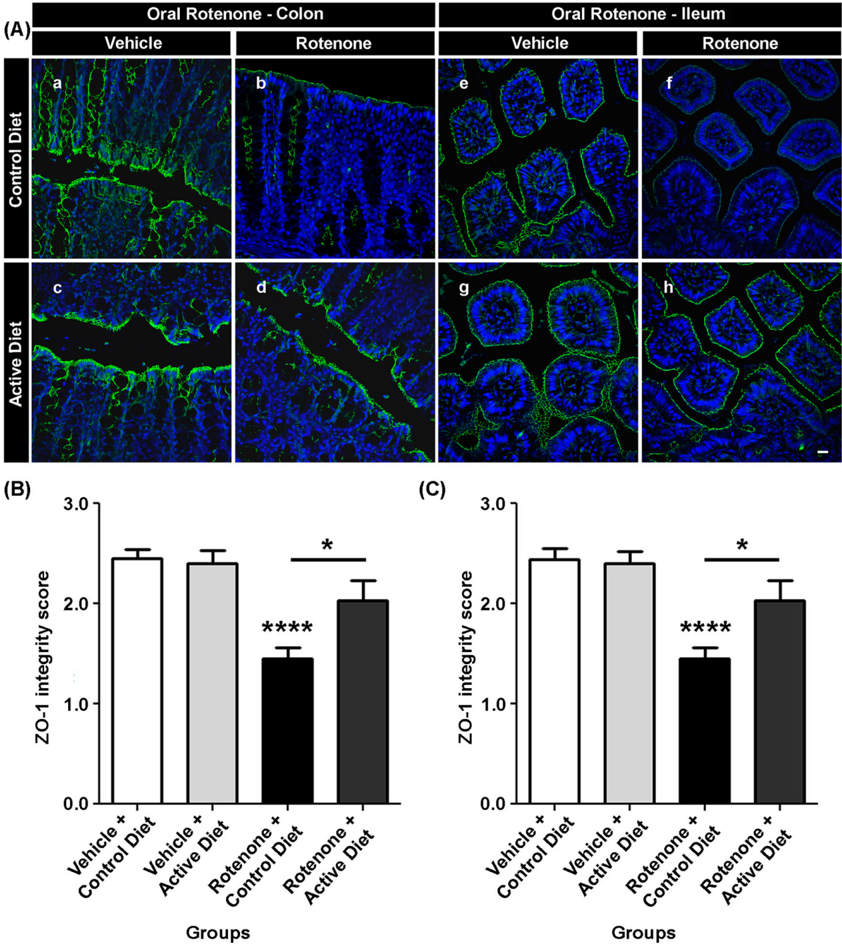
Recent investigations have focused on the potential role of gastrointestinal (GI) abnormalities in the pathogenesis of Parkinson's disease (PD). The 'dual-hit' hypothesis of PD speculates that a putative pathogen enters the brain via two routes: the olfactory system and the GI system. Here, we investigated (1) whether local exposures of the neurotoxin rotenone in the gut or the brain of mice could induce PD-like neurological and GI phenotypes as well as a characteristic neuropathology in accordance with this 'dual-hit hypothesis' and (2) the effects of a diet containing uridine and fish oil providing docosahexaenoic acid (DHA), in both models. Mice were given rotenone either orally or by an injection in the striatum. Dietary interventions were started 1 week before rotenone exposures. We found that (1) both oral and intrastriatal administration of rotenone induced similar PD-like motor deficits, dopaminergic cell loss, delayed intestinal transit, inflammation, and alpha-synuclein accumulation in the colon; (2) the uridine and DHA containing diet prevented rotenone-induced motor and GI dysfunctions in both models. The models suggest possible bidirectional communication between the gut and the brain for the genesis of PD-like phenotype and pathology. The dietary intervention may provide benefits in the prevention of motor and non-motor symptoms in PD.
Overview
The claims and statistics of this paper haven’t been checked yet.
Free: it reads the open-access text and checks the first 5 claims that cite a source we can check. Create a free account to check every claim.
Integrity signals
Registry
Cites
Statistics
Figures
Verification
Claims the paper makes
The claims and statistics of this paper haven’t been checked yet.
Free: it reads the open-access text and checks the first 5 claims that cite a source we can check. Create a free account to check every claim.
Claims other papers make about this one
Each is checked against this paper’s own text: does it say what the citing paper says it does?
The source backs part of the claim, not all of it — or backs it for a different population, condition or comparison.
In the citing paper
“A diet enriched in uridine, DHA, and choline improved motor symptoms, reduced α-synuclein accumulation, and diminished colonic inflammation [406].”
From The Role of Microbiota-Gut-Brain Axis in Neuropsychiatric and Neurological Disorders (2021) · cites this paper as [406]
Experimental — accuracy not yet measuredIn the citing paper
“Furthermore, oral administration of rotenone solution (10 mg/kg for 28 days) and intrastriatal infusion of rotenone (5.4 µg/mice) induced Parkinson's disease-like symptoms, including impaired motor function, elevated expression of α-synuclein, delayed intestinal transit, immune activation and colonic inflammation [406].”
From The Role of Microbiota-Gut-Brain Axis in Neuropsychiatric and Neurological Disorders (2021) · cites this paper as [406]
Self-check
Percentages, sums and reported differences re-computed from the paper’s own numbers.
The self-check needs the paper’s full text.
Citations
Cites
Reeves, P. G., Nielsen, F. H., & Fahey, G. C. (1993) · The Journal of Nutrition · doi:10.1093/jn/123.11.1939 · Cited by 8,709
Mind-altering microorganisms: the impact of the gut microbiota on brain and behaviour
Cryan, J. F., & Dinan, T. G. (2012) · Nature Reviews Neuroscience · doi:10.1038/nrn3346 · Cited by 4,572
West, M. J., Slomianka, L., & Gundersen, H. J. G. (1991) · The Anatomical Record · doi:10.1002/ar.1092310411 · Cited by 2,994
GUNDERSEN, H. J. G., BENDTSEN, T. F., KORBO, L., MARCUSSEN, N., MØLLER, A., NIELSEN, K., NYENGAARD, J. R., PAKKENBERG, B., SØRENSEN, F. B., VESTERBY, A., et al. (1988) · APMIS · doi:10.1111/j.1699-0463.1988.tb05320.x · Cited by 2,929
Rotenone, Paraquat, and Parkinson’s Disease
Tanner, C. M., Kamel, F., Ross, G. W., Hoppin, J. A., Goldman, S. M., Korell, M., Marras, C., Bhudhikanok, G. S., Kasten, M., Chade, A. R., et al. (2011) · Environmental Health Perspectives · doi:10.1289/ehp.1002839 · Cited by 1,475
Braak, H., de Vos, R. A. I., Bohl, J., & Del Tredici, K. (2006) · Neuroscience Letters · doi:10.1016/j.neulet.2005.11.012 · Cited by 1,354
Parkinson's disease: a dual‐hit hypothesis
Hawkes, C. H., Del Tredici, K., & Braak, H. (2007) · Neuropathology and Applied Neurobiology · doi:10.1111/j.1365-2990.2007.00874.x · Cited by 1,021
Gastrointestinal Dysfunction in Parkinson’s Disease
Fasano, A., Visanji, N. P., Liu, L. W. C., Lang, A. E., & Pfeiffer, R. F. (2015) · The Lancet Neurology · doi:10.1016/s1474-4422(15)00007-1 · Cited by 1,016
Forsyth, C. B., Shannon, K. M., Kordower, J. H., Voigt, R. M., Shaikh, M., Jaglin, J. A., Estes, J. D., Dodiya, H. B., & Keshavarzian, A. (2011) · PLoS ONE · doi:10.1371/journal.pone.0028032 · Cited by 974
Self-citationDirect evidence of Parkinson pathology spread from the gastrointestinal tract to the brain in rats
Holmqvist, S., Chutna, O., Bousset, L., Aldrin-Kirk, P., Li, W., Björklund, T., Wang, Z.-Y., Roybon, L., Melki, R., & Li, J.-Y. (2014) · Acta Neuropathologica · doi:10.1007/s00401-014-1343-6 · Cited by 925
Cited by
Inflammation in CNS neurodegenerative diseases
Stephenson, J., Nutma, E., van der Valk, P., & Amor, S. (2018) · Immunology · doi:10.1111/imm.12922 · Cited by 966
The Role of Microbiota-Gut-Brain Axis in Neuropsychiatric and Neurological Disorders
Socała, K., Doboszewska, U., Szopa, A., Serefko, A., Włodarczyk, M., Zielińska, A., Poleszak, E., Fichna, J., & Wlaź, P. (2021) · Pharmacological Research · doi:10.1016/j.phrs.2021.105840 · Cited by 857
Bennett, J. M., Reeves, G., Billman, G. E., & Sturmberg, J. P. (2018) · Frontiers in Medicine · doi:10.3389/fmed.2018.00316 · Cited by 531
Role of TLR4 in the gut-brain axis in Parkinson's disease: A translational study from men to mice
Perez-Pardo, P., Dodiya, H. B., Engen, P. A., Forsyth, C. B., Huschens, A. M., Shaikh, M., Voigt, R. M., Naqib, A., Green, S. J., Kordower, J. H., et al. (2019) · Gut · doi:10.1136/gutjnl-2018-316844 · Cited by 467
Self-citationMicrobiome-Gut-Brain Axis and Toll-Like Receptors in Parkinson’s Disease
Caputi, V., & Giron, M. C. (2018) · International Journal of Molecular Sciences · doi:10.3390/ijms19061689 · Cited by 338
Dodiya, H. B., Forsyth, C. B., Voigt, R. M., Engen, P. A., Patel, J., Shaikh, M., Green, S. J., Naqib, A., Roy, A., Kordower, J. H., et al. (2020) · Neurobiology of Disease · doi:10.1016/j.nbd.2018.12.012 · Cited by 305
“Rotenone alone reduced ZO-1 integrity as reported previously by our group (Perez-Pardo et al., 2018).”
Self-citationMitrea, L., Nemeş, S.-A., Szabo, K., Teleky, B.-E., & Vodnar, D.-C. (2022) · Frontiers in Medicine · doi:10.3389/fmed.2022.813204 · Cited by 237
“(190) highlights that dietary intervention based on docosahexaenoic acid (DHA) and uridine might prevent motor and non-motor symptoms of PD and rotenone-induced motor and gastrointestinal dysfunctions in mice affected by PD (190).”
BackgroundThe Gut-Brain Axis in Parkinson’s Disease: Possibilities for Food-Based Therapies
Perez-Pardo, P., Kliest, T., Dodiya, H. B., Broersen, L. M., Garssen, J., Keshavarzian, A., & Kraneveld, A. D. (2017) · European Journal of Pharmacology · doi:10.1016/j.ejphar.2017.05.042 · Cited by 203
Self-citationGut Microbiota: A Novel Therapeutic Target for Parkinson’s Disease
Zhu, M., Liu, X., Ye, Y., Yan, X., Cheng, Y., Zhao, L., Chen, F., & Ling, Z. (2022) · Frontiers in Immunology · doi:10.3389/fimmu.2022.937555 · Cited by 177
Does Parkinson’s disease start in the gut?
Lionnet, A., Leclair-Visonneau, L., Neunlist, M., Murayama, S., Takao, M., Adler, C. H., Derkinderen, P., & Beach, T. G. (2018) · Acta Neuropathologica · doi:10.1007/s00401-017-1777-8 · Cited by 176
“Although a recent report showed that mice gavaged with 10 mg/kg/day of rotenone for 28 days exhibited delayed intestinal transit along with alpha-synuclein accumulation in the colon [56], we were unable to reproduce these results as we did not observe any changes suggestive of ENS neurodegeneration and no overt change…”
MethodResultDocosahexaenoic and Arachidonic Acids as Neuroprotective Nutrients throughout the Life Cycle
Sambra, V., Echeverría, F., Valenzuela, A., Chouinard‐Watkins, R., & Valenzuela, R. (2021) · Nutrients · doi:10.3390/nu13030986 · Cited by 178
Alpha-Synuclein Pathology and the Role of the Microbiota in Parkinson’s Disease
Fitzgerald, E., Murphy, S., & Martinson, H. A. (2019) · Frontiers in Neuroscience · doi:10.3389/fnins.2019.00369 · Cited by 143
Diet in Parkinson’s Disease: Critical Role for the Microbiome
Jackson, A., Forsyth, C. B., Shaikh, M., Voigt, R. M., Engen, P. A., Ramirez, V., & Keshavarzian, A. (2019) · Frontiers in Neurology · doi:10.3389/fneur.2019.01245 · Cited by 145
“Although several studies did not find a correlation between diet and dysbiosis in PD patients numerous studies support a role for Western diet and possibly dairy products in PD risk (47, 51, 61, 124, 125).”
BackgroundInfluentialSelf-citationUsing Rotenone to Model Parkinson’s Disease in Mice: A Review of the Role of Pharmacokinetics
Innos, J., & Hickey, M. A. (2021) · Chemical Research in Toxicology · doi:10.1021/acs.chemrestox.0c00522 · Cited by 146
The gut microbiome in Parkinson's disease: A culprit or a bystander?
(2020) · Progress in Brain Research · doi:10.1016/bs.pbr.2020.01.004 · Cited by 103
Self-citationReview of microbiota gut brain axis and innate immunity in inflammatory and infective diseases
Yuan, C., He, Y., Xie, K., Feng, L., Gao, S., & Cai, L. (2023) · Frontiers in Cellular and Infection Microbiology · doi:10.3389/fcimb.2023.1282431 · Cited by 96
Psychological co-morbidities in COPD: Targeting systemic inflammation, a benefit for both?
Pelgrim, C. E., Peterson, J. D., Gosker, H. R., Schols, A. M. W. J., van Helvoort, A., Garssen, J., Folkerts, G., & Kraneveld, A. D. (2018) · European Journal of Pharmacology · doi:10.1016/j.ejphar.2018.10.001 · Cited by 90
Self-citationPerez-Pardo, P., de Jong, E. M., Broersen, L. M., van Wijk, N., Attali, A., Garssen, J., & Kraneveld, A. D. (2017) · Frontiers in Aging Neuroscience · doi:10.3389/fnagi.2017.00057 · Cited by 74
“…applies to all panels) (n = 9 or 10 per group). reduce circling behavior in the 6-OHDA animal model (Cansev et al., 2008) and we showed that uridine and DHA prevented the induction of motor deficits as well as the development of GI dysfunctions in rotenone models of PD (Perez-Pardo et al., 2017).”
BackgroundSelf-citationThe gut in Parkinson’s disease: Bottom‐up, top‐down, or neither?
Leclair‐Visonneau, L., Neunlist, M., Derkinderen, P., & Lebouvier, T. (2020) · Neurogastroenterology & Motility · doi:10.1111/nmo.13777 · Cited by 62
Fang, X., Tian, P., Zhao, X., Jiang, C., & Chen, T. (2019) · Journal of Neurochemistry · doi:10.1111/jnc.14694 · Cited by 72
“…numbers of Akkermansia and Lactobacillus were more commonly found in individuals with major depressive disorder, and conversely Akkermansia and Lactobacillus in the gut have been suggested to have a beneficial effect on CNS disorders (Perez-Pardo et al. 2017; Soto et al. 2018; Sun and Shen 2018).”
BackgroundResultHouser, M. C., Caudle, W. M., Chang, J., Kannarkat, G. T., Yang, Y., Kelly, S. D., Oliver, D. L., Joers, V. L., Shannon, K. M., Keshavarzian, A., et al. (2021) · Acta Neuropathologica Communications · doi:10.1186/s40478-021-01240-4 · Cited by 57
Self-citationDi Sabatino, A., Lenti, M. V., Cammalleri, L., Corazza, G. R., & Pilotto, A. (2018) · Digestive and Liver Disease · doi:10.1016/j.dld.2018.03.010 · Cited by 53
McCarty, M. F., & Lerner, A. (2020) · International Journal of Molecular Sciences · doi:10.3390/ijms21103624 · Cited by 51
A nutritional approach to microbiota in Parkinson’s disease
UYAR, G. Ö., & YILDIRAN, H. (2019) · Bioscience of Microbiota, Food and Health · doi:10.12938/bmfh.19-002 · Cited by 44
“Lewy body pathology in ENS may represent the pathohistological correlate of gastrointestinal symptoms in PD. Current hypotheses suggest that ENS might be one of the first sites where Lewy body pathology appears in PD [9, 10].”
BackgroundInfluentialPolyphenols in the management of brain disorders: Modulation of the microbiota-gut-brain axis
(2020) · Advances in Food and Nutrition Research · doi:10.1016/bs.afnr.2019.08.001 · Cited by 44
The Rotenone Models Reproducing Central and Peripheral Features of Parkinson’s Disease
Miyazaki, I., & Asanuma, M. (2020) · NeuroSci · doi:10.3390/neurosci1010001 · Cited by 49
“4 μg/site intrastriatal + + + + CI [7,44]”
Wang, H., Sun, Y., Xin, J., Zhang, T., Sun, N., Ni, X., Zeng, D., & Bai, Y. (2020) · Frontiers in Microbiology · doi:10.3389/fmicb.2020.01941 · Cited by 45
Zhang, H., Wang, Z., Li, Y., Han, J., Cui, C., Lu, C., Zhou, J., Cheong, L., Li, Y., Sun, T., et al. (2018) · Frontiers in Aging Neuroscience · doi:10.3389/fnagi.2018.00187 · Cited by 42
Additive Effects of Levodopa and a Neurorestorative Diet in a Mouse Model of Parkinson’s Disease
Perez‐Pardo, P., Broersen, L. M., Kliest, T., van Wijk, N., Attali, A., Garssen, J., & Kraneveld, A. D. (2018) · Frontiers in Aging Neuroscience · doi:10.3389/fnagi.2018.00237 · Cited by 43
Self-citationUridine/UMP metabolism and their function on the gut in segregated early weaned piglets
Li, G., Xie, C., Wang, Q., Wan, D., Zhang, Y., Wu, X., & Yin, Y. (2019) · Food & Function · doi:10.1039/c9fo00360f · Cited by 43
Kulcsarova, K., Bang, C., Berg, D., & Schaeffer, E. (2023) · Journal of Parkinson’s Disease · doi:10.3233/jpd-230206 · Cited by 40
“Ina rotenone rat model of PD, (cid:2) -syn aggregates in the ENS and gastrointestinal (GI) dysfunction were detected [106], as well as a reduced intestinal transit associated with (cid:2) -syn aggregates and intestinal inflammation in a PD mouse model [107].”
BackgroundFang, X., Li, F., & Hong, D. (2021) · Current Medical Science · doi:10.1007/s11596-021-2464-5 · Cited by 41
Sesaminol prevents Parkinson's disease by activating the Nrf2-ARE signaling pathway
Kaji, H., Matsui‐Yuasa, I., Matsumoto, K., Omura, A., Kiyomoto, K., & Kojima‐Yuasa, A. (2020) · Heliyon · doi:10.1016/j.heliyon.2020.e05342 · Cited by 38
Xie, C., Wang, Q., Li, G., Fan, Z., Wang, H., & Wu, X. (2019) · Journal of the Science of Food and Agriculture · doi:10.1002/jsfa.9850 · Cited by 36
Kalampokini, S., Becker, A., Fassbender, K. C., Lyros, E., & Unger, M. M. (2019) · Parkinson s Disease · doi:10.1155/2019/7535472 · Cited by 36
“[94] showed that a diet containing fish oil (providing DHA) and uridine ameliorated intestinal barrier integrity and reduced gastrointestinal colonic inflammation as well as colonic a-Syn levels in mice PD models.”
BackgroundPharmacological validation of TDO as a target for Parkinson’s disease
Perez‐Pardo, P., Grobben, Y., Willemsen‐Seegers, N., Hartog, M., Tutone, M., Müller, M., Adolfs, Y., Pasterkamp, R. J., Vu‐Pham, D., van Doornmalen, A. M., et al. (2021) · FEBS Journal · doi:10.1111/febs.15721 · Cited by 34
Self-citationNielsen, S. D., Pearson, N. M., & Seidler, K. (2021) · Brain Research · doi:10.1016/j.brainres.2021.147609 · Cited by 37
Update to the Treatment of Parkinson’s Disease Based on the Gut-Brain Axis Mechanism
Sun, X., Li, X., Wang, Z., & Xie, A. (2022) · Frontiers in Neuroscience · doi:10.3389/fnins.2022.878239 · Cited by 31
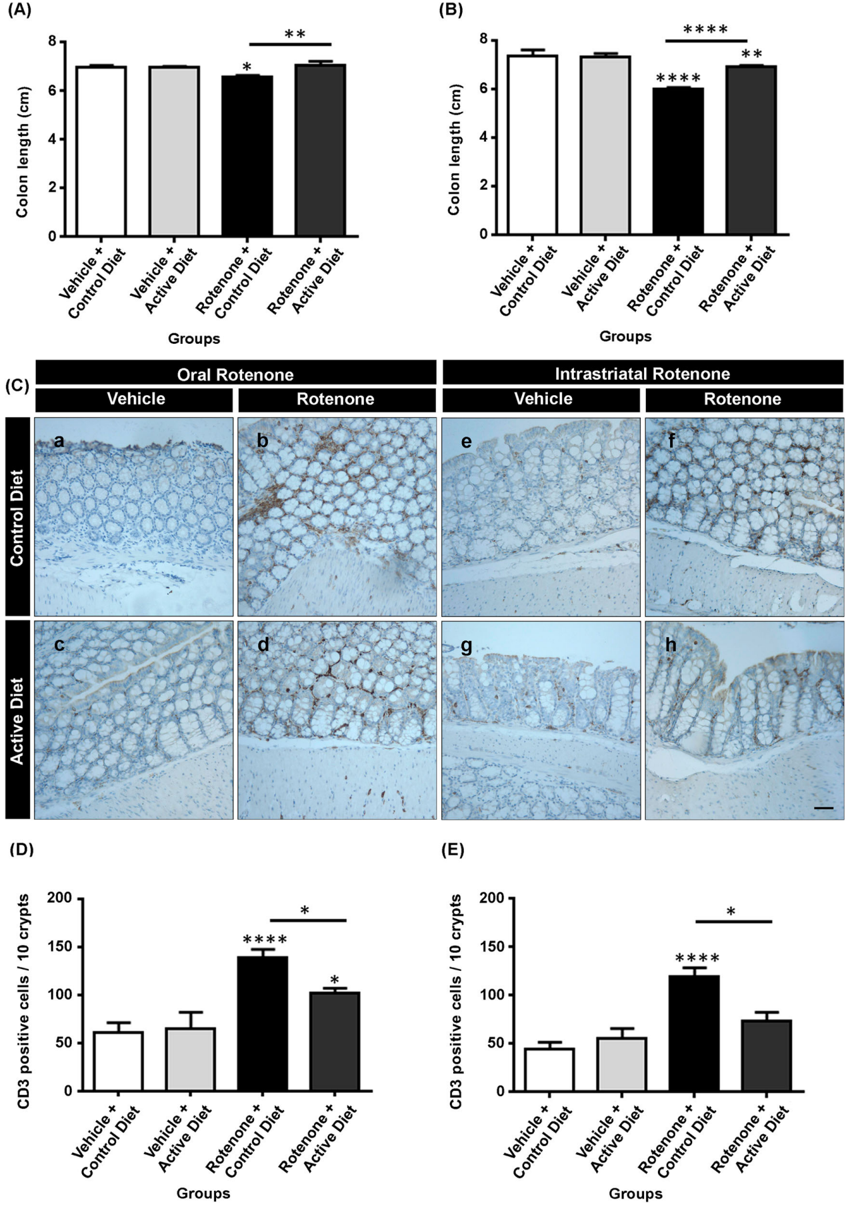
“In animal experiments, it was found that a diet containing both uridine and DHA could prevent rotenone-induced motor and GI dysfunction, reduce α-syn accumulation, colon shortening, T cell infiltration, and delayed GI transport (Perez-Pardo et al., 2018).”
BackgroundJackson, A., Engen, P. A., Forsyth, C. B., Shaikh, M. W., Naqib, A. D., Wilber, S., Frausto, D. M., Raeisi, S., Green, S. J., Bradaric, B. D., et al. (2022) · Frontiers in Neurology · doi:10.3389/fneur.2022.882628 · Cited by 27
“The barrier can become dysfunctional permitting the entrance of pathogenic bacteria and bacterial components including lipopolysaccharide (LPS) into the intestinal mucosa and the systemic circulation, prompting mucosal and systemic inflammation (1, 6, 11, 12), which may promote neuroinflammation, a key feature of PD.”
BackgroundSelf-citationZhao, R., Mu, B., Wang, D., XinHuang, Ma, Q., & Lu, M. (2024) · Molecular Neurobiology · doi:10.1007/s12035-024-04584-9 · Cited by 30
“Perez-Parado et al. [179] confirmed the ability of specific diets to enhance the intestinal barrier integrity and function in PD mice and reduce the expression of intestinal α-synuclein.”
Sharma, M., Malim, F. M., Goswami, A., Sharma, N., Juvvalapalli, S. S., Chatterjee, S., Kate, A. S., & Khairnar, A. (2022) · ACS Pharmacology & Translational Science · doi:10.1021/acsptsci.2c00120 · Cited by 26
Bottoms up: the role of gut microbiota in brain health
Radisavljevic, N., Cirstea, M., & Brett Finlay, B. (2019) · Environmental Microbiology · doi:10.1111/1462-2920.14506 · Cited by 22
Modulation of the Microbiome in Parkinson's Disease: Diet, Drug, Stool Transplant, and Beyond
Brown, E. G., & Goldman, S. M. (2020) · Neurotherapeutics · doi:10.1007/s13311-020-00942-2 · Cited by 28
“However, the group that received the enemas as well as the dietary intervention had a reduction inClostridiaceae, part of the putatively inflammatory family Clostridia which have been found to be increased in PD [93].”
BackgroundJeon, H., Kim, H.-Y., Bae, C., Lee, Y., & Kim, S. (2020) · Journal of Medicinal Food · doi:10.1089/jmf.2019.4640 · Cited by 23
“4,28 Disruption of the intestinal tissue or exposure of substances pro-voking strong immune reaction induces inflammation, and consequently weaken the intestinal barrier and the tight junctions.”
Sheikhpour, E., Mard, S. A., Farbood, Y., Bavarsad, K., & Sarkaki, A. (2023) · Life Sciences · doi:10.1016/j.lfs.2022.121356 · Cited by 21
Parkinson’s disease: what the model systems have taught us so far
Ghatak, S., Trudler, D., Dolatabadi, N., & Ambasudhan, R. (2018) · Journal of Genetics · doi:10.1007/s12041-018-0960-6 · Cited by 23
Farombi, E. O., Awogbindin, I. O., Olorunkalu, P. D., Ogbuewu, E., Oyetunde, B. F., Agedah, A. E., & Adeniyi, P. A. (2020) · Psychopharmacology · doi:10.1007/s00213-020-05605-w · Cited by 20
Dcf1 deletion presents alterations in gut microbiota of mice similar to Parkinson’s disease
Li, W., Zhao, Q., Wang, J., Wang, Y., & Wen, T. (2020) · Biochemical and Biophysical Research Communications · doi:10.1016/j.bbrc.2020.06.150 · Cited by 19
de Brito, A. P. A., de Melo, I. M. D. S. G., El-Bachá, R. D. S., & Guedes, R. C. A. (2020) · Frontiers in Neuroscience · doi:10.3389/fnins.2020.00759 · Cited by 20
Cui, H., Elford, J. D., Alitalo, O., Perez‐Pardo, P., Tampio, J., Huttunen, K. M., Kraneveld, A. D., Forsberg, M., Myöhänen, T. T., & Jalkanen, A. J. (2023) · Neurobiology of Aging · doi:10.1016/j.neurobiolaging.2023.05.007 · Cited by 16
“dopamine-specific neurotoxin, also induced aSyn accumulation in the colon (Perez-Pardo et al., 2018) suggesting that the alterations in the colon aSyn levels are not 6-OHDA specific but are rather associated with nigrostriatal dopaminergic damage.”
Self-citationYao, L., Yang, Y., Yang, X., & Rezaei, M. J. (2024) · Molecular Neurobiology · doi:10.1007/s12035-024-04151-2 · Cited by 16
“Specific nutrient combinations, comprising neuronal pre-cursors and cofactors, have the potential to prevent synaptic loss and mitigate membrane-related issues in both CNS and ENS [133].”
Prion-like propagation of α-synuclein in the gut-brain axis
Chen, Y., Shao, Q.-H., Yuan, Y., & Chen, N. (2018) · Brain Research Bulletin · doi:10.1016/j.brainresbull.2018.06.002 · Cited by 16
Is Gut Dysbiosis an Epicenter of Parkinson’s Disease?
Rajput, C., Sarkar, A., Sachan, N., Rawat, N., & Singh, M. P. (2021) · Neurochemical Research · doi:10.1007/s11064-020-03187-9 · Cited by 14
Techaniyom, P., Korsirikoon, C., Rungruang, T., Pakaprot, N., Prombutara, P., Mukda, S., Kettawan, A. K., & Kettawan, A. (2024) · Food Science & Nutrition · doi:10.1002/fsn3.4265 · Cited by 14
“In line with previous stud - ies (Perez-Pardo et al., 2018 ), our research found that perilla seed oil treatment at high and middle doses reduced α - synuclein accumulation in the colon myenteric plexus in rotenone-induced Parkinson's disease.”
Mironova, G. D., Mosentsov, A. A., Mironov, V. V., Medvedeva, V. P., Khunderyakova, N. V., Pavlik, L. L., Mikheeva, I. B., Shigaeva, M. I., Agafonov, A. V., Khmil, N. V., et al. (2024) · International Journal of Molecular Sciences · doi:10.3390/ijms25137441 · Cited by 15
Effect of Docosahexaenoic Acid (DHA) at the Enteric Level in a Synucleinopathy Mouse Model
Lamontagne‐Proulx, J., Coulombe, K., Dahhani, F., Côté, M., Guyaz, C., Tremblay, C., Marzo, V. D., Flamand, N., Calon, F., & Soulet, D. (2021) · Nutrients · doi:10.3390/nu13124218 · Cited by 14
Gut microbiota and inflammation in Parkinson’s disease: Pathogenetic and therapeutic insights
Guo, T., & Chen, L. (2022) · European Journal of Inflammation · doi:10.1177/1721727x221083763 · Cited by 14
Gut-directed therapy in Parkinson’s disease
Benvenuti, L., Salvo, C. D., Bellini, G., Seguella, L., Rettura, F., Esposito, G., Antonioli, L., Ceravolo, R., Bernardini, N., Pellegrini, C., et al. (2024) · Frontiers in Pharmacology · doi:10.3389/fphar.2024.1407925 · Cited by 13
Enteric glia as a player of gut-brain interactions during Parkinson’s disease
Thomasi, B. B. D. M., Valdetaro, L., Ricciardi, M. C., de Carvalho, M. G., Tavares, I. F., & Gomes, A. L. T. (2023) · Frontiers in Neuroscience · doi:10.3389/fnins.2023.1281710 · Cited by 12
Yasuda, Y., Tokumatsu, T., Ueda, C., Sakai, M., Sasaki, Y., Norikura, T., Matsui‐Yuasa, I., & Kojima‐Yuasa, A. (2024) · Nutrients · doi:10.3390/nu16132076 · Cited by 11
“In addition to motor symptoms, PD patients often experience nonmotor symptoms, including autonomic and psychiatric symptoms [14]. gastrointestinal motor dysfunction, a common autonomic complication in PD.”
BackgroundMethodInfluentialGut neuropeptide involvement in Parkinson’s disease
Templeton, H., Tobet, S. A., & Schwerdtfeger, L. (2025) · American Journal of Physiology-Gastrointestinal and Liver Physiology · doi:10.1152/ajpgi.00383.2024 · Cited by 11
Zhang, J., Yi, C., Han, J., Ming, T., Zhou, J., Lu, C., Li, Y., & Su, X. (2022) · Food Science & Nutrition · doi:10.1002/fsn3.2978 · Cited by 11
Uridine inhibits the stemness of intestinal stem cells in 3D intestinal organoids and mice
Liu, Y., Guo, S., Xie, C., Niu, K., de Jonge, H. R., & Wu, X. (2020) · RSC Advances · doi:10.1039/c9ra07742a · Cited by 11
Fang, X. (2018) · Metabolic Brain Disease · doi:10.1007/s11011-018-0239-x · Cited by 11
Autophagy and Cell Death in Alzheimer’s, Parkinson’s and Prion Diseases
Ribarič, S., & Milisav, I. (2020) · IntechOpen eBooks · doi:10.5772/intechopen.86706 · Cited by 10
Microbiota and probiotics: chances and challenges – a symposium report
Ruxton, C. H. S., Kajita, C., Rocca, P., & Pot, B. (2023) · Gut Microbiome · doi:10.1017/gmb.2023.4 · Cited by 12
“A study of gut biopsies from PD patients revealed evidence of tight junction decline, leaky gut, and endotoxemia, and enhanced toll-like receptor (TLR) 4 expression, suggesting that PD is a TLR disease (Perez-Pardo et al., 2019).”
BackgroundExperimental models of gut‐first Parkinson's disease: A systematic review
Videlock, E. J., Xing, T., Yehya, A. H. S., & Travagli, R. A. (2023) · Neurogastroenterology & Motility · doi:10.1111/nmo.14604 · Cited by 10
Gao, A., Lv, J., & Su, Y. (2025) · Brain Sciences · doi:10.3390/brainsci15020159 · Cited by 13
“For example, studies on PD have indicated that gut microbiota dysbiosis can provoke intestinal inflammation and neuropathy via the gut–brain axis, ultimately facilitating disease progression [6].”
Dopamine and Gastrointestinal Motility
Zheng, L., Liu, S., Zhou, L., Zhang, X., Xiao, Y., & Zhu, J. (2021) · Springer eBooks · doi:10.1007/978-981-33-6586-5_5 · Cited by 13
DPP-4 inhibitor alleviates gut-brain axis pathology in Parkinson’s disease
Jeong, S. H., Kim, Y. J., Shin, J. Y., Oh, K. W., Lee, J. W., & Lee, P. H. (2025) · Gut · doi:10.1136/gutjnl-2025-334988 · Cited by 10
“This gut-brain axis PD model is further supported by our vagotomy experiment, which showed that vagotomy markedly attenuated α -syn propagation to the DMV. Unlike in prior studies, 22 32 our results showed no reduction in tight junction protein expression following rotenone treatment.”
Wise, K., Williams, L. B., Selby-Pham, S. N. B., Wright, P., Simovich, T., Gill, H. S., Gupta, A., Puri, M., & Selby‐Pham, J. (2024) · Scientia Horticulturae · doi:10.1016/j.scienta.2024.113299 · Cited by 8
Ingestion of Gouda Cheese Ameliorates the Chronic Unpredictable Mild Stress in Mice
Yun, B., Yoo, J., Park, M., Ryu, S., Lee, W. J., Choi, H., Kang, M. K., Kim, Y., & Oh, S. (2019) · Food Science of Animal Resources · doi:10.5851/kosfa.2019.e81 · Cited by 8
Influence of the Gut Microbiota, Metabolism and Environment on Neuropsychiatric Disorders
Wang, M., Ma, Y., Zeng, B., Yang, W., Huang, C., & Tang, B.-Q. (2024) · Current Clinical Pharmacology · doi:10.2174/0127724328335219241202142003 · Cited by 7
Wu, Y., Zhang, H., Zhang, Z., Zhu, J., Ma, S., Zhao, Y., Wang, Y., Yuan, J., Guo, X., Li, Y., et al. (2024) · Molecules · doi:10.3390/molecules29071663 · Cited by 6
“Guanosine has been shown to resist epileptic seizures and relax the aorta [36,37].”
BackgroundFaysal, M. F., Zehravi, M., Amin, M. A., Rab, S. O., Jahnavi, P., Arjun, U. V. N. V., Gupta, J. K., Billah, A. A. M., Vodeti, R., Prasad, P. D., et al. (2025) · Pathology - Research and Practice · doi:10.1016/j.prp.2025.156090 · Cited by 7
No Evidence of Sensory Neuropathy in a Traditional Mouse Model of Idiopathic Parkinson’s Disease
Faisal, M., Rusetskaya, A., Väli, L., Taba, P., Minajeva, A., & Hickey, M. A. (2024) · Cells · doi:10.3390/cells13100799 · Cited by 6
Neuroimmune Connectomes in the Gut and Their Implications in Parkinson’s Disease
Thomasi, B. B. D. M., Valdetaro, L., Gulbransen, B. D., & Gomes, A. L. T. (2023) · Molecular Neurobiology · doi:10.1007/s12035-023-03679-z · Cited by 5
“Interestingly, both peripheral and central induction of PD animal models can produce relevant PD hallmarks such as nigrostriatal neurodegeneration, α-syn aggregation, gastrointestinal dysfunction, and/or enteric neuroinflammation [14, 15].”
Templeton, H., Ehrlich, A., Schwerdtfeger, L., Sheng, J. A., Tjalkens, R. B., & Tobet, S. A. (2025) · Neurogastroenterology & Motility · doi:10.1111/nmo.70046 · Cited by 5
Aydin, B., & Cansev, M. (2025) · Pharmacological Reports · doi:10.1007/s43440-025-00788-5 · Cited by 4
“Notably, uridine and UMP exhibit neurorestorative effects in rotenone models, improving both motor and non-motor symptoms even after their onset, which underscores their therapeutic potential across disease stages [86, 87].”
The Small Intestinal Microbiota and the Gut–Brain Axis in Parkinson’s Disease: A Narrative Review
Carrossa, G., Misenti, V., Faggin, S., Giron, M. C., & Antonini, A. (2025) · Biomedicines · doi:10.3390/biomedicines13071769 · Cited by 4
Gut Microbes in Parkinson's Disease
Markidi, A., Elford, J. D., Berkers, C. R., Kraneveld, A. D., & Perez‐Pardo, P. (2024) · Elsevier eBooks · doi:10.1016/b978-0-323-99971-7.00002-3 · Cited by 4
Self-citationToxin-Based Rodent Models of Parkinson’s Disease
Cenci, M. A., & Sgambato, V. (2020) · Neuromethods · doi:10.1007/978-1-0716-0912-5_1 · Cited by 4
Santos, R. B., dos Anjos, H. A., Ribeiro, T. T., & Correia, V. D. D. M. R. (2020) · Research Society and Development · doi:10.33448/rsd-v9i9.7259 · Cited by 2
Depression in Parkinson’s Disease: A Trajectory Linking Gut Microbiota and Neuroinflammation
Kujur, P. P., Sahu, M. R., & Mondal, A. C. (2024) · Integrated science · doi:10.1007/978-3-031-72079-6_13 · Cited by 1
Aydin, B., Öcalan, B., Çakır, A., Tunçak, S., Koç, C., Cansev, M., & ALKAN, T. (2025) · Frontiers in Neuroscience · doi:10.3389/fnins.2025.1635247 · Cited by 1
de Oliveira, J. K. S., de Carvalho, J. M., Silva, C. A., de Lima, M. B., Cavalcante, P. M. F., & Paiva, D. F. F. (2020) · Research Society and Development · doi:10.33448/rsd-v9i9.7917 · Cited by 1
Torres, P. R., Rodrigues, C. D. S. C., Naise, R., de Brito, P. D., Clevio, F., Marcel, Q., do Brasil, P. E. A. A., Abelardo, A., & Bacelo, A. C. (2022) · Clinical Nutrition ESPEN · doi:10.1016/j.clnesp.2022.11.004 · Cited by 1
Ribeiro, R. M. E. (2018) · Portuguese National Funding Agency for Science, Research and Technology (RCAAP Project by FCT)
Houser, M. C., Caudle, W. M., Chang, J., Kannarkat, G. T., Yang, Y., Kelly, S. D., Oliver, D. L., Joers, V. L., Shannon, K. M., Keshavarzian, A., et al. (2021) · Figshare · doi:10.6084/m9.figshare.15567958
Self-citationExploring the Interplay Between Gut Microflora and Parkinson’s
Swathi, M., Hazra, A., Dhanu, A. S., & Basalingappa, K. M. (2024) · Springer eBooks · doi:10.1007/978-981-99-8803-7_15
Othman, M. A., Barakat, M. M., Omar, A., Athamneh, T., Zrieq, R. M., Al-Alwany, R. R., & Al‐Najjar, M. A. A. (2024) · Research Square · doi:10.21203/rs.3.rs-4667549/v1
Role of microbiota gut–brain axis in Parkinson's disease
Mansuri, R., Dhanawat, M., Patel, S., Garima, G., & Diwan, A. (2025) · Elsevier eBooks · doi:10.1016/b978-0-443-21680-0.00003-1
Adebayo, O. G., Modo, E. U., Orji, B. O., Chimezie, J., Wopara, I., Masanwoola, A. V., Ichipi-Ifukor, P. C., Oritsemuelebi, B., & Esezobor, K. I. (2025) · Nutrire · doi:10.1186/s41110-025-00321-x
“While the majority of obtain-able data usually preferred the oral route or the systemic injection (intraperitoneal and/or intramuscular route), the GI abnormalities in our model may not be unconnected with the direct systemic toxicity of ROT on the gut [21, 52].”
The role of Toll-like receptors in Parkinson's disease
Kennedy, C. (2023) · Apollo (University of Cambridge) · doi:10.17863/cam.106123
Houser, M. C., Caudle, W. M., Chang, J., Kannarkat, G. T., Yang, Y., Kelly, S. D., Oliver, D. L., Joers, V. L., Shannon, K. M., Keshavarzian, A., et al. (2021) · Figshare · doi:10.6084/m9.figshare.15567994
Self-citationHouser, M. C., Caudle, W. M., Chang, J., Kannarkat, G. T., Yang, Y., Kelly, S. D., Oliver, D. L., Joers, V. L., Shannon, K. M., Keshavarzian, A., et al. (2021) · Figshare · doi:10.6084/m9.figshare.15567907
Self-citationHouser, M. C., Caudle, W. M., Chang, J., Kannarkat, G. T., Yang, Y., Kelly, S. D., Oliver, D. L., Joers, V. L., Shannon, K. M., Keshavarzian, A., et al. (2021) · Figshare · doi:10.6084/m9.figshare.15567949
Self-citationHouser, M. C., Caudle, W. M., Chang, J., Kannarkat, G. T., Yang, Y., Kelly, S. D., Oliver, D. L., Joers, V. L., Shannon, K. M., Keshavarzian, A., et al. (2021) · Figshare · doi:10.6084/m9.figshare.15567871
Self-citationHouser, M. C., Caudle, W. M., Chang, J., Kannarkat, G. T., Yang, Y., Kelly, S. D., Oliver, D. L., Joers, V. L., Shannon, K. M., Keshavarzian, A., et al. (2021) · Figshare · doi:10.6084/m9.figshare.15568021
Self-citationHouser, M. C., Caudle, W. M., Chang, J., Kannarkat, G. T., Yang, Y., Kelly, S. D., Oliver, D. L., Joers, V. L., Shannon, K. M., Keshavarzian, A., et al. (2021) · Figshare · doi:10.6084/m9.figshare.15568048
Self-citation
Metadata
- Authors
- Perez-Pardo, P., Dodiya, H. B., Broersen, L. M., Douna, H., van Wijk, N., Lopes da Silva, S., Garssen, J., Keshavarzian, A., & Kraneveld, A. D.
- Affiliations
- Division of Pharmacology, Utrecht Institute for Pharmaceutical Sciences, Faculty of Science, Utrecht University, Universiteitsweg 99, 3584 CG Utrecht, The Netherlands
- Rush University Medical Center (US)
- Utrecht University (NL)
- Nutricia Research, Uppsalalaan 12, 3584 CT Utrecht, The Netherlands
- Corresponding author
- Kraneveld, Aletta D.
- ORCID
- Venue
- Nutritional Neuroscience
- Publisher
- Informa UK Limited
- Published
- 2017-03-09
- Volume
- 21
- Issue
- 6
- Pages
- 391-402
- ISSN
- 1028-415X (ISSN-L)
- 1476-8305
- OpenAlex
- W2593286877
- Cited by
- 111
- References
- 62
- Citations by year
- 2026: 4 · 2025: 10 · 2024: 14 · 2023: 8 · 2022: 9 · 2021: 24 · 2020: 14 · 2019: 11 · 2018: 13 · 2017: 4
- FWCI
- 8.05
- Type
- journal article
- Language
- en
- Open access
- hybrid
- doi.org
- Licence
- Locations
- Nutritional Neuroscience (publishedVersion, cc-by-nc-nd)
- PubMed (publishedVersion)
- Utrecht University Repository (Utrecht University) (submittedVersion, other-oa)
- Funders
- Focus en Mass Utrecht University (701608026)
- Topics
- Health Sciences › Medicine › Clinical Neurology › Parkinson's Disease Mechanisms and Treatments
- Life Sciences › Biochemistry, Genetics and Molecular Biology › Molecular Biology › Nuclear Receptors and Signaling
- Life Sciences › Neuroscience › Neurology › Neurological diseases and metabolism
- Keywords
- Parkinson's disease, gut-brain axis, rotenone, dietary intervention, uridine, fish oil, docosahexaenoic acid, dopaminergic neuron loss, motor impairment, intestinal transit, intestinal inflammation, alpha-synuclein, striatum, non-motor symptoms
- MeSH terms
- Animals, Brain, Diet, Docosahexaenoic Acids, Fish Oils, Male, Mice, Inbred C57BL, Parkinson Disease, Rotenone, Uridine, Gastrointestinal Tract, Mice, alpha-Synuclein
About these checks
Registry, retraction, Cites and statistics results are computed, not judged, with one exception: a printed reference that no index lists is read once by a model before it counts as a citation error. Claims are extracted by a model and kept only when their quote appears verbatim in the text; each cited source is then checked, with a model’s help, for whether it says what the claim relies on. Those verdicts can be wrong — read the claim’s quote and the cited source before relying on one.
Statistics and arithmetic are recomputed, not judged.
Confidence bands are shown only for fields calibrated on our annotated test set. None is calibrated yet, so no band is shown.
What counts as a claim ›How we measure confidence ›How we check this ›
Are you an author, or do you see a problem with this page? Request a review
Data sources
Bibliographic data: Semantic Scholar, OpenAlex, Crossref.
Contains information from the Semantic Scholar Academic Graph Datasets, made available under the ODC Attribution License (ODC-BY 1.0).
Semantic Scholar’s data is described in: Kinney, R., et al. (2023). The Semantic Scholar Open Data Platform. arXiv:2301.10140.
