

Latest advances in dual inhibitors of acetylcholinesterase and monoamine oxidase B against Alzheimer’s disease
Open accessThe DOI matches its Crossref record; 123 of the 123 references it cites were found in a registry or an index.
Abstract
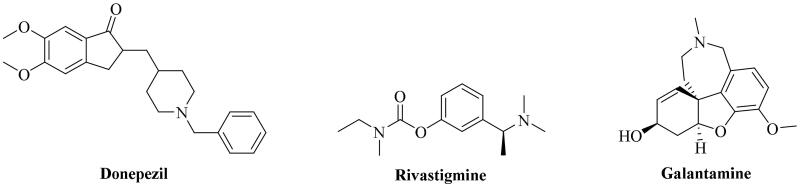
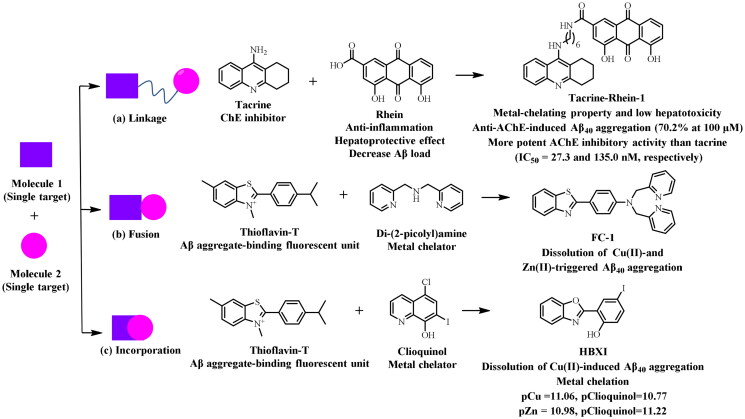
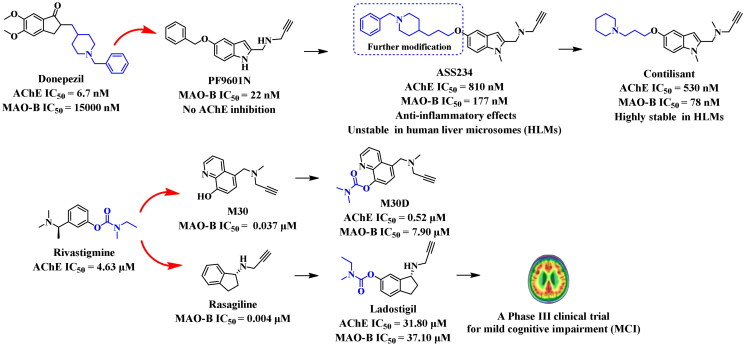
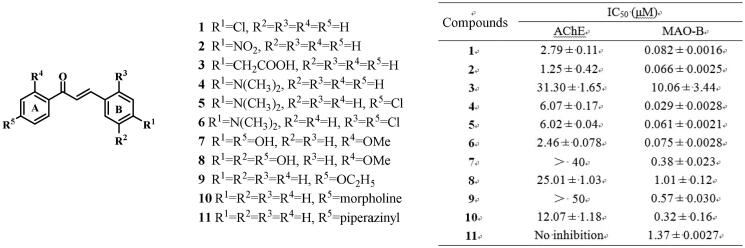
Alzheimer's disease (AD) is a progressive brain disease characterised by progressive memory loss and cognition impairment, ultimately leading to death. There are three FDA-approved acetylcholinesterase inhibitors (donepezil, rivastigmine, and galantamine, AChEIs) for the symptomatic treatment of AD. Monoamine oxidase B (MAO-B) has been considered to contribute to pathologies of AD. Therefore, we reviewed the dual inhibitors of acetylcholinesterase (AChE) and MAO-B developed in the last five years. In this review, these dual-target inhibitors were classified into six groups according to the basic parent structure, including chalcone, coumarin, chromone, benzo-fused five-membered ring, imine and hydrazine, and other scaffolds. Their design strategies, structure-activity relationships (SARs), and molecular docking studies with AChE and MAO-B were analysed and discussed, giving valuable insights for the subsequent development of AChE and MAO-B dual inhibitors. Challenges in the development of balanced and potent AChE and MAO-B dual inhibitors were noted, and corresponding solutions were provided.
Overview
The claims and statistics of this paper haven’t been checked yet.
Free: it reads the open-access text and checks the first 5 claims that cite a source we can check. Create a free account to check every claim.
Integrity signals
Registry
Cites
Statistics
Figures

Verification
Claims the paper makes
The claims and statistics of this paper haven’t been checked yet.
Free: it reads the open-access text and checks the first 5 claims that cite a source we can check. Create a free account to check every claim.
Claims other papers make about this one
Each is checked against this paper’s own text: does it say what the citing paper says it does?
The source backs part of the claim, not all of it — or backs it for a different population, condition or comparison.
In the citing paper
“Compared with combined therapies, they further reduce the risk of drug-drug interactions and simplify administration, making treatment safer, more effective, and more convenient for patients.524,525”
From Recent advances in Alzheimer's disease: Mechanisms, clinical trials and new drug development strategies. (2024) · cites this paper as [524]
Experimental — accuracy not yet measuredThe cited source says what the claim attributes to it.
In the citing paper
“and the suboptimal effects of single-target drugs,524”
From Recent advances in Alzheimer's disease: Mechanisms, clinical trials and new drug development strategies. (2024) · cites this paper as [524]
Self-check
Percentages, sums and reported differences re-computed from the paper’s own numbers.
The self-check needs the paper’s full text.
Citations
Cites
Vos, T., Lim, S. S., Abbafati, C., Abbas, K. M., Abbasi, M., Abbasifard, M., Abbasi-Kangevari, M., Abbastabar, H., Abd-Allah, F., Abdelalim, A., et al. (2020) · The Lancet · doi:10.1016/s0140-6736(20)30925-9 · Cited by 19,358
Nichols, E., Szoeke, C. E. I., Vollset, S. E., Abbasi, N., Abd-Allah, F., Abdela, J., Aichour, M. T. E., Akinyemi, R. O., Alahdab, F., Asgedom, S. W., et al. (2019) · The Lancet Neurology · doi:10.1016/s1474-4422(18)30403-4 · Cited by 2,412
Chalcone: A Privileged Structure in Medicinal Chemistry
Zhuang, C., Zhang, W., Sheng, C., Zhang, W., Xing, C., & Miao, Z. (2017) · Chemical Reviews · doi:10.1021/acs.chemrev.7b00020 · Cited by 1,463
Multi-target-Directed Ligands To Combat Neurodegenerative Diseases
Cavalli, A., Bolognesi, M. L., Minarini, A., Rosini, M., Tumiatti, V., Recanatini, M., & Melchiorre, C. (2008) · Journal of Medicinal Chemistry · doi:10.1021/jm7009364 · Cited by 1,152
Global estimates on the number of persons across the Alzheimer's disease continuum
Gustavsson, A., Norton, N., Fast, T., Frölich, L., Georges, J., Holzapfel, D., Kirabali, T., Krolak‐Salmon, P., Rossini, P. M., Ferretti, M. T., et al. (2023) · Alzheimer's & Dementia · doi:10.1002/alz.12694 · Cited by 895
A human brain vascular atlas reveals diverse mediators of Alzheimer’s risk
Yang, A. C., Vest, R. T., Kern, F., Lee, D. P., Agam, M., Maat, C. A., Losada, P. M., Chen, M. B., Schaum, N., Khoury, N., et al. (2022) · Nature · doi:10.1038/s41586-021-04369-3 · Cited by 797
Cholinesterase inhibitors as Alzheimer's therapeutics (Review)
Sharma, K. (2019) · Molecular Medicine Reports · doi:10.3892/mmr.2019.10374 · Cited by 602
Savelieff, M. G., Nam, G., Kang, J., Lee, H. J., Lee, M., & Lim, M. H. (2019) · Chemical Reviews · doi:10.1021/acs.chemrev.8b00138 · Cited by 581
De Colibus, L., Li, M., Binda, C., Lustig, A., Edmondson, D. E., & Mattevi, A. (2005) · Proceedings of the National Academy of Sciences · doi:10.1073/pnas.0505975102 · Cited by 527
Alzheimer’s disease and its treatment by different approaches: A review
Srivastava, S., Ahmad, R., & Khare, S. K. (2021) · European Journal of Medicinal Chemistry · doi:10.1016/j.ejmech.2021.113320 · Cited by 467
Cited by
Zhang, J., Zhang, Y., Wang, J., Xia, Y., Zhang, J., & Chen, L. (2024) · Signal Transduction and Targeted Therapy · doi:10.1038/s41392-024-01911-3 · Cited by 1,138
“524,525 From a biochemical standpoint, growing evidence supports a link between cholinergic abnormalities and other pathophysiological features of AD, including abnormal A β and tau.”
BackgroundPathological mechanisms and treatment progression of Alzheimer’s disease
Zhang, J., Kong, G., Yang, J., Pang, L., & Li, X. (2025) · European journal of medical research · doi:10.1186/s40001-025-02886-9 · Cited by 304
“These agents function by reversibly inhibiting acetylcholinesterase, thereby increasing acetylcholine availability in synaptic clefts and temporarily enhancing cholinergic neurotransmission [170].”
MzDOCK : A free ready‐to‐use GUI ‐based pipeline for molecular docking simulations
Kabier, M., Gambacorta, N., Trisciuzzi, D., Kumar, S., Nicolotti, O., & Mathew, B. (2024) · Journal of Computational Chemistry · doi:10.1002/jcc.27390 · Cited by 75
Grabowska, W. A., Bijak, M., Szelenberger, R., Gorniak, L., Podogrocki, M., Harmata, P., & Cichoń, N. (2025) · International Journal of Molecular Sciences · doi:10.3390/ijms26178726 · Cited by 75
“A good example of MLD is the dual-target inhibitors, where AChE is combined with other disease-relevant targets [11] such as monoamine oxidase B (MAO-B) [61], β -secretase (BACE-1) [62], glycogen synthase kinase-3 β (GSK-3 β ) [63], or phosphodi-esterases (PDEs) [64,65].”
Asim, A., Jastrzębski, M. K., & Kaczor, A. A. (2025) · Molecules · doi:10.3390/molecules30142975 · Cited by 46
“Several research studies have reported the potential of natural and synthesized coumarin derivatives in targeting and inhibiting both AChE and MAO-B [72].”
InfluentialOrioli, R., Belluti, F., Gobbi, S., Rampa, A., & Bisi, A. (2024) · Molecules · doi:10.3390/molecules29153514 · Cited by 37
Guerguer, F. Z., Rossafi, B., Abchır, O., Raouf, Y. S., Albalushi, D. B., Samadi, A., & Chtita, S. (2025) · PLoS ONE · doi:10.1371/journal.pone.0317261 · Cited by 21
Azam, U., Naseer, M. M., & Rochais, C. (2025) · European Journal of Medicinal Chemistry · doi:10.1016/j.ejmech.2025.117277 · Cited by 24
Research progress and perspectives of dual-target inhibitors
Pang, X., Xu, W., Liang, J. Y., Liu, Y., Li, H., & Chen, L. (2025) · European Journal of Medicinal Chemistry · doi:10.1016/j.ejmech.2025.117453 · Cited by 20
Pterostilbene: A natural neuroprotective stilbene with anti-Alzheimer's disease properties
Gao, S., Zhang, H., Li, N., Zhang, L., Zhu, Z., & Xu, C. (2024) · Journal of Pharmaceutical Analysis · doi:10.1016/j.jpha.2024.101043 · Cited by 21
Ghallab, D. S., & Ghareeb, D. A. (2024) · Scientia Horticulturae · doi:10.1016/j.scienta.2024.113563 · Cited by 16
Thakur, A., Rana, M., Vanjani, S., Liou, K.-C., Taliyan, R., Nepali, K., & Yang, C. (2026) · Medicinal Research Reviews · doi:10.1002/med.70047 · Cited by 12
Ghallab, D. S., Awwad, Z. M., Ibrahim, R. S., & Shawky, E. M. (2025) · Food Bioscience · doi:10.1016/j.fbio.2025.106863 · Cited by 10
Naeem, A., Waseem, A., Khan, M. A., Robertson, A. A. B., & Raza, S. S. (2024) · Molecular Neurobiology · doi:10.1007/s12035-024-04662-y · Cited by 10
ROS-related nanoparticles for the management of Alzheimer’s disease: Wielding the double-edged sword
Yu, Y., Zhang, Q., Guo, Y.-H., Wu, J., Zhao, L., Wang, Z., Gong, Z.-Q., Kan, Y.-K., & Wang, Z. (2025) · Chemical Engineering Journal · doi:10.1016/j.cej.2025.161784 · Cited by 12
Hall, T. K., Paim, M. P., da Costa, P., de Azevedo, A. R., Nascimento, V., Neto, J. S. S., Sousa, F. S. S., Collares, T. V., Seixas, F. K., Brüning, C. A., et al. (2025) · ACS Chemical Neuroscience · doi:10.1021/acschemneuro.5c00139 · Cited by 10
Bioactivities and Structure–Activity Relationships of Harmine and Its Derivatives: A Review
Liu, Q., Yang, C., Qi, J., Shen, Q., Ye, M., Li, H.-Y., & Zhang, L. (2025) · Chemistry & Biodiversity · doi:10.1002/cbdv.202402953 · Cited by 15
“Inhibition of AChE leads to the accumulation of acetylcholine, which, in turn, increases the stimulation of muscarinic and nicotinic receptors, ultimately alleviating memory deficits associated with Alzheimer’s disease (AD) [69, 70].”
Bian, Z.-Y., Li, P., Feng, X.-Y., Zhou, Y., Cheng, F.-Y., Dong, W.-X., Xiang, P., & Tang, J. (2024) · European Journal of Medicinal Chemistry · doi:10.1016/j.ejmech.2024.116794 · Cited by 8
Negru, D. C., BUNGAU, S. G., Radu, A.-F., Ţiţ, D. M., Radu, A.-F., Nistor-Cseppento, C. D., & Negru, P. A. (2024) · In Vivo · doi:10.21873/invivo.13822 · Cited by 6
“DENISA CLAUDIA NEGRU 1 , SIMONA GABRIELA BUNGAU 1,2 , ADA RADU 1,2 , DELIA MIRELA TIT 1,2 , ANDREI-FLAVIUS RADU 1,3 , DELIA CARMEN NISTOR-CSEPPENTO 1,4 and PAUL ANDREI NEGRU 1,3 regulator of cardiovascular function, and it also stimulates digestive and urinary processes (6).”
In-depth analysis of acetylcholinesterase: Recent advances in structure, function and assays
Wu, J., Yang, S., Yang, S., Pei, S., Liu, T., Zhou, Q., Huang, X., Gong, G., Wang, Q., Liu, W., et al. (2025) · Biochemical Engineering Journal · doi:10.1016/j.bej.2025.109974 · Cited by 6
Abdullah, N., Hussain, F., Ullah, N., Fatima, H., Tahir, M. A., Rashid, U., & Hassan, A. (2025) · ACS Omega · doi:10.1021/acsomega.4c10510 · Cited by 5
Development of 5-phenylnitro bearing furan-based chalcones as a new class of potent MAO-B inhibitors
Kalathil, K. T., Pandey, B. P., Peedikayil, A. T., Abdu, R. A., Sreekumari, R. R., Alfagham, A. T., Elgorban, A. M., Kumar, S., Kim, H., Dev, S., et al. (2025) · Future Medicinal Chemistry · doi:10.1080/17568919.2025.2485671 · Cited by 5
Schäker‐Hübner, L., Toledano‐Pinedo, M., Eimermacher, S., Krasniqi, V., Porro-Pérez, A., Tan, K., Horn, G., Stegen, P., Elsinghorst, P. W., Wille, T., et al. (2025) · ACS Pharmacology & Translational Science · doi:10.1021/acsptsci.4c00709 · Cited by 7
El-Hema, H. S., Ahmed, A., Waheed, A., Hawata, M. A., Hussein, M. F., Khalifa, M. M., Elhendawy, A. T., El‐Sayed, H. A., & Abdel‐Rahman, A. A. ‐. (2026) · Journal of Molecular Structure · doi:10.1016/j.molstruc.2026.146452 · Cited by 5
Ajisebiola, B. S., Adeniyi, B. D., Alakoso, M. O., Fapohunda, S. T., Nwanze, K. I., & Adeyi, A. O. (2024) · Naunyn-Schmiedeberg s Archives of Pharmacology · doi:10.1007/s00210-024-03678-4 · Cited by 5
“Numerous neurotoxic byproducts generated in metabolic reactions catalyzed by MAO would further cause neuronal death and mitochondrial malfunction (Zou et al. 2023).”
Negi, N., Ayyannan, S. R., & Tripathi, R. K. P. (2024) · Medicinal Chemistry Research · doi:10.1007/s00044-024-03365-2 · Cited by 7
“By simultaneously enhancing cholinergic neurotransmission and modulating monoaminergic systems, these agents hold promise for addressing the heterogeneous nature of AD [17 – 22].”
Masum, M. H. U., Lokman, S. M., Parvin, R., Rahman, M. S., Chowdhury, E. H., Chamonara, K., Chowdhury, S., Mahdeen, A. A., & Khatun, M. M. (2025) · PLoS ONE · doi:10.1371/journal.pone.0326219 · Cited by 4
“Additionally, the intricate and varied factors contributing to the onset of AD, present considerable hurdles for the development of novel drugs [57,58].”
Li, W., Guo, Y., Wang, X., Yang, C., Zhu, J., & Cao, Z. (2026) · Journal of Enzyme Inhibition and Medicinal Chemistry · doi:10.1080/14756366.2026.2622769 · Cited by 4
“…pathology of aD, the “multi-target-directed ligands” (MtDls) strategy has emerged as a promising approach for novel drug design 24 . in particular, dual ache/MaO-B inhibitors developed via MtDls are anticipated to simultaneously alleviate symptoms and modify disease progression 25 .”
Guo, L., Chang, Z., Tong, J., Gao, P., Zhang, Y., Liu, Y., Yang, Y., & Wang, C. (2024) · Physical Chemistry Chemical Physics · doi:10.1039/d4cp01741b · Cited by 5
Paolo, M. L. D., Salerno, S., Nordio, G., Piazzola, F., Sarno, S., Sarno, G., Natale, B., Poggetti, V., Borreca, A., Baglini, E., et al. (2025) · European Journal of Medicinal Chemistry · doi:10.1016/j.ejmech.2025.117580 · Cited by 4
Hou, Q., & Li, Y. (2025) · Molecular Diversity · doi:10.1007/s11030-024-11061-x · Cited by 4
Proteins and DNA Sequences Interacting with Tanshinones and Tanshinone Derivatives
Szymczyk, P., Majewska, M., & Nowak, J. (2025) · International Journal of Molecular Sciences · doi:10.3390/ijms26020848 · Cited by 2
Das, S., Prasad, S., Rafi, M., Begum, Y., Dey, S., Joshi, A., Singh, N., Thakur, K. G., Jaisankar, P., & Singh, U. (2025) · Molecular Diversity · doi:10.1007/s11030-025-11315-2 · Cited by 2
Jangid, K., Devi, B., Dahiya, R., Mishra, J., Kumar, V., Bhatti, J. S., Thareja, S., & Kumar, V. (2025) · RSC Medicinal Chemistry · doi:10.1039/d5md00626k · Cited by 2
Zouaghi, N., Lanez, E., Benamor, M. L., Nacer, S. N., Lanez, T., Bekkar, Y., Haddad, H., Al-Abdallat, K., Zihlif, M., Al-Abdallat, Y., et al. (2025) · Food Bioscience · doi:10.1016/j.fbio.2025.108128 · Cited by 2
Houssaini, J., Bouhi, M. E., Ziyat, H., Arhzaf, S., Bennani, M. N., & Bouachrıne, M. (2026) · Journal of Organometallic Chemistry · doi:10.1016/j.jorganchem.2026.124090 · Cited by 2
He, Z.-X., Lin, Z., Liu, Y. H., Wang, S.-H., Lin, L., & Guan, L. (2026) · Bioorganic Chemistry · doi:10.1016/j.bioorg.2026.109991 · Cited by 2
El-Mokaddem, O. K., Elmasry, G. F., Mahmoud, W. R., & Ghany, L. M. A. A. (2026) · RSC Advances · doi:10.1039/d6ra03862j · Cited by 2
Yang, X., Xiao, R., Liu, B., Xie, B., & Yang, Z. (2025) · Experimental Gerontology · doi:10.1016/j.exger.2025.112715 · Cited by 3
“It's important to examine whether individuals with AD are taking medications that might influence bone density, either by increasing bone formation or affecting osteoclast activity (Zou et al., 2023; Li et al., 2023; Ma and Elefteriou, 2020).”
Wang, Y., Deng, L., Wang, L., & Liu, W. (2025) · European Journal of Pharmacology · doi:10.1016/j.ejphar.2025.178268 · Cited by 2
Mateev, E., Chtita, S., Pavlova, E., Irfan, A., Tzankova, D., Sharma, S., GEORGIEV, B., Mateeva, A., Momekov, G., Georgieva, M., et al. (2025) · Pharmaceuticals · doi:10.3390/ph18111677 · Cited by 1
“…highlight that dual inhibition of MAO-B and acetylcholinesterase (AChE) presents a promising approach to such multitarget treatments, as these enzymes play pivotal roles in modulating dopaminergic and cholinergic neurotransmission, respectively, both critically impaired in PD pathology [3,4].”
Kanwal, A., & Rasool, N. (2026) · Medicinal Chemistry Research · doi:10.1007/s00044-025-03523-0 · Cited by 1
“…existing MTDLs for AChE and MAO-B inhibition possess signi fi cant limitations, including poor pharmacokinetics, low selectivity (off-target MAO-A inhibition causing tyramine-related side effects or drug-drug interactions), and inadequate potency towards multifactorial AD hallmarks [10, 22, 23].”
Göktaş, S. P., Osmani̇ye, D., Levent, S., Sağlık, B. N., Göktaş, B., Uslu, H., & Özkay, Y. (2024) · European Journal of Life Sciences · doi:10.55971/ejls.1497561
Athukorala, V. D., Faries, M., Silva, U. A. D., Garusinghe, P. S., Gunaratne, K. S., Jayasekara, A. H., Weragoda, T. H., Perera, D. N., Rathnayake, N. D. N. B., Wijerathne, S. K., et al. (2025) · Research Square · doi:10.21203/rs.3.rs-7407618/v1
Cobanoglu, O., Erdağı, S. İ., Alıcı, E. H., Akın, M., Şaki, N., Arabacı, G., Yıldız, U., & Sait, S. A. R. I. (2025) · Journal of Molecular Structure · doi:10.1016/j.molstruc.2025.144684 · Cited by 2
Hassan, A. H. E., Kim, R., Yoo, S. Y., El-Halaby, L. O., El‐Sayed, S. M., Kim, M., Kim, H. J., Park, K. D., Sim, J., & Lee, Y. S. (2026) · Molecular Diversity · doi:10.1007/s11030-025-11464-4
Chimezie, J., Omeiza, N. A., Ogunyemi, O. M., Ajayi, A. M., Abeje, J. I., Abdullahi, N. O., Isehunwa, G. O., Owumi, S. E., & Adedeji, T. G. (2026) · Neurotoxicology and Teratology · doi:10.1016/j.ntt.2026.107586
Fu, W., Wang, K., Chen, H., Liu, T., Liu, X., Jin, Q., Tan, Z., Dong, W., Liu, W., & Sang, Z.-P. (2026) · RSC Medicinal Chemistry · doi:10.1039/d5md01138h
Kumar, R., Sinha, S., & Babu, M. A. (2026) · Chemico-Biological Interactions · doi:10.1016/j.cbi.2026.112224 · Cited by 2
He, S.-B., Jin, M., Lin, Z., Liu, Y.-X., He, Z.-X., Jin, Q., & Guan, L. (2026) · Arabian Journal of Chemistry · doi:10.25259/ajc_321_2025
THERAPY FOR ALZHEIMER’S DISEASE - FOCUS ON LECANEMAB
Jońca, M., Majchrowicz, G., Kurys, N., Piekarska, W., Litke, S., & Gołacka, K. (2026) · International Journal of Innovative Technologies in Social Science · doi:10.31435/ijitss.3(51).2026.5795
Ayati, A., Mohammadi, M., Zare, M., & Pouramiri, B. (2026) · Polycyclic aromatic compounds · doi:10.1080/10406638.2026.2705436
Thakur, A., Sharma, R. R., Kumari, S., Prakash, D., & Devi, A. S. (2026) · Inflammopharmacology · doi:10.1007/s10787-026-02371-7 · Cited by 1
“These strategies, however, will be critical to optimize treatment combinations, select patients, timing and safety before they become widely used in clinical practice (Zou et al. 2023).”
Jastrzębski, M. K., Wójcik, P., Pietrzak-Mitura, D., Bartyzel, A., Targowska‐Duda, K. M., Karcz, T. P., Wronikowska‐Denysiuk, O., Olejarz‐Maciej, A., Michalak, A., Sumara, A., et al. (2026) · Bioorganic Chemistry · doi:10.1016/j.bioorg.2026.110417
Targeting Cholinesterases: Synthesis of Novel Thiosemicarbazone-Carbamate Derivatives
Sellitepe, H. E., Aksel, A. B., Akkaya, D., & Özel, A. (2026) · Cumhuriyet Science Journal · doi:10.17776/csj.1916608
Rincón, S. M., Orozco, F., & Galindo, J. F. (2026) · Journal of Alzheimer s Disease · doi:10.1177/13872877261483260
Sait, A. M., & Day, P. J. (2026) · Pharmaceuticals · doi:10.3390/ph19101589
“…amyloid precursor protein cleaving enzyme 1 (AChE/BACE-1) dual inhibition has been reported, with acetylcholinesterase/monoamine oxidase B(AChE/MAO-B) inhibition that has also been reported, aiming to treat the cholinergic and monoaminergic and oxidative stress-associated pathways [15,16].”
Multiscale Computational Prioritization of Chromone-Based Acetylcholinesterase Ligands
Khibech, O., Abdelfattah, B., Bouhrim, M., Alqahtani, M. J., Alqahtani, J., Basilua, J. M., Boulouiz, A., & Touzani, R. (2026) · International Journal of Molecular Sciences · doi:10.3390/ijms27209153
“Across these series, a planar aromatic axis supports π -stacking along the AChE gorge, while strategically positioned acceptors and compact hydrophobic substituents tune catalytic-site anchoring and peripheral-site recognition [21,22].”
Poonam, Rana, R., Thakur, M., Sharma, A., Pannu, S., Sharma, S., Naman, S., Rani, S., Devi, D., Kumar, V., et al. (2026) · Frontiers in Oncology · doi:10.3389/fonc.2026.1908830
“Both AChE and butyrylcholinesterase (BuChE) are targeted by these inhibitors, which act as disease-modifying medications by reducing the formation of A b plaques and enhancing cognitive abilities in AD patients by raising acetylcholine levels (240, 241).”
Metadata
- Authors
- Zou, D., Liu, R., Lv, Y., Guo, J., Zhang, C., & Xie, Y.
- Affiliations
- College of Pharmaceutical Science, Zhejiang University of Technology
- Zhejiang University of Technology (CN)
- Corresponding author
- Zhang, Changjun
- Xie, Yuanyuan
- Venue
- Journal of Enzyme Inhibition and Medicinal Chemistry
- Publisher
- Informa UK Limited
- Published
- 2023-11-13
- Volume
- 38
- Issue
- 1
- Pages
- 2270781-2270781
- ISSN
- 1475-6366 (ISSN-L)
- 1475-6374
- PMC
- PMC10653629
- OpenAlex
- W4388638581
- Cited by
- 60
- References
- 122
- Citations by year
- 2026: 22 · 2025: 26 · 2024: 12
- FWCI
- 2.18
- Type
- journal article
- Language
- en
- Open access
- gold
- doi.org
- Licence
- Locations
- Journal of Enzyme Inhibition and Medicinal Chemistry (publishedVersion, cc-by-nc)
- PubMed Central (publishedVersion, cc-by-nc)
- PubMed (publishedVersion)
- DOAJ (DOAJ: Directory of Open Access Journals) (submittedVersion, cc-by-sa)
- Funders
- Zhejiang Key R&D Program (No. 2021C03085)
- National Key R&D Program of China (2021YFC2100800)
- National Natural Science Foundation of China (Grant No. 21978273 and 21576239)
- China Postdoctoral Science Foundation (No. 2021M702897)
- Topics
- Health Sciences › Medicine › Pharmacology (medical) › Cholinesterase and Neurodegenerative Diseases
- Life Sciences › Neuroscience › Cellular and Molecular Neuroscience › Alzheimer's disease research and treatments
- Life Sciences › Biochemistry, Genetics and Molecular Biology › Molecular Biology › Enzyme function and inhibition
- Keywords
- Alzheimer's disease, acetylcholinesterase inhibitors, monoamine oxidase B inhibitors, dual inhibitors, chalcones, coumarins, chromones, imines, hydrazine, structure-activity relationship, molecular docking, drug design
- MeSH terms
- Acetylcholinesterase, Alzheimer Disease, Cholinesterase Inhibitors, Humans, Monoamine Oxidase, Monoamine Oxidase Inhibitors, Structure-Activity Relationship, Molecular Docking Simulation
About these checks
Registry, retraction, Cites and statistics results are computed, not judged, with one exception: a printed reference that no index lists is read once by a model before it counts as a citation error. Claims are extracted by a model and kept only when their quote appears verbatim in the text; each cited source is then checked, with a model’s help, for whether it says what the claim relies on. Those verdicts can be wrong — read the claim’s quote and the cited source before relying on one.
Statistics and arithmetic are recomputed, not judged.
Confidence bands are shown only for fields calibrated on our annotated test set. None is calibrated yet, so no band is shown.
What counts as a claim ›How we measure confidence ›How we check this ›
Are you an author, or do you see a problem with this page? Request a review
Data sources
Bibliographic data: Semantic Scholar, OpenAlex, Crossref.
Contains information from the Semantic Scholar Academic Graph Datasets, made available under the ODC Attribution License (ODC-BY 1.0).
Semantic Scholar’s data is described in: Kinney, R., et al. (2023). The Semantic Scholar Open Data Platform. arXiv:2301.10140.
