

p21 limits S phase DNA damage caused by the Wee1 inhibitor MK1775
Open accessThe DOI matches its Crossref record; 48 of the 48 references it cites were found in a registry or an index.
Abstract
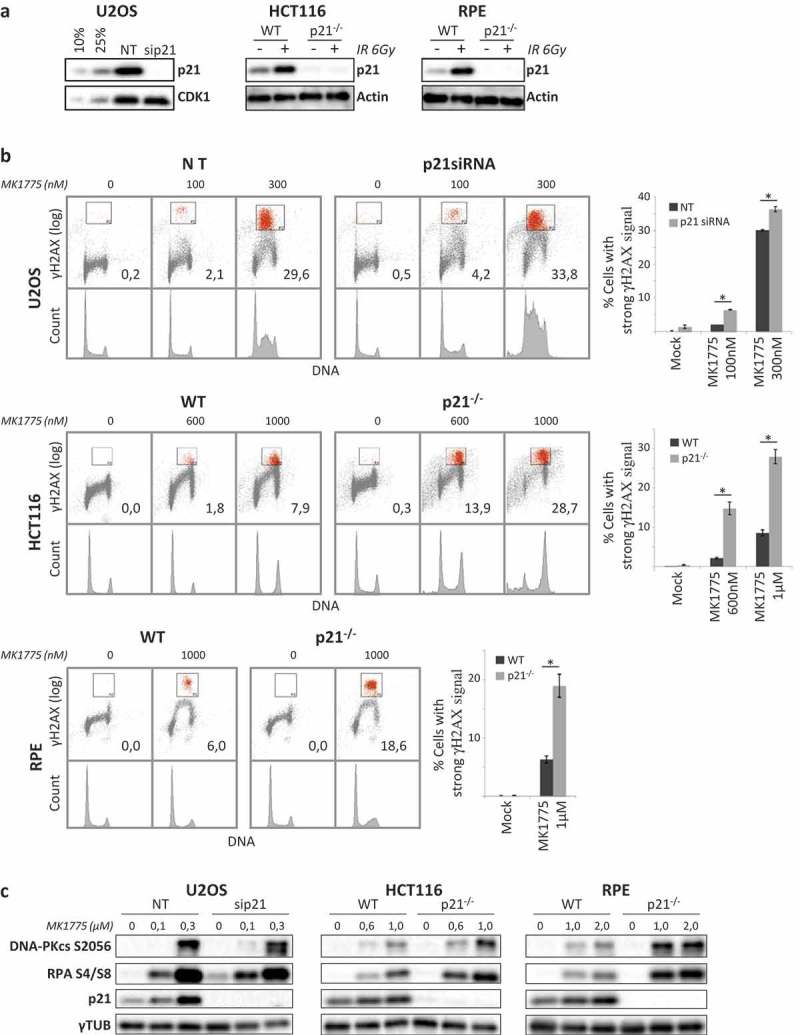
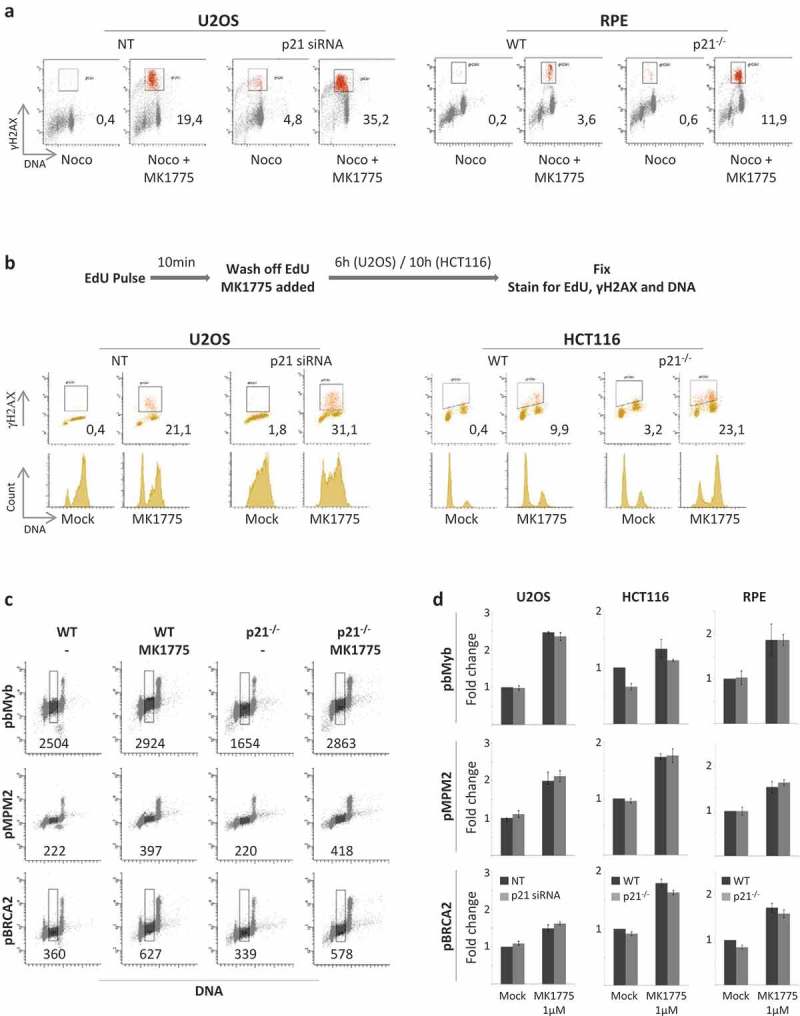
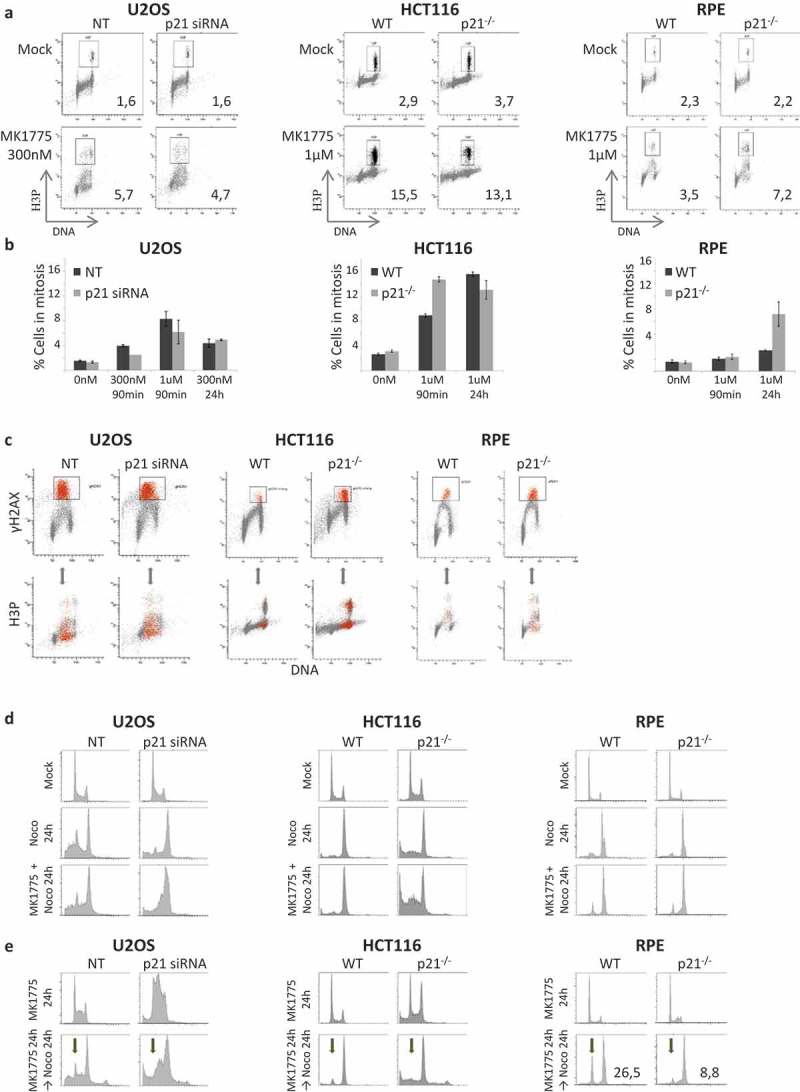
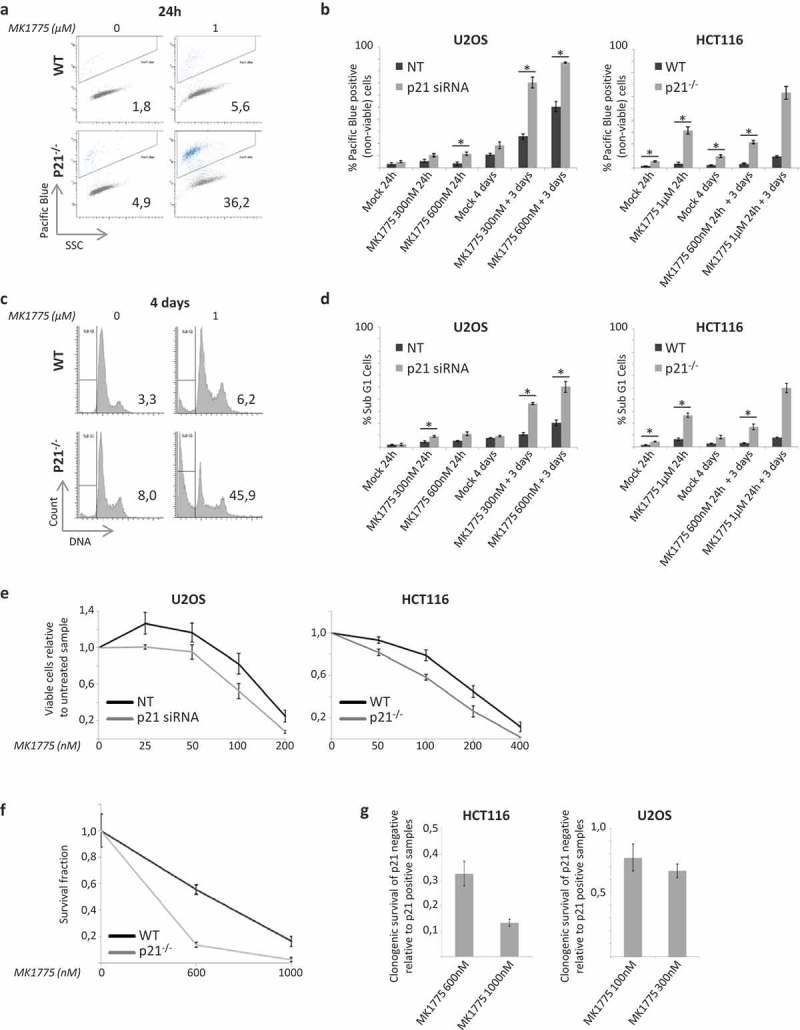
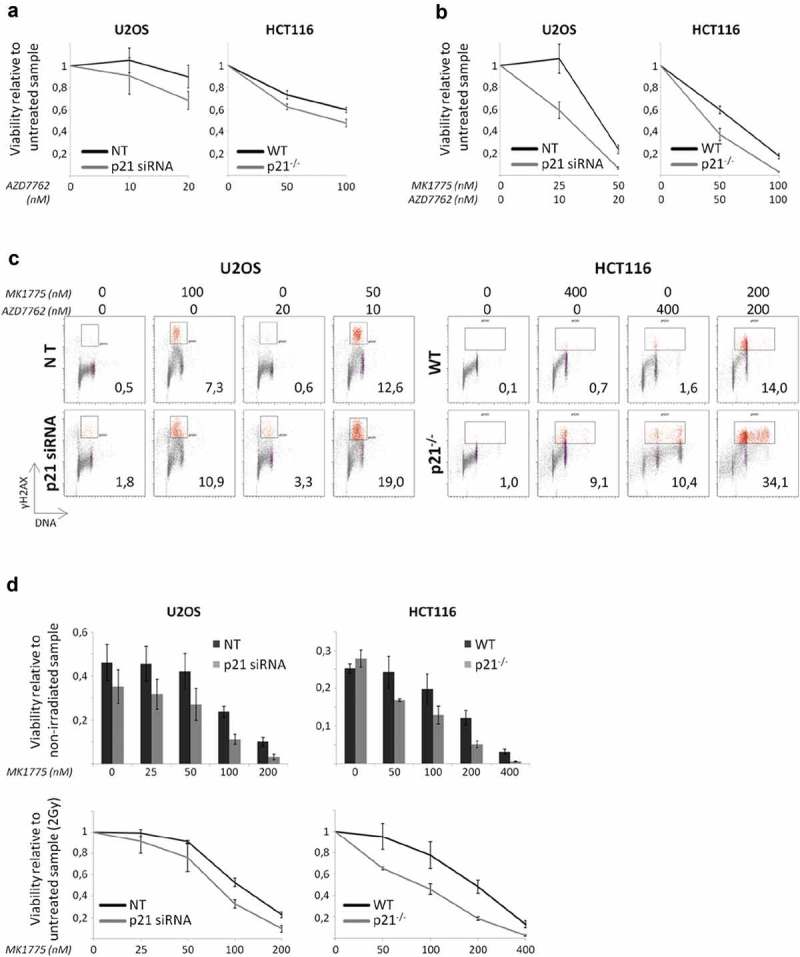
The Wee1 inhibitor MK1775 (AZD1775) is currently being tested in clinical trials for cancer treatment. Here, we show that the p53 target and CDK inhibitor p21 protects against MK1775-induced DNA damage during S-phase. Cancer and normal cells deficient for p21 (HCT116 p21-/-, RPE p21-/-, and U2OS transfected with p21 siRNA) showed higher induction of the DNA damage marker γH2AX in S-phase in response to MK1775 compared to the respective parental cells. Furthermore, upon MK1775 treatment the levels of phospho-DNA PKcs S2056 and phospho-RPA S4/S8 were higher in the p21 deficient cells, consistent with increased DNA breakage. Cell cycle analysis revealed that these effects were due to an S-phase function of p21, but MK1775-induced S-phase CDK activity was not altered as measured by CDK-dependent phosphorylations. In the p21 deficient cancer cells MK1775-induced cell death was also increased. Moreover, p21 deficiency sensitized to combined treatment of MK1775 and the CHK1-inhibitor AZD6772, and to the combination of MK1775 with ionizing radiation. These results show that p21 protects cancer cells against Wee1 inhibition and suggest that S-phase functions of p21 contribute to mediate such protection. As p21 can be epigenetically downregulated in human cancer, we propose that p21 levels may be considered during future applications of Wee1 inhibitors.
Overview
The claims and statistics of this paper haven’t been checked yet.
Free: it reads the open-access text and checks the first 5 claims that cite a source we can check. Create a free account to check every claim.
Integrity signals
Registry
Cites
Statistics
Figures
Verification
Claims the paper makes
The claims and statistics of this paper haven’t been checked yet.
Free: it reads the open-access text and checks the first 5 claims that cite a source we can check. Create a free account to check every claim.
Claims other papers make about this one
Each is checked against this paper’s own text: does it say what the citing paper says it does?
The source backs part of the claim, not all of it — or backs it for a different population, condition or comparison.
In the citing paper
“Intriguingly, the downregulation of p21 also interferes with the optimal processivity of DNA replication [79,83,86].”
From CDK-Independent and PCNA-Dependent Functions of p21 in DNA Replication (2020) · cites this paper as [86]
Experimental — accuracy not yet measuredIn the citing paper
“which demonstrate that endogenous p21, and specifically the fraction expressed in the S phase, has an important role in the control of unperturbed and damaged DNA replication.”
From CDK-Independent and PCNA-Dependent Functions of p21 in DNA Replication (2020) · cites this paper as [86]
Self-check
Percentages, sums and reported differences re-computed from the paper’s own numbers.
The self-check needs the paper’s full text.
Citations
Cites
1 retracted
MicroRNA-93 promotes cell proliferation by directly targeting P21 in osteosarcoma cells
He, Y., & Yu, B. (2017) · Experimental and Therapeutic Medicine · doi:10.3892/etm.2017.4204 · Cited by 29
RetractedRequirement for p53 and p21 to Sustain G 2 Arrest After DNA Damage
Bunz, F., Dutriaux, A., Lengauer, C., Waldman, T., Zhou, S., Brown, J. P., Sedivy, J. M., Kinzler, K. W., & Vogelstein, B. (1998) · Science · doi:10.1126/science.282.5393.1497 · Cited by 2,803
Mice Lacking p21CIP1/WAF1 undergo normal development, but are defective in G1 checkpoint control
Deng, C., Zhang, P., Wade Harper, J., Elledge, S. J., & Leder, P. (1995) · Cell · doi:10.1016/0092-8674(95)90039-x · Cited by 2,113
PCNA, the Maestro of the Replication Fork
Moldovan, G.-L., Pfander, B., & Jentsch, S. (2007) · Cell · doi:10.1016/j.cell.2007.05.003 · Cited by 1,796 · cited 1×
“Furthermore, p21 has a strong affinity for PCNA, and prevents replication by blocking the interaction between PCNA and factors that are necessary for replication, such as replicative DNA polymerases [21,22].”
BackgroundThe p21 inhibitor of cyclin-dependent kinases controls DNA replication by interaction with PCNA
Waga, S., Hannon, G. J., Beach, D., & Stillman, B. (1994) · Nature · doi:10.1038/369574a0 · Cited by 1,655 · cited 1×
“Furthermore, p21 has a strong affinity for PCNA, and prevents replication by blocking the interaction between PCNA and factors that are necessary for replication, such as replicative DNA polymerases [21,22].”
BackgroundRadiation-induced cell cycle arrest compromised by p21 deficiency
Brugarolas, J., Chandrasekaran, C., Gordon, J. I., Beach, D., Jacks, T., & Hannon, G. J. (1995) · Nature · doi:10.1038/377552a0 · Cited by 1,242
Multiple functions of p21 in cell cycle, apoptosis and transcriptional regulation after DNA damage.
Karimian, A., Ahmadi, Y., & Yousefi, B. (2016) · DNA Repair · doi:10.1016/j.dnarep.2016.04.008 · Cited by 1,110 · cited 3×
“The p53 target and CDK inhibitor p21 plays a fundamental part in regulating cell cycle progression, as well as cellular senescence and apoptosis [11].”
BackgroundATR prohibits replication catastrophe by preventing global exhaustion of RPA
Toledo, L. I., Altmeyer, M., Rask, M.-B., Lukas, C., Larsen, D. H., Povlsen, L. K., Bekker-Jensen, S., Mailand, N., Bartek, J., & Lukas, J. (2013) · Cell · doi:10.1016/j.cell.2013.10.043 · Cited by 911
Inactivation of the p34 cdc2 -Cyclin B Complex by the Human WEE1 Tyrosine Kinase
Parker, L. L., & Piwnica-Worms, H. (1992) · Science · doi:10.1126/science.1384126 · Cited by 716 · cited 2×
“As unscheduled CDK activity is thought to mediate MK1775-induced DNA damage in S phase, and both p21 and Wee1 are well known CDK inhibitors [2,5,11], we next addressed whether the increased DNA damage observed in p21 negative cells might be caused by increased CDK activity.”
BackgroundMicroRNAs in the miR-106b family regulate p21/CDKN1A and promote cell cycle progression
Ivanovska, I., Ball, A. S., Diaz, R. L., Magnus, J. F., Kibukawa, M., Schelter, J. M., Kobayashi, S. V., Lim, L., Burchard, J., Jackson, A. L., et al. (2008) · Molecular and Cellular Biology · doi:10.1128/mcb.01977-07 · Cited by 561
Cited by
Shamloo, B., & Usluer, S. (2019) · Cancers · doi:10.3390/cancers11081178 · Cited by 336
“p21−/− HCT116 Increased apoptosis and cell death with treatment of ginseng, imatinib and gefitinib, pyrazolo(1,5-a)pyrimidine, microtubule inhibitors, MK1775 checkpoint inhibitor [65] [66] [67] [68] [69] p21−/− MMTV-ras Higher S-phase fractions, increased spontaneous apoptosis [51] p21−/− MMTV-myc Lower S-phase fracti…”
BackgroundBasit, A., Cho, M.-G., Kim, E.-Y., Kwon, D., Kang, S.-J., & Lee, J.-H. (2020) · Experimental & Molecular Medicine · doi:10.1038/s12276-020-0416-y · Cited by 118
CDK-Independent and PCNA-Dependent Functions of p21 in DNA Replication
Mansilla, S. F., De La Vega, M. B., Calzetta, N. L., Siri, S. O., & Gottifredi, V. (2020) · Genes · doi:10.3390/genes11060593 · Cited by 114
“Such a role of p21 is independent of CDK inactivation, and may also depend on the modulation of PCNA interactions during the S phase [86].”
BackgroundTicli, G., Cazzalini, O., Stivala, L. A., & Prosperi, E. (2022) · International Journal of Molecular Sciences · doi:10.3390/ijms23137058 · Cited by 76
“In agreement with these findings, previous works showed that p21 could protect arrested replication forks from collapse after topoisomerase I inhibition [144] and that p21 limited the extent of DNA damage in the S phase induced by concomitant Wee1 inhibition and ionizing radiation [145].”
ResultWEE1 kinase protects the stability of stalled DNA replication forks by limiting CDK2 activity
Elbæk, C. R., Petrosius, V., Benada, J., Erichsen, L., Damgaard, R. B., & Sørensen, C. S. (2022) · Cell Reports · doi:10.1016/j.celrep.2021.110261 · Cited by 64
Synthetic and Medicinal Chemistry Approaches Toward WEE1 Kinase Inhibitors and Its Degraders
Alli, V. J., Yadav, P., Suresh, V., & Jadav, S. S. (2023) · ACS Omega · doi:10.1021/acsomega.3c01558 · Cited by 36
ATR inhibition augments the efficacy of lurbinectedin in small‐cell lung cancer
Schultz, C. W., Zhang, Y., Meskini, R. E., Zimmermann, A., Fu, H., Murai, Y., Wangsa, D., Kumar, S., Takahashi, N., Atkinson, D., et al. (2023) · EMBO Molecular Medicine · doi:10.15252/emmm.202217313 · Cited by 31
“SCLC is characterized by loss of RB1 (George et al, 2015), the predominant regulator of G1/S transition leading to increased reliance on cyclin-dependent kinase inhibitor p21 (CDKN1A) for control of the G1/S checkpoint (Hauge et al, 2019).”
Blosser, W. D., Dempsey, J. A., McNulty, A. M., Rao, X., Ebert, P. J., Lowery, C. D., Iversen, P. W., Webster, Y., Donoho, G. P., Gong, X., et al. (2020) · Oncotarget · doi:10.18632/oncotarget.27400 · Cited by 29
“[32] reported that excessive p21 limits S phase DNA damage caused by the WEE1 inhibitor MK1775 (adavosertib), again supporting the notion that negative regulators of CDK2 may limit cytotoxicity to agents that target the ATR-CHK1-WEE1 pathway.”
BackgroundA dual role of RBM42 in modulating splicing and translation of CDKN1A/p21 during DNA damage response
Ben‐Oz, B. M., Machour, F. E., Nicola, M., Argoetti, A., Polyak, G., Hanna, R., Kleifeld, O., Mandel‐Gutfreund, Y., & Ayoub, N. (2023) · Nature Communications · doi:10.1038/s41467-023-43495-6 · Cited by 30
“Collectively, our data show that RBM42 de fi ciency recapitulates some of the phenotype observed following p21 downregulation 31 – 34 .”
Targeting Cell Cycle Checkpoint Kinases to Overcome Intrinsic Radioresistance in Brain Tumor Cells
Vlatkovic, T., Veldwijk, M. R., Giordano, F. A., & Herskind, C. (2022) · Cancers · doi:10.3390/cancers14030701 · Cited by 29
Bi, S., Wei, Q., Zhao, Z., Chen, L., Wang, C., & Xie, S. (2019) · Frontiers in Pharmacology · doi:10.3389/fphar.2019.00864 · Cited by 27
Differential Effects of Combined ATR/WEE1 Inhibition in Cancer Cells
Rødland, G. E., Hauge, S., Hasvold, G., Bay, L. T. E., Raabe, T. T. H., Joel, M., & Syljuåsen, R. G. (2021) · Cancers · doi:10.3390/cancers13153790 · Cited by 21
Self-citationZhang, J., Si, J., Gan, L., Zhou, R., Guo, M., & Zhang, H. (2020) · Journal of Cellular Physiology · doi:10.1002/jcp.29960 · Cited by 18
Gomez, M. K., Thomson, J. P., Grimes, G. R., Wang, A. T., Churchman, M., O’Connor, M. J., Gourley, C., & Melton, D. W. (2022) · European Journal of Gynaecological Oncology · doi:10.31083/j.ejgo4302024 · Cited by 13
“Further support comes from a report that p21, encoded by CDKN2A, limits AZD1775induced S-phase DNA damage [52].”
BackgroundCentriolar subdistal appendages promote double‐strand break repair through homologous recombination
Rodríguez‐Real, G., Domínguez‐Calvo, A., Prados‐Carvajal, R., Bayona‐Feliú, A., Pereira, S. G., Balestra, F. R., & Huertas, P. (2023) · EMBO Reports · doi:10.15252/embr.202256724 · Cited by 12
Sesink, A., Becerra, M., Ruan, J.-L., Leboucher, S., Dubail, M., Heinrich, S., Jdey, W., Petersson, K., Fouillade, C., Berthault, N., et al. (2024) · NAR Cancer · doi:10.1093/narcan/zcae011 · Cited by 13
“To overcome this problem, RPE-hTERT cells with p21 gene knock-out were acquired ( 31 ).”
BackgroundDrugging the DNA damage response in the clinic: going beyond PARP
Torrado, C., González-Ortiz, Á., Xavier, C. B., Tan, H. N., Ngoi, N. Y. L., & Yap, T. A. (2025) · Expert Review of Anticancer Therapy · doi:10.1080/14737140.2025.2575825 · Cited by 10
“This G2 dependency is especially relevant in p53 -deficient tumors, which lack an effective G1 checkpoint and are more reliant on WEE1 for DNA damage surveillance [116] (Table 1; Figure 2).”
Iannuzzi, C. A., Indovina, P., Forte, I. M., Somma, S. D., Malfitano, A. M., Bruno, M., Portella, G., Pentimalli, F., & Giordano, A. (2020) · International Journal of Molecular Sciences · doi:10.3390/ijms21197333 · Cited by 6
Targeting cell cycle regulators: A new paradigm in cancer therapeutics
Mishra, N., SONI, A., KUMARI, M., Singh, G., Sharma, S. K., & Singh, S. K. (2024) · Biocell · doi:10.32604/biocell.2024.056503 · Cited by 7
Zhang, C., Zhu, Y., Ai, L., Wang, J., Yu, S., Wang, Y., Xu, X., Liu, M., Yu, Y., Zhu, M.-X., et al. (2025) · Advanced Science · doi:10.1002/advs.202512074 · Cited by 10
Wang, Y., Lin, X., Wang, Y., & Wang, G. (2023) · Investigational New Drugs · doi:10.1007/s10637-023-01415-x · Cited by 4
“Inhibition of Wee1 has been shown to elicit DNA damage [3–5].”
Anti-proliferative effects of beta-blocker propranolol on human lung cancer and noncancer cells
Terzi, M. Y., & Küçük, M. U. (2023) · Bratislavské lekárske listy/Bratislava medical journal · doi:10.4149/bll_2023_045 · Cited by 12
CDK5 targets p21CIP1 to regulate thyroid cancer cell proliferation and malignancy in patients
Tung, M., Oner, M., Soong, S.-W., Cheng, P.-T., Li, Y.-H., Chen, M., Chou, C., Kang, H., Lin, F. C., Tsai, S. C., et al. (2025) · Molecular Medicine Reports · doi:10.3892/mmr.2025.13547 · Cited by 5
“…protein, effectively halting cell cycle progression and allowing the cell time to repair dna damage or, if necessary, initiate apoptosis (18,19). p21 is tightly regulated by the tumor suppressor protein p53, which induces p21 expression in response to dna damage and other stress signals (16,20,21).”
Brenner, P. K., Капралова, М. А., Ходырев, Д. С., Khokhlova, S. V., Khabas, G. N., Asaturova, A. V., Nosova, Y. V., Kayumova, L. N., & Zavarykina, T. M. (2022) · Russian Journal of Genetics · doi:10.1134/s102279542209006x · Cited by 2
“It interacts with the complex of cyclin and cyclin-dependent kinases Cyclin-CDK2/CDK1, inhibits its activity and prevents the cell from entering the S-phase, thereby causing a long-term cell cycle arrest [10].”
van Bijsterveldt, L., Landsverk, H. B., Nähse, V., Durley, S. C., Sarkar, S. S., Syljuåsen, R. G., & Humphrey, T. C. (2021) · bioRxiv (Cold Spring Harbor Laboratory) · doi:10.1101/2021.07.14.452205 · Cited by 1
“High p21 levels are subsequently responsible for 1) slowing down of replication initiation and progression (Hauge et al., 2019; Waga, Hannon, Beach, & Stillman, 1994) and 2) reduction of CDK activity, leading to a second-cycle G1 arrest, both of which ultimately lead to reduced S-phase damage,…”
BackgroundSelf-citationField-based rural special education programs in the Center for Excellence in Education.
Schnorr, J. M. (1985) · Resources in education
Wee1 opposes APC/C Cdh1 activity to promote S-phase entryPreprint
Vuillemenot, L.-A., Morales, L. G., Dragoi, C.-M., Pennycook, B. R., Harris, E., Lin, L. C., Weston, W. A., Brown, J.-E., Graham, E., Andrew, I., et al. (2025) · bioRxiv (Cold Spring Harbor Laboratory) · doi:10.64898/2025.12.01.691493
Targeting DNA damage response pathways in cancer
Torrado, C., Tan, H. N., & Yap, T. A. (2026) · Elsevier eBooks · doi:10.1016/b978-0-443-29808-0.00075-3
Les protéines ING2 et ING3 : identification de nouvelles fonctions et implication en cancérologie
Ricordel, C. (2022) · theses.fr (ABES) · doi:10.70675/06a51b7cz4219z4412z9e4dz735380b9ba9c
Saeed, A., Hijazi, J., Bashir, Z., Khoueiry, P., Eid, A. A., Darwiche, N., Bengoechea-Alonso, M. T., Ericsson, J., Mifsud, B., & Nemer, G. M. (2026) · Current Issues in Molecular Biology · doi:10.3390/cimb48070731
“In vitro studies using HCT116-p21 − / − cells have shown that inhibition of WEE1 using adavosertib (AZD1775) increases replication-associated DNA damage and cell death, indicating that loss of p21 enhances vulnerability to checkpoint disruption [65].”
Metadata
- Authors
- Hauge, S., Macurek, L., & Syljuåsen, R. G.
- Affiliations
- Oslo University Hospital (NO)
- Department of Cancer Cell Biology, Institute of Molecular Genetics of the ASCR, Prague, Czech Republic
- Corresponding author
- Syljuåsen, Randi G.
- Venue
- Cell Cycle
- Publisher
- Informa UK Limited
- Published
- 2019-04-03
- Volume
- 18
- Issue
- 8
- Pages
- 834-847
- ISSN
- 1538-4101 (ISSN-L)
- 1551-4005
- PMC
- PMC6527284
- OpenAlex
- W2929688087
- Semantic Scholar
- ff9b6f92952d93c262d68532a10bae8c25868d36
- Cited by
- 30
- References
- 48
- Citations by year
- 2026: 2 · 2025: 4 · 2024: 2 · 2023: 6 · 2022: 6 · 2021: 2 · 2020: 5 · 2019: 2
- FWCI
- 1.57
- Type
- journal article
- Language
- en
- Open access
- hybrid
- doi.org
- Licence
- Locations
- Cell Cycle (publishedVersion, cc-by-nc-nd)
- PubMed Central (publishedVersion, cc-by-nc-nd)
- PubMed (publishedVersion)
- Funders
- Helse Sør-Øst RHF (2016114)
- Kreftforeningen (62320, 198018)
- Grant Agenzy of the Czech Republic (17-04742S)
- EEA Czexg-Norwegian Research Programme (7F14061)
- Topics
- Health Sciences › Medicine › Oncology › Cancer-related Molecular Pathways
- Life Sciences › Biochemistry, Genetics and Molecular Biology › Molecular Biology › DNA Repair Mechanisms
- Life Sciences › Biochemistry, Genetics and Molecular Biology › Cell Biology › Microtubule and mitosis dynamics
- Keywords
- p21, MK-1775, AZD1775, WEE1 inhibitor, S phase, DNA damage, γH2AX, CDK inhibition, DNA double-strand breaks, DNA-PKcs, RPA, p53 target genes, cell death, CHK1 inhibitor, ionizing radiation, cancer therapy
- MeSH terms
- Checkpoint Kinase 1, Antineoplastic Agents, Cell Survival, DNA Damage, Humans, Neoplasms, Phosphorylation, Protein-Tyrosine Kinases, Pyrazoles, Pyrimidinones, Transfection, Cell Cycle Proteins, Cyclin-Dependent Kinases, RNA, Small Interfering, HCT116 Cells, Cyclin-Dependent Kinase Inhibitor p21, S Phase Cell Cycle Checkpoints
About these checks
Registry, retraction, Cites and statistics results are computed, not judged, with one exception: a printed reference that no index lists is read once by a model before it counts as a citation error. Claims are extracted by a model and kept only when their quote appears verbatim in the text; each cited source is then checked, with a model’s help, for whether it says what the claim relies on. Those verdicts can be wrong — read the claim’s quote and the cited source before relying on one.
Statistics and arithmetic are recomputed, not judged.
Confidence bands are shown only for fields calibrated on our annotated test set. None is calibrated yet, so no band is shown.
What counts as a claim ›How we measure confidence ›How we check this ›
Are you an author, or do you see a problem with this page? Request a review
Data sources
Bibliographic data: Semantic Scholar, OpenAlex, Crossref.
Contains information from the Semantic Scholar Academic Graph Datasets, made available under the ODC Attribution License (ODC-BY 1.0).
Semantic Scholar’s data is described in: Kinney, R., et al. (2023). The Semantic Scholar Open Data Platform. arXiv:2301.10140.
