

p21 limits S phase DNA damage caused by the Wee1 inhibitor MK1775
Open accessThe DOI matches its Crossref record; 48 of the 48 references it cites were found in a registry or an index.
Abstract
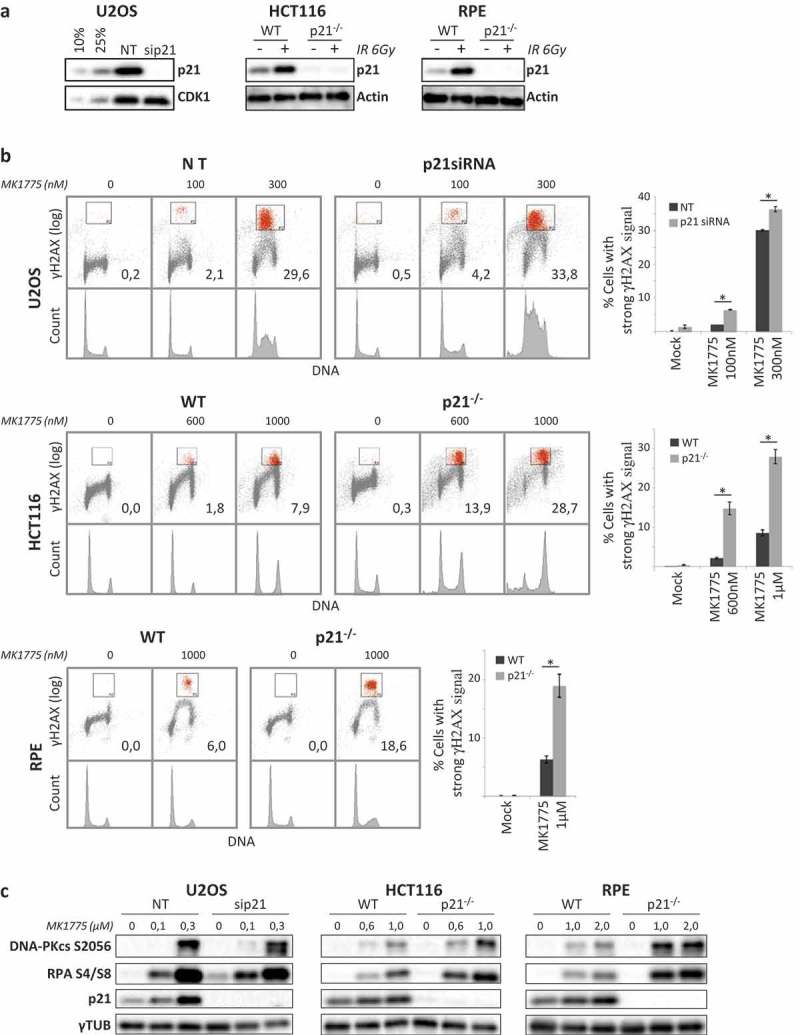
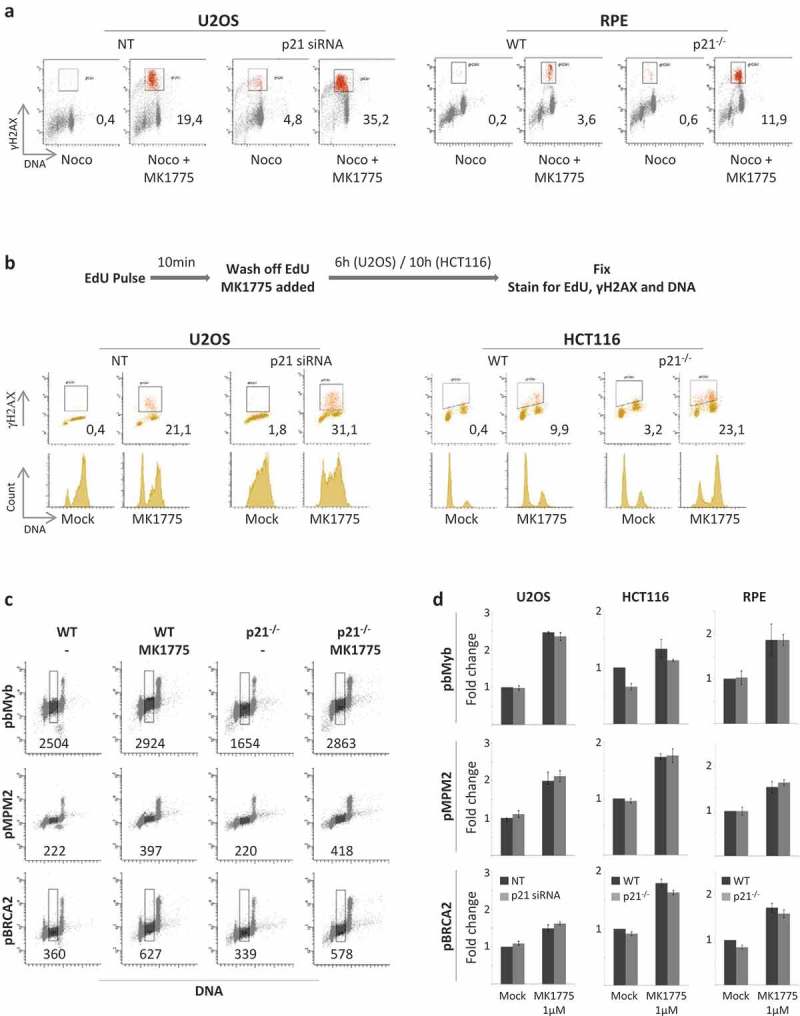
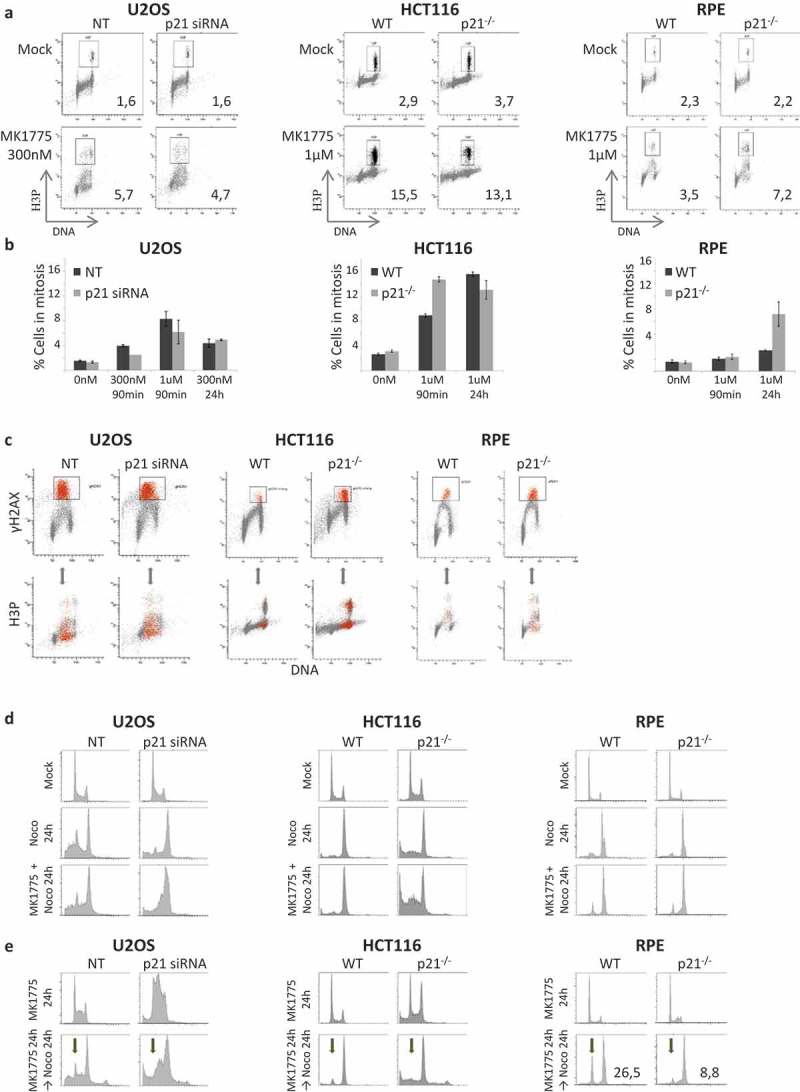
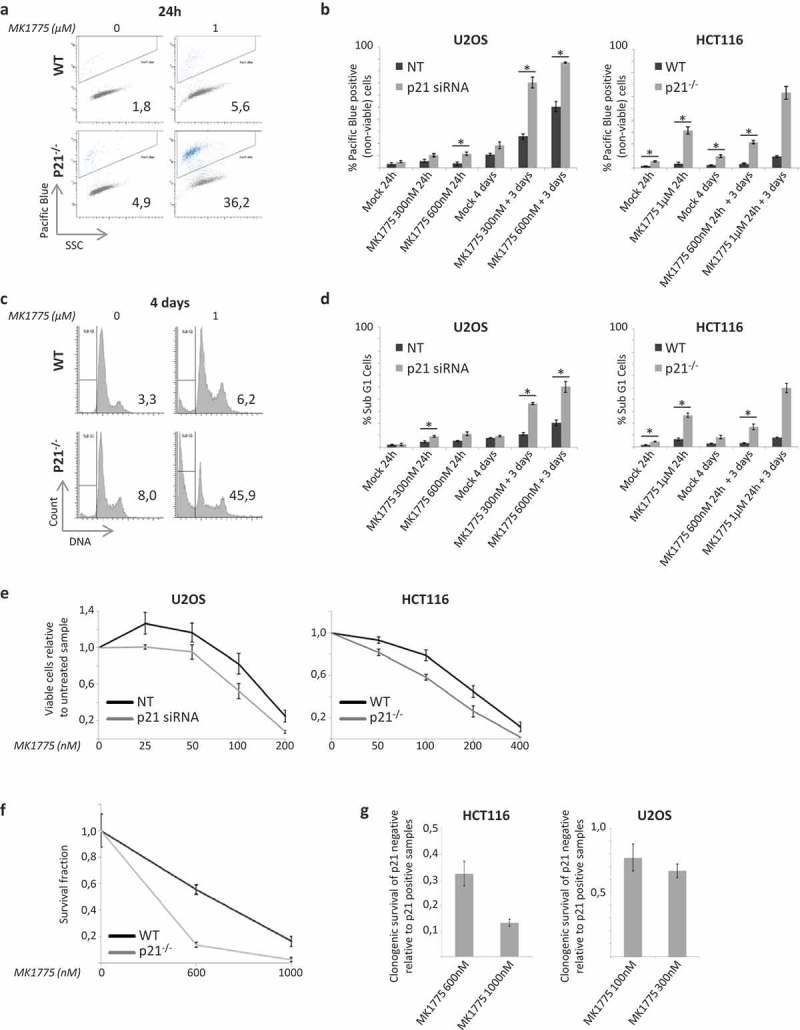
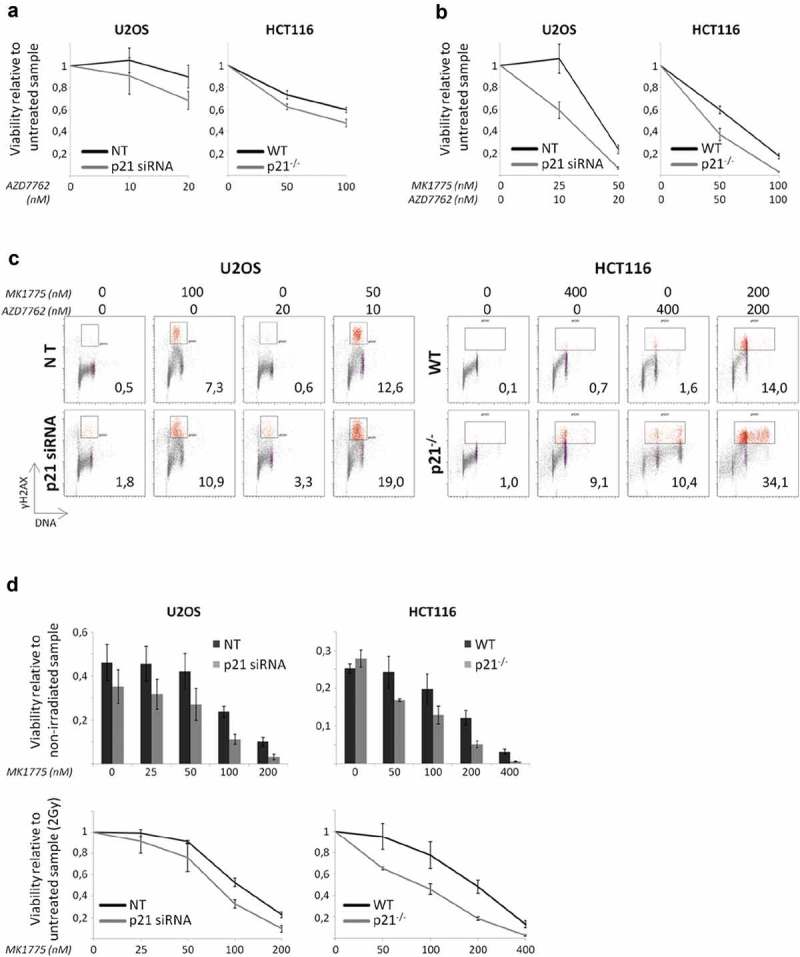
The Wee1 inhibitor MK1775 (AZD1775) is currently being tested in clinical trials for cancer treatment. Here, we show that the p53 target and CDK inhibitor p21 protects against MK1775-induced DNA damage during S-phase. Cancer and normal cells deficient for p21 (HCT116 p21-/-, RPE p21-/-, and U2OS transfected with p21 siRNA) showed higher induction of the DNA damage marker γH2AX in S-phase in response to MK1775 compared to the respective parental cells. Furthermore, upon MK1775 treatment the levels of phospho-DNA PKcs S2056 and phospho-RPA S4/S8 were higher in the p21 deficient cells, consistent with increased DNA breakage. Cell cycle analysis revealed that these effects were due to an S-phase function of p21, but MK1775-induced S-phase CDK activity was not altered as measured by CDK-dependent phosphorylations. In the p21 deficient cancer cells MK1775-induced cell death was also increased. Moreover, p21 deficiency sensitized to combined treatment of MK1775 and the CHK1-inhibitor AZD6772, and to the combination of MK1775 with ionizing radiation. These results show that p21 protects cancer cells against Wee1 inhibition and suggest that S-phase functions of p21 contribute to mediate such protection. As p21 can be epigenetically downregulated in human cancer, we propose that p21 levels may be considered during future applications of Wee1 inhibitors.
Overview
The claims and statistics of this paper haven’t been checked yet.
Free: it reads the open-access text and checks the first 5 claims that cite a source we can check. Create a free account to check every claim.
Integrity signals
Registry
Cites
Statistics
Figures
Verification
Claims the paper makes
The claims and statistics of this paper haven’t been checked yet.
Free: it reads the open-access text and checks the first 5 claims that cite a source we can check. Create a free account to check every claim.
Claims other papers make about this one
Each is checked against this paper’s own text: does it say what the citing paper says it does?
The source backs part of the claim, not all of it — or backs it for a different population, condition or comparison.
In the citing paper
“Intriguingly, the downregulation of p21 also interferes with the optimal processivity of DNA replication [79,83,86].”
From CDK-Independent and PCNA-Dependent Functions of p21 in DNA Replication (2020) · cites this paper as [86]
Experimental — accuracy not yet measuredIn the citing paper
“which demonstrate that endogenous p21, and specifically the fraction expressed in the S phase, has an important role in the control of unperturbed and damaged DNA replication.”
From CDK-Independent and PCNA-Dependent Functions of p21 in DNA Replication (2020) · cites this paper as [86]
Self-check
Percentages, sums and reported differences re-computed from the paper’s own numbers.
The self-check needs the paper’s full text.
Citations
Cites
1 retracted
MicroRNA-93 promotes cell proliferation by directly targeting P21 in osteosarcoma cells
He, Y., & Yu, B. (2017) · Experimental and Therapeutic Medicine · doi:10.3892/etm.2017.4204 · Cited by 29
RetractedRequirement for p53 and p21 to Sustain G 2 Arrest After DNA Damage
Bunz, F., Dutriaux, A., Lengauer, C., Waldman, T., Zhou, S., Brown, J. P., Sedivy, J. M., Kinzler, K. W., & Vogelstein, B. (1998) · Science · doi:10.1126/science.282.5393.1497 · Cited by 2,803
Mice Lacking p21CIP1/WAF1 undergo normal development, but are defective in G1 checkpoint control
Deng, C., Zhang, P., Wade Harper, J., Elledge, S. J., & Leder, P. (1995) · Cell · doi:10.1016/0092-8674(95)90039-x · Cited by 2,113
PCNA, the Maestro of the Replication Fork
Moldovan, G.-L., Pfander, B., & Jentsch, S. (2007) · Cell · doi:10.1016/j.cell.2007.05.003 · Cited by 1,796 · cited 1×
“Furthermore, p21 has a strong affinity for PCNA, and prevents replication by blocking the interaction between PCNA and factors that are necessary for replication, such as replicative DNA polymerases [21,22].”
BackgroundThe p21 inhibitor of cyclin-dependent kinases controls DNA replication by interaction with PCNA
Waga, S., Hannon, G. J., Beach, D., & Stillman, B. (1994) · Nature · doi:10.1038/369574a0 · Cited by 1,655 · cited 1×
“Furthermore, p21 has a strong affinity for PCNA, and prevents replication by blocking the interaction between PCNA and factors that are necessary for replication, such as replicative DNA polymerases [21,22].”
BackgroundRadiation-induced cell cycle arrest compromised by p21 deficiency
Brugarolas, J., Chandrasekaran, C., Gordon, J. I., Beach, D., Jacks, T., & Hannon, G. J. (1995) · Nature · doi:10.1038/377552a0 · Cited by 1,242
Multiple functions of p21 in cell cycle, apoptosis and transcriptional regulation after DNA damage.
Karimian, A., Ahmadi, Y., & Yousefi, B. (2016) · DNA Repair · doi:10.1016/j.dnarep.2016.04.008 · Cited by 1,110 · cited 3×
“The p53 target and CDK inhibitor p21 plays a fundamental part in regulating cell cycle progression, as well as cellular senescence and apoptosis [11].”
BackgroundATR prohibits replication catastrophe by preventing global exhaustion of RPA
Toledo, L. I., Altmeyer, M., Rask, M.-B., Lukas, C., Larsen, D. H., Povlsen, L. K., Bekker-Jensen, S., Mailand, N., Bartek, J., & Lukas, J. (2013) · Cell · doi:10.1016/j.cell.2013.10.043 · Cited by 911
Inactivation of the p34 cdc2 -Cyclin B Complex by the Human WEE1 Tyrosine Kinase
Parker, L. L., & Piwnica-Worms, H. (1992) · Science · doi:10.1126/science.1384126 · Cited by 716 · cited 2×
“As unscheduled CDK activity is thought to mediate MK1775-induced DNA damage in S phase, and both p21 and Wee1 are well known CDK inhibitors [2,5,11], we next addressed whether the increased DNA damage observed in p21 negative cells might be caused by increased CDK activity.”
BackgroundMicroRNAs in the miR-106b family regulate p21/CDKN1A and promote cell cycle progression
Ivanovska, I., Ball, A. S., Diaz, R. L., Magnus, J. F., Kibukawa, M., Schelter, J. M., Kobayashi, S. V., Lim, L., Burchard, J., Jackson, A. L., et al. (2008) · Molecular and Cellular Biology · doi:10.1128/mcb.01977-07 · Cited by 561
Syljuåsen, R. G., Sørensen, C. S., Hansen, L. T., Fugger, K., Lundin, C., Johansson, F., Helleday, T., Sehested, M., Lukas, J., & Bartek, J. (2005) · Molecular and Cellular Biology · doi:10.1128/mcb.25.9.3553-3562.2005 · Cited by 550 · cited 1×
“Similar to Wee1 inhibition, inhibition of Chk1 also causes DNA damage in S phase [29], and we recently showed that simultaneous inhibition of both Chk1 and Wee1 synergistically increases such damage [32].”
BackgroundSelf-citationHirai, H., Iwasawa, Y., Okada, M., Arai, T., Nishibata, T., Kobayashi, M., Kimura, T., Kaneko, N., Ohtani, J., Yamanaka, K., et al. (2009) · Molecular Cancer Therapeutics · doi:10.1158/1535-7163.mct-09-0463 · Cited by 540 · cited 2×
“Particularly, G2 checkpoint abrogation by MK1775 may be toxic for p53 mutated cancer cells lacking the p53-dependent G1 checkpoint [3].”
BackgroundHigh speed of fork progression induces DNA replication stress and genomic instability
Maya-Mendoza, A., Moudry, P., Merchut-Maya, J. M., Lee, M., Strauss, R., & Bartek, J. (2018) · Nature · doi:10.1038/s41586-018-0261-5 · Cited by 514 · cited 1×
“Recently, p21 has also been implicated in regulation of replication fork progression, although different results were reported as to whether p21 promotes DNA elongation [24] or suppresses fork speed [25].”
ResultRegulation of the human WEE1Hu CDK tyrosine 15-kinase during the cell cycle.
Watanabe, N., Broome, M., & Hunter, T. (1995) · The EMBO Journal · doi:10.1002/j.1460-2075.1995.tb07180.x · Cited by 450 · cited 1×
“As unscheduled CDK activity is thought to mediate MK1775-induced DNA damage in S phase, and both p21 and Wee1 are well known CDK inhibitors [2,5,11], we next addressed whether the increased DNA damage observed in p21 negative cells might be caused by increased CDK activity.”
BackgroundLeijen, S., van Geel, R. M. J. M., Sonke, G. S., de Jong, D., Rosenberg, E. H., Marchetti, S., Pluim, D., van Werkhoven, E., Rose, S., Lee, M. A., et al. (2016) · Journal of Clinical Oncology · doi:10.1200/jco.2016.67.5942 · Cited by 338
Shamloo, B., & Usluer, S. (2019) · Cancers · doi:10.3390/cancers11081178 · Cited by 336
Cyclin-Binding Motifs Are Essential for the Function of p21 CIP1
Chen, J., Saha, P., Kornbluth, S., Dynlacht, B. D., & Dutta, A. (1996) · Molecular and Cellular Biology · doi:10.1128/mcb.16.9.4673 · Cited by 320
Chen, B. P. C., Chan, D. W., Kobayashi, J., Burma, S., Asaithamby, A., Morotomi-Yano, K., Botvinick, E., Qin, J., & Chen, D. J. (2005) · Journal of Biological Chemistry · doi:10.1074/jbc.m408827200 · Cited by 320 · cited 1×
“Next, we measured phosphorylation of DNA-PKcs S2056 and RPA S4/S8 by Western Blotting, common markers for DNA double strand breaks (DSBs) and replication stalling, respectively [34,35].”
MethodSorensen, C. S., & Syljuasen, R. G. (2012) · Nucleic Acids Research · doi:10.1093/nar/gkr697 · Cited by 318
Self-citationChk1 promotes replication fork progression by controlling replication initiation
Petermann, E., Woodcock, M., & Helleday, T. (2010) · Proceedings of the National Academy of Sciences · doi:10.1073/pnas.1005031107 · Cited by 308
Beck, H., Nähse-Kumpf, V., Larsen, M. S. Y., O'Hanlon, K. A., Patzke, S., Holmberg, C., Mejlvang, J., Groth, A., Nielsen, O., Syljuåsen, R. G., et al. (2012) · Molecular and Cellular Biology · doi:10.1128/mcb.00412-12 · Cited by 306 · cited 1×
“Loss of Wee1 during S phase leads to aberrant CDK activity followed by unscheduled replication initiation and subsequent DNA damage [7,8].”
BackgroundSelf-citationInhibiting WEE1 Selectively Kills Histone H3K36me3-Deficient Cancers by dNTP Starvation
Pfister, S. X., Markkanen, E., Jiang, Y., Sarkar, S., Woodcock, M., Orlando, G., Mavrommati, I., Pai, C.-C., Zalmas, L.-P., Drobnitzky, N., et al. (2015) · Cancer Cell · doi:10.1016/j.ccell.2015.09.015 · Cited by 300
Cell cycle regulation of human WEE1.
McGowan, C. H., & Russell, P. (1995) · The EMBO Journal · doi:10.1002/j.1460-2075.1995.tb07210.x · Cited by 293 · cited 1×
“Wee1 kinase phosphorylates CDK1 on tyrosine 15, and thereby restrains CDK activity in G2 phase [1,2].”
BackgroundRajeshkumar, N. V., De Oliveira, E., Ottenhof, N., Watters, J., Brooks, D., Demuth, T., Shumway, S. D., Mizuarai, S., Hirai, H., Maitra, A., et al. (2011) · Clinical Cancer Research · doi:10.1158/1078-0432.ccr-10-2580 · Cited by 274
Leijen, S., van Geel, R. M. J. M., Pavlick, A. C., Tibes, R., Rosen, L., Razak, A. R. A., Lam, R., Demuth, T., Rose, S., Lee, M. A., et al. (2016) · Journal of Clinical Oncology · doi:10.1200/jco.2016.67.5991 · Cited by 264
MK-1775, a Novel Wee1 Kinase Inhibitor, Radiosensitizes p53-Defective Human Tumor Cells
Bridges, K. A., Hirai, H., Buser, C. A., Brooks, C., Liu, H., Buchholz, T. A., Molkentine, J. M., Mason, K. A., & Meyn, R. E. (2011) · Clinical Cancer Research · doi:10.1158/1078-0432.ccr-11-0650 · Cited by 237
Preclinical Evaluation of the WEE1 Inhibitor MK-1775 as Single-Agent Anticancer Therapy
Guertin, A. D., Li, J., Liu, Y., Hurd, M. S., Schuller, A. G., Long, B., Hirsch, H. A., Feldman, I., Benita, Y., Toniatti, C., et al. (2013) · Molecular Cancer Therapeutics · doi:10.1158/1535-7163.mct-13-0025 · Cited by 172 · cited 1×
“Such S phase damage has been termed replication catastrophe [9] and is likely a major cause behind single-agent antitumor activity of Wee1 inhibitors [10].”
BackgroundRegulators of cyclin-dependent kinases are crucial for maintaining genome integrity in S phase
Beck, H., Nähse, V., Larsen, M. S. Y., Groth, P., Clancy, T., Lees, M., Jørgensen, M., Helleday, T., Syljuåsen, R. G., & Sørensen, C. S. (2010) · Journal of Cell Biology · doi:10.1083/jcb.200905059 · Cited by 169 · cited 1×
“Loss of Wee1 during S phase leads to aberrant CDK activity followed by unscheduled replication initiation and subsequent DNA damage [7,8].”
BackgroundSelf-citationAshley, A. K., Shrivastav, M., Nie, J., Amerin, C., Troksa, K., Glanzer, J. G., Liu, S., Opiyo, S. O., Dimitrova, D. D., Le, P., et al. (2014) · DNA Repair · doi:10.1016/j.dnarep.2014.04.008 · Cited by 136 · cited 1×
“Next, we measured phosphorylation of DNA-PKcs S2056 and RPA S4/S8 by Western Blotting, common markers for DNA double strand breaks (DSBs) and replication stalling, respectively [34,35].”
MethodChen, Z., Chen, X., Chen, P., Yu, S., Nie, F., Lu, B., Zhang, T., Zhou, Y., Chen, Q., Wei, C., et al. (2017) · Cell Death and Disease · doi:10.1038/cddis.2017.484 · Cited by 120
Basit, A., Cho, M.-G., Kim, E.-Y., Kwon, D., Kang, S.-J., & Lee, J.-H. (2020) · Experimental & Molecular Medicine · doi:10.1038/s12276-020-0416-y · Cited by 118
Leijen, S., H. Beijnen, J., & H.M. Schellens, J. (2010) · Current Clinical Pharmacology · doi:10.2174/157488410791498824 · Cited by 110
Soria, G., Speroni, J., Podhajcer, O. L., Prives, C., & Gottifredi, V. (2008) · Journal of Cell Science · doi:10.1242/jcs.027730 · Cited by 94 · cited 4×
“involved in regulating translesion synthesis (TLS), limiting unscheduled use of the error-prone TLS polymerases [23].”
BackgroundInfluentialDNA repair factor RAD18 and DNA polymerase Polκ confer tolerance of oncogenic DNA replication stress
Yang, Y., Gao, Y., Mutter-Rottmayer, L., Zlatanou, A., Durando, M., Ding, W., Wyatt, D. W., Ramsden, D. A., Tanoue, Y., Tateishi, S., et al. (2017) · The Journal of Cell Biology · doi:10.1083/jcb.201702006 · Cited by 75 · cited 1×
“The latter function could be of special importance, as the TLS factor DNA polymerase kappa has been shown to confer tolerance to Wee1 inhibition [39].”
BackgroundOriganti, S., Cai, S.-R., Munir, A. Z., White, L. S., & Piwnica-Worms, H. (2013) · Oncogene · doi:10.1038/onc.2012.84 · Cited by 74 · cited 2×
“Cells deficient for p21 showed more DNA damage and cell death after Chk1 inhibition than p21 proficient cells, but the mechanism behind the increased damage was not known [26,27].”
WEE1 Kinase As a Target for Cancer Therapy
Mueller, S., & Haas-Kogan, D. A. (2015) · Journal of Clinical Oncology · doi:10.1200/jco.2015.62.2290 · Cited by 57 · cited 2×
“Based on this, the Wee1 inhibitor MK1775 (AZD1775) is in clinical trials for cancer treatment in combination with radiotherapy or chemotherapeutic drugs [4].”
BackgroundHauge, S., Naucke, C., Hasvold, G., Joel, M., Rødland, G. E., Juzenas, P., Stokke, T., & Syljuåsen, R. G. (2017) · Oncotarget · doi:10.18632/oncotarget.14089 · Cited by 55 · cited 6×
“Similar to Wee1 inhibition, inhibition of Chk1 also causes DNA damage in S phase [29], and we recently showed that simultaneous inhibition of both Chk1 and Wee1 synergistically increases such damage [32].”
BackgroundMethodResultInfluentialSelf-citationMansilla, S. F., Bertolin, A. P., Bergoglio, V., Pillaire, M.-J., González Besteiro, M. A., Luzzani, C., Miriuka, S. G., Cazaux, C., Hoffmann, J.-S., & Gottifredi, V. (2016) · eLife · doi:10.7554/elife.18020 · Cited by 43 · cited 1×
“Recently, p21 has also been implicated in regulation of replication fork progression, although different results were reported as to whether p21 promotes DNA elongation [24] or suppresses fork speed [25].”
ResultNi, N., Song, H., Wang, X., Xu, X., Jiang, Y., & Sun, J. (2017) · Biomedicine & Pharmacotherapy · doi:10.1016/j.biopha.2017.11.060 · Cited by 37
Combined CDKN1A/TP53 mutation in bladder cancer is a therapeutic target
Liu, Y., & Kwiatkowski, D. J. (2015) · Molecular Cancer Therapeutics · doi:10.1158/1535-7163.mct-14-0622-t · Cited by 35 · cited 2×
“Cells deficient for p21 showed more DNA damage and cell death after Chk1 inhibition than p21 proficient cells, but the mechanism behind the increased damage was not known [26,27].”
BackgroundRego, M. A., Harney, J. A., Mauro, M., Shen, M., & Howlett, N. G. (2012) · Oncogene · doi:10.1038/onc.2011.237 · Cited by 34 · cited 1×
“Moreover, p21 has been implicated in promoting the Fanconi anemia (FA) DNA repair pathway [38] and regulation of translesion synthesis (TLS) [23].”
BackgroundBi, Y., Shen, G., Quan, Y., Jiang, W., & Xu, F. (2018) · Journal of Cellular Physiology · doi:10.1002/jcp.26813 · Cited by 34
Mak, J. P. Y., Man, W. Y., Ma, H. T., & Poon, R. Y. C. (2014) · Oncotarget · doi:10.18632/oncotarget.2508 · Cited by 33 · cited 1×
“Such growth stimulation has also been reported previously and is likely a cell type dependent effect associated with shorthening of the cell cycle after treatment with low and non-lethal concentrations of the Wee1 inhibitior [37].”
BackgroundBlosser, W. D., Dempsey, J. A., McNulty, A. M., Rao, X., Ebert, P. J., Lowery, C. D., Iversen, P. W., Webster, Y., Donoho, G. P., Gong, X., et al. (2020) · Oncotarget · doi:10.18632/oncotarget.27400 · Cited by 29
Bi, S., Wei, Q., Zhao, Z., Chen, L., Wang, C., & Xie, S. (2019) · Frontiers in Pharmacology · doi:10.3389/fphar.2019.00864 · Cited by 27
Hypoxia‐induced alterations of G2 checkpoint regulators
Hasvold, G., Lund‐Andersen, C., Lando, M., Patzke, S., Hauge, S., Suo, Z., Lyng, H., & Syljuåsen, R. G. (2016) · Molecular Oncology · doi:10.1016/j.molonc.2015.12.015 · Cited by 24 · cited 2×
“We previously developed a flow cytometry based assay to measure CDK activity during specific cell cycle phases, by examining CDK-dependent phosphorylations [31,32].”
MethodSelf-citationConsequences of abnormal CDK activity in S phase
Anda, S., Rothe, C., Boye, E., & Grallert, B. (2016) · Cell Cycle · doi:10.1080/15384101.2016.1152423 · Cited by 18
Tkacz-Stachowska, K., Lund‐Andersen, C., Velissarou, A., Myklebust, J. H., Stokke, T., & Syljuåsen, R. G. (2011) · Radiotherapy and Oncology · doi:10.1016/j.radonc.2011.05.060 · Cited by 17
Self-citation
Cited by
Shamloo, B., & Usluer, S. (2019) · Cancers · doi:10.3390/cancers11081178 · Cited by 336
“p21−/− HCT116 Increased apoptosis and cell death with treatment of ginseng, imatinib and gefitinib, pyrazolo(1,5-a)pyrimidine, microtubule inhibitors, MK1775 checkpoint inhibitor [65] [66] [67] [68] [69] p21−/− MMTV-ras Higher S-phase fractions, increased spontaneous apoptosis [51] p21−/− MMTV-myc Lower S-phase fracti…”
BackgroundBasit, A., Cho, M.-G., Kim, E.-Y., Kwon, D., Kang, S.-J., & Lee, J.-H. (2020) · Experimental & Molecular Medicine · doi:10.1038/s12276-020-0416-y · Cited by 118
CDK-Independent and PCNA-Dependent Functions of p21 in DNA Replication
Mansilla, S. F., De La Vega, M. B., Calzetta, N. L., Siri, S. O., & Gottifredi, V. (2020) · Genes · doi:10.3390/genes11060593 · Cited by 114
“Such a role of p21 is independent of CDK inactivation, and may also depend on the modulation of PCNA interactions during the S phase [86].”
BackgroundTicli, G., Cazzalini, O., Stivala, L. A., & Prosperi, E. (2022) · International Journal of Molecular Sciences · doi:10.3390/ijms23137058 · Cited by 76
“In agreement with these findings, previous works showed that p21 could protect arrested replication forks from collapse after topoisomerase I inhibition [144] and that p21 limited the extent of DNA damage in the S phase induced by concomitant Wee1 inhibition and ionizing radiation [145].”
ResultWEE1 kinase protects the stability of stalled DNA replication forks by limiting CDK2 activity
Elbæk, C. R., Petrosius, V., Benada, J., Erichsen, L., Damgaard, R. B., & Sørensen, C. S. (2022) · Cell Reports · doi:10.1016/j.celrep.2021.110261 · Cited by 64
Metadata
- Authors
- Hauge, S., Macurek, L., & Syljuåsen, R. G.
- Affiliations
- Oslo University Hospital (NO)
- Department of Cancer Cell Biology, Institute of Molecular Genetics of the ASCR, Prague, Czech Republic
- Corresponding author
- Syljuåsen, Randi G.
- Venue
- Cell Cycle
- Publisher
- Informa UK Limited
- Published
- 2019-04-03
- Volume
- 18
- Issue
- 8
- Pages
- 834-847
- ISSN
- 1538-4101 (ISSN-L)
- 1551-4005
- PMC
- PMC6527284
- OpenAlex
- W2929688087
- Cited by
- 30
- References
- 48
- Citations by year
- 2026: 2 · 2025: 4 · 2024: 2 · 2023: 6 · 2022: 6 · 2021: 2 · 2020: 5 · 2019: 2
- FWCI
- 1.57
- Type
- journal article
- Language
- en
- Open access
- hybrid
- doi.org
- Licence
- Locations
- Cell Cycle (publishedVersion, cc-by-nc-nd)
- PubMed Central (publishedVersion, cc-by-nc-nd)
- PubMed (publishedVersion)
- Funders
- Helse Sør-Øst RHF (2016114)
- Kreftforeningen (62320, 198018)
- Grant Agenzy of the Czech Republic (17-04742S)
- EEA Czexg-Norwegian Research Programme (7F14061)
- Topics
- Health Sciences › Medicine › Oncology › Cancer-related Molecular Pathways
- Life Sciences › Biochemistry, Genetics and Molecular Biology › Molecular Biology › DNA Repair Mechanisms
- Life Sciences › Biochemistry, Genetics and Molecular Biology › Cell Biology › Microtubule and mitosis dynamics
- Keywords
- p21, MK-1775, AZD1775, WEE1 inhibitor, S phase, DNA damage, γH2AX, CDK inhibition, DNA double-strand breaks, DNA-PKcs, RPA, p53 target genes, cell death, CHK1 inhibitor, ionizing radiation, cancer therapy
- MeSH terms
- Checkpoint Kinase 1, Antineoplastic Agents, Cell Survival, DNA Damage, Humans, Neoplasms, Phosphorylation, Protein-Tyrosine Kinases, Pyrazoles, Pyrimidinones, Transfection, Cell Cycle Proteins, Cyclin-Dependent Kinases, RNA, Small Interfering, HCT116 Cells, Cyclin-Dependent Kinase Inhibitor p21, S Phase Cell Cycle Checkpoints
About these checks
Registry, retraction, Cites and statistics results are computed, not judged, with one exception: a printed reference that no index lists is read once by a model before it counts as a citation error. Claims are extracted by a model and kept only when their quote appears verbatim in the text; each cited source is then checked, with a model’s help, for whether it says what the claim relies on. Those verdicts can be wrong — read the claim’s quote and the cited source before relying on one.
Statistics and arithmetic are recomputed, not judged.
Confidence bands are shown only for fields calibrated on our annotated test set. None is calibrated yet, so no band is shown.
What counts as a claim ›How we measure confidence ›How we check this ›
Are you an author, or do you see a problem with this page? Request a review
Data sources
Bibliographic data: Semantic Scholar, OpenAlex, Crossref.
Contains information from the Semantic Scholar Academic Graph Datasets, made available under the ODC Attribution License (ODC-BY 1.0).
Semantic Scholar’s data is described in: Kinney, R., et al. (2023). The Semantic Scholar Open Data Platform. arXiv:2301.10140.
