

Comparison of concurrent, resistance, or aerobic training on body fat loss: a systematic review and meta-analysis.
Open accessThe DOI matches its Crossref record; 67 of the 67 references it cites were found in a registry or an index; 21 of the 46 sources its claims cite were checked for support.
Abstract
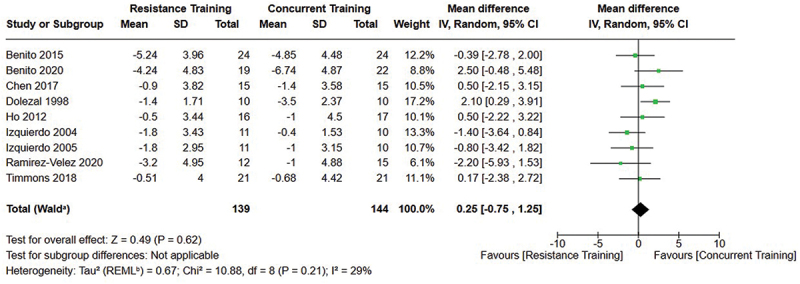
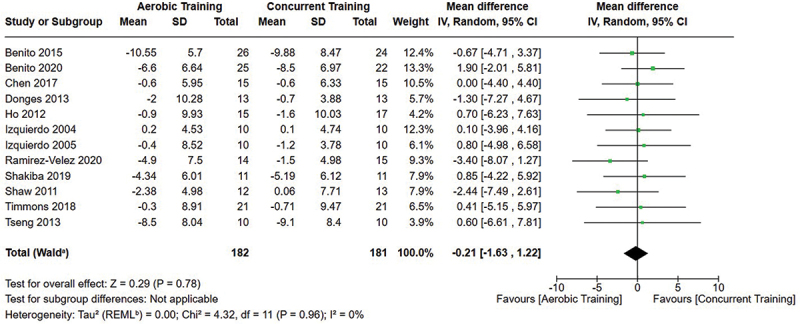
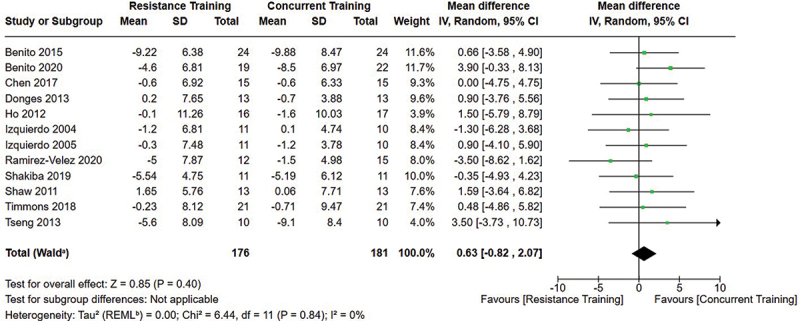
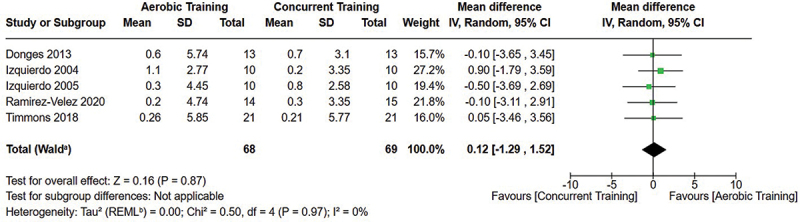
BACKGROUND: This systematic review and meta-analysis compared the differential effects of resistance training (RT), aerobic training (AT), and concurrent training (CT) on body mass and body fat loss in metabolically healthy individuals. METHODS: A systematic search of PubMed, SportDiscus, and Web of Science databases for randomized controlled trials published between January 1980 and January 2023, comparing RT, AT, and CT in healthy adults was conducted. Primary outcomes of interest included changes in fat mass and body fat percentage; secondary outcomes were body mass and fat-free mass (FFM). Sub-analyses on intervention duration (< or ≥ 10 weeks), CT timing (aerobic and resistance exercises done on the same day versus different days within a week), and workload matching (equating workloads between AT, RT, and CT), were conducted. Study protocols followed PRISMA 2020 guidelines and were pre-registered on PROSPERO (CRD42023396530). RESULTS: = 1) when comparing RT to different-day CT (aerobic and resistance exercises done on different days within a week). CONCLUSIONS: While there are no differences in percent body fat loss between exercise modes, AT and CT are more effective than RT alone in reducing absolute fat mass; however, RT neither improved nor impeded fat mass loss when incorporated into CT. Combining aerobic and resistance exercises on the same-day or different-day does not appear to influence the effectiveness of CT. When exercise interventions are short in duration (<10 weeks), there does not appear to be a difference in fat loss between exercise modalities. These results support the concurrent use of aerobic and resistance exercises for fat mass reduction, as well as an emphasis on workload and duration when programming exercise for fat loss.
Overview
CoChat Summary
## TL;DR
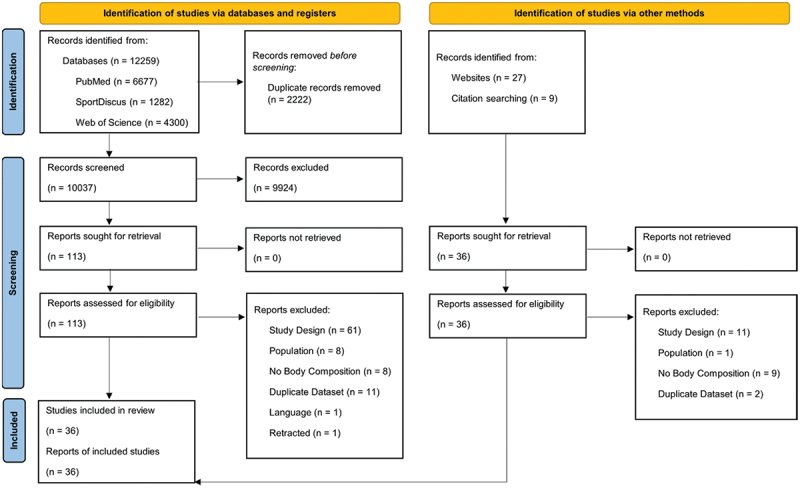
This systematic review and meta-analysis of 36 randomized controlled trials (1564 participants) found that aerobic training (AT) and concurrent training (CT) reduce absolute fat mass more than resistance training (RT), but there were no differences in percent body fat loss across exercise modes. When workloads were matched or interventions were shorter than 10 weeks, the exercise modalities did not differ meaningfully in body composition outcomes.
## Key findings
- Across 36 studies with 1564 participants, only 31 studies were included in the meta-analysis because of missing data.
- For interventions lasting at least 10 weeks, AT outperformed RT for:
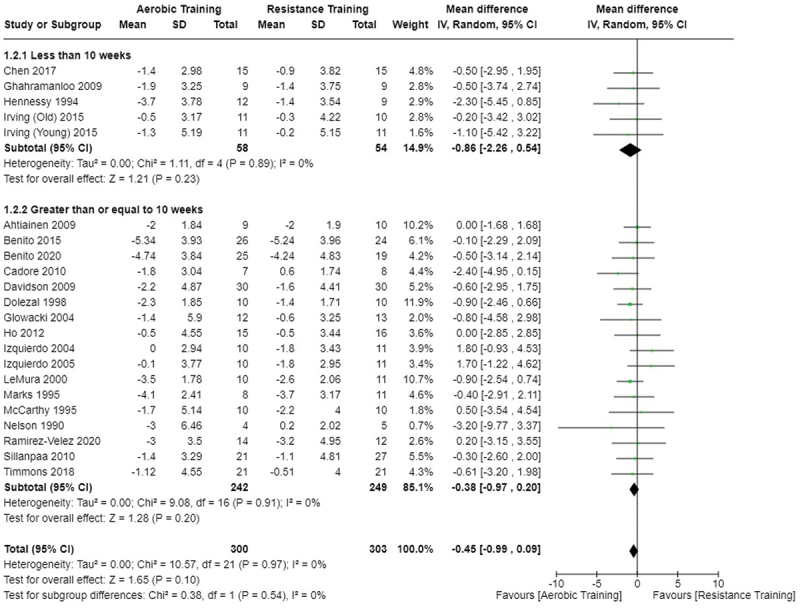
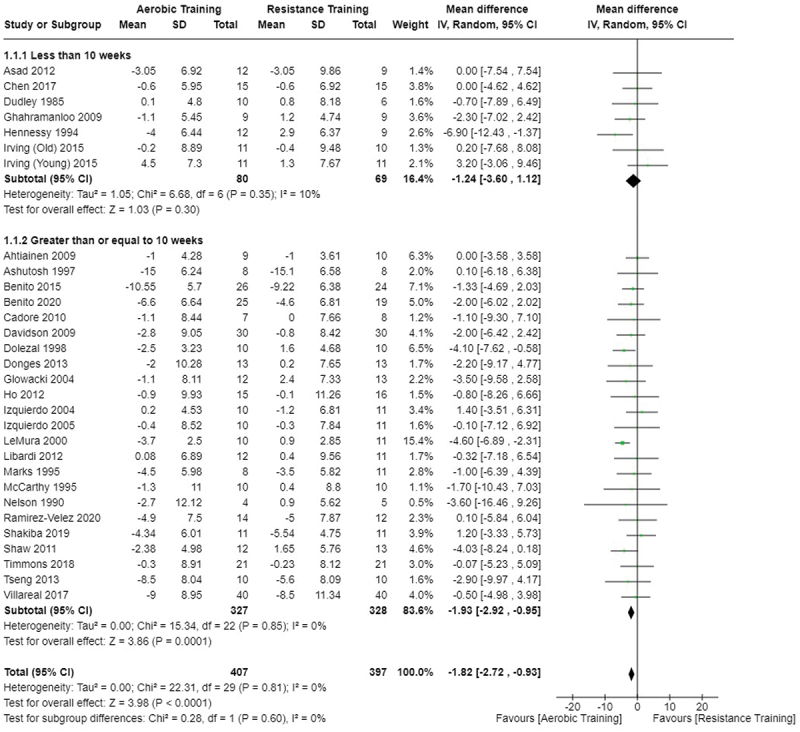
- body mass loss: MD = -1.82 kg [95% CI -2.72 to -0.93], p < 0.001
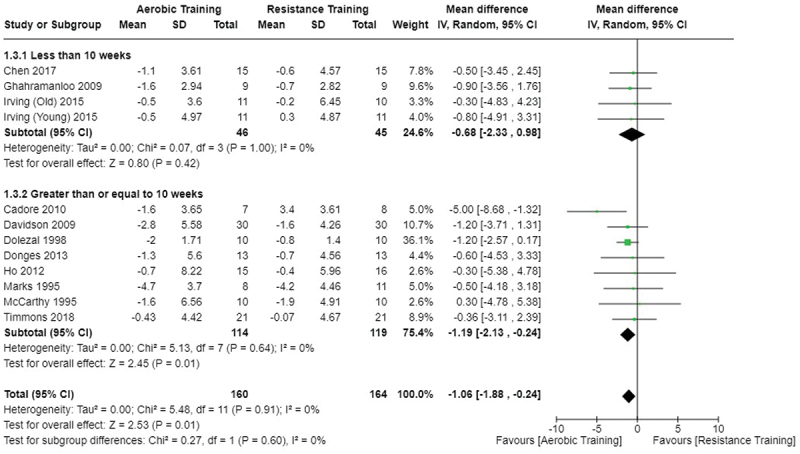
- fat mass loss: MD = -1.06 kg [95% CI -1.88 to -0.24], p = 0.01
- FFM retention: MD = -0.88 kg [95% CI -1.73 to -0.03], p = 0.04
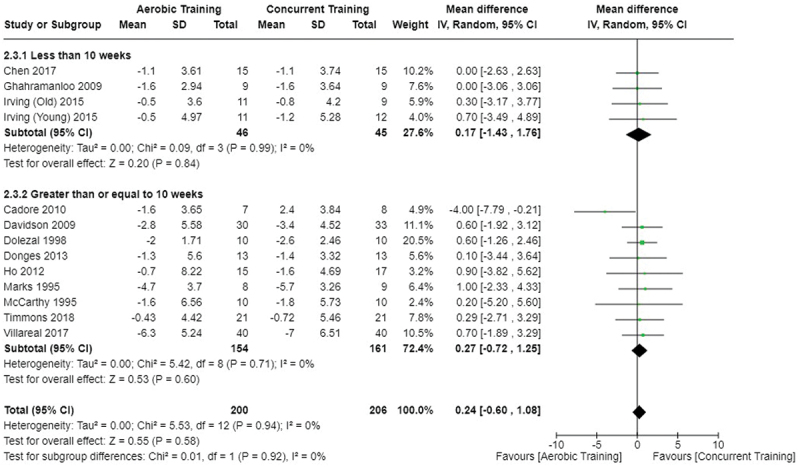
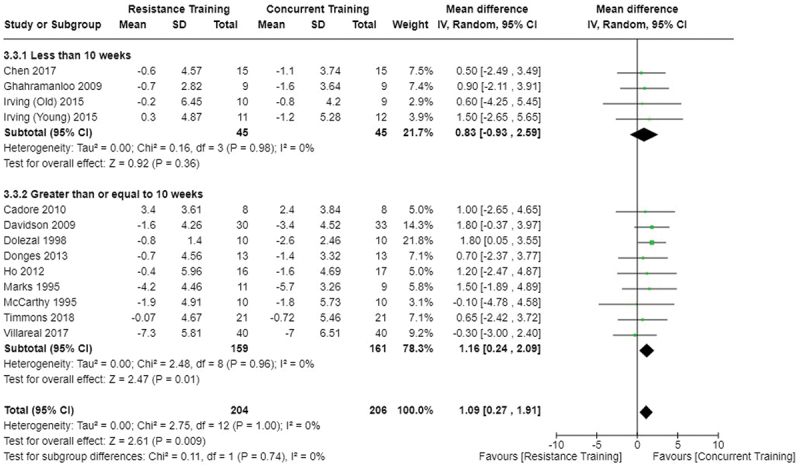
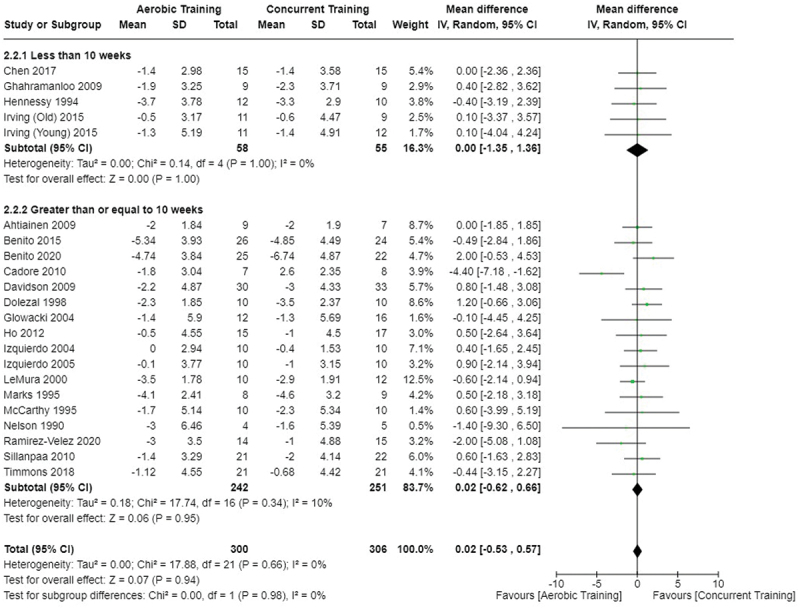
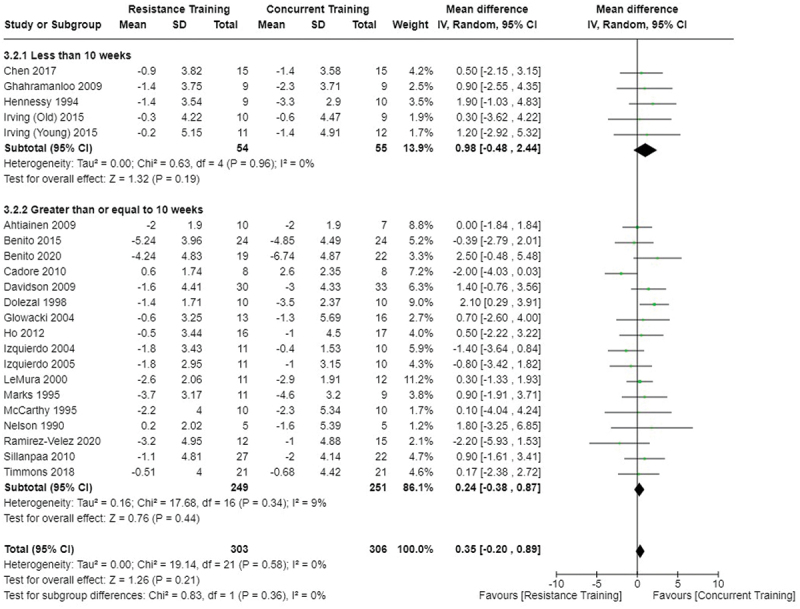
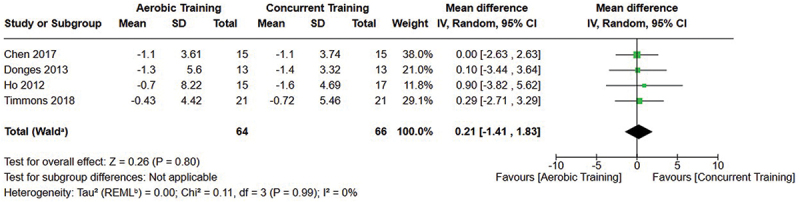
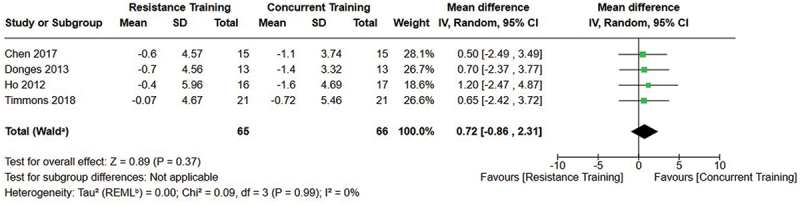
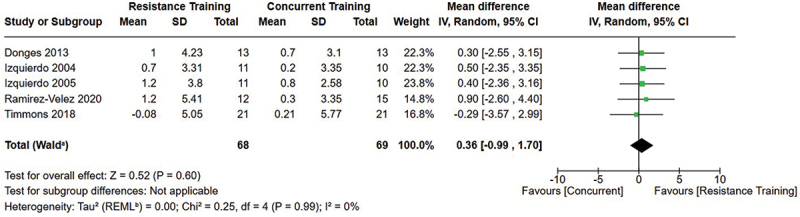
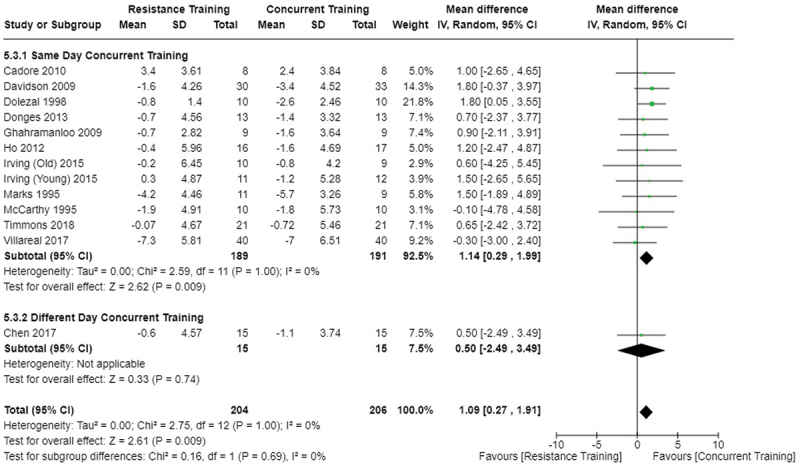
- CT reduced fat mass more than RT: MD = -1.09 kg [95% CI -0.27 to -1.91], p = 0.009, but CT did not differ from AT in fat mass change.
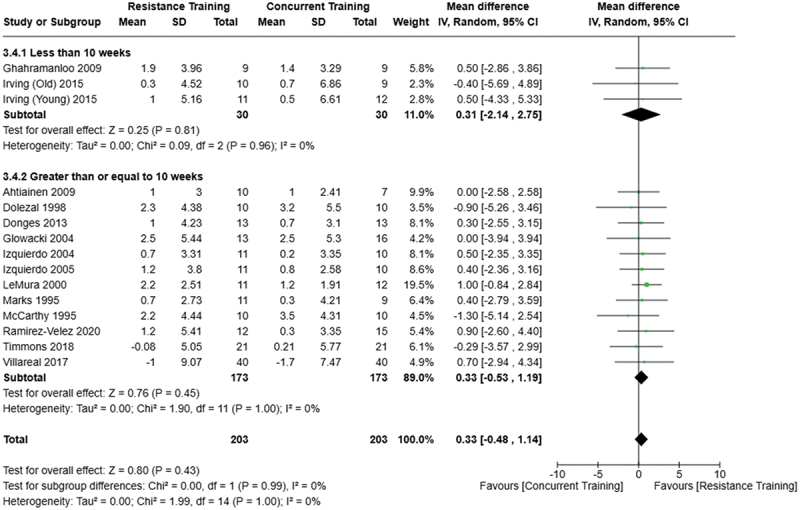
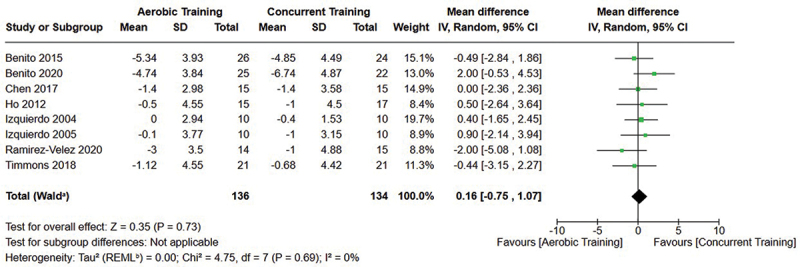
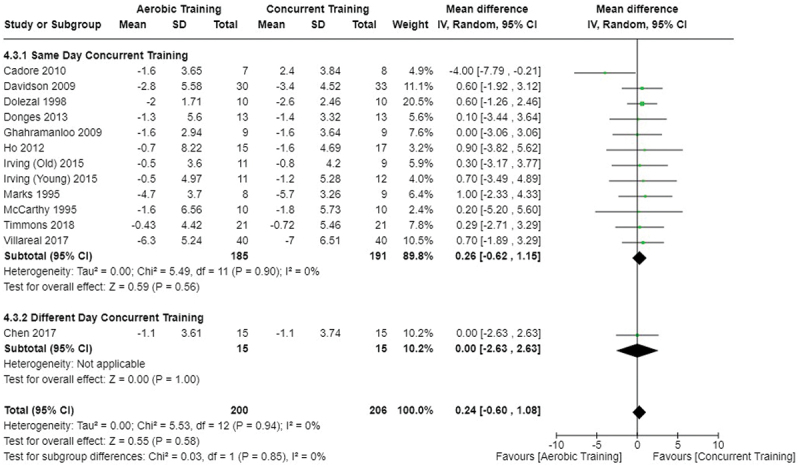
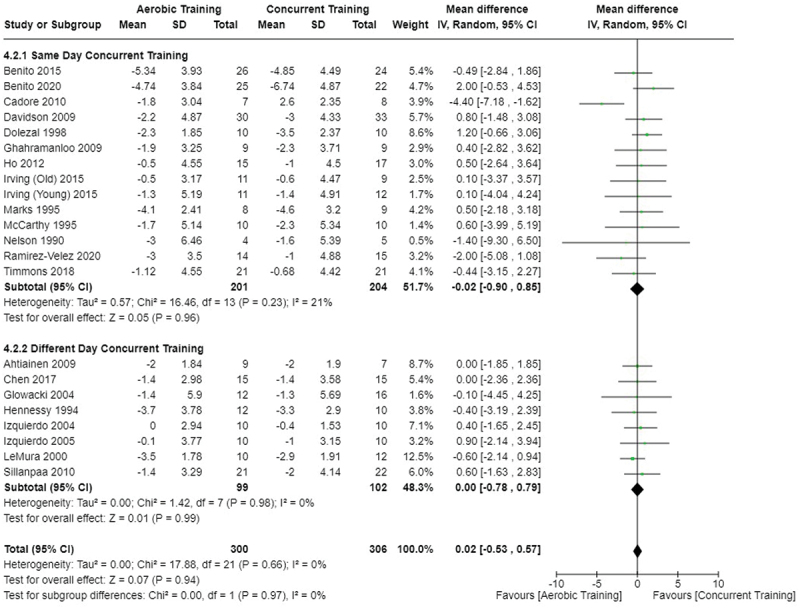
- No significant differences were found between AT, RT, and CT for body fat percentage (p > 0.05), and no significant differences were seen for any outcome in short interventions (<10 weeks) or when workloads were matched.
## Methods
- Systematic review and meta-analysis of randomized controlled trials published from January 1980 to 25 January 2023, conducted according to PRISMA 2020 and pre-registered on PROSPERO (CRD42023396530).
- Databases searched: PubMed, SportDiscus, and Web of Science; included metabolically healthy adults (≥18 years) in RT, AT, and CT comparisons, with outcomes reported at baseline and post-intervention.
- Random-effects meta-analyses used weighted mean differences and 95% CIs; subgroup analyses examined intervention duration (<10 vs ≥10 weeks), CT timing (same-day vs different-day), workload matching, sex, and training status when available.
## Limitations
- Stated in the paper: body composition was measured with a range of techniques that differ in error; dietary habits and supplement use could not be controlled because reporting was inconsistent; sex-based sub-analyses were limited to no more than 4 studies and were not robust; workload-matched analyses had reduced sample sizes and varied methods of matching.
- Evident from the text: 5 of 36 included studies were not in the meta-analysis because of missing data or unavailable sample sizes; only 3 studies included trained participants, so training-status conclusions were not possible.
Model-written summary. Check it against the paper before relying on it.
Integrity signals
Registry
Cites
Statistics
Figures
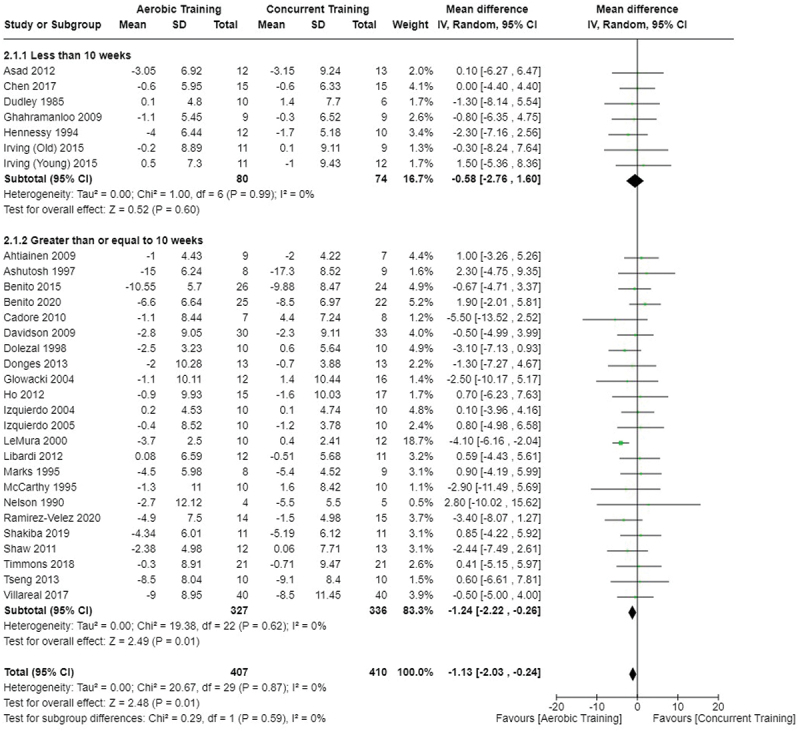
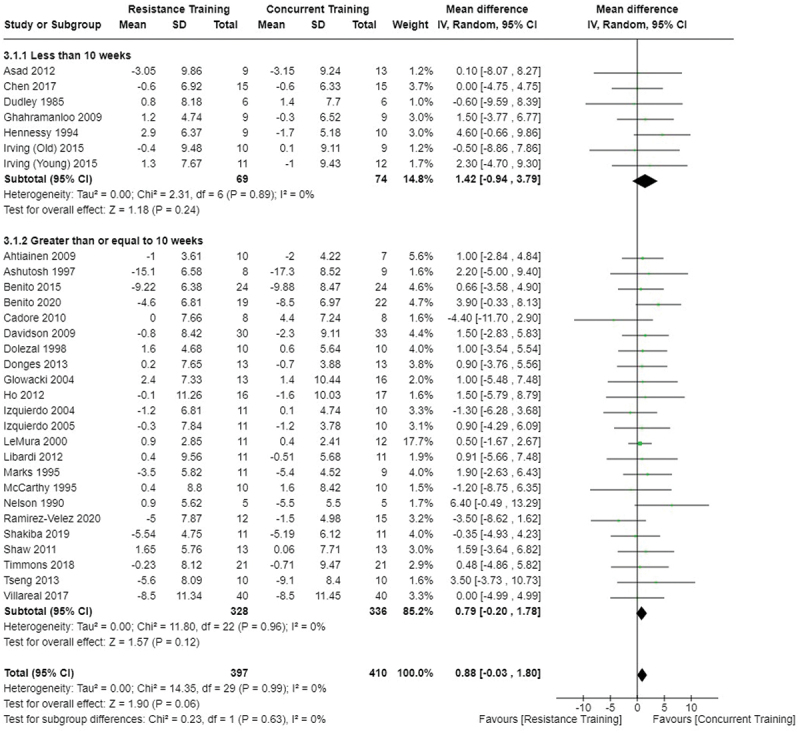
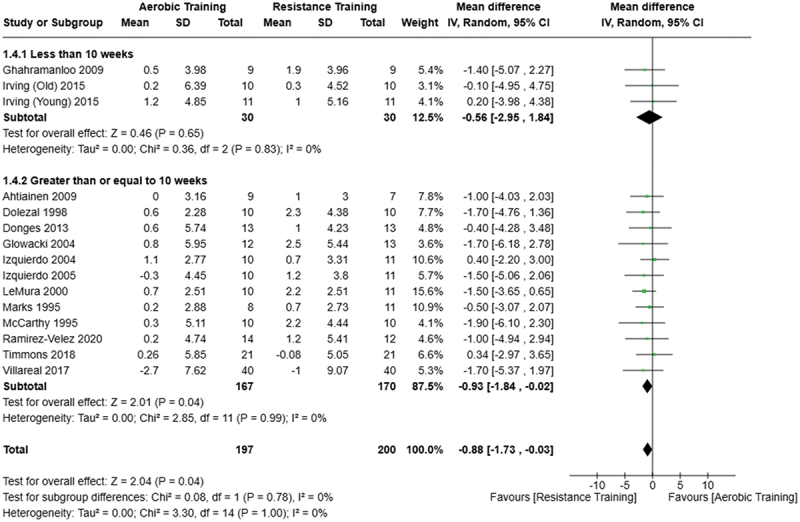
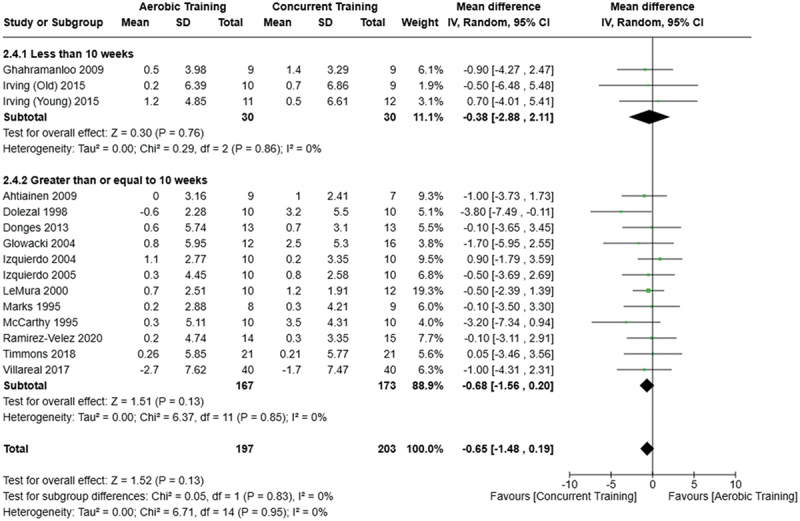
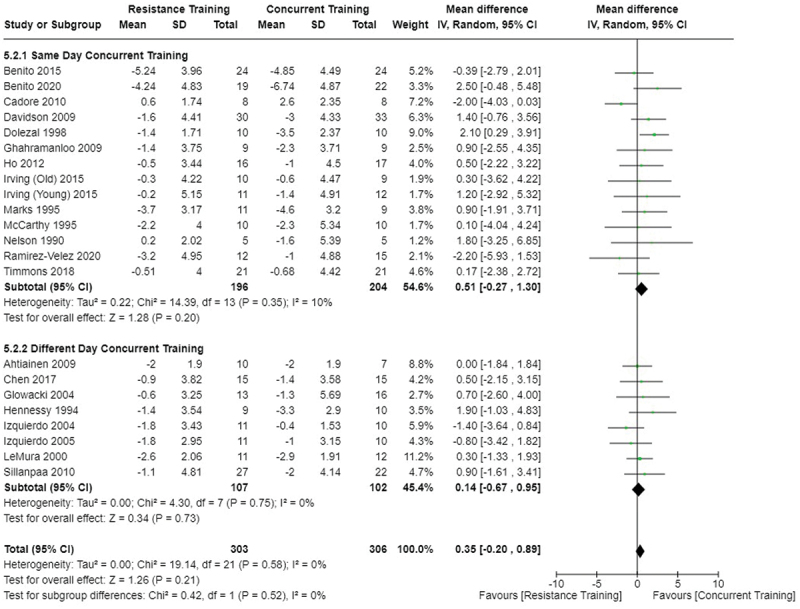
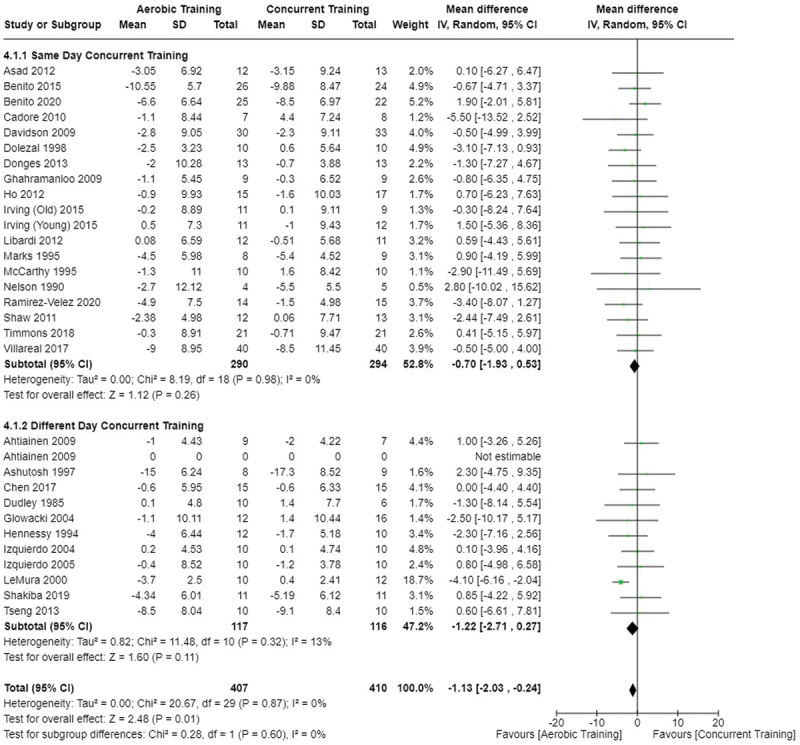
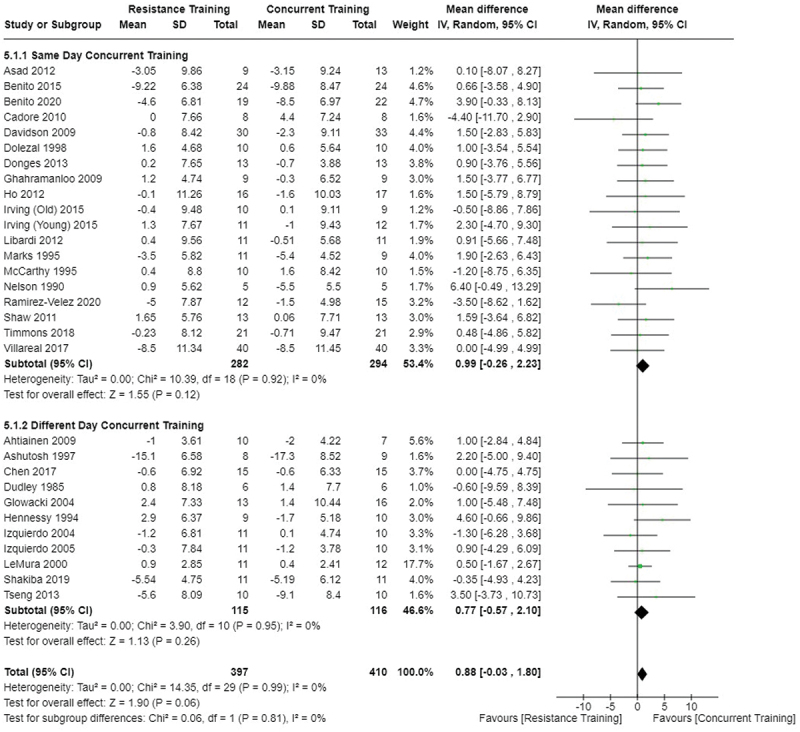
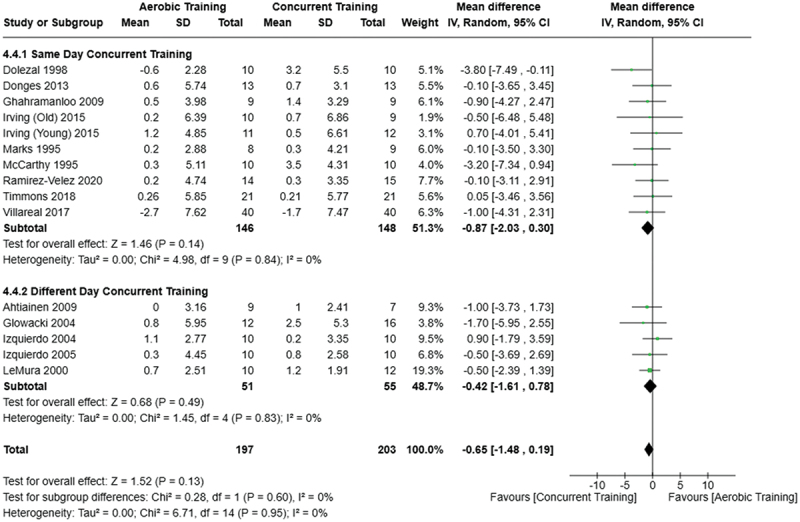
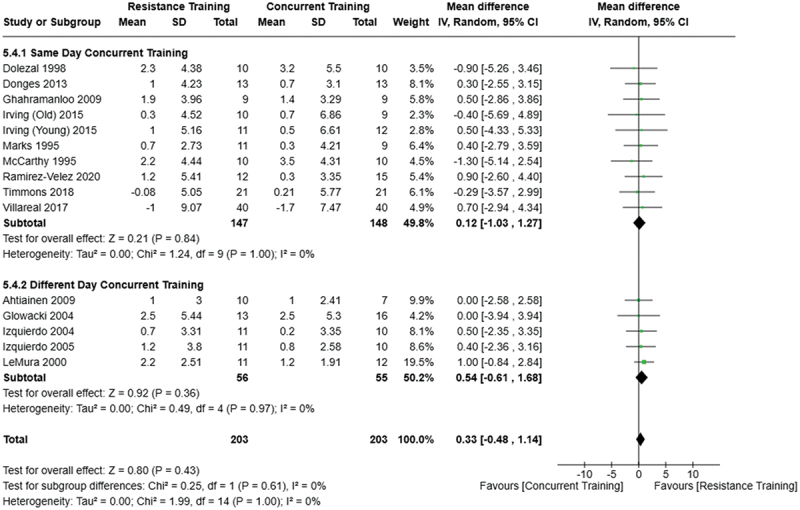
Verification
Claims the paper makes
12 Valid · 1 Not valid · 14 Not checked · 64 Own results and interpretations
The cited sources that could be checked couldn’t confirm or dispute this claim.
In the paper
“However, less attention has been given to body fat changes with CT [2,3].”
§ Comparison of concurrent, resistance, or aerobic training on body fat loss: a systematic review and meta-analysis > Introduction
What the sources say
- Could not verifycites [2] Lundberg TR, Feuerbacher JF, Sunkeler M, et al. The effects of concurrent aerobic and strength training on muscle fiber hypertrophy: a systematic review and meta-analysis. Sports Med. 2022 Oct; 52(10): 2391– 2403. doi: 10.1007/s40279-022-01688-x 35476184 PMC9474354 sourceExperimental — accuracy not yet measured
The Introduction discusses research on concurrent training, muscle mass and maximal strength, but does not compare the attention given to those outcomes with attention given to body fat. Searches for body fat, fat mass and body composition found no passage in our copy addressing the claimed research gap (page numbers unavailable). (LLM, conf=0.73)
- Could not verifycites [3] Schumann M, Feuerbacher JF, Sunkeler M, et al. Compatibility of concurrent aerobic and strength training for skeletal muscle size and function: an updated systematic review and meta-analysis. Sports Med. 2022 Mar; 52(3): 601– 612. doi: 10.1007/s40279-021-01587-7 34757594 PMC8891239 sourceExperimental — accuracy not yet measured
The Introduction (page unavailable) identifies maximal strength, explosive strength, and muscle hypertrophy as this review’s outcomes, but does not compare how much research attention those outcomes have received with body fat changes. Searches for body fat, fat mass, and comparative research attention found no passage in our copy making the attributed point. (LLM, conf=0.70)
plain- Asserted: passes — The authors put it forward as true.
- Checkable: passes — It can be checked against evidence.
- Load-bearing: passes — The paper’s conclusions depend on it.
- Based: passes — The paper gives a reason why it holds.
- Could not verify
The cited sources support only part of this claim — read each source’s verdict below.
In the paper
“Although, none of these systematic reviews included body fat changes as an outcome variable.”
§ Comparison of concurrent, resistance, or aerobic training on body fat loss: a systematic review and meta-analysis > Introduction
What the sources say
- Supportedcites [3] Schumann M, Feuerbacher JF, Sunkeler M, et al. Compatibility of concurrent aerobic and strength training for skeletal muscle size and function: an updated systematic review and meta-analysis. Sports Med. 2022 Mar; 52(3): 601– 612. doi: 10.1007/s40279-021-01587-7 34757594 PMC8891239 source
The Methods (Eligibility Criteria; page unavailable) list maximal strength, explosive strength, and muscle hypertrophy as outcomes of interest, not body fat changes. This confirms the claim for the cited review; it does not establish what outcomes other reviews examined. (LLM, conf=0.91)
- Partly supportedcites [5] Petre H, Hemmingsson E, Rosdahl H, et al. Development of maximal dynamic strength during concurrent resistance and endurance training in untrained, moderately trained, and trained individuals: a systematic review and meta-analysis. Sports Med. 2021 May; 51(5): 991– 1010. doi: 10.1007/s40279-021-01426-9 33751469 PMC8053170 sourceExperimental — accuracy not yet measured
The Methods (Inclusion Criteria and Statistical Analyses; page not available) identify maximal strength, not body fat change, as this review’s analysed outcome. That supports the claim for this review, but the cited paper does not establish that none of the other systematic reviews included body fat changes. (LLM, conf=0.82)
- Not checked — no full text of the sourcecites [6] Sabag A, Najafi A, Michael S, et al. The compatibility of concurrent high intensity interval training and resistance training for muscular strength and hypertrophy: a systematic review and meta-analysis. J Sports Sci. 2018 Nov; 36(21): 2472– 2483. doi: 10.1080/02640414.2018.1464636 29658408 source
plain- Asserted: passes — The authors put it forward as true.
- Checkable: passes — It can be checked against evidence.
- Load-bearing: passes — The paper’s conclusions depend on it.
- Based: passes — The paper gives a reason why it holds.
- Supported
The cited sources support only part of this claim — read each source’s verdict below.
In the paper
“To our knowledge, there have been three systematic reviews published that directly compared training adaptations between AT, RT, and CT [3,5,6].”
§ Comparison of concurrent, resistance, or aerobic training on body fat loss: a systematic review and meta-analysis > Introduction
What the sources say
- Partly supportedcites [3] Schumann M, Feuerbacher JF, Sunkeler M, et al. Compatibility of concurrent aerobic and strength training for skeletal muscle size and function: an updated systematic review and meta-analysis. Sports Med. 2022 Mar; 52(3): 601– 612. doi: 10.1007/s40279-021-01587-7 34757594 PMC8891239 sourceExperimental — accuracy not yet measured
The Methods (Eligibility Criteria; page unavailable) confirm that this is a systematic review comparing concurrent aerobic-and-strength training (CT) with strength training alone (RT). It did not directly compare adaptations across AT, RT, and CT: its required comparator was RT, not aerobic training alone (AT). The cited paper also does not establish the sentence’s count of three reviews. (LLM, conf=0.89)
- Partly supportedcites [5] Petre H, Hemmingsson E, Rosdahl H, et al. Development of maximal dynamic strength during concurrent resistance and endurance training in untrained, moderately trained, and trained individuals: a systematic review and meta-analysis. Sports Med. 2021 May; 51(5): 991– 1010. doi: 10.1007/s40279-021-01426-9 33751469 PMC8053170 sourceExperimental — accuracy not yet measured
The Results (Primary Analyses: Training Status; page unavailable) show that this paper is a systematic review comparing maximal-strength adaptations after concurrent training and resistance training alone. The cited review does not directly compare those adaptations with an aerobic-training-only group, so it supports only part of the three-way comparison attributed to it. It also cannot establish the citing authors’ count of three reviews. (LLM, conf=0.88)
- Not checked — no full text of the sourcecites [6] Sabag A, Najafi A, Michael S, et al. The compatibility of concurrent high intensity interval training and resistance training for muscular strength and hypertrophy: a systematic review and meta-analysis. J Sports Sci. 2018 Nov; 36(21): 2472– 2483. doi: 10.1080/02640414.2018.1464636 29658408 source
hedged- Asserted: passes — The authors put it forward as true.
- Checkable: passes — It can be checked against evidence.
- Load-bearing: passes — The paper’s conclusions depend on it.
- Based: passes — The paper gives a reason why it holds.
- Partly supported
Every source the paper cites for this claim was checked and supports it.
In the paper
“For the RT vs. AT comparison for FFM, results went from significant to non-significant with the removal of Ghahramanloo 2009 [28], Dolezal 1998 [25], Izquierdo 2005 [31], LeMura 2000 [33], McCarthy 1995 [37], and Villareal 2017 [45].”
§ Comparison of concurrent, resistance, or aerobic training on body fat loss: a systematic review and meta-analysis > Results > Meta-analyses (overall effects)
What the sources say
- Supportedcites [28] Ghahramanloo E, Midgley AW, Bentley DJ. The effect of concurrent training on blood lipid profile and anthropometrical characteristics of previously untrained men. J Phys Act Health. 2009 Nov; 6(6): 760– 766. doi: 10.1123/jpah.6.6.760 20101919 sourceExperimental — accuracy not yet measured
The citation identifies Ghahramanloo et al. (2009) as one of the studies removed in the citing authors’ sensitivity analysis; it does not attribute the change in statistical significance to Ghahramanloo et al. The cited paper’s title identifies a training study measuring anthropometrical characteristics in previously untrained men, consistent with its role as an included study. Paper-scoped searches returned no full-text snippets, so the paper itself cannot independently verify its inclusion in the FFM comparison. (LLM, conf=0.73)
- Supportedcites [25] Dolezal BA, Potteiger JA. Concurrent resistance and endurance training influence basal metabolic rate in nondieting individuals. J Appl Physiol (1985). 1998 Aug; 85(2): 695– 700. doi: 10.1152/jappl.1998.85.2.695 9688748 sourceExperimental — accuracy not yet measured
The citation identifies Dolezal and Potteiger (1998) as a study removed from the citing authors’ RT-versus-AT analysis. The change from significant to non-significant is the citing authors’ own sensitivity-analysis result, not a finding attributed to Dolezal and Potteiger. The source title establishes that it concerns resistance and endurance training, but no paper-scoped full-text snippets were available to check the FFM data independently. (LLM, conf=0.76)
- Supportedcites [31] Izquierdo M, Hakkinen K, Ibanez J, et al. Effects of combined resistance and cardiovascular training on strength, power, muscle cross-sectional area, and endurance markers in middle-aged men. Eur J Appl Physiol. 2005 May; 94(1–2): 70– 75. doi: 10.1007/s00421-004-1280-5 15616847 sourceExperimental — accuracy not yet measured
The citation identifies Izquierdo et al. (2005) as a study removed in the citing authors’ leave-one-out analysis. It does not attribute the change in statistical significance to a finding reported by Izquierdo et al.; that result belongs to the citing analysis. Semantic Scholar identifies the cited paper but provides no full-text snippets, so its role in the analysis cannot be checked independently here. (LLM, conf=0.72)
plain- Asserted: passes — The authors put it forward as true.
- Checkable: passes — It can be checked against evidence.
- Load-bearing: unclear — It is unclear whether the paper’s conclusions depend on it.
- Based: passes — The paper gives a reason why it holds.
- Supported
Every source the paper cites for this claim was checked and supports it.
In the paper
“Furthermore, for the CT and RT comparison for fat mass, removal of Dolezal 1998 [25] altered the findings.”
§ Comparison of concurrent, resistance, or aerobic training on body fat loss: a systematic review and meta-analysis > Results > Meta-analyses (overall effects)
What the sources say
- Supportedcites [25] Dolezal BA, Potteiger JA. Concurrent resistance and endurance training influence basal metabolic rate in nondieting individuals. J Appl Physiol (1985). 1998 Aug; 85(2): 695– 700. doi: 10.1152/jappl.1998.85.2.695 9688748 source
The Results (p. 697) report fat-mass changes for both the concurrent-training (CT) and resistance-training (RT) groups, confirming that Dolezal 1998 is a study relevant to that comparison. The statement that removing it altered the findings describes the citing authors’ own analysis, not an analysis attributed to Dolezal 1998. (LLM, conf=0.88)
plainstates a cause- Asserted: passes — The authors put it forward as true.
- Checkable: passes — It can be checked against evidence.
- Load-bearing: unclear — It is unclear whether the paper’s conclusions depend on it.
- Based: passes — The paper gives a reason why it holds.
- Supported
54 more claims · 3 with their cited sources checked
Create a free account to see all 91 claims and every source verdict.
- Probably not a substantial claim. 17
- It may state two separate claims as one. 20
Citations
Cites
The PRISMA 2020 statement: An updated guideline for reporting systematic reviews
Page, M. J., McKenzie, J. E., Bossuyt, P. M., Boutron, I., Hoffmann, T. C., Mulrow, C. D., Shamseer, L., Tetzlaff, J. M., Akl, E. A., Brennan, S. E., et al. (2021) · BMJ · doi:10.1136/bmj.n71 · Cited by 108,283
Cumpston, M., Li, T., Page, M. J., Chandler, J., Welch, V. A., Higgins, J. P., & Thomas, J. (2019) · Cochrane Database of Systematic Reviews · doi:10.1002/14651858.ed000142 · Cited by 7,218 · cited 1×
“…estimated from post and pre-training standard deviations using the following equation derived from the Cochrane Handbook for Systematic Reviews of Interventions: SD change Score = √[(SD baseline 2 + SD final 2 ) – (2 * correlation between baseline and final scores) * SD baseline * SD Final)] [14].”
DONNELLY, J. E., BLAIR, S. N., JAKICIC, J. M., MANORE, M. M., RANKIN, J. W., & SMITH, B. K. (2009) · Medicine & Science in Sports & Exercise · doi:10.1249/mss.0b013e3181949333 · Cited by 2,658
de Morton, N. A. (2009) · Australian Journal of Physiotherapy · doi:10.1016/s0004-9514(09)70043-1 · Cited by 2,201 · cited 3×
“Scoring ranges from 0 to 10 where a higher score indicates a lower risk of bias [11].”
InfluentialACSM's guidelines for exercise testing and prescription
Kenney, W. L., Humphrey, R. H., Bryant, C. X., & Mahler, D. A. (1995) · Williams & Wilkins eBooks · Cited by 1,475
Schoenfeld, B. J., Grgic, J., Ogborn, D., & Krieger, J. W. (2017) · Journal of Strength and Conditioning Research · doi:10.1519/jsc.0000000000002200 · Cited by 851 · cited 1×
“4 = “moderate;” and 0–3 = “poor” [12,13].”
Aerobic or Resistance Exercise, or Both, in Dieting Obese Older Adults
Villareal, D. T., Aguirre, L., Gurney, A. B., Waters, D. L., Sinacore, D. R., Colombo, E., Armamento-Villareal, R., & Qualls, C. (2017) · New England Journal of Medicine · doi:10.1056/nejmoa1616338 · Cited by 754
Interference of strength development by simultaneously training for strength and endurance.
Hickson, R. C. (1980) · European Journal of Applied Physiology and Occupational Physiology · doi:10.1007/bf00421333 · Cited by 753 · cited 2×
“…the primary purpose of this systematic review and meta-analysis was to examine studies from 1980 – when the earliest available and foundational study on CT was published [8] – through to 25 January 2023, that directly compared the effects of RT alone, AT alone, and CT on changes in body fat.”
Wilson, J. M., Marin, P. J., Rhea, M. R., Wilson, S. M., Loenneke, J. P., & Anderson, J. C. (2012) · Journal of Strength and Conditioning Research · doi:10.1519/jsc.0b013e31823a3e2d · Cited by 587 · cited 2×
“In addition, the authors did not report their search strategy for the inclusion/exclusion criteria [7].”
Ho, S. S., Dhaliwal, S. S., Hills, A. P., & Pal, S. (2012) · BMC Public Health · doi:10.1186/1471-2458-12-704 · Cited by 341
Incompatibility of endurance- and strength-training modes of exercise
Dudley, G. A., & Djamil, R. (1985) · Journal of Applied Physiology · doi:10.1152/jappl.1985.59.5.1446 · Cited by 324
Chen, H., Chung, Y., Chen, Y., Ho, S., & Wu, H. (2017) · Journal of the American Geriatrics Society · doi:10.1111/jgs.14722 · Cited by 317 · cited 2×
“For the CT vs. RT comparison for body mass, removal of Chen 2017 [23], Dudley 1985 [27], Irving 2015 (old) [18], Cadore 2010 [22], Izquierdo 2004 [32], McCarthy 1995 [37], Ramirez-Velez 2020 [39], Shakiba 2019 [40], and Villareal 2017 [45], all altered the findings from being non-significant to…”
Davidson, L. E., Hudson, R., Kilpatrick, K., Kuk, J. L., McMillan, K., Janiszewski, P. M., Lee, S., Lam, M., & Ross, R. (2009) · Archives of Internal Medicine · doi:10.1001/archinternmed.2008.558 · Cited by 297 · cited 1×
“…studies that did report specific dietary constraints within their study design (e.g. a 25% caloric deficit) had all groups undergo the same dietary constraint [16,17,21,24,36,39], as all included studies were designed to investigate differences between AT, RT, and CT for body composition changes.”
Krzysztofik, M., Wilk, M., Wojdała, G., & Gołaś, A. (2019) · International Journal of Environmental Research and Public Health · doi:10.3390/ijerph16244897 · Cited by 264 · cited 1×
“Alternatively, techniques such as supersets and circuits may be used to mitigate the need for extended training durations [57,58].”
Specificity of Balance Training in Healthy Individuals: A Systematic Review and Meta-Analysis
Kümmel, J., Kramer, A., Giboin, L.-S., & Gruber, M. (2016) · Sports Medicine · doi:10.1007/s40279-016-0515-z · Cited by 231 · cited 1×
“4 = “moderate;” and 0–3 = “poor” [12,13].”
Dolezal, B. A., & Potteiger, J. A. (1998) · Journal of Applied Physiology · doi:10.1152/jappl.1998.85.2.695 · Cited by 228 · cited 3×
“AT comparison for FFM, results went from significant to non-significant with the removal of Ghahramanloo 2009 [28], Dolezal 1998 [25], Izquierdo 2005 [31], LeMura 2000 [33], McCarthy 1995 [37], and Villareal 2017 [45].”
Compatibility of adaptive responses with combining strength and endurance training
McCARTHY, J. P., AGRE, J. C., GRAF, B. K., POZNIAK, M. A., & VAILAS, A. C. (1995) · Medicine & Science in Sports & Exercise · doi:10.1249/00005768-199503000-00021 · Cited by 228 · cited 2×
“…vs. RT comparison for body mass, removal of Chen 2017 [23], Dudley 1985 [27], Irving 2015 (old) [18], Cadore 2010 [22], Izquierdo 2004 [32], McCarthy 1995 [37], Ramirez-Velez 2020 [39], Shakiba 2019 [40], and Villareal 2017 [45], all altered the findings from being non-significant to significant.”
Wadden, T. A., Vogt, R. A., Andersen, R. E., Bartlett, S. J., Foster, G. D., Kuehnel, R. H., Wilk, J., Weinstock, R., Buckenmeyer, P., Berkowitz, R. I., et al. (1997) · Journal of Consulting and Clinical Psychology · doi:10.1037/0022-006x.65.2.269 · Cited by 212 · cited 2×
“There were seven studies that used only female participants [21,33,36,47–49], and there were no significant differences between exercise modes for body mass, fat mass, % body fat, or FFM ( p > 0.05).”
InfluentialEffects of Resistance, Endurance, and Concurrent Exercise on Training Outcomes in Men
GLOWACKI, S. P., MARTIN, S. E., MAURER, A., BAEK, W., GREEN, J. S., & CROUSE, S. F. (2004) · Medicine & Science in Sports & Exercise · doi:10.1249/01.mss.0000147629.74832.52 · Cited by 205
LeMura, L. M., von Duvillard, S. P., Andreacci, J., Klebez, J. M., Chelland, S. A., & Russo, J. (2000) · European Journal of Applied Physiology · doi:10.1007/s004210000234 · Cited by 202 · cited 3×
“There were seven studies that used only female participants [21,33,36,47–49], and there were no significant differences between exercise modes for body mass, fat mass, % body fat, or FFM ( p > 0.05).”
InfluentialEffect of Resistance, Endurance, and Concurrent Training on TNF-α, IL-6, and CRP
LIBARDI, C. A., DE SOUZA, G. V., CAVAGLIERI, C. R., MADRUGA, V. A., & CHACON-MIKAHIL, M. P. T. (2012) · Medicine & Science in Sports & Exercise · doi:10.1249/mss.0b013e318229d2e9 · Cited by 195
The Interference Effects of Training for Strength and Endurance Simultaneously.
Hennessy, L. C., & Watson, A. W. S. (1994) · Journal of Strength and Conditioning Research · doi:10.1519/00124278-199402000-00003 · Cited by 193
Sillanpää, E., Laaksonen, D. E., Häkkinen, A., Karavirta, L., Jensen, B., Kraemer, W. J., Nyman, K., & Häkkinen, K. (2009) · European Journal of Applied Physiology · doi:10.1007/s00421-009-1013-x · Cited by 186 · cited 2×
“There were seven studies that used only female participants [21,33,36,47–49], and there were no significant differences between exercise modes for body mass, fat mass, % body fat, or FFM ( p > 0.05).”
InfluentialOnce weekly combined resistance and cardiovascular training in healthy older men
IZQUIERDO, M., IBA??EZ, J., H??KKINEN, K., KRAEMER, W. J., LARRI??N, J. L., & GOROSTIAGA, E. M. (2004) · Medicine & Science in Sports & Exercise · doi:10.1249/01.mss.0000117897.55226.9a · Cited by 185 · cited 1×
“For the CT vs. RT comparison for body mass, removal of Chen 2017 [23], Dudley 1985 [27], Irving 2015 (old) [18], Cadore 2010 [22], Izquierdo 2004 [32], McCarthy 1995 [37], Ramirez-Velez 2020 [39], Shakiba 2019 [40], and Villareal 2017 [45], all altered the findings from being non-significant to…”
Consequences of Combining Strength and Endurance Training Regimens
Nelson, A. G., Arnall, D. A., Loy, S. F., Silvester, L. J., & Conlee, R. K. (1990) · Physical Therapy · doi:10.1093/ptj/70.5.287 · Cited by 176
Effects of resistance exercise bouts of different intensities but equal work on EPOC
KATHLEEN THORNTON, M., & POTTEIGER, J. A. (2002) · Medicine & Science in Sports & Exercise · doi:10.1097/00005768-200204000-00024 · Cited by 168 · cited 1×
“Despite the use of rest periods reducing the total energy expenditure during each exercise session (assuming equal session duration), RT was traditionally understood to increase energy expenditure after each exercise session via excess post-oxygen consumption (EPOC) [53,54].”
Physiological Effects of Concurrent Training in Elderly Men
Cadore, E. L., Pinto, R. S., Lhullier, F. L. R., Correa, C. S., Alberton, C. L., Pinto, S. S., Almeida, A. P. V., Tartaruga, M. P., Silva, E. M., & Kruel, L. F. M. (2010) · International Journal of Sports Medicine · doi:10.1055/s-0030-1261895 · Cited by 166 · cited 1×
“For the CT vs. RT comparison for body mass, removal of Chen 2017 [23], Dudley 1985 [27], Irving 2015 (old) [18], Cadore 2010 [22], Izquierdo 2004 [32], McCarthy 1995 [37], Ramirez-Velez 2020 [39], Shakiba 2019 [40], and Villareal 2017 [45], all altered the findings from being non-significant to…”
Schumann, M., Feuerbacher, J. F., Sünkeler, M., Freitag, N., Rønnestad, B. R., Doma, K., & Lundberg, T. R. (2022) · Sports Medicine · doi:10.1007/s40279-021-01587-7 · Cited by 156 · cited 6×
“Previous systematic reviews have compared CT to RT for muscle hypertrophy, both reporting no differences in line with our findings [3,6].”
InfluentialIzquierdo, M., Häkkinen, K., Ibáñez, J., Kraemer, W. J., & Gorostiaga, E. M. (2005) · European Journal of Applied Physiology · doi:10.1007/s00421-004-1280-5 · Cited by 155 · cited 1×
“AT comparison for FFM, results went from significant to non-significant with the removal of Ghahramanloo 2009 [28], Dolezal 1998 [25], Izquierdo 2005 [31], LeMura 2000 [33], McCarthy 1995 [37], and Villareal 2017 [45].”
Kraemer, W. J., Vescovi, J. D., Volek, J. S., Nindl, B. C., Newton, R. U., Patton, J. F., Dziados, J. E., French, D. N., & Häkkinen, K. (2004) · Military Medicine · doi:10.7205/milmed.169.12.994 · Cited by 140 · cited 1×
“One study was excluded from the meta-analysis due to no data being available [49], and another study was excluded from the meta-analysis due to no sample sizes being available [50].”
Combined Training Enhances Skeletal Muscle Mitochondrial Oxidative Capacity Independent of Age
Irving, B. A., Lanza, I. R., Henderson, G. C., Rao, R. R., Spiegelman, B. M., & Nair, K. S. (2015) · The Journal of Clinical Endocrinology & Metabolism · doi:10.1210/jc.2014-3081 · Cited by 139 · cited 2×
“For the CT vs. RT comparison for body mass, removal of Chen 2017 [23], Dudley 1985 [27], Irving 2015 (old) [18], Cadore 2010 [22], Izquierdo 2004 [32], McCarthy 1995 [37], Ramirez-Velez 2020 [39], Shakiba 2019 [40], and Villareal 2017 [45], all altered the findings from being non-significant to…”
Relative changes in resting energy expenditure during weight loss: a systematic review
Schwartz, A., & Doucet, É. (2010) · Obesity Reviews · doi:10.1111/j.1467-789x.2009.00654.x · Cited by 132 · cited 1×
“Likewise, previous research on relative body composition changes to weight loss interventions between sexes are equivocal [67,68].”
Body composition and fitness during strength and/or endurance training in older men
SILLANPÄÄ, E., HÄKKINEN, A., NYMAN, K., MATTILA, M., CHENG, S., KARAVIRTA, L., LAAKSONEN, D. E., HUUHKA, N., KRAEMER, W. J., & HÄKKINEN, K. (2008) · Medicine & Science in Sports & Exercise · doi:10.1249/mss.0b013e318165c854 · Cited by 130 · cited 1×
“Three studies were excluded from meta-analyses due to no response from the corresponding authors [46– 48].”
Comparison of time‐matched aerobic, resistance, or concurrent exercise training in older adults
Timmons, J. F., Minnock, D., Hone, M., Cogan, K. E., Murphy, J. C., & Egan, B. (2018) · Scandinavian Journal of Medicine & Science in Sports · doi:10.1111/sms.13254 · Cited by 109
Kelleher, A. R., Hackney, K. J., Fairchild, T. J., Keslacy, S., & Ploutz‐Snyder, L. L. (2010) · The Journal of Strength and Conditioning Research · doi:10.1519/jsc.0b013e3181d3e993 · Cited by 91 · cited 1×
“Alternatively, techniques such as supersets and circuits may be used to mitigate the need for extended training durations [57,58].”
Sabag, A., Najafi, A., Michael, S., Esgin, T., Halaki, M., & Hackett, D. (2018) · Journal of Sports Sciences · doi:10.1080/02640414.2018.1464636 · Cited by 90 · cited 4×
“This is despite methodological differences, as both Sabag et al. [6] and Schumann et al. [3] included studies that examined regional hypertrophy rather than whole body, and they focused on muscular hypertrophy rather than whole-body FFM. Nonetheless, the present results indicate that the inclusion…”
InfluentialSingh, N., Stewart, R. A. H., & Benatar, J. R. (2019) · BMJ Open · doi:10.1136/bmjopen-2019-029966 · Cited by 85 · cited 1×
“While the dose-response relationship between exercise frequency and duration during weight loss interventions are well understood [59], there is limited evidence to suggest that a particular mode of exercise confers greater fat and body mass loss in shorter duration interventions.”
Hartman, J. W., Moore, D. R., & Phillips, S. M. (2006) · Applied Physiology, Nutrition, and Metabolism · doi:10.1139/h06-031 · Cited by 80 · cited 1×
“Both RT and CT include resistance exercises, which are understood to help preserve FFM during caloric deficits through an upregulation of muscle protein synthesis [51].”
Fat-free mass is maintained in women following a moderate diet and exercise program
MARKS, B. L., WARD, A., MORRIS, D. H., CASTELLANI, J., & RIPPE, J. M. (1995) · Medicine & Science in Sports & Exercise · doi:10.1249/00005768-199509000-00003 · Cited by 78 · cited 2×
“There were seven studies that used only female participants [21,33,36,47–49], and there were no significant differences between exercise modes for body mass, fat mass, % body fat, or FFM ( p > 0.05).”
InfluentialENERGY COST OF MODERATE-DURATION RESISTANCE AND AEROBIC EXERCISE
BLOOMER, R. J. (2005) · Journal of Strength and Conditioning Research · doi:10.1519/00124278-200511000-00026 · Cited by 78
Donges, C. E., Duffield, R., Guelfi, K. J., Smith, G. C., Adams, D. R., & Edge, J. A. (2013) · Applied Physiology, Nutrition, and Metabolism · doi:10.1139/apnm-2012-0443 · Cited by 74
Petré, H., Hemmingsson, E., Rosdahl, H., & Psilander, N. (2021) · Sports Medicine · doi:10.1007/s40279-021-01426-9 · Cited by 71 · cited 1×
“To our knowledge, there have been three systematic reviews published that directly compared training adaptations between AT, RT, and CT [3,5,6].”
Lundberg, T. R., Feuerbacher, J. F., Sünkeler, M., & Schumann, M. (2022) · Sports Medicine · doi:10.1007/s40279-022-01688-x · Cited by 62
Energy Cost of Moderate-Duration Resistance and Aerobic Exercise
Bloomer, R. J. (2005) · The Journal of Strength and Conditioning Research · doi:10.1519/r-16534.1 · Cited by 62
Ghahramanloo, E., Midgley, A. W., & Bentley, D. J. (2009) · Journal of Physical Activity and Health · doi:10.1123/jpah.6.6.760 · Cited by 55 · cited 1×
“AT comparison for FFM, results went from significant to non-significant with the removal of Ghahramanloo 2009 [28], Dolezal 1998 [25], Izquierdo 2005 [31], LeMura 2000 [33], McCarthy 1995 [37], and Villareal 2017 [45].”
Greater weight loss with increasing age in the weight loss maintenance trial
Svetkey, L. P., Clark, J. M., Funk, K., Corsino, L., Batch, B. C., Hollis, J. F., Appel, L. J., Brantley, P. J., Loria, C. M., Champagne, C. M., et al. (2014) · Obesity · doi:10.1002/oby.20506 · Cited by 53 · cited 2×
“However, methodological limitations to those studies include the inclusion of only high-responders and quasi-experimental designs [65,66].”
Weight cycling in combat sports: revisiting 25 years of scientific evidence
Lakičević, N., Mani, D., Paoli, A., Roklicer, R., Bianco, A., & Drid, P. (2021) · BMC Sports Science Medicine and Rehabilitation · doi:10.1186/s13102-021-00381-2 · Cited by 53
Greer, B. K., Sirithienthad, P., Moffatt, R. J., Marcello, R. T., & Panton, L. B. (2015) · Research Quarterly for Exercise and Sport · doi:10.1080/02701367.2014.999190 · Cited by 52 · cited 1×
“However, recent evidence has shown that increases in EPOC are dependent on intensity rather than exercise modality, with interval and continuous AT eliciting similar EPOC responses compared to RT when workloads were matched between groups [55,56].”
Siedler, M. R., Rodriguez, C., Stratton, M. T., Harty, P. S., Keith, D. S., Green, J. J., Boykin, J. R., White, S. J., Williams, A. D., DeHaven, B., et al. (2023) · British Journal of Nutrition · doi:10.1017/s0007114522003749 · Cited by 50 · cited 1×
“Furthermore, variations in error exist within single techniques (e.g. variations between different models of BIA devices) [63], and the included body composition techniques are understood to be valid and reliable within 5% of total error [64].”
Effect of Resistance Training on Excess Post-exercise Oxygen Consumption
Elliot, D. L., Goldberg, L., & Kuehl, K. S. (1992) · Journal of Strength and Conditioning Research · doi:10.1519/00124278-199205000-00002 · Cited by 48
Tseng, M.-L., Ho, C.-C., Chen, S.-C., Huang, Y.-C., Lai, C.-H., & Liaw, Y.-P. (2013) · International Journal of Sport Nutrition and Exercise Metabolism · doi:10.1123/ijsnem.23.3.271 · Cited by 37
Exercise and Weight Loss: No Sex Differences in Body Weight Response to Exercise
Caudwell, P., Gibbons, C., Finlayson, G., Näslund, E., & Blundell, J. (2014) · Exercise and Sport Sciences Reviews · doi:10.1249/jes.0000000000000019 · Cited by 36 · cited 1×
“Likewise, previous research on relative body composition changes to weight loss interventions between sexes are equivocal [67,68].”
Relationship Between Age and Weight Loss in Noom: Quasi-Experimental Study
DeLuca, L., Toro-Ramos, T., Michaelides, A., Seng, E., & Swencionis, C. (2020) · JMIR Diabetes · doi:10.2196/18363 · Cited by 36 · cited 2×
“However, methodological limitations to those studies include the inclusion of only high-responders and quasi-experimental designs [65,66].”
Sillanpää, E., Häkkinen, A., Laaksonen, D. E., Karavirta, L., Kraemer, W. J., & Häkkinen, K. (2010) · International Journal of Sports Medicine · doi:10.1055/s-0029-1242811 · Cited by 35
Lebron, M. A., Stout, J. R., & Fukuda, D. H. (2024) · Metabolites · doi:10.3390/metabo14020083 · Cited by 34 · cited 1×
“…some populations, such as athletes in sports with weight categories, there may be greater need to modify body composition sub-acutely (i.e. within several days) via exercise training [62], but more research is warranted on potential differences in exercise modality efficacy for sub-acute changes.”
Tinsley, G. M. (2021) · British Journal of Nutrition · doi:10.1017/s0007114520003578 · Cited by 29 · cited 1×
“Furthermore, variations in error exist within single techniques (e.g. variations between different models of BIA devices) [63], and the included body composition techniques are understood to be valid and reliable within 5% of total error [64].”
Bodybuilding Coaching Strategies Meet Evidence-Based Recommendations: A Qualitative Approach
Rukstela, A., Lafontant, K., Helms, E. R., Escalante, G., Phillips, K., & Campbell, B. I. (2023) · Journal of Functional Morphology and Kinesiology · doi:10.3390/jfmk8020084 · Cited by 29
Self-citationAhtiainen, J. P., Hulmi, J. J., Kraemer, W. J., Lehti, M., Pakarinen, A., Mero, A. A., Karavirta, L., Sillanpää, E., Selänne, H., Alen, M., et al. (2009) · International Journal of Sports Medicine · doi:10.1055/s-0029-1238290 · Cited by 28
(1997) · PubMed · Cited by 27
Shakiba, E., Sheikholeslami‐Vatani, D., Rostamzadeh, N., & Karim, H. (2018) · Applied Physiology, Nutrition, and Metabolism · doi:10.1139/apnm-2018-0197 · Cited by 26 · cited 1×
“…vs. RT comparison for body mass, removal of Chen 2017 [23], Dudley 1985 [27], Irving 2015 (old) [18], Cadore 2010 [22], Izquierdo 2004 [32], McCarthy 1995 [37], Ramirez-Velez 2020 [39], Shakiba 2019 [40], and Villareal 2017 [45], all altered the findings from being non-significant to significant.”
Ramírez-Vélez, R., Castro-Astudillo, K., Correa-Bautista, J. E., González-Ruíz, K., Izquierdo, M., García-Hermoso, A., Álvarez, C., Ramírez-Campillo, R., & Correa-Rodríguez, M. (2020) · Journal of Strength and Conditioning Research · doi:10.1519/jsc.0000000000003533 · Cited by 26 · cited 3×
“…vs. RT comparison for body mass, removal of Chen 2017 [23], Dudley 1985 [27], Irving 2015 (old) [18], Cadore 2010 [22], Izquierdo 2004 [32], McCarthy 1995 [37], Ramirez-Velez 2020 [39], Shakiba 2019 [40], and Villareal 2017 [45], all altered the findings from being non-significant to significant.”
Concurrent Training and Pulmonary Function in Smokers
Shaw, I., Shaw, B. S., & Brown, G. A. (2011) · International Journal of Sports Medicine · doi:10.1055/s-0031-1277214 · Cited by 25
Benito, P. J., Bermejo, L. M., Peinado, A. B., López-Plaza, B., Cupeiro, R., Szendrei, B., Calderón, F. J., Castro, E. A., & Gómez-Candela, C. (2015) · Journal of Applied Physiology · doi:10.1152/japplphysiol.00928.2014 · Cited by 23 · cited 2×
“…studies that did report specific dietary constraints within their study design (e.g. a 25% caloric deficit) had all groups undergo the same dietary constraint [16,17,21,24,36,39], as all included studies were designed to investigate differences between AT, RT, and CT for body composition changes.”
Asad, M. R., Ravasi, A. A., Faramarzi, M., & Pournemati, P. (2012) · Bratislavské lekárske listy/Bratislava medical journal · doi:10.4149/bll_2012_150 · Cited by 19
Benito, P. J., López-Plaza, B., Bermejo, L. M., Peinado, A. B., Cupeiro, R., Butragueño, J., Rojo-Tirado, M. A., González-Lamuño, D., Gómez-Candela, C., & on behalf of the PRONAF Study Group (2020) · International Journal of Environmental Research and Public Health · doi:10.3390/ijerph17072596 · Cited by 18 · cited 2×
“…studies that did report specific dietary constraints within their study design (e.g. a 25% caloric deficit) had all groups undergo the same dietary constraint [16,17,21,24,36,39], as all included studies were designed to investigate differences between AT, RT, and CT for body composition changes.”
(2021) · International Journal of Exercise Science · doi:10.70252/odin6912 · Cited by 16 · cited 1×
“However, recent evidence has shown that increases in EPOC are dependent on intensity rather than exercise modality, with interval and continuous AT eliciting similar EPOC responses compared to RT when workloads were matched between groups [55,56].”
Regional fat mobilization and training type on sedentary, premenopausal overweight and obese women
Carnero, E. Á., Amati, F., Pinto, R. S., Valamatos, M. J., Mil-Homens, P. V., & Sardinha, L. B. (2013) · Obesity · doi:10.1002/oby.20568 · Cited by 13 · cited 1×
“Three studies were excluded from meta-analyses due to no response from the corresponding authors [46– 48].”
Research works printed but not linked: 1
- Higgins J, Thomas J, Chandler J, et al, editors. Cochrane handbook for systematic reviews of interventions version 6· 4 (updated August, 2023). Cochrane. 2024. Available from www.training.cochrane.org/handbook
Cited by
The Significant Role of Physical Activity and Exercise in Health and Metabolic Diseases
Dimitriadis, G., Chryssanthopοulos, C., Philippou, Α., & Koutsilieris, M. (2025) · Physiologia · doi:10.3390/physiologia5040057 · Cited by 12
“The data represent average values and were retrieved from references [109–111, 115, 116, 118– 120 ,122 ,123 ,128”
Situ, Y., Guo, X., Ren, H., Qian, J., Li, C., Li, C., Tang, X. Y., Zhang, J., Wang, X., Wang, M., et al. (2026) · Environmental Health Perspectives · doi:10.1021/ehp.6c00011 · Cited by 1
Rejeki, P. S., Pranoto, A., Argarini, R., Hakim, F. A., Nazmuddin, M., van Laar, T., & Boidin, M. (2025) · Physical Education Theory and Methodology · doi:10.17309/tmfv.2025.4.20
“…and combined exercise training on fat mass in overweight and obese populations (Ho et al., 2012; Schroeder et al., 2019; Amare et al., 2024; Lafontant et al., 2025; Liu et al., 2024; Lee et al., 2024). e While resistance training provides various health benefits, the broader question of…”
Dębowska, A. (2025) · Polish Journal of Sport and Tourism · doi:10.2478/pjst-2025-0023
“These tendencies are in line with recent meta-analyses indicating that resistance training and concurrent training are more effective than aerobic training alone in improving body composition, particularly through reductions in fat mass and preservation of fat-free mass [4, 5].”
Arsenyadis, F., Henson, J. J., McCarthy, M., Papamargaritis, D., King, J. A., Redman, E., Whelehan, G., Wilkinson, T., Sargeant, J. A., Rowlands, A. V., et al. (2026) · BMJ Open · doi:10.1136/bmjopen-2025-110459
“28 This indicates that a combined approach, integrating both resistance and aerobic training, may support the benefits of energy restriction while minimising the unintended side effects of intentional efforts to reduce adiposity.”
Metadata
- Authors
- Lafontant, K., Rukstela, A., Hanson, A., Chan, J., Alsayed, Y., Ayers-Creech, W. A., Bale, C., Ohigashi, Y., Solis, J., Shelton, G., Alur, I., Resler, C., Heath, A., Ericksen, S., Forbes, S. C., & Campbell, B. I.
- Affiliations
- University of Central Florida (US)
- University of South Florida (US)
- Brandon University (CA)
- Corresponding author
- Campbell, Bill I.
- ORCID
- Venue
- Journal of the International Society of Sports Nutrition
- Publisher
- Informa UK Limited
- Published
- 2025-05-22
- Volume
- 22
- Issue
- 1
- Pages
- 2507949-2507949
- ISSN
- 1550-2783 (ISSN-L)
- PMC
- PMC12107660
- OpenAlex
- W4410617777
- Semantic Scholar
- 2f73c7da66d6e6b1b7fc7cbebb0968685ba58436
- Cited by
- 11
- References
- 66
- Citations by year
- 2026: 8 · 2025: 3
- FWCI
- 2.40
- Type
- journal article
- Language
- en
- Open access
- gold
- doi.org
- Licence
- Locations
- Journal of the International Society of Sports Nutrition (publishedVersion, cc-by)
- PubMed Central (publishedVersion, cc-by)
- PubMed (publishedVersion)
- DOAJ (DOAJ: Directory of Open Access Journals) (submittedVersion, cc-by-sa)
- Funders
- Florida Education Fund
- Topics
- Health Sciences › Medicine › Physiology (medical) › Cardiovascular and exercise physiology
- Health Sciences › Medicine › Orthopedics and Sports Medicine › Sports Performance and Training
- Health Sciences › Medicine › Public Health, Environmental and Occupational Health › Physical Activity and Health
- Keywords
- concurrent training, resistance training, aerobic exercise, fat loss, fat mass, body composition, fat-free mass, exercise timing, exercise duration, training load, healthy adults
- MeSH terms
- Adipose Tissue, Body Composition, Humans, Weight Loss, Exercise, Body Mass Index, Randomized Controlled Trials as Topic, Resistance Training
About these checks
Registry, retraction, Cites and statistics results are computed, not judged, with one exception: a printed reference that no index lists is read once by a model before it counts as a citation error. Claims are extracted by a model and kept only when their quote appears verbatim in the text; each cited source is then checked, with a model’s help, for whether it says what the claim relies on. Those verdicts can be wrong — read the claim’s quote and the cited source before relying on one.
The claim verdicts this report counts are experimental: their accuracy is not yet measured.
A language model drew the claims from the paper on 2026-09-30, under version 3 of the claim definition (model deepseek-v4.1-flash, prompt extract-v3).
A second model labelled each claim on 2026-09-30 (model jev-1.13-20260917, definition revision gold-guideline-v0.2).
Cited sources are checked with a language model’s help (gpt-6-sol).
Statistics and arithmetic are recomputed, not judged.
Confidence bands are shown only for fields calibrated on our annotated test set. None is calibrated yet, so no band is shown.
What counts as a claim ›How we measure confidence ›How we check this ›
Are you an author, or do you see a problem with this page? Request a review
Data sources
Bibliographic data: Semantic Scholar, OpenAlex, Crossref.
Contains information from the Semantic Scholar Academic Graph Datasets, made available under the ODC Attribution License (ODC-BY 1.0).
Semantic Scholar’s data is described in: Kinney, R., et al. (2023). The Semantic Scholar Open Data Platform. arXiv:2301.10140.
