

CGAS is a micronucleophagy receptor for the clearance of micronuclei
Open accessThe DOI matches its Crossref record; 99 of the 99 references it cites were found in a registry or an index.
Abstract
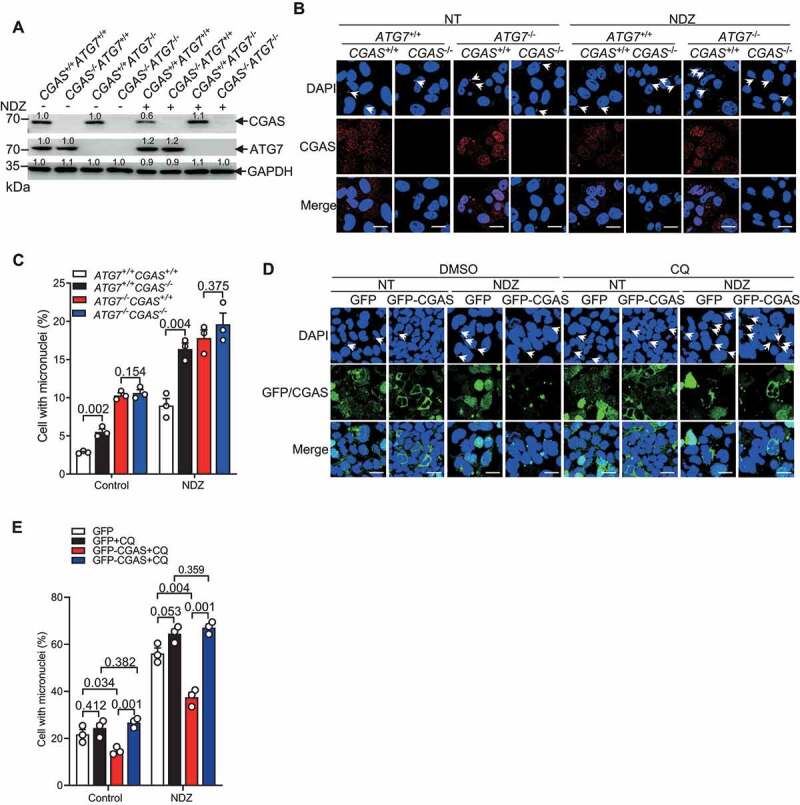
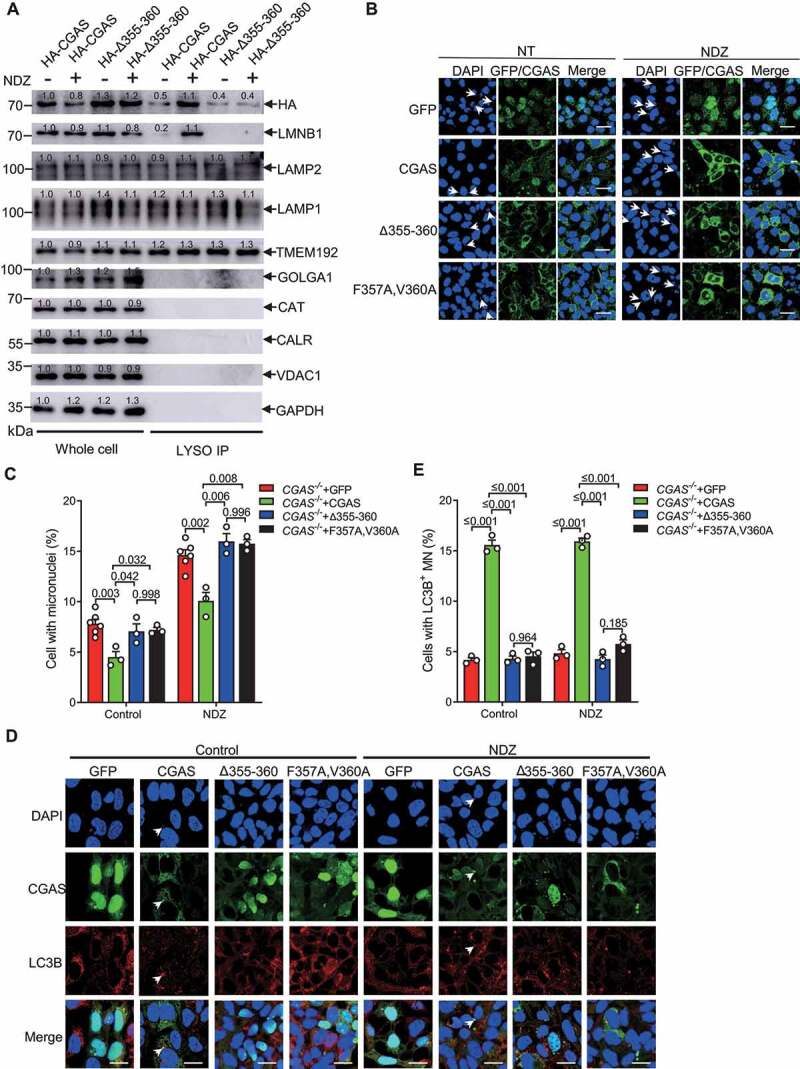
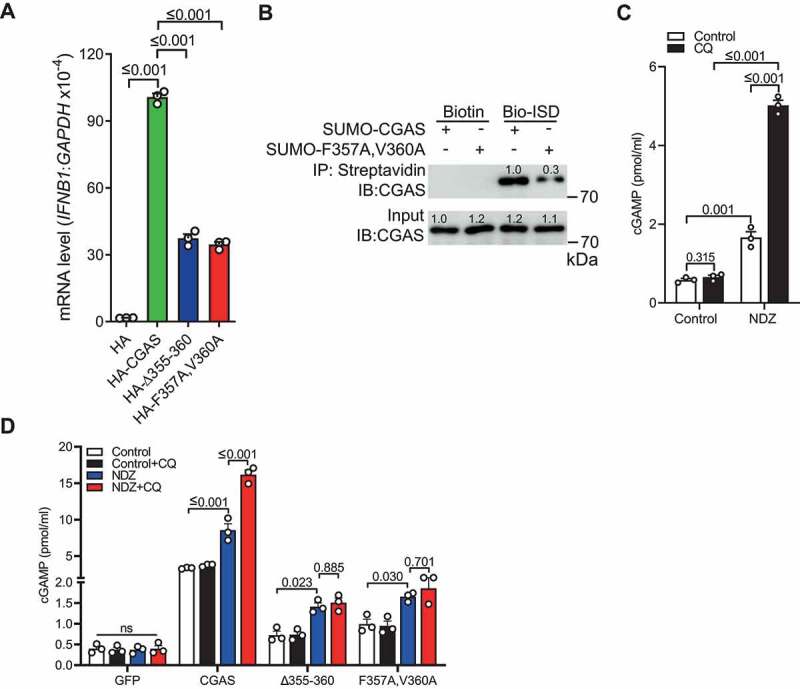
Micronuclei are constantly considered as a marker of genome instability and very recently found to be a trigger of innate immune responses. An increased frequency of micronuclei is associated with many diseases, but the mechanism underlying the regulation of micronuclei homeostasis remains largely unknown. Here, we report that CGAS (cyclic GMP-AMP synthase), a known regulator of DNA sensing and DNA repair, reduces the abundance of micronuclei under genotoxic stress in an autophagy-dependent manner. CGAS accumulates in the autophagic machinery and directly interacts with MAP1LC3B/LC3B in a manner dependent upon its MAP1LC3-interacting region (LIR). Importantly, the interaction is essential for MAP1LC3 recruitment to micronuclei and subsequent clearance of micronuclei via autophagy (micronucleophagy) in response to genotoxic stress. Moreover, in contrast to its DNA sensing function to activate micronuclei-driven inflammation, CGAS-mediated micronucleophagy blunts the production of cyclic GMP-AMP (cGAMP) induced by genotoxic stress. We therefore conclude that CGAS is a receptor for the selective autophagic clearance of micronuclei and uncovered an unprecedented role of CGAS in micronuclei homeostasis to dampen innate immune surveillance.Abbreviations: ATG: autophagy-related; CGAS: cyclic GMP-AMP synthase; CQ: chloroquine; GABARAP: GABA type A receptor-associated protein; GFP: green fluorescent protein; LAMP1: lysosomal associated membrane protein 1; LAMP2: lysosomal associated membrane protein 2; LIR, MAP1LC3-interacting region; MAP1LC3B/LC3B: microtubule associated protein 1 light chain 3 beta; NDZ: nocodazole; STING1: stimulator of interferon response cGAMP interactor 1
Overview
The claims and statistics of this paper haven’t been checked yet.
Free: it reads the open-access text and checks the first 5 claims that cite a source we can check. Create a free account to check every claim.
Integrity signals
Registry
Cites
Statistics
Figures
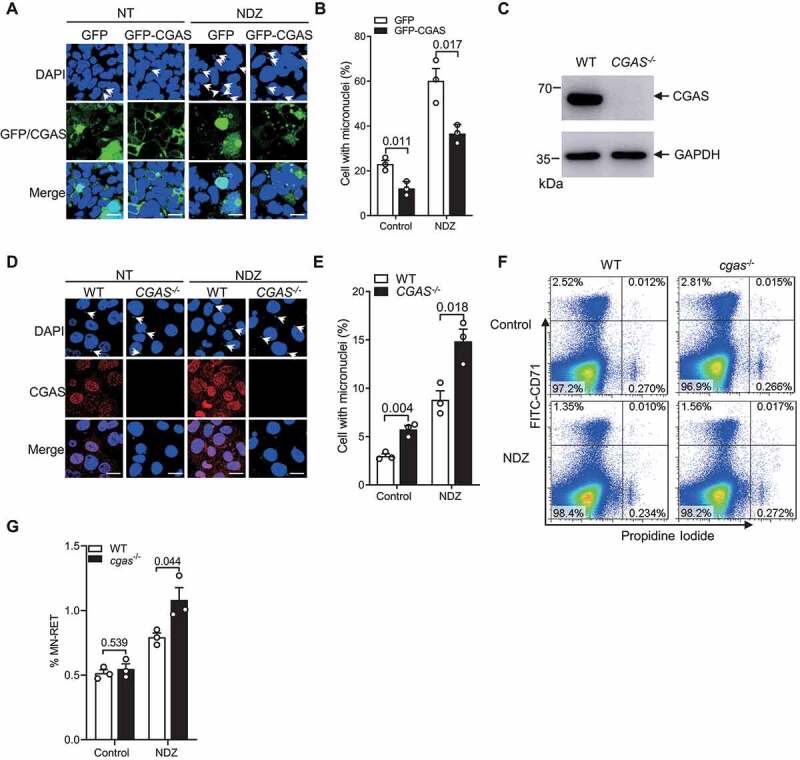
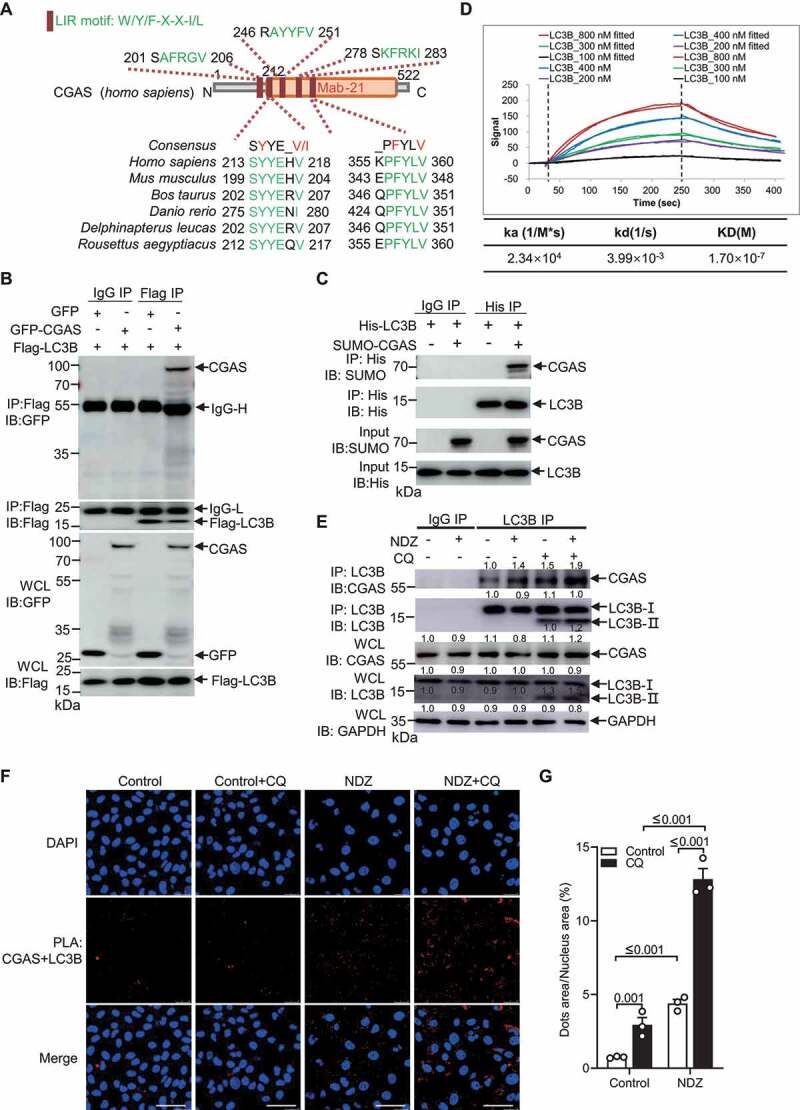
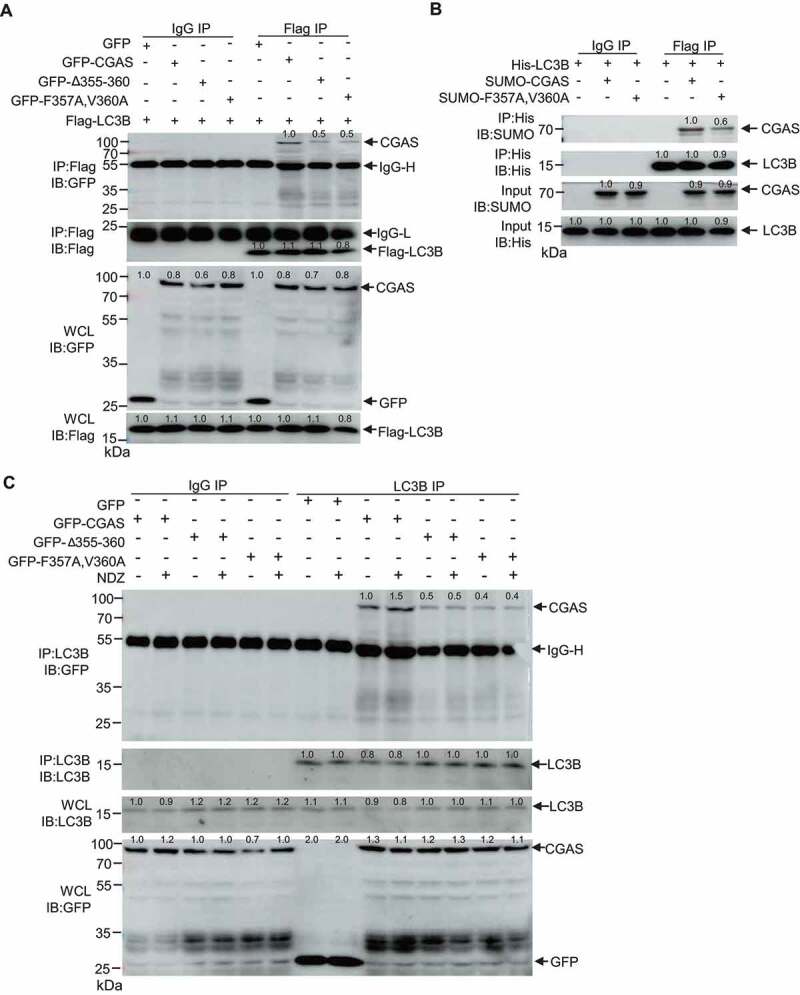
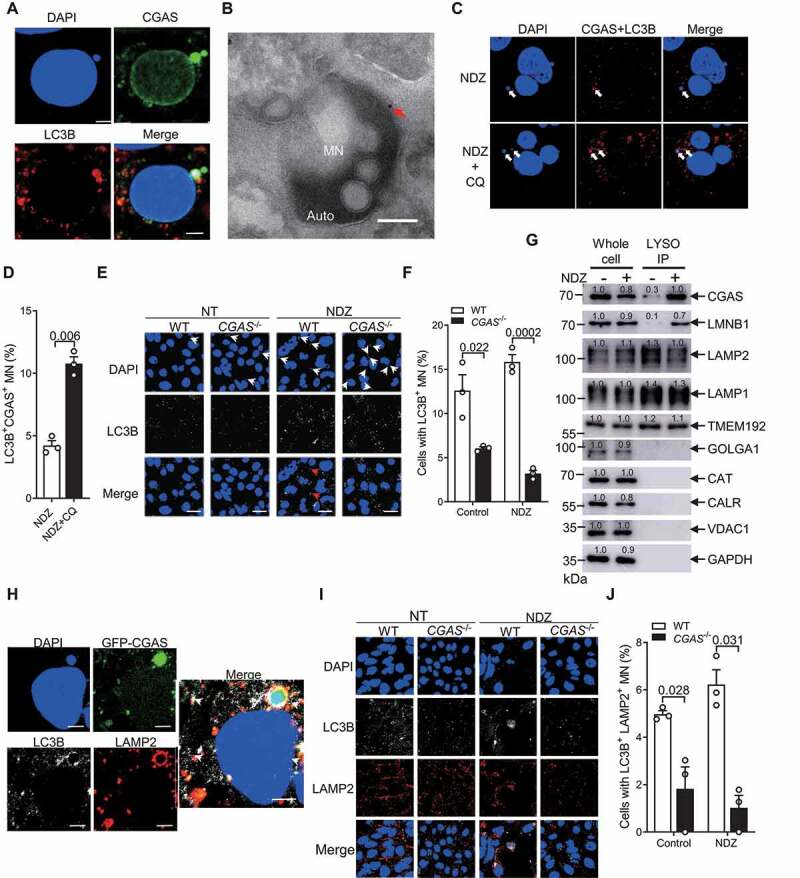
Verification
Claims the paper makes
The claims and statistics of this paper haven’t been checked yet.
Free: it reads the open-access text and checks the first 5 claims that cite a source we can check. Create a free account to check every claim.
Claims other papers make about this one
Each is checked against this paper’s own text: does it say what the citing paper says it does?
In the citing paper
“Recent work has shown that cGAS itself can act as an autophagy ligand for MN degradation, suggesting that autophagic degradation may be a common fate of cGAS-associated cytoDNA (Zhao et al., 2021).”
From Cytoplasmic DNA: sources, sensing, and role in aging and disease (2021) · cites this paper as Zhao et al., 2021
Self-check
Percentages, sums and reported differences re-computed from the paper’s own numbers.
The self-check needs the paper’s full text.
Citations
Cites
Repertoires of Autophagy in the Pathogenesis of Ocular Diseases
Li, Y.-J., Jiang, Q., Cao, G.-F., Yao, J., & Yan, B. (2015) · Cellular Physiology and Biochemistry · doi:10.1159/000373980 · Cited by 16,304
Autophagy in the Pathogenesis of Disease
Levine, B., & Kroemer, G. (2008) · Cell · doi:10.1016/j.cell.2007.12.018 · Cited by 7,069 · cited 1×
“Selective macroautophagy is a cellular process that forms double-layered membrane vesicles to sequester macromolecules, organelles, or intracellular pathogens for lysosomal degradation [1].”
BackgroundImproved vectors and genome-wide libraries for CRISPR screening
Sanjana, N. E., Shalem, O., & Zhang, F. (2014) · Nature Methods · doi:10.1038/nmeth.3047 · Cited by 5,239
Cyclic GMP-AMP Synthase Is a Cytosolic DNA Sensor That Activates the Type I Interferon Pathway
Sun, L., Wu, J., Du, F., Chen, X., & Chen, Z. J. (2013) · Science · doi:10.1126/science.1232458 · Cited by 4,996 · cited 2×
“CGAS (cyclic GMP-AMP synthase) has been identified as a sensor of double-stranded DNA (dsDNA) located in the cytoplasm or micronuclei to induce innate immunity and cellular senescence [12,13,24,25].”
BackgroundSelf-citationAutophagy and Viruses: Adversaries or Allies?
Dong, X., & Levine, B. (2013) · Journal of Innate Immunity · doi:10.1159/000346388 · Cited by 4,430
The DNA Damage Response: Making It Safe to Play with Knives
Ciccia, A., & Elledge, S. J. (2010) · Molecular Cell · doi:10.1016/j.molcel.2010.09.019 · Cited by 4,368 · cited 1×
“We therefore examined whether CGAS is more prone to regulate the abundance of micronuclei harboring γH2AX, a hallmark of DNA damage [49].”
BackgroundSTING is an endoplasmic reticulum adaptor that facilitates innate immune signalling
Ishikawa, H., & Barber, G. N. (2008) · Nature · doi:10.1038/nature07317 · Cited by 3,576
Biological Functions of Autophagy Genes: A Disease Perspective
Levine, B., & Kroemer, G. (2019) · Cell · doi:10.1016/j.cell.2018.09.048 · Cited by 2,832
Mechanism and medical implications of mammalian autophagy
Dikic, I., & Elazar, Z. (2018) · Nature Reviews Molecular Cell Biology · doi:10.1038/s41580-018-0003-4 · Cited by 2,771 · cited 1×
“Of these ATGs, ATG7 and Atg8-family proteins are core parts of the autophagy process [4,5].”
BackgroundAutophagy in Human Health and Disease
Choi, A. M. K., Ryter, S. W., & Levine, B. (2013) · New England Journal of Medicine · doi:10.1056/nejmra1205406 · Cited by 2,583
Research works printed but not linked: 1
- Jiang H, Xue XY, Panda S, et al. Chromatin-bound cGAS is an inhibitor of DNA repair and hence accelerates genome destabilization and cell death. Embo J. 2019; 38(21):e102718. PMC6826206 31544964 · DOI · Paper page
Cited by
Autophagy genes in biology and disease
Yamamoto, H., Zhang, S., & Mizushima, N. (2023) · Nature Reviews Genetics · doi:10.1038/s41576-022-00562-w · Cited by 623
The emerging mechanisms and functions of microautophagy
Wang, L., Klionsky, D. J., & Shen, H.-M. (2023) · Nature Reviews Molecular Cell Biology · doi:10.1038/s41580-022-00529-z · Cited by 466
Cytoplasmic DNA: sources, sensing, and role in aging and disease
Miller, K. N., Victorelli, S. G., Salmonowicz, H., Dasgupta, N., Liu, T., Passos, J. F., & Adams, P. D. (2021) · Cell · doi:10.1016/j.cell.2021.09.034 · Cited by 288
MPS1 inhibition primes immunogenicity of KRAS-LKB1 mutant lung cancer
Kitajima, S., Tani, T., Springer, B. F., Campisi, M., Osaki, T., Haratani, K., Chen, M., Knelson, E. H., Mahadevan, N. R., Ritter, J., et al. (2022) · Cancer Cell · doi:10.1016/j.ccell.2022.08.015 · Cited by 107
Microglia autophagy in ischemic stroke: A double-edged sword
Li, P., Hu, G., Yao, Q., Wu, J., He, Z., Law, B. Y. K., Hu, G., Zhou, X., Du, J., Wu, A., et al. (2022) · Frontiers in Immunology · doi:10.3389/fimmu.2022.1013311 · Cited by 91
Self-citationZhang, G., Wei, H., Zhao, A., Xu, Y., Zhang, X., Gan, J., Guo, M., Wang, J., Zhang, F., Jiang, Y., et al. (2025) · Journal of Neuroinflammation · doi:10.1186/s12974-025-03363-0 · Cited by 88
Mycobacterium tuberculosis suppresses host DNA repair to boost its intracellular survival
Liu, S., Guan, L., Peng, C. Y., CHENG, Y. N., Cheng, H., Wang, F., Ma, M., Zheng, R., Ji, Z., Cui, P., et al. (2023) · Cell Host & Microbe · doi:10.1016/j.chom.2023.09.010 · Cited by 75
Self-citationATR promotes clearance of damaged DNA and damaged cells by rupturing micronuclei
Joo, Y. K., Black, E. M., Trier, I., Haakma, W. E., Zou, L., & Kabeche, L. (2023) · Molecular Cell · doi:10.1016/j.molcel.2023.09.003 · Cited by 72
Nuclear cGAS: sequestration and beyond
Bai, J., & Liu, F. (2021) · Protein & Cell · doi:10.1007/s13238-021-00869-0 · Cited by 70
Opportunities and challenges of targeting cGAS–STING in cancer
Lu, C., Wang, W., & Fu, Y. (2026) · Nature reviews. Cancer · doi:10.1038/s41568-025-00894-9 · Cited by 79
cGAS–STING signalling in cancer: striking a balance with chromosomal instability
Beernaert, B., & Parkes, E. E. (2023) · Biochemical Society Transactions · doi:10.1042/bst20220838 · Cited by 62
Chen, Y.-H., Chen, H.-H., Wang, W., Chen, H., Huang, W.-S., Kao, C.-H., Lee, S.-R., Yeat, N. Y., Yan, R.-L., Chan, S.-J., et al. (2023) · Nature Communications · doi:10.1038/s41467-023-38784-z · Cited by 57
Scrambling the genome in cancer: causes and consequences of complex chromosome rearrangements
Krupina, K., Goginashvili, A., & Cleveland, D. W. (2023) · Nature Reviews Genetics · doi:10.1038/s41576-023-00663-0 · Cited by 73
TEX264 drives selective autophagy of DNA lesions to promote DNA repair and cell survival
Lascaux, P., Hoslett, G., Tribble, S., Trugenberger, C., Antičević, I., Otten, C., Torrecilla, I., Koukouravas, S., Zhao, Y., Yang, H., et al. (2024) · Cell · doi:10.1016/j.cell.2024.08.020 · Cited by 70
The interplay between autophagy and cGAS-STING signaling and its implications for cancer
Schmid, M., Fischer, P., Engl, M., Widder, J., Gruber, S., & Slade, D. (2024) · Frontiers in Immunology · doi:10.3389/fimmu.2024.1356369 · Cited by 68
How the Innate Immune DNA Sensing cGAS–STING Pathway Is Involved in Autophagy
Zheng, W., Xia, N., Zhang, J., Chen, N., Meurens, F., Liu, Z., & Zhu, J. (2021) · International Journal of Molecular Sciences · doi:10.3390/ijms222413232 · Cited by 50
Self-citationBaicalein tethers CD274/PD-L1 for autophagic degradation to boost antitumor immunity
Hao, B., Lin, S., Liu, H., Xu, J., Chen, L., Zheng, T., Zhang, W., Dang, Y., Reiter, R. J., Li, C., et al. (2024) · Autophagy · doi:10.1080/15548627.2024.2439657 · Cited by 48
Self-citationChromosomal Instability in Genome Evolution: From Cancer to Macroevolution
Comaills, V., & Castellano‐Pozo, M. (2023) · Biology · doi:10.3390/biology12050671 · Cited by 47
Double-checking chromosome segregation
Maiato, H., & Silva, S. D. R. (2023) · The Journal of Cell Biology · doi:10.1083/jcb.202301106 · Cited by 38
Innate immunity and inflammophagy: balancing the defence and immune homeostasis
Chauhan, S. C., Jena, K. K., Mehto, S., Chauhan, N. R., Sahu, R., Dhar, K., Yadav, R., Krishna, S., Jaiswal, P., & Chauhan, S. (2021) · FEBS Journal · doi:10.1111/febs.16298 · Cited by 37
The multifaceted functions of cGAS
Liu, H., Wang, F., Cao, Y., Dang, Y., & Ge, B. (2022) · Journal of Molecular Cell Biology · doi:10.1093/jmcb/mjac031 · Cited by 44
Self-citationSimovic-Lorenz, M., & Ernst, A. (2024) · Nature reviews. Cancer · doi:10.1038/s41568-024-00769-5 · Cited by 41
Crosstalk between cGAS-STING pathway and autophagy in cancer immunity
Lu, Q., Chen, Y., Li, J., Zhu, F., & Zheng, Z. (2023) · Frontiers in Immunology · doi:10.3389/fimmu.2023.1139595 · Cited by 32
cGAS-STING at the crossroads in cancer therapy
Wang, R., Hussain, A., Guo, Q., & Ma, M. (2023) · Critical Reviews in Oncology/Hematology · doi:10.1016/j.critrevonc.2023.104194 · Cited by 28
Self-citationRole of mitochondria transmission in ischemic stroke: Friend or foe?
Yang, L., Wei, X., Liao, Z., Chen, B., Zeng, G., & Mei, Z. (2025) · Redox Biology · doi:10.1016/j.redox.2025.103868 · Cited by 31
Interactions of Autophagy and the Immune System in Health and Diseases
Pant, A., Yao, X., Lavedrine, A., Viret, C., Dockterman, J., Chauhan, S. C., Shi, C.-S., Manjithaya, R. R., Cadwell, K., Kufer, T. A., et al. (2022) · Autophagy Reports · doi:10.1080/27694127.2022.2119743 · Cited by 32
Lysosomal control of the cGAS-STING signaling
Xu, Y., & Wan, W. (2024) · Trends in Cell Biology · doi:10.1016/j.tcb.2024.05.004 · Cited by 30
Interplay of cGAS with micronuclei: Regulation and diseases
Guo, X., Hintzsche, H., Xu, W., Ni, J., Xue, J., & Wang, X. (2022) · Mutation Research/Reviews in Mutation Research · doi:10.1016/j.mrrev.2022.108440 · Cited by 25
Ma, M., Duan, Y., Peng, C., Wu, Y., Zhang, X., Chang, B., Wang, F., Yang, H., Zheng, R., Cheng, H., et al. (2024) · Cell Discovery · doi:10.1038/s41421-024-00653-4 · Cited by 30
Self-citationMuciño-Hernández, G., Acevo-Rodríguez, P. S., Cabrera, S., Guerrero, A., Merchant‐Larios, H., & Castro‐Obregón, S. (2023) · Journal of Cell Science · doi:10.1242/jcs.260563 · Cited by 27
Lu, Y., Zhao, M., Chen, L., Wang, Y., Liu, T., & Liu, H. (2024) · Frontiers in Immunology · doi:10.3389/fimmu.2024.1380517 · Cited by 30
Self-citationSu, L., Zhu, X., Ding, H., Hu, L., Chen, J., Qi, S., Luo, K., Ling, W., & Tian, X. (2024) · Sensors and Actuators B Chemical · doi:10.1016/j.snb.2024.135792 · Cited by 21
The proteomic landscape of genotoxic stress-induced micronuclei
MacDonald, K. M., Khan, S., Lin, B., Hurren, R., Schimmer, A. D., Kislinger, T., & Harding, S. M. (2024) · Molecular Cell · doi:10.1016/j.molcel.2024.02.001 · Cited by 25
Pharmacological boosting of cGAS activation sensitizes chemotherapy by enhancing antitumor immunity
Liu, H., Su, H., Wang, F., Dang, Y., Ren, Y., Yin, S., Lu, H., Zhang, H., Wu, J., Xu, Z., et al. (2023) · Cell Reports · doi:10.1016/j.celrep.2023.112275 · Cited by 23
Self-citationType-I Interferon Signaling in Fanconi Anemia
Landelouci, K., Sinha, S., & Pépin, G. (2022) · Frontiers in Cellular and Infection Microbiology · doi:10.3389/fcimb.2022.820273 · Cited by 24
DNA‐Based Materials Inspired by Natural Extracellular DNA
Qin, Z., Wang, C., Zhang, J., Wang, Z., Yu, W. D., Li, Y., Dai, S., Tay, F. R., & Niu, L. (2023) · Advanced Functional Materials · doi:10.1002/adfm.202211669 · Cited by 20
Autophagy as a dual-faced host response to viral infections
Zhai, H., Wang, T., Liu, D., Pan, L., Sun, Y., & Qiu, H. (2023) · Frontiers in Cellular and Infection Microbiology · doi:10.3389/fcimb.2023.1289170 · Cited by 23
Potential cGAS-STING pathway functions in DNA damage responses, DNA replication and DNA repair
Zierhut, C. (2023) · DNA repair · doi:10.1016/j.dnarep.2023.103608 · Cited by 20
Liang, L., Shen, Y., Hu, Y., Liu, H., & Cao, J. (2022) · PLoS Pathogens · doi:10.1371/journal.ppat.1010233 · Cited by 18
Self-citationMicronuclei: origins, assays, mechanisms, diseases and treatments
Duan, H., Peng, X., Qin, S., Zhou, Y., Xiao, D., Tao, Y., & Liu, S. (2026) · Signal Transduction and Targeted Therapy · doi:10.1038/s41392-025-02538-8 · Cited by 23
Cytosolic DNA sensors and glial responses to endogenous DNA
Suptela, A. J., & Marriott, I. (2023) · Frontiers in Immunology · doi:10.3389/fimmu.2023.1130172 · Cited by 15
Zannini, L., Cardano, M., Liberi, G., & Buscemi, G. (2024) · Cellular and Molecular Life Sciences · doi:10.1007/s00018-024-05380-3 · Cited by 18
Reimann, H., Stopper, H., & Hintzsche, H. (2022) · Archives of Toxicology · doi:10.1007/s00204-022-03433-9 · Cited by 17
The cGAS/STING signaling pathway: a cross-talk of infection, senescence and tumors
Zeng, P.-H., & Yin, W.-J. (2022) · Cell Cycle · doi:10.1080/15384101.2022.2109899 · Cited by 16
Aneuploidy, inflammation and diseases
Kirsch‐Volders, M., & Fenech, M. F. (2022) · Mutation research. Fundamental and molecular mechanisms of mutagenesis · doi:10.1016/j.mrfmmm.2022.111777 · Cited by 12
Ding, H., Liu, S., Du, W., Su, L., Chen, J., Tian, Y., Pan, D., Chen, L., Rizzello, L., Zheng, X., et al. (2023) · Biosensors and Bioelectronics · doi:10.1016/j.bios.2023.115446 · Cited by 9
Role of micronucleus-activated cGAS-STING signaling in antitumor immunity
Qin, S. H. E. N., Xu, P., & Chen, M. (2024) · Journal of Zhejiang University (Medical Sciences) · doi:10.3724/zdxbyxb-2023-0485 · Cited by 15
Jung, C. H., Lee, Y. J., Cho, E. H., Lee, G. E., Kim, S. T., Sung, K. S., Kim, D.-H., Kim, D. H., Son, Y. S., Ahn, J., et al. (2024) · Cell Reports · doi:10.1016/j.celrep.2024.115094 · Cited by 12
The Roles of SQSTM1/p62 in Selective Autophagy and Oncogenic Signaling
Kim, Y.-J., Lee, H.-H., Jung, T. Y., Jeong, Y.-H., Lim, K., & Han, J. M. (2026) · International Journal of Molecular Sciences · doi:10.3390/ijms27052342 · Cited by 12
Autophagy as a caretaker of nuclear integrity
Boyle, E., & Wilfling, F. (2023) · FEBS Letters · doi:10.1002/1873-3468.14719 · Cited by 10
DNA damage in macrophages drives immune autoreactivity via nuclear antigen presentation
Niotis, G., Arvanitaki, E. S., Theodorakis, E., Schmalen, A., Juretschke, T., Argyros, O., Tsolis, K. C., Bertsias, G. K., Drakos, E., Beli, P., et al. (2026) · Nature Aging · doi:10.1038/s43587-025-01053-3 · Cited by 9
Ramos, A. E., Bizri, N. A., Novak, E. A., Mollen, K. P., & Khan, S. (2024) · Frontiers in Pharmacology · doi:10.3389/fphar.2024.1409683 · Cited by 7
Decoding STING’s roles in cancer: immunity, pain, dormancy, and autophagy
Lin, H., Tang, Y., & Liang, X. (2025) · Molecular and Cellular Biochemistry · doi:10.1007/s11010-025-05281-4 · Cited by 7
Chats and Spats of Autophagy and Innate Immune Systems
Kundu, S., Chauhan, S. C., Dhar, K., Varahan, S., & Chauhan, S. (2025) · Journal of Molecular Biology · doi:10.1016/j.jmb.2025.169387 · Cited by 6
cGAS Mediates the Inflammatory Responses of Human Microglial Cells to Genotoxic DNA Damage
Suptela, A. J., Radwan, Y., Richardson, C. A., Yan, S., Afonin, K. A., & Marriott, I. (2023) · Inflammation · doi:10.1007/s10753-023-01946-8 · Cited by 6
Torres-Bugarı́n, O., & Arias-Ruiz, L. F. (2023) · REVISTA BIOMÉDICA · doi:10.32776/revbiomed.v34i2.1101 · Cited by 6
Mechanisms of Immune Sensing of DNA Damage
Goddard, A. M., Cho, M.-G., Lerner, L. M., & Gupta, G. P. (2023) · Journal of Molecular Biology · doi:10.1016/j.jmb.2023.168424 · Cited by 8
The role of post-translational modifications of cGAS in γδ T cells
Liu, Y., Huang, Y., Wei, H., Liang, X., & Luo, J. (2024) · Molecular Immunology · doi:10.1016/j.molimm.2024.10.002 · Cited by 4
Unveiling cGAS mechanisms: Insights into DNA damage and immune sensing in cancer
Cho, M.-G., & Gupta, G. P. (2025) · DNA repair · doi:10.1016/j.dnarep.2025.103868 · Cited by 6
Harnessing the cooperation between DNA‐PK and cGAS in cancer therapies
Taffoni, C., Schüssler, M., Vila, I. K., & Laguette, N. (2023) · BioEssays · doi:10.1002/bies.202300045 · Cited by 5
Cytosolic DNA in radiotherapy: relevance, mechanisms, and detection
Poulton, E., Desjardins, A., Harding, S. M., Malbeteau, L., & Koritzinsky, M. (2025) · Radiotherapy and Oncology · doi:10.1016/j.radonc.2025.111220 · Cited by 5
Molecular mechanisms regulating cGAS/STING activation in health and disease
Cho, M.-G., Lee, R., Johnson, J., & Gupta, G. P. (2026) · Journal of Clinical Investigation · doi:10.1172/jci204548 · Cited by 4
Cardiovascular diseases in the elderly: possibilities for modulating autophagy using non-coding RNAs
Scalabrin, S., & Cagnin, S. (2025) · Frontiers in Cell and Developmental Biology · doi:10.3389/fcell.2025.1520850 · Cited by 3
Kirsch‐Volders, M., Fenech, M. F., Mišík, M., & Hummelen, P. V. (2025) · Mutation Research/Reviews in Mutation Research · doi:10.1016/j.mrrev.2025.108561 · Cited by 5
Lim, S., Jung, H. R., Lee, H., Chu, Y., Kim, H., Kim, E., & Lee, S. (2023) · Biomedicine & Pharmacotherapy · doi:10.1016/j.biopha.2023.115883 · Cited by 4
The role of autophagy in spinal cord injury: Mechanisms, crosstalk, and therapeutic strategies
Wang, R., Niu, Z., Tian, R.-Z., Chen, A., Liao, H., Kuang, R., Feng, Y., Chin, G., Xie, J., Zhu, P., et al. (2025) · Neural Regeneration Research · doi:10.4103/nrr.nrr-d-24-01467 · Cited by 8
Inside Out: How Cellular Localisation Shapes cGAS Functions in Health and Disease
Wu, J., Zhou, Y., Zeng, B., Wang, Y., & Wang, C. (2026) · Immunology · doi:10.1111/imm.70133 · Cited by 2
Self-citationLamsal, A., Andersen, S. B., Johansson, I., Desgarnier, M. D., Wolowczyk, C., Engedal, N., Vietri, M., Bjørkøy, G., Giambelluca, M. S., & Pettersen, K. (2024) · Cell Communication and Signaling · doi:10.1186/s12964-024-01858-6 · Cited by 2
Aneuploidy in exfoliated buccal cells: mechanisms, methods, and future perspectives
Kirsch‐Volders, M., Mišík, M., & Fenech, M. F. (2025) · Mutagenesis · doi:10.1093/mutage/geaf024 · Cited by 3
Song, X., Ling, X., Liu, H., Zhao, Q., Li, X., Lai, W., & Wang, H. (2024) · Chemical Research in Chinese Universities · doi:10.1007/s40242-024-4120-7 · Cited by 1
Self-citationAutophagy and Intracellular Membrane Dynamics in Aging and Age-Related Diseases
Minami, S., Nakamura, S., & Yoshimori, T. (2025) · Learning materials in biosciences · doi:10.1007/978-3-031-88121-3_7 · Cited by 1
View Micronuclei in the Extent of Evolution: New Insight Into an Old Issue
Yang, S., Yao, H., Zhang, Y., Zhang, W., Jin, S., Huang, K., Song, J., Feng, Y., Li, X., & Wang, X. (2025) · Journal of Cellular Physiology · doi:10.1002/jcp.70079 · Cited by 1
Singh, N. C., Yadav, N., Sharma, R. K., Gupta, P., Sarkar, J., & Mitra, K. (2025) · Free Radical Biology and Medicine · doi:10.1016/j.freeradbiomed.2025.10.264 · Cited by 2
C5aR1 and cGAS/STING and their possible involvement in radiosensitivity of colorectal cancer
Pham, Q. T. T., Lee, P.-J., & Le, N. Q. K. (2026) · iScience · doi:10.1016/j.isci.2026.115009 · Cited by 1
Exploring the anti-inflammatory potential of phytochemicals against STING::TBK1 pathway
Sood, A., & Kulharia, M. (2024) · Molecular Simulation · doi:10.1080/08927022.2024.2400326 · Cited by 1
Progress in functional characterization of cGAS
Wang, Z., Zhao, M., & HaiPeng, L. I. U. (2022) · Scientia Sinica Vitae · doi:10.1360/ssv-2021-0404 · Cited by 1
Self-citationAdaptations of autophagy and lysosomal systems upon membrane damage and pathogenic invasion
Bhattacharya, A. (2023) · Publication Server of Goethe University Frankfurt am Main (Goethe University Frankfurt) · doi:10.21248/gups.73735
Mammalian autophagy—focusing on its relationship to disease and aging
Minami, S., & Yoshimori, T. (2024) · Japanese Journal of Thrombosis and Hemostasis · doi:10.2491/jjsth.35.666
Tavares, H., Gonçalves, O., Gaspar, R., Beatriz, M., Deus, C. M., Benfeito, S., Cagide, F., Borges, F., Seibler, P., Klein, C., et al. (2025) · bioRxiv (Cold Spring Harbor Laboratory) · doi:10.64898/2025.11.30.691376
Paul, S., Tomsick, P. L., Milner, J., Biswas, S. R., Brindley, S., DeFoor, N., Zavar, L., Wright, G., Soto, Y., & Pickrell, A. M. (2026) · Autophagy · doi:10.1080/15548627.2026.2617844
CASM potentiates STING-driven NFκB signaling in immune cellsPreprint
Benoit-Lizon, I., Pignol, C., Hooper, K. M., Truntzer, C., Radoua, A., Zuffo, L. D., Lucas, J., Frenger, Q., Ponsardin, E., Cornebise, C., et al. (2026) · bioRxiv (Cold Spring Harbor Laboratory) · doi:10.64898/2026.01.21.700774
cGAS inhibition delays TDP-43-driven ALS PathogenesisPreprint
Liu, Y., Feng, W., Aikedan, A., Lee, S.-I., Bhagwat, M., Nagiri, R. K., Wong, M. Y., Amin, S., Qu, W., Zhu, J., et al. (2026) · bioRxiv (Cold Spring Harbor Laboratory) · doi:10.64898/2026.02.24.707791
Li, X., Wang, R., Cai, X., Ouyang, G., Li, J., Li, Z., Wang, J., Liu, X., Gui, J.-F., & Xiao, W. (2026) · Cell Reports · doi:10.1016/j.celrep.2026.117377
cGAS–STING signaling in aging and age-related diseases: therapeutic promise and precaution
Xu, Y., Wu, W., Guo, Y., Wang, W., Zhu, J., & Xiao, W. (2026) · Archives of Pharmacal Research · doi:10.1007/s12272-026-01633-w
Simulation and modeling of chromothripsis reveals new insights into ecDNA origination
Yang, J., & Liu, X. (2026) · JUSTC · doi:10.52396/justc-2025-0055
Chromosomal instability in cancer: sources, consequences and new therapeutic opportunities
Serpico, A. F., & Grieco, D. (2026) · Signal Transduction and Targeted Therapy · doi:10.1038/s41392-026-02940-w
Nuclear cGAS inhibits stimulation-induced inflammatory gene transcription via HDAC1
高, 尚., Li, H. P., Yan, S., Hou, S., & Yin, H. H. (2026) · Proceedings of the National Academy of Sciences · doi:10.1073/pnas.2601665123
Bılır, A., Yıldırım, B., & Karalök, M. H. (2026) · International Journal of Molecular Sciences · doi:10.3390/ijms27198775
Monajjemi, M., Mollaamin, F., Haskılıç, Ş. Z., Madak, S. N., Yaman, A., Kabakoz, F. N., Çetinkaya, F. C., Özcan, B., Esenyel, B., Say, K., et al. (2026) · Biointerface Research in Applied Chemistry · doi:10.33263/briac165.128
Metadata
- Authors
- Zhao, M., Wang, F., Wu, J., Cheng, Y., Cao, Y., Wu, X., Ma, M., Tang, F., Liu, Z., Liu, H., & Ge, B.
- Affiliations
- Tongji University (CN)
- Viva Biotech (China) (CN)
- Corresponding author
- Liu, Haipeng
- Venue
- Autophagy
- Publisher
- Informa UK Limited
- Published
- 2021-03-22
- Volume
- 17
- Issue
- 12
- Pages
- 3976-3991
- ISSN
- 1554-8627 (ISSN-L)
- 1554-8635
- PMC
- PMC8726603
- OpenAlex
- W3138417159
- Cited by
- 89
- References
- 99
- Citations by year
- 2026: 17 · 2025: 14 · 2024: 18 · 2023: 24 · 2022: 12 · 2021: 4
- FWCI
- 10.44
- Type
- journal article
- Language
- en
- Open access
- hybrid
- doi.org
- Licence
- Locations
- Autophagy (publishedVersion, cc-by-nc-nd)
- PubMed Central (publishedVersion, cc-by-nc-nd)
- PubMed (publishedVersion)
- Funders
- National Natural Science Foundation of China (81922030, 81770006, 91542111, 31030028, 81772465)
- Topics
- Life Sciences › Biochemistry, Genetics and Molecular Biology › Cell Biology › Autophagy in Disease and Therapy
- Life Sciences › Biochemistry, Genetics and Molecular Biology › Physiology › Calcium signaling and nucleotide metabolism
- Life Sciences › Biochemistry, Genetics and Molecular Biology › Molecular Biology › DNA Repair Mechanisms
- Keywords
- cGAS, genotoxic stress, LIR motif, cGAMP, innate immune surveillance, genomic instability, DNA sensing, STING
- MeSH terms
- Autophagy, DNA, Humans, Immunity, Innate, Inflammation, Nucleotidyltransferases
About these checks
Registry, retraction, Cites and statistics results are computed, not judged, with one exception: a printed reference that no index lists is read once by a model before it counts as a citation error. Claims are extracted by a model and kept only when their quote appears verbatim in the text; each cited source is then checked, with a model’s help, for whether it says what the claim relies on. Those verdicts can be wrong — read the claim’s quote and the cited source before relying on one.
Statistics and arithmetic are recomputed, not judged.
Confidence bands are shown only for fields calibrated on our annotated test set. None is calibrated yet, so no band is shown.
What counts as a claim ›How we measure confidence ›How we check this ›
Are you an author, or do you see a problem with this page? Request a review
Data sources
Bibliographic data: Semantic Scholar, OpenAlex, Crossref.
Contains information from the Semantic Scholar Academic Graph Datasets, made available under the ODC Attribution License (ODC-BY 1.0).
Semantic Scholar’s data is described in: Kinney, R., et al. (2023). The Semantic Scholar Open Data Platform. arXiv:2301.10140.
