

CGAS is a micronucleophagy receptor for the clearance of micronuclei
Open accessThe DOI matches its Crossref record; 99 of the 99 references it cites were found in a registry or an index.
Abstract
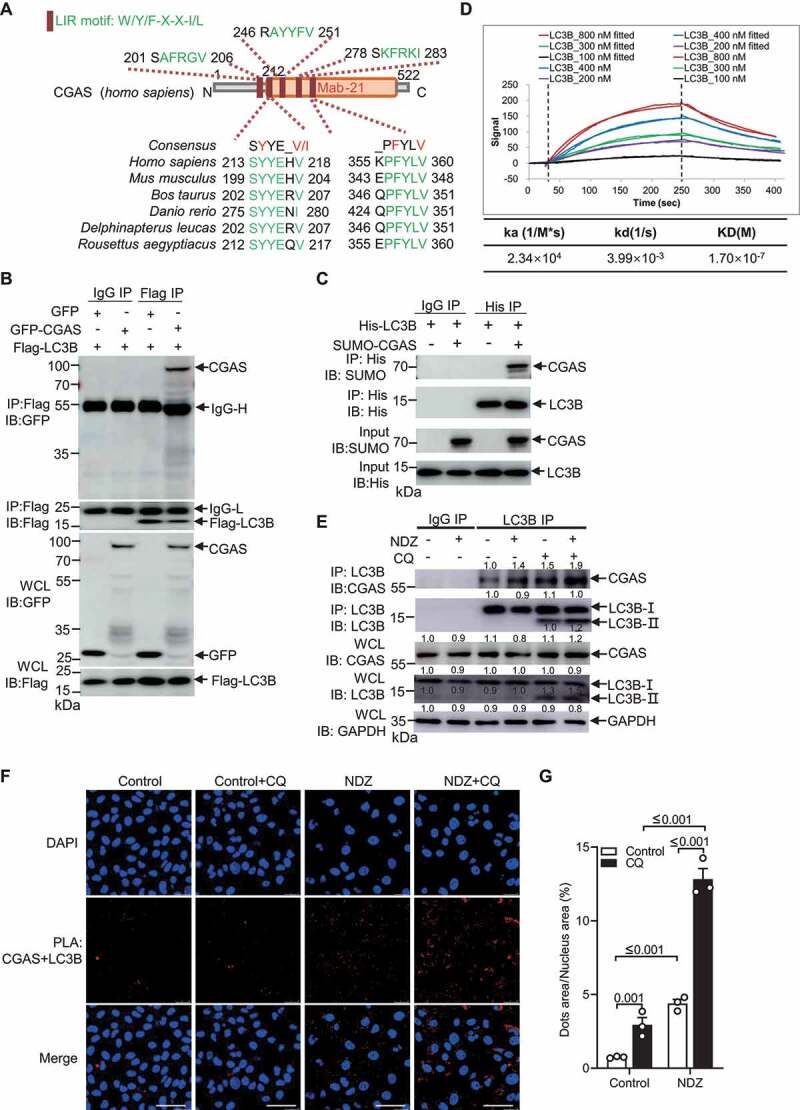
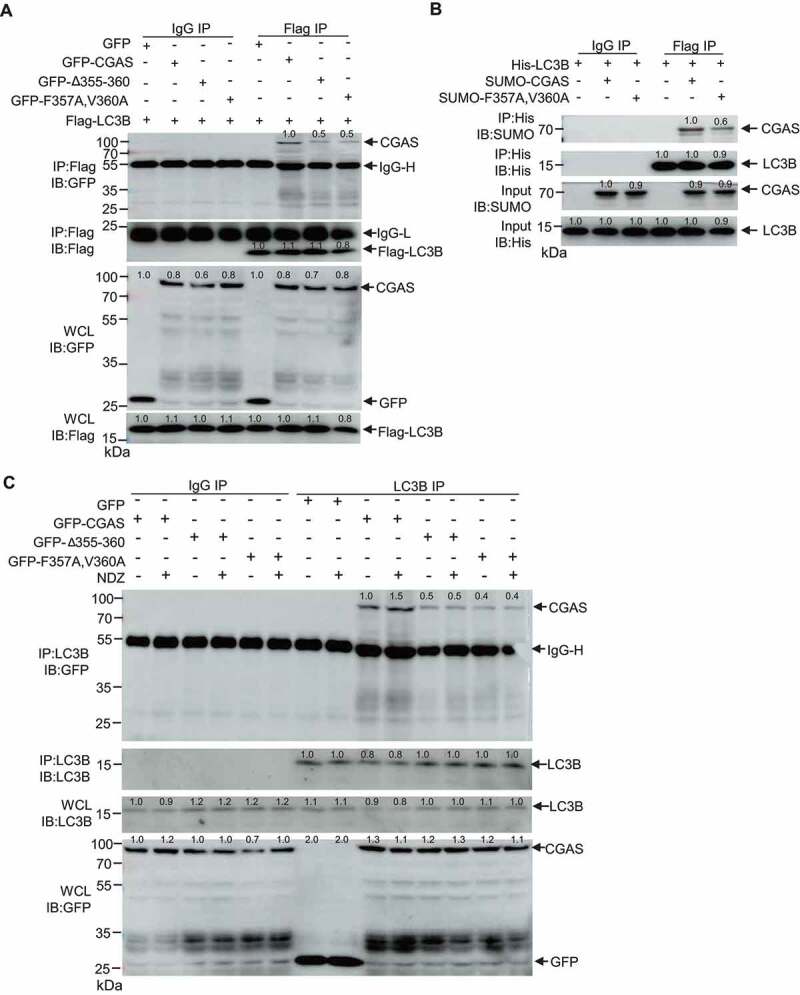
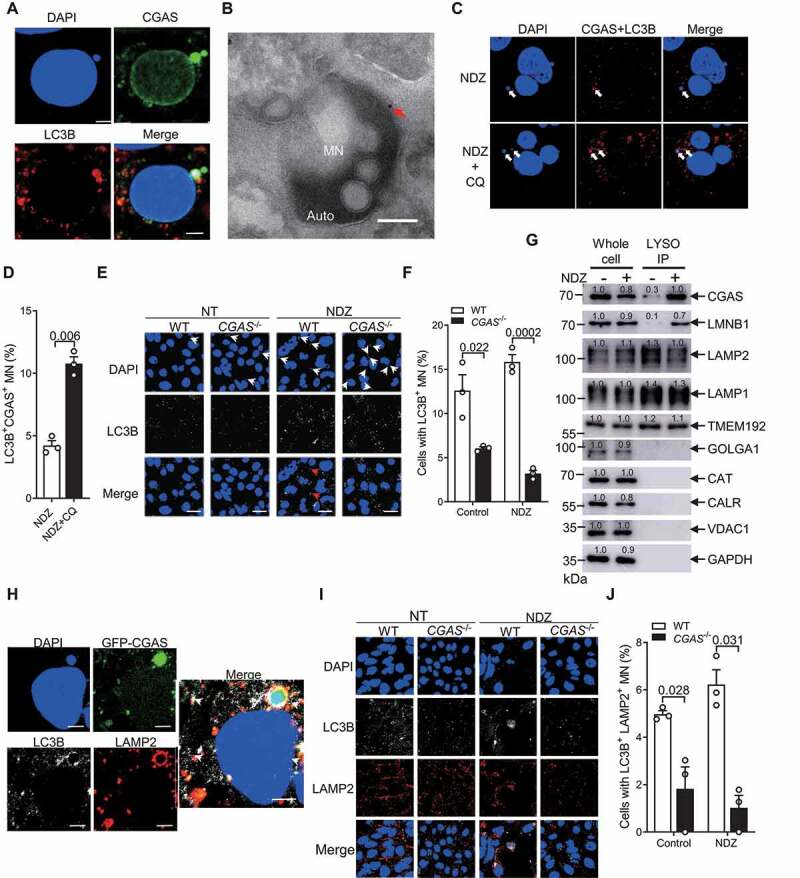
Micronuclei are constantly considered as a marker of genome instability and very recently found to be a trigger of innate immune responses. An increased frequency of micronuclei is associated with many diseases, but the mechanism underlying the regulation of micronuclei homeostasis remains largely unknown. Here, we report that CGAS (cyclic GMP-AMP synthase), a known regulator of DNA sensing and DNA repair, reduces the abundance of micronuclei under genotoxic stress in an autophagy-dependent manner. CGAS accumulates in the autophagic machinery and directly interacts with MAP1LC3B/LC3B in a manner dependent upon its MAP1LC3-interacting region (LIR). Importantly, the interaction is essential for MAP1LC3 recruitment to micronuclei and subsequent clearance of micronuclei via autophagy (micronucleophagy) in response to genotoxic stress. Moreover, in contrast to its DNA sensing function to activate micronuclei-driven inflammation, CGAS-mediated micronucleophagy blunts the production of cyclic GMP-AMP (cGAMP) induced by genotoxic stress. We therefore conclude that CGAS is a receptor for the selective autophagic clearance of micronuclei and uncovered an unprecedented role of CGAS in micronuclei homeostasis to dampen innate immune surveillance.Abbreviations: ATG: autophagy-related; CGAS: cyclic GMP-AMP synthase; CQ: chloroquine; GABARAP: GABA type A receptor-associated protein; GFP: green fluorescent protein; LAMP1: lysosomal associated membrane protein 1; LAMP2: lysosomal associated membrane protein 2; LIR, MAP1LC3-interacting region; MAP1LC3B/LC3B: microtubule associated protein 1 light chain 3 beta; NDZ: nocodazole; STING1: stimulator of interferon response cGAMP interactor 1
Overview
The claims and statistics of this paper haven’t been checked yet.
Free: it reads the open-access text and checks the first 5 claims that cite a source we can check. Create a free account to check every claim.
Integrity signals
Registry
Cites
Statistics
Figures
Verification
Claims the paper makes
The claims and statistics of this paper haven’t been checked yet.
Free: it reads the open-access text and checks the first 5 claims that cite a source we can check. Create a free account to check every claim.
Claims other papers make about this one
Each is checked against this paper’s own text: does it say what the citing paper says it does?
In the citing paper
“Recent work has shown that cGAS itself can act as an autophagy ligand for MN degradation, suggesting that autophagic degradation may be a common fate of cGAS-associated cytoDNA (Zhao et al., 2021).”
From Cytoplasmic DNA: sources, sensing, and role in aging and disease (2021) · cites this paper as Zhao et al., 2021
Self-check
Percentages, sums and reported differences re-computed from the paper’s own numbers.
The self-check needs the paper’s full text.
Citations
Cites
Repertoires of Autophagy in the Pathogenesis of Ocular Diseases
Li, Y.-J., Jiang, Q., Cao, G.-F., Yao, J., & Yan, B. (2015) · Cellular Physiology and Biochemistry · doi:10.1159/000373980 · Cited by 16,304
Autophagy in the Pathogenesis of Disease
Levine, B., & Kroemer, G. (2008) · Cell · doi:10.1016/j.cell.2007.12.018 · Cited by 7,069 · cited 1×
“Selective macroautophagy is a cellular process that forms double-layered membrane vesicles to sequester macromolecules, organelles, or intracellular pathogens for lysosomal degradation [1].”
BackgroundImproved vectors and genome-wide libraries for CRISPR screening
Sanjana, N. E., Shalem, O., & Zhang, F. (2014) · Nature Methods · doi:10.1038/nmeth.3047 · Cited by 5,239
Cyclic GMP-AMP Synthase Is a Cytosolic DNA Sensor That Activates the Type I Interferon Pathway
Sun, L., Wu, J., Du, F., Chen, X., & Chen, Z. J. (2013) · Science · doi:10.1126/science.1232458 · Cited by 4,996 · cited 2×
“CGAS (cyclic GMP-AMP synthase) has been identified as a sensor of double-stranded DNA (dsDNA) located in the cytoplasm or micronuclei to induce innate immunity and cellular senescence [12,13,24,25].”
BackgroundSelf-citationAutophagy and Viruses: Adversaries or Allies?
Dong, X., & Levine, B. (2013) · Journal of Innate Immunity · doi:10.1159/000346388 · Cited by 4,430
The DNA Damage Response: Making It Safe to Play with Knives
Ciccia, A., & Elledge, S. J. (2010) · Molecular Cell · doi:10.1016/j.molcel.2010.09.019 · Cited by 4,368 · cited 1×
“We therefore examined whether CGAS is more prone to regulate the abundance of micronuclei harboring γH2AX, a hallmark of DNA damage [49].”
BackgroundSTING is an endoplasmic reticulum adaptor that facilitates innate immune signalling
Ishikawa, H., & Barber, G. N. (2008) · Nature · doi:10.1038/nature07317 · Cited by 3,576
Biological Functions of Autophagy Genes: A Disease Perspective
Levine, B., & Kroemer, G. (2019) · Cell · doi:10.1016/j.cell.2018.09.048 · Cited by 2,832
Mechanism and medical implications of mammalian autophagy
Dikic, I., & Elazar, Z. (2018) · Nature Reviews Molecular Cell Biology · doi:10.1038/s41580-018-0003-4 · Cited by 2,771 · cited 1×
“Of these ATGs, ATG7 and Atg8-family proteins are core parts of the autophagy process [4,5].”
BackgroundAutophagy in Human Health and Disease
Choi, A. M. K., Ryter, S. W., & Levine, B. (2013) · New England Journal of Medicine · doi:10.1056/nejmra1205406 · Cited by 2,583
Cyclic GMP-AMP Is an Endogenous Second Messenger in Innate Immune Signaling by Cytosolic DNA
Wu, J., Sun, L., Chen, X., Du, F., Shi, H., Chen, C., & Chen, Z. J. (2013) · Science · doi:10.1126/science.1229963 · Cited by 2,541
Self-citationMassive genomic rearrangement acquired in a single catastrophic event during cancer development
Stephens, P. J., Greenman, C. D., Fu, B., Yang, F., Bignell, G. R., Mudie, L. J., Pleasance, E. D., Lau, K. W., Beare, D., Stebbings, L. A., et al. (2011) · Cell · doi:10.1016/j.cell.2010.11.055 · Cited by 2,414 · cited 1×
“Chromothripsis is a catastrophic mutational process that is commonly observed in cancer [79].”
BackgroundQuantitative proteomics identifies NCOA4 as the cargo receptor mediating ferritinophagy
Mancias, J. D., Wang, X., Gygi, S. P., Harper, J. W., & Kimmelman, A. C. (2014) · Nature · doi:10.1038/nature13148 · Cited by 2,084 · cited 1×
“Though CGAS has been demonstrated to be critical for DNA-induced autophagy [61,63,70] and xenophagic elimination of invading pathogen [71], our identification of CGAS as an autophagy receptor of micronuclei adds to the growing list of selective autophagy receptors, including for ribosome [56], mitochondria [72,73], pe…”
BackgroundAutophagy in infection, inflammation and immunity
Deretic, V., Saitoh, T., & Akira, S. (2013) · Nature Reviews Immunology · doi:10.1038/nri3532 · Cited by 1,919 · cited 1×
“A number of molecules including autophagy-related (ATG) proteins orchestrate signaling events that regulate autophagy flux including autophagosome initiation, elongation, maturation and fusion with lysosomes [2,3].”
BackgroundSTING-Dependent Cytosolic DNA Sensing Mediates Innate Immune Recognition of Immunogenic Tumors
Woo, S.-R., Fuertes, M. B., Corrales, L., Spranger, S., Furdyna, M. J., Leung, M. Y. K., Duggan, R., Wang, Y., Barber, G. N., Fitzgerald, K. A., et al. (2014) · Immunity · doi:10.1016/j.immuni.2014.10.017 · Cited by 1,917
cGAS surveillance of micronuclei links genome instability to innate immunity
Mackenzie, K. J., Carroll, P., Martin, C.-A., Murina, O., Fluteau, A., Simpson, D. J., Olova, N., Sutcliffe, H., Rainger, J. K., Leitch, A., et al. (2017) · Nature · doi:10.1038/nature23449 · Cited by 1,752 · cited 9×
“Very recently, micronuclei are also found to be a trigger of innate immune responses [12,13].”
BackgroundInfluentialFang, E. F., Hou, Y., Palikaras, K., Adriaanse, B. A., Kerr, J. S., Yang, B., Lautrup, S., Hasan-Olive, M. M., Caponio, D., Dan, X., et al. (2019) · Nature Neuroscience · doi:10.1038/s41593-018-0332-9 · Cited by 1,740
Chromosomal instability drives metastasis through a cytosolic DNA response
Bakhoum, S. F., Ngo, B., Laughney, A. M., Cavallo, J.-A., Murphy, C. J., Ly, P., Shah, P., Sriram, R. K., Watkins, T. B. K., Taunk, N. K., et al. (2018) · Nature · doi:10.1038/nature25432 · Cited by 1,593
The Adaptor Protein MITA Links Virus-Sensing Receptors to IRF3 Transcription Factor Activation
Zhong, B., Yang, Y., Li, S., Wang, Y.-Y., Li, Y., Diao, F., Lei, C., He, X., Zhang, L., Tien, P., et al. (2008) · Immunity · doi:10.1016/j.immuni.2008.09.003 · Cited by 1,519
Mitotic progression following DNA damage enables pattern recognition within micronuclei
Harding, S. M., Benci, J. L., Irianto, J., Discher, D. E., Minn, A. J., & Greenberg, R. A. (2017) · Nature · doi:10.1038/nature23470 · Cited by 1,508
Autophagy pathway: Cellular and molecular mechanisms
Yu, L., Chen, Y., & Tooze, S. A. (2018) · Autophagy · doi:10.1080/15548627.2017.1378838 · Cited by 1,483
Fenech, M., Chang, W. P., Kirsch-Volders, M., Holland, N., Bonassi, S., & Zeiger, E. (2003) · Mutation Research/Genetic Toxicology and Environmental Mutagenesis · doi:10.1016/s1383-5718(02)00249-8 · Cited by 1,391
Cytoplasmic chromatin triggers inflammation in senescence and cancer
Dou, Z., Ghosh, K., Vizioli, M. G., Zhu, J., Sen, P., Wangensteen, K. J., Simithy, J., Lan, Y., Lin, Y., Zhou, Z., et al. (2017) · Nature · doi:10.1038/nature24050 · Cited by 1,335
Autophagy induction via STING trafficking is a primordial function of the cGAS pathway
Gui, X., Yang, H., Li, T., Tan, X., Shi, P., Li, M., Du, F., & Chen, Z. J. (2019) · Nature · doi:10.1038/s41586-019-1006-9 · Cited by 1,269
DNA breaks and chromosome pulverization from errors in mitosis
Crasta, K., Ganem, N. J., Dagher, R., Lantermann, A. B., Ivanova, E. V., Pan, Y., Nezi, L., Protopopov, A., Chowdhury, D., & Pellman, D. (2012) · Nature · doi:10.1038/nature10802 · Cited by 1,227 · cited 1×
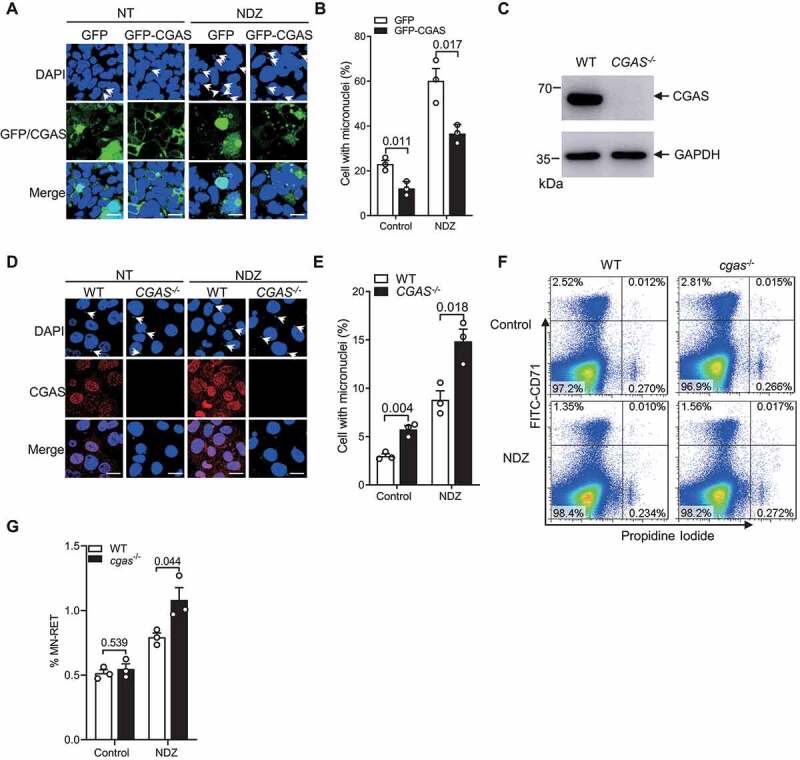
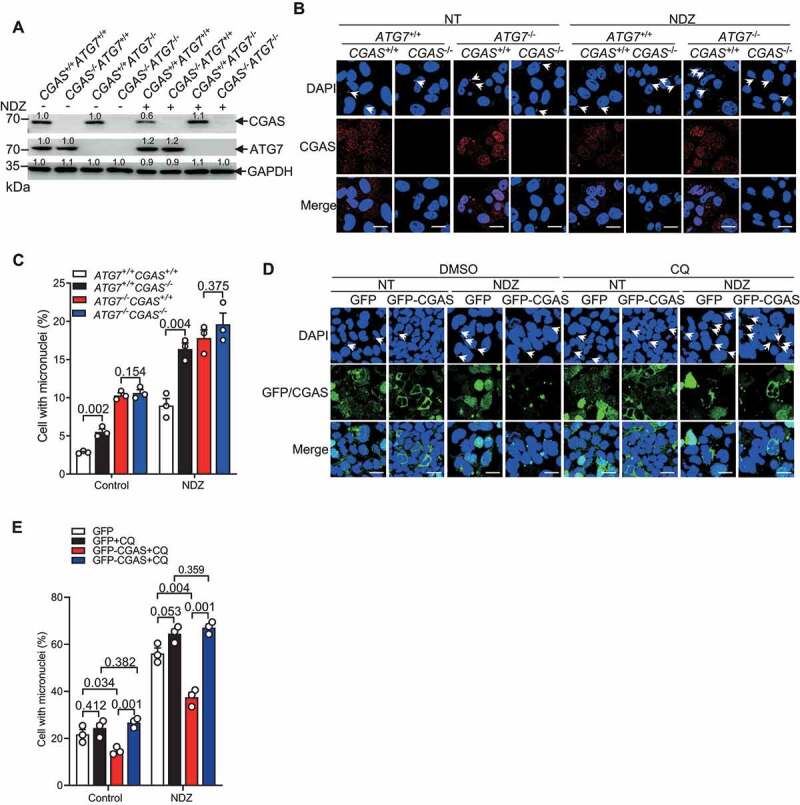
“Treatment with nocodazole (NDZ) [22,43], paclitaxel [44], camptothecin [45], cisplatin [46] or doxorubicin [47] markedly enhanced the frequency of micronuclei-positive cells as expected (Figure 1A,B, S1A and S1B), which was significantly inhibited by CGAS overexpression as well (Figure 1A,B, S1A and S1B).”
BackgroundInnate immune sensing of cytosolic chromatin fragments through cGAS promotes senescence
Glück, S., Guey, B., Gulen, M. F., Wolter, K., Kang, T.-W., Schmacke, N. A., Bridgeman, A., Rehwinkel, J., Zender, L., & Ablasser, A. (2017) · Nature Cell Biology · doi:10.1038/ncb3586 · Cited by 1,196
Chromothripsis from DNA damage in micronuclei
Zhang, C.-Z., Spektor, A., Cornils, H., Francis, J. M., Jackson, E. K., Liu, S., Meyerson, M., & Pellman, D. (2015) · Nature · doi:10.1038/nature14493 · Cited by 1,148
cGAS in action: Expanding roles in immunity and inflammation
Ablasser, A., & Chen, Z. J. (2019) · Science · doi:10.1126/science.aat8657 · Cited by 1,077
cGAS is essential for cellular senescence
Yang, H., Wang, H., Ren, J., Chen, Q., & Chen, Z. J. (2017) · Proceedings of the National Academy of Sciences · doi:10.1073/pnas.1705499114 · Cited by 1,009
Cyclic GMP-AMP Synthase Is an Innate Immune Sensor of HIV and Other Retroviruses
Gao, D., Wu, J., Wu, Y.-T., Du, F., Aroh, C., Yan, N., Sun, L., & Chen, Z. J. (2013) · Science · doi:10.1126/science.1240933 · Cited by 992
Self-citationRegulation of endoplasmic reticulum turnover by selective autophagy
Khaminets, A., Heinrich, T., Mari, M., Grumati, P., Huebner, A. K., Akutsu, M., Liebmann, L., Stolz, A., Nietzsche, S., Koch, N., et al. (2015) · Nature · doi:10.1038/nature14498 · Cited by 956 · cited 1×
“Though CGAS has been demonstrated to be critical for DNA-induced autophagy [61,63,70] and xenophagic elimination of invading pathogen [71], our identification of CGAS as an autophagy receptor of micronuclei adds to the growing list of selective autophagy receptors, including for ribosome [56], mitochondria [72,73], pe…”
BackgroundThurston, T. L. M., Ryzhakov, G., Bloor, S., von Muhlinen, N., & Randow, F. (2009) · Nature Immunology · doi:10.1038/ni.1800 · Cited by 869
Sun, W., Li, Y., Chen, L., Chen, H., You, F., Zhou, X., Zhou, Y., Zhai, Z., Chen, D., & Jiang, Z. (2009) · Proceedings of the National Academy of Sciences · doi:10.1073/pnas.0900850106 · Cited by 866
Prohibitin 2 Is an Inner Mitochondrial Membrane Mitophagy Receptor
Wei, Y., Chiang, W.-C., Sumpter, R., Mishra, P., & Levine, B. (2017) · Cell · doi:10.1016/j.cell.2016.11.042 · Cited by 842
Wong, Y. C., & Holzbaur, E. L. F. (2014) · Proceedings of the National Academy of Sciences · doi:10.1073/pnas.1405752111 · Cited by 812 · cited 1×
“Though CGAS has been demonstrated to be critical for DNA-induced autophagy [61,63,70] and xenophagic elimination of invading pathogen [71], our identification of CGAS as an autophagy receptor of micronuclei adds to the growing list of selective autophagy receptors, including for ribosome [56], mitochondria [72,73], pe…”
BackgroundAutophagy in the Cellular Energetic Balance
Singh, R., & Cuervo, A. M. (2011) · Cell Metabolism · doi:10.1016/j.cmet.2011.04.004 · Cited by 788
Activation of cyclic GMP-AMP synthase by self-DNA causes autoimmune diseases
Gao, D., Li, T., Li, X.-D., Chen, X., Li, Q.-Z., Wight-Carter, M., & Chen, Z. J. (2015) · Proceedings of the National Academy of Sciences · doi:10.1073/pnas.1516465112 · Cited by 685
Abu-Remaileh, M., Wyant, G. A., Kim, C., Laqtom, N. N., Abbasi, M., Chan, S. H., Freinkman, E., & Sabatini, D. M. (2017) · Science · doi:10.1126/science.aan6298 · Cited by 680
Nuclear cGAS suppresses DNA repair and promotes tumorigenesis
Liu, H., Zhang, H., Wu, X., Ma, D., Wu, J., Wang, L., Jiang, Y., Fei, Y., Zhu, C., Tan, R., et al. (2018) · Nature · doi:10.1038/s41586-018-0629-6 · Cited by 650
Self-citationWatson, R. O., Bell, S. L., MacDuff, D. A., Kimmey, J. M., Diner, E. J., Olivas, J., Vance, R. E., Stallings, C. L., Virgin, H. W., & Cox, J. S. (2015) · Cell Host & Microbe · doi:10.1016/j.chom.2015.05.004 · Cited by 645
Autophagy in Human Health and Disease
(2013) · New England Journal of Medicine · doi:10.1056/nejmc1303158 · Cited by 615
Autophagy balances inflammation in innate immunity
Deretic, V., & Levine, B. (2018) · Autophagy · doi:10.1080/15548627.2017.1402992 · Cited by 563
Allele-selective lowering of mutant HTT protein by HTT–LC3 linker compounds
Li, Z., Wang, C., Wang, Z., Zhu, C., Li, J., Sha, T., Ma, L., Gao, C., Yang, Y., Sun, Y., et al. (2019) · Nature · doi:10.1038/s41586-019-1722-1 · Cited by 551 · cited 1×
“The solution of the structure of CGAS-LC3B complex will facilitate the development of inhibitors or tethering compounds [92] targeting the interacting interfaces for precise intervention of CGAS-mediated micronucleophagy.”
BackgroundAutophagic cell death restricts chromosomal instability during replicative crisis
Nassour, J., Radford, R., Correia, A., Fusté, J. M., Schoell, B., Jauch, A., Shaw, R. J., & Karlseder, J. (2019) · Nature · doi:10.1038/s41586-019-0885-0 · Cited by 429
The Cytoplasmic DNA Sensor cGAS Promotes Mitotic Cell Death
Zierhut, C., Yamaguchi, N., Paredes, M., Luo, J.-D., Carroll, T., & Funabiki, H. (2019) · Cell · doi:10.1016/j.cell.2019.05.035 · Cited by 405
Hu, M.-M., Yang, Q., Xie, X.-Q., Liao, C.-Y., Lin, H., Liu, T.-T., Yin, L., & Shu, H.-B. (2016) · Immunity · doi:10.1016/j.immuni.2016.08.014 · Cited by 377
Acetylation Blocks cGAS Activity and Inhibits Self-DNA-Induced Autoimmunity
Dai, J., Huang, Y.-J., He, X., Zhao, M., Wang, X., Liu, Z.-S., Xue, W., Cai, H., Zhan, X.-Y., Huang, S.-Y., et al. (2019) · Cell · doi:10.1016/j.cell.2019.01.016 · Cited by 371
Self-citationAutophagy and disease: unanswered questions
Yang, Y., & Klionsky, D. J. (2020) · Cell Death & Differentiation · doi:10.1038/s41418-019-0480-9 · Cited by 369
NUFIP1 is a ribosome receptor for starvation-induced ribophagy
Wyant, G. A., Abu-Remaileh, M., Frenkel, E. M., Laqtom, N. N., Dharamdasani, V., Lewis, C. A., Chan, S. H., Heinze, I., Ori, A., & Sabatini, D. M. (2018) · Science · doi:10.1126/science.aar2663 · Cited by 363 · cited 2×
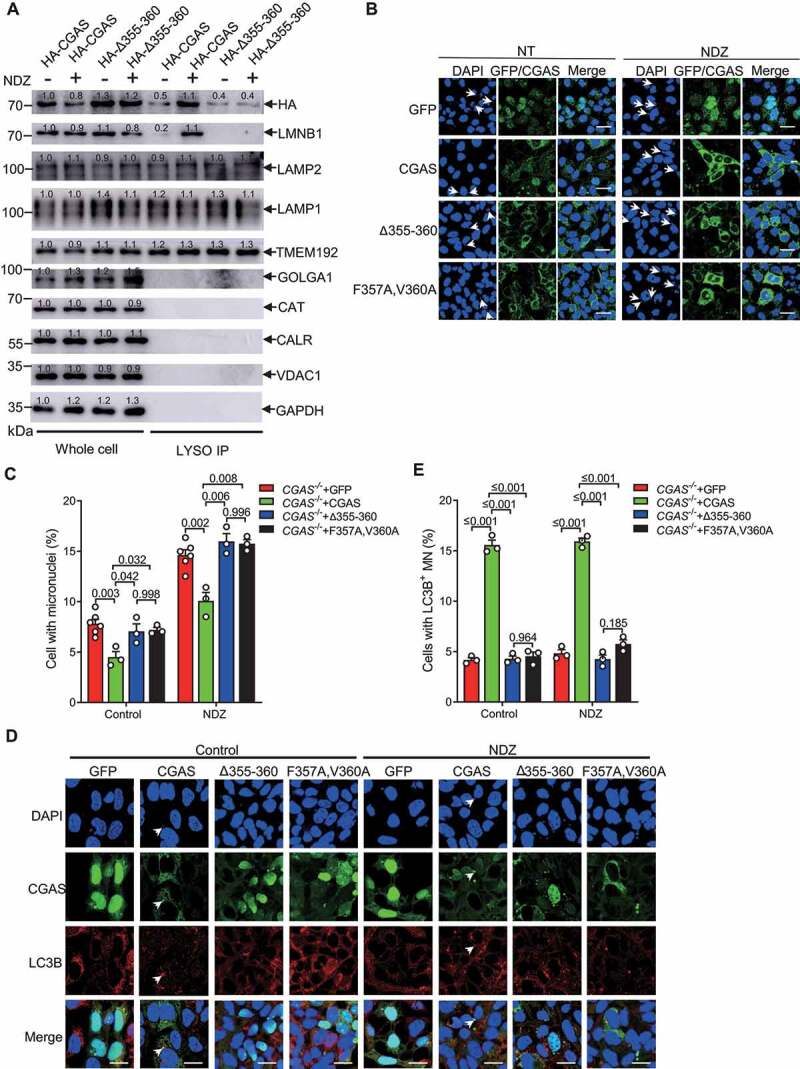
“By using a method for the rapid isolation of mammalian lysosomes described previously [56,57], we generated GFP-TMEM192 stable U2OS cells to purify lysosomes.”
BackgroundMethodLiang, Q., Seo, G. J., Choi, Y. J., Kwak, M.-J., Ge, J., Rodgers, M. A., Shi, M., Leslie, B. J., Hopfner, K.-P., Ha, T., et al. (2014) · Cell Host & Microbe · doi:10.1016/j.chom.2014.01.009 · Cited by 351
Autophagy and the Immune System
Kuballa, P., Nolte, W. M., Castoreno, A. B., & Xavier, R. J. (2012) · Annual Review of Immunology · doi:10.1146/annurev-immunol-020711-074948 · Cited by 326
Two ubiquitin-like conjugation systems that mediate membrane formation during autophagy
Nakatogawa, H. (2013) · Essays in Biochemistry · doi:10.1042/bse0550039 · Cited by 314
Nuclear envelope assembly defects link mitotic errors to chromothripsis
Liu, S., Kwon, M., Mannino, M., Yang, N., Renda, F., Khodjakov, A., & Pellman, D. (2018) · Nature · doi:10.1038/s41586-018-0534-z · Cited by 314 · cited 3×
“Generation of micronuclei under genotoxic stress is a hallmark of genomic instability [10,11].”
BackgroundTight nuclear tethering of cGAS is essential for preventing autoreactivity
Volkman, H. E., Cambier, S., Gray, E. E., & Stetson, D. B. (2019) · eLife · doi:10.7554/elife.47491 · Cited by 303
Jin, L., Hill, K. K., Filak, H., Mogan, J., Knowles, H., Zhang, B., Perraud, A.-L., Cambier, J. C., & Lenz, L. L. (2011) · The Journal of Immunology · doi:10.4049/jimmunol.1100088 · Cited by 288
Barnett, K. C., Coronas-Serna, J. M., Zhou, W., Ernandes, M. J., Cao, A., Kranzusch, P. J., & Kagan, J. C. (2019) · Cell · doi:10.1016/j.cell.2019.01.049 · Cited by 271
Jiang, H., Xue, X., Panda, S., Kawale, A., Hooy, R. M., Liang, F., Sohn, J., Sung, P., & Gekara, N. O. (2019) · The EMBO Journal · doi:10.15252/embj.2019102718 · Cited by 266
Gentili, M., Lahaye, X., Nadalin, F., Nader, G. P. F., Puig Lombardi, E., Herve, S., De Silva, N. S., Rookhuizen, D. C., Zueva, E., Goudot, C., et al. (2019) · Cell Reports · doi:10.1016/j.celrep.2019.01.105 · Cited by 248
An, J., Woodward, J. J., Sasaki, T., Minie, M., & Elkon, K. B. (2015) · The Journal of Immunology · doi:10.4049/jimmunol.1402793 · Cited by 239
NBR1 acts as an autophagy receptor for peroxisomes
Deosaran, E., Larsen, K. B., Hua, R., Sargent, G., Wang, Y., Kim, S., Lamark, T., Jauregui, M., Law, K., Lippincott-Schwartz, J., et al. (2012) · Journal of Cell Science · doi:10.1242/jcs.114819 · Cited by 232
Xia, P., Ye, B., Wang, S., Zhu, X., Du, Y., Xiong, Z., Tian, Y., & Fan, Z. (2016) · Nature Immunology · doi:10.1038/ni.3356 · Cited by 222
iLIR: A web resource for prediction of Atg8-family interacting proteins
Kalvari, I., Tsompanis, S., Mulakkal, N. C., Osgood, R., Johansen, T., Nezis, I. P., & Promponas, V. J. (2014) · Autophagy · doi:10.4161/auto.28260 · Cited by 221
Akt Kinase-Mediated Checkpoint of cGAS DNA Sensing Pathway
Seo, G. J., Yang, A., Tan, B., Kim, S., Liang, Q., Choi, Y., Yuan, W., Feng, P., Park, H.-S., & Jung, J. U. (2015) · Cell Reports · doi:10.1016/j.celrep.2015.09.007 · Cited by 212
Autophagic removal of micronuclei
Rello-Varona, S., Lissa, D., Shen, S., Niso-Santano, M., Senovilla, L., Mariño, G., Vitale, I., Jemaá, M., Harper, F., Pierron, G., et al. (2012) · Cell Cycle · doi:10.4161/cc.11.1.18564 · Cited by 198
Absence of RNase H2 triggers generation of immunogenic micronuclei removed by autophagy
Bartsch, K., Knittler, K., Borowski, C., Rudnik, S., Damme, M., Aden, K., Spehlmann, M. E., Frey, N., Saftig, P., Chalaris, A., et al. (2017) · Human Molecular Genetics · doi:10.1093/hmg/ddx283 · Cited by 196 · cited 4×
“Though recent work indicate that micronuclei can be subjected to autophagic degradation [22,23], the autophagy receptor responsible for the clearance of micronuclei remains unknown.”
BackgroundInfluentialThe Autophagy Lysosomal Pathway and Neurodegeneration
Finkbeiner, S. (2020) · Cold Spring Harbor Perspectives in Biology · doi:10.1101/cshperspect.a033993 · Cited by 196
The genetic toxicity of human carcinogens and its implications
Shelby, M. D. (1988) · Mutation Research/Genetic Toxicology · doi:10.1016/0165-1218(88)90113-9 · Cited by 193
Li, M., Khambu, B., Zhang, H., Kang, J.-H., Chen, X., Chen, D., Vollmer, L., Liu, P.-Q., Vogt, A., & Yin, X.-M. (2013) · Journal of Biological Chemistry · doi:10.1074/jbc.m113.511212 · Cited by 189
Pharmacological modulation of nucleic acid sensors - therapeutic potential and persisting obstacles
Vanpouille-Box, C., Hoffmann, J. A., & Galluzzi, L. (2019) · Nature Reviews Drug Discovery · doi:10.1038/s41573-019-0043-2 · Cited by 183
Autophagy Receptor NDP52 Regulates Pathogen-Containing Autophagosome Maturation
Verlhac, P., Grégoire, I. P., Azocar, O., Petkova, D. S., Baguet, J., Viret, C., & Faure, M. (2015) · Cell Host & Microbe · doi:10.1016/j.chom.2015.02.008 · Cited by 162
Extrachromosomal telomere repeat DNA is linked to ALT development via cGAS-STING DNA sensing pathway
Chen, Y.-A., Shen, Y.-L., Hsia, H.-Y., Tiang, Y.-P., Sung, T.-L., & Chen, L.-Y. (2017) · Nature Structural & Molecular Biology · doi:10.1038/nsmb.3498 · Cited by 160
Basit, A., Cho, M.-G., Kim, E.-Y., Kwon, D., Kang, S.-J., & Lee, J.-H. (2020) · Experimental & Molecular Medicine · doi:10.1038/s12276-020-0416-y · Cited by 118
cGAS-mediated autophagy protects the liver from ischemia-reperfusion injury independently of STING
Lei, Z., Deng, M., Yi, Z., Sun, Q., Shapiro, R. A., Xu, H., Li, T., Loughran, P. A., Griepentrog, J. E., Huang, H., et al. (2018) · American Journal of Physiology-Gastrointestinal and Liver Physiology · doi:10.1152/ajpgi.00326.2017 · Cited by 116
Bloom syndrome protein restrains innate immune sensing of micronuclei by cGAS
Gratia, M., Rodero, M. P., Conrad, C., Bou Samra, E., Maurin, M., Rice, G. I., Duffy, D., Revy, P., Petit, F., Dale, R. C., et al. (2019) · Journal of Experimental Medicine · doi:10.1084/jem.20181329 · Cited by 105
Resende, F. A., Barcala, C. A. M. D. A., Faria, M. C. D. S., Kato, F. H., Cunha, W. R., & Tavares, D. C. (2006) · Life Sciences · doi:10.1016/j.lfs.2006.03.038 · Cited by 103
Scarpato, R., Verola, C., Fabiani, B., Bianchi, V., Saggese, G., & Federico, G. (2011) · The FASEB Journal · doi:10.1096/fj.10-168427 · Cited by 92
Cytogenetic alterations in lymphocytes of Alzheimer's disease and Parkinson's disease patients
Petrozzi, L., Lucetti, C., Scarpato, R., Gambaccini, G., Trippi, F., Bernardini, S., Dotto, P. D., Migliore, L., & Bonuccelli, U. (2002) · Neurological Sciences · doi:10.1007/s100720200087 · Cited by 87
A high-throughput in vivo micronucleus assay for genome instability screening in mice
Balmus, G., Karp, N. A., Ng, B. L., Jackson, S. P., Adams, D. J., & McIntyre, R. E. (2014) · Nature Protocols · doi:10.1038/nprot.2015.010 · Cited by 84
Martin, P. K., Marchiando, A., Xu, R., Rudensky, E., Yeung, F., Schuster, S. L., Kernbauer, E., & Cadwell, K. (2018) · Nature Microbiology · doi:10.1038/s41564-018-0229-0 · Cited by 76
cGAS facilitates sensing of extracellular cyclic dinucleotides to activate innate immunity
Liu, H., Moura‐Alves, P., Pei, G., Mollenkopf, H., Hurwitz, R., Wu, X., Wang, F., Liu, S., Ma, M., Fei, Y., et al. (2019) · EMBO reports · doi:10.15252/embr.201846293 · Cited by 75
Self-citationIn Situ Proximity Ligation Assay for Microscopy and Flow Cytometry
Leuchowius, K., Weibrecht, I., & Söderberg, O. (2011) · Current Protocols in Cytometry · doi:10.1002/0471142956.cy0936s56 · Cited by 69
Cancer cells that survive checkpoint adaptation contain micronuclei that harbor damaged DNA
Lewis, C. W., & Golsteyn, R. M. (2016) · Cell Cycle · doi:10.1080/15384101.2016.1231287 · Cited by 68
Topoisomerase 1 cleavage complex enables pattern recognition and inflammation during senescence
Zhao, B., Liu, P., Fukumoto, T., Nacarelli, T., Fatkhutdinov, N., Wu, S., Lin, J., Aird, K. M., Tang, H.-Y., Liu, Q., et al. (2020) · Nature Communications · doi:10.1038/s41467-020-14652-y · Cited by 67
SAMHD1 and the innate immune response to cytosolic DNA during DNA replication
Coquel, F., Neumayer, C., Lin, Y., & Pasero, P. (2018) · Current Opinion in Immunology · doi:10.1016/j.coi.2018.09.017 · Cited by 67
Utani, K., Okamoto, A., & Shimizu, N. (2011) · PLoS ONE · doi:10.1371/journal.pone.0027233 · Cited by 66
Gentili, M., Lahaye, X., Nadalin, F., Nader, G. P. F., Lombardi, E. P., Herve, S., De Silva, N. S., Rookhuizen, D. C., Zueva, E., Goudot, C., et al. (2019) · Cell Reports · doi:10.1016/j.celrep.2019.03.049 · Cited by 64
Deschamps, T., & Kalamvoki, M. (2017) · Journal of Virology · doi:10.1128/jvi.00006-17 · Cited by 57
Macroautophagy and its role in nutrient homeostasis
Stipanuk, M. H. (2009) · Nutrition Reviews · doi:10.1111/j.1753-4887.2009.00252.x · Cited by 55
Familial Chilblain Lupus - What Can We Learn from Type I Interferonopathies?
Fiehn, C. (2017) · Current Rheumatology Reports · doi:10.1007/s11926-017-0689-x · Cited by 53
The STING in the Tail for Cytosolic DNA–Dependent Activation of IRF3
Bowie, A. (2012) · Science Signaling · doi:10.1126/scisignal.2002919 · Cited by 47
Molecular basis of canonical and bactericidal autophagy
Noda, T., & Yoshimori, T. (2009) · International Immunology · doi:10.1093/intimm/dxp088 · Cited by 46
Yesilada, E., Sahin, I., Ozcan, H., Yildirim, I. H., Yologlu, S., & Taskapan, C. (2006) · European Journal of Endocrinology · doi:10.1530/eje.1.02117 · Cited by 40
Autophagy induced by STING, an unnoticed and primordial function of cGAS
Yang, J., Tang, X., Nandakumar, K. S., & Cheng, K. (2019) · Cellular and Molecular Immunology · doi:10.1038/s41423-019-0240-2 · Cited by 32
Müllner, E., Brath, H., Nersesyan, A. K., Nitz, M., Petschnig, A., Wallner, M., Knasmüller, S., & Wagner, K. (2013) · Mutagenesis · doi:10.1093/mutage/get056 · Cited by 28
İpek, E. (2017) · The Anatolian Journal of Cardiology · doi:10.14744/anatoljcardiol.2017.7582 · Cited by 26
Antiproliferative effects of paclitaxel (Taxol®) on human renal clear cell carcinomas in vitro
Reinecke, P., Corvin, J., Gabbert, H. E., & Gerharz, C. (1997) · European Journal of Cancer · doi:10.1016/s0959-8049(97)00069-5 · Cited by 22
Al-Rawi, Z. S., Gorial, F. I., Tawfiq, R. F., Mohammed, A. K., Al-Naaimi, A. S., Al'aadhmi, M. A., & Hayyawi, A. A. (2014) · Arthritis & Rheumatology · doi:10.1002/art.38764 · Cited by 15
In Vivo Mutagenicity Testing of Arylboronic Acids and Esters
Masuda-Herrera, M. J., Dobo, K. L., Kenyon, M. O., Kenny, J. D., Galloway, S. M., Escobar, P. A., Reddy, M. V., Jolly, R. A., Trejo‐Martin, A., Brown, C. M., et al. (2019) · Environmental and Molecular Mutagenesis · doi:10.1002/em.22320 · Cited by 15
In vivo kinetics of the genotoxic and cytotoxic activities of cladribine and clofarabine
QUEZADA-VIDAL, J., Ortiz, R., Cervantes‐Ríos, E., Cruz‐Vallejo, V., & Morales‐Ramírez, P. (2020) · Environmental and Molecular Mutagenesis · doi:10.1002/em.22394 · Cited by 7
Research works printed but not linked: 1
- Jiang H, Xue XY, Panda S, et al. Chromatin-bound cGAS is an inhibitor of DNA repair and hence accelerates genome destabilization and cell death. Embo J. 2019; 38(21):e102718. PMC6826206 31544964 · DOI · Paper page
Cited by
Autophagy genes in biology and disease
Yamamoto, H., Zhang, S., & Mizushima, N. (2023) · Nature Reviews Genetics · doi:10.1038/s41576-022-00562-w · Cited by 623
The emerging mechanisms and functions of microautophagy
Wang, L., Klionsky, D. J., & Shen, H.-M. (2023) · Nature Reviews Molecular Cell Biology · doi:10.1038/s41580-022-00529-z · Cited by 466
Cytoplasmic DNA: sources, sensing, and role in aging and disease
Miller, K. N., Victorelli, S. G., Salmonowicz, H., Dasgupta, N., Liu, T., Passos, J. F., & Adams, P. D. (2021) · Cell · doi:10.1016/j.cell.2021.09.034 · Cited by 288
MPS1 inhibition primes immunogenicity of KRAS-LKB1 mutant lung cancer
Kitajima, S., Tani, T., Springer, B. F., Campisi, M., Osaki, T., Haratani, K., Chen, M., Knelson, E. H., Mahadevan, N. R., Ritter, J., et al. (2022) · Cancer Cell · doi:10.1016/j.ccell.2022.08.015 · Cited by 107
Microglia autophagy in ischemic stroke: A double-edged sword
Li, P., Hu, G., Yao, Q., Wu, J., He, Z., Law, B. Y. K., Hu, G., Zhou, X., Du, J., Wu, A., et al. (2022) · Frontiers in Immunology · doi:10.3389/fimmu.2022.1013311 · Cited by 91
Self-citation
Metadata
- Authors
- Zhao, M., Wang, F., Wu, J., Cheng, Y., Cao, Y., Wu, X., Ma, M., Tang, F., Liu, Z., Liu, H., & Ge, B.
- Affiliations
- Tongji University (CN)
- Viva Biotech (China) (CN)
- Corresponding author
- Liu, Haipeng
- Venue
- Autophagy
- Publisher
- Informa UK Limited
- Published
- 2021-03-22
- Volume
- 17
- Issue
- 12
- Pages
- 3976-3991
- ISSN
- 1554-8627 (ISSN-L)
- 1554-8635
- PMC
- PMC8726603
- OpenAlex
- W3138417159
- Cited by
- 89
- References
- 99
- Citations by year
- 2026: 17 · 2025: 14 · 2024: 18 · 2023: 24 · 2022: 12 · 2021: 4
- FWCI
- 10.44
- Type
- journal article
- Language
- en
- Open access
- hybrid
- doi.org
- Licence
- Locations
- Autophagy (publishedVersion, cc-by-nc-nd)
- PubMed Central (publishedVersion, cc-by-nc-nd)
- PubMed (publishedVersion)
- Funders
- National Natural Science Foundation of China (81922030, 81770006, 91542111, 31030028, 81772465)
- Topics
- Life Sciences › Biochemistry, Genetics and Molecular Biology › Cell Biology › Autophagy in Disease and Therapy
- Life Sciences › Biochemistry, Genetics and Molecular Biology › Physiology › Calcium signaling and nucleotide metabolism
- Life Sciences › Biochemistry, Genetics and Molecular Biology › Molecular Biology › DNA Repair Mechanisms
- Keywords
- cGAS, genotoxic stress, LIR motif, cGAMP, innate immune surveillance, genomic instability, DNA sensing, STING
- MeSH terms
- Autophagy, DNA, Humans, Immunity, Innate, Inflammation, Nucleotidyltransferases
About these checks
Registry, retraction, Cites and statistics results are computed, not judged, with one exception: a printed reference that no index lists is read once by a model before it counts as a citation error. Claims are extracted by a model and kept only when their quote appears verbatim in the text; each cited source is then checked, with a model’s help, for whether it says what the claim relies on. Those verdicts can be wrong — read the claim’s quote and the cited source before relying on one.
Statistics and arithmetic are recomputed, not judged.
Confidence bands are shown only for fields calibrated on our annotated test set. None is calibrated yet, so no band is shown.
What counts as a claim ›How we measure confidence ›How we check this ›
Are you an author, or do you see a problem with this page? Request a review
Data sources
Bibliographic data: Semantic Scholar, OpenAlex, Crossref.
Contains information from the Semantic Scholar Academic Graph Datasets, made available under the ODC Attribution License (ODC-BY 1.0).
Semantic Scholar’s data is described in: Kinney, R., et al. (2023). The Semantic Scholar Open Data Platform. arXiv:2301.10140.
