

Paracetamol (acetaminophen) overdose and hepatotoxicity: mechanism, treatment, prevention measures, and estimates of burden of disease
Open accessThe DOI matches its Crossref record; 220 of the 220 references it cites were found in a registry or an index; 34 of the 249 sources its claims cite were checked for support.
Abstract
INTRODUCTION: Paracetamol is one of the most used medicines worldwide and is the most common important poisoning in high-income countries. In overdose, paracetamol causes dose-dependent hepatotoxicity. Acetylcysteine is an effective antidote, however despite its use hepatotoxicity and many deaths still occur. AREAS COVERED: This review summarizes paracetamol overdose and toxicity (including mechanisms, risk factors, risk assessment, and treatment). In addition, we summarize the epidemiology of paracetamol overdose worldwide. A literature search on PubMed for poisoning epidemiology and mortality from 1 January 2017 to 26 October 2022 was performed to estimate rates of paracetamol overdose, liver injury, and deaths worldwide. EXPERT OPINION: Paracetamol is widely available and yet is substantially more toxic than other analgesics available without prescription. Where data were available, we estimate that paracetamol is involved in 6% of poisonings, 56% of severe acute liver injury and acute liver failure, and 7% of drug-induced liver injury. These estimates are limited by lack of available data from many countries, particularly in Asia, South America, and Africa. Harm reduction from paracetamol is possible through better identification of high-risk overdoses, and better treatment regimens. Large overdoses and those involving modified-release paracetamol are high-risk and can be targeted through legislative change.
Overview
CoChat Summary
TL;DR
This review summarizes paracetamol overdose mechanisms, risk factors, risk assessment, treatment, prevention measures, and global epidemiology. It estimates that paracetamol is involved in 6% of poisonings, 56% of severe acute liver injury/acute liver failure, and 7% of drug-induced liver injury, with about 0.4% of paracetamol poisoning cases fatal.
Key findings
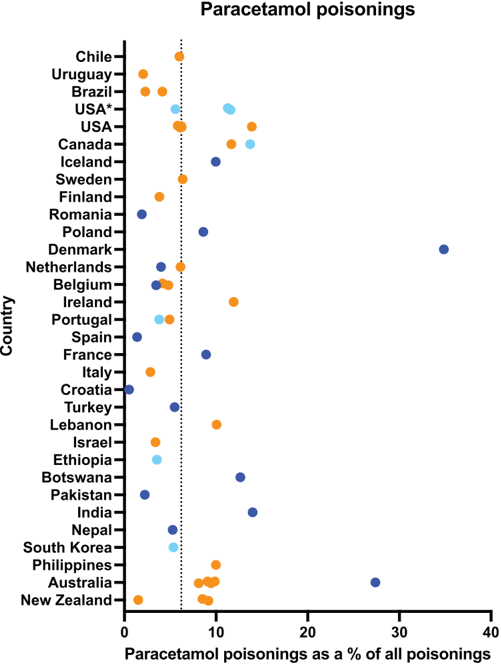
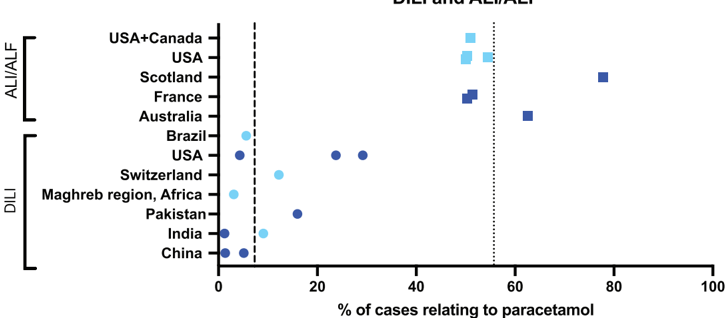
- Where data were available, paracetamol accounted for a weighted mean of 6.2% of poisonings (range 0.5–34.9%), 55.7% of severe acute liver injury and/or acute liver failure (range 50.0–77.8%), and 7.3% of drug-induced liver injury (range 1.2–29.2%); the case fatality rate for paracetamol poisonings was 0.4% (range 0.1–2.3%).
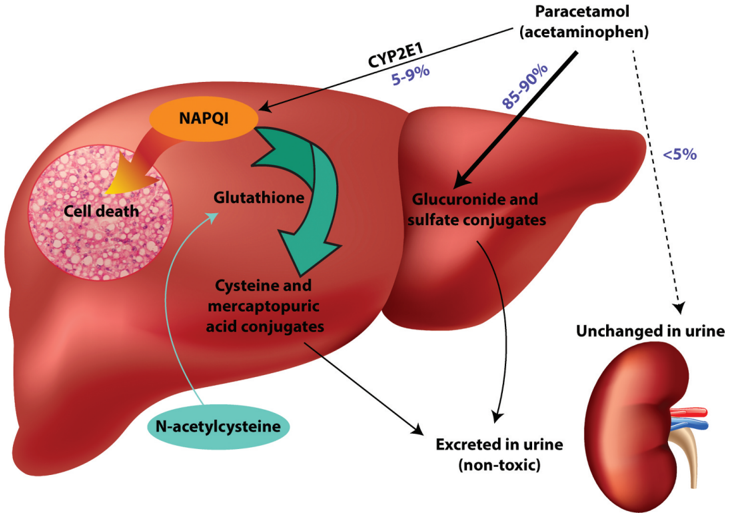
- Toxicity occurs via NAPQI, formed primarily by CYP2E1 and CYP3A4; when glutathione is depleted, NAPQI binds cellular proteins, causes mitochondrial dysfunction, and leads to hepatocyte necrosis. Acetylcysteine replenishes glutathione and is most effective when given within 8 h of ingestion.
- Major risk factors include massive overdoses (>30 g), modified-release/extended-release paracetamol, delayed presentation, enzyme inducers, malnutrition/fasting, and chronic alcohol use; repeated supratherapeutic ingestion carried higher hepatotoxicity in one US study (52% accidental vs 14% deliberate overdose).
- Prevention evidence includes UK 1998 pack-size restrictions, associated with a 22% reduction in suicidal deaths in the first year sustained for two years, ~30% reductions in liver unit admissions and liver transplants, and a 20% reduction in large overdoses; Denmark’s age and pack-size restrictions reduced poisonings and severity, while early evaluation of Australia’s modified-release up-scheduling found no reduction in MR paracetamol poisonings.
Methods
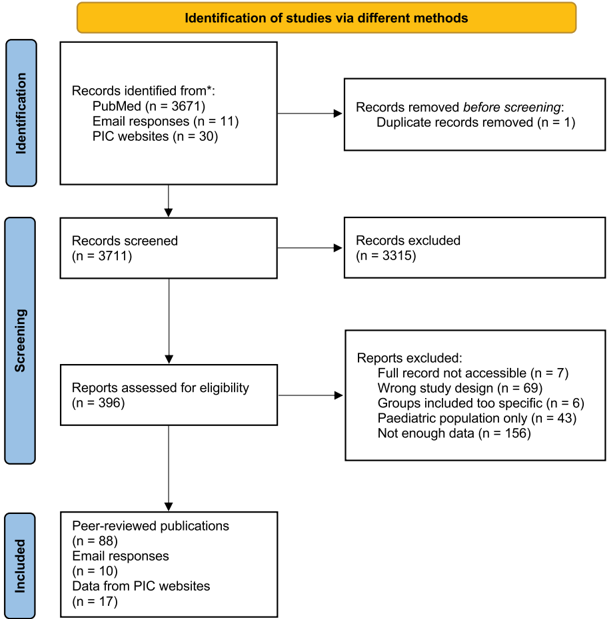
- Narrative review with two literature searches: a PubMed search for poisoning epidemiology and mortality from 1 January 2017 to 26 October 2022, plus poisons information centre annual reports and email responses; and PubMed/Embase searches from inception to December 2022 for clinical toxicology topics including risk assessment, risk factors, management, and legislative change.
- Epidemiology analysis included 115 data sources: 88 relevant publications, 17 annual reports or statistical information from websites, and data from 10 email responses; weighted averages were calculated using meta-analysis in R 4.0.4, with rates expressed per 100,000 population and/or as a percentage of poisoning exposures where catchment populations were available.
- Case fatality rates were calculated where possible by dividing cause-specific poisoning fatalities by exposures; for clinical sections, the authors used keyword searches, systematic reviews, and citation chaining.
Limitations
- Stated: the PubMed-only search may have missed relevant studies; data were lacking from many countries, particularly in Asia, South America, and Africa; only 11 direct PIC email responses were received, 66 emails were undeliverable, and over 50 websites were inaccessible; definitions for analgesics, DILI, and ALF/ALI were inconsistent; PIC operational models varied; catchment populations were often unavailable; some data covered only certain regions; death data sources have limitations, including missed out-of-hospital deaths and possible over-counting by coronial/forensic data in multi-drug overdoses; pediatric-only data sources were excluded.
- Evident from the text: this is a narrative review rather than a systematic review, and the global estimates rely on heterogeneous observational data and weighted means that may not be internationally representative; no formal risk-of-bias assessment is reported, and several intervention evaluations are observational or lack published outcome data, such as the impact of the EMA suspending modified-release paracetamol.
Model-written summary. Check it against the paper before relying on it.
Integrity signals
Registry
Cites
Statistics
Figures


Verification
Claims the paper makes
17 Valid · 2 Not valid · 114 Not checked · 49 Own results and interpretations
Some cited sources support this claim and some don’t — read each source’s verdict below.
In the paper
“Overall, paracetamol accounted for a weighted mean of 55.7% (range 50.0-77.8%) of severe acute liver injury (ALI) and/or ALF [201-208] and 7.3% (range 1.2-29.2%) of drug-induced liver injury (DILI) [209-219] (see Figure 7).”
- Also stated in: § 7. Conclusions · hedged
“Where data were available, we estimate it is used in 6% of poisonings, implicated in 56% of cases of severe acute liver injury and acute liver failure and 7% of drug-induced liver injury.”
§ Paracetamol (acetaminophen) overdose and hepatotoxicity: mechanism > 5.4. Rates of hepatotoxicity and liver failure
What the sources say
- Partly supportedcites [209] matched to “Evaluation of drug-induced liver injury as etiology for acute liver failure in Brazil” (2021) sourceExperimental — accuracy not yet measured
The Results report three confirmed acetaminophen (paracetamol) cases in a Brazilian cohort of patients with acute liver failure, and Table 1 describes 42 confirmed drug-related DILI cases leading to acute liver failure. These data support a small paracetamol contribution in this study, but the paper does not report the cited weighted mean or range across DILI studies; its cohort is limited to liver-transplant patients with acute liver failure. (LLM, conf=0.84)
- Partly supportedcites [210] matched to “Drug-Induced Liver Injury: Clinical and Etiologic Features at a Large Tertiary Teaching Hospital in China” (2020) sourceExperimental — accuracy not yet measured
The Results (Etiology of DILI; page unavailable) report five acetaminophen-caused cases among the 1,096 DILI patients analyzed. This supports including the study as evidence that paracetamol caused some DILI cases, but the paper does not report the cited weighted mean of 7.3% or its 1.2–29.2% range. (LLM, conf=0.87)
- Not checked yetcites [211] matched to “Characteristics of Drug-Induced Liver Injury in Northeast China: Disease Spectrum and Drug Types” (2020) source
- Not checked yetcites [212] Das S, Behera SK, Xavier AS, et al. Agreement Among Different Scales for Causality Assessment in Drug-Induced Liver Injury. Clin Drug Investig. 2018;38(3):211-218. doi: 10.1007/s40261-017-0601-5 213. source
- Partly supportedcites [213] Rathi C, Pipaliya N, Patel R, et al. Drug Induced Liver Injury at a Tertiary Hospital in India: etiology, Clinical Features and Predictors of Mortality. Ann Hepatol. 2017;16(3):442-450. doi: 10. 5604/01.3001.0009.8600 214. sourceExperimental — accuracy not yet measured
The Causative agents section identifies paracetamol among drugs implicated in DILI in this 82-patient study. It places paracetamol in a group of five drugs accounting for 6% of cases, but does not give a separate paracetamol percentage or report the cited weighted mean and range across studies. (LLM, conf=0.84)
- Not checked yetcites [214] matched to “Evidence of drug-induced hepatotoxicity in the Maghrebian population” (2022) source
- Disputedcites [215] matched to “Drug induced liver injury is associated with high mortality—A study from a tertiary care hospital in Pakistan” (2020) sourceExperimental — accuracy not yet measured
The Patients and methods > Exclusion criteria section says patients with known or suspected acetaminophen toxicity were excluded. Thus this study cannot supply a positive paracetamol share of its DILI cases; it also does not report the cited weighted mean or range. (LLM, conf=0.85)
Checked by a reasoning model — may be wrong.
- Partly supportedcites [216] matched to “Drug-induced liver injury in Switzerland: an analysis of drug-related hepatic disorders in the WHO pharmacovigilance database VigiBase™ from 2010 to 2020” (2021) sourceExperimental — accuracy not yet measured
The ‘Frequently reported suspected and concomitant drugs’ section identifies paracetamol as the most commonly suspected drug in Swiss reports of severe drug-related hepatic disorders. It does not report a weighted mean of 7.3%, a range of 1.2–29.2%, or paracetamol’s share of DILI cases overall. (LLM, conf=0.83)
- Could not verifycites [217] Yeboah-Korang A, Louissaint J, Tsung I, et al. Utility of a Computerized ICD-10 Algorithm to Identify Idiosyncratic Drug-Induced Liver Injury Cases in the Electronic Medical Record. Drug Saf. 2020;43(4):371-377. doi: 10.1007/s40264-019-00903-5 218. sourceExperimental — accuracy not yet measured
The Results (page unavailable) report 75 acetaminophen hepatotoxicity cases among 257 patients meeting liver-injury criteria, then exclude those cases from the idiosyncratic DILI study sample. Neither the Results nor passages retrieved by searching for the weighted mean and acetaminophen’s proportion of DILI report a 7.3% weighted mean or a 1.2–29.2% range. (LLM, conf=0.76)
- Not checked yetcites [218] Yeboah-Korang A, Memon A, Patel N, et al. Impact of Prior Drug Allergies on the Risk, Clinical Features, and Outcomes of Idiosyncratic Drug-Induced Liver Injury in Adults. Dig Dis Sci. 2022;67(11):5262-5271. doi: 10.1007/s10620-022-07403-0 219. source
plainstates an association- Asserted: passes — The authors put it forward as true.
- Checkable: passes — It can be checked against evidence.
- Load-bearing: unclear — It is unclear whether the paper’s conclusions depend on it.
- Based: passes — The paper gives a reason why it holds.
- Also stated in: § 7. Conclusions · hedged
Every source the paper cites for this claim was checked and supports it.
In the paper
“Repeated supratherapeutic ingestion can cause toxicity in doses only slightly above the maximum daily therapeutic dose [4].”
§ Paracetamol (acetaminophen) overdose and hepatotoxicity: mechanism > 1. Introduction
What the sources say
- Supportedcites [4] Acheampong P, Thomas SH. Determinants of hepatotoxicity after repeated supratherapeutic paracetamol ingestion: systematic review of reported cases. Br J Clin Pharmacol. 2016;82(4):923-931. doi: 10.1111/bcp.13028 source
The Discussion (page unavailable) reports liver damage after repeated supratherapeutic ingestion at modest reported daily doses, including some below the recommended daily dose. This supports the claim that toxicity can occur at doses only slightly above the therapeutic maximum. The paper cautions that some reported doses may have been underestimated. (LLM, conf=0.86)
plainstates a cause- Asserted: passes — The authors put it forward as true.
- Checkable: passes — It can be checked against evidence.
- Load-bearing: unclear — It is unclear whether the paper’s conclusions depend on it.
- Based: passes — The paper gives a reason why it holds.
- Supported
The cited sources support only part of this claim — read each source’s verdict below.
In the paper
“Individuals who are fasting, malnourished, or anorexic are at increased risk for toxicity due to lower glutathione levels [44].”
§ Paracetamol (acetaminophen) overdose and hepatotoxicity: mechanism > 3.2.4. Glutathione depletion
What the sources say
- Partly supportedcites [44] Nguyen GC, Sam J, Thuluvath PJ. Hepatitis C is a predictor of acute liver injury among hospitalizations for acetaminophen overdose in the United States: a nationwide analysis. Hepatology. 2008;48 (4):1336-1341. doi: 10.1002/hep.22536 sourceExperimental — accuracy not yet measured
The Abstract (page unavailable) identifies fasting and malnutrition as risk factors for acetaminophen-related liver injury and reports increased acute liver injury risk with malnutrition. The Discussion (page unavailable) explains that glutathione helps detoxify an acetaminophen metabolite, but discusses reduced glutathione in relation to HCV or long-term alcohol use—not fasting or malnutrition. The paper does not address anorexia or establish lower glutathione as the reason for the nutritional risk. (LLM, conf=0.87)
plainstates a cause- Asserted: passes — The authors put it forward as true.
- Checkable: passes — It can be checked against evidence.
- Load-bearing: unclear — It is unclear whether the paper’s conclusions depend on it.
- Based: passes — The paper gives a reason why it holds.
- Partly supported
The cited sources support only part of this claim — read each source’s verdict below.
In the paper
“NAC restores glutathione by replenishing cysteine, the ratelimiting factor for glutathione synthesis [96,97].”
§ Paracetamol (acetaminophen) overdose and hepatotoxicity: mechanism > 4.2. N-acetylcysteine (NAC)
What the sources say
- Partly supportedcites [96] Lauterburg BH, Corcoran GB, Mitchell JR. Mechanism of Action of N-Acetylcysteine in the Protection Against the Hepatotoxicity of Acetaminophen in Rats in vivo. J Clin Invest. 1983;71(4):980-991. doi: 10.1172/JCI110853 sourceExperimental — accuracy not yet measured
Our copy supports the first half: the Results ("Specific Activity Of Glutathione Adduct In Bile") report that hepatic glutathione synthesis rose to 2.69 µmol/h per g liver after N-acetylcysteine (vs 0.54 with acetaminophen alone) and that hepatic glutathione concentration "markedly increased," with the Discussion (OCR section "L Aceteminophen In Urine") attributing this to N-acetylcysteine supplying cysteine precursors that do not reenter the pathway after adduct loss. However, the source hedges the rate-limiting claim — cysteine availability "may become the rate-limiting step in glutathione synthesis" (citing ref. 36) only when synthesis is stimulated — so stating it as THE rate-limiting factor overstates it. The same Discussion also declines to credit glutathione restoration alone, arguing N-acetylcysteine additionally reduces the reactive acetaminophen metabolite and raises biliary disulfide excretion, and the Introduction ("N-Acetylcysteine could conceivably protect...") explicitly questions the quantitative importance of the precursor mechanism in vivo. (LLM, conf=0.75)
- Supportedcites [97] Tenório MCdS, Graciliano NG, Moura FA, et al. N-Acetylcysteine (NAC): impacts on human health. Antioxidants. 2021;10(6):967. doi: 10.3390/antiox10060967 source
Section 3 'Mechanism of Molecular Action' (p. ~3) states that intracellular cysteine concentration is lower and 'acts as a limiting factor in the rate of GSH biosynthesis', which 'explains the role of NAC as a prodrug of cysteine and intracellular GSH', and that NAC's antioxidant importance is 'directly linked to its ability to increase levels of intracellular cysteine with subsequent increase in GSH'. Section 4.5 (Liver Diseases) adds that NAC's function is 'to replenish the stocks of GSH', and the Conclusions restate NAC as a precursor to intracellular cysteine increasing the GSH pool. The paraphrase matches on both elements (cysteine replenishment and cysteine as the rate-limiting factor). (LLM, conf=0.90)
plainstates a cause- Asserted: passes — The authors put it forward as true.
- Checkable: passes — It can be checked against evidence.
- Load-bearing: passes — The paper’s conclusions depend on it.
- Based: passes — The paper gives a reason why it holds.
- Partly supported
Every source the paper cites for this claim was checked and supports it.
In the paper
“NAFLD has also been identified as a risk factor for hepatic injury following paracetamol overdose [44].”
§ Paracetamol (acetaminophen) overdose and hepatotoxicity: mechanism > 3.2.8. Other risk factors
What the sources say
- Supportedcites [44] Nguyen GC, Sam J, Thuluvath PJ. Hepatitis C is a predictor of acute liver injury among hospitalizations for acetaminophen overdose in the United States: a nationwide analysis. Hepatology. 2008;48 (4):1336-1341. doi: 10.1002/hep.22536 source
The Results section (page not available in our copy) reports that diagnosed NAFLD was associated with higher adjusted odds of acute liver injury among patients hospitalized for acetaminophen toxicity (aOR 7.50; 95% CI 3.57–15.7). This supports the cited claim about hepatic injury following paracetamol overdose. (LLM, conf=0.94)
plainstates an association- Asserted: passes — The authors put it forward as true.
- Checkable: passes — It can be checked against evidence.
- Load-bearing: unclear — It is unclear whether the paper’s conclusions depend on it.
- Based: passes — The paper gives a reason why it holds.
- Supported
82 more claims · 7 with their cited sources checked
Create a free account to see all 182 claims and to verify the 215 references still open.
- It may state two separate claims as one. 58
- Probably not a substantial claim. 50
Claims other papers make about this one
Each is checked against this paper’s own text: does it say what the citing paper says it does?
The source backs part of the claim, not all of it — or backs it for a different population, condition or comparison.
In the citing paper
“Global consumption is measured in tens of billions of doses annually, making it one of the most frequently used medications worldwide [ 3 ].”
From Paracetamol: A History of Assumptions, Errors, and Evidence Reversals in Pain Management (2026) · cites this paper as [3]
Experimental — accuracy not yet measured
Self-check
Percentages, sums and reported differences re-computed from the paper’s own numbers.
Each contradiction between two passages listed here was confirmed by an independent check.
Rated minor: it would not touch a result — a value no result rests on, a p-value that stays on the same side of the significance level, or a conflict that is clerical, resolved elsewhere in the paper, or outside its own findings.
In the paper
§ Paracetamol (acetaminophen) overdose and hepatotoxicity: mechanism > 8. Expert opinion
“Figure 7. Proportion of patients who develop ALI/ALF or DILI after paracetamol use.”
§ Paracetamol (acetaminophen) overdose and hepatotoxicity: mechanism > 5.4. Rates of hepatotoxicity and liver failure
“Overall, paracetamol accounted for a weighted mean of 55.7% (range 50.0-77.8%) of severe acute liver injury (ALI) and/or ALF [201-208] and 7.3% (range 1.2-29.2%) of drug-induced liver injury (DILI) [209-219] (see Figure 7).”
Citations
Cites
Ostapowicz, G., Fontana, R. J., Schiødt, F. V., Larson, A., Davern, T. J., Han, S. H. B., McCashland, T. M., Shakil, A. O., Hay, J. E., Hynan, L., et al. (2002) · Annals of Internal Medicine · doi:10.7326/0003-4819-137-12-200212170-00007 · Cited by 2,227 · cited 1×
“liver transplantation or result in death [9,11].”
Early indicators of prognosis in fulminant hepatic failure
O'Grady, J. G., Alexander, G. J. M., Hayllar, K. M., & Williams, R. (1989) · Gastroenterology · doi:10.1016/0016-5085(89)90081-4 · Cited by 2,085
Larson, A. M., Polson, J., Fontana, R. J., Davern, T. J., Lalani, E., Hynan, L. S., Reisch, J. S., Schiødt, F. V., Ostapowicz, G., Shakil, A. O., et al. (2005) · Hepatology · doi:10.1002/hep.20948 · Cited by 1,926
Mechanisms of Acetaminophen-Induced Liver Necrosis
Hinson, J. A., Roberts, D. W., & James, L. P. (2010) · Handbook of Experimental Pharmacology · doi:10.1007/978-3-642-00663-0_12 · Cited by 1,006 · cited 4×
“Formation of reactive oxygen species causes oxidative stress and leads to activation of c-jun N-terminal kinase (JNK) [23].”
BackgroundInfluentialGraham, G. G., Davies, M. J., Day, R. O., Mohamudally, A., & Scott, K. F. (2013) · Inflammopharmacology · doi:10.1007/s10787-013-0172-x · Cited by 671
Intravenous N-acetylcystine: the treatment of choice for paracetamol poisoning.
Prescott, L. F., Illingworth, R. N., Critchley, J. A., Stewart, M. J., Adam, R. D., & Proudfoot, A. T. (1979) · BMJ · doi:10.1136/bmj.2.6198.1097 · Cited by 667 · cited 4×
“Before the availability of NAC treatment, morbidity and mortality following paracetamol overdose was considerable; many developed acute liver injury and 3–5% died [99,100].”
BackgroundMethodInfluentialWatkins, P. B., Kaplowitz, N., Slattery, J. T., Colonese, C. R., Colucci, S. V., Stewart, P. W., & Harris, S. C. (2006) · JAMA · doi:10.1001/jama.296.1.87 · Cited by 632
Gummin, D. D., Mowry, J. B., Spyker, D. A., Brooks, D. E., Fraser, M. O., & Banner, W. (2017) · Clinical Toxicology · doi:10.1080/15563650.2017.1388087 · Cited by 553
N-Acetylcysteine (NAC): Impacts on Human Health
Tenório, M. C. D. S., Graciliano, N. G., Moura, F. A., Oliveira, A. C. M. D., & Goulart, M. O. F. (2021) · Antioxidants · doi:10.3390/antiox10060967 · Cited by 526
Paracetamol (Acetaminophen): mechanisms of action
ANDERSON, B. J. (2008) · Pediatric Anesthesia · doi:10.1111/j.1460-9592.2008.02764.x · Cited by 497 · cited 4×
“non-steroidal anti-inflammatory drugs (NSAIDs)), suggesting that it only acts centrally rather than peripherally [17].”
BackgroundInfluential
Research works printed but not linked: 13
- WHO model list of essential medicines -22nd list, 2021. Geneva (Switzerland): World Health Organization; 2021.
- Cahn A, Hepp P. Das Antifebrin, ein neues Fiebermittel. Centralbl Klin Med. 1886;7:561-564. German.
- von Mering J. Beiträge zur Kenntnis der Antipyretica. Ther Monatsch. 1893;7:577-587. German.
- Brodie BB, Axelrod J. The fate of acetophenetidin (phenacetin) in man and methods for the estimation of acetophenetidin and its metabolites in biological material. J Pharmacol Exp Ther. 1949;97 (1):58-67.
- Afandiyev I, 2019, Georgian Med News, 287, 105
- Bentur Y, 2019, Isr Med Assoc J, 21, 175
- Babić Ž, 2022, Arh Hig Rada Toksikol, 73, 88
- Boletim CIAV, Centro de Informação Antivenenos Dados Estatísticos 2021 [CIAV Bulletin – Antivenom Information Center Statistical Data 2021]
- Kumpula EK, 2021, N Z Med J, 134, 26
- Khan M, 2019, J Pak Med Assoc, 69, 1025
- Supervía Caparrós A, Pallàs Villaronga O, Clemente Rodríguez C, et al. Características diferenciales de las intoxicaciones en los pacientes ancianos atendidos en un servicio de urgencias [Characteristics of emergency poisoning cases in elderly versus younger patients]. Emergencias. 2017;29(5):335-338. Spanish. 176.
- Nugteren-van Lonkhuyzen JJ, 2022, [Acute poisonings in humans and animals - NVIC Annual Review 2021]
- Poisons Standard October 2022, 2022, Canberra
Cited by
NLRP3 inflammasome in hepatic diseases: A pharmacological target
Ramos‐Tovar, E., & Muriel, P. (2023) · Biochemical Pharmacology · doi:10.1016/j.bcp.2023.115861 · Cited by 75
Liver regeneration after injury: Mechanisms, cellular interactions and therapeutic innovations
Liu, Q., Wang, S., Fu, J., Chen, Y., Xu, J., Wei, W., Song, H., Zhao, X., & Wang, H. (2024) · Clinical and Translational Medicine · doi:10.1002/ctm2.1812 · Cited by 49
“60,61 Excessive APAP exposure damages mitochondria and results in significant DNA harm, resulting in swift cell death during specific phases of the cell cycle and potentially halting the entire process.”
BackgroundChao, X., Niu, M., Wang, S., Ma, X., Yang, X., Sun, H., Hu, X., Wang, H., Li, Z., Huang, R., et al. (2023) · Acta Pharmaceutica Sinica B · doi:10.1016/j.apsb.2023.10.017 · Cited by 38
“Acetaminophen (APAP) is a safe and effective drug at therapeutic doses, but an overdose can cause severe liver injury resulting in acute liver failure in animals and man 1 .”
BackgroundUnderlying mechanisms and treatment of acetaminophen‑induced liver injury (Review)
Li, R., Wu, H., Xu, Y., Xu, X., Xu, Y., Huang, H., Lv, X., Liao, C., Ye, J., & Li, H. (2025) · Molecular Medicine Reports · doi:10.3892/mmr.2025.13471 · Cited by 44
“Various factors can increase the risk for APAP toxicity, which is mainly mediated by the metabolic pathway of APAP (12).”
Cell Death in Liver Disease and Liver Surgery
Stoess, C., Choi, Y., Onyuru, J., Friess, H., Hoffman, H. M., Hartmann, D., & Feldstein, A. E. (2024) · Biomedicines · doi:10.3390/biomedicines12030559 · Cited by 30
“Drug-induced liver injury or DILI is a significant cause of acute liver injury (ALI) that can ultimately progress to acute liver failure (ALF) [71].”
BackgroundHabibi, B., Bahadori, Y., Pashazadeh, S., & Pashazadeh, A. (2025) · Scientific Reports · doi:10.1038/s41598-025-94178-9 · Cited by 28
Zonation, Zonation, Zonation: The Real Estate of the Liver
Yasaka, T. M., Kim, C., Meadows, V., & Monga, S. P. (2025) · Annual Review of Pathology Mechanisms of Disease · doi:10.1146/annurev-pathmechdis-042624-091820 · Cited by 30
Li, Y., Deng, X., Hu, Q., Chen, Y., Zhang, W., Qin, X., Wei, F., Lu, X., Ma, X., Zeng, J., et al. (2024) · Journal of Ethnopharmacology · doi:10.1016/j.jep.2024.118107 · Cited by 28
Long, Z., Yu, X., Li, S., Cheng, N., Huo, C., Zhang, X., & Wang, S. (2025) · Drug Design Development and Therapy · doi:10.2147/dddt.s497817 · Cited by 26
Drug-Induced Liver Injury—Pharmacological Spectrum Among Children
Maris, B. R., Grama, A., & Pop, T. L. (2025) · International Journal of Molecular Sciences · doi:10.3390/ijms26052006 · Cited by 26
“However, accidental poisoning may occur, especially in infants and children, with dose miscalcula-tions or repetitive supra-therapeutic doses that are below the commonly accepted toxic dosage [74,75].”
Pandey, B., Pandey, A. K., Bhardwaj, L., & Dubey, S. K. (2025) · Chemosphere · doi:10.1016/j.chemosphere.2025.144096 · Cited by 20
Zhang, L., Zhang, Y., Meng, H., Liu, Y., Hayat, W., & Wu, X. (2024) · Separation and Purification Technology · doi:10.1016/j.seppur.2024.126768 · Cited by 18
Zhuang, J., Zhang, H., Wu, J., Hu, D., Meng, T., Xue, J., Xu, H., Wang, G., Wang, H., & Zhang, G. (2024) · Small · doi:10.1002/smll.202402656 · Cited by 19
Justi, L. H. Z., Silva, J. F., Santana, M. S., Laureano, H. A., Pereira, M. E., Oliveira, C. S., & Guiloski, I. C. (2025) · Toxicology Reports · doi:10.1016/j.toxrep.2025.101910 · Cited by 22
“The mechanisms of Paracetamol overdose toxicity, particularly regarding hepatotoxicity, are well understood in mammals [32,33].”
Role of Mitochondrial Iron Uptake in Acetaminophen Hepatotoxicity
Hu, J., Nieminen, A., Zhong, Z., & Lemasters, J. J. (2024) · Livers · doi:10.3390/livers4030024 · Cited by 15
“Infants and adults who are alcoholic or who take certain CYP450-inducing drugs may also be more prone to liver injury from APAP [14–16].”
Multiscale modeling of drug-induced liver injury from organ to lobule
Malka-Markovitz, A., Pinto, S. C. D., Cherkaoui, M., Levine, S. M., Anandasabapathy, S., Sood, G., Dhingra, S., Yujia, G., Vierling, J. M., & Gallo, N. R. (2025) · npj Digital Medicine · doi:10.1038/s41746-025-01736-6 · Cited by 15
“Currently in the U.S., AILI causes >50% of cases of acute liver failure 39,40 , accounts for 20% of liver transplants performed for acute liver failure 40 , and costs U.S. healthcare system an estimated $86.9 million 41 .”
InfluentialNouh, R. A., Kamal, A., Oyewole, O., Abbas, W. A., Abib, B., Omar, A., Mansour, S. T., & Abdelnaser, A. (2024) · Pharmaceutics · doi:10.3390/pharmaceutics16020241 · Cited by 12
“For instance, the long-term use of analgesics for pain management in MS raises concerns due to its potential hepatotoxic effects and the risk of harmful overdose, particularly in cases of severe pain [14].”
BackgroundHefayathullah, M., Arivazhagan, M., & Maduraiveeran, G. (2024) · Materials Chemistry and Physics · doi:10.1016/j.matchemphys.2024.129449 · Cited by 11
Chidiac, A. S., Buckley, N. A., Noghrehchi, F., & Cairns, R. F. (2024) · Drug Safety · doi:10.1007/s40264-024-01472-y · Cited by 12
“Several countries have introduced restrictions and packaging changes in an effort to reduce this burden; however, these interventions have had variable and limited effectiveness [8].”
Self-citationCui, W., Cao, Q., Liu, L., Yin, X., Wang, X., Zhao, Y., Wang, Y., Wei, B., Xu, X., & Tang, Y. (2024) · Phytomedicine · doi:10.1016/j.phymed.2024.156106 · Cited by 11
Zhuo, Y., Meng, H., Zhang, Y., Chen, Y., & Cui, J. (2025) · Catalysts · doi:10.3390/catal15030217 · Cited by 11
Zhang, Q., Jin, L., Lin, M.-S., Wang, M., Cui, Y.-Q., Ye, J.-X., Xiong, Y.-Q., Luo, W., Zhu, W., & Liang, G. (2025) · Acta Pharmacologica Sinica · doi:10.1038/s41401-025-01509-7 · Cited by 8
“However, in cases of APAP overdose, the primary metabolic pathways become saturated, leading to an excessive production of NAPQI [7].”
Chiew, A. L., Wood, D. M., Cao, D. J., Overberg, A., Faber, K., Wong, A., Thanacoody, R. H. K., Pomerleau, A. C., Gosselin, S., Bhalla, A., et al. (2025) · Clinical Toxicology · doi:10.1080/15563650.2025.2479721 · Cited by 9
Altowijri, M. A., Abdelmageed, M. E., El‐Gamal, R., Saeedi, T. A., & El‐Agamy, D. S. (2025) · Pharmaceutics · doi:10.3390/pharmaceutics17081003 · Cited by 9
“Hence, there is a continuous need for novel treatment intervention for APAP hepatotoxicity [1,2].”
Acetaminophen Sensing Using NiFe 2 O 4 Nanoparticle/Reduced Graphene Oxide Nanosheet Composites
Arenas-Hernández, A., Ortiz-Quiñonez, J.-L., & Pal, U. (2025) · ACS Applied Nano Materials · doi:10.1021/acsanm.5c02981 · Cited by 8
Крыльский, Е. Д., Kravtsova, S. E., Попова, Т. Н., Matasova, L. V., Shikhaliev, K. S., & Medvedeva, S. M. (2023) · Current Issues in Molecular Biology · doi:10.3390/cimb45100525 · Cited by 8
“An overdose of AAP is a common cause of drug-induced liver damage and can lead to fatal acute liver injury [2].”
BackgroundAlkandahri, M. Y., Sadino, A., Abriyani, E., Hermanto, F., Oktoba, Z., Sayoeti, M. F. W., Sangging, P. R. A., Wardani, D., Hasan, N., Sari, S., et al. (2024) · Biomedical Reports · doi:10.3892/br.2024.1902 · Cited by 10
Role of Pharmacology in Dentistry: A Review of Analgesics, Antibiotics, and Local Anesthetics
Datta, A., Mukherjee, B., Sood, S. K., Dutta, S., Barve, R., Pympallil, U., & Ravindran, S. (2025) · Cureus · doi:10.7759/cureus.84889 · Cited by 8
“Acetaminophen provides general safety benefits, but its hepatotoxicity risk increases when taken in excessive amounts or by people who consume alcohol chronically [20].”
Humphries, C., Pettie, J. M., Agboola, B., Caparrotta, T. M., Hunter, R. W., Morrison, E. E., Sandilands, E. A., Webb, D. J., Eddleston, M., & Dear, J. W. (2025) · Emergency Medicine Journal · doi:10.1136/emermed-2024-214533 · Cited by 7
Kamel, R. M., Mohamed, F. A., & Hosny, N. M. (2025) · Analytica Chimica Acta · doi:10.1016/j.aca.2025.344902 · Cited by 7
Methylene Blue Mitigated Acetaminophen-Induced Hepatotoxicity in an Experimental Animal Model
Abdulsallam, A., Othman, S. H., Alrawas, W. M., & Sadullah, Y. Q. (2025) · Journal Of Biochemical Technology · doi:10.51847/sdmllyjuwy · Cited by 7
Curcumin: A Potential Detoxifier Against Chemical and Natural Toxicants
Kumar, H., Dhalaria, R., Kimta, N., Guleria, S., Upadhyay, N. K., Nepovimová, E., Dhanjal, D. S., Sethi, N., & Manickam, S. (2025) · Phytotherapy Research · doi:10.1002/ptr.8442 · Cited by 9
“Paracetamol (PCM) is among the foremost used medicines around the globe and is easily available in most countries without a prescription (Chidiac et al. 2023).”
InfluentialKumar, C. S. C., Lohith, K. S. M., Ramachandra, M. N., Divakara, T. R., Sumesh, P., Al-Odayni, A.-B. M., Kumar, S. M., & Chandraju, S. (2025) · Scientific Reports · doi:10.1038/s41598-025-28851-4 · Cited by 6
Wadate, N., Devangan, P., Kumar, P., Bajad, G., & Madan, J. (2025) · Journal of Pharmaceutical Innovation · doi:10.1007/s12247-025-10235-w · Cited by 6
The Protective Effect of Moringa oleifera Leaves Extract on Paracetamol Hepatotoxicity in Male Rats
Al-Sultan, R. M., & Al‐Sowayan, N. S. (2024) · Journal of Biomedical Science and Engineering · doi:10.4236/jbise.2024.173006 · Cited by 7
Zhou, Y., Dliso, S., Craske, J., Gill, A., Bracken, L. E., Landa, K., Arnold, P. D., Walker, L., Grasim, I., Seddon, G., et al. (2024) · BMC Medicine · doi:10.1186/s12916-024-03776-3 · Cited by 6
“In the UK alone, there are about 100,000 cases of APAP OD attending Emergency Departments every year, and around 50,000 hospital admissions are linked to resulting hepatotoxicity [2].”
InfluentialSurbakti, E. C. M., Hasibuan, P. A. Z., Satria, D., Sitorus, P., Dalimunthe, A., & Waruwu, S. B. (2025) · Phytomedicine Plus · doi:10.1016/j.phyplu.2025.100747 · Cited by 7
Teixeira, C. D., Barbosa, P. O., de Lima, W. G., Breguez, G. S., Fagundes, M. M. D. A., Costa, D. C., Magalhães, C. L. D. B., do Amaral, J. F., & de Souza, M. O. (2025) · Toxicology Reports · doi:10.1016/j.toxrep.2025.101946 · Cited by 5
“These changes manifest as alterations in the activity of liver enzymes, used as biomarkers for liver damage [4].”
Antiarthritic activities of berberine in a rat model of gouty arthritis
Fouad, G. I., Aly, H. F., Shalaby, M. B., Mabrouk, M. I., Khalil, W. K. B., & Rizk, M. Z. (2025) · Scientific Reports · doi:10.1038/s41598-025-16622-0 · Cited by 6
ROS-responsive diselenide exosomes restore mitophagy to resolve sterile inflammation in liver IRI
Zhou, T., Jiang, Z., Hu, Q., Qiu, S., Gao, J., Zhang, J., Xue, F., Lu, L., & Chang, L. (2026) · European Journal of Pharmaceutical Sciences · doi:10.1016/j.ejps.2026.107457 · Cited by 5
Management of paracetamol (acetaminophen) toxicity
Humphries, C., Gawarammana, I., Gillings, M., Riddell, A., & Dear, J. W. (2026) · BMJ · doi:10.1136/bmj-2025-085033 · Cited by 6
Inhibition of Adult Neurogenesis in Male Mice after Repeated Exposure to Paracetamol Overdose
Suárez, J., de Ceglia, M., Rodríguez-Pozo, M., Vargas, A., Santos, I., Melgar‐Locatelli, S., Castro‐Zavala, A., Castilla‐Ortega, E., de Fonseca, F. R., Decara, J. M., et al. (2024) · International Journal of Molecular Sciences · doi:10.3390/ijms25041964 · Cited by 5
“Nonetheless, recent evidence estimates that APAP causes 6% of poisonings worldwide [2] because of acute and/or chronic overdose.”
BackgroundAttenuation of paracetamol-induced hepatotoxicity in Ajuga bracteosa extract treated mice
Ali, T., Jan, I., Bashir, R., Mir, S. A., Ali, S., & Bader, G. N. (2024) · Heliyon · doi:10.1016/j.heliyon.2024.e33998 · Cited by 5
Li, Q., Xu, Q., Shi, J., Dong, W., Jin, J., & Zhang, C. (2024) · Hepatology Communications · doi:10.1097/hc9.0000000000000531 · Cited by 5
“[ 1 ] APAP-induced acute liver injury (ALI) is mainly divided into the initial injury phase and the subsequent repair phase.”
BackgroundThe potential of curcumin in mitigating acetaminophen-induced liver damage
Einafshar, E., Bahrami, P., Pashaei, F., naseri, P. B., Gharanjik, A. A., Mirteimoori, A., Daraeebaf, N., Marami, Y., Sahebkar, A., & Hosseini, H. (2025) · Naunyn-Schmiedeberg s Archives of Pharmacology · doi:10.1007/s00210-025-03907-4 · Cited by 6
“Although APAP is generally considered safe in its therapeutic doses, its hepatotoxic nature poses a challenge to the healthcare system (Chidiac et al. 2023).”
Dong, Y., Jia, R., Jiang, Y., Li, Q., Wang, L., Ding, W., Yan, R., Qiu, Y., Shi, Z., Liu, W., et al. (2025) · PLoS ONE · doi:10.1371/journal.pone.0310879 · Cited by 6
Understanding and using Animal Models of Hepatotoxicity
Verma, J., Preeti, Annu, A., Sharma, R. K., Chopra, S., Chopra, H., & Shin, D. K. (2024) · Current Pharmaceutical Design · doi:10.2174/0113816128338726241029175250 · Cited by 4
Yang, F., Wu, L., Xu, W., Wu, Y., Zhu, S., Zhang, Y., Chong, Y., & Peng, L. (2025) · Toxicology and Applied Pharmacology · doi:10.1016/j.taap.2025.117266 · Cited by 4
Kouam, A. F., Zemnou, C. T., Ngounou, E., Somene, F. S. D., Menkem, E. Z., Ofon, E. A., Njayou, F. N., & Moundipa, P. F. (2025) · Journal of Ethnopharmacology · doi:10.1016/j.jep.2025.120315 · Cited by 4
Targeting cuproptosis by FDX1 in acetaminophen-induced liver injury
Liu, Y., Yang, Y., Peng, B., Ou, Z., Zuo, A., Jiang, Z., Wu, C., Kwan, H. Y., Ma, K., Yu, L. C., et al. (2025) · Chemico-Biological Interactions · doi:10.1016/j.cbi.2025.111753 · Cited by 4
Literature Review on Adsorption Efficiency of Paracetamol on Different Adsorbent Materials
Makulec, J. G., Chrzanowska, A., Siudem, P., & Paradowska, K. (2026) · International Journal of Molecular Sciences · doi:10.3390/ijms27020623 · Cited by 5
“%) responsible for its metabolism is the liver [9].”
Macedo, A. A., Pimentel, D. M., Souza, K. A. O., Costa, J. L., Rocha, C. M., Nascentes, C. C., de Fátima, Â., Arantes, L. C., Ebrahimi, F., Rasche, B., et al. (2026) · ACS Omega · doi:10.1021/acsomega.5c12147 · Cited by 4
Gadelmawla, M. H. A., Alam-ElDein, K. M., Saleh, A., Adel, S., Ali, H., Ayman, S., Tarek, E., Mahran, N. A., Ashour, A. M., Alorfi, N. M., et al. (2026) · International Journal of Molecular Sciences · doi:10.3390/ijms27157049 · Cited by 4
“While liver damage is the most frequent complication of paracetamol toxicity, the kidneys can also be damaged, especially in the case of chronic high-dose use or overdose [21].”
Tan, J., Li, F., Zhang, X., Zhu, H., Liu, J., Wu, T., Zhang, Y., Zhang, D., Geng, Y., & Shen, Y. (2025) · Fitoterapia · doi:10.1016/j.fitote.2025.106452 · Cited by 4
To use or not to use: Safety of selected painkillers in patients with chronic liver diseases
Rorat, M., Szymański, W., & Zińczuk, A. (2025) · Clinical and Experimental Hepatology · doi:10.5114/ceh.2025.151745 · Cited by 4
“Its central inhibition of prostaglandin synthesis affects body temperature, while its analgesic effect may also result from the activation of descending serotonergic pathways [11, 12].”
InfluentialGong, K., Liang, K., Li, H., Luo, H., Chen, Y., Yin, K., Liu, Z., Luo, W., & Lin, Z. (2025) · International Journal of Molecular Sciences · doi:10.3390/ijms26157585 · Cited by 5
“Its hepatoprotective mechanisms involve serving as a cysteine precursor to restore hepatic GSH pools for NAPQI detoxification, as a free radical scavenger to mitigate oxidative stress, and converting to Krebs cycle intermediates that enhance mitochondrial ATP production in hepatocytes [5].”
Ranjithkumar, K., Narmatha, S., Sekar, R., Sathiya, P., Thangamuthu, R., & Kumar, S. M. S. (2024) · Journal of Materials Science Materials in Electronics · doi:10.1007/s10854-024-14112-z · Cited by 4
Coskun‐Demirkalp, A. N., Tekcan, A., Çakır, M., & Dönmez‐Altuntaş, H. (2025) · Journal of Biochemical and Molecular Toxicology · doi:10.1002/jbt.70366 · Cited by 4
Samoilov, Y., & HNATIUK, V. (2024) · Fìtoterapìâ · doi:10.32782/2522-9680-2024-4-37 · Cited by 3
Hu, F., Liu, Y., Liu, X., Wang, S., Ruan, L., Liu, X., Zhong, Q., Qin, X., Qin, P., Xuan, H., et al. (2025) · Ecotoxicology and Environmental Safety · doi:10.1016/j.ecoenv.2025.118468 · Cited by 3
Evaluation of Paracetamol Overdoses in the Pediatric Emergency Department
Özcan, A. S., Öztürk, B., Akkaya, B., Erdem, F. Ş., Cebeci, C., Taşbaşı, A. B., Aydın, O., Güngör, A., & Tuygun, N. (2025) · Turkish Archives of Pediatrics · doi:10.5152/turkarchpediatr.2025.25277 · Cited by 3
Demirtaş, N., Mazlumoğlu, B. Ş., Celep, N. A., Çadırcı, E., Halıcı, Z., & Palabıyık, Ş. S. (2025) · Basic & Clinical Pharmacology & Toxicology · doi:10.1111/bcpt.70155 · Cited by 3
NAPQI adducts in patients with selective hypersensitivity to acetaminophen
Gómez‐Tabales, J., García-Menaya, J. M., Blanca‐López, N., Cerezo-Arias, M. D. L. O., Silva-Rodríguez, A., Ayuso, P., García‐Martín, E., & Agúndez, J. A. G. (2026) · Frontiers in Pharmacology · doi:10.3389/fphar.2026.1726508 · Cited by 3
Elkasimi, M., Hejji, L., Ghacham, S. E., Azzouz, A., Said, M. A., & Hammani, H. (2026) · Microchemical Journal · doi:10.1016/j.microc.2026.118932 · Cited by 3
Li, S., He, C., Wang, M., Ran, B., Li, G., Dong, G., Zhang, H., Mei, C., Song, Y., Yu, Q., et al. (2026) · iScience · doi:10.1016/j.isci.2026.115183 · Cited by 3
Balkrishna, A., Sharma, S., Gohel, V., Singh, R., Tomer, M., Dev, R., Sinha, S., & Varshney, A. (2024) · Animal Models and Experimental Medicine · doi:10.1002/ame2.12472 · Cited by 3
“6 Although effective, NSAIDs have been implicated in increased risk of gastric ulcers, acute kidney injuries and cardiovascular side effects.”
Shi, J.-L., Sun, T., Li, Q., Li, C., Jin, J., & Zhang, C. (2025) · World Journal of Hepatology · doi:10.4254/wjh.v17.i3.104520 · Cited by 3
Xu, F. H., Jansakun, C., Li, G., Biswas, U., Poschet, G., Staffer, S., Tuma‐Kellner, S., Nakchbandi, I. A., Merle, U., & Chamulitrat, W. (2025) · Biomedicine & Pharmacotherapy · doi:10.1016/j.biopha.2025.118146 · Cited by 2
Bedhomme, S., Pereton, B., Rochoux, T., Cousson, P., Martinet, E., Lafarge, E., & Savanovitch, C. (2025) · International Dental Journal · doi:10.1016/j.identj.2025.100935 · Cited by 2
“38 The term overdose is understood to mean the use of too large a dose per dose or per day and a minimum interval between doses not respected.”
Feng, Y., Chen, P., Ye, R., Lin, X., & Guo, H. (2025) · Microchemical Journal · doi:10.1016/j.microc.2025.115945 · Cited by 2
Islam, Z., Sathi, S., Tushi, S. S., & Uddin, S. M. N. (2025) · ChemistrySelect · doi:10.1002/slct.202504600 · Cited by 4
Single-cell transcriptomics of acetaminophen-induced responses in human 2D and 3D liver microtissues
Bwanya, B., Verheijen, M. C. T., Hauser, D. A., de Kok, T. M. C. M., Jennen, D. G. J., van den Beucken, T., & Caiment, F. (2026) · Archives of Toxicology · doi:10.1007/s00204-025-04296-6 · Cited by 2
MOTS-c Protects Against Acetaminophen-induced Liver Injury through the MAPK Signaling Pathway
Li, N., Xu, Y., Chen, Q., Jiang, J. R., & Li, W. W. (2026) · Protein and Peptide Letters · doi:10.2174/0109298665430028251230103831 · Cited by 2
Yang, S., Ranting, Z., Lei, L., An, X., Xu, J., Xu, H., Wang, J., Xiao, H., Zhang, Y., Yang, X., et al. (2026) · Toxicology and Applied Pharmacology · doi:10.1016/j.taap.2026.117799 · Cited by 2
Facile synthesis of Bi 2 O 3 /BiOX mixed-phase for electrochemical detection of paracetamol
Anjum, R., Hasanuzzaman, M., Bashar, M. S., Khanam, J., Akhtar, U. S., Chowdhury, A. M. S., Ahmed, S., Kabir, S. F., & Hossain, M. S. (2026) · RSC Advances · doi:10.1039/d6ra01611a · Cited by 2
Chomchai, S., Mekavuthikul, P., Phuditshinnapatra, J., & Chomchai, C. (2024) · Clinical Toxicology · doi:10.1080/15563650.2024.2412208 · Cited by 3
“Paracetamol (acetaminophen) overdose is the leading cause of drug-induced hepatotoxicity worldwide [1]. acetylcysteine is the standard antidote for treating and preventing paracetamol-induced hepatotoxicity, showing high efficacy when administered within 8 h of overdose [2].”
Wayal, V., Tsai, Z.-E., Lin, Y.-H., Lai, Y.-H., Wang, S.-D., & Hsieh, C. (2025) · Journal of Agriculture and Food Research · doi:10.1016/j.jafr.2025.101863 · Cited by 2
Effect of Ethanol Extract of Sugar Apple (Annona squamosa L.) Stem Bark on Rat SGPT and SGOT
Masykur, M., Nurdin, N., Hakim, L., Rosnizar, Sari, W. P., Ulfa, M., Sari, N. Y., & Ceriana, R. (2023) · Jurnal Penelitian Pendidikan IPA · doi:10.29303/jppipa.v9i10.4773 · Cited by 2
“Massive overdoses and cases involving modified-release Paracetamol pose a high risk and may be the target of legislative changes (Chidiac et al., 2023).”
BackgroundSaranani, M., & Nurfantri, N. (2024) · Public Health of Indonesia · doi:10.36685/phi.v10i3.828 · Cited by 2
“However, under certain conditions, such as paracetamol overdose, glutathione production may be insufficient to overcome the resulting oxidative damage (Chidiac & Buckley, 2023).”
BackgroundKim, S., Song, S. W., Lee, H., Byun, C. S., & Park, J.-H. (2025) · BMC Anesthesiology · doi:10.1186/s12871-025-02888-4 · Cited by 1
Medisah, M. E., Badiee, M. S., Mahdavinia, M., Motamed, H., & Rahmani, A. H. (2025) · Annales Pharmaceutiques Françaises · doi:10.1016/j.pharma.2025.05.007 · Cited by 1
Messina, S., Ferro, S., Santonocito, C., Minardi, C., Zawadka, M., Drago, F., Noto, A., & Sanfilippo, F. (2025) · Anaesthesia Critical Care & Pain Medicine · doi:10.1016/j.accpm.2025.101579 · Cited by 3
Owusu, G., Antwi-Adjei, M., Musa, B., Fosu, C. A., Nyamedi, G., Kwabena, A. K., Aboagye, B., & Osafo, N. (2025) · Journal of Herbs Spices & Medicinal Plants · doi:10.1080/10496475.2025.2528078 · Cited by 1
“[7,8] GSH conjugates NAPQI, while GPx converts H ₂ O ₂ and organic hydroperoxides to water and alcohol, preventing lipid peroxidation.”
Majani, S. S., Basavaraj, R. B., Sureshkumar, K., Setty, P. B. S., Iqbal, M., Abass, K. S., Shivamallu, C., Amachawadi, R. G. G., Stupin, V. A., Venkatachalaiah, K. N., et al. (2025) · Materials Today Advances · doi:10.1016/j.mtadv.2025.100634 · Cited by 1
Altowijri, M. A., Abdelmageed, M. E., El‐Gamal, R., & El‐Agamy, D. S. (2025) · Drug and Chemical Toxicology · doi:10.1080/01480545.2025.2559844 · Cited by 2
“…cells, harmful byproducts gradually build up causing cellular damage and ultimately leading to the death of hepatocytes and the development of ali (chidiac et al., 2023; elshal & abdelmageed, 2022). aPaP-induced excessive generation of reactive oxygen species (ROs) is linked to the modulation of…”
Mathur, N., Khan, A. L., Bhuradiya, K., Panwar, R., Gupta, U. D., Roy, P. P., & Gupta, P. (2025) · Microchemical Journal · doi:10.1016/j.microc.2025.115901 · Cited by 2
Treatment of Acute Paracetamol Overdose: A Comprehensive Overview
Koppen, A., Mian, P., & Sturkenboom, M. G. G. (2025) · Therapeutic Drug Monitoring · doi:10.1097/ftd.0000000000001403 · Cited by 1
Alzeer, S., Marín-Romero, A., López‐Longarela, B., Guardia-Monteagudo, J. J., López‐Delgado, F. J., Pernagallo, S., Díaz‐Mochon, J. J., Tabraue-Chávez, M., Scullion, K., & Dear, J. W. (2025) · British Journal of Clinical Pharmacology · doi:10.1002/bcp.70364 · Cited by 2
Chomchai, S., Mekavuthikul, P., Phuditshinnapatra, J., & Chomchai, C. (2025) · Clinical Toxicology · doi:10.1080/15563650.2025.2579132 · Cited by 1
“Paracetamol overdose is among the leading causes of drug-induced hepatotoxicity globally [1].”
Ubaid, M., Khudhair, H., Nasir, I., & Kadhim, S. (2025) · Open Veterinary Journal · doi:10.5455/ovj.2025.v15.i11.13 · Cited by 1
“The levels of NAPQI increased when glutathione went down.”
InfluentialВолощук, Н. І., Akymenko, D. S., Денисюк, О. М., & Волощук, С. Я. (2025) · Reports of Vinnytsia National Medical University · doi:10.31393/reports-vnmedical-2025-29(4)-28 · Cited by 2
Experimental effects of paracetamol overdose on the development of forensic insects
Munsami, N. E., Mukaratirwa, S., & Tembe, D. (2026) · Forensic Science Medicine and Pathology · doi:10.1007/s12024-025-01168-4 · Cited by 1
MicroRNA-200a as a therapeutic agent for acute and chronic liver pathologies and regeneration
Rodimova, S. A., Mikhailova, L. V., Arabuli, K. V., Kozlov, D., Kozlova, V., Kuzmin, D., Shchechkin, I. D., Bobrov, N., Mozherov, A. M., Загайнов, В. Е., et al. (2026) · Biomaterials · doi:10.1016/j.biomaterials.2026.124125 · Cited by 1
CENTRAL ADJUVANTS AS MODIFIERS OF THE ANALGETIC ACTIVITY OF PARACETAMOL (EXPERIMENTAL SUBSTANCE)
Matvieienko, M. S., Hladkykh, F. V., Chyzh, M., Gogiya, M. O., & Markov, O. (2026) · Eastern Ukrainian Medical Journal · doi:10.21272/eumj.2026;14(1);186-197 · Cited by 1
Riahimanesh, F., Alahabadi, A., Salari, M., & Nazemi, S. (2026) · Clinical Toxicology · doi:10.1080/15563650.2026.2649345 · Cited by 1
“Paracetamol toxicity can result from dosing errors, accidental or intentional overdoses, or repeated supra-therapeutic use [4,6,7]. early activated charcoal (ac) administration reduces gastrointestinal absorption and systemic exposure [8,9]. activated charcoal limits systemic drug exposure by…”
Palabıyık, Ş. S., Demirtaş, N., Celep, N. A., BOZKURT, A., Halıcı, Z., & Çadırcı, E. (2026) · Chemical Research in Toxicology · doi:10.1021/acs.chemrestox.6c00126 · Cited by 1
Eppler, N., Jones, E., Ahamed, F., Raja, N., Akakpo, J. Y., Lebofsky, M., He, L., Vats, I., Ghosh, P., Yu, Y., et al. (2026) · Toxicology · doi:10.1016/j.tox.2026.154480 · Cited by 3
“Globally, acetaminophen (APAP), also known as paracetamol, is among the most widely used analgesic and antipyretic medications (Chidiac et al. 2023).”
Ali, S., Sohail, F., Fazal, F., Jauhar, V., Fatima, S. K., & Bansari, S. (2026) · Current Pain and Headache Reports · doi:10.1007/s11916-026-01503-6 · Cited by 2
Kocabay, B., Ök, N., Yenil, S., Ök, Z. D., Yörükoğlu, A. Ç., Lengerova, G., Bozhkova, M., Петров, С. В., & Köseler, A. (2026) · Pharmaceuticals · doi:10.3390/ph19060824 · Cited by 1
“Previous studies have predominantly investigated CYP2E1 in the context of NAPQI formation, liver toxicity, and pharmacokinetic variability [6,7,9–12, 17, 18 ].”
Drishti, A., Shkodrani, E., Domi, R., NELAJ, E., Huti, G., Abdyli, A., Coniglione, F., Lilaj, K., Naço, M., Cani, A., et al. (2026) · Journal of Medical Cases · doi:10.14740/jmc5330 · Cited by 1
“Paraceta-mol poisoning remains one of the most frequent causes of drug overdose worldwide, accounting for approximately 6% of all poisoning cases and up to 56% of severe acute liver injury and acute liver failure in reported regions [1].”
Metadata
- Authors
- Chidiac, A. S., Buckley, N. A., Noghrehchi, F., & Cairns, R.
- Affiliations
- The University of Sydney (AU)
- Corresponding author
- Cairns, Rose
- Venue
- Expert Opinion on Drug Metabolism & Toxicology
- Publisher
- Informa UK Limited
- Published
- 2023-05-04
- Volume
- 19
- Issue
- 5
- Pages
- 297-317
- ISSN
- 1742-5255 (ISSN-L)
- 1744-7607
- OpenAlex
- W4384074050
- Semantic Scholar
- e42cef4ba7921aff9d9c05202d20484fea60daa2
- Cited by
- 215
- References
- 220
- Citations by year
- 2026: 85 · 2025: 76 · 2024: 48 · 2023: 5
- FWCI
- 9.89
- Type
- journal article
- Language
- en
- Open access
- hybrid
- doi.org
- Licence
- cc-by-nc-nd
- creativecommons.org/licenses/by/4.0/ (vor)
- Locations
- Expert Opinion on Drug Metabolism & Toxicology (publishedVersion, cc-by-nc-nd)
- PubMed (publishedVersion)
- Figshare (submittedVersion, cc-by)
- Figshare (cc-by)
- Topics
- Life Sciences › Pharmacology, Toxicology and Pharmaceutics › Pharmacology › Drug-Induced Hepatotoxicity and Protection
- Health Sciences › Medicine › Emergency Medicine › Poisoning and overdose treatments
- Health Sciences › Medicine › Public Health, Environmental and Occupational Health › Opioid Use Disorder Treatment
- Keywords
- acetaminophen overdose, paracetamol, hepatotoxicity, acute liver failure, drug-induced liver injury, N-acetylcysteine, antidote therapy, poisoning epidemiology, drug overdose deaths, harm reduction, over-the-counter analgesics, drug regulation
- MeSH terms
- Acetaminophen, Acetylcysteine, Humans, Cost of Illness, Chemical and Drug Induced Liver Injury, Drug Overdose
About these checks
Registry, retraction, Cites and statistics results are computed, not judged, with one exception: a printed reference that no index lists is read once by a model before it counts as a citation error. Claims are extracted by a model and kept only when their quote appears verbatim in the text; each cited source is then checked, with a model’s help, for whether it says what the claim relies on. Those verdicts can be wrong — read the claim’s quote and the cited source before relying on one.
The claim verdicts this report counts are experimental: their accuracy is not yet measured.
A language model drew the claims from the paper on 2026-10-04, under version 3 of the claim definition (model deepseek-v4.1-flash, prompt extract-v3).
A second model labelled each claim on 2026-10-04 (model jev-1.13-20260917, definition revision gold-guideline-v0.2).
Cited sources are checked with a language model’s help (gpt-6-sol and qwen3.8-omni-flash).
Statistics and arithmetic are recomputed, not judged.
Confidence bands are shown only for fields calibrated on our annotated test set. None is calibrated yet, so no band is shown.
What counts as a claim ›How we measure confidence ›How we check this ›
Are you an author, or do you see a problem with this page? Request a review
Data sources
Bibliographic data: Semantic Scholar, OpenAlex, Crossref.
Contains information from the Semantic Scholar Academic Graph Datasets, made available under the ODC Attribution License (ODC-BY 1.0).
Semantic Scholar’s data is described in: Kinney, R., et al. (2023). The Semantic Scholar Open Data Platform. arXiv:2301.10140.
