

Paracetamol (acetaminophen) overdose and hepatotoxicity: mechanism, treatment, prevention measures, and estimates of burden of disease
Open accessThe DOI matches its Crossref record; 220 of the 220 references it cites were found in a registry or an index; 34 of the 249 sources its claims cite were checked for support.
Abstract
INTRODUCTION: Paracetamol is one of the most used medicines worldwide and is the most common important poisoning in high-income countries. In overdose, paracetamol causes dose-dependent hepatotoxicity. Acetylcysteine is an effective antidote, however despite its use hepatotoxicity and many deaths still occur. AREAS COVERED: This review summarizes paracetamol overdose and toxicity (including mechanisms, risk factors, risk assessment, and treatment). In addition, we summarize the epidemiology of paracetamol overdose worldwide. A literature search on PubMed for poisoning epidemiology and mortality from 1 January 2017 to 26 October 2022 was performed to estimate rates of paracetamol overdose, liver injury, and deaths worldwide. EXPERT OPINION: Paracetamol is widely available and yet is substantially more toxic than other analgesics available without prescription. Where data were available, we estimate that paracetamol is involved in 6% of poisonings, 56% of severe acute liver injury and acute liver failure, and 7% of drug-induced liver injury. These estimates are limited by lack of available data from many countries, particularly in Asia, South America, and Africa. Harm reduction from paracetamol is possible through better identification of high-risk overdoses, and better treatment regimens. Large overdoses and those involving modified-release paracetamol are high-risk and can be targeted through legislative change.
Overview
CoChat Summary
TL;DR
This review summarizes paracetamol overdose mechanisms, risk factors, risk assessment, treatment, prevention measures, and global epidemiology. It estimates that paracetamol is involved in 6% of poisonings, 56% of severe acute liver injury/acute liver failure, and 7% of drug-induced liver injury, with about 0.4% of paracetamol poisoning cases fatal.
Key findings
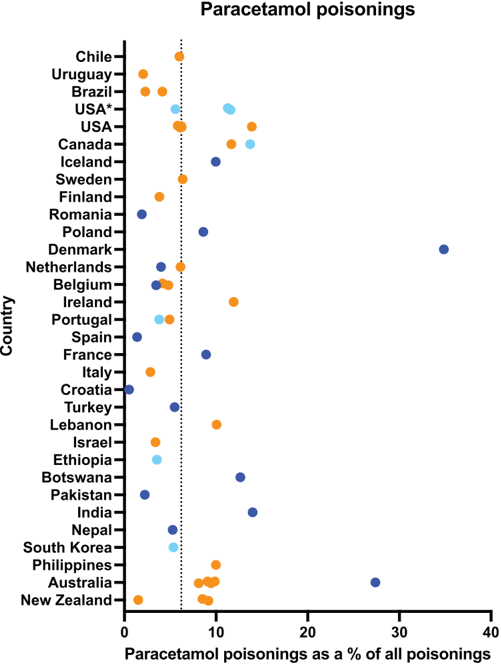
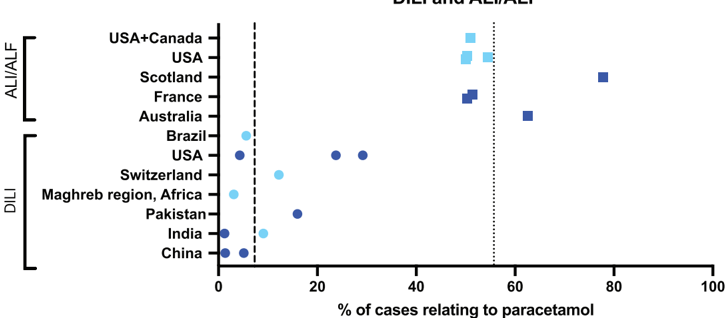
- Where data were available, paracetamol accounted for a weighted mean of 6.2% of poisonings (range 0.5–34.9%), 55.7% of severe acute liver injury and/or acute liver failure (range 50.0–77.8%), and 7.3% of drug-induced liver injury (range 1.2–29.2%); the case fatality rate for paracetamol poisonings was 0.4% (range 0.1–2.3%).
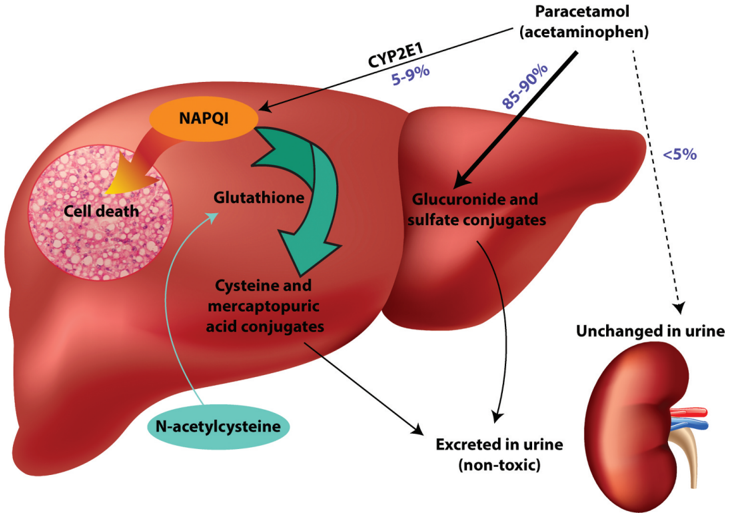
- Toxicity occurs via NAPQI, formed primarily by CYP2E1 and CYP3A4; when glutathione is depleted, NAPQI binds cellular proteins, causes mitochondrial dysfunction, and leads to hepatocyte necrosis. Acetylcysteine replenishes glutathione and is most effective when given within 8 h of ingestion.
- Major risk factors include massive overdoses (>30 g), modified-release/extended-release paracetamol, delayed presentation, enzyme inducers, malnutrition/fasting, and chronic alcohol use; repeated supratherapeutic ingestion carried higher hepatotoxicity in one US study (52% accidental vs 14% deliberate overdose).
- Prevention evidence includes UK 1998 pack-size restrictions, associated with a 22% reduction in suicidal deaths in the first year sustained for two years, ~30% reductions in liver unit admissions and liver transplants, and a 20% reduction in large overdoses; Denmark’s age and pack-size restrictions reduced poisonings and severity, while early evaluation of Australia’s modified-release up-scheduling found no reduction in MR paracetamol poisonings.
Methods
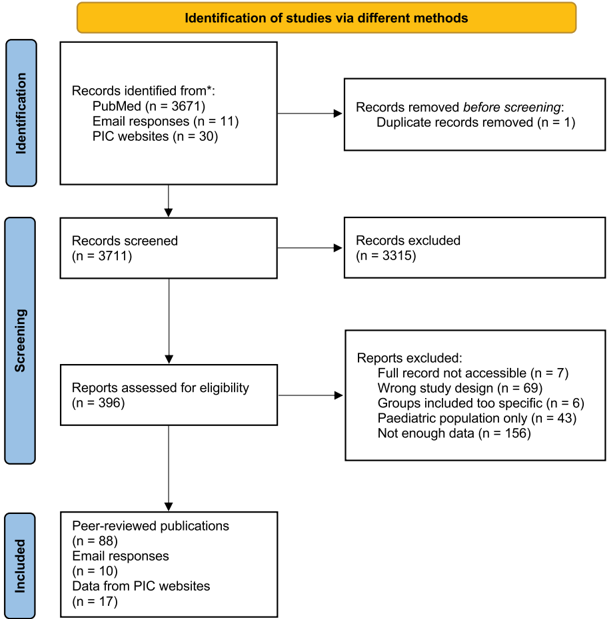
- Narrative review with two literature searches: a PubMed search for poisoning epidemiology and mortality from 1 January 2017 to 26 October 2022, plus poisons information centre annual reports and email responses; and PubMed/Embase searches from inception to December 2022 for clinical toxicology topics including risk assessment, risk factors, management, and legislative change.
- Epidemiology analysis included 115 data sources: 88 relevant publications, 17 annual reports or statistical information from websites, and data from 10 email responses; weighted averages were calculated using meta-analysis in R 4.0.4, with rates expressed per 100,000 population and/or as a percentage of poisoning exposures where catchment populations were available.
- Case fatality rates were calculated where possible by dividing cause-specific poisoning fatalities by exposures; for clinical sections, the authors used keyword searches, systematic reviews, and citation chaining.
Limitations
- Stated: the PubMed-only search may have missed relevant studies; data were lacking from many countries, particularly in Asia, South America, and Africa; only 11 direct PIC email responses were received, 66 emails were undeliverable, and over 50 websites were inaccessible; definitions for analgesics, DILI, and ALF/ALI were inconsistent; PIC operational models varied; catchment populations were often unavailable; some data covered only certain regions; death data sources have limitations, including missed out-of-hospital deaths and possible over-counting by coronial/forensic data in multi-drug overdoses; pediatric-only data sources were excluded.
- Evident from the text: this is a narrative review rather than a systematic review, and the global estimates rely on heterogeneous observational data and weighted means that may not be internationally representative; no formal risk-of-bias assessment is reported, and several intervention evaluations are observational or lack published outcome data, such as the impact of the EMA suspending modified-release paracetamol.
Model-written summary. Check it against the paper before relying on it.
Integrity signals
Registry
Cites
Statistics
Figures


Verification
Claims the paper makes
17 Valid · 2 Not valid · 114 Not checked · 49 Own results and interpretations
Some cited sources support this claim and some don’t — read each source’s verdict below.
In the paper
“Overall, paracetamol accounted for a weighted mean of 55.7% (range 50.0-77.8%) of severe acute liver injury (ALI) and/or ALF [201-208] and 7.3% (range 1.2-29.2%) of drug-induced liver injury (DILI) [209-219] (see Figure 7).”
- Also stated in: § 7. Conclusions · hedged
“Where data were available, we estimate it is used in 6% of poisonings, implicated in 56% of cases of severe acute liver injury and acute liver failure and 7% of drug-induced liver injury.”
§ Paracetamol (acetaminophen) overdose and hepatotoxicity: mechanism > 5.4. Rates of hepatotoxicity and liver failure
What the sources say
- Partly supportedcites [209] matched to “Evaluation of drug-induced liver injury as etiology for acute liver failure in Brazil” (2021) sourceExperimental — accuracy not yet measured
The Results report three confirmed acetaminophen (paracetamol) cases in a Brazilian cohort of patients with acute liver failure, and Table 1 describes 42 confirmed drug-related DILI cases leading to acute liver failure. These data support a small paracetamol contribution in this study, but the paper does not report the cited weighted mean or range across DILI studies; its cohort is limited to liver-transplant patients with acute liver failure. (LLM, conf=0.84)
- Partly supportedcites [210] matched to “Drug-Induced Liver Injury: Clinical and Etiologic Features at a Large Tertiary Teaching Hospital in China” (2020) sourceExperimental — accuracy not yet measured
The Results (Etiology of DILI; page unavailable) report five acetaminophen-caused cases among the 1,096 DILI patients analyzed. This supports including the study as evidence that paracetamol caused some DILI cases, but the paper does not report the cited weighted mean of 7.3% or its 1.2–29.2% range. (LLM, conf=0.87)
- Not checked yetcites [211] matched to “Characteristics of Drug-Induced Liver Injury in Northeast China: Disease Spectrum and Drug Types” (2020) source
- Not checked yetcites [212] Das S, Behera SK, Xavier AS, et al. Agreement Among Different Scales for Causality Assessment in Drug-Induced Liver Injury. Clin Drug Investig. 2018;38(3):211-218. doi: 10.1007/s40261-017-0601-5 213. source
- Partly supportedcites [213] Rathi C, Pipaliya N, Patel R, et al. Drug Induced Liver Injury at a Tertiary Hospital in India: etiology, Clinical Features and Predictors of Mortality. Ann Hepatol. 2017;16(3):442-450. doi: 10. 5604/01.3001.0009.8600 214. sourceExperimental — accuracy not yet measured
The Causative agents section identifies paracetamol among drugs implicated in DILI in this 82-patient study. It places paracetamol in a group of five drugs accounting for 6% of cases, but does not give a separate paracetamol percentage or report the cited weighted mean and range across studies. (LLM, conf=0.84)
- Not checked yetcites [214] matched to “Evidence of drug-induced hepatotoxicity in the Maghrebian population” (2022) source
- Disputedcites [215] matched to “Drug induced liver injury is associated with high mortality—A study from a tertiary care hospital in Pakistan” (2020) sourceExperimental — accuracy not yet measured
The Patients and methods > Exclusion criteria section says patients with known or suspected acetaminophen toxicity were excluded. Thus this study cannot supply a positive paracetamol share of its DILI cases; it also does not report the cited weighted mean or range. (LLM, conf=0.85)
Checked by a reasoning model — may be wrong.
- Partly supportedcites [216] matched to “Drug-induced liver injury in Switzerland: an analysis of drug-related hepatic disorders in the WHO pharmacovigilance database VigiBase™ from 2010 to 2020” (2021) sourceExperimental — accuracy not yet measured
The ‘Frequently reported suspected and concomitant drugs’ section identifies paracetamol as the most commonly suspected drug in Swiss reports of severe drug-related hepatic disorders. It does not report a weighted mean of 7.3%, a range of 1.2–29.2%, or paracetamol’s share of DILI cases overall. (LLM, conf=0.83)
- Could not verifycites [217] Yeboah-Korang A, Louissaint J, Tsung I, et al. Utility of a Computerized ICD-10 Algorithm to Identify Idiosyncratic Drug-Induced Liver Injury Cases in the Electronic Medical Record. Drug Saf. 2020;43(4):371-377. doi: 10.1007/s40264-019-00903-5 218. sourceExperimental — accuracy not yet measured
The Results (page unavailable) report 75 acetaminophen hepatotoxicity cases among 257 patients meeting liver-injury criteria, then exclude those cases from the idiosyncratic DILI study sample. Neither the Results nor passages retrieved by searching for the weighted mean and acetaminophen’s proportion of DILI report a 7.3% weighted mean or a 1.2–29.2% range. (LLM, conf=0.76)
- Not checked yetcites [218] Yeboah-Korang A, Memon A, Patel N, et al. Impact of Prior Drug Allergies on the Risk, Clinical Features, and Outcomes of Idiosyncratic Drug-Induced Liver Injury in Adults. Dig Dis Sci. 2022;67(11):5262-5271. doi: 10.1007/s10620-022-07403-0 219. source
plainstates an association- Asserted: passes — The authors put it forward as true.
- Checkable: passes — It can be checked against evidence.
- Load-bearing: unclear — It is unclear whether the paper’s conclusions depend on it.
- Based: passes — The paper gives a reason why it holds.
- Also stated in: § 7. Conclusions · hedged
Every source the paper cites for this claim was checked and supports it.
In the paper
“Repeated supratherapeutic ingestion can cause toxicity in doses only slightly above the maximum daily therapeutic dose [4].”
§ Paracetamol (acetaminophen) overdose and hepatotoxicity: mechanism > 1. Introduction
What the sources say
- Supportedcites [4] Acheampong P, Thomas SH. Determinants of hepatotoxicity after repeated supratherapeutic paracetamol ingestion: systematic review of reported cases. Br J Clin Pharmacol. 2016;82(4):923-931. doi: 10.1111/bcp.13028 source
The Discussion (page unavailable) reports liver damage after repeated supratherapeutic ingestion at modest reported daily doses, including some below the recommended daily dose. This supports the claim that toxicity can occur at doses only slightly above the therapeutic maximum. The paper cautions that some reported doses may have been underestimated. (LLM, conf=0.86)
plainstates a cause- Asserted: passes — The authors put it forward as true.
- Checkable: passes — It can be checked against evidence.
- Load-bearing: unclear — It is unclear whether the paper’s conclusions depend on it.
- Based: passes — The paper gives a reason why it holds.
- Supported
The cited sources support only part of this claim — read each source’s verdict below.
In the paper
“Individuals who are fasting, malnourished, or anorexic are at increased risk for toxicity due to lower glutathione levels [44].”
§ Paracetamol (acetaminophen) overdose and hepatotoxicity: mechanism > 3.2.4. Glutathione depletion
What the sources say
- Partly supportedcites [44] Nguyen GC, Sam J, Thuluvath PJ. Hepatitis C is a predictor of acute liver injury among hospitalizations for acetaminophen overdose in the United States: a nationwide analysis. Hepatology. 2008;48 (4):1336-1341. doi: 10.1002/hep.22536 sourceExperimental — accuracy not yet measured
The Abstract (page unavailable) identifies fasting and malnutrition as risk factors for acetaminophen-related liver injury and reports increased acute liver injury risk with malnutrition. The Discussion (page unavailable) explains that glutathione helps detoxify an acetaminophen metabolite, but discusses reduced glutathione in relation to HCV or long-term alcohol use—not fasting or malnutrition. The paper does not address anorexia or establish lower glutathione as the reason for the nutritional risk. (LLM, conf=0.87)
plainstates a cause- Asserted: passes — The authors put it forward as true.
- Checkable: passes — It can be checked against evidence.
- Load-bearing: unclear — It is unclear whether the paper’s conclusions depend on it.
- Based: passes — The paper gives a reason why it holds.
- Partly supported
The cited sources support only part of this claim — read each source’s verdict below.
In the paper
“NAC restores glutathione by replenishing cysteine, the ratelimiting factor for glutathione synthesis [96,97].”
§ Paracetamol (acetaminophen) overdose and hepatotoxicity: mechanism > 4.2. N-acetylcysteine (NAC)
What the sources say
- Partly supportedcites [96] Lauterburg BH, Corcoran GB, Mitchell JR. Mechanism of Action of N-Acetylcysteine in the Protection Against the Hepatotoxicity of Acetaminophen in Rats in vivo. J Clin Invest. 1983;71(4):980-991. doi: 10.1172/JCI110853 sourceExperimental — accuracy not yet measured
Our copy supports the first half: the Results ("Specific Activity Of Glutathione Adduct In Bile") report that hepatic glutathione synthesis rose to 2.69 µmol/h per g liver after N-acetylcysteine (vs 0.54 with acetaminophen alone) and that hepatic glutathione concentration "markedly increased," with the Discussion (OCR section "L Aceteminophen In Urine") attributing this to N-acetylcysteine supplying cysteine precursors that do not reenter the pathway after adduct loss. However, the source hedges the rate-limiting claim — cysteine availability "may become the rate-limiting step in glutathione synthesis" (citing ref. 36) only when synthesis is stimulated — so stating it as THE rate-limiting factor overstates it. The same Discussion also declines to credit glutathione restoration alone, arguing N-acetylcysteine additionally reduces the reactive acetaminophen metabolite and raises biliary disulfide excretion, and the Introduction ("N-Acetylcysteine could conceivably protect...") explicitly questions the quantitative importance of the precursor mechanism in vivo. (LLM, conf=0.75)
- Supportedcites [97] Tenório MCdS, Graciliano NG, Moura FA, et al. N-Acetylcysteine (NAC): impacts on human health. Antioxidants. 2021;10(6):967. doi: 10.3390/antiox10060967 source
Section 3 'Mechanism of Molecular Action' (p. ~3) states that intracellular cysteine concentration is lower and 'acts as a limiting factor in the rate of GSH biosynthesis', which 'explains the role of NAC as a prodrug of cysteine and intracellular GSH', and that NAC's antioxidant importance is 'directly linked to its ability to increase levels of intracellular cysteine with subsequent increase in GSH'. Section 4.5 (Liver Diseases) adds that NAC's function is 'to replenish the stocks of GSH', and the Conclusions restate NAC as a precursor to intracellular cysteine increasing the GSH pool. The paraphrase matches on both elements (cysteine replenishment and cysteine as the rate-limiting factor). (LLM, conf=0.90)
plainstates a cause- Asserted: passes — The authors put it forward as true.
- Checkable: passes — It can be checked against evidence.
- Load-bearing: passes — The paper’s conclusions depend on it.
- Based: passes — The paper gives a reason why it holds.
- Partly supported
Every source the paper cites for this claim was checked and supports it.
In the paper
“NAFLD has also been identified as a risk factor for hepatic injury following paracetamol overdose [44].”
§ Paracetamol (acetaminophen) overdose and hepatotoxicity: mechanism > 3.2.8. Other risk factors
What the sources say
- Supportedcites [44] Nguyen GC, Sam J, Thuluvath PJ. Hepatitis C is a predictor of acute liver injury among hospitalizations for acetaminophen overdose in the United States: a nationwide analysis. Hepatology. 2008;48 (4):1336-1341. doi: 10.1002/hep.22536 source
The Results section (page not available in our copy) reports that diagnosed NAFLD was associated with higher adjusted odds of acute liver injury among patients hospitalized for acetaminophen toxicity (aOR 7.50; 95% CI 3.57–15.7). This supports the cited claim about hepatic injury following paracetamol overdose. (LLM, conf=0.94)
plainstates an association- Asserted: passes — The authors put it forward as true.
- Checkable: passes — It can be checked against evidence.
- Load-bearing: unclear — It is unclear whether the paper’s conclusions depend on it.
- Based: passes — The paper gives a reason why it holds.
- Supported
82 more claims · 7 with their cited sources checked
Create a free account to see all 182 claims and to verify the 215 references still open.
- It may state two separate claims as one. 58
- Probably not a substantial claim. 50
Claims other papers make about this one
Each is checked against this paper’s own text: does it say what the citing paper says it does?
The source backs part of the claim, not all of it — or backs it for a different population, condition or comparison.
In the citing paper
“Global consumption is measured in tens of billions of doses annually, making it one of the most frequently used medications worldwide [ 3 ].”
From Paracetamol: A History of Assumptions, Errors, and Evidence Reversals in Pain Management (2026) · cites this paper as [3]
Experimental — accuracy not yet measured
Self-check
Percentages, sums and reported differences re-computed from the paper’s own numbers.
Each contradiction between two passages listed here was confirmed by an independent check.
Rated minor: it would not touch a result — a value no result rests on, a p-value that stays on the same side of the significance level, or a conflict that is clerical, resolved elsewhere in the paper, or outside its own findings.
In the paper
§ Paracetamol (acetaminophen) overdose and hepatotoxicity: mechanism > 8. Expert opinion
“Figure 7. Proportion of patients who develop ALI/ALF or DILI after paracetamol use.”
§ Paracetamol (acetaminophen) overdose and hepatotoxicity: mechanism > 5.4. Rates of hepatotoxicity and liver failure
“Overall, paracetamol accounted for a weighted mean of 55.7% (range 50.0-77.8%) of severe acute liver injury (ALI) and/or ALF [201-208] and 7.3% (range 1.2-29.2%) of drug-induced liver injury (DILI) [209-219] (see Figure 7).”
Citations
Cites
Ostapowicz, G., Fontana, R. J., Schiødt, F. V., Larson, A., Davern, T. J., Han, S. H. B., McCashland, T. M., Shakil, A. O., Hay, J. E., Hynan, L., et al. (2002) · Annals of Internal Medicine · doi:10.7326/0003-4819-137-12-200212170-00007 · Cited by 2,227 · cited 1×
“liver transplantation or result in death [9,11].”
Early indicators of prognosis in fulminant hepatic failure
O'Grady, J. G., Alexander, G. J. M., Hayllar, K. M., & Williams, R. (1989) · Gastroenterology · doi:10.1016/0016-5085(89)90081-4 · Cited by 2,085
Larson, A. M., Polson, J., Fontana, R. J., Davern, T. J., Lalani, E., Hynan, L. S., Reisch, J. S., Schiødt, F. V., Ostapowicz, G., Shakil, A. O., et al. (2005) · Hepatology · doi:10.1002/hep.20948 · Cited by 1,926
Mechanisms of Acetaminophen-Induced Liver Necrosis
Hinson, J. A., Roberts, D. W., & James, L. P. (2010) · Handbook of Experimental Pharmacology · doi:10.1007/978-3-642-00663-0_12 · Cited by 1,006 · cited 4×
“Formation of reactive oxygen species causes oxidative stress and leads to activation of c-jun N-terminal kinase (JNK) [23].”
BackgroundInfluentialGraham, G. G., Davies, M. J., Day, R. O., Mohamudally, A., & Scott, K. F. (2013) · Inflammopharmacology · doi:10.1007/s10787-013-0172-x · Cited by 671
Intravenous N-acetylcystine: the treatment of choice for paracetamol poisoning.
Prescott, L. F., Illingworth, R. N., Critchley, J. A., Stewart, M. J., Adam, R. D., & Proudfoot, A. T. (1979) · BMJ · doi:10.1136/bmj.2.6198.1097 · Cited by 667 · cited 4×
“Before the availability of NAC treatment, morbidity and mortality following paracetamol overdose was considerable; many developed acute liver injury and 3–5% died [99,100].”
BackgroundMethodInfluentialWatkins, P. B., Kaplowitz, N., Slattery, J. T., Colonese, C. R., Colucci, S. V., Stewart, P. W., & Harris, S. C. (2006) · JAMA · doi:10.1001/jama.296.1.87 · Cited by 632
Gummin, D. D., Mowry, J. B., Spyker, D. A., Brooks, D. E., Fraser, M. O., & Banner, W. (2017) · Clinical Toxicology · doi:10.1080/15563650.2017.1388087 · Cited by 553
N-Acetylcysteine (NAC): Impacts on Human Health
Tenório, M. C. D. S., Graciliano, N. G., Moura, F. A., Oliveira, A. C. M. D., & Goulart, M. O. F. (2021) · Antioxidants · doi:10.3390/antiox10060967 · Cited by 526
Paracetamol (Acetaminophen): mechanisms of action
ANDERSON, B. J. (2008) · Pediatric Anesthesia · doi:10.1111/j.1460-9592.2008.02764.x · Cited by 497 · cited 4×
“non-steroidal anti-inflammatory drugs (NSAIDs)), suggesting that it only acts centrally rather than peripherally [17].”
BackgroundInfluentialAssociation of Acetaminophen Hepatotoxicity With Fasting and Ethanol Use
Whitcomb, D. C. (1994) · JAMA: The Journal of the American Medical Association · doi:10.1001/jama.1994.03520230055038 · Cited by 470
Saito, C., Zwingmann, C., & Jaeschke, H. (2010) · Hepatology · doi:10.1002/hep.23267 · Cited by 430
Antoine, D. J., Dear, J. W., Lewis, P. S., Platt, V., Coyle, J., Masson, M., Thanacoody, R. H., Gray, A. J., Webb, D. J., Moggs, J. G., et al. (2013) · Hepatology · doi:10.1002/hep.26294 · Cited by 427
Acetaminophen Hepatotoxicity in Alcoholics: A Therapeutic Misadventure
SEEFF, L. B., CUCCHERINI, B. A., ZIMMERMAN, H. J., ADLER, E., & BENJAMIN, S. B. (1986) · Annals of Internal Medicine · doi:10.7326/0003-4819-104-3-399 · Cited by 424 · cited 1×
“This may be due to the CYP2E1 induction [43,46,47] or poor nutrition and lower glutathione stores [46].”
BackgroundAcetaminophen Toxicity in an Urban County Hospital
Schiødt, F. V., Rochling, F. A., Casey, D. L., & Lee, W. M. (1997) · New England Journal of Medicine · doi:10.1056/nejm199710163371602 · Cited by 422
Gummin, D. D., Mowry, J. B., Beuhler, M. C., Spyker, D. A., Brooks, D. E., Dibert, K. W., Rivers, L. J., Pham, N. P. T., & Ryan, M. L. (2020) · Clinical Toxicology · doi:10.1080/15563650.2020.1834219 · Cited by 401
Gummin, D. D., Mowry, J. B., Spyker, D. A., Brooks, D. E., Beuhler, M. C., Rivers, L. J., Hashem, H. A., & Ryan, M. L. (2019) · Clinical Toxicology · doi:10.1080/15563650.2019.1677022 · Cited by 398
Etiology and outcome for 295 patients with acute liver failure in the united states
Schiødt, F. V., Atillasoy, E., Shakil, A. O., Schiff, E. R., Caldwell, C., Kowdley, K. V., Stribling, R., Crippin, J. S., Flamm, S., Somberg, K. A., et al. (1999) · Liver Transplantation and Surgery · doi:10.1002/lt.500050102 · Cited by 396
Lauterburg, B. H., Corcoran, G. B., & Mitchell, J. R. (1983) · Journal of Clinical Investigation · doi:10.1172/jci110853 · Cited by 358 · cited 1×
“NAC restores glutathione by replenishing cysteine, the ratelimiting factor for glutathione synthesis [96,97].”
BackgroundGummin, D. D., Mowry, J. B., Spyker, D. A., Brooks, D. E., Osterthaler, K. M., & Banner, W. (2018) · Clinical Toxicology · doi:10.1080/15563650.2018.1533727 · Cited by 344
Gummin, D. D., Mowry, J. B., Beuhler, M. C., Spyker, D. A., Bronstein, A. C., Rivers, L. J., Pham, N. P. T., & Weber, J. (2021) · Clinical Toxicology · doi:10.1080/15563650.2021.1989785 · Cited by 333
Acetaminophen-related Hepatotoxicity
Bunchorntavakul, C., & Reddy, K. R. (2013) · Clinics in Liver Disease · doi:10.1016/j.cld.2013.07.005 · Cited by 322 · cited 7×
“NAPQI is formed in small amounts in therapeutic doses where it is readily detoxified by conjugation with glutathione [1,10,21].”
BackgroundInfluentialA Review of Acetaminophen Poisoning
Hodgman, M. J., & Garrard, A. R. (2012) · Critical Care Clinics · doi:10.1016/j.ccc.2012.07.006 · Cited by 314 · cited 5×
“NAPQI is formed in small amounts in therapeutic doses where it is readily detoxified by conjugation with glutathione [1,10,21].”
BackgroundInfluentialMeasurement of Serum Acetaminophen–Protein Adducts in Patients With Acute Liver Failure
Davern, T. J., James, L. P., Hinson, J. A., Polson, J., Larson, A. M., Fontana, R. J., Lalani, E., Munoz, S., Shakil, A. O., & Lee, W. M. (2006) · Gastroenterology · doi:10.1053/j.gastro.2006.01.033 · Cited by 284
Hawton, K., Bergen, H., Simkin, S., Dodd, S., Pocock, P., Bernal, W., Gunnell, D., & Kapur, N. (2013) · BMJ · doi:10.1136/bmj.f403 · Cited by 273 · cited 3×
“different stores, whereas 16 were able to purchase multiple packs from one store [246].”
InfluentialUK legislation on analgesic packs: before and after study of long term effect on poisonings
Hawton, K., Simkin, S., Deeks, J., Cooper, J., Johnston, A., Waters, K., Arundel, M., Bernal, W., Gunson, B., Hudson, M., et al. (2004) · BMJ · doi:10.1136/bmj.38253.572581.7c · Cited by 264 · cited 4×
“Suicidal deaths reduced by 22% in the first year, which was sustained for the following two years [242].”
BackgroundResultInfluentialHEPATIC DAMAGE AND DEATH FROM OVERDOSE OF PARACETAMOL
Clark, R., Borirakchanyavat, V., Davidson, A. R., Williams, R., Thompson, R. P. H., Widdop, B., & Goulding, R. (1973) · The Lancet · doi:10.1016/s0140-6736(73)90466-2 · Cited by 248 · cited 2×
“Before the availability of NAC treatment, morbidity and mortality following paracetamol overdose was considerable; many developed acute liver injury and 3–5% died [99,100].”
BackgroundParacetamol, alcohol and the liver
Prescott, L. F. (2000) · British Journal of Clinical Pharmacology · doi:10.1046/j.1365-2125.2000.00167.x · Cited by 223 · cited 1×
“alcohol users are a population more likely to take overdoses, and who often present late, which could be responsible for poorer outcomes [48].”
BackgroundAcetaminophen/paracetamol: A history of errors, failures and false decisions
Brune, K., Renner, B., & Tiegs, G. (2015) · European Journal of Pain · doi:10.1002/ejp.621 · Cited by 213 · cited 9×
“Paracetamol (acetaminophen) is one of the most widely used medicines worldwide and is readily available without prescription in most countries [1].”
BackgroundInfluentialCYSTEAMINE, METHIONINE, AND PENICILLAMINE IN THE TREATMENT OF PARACETAMOL POISONING
Prescott, L. F., Sutherland, G. R., Park, J., Smith, I. J., & Proudfoot, A. T. (1976) · The Lancet · doi:10.1016/s0140-6736(76)92842-7 · Cited by 210 · cited 4×
“Similar to NAC, methionine is an antidote used to increase glutathione and treat or prevent hepatotoxicity [109].”
BackgroundMethodInfluentialAcute liver failure in Sweden: etiology and outcome
Wei, G., Bergquist, A., Broomé, U., Lindgren, S., Wallerstedt, S., Almer, S., Sangfelt, P., Danielsson, Å., Sandberg‐Gertzén, H., Lööf, L., et al. (2007) · Journal of Internal Medicine · doi:10.1111/j.1365-2796.2007.01818.x · Cited by 185
James, L. P., Letzig, L., Simpson, P. M., Capparelli, E., Roberts, D. W., Hinson, J. A., Davern, T. J., & Lee, W. M. (2009) · Drug Metabolism and Disposition · doi:10.1124/dmd.108.026195 · Cited by 175 · cited 1×
“Paracetamol-protein adducts have been shown to be marginally superior to traditional biomarkers at predicting acute liver injury and can diagnose paracetamol-induced hepatotoxicity in the absence of a history of ingestion [38,82,92,93].”
BackgroundAcetaminophen‐induced liver injury in obesity and nonalcoholic fatty liver disease
Michaut, A., Moreau, C., Robin, M., & Fromenty, B. (2014) · Liver International · doi:10.1111/liv.12514 · Cited by 171
Interventions for paracetamol (acetaminophen) overdose
Chiew, A. L., Gluud, C., Brok, J., & Buckley, N. A. (2018) · Cochrane Database of Systematic Reviews · doi:10.1002/14651858.cd003328.pub3 · Cited by 170 · cited 5×
“Although initially regarded by the WHO as having a similar efficacy and safety profile as acetylcysteine [94], methionine is no longer on the most recent WHO Essential Medicines List [2].”
BackgroundMethodInfluentialSelf-citationCraig, D. G. N., Bates, C. M., Davidson, J. S., Martin, K. G., Hayes, P. C., & Simpson, K. J. (2012) · British Journal of Clinical Pharmacology · doi:10.1111/j.1365-2125.2011.04067.x · Cited by 168 · cited 2×
“Similar to those with therapeutic intent, these exposures have increased risk of hepatotoxicity when compared to acute self-harm overdoses [67].”
BackgroundUpdated guidelines for the management of paracetamol poisoning in Australia and New Zealand
Chiew, A. L., Reith, D., Pomerleau, A., Wong, A., Isoardi, K. Z., Soderstrom, J., & Buckley, N. A. (2020) · Medical Journal of Australia · doi:10.5694/mja2.50428 · Cited by 145 · cited 10×
“ALT >1000 U/L is considered an indicator of severe liver injury, and INR > 3 indicates acute liver failure (ALF) and warrants liver unit referral [74].”
BackgroundMethodInfluentialSelf-citationThe Natural History of Severe Acute Liver Injury
Koch, D. G., Speiser, J. L., Durkalski, V, Fontana, R. J., Davern, T., McGuire, B., Stravitz, R. T., Larson, A. M., Liou, I., Fix, O., et al. (2017) · American Journal of Gastroenterology · doi:10.1038/ajg.2017.98 · Cited by 143
Emergency department visits for attempted suicide and self harm in the USA: 2006–2013
Canner, J. K., Giuliano, K., Selvarajah, S., Hammond, E. R., & Schneider, E. B. (2018) · Epidemiology and Psychiatric Sciences · doi:10.1017/s2045796016000871 · Cited by 140 · cited 2×
“countries (Supplementary Figure S5) [148,188,192,195].”
InfluentialGreen, J., Heard, K., Reynolds, K., & Albert, D. (2013) · Western Journal of Emergency Medicine · doi:10.5811/westjem.2012.4.6885 · Cited by 135 · cited 3×
“intravenous formulation is now more commonly used, and has advantages when there are factors that may affect oral absorption including vomiting, gastrointestinal conditions or evidence of hepatic failure [29].”
BackgroundBateman, D. N., Carroll, R., Pettie, J., Yamamoto, T., Elamin, M. E. M. O., Peart, L., Dow, M., Coyle, J., Cranfield, K. R., Hook, C., et al. (2014) · British Journal of Clinical Pharmacology · doi:10.1111/bcp.12362 · Cited by 131
Timing and benefit of liver transplantation in acute liver failure
O’Grady, J. (2014) · Journal of Hepatology · doi:10.1016/j.jhep.2013.10.024 · Cited by 130 · cited 1×
“suggesting that transplant may confer little long-term survival benefit [121,123].”
BackgroundSchmidt, L. E., & Dalhoff, K. (2001) · British Journal of Clinical Pharmacology · doi:10.1046/j.1365-2125.2001.01305.x · Cited by 127
Acetaminophen‐Related Acute Renal Failure without Fulminant Liver Failure
Eguia, L., & Materson, B. J. (1997) · Pharmacotherapy: The Journal of Human Pharmacology and Drug Therapy · doi:10.1002/j.1875-9114.1997.tb03721.x · Cited by 126 · cited 2×
“be direct due to tubular necrosis [31–34] from renal NAPQI production or indicate hepatorenal syndrome [32,33].”
BackgroundAgarwal, R., MacMillan-Crow, L. A., Rafferty, T. M., Saba, H., Roberts, D. W., Fifer, E. K., James, L. P., & Hinson, J. A. (2011) · The Journal of Pharmacology and Experimental Therapeutics · doi:10.1124/jpet.110.176321 · Cited by 116
Prospective evaluation of repeated supratherapeutic acetaminophen (paracetamol) ingestion
Daly, F. F. S., O’Malley, G. F., Heard, K. J., Bogdan, G. M., & Dart, R. C. (2004) · Annals of Emergency Medicine · doi:10.1016/j.annemergmed.2004.05.005 · Cited by 115 · cited 1×
“In the US, the Rocky Mountain Poison and Drug Center protocol treats repeated supratherapeutic ingestion patients with 12 h of NAC, with treatment only being continued if ALT/AST is rising or the paracetamol concentration is elevated [107].”
BackgroundMitochondrial–Lysosomal Axis in Acetaminophen Hepatotoxicity
Moles, A., Torres, S., Baulies, A., Garcia-Ruiz, C., & Fernandez-Checa, J. C. (2018) · Frontiers in Pharmacology · doi:10.3389/fphar.2018.00453 · Cited by 113
Buckley, N. A., Buckley, N., Whyte, I. M., O'Connell, D. L., & Dawson, A. H. (1999) · Journal of Toxicology: Clinical Toxicology · doi:10.1081/clt-100102452 · Cited by 112 · cited 1×
“Charcoal may reduce peak paracetamol concentrations, the need for NAC and decrease the risk of hepatotoxicity [39,95].”
BackgroundSelf-citationChange in occurrence of paracetamol overdose in UK after introduction of blister packs
Turvill, J., Burroughs, A. K., & Moore, K. P. (2000) · The Lancet · doi:10.1016/s0140-6736(00)02355-2 · Cited by 110 · cited 4×
“A study that combined Office for National Statistics data with information from six liver units and monitoring systems in general hospitals found consistent results [241].”
BackgroundResultInfluentialThe efficacy and safety of paracetamol for pain relief: an overview of systematic reviews
Abdel Shaheed, C., Ferreira, G. E., Dmitritchenko, A., McLachlan, A. J., Day, R. O., Saragiotto, B., Lin, C., Langendyk, V., Stanaway, F., Latimer, J., et al. (2021) · Medical Journal of Australia · doi:10.5694/mja2.50992 · Cited by 110
Nguyen, G. C., Sam, J., & Thuluvath, P. J. (2008) · Hepatology · doi:10.1002/hep.22536 · Cited by 107
Chiew, A. L., Isbister, G. K., Kirby, K. A., Page, C. B., Chan, B. S. H., & Buckley, N. A. (2017) · Clinical Toxicology · doi:10.1080/15563650.2017.1334915 · Cited by 107 · cited 3×
“There may be formation of pharmacobezoars [51,56] which makes absorption even more erratic and this may be seen in massive overdoses of immediate release paracetamol as well [39,57].”
BackgroundSelf-citationAkakpo, J. Y., Ramachandran, A., Duan, L., Schaich, M. A., Jaeschke, M. W., Freudenthal, B. D., Ding, W.-X., Rumack, B. H., & Jaeschke, H. (2019) · Toxicological Sciences · doi:10.1093/toxsci/kfz077 · Cited by 105 · cited 2×
“Secondly, it can also prevent the activation of the JNK enzyme and resultant mitochondrial dysfunction [112,113].”
BackgroundAcetaminophen toxicity: suicidal vs accidental
Gyamlani, G. G., & Parikh, C. R. (2002) · Critical Care · doi:10.1186/cc1475 · Cited by 103 · cited 1×
“be a risk factor for hepatotoxicity and death [63,64].”
BackgroundA mitochondrial journey through acetaminophen hepatotoxicity
Ramachandran, A., & Jaeschke, H. (2020) · Food and Chemical Toxicology · doi:10.1016/j.fct.2020.111282 · Cited by 101
Liver transplant associated with paracetamol overdose: results from the seven‐country SALT study
Gulmez, S. E., Larrey, D., Pageaux, G., Bernuau, J., Bissoli, F., Horsmans, Y., Thorburn, D., McCormick, P. A., Stricker, B., Toussi, M., et al. (2015) · British Journal of Clinical Pharmacology · doi:10.1111/bcp.12635 · Cited by 99 · cited 1×
“liver transplantation or result in death [9,11].”
Myers, R. P., Shaheen, A. A. M., Li, B., Dean, S., & Quan, H. (2008) · Clinical Gastroenterology and Hepatology · doi:10.1016/j.cgh.2008.02.053 · Cited by 96 · cited 1×
“be a risk factor for hepatotoxicity and death [63,64].”
BackgroundAcetaminophen Nephrotoxicity in CD-1 Mice
Hart, S. G. E., Beierschmitt, W. P., Wyand, D. S., Khairallah, E. A., & Cohen, S. D. (1994) · Toxicology and Applied Pharmacology · doi:10.1006/taap.1994.1116 · Cited by 94
Acute poisoning in Shenyang, China: a retrospective and descriptive study from 2012 to 2016
Zhang, Y., Yu, B., Wang, N., & Li, T. (2018) · BMJ Open · doi:10.1136/bmjopen-2018-021881 · Cited by 91
Wong, A., & Graudins, A. (2016) · Clinical Toxicology · doi:10.3109/15563650.2015.1115055 · Cited by 90
Pettie, J. M., Caparrotta, T. M., Hunter, R. W., Morrison, E. E., Wood, D. M., Dargan, P. I., Thanacoody, R. H., Thomas, S. H. L., Elamin, M. E. M. O., Francis, B., et al. (2019) · EClinicalMedicine · doi:10.1016/j.eclinm.2019.04.005 · Cited by 90
Risk prediction of hepatotoxicity in paracetamol poisoning
Wong, A., & Graudins, A. (2017) · Clinical Toxicology · doi:10.1080/15563650.2017.1317349 · Cited by 88 · cited 3×
“Promising candidates include mitochondrial damage and necrosis markers and paracetamol protein adducts which measure the toxic metabolite NAPQI bound to cellular proteins [42,75,76,82].”
BackgroundMethodMehrpour, O., Akbari, A., Jahani, F., Amirabadizadeh, A., Allahyari, E., Mansouri, B., & Ng, P. C. (2018) · BMC Emergency Medicine · doi:10.1186/s12873-018-0181-6 · Cited by 88
Acetaminophen hepatotoxicity: A mitochondrial perspective
Ramachandran, A., & Jaeschke, H. (2019) · Advances in pharmacology · doi:10.1016/bs.apha.2019.01.007 · Cited by 84
Paracetamol poisoning‐related hospital admissions and deaths in Australia, 2004–2017
Cairns, R., Brown, J. A., Wylie, C. E., Dawson, A. H., Isbister, G. K., & Buckley, N. A. (2019) · Medical Journal of Australia · doi:10.5694/mja2.50296 · Cited by 84 · cited 2×
“In addition, deaths from this formulation accounted for a third of the total cases recorded between 2009 and 2017 [58].”
BackgroundSelf-citationInterrupted Time-Series Analysis of Regulations to Reduce Paracetamol (Acetaminophen) Poisoning
Morgan, O. W., Griffiths, C., & Majeed, A. (2007) · PLoS Medicine · doi:10.1371/journal.pmed.0040105 · Cited by 82 · cited 1×
“quency or mortality following the 1998 intervention [244].”
BackgroundComa and Metabolic Acidosis Early in Severe Acute Paracetamol Poisoning
Flanagan, R. J., & Mant, T. (1986) · Human Toxicology · doi:10.1177/096032718600500305 · Cited by 77
When do the aminotransferases rise after acute acetaminophen overdose?
Green, T. J., Sivilotti, M. L. A., Langmann, C., Yarema, M., Juurlink, D., Burns, M. J., & Johnson, D. W. (2010) · Clinical Toxicology · doi:10.3109/15563650.2010.523828 · Cited by 77
Mitochondrial damage and biogenesis in acetaminophen-induced liver injury
Jaeschke, H., Duan, L., Nguyen, N. T., & Ramachandran, A. (2019) · Liver Research · doi:10.1016/j.livres.2019.10.002 · Cited by 74
The Effect of Chronic Alcohol Intake on Prognosis and Outcome in Paracetamol Overdose
Bray, G. P., Mowat, C., Muir, D. F., Tredger, J. M., & Williams, R. (1991) · Human & Experimental Toxicology · doi:10.1177/096032719101000612 · Cited by 70 · cited 1×
“People who chronically consume large quantities of alcohol have also been reported to take larger paracetamol overdoses [49].”
BackgroundTreatment of Acetaminophen Poisoning: The Use of Oral Methionine
Vale, J. A. (1981) · Archives of Internal Medicine · doi:10.1001/archinte.1981.00340030126023 · Cited by 69
Huynh, A., Cairns, R., Brown, J. A., Lynch, A., Robinson, J., Wylie, C., Buckley, N. A., & Dawson, A. H. (2018) · Medical Journal of Australia · doi:10.5694/mja17.01063 · Cited by 68
Self-citationInfluence of High Body Mass Index on Outcome in Acute Liver Failure
Rutherford, A., Davern, T., Hay, J. E., Murray, N., Hassanein, T., Lee, W. M., & Chung, R. T. (2006) · Clinical Gastroenterology and Hepatology · doi:10.1016/j.cgh.2006.07.014 · Cited by 66
Ethanol induction of acetaminophen toxicity and metabolism
Peterson, F. J., Holloway, D. E., Erickson, R. R., Duquette, P. H., McClain, C. J., & Holtzman, J. L. (1980) · Life Sciences · doi:10.1016/0024-3205(80)90646-3 · Cited by 64 · cited 1×
“This may be due to the CYP2E1 induction [43,46,47] or poor nutrition and lower glutathione stores [46].”
BackgroundRestricting paracetamol in the United Kingdom to reduce poisoning: a systematic review
Morgan, O., & Majeed, A. (2005) · Journal of Public Health · doi:10.1093/pubmed/fdh200 · Cited by 64 · cited 2×
“Benzodiazepine overdoses were used as a control, and remained stable [240].”
BackgroundMethodEarly Metabolic Acidosis and Coma After Acetaminophen Ingestion
ROTH, B., WOO, O., & Blanc, P. D. (1999) · Annals of Emergency Medicine · doi:10.1016/s0196-0644(99)70312-4 · Cited by 63
Acute Liver Injury With Therapeutic Doses of Acetaminophen: A Prospective Study
Louvet, A., Ntandja Wandji, L. C., Lemaître, E., Khaldi, M., Lafforgue, C., Artru, F., Quesnel, B., Lassailly, G., Dharancy, S., & Mathurin, P. (2021) · Hepatology · doi:10.1002/hep.31678 · Cited by 63
Morgan, O., Griffiths, C., & Majeed, A. (2005) · Journal of Public Health · doi:10.1093/pubmed/fdh216 · Cited by 62 · cited 3×
“The authors concluded that the reduction seen might have been part of a broader trend [243].”
BackgroundInfluentialRathi, C., Pipaliya, N., Patel, R., Ingle, M., Phadke, A., & Sawant, P. (2017) · Annals of Hepatology · doi:10.5604/01.3001.0009.8600 · Cited by 61
Morthorst, B. R., Erlangsen, A., Nordentoft, M., Hawton, K., Hoegberg, L. C. G., & Dalhoff, K. P. (2018) · Basic & Clinical Pharmacology & Toxicology · doi:10.1111/bcpt.12959 · Cited by 61
Johnson, M. T., McCammon, C. A., Mullins, M. E., & Halcomb, S. E. (2011) · Annals of Pharmacotherapy · doi:10.1345/aph.1p613 · Cited by 60 · cited 1×
“bag regimens can also be combined into one infusion bag given with variable rates, which may reduce the risk of gaps in treatment [105].”
BackgroundAcute liver failure; clinical features and management
Bernal, W. E., & Wendon, J. A. (1999) · European Journal of Gastroenterology & Hepatology · doi:10.1097/00042737-199909000-00005 · Cited by 59
Delayed onset of acute renal failure after significant paracetamol overdose: A case series
Waring, W., Jamie, H., & Leggett, G. (2010) · Human & Experimental Toxicology · doi:10.1177/0960327109350799 · Cited by 57 · cited 1×
“Acute kidney injury can also occur, even in the absence of liver failure, and may be delayed [31,32].”
BackgroundSivilotti, M. L. A., Green, T. J., Langmann, C., Yarema, M., Juurlink, D., & Johnson, D. (2010) · Clinical Toxicology · doi:10.3109/15563650.2010.523829 · Cited by 56 · cited 1×
“product The multiplication product of ALT and paracetamol concentration has been proposed as a risk-stratification tool for predicting hepatotoxicity following paracetamol overdose [87].”
BackgroundAcetylcysteine in paracetamol poisoning: a perspective of 45 years of use
Bateman, D. N., & Dear, J. W. (2019) · Toxicology Research · doi:10.1039/c9tx00002j · Cited by 53 · cited 3×
“NAC was originally delivered orally until the development of an intravenous formulation [101].”
BackgroundMethodEarly acetaminophen-protein adducts predict hepatotoxicity following overdose (ATOM-5)
Chiew, A. L., James, L. P., Isbister, G. K., Pickering, J. W., McArdle, K., Chan, B. S. H., & Buckley, N. A. (2020) · Journal of Hepatology · doi:10.1016/j.jhep.2019.10.030 · Cited by 53 · cited 3×
“Promising candidates include mitochondrial damage and necrosis markers and paracetamol protein adducts which measure the toxic metabolite NAPQI bound to cellular proteins [42,75,76,82].”
BackgroundSelf-citationEfficacy of a two bag acetylcysteine regimen to treat paracetamol overdose (2NAC study)
Wong, A., Isbister, G. K., McNulty, R., Isoardi, K., Harris, K., Chiew, A. L., Greene, S. L., Gunja, N., Buckley, N. A., Page, C. B., et al. (2020) · EClinicalMedicine · doi:10.1016/j.eclinm.2020.100288 · Cited by 52
Self-citationGreene, S. L., Dargan, P. I., Leman, P., & Jones, A. L. (2006) · Postgraduate Medical Journal · doi:10.1136/pgmj.2005.042036 · Cited by 51 · cited 2×
“Thus, stores selling more than one pack in the above study were contravening the spirit of the 1998 legislation but were not breaking the law [247].”
BackgroundGondim, A. P. S., Nogueira, R. R., Lima, J. G. B., Lima, R. A. C., Albuquerque, P. L. M. M., Veras, M. D. S. B., Ferreira, M. A. D., Gondim, A. P. S., Nogueira, R. R., Lima, J. G. B., et al. (2017) · Epidemiologia e Serviços de Saúde · doi:10.5123/s1679-49742017000100012 · Cited by 51
Bateman, D. N., Gorman, D. R., Bain, M., Inglis, J. H. C., House, F. R., & Murphy, D. (2006) · British Journal of Clinical Pharmacology · doi:10.1111/j.1365-2125.2006.02668.x · Cited by 50 · cited 1×
“by paracetamol, albeit with still over 100 deaths per year [245].”
BackgroundWaring, W. S., Stephen, A. F., Malkowska, A. M., & Robinson, O. D. G. (2008) · Academic Emergency Medicine · doi:10.1111/j.1553-2712.2007.00019.x · Cited by 50
Stravitz, R. T., Fontana, R. J., Meinzer, C., Durkalski‐Mauldin, V., Hanje, A. J., Olson, J., Koch, D., Hamid, B., Schilsky, M. L., McGuire, B., et al. (2021) · Hepatology · doi:10.1002/hep.31767 · Cited by 50
Morrison, E. E., Oatey, K., Gallagher, B., Grahamslaw, J., O'Brien, R., Black, P., Oosthuyzen, W., Lee, R. J., Weir, C. J., Henriksen, D., et al. (2019) · eBioMedicine · doi:10.1016/j.ebiom.2019.07.013 · Cited by 48
Scripcaru, G., Mateus, C., & Nunes, C. (2017) · PLoS ONE · doi:10.1371/journal.pone.0178626 · Cited by 47
What Are the Potential Sites of Protein Arylation byN-Acetyl-p-benzoquinone Imine (NAPQI)?
Leeming, M. G., Gamon, L. F., Wille, U., Donald, W. A., & O’Hair, R. A. J. (2015) · Chemical Research in Toxicology · doi:10.1021/acs.chemrestox.5b00373 · Cited by 45
Fewer adverse effects with a modified two-bag acetylcysteine protocol in paracetamol overdose
McNulty, R., Lim, J. M. E., Chandru, P., & Gunja, N. (2018) · Clinical Toxicology · doi:10.1080/15563650.2017.1408812 · Cited by 44
Wong, A., Sivilotti, M. L. A., Dargan, P. I., Wood, D. M., & Greene, S. L. (2015) · Clinical Toxicology · doi:10.3109/15563650.2015.1066507 · Cited by 41 · cited 2×
“The diagnostic accuracy of this product has been confirmed, with an initial multiplication product of > 10,000 mg/L x IU/L being strongly associated with hepatotoxicity [88].”
BackgroundNovel strategies for the treatment of acetaminophen hepatotoxicity
Akakpo, J. Y., Ramachandran, A., & Jaeschke, H. (2020) · Expert Opinion on Drug Metabolism & Toxicology · doi:10.1080/17425255.2020.1817896 · Cited by 41 · cited 1×
“Fomepizole, calmangafodipir, and other potential therapeutic targets for paracetamol hepatotoxicity have been recently reviewed [120].”
BackgroundSchmidt, L. E., Rasmussen, D. N., Petersen, T. S., Macias-Perez, I. M., Pavliv, L., Kaelin, B., Dart, R. C., & Dalhoff, K. (2018) · Clinical Toxicology · doi:10.1080/15563650.2018.1475672 · Cited by 39
Gedeborg, R., Svennblad, B., Holm, L., Sjögren, H., Bardage, C., Personne, M., Sjöberg, G., Feltelius, N., & Zethelius, B. (2017) · Pharmacoepidemiology and Drug Safety · doi:10.1002/pds.4166 · Cited by 38 · cited 1×
“The introduction of paracetamol sales from non-pharmacy outlets in Sweden in 2009 was associated with an increase in the rate of paracetamol poisonings [234], however restrictions were reintroduced in 2015 [233].”
BackgroundKnipe, D., Silva, T., Aroos, A., Senarathna, L., Hettiarachchi, N. M., Galappaththi, S. R., Spittal, M. J., Gunnell, D., Metcalfe, C., & Rajapakse, T. (2021) · The Lancet Psychiatry · doi:10.1016/s2215-0366(21)00242-x · Cited by 38
Fomepizole as an adjunct in acetylcysteine treated acetaminophen overdose patients: a case series
Link, S. L., Rampon, G., Osmon, S., Scalzo, A. J., & Rumack, B. H. (2022) · Clinical Toxicology · doi:10.1080/15563650.2021.1996591 · Cited by 38
Self‐poisoning by older Australians: a cohort study
Pillans, P. I., Page, C. B., Ilango, S., Kashchuk, A., & Isbister, G. K. (2017) · Medical Journal of Australia · doi:10.5694/mja16.00484 · Cited by 37 · cited 19×
“In Australia and New Zealand, within pharmacies customers may purchase packs of up to 100 tablets of immediaterelease paracetamol without any intervention by a pharmacist [236,237].”
BackgroundInfluentialMorthorst, B. R., Erlangsen, A., Chaine, M., Eriksson, F., Hawton, K. E., Dalhoff, K., & Nordentoft, M. (2020) · Journal of Affective Disorders · doi:10.1016/j.jad.2020.02.043 · Cited by 37 · cited 10×
“After a decision made by the European Medicines Agency, countries in the European Union such as the UK (formerly), Denmark, and Ireland do not supply any MR paracetamol, even on prescription [30,238].”
BackgroundInfluentialMyers, R. P., & Shaheen, A. A. M. (2009) · Hepatology · doi:10.1002/hep.22798 · Cited by 36
Hoegberg, L. C. G., Refsgaard, F., Pedersen, S. H., Personne, M., Ullah, S., Panagiotidis, G., Petersen, T. S., & Annas, A. (2018) · Clinical Toxicology · doi:10.1080/15563650.2018.1513138 · Cited by 36 · cited 1×
“There may be formation of pharmacobezoars [51,56] which makes absorption even more erratic and this may be seen in massive overdoses of immediate release paracetamol as well [39,57].”
BackgroundHopkins, A. G., Spiller, H. A., Kistamgari, S., Zhu, M., Michaels, N. L., Funk, A. R., & Smith, G. A. (2020) · Pharmacoepidemiology and Drug Safety · doi:10.1002/pds.4997 · Cited by 35
Evaluation of N-acetylcysteine dose for the treatment of massive acetaminophen ingestion
Lewis, J., Lim, M. C., Lai, L., Mendoza, E., Albertson, T. E., & Chenoweth, J. (2021) · Clinical Toxicology · doi:10.1080/15563650.2021.1984503 · Cited by 35
Dental pain as a risk factor for accidental acetaminophen overdose: a case-control study
Vogel, J. A., Heard, K. J., Carlson, C., Lange, C., & Mitchell, G. (2010) · The American Journal of Emergency Medicine · doi:10.1016/j.ajem.2010.08.006 · Cited by 34 · cited 1×
“ingestions, when compared to other types of pain [61].”
BackgroundDear, J. W., & Antoine, D. J. (2014) · Expert Review of Clinical Pharmacology · doi:10.1586/17512433.2014.880650 · Cited by 34 · cited 4×
“Promising candidates include mitochondrial damage and necrosis markers and paracetamol protein adducts which measure the toxic metabolite NAPQI bound to cellular proteins [42,75,76,82].”
BackgroundInfluentialMagalhães, A. F. A., & Caldas, E. D. (2018) · Forensic Science International · doi:10.1016/j.forsciint.2018.03.040 · Cited by 34
The Toxicology Investigators Consortium Case Registry—the 2016 Experience
On behalf of the Toxicology Investigators Consortium Study Group, Farrugia, L. A., Rhyee, S. H., Calello, D. P., Campleman, S. L., Riederer, A. M., Malashock, H. R., Pizon, A., Wiegand, T., Wax, P. M., et al. (2017) · Journal of Medical Toxicology · doi:10.1007/s13181-017-0627-3 · Cited by 34
Steeg, S., Carr, M., Mok, P. L. H., Pedersen, C. B., Antonsen, S., Ashcroft, D. M., Kapur, N., Erlangsen, A., Nordentoft, M., & Webb, R. T. (2019) · Social Psychiatry and Psychiatric Epidemiology · doi:10.1007/s00127-019-01794-8 · Cited by 34 · cited 2×
“However, PIC data from before and after the change identified no significant variation to the rates of treatment for poisoning or hepatotoxicity [251].”
BackgroundThe Toxicology Investigators Consortium Case Registry—the 2019 Annual Report
Spyres, M. B., Farrugia, L. A., Kang, A. M., Aldy, K., Calello, D. P., Campleman, S. L., Li, S., Beauchamp, G. A., Wiegand, T., Wax, P. M., et al. (2020) · Journal of Medical Toxicology · doi:10.1007/s13181-020-00810-7 · Cited by 34
Lionte, C., Șorodoc, V., Jaba, E., & Botezat, A. (2017) · Medicine · doi:10.1097/md.0000000000006404 · Cited by 33
Low Serum Hepcidin Is Associated With Reduced Short‐Term Survival in Adults With Acute Liver Failure
Spivak, I., Arora, J., Meinzer, C., Durkalski‐Mauldin, V., Lee, W. M., Trautwein, C., Fontana, R. J., & Strnad, P. (2019) · Hepatology · doi:10.1002/hep.30486 · Cited by 32
Lindena, J., Sommerfeld, U., Höpfel, C., & TRAUTSCHOLD, I. (1986) · Clinical Chemistry and Laboratory Medicine (CCLM) · doi:10.1515/cclm.1986.24.1.35 · Cited by 32 · cited 1×
“It is worth noting that ALT/AST is not specific for liver injury and may also lack sensitivity in early liver injury [42,85,86].”
BackgroundWiegand, T. J., Margaretten, M. E., & Olson, K. R. (2010) · Clinical Toxicology · doi:10.3109/15563650903524142 · Cited by 31
Circulating acetaminophen metabolites are toxicokinetic biomarkers of acute liver injury
Vliegenthart, A., Kimmitt, R., Seymour, J., Homer, N., Clarke, J., Eddleston, M., Gray, A., Wood, D., Dargan, P., Cooper, J., et al. (2017) · Clinical Pharmacology & Therapeutics · doi:10.1002/cpt.541 · Cited by 31 · cited 2×
“glucuronidation [38], which saturates with massive overdose.”
BackgroundRisk Factors for Hepatotoxicity Due to Paracetamol Overdose in Adults
Popiołek, I., Hydzik, P., Jagielski, P., Zrodlowska, M., Mystek, K., & Porębski, G. (2021) · Medicina · doi:10.3390/medicina57080752 · Cited by 31
Modified release paracetamol overdose: a prospective observational study (ATOM-3)
Chiew, A. L., Isbister, G. K., Page, C. B., Kirby, K. A., Chan, B. S. H., & Buckley, N. A. (2018) · Clinical Toxicology · doi:10.1080/15563650.2018.1439950 · Cited by 30 · cited 2×
“often require prolonged treatment due to continuously elevated concentrations [51,54,55].”
BackgroundSelf-citationTreating acetaminophen overdose: thresholds, costs and uncertainties
Gosselin, S., Hoffman, R. S., Juurlink, D. N., Whyte, I., Yarema, M., & Caro, J. (2013) · Clinical Toxicology · doi:10.3109/15563650.2013.775292 · Cited by 29 · cited 1×
“This new nomogram was introduced in 2012 due to an isolated fatal case when the paracetamol concentration was below the nomogram line and no treatment was given [77,78].”
MethodWazaify, M., Kennedy, S., Hughes, C. M., & McElnay, J. C. (2005) · Journal of Clinical Pharmacy and Therapeutics · doi:10.1111/j.1365-2710.2004.00607.x · Cited by 29
Pattern of suicide by self-poisoning in Northern Tunisia: An eleven-year study (2005–2015)
Gharbaoui, M., Ben Khelil, M., Harzallah, H., Benzarti, A., Zhioua, M., & Hamdoun, M. (2019) · Journal of Forensic and Legal Medicine · doi:10.1016/j.jflm.2018.10.004 · Cited by 29
Sex differences in patients with suicidal intent that are managed by toxicologists
Beauchamp, G. A., Fishbein, J., Makar, G. A., Pechulis, R. M., Cook, M. D., Cannon, R. D., Katz, K. D., Kincaid, H. M., Carey, J., & Greenberg, M. R. (2019) · The American Journal of Emergency Medicine · doi:10.1016/j.ajem.2019.158450 · Cited by 29
Acute acetaminophen toxicity in adults
Saccomano, S. J. (2019) · The Nurse Practitioner · doi:10.1097/01.npr.0000586020.15798.c6 · Cited by 29 · cited 3×
“The clinical manifestations of hepatotoxicity are delayed, with peak serum transaminase levels occurring two to three days after the overdose [10,28].”
BackgroundClinical outcome of massive acetaminophen overdose treated with standard-dose N-acetylcysteine
Downs, J. W., Cumpston, K. L., Kershner, E. K., Troendle, M. M., Rose, S. R., & Wills, B. K. (2021) · Clinical Toxicology · doi:10.1080/15563650.2021.1887493 · Cited by 29
Moore, J. K., MacKinnon, A. C., Man, T. Y., Manning, J. R., Forbes, S. J., & Simpson, K. J. (2017) · Alimentary Pharmacology & Therapeutics · doi:10.1111/apt.13878 · Cited by 28 · cited 1×
“mol at approximately 78% [204] and 63% [201], respectively.”
BackgroundMetabolic and mitochondrial treatments for severe paracetamol poisoning: a systematic review
Mullins, M. E., Yeager, L. H., & Freeman, W. E. (2020) · Clinical Toxicology · doi:10.1080/15563650.2020.1798979 · Cited by 28 · cited 11×
“Fomepizole inhibits CYP2E1, reducing conversion of paracetamol into NAPQI [112].”
BackgroundInfluentialNash, E., Sabih, A., Chetwood, J., Wood, G., Pandya, K., Yip, T., Majumdar, A., McCaughan, G. W., Strasser, S. I., & Liu, K. (2021) · Medical Journal of Australia · doi:10.5694/mja2.51173 · Cited by 28 · cited 1×
“mol at approximately 78% [204] and 63% [201], respectively.”
BackgroundGraudins, A., Chiew, A., & Chan, B. (2010) · Internal Medicine Journal · doi:10.1111/j.1445-5994.2009.02096.x · Cited by 26 · cited 2×
“often require prolonged treatment due to continuously elevated concentrations [51,54,55].”
BackgroundOliveira, J. D. F. M. D., Wagner, G. A., Romano-Lieber, N. S., & Antunes, J. L. F. (2017) · Ciência & Saúde Coletiva · doi:10.1590/1413-812320172210.12782017 · Cited by 26
Acheampong, P., & Thomas, S. H. L. (2016) · British Journal of Clinical Pharmacology · doi:10.1111/bcp.13028 · Cited by 25 · cited 1×
“ingestion can cause toxicity in doses only slightly above the maximum daily therapeutic dose [4].”
BackgroundCurtis, R. M., & Sivilotti, M. L. A. (2015) · Clinical Toxicology · doi:10.3109/15563650.2015.1077968 · Cited by 24 · cited 4×
“If the AST:ALT ratio is > 2 at presentation, this may herald worse outcomes, and also has been associated with chronic excessive ethanol use [84].”
BackgroundInfluentialClinical course of repeated supratherapeutic ingestion of acetaminophen
Alhelail, M., Hoppe, J. A., Rhyee, S. H., & Heard, K. J. (2011) · Clinical Toxicology · doi:10.3109/15563650.2011.554839 · Cited by 23
Descamps, A.-M., Vandijck, D. M., Buylaert, W. A., Mostin, M. A., & Paepe, P. D. (2019) · PLoS ONE · doi:10.1371/journal.pone.0223479 · Cited by 23
Hitti, E. A., Zahran, T. E., Hamade, H., Kaddoura, R., Mneimneh, Z., Morgan, B., & Kazzi, Z. (2020) · Clinical Toxicology · doi:10.1080/15563650.2019.1709643 · Cited by 23
Abid, A., Subhani, F., Kayani, F., Awan, S., & Abid, S. (2020) · PLOS ONE · doi:10.1371/journal.pone.0231398 · Cited by 22
Over‐the‐counter drug use in suicidal/self‐harm behavior: Scoping review
Shoib, S., Patel, V., Khan, S., Armiya'u, A. Y., Saeed, F., Swed, S., Das, S., & Chandradasa, M. (2022) · Health Science Reports · doi:10.1002/hsr2.662 · Cited by 22 · cited 1×
“It is one of the most common over-the-counter (OTC) analgesics used in suicidal overdoses [231].”
BackgroundDoes Restricting Pack Size of Paracetamol (Acetaminophen) Reduce Suicides?
Buckley, N. A., & Gunnell, D. (2007) · PLoS Medicine · doi:10.1371/journal.pmed.0040152 · Cited by 21 · cited 4×
“The introduction of the pack size restriction saw a decrease in the number of total poisonings and their severity [249].”
BackgroundInfluentialSelf-citationIncreased Use of Medicinal Drugs in Self-Harm in Urban Areas in Sri Lanka
de Silva, V., & Ratnayake, A. (2008) · Archives of Suicide Research · doi:10.1080/13811110802325265 · Cited by 21
Radosevich, J. J., Patanwala, A. E., & Erstad, B. L. (2013) · American Journal of Therapeutics · doi:10.1097/01.mjt.0000434043.62372.00 · Cited by 21
Bateman, D. N., Dear, J. W., Carroll, R., Pettie, J., Yamamoto, T., Elamin, M. E. M. O., Peart, L., Dow, M., Coyle, J., Gray, A., et al. (2014) · Clinical Toxicology · doi:10.3109/15563650.2014.954125 · Cited by 20
Evaluation of drug-induced liver injury as etiology for acute liver failure in Brazil
Santos, G., Figueira, E. R. R., D’Albuquerque, L. A. C., Lisboa, P. B., de Almeida, M. D., Filgueira, N. A., Boin, I., Porta, G., da Silva, R. D. C. M. A., Viana, C. F. G., et al. (2021) · Annals of Hepatology · doi:10.1016/j.aohep.2021.100310 · Cited by 20
Spyker, D. A., Dart, R. C., Yip, L., Reynolds, K. M., Brittain, S. T., & Yarema, M. C. (2022) · Clinical Toxicology · doi:10.1080/15563650.2022.2114361 · Cited by 20 · cited 1×
“a hydroxypropylmethylcellulose coating [53], and ER tablets are a bilayered tablet where one side contains immediate release and the other slow release paracetamol (in a matrix formulation) [59].”
BackgroundWong, A., Sivilotti, M. L. A., & Graudins, A. (2017) · Clinical Toxicology · doi:10.1080/15563650.2017.1290253 · Cited by 19 · cited 1×
“This tool has also been shown to be accurate for MR paracetamol overdose [89].”
MethodAgreement Among Different Scales for Causality Assessment in Drug-Induced Liver Injury
Das, S., Behera, S. K., Xavier, A. S., Velupula, S., Dkhar, S. A., & Selvarajan, S. (2018) · Clinical Drug Investigation · doi:10.1007/s40261-017-0601-5 · Cited by 19
Yau, C. E., Chen, H., Lim, B. P.-Y., Ng, M., Ponampalam, R., Lim, D. Y. Z., Chin, Y. H., & Ho, A. F. W. (2022) · Clinical Toxicology · doi:10.1080/15563650.2022.2152350 · Cited by 19 · cited 1×
“A recent systematic review has concluded that the paracetamol-aminotransferase multiplication product can complement the Rumack-Matthew nomogram, especially for delayed presentations and staggered ingestions [90].”
BackgroundWong, A., Gunja, N., McNulty, R., & Graudins, A. (2017) · Clinical Toxicology · doi:10.1080/15563650.2017.1359620 · Cited by 18 · cited 1×
“A retrospective study indicated that this is likely safe (there were no cases of re-presentation with hepatotoxicity) and reduces hospital length of stay [106].”
BackgroundFatal poisonings in Northern Finland: causes, incidence, and rural-urban differences
Koskela, L., Raatiniemi, L., Bakke, H. K., Ala-Kokko, T. I., & Liisanantti, J. H. (2017) · Scandinavian Journal of Trauma Resuscitation and Emergency Medicine · doi:10.1186/s13049-017-0431-8 · Cited by 18
Old problem, new solutions: biomarker discovery for acetaminophen liver toxicity
Gloor, Y., Schvartz, D., & F.Samer, C. (2019) · Expert Opinion on Drug Metabolism & Toxicology · doi:10.1080/17425255.2019.1642323 · Cited by 18 · cited 6×
“After an acute overdose ALT/AST may increase after 8 h [42], however they can remain within the normal range for”
BackgroundMethodInfluentialMehrpour, O., Saeedi, F., & Hoyte, C. O. (2021) · Basic & Clinical Pharmacology & Toxicology · doi:10.1111/bcpt.13674 · Cited by 18
Antoniou, T., Guan, Q., Martins, D., & Gomes, T. (2022) · Canadian Medical Association Journal · doi:10.1503/cmaj.210842 · Cited by 18 · cited 1×
“2016); however, no significant changes occurred [253].”
Mallet, M., Haq, M., Tripon, S., Bernard, M., Benosman, H., Thabut, D., & Rudler, M. (2017) · European Journal of Gastroenterology & Hepatology · doi:10.1097/meg.0000000000000862 · Cited by 17
Ding, G. K. A., & Buckley, N. A. (2008) · QJM · doi:10.1093/qjmed/hcn077 · Cited by 16
Self-citationMolloy, P., Chambers, R. M., & Cork, T. (2016) · BMJ Open · doi:10.1136/bmjopen-2015-010081 · Cited by 16 · cited 1×
“Taken together, evidence from the UK suggests that changes in paracetamol availability can reduce severe selfpoisoning and deaths, but these changes are more modest than initially hoped [248].”
BackgroundGenetic Association of Single Nucleotide Polymorphisms with Acetaminophen-Induced Hepatotoxicity
Heruth, D. P., Shortt, K., Zhang, N., Li, D., Zhang, L. Q., & Ye, S. Q. (2018) · Journal of Pharmacology and Experimental Therapeutics · doi:10.1124/jpet.118.248583 · Cited by 16 · cited 3×
“Heruth et al [72] have reviewed 147 single nucleotide polymorphisms potentially associated with paracetamol hepatotoxicity.”
BackgroundInfluentialSalles, J., Calonge, J., Franchitto, N., Bougon, E., & Schmitt, L. (2018) · BMC Psychiatry · doi:10.1186/s12888-018-1854-0 · Cited by 16
Evidence of drug-induced hepatotoxicity in the Maghrebian population
Bourhia, M., Ullah, R., S. Alqahtani, A., & Ibenmoussa, S. (2022) · Drug and Chemical Toxicology · doi:10.1080/01480545.2020.1797088 · Cited by 16
Thapa, S., Dawadi, B. R., & Upreti, A. R. (2020) · Journal of Nepal Medical Association · doi:10.31729/jnma.4997 · Cited by 16
Ortland, I., Mirjalili, M., Kullak-Ublick, G. A., & Peymani, P. (2021) · Swiss Medical Weekly · doi:10.4414/smw.2021.20503 · Cited by 16
Akute Intoxikationen auf der Intensivstation: Eine 10-Jahres-Analyse
Siedler, S., Trageser, H. B., Grensemann, J., Hilgarth, H., Simon, M., & Kluge, S. (2022) · Medizinische Klinik - Intensivmedizin und Notfallmedizin · doi:10.1007/s00063-021-00839-8 · Cited by 16
Comparing characteristics of suicide to non-suicide drug poisoning deaths, by sex, in Ireland
Lynn, E. C., Cousins, G., Lyons, S., & Bennett, K. (2022) · Journal of Affective Disorders · doi:10.1016/j.jad.2022.03.030 · Cited by 16
Yehya, A., Albals, D., Issa, R. A., & Fawadleh, A. (2020) · Pharmacology Research & Perspectives · doi:10.1002/prp2.583 · Cited by 16
Јаnkovic, S. (2022) · Expert Opinion on Drug Metabolism & Toxicology · doi:10.1080/17425255.2022.2151893 · Cited by 16 · cited 1×
“Optimal NAC dosing regimens and future directions have been recently reviewed [108].”
BackgroundUnintentional and self-poisoning mortalities in Mexico, 2000–2012
González-Santiago, O., Claudio, P. D. C. M. S., Cantú-Cárdenas, L. G., & Favela-Hernández, J. M. (2017) · PLoS ONE · doi:10.1371/journal.pone.0181708 · Cited by 15
Two health information systems to characterize poisoning in Brazil—a descriptive study
Magalhães, A. F. A., & Caldas, E. D. (2019) · Journal of Public Health · doi:10.1093/pubmed/fdy008 · Cited by 15
Yeboah-Korang, A., Louissaint, J., Tsung, I., Prabhu, S., & Fontana, R. J. (2020) · Drug Safety · doi:10.1007/s40264-019-00903-5 · Cited by 15 · cited 1×
“A at almost 30% [217] followed by Pakistan at 16%”
BackgroundLoh, C., & Ponampalam, R. (2006) · Hong Kong Journal of Emergency Medicine · doi:10.1177/102490790601300202 · Cited by 14 · cited 1×
“be direct due to tubular necrosis [31–34] from renal NAPQI production or indicate hepatorenal syndrome [32,33].”
BackgroundRetrospective evaluation of repeated supratherapeutic ingestion (RSTI) of paracetamol
Egan, H., Isbister, G. K., Robinson, J., Downes, M. A., Chan, B. S. H., Vecellio, E., & Chiew, A. L. (2019) · Clinical Toxicology · doi:10.1080/15563650.2018.1547829 · Cited by 14
In vitro study of pharmacobezoar formation in simulated acetaminophen overdose
Li, Y., Lam, K. F., Wong, C. L. W., & Wong, A. (2019) · Clinical Toxicology · doi:10.1080/15563650.2019.1705971 · Cited by 14 · cited 1×
“There may be formation of pharmacobezoars [51,56] which makes absorption even more erratic and this may be seen in massive overdoses of immediate release paracetamol as well [39,57].”
BackgroundA 9-year retrospective study of poisoning-related deaths in Southwest China (Sichuan)
Xiao, L., Ye, Y., Wang, Y., Dai, X., Fang, S., Wei, Y., Zheng, Y., Wu, H., Fu, Y., & Liao, L. (2021) · Forensic Science International · doi:10.1016/j.forsciint.2020.110558 · Cited by 14
Paracetamol poisoning: a population-based study from Iceland
Friðriksdóttir, Þ. A., Jónsdóttir, F., Snook, C. P., Líndal, H., & Björnsson, E. S. (2021) · Scandinavian Journal of Gastroenterology · doi:10.1080/00365521.2021.1921254 · Cited by 14 · cited 1×
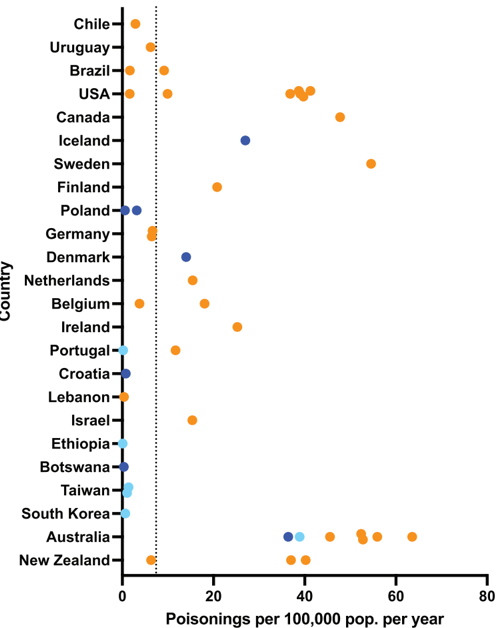
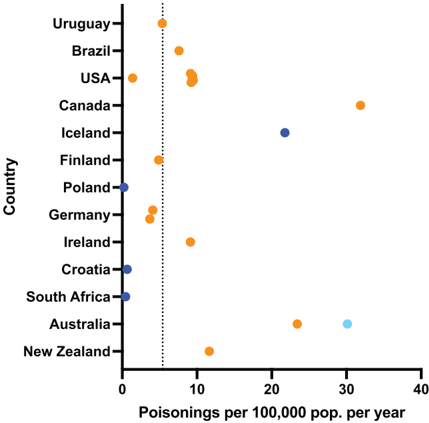
“Some data sources only provided rates without providing raw data or catchment populations [195,196] and as such were excluded from the calculation of the weighted means.”
BackgroundDepartment of Emergency Medicine, F. O. H. S., Laher, A. E., Motara, F., Department of Emergency Medicine, F. O. H. S., Gihwala, R., Department of Emergency Medicine, F. O. H. S., Moolla, M., & Department of Emergency Medicine, F. O. H. S. (2022) · South African Medical Journal · doi:10.7196/samj.2022.v112i5.16366 · Cited by 14
Rumack, B. H., & Peterson, R. G. (1977) · New England Journal of Medicine · doi:10.1056/nejm197703102961023 · Cited by 14
Huang, H.-S., Ho, C., Weng, S., Hsu, C., Wang, J., Su, S., Lin, H., & Huang, C. (2018) · Scandinavian Journal of Trauma Resuscitation and Emergency Medicine · doi:10.1186/s13049-017-0468-8 · Cited by 13
Hondebrink, L., Rietjens, S. J., Donker, D. W., Hunault, C. C., van den Hengel-Koot, I. S., Verputten, P. M., de Vries, I., Kaasjager, K. A. H., Dekker, D., & de Lange, D. W. (2019) · European Journal of Internal Medicine · doi:10.1016/j.ejim.2019.05.012 · Cited by 13
Nair, S. J., Sujatha, C., P, S. C. K., & Sasikala, K. (2021) · Journal of Forensic and Legal Medicine · doi:10.1016/j.jflm.2021.102247 · Cited by 13
Filip, A. B., Berg, S. E., Mullins, M. E., Schwarz, E. S., & On behalf of the Toxicology Investigators Consortium (ToxIC) (2022) · Clinical Toxicology · doi:10.1080/15563650.2022.2070071 · Cited by 13 · cited 1×
“The evidence for use of fomepizole in this context is primarily from animal models [113] and small case series [114,115].”
BackgroundThe Safety Profile of Sustained Release Paracetamol During Therapeutic Use and Following Overdose
Dart, R. C., Green, J. L., & Bogdan, G. M. (2005) · Drug Safety · doi:10.2165/00002018-200528110-00005 · Cited by 12 · cited 2×
“a hydroxypropylmethylcellulose coating [53], and ER tablets are a bilayered tablet where one side contains immediate release and the other slow release paracetamol (in a matrix formulation) [59].”
BackgroundGenetic variants associated with ALT elevation from therapeutic acetaminophen
Monte, A. A., Mackenzie, I. A., Pattee, J. W., Kaiser, S. K., Willems, E., Rumack, B. H., Reynolds, K. M., Dart, R. C., & Heard, K. J. (2022) · Clinical Toxicology · doi:10.1080/15563650.2022.2117053 · Cited by 12 · cited 2×
“In a genetic study of subjects taking therapeutic paracetamol, 20 genes implicated in paracetamol metabolism and drug-induced liver injury (DILI) development were assayed [73].”
BackgroundOwens, K. H., Medlicott, N. J., Zacharias, M., Whyte, I. M., Buckley, N. A., & Reith, D. M. (2015) · Clinical and Experimental Pharmacology and Physiology · doi:10.1111/1440-1681.12327 · Cited by 11 · cited 1×
“only useful in established hepatotoxicity [91].”
Self-citationBeauchamp, G. A., Carey, J., Adams, T., Wier, A., Colón, M. F., Cook, M., Cannon, R. D., Katz, K. D., & Greenberg, M. R. (2018) · Clinical Therapeutics · doi:10.1016/j.clinthera.2018.06.012 · Cited by 11
Liakoni, E., Berger, F., Klukowska‐Rötzler, J., Kupferschmidt, H., Haschke, M., & Exadaktylos, A. K. (2019) · Swiss Medical Weekly · doi:10.4414/smw.2019.20164 · Cited by 11
At-a-glance - Trends in emergency department visits for acetaminophen-related poisonings: 2011–2019
Kaur, J., McFaull, S. R., & Bang, F. (2020) · Health Promotion and Chronic Disease Prevention in Canada · doi:10.24095/hpcdp.40.4.05 · Cited by 11
Li, J., Chiew, A. L., Isbister, G. K., & Duffull, S. B. (2021) · Clinical Toxicology · doi:10.1080/15563650.2021.1928163 · Cited by 11
Acute drug poisonings leading to hospitalization
Andersen, C. U., Nielsen, L. P., Møller, J. M., & Olesen, A. E. (2022) · Basic & Clinical Pharmacology & Toxicology · doi:10.1111/bcpt.13688 · Cited by 11 · cited 11×
“After a decision made by the European Medicines Agency, countries in the European Union such as the UK (formerly), Denmark, and Ireland do not supply any MR paracetamol, even on prescription [30,238].”
BackgroundInfluentialSelf-poisonings before and during the initial year of the COVID-19 pandemic in northern Poland
Anand, Ł. S., & Anand, J. S. (2022) · International Journal of Occupational Medicine and Environmental Health · doi:10.13075/ijomeh.1896.01838 · Cited by 11
Fomepizole should not be used more liberally in paracetamol overdose
Dear, J. W. (2023) · British Journal of Clinical Pharmacology · doi:10.1111/bcp.15596 · Cited by 11 · cited 22×
“This allows for the detoxification of NAPQI and prevents hepatotoxicity in most cases [98].”
BackgroundInfluentialA descriptive study of intentional self‐poisoning from New Zealand national registry data
Kumpula, E., Nada‐Raja, S., Norris, P., & Quigley, P. (2017) · Australian and New Zealand Journal of Public Health · doi:10.1111/1753-6405.12702 · Cited by 10 · cited 3×
“countries (Supplementary Figure S5) [148,188,192,195].”
BackgroundInfluentialKlobučar, I., Potočnjak, I., Dumančić, J., Stemberger, K., Čupić, M., Kokotović, T., Kucijan, Z., & Degoricija, V. (2019) · Clinical Toxicology · doi:10.1080/15563650.2018.1506129 · Cited by 10 · cited 1×
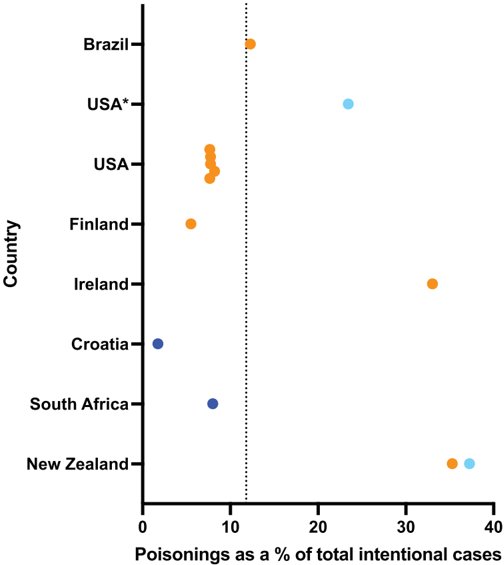
“Croatia had very few paracetamol poisonings (<1%) [162].”
BackgroundAcar, N., Sungur, S., Bilge, U., & Unluoglu, I. (2018) · Nigerian Journal of Clinical Practice · doi:10.4103/njcp.njcp_291_17 · Cited by 10
Song, S. J., Park, G. J., Lee, J. H., Kim, S. C., Kim, H., & Lee, S. W. (2020) · Journal of Korean Medical Science · doi:10.3346/jkms.2020.35.e286 · Cited by 10 · cited 2×
“countries (Supplementary Figure S5) [148,188,192,195].”
InfluentialAronoff, D. M. (2002) · Drug Safety · doi:10.2165/00002018-200225100-00007 · Cited by 9
Goldberger, D., & Vearrier, D. (2017) · Journal of Medical Toxicology · doi:10.1007/s13181-017-0622-8 · Cited by 9 · cited 1×
“2016); however, no significant changes occurred [252].”
Eyasu, M., Dida, T., Worku, Y., Worku, S., & Shafie, M. (2017) · Tropical Medicine & International Health · doi:10.1111/tmi.12940 · Cited by 9 · cited 3×
“One data source in the U.S.A (16.5%), and the Ethiopian source reported poisonings from women only.”
BackgroundInfluentialFatalities in poisoned patients managed by medical toxicologists
Friedman, N., Shoshani-Levy, M., Brent, J. A., Wax, P. M., Campleman, S. L., Finkelstein, Y., & for the Toxicology Investigators Consortium (2019) · Clinical Toxicology · doi:10.1080/15563650.2019.1672877 · Cited by 9
Kumpula, E.-K., Lambie, B., Quigley, P., Nada-Raja, S., & Norris, P. (2020) · The Journal of Primary Health Care · doi:10.1071/hc20017 · Cited by 9
Role of Hepatitis E Virus Infection in North American Patients With Severe Acute Liver Injury
Fontana, R. J., Engle, R. E., Gottfried, M., Hammed, B., Hanje, J., Durkalski, V., Kleiner, D. E., Nguyen, H., Nishimura, N., Lee, W. M., et al. (2020) · Clinical and Translational Gastroenterology · doi:10.14309/ctg.0000000000000273 · Cited by 9
Mainoli, B., Gonçalves, N., Ferreira, J. J., & Mégarbane, B. (2022) · Basic & Clinical Pharmacology & Toxicology · doi:10.1111/bcpt.13698 · Cited by 8 · cited 3×
“A study of 21 European countries found that over half of the participating countries including France, Italy, and Switzerland did not have paracetamol available for purchase outside of pharmacies and that the rate of paracetamolrelated poisoning enquiries was subsequently lower in most of these countries [233].”
BackgroundInfluentialDo pre-hospital poisoning deaths differ from in-hospital deaths? A retrospective analysis
Koskela, L., Raatiniemi, L., Bakke, H. K., Ala-Kokko, T., & Liisanantti, J. (2017) · Scandinavian Journal of Trauma, Resuscitation and Emergency Medicine · doi:10.1186/s13049-017-0391-z · Cited by 6
Research works printed but not linked: 13
- WHO model list of essential medicines -22nd list, 2021. Geneva (Switzerland): World Health Organization; 2021.
- Cahn A, Hepp P. Das Antifebrin, ein neues Fiebermittel. Centralbl Klin Med. 1886;7:561-564. German.
- von Mering J. Beiträge zur Kenntnis der Antipyretica. Ther Monatsch. 1893;7:577-587. German.
- Brodie BB, Axelrod J. The fate of acetophenetidin (phenacetin) in man and methods for the estimation of acetophenetidin and its metabolites in biological material. J Pharmacol Exp Ther. 1949;97 (1):58-67.
- Afandiyev I, 2019, Georgian Med News, 287, 105
- Bentur Y, 2019, Isr Med Assoc J, 21, 175
- Babić Ž, 2022, Arh Hig Rada Toksikol, 73, 88
- Boletim CIAV, Centro de Informação Antivenenos Dados Estatísticos 2021 [CIAV Bulletin – Antivenom Information Center Statistical Data 2021]
- Kumpula EK, 2021, N Z Med J, 134, 26
- Khan M, 2019, J Pak Med Assoc, 69, 1025
- Supervía Caparrós A, Pallàs Villaronga O, Clemente Rodríguez C, et al. Características diferenciales de las intoxicaciones en los pacientes ancianos atendidos en un servicio de urgencias [Characteristics of emergency poisoning cases in elderly versus younger patients]. Emergencias. 2017;29(5):335-338. Spanish. 176.
- Nugteren-van Lonkhuyzen JJ, 2022, [Acute poisonings in humans and animals - NVIC Annual Review 2021]
- Poisons Standard October 2022, 2022, Canberra
Cited by
NLRP3 inflammasome in hepatic diseases: A pharmacological target
Ramos‐Tovar, E., & Muriel, P. (2023) · Biochemical Pharmacology · doi:10.1016/j.bcp.2023.115861 · Cited by 75
Liver regeneration after injury: Mechanisms, cellular interactions and therapeutic innovations
Liu, Q., Wang, S., Fu, J., Chen, Y., Xu, J., Wei, W., Song, H., Zhao, X., & Wang, H. (2024) · Clinical and Translational Medicine · doi:10.1002/ctm2.1812 · Cited by 49
“60,61 Excessive APAP exposure damages mitochondria and results in significant DNA harm, resulting in swift cell death during specific phases of the cell cycle and potentially halting the entire process.”
BackgroundChao, X., Niu, M., Wang, S., Ma, X., Yang, X., Sun, H., Hu, X., Wang, H., Li, Z., Huang, R., et al. (2023) · Acta Pharmaceutica Sinica B · doi:10.1016/j.apsb.2023.10.017 · Cited by 38
“Acetaminophen (APAP) is a safe and effective drug at therapeutic doses, but an overdose can cause severe liver injury resulting in acute liver failure in animals and man 1 .”
BackgroundUnderlying mechanisms and treatment of acetaminophen‑induced liver injury (Review)
Li, R., Wu, H., Xu, Y., Xu, X., Xu, Y., Huang, H., Lv, X., Liao, C., Ye, J., & Li, H. (2025) · Molecular Medicine Reports · doi:10.3892/mmr.2025.13471 · Cited by 44
“Various factors can increase the risk for APAP toxicity, which is mainly mediated by the metabolic pathway of APAP (12).”
Cell Death in Liver Disease and Liver Surgery
Stoess, C., Choi, Y., Onyuru, J., Friess, H., Hoffman, H. M., Hartmann, D., & Feldstein, A. E. (2024) · Biomedicines · doi:10.3390/biomedicines12030559 · Cited by 30
“Drug-induced liver injury or DILI is a significant cause of acute liver injury (ALI) that can ultimately progress to acute liver failure (ALF) [71].”
Background
Metadata
- Authors
- Chidiac, A. S., Buckley, N. A., Noghrehchi, F., & Cairns, R.
- Affiliations
- The University of Sydney (AU)
- Corresponding author
- Cairns, Rose
- Venue
- Expert Opinion on Drug Metabolism & Toxicology
- Publisher
- Informa UK Limited
- Published
- 2023-05-04
- Volume
- 19
- Issue
- 5
- Pages
- 297-317
- ISSN
- 1742-5255 (ISSN-L)
- 1744-7607
- OpenAlex
- W4384074050
- Cited by
- 215
- References
- 220
- Citations by year
- 2026: 85 · 2025: 76 · 2024: 48 · 2023: 5
- FWCI
- 9.89
- Type
- journal article
- Language
- en
- Open access
- hybrid
- doi.org
- Licence
- cc-by-nc-nd
- creativecommons.org/licenses/by/4.0/ (vor)
- Locations
- Expert Opinion on Drug Metabolism & Toxicology (publishedVersion, cc-by-nc-nd)
- PubMed (publishedVersion)
- Figshare (submittedVersion, cc-by)
- Figshare (cc-by)
- Topics
- Life Sciences › Pharmacology, Toxicology and Pharmaceutics › Pharmacology › Drug-Induced Hepatotoxicity and Protection
- Health Sciences › Medicine › Emergency Medicine › Poisoning and overdose treatments
- Health Sciences › Medicine › Public Health, Environmental and Occupational Health › Opioid Use Disorder Treatment
- Keywords
- acetaminophen overdose, paracetamol, hepatotoxicity, acute liver failure, drug-induced liver injury, N-acetylcysteine, antidote therapy, poisoning epidemiology, drug overdose deaths, harm reduction, over-the-counter analgesics, drug regulation
- MeSH terms
- Acetaminophen, Acetylcysteine, Humans, Cost of Illness, Chemical and Drug Induced Liver Injury, Drug Overdose
About these checks
Registry, retraction, Cites and statistics results are computed, not judged, with one exception: a printed reference that no index lists is read once by a model before it counts as a citation error. Claims are extracted by a model and kept only when their quote appears verbatim in the text; each cited source is then checked, with a model’s help, for whether it says what the claim relies on. Those verdicts can be wrong — read the claim’s quote and the cited source before relying on one.
The claim verdicts this report counts are experimental: their accuracy is not yet measured.
A language model drew the claims from the paper on 2026-10-04, under version 3 of the claim definition (model deepseek-v4.1-flash, prompt extract-v3).
A second model labelled each claim on 2026-10-04 (model jev-1.13-20260917, definition revision gold-guideline-v0.2).
Cited sources are checked with a language model’s help (gpt-6-sol and qwen3.8-omni-flash).
Statistics and arithmetic are recomputed, not judged.
Confidence bands are shown only for fields calibrated on our annotated test set. None is calibrated yet, so no band is shown.
What counts as a claim ›How we measure confidence ›How we check this ›
Are you an author, or do you see a problem with this page? Request a review
Data sources
Bibliographic data: Semantic Scholar, OpenAlex, Crossref.
Contains information from the Semantic Scholar Academic Graph Datasets, made available under the ODC Attribution License (ODC-BY 1.0).
Semantic Scholar’s data is described in: Kinney, R., et al. (2023). The Semantic Scholar Open Data Platform. arXiv:2301.10140.
