

Generative artificial intelligence empowers digital twins in drug discovery and clinical trials
Open accessThe DOI matches its Crossref record; 63 of the 63 references it cites were found in a registry or an index.
Abstract
INTRODUCTION: The concept of Digital Twins (DTs) translated to drug development and clinical trials describes virtual representations of systems of various complexities, ranging from individual cells to entire humans, and enables in silico simulations and experiments. DTs increase the efficiency of drug discovery and development by digitalizing processes associated with high economic, ethical, or social burden. The impact is multifaceted: DT models sharpen disease understanding, support biomarker discovery and accelerate drug development, thus advancing precision medicine. One way to realize DTs is by generative artificial intelligence (AI), a cutting-edge technology that enables the creation of novel, realistic and complex data with desired properties. AREAS COVERED: The authors provide a brief introduction to generative AI and describe how it facilitates the modeling of DTs. In addition, they compare existing implementations of generative AI for DTs in drug discovery and clinical trials. Finally, they discuss technical and regulatory challenges that should be addressed before DTs can transform drug discovery and clinical trials. EXPERT OPINION: The current state of DTs in drug discovery and clinical trials does not exploit the entire power of generative AI yet and is limited to simulation of a small number of characteristics. Nonetheless, generative AI has the potential to transform the field by leveraging recent developments in deep learning and customizing models for the needs of scientists, physicians and patients.
Overview
The claims and statistics of this paper haven’t been checked yet.
Free: it reads the open-access text and checks the first 5 claims that cite a source we can check. Create a free account to check every claim.
Integrity signals
Registry
Cites
Statistics
Figures



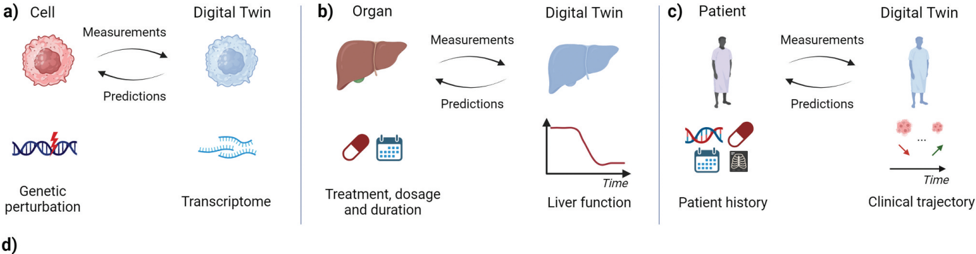
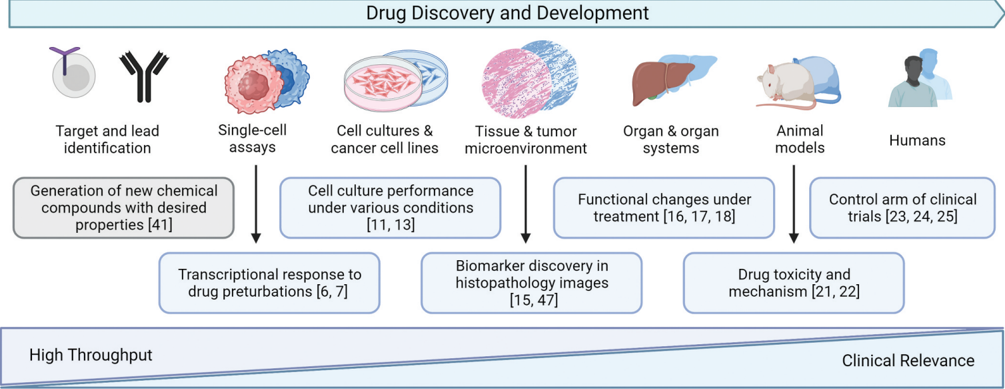
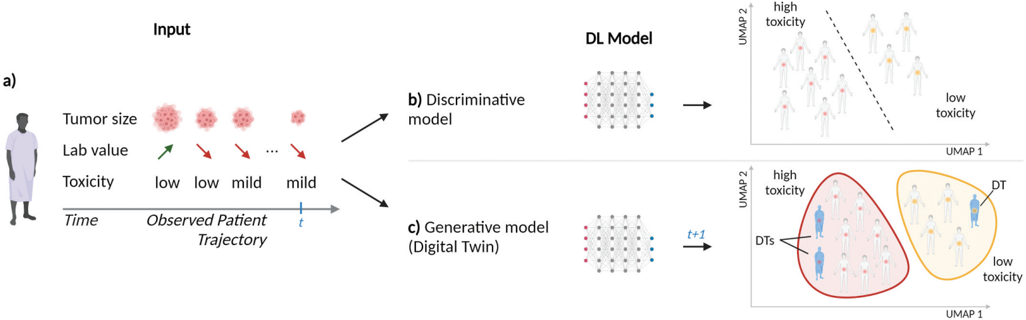

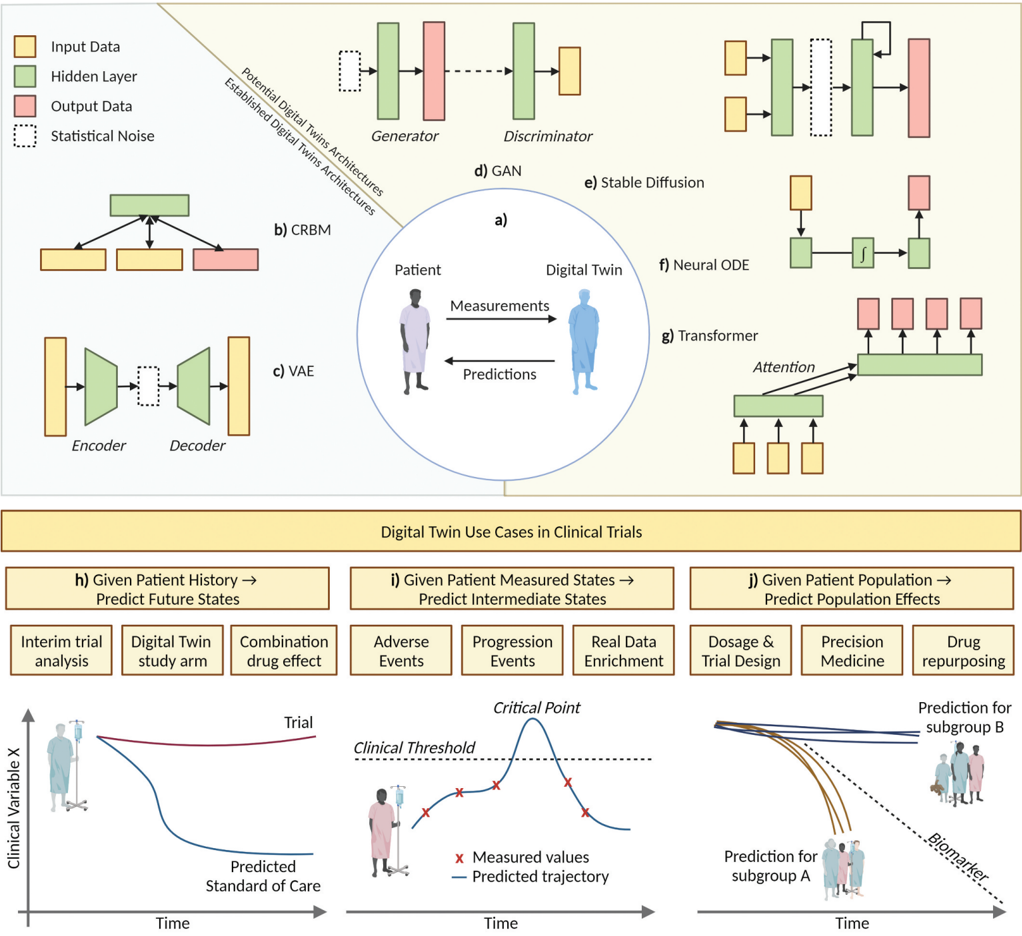
Verification
Claims the paper makes
The claims and statistics of this paper haven’t been checked yet.
Free: it reads the open-access text and checks the first 5 claims that cite a source we can check. Create a free account to check every claim.
Claims other papers make about this one
Each is checked against this paper’s own text: does it say what the citing paper says it does?
The source backs part of the claim, not all of it — or backs it for a different population, condition or comparison.
In the citing paper
“In the healthcare domain, medical AI and ML models have demonstrated the potential to improve patient outcomes, reduce cost burdens, accelerate clinical trials, and revolutionize the way we diagnose, treat, and prevent disease [26,28–31].”
From Bias in medical AI: Implications for clinical decision-making (2024) · cites this paper as [29]
Experimental — accuracy not yet measuredThe source backs part of the claim, not all of it — or backs it for a different population, condition or comparison.
In the citing paper
“because synthetic data are similar to but not the same as real data, they can be used to eliminate or mask personal identifiers and protect the confidentiality of human participants [31, 81, 200].”
From The ethics of using artificial intelligence in scientific research: new guidance needed for a new tool (2025) · cites this paper as [31]
Experimental — accuracy not yet measuredIn the citing paper
“Already, AI is employed in clinical trials to accelerate enrollment, monitor patients (e.g., wearables), and improve retention [29,114,115].”
From Bias in medical AI: Implications for clinical decision-making (2024) · cites this paper as [29]
Self-check
Percentages, sums and reported differences re-computed from the paper’s own numbers.
The self-check needs the paper’s full text.
Citations
Cites
LeCun, Y., Bengio, Y., & Hinton, G. (2015) · Nature · doi:10.1038/nature14539 · Cited by 84,126
Multimodal Machine Learning: A Survey and Taxonomy
Baltrusaitis, T., Ahuja, C., & Morency, L.-P. (2019) · IEEE Transactions on Pattern Analysis and Machine Intelligence · doi:10.1109/tpami.2018.2798607 · Cited by 5,018
The Principles of Humane Experimental Technique
(1960) · Medical Journal of Australia · doi:10.5694/j.1326-5377.1960.tb73127.x · Cited by 4,912 · cited 1×
“DTs of animal models enable animal alternative testing solutions, i.e. increased animal welfare, by the replacement, reduction and refinement (3Rs) principle [53].”
BackgroundOn the Opportunities and Risks of Foundation Models
Bommasani, R., Hudson, D. A., Adeli, E., Altman, R., Arora, S., von Arx, S., Bernstein, M. S., Bohg, J., Bosselut, A., Brunskill, E., et al. (2021) · arXiv · doi:10.48550/arxiv.2108.07258 · Cited by 2,676 · cited 1×
“Another possible technological advance would be a foundation model [64]that is able to scale across all preclinical and clinical DTs, from cell to humans, and be adapted to specific use cases.”
BackgroundFundamentals of Clinical Trials
Friedman, L. M., Furberg, C. D., DeMets, D. L., Reboussin, D. M., & Granger, C. B. (2015) · doi:10.1007/978-3-319-18539-2 · Cited by 2,237
Diffusion Models in Vision: A Survey
Croitoru, F.-A., Hondru, V., Ionescu, R. T., & Shah, M. (2023) · IEEE Transactions on Pattern Analysis and Machine Intelligence · doi:10.1109/tpami.2023.3261988 · Cited by 1,859 · cited 2×
“…potential to implement more complex DTs in clinical trials, such as diffusion models, which are state-of-the-art in image generation (Figure 3e) [36]; neural ordinary differential equations, which enable learning of continuous dynamic systems (ODEs; Figure 3f) [38] and transformers, which have…”
BackgroundscGPT: Towards Building a Foundation Model for Single-Cell Multi-omics Using Generative AI
Cui, H., Wang, C., Maan, H., Pang, K., Luo, F., & Wang, B. (2023) · doi:10.1101/2023.04.30.538439 · Cited by 1,694
Estimation of clinical trial success rates and related parameters
Wong, C. H., Siah, K. W., & Lo, A. W. (2019) · Biostatistics · doi:10.1093/biostatistics/kxx069 · Cited by 1,585 · cited 1×
“A motivation for DTs in clinical settings is that only one out of ten compounds entering clinical trials will achieve regulatory approval [54].”
BackgroundDeep learning for computational biology
Angermueller, C., Pärnamaa, T., Parts, L., & Stegle, O. (2016) · Molecular Systems Biology · doi:10.15252/msb.20156651 · Cited by 1,473 · cited 1×
“Secondly, most methods rely on less than five thousand patients for training, which is considered small for deep learning [58], and thus may reduce the generalizability of the models.”
MethodLin, T., Wang, Y., Liu, X., & Qiu, X. (2022) · AI Open · doi:10.1016/j.aiopen.2022.10.001 · Cited by 1,422
Research works printed but not linked: 3
- How digital twins of human cells are accelerating drug discovery [internet] DeepLife. 2022 Jun cited 2023 Sep 18. Available from https://www.nature.com/articles/d43747-022-00108-3
- Murphy KP. Probabilistic machine learning: an introduction. Cambridge, Massachusetts: MIT press. 2022 Mar 1. •• Thorough introduction into machine modeling techniques.
- Chen RT, Rubanova Y, Bettencourt J, et al. Neural ordinary differ- ential equations. In Proceedings of the 32nd International Conference on Neural Information Processing Systems (NIPS'18);
Cited by
Items 101–200 of 234
FDA Draft Guidelines for AI and the Need for Ethical Frameworks
Deshmukh, A. D., & Wagner, J. K. (2025) · Archives of Pediatrics and Adolescent Medicine · doi:10.1001/jamapediatrics.2025.1979 · Cited by 5
Digital Twins: On Algorithm-Based Political Participation
Marzá, D. G., & Calvo, P. (2024) · Philosophy and politics · doi:10.1007/978-3-031-53015-9_4 · Cited by 11
Digital Twin Technology In Radiology
Aghamiri, S. S., Amin, R., Isavand, P., Vahdati, S., Zeinoddini, A., Kitamura, F., Moy, L. P., & Kline, T. L. (2025) · Journal of Imaging Informatics in Medicine · doi:10.1007/s10278-025-01597-1 · Cited by 10
“For instance, AI-generated DTs utilizing generative AI assist in drug discovery and clinical trials [83, 117, 129].”
The Use of Digital Healthcare Twins in Early-Phase Clinical Trials
Mann, D. L. (2024) · JACC Basic to Translational Science · doi:10.1016/j.jacbts.2024.08.002 · Cited by 5
Future Directions for Quantitative Systems Pharmacology
Schoeberl, B., Musante, C. J., & Ramanujan, S. (2024) · Handbook of experimental pharmacology · doi:10.1007/164_2024_737 · Cited by 6
Khalifa, A., & Hussein, R. (2026) · Journal of Medical Systems · doi:10.1007/s10916-026-02391-4 · Cited by 5
Lăzăroiu, G., Gedeon, T., Halicka, K., & Szpilko, D. (2025) · Engineering Management in Production and Services · doi:10.2478/emj-2025-0018 · Cited by 4
Artificial intelligence for autoimmune diseases
Mahajan, A., LaChance, A., Rodman, A. M., Chung, L. S., & Powell, D. (2025) · npj Digital Medicine · doi:10.1038/s41746-025-02015-0 · Cited by 5
Persona-driven generative AI in pharmaceuticals
Wan, Y., Nakayama, M., Aldana, C. F., & Alvino, F. (2025) · Drug Discovery Today · doi:10.1016/j.drudis.2025.104520 · Cited by 5
Single‐cell digital twins identify drug targets and repurposable medicine in Alzheimer’s disease
Ren, Y., Hu, M., Li, Y. E., Pieper, A. A., Cummings, J. L., & Cheng, F. (2025) · Alzheimer s & Dementia · doi:10.1002/alz70859_102982 · Cited by 6
Leveraging blockchain and LLMs for patient–clinical trial matching
Hawashin, D., Salah, K., Jayaraman, R., Ellahham, S. H., & Yaqoob, I. (2025) · Array · doi:10.1016/j.array.2025.100657 · Cited by 4
Machine-learning-enabled modeling of pharmacokinetics and pharmacodynamics
Psarellis, Y. M., Pillai, N., Dhakal, S., & Mavroudis, P. D. (2026) · Drug Discovery Today · doi:10.1016/j.drudis.2026.104645 · Cited by 6
Olawade, D. B., Akinro, O., Oisakede, E. O., Bello, O. J., Analikwu, C. C., & Egbon, E. (2026) · European Journal of Radiology · doi:10.1016/j.ejrad.2026.112865 · Cited by 7
The potential of academic drug discovery: successes and challenges
Stremlau, M. H., & Slusher, B. S. (2025) · Expert Opinion on Drug Discovery · doi:10.1080/17460441.2025.2528125 · Cited by 4
“Amongst the most transfor-mative tools is likely to be artificial intelligence (AI), which has been proposed to accelerate drug discovery by optimizing target selection, predicting drug interactions, and analyzing complex datasets [20,21].”
Yingngam, B. (2024) · Advances in medical technologies and clinical practice book series · doi:10.4018/979-8-3693-3212-2.ch005 · Cited by 5
Revolutionizing Digital Health with Generative AI: User Experiences and Healthcare Performance
Deng, K., Liu, X., Xu, D., & Sengupta, A. (2024) · IEEE International Conference on Medical Artificial Intelligence (MedAI) · doi:10.1109/medai62885.2024.00055 · Cited by 5
Huang, L., Pan, L., Wu, C., Tian, M., Li, Q., Yao, P., Li, Y., & Li, Y. (2024) · Digital Medicine · doi:10.1097/dm-2024-00013 · Cited by 7
Issa, A. M. (2025) · Clinical Pharmacology in Drug Development · doi:10.1002/cpdd.1607 · Cited by 4
Ung, C. Y., Correia, C., Zhang, Z. M., Caya, C., Zhu, S., Billadeau, D. D., & Li, H. (2025) · Cancers · doi:10.3390/cancers17213543 · Cited by 5
“GAI has been applied to the generation of digital twins [19] and aids in identifying the optimal drug for a given patient [20].”
Xie, H., Huang, Q., Yu, H., Qu, Y., Yuan, M., Wu, H., Wang, J., Zhu, Z., & Li, Z. (2025) · Information Fusion · doi:10.1016/j.inffus.2025.103957 · Cited by 6
Warke, S., Katari, O., & Jain, S. (2025) · AAPS PharmSciTech · doi:10.1208/s12249-025-03296-0 · Cited by 10
Ali, A. M., Kausar, M. A., Anwar, S., Khan, F. H., Elagib, H. M., Shahien, M. M., & Alshabrmi, F. M. (2026) · Frontiers in Medicine · doi:10.3389/fmed.2026.1795879 · Cited by 6
Chatterjee, S., Saha, P., Ganguly, P., & Patel, A. K. (2026) · Revista Brasileira de Farmacognosia · doi:10.1007/s43450-026-00765-w · Cited by 3
Fontana, C., & Ajabshir, S. Z. (2026) · Computation · doi:10.3390/computation14070143 · Cited by 4
Wu, Q., Tan, W., Zhou, L., Deveci, M., Ding, W., Martínez, L. M., & Pamucar, D. S. (2025) · Expert Systems with Applications · doi:10.1016/j.eswa.2025.127683 · Cited by 3
Artificial Intelligence in Pharmaceutical Research
Mane, S. A., Bakal, R. L., & Hatwar, P. R. (2025) · Journal of Drug Delivery and Therapeutics · doi:10.22270/jddt.v15i6.7234 · Cited by 5
Digital twin technology fundamentals
Chaiburi, C., & Yingngam, B. (2024) · Elsevier eBooks · doi:10.1016/b978-0-443-28884-5.00001-4 · Cited by 3
Dashti, R., Jahandoost, A., Fardadidokht, S., Hosseini, S. A., Mojarad, O., Golsefid, A. T., Gross, J. D., & Samadi, A. (2025) · Biomedical Materials & Devices · doi:10.1007/s44174-025-00562-4 · Cited by 4
“These ML-DT-based systems serve as rapid emulators of complex biology, reducing the need for experiments and suggesting targeted lab tests [194].”
Exploring Artificial Intelligence's Potential to Enhance Conventional Anticancer Drug Development
Bobolea, S., Hinoveanu, M. I., Dimitriu, A., Brașoveanu, M., Iliescu, C., Dinu‐Pîrvu, C., Ghica, M. V., Anuța, V., Popa, L., & Prisada, R. M. (2025) · Drug Development Research · doi:10.1002/ddr.70182 · Cited by 2
Artificial Intelligence and Multiple Sclerosis: Past, Present, and Future
Amin, M., Nakamura, K., & Ontaneda, D. (2025) · Seminars in Neurology · doi:10.1055/a-2730-8997 · Cited by 3
Bhattacharya, M., Chatterjee, S., Das, A., Lee, S., & Chakraborty, C. (2025) · Vaccine · doi:10.1016/j.vaccine.2025.128051 · Cited by 2
Digital Twins for Drug Design: Importance, Applications and Future Perspectives
Adhikari, C., Das, P. K., & Pramanik, T. (2025) · Oriental Journal Of Chemistry · doi:10.13005/ojc/410617 · Cited by 3
Drug and Dosage Recommendation Based on Explainable Generative AI Using Patient-Specific Modeling
Dağlarlı, E. (2026) · IEEE Access · doi:10.1109/access.2026.3657398 · Cited by 7
“…still an enormous gap that calls for the development of advanced methods that are capable of interweaving different patient data in a seamless manner, making a data-driven analysis understandable and thereby giving clinicians the opportunity to select the best therapeutic option [22], [23], [24].”
Generative AI empowered digital twins for advancing precision medicine
Akbarialiabad, H., Safaee, E., Letafati, M., Gong, J., Leachman, S. A., Grada, A. A., Pasdar, A., Janatifar, M., Shakil, F., Bunick, C. G., et al. (2026) · Discover Artificial Intelligence · doi:10.1007/s44163-026-01034-4 · Cited by 3
Wu, H., Tang, X., Wang, W., & Li, R. C. (2026) · Artificial Intelligence Surgery · doi:10.20517/ais.2026.37 · Cited by 2
Fu, Y., Ge, Y., Yi, S., Peng, Q., Jiang, H., & Zhou, J. (2026) · Frontiers in Pharmacology · doi:10.3389/fphar.2026.1854700 · Cited by 4
“…individual patient parameters, including hepatic function, portal hemodynamics, tumor burden, and gut microbiome composition, with nano-DDS pharmacokinetic models holds promise for personalized dose optimization in HCC patients with heterogeneous disease presentations (Bordukova et al., 2024).”
Shakeri, E., & Far, B. H. (2026) · Intelligence-Based Medicine · doi:10.1016/j.ibmed.2026.100442 · Cited by 3
Pokkuluri, K. S., N., S. S. S. N. U. D., & Khang, A. (2024) · Advances in medical diagnosis, treatment, and care (AMDTC) book series · doi:10.4018/979-8-3693-3218-4.ch010 · Cited by 2
Alkhalifah, Y., & Lytras, D. (2024) · Elsevier eBooks · doi:10.1016/b978-0-443-13619-1.00006-4 · Cited by 2
Sağlık Hizmetlerinde Çığır Açan Uygulamalar: İnsan Dijital İkizi ile Geleceğe Yolculuk
Özsezer, G., & Mermer, G. (2024) · Bandırma Onyedi Eylül Üniversitesi Sağlık Bilimleri ve Araştırmaları Dergisi · doi:10.46413/boneyusbad.1440963 · Cited by 3
Hulsen, T. (2025) · Elsevier eBooks · doi:10.1016/b978-0-443-15728-8.00014-8 · Cited by 2
Artificial Intelligence for Early Breast Cancer Detection
Deendyal, V., Ghazaryan, L., Linden, E. A., Allen, L., & Thaker, N. G. (2025) · AI in Precision Oncology · doi:10.1089/aipo.2024.0051 · Cited by 5
Precision medicine and personalized treatment
Channi, H. K., Sandhu, R., Kaur, M., & Ghai, D. (2025) · Elsevier eBooks · doi:10.1016/b978-0-443-26480-1.00004-7 · Cited by 5
Ethical Considerations in Artificial Intelligence Development
Gowtham raj, R., & Logeshwari, P. (2024) · International Journal of Research Publication and Reviews · doi:10.55248/gengpi.5.0624.1453 · Cited by 3
Navigating the Promise and Perils of Generative AI in Healthcare
Joseph, S., ul-Ain, Q., Nosheen, S., Ahmad, M., & Fatima, R. (2024) · Advances in medical technologies and clinical practice book series · doi:10.4018/979-8-3693-3731-8.ch005 · Cited by 2
Population scale proteomics enables adaptive digital twin modelling in sepsisPreprint
Scott, A. M., Mellhammar, L., Malmström, E., Gustafsson, A. G., Bakochi, A., Isaksson, M., Mohanty, T., Thelaus, L., Kahn, F., Malmström, L., et al. (2024) · medRxiv · doi:10.1101/2024.03.20.24304575 · Cited by 3
“Digital twin models have been used successfully in several fields to understand disease, identify patients with similar response to different treatments, to predict outcome, and in drug development [14, 34].”
BackgroundMethodBerre, C. L., Jairath, V., Panaccione, R., Bourreille, A., Magro, F., Danese, S., & Peyrin‐Biroulet, L. (2025) · Clinical Gastroenterology and Hepatology · doi:10.1016/j.cgh.2025.01.030 · Cited by 2
Impact of Metaverse Technologies Integration on Biotechno-logical Innovation: A Literature Review
Feta, A. A., & Kamberaj, H. (2025) · European Scientific Journal ESJ · doi:10.19044/esj.2025.v21n21p1 · Cited by 1
Empirical Study of Social Bias in Medical Question Answering via Large Language Models
Xiao, X., Zhao, J., Payne, T. R., & Fang, M. (2025) · Lecture notes in computer science · doi:10.1007/978-3-032-00652-3_1 · Cited by 2
Anderson, G. P., Flynn, A. W. P., Bardin, P. G., Blakey, J., Dharmage, S. C., Foster, P. S., Gibson, P. G., Jaffé, A., James, A., Jenkins, C. R., et al. (2025) · The Medical Journal of Australia · doi:10.5694/mja2.70094 · Cited by 1
Technological advances in the search for a CURE for asthma
Quon, S., Johanson, T. M., Wadhwa, R., Faiz, A., Flynn, A. W. P., Anderson, G. P., Cox, A. J., West, N. P., Menden, M. P., & Allan, R. S. (2025) · The Medical Journal of Australia · doi:10.5694/mja2.70084 · Cited by 4
“44 Using large medical datasets, these models can be fine tuned to predict clinical outcomes and personalise treatment with limited additional data (few-shot learning).”
Self-citationBenbow, J. H., & Kim, E. S. (2025) · The Cancer Journal · doi:10.1097/ppo.0000000000000796 · Cited by 1
Breaking through the radiation dilemma: development and clinical translation of anti-radiation drugs
Wang, L., Wang, Y., Wu, S., Li, S., Qin, Z., Wang, C., & Niu, L. (2026) · Pharmaceutical Science Advances · doi:10.1016/j.pscia.2026.100110 · Cited by 1
“…progression, simulate the therapeutic effects of radioprotective drugs, thereby screening out the optimal and most robust trial protocols [171,172]. c) Real-time monitoring and dynamic adjustment: AI enables the analysis of real-time data collected during clinical trials to monitor signals…”
How to improve statistical power in a trial with SCA2 patients using natural history data
Tran, M., Poulet, P., Petit, E., Dürr, A., Klockgether, T., Ashizawa, T., Coarelli, G., & du Montcel, S. T. (2026) · Trials · doi:10.1186/s13063-026-09591-w · Cited by 2
“Treated patients can have digital placebo twins, which are virtual representations that resemble the longitudinal characteristics of actual patients [7].”
Engineering Human Biology on Chips: How “Human-Like” Can We Become?
Li, L., Dehne, E., König-Huber, F., & Marx, U. (2026) · Engineering · doi:10.1016/j.eng.2026.03.004 · Cited by 1
Priorities for advancing artificial intelligence in inflammatory bowel disease: a technology update
Silverman, A. L., Stidham, R. W., Parasa, S., Sharma, P., & Mahadevan, U. (2026) · Gastrointestinal Endoscopy · doi:10.1016/j.gie.2025.12.248 · Cited by 1
Medical digital twin insights: Enhancing cancer treatment through generative modeling
Theivendren, P., Panneerselvam, S., Kunjiappan, S., Mani, D., & Parthasarathy, A. K. (2026) · Computational Biology and Chemistry · doi:10.1016/j.compbiolchem.2026.109074 · Cited by 2
Personalized medicine and preventive health: Digital twins and predictive analytics
Padubidri, S. R., Das, S., Sreelakshmi, K., V, Shetty, K. S., & Dehury, B. (2026) · Elsevier eBooks · doi:10.1016/b978-0-443-33263-0.00004-8 · Cited by 1
Advances and trends in technology and application of virtual clinical trials
Chen-Qi, J. I. N., Jing, M. E. N. G., Hui-Lin, S. H. I., Li, X. U., & Ji-Zong, L. I. (2026) · Shengming kexue · doi:10.3724/cbls.2026039 · Cited by 2
Unlocking Prospects of Digital Twin in Healthcare
Deka, N., Raut, A., Samantaray, S., & Bhushan, P. (2026) · International Conference on Emerging Systems and Intelligent Computing (ESIC) · doi:10.1109/esic68176.2026.11495875 · Cited by 1
“…to actualizing and developing Digital Twins—two-way, digital copies of biological systems—in drug discovery and clinical trials, in effect allowing for generative DTs to reproduce new, virtual patient or system paths through sampling from acquired probability distributions of real-world data [8].”
Fundamentals of Generative AI in Drug Development
Parikesit, A. A., Ansori, A. N. M., Kharisma, V. D., & Widyananda, M. H. (2026) · Springer eBooks · doi:10.1007/978-3-032-20428-8_1 · Cited by 1
From virtual experiments to biomedical insight with synthetic data
Victoriano, M., Pavlović, M., Sandve, G. K., Oliveira, H. P., Rocha, A., & Greiff, V. (2026) · Nature Machine Intelligence · doi:10.1038/s42256-026-01244-6 · Cited by 7
“In clinical trials, they enable the construction of virtual patient cohorts to estimate response variability and reduce costs 18,63,151 .”
Hu, C., Zhang, C., Lu, X., Zhang, X., Pan, S., Xu, H., Lok, L. S. C., Zhang, M., & Wong, I. N. (2026) · Chinese Medical Journal BioMed · doi:10.65457/cmjbm-2026-0006 · Cited by 1
Digital twin for neurological conditions: a systematic scoping review
Youn, B.-Y., Парк, С. Х., Song, D., & Nam, K. (2026) · Biomedical Engineering Letters · doi:10.1007/s13534-026-00605-9 · Cited by 1
“The present findings are highly consistent with the broader digital twin and precision medicine literature, which characterizes the field as rapidly expanding yet still pre - dominantly preclinical or translational in nature [31, 56, 66 ].”
Artificial intelligence in drug development: From molecular discovery to precision medicine
Xie, T., Zhang, Z.-H., Wang, Y.-S., Wang, H., Chen, X., Han, F., & Shao, F. (2026) · Genes & Diseases · doi:10.1016/j.gendis.2026.102402 · Cited by 1
Digital twin-enabled toxicology: Current applications, opportunities, and future directions
Adekunle, Y. A., Ajisafe, O. M., Ige, A. O., Matope, E. M., Bamidele, D. B., & Olawade, D. B. (2026) · Toxicology Letters · doi:10.1016/j.toxlet.2026.113189 · Cited by 1
The Virtual Revolution of Digital Twins in Chronic Healthcare Management
Lavanya, M., Ashwini, A., & Balasubramaniam, S. (2025) · Advances in computational intelligence and robotics book series · doi:10.4018/979-8-3373-0538-7.ch006 · Cited by 2
Kohnken, R. A., Himmel, L. E., Guffroy, M., & Blomme, E. A. G. (2025) · Toxicologic Pathology · doi:10.1177/01926233251321805 · Cited by 1
Garbey, M., Lesport, Q., & Kaminski, H. J. (2026) · Frontiers in Digital Health · doi:10.3389/fdgth.2026.1755031 · Cited by 1
“Originally conceived by NASA, digital twin technology has been broadly adopted across various industries and is now being applied to healthcare (1–4).”
A Review of Digital Twin-driven Healthcare: Zero-Error Paradigm and Enhanced Service QualityPreprint
Ghosh, T., & Bhattacharjee, D. (2025) · SSRN Electronic Journal · doi:10.2139/ssrn.5376923 · Cited by 1
Leveraging Networked Artificial Intelligence for Healthcare Transformation
Gupta, K., Garg, N., & Pala, S. (2024) · Advances in wireless technologies and telecommunication book series · doi:10.4018/979-8-3693-6552-6.ch010
Potential of Interactive VR and Digital Twin for Drug Development and Clinical Trials
Malviya, R., & Rajput, S. (2025) · Wiley eBooks · doi:10.1002/9781394315680.ch8
Singh, B., & Kaunert, C. (2025) · Wiley eBooks · doi:10.1002/9781394302932.ch11
Generative AI at the Crossroads: Light Bulb, Dynamo, or Microscope?
Baily, M. N., Byrne, D. M., Kane, A. T., & Soto, P. E. (2025) · Finance and Economics Discussion Series · doi:10.17016/feds.2025.053 · Cited by 22
IMPLEMENTING ARTIFICIAL INTELLIGENCE IN DRUG RESEARCH DEVELOPMENT
Obbalareddy, S., Shahi, S., & Dubey, A. (2025) · BULLETIN OF STOMATOLOGY AND MAXILLOFACIAL SURGERY · doi:10.58240/1829006x-2025.21.6-361 · Cited by 5
Review of the British Thoracic Society Winter Meeting 2024
Martinelli, A. W., Hughes, C., Steward, M., Thomas, M., Walker, S. P., & Chalmers, J. D. (2025) · BMJ Open Respiratory Research · doi:10.1136/bmjresp-2025-003167
“44 Finally, summarising the themes of the Winter Meeting, he emphasised the importance of asking the right questions, multidisciplinary collaboration and training the next generation.”
Amalakanti, S., Avula, V. C. R., & Jillella, J. P. (2025) · Archives of Mental Health · doi:10.4103/amh.amh_35_25
Clinical trial digitalization: new opportunities for the use of artificial intelligence
Zyryanov, S. K., Алексеевич, П. М., & Yavorsky, A. N. (2025) · Kachestvennaya Klinicheskaya Praktika = Good Clinical Practice · doi:10.37489/2588-0519-2025-3-62-72
Digital Twinning: Generative AI for Virtual Training Systems
Refaat, A., Nasser, N., Sharaf, N., & Abdennadher, S. (2025) · Communications in computer and information science · doi:10.1007/978-3-032-05925-3_14
Shah, H., Aung, S., Idris, A., & Giribabu, N. (2025) · International Journal of Clinical Medical Research · doi:10.61466/ijcmr3060003
“Clinical artificial intelligence at the single-cell level has the potential to revolutionise drug development and personalised medicine by creating digital twins that mimic phenotypic data and therapeutic responses 28 .”
Rahman, E., Webb, W. R., Michon, A., Rao, P., Garcia, P. E., Ioannidis, S., CARRUTHERS, J. D. A., & Wu, W. T. L. (2025) · Aesthetic Plastic Surgery · doi:10.1007/s00266-025-05497-1
Multimorbidity measurement strategies for predicting hospital visits
Neves, B. D., Moreira, J. M., Gonçalves, S., Cerejo, J., Mota, I., Silva, N. A., Leite, F., & Silva, M. J. (2025) · BMC Health Services Research · doi:10.1186/s12913-025-13817-z
DEEPCPG: A Novel Deep Learning Framework for Single-Cell DNA Methylation State Prediction
Ganji, S. (2025) · International Conference on Electronic Circuits and Signaling Technologies (ICECST) · doi:10.1109/icecst66106.2025.11307553
“It is an important step towards analysing single-cell methylation heterogeneity in a single cell line, offering researchers a potent understanding instrument to characterise lineage, methylation heterogeneity, and disease-related changes in the epigenome [6-7].”
Artificial Intelligence in Clinical Trials of Drugs
Yingngam, B. (2026) · Advances in computational intelligence and robotics book series · doi:10.4018/979-8-3373-5258-9.ch008
Shape matters: Predicting Huntington’s disease using progression modelling
Ghofrani-Jahromi, M., Saha, S., Razi, A., Abeyasinghe, P. M., Poudel, G. R., Paulsen, J. S., Tabrizi, S. J., & Georgiou‐Karistianis, N. (2026) · Computer Methods and Programs in Biomedicine · doi:10.1016/j.cmpb.2026.109250
Rodriguez-Chavez, I. R., Ibrahim, A., Ersezer, B., Radcliffe, A., Gamerman, V., Hartog, B., Iversen, L. F., & Schindler, M. (2026) · doi:10.2196/preprints.91531
Emerging Frontiers in Clinical Mycology: Innovations, Insights, and Impacts
Apostolopoulou, A., Stewart, A. G., Yoon, H., Steinbrink, J. M., Friedman, D. Z. P., Ostrosky-Zeichner, L. L., & Schwartz, I. S. (2026) · Mycoses · doi:10.1111/myc.70139 · Cited by 1
“One function is the use of digital twins—simulated controls that are generated by machine learning using prognostic models that incorporate a participant's baseline data with historical data about the natural history of a disease [92].”
Fetal Digital Twin for Drug Resistance Prediction in CYP3A7
Okoro, U., & Ekenna, C. (2025) · IEEE International Conference on Bioinformatics and Biomedicine (BIBM) · doi:10.1109/bibm66473.2025.11356244
“Bordukova et al. (2024) highlighted the transformative role of generative AI, such as GANs and transformers, in enhancing digital twins for drug discovery, enabling simulation of drug behavior from molecular to patient levels [33].”
Gretscher, P., Keck, A., Wolff, J., Konig, A. S., & Graf‐Vlachy, L. (2026) · Springer eBooks · doi:10.1007/978-3-658-36874-6_26-1 · Cited by 1
Artificial intelligence/machine learning for digital twins enabled metaverse
Mirmahaleh, S. Y. H. (2026) · Elsevier eBooks · doi:10.1016/b978-0-443-40678-2.00002-7
26519 Digital twins and AI in health
Wesarg, S., & Kohlhammer, J. (2026) · De Gruyter eBooks · doi:10.1515/9783111586458-019
Use of synthetic data, a novel paradigm for immunopathology
Tonutti, A., D’Amico, S., Timilsina, S., Gershwin, M. E., Ceribelli, A., & Selmi, C. F. (2026) · Current Opinion in Immunology · doi:10.1016/j.coi.2026.102753
Vlachopoulos, C. V., & Giannakoulas, G. A. (2026) · Hellenic Journal of Cardiology · doi:10.1016/j.hjc.2026.03.003
AI-targeted drug replenishment in cardiac matrix remodeling and regeneration
Kommeri, R., & Rajalekshmi, R. (2026) · Elsevier eBooks · doi:10.1016/b978-0-443-40441-2.00008-1
Guo, D., Srai, J. S., & Settanni, E. (2026) · Springer eBooks · doi:10.1007/978-981-95-7700-2_11
Artificial Intelligence in Drug Discovery: Scoping Review with ☸️SAIMSARA
SAIMSARA (2026) · SAIMSARA Journal · doi:10.62487/saimsara62d4eb26
If the code hurts: on pain and virtual brains
Comerci, G. (2026) · AI and Ethics · doi:10.1007/s43681-026-01063-w
Intelligent organ-on-chip platforms: Machine learning in predictive and personalized drug delivery
Khurana, T., Ganguly, S., & Kiran Raj, M. (2026) · Biomicrofluidics · doi:10.1063/5.0306883
Reimagining Continuous Professional Development for Physicians in the Age of Artificial Intelligence
Barry, J. S., & McAdams, R. M. (2026) · Journal of Continuing Education in the Health Professions · doi:10.1097/ceh.0000000000000644 · Cited by 2
Digital twins. The future of personalized epilepsy care
Leviton, A., & Loddenkemper, T. (2026) · Epilepsy & Behavior · doi:10.1016/j.yebeh.2026.111142 · Cited by 1
Metadata
- Authors
- Bordukova, M., Makarov, N., Rodriguez-Esteban, R., Schmich, F., & Menden, M. P.
- Affiliations
- Helmholtz Munich (DE)
- Data & Analytics, Pharmaceutical Research and Early Development, Roche Innovation Center Basel (RICB), Basel, Switzerland
- Data & Analytics, Pharmaceutical Research and Early Development, Roche Innovation Center Munich (RICM), Penzberg, Germany
- The University of Melbourne (AU)
- Corresponding author
- Schmich, Fabian
- Menden, Michael P.
- Venue
- Expert Opinion on Drug Discovery
- Publisher
- Informa UK Limited
- Published
- 2023-10-27
- Volume
- 19
- Issue
- 1
- Pages
- 33-42
- ISSN
- 1746-0441 (ISSN-L)
- 1746-045X
- OpenAlex
- W4387966880
- Cited by
- 235
- References
- 57
- Citations by year
- 2026: 82 · 2025: 104 · 2024: 49
- FWCI
- 3.99
- Type
- journal article
- Language
- en
- Open access
- hybrid
- doi.org
- Licence
- Locations
- Expert Opinion on Drug Discovery (publishedVersion, cc-by-nc-nd)
- PubMed (publishedVersion)
- Funders
- European Union’s Horizon 2020 Research and Innovation Programme
- Topics
- Life Sciences › Pharmacology, Toxicology and Pharmaceutics › Drug Discovery › Computational Drug Discovery Methods
- Health Sciences › Medicine › Health Informatics › Artificial Intelligence in Healthcare and Education
- Physical Sciences › Computer Science › Artificial Intelligence › Machine Learning in Healthcare
- Keywords
- digital twin, generative AI, drug discovery, clinical trials, in silico modeling, precision medicine, biomarker discovery, regulatory challenges, deep learning
- MeSH terms
- Drug Development, Artificial Intelligence, Clinical Trials as Topic, Computer Simulation, Humans, Biomedical Research, Drug Discovery
About these checks
Registry, retraction, Cites and statistics results are computed, not judged, with one exception: a printed reference that no index lists is read once by a model before it counts as a citation error. Claims are extracted by a model and kept only when their quote appears verbatim in the text; each cited source is then checked, with a model’s help, for whether it says what the claim relies on. Those verdicts can be wrong — read the claim’s quote and the cited source before relying on one.
Statistics and arithmetic are recomputed, not judged.
Confidence bands are shown only for fields calibrated on our annotated test set. None is calibrated yet, so no band is shown.
What counts as a claim ›How we measure confidence ›How we check this ›
Are you an author, or do you see a problem with this page? Request a review
Data sources
Bibliographic data: Semantic Scholar, OpenAlex, Crossref.
Contains information from the Semantic Scholar Academic Graph Datasets, made available under the ODC Attribution License (ODC-BY 1.0).
Semantic Scholar’s data is described in: Kinney, R., et al. (2023). The Semantic Scholar Open Data Platform. arXiv:2301.10140.
