

Generative artificial intelligence empowers digital twins in drug discovery and clinical trials
Open accessThe DOI matches its Crossref record; 63 of the 63 references it cites were found in a registry or an index.
Abstract
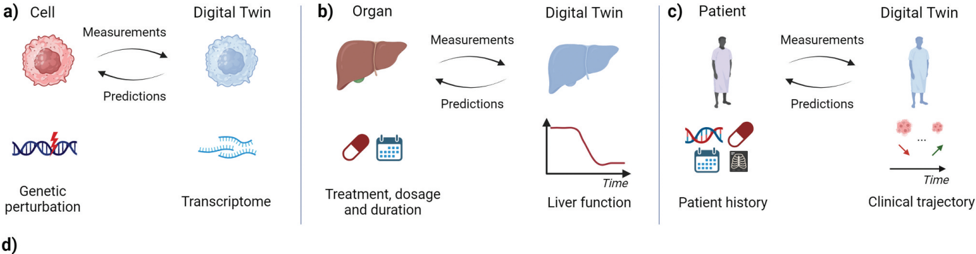
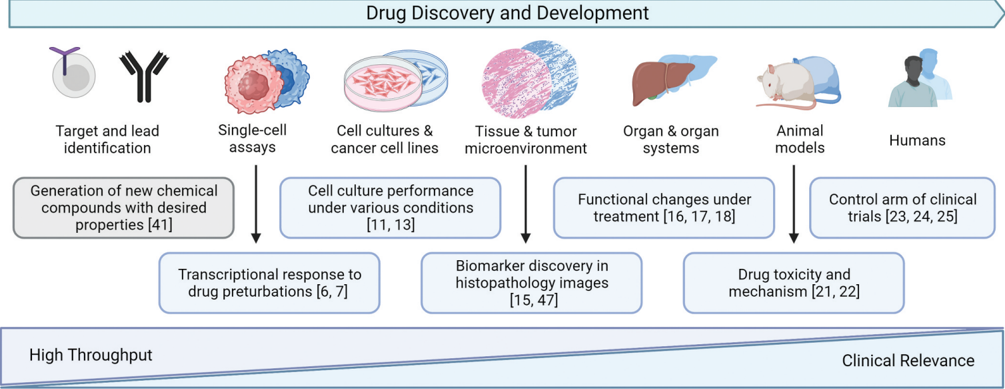
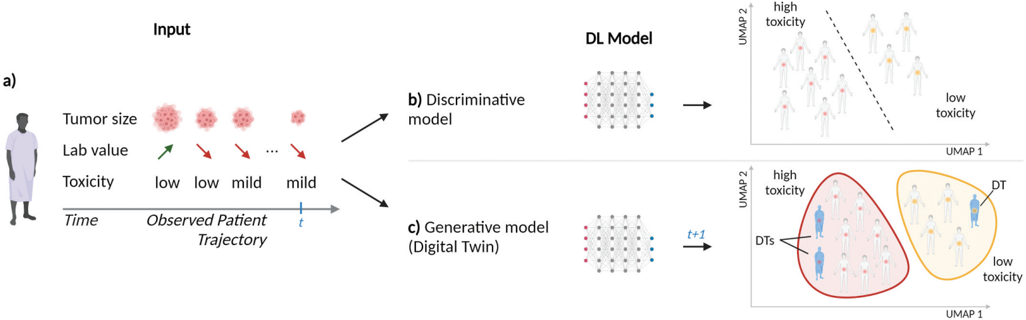
INTRODUCTION: The concept of Digital Twins (DTs) translated to drug development and clinical trials describes virtual representations of systems of various complexities, ranging from individual cells to entire humans, and enables in silico simulations and experiments. DTs increase the efficiency of drug discovery and development by digitalizing processes associated with high economic, ethical, or social burden. The impact is multifaceted: DT models sharpen disease understanding, support biomarker discovery and accelerate drug development, thus advancing precision medicine. One way to realize DTs is by generative artificial intelligence (AI), a cutting-edge technology that enables the creation of novel, realistic and complex data with desired properties. AREAS COVERED: The authors provide a brief introduction to generative AI and describe how it facilitates the modeling of DTs. In addition, they compare existing implementations of generative AI for DTs in drug discovery and clinical trials. Finally, they discuss technical and regulatory challenges that should be addressed before DTs can transform drug discovery and clinical trials. EXPERT OPINION: The current state of DTs in drug discovery and clinical trials does not exploit the entire power of generative AI yet and is limited to simulation of a small number of characteristics. Nonetheless, generative AI has the potential to transform the field by leveraging recent developments in deep learning and customizing models for the needs of scientists, physicians and patients.
Overview
The claims and statistics of this paper haven’t been checked yet.
Free: it reads the open-access text and checks the first 5 claims that cite a source we can check. Create a free account to check every claim.
Integrity signals
Registry
Cites
Statistics
Figures




Verification
Claims the paper makes
The claims and statistics of this paper haven’t been checked yet.
Free: it reads the open-access text and checks the first 5 claims that cite a source we can check. Create a free account to check every claim.
Claims other papers make about this one
Each is checked against this paper’s own text: does it say what the citing paper says it does?
The source backs part of the claim, not all of it — or backs it for a different population, condition or comparison.
In the citing paper
“In the healthcare domain, medical AI and ML models have demonstrated the potential to improve patient outcomes, reduce cost burdens, accelerate clinical trials, and revolutionize the way we diagnose, treat, and prevent disease [26,28–31].”
From Bias in medical AI: Implications for clinical decision-making (2024) · cites this paper as [29]
Experimental — accuracy not yet measuredThe source backs part of the claim, not all of it — or backs it for a different population, condition or comparison.
In the citing paper
“because synthetic data are similar to but not the same as real data, they can be used to eliminate or mask personal identifiers and protect the confidentiality of human participants [31, 81, 200].”
From The ethics of using artificial intelligence in scientific research: new guidance needed for a new tool (2025) · cites this paper as [31]
Experimental — accuracy not yet measuredIn the citing paper
“Already, AI is employed in clinical trials to accelerate enrollment, monitor patients (e.g., wearables), and improve retention [29,114,115].”
From Bias in medical AI: Implications for clinical decision-making (2024) · cites this paper as [29]
Self-check
Percentages, sums and reported differences re-computed from the paper’s own numbers.
The self-check needs the paper’s full text.
Citations
Cites
LeCun, Y., Bengio, Y., & Hinton, G. (2015) · Nature · doi:10.1038/nature14539 · Cited by 84,126
Multimodal Machine Learning: A Survey and Taxonomy
Baltrusaitis, T., Ahuja, C., & Morency, L.-P. (2019) · IEEE Transactions on Pattern Analysis and Machine Intelligence · doi:10.1109/tpami.2018.2798607 · Cited by 5,018
The Principles of Humane Experimental Technique
(1960) · Medical Journal of Australia · doi:10.5694/j.1326-5377.1960.tb73127.x · Cited by 4,912 · cited 1×
“DTs of animal models enable animal alternative testing solutions, i.e. increased animal welfare, by the replacement, reduction and refinement (3Rs) principle [53].”
BackgroundOn the Opportunities and Risks of Foundation Models
Bommasani, R., Hudson, D. A., Adeli, E., Altman, R., Arora, S., von Arx, S., Bernstein, M. S., Bohg, J., Bosselut, A., Brunskill, E., et al. (2021) · arXiv · doi:10.48550/arxiv.2108.07258 · Cited by 2,676 · cited 1×
“Another possible technological advance would be a foundation model [64]that is able to scale across all preclinical and clinical DTs, from cell to humans, and be adapted to specific use cases.”
BackgroundFundamentals of Clinical Trials
Friedman, L. M., Furberg, C. D., DeMets, D. L., Reboussin, D. M., & Granger, C. B. (2015) · doi:10.1007/978-3-319-18539-2 · Cited by 2,237
Diffusion Models in Vision: A Survey
Croitoru, F.-A., Hondru, V., Ionescu, R. T., & Shah, M. (2023) · IEEE Transactions on Pattern Analysis and Machine Intelligence · doi:10.1109/tpami.2023.3261988 · Cited by 1,859 · cited 2×
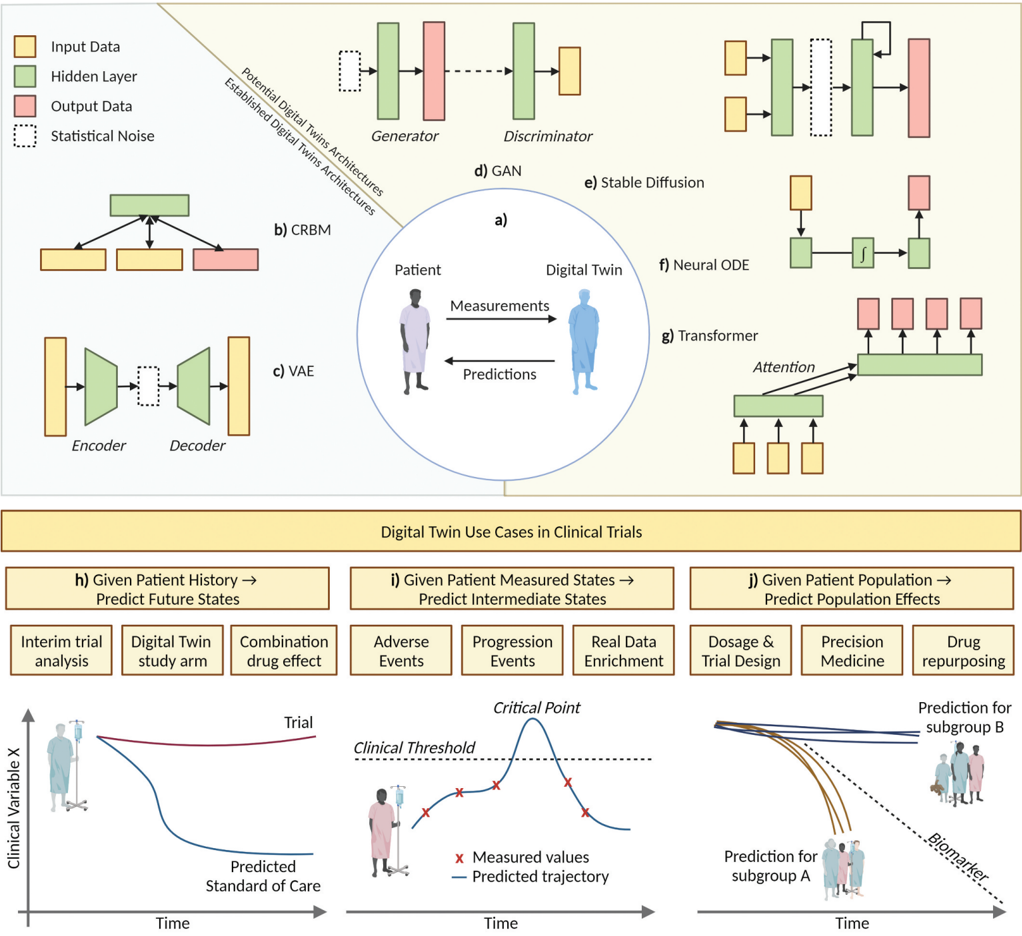
“…potential to implement more complex DTs in clinical trials, such as diffusion models, which are state-of-the-art in image generation (Figure 3e) [36]; neural ordinary differential equations, which enable learning of continuous dynamic systems (ODEs; Figure 3f) [38] and transformers, which have…”
BackgroundscGPT: Towards Building a Foundation Model for Single-Cell Multi-omics Using Generative AI
Cui, H., Wang, C., Maan, H., Pang, K., Luo, F., & Wang, B. (2023) · doi:10.1101/2023.04.30.538439 · Cited by 1,694
Estimation of clinical trial success rates and related parameters
Wong, C. H., Siah, K. W., & Lo, A. W. (2019) · Biostatistics · doi:10.1093/biostatistics/kxx069 · Cited by 1,585 · cited 1×
“A motivation for DTs in clinical settings is that only one out of ten compounds entering clinical trials will achieve regulatory approval [54].”
BackgroundDeep learning for computational biology
Angermueller, C., Pärnamaa, T., Parts, L., & Stegle, O. (2016) · Molecular Systems Biology · doi:10.15252/msb.20156651 · Cited by 1,473 · cited 1×
“Secondly, most methods rely on less than five thousand patients for training, which is considered small for deep learning [58], and thus may reduce the generalizability of the models.”
MethodLin, T., Wang, Y., Liu, X., & Qiu, X. (2022) · AI Open · doi:10.1016/j.aiopen.2022.10.001 · Cited by 1,422
Research works printed but not linked: 3
- How digital twins of human cells are accelerating drug discovery [internet] DeepLife. 2022 Jun cited 2023 Sep 18. Available from https://www.nature.com/articles/d43747-022-00108-3
- Murphy KP. Probabilistic machine learning: an introduction. Cambridge, Massachusetts: MIT press. 2022 Mar 1. •• Thorough introduction into machine modeling techniques.
- Chen RT, Rubanova Y, Bettencourt J, et al. Neural ordinary differ- ential equations. In Proceedings of the 32nd International Conference on Neural Information Processing Systems (NIPS'18);
Cited by
Bias in medical AI: Implications for clinical decision-making
Cross, J. L., Choma, M. A., & Onofrey, J. A. (2024) · PLOS Digital Health · doi:10.1371/journal.pdig.0000651 · Cited by 607
Ocana, A., Pandiella, A., Privat, C., Bravo, I., Luengo-Oroz, M., Amir, E., & Gyorffy, B. (2025) · Biomarker Research · doi:10.1186/s40364-025-00758-2 · Cited by 187
“The creation of digital replicas of patients allows for the testing of treatments in a virtual environment before actual application, reducing risks and optimizing therapeutic strategies [93, 94].”
Resnik, D. B., & Hosseini, M. (2025) · AI and Ethics · doi:10.1007/s43681-024-00493-8 · Cited by 228
“Also, because synthetic data are similar to but not the same as real data, they can be used to eliminate or mask personal identifiers and protect the confidentiality of human participants [31, 81, 200].”
Islam, M. T., Sepanloo, K., Woo, S., Woo, S. H., & Son, Y. (2025) · Machines · doi:10.3390/machines13040267 · Cited by 222
“Some researchers also highlighted the potential of 6G to integrate AI-driven “semantic communications”, which will ensure that only contextually meaningful information is transmitted [139].”
Generative-AI-Driven Human Digital Twin in IoT Healthcare: A Comprehensive Survey
Chen, J., Shi, Y., Yi, C., Du, H., Kang, J., & Niyato, D. T. (2024) · IEEE Internet of Things Journal · doi:10.1109/jiot.2024.3421918 · Cited by 204
“Standardized application programming interfaces (APIs) and Web services is a practical solution to these challenges.”
BackgroundMethodThe Role of AI in Drug Discovery
Abbas, M. K. G., Rassam, A., Karamshahi, F., Abunora, R., & Abouseada, M. (2024) · ChemBioChem · doi:10.1002/cbic.202300816 · Cited by 144
Immune digital twins for complex human pathologies: applications, limitations, and challenges
Niarakis, A., Laubenbacher, R., An, G. C., Ilan, Y., Fisher, J., Flobak, Å., Reiche, K., Martínez, M. R., Geris, L., Ladeira, L., et al. (2024) · npj Systems Biology and Applications · doi:10.1038/s41540-024-00450-5 · Cited by 128
Gangwal, A., & Lavecchia, A. (2025) · Drug Discovery Today · doi:10.1016/j.drudis.2025.104360 · Cited by 130
A Review of Digital Twin Technologies for Enhanced Sustainability in the Construction Industry
Zhang, Z., Wei, Z., Court, S., Yang, L., Wang, S., Thirunavukarasu, A., & Zhao, Y. (2024) · Buildings · doi:10.3390/buildings14041113 · Cited by 128
“Recently, generative AIs (e.g., large language models—LLMs) have been integrated into the building and updating of digital twins for drug delivery [110], wireless communications [111], 3D model reconstruction [112], etc. Leveraging the advantages of fast multi-modal data processing, LLM shows great…”
Backgroundseyyedi, S. R., Kowsari, E., Gheibi, M., Chinnappan, A., & Ramakrishna, S. (2024) · Journal of Cleaner Production · doi:10.1016/j.jclepro.2024.142584 · Cited by 108
Assessing molecular docking tools: understanding drug discovery and design
Nivatya, H. K., Singh, A., Kumar, N., Sonam, Sharma, L., Singh, V., Mishra, R., Gaur, N., & Mishra, A. K. (2025) · Future Journal of Pharmaceutical Sciences · doi:10.1186/s43094-025-00862-y · Cited by 122
Digital twins and artificial intelligence in metabolic disease research
MOSQUERA-LOPEZ, C. M., & Jacobs, P. G. (2024) · Trends in Endocrinology and Metabolism · doi:10.1016/j.tem.2024.04.019 · Cited by 98
Generative AI, IoT, and blockchain in healthcare: application, issues, and solutions
Mazhar, T., Khan, S., Shahzad, T., Khan, M. A., Saeed, M. M. A., Awotunde, J. B., & Hamam, H. (2025) · Discover Internet of Things · doi:10.1007/s43926-025-00095-8 · Cited by 102
“…p e r s o n a l i z e d g u i d a n c e a n d t i m e l y r e m i n d e r s , l e a d i n g t o b e tt e r c l i n i c a l o u t c o m e s [ 68 ] [ 69 ] C l i n i c a l R e s e a r c h a n d D e v e l o p m e n t G e n e r a t i v e A I c a n a n a l y z e v a s t a m o u n t s o f c l i n i c a…”
Rowan, N. J. (2024) · The Science of The Total Environment · doi:10.1016/j.scitotenv.2024.171672 · Cited by 96
Abdollahi, H., Yousefirizi, F., Shiri, I., Brosch-Lenz, J., Mollaheydar, E., Fele‐Paranj, A., Shi, K., Zaidi, H., Alberts, I., Soltani, M., et al. (2024) · Theranostics · doi:10.7150/thno.93973 · Cited by 78
Beyond Discrimination: Generative AI Applications and Ethical Challenges in Forensic Psychiatry
Tortora, L. (2024) · Frontiers in Psychiatry · doi:10.3389/fpsyt.2024.1346059 · Cited by 91
Malheiro, V., Santos, B., Figueiras, A., & Mascarenhas‐Melo, F. (2025) · Pharmaceuticals · doi:10.3390/ph18060788 · Cited by 101
“Although not a replacement for traditional clinical trials, they are increasingly viewed as valuable complements that can enhance trial design and improve resource efficiency [105,106].”
Increasing acceptance of AI ‐generated digital twins through clinical trial applications
Vidovszky, A. A., Fisher, C. K., Loukianov, A. D., Smith, A. M., Tramel, E. W., Walsh, J. R., & Ross, J. L. (2024) · Clinical and Translational Science · doi:10.1111/cts.13897 · Cited by 77
“12 Alam et al. 13 comprehensively detail an updated model architecture used to generate DTs across multiple disease indications.”
MethodKant, S., Deepika, & Roy, S. (2025) · Discover Pharmaceutical Sciences · doi:10.1007/s44395-025-00007-3 · Cited by 104
“AI-powered digital twins simulate virtual patient populations, enabling faster, more precise clinical trials by predicting treatment outcomes and reducing reliance on large control groups [109].”
Unlocking the Future of Drug Development: Generative AI, Digital Twins, and Beyond
Mariam, Z., Niazi, S. K., & Magoola, M. (2024) · BioMedInformatics · doi:10.3390/biomedinformatics4020079 · Cited by 71
“Ultimately, navigating these technologies’ ethical and regulatory complexities is essential to harnessing their full potential for advancing healthcare and improving patient outcomes.”
BackgroundGenerative AI for Industry 5.0: Analyzing the Impact of ChatGPT, DALLE, and Other Models
Sai, S., Sai, R. V., & Chamola, V. (2024) · IEEE Open Journal of the Communications Society · doi:10.1109/ojcoms.2024.3400161 · Cited by 93
“By training GANs on vast datasets of existing compounds, these models can learn the underlying patterns and relationships between molecular structures and their properties, allowing them to generate new molecules with specific characteristics [23].”
Large language models forecast patient health trajectories enabling digital twins
Makarov, N., Bordukova, M., Quengdaeng, P., Garger, D., Rodriguez‐Esteban, R., Schmich, F., & Menden, M. P. (2025) · npj Digital Medicine · doi:10.1038/s41746-025-02004-3 · Cited by 111
Self-citationArtificial intelligence for drug repurposing against infectious diseases
Singh, A. (2024) · Artificial Intelligence Chemistry · doi:10.1016/j.aichem.2024.100071 · Cited by 74
Enhancing randomized clinical trials with digital twins
Akbarialiabad, H., Pasdar, A., Murrell, D. F., Mostafavi, M., Shakil, F., Safaee, E., Leachman, S. A., Haghighi, A., Tarbox, M. B., Bunick, C. G., et al. (2025) · npj Systems Biology and Applications · doi:10.1038/s41540-025-00592-0 · Cited by 72
Ma, C., Zhang, H., Rao, Y., Jiang, X., Liu, B., Sun, Z., Song, Z., Gao, Y., Cui, Y., Liu, X., et al. (2025) · npj Digital Medicine · doi:10.1038/s41746-025-02198-6 · Cited by 76
Modernizing Preclinical Drug Development: The Role of New Approach Methodologies
Mehta, K., Maaß, C., Cucurull-Sanchez, L., Pichardo‐Almarza, C., Subramanian, K., Androulakis, I. P., Gobburu, J. V. S., Schaller, S., & Sherwin, C. M. T. (2025) · ACS Pharmacology & Translational Science · doi:10.1021/acsptsci.5c00162 · Cited by 56
Machine learning for extracellular vesicles enables diagnostic and therapeutic nanobiotechnology
Tiwari, A. K., Widodo, Krisnawati, D. I., Tzou, K.-Y., & Kuo, T. (2026) · Journal of Nanobiotechnology · doi:10.1186/s12951-025-03952-4 · Cited by 64
Artificial intelligence in rheumatology research: what is it good for?
Sequí-Sabater, J. M., & Benavent, D. (2025) · RMD Open · doi:10.1136/rmdopen-2024-004309 · Cited by 50
“76 77 Optimising the research process AI, particularly through LLMs, has the opportunity to transform research by offering advanced tools that can support every stage of the process.”
Utilization of precision medicine digital twins for drug discovery in Alzheimer's disease
Ren, Y., Pieper, A. A., & Cheng, F. (2025) · Neurotherapeutics · doi:10.1016/j.neurot.2025.e00553 · Cited by 62
A Critical Analysis of Generative AI: Challenges, Opportunities, and Future Research Directions
Uddin, M., Laghari, S. U. A., Alanazi, F., Hussain, S., Mazhar, T., & Rahman, M. A. (2025) · Archives of Computational Methods in Engineering · doi:10.1007/s11831-025-10355-z · Cited by 66
Digital Twin Cognition: AI-Biomarker Integration in Biomimetic Neuropsychology
Gkintoni, E., & Halkiopoulos, C. (2025) · Biomimetics · doi:10.3390/biomimetics10100640 · Cited by 54
Oulefki, A., Amira, A., & Foufou, S. (2025) · Health and Technology · doi:10.1007/s12553-025-00947-x · Cited by 50
Germain, D. P., Gruson, D., Malcles, M., & Garcelon, N. (2025) · Orphanet Journal of Rare Diseases · doi:10.1186/s13023-025-03655-x · Cited by 47
“Predictive computational models have led to the emergence of the medical digital twin concept, which may contribute to personalized medicine by helping to find or adapt specific treatments for patients with rare diseases [96].”
Quality by digital design to accelerate sustainable medicines development
Mustoe, C. L., Turner, A., Urwin, S. J., Houson, I., Feilden, H., Markl, D., Qaraghuli, M. M. A., Chong, M. W. S., Robertson, M. N., Nordon, A., et al. (2025) · International Journal of Pharmaceutics · doi:10.1016/j.ijpharm.2025.125625 · Cited by 40
Digital twins in dermatology, current status, and the road ahead
Akbarialiabad, H., Pasdar, A., & Murrell, D. F. (2024) · npj Digital Medicine · doi:10.1038/s41746-024-01220-7 · Cited by 39
Dominguez-Gortaire, J. A., Ruiz, A., Porto-Pazos, A. B., Rodríguez, S., & Cedrón, F. (2025) · International Journal of Molecular Sciences · doi:10.3390/ijms26031004 · Cited by 36
AI-driven nanomedicine for cancer theranostics
Tiwari, A., Widodo, Krisnawati, D. I., Chen, C.-Y., & Kuo, T. (2026) · Molecular Cancer · doi:10.1186/s12943-025-02563-9 · Cited by 49
Generative Digital Twins: A Novel Approach in the IoT Edge-Cloud Continuum
Savaglio, C., Barbuto, V., Mangione, F., & Fortino, G. (2024) · IEEE Internet of Things Magazine · doi:10.1109/iotm.001.2400035 · Cited by 47
“…deployed This is made possible by the Masked models based on within a smart city environment integrates a variety of hardware components/edge devices, such as the Google Coral Dev Board Google Environmental Sensor Board, IP Cameras along with two pivotal software elements: a specialized branch of…”
Digital Twins in Critical Infrastructure
Λαμπρόπουλος, Γ., Larrucea, X., & Colomo‐Palacios, R. (2024) · Information · doi:10.3390/info15080454 · Cited by 46
Wen, J., Kang, J., Niyato, D. T., Zhang, Y., & Mao, S. (2024) · IEEE Transactions on Industrial Cyber-Physical Systems · doi:10.1109/ticps.2024.3524483 · Cited by 47
“In this section, we discuss several related works, including GenAI-driven DTs, incentive mechanism design for DT construction, and structured pruning techniques.”
Targeting metabolic pathways to counter cancer immunotherapy resistance
Agarwala, Y., Brauns, T. A., Sluder, A. E., Poznansky, M. C., & Gemechu, Y. (2024) · Trends in Immunology · doi:10.1016/j.it.2024.05.006 · Cited by 34
Silverman, A. L., Shung, D. L., Stidham, R. W., Kochhar, G. S., & Iacucci, M. (2024) · Clinical Gastroenterology and Hepatology · doi:10.1016/j.cgh.2024.05.048 · Cited by 33
Bridging silicon and carbon worlds with digital twins and on-chip systems in drug discovery
Akbarialiabad, H., Seyyedi, M. S., Paydar, S., Habibzadeh, A., Haghighi, A., & Kvedar, J. C. (2024) · npj Systems Biology and Applications · doi:10.1038/s41540-024-00476-9 · Cited by 37
Razavi, H., Titidezh, O., Asgary, A., & Bonakdari, H. (2024) · Urban sustainability · doi:10.1007/978-981-97-8483-7_5 · Cited by 43
Puniya, B. L. (2025) · Journal of Molecular Biology · doi:10.1016/j.jmb.2025.169181 · Cited by 31
Ahmad, B., Ouahada, K., & Hamam, H. (2026) · Computational and Structural Biotechnology Journal · doi:10.1016/j.csbj.2025.12.033 · Cited by 41
“According to [11], as of March 2023, at least 14 AI-generated drugs had entered clinical testing.”
Nezhat, C. R., Oskotsky, T. T., Robinson, J. F., Fisher, S. J., Tsuei, A., Liu, B., Irwin, J. C., Gaudilliere, B., Sirota, M., Stevenson, D. K., et al. (2025) · npj Women s Health · doi:10.1038/s44294-024-00052-w · Cited by 25
Sonar Digital Twin Layer via Multiattention Networks With Feature Transfer
Połap, D., & Jaszcz, A. (2024) · IEEE Transactions on Geoscience and Remote Sensing · doi:10.1109/tgrs.2024.3408411 · Cited by 25
“Bordukova et al. [19] presented research on the impact on the possibility of detecting new drugs in pharmacy.”
BackgroundDigital twins in dermatology: a new era of personalized skin care
Haykal, D. (2025) · Frontiers in Digital Health · doi:10.3389/fdgth.2025.1534859 · Cited by 27
Generative AI-Empowered Digital Twin: A Comprehensive Survey With Taxonomy
Chiaro, D., Qi, P., Pescapè, A., & Piccialli, F. (2025) · IEEE Transactions on Industrial Informatics · doi:10.1109/tii.2025.3540473 · Cited by 34
Advances and critical aspects in cancer treatment development using digital twins
Bouriga, R., Bailleux, C., Gal, J., Chamorey, E., Mograbi, B., Hannoun‐Lévi, J., & Milano, G. A. (2025) · Briefings in Bioinformatics · doi:10.1093/bib/bbaf237 · Cited by 29
“DT development and performance represent a disruptive technology built upon various machine learning (ML) architectures [13].”
InfluentialHow generative Artificial Intelligence can transform drug discovery?
Jusoh, A. S., Remli, M. A., Mohamad, M. S., Cazenave, T., & Fong, C. S. (2025) · European journal of medicinal chemistry · doi:10.1016/j.ejmech.2025.117825 · Cited by 17
“Generative AI is a subset of Deep Learning (DL), Machine Learning (ML), and Artificial Intelligence (AI) [6], as illustrated in Fig.”
Maharjan, R., Kim, N. A., Kim, K. H., & Jeong, S. H. (2025) · International Journal of Pharmaceutics X · doi:10.1016/j.ijpx.2025.100409 · Cited by 70
Challenges and applications in generative AI for clinical tabular data in physiology
Umesh, C., Mahendra, M., Bej, S., Wolkenhauer, O., & Wolfien, M. (2024) · Pflügers Archiv - European Journal of Physiology · doi:10.1007/s00424-024-03024-w · Cited by 24
Tripathi, S., Ansari, A. A., Singh, M., Dash, M., Kumar, P., Singh, H., Panda, B., Nukavarapu, S. P., Camci‐Unal, G., Li, B., et al. (2025) · Materials Horizons · doi:10.1039/d5mh00501a · Cited by 26
Digital twins in increasing diversity in clinical trials: A systematic review
Tubbs, A., & Vazquez, E. A. (2025) · Journal of Biomedical Informatics · doi:10.1016/j.jbi.2025.104879 · Cited by 22
Singh, B., & Kaunert, C. (2024) · Engineering cyber-physical systems and critical infrastructures · doi:10.1007/978-3-031-65434-3_7 · Cited by 27
Role of Generative AI in AI-Based Digital Twins in Industry 5.0 and Evolution to Industry 6.0
Rojek, I., Mikołajewski, D., Piszcz, A., Małolepsza, O., & Kozielski, M. (2025) · Applied Sciences · doi:10.3390/app151810102 · Cited by 20
Large language models in global health
Ong, J. C. L., Ning, Y., Yang, R., Bitterman, D. S., Liu, X., Tham, Y. C., Collins, G. S., Jiménez, M., Mateen, B. A., Amissah-Arthur, K. N., et al. (2026) · Nature Health · doi:10.1038/s44360-025-00024-7 · Cited by 30
“These technologies have accelerated the discovery of new drug targets 70 , improved the process of de novo drug design 71,72 and automated the matching of eligible patients to clinical trials 73 .”
Digital twins for accelerating drug discovery and development: opportunities and challenges
Venkatapurapu, S. P., Clegg, L. E., Nowojewski, A., Kimko, H. H. C., Olabode, D., Sawant‐Basak, A., & Vishwanathan, K. (2026) · Drug Discovery Today · doi:10.1016/j.drudis.2026.104617 · Cited by 22
Leveraging Generative AI for Drug Safety and Pharmacovigilance
Mishra, H. P., & Gupta, R. (2024) · Current Clinical Pharmacology · doi:10.2174/0127724328311400240823062829 · Cited by 26
Stanley, E. A. M., Souza, R., Wilms, M., & Forkert, N. D. (2024) · EBioMedicine · doi:10.1016/j.ebiom.2024.105501 · Cited by 30
Adams, M. C. B., Bowness, J. S., Nelson, A. M., Hurley, R. W., & Narouze, S. (2025) · Current Opinion in Anaesthesiology · doi:10.1097/aco.0000000000001508 · Cited by 31
“• Facial expression analysis systems • Digital twin models for treatment simulation [33] • Personalized CBT delivery algorithms [34] Validation • Maintain HIPAA/GDPR compliance [24] • Clinical decision support tools [26] • Automated pain assessment systems Similarly, technology developers need…”
InfluentialThe Role of Generative Artificial Intelligence in E-Commerce Fraud Detection and Prevention
Shafik, W. (2024) · Advances in web technologies and engineering book series · doi:10.4018/979-8-3693-6557-1.ch018 · Cited by 20
Rethinking chemical research in the age of large language models
MacKnight, R., Boiko, D. A., Regio, J. E., Gallegos, L. C., Neukomm, T. A., & Gomes, G. (2025) · Nature Computational Science · doi:10.1038/s43588-025-00811-y · Cited by 32
Using AI‐generated digital twins to boost clinical trial efficiency in Alzheimer's disease
Wang, D., Florian, H., Lynch, S., Robieson, W., Zhuang, R., Kusiak, C., Ross, J. L., Walsh, J. R., & Graff, O. X. (2025) · Alzheimer s & Dementia Translational Research & Clinical Interventions · doi:10.1002/trc2.70181 · Cited by 19
“8,9 Using DTs to simu-latedetailedpatientcharacteristicsandforecastdiseaseprogressionin AD can help address some challenges involved in developing effective treatments.”
Serra, A., Maia, M. T., Tsiros, P., Minadakis, V., Puig, R. R., Perello-Y-Bestard, A., Nikiforou, F., Karakoltzidis, A., Lieto, E. D., Schaffert, A., et al. (2026) · Environmental Science & Technology · doi:10.1021/acs.est.5c04489 · Cited by 18
A generative framework for enhancing drug target interaction prediction in drug discovery
Kotkondawar, R. R., Sutar, S. R., Kiwelekar, A. W., Kadam, V. J., & Jadhav, S. M. (2025) · Scientific Reports · doi:10.1038/s41598-025-01589-9 · Cited by 18
Quality by Computational Design: Harnessing AI to Advance Rational Drug Development
Wang, N., Zhong, H., Xiong, P., Zhu, J., & Ouyang, D. (2025) · Advanced Drug Delivery Reviews · doi:10.1016/j.addr.2025.115764 · Cited by 18
Artificial Intelligence in Endocrinology: On Track Toward Great Opportunities
Assié, G., & Allassonnière, S. (2024) · The Journal of Clinical Endocrinology & Metabolism · doi:10.1210/clinem/dgae154 · Cited by 17
Application of Generative AI in Drug Discovery
Farhadi, A., Zamanifar, A., & Faezipour, M. (2025) · Springer eBooks · doi:10.1007/978-3-031-82963-5_6 · Cited by 20
The physics-AI dialogue in drug design
Vargas-Rosales, P. A., & Caflisch, A. (2025) · RSC Medicinal Chemistry · doi:10.1039/d4md00869c · Cited by 18
Fahad, N., Rabbi, R. I., Hasan, S. B., Prity, F. S., Ahmed, R., Ahmed, F., Hossen, M. J., Liew, T. H., Sayeed, M. S., & Goh, M. K. O. (2025) · Frontiers in Digital Health · doi:10.3389/fdgth.2025.1653369 · Cited by 18
Survey, taxonomy, and emerging paradigms of societal digital twins for public health preparedness
Rehan, W., & Rehan, M. (2025) · npj Digital Medicine · doi:10.1038/s41746-025-01737-5 · Cited by 16
The Role of Artificial Intelligence in Early Cancer Detection: Exploring Early Clinical Applications
Thaker, N. G., Dicker, A. P., Loaiza‐Bonilla, A., Wallace, A. F., Kolman, D., Ruggles, A. N. G., Manda, S., Frank, S. J., Orio, P. F., & Doria, C. (2024) · AI in Precision Oncology · doi:10.1089/aipo.2023.0011 · Cited by 15
Liu, K., & Altman, R. B. (2025) · Annual Review of Biomedical Data Science · doi:10.1146/annurev-biodatasci-103123-094844 · Cited by 19
Weingram, A., Cui, C., Lin, S., Munoz, S., Jacob, T., Viers, J. H., & Lu, X. (2025) · Frontiers in High Performance Computing · doi:10.3389/fhpcp.2025.1536501 · Cited by 15
Braga, D. M., & Rawal, B. S. (2025) · Journal of Pharmaceutical and BioTech Industry · doi:10.3390/jpbi2030011 · Cited by 16
Mangalam, M. (2025) · Artificial Intelligence in Medicine · doi:10.1016/j.artmed.2025.103272 · Cited by 14
Cheng, H., Wong, J. L. Y., Quek, C. W. N., Goldberg, J. L., Mahajan, V. B., Wong, T. Y., Mehta, J. S., Ting, D. S. W., & Ting, D. S. J. (2025) · npj Digital Medicine · doi:10.1038/s41746-025-01954-y · Cited by 13
Bordukova, M., Arneth, A. J., Makarov, N., Brown, R. M., Schneider‐Futschik, E. K., Dharmage, S. C., Ekinci, E. I., Crack, P. J., Hatters, D. M., Stewart, A. G., et al. (2025) · Expert Opinion on Drug Discovery · doi:10.1080/17460441.2025.2507376 · Cited by 12
“Whilst most generative AI-based digital twins are in methodological development, digital twins of hearts have been used for surgery planning [4].”
InfluentialSelf-citationLjubimov, V. A., Sun, T., Wang, J., Li, L., Wang, Z. P., Ljubimov, A. V., Holler, E., Black, K. L., Kopec̆ek, J., Ljubimova, J. Y., et al. (2025) · Journal of Controlled Release · doi:10.1016/j.jconrel.2025.113611 · Cited by 12
Vidiyala, N., Sunkishala, P., Parupathi, P. R., & Nyavanandi, D. (2025) · AAPS PharmSciTech · doi:10.1208/s12249-025-03134-3 · Cited by 14
“Reactive AI platforms will respond to stimuli without storing experience and learning [29, 30].”
Multi-scale machine learning model predicts muscle and functional disease progression
Blemker, S. S., Riem, L., DuCharme, O., Pinette, M., Costanzo, K. E., Weatherley, E., Statland, J. M., Tapscott, S. J., Wang, L. H., Shaw, D., et al. (2025) · Scientific Reports · doi:10.1038/s41598-025-09516-8 · Cited by 9
Design specifications for biomedical virtual twins in engineered adoptive cellular immunotherapies
Weirauch, U., Kreuz, M., Birkenbihl, C., Alb, M., Quaranta, M., Calzone, L., Orozco-Ruiz, S., Binder, S., Fischer, L., Clavreul, S., et al. (2025) · npj Digital Medicine · doi:10.1038/s41746-025-01809-6 · Cited by 14
Baumgärtner, C., & Brislinger, D. (2025) · Clinical and Translational Medicine · doi:10.1002/ctm2.70096 · Cited by 9
Wearable-Based Integrated System for In-Home Monitoring and Analysis of Nocturnal Enuresis
Lee, S., Moon, J., Lee, Y. S., Shin, S.-C., & Lee, K. (2024) · Sensors · doi:10.3390/s24113330 · Cited by 8
“Recently, AI technology has been broadly employed in various digital healthcare applications, such as clinical deterioration prediction [26], infection detection [27], clinical decision support systems [28], energy expenditure estimation [29], and medical twins in drug delivery applications [30].”
BackgroundLin, F., Gao, T., Sun, D., Ni, Q., Ding, X., Wang, J., Gao, W., & Wang, F. (2025) · IEEE/CAA Journal of Automatica Sinica · doi:10.1109/jas.2024.124614 · Cited by 8
The rise of generative AI frameworks in drug discovery
Kotkondawar, R. R., Sutar, S. R., Kiwelekar, A. W., Kadam, V. J., & Jadhav, S. M. (2025) · International Journal of Data Science and Analytics · doi:10.1007/s41060-025-00831-x · Cited by 9
Chrysafi, P., Lam, B. D., Carton, S., & Patell, R. D. (2024) · Hämostaseologie · doi:10.1055/a-2415-8408 · Cited by 9
Applications of Digital Twin in Precision Medicine: A Systematic Review
Pişirgen, A., & Hiziroglu, O. A. (2025) · International Conference on New Trends in Computing Sciences (ICTCS) · doi:10.1109/ictcs65341.2025.10989480 · Cited by 6
“Generative AI, in particular, allows for the creation of dynamic, adaptive models that simulate complex biological processes [12].”
InfluentialPati, S. R., Sholokh, A., & Klußmann, E. (2025) · Cells · doi:10.3390/cells14110771 · Cited by 5
“AI can create so-called digital twins, in silico replicates, of patients and thus test and optimise therapeutic approaches and reduce risks for patients before they are actually treated [126].”
AI-driven aging digital twins: A roadmap for clinical translation in precision geriatrics
Li, C., Zuo, K., Duan, R., Ouyang, X., Zhang, L. Y., Zeng, L., & Ge, L. (2025) · Ageing Research Reviews · doi:10.1016/j.arr.2025.102931 · Cited by 6
Advancing FDA New Approach Methodologies from animal models through digital twins
Eadie, A. L., Lynch, H. F., Scheinerman, N., & Parikh, R. B. (2026) · npj Digital Medicine · doi:10.1038/s41746-026-02476-x · Cited by 7
Possible Drug Repurposing and Accelerated Wound Healing
Aakash Kumar, S., & Patel, S. S. (2024) · Regenerative Engineering and Translational Medicine · doi:10.1007/s40883-024-00347-z · Cited by 8
“These digital twins may be refined on large data-sets to predict therapeutic effectiveness and find viable candidates for repurposing by combining machine learning algorithms [84].”
Advancing Healthcare Systems with Generative AI-Driven Digital Twins
Vengathattil, S. (2025) · doi:10.38124/ijisrt/25apr1470 · Cited by 6
Das, A., Bhattacharya, M., Abdelhameed, A. S., Lee, S., & Chakraborty, C. (2025) · Molecular Therapy — Nucleic Acids · doi:10.1016/j.omtn.2025.102546 · Cited by 6
Deep learning based deconvolution methods: A systematic review
Redondo, A. L., Velázquez, J. M. S., García-Tejedor, Á. J., & Lobo, V. J. S.-A. (2025) · Computational and Structural Biotechnology Journal · doi:10.1016/j.csbj.2025.05.038 · Cited by 5
Roquemen-Echeverri, V., Kushner, T., Jacobs, P. G., & MOSQUERA-LOPEZ, C. M. (2026) · Neural Computing and Applications · doi:10.1007/s00521-026-12018-x · Cited by 10
Toward autonomous discovery: agentic AI and the future of ophthalmic research
Soetikno, B. T., Nielsen, C. S., Pollreisz, A., & Ting, D. S. W. (2025) · Current Opinion in Ophthalmology · doi:10.1097/icu.0000000000001179 · Cited by 5
Metadata
- Authors
- Bordukova, M., Makarov, N., Rodriguez-Esteban, R., Schmich, F., & Menden, M. P.
- Affiliations
- Helmholtz Munich (DE)
- Data & Analytics, Pharmaceutical Research and Early Development, Roche Innovation Center Basel (RICB), Basel, Switzerland
- Data & Analytics, Pharmaceutical Research and Early Development, Roche Innovation Center Munich (RICM), Penzberg, Germany
- The University of Melbourne (AU)
- Corresponding author
- Schmich, Fabian
- Menden, Michael P.
- Venue
- Expert Opinion on Drug Discovery
- Publisher
- Informa UK Limited
- Published
- 2023-10-27
- Volume
- 19
- Issue
- 1
- Pages
- 33-42
- ISSN
- 1746-0441 (ISSN-L)
- 1746-045X
- OpenAlex
- W4387966880
- Semantic Scholar
- ed152e3e47524ef43a9aedc39a96365433384535
- Cited by
- 235
- References
- 57
- Citations by year
- 2026: 82 · 2025: 104 · 2024: 49
- FWCI
- 3.99
- Type
- journal article
- Language
- en
- Open access
- hybrid
- doi.org
- Licence
- Locations
- Expert Opinion on Drug Discovery (publishedVersion, cc-by-nc-nd)
- PubMed (publishedVersion)
- Funders
- European Union’s Horizon 2020 Research and Innovation Programme
- Topics
- Life Sciences › Pharmacology, Toxicology and Pharmaceutics › Drug Discovery › Computational Drug Discovery Methods
- Health Sciences › Medicine › Health Informatics › Artificial Intelligence in Healthcare and Education
- Physical Sciences › Computer Science › Artificial Intelligence › Machine Learning in Healthcare
- Keywords
- digital twin, generative AI, drug discovery, clinical trials, in silico modeling, precision medicine, biomarker discovery, regulatory challenges, deep learning
- MeSH terms
- Drug Development, Artificial Intelligence, Clinical Trials as Topic, Computer Simulation, Humans, Biomedical Research, Drug Discovery
About these checks
Registry, retraction, Cites and statistics results are computed, not judged, with one exception: a printed reference that no index lists is read once by a model before it counts as a citation error. Claims are extracted by a model and kept only when their quote appears verbatim in the text; each cited source is then checked, with a model’s help, for whether it says what the claim relies on. Those verdicts can be wrong — read the claim’s quote and the cited source before relying on one.
Statistics and arithmetic are recomputed, not judged.
Confidence bands are shown only for fields calibrated on our annotated test set. None is calibrated yet, so no band is shown.
What counts as a claim ›How we measure confidence ›How we check this ›
Are you an author, or do you see a problem with this page? Request a review
Data sources
Bibliographic data: Semantic Scholar, OpenAlex, Crossref.
Contains information from the Semantic Scholar Academic Graph Datasets, made available under the ODC Attribution License (ODC-BY 1.0).
Semantic Scholar’s data is described in: Kinney, R., et al. (2023). The Semantic Scholar Open Data Platform. arXiv:2301.10140.
