

Generative artificial intelligence empowers digital twins in drug discovery and clinical trials
Open accessThe DOI matches its Crossref record; 63 of the 63 references it cites were found in a registry or an index.
Abstract
INTRODUCTION: The concept of Digital Twins (DTs) translated to drug development and clinical trials describes virtual representations of systems of various complexities, ranging from individual cells to entire humans, and enables in silico simulations and experiments. DTs increase the efficiency of drug discovery and development by digitalizing processes associated with high economic, ethical, or social burden. The impact is multifaceted: DT models sharpen disease understanding, support biomarker discovery and accelerate drug development, thus advancing precision medicine. One way to realize DTs is by generative artificial intelligence (AI), a cutting-edge technology that enables the creation of novel, realistic and complex data with desired properties. AREAS COVERED: The authors provide a brief introduction to generative AI and describe how it facilitates the modeling of DTs. In addition, they compare existing implementations of generative AI for DTs in drug discovery and clinical trials. Finally, they discuss technical and regulatory challenges that should be addressed before DTs can transform drug discovery and clinical trials. EXPERT OPINION: The current state of DTs in drug discovery and clinical trials does not exploit the entire power of generative AI yet and is limited to simulation of a small number of characteristics. Nonetheless, generative AI has the potential to transform the field by leveraging recent developments in deep learning and customizing models for the needs of scientists, physicians and patients.
Overview
The claims and statistics of this paper haven’t been checked yet.
Free: it reads the open-access text and checks the first 5 claims that cite a source we can check. Create a free account to check every claim.
Integrity signals
Registry
Cites
Statistics
Figures




Verification
Claims the paper makes
The claims and statistics of this paper haven’t been checked yet.
Free: it reads the open-access text and checks the first 5 claims that cite a source we can check. Create a free account to check every claim.
Claims other papers make about this one
Each is checked against this paper’s own text: does it say what the citing paper says it does?
The source backs part of the claim, not all of it — or backs it for a different population, condition or comparison.
In the citing paper
“In the healthcare domain, medical AI and ML models have demonstrated the potential to improve patient outcomes, reduce cost burdens, accelerate clinical trials, and revolutionize the way we diagnose, treat, and prevent disease [26,28–31].”
From Bias in medical AI: Implications for clinical decision-making (2024) · cites this paper as [29]
Experimental — accuracy not yet measuredThe source backs part of the claim, not all of it — or backs it for a different population, condition or comparison.
In the citing paper
“because synthetic data are similar to but not the same as real data, they can be used to eliminate or mask personal identifiers and protect the confidentiality of human participants [31, 81, 200].”
From The ethics of using artificial intelligence in scientific research: new guidance needed for a new tool (2025) · cites this paper as [31]
Experimental — accuracy not yet measuredIn the citing paper
“Already, AI is employed in clinical trials to accelerate enrollment, monitor patients (e.g., wearables), and improve retention [29,114,115].”
From Bias in medical AI: Implications for clinical decision-making (2024) · cites this paper as [29]
Self-check
Percentages, sums and reported differences re-computed from the paper’s own numbers.
The self-check needs the paper’s full text.
Citations
Cites
LeCun, Y., Bengio, Y., & Hinton, G. (2015) · Nature · doi:10.1038/nature14539 · Cited by 84,126
Multimodal Machine Learning: A Survey and Taxonomy
Baltrusaitis, T., Ahuja, C., & Morency, L.-P. (2019) · IEEE Transactions on Pattern Analysis and Machine Intelligence · doi:10.1109/tpami.2018.2798607 · Cited by 5,018
The Principles of Humane Experimental Technique
(1960) · Medical Journal of Australia · doi:10.5694/j.1326-5377.1960.tb73127.x · Cited by 4,912 · cited 1×
“DTs of animal models enable animal alternative testing solutions, i.e. increased animal welfare, by the replacement, reduction and refinement (3Rs) principle [53].”
BackgroundOn the Opportunities and Risks of Foundation Models
Bommasani, R., Hudson, D. A., Adeli, E., Altman, R., Arora, S., von Arx, S., Bernstein, M. S., Bohg, J., Bosselut, A., Brunskill, E., et al. (2021) · arXiv · doi:10.48550/arxiv.2108.07258 · Cited by 2,676 · cited 1×
“Another possible technological advance would be a foundation model [64]that is able to scale across all preclinical and clinical DTs, from cell to humans, and be adapted to specific use cases.”
BackgroundFundamentals of Clinical Trials
Friedman, L. M., Furberg, C. D., DeMets, D. L., Reboussin, D. M., & Granger, C. B. (2015) · doi:10.1007/978-3-319-18539-2 · Cited by 2,237
Diffusion Models in Vision: A Survey
Croitoru, F.-A., Hondru, V., Ionescu, R. T., & Shah, M. (2023) · IEEE Transactions on Pattern Analysis and Machine Intelligence · doi:10.1109/tpami.2023.3261988 · Cited by 1,859 · cited 2×
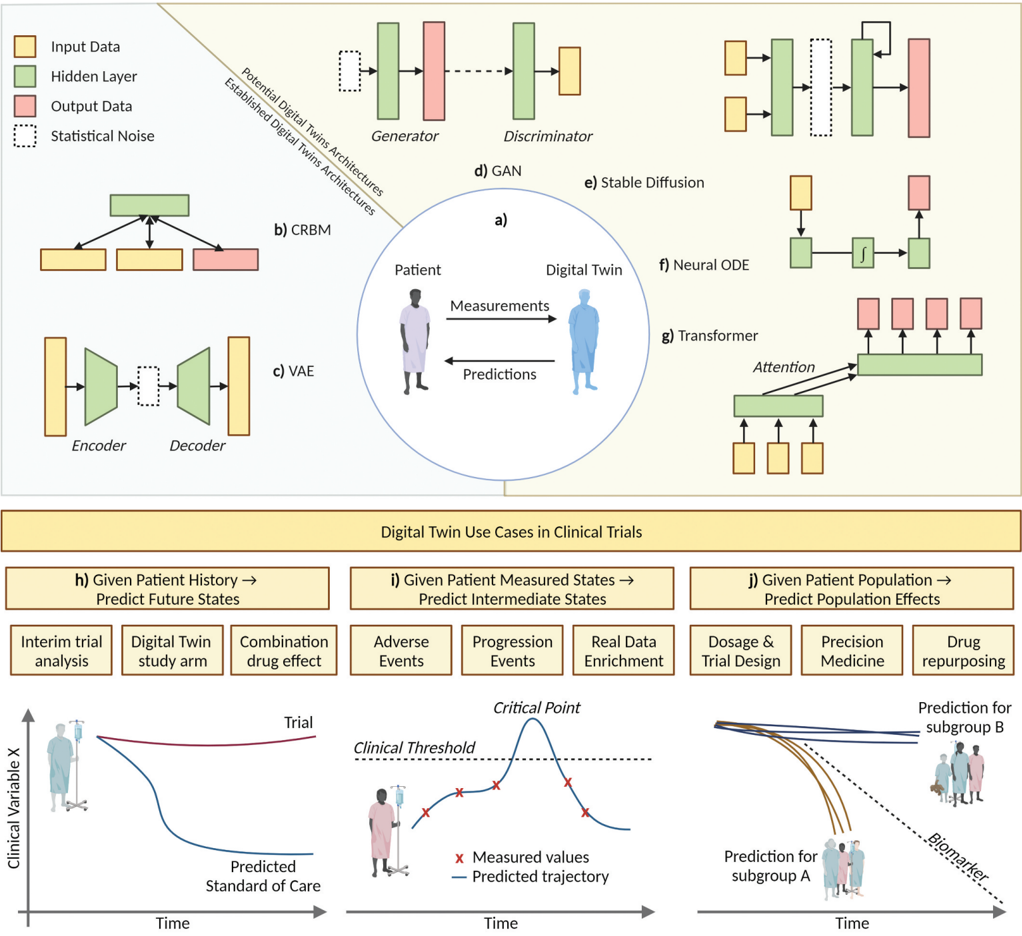
“…potential to implement more complex DTs in clinical trials, such as diffusion models, which are state-of-the-art in image generation (Figure 3e) [36]; neural ordinary differential equations, which enable learning of continuous dynamic systems (ODEs; Figure 3f) [38] and transformers, which have…”
BackgroundscGPT: Towards Building a Foundation Model for Single-Cell Multi-omics Using Generative AI
Cui, H., Wang, C., Maan, H., Pang, K., Luo, F., & Wang, B. (2023) · doi:10.1101/2023.04.30.538439 · Cited by 1,694
Estimation of clinical trial success rates and related parameters
Wong, C. H., Siah, K. W., & Lo, A. W. (2019) · Biostatistics · doi:10.1093/biostatistics/kxx069 · Cited by 1,585 · cited 1×
“A motivation for DTs in clinical settings is that only one out of ten compounds entering clinical trials will achieve regulatory approval [54].”
BackgroundDeep learning for computational biology
Angermueller, C., Pärnamaa, T., Parts, L., & Stegle, O. (2016) · Molecular Systems Biology · doi:10.15252/msb.20156651 · Cited by 1,473 · cited 1×
“Secondly, most methods rely on less than five thousand patients for training, which is considered small for deep learning [58], and thus may reduce the generalizability of the models.”
MethodLin, T., Wang, Y., Liu, X., & Qiu, X. (2022) · AI Open · doi:10.1016/j.aiopen.2022.10.001 · Cited by 1,422
Lin, T., Wang, Y., Liu, X., & Qiu, X. (2021) · arXiv · doi:10.48550/arxiv.2106.04554 · Cited by 1,420
Master Protocols to Study Multiple Therapies, Multiple Diseases, or Both
Woodcock, J., & LaVange, L. M. (2017) · New England Journal of Medicine · doi:10.1056/nejmra1510062 · Cited by 1,020 · cited 1×
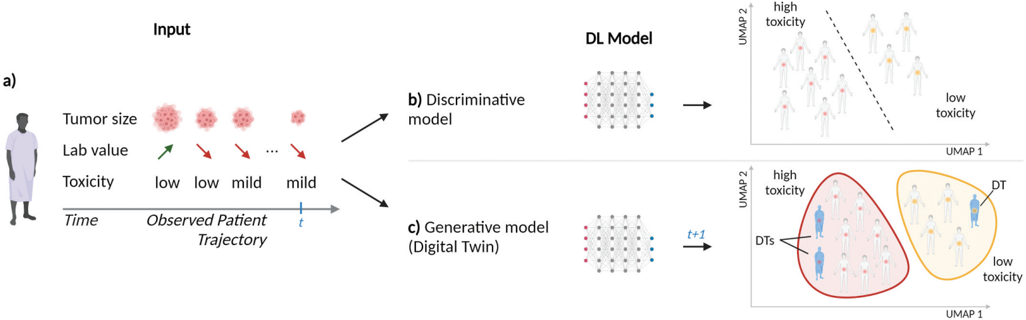
“Data generated by DTs could reduce long patient recruitment processes (Figure 3a), e.g. trials for rare conditions, which are often critically limited by the amount of recruited patients [57].”
BackgroundArtificial intelligence in drug development: Present status and future prospects
Mak, K.-K., & Pichika, M. R. (2019) · Drug Discovery Today · doi:10.1016/j.drudis.2018.11.014 · Cited by 1,018 · cited 1×
“AI progressively interacts with human intelligence and expert domain knowledge to support decision making in drug development [32] (see Table 1 for a list of relevant terms and concepts in AI).”
BackgroundRethinking drug design in the artificial intelligence era
Schneider, P., Walters, W. P., Plowright, A. T., Sieroka, N., Listgarten, J., Goodnow, R. A., Fisher, J., Jansen, J. M., Duca, J. S., Rush, T. S., et al. (2020) · Nature Reviews Drug Discovery · doi:10.1038/s41573-019-0050-3 · Cited by 894 · cited 1×
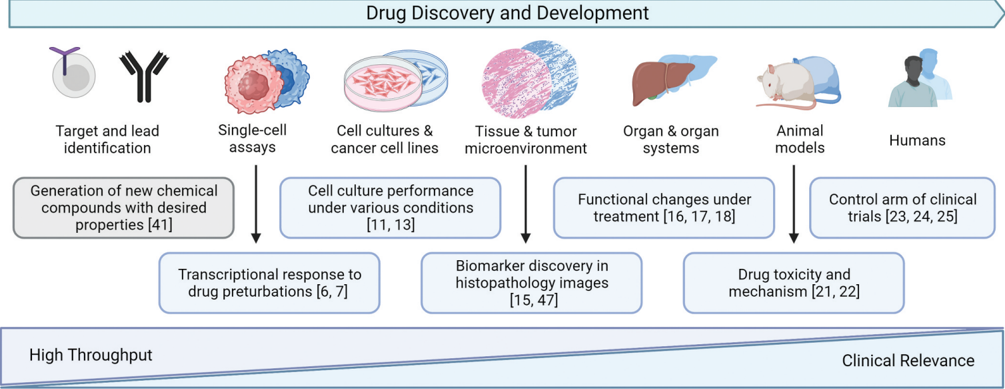
“It is revolutionizing lead generation by enabling in silico synthesis of new chemical compounds [41].”
BackgroundscGen predicts single-cell perturbation responses
Lotfollahi, M., Wolf, F. A., & Theis, F. J. (2019) · Nature Methods · doi:10.1038/s41592-019-0494-8 · Cited by 661 · cited 2×
“Variational autoen-coder (VAE)-based DT models were used to predict transcriptional response to unseen drugs, drug combinations and dosages in high-throughput screens [6,7].”
BackgroundMethodDeepCpG: accurate prediction of single-cell DNA methylation states using deep learning
Angermueller, C., Lee, H. J., Reik, W., & Stegle, O. (2017) · Genome Biology · doi:10.1186/s13059-017-1189-z · Cited by 536 · cited 1×
“Further cell DTs simulating cell state from various angles have been proposed using discriminative ML models [44,45].”
MethodDigital Twins: From Personalised Medicine to Precision Public Health
Kamel Boulos, M. N., & Zhang, P. (2021) · Journal of Personalized Medicine · doi:10.3390/jpm11080745 · Cited by 530 · cited 3×
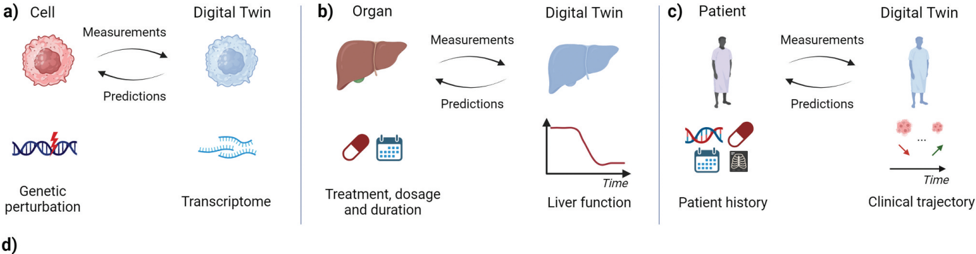
“For example, in the context of clinical research, DTs are virtual representations of patients that resemble the longitudinal characteristics of actual patients, i.e. healthcare DTs [4,26].”
BackgroundSingle-cell analysis tools for drug discovery and development
Heath, J. R., Ribas, A., & Mischel, P. S. (2016) · Nature Reviews Drug Discovery · doi:10.1038/nrd.2015.16 · Cited by 473 · cited 1×
“DTs of individual cells enable virtual perturbation experiments, which significantly accelerate drug discovery [42].”
BackgroundCao, Y., Li, S., Liu, Y., Yan, Z., Dai, Y., Yu, P. S., & Sun, L. (2023) · arXiv · doi:10.48550/arxiv.2303.04226 · Cited by 463
Privacy-Preserving Generative Deep Neural Networks Support Clinical Data Sharing
Beaulieu-Jones, B. K., Wu, Z. S., Williams, C., Lee, R., Bhavnani, S. P., Byrd, J. B., & Greene, C. S. (2019) · Circulation: Cardiovascular Quality and Outcomes · doi:10.1161/circoutcomes.118.005122 · Cited by 390 · cited 1×
“GANs (Figure 3d) were successfully employed in a related field, i.e. simulating synthetic participants of a clinical trial that statistically replace patients actually enrolled into the trial to preserve privacy while enabling the sharing of data [60].”
MethodFDA Modernization Act 2.0 allows for alternatives to animal testing
Han, J. J. (2023) · Artificial Organs · doi:10.1111/aor.14503 · Cited by 381 · cited 1×
“The U.S. Food and Drug Administration (FDA) Modernization Act 2.0 [61] allows usage of computational methods as an alternative to animal testing without explicitly mentioning DTs.”
BackgroundInfluentialMechanistic models versus machine learning, a fight worth fighting for the biological community?
Baker, R. E., Peña, J.-M., Jayamohan, J., & Jérusalem, A. (2018) · Biology Letters · doi:10.1098/rsbl.2017.0660 · Cited by 378 · cited 3×
“They are interpretable by design and enable deep biological as well as clinical insights [29].”
BackgroundThe Living Heart Project: A robust and integrative simulator for human heart function
Baillargeon, B., Rebelo, N., Fox, D. D., Taylor, R. L., & Kuhl, E. (2014) · European Journal of Mechanics - A/Solids · doi:10.1016/j.euromechsol.2014.04.001 · Cited by 370 · cited 2×
“Such models are well established and dominated by mechanistic models, e.g. DTs of the heart [18], brain [17], liver [16].”
BackgroundVirtually Intelligent Product Systems: Digital and Physical Twins
Grieves, M. W. (2019) · Complex Systems Engineering: Theory and Practice · doi:10.2514/5.9781624105654.0175.0200 · Cited by 356 · cited 1×
“Generative AI also enables the creation of Digital Twins (DTs), which are digital replicas of physical objects or systems connected by bidirectional data and information flow [3].”
BackgroundPredicting transcriptional outcomes of novel multigene perturbations with GEARS
Roohani, Y., Huang, K., & Leskovec, J. (2024) · Nature Biotechnology · doi:10.1038/s41587-023-01905-6 · Cited by 355 · cited 1×
“Further cell DTs simulating cell state from various angles have been proposed using discriminative ML models [44,45].”
MethodPredicting cellular responses to complex perturbations in high‐throughput screens
Lotfollahi, M., Klimovskaia Susmelj, A., De Donno, C., Hetzel, L., Ji, Y., Ibarra, I. L., Srivatsan, S. R., Naghipourfar, M., Daza, R. M., Martin, B., et al. (2023) · Molecular Systems Biology · doi:10.15252/msb.202211517 · Cited by 307 · cited 2×
“Variational autoen-coder (VAE)-based DT models were used to predict transcriptional response to unseen drugs, drug combinations and dosages in high-throughput screens [6,7].”
BackgroundMethodThe role of machine learning in clinical research: transforming the future of evidence generation
Weissler, E. H., Naumann, T., Andersson, T., Ranganath, R., Elemento, O., Luo, Y., Freitag, D. F., Benoit, J., Hughes, M. C., Khan, F., et al. (2021) · Trials · doi:10.1186/s13063-021-05489-x · Cited by 280 · cited 1×
“Consequently, interest in the application of ML to drug discovery and development has grown [33,34].”
BackgroundIn silico clinical trials: concepts and early adoptions
Pappalardo, F., Russo, G., Tshinanu, F. M., & Viceconti, M. (2019) · Briefings in Bioinformatics · doi:10.1093/bib/bby043 · Cited by 279 · cited 1×
“…simulations, pave the way for end-to-end in silico drug discovery, development and clinical trials platforms, which are in the process of being established [30,65–67] Current generative AI models have limitations, however, we are confident that these will be overcome in the near future.”
BackgroundMachine learning applications in drug development
Réda, C., Kaufmann, E., & Delahaye-Duriez, A. (2020) · Computational and Structural Biotechnology Journal · doi:10.1016/j.csbj.2019.12.006 · Cited by 228 · cited 1×
“Consequently, interest in the application of ML to drug discovery and development has grown [33,34].”
BackgroundArmeni, P., Polat, I., De Rossi, L. M., Diaferia, L., Meregalli, S., & Gatti, A. (2022) · Journal of Personalized Medicine · doi:10.3390/jpm12081255 · Cited by 214 · cited 2×
“For example, in the context of clinical research, DTs are virtual representations of patients that resemble the longitudinal characteristics of actual patients, i.e. healthcare DTs [4,26].”
BackgroundThe role of AI for developing digital twins in healthcare: The case of cancer care
Kaul, R., Ossai, C. I., Forkan, A. R. M., Jayaraman, P. P., Zelcer, J., Vaughan, S., & Wickramasinghe, N. S. (2022) · Wiley Interdisciplinary Reviews Data Mining and Knowledge Discovery · doi:10.1002/widm.1480 · Cited by 178 · cited 1×
“DTs can be realized in different forms, such as through mechanistic modeling [14,16,27] as well as by using AI [7,15,19,28].”
BackgroundOnline Patient Recruitment in Clinical Trials: Systematic Review and Meta-Analysis
Brøgger-Mikkelsen, M., Ali, Z., Zibert, J. R., Andersen, A. D., & Thomsen, S. F. (2020) · Journal of Medical Internet Research · doi:10.2196/22179 · Cited by 165 · cited 1×
“However, with around 80% of all trials being delayed due to patient enrollment [56], reducing the number of patients required to timely assess a compound is of utmost importance to accelerate drug development with a lower economic and societal burden.”
BackgroundDigital Twin for Drug Discovery and Development—The Virtual Liver
Subramanian, K. (2020) · Journal of the Indian Institute of Science · doi:10.1007/s41745-020-00185-2 · Cited by 123 · cited 5×
“Mechanistic approaches are established for toxicity simulation of novel therapies [16] and have been applied in clinical trial simulations [30].”
BackgroundMethodInfluentialA practical approach to parameter estimation applied to model predicting heart rate regulation
Olufsen, M. S., & Ottesen, J. T. (2013) · Journal of Mathematical Biology · doi:10.1007/s00285-012-0535-8 · Cited by 106 · cited 1×
“However, disadvantages of mechanistic organ models include complexity of modeling and computation, e.g. in depth initialization of parameters [51] and required prior knowledge of physiological interactions [29].”
BackgroundImage generation by GAN and style transfer for agar plate image segmentation
Andreini, P., Bonechi, S., Bianchini, M., Mecocci, A., & Scarselli, F. (2019) · Computer Methods and Programs in Biomedicine · doi:10.1016/j.cmpb.2019.105268 · Cited by 105 · cited 2×
“Further, generative DTs have been exploited to generate synthetic images and model bacterial growth distribution based on generative adversarial networks (GANs) [13].”
BackgroundJose, L., Liu, S., Russo, C., Nadort, A., & Di Ieva, A. (2021) · Journal of Pathology Informatics · doi:10.4103/jpi.jpi_103_20 · Cited by 105 · cited 1×
“Generative AI has been successfully applied in histopathology, e.g. to extract tumor microenvironment (TME) properties from histology slide images to predict genetic alterations, treatment response and disease outcome [46,47] or generate new images similar to the images in the training set [15,48].”
MethodA Digital Twins Machine Learning Model for Forecasting Disease Progression in Stroke Patients
Allen, A. O., Siefkas, A. C., Pellegrini, E., Burdick, H., Barnes, G., Calvert, J. S., Mao, Q., & Das, R. (2021) · Applied Sciences · doi:10.3390/app11125576 · Cited by 84 · cited 5×
“And, finally, the validation of DTs is mostly based on comparing distribution properties with statistical tests or statistical indis-tinguishability, i.e. showing that linear or non-linear classifiers cannot distinguish between real patients and DTs [23–25].”
BackgroundMethodInfluentialDu, P., Zhu, X., & Wang, J. (2022) · Physics of Fluids · doi:10.1063/5.0101128 · Cited by 84 · cited 1×
“DL models are partially overcoming these challenges and are less laborious [52].”
Chen, X., Roberts, R. A., Tong, W., & Liu, Z. (2021) · Toxicological Sciences · doi:10.1093/toxsci/kfab157 · Cited by 83
PathologyGAN: Learning deep representations of cancer tissue
Quiros, A. C., Murray‐Smith, R., & Yuan, K. (2021) · The Journal of Machine Learning for Biomedical Imaging · doi:10.59275/j.melba.2021-gfgg · Cited by 81
Susilo, M. E., Li, C., Gadkar, K., Hernandez, G., Huw, L., Jin, J. Y., Yin, S., Wei, M. C., Ramanujan, S., & Hosseini, I. (2023) · Clinical and Translational Science · doi:10.1111/cts.13501 · Cited by 78 · cited 1×
“DTs can be realized in different forms, such as through mechanistic modeling [14,16,27] as well as by using AI [7,15,19,28].”
BackgroundChen, X., Roberts, R. A., Liu, Z., & Tong, W. (2023) · Nature Communications · doi:10.1038/s41467-023-42933-9 · Cited by 73
Simulation and assimilation of the digital human brain
Lu, W., Du, X., Wang, J., Zeng, L., Ye, L., Xiang, S., Zheng, Q., Zhang, J., Xu, N., Feng, J., et al. (2024) · Nature Computational Science · doi:10.1038/s43588-024-00731-3 · Cited by 68
Credibility of In Silico Trial Technologies—A Theoretical Framing
Viceconti, M., Juarez, M. A., Curreli, C., Pennisi, M., Russo, G., & Pappalardo, F. (2020) · IEEE Journal of Biomedical and Health Informatics · doi:10.1109/jbhi.2019.2949888 · Cited by 67 · cited 2×
“Mechanistic approaches are established for toxicity simulation of novel therapies [16] and have been applied in clinical trial simulations [30].”
BackgroundMethodPark, S., Kim, S. H., Park, C.-Y., Kim, J., & Lee, D. (2023) · Biotechnology and Bioengineering · doi:10.1002/bit.28405 · Cited by 64 · cited 2×
“DTs of cell culture enhance manufacturing and bioprocessing, e.g. by predicting culture performance, proliferation and forecasting substance concentrations [11,14].”
BackgroundPossible Contexts of Use for In Silico Trials Methodologies: A Consensus-Based Review
Viceconti, M., Emili, L., Afshari, P., Courcelles, E., Curreli, C., Famaey, N., Geris, L., Horner, M., Jori, M. C., Kulesza, A. J., et al. (2021) · IEEE Journal of Biomedical and Health Informatics · doi:10.1109/jbhi.2021.3090469 · Cited by 63
PathologyGAN: Learning Deep Representations of Cancer Tissue
Quiros, A. C., Murray‐Smith, R., & Yuan, K. (2020) · Enlighten: Publications (University of Glasgow) · Cited by 63
MildInt: Deep Learning-Based Multimodal Longitudinal Data Integration Framework
Lee, G., Kang, B., Nho, K., Sohn, K.-A., & Kim, D. (2019) · Frontiers in Genetics · doi:10.3389/fgene.2019.00617 · Cited by 62 · cited 1×
“Besides that, NNs have been shown to be well suited for complex, multimodal, multidimensional and longitudinal data [39] and have thus spearheaded developments in the field of DTs.”
BackgroundPredicting cell lineages using autoencoders and optimal transport
Yang, K. D., Damodaran, K., Venkatachalapathy, S., Soylemezoglu, A. C., Shivashankar, G. V., & Uhler, C. (2020) · PLOS Computational Biology · doi:10.1371/journal.pcbi.1007828 · Cited by 61 · cited 3×
“DTs can virtually represent any biological entity, from individual cells [5–10] (Figure 1a) to cell cultures [11–13], to tissue samples [14,15], to entire organs [16–18] (Figure 1b), to animal models [19–22], all the way to full human representations [23– 25] (Figure 1c).”
BackgroundDigital Twins for Tissue Culture Techniques—Concepts, Expectations, and State of the Art
Möller, J., & Pörtner, R. (2021) · Processes · doi:10.3390/pr9030447 · Cited by 61 · cited 3×
“DTs of cell culture enhance manufacturing and bioprocessing, e.g. by predicting culture performance, proliferation and forecasting substance concentrations [11,14].”
BackgroundTang, Y., Zhang, J., He, D., Miao, W., Liu, W., Li, Y., Lu, G., Wu, F., & Wang, S. (2021) · Journal of Controlled Release · doi:10.1016/j.jconrel.2021.06.039 · Cited by 52 · cited 4×
“DTs can be realized in different forms, such as through mechanistic modeling [14,16,27] as well as by using AI [7,15,19,28].”
BackgroundMethodInfluentialA deep generative model of 3D single-cell organization
Donovan-Maiye, R. M., Brown, J. M., Chan, C. K., Ding, L., Yan, C., Gaudreault, N., Theriot, J. A., Maleckar, M. M., Knijnenburg, T. A., & Johnson, G. R. (2022) · PLOS Computational Biology · doi:10.1371/journal.pcbi.1009155 · Cited by 44 · cited 2×
“For instance, state-of-the-art cell DTs focus on predicting changes of single cellular characteristics, e.g. transcriptome [6–8] or cell morphology [9,10], while a multimodal DT could jointly cover numerous cell characteristics.”
BackgroundPossible Contexts of Use for In Silico trials methodologies: a consensus- based review
Viceconti, M., Emili, L., Afshari, P., Courcelles, E., Curreli, C., Famaey, N., Geris, L., Horner, M., Jori, M. C., Kulesza, A. J., et al. (2021) · Repository KITopen (Karlsruhe Institute of Technology) · doi:10.5445/ir/1000137059 · Cited by 42
Generating Digital Twins with Multiple Sclerosis Using Probabilistic Neural Networks
Walsh, J. R., Smith, A. M., Pouliot, Y., Li-Bland, D., Loukianov, A., Fisher, C. K., & for the Multiple Sclerosis Outcome Assessments Consortium (2020) · doi:10.1101/2020.02.04.934679 · Cited by 40 · cited 2×
“They leveraged data from placebo control arms of historical clinical trials and observational studies to train generative models that simulated patient trajectories for Alzheimer’s disease [23] and multiple sclerosis [24].”
MethodMachine Learning in Biology and Medicine
Noorbakhsh, J., Chandok, H., Karuturi, R. K. M., & George, J. (2019) · Advances in Molecular Pathology · doi:10.1016/j.yamp.2019.07.010 · Cited by 27 · cited 1×
“A disadvantage of AI approaches is that their interpretation and modeling of the underlying biological mechanisms often remain elusive [29,31].”
BackgroundUstyuzhaninov, I., Burg, M. F., Cadena, S. A., Fu, J., Muhammad, T., Ponder, K., Froudarakis, E., Ding, Z., Bethge, M., Tolias, A. S., et al. (2022) · bioRxiv (Cold Spring Harbor Laboratory) · doi:10.1101/2022.02.10.479884 · Cited by 24 · cited 3×
“DTs can be realized in different forms, such as through mechanistic modeling [14,16,27] as well as by using AI [7,15,19,28].”
BackgroundSaha, M., Guo, X., & Sharma, A. (2021) · IEEE Access · doi:10.1109/access.2021.3084597 · Cited by 22 · cited 2×
“For instance, TilGAN [48] leveraged a GAN-based network to generate images of TME with tumor-infiltrating lymphocytes.”
MethodMantilla, D., Ferreira-Prada, C. A., Galvis, M., Vargas, O., Valenzuela-Santos, C., Canci, P., Ochoa, M., Nicoud, F., & Costalat, V. (2021) · Interventional Neuroradiology · doi:10.1177/15910199211068668 · Cited by 20 · cited 1×
“Mechanistic DTs of the entire cardiovascular system are currently being tested by multiple companies, such as Sim&Cure [49] and Computational Life [50].”
MethodBertolini, D., Loukianov, A. D., Smith, A. D., Li‐Bland, D., Pouliot, Y., Walsh, J. R., & Fisher, C. K. (2021) · Alzheimer s & Dementia · doi:10.1002/alz.054414 · Cited by 19 · cited 6×
“And, finally, the validation of DTs is mostly based on comparing distribution properties with statistical tests or statistical indis-tinguishability, i.e. showing that linear or non-linear classifiers cannot distinguish between real patients and DTs [23–25].”
BackgroundMethodInfluentialEvaluating Digital Twins for Alzheimer’s Disease using Data from a Completed Phase 2 Clinical Trial
Walsh, J. R., Roumpanis, S., Bertolini, D., & Delmar, P. (2022) · Alzheimer s & Dementia · doi:10.1002/alz.065386 · Cited by 13 · cited 1×
“Only in exceptional cases was additional clinical data lever-aged for validation, e.g. DTs of multiple sclerosis [59].”
BackgroundIt takes neurons to understand neurons: Digital twins of visual cortex synthesize neural metamersPreprint
Cobos, E., Muhammad, T., Fahey, P. G., Ding, Z., Ding, Z., Reimer, J., Sinz, F. H., & Tolias, A. S. (2022) · bioRxiv (Cold Spring Harbor Laboratory) · doi:10.1101/2022.12.09.519708 · Cited by 10 · cited 1×
“For example, convolutional neural network (CNN)-based DTs have been proposed to simulate responses to visual stimuli across the mouse visual cortex [19,20].”
BackgroundChen, X., Roberts, R. A., Liu, Z., et al. (2023) · bioRxiv (Cold Spring Harbor Laboratory) · doi:10.1101/2023.03.25.534230 · Cited by 4 · cited 2×
“Generative DTs of animal models robustly generalized toxicity testing results of novel drugs [21,22].”
BackgroundMethodThe digital twin of the human brain: Simulation and assimilationPreprint
Feng, J., Lu, W., Zeng, L., et al. (2024) · Research Square · doi:10.21203/rs.3.rs-4321313/v1 · Cited by 3
Research works printed but not linked: 3
- How digital twins of human cells are accelerating drug discovery [internet] DeepLife. 2022 Jun cited 2023 Sep 18. Available from https://www.nature.com/articles/d43747-022-00108-3
- Murphy KP. Probabilistic machine learning: an introduction. Cambridge, Massachusetts: MIT press. 2022 Mar 1. •• Thorough introduction into machine modeling techniques.
- Chen RT, Rubanova Y, Bettencourt J, et al. Neural ordinary differ- ential equations. In Proceedings of the 32nd International Conference on Neural Information Processing Systems (NIPS'18);
Cited by
Bias in medical AI: Implications for clinical decision-making
Cross, J. L., Choma, M. A., & Onofrey, J. A. (2024) · PLOS Digital Health · doi:10.1371/journal.pdig.0000651 · Cited by 607
Ocana, A., Pandiella, A., Privat, C., Bravo, I., Luengo-Oroz, M., Amir, E., & Gyorffy, B. (2025) · Biomarker Research · doi:10.1186/s40364-025-00758-2 · Cited by 187
“The creation of digital replicas of patients allows for the testing of treatments in a virtual environment before actual application, reducing risks and optimizing therapeutic strategies [93, 94].”
Resnik, D. B., & Hosseini, M. (2025) · AI and Ethics · doi:10.1007/s43681-024-00493-8 · Cited by 228
“Also, because synthetic data are similar to but not the same as real data, they can be used to eliminate or mask personal identifiers and protect the confidentiality of human participants [31, 81, 200].”
Islam, M. T., Sepanloo, K., Woo, S., Woo, S. H., & Son, Y. (2025) · Machines · doi:10.3390/machines13040267 · Cited by 222
“Some researchers also highlighted the potential of 6G to integrate AI-driven “semantic communications”, which will ensure that only contextually meaningful information is transmitted [139].”
Generative-AI-Driven Human Digital Twin in IoT Healthcare: A Comprehensive Survey
Chen, J., Shi, Y., Yi, C., Du, H., Kang, J., & Niyato, D. T. (2024) · IEEE Internet of Things Journal · doi:10.1109/jiot.2024.3421918 · Cited by 203
“Standardized application programming interfaces (APIs) and Web services is a practical solution to these challenges.”
BackgroundMethod
Metadata
- Authors
- Bordukova, M., Makarov, N., Rodriguez-Esteban, R., Schmich, F., & Menden, M. P.
- Affiliations
- Helmholtz Munich (DE)
- Data & Analytics, Pharmaceutical Research and Early Development, Roche Innovation Center Basel (RICB), Basel, Switzerland
- Data & Analytics, Pharmaceutical Research and Early Development, Roche Innovation Center Munich (RICM), Penzberg, Germany
- The University of Melbourne (AU)
- Corresponding author
- Schmich, Fabian
- Menden, Michael P.
- Venue
- Expert Opinion on Drug Discovery
- Publisher
- Informa UK Limited
- Published
- 2023-10-27
- Volume
- 19
- Issue
- 1
- Pages
- 33-42
- ISSN
- 1746-0441 (ISSN-L)
- 1746-045X
- OpenAlex
- W4387966880
- Cited by
- 235
- References
- 57
- Citations by year
- 2026: 82 · 2025: 104 · 2024: 49
- FWCI
- 3.99
- Type
- journal article
- Language
- en
- Open access
- hybrid
- doi.org
- Licence
- Locations
- Expert Opinion on Drug Discovery (publishedVersion, cc-by-nc-nd)
- PubMed (publishedVersion)
- Funders
- European Union’s Horizon 2020 Research and Innovation Programme
- Topics
- Life Sciences › Pharmacology, Toxicology and Pharmaceutics › Drug Discovery › Computational Drug Discovery Methods
- Health Sciences › Medicine › Health Informatics › Artificial Intelligence in Healthcare and Education
- Physical Sciences › Computer Science › Artificial Intelligence › Machine Learning in Healthcare
- Keywords
- digital twin, generative AI, drug discovery, clinical trials, in silico modeling, precision medicine, biomarker discovery, regulatory challenges, deep learning
- MeSH terms
- Drug Development, Artificial Intelligence, Clinical Trials as Topic, Computer Simulation, Humans, Biomedical Research, Drug Discovery
About these checks
Registry, retraction, Cites and statistics results are computed, not judged, with one exception: a printed reference that no index lists is read once by a model before it counts as a citation error. Claims are extracted by a model and kept only when their quote appears verbatim in the text; each cited source is then checked, with a model’s help, for whether it says what the claim relies on. Those verdicts can be wrong — read the claim’s quote and the cited source before relying on one.
Statistics and arithmetic are recomputed, not judged.
Confidence bands are shown only for fields calibrated on our annotated test set. None is calibrated yet, so no band is shown.
What counts as a claim ›How we measure confidence ›How we check this ›
Are you an author, or do you see a problem with this page? Request a review
Data sources
Bibliographic data: Semantic Scholar, OpenAlex, Crossref.
Contains information from the Semantic Scholar Academic Graph Datasets, made available under the ODC Attribution License (ODC-BY 1.0).
Semantic Scholar’s data is described in: Kinney, R., et al. (2023). The Semantic Scholar Open Data Platform. arXiv:2301.10140.
