

Older residents’ perceptions of family involvement in residential care
Open accessThe DOI matches its Crossref record; 43 of the 43 references it cites were found in a registry or an index.
Abstract
AIM: This study explored the Chinese older people's perceptions regarding family involvement and specific factors influencing family involvement in residential care homes. BACKGROUND: Family involvement in residential care home is a multi-dimensional construct that connects the resident with their family, friends, neighbours and care professionals to facilitate their physical, psycho-emotional and social well-being. However, it remains unclear as to what Chinese residents perceive as the meaning of involving the family and components of it that are important to later live. MATERIAL AND METHODS: A descriptive qualitative study using semi-structured interviews was conducted in two residential care homes in Macao. Ten Chinese residents were purposively sampled. The interview data were taped-recorded and transcribed. Fieldnotes and visitors' records were collected. The data were content-analyzed. RESULTS: Chinese residents' perceptions of family involvement were captured by four themes: components of family involvement, factors influencing family involvement, impacts of family involvement on residents' lives, and promoting family involvement strategies. CONCLUSION: Findings provided insights for geriatric care providers to acknowledge the contributions that family members can make to be more involved in the residents' live, and to strengthen relationships. Family involvement can also help to facilitate sense of blessing and feelings of achievements for the residents.
Overview
The claims and statistics of this paper haven’t been checked yet.
Free: it reads the open-access text and checks the first 5 claims that cite a source we can check. Create a free account to check every claim.
Integrity signals
Registry
Cites
Statistics
Figures
Verification
Claims the paper makes
The claims and statistics of this paper haven’t been checked yet.
Free: it reads the open-access text and checks the first 5 claims that cite a source we can check. Create a free account to check every claim.
Claims other papers make about this one
Each is checked against this paper’s own text: does it say what the citing paper says it does?
The source backs part of the claim, not all of it — or backs it for a different population, condition or comparison.
In the citing paper
“According to Lao et al. (2019), adult children often consistently refuse to visit parents living in care homes, some even leaving periods over one year between visits.”
From Filial Piety, Generativity and Older Adults’ Wellbeing and Loneliness in Denmark and China (2022) · cites this paper as Lao et al., 2019
Experimental — accuracy not yet measured
Self-check
Percentages, sums and reported differences re-computed from the paper’s own numbers.
The self-check needs the paper’s full text.
Citations
Cites
Content Analysis: An Introduction to its Methodology.
Shelley, M., & Krippendorff, K. (1984) · Journal of the American Statistical Association · doi:10.2307/2288384 · Cited by 24,312
Qualitative Inquiry and Research Design: Choosing Among Five Approaches
Lewis, S. (2015) · Health Promotion Practice · doi:10.1177/1524839915580941 · Cited by 22,105
Qualitative inquiry and research design: Choosing among five approaches, 2nd ed.
Creswell, J. W. (2007) · Cited by 4,999
How to plan and perform a qualitative study using content analysis
Bengtsson, M. (2016) · NursingPlus Open · doi:10.1016/j.npls.2016.01.001 · Cited by 4,616 · cited 1×
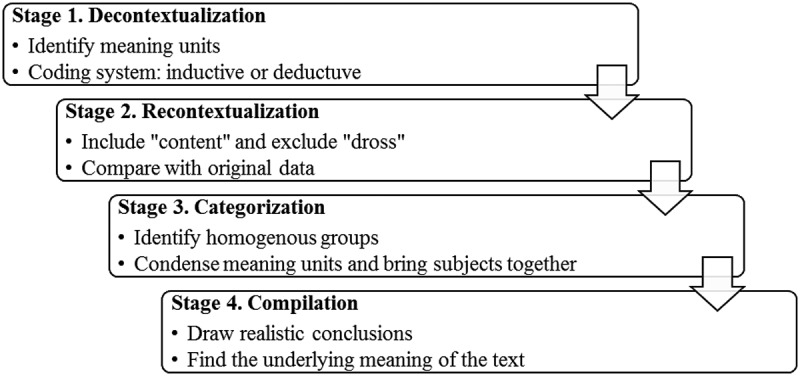
“Figure 1 depicts the stepwise approach to content analysis as guided by Bengtsson (2016).”
MethodThe Barthel ADL Index: A reliability study
Collin, C., Wade, D. T., Davies, S., & Horne, V. (1988) · International Disability Studies · doi:10.3109/09638288809164103 · Cited by 2,734
(1995) · Medical Entomology and Zoology · Cited by 2,472
An Introduction to Research Methods
(2019) · Data Collection Research Methods in Applied Linguistics · doi:10.5040/9781350025875.ch-001 · Cited by 2,362
Moodley, P. (2009) · Indo-Pacific Journal of Phenomenology · Cited by 860
Chiu, H. F. K., Lee, H., Chung, W., & Kwong, P. K. (1994) · Hong Kong journal of psychiatry · Cited by 531
Twinn, S. (1997) · Journal of Advanced Nursing · doi:10.1046/j.1365-2648.1997.1997026418.x · Cited by 361 · cited 2×
“The guidelines used was suggested by Twinn (1997) and worked with bilingual translators who were fully competent in both languages, had a healthcare background and possessed experiences to understand the contexts in which the data were collected.”
BackgroundMethod
Research works printed but not linked: 3
- Dahlberg K., Dahlberg H., & Nyström M. (2008). Reflective life world research (2nd ed.). Lund: Studentlitteratur.
- Polit D. F., & Beck C. T. (2008). Essential of nursing research: Appraising evidence for nursing practice (7th ed.). Philadelphia: Lippincott Williams & Wilkins.
- Streubert Speziale H. J., & Carpenter D. R. (2011). Qualitative research in nursing: Advancing the humanistic imperatives (5th ed.). Philadelphia: Lippincott Williams and Wilkins.
Cited by
O'Caoimh, R., O'Donovan, M. R., Monahan, M. P., Dalton O'Connor, C., Buckley, C., Kilty, C., Fitzgerald, S., Hartigan, I., & Cornally, N. (2020) · Frontiers in Psychiatry · doi:10.3389/fpsyt.2020.585373 · Cited by 132
“Visitors (family members and friends) also assist with personal care (10, 11).”
BackgroundReimagining Family Involvement in Residential Long-Term Care
Gaugler, J. E., & Mitchell, L. L. (2021) · Journal of the American Medical Directors Association · doi:10.1016/j.jamda.2021.12.022 · Cited by 97
Filial Piety, Generativity and Older Adults’ Wellbeing and Loneliness in Denmark and China
Ren, P., Emiliussen, J., Christiansen, R., Engelsen, S., & Klausen, S. H. (2022) · Applied Research in Quality of Life · doi:10.1007/s11482-022-10053-z · Cited by 62
Torku, A., Chan, A. P. C., Yung, E. H. K., & Seo, J. (2021) · Building and Environment · doi:10.1016/j.buildenv.2021.108298 · Cited by 42
Torku, A., Chan, A. P. C., Yung, E. H. K., & Seo, J. (2022) · Building and Environment · doi:10.1016/j.buildenv.2022.109533 · Cited by 41
Quality of Life of Older Persons: The Role and Challenges of Social Services Providers
Ghenţa, M., Matei, A., Mladen, L., & Stănescu, S. M. (2022) · International Journal of Environmental Research and Public Health · doi:10.3390/ijerph19148573 · Cited by 43
“Providers argued that social interactions with family and the community maintain and improve the emotional well-being of older persons, as other studies proved [71,72].”
ResultCornally, N., Kilty, C., Buckley, C., Ó’Caoimh, R., O’Donovan, M. R., Monahan, M. P., O’Connor, C. D., Fitzgerald, S. M., & Hartigan, I. (2022) · International Journal of Environmental Research and Public Health · doi:10.3390/ijerph19116559 · Cited by 23
“Families provide socioemotional support and assist with personal care [6].”
BackgroundTorku, A., Chan, A. P. C., Yung, E. H. K., Seo, J., & Antwi‐Afari, M. F. (2022) · Environment and Behavior · doi:10.1177/00139165221114894 · Cited by 15
“A cut-off score of 19/20 is recommended to indicate cognitive impairment among Hong Kong older adults (Chiu et al., 1998; Lao et al., 2019).”
BackgroundMethodKelly, R., Xing, Y., Baker, S., & Waycott, J. (2023) · JMIR Aging · doi:10.2196/40953 · Cited by 23
“Families are a primary source of cognitive and emotional enrichment [18] and contribute to advocacy, emotional support, and assistance with the personal care of residents [14,19-21].”
Family involvement with care homes following placement of a relative living with dementia: a review
Hayward, J. K., Gould, C., Palluotto, E., Kitson, E., & Spector, A. E. (2021) · Ageing and Society · doi:10.1017/s0144686x21000957 · Cited by 17
“In a recent study conducted by Lao et al. (2019), Chinese residents (though not specific to dementia) highlighted influencing factors similar to those found in this review, including family commitments, age, financial concerns, family–resident relationship and limited visiting hours.”
Xiying, L., Yitong, J., Jing, L., Xingyu, Z., & Zhongling, P. (2022) · Acta Psychologica Sinica · doi:10.3724/sp.j.1041.2022.01381 · Cited by 16
Pirhonen, J., Forma, L., & Pietilä, I. (2022) · BMC Nursing · doi:10.1186/s12912-022-01036-4 · Cited by 11
“FM visits promote residents’ self-esteem [19] and sense of autonomy [15] and relieve psychological stress [20].”
BackgroundLai, V. S.-K., Yau, S. Y., Lee, L. Y. K., Li, B. S. Y., Law, S. S.-P., & Huang, S. (2022) · International Journal of Environmental Research and Public Health · doi:10.3390/ijerph192215287 · Cited by 11
Nurses’ perceptions of involving family members in the care of mental health care users
Mabunda, N. F. (2024) · Curationis · doi:10.4102/curationis.v47i1.2538 · Cited by 8
“A study conducted in Hong Kong found that social interaction and support from family members are significant aspects that contribute to positive outcomes of mental well-being and recovery for long-term mental health care, treatment and rehabilitation (Lao, Low & Wong 2019:7).”
BackgroundThe experience of transportation to visit a nursing home resident: A case study
Miller, V. J. (2020) · Social Work in Health Care · doi:10.1080/00981389.2020.1756556 · Cited by 6
“Furthermore, family members visitation to their resident has been found to relieve psychological stress and improve overall quality of life outcomes (Gaugler, 2005; Lao et al., 2019).”
BackgroundShu, R., Liu, C., Liang, Y., & Liang, Y. (2022) · Geriatric Nursing · doi:10.1016/j.gerinurse.2022.02.024 · Cited by 6
Mangiacotti, A. M. A., Masotti, A., & Biasutti, M. (2024) · International Journal of Community Music · doi:10.1386/ijcm_00096_1 · Cited by 5
Yusuf, A., Purba, J. M., Putri, D. E., Aditya, R. S., Alruwaili, A., & Alrazeeni, D. M. (2024) · Health Equity · doi:10.1089/heq.2024.0009 · Cited by 19
Family Members’ Experiences with the Healthcare Professionals in Nursing Homes – A Survey Study
Momeni, P., Ewertzon, M., Årestedt, K., & Winnberg, E. (2022) · Nursing Research and Reviews · doi:10.2147/nrr.s345452 · Cited by 4
Ohta, R., Katsube, T., & Sano, C. (2023) · Cureus · doi:10.7759/cureus.47331 · Cited by 5
“Creating a culture of collaboration and mutual respect between medical teachers and trainees is essential to addressing the generation gap in medical education [10].”
BackgroundRannikko, J., Paananen, J., Stolt, M., & Suhonen, R. (2023) · Nursing Open · doi:10.1002/nop2.2029 · Cited by 3
“The factors related to interaction strategies provide practical guidance on encountering the informal caregivers of PwMDs and promoting the perseverance of the care recipients' own social nexuses (see Lao et al., 2019 ; McCormack, 2004).”
BackgroundBernardi, S., Fiordelli, M., Rubinelli, S., Spagnoli, V., Malacrida, R., & Martignoni, G. (2024) · International Journal of Public Health · doi:10.3389/ijph.2024.1606583 · Cited by 4
“We argue the need to place communication at the center of care practices to create an ethical care environment [36], ensuring that all parties are actively involved and held accountable [38, 39].”
BackgroundWhite, C., Whitfield, C., Wolverson, E., & Wray, J. (2022) · International Journal of Care and Caring · doi:10.1332/239788221x16666566787347 · Cited by 3
Achjar, K. A. H., Kusumawardani, L. H., & Parashita, S. A. P. (2022) · Media Karya Kesehatan · doi:10.24198/mkk.v5i1.30303 · Cited by 3
“Living in an extended family allows for a lot of family member involvement in caring for the older adult at home (Lao et al., 2019).”
BackgroundBarek, M. A., Haryanto, J., & Ulfiana, E. (2021) · Journal of Vocational Nursing · doi:10.20473/jovin.v2i1.26934 · Cited by 2
“Good family support will also result in a good nutritional status for the elderly (Lao et al., 2019).”
BackgroundSantana‐Berlanga, N. D. R., Romero‐Sánchez, J. M., Botello-Hermosa, A., Bergland, Å., Edvardsson, D., & Pórcel‐Gálvez, A. M. (2024) · Geriatric Nursing · doi:10.1016/j.gerinurse.2024.08.004 · Cited by 2
“…to the perception of safety and comfort in the residence (qualities in physical environment) and items related to participating in satisfying activities and interactions with other residents, as well as being able to spend time with them freely 47 (resident engagement and peer relationships).”
BackgroundMarín, A. I. R., Carbonell, M. M., Quiles, J. M. O., & Méndez, I. (2020) · International Journal of Environmental Research and Public Health · doi:10.3390/ijerph17207597 · Cited by 2
“According to Kydd [6], the loss of a familiar environment and people they know as well as significant lifestyle modifications may be associated with the anger, depression, or defensiveness of the newly admitted resident, who may refuse to interact with others.”
BackgroundWidyakusuma, N. N., Suryawati, S., Wiedyaningsih, C., Probosuseno, P., & Padmawati, R. S. (2023) · Journal of Pharmaceutical Policy and Practice · doi:10.1186/s40545-023-00576-7 · Cited by 2
Family-Centred Practice in a Rehabilitation Setting
Butler, M., & John, R. V. (2020) · Scope Contemporary Research Topics (Health and Wellbeing) · doi:10.34074/scop.3005013
RELEVANCE OF THE TYPE OF ACCOMMODATION IN THE EMOTIONAL STATE AND HEALTH STATUS OF THE ELDERLY
Kavecan, D. E., Amar, A. V., & Fehratović, M. (2023) · SCIENCE International Journal · doi:10.35120/sciencej0204113k
Application and Development of Wearable Sensing Devices for Health Monitoring of the Elderly
Guo, P. (2024) · International Conference on Electrical Drives, Power Electronics & Engineering (EDPEE) · doi:10.1109/edpee61724.2024.00093
Yao, L., & Masaki, H. (2024) · Journal of International Nursing Research · doi:10.53044/jinr.2022-0038
Current trends of computational tools and artificial intelligence in geriatric medicine
Awuah, W. A., Yong, B. M. O., Mikhailova, T., Ng, J. C., Abdul‐Rahman, T., Yarlagadda, R., Tedeschi, A. J., Miteu, G. D., Garg, T., David, L., et al. (2024) · Elsevier eBooks · doi:10.1016/b978-0-443-15702-8.00023-3
Cultural Perspectives for Promoting Residents’ Quality of Life in Long-Term Care
Hage, D. (2025) · Springer eBooks · doi:10.1007/978-3-031-91038-8_10
Relationships Between Cultural Perspectives and Family Caregiver Burden in the Dementia Population
Adams, P., & Kaufman, D. A. S. (2025) · Dementia · doi:10.1177/14713012251356733
“Family involvement in older adult care has been shown to have a positive impact on individuals needing greater levels of long-term assistance, as there is typically an increased sense of familiarity, social connectedness, and shared decision-making (Lao et al., 2019).”
Ingard, C., Lindmark, T., Sjölund, M., & Trygged, S. (2026) · International Journal of Qualitative Studies on Health and Well-Being · doi:10.1080/17482631.2026.2653685 · Cited by 1
“Residents also view relatives as key partners who help them communicate with staff (Lao & Low, 2019).”
Ertürk, F., & Küçükoğlu, S. (2026) · Ege Üniversitesi Hemşirelik Fakültesi Dergisi · doi:10.53490/egehemsire.1600314
Zhuo, W. (2026) · Emerald Group Publishing Limited eBooks · doi:10.1108/s1530-353520260000036009
Chen, H., Feng, P., Huang, H., Tsai, H., Chen, C. H., Chang, Y., & Liu, C. (2026) · Journal of Advanced Nursing · doi:10.1111/jan.70798
Metadata
- Authors
- Lao, S. S. W., Low, L. P. L., & Wong, K. K. Y.
- Affiliations
- Kiang Wu Hospital (CN)
- Saint Francis University (HK)
- Corresponding author
- Low, Lisa Pau Le
- ORCID
- Low, Lisa Pau Le
- Venue
- International Journal of Qualitative Studies on Health and Well-being
- Publisher
- Informa UK Limited
- Published
- 2019-01
- Volume
- 14
- Issue
- 1
- Pages
- 1611298-1611298
- ISSN
- 1748-2623 (ISSN-L)
- 1748-2631
- PMC
- PMC6522931
- OpenAlex
- W2944446457
- Cited by
- 40
- References
- 43
- Citations by year
- 2026: 4 · 2025: 2 · 2024: 8 · 2023: 5 · 2022: 12 · 2021: 4 · 2020: 5
- FWCI
- 7.15
- Type
- journal article
- Language
- en
- Open access
- gold
- doi.org
- Licence
- Locations
- International Journal of Qualitative Studies on Health and Well-Being (publishedVersion, cc-by)
- PubMed Central (publishedVersion, cc-by)
- PubMed (publishedVersion)
- DOAJ (DOAJ: Directory of Open Access Journals) (submittedVersion, cc-by-sa)
- Topics
- Health Sciences › Medicine › Geriatrics and Gerontology › Geriatric Care and Nursing Homes
- Social Sciences › Sociology and Political Science › Intergenerational Family Dynamics and Caregiving
- Social Sciences › Life-span and Life-course Studies › Aging, Elder Care, and Social Issues
- Keywords
- family involvement, care homes, older adults, Chinese older adults, resident perceptions, family relationships, elderly care, social well-being, Macau
- MeSH terms
- Activities of Daily Living, Aged, Aged, 80 and over, China, Delivery of Health Care, Family, Female, Homes for the Aged, Humans, Interpersonal Relations, Health Knowledge, Attitudes, Practice, Male, Nursing Homes, Quality of Life, Surveys and Questionnaires, Social Support, Intergenerational Relations, Caregivers, Spouses, Adult Children, Comprehension, Qualitative Research, Meals
About these checks
Registry, retraction, Cites and statistics results are computed, not judged, with one exception: a printed reference that no index lists is read once by a model before it counts as a citation error. Claims are extracted by a model and kept only when their quote appears verbatim in the text; each cited source is then checked, with a model’s help, for whether it says what the claim relies on. Those verdicts can be wrong — read the claim’s quote and the cited source before relying on one.
Statistics and arithmetic are recomputed, not judged.
Confidence bands are shown only for fields calibrated on our annotated test set. None is calibrated yet, so no band is shown.
What counts as a claim ›How we measure confidence ›How we check this ›
Are you an author, or do you see a problem with this page? Request a review
Data sources
Bibliographic data: Semantic Scholar, OpenAlex, Crossref.
Contains information from the Semantic Scholar Academic Graph Datasets, made available under the ODC Attribution License (ODC-BY 1.0).
Semantic Scholar’s data is described in: Kinney, R., et al. (2023). The Semantic Scholar Open Data Platform. arXiv:2301.10140.
