

Brief admission (BA) for patients with emotional instability and self-harm: Nurses’ perspectives—Person-centred care in clinical practice
Open accessThe DOI matches its Crossref record; 59 of the 59 references it cites were found in a registry or an index.
Abstract
Purpose: Emotional instability and self-harm pose major problems for society and health care. There are effective interventions in outpatient care, but when patients need inpatient care, nurses often struggle meeting their patient’s needs. Brief admission (BA) is a newly implemented crisis intervention and novel form of inpatient care. The aim of this study is to describe nurses’ experiences working with BA related to patients with emotional instability and self-harm.Methods: Eight nurses were interviewed according to a semi-structured interview guide. The data was analysed using qualitative content analysis.Results: Four main categories emerged regarding nurses’ experiences with BA: provides security and continuity, fosters caring relationships, shifts focus towards patient’s health and empowers the patient. The nurse’s role shifted from “handling problems” to establishing caring relationships with a focus on the person’s health and possibilities for recovering instead of psychiatric symptoms.Conclusions: Previous studies on patients’ perspective of BA describe positive experiences such as increased autonomy and participation in the healthcare process. This study supports those findings, albeit from the perspective of nurses. Our findings suggest that BA may reduce work-related stress experienced by nurses while caring for persons with emotional instability and self-harm. BA may also support nurses in their ability to provide more meaningful and constructive psychiatric inpatient care.
Overview
The claims and statistics of this paper haven’t been checked yet.
Free: it reads the open-access text and checks the first 5 claims that cite a source we can check. Create a free account to check every claim.
Integrity signals
Registry
Cites
Statistics
Figures
Verification
Claims the paper makes
The claims and statistics of this paper haven’t been checked yet.
Free: it reads the open-access text and checks the first 5 claims that cite a source we can check. Create a free account to check every claim.
Claims other papers make about this one
Each is checked against this paper’s own text: does it say what the citing paper says it does?
The source backs part of the claim, not all of it — or backs it for a different population, condition or comparison.
In the citing paper
“In a previous study by Eckerström et al. [18], brief admissions for adults demonstrated good acceptance among eight informants representing round-the-clock care [18].”
From Implementation of Brief Admission by Self-Referral in Child and Adolescent Psychiatry in Sweden: Insights from Implementers and Staff (2023) · cites this paper as [18]
Experimental — accuracy not yet measuredThe source backs part of the claim, not all of it — or backs it for a different population, condition or comparison.
In the citing paper
“In 2015, the method was adapted and implemented in Swedish adult mental health services by Flyckt et al. [16,17,18] at Karolinska Institute in Stockholm and Westling et al. [19,20] at Lund University; the method demonstrated both high levels of patient satisfaction among individuals using the intervention and good acceptance among staff [17,18].”
From Implementation of Brief Admission by Self-Referral in Child and Adolescent Psychiatry in Sweden: Insights from Implementers and Staff (2023) · cites this paper as [18]
Experimental — accuracy not yet measured
Self-check
Percentages, sums and reported differences re-computed from the paper’s own numbers.
The self-check needs the paper’s full text.
Citations
Cites
Diagnostic and Statistical Manual of Mental Disorders
American Psychiatric Association (2013) · doi:10.1176/appi.books.9780890425596 · Cited by 116,369
The qualitative content analysis process
Elo, S., & Kyngäs, H. (2008) · Journal of Advanced Nursing · doi:10.1111/j.1365-2648.2007.04569.x · Cited by 22,617 · cited 2×
“The data were collected through individual interviews and analysed using qualitative content analysis (Elo & Kyngäs, 2008).”
MethodDiagnostic and Statistical Manual of Mental Disorders(DSM)
(2008) · Encyclopedia of Counseling · doi:10.4135/9781412963978.n182 · Cited by 10,830
Cook, R. J., Dickens, B. M., & Fathalla, M. F. (2003) · Reproductive Health and Human Rights · doi:10.1093/acprof:oso/9780199241323.003.0025 · Cited by 10,769
(2016) · Andalas University Repository (Andalas University) · Cited by 8,424
Person-centered care—ready for prime time
Ekman, I., Swedberg, K., Taft, C., Lindseth, A., Norberg, A., Brink, E., Carlsson, J., Dahlin-Ivanoff, S., Johansson, I.-L., Kjellgren, K., et al. (2011) · European Journal of Cardiovascular Nursing · doi:10.1016/j.ejcnurse.2011.06.008 · Cited by 1,681 · cited 5×
“Ekman et al. (2011) noted that while most care providers appear to endorse personcentred care, this approach has yet to be systematically and consistently implemented in actual care.”
BackgroundInfluentialBorderline personality disorder
Lieb, K., Zanarini, M. C., Schmahl, C., Linehan, M. M., & Bohus, M. (2004) · The Lancet · doi:10.1016/s0140-6736(04)16770-6 · Cited by 1,369
Carroll, R., Metcalfe, C., & Gunnell, D. (2014) · PLoS ONE · doi:10.1371/journal.pone.0089944 · Cited by 586 · cited 1×
“Despite the magnitude of the problem, the incidence of repeated self-harm has not changed in over 10 years (Carroll et al., 2014).”
BackgroundBlack, D. W., Blum, N., Pfohl, B., & Hale, N. (2004) · Journal of Personality Disorders · doi:10.1521/pedi.18.3.226.35445 · Cited by 522
Betan, E., Heim, A. K., Zittel Conklin, C., & Westen, D. (2005) · American Journal of Psychiatry · doi:10.1176/appi.ajp.162.5.890 · Cited by 419
Zetterqvist, M., Lundh, L.-G., Dahlström, Ö., & Svedin, C. G. (2013) · Journal of Abnormal Child Psychology · doi:10.1007/s10802-013-9712-5 · Cited by 408
Correlates of suicide attempts among self-injurers: a meta-analysis
Victor, S. E., & Klonsky, E. D. (2014) · Clinical Psychology Review · doi:10.1016/j.cpr.2014.03.005 · Cited by 390 · cited 1×
“The emotional distress associated with BPD sometimes become unmanageable, and hospitalization due to self-harm and suicide attempts is common (Bolton, Pagura, Enns, Grant, & Sareen, 2010; Victor & Klonsky, 2014).”
BackgroundAttitudes and knowledge of clinical staff regarding people who self-harm: a systematic review.
Saunders, K. E. A., Hawton, K., Fortune, S., & Farrell, S. (2012) · Journal of Affective Disorders · doi:10.1016/j.jad.2011.08.024 · Cited by 376 · cited 2×
“knowledge have a positive effect on nurses’ attitudes towards working with persons who self-harm (Karman et al., 2015; McHale & Felton, 2010; Saunders et al., 2012).”
BackgroundResultImproving Accuracy of Transcripts in Qualitative Research
MacLean, L. M., Meyer, M., & Estable, A. (2004) · Qualitative Health Research · doi:10.1177/1049732303259804 · Cited by 334
Gysin-Maillart, A., Schwab, S., Soravia, L., Megert, M., & Michel, K. (2016) · PLOS Medicine · doi:10.1371/journal.pmed.1001968 · Cited by 293
Chronic Suicidality Among Patients With Borderline Personality Disorder
Paris, J. (2002) · Psychiatric Services · doi:10.1176/appi.ps.53.6.738 · Cited by 234 · cited 1×
“About 10% of patients diagnosed with BPD die from suicide (Black, Blum, Pfohl, & Hale, 2004; Paris, 2002).”
BackgroundPerson-centred care: an overview of reviews
Sharma, T., Bamford, M., & Dodman, D. (2015) · Contemporary Nurse · doi:10.1080/10376178.2016.1150192 · Cited by 197
The antecedents of violence and aggression within psychiatric in‐patient settings
Papadopoulos, C., Ross, J., Stewart, D., Dack, C., James, K., & Bowers, L. (2012) · Acta Psychiatrica Scandinavica · doi:10.1111/j.1600-0447.2012.01827.x · Cited by 196 · cited 2×
“requests has been shown to be the most important antecedent to violence and aggression within psychiatric inpatient care (Papadopoulos et al., 2012).”
BackgroundLinehan, M. M. (1993) · PsycEXTRA Dataset · doi:10.1037/e495912006-012 · Cited by 184
Nurses' attitudes towards self‐harm: a literature review
Karman, P., Kool, N., Poslawsky, I. E., & van Meijel, B. (2014) · Journal of Psychiatric and Mental Health Nursing · doi:10.1111/jpm.12171 · Cited by 183 · cited 3×
“knowledge have a positive effect on nurses’ attitudes towards working with persons who self-harm (Karman et al., 2015; McHale & Felton, 2010; Saunders et al., 2012).”
BackgroundBolton, J. M., Pagura, J., Enns, M. W., Grant, B., & Sareen, J. (2010) · Journal of Psychiatric Research · doi:10.1016/j.jpsychires.2010.01.003 · Cited by 183
Bodner, E., Cohen-Fridel, S., Mashiah, M., Segal, M., Grinshpoon, A., Fischel, T., & Iancu, I. (2015) · BMC Psychiatry · doi:10.1186/s12888-014-0380-y · Cited by 181 · cited 3×
“restrictive interactions with patients in crisis (Bodner et al., 2015).”
BackgroundResultCleary, M., Siegfried, N., & Walter, G. (2002) · International Journal of Mental Health Nursing · doi:10.1046/j.1440-0979.2002.00246.x · Cited by 152 · cited 1×
“Studies that focused on healthcare professionals’ experiences caring for persons with BPD found that nurses may have difficulty meeting their patients’ needs (Betan, Heim, Zittel Conklin, & Westen, 2005; Cleary et al., 2002; Westwood & Baker, 2010).”
BackgroundCutcliffe, J. R., & Barker, P. (2002) · Journal of Psychiatric and Mental Health Nursing · doi:10.1046/j.1365-2850.2002.00515.x · Cited by 146 · cited 2×
“Anger, self-harm, and suicide risk are challenging and often add to nurses’ emotional strain (Cutcliffe & Barker, 2002).”
BackgroundKarlin, B. E., & Zeiss, R. A. (2006) · Psychiatric Services · doi:10.1176/appi.ps.57.10.1376 · Cited by 139 · cited 1×
“The care environment is important to set “the tone of care” for both the patients and healthcare personnel (Karlin & Zeiss, 2006).”
BackgroundLangley, G., & Klopper, H. C. (2005) · Journal of Psychiatric and Mental Health Nursing · doi:10.1111/j.1365-2850.2004.00774.x · Cited by 130 · cited 2×
“…appears available and accessible, listens and tries to understand, seems caring, creates an emotionally and physically safe environment for the patient, fosters professional and honest interactions, respects confidentiality, treats the patient as an adult, and acts calm (Langley & Klopper, 2005).”
BackgroundThe Tidal Model of Mental Health Recovery and Reclamation: Application in Acute Care Settings
Barker, P., & Buchanan‐Barker, P. (2010) · Issues in Mental Health Nursing · doi:10.3109/01612840903276696 · Cited by 125 · cited 2×
“Barker and Buchanan-Barker (2010) emphasize that healthcare professionals must acknowledge that the patient is the captain of his or her life’s journey, even during times of crises when support from others is needed.”
BackgroundNurses' attitudes to the use of seclusion: A review of the literature
Happell, B., & Harrow, A. (2010) · International Journal of Mental Health Nursing · doi:10.1111/j.1447-0349.2010.00669.x · Cited by 116 · cited 1×
“Nurses are often involved in coercive measures that raise ethical concerns even when such measures appear necessary (Happell & Harrow, 2010).”
BackgroundExploring patient participation in reducing health-care-related safety risks
Delnoij, D. M. J., & Hafner, V. (2013) · Data Archiving and Networked Services (DANS) · Cited by 116
Coercion in psychiatric care: Systematic review of correlates and themes
Newton-Howes, G., & Mullen, R. (2011) · Psychiatric Services · doi:10.1176/ps.62.5.pss6205_0465 · Cited by 114 · cited 2×
“Traditionally, inpatient psychiatric care often results in conflicts among patients as well as care personnel, which have negative effects on the ward environment and care (Newton-Howes & Mullen, 2011).”
BackgroundResultMCHALE, J., & Felton, A. (2010) · Journal of Psychiatric and Mental Health Nursing · doi:10.1111/j.1365-2850.2010.01600.x · Cited by 109 · cited 3×
“However, a more positive attitude was associated with an increased understanding of self-harm and improved training (McHale & Felton, 2010); with active training and working in mental health care as compared with general care; and with higher education, working in mental health care, and working in…”
BackgroundResultPERSEIUS, K., KÅVER, A., EKDAHL, S., ÅSBERG, M., & SAMUELSSON, M. (2007) · Journal of Psychiatric and Mental Health Nursing · doi:10.1111/j.1365-2850.2007.01146.x · Cited by 93 · cited 1×
“It has been shown that using a structured method like dialectical behavioural therapy may reduce work-related stress in healthcare staff when working with self-harming and suicidal patients (Perseius et al., 2007).”
MethodSelf-citationDickens, G. L., Lamont, E., & Gray, S. (2016) · Journal of Clinical Nursing · doi:10.1111/jocn.13202 · Cited by 91 · cited 1×
“Another extensive review of the attitudes, behaviours, and experiences of mental health nurses who work with patients with personality disorders concluded that new innovative approaches are needed to improve patient-nurse relationships (Dickens et al., 2016).”
BackgroundPerseius, K., Öjehagen, A., Ekdahl, S., Åsberg, M., & Samuelsson, M. (2003) · Archives of Psychiatric Nursing · doi:10.1016/s0883-9417(03)00093-1 · Cited by 89 · cited 2×
“…care to address emotional instability and self-harm is often described as insufficient both by healthcare professionals and patients (Cleary, Siegfried, & Walter, 2002; Ejneborn Looi, Engström, & Sävenstedt, 2015; Holm, Björkdahl, & Björkenstam, 2011; Linehan, 1993; Perseius et al., 2003).”
BackgroundSelf-citationTo Tame a Volcano: Patients with Borderline Personality Disorder and Their Perceptions of Suffering
Perseius, K., Ekdahl, S., Åsberg, M., & Samuelsson, M. (2005) · Archives of Psychiatric Nursing · doi:10.1016/j.apnu.2005.05.001 · Cited by 86 · cited 2×
“The health-related quality of life of those affected is reported to be extremely low (Perseius, Andersson, Åsberg, & Samuelsson, 2006), and feelings of hopelessness, self-loathing, and emotional distress are common (Perseius et al., 2005; Perseius, Öjehagen, Ekdahl, Åsberg, & Samuelsson, 2003).”
BackgroundSelf-citationA Novel Therapy for People Who Attempt Suicide and Why We Need New Models of Suicide
Michel, K., Valach, L., & Gysin-Maillart, A. (2017) · International Journal of Environmental Research and Public Health · doi:10.3390/ijerph14030243 · Cited by 70
Helleman, M., Goossens, P. J. J., Kaasenbrood, A., & van Achterberg, T. (2014) · Perspectives in Psychiatric Care · doi:10.1111/ppc.12023 · Cited by 59
Self-citationWestwood, L., & Baker, J. A. (2010) · Journal of Psychiatric and Mental Health Nursing · doi:10.1111/j.1365-2850.2010.01579.x · Cited by 57 · cited 2×
“Although there are effective interventions in outpatient care (Links, Shah, & Eynan, 2017), nurses often struggle to meet their patients’ needs when patients require inpatient care (Westwood & Baker, 2010).”
BackgroundHelleman, M., Goossens, P. J. J., Kaasenbrood, A., & van Achterberg, T. (2014) · International Journal of Mental Health Nursing · doi:10.1111/inm.12074 · Cited by 56 · cited 8×
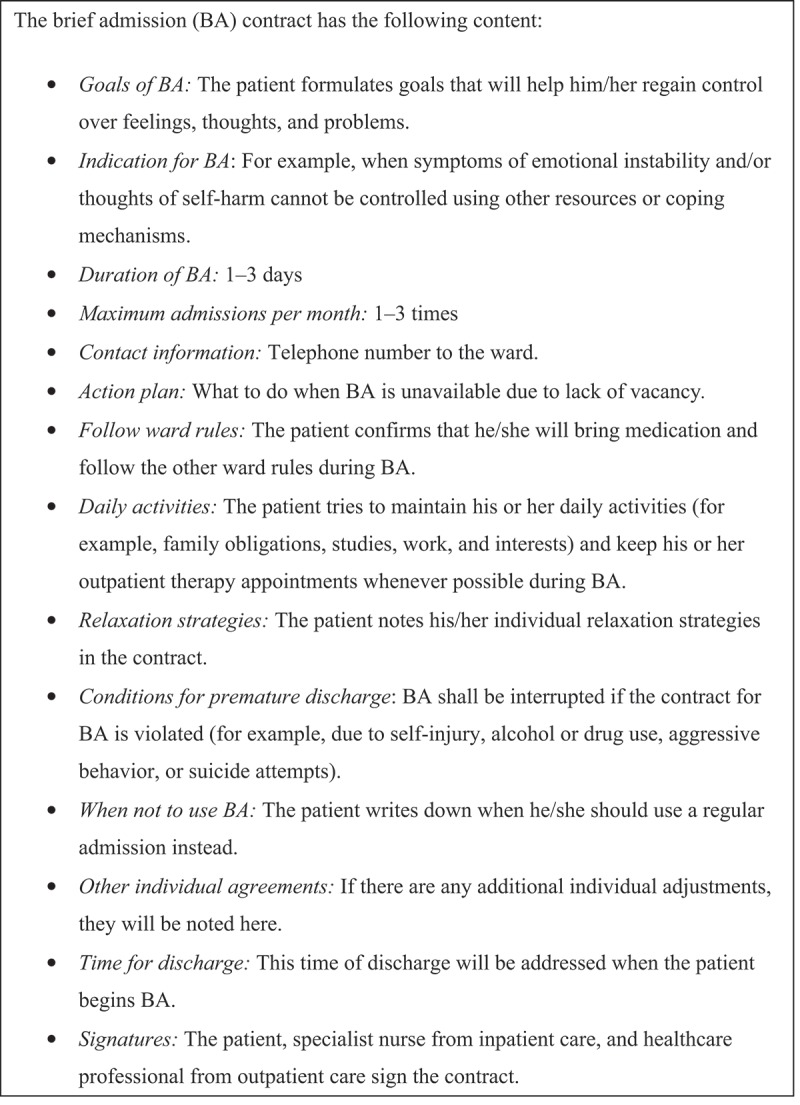
“BA focuses on supporting patients towards finding a balance between daily activities and relaxation, and patient rooms must be allocated for BA in advance for when patients need them according to the BA contract (intervention care plan) (Helleman et al., 2014a, 2014b).”
BackgroundMethodResultInfluentialSelf-citationCutcliffe, J. R., Santos, J. C., Kozel, B., Taylor, P., & Lees, D. (2015) · International Journal of Mental Health Nursing · doi:10.1111/inm.12159 · Cited by 56
Patient-controlled hospital admission in psychiatry: A systematic review
Strand, M., & von Hausswolff-Juhlin, Y. (2015) · Nordic Journal of Psychiatry · doi:10.3109/08039488.2015.1025835 · Cited by 50
Looi, G.-M. E., Engström, Å., & Sävenstedt, S. (2015) · Issues in Mental Health Nursing · doi:10.3109/01612840.2014.951134 · Cited by 45
Helleman, M., Goossens, P. J. J., van Achterberg, T., & Kaasenbrood, A. (2017) · Journal of the American Psychiatric Nurses Association · doi:10.1177/1078390317728330 · Cited by 38 · cited 3×
“Previous research showed that emotional instability and self-harm often create difficulties in a patient’s daily life (Helleman et al., 2017) and that patients may need short psychiatric hospital admissions when they have problems related not only to mental health conditions, but also to social and…”
BackgroundInfluentialSelf-citationSelf‐admission to inpatient treatment for patients with anorexia nervosa: The patient's perspective
Strand, M., Bulik, C. M., von Hausswolff‐Juhlin, Y., & Gustafsson, S. A. (2017) · International Journal of Eating Disorders · doi:10.1002/eat.22659 · Cited by 37
Psychotherapy for Borderline Personality Disorder: Progress and Remaining Challenges
Links, P. S., Shah, R., & Eynan, R. (2017) · Current Psychiatry Reports · doi:10.1007/s11920-017-0766-x · Cited by 35 · cited 1×
“In recent years, psychological treatments have been developed that can increase a patient’s ability to handle symptoms of emotional instability (Links et al., 2017).”
BackgroundRise, M. B., Evensen, G. H., Moljord, I. E. O., Rø, M., Bjørgen, D., & Eriksen, L. (2014) · BMC Health Services Research · doi:10.1186/1472-6963-14-347 · Cited by 30 · cited 2×
“Studies of BA with other patient groups report that patients who suffer from psychosis (Heskestad & Tytlandsvik, 2008; Rise et al., 2014) and”
BackgroundHealth‐related quality of life in women patients with borderline personality disorder
Perseius, K., Andersson, E., Åsberg, M., & Samuelsson, M. (2006) · Scandinavian Journal of Caring Sciences · doi:10.1111/j.1471-6712.2006.00408.x · Cited by 29
Self-citationHelleman, M., Lundh, L.-G., Liljedahl, S. I., Daukantaité, D., & Westling, S. (2018) · Nordic Journal of Psychiatry · doi:10.1080/08039488.2018.1467966 · Cited by 26
Self-citation[Patient-guided crisis admissions for severe psychotic conditions].
Heskestad, S., & Tytlandsvik, M. (2008) · PubMed · Cited by 23
Use of patient-controlled psychiatric hospital admissions: patients’ perspective
Ellegaard, T., Bliksted, V., Lomborg, K., & Mehlsen, M. (2017) · Nordic Journal of Psychiatry · doi:10.1080/08039488.2017.1302505 · Cited by 22 · cited 3×
“Nevertheless, one third of the patients reported that they did not feel ready for discharge when they were required to leave the ward (Ellegaard et al., 2017a).”
BackgroundResultBorderline personality disorder: clinicians’ accounts of good practice
BOWEN, M. (2013) · Journal of Psychiatric and Mental Health Nursing · doi:10.1111/j.1365-2850.2012.01943.x · Cited by 21
Evidence‐based medicine meets person‐centred care: a collaborative perspective on the relationship
Price, A. I., Djulbegović, B., Biswas, R., & Chatterjee, P. (2015) · Journal of Evaluation in Clinical Practice · doi:10.1111/jep.12434 · Cited by 19
Recovery and Borderline Personality Disorder: A Description of the Innovative Open Borders Program
Mortimer-Jones, S. M., Morrison, P., Munib, A., Paolucci, F., Neale, S., Bostwick, A., & Hungerford, C. L. (2016) · Issues in Mental Health Nursing · doi:10.1080/01612840.2016.1191565 · Cited by 14
Use of patient-controlled psychiatric hospital admissions: mental health professionals’ perspective
Ellegaard, T., Mehlsen, M. Y., Lomborg, K. E., & Bliksted, V. (2017) · Nordic Journal of Psychiatry · doi:10.1080/08039488.2017.1301548 · Cited by 13 · cited 3×
“Nevertheless, one third of the patients reported that they did not feel ready for discharge when they were required to leave the ward (Ellegaard et al., 2017a).”
BackgroundResultBarker, P. B. B. A. P. (2004) · Cited by 10
Redesigning and retrofitting existing facilities for behavioral healthcare.
Browne, E. M. (2013) · PubMed · Cited by 3
[Compulsory care with a question mark].
Holm, H., Björkdahl, A., & Björkenstam, E. (2011) · PubMed · Cited by 3
Jönsson, P. D., Nunstedt, H., Berglund, I. J., Ahlström, B. H., Hedelin, B., Skärsäter, I., & Jormfeldt, H. (2014) · International Journal of Qualitative Studies on Health and Well-Being · doi:10.3402/qhw.v9.22945 · Cited by 2 · cited 3×
“…and pharmacological treatment of symptoms rather than on mental health nursing has also been suggested as one explanation for deficient patient-nurse relationships, which are characteristic of psychiatric inpatient care (Cutcliffe, Santos, Kozel, Taylor, & Lees, 2015; Jonsson et al., 2014).”
BackgroundInfluential
Research works printed but not linked: 2
- De Silva D. (2014). Helping measure person-centred care. London Retrieved from http://www.health.org.uk/sites/health/files/HelpingMeasurePersonCentredCare.pdf
- Odelis C., & Ramklint M. (2014). En nationell kartläggnng av förekomsten av självskadande beteende hos patienter inom barn & ungdoms- och vuxenpsykiatrin. Retrieved from Nationella Självskadeprojektet och Uppsala Universitet: https://nationellasjalvskadeprojektet.se/wpcontent/uploads/2016/06/Slutrapportprevalensm%C3%A4tning140410.pdf.
Cited by
Structural stigma and its impact on healthcare for borderline personality disorder: a scoping review
Klein, P., Fairweather‐Schmidt, A. K., & Lawn, S. (2022) · International Journal of Mental Health Systems · doi:10.1186/s13033-022-00558-3 · Cited by 146
Kuipers, S. J., Nieboer, A. P., & Cramm, J. M. (2021) · International Journal of Environmental Research and Public Health · doi:10.3390/ijerph18116057 · Cited by 73
Eckerström, J., Flyckt, L., Carlborg, A., Jayaram‐Lindström, N., & Perseius, K. (2020) · International Journal of Mental Health Nursing · doi:10.1111/inm.12736 · Cited by 32
Self-citationApicella, M., Pontillo, M., Maglio, G., Vincenzo, C. D., Santa, G. D., Andracchio, E., & Vicari, S. (2025) · Frontiers in Psychiatry · doi:10.3389/fpsyt.2025.1605508 · Cited by 46
Lindkvist, R., Westling, S., Liljedahl, S., & Landgren, K. (2020) · Issues in Mental Health Nursing · doi:10.1080/01612840.2020.1789787 · Cited by 25
Metadata
- Authors
- Eckerström, J., Allenius, E., Helleman, M., Flyckt, L., Perseius, K.-I., & Omerov, P.
- Affiliations
- Röda Korsets Högskola (SE)
- Region Stockholm (SE)
- Hanze University of Applied Sciences (NL)
- Karolinska Institutet (SE)
- The Department of Health Care Sciences, Ersta Sköndal Bräcke University College, Stockholm, Sweden
- Corresponding author
- Eckerström, Joachim
- ORCID
- Venue
- International Journal of Qualitative Studies on Health and Well-Being
- Publisher
- Informa UK Limited
- Published
- 2019-01
- Volume
- 14
- Issue
- 1
- Pages
- 1667133-1667133
- ISSN
- 1748-2623 (ISSN-L)
- 1748-2631
- PMC
- PMC6758609
- OpenAlex
- W2974237114
- Cited by
- 43
- References
- 59
- Citations by year
- 2026: 4 · 2025: 13 · 2024: 4 · 2023: 4 · 2022: 8 · 2021: 6 · 2020: 4
- FWCI
- 5.26
- Type
- journal article
- Language
- en
- Open access
- gold
- doi.org
- Licence
- Locations
- International Journal of Qualitative Studies on Health and Well-Being (publishedVersion, cc-by)
- PubMed Central (publishedVersion, cc-by)
- PubMed (publishedVersion)
- DOAJ (DOAJ: Directory of Open Access Journals) (submittedVersion, cc-by-sa)
- Funders
- Swedish Research Council (2015-02446)
- Topics
- Social Sciences › Psychology › Clinical Psychology › Psychiatric care and mental health services
- Social Sciences › Psychology › Clinical Psychology › Suicide and Self-Harm Studies
- Health Sciences › Nursing › Research and Theory › Nursing education and management
- Keywords
- self-harm, neuroticism, nurses' experiences, person-centred care, crisis intervention, psychiatric inpatient care, nurse-patient relationship, nursing role, patient empowerment, occupational stress
- MeSH terms
- Adult, Attitude of Health Personnel, Female, Hospitalization, Humans, Male, Middle Aged, Patient Admission, Psychiatric Nursing, Psychotherapy, Brief, Sweden, Self-Injurious Behavior, Practice Guidelines as Topic, Patient-Centered Care, Nurse's Role
About these checks
Registry, retraction, Cites and statistics results are computed, not judged, with one exception: a printed reference that no index lists is read once by a model before it counts as a citation error. Claims are extracted by a model and kept only when their quote appears verbatim in the text; each cited source is then checked, with a model’s help, for whether it says what the claim relies on. Those verdicts can be wrong — read the claim’s quote and the cited source before relying on one.
Statistics and arithmetic are recomputed, not judged.
Confidence bands are shown only for fields calibrated on our annotated test set. None is calibrated yet, so no band is shown.
What counts as a claim ›How we measure confidence ›How we check this ›
Are you an author, or do you see a problem with this page? Request a review
Data sources
Bibliographic data: Semantic Scholar, OpenAlex, Crossref.
Contains information from the Semantic Scholar Academic Graph Datasets, made available under the ODC Attribution License (ODC-BY 1.0).
Semantic Scholar’s data is described in: Kinney, R., et al. (2023). The Semantic Scholar Open Data Platform. arXiv:2301.10140.
