

Antibody-mediated phagocytosis contributes to the anti-tumor activity of the therapeutic antibody daratumumab in lymphoma and multiple myeloma
Open accessThe DOI matches its Crossref record; 48 of the 48 references it cites were found in a registry or an index.
Abstract
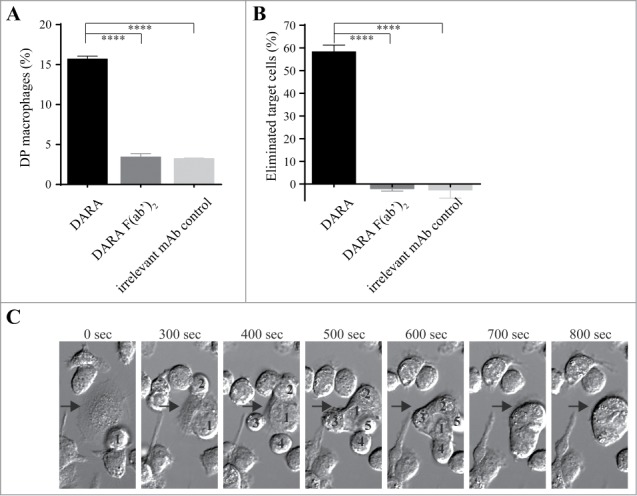
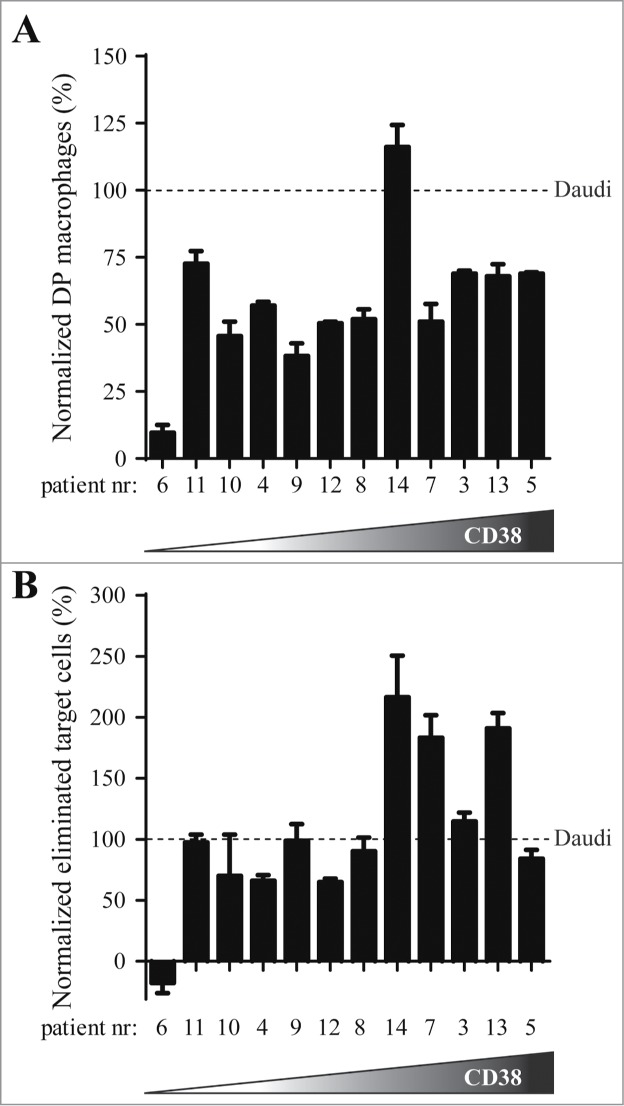
Daratumumab (DARA) is a human CD38-specific IgG1 antibody that is in clinical development for the treatment of multiple myeloma (MM). The potential for IgG1 antibodies to induce macrophage-mediated phagocytosis, in combination with the known presence of macrophages in the tumor microenvironment in MM and other hematological tumors, led us to investigate the contribution of antibody-dependent, macrophage-mediated phagocytosis to DARA's mechanism of action. Live cell imaging revealed that DARA efficiently induced macrophage-mediated phagocytosis, in which individual macrophages rapidly and sequentially engulfed multiple tumor cells. DARA-dependent phagocytosis by mouse and human macrophages was also observed in an in vitro flow cytometry assay, using a range of MM and Burkitt's lymphoma cell lines. Phagocytosis contributed to DARA's anti-tumor activity in vivo, in both a subcutaneous and an intravenous leukemic xenograft mouse model. Finally, DARA was shown to induce macrophage-mediated phagocytosis of MM cells isolated from 11 of 12 MM patients that showed variable levels of CD38 expression. In summary, we demonstrate that phagocytosis is a fast, potent and clinically relevant mechanism of action that may contribute to the therapeutic activity of DARA in multiple myeloma and potentially other hematological tumors.
Overview
The claims and statistics of this paper haven’t been checked yet.
Free: it reads the open-access text and checks the first 5 claims that cite a source we can check. Create a free account to check every claim.
Integrity signals
Registry
Cites
Statistics
Figures
Verification
Claims the paper makes
The claims and statistics of this paper haven’t been checked yet.
Free: it reads the open-access text and checks the first 5 claims that cite a source we can check. Create a free account to check every claim.
Claims other papers make about this one
Each is checked against this paper’s own text: does it say what the citing paper says it does?
The source backs part of the claim, not all of it — or backs it for a different population, condition or comparison.
In the citing paper
“Daratumumab is an IgG1 monoclonal antibody that targeting CD38 and induces cell death through complement-dependent cytotoxicity (CDC), antibody-dependent cellular cytotoxicity (ADCC), antibody-dependent cellular phagocytosis (ADCP), and regulation of CD38 enzyme activity [157, 158].”
From Multiple myeloma: signaling pathways and targeted therapy (2024) · cites this paper as [158]
Experimental — accuracy not yet measured
Self-check
Percentages, sums and reported differences re-computed from the paper’s own numbers.
The self-check needs the paper’s full text.
Citations
Cites
CD47 Is Upregulated on Circulating Hematopoietic Stem Cells and Leukemia Cells to Avoid Phagocytosis
Jaiswal, S., Jamieson, C. H. M., Pang, W. W., Park, C. Y., Chao, M. P., Majeti, R., Traver, D., van Rooijen, N., & Weissman, I. L. (2009) · Cell · doi:10.1016/j.cell.2009.05.046 · Cited by 1,581
Efficient Neutralization of Primary Isolates of HIV-1 by a Recombinant Human Monoclonal Antibody
Burton, D. R., Pyati, J., Koduri, R., Sharp, S. J., Thornton, G. B., Parren, P. W. H. I., Sawyer, L. S. W., Hendry, R. M., Dunlop, N., Nara, P. L., et al. (1994) · Science · doi:10.1126/science.7973652 · Cited by 1,100
Self-citationChao, M. P., Alizadeh, A. A., Tang, C., Myklebust, J. H., Varghese, B., Gill, S., Jan, M., Cha, A. C., Chan, C. K., Tan, B. T., et al. (2010) · Cell · doi:10.1016/j.cell.2010.07.044 · Cited by 1,087 · cited 1×
“Anti-CD47 mAb has been shown to synergize with rituximab in the treatment of non-Hodgkin lymphoma.(41) Moreover, targeting the CD47-SIRP a axis has now been shown to increase efficacy of several therapeutic antibodies.”
Backgroundde Weers, M., Tai, Y.-T., van der Veer, M. S., Bakker, J. M., Vink, T., Jacobs, D. C. H., Oomen, L. A., Peipp, M., Valerius, T., Slootstra, J. W., et al. (2011) · The Journal of Immunology · doi:10.4049/jimmunol.1003032 · Cited by 1,037 · cited 2×
“Antibodies Human IgG1 CD38 mAb DARA was generated by immunization in a HuMAb mouse and produced as recombinant protein as described previously.(12) DARA F(ab’)2 fragments were prepared via pepsin digestion (Sigma-Aldrich, P7012).”
BackgroundMethodSelf-citationRole of tumor-associated macrophages in tumor progression and invasion
Mantovani, A., Schioppa, T., Porta, C., Allavena, P., & Sica, A. (2006) · Cancer and Metastasis Reviews · doi:10.1007/s10555-006-9001-7 · Cited by 888
Chao, M. P., Jaiswal, S., Weissman-Tsukamoto, R., Alizadeh, A. A., Gentles, A. J., Volkmer, J., Weiskopf, K., Willingham, S. B., Raveh, T., Park, C. Y., et al. (2010) · Science Translational Medicine · doi:10.1126/scitranslmed.3001375 · Cited by 776 · cited 1×
“CD47 is described to be upregulated on leukemic cells to avoid phagocytosis,(26) which can be counterbalanced by the expression of calreticulin that gives a pro-phagocytic signal upon receptor binding.(27,28) Human CD47 is not able to bind to mouse SIRPa,(29,30) and therefore CD47 cannot account for the difference in…”
BackgroundUchida, J., Hamaguchi, Y., Oliver, J. A., Ravetch, J. V., Poe, J. C., Haas, K. M., & Tedder, T. F. (2004) · The Journal of Experimental Medicine · doi:10.1084/jem.20040119 · Cited by 642 · cited 1×
“By using mouse strains deficient in specific leukocyte subpopulations or by depleting specific effector cell subsets, mw were shown to represent the main effector cells in the anti-tumor activity of CD20-targeting monoclonal Ab (mAb) in vivo.(6,7) Furthermore, for SGN-30 (chimeric IgG1 CD30 mAb), SGN-40 (humanized IgG…”
BackgroundMechanism of action of immunomodulatory drugs (IMiDS) in multiple myeloma
Quach, H., Ritchie, D., Stewart, A. K., Neeson, P., Harrison, S., Smyth, M. J., & Prince, H. M. (2010) · Leukemia · doi:10.1038/leu.2009.236 · Cited by 600 · cited 3×
“However, we previously showed that monocytes and NK-cells from peripheral blood mononuclear cells of a healthy donor were not killed by DARA.34 For MM patient therapy, the current focus is on combination therapy of mAb with immunomodulatory drugs (IMiDs).37,38 IMiDs currently used, e.g., lenalidomide and pomalidomide,…”
BackgroundThe binding site for C1q on IgG
Duncan, A. R., & Winter, G. (1988) · Nature · doi:10.1038/332738a0 · Cited by 569
Polymorphism in Sirpa modulates engraftment of human hematopoietic stem cells
Takenaka, K., Prasolava, T. K., Wang, J. C. Y., Mortin-Toth, S. M., Khalouei, S., Gan, O. I., Dick, J. E., & Danska, J. S. (2007) · Nature Immunology · doi:10.1038/ni1527 · Cited by 509
Engineered SIRPα Variants as Immunotherapeutic Adjuvants to Anticancer Antibodies
Weiskopf, K., Ring, A. M., Ho, C. C. M., Volkmer, J.-P., Levin, A. M., Volkmer, A. K., Özkan, E., Fernhoff, N. B., van de Rijn, M., Weissman, I. L., et al. (2013) · Science · doi:10.1126/science.1238856 · Cited by 495 · cited 1×
“Moreover, targeting the CD47-SIRP a axis has now been shown to increase efficacy of several therapeutic antibodies.(42,43) CD47 is described to be highly expressed on CD38C MM cells,(44) suggesting that inhibition of the CD47-SIRP a axis might be an interesting therapeutic approach in combination with DARA.”
BackgroundTai, Y.-T., Mayes, P. A., Acharya, C., Zhong, M. Y., Cea, M., Cagnetta, A., Craigen, J., Yates, J., Gliddon, L., Fieles, W., et al. (2014) · Blood · doi:10.1182/blood-2013-10-535088 · Cited by 484
Flow Cytometric Immunophenotypic Analysis of 306 Cases of Multiple Myeloma
Lin, P. Y., Owens, R., Tricot, G. J. K., & Wilson, C. S. (2004) · American Journal of Clinical Pathology · doi:10.1309/74r4-tb90-buwh-27jx · Cited by 454 · cited 1×
“Daratumumab (DARA) is a human IgG1 mAb targeting CD38, a 46-kDa type II transmembrane glycoprotein that is expressed at high levels on malignant cells in multiple myeloma (MM).(11) DARA was granted Breakthrough TherapyDesignation by the Food and Drug Administration for MM patients who have received at least 3 prior li…”
BackgroundCd47-Signal Regulatory Protein α (Sirpα) Regulates Fcγ and Complement Receptor–Mediated Phagocytosis
Oldenborg, P.-A., Gresham, H. D., & Lindberg, F. P. (2001) · The Journal of Experimental Medicine · doi:10.1084/jem.193.7.855 · Cited by 452
Golay, J., Lazzari, M., Facchinetti, V., Bernasconi, S., Borleri, G., Barbui, T., Rambaldi, A., & Introna, M. (2001) · Blood · doi:10.1182/blood.v98.12.3383 · Cited by 428 · cited 2×
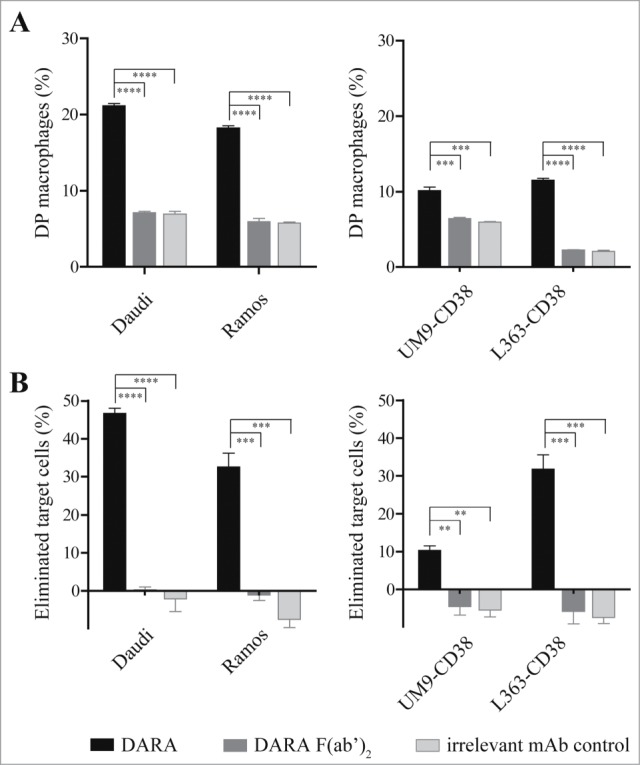
“Although the capacity of DARA to induce phagocytosis was to some extent related to CD38 expression levels on target cells, differences in phagocytosis-mediated elimination of different target cell lines could not solely be explained by the differences in CD38 expression level, which confirms previous findings of Leidi…”
BackgroundMapping of the C1q Binding Site on Rituxan, a Chimeric Antibody with a Human IgG1 Fc
Idusogie, E. E., Presta, L. G., Gazzano-Santoro, H., Totpal, K., Wong, P. Y., Ultsch, M., Meng, Y. G., & Mulkerrin, M. G. (2000) · The Journal of Immunology · doi:10.4049/jimmunol.164.8.4178 · Cited by 424
In vitro mechanisms of action of rituximab on primary non-Hodgkin lymphomas
Manches, O., Lui, G., Chaperot, L., Gressin, R., Molens, J.-P., Jacob, M.-C., Sotto, J.-J., Leroux, D., Bensa, J.-C., & Plumas, J. (2003) · Blood · doi:10.1182/blood-2002-02-0469 · Cited by 372 · cited 2×
“Antibody-dependent phagocytosis of IgG1-opsonized pathogens as well as cancer cells occurs via binding to Fcg-receptors (FcgRs), specifically via the low-affinity receptors FcgRIIa and FcgRIIIa.1,2 Macrophages (mw), representing professional phagocytes, are abundant in tumor stroma3-5 and phagocytosis by mw might ther…”
BackgroundDeckert, J., Wetzel, M.-C., Bartle, L. M., Skaletskaya, A., Goldmacher, V. S., Vallée, F., Zhou-Liu, Q., Ferrari, P., Pouzieux, S., Lahoute, C., et al. (2014) · Clinical Cancer Research · doi:10.1158/1078-0432.ccr-14-0695 · Cited by 333
The coordination of signaling during Fc receptor-mediated phagocytosis
Swanson, J. A., & Hoppe, A. D. (2004) · Journal of Leukocyte Biology · doi:10.1189/jlb.0804439 · Cited by 331 · cited 1×
“Target cell size and shape have been suggested to influence phagocytosis efficacy and a model was proposed for size-dependent transitions that may determine whether a target cell will be phagocytosed or not.(23,24) Cell size of the different BL and MM cells used in our study appeared to be comparable; Figure 3.”
Zheng, Y., Cai, Z., Wang, S., Zhang, X., Qian, J., Hong, S., Li, H., Wang, M., Yang, J., & Yi, Q. (2009) · Blood · doi:10.1182/blood-2009-05-220285 · Cited by 307 · cited 1×
“Furthermore, these mw may protect MM cells from chemotherapy drug-induced apoptosis.(5) Remarkably, tumor-associated mw may still induce Fc-dependent anti-tumor activity,(40) supporting a role for DARA-induced phagocytosis in the BM.”
BackgroundZhao, X. W., van Beek, E. M., Schornagel, K., Van der Maaden, H., Van Houdt, M., Otten, M. A., Finetti, P., Van Egmond, M., Matozaki, T., Kraal, G., et al. (2011) · Proceedings of the National Academy of Sciences · doi:10.1073/pnas.1106550108 · Cited by 276
Leidi, M., Gotti, E., Bologna, L., Miranda, E., Rimoldi, M., Sica, A., Roncalli, M., Palumbo, G. A., Introna, M., & Golay, J. (2009) · The Journal of Immunology · doi:10.4049/jimmunol.0713732 · Cited by 272
van Meerten, T., van Rijn, R. S., Hol, S., Hagenbeek, A., & Ebeling, S. B. (2006) · Clinical Cancer Research · doi:10.1158/1078-0432.ccr-06-0066 · Cited by 250 · cited 4×
“However, we previously showed that monocytes and NK-cells from peripheral blood mononuclear cells of a healthy donor were not killed by DARA.34 For MM patient therapy, the current focus is on combination therapy of mAb with immunomodulatory drugs (IMiDs).37,38 IMiDs currently used, e.g., lenalidomide and pomalidomide,…”
BackgroundResultInfluentialAnti-CD47 antibodies promote phagocytosis and inhibit the growth of human myeloma cells
Kim, D., Wang, J., Willingham, S. B., Martin, R., Wernig, G., & Weissman, I. L. (2012) · Leukemia · doi:10.1038/leu.2012.141 · Cited by 249
Ocio, E. M., Richardson, P. G., Rajkumar, S. V., Palumbo, A., Mateos, M. V., Orlowski, R., Kumar, S., Usmani, S., Roodman, D., Niesvizky, R., et al. (2014) · Leukemia · doi:10.1038/leu.2013.350 · Cited by 233
Crosstalk between Human IgG Isotypes and Murine Effector Cells
Overdijk, M. B., Verploegen, S., Ortiz Buijsse, A., Vink, T., Leusen, J. H. W., Bleeker, W. K., & Parren, P. W. H. I. (2012) · The Journal of Immunology · doi:10.4049/jimmunol.1200356 · Cited by 229 · cited 4×
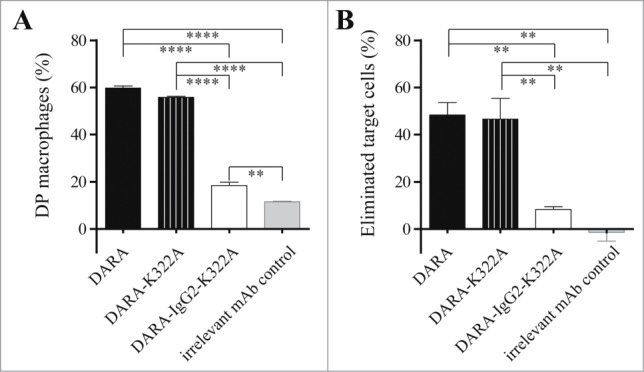
“The mutations were introduced as described previously.(16,19) The human mAb IgG1 b12, specific for the HIV-1 gp120 envelope glycoprotein,(47) was included in all experiments as an irrelevant mAb control.”
BackgroundMethodSelf-citationSchneider-Merck, T., Lammerts van Bueren, J. J., Berger, S., Rossen, K., van Berkel, P. H. C., Derer, S., Beyer, T., Lohse, S., Bleeker, W. K., Peipp, M., et al. (2010) · The Journal of Immunology · doi:10.4049/jimmunol.0900847 · Cited by 222
Self-citationvan der Veer, M. S., de Weers, M., van Kessel, B., Bakker, J. M., Wittebol, S., Parren, P. W. H. I., Lokhorst, H. M., & Mutis, T. (2011) · Haematologica · doi:10.3324/haematol.2010.030759 · Cited by 218 · cited 11×
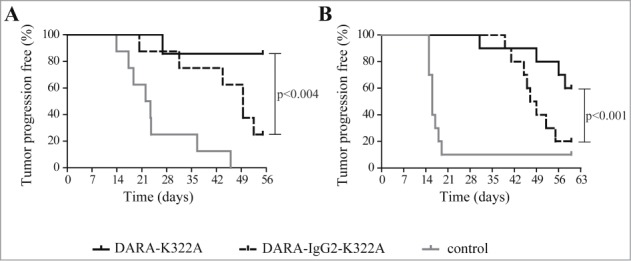
“These data demonstrate that phagocytosis contributes to the in vivo mechanism of action of DARA.”
BackgroundSelf-citationMinard-Colin, V., Xiu, Y., Poe, J. C., Horikawa, M., Magro, C. M., Hamaguchi, Y., Haas, K. M., & Tedder, T. F. (2008) · Blood · doi:10.1182/blood-2008-01-135160 · Cited by 218 · cited 1×
“By using mouse strains deficient in specific leukocyte subpopulations or by depleting specific effector cell subsets, mw were shown to represent the main effector cells in the anti-tumor activity of CD20-targeting monoclonal Ab (mAb) in vivo.(6,7) Furthermore, for SGN-30 (chimeric IgG1 CD30 mAb), SGN-40 (humanized IgG…”
BackgroundThe mechanism of anti-CD20–mediated B cell depletion revealed by intravital imaging
Montalvao, F., Garcia, Z., Celli, S., Breart, B., Deguine, J., Van Rooijen, N., & Bousso, P. (2013) · Journal of Clinical Investigation · doi:10.1172/jci70972 · Cited by 192 · cited 1×
“CD20 mAb treatment resulted in depletion of B cells in blood and liver within 2 hours.(33) After partial hepatectomy, the efficiency of Bcell depletion in the blood was reduced, indicating that the liver contributes to the B-cell depletion in blood.”
BackgroundPhagocytosis Dynamics Depends on Target Shape
Paul, D., Achouri, S., Yoon, Y.-Z., Herre, J., Bryant, C. E., & Cicuta, P. (2013) · Biophysical Journal · doi:10.1016/j.bpj.2013.07.036 · Cited by 185 · cited 1×
“Target cell size and shape have been suggested to influence phagocytosis efficacy and a model was proposed for size-dependent transitions that may determine whether a target cell will be phagocytosed or not.(23,24) Cell size of the different BL and MM cells used in our study appeared to be comparable; Figure 3.”
Species- and cell type-specific interactions between CD47 and human SIRPα
Subramanian, S., Parthasarathy, R., Sen, S., Boder, E. T., & Discher, D. E. (2006) · Blood · doi:10.1182/blood-2005-04-1463 · Cited by 155
Macrophages contribute to the antitumor activity of the anti-CD30 antibody SGN-30
Oflazoglu, E., Stone, I. J., Gordon, K. A., Grewal, I. S., van Rooijen, N., Law, C.-L., & Gerber, H.-P. (2007) · Blood · doi:10.1182/blood-2007-06-097014 · Cited by 118
Surface‐exposed calreticulin in the interaction between dying cells and phagocytes
Martins, I., Kepp, O., Galluzzi, L., Senovilla, L., Schlemmer, F., Adjemian, S., Menger, L., Michaud, M., Zitvogel, L., & Kroemer, G. (2010) · Annals of the New York Academy of Sciences · doi:10.1111/j.1749-6632.2010.05740.x · Cited by 112 · cited 1×
“CD47 is described to be upregulated on leukemic cells to avoid phagocytosis,(26) which can be counterbalanced by the expression of calreticulin that gives a pro-phagocytic signal upon receptor binding.(27,28) Human CD47 is not able to bind to mouse SIRPa,(29,30) and therefore CD47 cannot account for the difference in…”
BackgroundTumor-Associated Macrophages Promote Invasion while Retaining Fc-Dependent Anti-Tumor Function
Grugan, K. D., McCabe, F. L., Kinder, M., Greenplate, A. R., Harman, B. C., Ekert, J. E., van Rooijen, N., Anderson, G. M., Nemeth, J. A., Strohl, W. R., et al. (2012) · The Journal of Immunology · doi:10.4049/jimmunol.1201889 · Cited by 112
McEarchern, J. A., Oflazoglu, E., Francisco, L. V., McDonagh, C. F., Gordon, K. A., Stone, I. J., Klussman, K., Turcott, E., van Rooijen, N., Carter, P. M., et al. (2006) · Blood · doi:10.1182/blood-2006-07-034017 · Cited by 106
Oflazoglu, E., Stone, I. J., Brown, L., Gordon, K. A., van Rooijen, N., Jonas, M., Law, C.-L., Grewal, I. S., & Gerber, H.-P. (2009) · British Journal of Cancer · doi:10.1038/sj.bjc.6604812 · Cited by 81
Monoclonal antibody-based therapy as a new treatment strategy in multiple myeloma
van de Donk, N. W. C. J., Kamps, S., Mutis, T., & Lokhorst, H. M. (2012) · Leukemia · doi:10.1038/leu.2011.214 · Cited by 81 · cited 1×
“For MM patient therapy, the current focus is on combination therapy of mAb with immunomodulatory drugs (IMiDs).(37,38) IMiDs currently used, e.”
BackgroundSelf-citationPlesner, T., Lokhorst, H., Gimsing, P., Nahi, H., Lisby, S., & Richardson, P. G. (2012) · Blood · doi:10.1182/blood.v120.21.73.73 · Cited by 70
Kuipers, J., Vaandrager, J., Weghuis, D. O., Pearson, P. L., Scheres, J. M. J. C., Lokhorst, H. M., Clevers, H. C., & Bast, B. J. E. G. (1999) · Cancer Genetics and Cytogenetics · doi:10.1016/s0165-4608(98)00157-5 · Cited by 51
Rozemuller, H., van der Spek, E., Bogers-Boer, L. H., Zwart, M. C., Verweij, V., Emmelot, M., Groen, R. W., Spaapen, R., Bloem, A. C., Lokhorst, H. M., et al. (2008) · Haematologica · doi:10.3324/haematol.12349 · Cited by 48
Self-citationOverdijk, M. B., Verploegen, S., van den Brakel, J. H., Lammerts van Bueren, J. J., Vink, T., van de Winkel, J. G. J., Parren, P. W. H. I., & Bleeker, W. K. (2011) · The Journal of Immunology · doi:10.4049/jimmunol.1003926 · Cited by 45 · cited 3×
“The mutations were introduced as described previously.(16,19) The human mAb IgG1 b12, specific for the HIV-1 gp120 envelope glycoprotein,(47) was included in all experiments as an irrelevant mAb control.”
BackgroundMethodSelf-citationTai, Y.-T., Horton, H. M., Kong, S.-Y., Pong, E., Chen, H., Cemerski, S., Bernett, M. J., Nguyen, D.-H. T., Karki, S., Chu, S. Y., et al. (2012) · Blood · doi:10.1182/blood-2011-06-364521 · Cited by 44
Munn, D. H., McBride, M. L., & Cheung, N. V. (1991) · PubMed · Cited by 40
Macrophages in multiple myeloma
Ribatti, D., Moschetta, M., & Vacca, A. (2013) · Immunology Letters · doi:10.1016/j.imlet.2013.12.010 · Cited by 37 · cited 1×
“Macrophages in the BMmicroenvironment of MM cells, so-called tumor-associated mw, have been shown to play an important role in supporting MM cell growth and survival.(4) Furthermore, these mw may protect MM cells from chemotherapy drug-induced apoptosis.”
BackgroundHuman CD38 and Related Molecules
Mehta, K., & Malavasi, F. (2000) · Chemical immunology/Fortschritte der Allergielehre/Progress in allergy/Chemical immunology and allergy · doi:10.1159/isbn.978-3-318-00469-4 · Cited by 27
Schematic Portrait of Human CD38 and Related Molecules
Funaro, A., Ferrero, E., Mehta, K., & Malavasi, F. (2000) · KARGER eBooks · doi:10.1159/000058773 · Cited by 17
Gimsing, P., Plesner, T., Nahi, H., Lokhorst, H. M., Valentin, M.-L., Lisby, S., & Richardson, P. G. G. (2011) · Blood · doi:10.1182/blood.v118.21.1873.1873 · Cited by 6
Cited by
Daratumumab, Bortezomib, and Dexamethasone for Multiple Myeloma
Palumbo, A., Chanan-Khan, A., Weisel, K., Nooka, A. K., Masszi, T., Beksac, M., Spicka, I., Hungria, V., Munder, M., Mateos, M. V., et al. (2016) · New England Journal of Medicine · doi:10.1056/nejmoa1606038 · Cited by 1,522
Daratumumab, Lenalidomide, and Dexamethasone for Multiple Myeloma.
Dimopoulos, M. A., Oriol, A., Nahi, H., San-Miguel, J., Bahlis, N. J., Usmani, S. Z., Rabin, N., Orlowski, R. Z., Komarnicki, M., Suzuki, K., et al. (2016) · New England Journal of Medicine · doi:10.1056/nejmoa1607751 · Cited by 1,445
Targeting CD38 with Daratumumab Monotherapy in Multiple Myeloma
Lokhorst, H. M., Plesner, T., Laubach, J. P., Nahi, H., Gimsing, P., Hansson, M., Minnema, M. C., Lassen, U., Krejcik, J., Palumbo, A., et al. (2015) · New England Journal of Medicine · doi:10.1056/nejmoa1506348 · Cited by 1,117
Daratumumab plus Lenalidomide and Dexamethasone for Untreated Myeloma
Facon, T., Kumar, S., Plesner, T., Orlowski, R. Z., Moreau, P., Bahlis, N., Basu, S., Nahi, H., Hulin, C., Quach, H., et al. (2019) · New England Journal of Medicine · doi:10.1056/nejmoa1817249 · Cited by 1,045
Daratumumab plus Bortezomib, Melphalan, and Prednisone for Untreated Myeloma
Mateos, M.-V., Dimopoulos, M. A., Cavo, M., Suzuki, K., Jakubowiak, A., Knop, S., Doyen, C., Lucio, P., Nagy, Z., Kaplan, P., et al. (2018) · New England Journal of Medicine · doi:10.1056/nejmoa1714678 · Cited by 988
“¶ These patients had at least one high-risk abnormality: del17p, t(4;14), or t(14;16).”
Background
Metadata
- Authors
- Overdijk, M. B., Verploegen, S., Bögels, M., van Egmond, M., van Bueren, J. J. L., Mutis, T., Groen, R. W., Breij, E., Martens, A. C., Bleeker, W. K., & Parren, P. W.
- Affiliations
- Genmab (United States) (US)
- Amsterdam UMC Location Vrije Universiteit Amsterdam (NL)
- University Medical Center Utrecht (NL)
- University of Southern Denmark (DK)
- Corresponding author
- Parren, Paul WHI
- ORCID
- Venue
- mAbs
- Publisher
- Informa UK Limited
- Published
- 2015-03-04
- Volume
- 7
- Issue
- 2
- Pages
- 311-320
- ISSN
- 1942-0862 (ISSN-L)
- 1942-0870
- PMC
- PMC4622648
- OpenAlex
- W1585625390
- Cited by
- 521
- References
- 48
- Citations by year
- 2026: 28 · 2025: 32 · 2024: 38 · 2023: 49 · 2022: 50 · 2021: 65 · 2020: 76 · 2019: 51 · 2018: 43 · 2017: 42 · 2016: 36 · 2015: 8
- FWCI
- 33.75
- Type
- journal article
- Language
- en
- Open access
- gold
- doi.org
- Licence
- cc-by
- Locations
- mAbs (publishedVersion, cc-by)
- PubMed Central (publishedVersion, cc-by)
- PubMed (publishedVersion)
- Amsterdam UMC (VU Amsterdam) - Institutional Repository (publishedVersion)
- Pure Amsterdam UMC (submittedVersion, other-oa)
- Data Archiving and Networked Services (DANS) (submittedVersion)
- Leiden Repository (Leiden University) (submittedVersion)
- University of Southern Denmark Research Portal (University of Southern Denmark) (submittedVersion)
- Topics
- Health Sciences › Medicine › Hematology › Multiple Myeloma Research and Treatments
- Life Sciences › Immunology and Microbiology › Immunology › Monoclonal and Polyclonal Antibodies Research
- Life Sciences › Immunology and Microbiology › Immunology › Phagocytosis and Immune Regulation
- Keywords
- daratumumab, antibody-mediated phagocytosis, macrophage phagocytosis, CD38, multiple myeloma, Burkitt lymphoma, tumor microenvironment, anticancer activity, CD38 expression
- MeSH terms
- Animals, Antibodies, Monoclonal, Antibodies, Neoplasm, Humans, Lymphoma, Macrophages, Multiple Myeloma, Xenograft Model Antitumor Assays, Cell Line, Tumor, Mice, Cytophagocytosis
About these checks
Registry, retraction, Cites and statistics results are computed, not judged, with one exception: a printed reference that no index lists is read once by a model before it counts as a citation error. Claims are extracted by a model and kept only when their quote appears verbatim in the text; each cited source is then checked, with a model’s help, for whether it says what the claim relies on. Those verdicts can be wrong — read the claim’s quote and the cited source before relying on one.
Statistics and arithmetic are recomputed, not judged.
Confidence bands are shown only for fields calibrated on our annotated test set. None is calibrated yet, so no band is shown.
What counts as a claim ›How we measure confidence ›How we check this ›
Are you an author, or do you see a problem with this page? Request a review
Data sources
Bibliographic data: Semantic Scholar, OpenAlex, Crossref.
Contains information from the Semantic Scholar Academic Graph Datasets, made available under the ODC Attribution License (ODC-BY 1.0).
Semantic Scholar’s data is described in: Kinney, R., et al. (2023). The Semantic Scholar Open Data Platform. arXiv:2301.10140.
