

Antibody-mediated phagocytosis contributes to the anti-tumor activity of the therapeutic antibody daratumumab in lymphoma and multiple myeloma
Open accessThe DOI matches its Crossref record; 48 of the 48 references it cites were found in a registry or an index.
Abstract
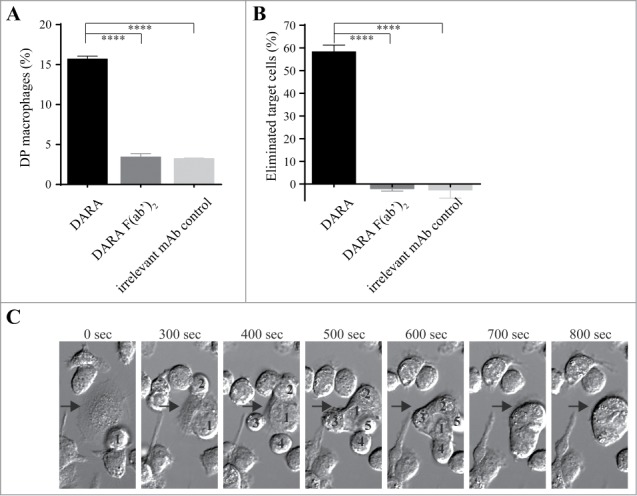
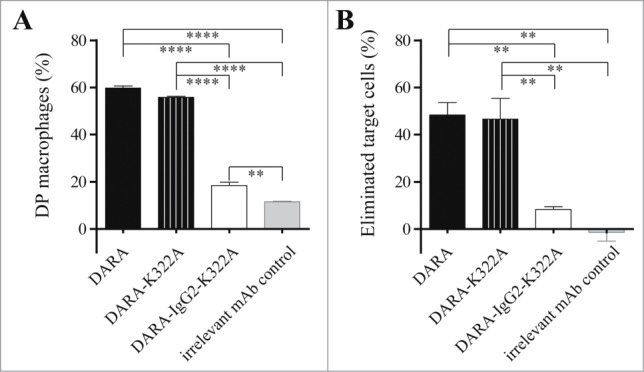
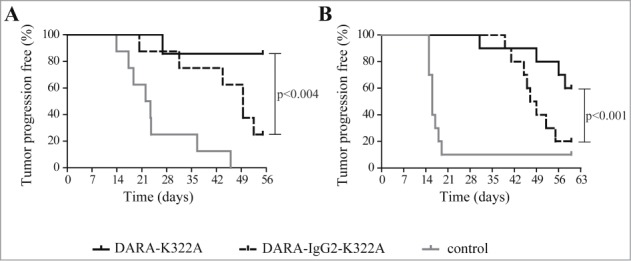
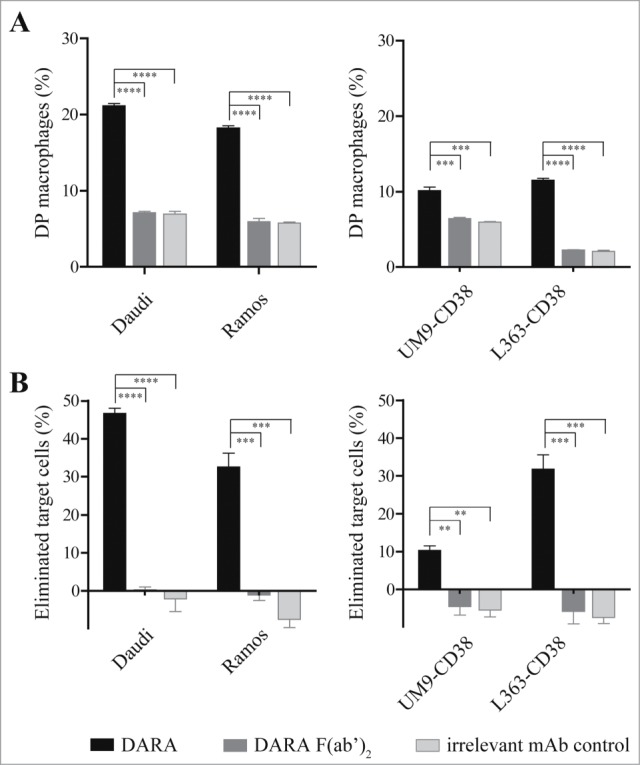
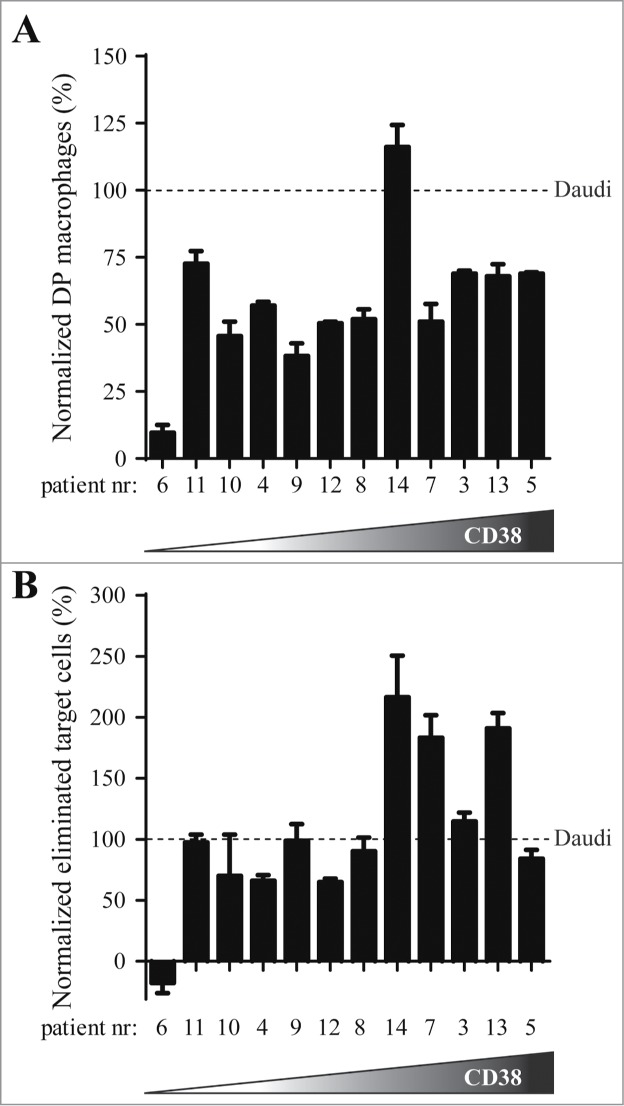
Daratumumab (DARA) is a human CD38-specific IgG1 antibody that is in clinical development for the treatment of multiple myeloma (MM). The potential for IgG1 antibodies to induce macrophage-mediated phagocytosis, in combination with the known presence of macrophages in the tumor microenvironment in MM and other hematological tumors, led us to investigate the contribution of antibody-dependent, macrophage-mediated phagocytosis to DARA's mechanism of action. Live cell imaging revealed that DARA efficiently induced macrophage-mediated phagocytosis, in which individual macrophages rapidly and sequentially engulfed multiple tumor cells. DARA-dependent phagocytosis by mouse and human macrophages was also observed in an in vitro flow cytometry assay, using a range of MM and Burkitt's lymphoma cell lines. Phagocytosis contributed to DARA's anti-tumor activity in vivo, in both a subcutaneous and an intravenous leukemic xenograft mouse model. Finally, DARA was shown to induce macrophage-mediated phagocytosis of MM cells isolated from 11 of 12 MM patients that showed variable levels of CD38 expression. In summary, we demonstrate that phagocytosis is a fast, potent and clinically relevant mechanism of action that may contribute to the therapeutic activity of DARA in multiple myeloma and potentially other hematological tumors.
Overview
The claims and statistics of this paper haven’t been checked yet.
Free: it reads the open-access text and checks the first 5 claims that cite a source we can check. Create a free account to check every claim.
Integrity signals
Registry
Cites
Statistics
Figures
Verification
Claims the paper makes
The claims and statistics of this paper haven’t been checked yet.
Free: it reads the open-access text and checks the first 5 claims that cite a source we can check. Create a free account to check every claim.
Claims other papers make about this one
Each is checked against this paper’s own text: does it say what the citing paper says it does?
The source backs part of the claim, not all of it — or backs it for a different population, condition or comparison.
In the citing paper
“Daratumumab is an IgG1 monoclonal antibody that targeting CD38 and induces cell death through complement-dependent cytotoxicity (CDC), antibody-dependent cellular cytotoxicity (ADCC), antibody-dependent cellular phagocytosis (ADCP), and regulation of CD38 enzyme activity [157, 158].”
From Multiple myeloma: signaling pathways and targeted therapy (2024) · cites this paper as [158]
Experimental — accuracy not yet measured
Self-check
Percentages, sums and reported differences re-computed from the paper’s own numbers.
The self-check needs the paper’s full text.
Citations
Cites
CD47 Is Upregulated on Circulating Hematopoietic Stem Cells and Leukemia Cells to Avoid Phagocytosis
Jaiswal, S., Jamieson, C. H. M., Pang, W. W., Park, C. Y., Chao, M. P., Majeti, R., Traver, D., van Rooijen, N., & Weissman, I. L. (2009) · Cell · doi:10.1016/j.cell.2009.05.046 · Cited by 1,581
Efficient Neutralization of Primary Isolates of HIV-1 by a Recombinant Human Monoclonal Antibody
Burton, D. R., Pyati, J., Koduri, R., Sharp, S. J., Thornton, G. B., Parren, P. W. H. I., Sawyer, L. S. W., Hendry, R. M., Dunlop, N., Nara, P. L., et al. (1994) · Science · doi:10.1126/science.7973652 · Cited by 1,100
Self-citationChao, M. P., Alizadeh, A. A., Tang, C., Myklebust, J. H., Varghese, B., Gill, S., Jan, M., Cha, A. C., Chan, C. K., Tan, B. T., et al. (2010) · Cell · doi:10.1016/j.cell.2010.07.044 · Cited by 1,087 · cited 1×
“Anti-CD47 mAb has been shown to synergize with rituximab in the treatment of non-Hodgkin lymphoma.(41) Moreover, targeting the CD47-SIRP a axis has now been shown to increase efficacy of several therapeutic antibodies.”
Backgroundde Weers, M., Tai, Y.-T., van der Veer, M. S., Bakker, J. M., Vink, T., Jacobs, D. C. H., Oomen, L. A., Peipp, M., Valerius, T., Slootstra, J. W., et al. (2011) · The Journal of Immunology · doi:10.4049/jimmunol.1003032 · Cited by 1,037 · cited 2×
“Antibodies Human IgG1 CD38 mAb DARA was generated by immunization in a HuMAb mouse and produced as recombinant protein as described previously.(12) DARA F(ab’)2 fragments were prepared via pepsin digestion (Sigma-Aldrich, P7012).”
BackgroundMethodSelf-citationRole of tumor-associated macrophages in tumor progression and invasion
Mantovani, A., Schioppa, T., Porta, C., Allavena, P., & Sica, A. (2006) · Cancer and Metastasis Reviews · doi:10.1007/s10555-006-9001-7 · Cited by 888
Chao, M. P., Jaiswal, S., Weissman-Tsukamoto, R., Alizadeh, A. A., Gentles, A. J., Volkmer, J., Weiskopf, K., Willingham, S. B., Raveh, T., Park, C. Y., et al. (2010) · Science Translational Medicine · doi:10.1126/scitranslmed.3001375 · Cited by 776 · cited 1×
“CD47 is described to be upregulated on leukemic cells to avoid phagocytosis,(26) which can be counterbalanced by the expression of calreticulin that gives a pro-phagocytic signal upon receptor binding.(27,28) Human CD47 is not able to bind to mouse SIRPa,(29,30) and therefore CD47 cannot account for the difference in…”
BackgroundUchida, J., Hamaguchi, Y., Oliver, J. A., Ravetch, J. V., Poe, J. C., Haas, K. M., & Tedder, T. F. (2004) · The Journal of Experimental Medicine · doi:10.1084/jem.20040119 · Cited by 642 · cited 1×
“By using mouse strains deficient in specific leukocyte subpopulations or by depleting specific effector cell subsets, mw were shown to represent the main effector cells in the anti-tumor activity of CD20-targeting monoclonal Ab (mAb) in vivo.(6,7) Furthermore, for SGN-30 (chimeric IgG1 CD30 mAb), SGN-40 (humanized IgG…”
BackgroundMechanism of action of immunomodulatory drugs (IMiDS) in multiple myeloma
Quach, H., Ritchie, D., Stewart, A. K., Neeson, P., Harrison, S., Smyth, M. J., & Prince, H. M. (2010) · Leukemia · doi:10.1038/leu.2009.236 · Cited by 600 · cited 3×
“However, we previously showed that monocytes and NK-cells from peripheral blood mononuclear cells of a healthy donor were not killed by DARA.34 For MM patient therapy, the current focus is on combination therapy of mAb with immunomodulatory drugs (IMiDs).37,38 IMiDs currently used, e.g., lenalidomide and pomalidomide,…”
BackgroundThe binding site for C1q on IgG
Duncan, A. R., & Winter, G. (1988) · Nature · doi:10.1038/332738a0 · Cited by 569
Polymorphism in Sirpa modulates engraftment of human hematopoietic stem cells
Takenaka, K., Prasolava, T. K., Wang, J. C. Y., Mortin-Toth, S. M., Khalouei, S., Gan, O. I., Dick, J. E., & Danska, J. S. (2007) · Nature Immunology · doi:10.1038/ni1527 · Cited by 509
Cited by
Daratumumab, Bortezomib, and Dexamethasone for Multiple Myeloma
Palumbo, A., Chanan-Khan, A., Weisel, K., Nooka, A. K., Masszi, T., Beksac, M., Spicka, I., Hungria, V., Munder, M., Mateos, M. V., et al. (2016) · New England Journal of Medicine · doi:10.1056/nejmoa1606038 · Cited by 1,522
Daratumumab, Lenalidomide, and Dexamethasone for Multiple Myeloma.
Dimopoulos, M. A., Oriol, A., Nahi, H., San-Miguel, J., Bahlis, N. J., Usmani, S. Z., Rabin, N., Orlowski, R. Z., Komarnicki, M., Suzuki, K., et al. (2016) · New England Journal of Medicine · doi:10.1056/nejmoa1607751 · Cited by 1,445
Targeting CD38 with Daratumumab Monotherapy in Multiple Myeloma
Lokhorst, H. M., Plesner, T., Laubach, J. P., Nahi, H., Gimsing, P., Hansson, M., Minnema, M. C., Lassen, U., Krejcik, J., Palumbo, A., et al. (2015) · New England Journal of Medicine · doi:10.1056/nejmoa1506348 · Cited by 1,117
Daratumumab plus Lenalidomide and Dexamethasone for Untreated Myeloma
Facon, T., Kumar, S., Plesner, T., Orlowski, R. Z., Moreau, P., Bahlis, N., Basu, S., Nahi, H., Hulin, C., Quach, H., et al. (2019) · New England Journal of Medicine · doi:10.1056/nejmoa1817249 · Cited by 1,045
Daratumumab plus Bortezomib, Melphalan, and Prednisone for Untreated Myeloma
Mateos, M.-V., Dimopoulos, M. A., Cavo, M., Suzuki, K., Jakubowiak, A., Knop, S., Doyen, C., Lucio, P., Nagy, Z., Kaplan, P., et al. (2018) · New England Journal of Medicine · doi:10.1056/nejmoa1714678 · Cited by 988
“¶ These patients had at least one high-risk abnormality: del17p, t(4;14), or t(14;16).”
BackgroundKrejcik, J., Casneuf, T., Nijhof, I. S., Verbist, B., Bald, J., Plesner, T., Syed, K., Liu, K., van de Donk, N. W. C. J., Weiss, B. M., et al. (2016) · Blood · doi:10.1182/blood-2015-12-687749 · Cited by 954
Self-citationPhagocytosis checkpoints as new targets for cancer immunotherapy
Feng, M., Jiang, W., Kim, B. Y. S., Zhang, C. C., Fu, Y.-X., & Weissman, I. L. (2019) · Nature Reviews Cancer · doi:10.1038/s41568-019-0183-z · Cited by 911
Lonial, S., Weiss, B. M., Usmani, S. Z., Singhal, S., Chari, A., Bahlis, N. J., Belch, A., Krishnan, A., Vescio, R. A., Mateos, M. V., et al. (2016) · The Lancet · doi:10.1016/s0140-6736(15)01120-4 · Cited by 854
The role of myeloid cells in cancer therapies
Engblom, C., Pfirschke, C., & Pittet, M. J. (2016) · Nature Reviews Cancer · doi:10.1038/nrc.2016.54 · Cited by 788
Daratumumab-Based Treatment for Immunoglobulin Light-Chain Amyloidosis
Kastritis, E., Palladini, G., Minnema, M. C., Wechalekar, A. D., Jaccard, A., Lee, H. C., Sanchorawala, V., Gibbs, S., Mollee, P., Venner, C. P., et al. (2021) · New England Journal of Medicine · doi:10.1056/nejmoa2028631 · Cited by 702
Voorhees, P. M., Kaufman, J. L., Laubach, J., Sborov, D. W., Reeves, B., Rodriguez, C., Chari, A., Silbermann, R., Costa, L. J., Anderson, L. D., et al. (2020) · Blood · doi:10.1182/blood.2020005288 · Cited by 693
“%) had high-risk cytogenetic abnormalities (del17p, t[4;14], or t[14;16] by fl uorescence in situ hybridization [FISH]).”
BackgroundTumor-Associated Macrophages: Recent Insights and Therapies
Zhou, J., Tang, Z., Gao, S., Li, C., Feng, Y., & Zhou, X. (2020) · Frontiers in Oncology · doi:10.3389/fonc.2020.00188 · Cited by 619
“In addition, in some studies, macrophagemediated antibody-dependent cell phagocytosis (ADCP) has been elucidated, which needs more experiments to study its mechanism (80).”
BackgroundDaratumumab, Bortezomib, Lenalidomide, and Dexamethasone for Multiple Myeloma.
Sonneveld, P., Dimopoulos, M. A., Boccadoro, M., Quach, H., Ho, P. J., Beksac, M., Hulin, C., Antonioli, E., Leleu, X., Mangiacavalli, S., et al. (2024) · New England Journal of Medicine · doi:10.1056/nejmoa2312054 · Cited by 599
CD38 antibodies in multiple myeloma: back to the future
van de Donk, N. W. C. J., Richardson, P. G., & Malavasi, F. (2018) · Blood · doi:10.1182/blood-2017-06-740944 · Cited by 493
Mateos, M.-V., Cavo, M., Blade, J., Dimopoulos, M. A., Suzuki, K., Jakubowiak, A., Knop, S., Doyen, C., Lucio, P., Nagy, Z., et al. (2020) · The Lancet · doi:10.1016/s0140-6736(19)32956-3 · Cited by 444
Daratumumab plus pomalidomide and dexamethasone in relapsed and/or refractory multiple myeloma
Chari, A., Suvannasankha, A., Fay, J. W., Arnulf, B., Kaufman, J. L., Ifthikharuddin, J. J., Weiss, B. M., Krishnan, A., Lentzsch, S., Comenzo, R., et al. (2017) · Blood · doi:10.1182/blood-2017-05-785246 · Cited by 443
“0 (35-86) ,65 52 (51) 65 to ,75 43 (42) $75 8 (8) Sex Male 57 (55) Female 46 (45) Race White 79 (77) Other 24 (23) ECOG performance status 0 28 (27) 1 63 (61) 2 12 (12) .”
BackgroundInfluentialDimopoulos, M., Quach, H., Mateos, M.-V., Landgren, O., Leleu, X., Siegel, D., Weisel, K., Yang, H., Klippel, Z., Zahlten-Kumeli, A., et al. (2020) · The Lancet · doi:10.1016/s0140-6736(20)30734-0 · Cited by 430
Usmani, S. Z., Weiss, B. M., Plesner, T., Bahlis, N. J., Belch, A., Lonial, S., Lokhorst, H. M., Voorhees, P. M., Richardson, P. G., Chari, A., et al. (2016) · Blood · doi:10.1182/blood-2016-03-705210 · Cited by 407
“Median (range) 4 (2-12) 5 (2-14) 5 (2-14) .”
Nijhof, I. S., Casneuf, T., van Velzen, J., van Kessel, B., Axel, A. E., Syed, K., Groen, R. W. J., van Duin, M., Sonneveld, P., Minnema, M. C., et al. (2016) · Blood · doi:10.1182/blood-2016-03-703439 · Cited by 393
Self-citationFacon, T., Kumar, S. K., Plesner, T., Orlowski, R. Z., Moreau, P., Bahlis, N., Basu, S., Nahi, H., Hulin, C., Quach, H., et al. (2021) · The Lancet Oncology · doi:10.1016/s1470-2045(21)00466-6 · Cited by 370
CD38 Antibodies in Multiple Myeloma: Mechanisms of Action and Modes of Resistance
van de Donk, N. W. C. J., & Usmani, S. Z. (2018) · Frontiers in Immunology · doi:10.3389/fimmu.2018.02134 · Cited by 354
“Interestingly, individual macrophages have the ability to quickly and sequentially engulf multiple daratumumab-coated tumor cells, indicating that ADCP is an efficient killing mechanism of daratumumab (21).”
BackgroundMonoclonal antibodies targeting CD 38 in hematological malignancies and beyond
van de Donk, N. W. C. J., Janmaat, M. L., Mutis, T., Lammerts van Bueren, J. J., Ahmadi, T., Sasser, A. K., Lokhorst, H. M., & Parren, P. W. H. I. (2016) · Immunological Reviews · doi:10.1111/imr.12389 · Cited by 353
“Importantly, daratumumabdependent phagocytosis was demonstrated ex vivo in 11 of 12 patient-derived MM cell isolates with variable levels of CD38 expression (81), suggesting that phagocytosis is a clinically relevant mechanism of action that may contribute to the therapeutic activity of daratumumab.”
BackgroundInfluentialSelf-citationDimopoulos, M. A., Terpos, E., Boccadoro, M., Delimpasi, S., Beksac, M., Katodritou, E., Moreau, P., Baldini, L., Symeonidis, A., Bila, J., et al. (2021) · The Lancet Oncology · doi:10.1016/s1470-2045(21)00128-5 · Cited by 344
Overdijk, M. B., Jansen, J. H. M., Nederend, M., Lammerts van Bueren, J. J., Groen, R. W. J., Parren, P. W. H. I., Leusen, J. H. W., & Boross, P. (2016) · The Journal of Immunology · doi:10.4049/jimmunol.1501351 · Cited by 297
“to be highly potent in phagocytosis induction (6), and there-”
BackgroundSelf-citationDrug resistance in multiple myeloma
Robak, P., Drozdz, I., Szemraj, J., & Robak, T. (2018) · Cancer Treatment Reviews · doi:10.1016/j.ctrv.2018.09.001 · Cited by 283
Spencer, A., Lentzsch, S., Weisel, K., Avet-Loiseau, H., Mark, T. M., Spicka, I., Masszi, T., Lauri, B., Levin, M.-D., Bosi, A., et al. (2018) · Haematologica · doi:10.3324/haematol.2018.194118 · Cited by 263
Immunomodulatory Drugs in Multiple Myeloma: Mechanisms of Action and Clinical Experience
Holstein, S. A., & McCarthy, P. L. (2017) · Drugs · doi:10.1007/s40265-017-0689-1 · Cited by 255
“Daratumumab is an anti-CD38 monoclonal antibody which induces myeloma cell death via a variety of mechanisms including ADCC, antibody-dependent cellular phagocytosis, apoptosis, and inhibition of CD38 enzymatic activity [149, 150].”
Bahlis, N. J., Dimopoulos, M. A., White, D. J., Benboubker, L., Cook, G., Leiba, M., Ho, P. J., Kim, K., Takezako, N., Moreau, P., et al. (2020) · Leukemia · doi:10.1038/s41375-020-0711-6 · Cited by 238
Casneuf, T., Xu, X. S., Adams, H. C., Axel, A. E., Chiu, C., Khan, I., Ahmadi, T., Yan, X., Lonial, S., Plesner, T., et al. (2017) · Blood Advances · doi:10.1182/bloodadvances.2017006866 · Cited by 229
“Daratumumab mediates the death of CD38-expressing tumor cells through a variety of immunologic mechanisms, including complement-dependent cytotoxicity (CDC), antibody-dependent cellular cytotoxicity (ADCC), antibody-dependent cellular phagocytosis, and the induction of apoptosis through Fc-mediated crosslinking.(8,9)…”
BackgroundThe Mechanism of Action of the Anti-CD38 Monoclonal Antibody Isatuximab in Multiple Myeloma
Moreno, L., Perez, C., Zabaleta, A., Manrique, I., Alignani, D., Ajona, D., Blanco, L., Lasa, M., Maiso, P., Rodriguez, I., et al. (2019) · Clinical Cancer Research · doi:10.1158/1078-0432.ccr-18-1597 · Cited by 221
“Thus, the intensity of VPD measured in CD11bþve macrophages, after culture with VPDþve MM cells and in the presence vs absence of isatuximab, would be a surrogate for ADCP.”
BackgroundInfluentialTumor-associated myeloid cells: diversity and therapeutic targeting
Mantovani, A., Marchesi, F., Jaillon, S., Garlanda, C., & Allavena, P. (2021) · Cellular & Molecular Immunology · doi:10.1038/s41423-020-00613-4 · Cited by 219
Palladini, G., Kastritis, E., Maurer, M. S., Zonder, J., Minnema, M. C., Wechalekar, A. D., Jaccard, A., Lee, H. C., Bumma, N., Kaufman, J. L., et al. (2020) · Blood · doi:10.1182/blood.2019004460 · Cited by 211
Gül, N., & van Egmond, M. (2015) · Cancer Research · doi:10.1158/0008-5472.can-15-1330 · Cited by 210
“A role for ADCP in in vivo clearance of leukemic xenografts in SCID-BEIGE mice after treatment with the anti-CD38 mAb daratumumab was indicated as well (21).”
BackgroundDimopoulos, M. A., San-Miguel, J., Belch, A., White, D., Benboubker, L., Cook, G., Leiba, M., Morton, J., Ho, P. J., Kim, K., et al. (2018) · Haematologica · doi:10.3324/haematol.2018.194282 · Cited by 210
Otani, I. M., Lehman, H. K., Jongco, A. M., Tsao, L. R., Azar, A. E., Tarrant, T. K., Engel, E., Walter, J. E., Truong, T. Q., Khan, D. A., et al. (2022) · Journal of Allergy and Clinical Immunology · doi:10.1016/j.jaci.2022.01.025 · Cited by 208
New immune cell engagers for cancer immunotherapy
Fenis, A., Demaria, O., Gauthier, L., Vivier, E., & Narni-Mancinelli, E. (2024) · Nature Reviews Immunology · doi:10.1038/s41577-023-00982-7 · Cited by 203
“Indeed, ADCP is a crucial, clinically relevant mode of action for the anti-CD38 mAb daratumumab 125 .”
van de Donk, N. W. C. J., Moreau, P., Plesner, T., Palumbo, A., Gay, F., Laubach, J. P., Malavasi, F., Avet-Loiseau, H., Mateos, M.-V., Sonneveld, P., et al. (2016) · Blood · doi:10.1182/blood-2015-10-646810 · Cited by 203
Proteasome Inhibitors for the Treatment of Multiple Myeloma
Ito, S. (2020) · Cancers · doi:10.3390/cancers12020265 · Cited by 197
Usmani, S. Z., Facon, T. T. F., Hungria, V., Bahlis, N. J., Venner, C. P., Braunstein, M. J., Pour, L., Martí, J. M., Basu, S., Cohen, Y. C., et al. (2025) · Nature Medicine · doi:10.1038/s41591-024-03485-7 · Cited by 207
Schulz, D., Severin, Y., Zanotelli, V. R. T., & Bodenmiller, B. (2019) · Scientific Reports · doi:10.1038/s41598-018-38127-9 · Cited by 185
Daratumumab: a first-in-class CD38 monoclonal antibody for the treatment of multiple myeloma
Sanchez, L., Wang, Y., Siegel, D. S., & Wang, M. L. (2016) · Journal of Hematology & Oncology · doi:10.1186/s13045-016-0283-0 · Cited by 177
Krejcik, J., Frerichs, K. A., Nijhof, I. S., van Kessel, B., van Velzen, J. F., Bloem, A. C., Broekmans, M. E. C., Zweegman, S., van Meerloo, J., Musters, R. J. P., et al. (2017) · Clinical Cancer Research · doi:10.1158/1078-0432.ccr-17-2027 · Cited by 176
Self-citationNovel agents in the treatment of multiple myeloma: a review about the future
Naymagon, L., & Abdul-Hay, M. (2016) · Journal of Hematology & Oncology · doi:10.1186/s13045-016-0282-1 · Cited by 176
“Finally, binding of daratumumab to CD38 has been shown to mediate phagocytosis of MM cells by macrophages [61, 62].”
BackgroundCD47–SIRPα-targeted therapeutics: status and prospects
Maute, R. L., Xu, J., & Weissman, I. L. (2022) · Immuno-Oncology Technology · doi:10.1016/j.iotech.2022.100070 · Cited by 200
Therapeutic Opportunities with Pharmacological Inhibition of CD38 with Isatuximab
Martin, T. G., Corzo, K., Chiron, M., van de Velde, H., Abbadessa, G., Campana, F., Solanki, M., Meng, R., Lee, H., Wiederschain, D., et al. (2019) · Cells · doi:10.3390/cells8121522 · Cited by 166
“Daratumumab also eliminates MM cells via ADCC and ADCP via antibody binding to activating FcγRs on immune effector cells [14,52].”
BackgroundCell of Origin and Genetic Alterations in the Pathogenesis of Multiple Myeloma
Barwick, B. G., Gupta, V. A., Vertino, P. M., & Boise, L. H. (2019) · Frontiers in Immunology · doi:10.3389/fimmu.2019.01121 · Cited by 163
“Daratumumab is capable of inducing complement dependent cytotoxicity, antibody dependent cellular cytotoxicity (ADCC) by NK cells, and antibody dependent cell phagocytosis (ADCP) by macrophages (191, 192), while elotuzumab acts primarily through ADCC and enhancement of anti-myeloma NK cell activity by crosslinking SLA…”
BackgroundAdams, H. C., Stevenaert, F., Krejcik, J., Van der Borght, K., Smets, T., Bald, J., Abraham, Y., Ceulemans, H., Chiu, C., Vanhoof, G., et al. (2019) · Cytometry Part A · doi:10.1002/cyto.a.23693 · Cited by 163
Self-citationImmunotherapy in hematologic malignancies: achievements, challenges and future prospects
Tang, L., Huang, Z., Mei, H., & Hu, Y. (2023) · Signal Transduction and Targeted Therapy · doi:10.1038/s41392-023-01521-5 · Cited by 162
Daratumumab in multiple myeloma
Nooka, A. K., Kaufman, J. L., Hofmeister, C. C., Joseph, N. S., Heffner, T. L., Gupta, V. A., Sullivan, H. C., Neish, A. S., Dhodapkar, M. V., & Lonial, S. (2019) · Cancer · doi:10.1002/cncr.32065 · Cited by 162
“Macrophages efficiently engulfed daratumumab-coated tumor cells, and this suggests that ADCP is an effective antitumor mechanism of daratumumab.(7) In addition to these immune-mediated mechanisms, daratumumab may also have an immunomodulatory role by depleting CD38+ immune regulatory cells and promoting T-cell expansi…”
BackgroundMateos, M.-V., Sonneveld, P., Hungria, V., Nooka, A. K., Estell, J. A., Barreto, W., Corradini, P., Min, C.-K., Medvedova, E., Weisel, K., et al. (2020) · Clinical Lymphoma Myeloma and Leukemia · doi:10.1016/j.clml.2019.09.623 · Cited by 160
Relapsed refractory multiple myeloma: a comprehensive overview
Bazarbachi, A. H., Al Hamed, R., Malard, F., Harousseau, J.-L., & Mohty, M. (2019) · Leukemia · doi:10.1038/s41375-019-0561-2 · Cited by 160
Moreau, P., Hulin, C., Perrot, A., Arnulf, B., Belhadj, K., Benboubker, L., Zweegman, S., Caillon, H., Caillot, D., Avet‐Loiseau, H., et al. (2024) · The Lancet Oncology · doi:10.1016/s1470-2045(24)00282-1 · Cited by 164
San-Miguel, J., Avet-Loiseau, H., Paiva, B., Kumar, S., Dimopoulos, M. A., Facon, T., Mateos, M.-V., Touzeau, C., Jakubowiak, A., Usmani, S. Z., et al. (2022) · Blood · doi:10.1182/blood.2020010439 · Cited by 153
Current and New Therapeutic Strategies for Relapsed and Refractory Multiple Myeloma: An Update
Nijhof, I. S., van de Donk, N. W. C. J., Zweegman, S., & Lokhorst, H. M. (2018) · Drugs · doi:10.1007/s40265-017-0841-y · Cited by 144
Sonneveld, P., Chanan-Khan, A., Weisel, K., Nooka, A. K., Masszi, T., Beksac, M., Spicka, I., Hungria, V., Munder, M., Mateos, M.-V., et al. (2023) · Journal of Clinical Oncology · doi:10.1200/jco.21.02734 · Cited by 129
“Median (range) age was 64 (30-88) years, and median (range) number of prior lines of therapy was 2 (1-10) (Appendix Table A1, online only).”
BackgroundFacon, T. T. F., Cook, G., Usmani, S. Z., Hulin, C., Kumar, S. K., Plesner, T., Touzeau, C., Bahlis, N. J., Basu, S., Nahi, H., et al. (2022) · Leukemia · doi:10.1038/s41375-021-01488-8 · Cited by 148
Dimopoulos, M. A., Oriol, A., Nahi, H., San-Miguel, J., Bahlis, N. J., Usmani, S. Z., Rabin, N., Orlowski, R. Z., Suzuki, K., Plesner, T., et al. (2023) · Journal of Clinical Oncology · doi:10.1200/jco.22.00940 · Cited by 140
“0 (1-63) cycles; the median (range) duration of daratumumab monotherapy was 5.”
BackgroundRoussel, M., Merlini, G., Chevret, S., Arnulf, B., Stoppa, A. M., Perrot, A., Palladini, G. O., Karlin, L., Royer, B., Huart, A., et al. (2020) · Blood · doi:10.1182/blood.2019004369 · Cited by 144
Chari, A., Martinez-Lopez, J., Mateos, M.-V., Bladé, J., Benboubker, L., Oriol, A., Arnulf, B., Rodriguez-Otero, P., Pineiro, L., Jakubowiak, A., et al. (2019) · Blood · doi:10.1182/blood.2019000722 · Cited by 136
Cui, Q., Qian, C., Xu, N., Kang, L., Dai, H., Cui, W., Song, B., Yin, J., Li, Z., Zhu, X., et al. (2021) · Journal of Hematology & Oncology · doi:10.1186/s13045-021-01092-4 · Cited by 135
“Studies of daratumumab monotherapy targeting CD38 report encouraging clinical efficacy, favorable safety profiles and mild hematologic toxicities in multiple myeloma patients [10].”
BackgroundDoberer, K., Kläger, J. P., Gualdoni, G. A., Mayer, K. A., Eskandary, F. A., Farkash, E. A., Agis, H., Reiter, T., Reindl‐Schwaighofer, R., Wahrmann, M., et al. (2020) · Transplantation · doi:10.1097/tp.0000000000003247 · Cited by 135
“Mechanisms of action include complementdependent cytotoxicity, antibody-dependent cellular cytotoxicity/phagocytosis, and apoptotic signaling.(18,19) Considering the critical role of alloantibody-producing PC in AMR, efficacy of this therapeutic principle can also be expected for transplant conditions where DSA is a c…”
BackgroundAltaner, Č. (2008) · PubMed · Cited by 155
McCudden, C., Axel, A. E., Slaets, D., Dejoie, T., Clemens, P. L., Frans, S., Bald, J., Plesner, T., Jacobs, J. F. M., van de Donk, N. W. C. J., et al. (2016) · Clinical Chemistry and Laboratory Medicine (CCLM) · doi:10.1515/cclm-2015-1031 · Cited by 124
“completely shift daratumumab on IFE and SPE, varying ratios of anti-daratumumab were spiked into serum containing 1 g/L daratumumab, the maximum predicted concentration in patient serum after weekly dosing [15].”
MethodCasneuf, T., Adams, H. C., van de Donk, N. W. C. J., Abraham, Y., Bald, J., Vanhoof, G., Van der Borght, K., Smets, T., Foulk, B., Nielsen, K. C., et al. (2021) · Leukemia · doi:10.1038/s41375-020-0855-4 · Cited by 121
Self-citationMechanisms of Resistance to Anti-CD38 Daratumumab in Multiple Myeloma
Saltarella, I., Desantis, V., Melaccio, A., Solimando, A. G., Lamanuzzi, A., Ria, R., Storlazzi, C. T., Mariggiò, M. A., Vacca, A., & Frassanito, M. A. (2020) · Cells · doi:10.3390/cells9010167 · Cited by 127
“Authors finely demonstrated that phagocytosis contributes to the antitumor activity of Dara in vivo by using immune-deficient SCID-BEIGE mice lacking B, T, and NK cells [39].”
BackgroundInfluentialCao, X., Chen, J., Li, B., Dang, J., Zhang, W., Zhong, X., Wang, C., Raoof, M., Sun, Z., Yu, J., et al. (2022) · Science Advances · doi:10.1126/sciadv.abl9171 · Cited by 127
“ADCP was also shown to be a driving mechanism for the anticancer activity of daratumumab, an anti-CD38 therapeutic antibody, in lymphoma and multiple myeloma ( 20 ).”
Landgren, O., Hultcrantz, M., Diamond, B., Lesokhin, A. M., Mailankody, S., Hassoun, H., Tan, C., Shah, U. A., Lu, S. X., Salcedo, M., et al. (2021) · JAMA Oncology · doi:10.1001/jamaoncol.2021.0611 · Cited by 119
Daratumumab: First Global Approval
McKeage, K. (2016) · Drugs · doi:10.1007/s40265-015-0536-1 · Cited by 120
“Phagocytosis was also shown to contribute to daratumumab’s antitumour activity in a leukaemic xenograft mouse model and in multiple myeloma cells with variable levels of CD38 expression isolated from 11 of 12 patients with multiple myeloma [13].”
BackgroundBhatt, P. K., Kloock, C., & Comenzo, R. L. (2023) · Current Oncology · doi:10.3390/curroncol30020179 · Cited by 122
“Daratumumab-dependent macrophage-mediated phagocytosis has been reported and is a function of being opsonized by Daratumumab on the CD38 receptor [42].”
BackgroundPhase 1/2 study of daratumumab, lenalidomide, and dexamethasone for relapsed multiple myeloma
Plesner, T., Arkenau, H.-T., Gimsing, P., Krejcik, J., Lemech, C., Minnema, M. C., Lassen, U., Laubach, J. P., Palumbo, A., Lisby, S., et al. (2016) · Blood · doi:10.1182/blood-2016-07-726729 · Cited by 109
The role of complement in the mechanism of action of therapeutic anti-cancer mAbs
Golay, J., & Taylor, R. P. (2020) · Antibodies · doi:10.3390/antib9040058 · Cited by 104
“Interestingly, in MM patients who progressed after daratumumab treatment, their malignant plasma cells had elevated levels of CD55 and CD59, but not of CD46, suggesting that resistance to daratumumab in vivo may be related at least in part to resistance to CDC [80].”
BackgroundInfluentialLandgren, C. O., Chari, A., Cohen, Y. C., Spencer, A., Voorhees, P., Estell, J. A., Sandhu, I., Jenner, M. W., Williams, C., Cavo, M., et al. (2020) · Leukemia · doi:10.1038/s41375-020-0718-z · Cited by 102
Antibody-Dependent Cellular Phagocytosis by Macrophages is a Novel Mechanism of Action of Elotuzumab
Kurdi, A. T., Glavey, S. V., Bezman, N. A., Jhatakia, A., Guerriero, J. L., Manier, S., Moschetta, M., Mishima, Y., Roccaro, A., Detappe, A., et al. (2018) · Molecular Cancer Therapeutics · doi:10.1158/1535-7163.mct-17-0998 · Cited by 97
Immunomodulatory effects of CD38-targeting antibodies
van de Donk, N. W. C. J. (2018) · Immunology Letters · doi:10.1016/j.imlet.2018.04.005 · Cited by 94
A New Era of Cardiac Cell Therapy: Opportunities and Challenges
Huang, K., Hu, S., & Cheng, K. (2018) · Advanced Healthcare Materials · doi:10.1002/adhm.201801011 · Cited by 104
Avet‐Loiseau, H., Miguel, J. F. S., Casneuf, T., Iida, S., Lonial, S., Usmani, S. Z., Spencer, A. G., Moreau, P., Plesner, T., Weisel, K. C., et al. (2021) · Journal of Clinical Oncology · doi:10.1200/jco.20.01814 · Cited by 103
Multiple Myeloma Therapy: Emerging Trends and Challenges
Dima, D., Jiang, D., Singh, D. J., Hasipek, M., Shah, H., Ullah, F., Khouri, J., Maciejewski, J. P., & Jha, B. K. (2022) · Cancers · doi:10.3390/cancers14174082 · Cited by 101
CD38 and Regulation of the Immune Response Cells in Cancer
Dwivedi, S., Rendon‐Huerta, E. P., Ortiz-Navarrete, V. F., & Montaño, L. F. (2021) · Journal of Oncology · doi:10.1155/2021/6630295 · Cited by 101
The CD38 glycohydrolase and the NAD sink: implications for pathological conditions
Zeidler, J. D., Hogan, K. A., Agorrody, G., Peclat, T., Kashyap, S., Kanamori, K. S., Gomez, L. S., Mazdeh, D. Z., Warner, G. M., Thompson, K. L., et al. (2022) · American Journal of Physiology-Cell Physiology · doi:10.1152/ajpcell.00451.2021 · Cited by 97
Nooka, A. K., Joseph, N. S., Kaufman, J. L., Heffner, L. T., Gupta, V. A., Gleason, C., Boise, L. H., & Lonial, S. (2019) · Cancer · doi:10.1002/cncr.32178 · Cited by 91
“(range), mo 76 (12-149) 65 (16-255) 57 (25-255)”
Daratumumab (anti-CD38) induces loss of CD38 on red blood cells
Sullivan, H. C., Gerner‐Smidt, C., Nooka, A. K., Arthur, C. M., Thompson, L., Mener, A., Patel, S. R., Yee, M. E. M., Fasano, R. M., Josephson, C. D., et al. (2017) · Blood · doi:10.1182/blood-2016-11-749432 · Cited by 94
Daratumumab induces mechanisms of immune activation through CD38+ NK cell targeting
Viola, D., Donà, A., Caserta, E., Troadec, E., Besi, F., McDonald, T., Ghoda, L. Y., Gunes, E. G., Sanchez, J. F., Khalife, J., et al. (2020) · Leukemia · doi:10.1038/s41375-020-0810-4 · Cited by 96
“In agreement with previous data, which have shown a pivotal role of Dara in inducing macrophage-mediated phagocytosis [29, 30], our results demonstrate that NK cell activation by Dara induces monocyte activation and polarization, increasing their antimyeloma activity.”
ResultAnti CD38 monoclonal antibodies for multiple myeloma treatment
Gozzetti, A., Ciofini, S., Simoncelli, M., Santoni, A., Pacelli, P., Raspadori, D., & Bocchia, M. (2022) · Human Vaccines & Immunotherapeutics · doi:10.1080/21645515.2022.2052658 · Cited by 101
“cytotoxicity (ADCC), antibody-dependent cellular phagocytosis (ADCP), and direct cytotoxicity by induction of apoptosis by Fc gamma receptor-mediated.(35,36) Dara can eliminate highly immunosuppressive subsets of CD38+ Tregs, CD38+ MDSCs, and CD38+ regulatory B-cells (B-regs).”
BackgroundOgiya, D., Liu, J., Ohguchi, H., Kurata, K., Samur, M. K., Tai, Y.-T., Adamia, S., Ando, K., Hideshima, T., & Anderson, K. C. (2020) · Blood · doi:10.1182/blood.2019004332 · Cited by 92
Harnessing and Enhancing Macrophage Phagocytosis for Cancer Therapy
Chen, S., Lai, S. W. T., Brown, C. E., & Feng, M. (2021) · Frontiers in Immunology · doi:10.3389/fimmu.2021.635173 · Cited by 91
“For example, ADCP is a critical and clinically relevant mechanism of action for daratumumab, a human monoclonal antibody targeting CD38, a glycoprotein found on immune cells, in multiple myeloma (27).”
BackgroundMultiple myeloma: signaling pathways and targeted therapy
Lu, Q., Yang, D., Li, H., Niu, T., & Tong, A. (2024) · Molecular biomedicine · doi:10.1186/s43556-024-00188-w · Cited by 90
Li, J., Ye, Y., Liu, Z., Zhang, G., Dai, H., Li, J., Zhou, B., Li, Y., Zhao, Q., Huang, J., et al. (2022) · Nature Cancer · doi:10.1038/s43018-022-00354-5 · Cited by 91
Molecular and functional analysis of monoclonal antibodies in support of biologics development
Wang, X., An, Z., Luo, W., Xia, N., & Zhao, Q. (2017) · Protein & Cell · doi:10.1007/s13238-017-0447-x · Cited by 98
“In addition, the binding activity, biological functions, and effector functions of mAbs are critical for their efficacy (Kaneko and Niwa, 2011; Overdijk et al., 2015; Kallewaard et al., 2016).”
BackgroundClemens, P. L., Yan, X., Lokhorst, H. M., Lonial, S., Losic, N., Khan, I., Jansson, R., Ahmadi, T., Lantz, K., Zhou, H., et al. (2017) · Clinical Pharmacokinetics · doi:10.1007/s40262-016-0477-1 · Cited by 88
“The anti-myeloma activity of daratumumab is mediated via several mechanisms of action, including complement-dependent cytotoxicity, antibody-dependent cell-mediated toxicity, antibody-dependent cellular phagocytosis, and apoptosis via crosslinking and modulating ectoenzyme [12, 13].”
BackgroundDelidakis, G., Kim, J. E., George, K., & Georgiou, G. (2022) · Annual Review of Biomedical Engineering · doi:10.1146/annurev-bioeng-082721-024500 · Cited by 87
Konen, J. M., Fradette, J. J., & Gibbons, D. L. (2019) · Cells · doi:10.3390/cells9010052 · Cited by 88
“As discussed earlier, work from multiple myeloma clearly demonstrates that NK cells play a vital role in the therapeutic efficacy of daratumumab treatment by inducing ADCC and ADCP [73].”
BackgroundSiegel, D. S., Schiller, G. J., Samaras, C., Sebag, M., Berdeja, J., Ganguly, S., Matous, J., Song, K., Seet, C. S., Talamo, G., et al. (2020) · Leukemia · doi:10.1038/s41375-020-0813-1 · Cited by 83
Facon, T. T. F., Moreau, P., Weisel, K. C., Goldschmidt, H., Usmani, S. Z., Chari, A., Plesner, T., Orlowski, R. Z., Bahlis, N. J., Basu, S., et al. (2025) · Leukemia · doi:10.1038/s41375-024-02505-2 · Cited by 86
García‐Guerrero, E., Götz, R., Doose, S., Sauer, M., Rodríguez‐Gil, A., Nerreter, T., Kortüm, K. M., Pérez‐Simón, J. A., Einsele, H., Hudecek, M., et al. (2020) · Leukemia · doi:10.1038/s41375-020-0840-y · Cited by 79
Huang, H., Zhu, J., Yao, M., Kim, T. M., Yoon, D. H., Cho, S., Eom, H., Lim, S. T., Yeh, S., Song, Y., et al. (2021) · Journal of Hematology & Oncology · doi:10.1186/s13045-020-01020-y · Cited by 77
Restoring Natural Killer Cell Immunity against Multiple Myeloma in the Era of New Drugs
Pittari, G., Vago, L., Festuccia, M. B., Bonini, C., Mudawi, D., Giaccone, L., & Bruno, B. (2017) · Frontiers in Immunology · doi:10.3389/fimmu.2017.01444 · Cited by 77
“Preclinical studies have shown that DARA induces MM cell death through several mechanisms, including complementdependent cytotoxicity (152), ADCC (153), antibody-dependent cellular phagocytosis (154), and apoptosis (155).”
Macrophage phagocytosis assay with reconstituted target particles
Joffe, A. M., Bakalar, M. H., & Fletcher, D. A. (2020) · Nature Protocols · doi:10.1038/s41596-020-0330-8 · Cited by 77
Leleu, X. P., Martin, T. G., Weisel, K. C., Schjesvold, F. H., Iida, S., Malavasi, F., Manier, S., Min, C., Ocio, E. M., Pawlyn, C., et al. (2022) · Annals of Hematology · doi:10.1007/s00277-022-04917-5 · Cited by 78
“ADCP is a rapid and potent mechanism of action for daratumumab across MM cells of differing CD38 expression [36].”
BackgroundChari, A., Rodriguez‐Otero, P., McCarthy, H., Suzuki, K., Hungria, V., Sureda Balari, A., Perrot, A., Hulin, C., Magen, H., Iida, S., et al. (2021) · British Journal of Haematology · doi:10.1111/bjh.16980 · Cited by 64
Bhatla, T., Hogan, L. E., Teachey, D. T., Bautista, F., Moppett, J. P., Velasco, P., Micalizzi, C., Rössig, C., Shukla, N. N., Gilad, G., et al. (2024) · Blood · doi:10.1182/blood.2024024493 · Cited by 77
Metadata
- Authors
- Overdijk, M. B., Verploegen, S., Bögels, M., van Egmond, M., van Bueren, J. J. L., Mutis, T., Groen, R. W., Breij, E., Martens, A. C., Bleeker, W. K., & Parren, P. W.
- Affiliations
- Genmab (United States) (US)
- Amsterdam UMC Location Vrije Universiteit Amsterdam (NL)
- University Medical Center Utrecht (NL)
- University of Southern Denmark (DK)
- Corresponding author
- Parren, Paul WHI
- ORCID
- Venue
- mAbs
- Publisher
- Informa UK Limited
- Published
- 2015-03-04
- Volume
- 7
- Issue
- 2
- Pages
- 311-320
- ISSN
- 1942-0862 (ISSN-L)
- 1942-0870
- PMC
- PMC4622648
- OpenAlex
- W1585625390
- Cited by
- 521
- References
- 48
- Citations by year
- 2026: 28 · 2025: 32 · 2024: 38 · 2023: 49 · 2022: 50 · 2021: 65 · 2020: 76 · 2019: 51 · 2018: 43 · 2017: 42 · 2016: 36 · 2015: 8
- FWCI
- 33.75
- Type
- journal article
- Language
- en
- Open access
- gold
- doi.org
- Licence
- cc-by
- Locations
- mAbs (publishedVersion, cc-by)
- PubMed Central (publishedVersion, cc-by)
- PubMed (publishedVersion)
- Amsterdam UMC (VU Amsterdam) - Institutional Repository (publishedVersion)
- Pure Amsterdam UMC (submittedVersion, other-oa)
- Data Archiving and Networked Services (DANS) (submittedVersion)
- Leiden Repository (Leiden University) (submittedVersion)
- University of Southern Denmark Research Portal (University of Southern Denmark) (submittedVersion)
- Topics
- Health Sciences › Medicine › Hematology › Multiple Myeloma Research and Treatments
- Life Sciences › Immunology and Microbiology › Immunology › Monoclonal and Polyclonal Antibodies Research
- Life Sciences › Immunology and Microbiology › Immunology › Phagocytosis and Immune Regulation
- Keywords
- daratumumab, antibody-mediated phagocytosis, macrophage phagocytosis, CD38, multiple myeloma, Burkitt lymphoma, tumor microenvironment, anticancer activity, CD38 expression
- MeSH terms
- Animals, Antibodies, Monoclonal, Antibodies, Neoplasm, Humans, Lymphoma, Macrophages, Multiple Myeloma, Xenograft Model Antitumor Assays, Cell Line, Tumor, Mice, Cytophagocytosis
About these checks
Registry, retraction, Cites and statistics results are computed, not judged, with one exception: a printed reference that no index lists is read once by a model before it counts as a citation error. Claims are extracted by a model and kept only when their quote appears verbatim in the text; each cited source is then checked, with a model’s help, for whether it says what the claim relies on. Those verdicts can be wrong — read the claim’s quote and the cited source before relying on one.
Statistics and arithmetic are recomputed, not judged.
Confidence bands are shown only for fields calibrated on our annotated test set. None is calibrated yet, so no band is shown.
What counts as a claim ›How we measure confidence ›How we check this ›
Are you an author, or do you see a problem with this page? Request a review
Data sources
Bibliographic data: Semantic Scholar, OpenAlex, Crossref.
Contains information from the Semantic Scholar Academic Graph Datasets, made available under the ODC Attribution License (ODC-BY 1.0).
Semantic Scholar’s data is described in: Kinney, R., et al. (2023). The Semantic Scholar Open Data Platform. arXiv:2301.10140.
