

Characterization of gut microbiota composition and functions in patients with chronic alcohol overconsumption
Open accessThe DOI matches its Crossref record; 40 of the 42 references it cites were found in a registry or an index.
Abstract
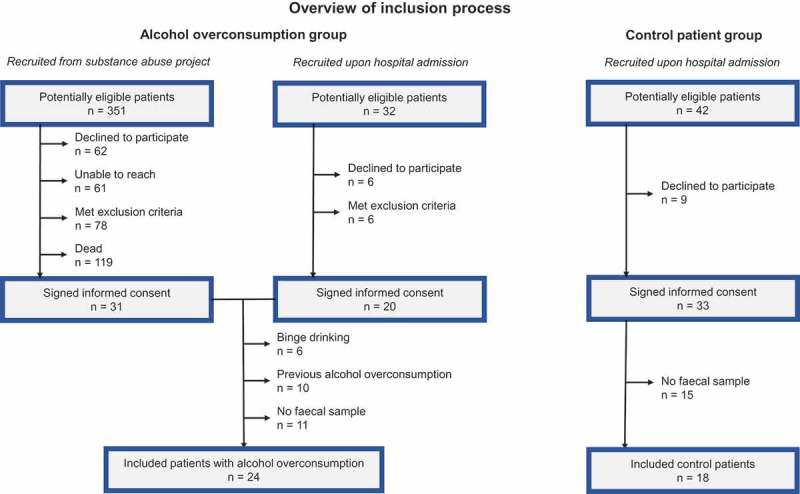
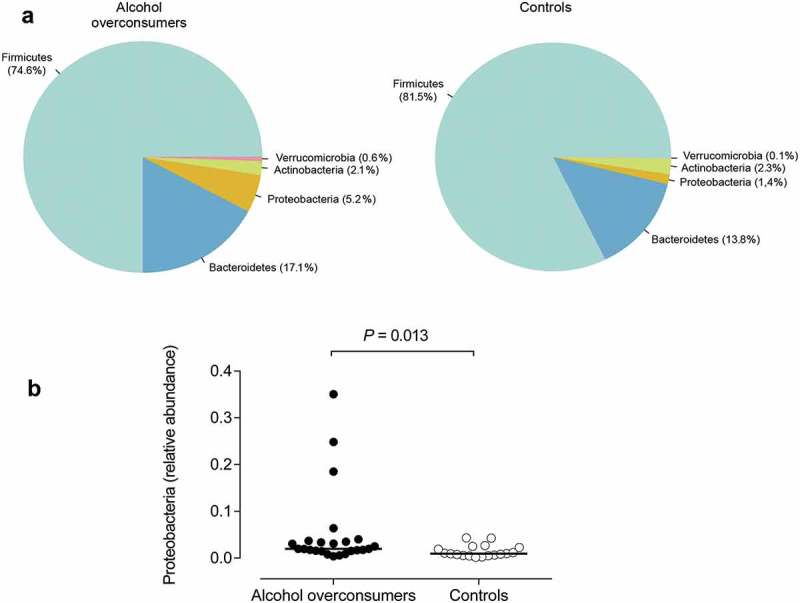
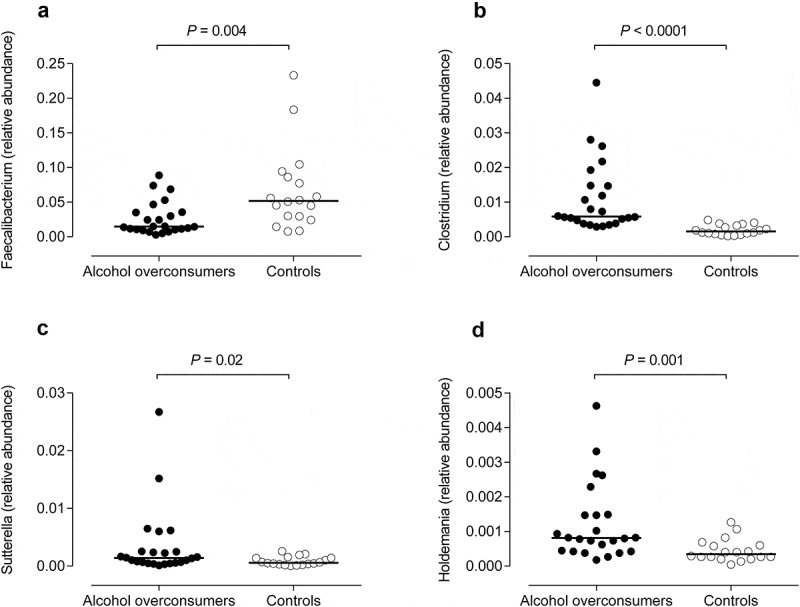
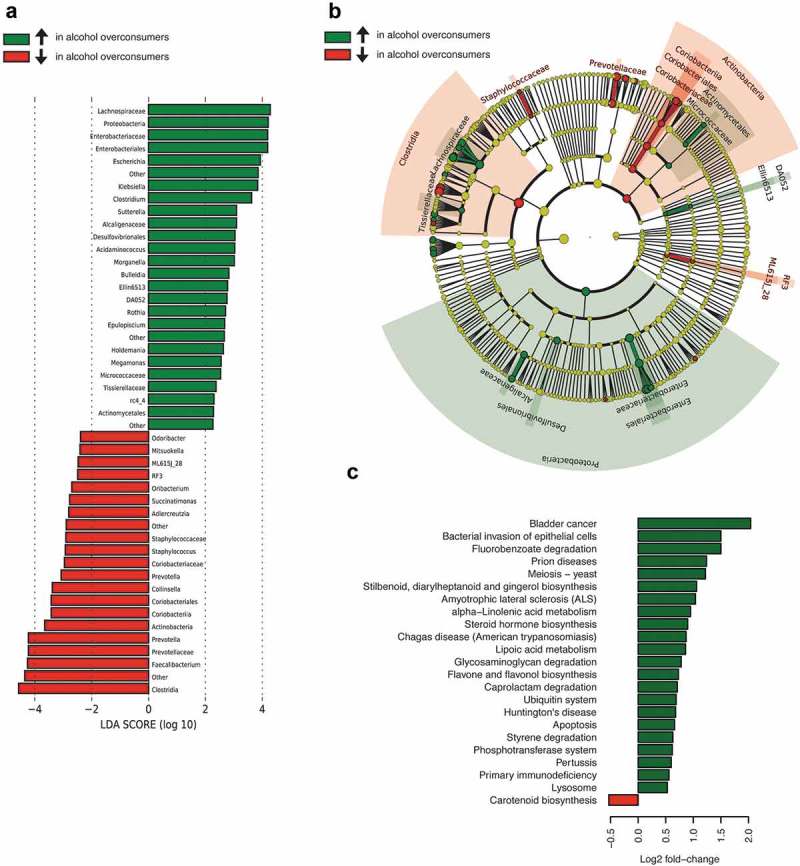
Excessive alcohol intake can alter the gut microbiota, which may underlie the pathophysiology of alcohol-related diseases. We examined gut microbiota composition and functions in patients with alcohol overconsumption for >10 years, compared to a control group of patients with a history of no or low alcohol intake. Faecal microbiota composition was assessed by 16S rRNA sequencing. Gut microbiota functions were evaluated by quantification of short-chain fatty acids (SCFAs) and predictive metagenome profiling (PICRUSt). Twenty-four patients, mean age 64.8 years (19 males), with alcohol overconsumption, and 18 control patients, mean age 58.2 years (14 males) were included. The two groups were comparable regarding basic clinical variables. Nutritional assessment revealed lower total score on the screening tool Mini Nutritional Assessment, lower muscle mass as assessed by handgrip strength, and lower plasma vitamin C levels in the alcohol overconsumption group. Bacteria from phylum Proteobacteria were found in higher relative abundance, while bacteria from genus Faecalibacterium were found in lower relative abundance in the group of alcohol overconsumers. The group also had higher levels of the genera Sutterella, Holdemania and Clostridium, and lower concentration and percentage of butyric acid. When applying PICRUSt to predict the metagenomic composition, we found that genes related to invasion of epithelial cells were more common in the group of alcohol overconsumers. We conclude that gut microbiota composition and functions in patients with alcohol overconsumption differ from patients with low consumption of alcohol, and seem to be skewed into a putative pro-inflammatory direction.
Overview
The claims and statistics of this paper haven’t been checked yet.
Free: it reads the open-access text and checks the first 5 claims that cite a source we can check. Create a free account to check every claim.
Integrity signals
Registry
Cites
Statistics
Figures
Verification
Claims the paper makes
The claims and statistics of this paper haven’t been checked yet.
Free: it reads the open-access text and checks the first 5 claims that cite a source we can check. Create a free account to check every claim.
Claims other papers make about this one
Each is checked against this paper’s own text: does it say what the citing paper says it does?
In the citing paper
“Limited evidence from human studies shows an association between microbiota composition, involving key taxa such as Faecalibacterium and Bifidobacterium, and grip strength.”
From Gut Microbiota, Muscle Mass and Function in Aging: A Focus on Physical Frailty and Sarcopenia (2019) · cites this paper as [80]
In the citing paper
“They found that alcohol overconsumers had lower hand-grip strength, higher relative abundance of Proteobacteria, Sutterella, Clostridium and Holdemania and lower relative abundance of Faecalibacterium.”
From Gut Microbiota, Muscle Mass and Function in Aging: A Focus on Physical Frailty and Sarcopenia (2019) · cites this paper as [80]
Self-check
Percentages, sums and reported differences re-computed from the paper’s own numbers.
The self-check needs the paper’s full text.
Citations
Cites
QIIME allows analysis of high-throughput community sequencing data
Caporaso, J. G., Kuczynski, J., Stombaugh, J., Bittinger, K., Bushman, F. D., Costello, E. K., Fierer, N., Peña, A. G., Goodrich, J. K., Gordon, J. I., et al. (2010) · Nature Methods · doi:10.1038/nmeth.f.303 · Cited by 34,887 · cited 1×
“0).(34) The merged reads were compared with the gold reference database using the UCHIME algorithm(35) to detect and remove chimeric reads, resulting in a set of effective reads.”
MethodUPARSE: highly accurate OTU sequences from microbial amplicon reads
Edgar, R. C. (2013) · Nature Methods · doi:10.1038/nmeth.2604 · Cited by 16,707
Metagenomic biomarker discovery and explanation
Segata, N., Izard, J., Waldron, L., Gevers, D., Miropolsky, L., Garrett, W. S., & Huttenhower, C. (2011) · Genome Biology · doi:10.1186/gb-2011-12-6-r60 · Cited by 16,192 · cited 1×
“However, we did perform a complementary and validating additional test using linear discriminant analysis effect size (LEfSe).(12) Beta diversity was analyzed using one-way ANOVA, followed by Tukey’s HSD test for weighted (takes into account amount of the different species) and unweighted (focuses only on the presence…”
MethodFLASH: fast length adjustment of short reads to improve genome assemblies
Magoč, T., & Salzberg, S. L. (2011) · Bioinformatics · doi:10.1093/bioinformatics/btr507 · Cited by 15,366
UCHIME improves sensitivity and speed of chimera detection
Edgar, R. C., Haas, B. J., Clemente, J. C., Quince, C., & Knight, R. (2011) · Bioinformatics · doi:10.1093/bioinformatics/btr381 · Cited by 15,114
Greengenes, a Chimera-Checked 16S rRNA Gene Database and Workbench Compatible with ARB
DeSantis, T. Z., Hugenholtz, P., Larsen, N., Rojas, M., Brodie, E. L., Keller, K., Huber, T., Dalevi, D., Hu, P., & Andersen, G. L. (2006) · Applied and Environmental Microbiology · doi:10.1128/aem.03006-05 · Cited by 10,891
Predictive functional profiling of microbial communities using 16S rRNA marker gene sequences
Langille, M. G. I., Zaneveld, J., Caporaso, J. G., McDonald, D., Knights, D., Reyes, J. A., Clemente, J. C., Burkepile, D. E., Vega Thurber, R. L., Knight, R., et al. (2013) · Nature Biotechnology · doi:10.1038/nbt.2676 · Cited by 9,116
KEGG as a reference resource for gene and protein annotation
Kanehisa, M., Sato, Y., Kawashima, M., Furumichi, M., & Tanabe, M. (2016) · Nucleic Acids Research · doi:10.1093/nar/gkv1070 · Cited by 7,387 · cited 1×
“The OTU count table was normalized against 16S copy number before calculating metagenomic scores for KEGG orthology (KO) terms.(40) These were further merged using the “categorize_by_function.”
MethodChanges of Intestinal Functions in Liver Cirrhosis
Fukui, H., & Wiest, R. (2016) · Inflammatory Intestinal Diseases · doi:10.1159/000444436 · Cited by 6,808
den Besten, G., van Eunen, K., Groen, A. K., Venema, K., Reijngoud, D.-J., & Bakker, B. M. (2013) · Journal of Lipid Research · doi:10.1194/jlr.r036012 · Cited by 5,048 · cited 2×
“Although the excretion of SCFAs is complex, the production seems to be regulated and is dependent on bacteria.(8) Thus, assessment of SCFAs is a recognized measure of gut microbiota function.”
Background
Research works printed but not linked: 1
- WHO Global status report on alcohol and health. World Health Organ. 2014; 1: 1– 392.
Cited by
Items 101–200 of 219
Reyes, R. E., Gao, L., Zhang, Z., Davies, D. L., & Asatryan, L. (2022) · Alcohol · doi:10.1016/j.alcohol.2021.12.003 · Cited by 15
Microbiota in Alcohol-Associated Organ Damage
Harberts, A., & Schnabl, B. (2025) · American Journal Of Pathology · doi:10.1016/j.ajpath.2025.05.012 · Cited by 18
Ferroptosis and gut microbiota: A new horizon in alcohol-associated liver disease management
Chen, Y., Gao, W., Cai, K., Yang, L., & Chu, H. (2025) · Cellular and Molecular Life Sciences · doi:10.1007/s00018-025-05815-5 · Cited by 18
“…was higher in patients with alcohol use disorder (AUD) and ALD than in healthy control (HC) individuals, Lactobacillus , Akkermansia muciniphila , Faecalibacterium , and several genera from Lachnospiraceae, Ruminococca - ceae, Butyricicoccaceae families were decreased in ALD [ 111– 115 ].”
Pharmacogenomic and Pharmacomicrobiomic Aspects of Drugs of Abuse
Borrego-Ruiz, A., & Borrego, J. J. (2025) · Genes · doi:10.3390/genes16040403 · Cited by 17
“Several human studies have shown that alcohol consumption leads to an increase in the abundance of the members of the phylum Pseudomonadota and to a decrease in the members of the phylum Bacteroidota [79,80].”
Yang, J., Syed, F., Xia, Y., Sanyal, A. J., Shah, V. H., Chalasani, N., Zheng, X., Yu, Q., Lou, Y., & Li, W. (2021) · Alcoholism Clinical and Experimental Research · doi:10.1111/acer.14579 · Cited by 17
“…2011), (3) gut dysbiosis caused by altering gut microbiota composition and function (Engen et al., 2015, Mutlu et al., 2012, Puri et al., 2018, Bjorkhaug et al., 2019), (4) dysregulation of gut mucosal cell function by suppressing IL-22 production from mucosal immune cells, leading to loss of…”
BackgroundDedon, L. R., Yuan, H., Chi, J., Gu, H., Arias, A. J., Covault, J., & Zhou, Y. (2025) · Scientific Reports · doi:10.1038/s41598-025-92313-0 · Cited by 17
Zeng, L., Yu, B., Zeng, P., Duoji, Z., Zuo, H., Lian, J., Yang, T., Dai, Y., Feng, Y., Peng, Y., et al. (2025) · npj Biofilms and Microbiomes · doi:10.1038/s41522-025-00721-x · Cited by 19
Alcohol use disorder, neuroinflammation, and intake of dietary fibers: a new approach for treatment
Pérez-Reytor, D., & Karahanian, E. (2022) · The American Journal of Drug and Alcohol Abuse · doi:10.1080/00952990.2022.2114005 · Cited by 13
“Changes in the composition of the microbiota are detected in persons with an AUD, that lead to a lower production of butyrate in the intestine (57).”
BackgroundGut microbiota and epigenetic age acceleration: a bi-directional Mendelian randomization study
Han, X., Li, O., Kim, D., Bao, Z., & Yang, F. (2024) · Aging Clinical and Experimental Research · doi:10.1007/s40520-024-02877-6 · Cited by 13
Altrawy, A., Khalifa, M. M., Abdelmaksoud, A., khaled, Y., Saleh, Z. M., Sobhy, H., Abdel-Ghany, S. E., Alqosaibi, A. I., Almuhanna, A., Almulhim, J., et al. (2024) · Cancers · doi:10.3390/cancers16244132 · Cited by 15
Vella, V. R., Ainsworth-Cruickshank, G., Luft, C., Wong, K. E., Parfrey, L. W., Vogl, A. W., Holman, P. J., Bodnar, T. S., & Raineki, C. (2025) · Neurochemistry International · doi:10.1016/j.neuint.2025.105952 · Cited by 11
“While there is a paucity of research on PAE and its effects on the gut microbiota, a number of studies have linked alcohol consumption in adulthood to altered microbiota composition in both humans (Bj ø rkhaug et al., 2019) and rodents (Bull-Otterson et al., 2013).”
Xing, L., & Wang, F. (2021) · Experimental and Therapeutic Medicine · doi:10.3892/etm.2021.10438 · Cited by 13
“Chronic ethanol consumption is a major cause of gut micro‐ biota dysbiosis, which may support the pathophysiology of ethanol‐related morbidity (5,32).”
BackgroundThe Gut Microbiota-Brain Axis: Potential Mechanism of Drug Addiction
Luo, X., Li, H., Fan, X., Wu, X., Zhou, R.-Y., Lei, Y., Xue, D., Yang, F., Xu, Y., & Wang, K. (2023) · Current Topics in Medicinal Chemistry · doi:10.2174/1568026623666230418114133 · Cited by 11
Sausa, M., Fucarino, A., Paladino, L., Zummo, F. P., Fabbrizio, A., Felice, V. D., Rappa, F., Barone, R., Marino, A., & Macaluso, F. (2024) · Biomedicines · doi:10.3390/biomedicines12020382 · Cited by 14
He, C., An, Y., Shi, L., Huang, Y., Zhang, H., Fu, W., Wang, M., Shan, Z., Du, Y., Xie, J., et al. (2024) · Frontiers in Pharmacology · doi:10.3389/fphar.2024.1371929 · Cited by 9
Mittal, A., Choudhary, N., Chaudhary, S., Kumari, A., Rastogi, A., Kumar, G., Maras, J. S., Sarin, S. K., & Sharma, S. (2024) · Annals of Hepatology · doi:10.1016/j.aohep.2024.101565 · Cited by 10
Geng, X., Zhuang, M., Tian, W., Shang, H., Gong, Z., Lv, Y., & Li, J. (2024) · Foods · doi:10.3390/foods13233733 · Cited by 10
Quintanilla, M. E., Santapau, D., Díaz, E., Martínez, I., Medina, N., Landskron, G., Dominguez, A., Morales, P., Ramírez, D., Hermoso, M. A., et al. (2024) · Scientific Reports · doi:10.1038/s41598-024-80228-1 · Cited by 11
The adolescent and young adult microbiome and its association with substance use: a scoping review
Browning, B. D., Kirkland, A. E., Green, R., Engevik, M. A., Alekseyenko, A. V., Leggio, L., Tomko, R. L., & Squeglia, L. M. (2023) · Alcohol and Alcoholism · doi:10.1093/alcalc/agad055 · Cited by 11
Bhattacharya, S., Bhadra, R., Schols, A. M. W. J., & Sambashivaiah, S. (2020) · Current Opinion in Clinical Nutrition & Metabolic Care · doi:10.1097/mco.0000000000000688 · Cited by 10
“Furthermore, it has been reported that chronic alcoholics having significantly lower mean handgrip strength than controls reported to have gut microbiome profile skewed towards pro-inflammatory direction [15].”
BackgroundSaarenpää, M., Roslund, M. I., Puhakka, R., Grönroos, M., Parajuli, A., Hui, N., Nurminen, N., Laitinen, O. H., Hyöty, H., Cinek, O., et al. (2021) · International Journal of Environmental Research and Public Health · doi:10.3390/ijerph18073742 · Cited by 12
Genetic Connectivity of Gut Microbiota and Oral Ulcers: A Mendelian Randomization Study
Jin, B., Wang, P., Liu, P., Wang, Y., Guo, Y., Wang, C., Jia, Y., Zou, R., & Niu, L. (2024) · International Dental Journal · doi:10.1016/j.identj.2024.02.007 · Cited by 8
“28 Lipopolysaccharide could increase the expression of proinflammatory cytokines and the abundance of Oxalobacter in cecal contents of piglets.”
BackgroundLiu, N., Zhang, Z., Zhang, J., Ma, W., & Wang, C. (2025) · Scientific Reports · doi:10.1038/s41598-025-91577-w · Cited by 8
“Bjørkhaug et al. 57 found that patients with chronic alcohol overconsumption had higher levels of the Holdemania genus and lower concentration and percentage of butyric acid.”
Bai, Z., Lan, H., Luo, D., Li, X., Zhang, Y., Geng, M., & Chang, S. (2024) · eFood · doi:10.1002/efd2.152 · Cited by 8
The Bidirectional Interplay Between Substances of Abuse and Gut Microbiome Homeostasis
Borrego-Ruiz, A., & Borrego, J. J. (2025) · Life · doi:10.3390/life15060834 · Cited by 12
Hasuda, H., Ikeda, T., Makizaki, Y., Yokota, H., Tanaka, Y., Ohno, H., Shimokawa, M., Matsuoka, H., Kimura, Y., Oki, E., et al. (2022) · Surgery Today · doi:10.1007/s00595-022-02607-3 · Cited by 10
“Since alcohol consumption decreases the level of Faecalibacterium [31], the low abundance of Faecalibacterium in patients with ESCC may be due to alcohol consumption.”
BackgroundAmadieu, C., Ahmed, H., Leclercq, S., Koistinen, V., Leyrolle, Q., Stärkel, P., Bindels, L. B., Layé, S., Neyrinck, A. M., Kärkkäinen, O. K., et al. (2025) · Clinical Nutrition ESPEN · doi:10.1016/j.clnesp.2025.01.046 · Cited by 9
Effect of maternal diet on gut bacteria and autism spectrum disorder in offspring
Chen, Z., Wang, X., Hu, Y., Zhang, S., & Han, F. (2025) · Frontiers in Cellular Neuroscience · doi:10.3389/fncel.2025.1623576 · Cited by 9
Recent alcohol intake impacts microbiota in adult burn patients
Hoisington, A. J., Choy, K., Khair, S., Dyamenahalli, K. U., Najarro, K. M., Wiktor, A. J., Frank, D. N., Burnham, E. L., McMahan, R. H., & Kovacs, E. J. (2024) · Alcohol · doi:10.1016/j.alcohol.2024.04.003 · Cited by 8
Grodin, E. N., Burnette, E. M., Rodriguez, C., Fulcher, J. A., & Ray, L. A. (2024) · Alcoholism Clinical and Experimental Research · doi:10.1111/acer.15338 · Cited by 9
Feng, J., Wu, J., Zhang, M., Chen, W., Zhao, J., Lv, Y., Lai, R., Fang, S., & Li, Y. (2025) · Probiotics and Antimicrobial Proteins · doi:10.1007/s12602-025-10818-6 · Cited by 6
“According to recent data from the World Health Organization (WHO) and Hepatology (2024), 30–50% of chronic alcohol consumers and up to 90% of individuals with alcohol use disorder (AUD) develop to lipopolysaccharides (LPS) translocation, hepatic inflam - mation, and endotoxemia [ 2 , 4].”
Li, C., Wang, H., Lin, X., Zeng, G., Li, X., Chen, W., Lu, H., Pan, J., Zhang, X., Rong, X., et al. (2025) · Communications Biology · doi:10.1038/s42003-025-09235-w · Cited by 10
“19 .”
Drinking pattern and sex modulate the impact of ethanol consumption on the mouse gut microbiome
da Silva, C. B. P., Nascimento-Silva, E. A., Zaramela, L. S., da Costa, B. R. B., Rodrigues, V. F., Martinis, B. S. D., Carlos, D., & Tostes, R. C. (2025) · Physiological Genomics · doi:10.1152/physiolgenomics.00031.2024 · Cited by 7
Yuan, S., Damrauer, S. M., & Larsson, S. C. (2025) · Arteriosclerosis Thrombosis and Vascular Biology · doi:10.1161/atvbaha.125.322136 · Cited by 10
Factors Affecting the Composition of the Human Microbiome
Imchen, M., Salim, S. A., Kumavath, R., & Busi, S. (2023) · Springer eBooks · doi:10.1007/978-981-99-1463-0_3 · Cited by 8
Li, L., Zhong, S.-J., Liang, H., Hu, S., & Hu, S. (2025) · Current Medical Science · doi:10.1007/s11596-025-00077-5 · Cited by 7
“After extraction via the CTAB/SDS method [19], DNA from the fecal samples was examined for concentration and purity on 1% agarose gels.”
Barkus, A., Baltrūnienė, V., Barkienė, L., Baušienė, J., Baltrūnas, T., Brazys, M., Rauduvytė, K., Kazlauskaitė, P., & Baušys, A. (2025) · Journal of Neurochemistry · doi:10.1111/jnc.70165 · Cited by 8
“At the genus level, the SCFA-producer Faecalibacterium was depleted in five alcohol (Bjørkhaug et al. 2019; Gurwara et al. 2020; Wang et al. 2021; Wang, Yan, et al. 2023; Li et al. 2024), three stimulant (Cook et al. 2019; Deng et al. 2021; Wang, Wang, et al. 2023) and one opioid (Xie et al. 2024)…”
InfluentialLi, M., Wu, X. Q., & Lee, T. K. (2025) · Clinical and Molecular Hepatology · doi:10.3350/cmh.2025.0476 · Cited by 7
Qiao, N.-N., Fang, Q., Zhang, X., Ke, S., Wang, Z., Tang, G., Leng, R., & Fan, Y. (2024) · Alcohol · doi:10.1016/j.alcohol.2024.02.003 · Cited by 5
Prenatal Stress and Ethanol Exposure: Microbiota-Induced Immune Dysregulation and Psychiatric Risks
Camarini, R., Marianno, P., Hanampa-Maquera, M., Oliveira, S. D. S., & Câmara, N. O. S. (2024) · International Journal of Molecular Sciences · doi:10.3390/ijms25189776 · Cited by 5
“Since F. prausnitzii is positively correlated with butyric acid levels, which are protective against inflammation [203], this reduction suggests a potential link between gut microbiota alterations and inflammatory processes in AUD.”
BackgroundMorgado-Cáceres, P., Huerta, H., Bergman, C., Figueroa, R., Farías, P., Quiroz, G., Woehlbier, U., Mella, K., Díaz-Rivera, O., Linsambarth, S., et al. (2025) · Aging and Disease · doi:10.14336/ad.2025.0188 · Cited by 7
Cyclic Nucleotide Phosphodiesterases in Alcohol Use Disorders: Involving Gut Microbiota
Hou, X., Rong, C., Zhang, Q., Song, S., Cong, Y.-F., & Zhang, H. (2022) · The International Journal of Neuropsychopharmacology · doi:10.1093/ijnp/pyac060 · Cited by 5
“In addition, patients who engage in excessive alcohol consumption have more fecal microbiota from Proteobacteria; higher levels of Sutterella, Holdemania, and Clostridium; but fewer bacteria from Faecalibacterium and Bacteroidetes (Bjørkhaug et al., 2019; Mutlu et al., 2012).”
BackgroundInfluentialXing, S.-C., Chen, J.-Y., Chen, Y.-X., Wu, R., Huang, C.-B., Zhang, Y., Mi, J., & Liao, X. (2020) · Frontiers in Microbiology · doi:10.3389/fmicb.2020.585197 · Cited by 5
Association of moderate beer consumption with the gut microbiota
Liu, Z., Shi, J., Wang, L., Dong, J., Yu, J., & Chen, M. (2024) · Food Science and Human Wellness · doi:10.26599/fshw.2023.9250004 · Cited by 6
Achary, S. T., Gupta, P., Rajput, A., Sohkhia, W., Bonam, S. R., & Sahu, B. D. (2025) · Pharmaceuticals · doi:10.3390/ph18050710 · Cited by 4
Microbiome‐derived metabolites in substance use disorders: Mechanisms and implications
Koperska, M., & Kiraly, D. D. (2025) · Annals of the New York Academy of Sciences · doi:10.1111/nyas.15416 · Cited by 5
Borrego-Ruiz, A., & Borrego, J. J. (2025) · Genes · doi:10.3390/genes16121447 · Cited by 5
A Multiomics Framework to Unlock the Relationships between Wine, Food, and Gut Health
Abrieux, A., Barboza, M., Hirahatake, K. M., Jacobs, H., Schmitz, H. H., Adams, S. H., & Siegel, J. B. (2025) · Advances in Nutrition · doi:10.1016/j.advnut.2025.100468 · Cited by 6
Domínguez-Pino, M., Mellado, S., Cuesta, C. M., Grillo-Risco, R., Garcia‐García, F., & Pascual, M. (2024) · International Journal of Molecular Sciences · doi:10.3390/ijms252312534 · Cited by 7
“Patients with chronic alcohol overconsumption have shown lower concentrations and percentages of butyric acid, which may contribute to a pro-inflammatory direction [31].”
Zhao, M., Li, B., Meng, X., Zhang, Y., Xuan, F., Li, L., Li, S., Xu, Y., & Wang, Y. (2025) · Phytochemistry Reviews · doi:10.1007/s11101-025-10094-w · Cited by 4
“…and the endotoxin produced by gram-negative bacteria will destroy the integrity of the intestinal barrier, increase intestinal mucosal permeability, reduce the production of short-chain fatty acid bacteria, and lead to intestinal flora disorders and related inflammation (Bjørkhaug et al. 2019).”
Drugs and bugs: Negative affect, psychostimulant use and withdrawal, and the microbiome
Forouzan, S., McGrew, K., & Kosten, T. A. (2021) · American Journal on Addictions · doi:10.1111/ajad.13210 · Cited by 5
Zhu, Y., Pan, Y., Wang, X., Wei, L., Zhu, L., Yu, G., Jin, H., Gu, Y., Wang, Y., Chen, Y., et al. (2025) · Journal of Medicinal Food · doi:10.1089/jmf.2024.k.0184 · Cited by 5
Wang, W., Du, Y., Tong, X., Liu, J., Lei, M., Wen, L., He, Y., Meng, X., & Xu, X. (2025) · Frontiers in Nutrition · doi:10.3389/fnut.2025.1578169 · Cited by 3
Mittal, A., & Sharma, S. (2025) · Nutrition Research · doi:10.1016/j.nutres.2025.11.004 · Cited by 3
Zhao, C., Jin, X., Li, Z., Hu, Y., Wei, M., Chen, Y., Wang, R., Song, J., Li, Z., & Zhang, Y. (2025) · Journal of Agriculture and Food Research · doi:10.1016/j.jafr.2025.102579 · Cited by 5
Ou, S. J. L., Yusri, H., Yang, D., Khoo, C. M., & Liu, M. H. (2024) · Food Science & Nutrition · doi:10.1002/fsn3.4627 · Cited by 4
Alcohol use disorders and pneumonia: susceptibility and severity
Gandapur, A., & Wyatt, T. A. (2025) · Expert Review of Respiratory Medicine · doi:10.1080/17476348.2025.2560201 · Cited by 5
“It also increases the intestinal permeability and allows the harmful bacteria to enter the bloodstream [105,106].”
Host and microbiota interaction in depression syndrome
Mohsenipour, Z., Keshavarz, P., & Moghanloo, Z. S. (2025) · Brain Disorders · doi:10.1016/j.dscb.2025.100291 · Cited by 2
Shi, Y., Zhou, H., Fu, Q., Wang, X., Wu, X., Liu, W., & Gan, D. (2025) · Nutrition & Metabolism · doi:10.1186/s12986-025-01035-7 · Cited by 2
“Alcohol was associated with reduced gut microbiota alpha-diversity, lower butyric acid levels, and a higher abundance of pro-inflammatory microbiota [33, 34].”
Low serum levels of vitamin C in patients with oral lichen planus: a case-control study
Tsunoda, K., Kumagai, A., Tsunoda, N., Obara, M., Kawai, T., Ohashi, Y., Miyamoto, I., & Yamada, H. (2021) · Journal of Oral and Maxillofacial Surgery Medicine and Pathology · doi:10.1016/j.ajoms.2021.11.001 · Cited by 4
682: INTESTINAL VIROME IN PATIENTS WITH ALCOHOL USE DISORDER AND AFTER ABSTINENCE
Hsu, C. L., Zhang, X., Jiang, L., Lang, S., Hartmann, P., Pride, D. T., Fouts, D. E., Stärkel, P., & Schnabl, B. (2022) · Gastroenterology · doi:10.1016/s0016-5085(22)63411-5 · Cited by 2
The Gut–Lung Axis During Ethanol Exposure and a Pseudomonas aeruginosa Bacterial Challenge
Santilli, A. D., Han, Y., Yan, H. H., Sangwan, N., & Cresci, G. (2024) · Biomedicines · doi:10.3390/biomedicines12122757 · Cited by 3
“Chronic alcohol use has been shown to alter the abundance of several gut commensal bacteria and their metabolic byproducts both in human studies [17,18] and in pre-clinical animal models [19,20].”
Zhang, X., Zhang, X., Luo, H., Shu, R., Guo, L., Zhou, J., Tan, B., Guo, X., Wang, Y., & Tian, Y. (2022) · Computational and Mathematical Methods in Medicine · doi:10.1155/2022/2195330 · Cited by 2
RetractedDedon, L. R., Yuan, H., Chi, J., Gu, H., Arias, A. J., Covault, J., & Zhou, Y. (2024) · medRxiv · doi:10.1101/2024.04.02.24305199 · Cited by 2
“11,16,18 These microbially-produced SCFAs influence various biological processes such as depression, anxiety, and craving, 19–23 which are common comorbidities of AUD.”
BackgroundCommentary on the gut microbiome in alcohol use disorder and alcohol‐associated liver disease
Llorente, C. (2024) · Alcoholism Clinical and Experimental Research · doi:10.1111/acer.15382 · Cited by 2
Júnior, R. E. M., Mendes, M. V., Amormino, M. S., Randuineau, G., Boulenger, C. L., Guérin, S., Rome, V., Boudry, G., & Godard, A. L. B. (2025) · The FASEB Journal · doi:10.1096/fj.202502123r · Cited by 3
Singh, L. S., Singha, L. S., Singh, W. S., Singh, Y. R., & Marak, G. K. (2025) · Antonie van Leeuwenhoek · doi:10.1007/s10482-025-02196-4 · Cited by 1
“This synergistic approach diminishes the relative prevalence of potentially pathogenic microorganisms such as Oscillibacter, Escherichia/Shigella, and Alistipes, whilst fostering the proliferation of advantageous butyrate-producing taxa, which include Akkermansia, Lactobacillus, and constituents of Clostridium cluster…”
InfluentialLiu, X., Zheng, Y., Tian, X., Ma, J., Li, Y., Zhao, C., Zhang, C., Liu, J., Huang, H., Wang, Y., et al. (2026) · Microbiology Spectrum · doi:10.1128/spectrum.02214-25 · Cited by 1
Havton, G. C., Tai, A. T. C., Vasisht, S., Davies, D. L., & Asatryan, L. (2024) · Pharmacology · doi:10.1159/000540882 · Cited by 1
“Overall, alcohol consumption is shown to reduce relative abundances of Firmicutes , Bacteroidetes , and Actinobacteria with an increase in abundances for Proteobacteria , Enterobacteria , and Verrucomicrobia [7, 8].”
Xu, W., Ouyang, M., Peng, D., & Jiang, Z. (2024) · Medicine · doi:10.1097/md.0000000000039779 · Cited by 1
“[19] Therefore, our MR results may only be a pre-liminary conclusion, and further MR research for quantitative analysis of alcohol dose is very necessary.”
BackgroundLu, X. D., Zhao, M., Duan, Y., Wang, F., & Chen, C. (2020) · Research Square · doi:10.21203/rs.3.rs-97812/v1 · Cited by 2
“Collectively, ethanol consumption directly disorders the gut microbiota and intestinal barrier (Ferrere et al. 2017; Bjørkhaug et al. 2019; Shao et al. 2018), which exacerbates the development of alcoholic liver diseases (ALD) via in ammation induced by bacterial translocation from the intestine.”
BackgroundPark, J., Kato, K., Murakami, H., Hosomi, K., Tanisawa, K., Nakagata, T., Ohno, H., Konishi, K., Kawashima, H., Chen, Y., et al. (2020) · Research Square · doi:10.21203/rs.3.rs-103500/v1 · Cited by 1
Pedroso-Roussado, C., Guppy, F. M., Bowler, L. D., & Inácio, J. (2022) · Preprints.org · doi:10.20944/preprints202212.0205.v1
Fu, W., Xu, T., Zhang, L., & Yang, X. (2023) · Research Square · doi:10.21203/rs.3.rs-2930205/v1 · Cited by 1
Gut Microbiota and Colorectal Cancer
Zeuner, A., Angelis, M. L. D., & Francescangeli, F. (2021) · Elsevier eBooks · doi:10.1016/b978-0-12-819265-8.00029-2
Saraf‐Bank, S., Navab, F. S., Rouhani, M. H., Hajhashemy, Z., & Mashhadi, N. S. (2021) · Research Square · doi:10.21203/rs.3.rs-1176764/v1
Advances in Microbiota-Gut-Brain Axis and Alcohol Dependence Syndrome
魏, 巍. (2022) · Open Journal of Natural Science · doi:10.12677/ojns.2022.101009
Vatsalya, V., Parthasarathy, R., Verster, J. C., Royer, A., Sagaram, M., Zamani, Z., Hu, H., Schwandt, M. L., Leggio, L., Kong, M., et al. (2022) · medRxiv · doi:10.1101/2022.05.15.22275115
Díaz, C. M. C. (2022) · RiuNet (Universitat Politècnica de València) · doi:10.4995/thesis/10251/183832
Gerace, E., Baldi, S., Salimova, M., Gloria, L. D., Curini, L., Cimino, V., Pallecchi, M., Nannini, G., Russo, E., Ramazzotti, M., et al. (2022) · SSRN Electronic Journal · doi:10.2139/ssrn.4198098
Garbuzenko, D. V. (2022) · The Russian Archives of Internal Medicine · doi:10.20514/2226-6704-2022-12-5-352-362
Pedroso-Roussado, C., Guppy, F. M., Brissett, N. C., Bowler, L. D., & Inácio, J. (2022) · bioRxiv (Cold Spring Harbor Laboratory) · doi:10.1101/2022.12.09.519727
Abshire, K. M., & Leggio, L. (2023) · Elsevier eBooks · doi:10.1016/b978-0-12-823453-2.00013-8
Reducing the harms of alcohol: nutritional interventions and functional alcohol alternatives
Belelli, D., Riva, A., & Nutt, D. J. (2024) · International review of neurobiology · doi:10.1016/bs.irn.2024.03.001
Mei, L., Zhou, J., Su, Y., Mao, K., Wu, J., Zhu, C., He, L., & Cui, Y. (2021) · Figshare · doi:10.6084/m9.figshare.14432045
Mei, L., Zhou, J., Su, Y., Mao, K., Wu, J., Zhu, C., He, L., & Cui, Y. (2021) · Figshare · doi:10.6084/m9.figshare.14432063
Mei, L., Zhou, J., Su, Y., Mao, K., Wu, J., Zhu, C., He, L., & Cui, Y. (2021) · Figshare · doi:10.6084/m9.figshare.14432057
Park, J., Kato, K., Murakami, H., Hosomi, K., Tanisawa, K., Nakagata, T., Ohno, H., Konishi, K., Kawashima, H., Chen, Y. A., et al. (2021) · Figshare · doi:10.6084/m9.figshare.14633676
Mei, L., Zhou, J., Su, Y., Mao, K., Wu, J., Zhu, C., He, L., & Cui, Y. (2021) · Figshare · doi:10.6084/m9.figshare.14432054
Park, J., Kato, K., Murakami, H., Hosomi, K., Tanisawa, K., Nakagata, T., Ohno, H., Konishi, K., Kawashima, H., Chen, Y. A., et al. (2021) · Figshare · doi:10.6084/m9.figshare.14633667
Mei, L., Zhou, J., Su, Y., Mao, K., Wu, J., Zhu, C., He, L., & Cui, Y. (2021) · Figshare · doi:10.6084/m9.figshare.14432048
Park, J., Kato, K., Murakami, H., Hosomi, K., Tanisawa, K., Nakagata, T., Ohno, H., Konishi, K., Kawashima, H., Chen, Y., et al. (2021) · Figshare · doi:10.6084/m9.figshare.14633661
Mei, L., Zhou, J., Su, Y., Mao, K., Wu, J., Zhu, C., He, L., & Cui, Y. (2021) · Figshare · doi:10.6084/m9.figshare.14432051
Park, J., Kato, K., Murakami, H., Hosomi, K., Tanisawa, K., Nakagata, T., Ohno, H., Konishi, K., Kawashima, H., Chen, Y., et al. (2021) · Figshare · doi:10.6084/m9.figshare.14633658
Park, J., Kato, K., Murakami, H., Hosomi, K., Tanisawa, K., Nakagata, T., Ohno, H., Konishi, K., Kawashima, H., Chen, Y. A., et al. (2021) · Figshare · doi:10.6084/m9.figshare.14633664
Mei, L., Zhou, J., Su, Y., Mao, K., Wu, J., Zhu, C., He, L., & Cui, Y. (2021) · Figshare · doi:10.6084/m9.figshare.14432060
Mei, L., Zhou, J., Su, Y., Mao, K., Wu, J., Zhu, C., He, L., & Cui, Y. (2021) · Figshare · doi:10.6084/m9.figshare.14432066
Wang, X., Wang, A., Zhang, Y., An, Y., Tu, Z., & Cui, Y. (2024) · Research Square · doi:10.21203/rs.3.rs-4273595/v1
He, L., Luo, H., Li, Y., Lu, J., Li, J., Peng, L. H., Xu, Y., & Liu, H. (2024) · Research Square · doi:10.21203/rs.3.rs-4444933/v1
Metadata
- Authors
- Bjørkhaug, S. T., Aanes, H., Neupane, S. P., Bramness, J. G., Malvik, S., Henriksen, C., Skar, V., Medhus, A. W., & Valeur, J.
- Affiliations
- University of Oslo (NO)
- PatoGen (Norway) (NO)
- Innlandet Hospital Trust (NO)
- Lovisenberg Diakonale Sykehus (NO)
- Oslo University Hospital (NO)
- Corresponding author
- Valeur, Jørgen
- ORCID
- Venue
- Gut Microbes
- Publisher
- Informa UK Limited
- Published
- 2019-03-20
- Volume
- 10
- Issue
- 6
- Pages
- 663-675
- ISSN
- 1949-0976 (ISSN-L)
- 1949-0984
- PMC
- PMC6866679
- OpenAlex
- W2923426205
- Cited by
- 205
- References
- 42
- Citations by year
- 2026: 12 · 2025: 37 · 2024: 38 · 2023: 22 · 2022: 32 · 2021: 37 · 2020: 20 · 2019: 7
- FWCI
- 9.01
- Type
- journal article
- Language
- en
- Open access
- gold
- doi.org
- Licence
- Locations
- Gut Microbes (publishedVersion, cc-by-nc-nd)
- PubMed Central (publishedVersion, cc-by-nc-nd)
- PubMed (publishedVersion)
- NORA - Norwegian Open Research Archives (submittedVersion, other-oa)
- NORA - Norwegian Open Research Archives (submittedVersion, cc-by-nc-nd)
- Funders
- Lovisenberg Diakonale Sykehus (1)
- Norsk Gastroenterologisk Forening (2)
- Topics
- Life Sciences › Biochemistry, Genetics and Molecular Biology › Molecular Biology › Gut microbiota and health
- Health Sciences › Medicine › Pathology and Forensic Medicine › Alcohol Consumption and Health Effects
- Health Sciences › Dentistry › Periodontics › Oral microbiology and periodontitis research
- Keywords
- gut microbiota, alcohol-related disorders, short-chain fatty acids, butyrate, Faecalibacterium, Proteobacteria, Sutterella, Clostridium, PICRUSt, inflammation, nutritional status, vitamin C, grip strength, Mini Nutritional Assessment
- MeSH terms
- Gastrointestinal Microbiome, Adult, Aged, Aged, 80 and over, Alcoholism, Ascorbic Acid, Bacteria, Bacterial Proteins, Fatty Acids, Volatile, Feces, Female, Humans, Male, Middle Aged, RNA, Ribosomal, 16S, Vitamins, Nutrition Assessment, Hand Strength, Metagenomics
About these checks
Registry, retraction, Cites and statistics results are computed, not judged, with one exception: a printed reference that no index lists is read once by a model before it counts as a citation error. Claims are extracted by a model and kept only when their quote appears verbatim in the text; each cited source is then checked, with a model’s help, for whether it says what the claim relies on. Those verdicts can be wrong — read the claim’s quote and the cited source before relying on one.
Statistics and arithmetic are recomputed, not judged.
Confidence bands are shown only for fields calibrated on our annotated test set. None is calibrated yet, so no band is shown.
What counts as a claim ›How we measure confidence ›How we check this ›
Are you an author, or do you see a problem with this page? Request a review
Data sources
Bibliographic data: Semantic Scholar, OpenAlex, Crossref.
Contains information from the Semantic Scholar Academic Graph Datasets, made available under the ODC Attribution License (ODC-BY 1.0).
Semantic Scholar’s data is described in: Kinney, R., et al. (2023). The Semantic Scholar Open Data Platform. arXiv:2301.10140.
