

Characterization of gut microbiota composition and functions in patients with chronic alcohol overconsumption
Open accessThe DOI matches its Crossref record; 40 of the 42 references it cites were found in a registry or an index.
Abstract
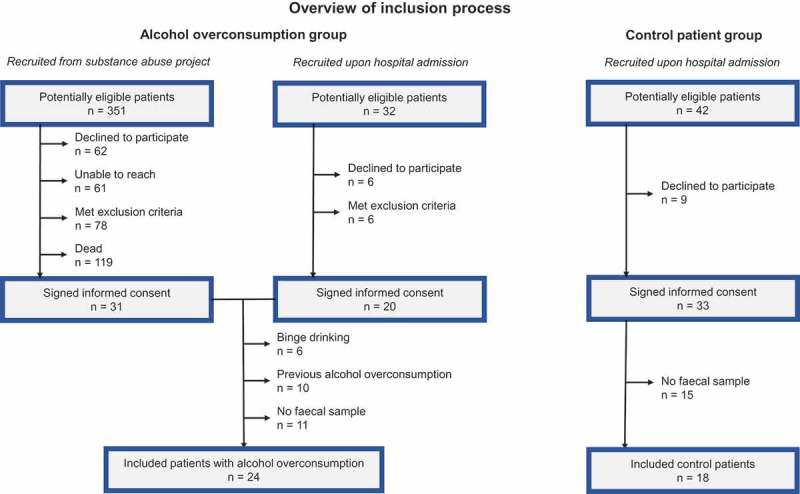
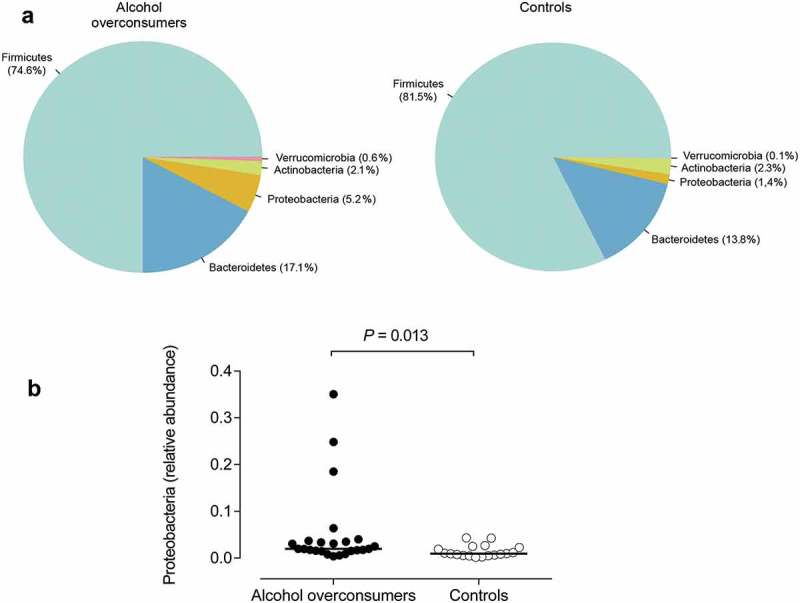
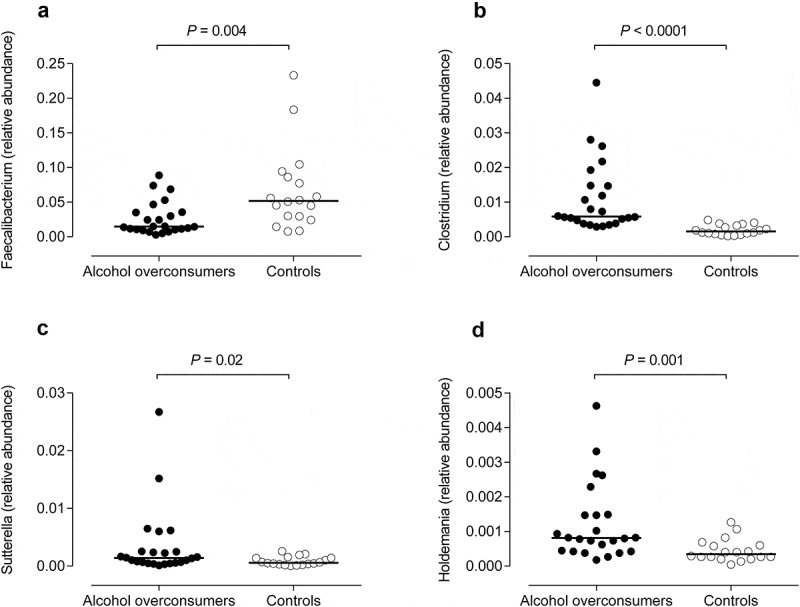
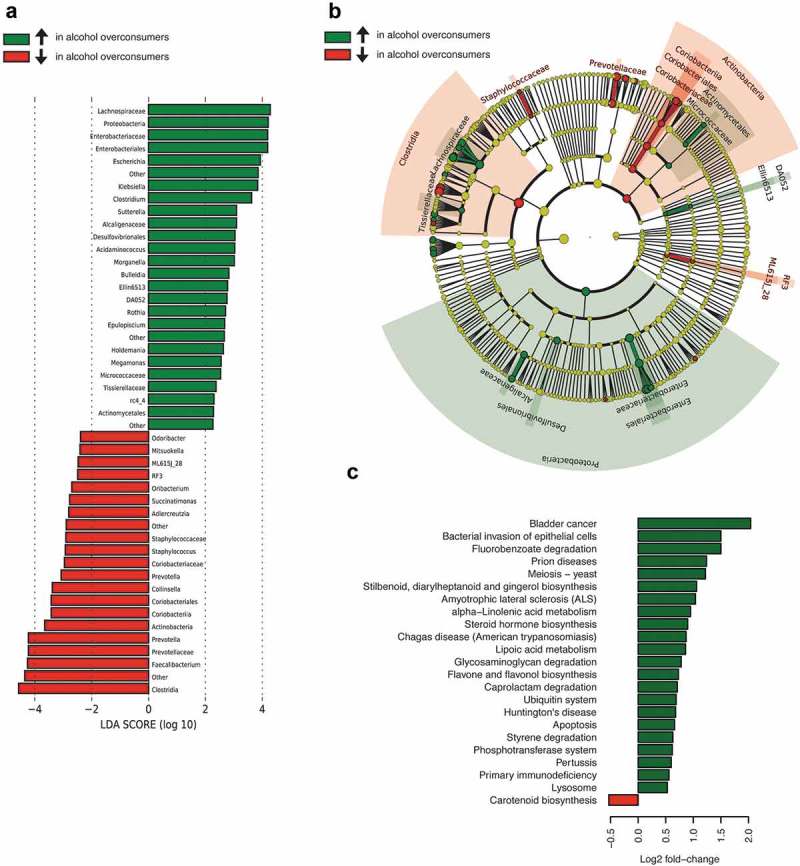
Excessive alcohol intake can alter the gut microbiota, which may underlie the pathophysiology of alcohol-related diseases. We examined gut microbiota composition and functions in patients with alcohol overconsumption for >10 years, compared to a control group of patients with a history of no or low alcohol intake. Faecal microbiota composition was assessed by 16S rRNA sequencing. Gut microbiota functions were evaluated by quantification of short-chain fatty acids (SCFAs) and predictive metagenome profiling (PICRUSt). Twenty-four patients, mean age 64.8 years (19 males), with alcohol overconsumption, and 18 control patients, mean age 58.2 years (14 males) were included. The two groups were comparable regarding basic clinical variables. Nutritional assessment revealed lower total score on the screening tool Mini Nutritional Assessment, lower muscle mass as assessed by handgrip strength, and lower plasma vitamin C levels in the alcohol overconsumption group. Bacteria from phylum Proteobacteria were found in higher relative abundance, while bacteria from genus Faecalibacterium were found in lower relative abundance in the group of alcohol overconsumers. The group also had higher levels of the genera Sutterella, Holdemania and Clostridium, and lower concentration and percentage of butyric acid. When applying PICRUSt to predict the metagenomic composition, we found that genes related to invasion of epithelial cells were more common in the group of alcohol overconsumers. We conclude that gut microbiota composition and functions in patients with alcohol overconsumption differ from patients with low consumption of alcohol, and seem to be skewed into a putative pro-inflammatory direction.
Overview
The claims and statistics of this paper haven’t been checked yet.
Free: it reads the open-access text and checks the first 5 claims that cite a source we can check. Create a free account to check every claim.
Integrity signals
Registry
Cites
Statistics
Figures
Verification
Claims the paper makes
The claims and statistics of this paper haven’t been checked yet.
Free: it reads the open-access text and checks the first 5 claims that cite a source we can check. Create a free account to check every claim.
Claims other papers make about this one
Each is checked against this paper’s own text: does it say what the citing paper says it does?
In the citing paper
“Limited evidence from human studies shows an association between microbiota composition, involving key taxa such as Faecalibacterium and Bifidobacterium, and grip strength.”
From Gut Microbiota, Muscle Mass and Function in Aging: A Focus on Physical Frailty and Sarcopenia (2019) · cites this paper as [80]
In the citing paper
“They found that alcohol overconsumers had lower hand-grip strength, higher relative abundance of Proteobacteria, Sutterella, Clostridium and Holdemania and lower relative abundance of Faecalibacterium.”
From Gut Microbiota, Muscle Mass and Function in Aging: A Focus on Physical Frailty and Sarcopenia (2019) · cites this paper as [80]
Self-check
Percentages, sums and reported differences re-computed from the paper’s own numbers.
The self-check needs the paper’s full text.
Citations
Cites
QIIME allows analysis of high-throughput community sequencing data
Caporaso, J. G., Kuczynski, J., Stombaugh, J., Bittinger, K., Bushman, F. D., Costello, E. K., Fierer, N., Peña, A. G., Goodrich, J. K., Gordon, J. I., et al. (2010) · Nature Methods · doi:10.1038/nmeth.f.303 · Cited by 34,887 · cited 1×
“0).(34) The merged reads were compared with the gold reference database using the UCHIME algorithm(35) to detect and remove chimeric reads, resulting in a set of effective reads.”
MethodUPARSE: highly accurate OTU sequences from microbial amplicon reads
Edgar, R. C. (2013) · Nature Methods · doi:10.1038/nmeth.2604 · Cited by 16,707
Metagenomic biomarker discovery and explanation
Segata, N., Izard, J., Waldron, L., Gevers, D., Miropolsky, L., Garrett, W. S., & Huttenhower, C. (2011) · Genome Biology · doi:10.1186/gb-2011-12-6-r60 · Cited by 16,192 · cited 1×
“However, we did perform a complementary and validating additional test using linear discriminant analysis effect size (LEfSe).(12) Beta diversity was analyzed using one-way ANOVA, followed by Tukey’s HSD test for weighted (takes into account amount of the different species) and unweighted (focuses only on the presence…”
MethodFLASH: fast length adjustment of short reads to improve genome assemblies
Magoč, T., & Salzberg, S. L. (2011) · Bioinformatics · doi:10.1093/bioinformatics/btr507 · Cited by 15,366
UCHIME improves sensitivity and speed of chimera detection
Edgar, R. C., Haas, B. J., Clemente, J. C., Quince, C., & Knight, R. (2011) · Bioinformatics · doi:10.1093/bioinformatics/btr381 · Cited by 15,114
Greengenes, a Chimera-Checked 16S rRNA Gene Database and Workbench Compatible with ARB
DeSantis, T. Z., Hugenholtz, P., Larsen, N., Rojas, M., Brodie, E. L., Keller, K., Huber, T., Dalevi, D., Hu, P., & Andersen, G. L. (2006) · Applied and Environmental Microbiology · doi:10.1128/aem.03006-05 · Cited by 10,891
Predictive functional profiling of microbial communities using 16S rRNA marker gene sequences
Langille, M. G. I., Zaneveld, J., Caporaso, J. G., McDonald, D., Knights, D., Reyes, J. A., Clemente, J. C., Burkepile, D. E., Vega Thurber, R. L., Knight, R., et al. (2013) · Nature Biotechnology · doi:10.1038/nbt.2676 · Cited by 9,116
KEGG as a reference resource for gene and protein annotation
Kanehisa, M., Sato, Y., Kawashima, M., Furumichi, M., & Tanabe, M. (2016) · Nucleic Acids Research · doi:10.1093/nar/gkv1070 · Cited by 7,387 · cited 1×
“The OTU count table was normalized against 16S copy number before calculating metagenomic scores for KEGG orthology (KO) terms.(40) These were further merged using the “categorize_by_function.”
MethodChanges of Intestinal Functions in Liver Cirrhosis
Fukui, H., & Wiest, R. (2016) · Inflammatory Intestinal Diseases · doi:10.1159/000444436 · Cited by 6,808
den Besten, G., van Eunen, K., Groen, A. K., Venema, K., Reijngoud, D.-J., & Bakker, B. M. (2013) · Journal of Lipid Research · doi:10.1194/jlr.r036012 · Cited by 5,048 · cited 2×
“Although the excretion of SCFAs is complex, the production seems to be regulated and is dependent on bacteria.(8) Thus, assessment of SCFAs is a recognized measure of gut microbiota function.”
Background
Research works printed but not linked: 1
- WHO Global status report on alcohol and health. World Health Organ. 2014; 1: 1– 392.
Cited by
Cryan, J. F., O'Riordan, K. J., Cowan, C. S. M., Sandhu, K. V., Bastiaanssen, T. F. S., Boehme, M., Codagnone, M. G., Cussotto, S., Fulling, C., Golubeva, A. V., et al. (2019) · Physiological Reviews · doi:10.1152/physrev.00018.2018 · Cited by 5,286
Effect of host genetics on the gut microbiome in 7,738 participants of the Dutch Microbiome Project
Lopera-Maya, E. A., Kurilshikov, A., van der Graaf, A., Hu, S., Andreu-Sánchez, S., Chen, L., Vila, A. V., Gacesa, R., Sinha, T., Collij, V., et al. (2022) · Nature Genetics · doi:10.1038/s41588-021-00992-y · Cited by 553
“Another study found an increase in family Desulfovibrionaceae in individuals with high alcohol consumption 48 , and family Desulfovibrionaceae, genus Desulfovibrio and other related taxa were also associated with increased consumption of alcohol in our DMP cohort 16 , supporting a pleiotropic…”
BackgroundGut Microbiota, Muscle Mass and Function in Aging: A Focus on Physical Frailty and Sarcopenia
Ticinesi, A., Nouvenne, A., Cerundolo, N., Catania, P., Prati, B., Tana, C., & Meschi, T. (2019) · Nutrients · doi:10.3390/nu11071633 · Cited by 418
Yang, Y. M., Cho, Y. E., & Hwang, S. (2022) · International Journal of Molecular Sciences · doi:10.3390/ijms23020774 · Cited by 197
“For example, patients with ALD have a lower population of Faecalibacterium prausnitzii, which produce butyric acid [156,157].”
BackgroundAlcohol or gut microbiota: who is the guilty?
Meroni, M., Longo, M., & Dongiovanni, P. (2019) · International Journal of Molecular Sciences · doi:10.3390/ijms20184568 · Cited by 183
“More recently, Traae Bjorkhaug and colleagues analyzed the variability in the intestinal bacterial composition in patients with chronic alcohol overconsumption compared to those with no or very low history of alcohol intake [45].”
BackgroundLeclercq, S., Le Roy, T., Furgiuele, S., Coste, V., Bindels, L. B., Leyrolle, Q., Neyrinck, A. M., Quoilin, C., Amadieu, C., Petit, G., et al. (2020) · Cell Reports · doi:10.1016/j.celrep.2020.108238 · Cited by 178
“, 2008), and increased abundance of Lachnospiraceae (Firmicutes) (Bjørkhaug et al., 2019; Dubinkina et al., 2017; Leclercq et al., 2014).”
BackgroundNardone, O. M., de Sire, R., Petito, V., Testa, A., Villani, G., Scaldaferri, F., & Castiglione, F. (2021) · Frontiers in Immunology · doi:10.3389/fimmu.2021.694217 · Cited by 180
“showed that patients with chronic alcohol overconsumption had a loss of muscle strength, assessed by handgrip strength test, associated with a higher relative abundance of Proteobacteria, Sutterella, Clostridium and Holdemania and a lower relative abundance of Faecalibacterium with reduced SCFAs fecal levels (74).”
BackgroundMicrobiome therapeutics: exploring the present scenario and challenges
Yadav, M., & Chauhan, N. S. (2021) · Gastroenterology report · doi:10.1093/gastro/goab046 · Cited by 181
“Increased alcohol uptake results in the increased abundance of Proteobacteria and decreased Faecalibacterium in the human stool [203].”
Spichak, S., Bastiaanssen, T. F. S., Berding, K., Vlckova, K., Clarke, G., Dinan, T. G., & Cryan, J. F. (2021) · Neuroscience & Biobehavioral Reviews · doi:10.1016/j.neubiorev.2021.02.044 · Cited by 127
Sun, S., Wang, K., Sun, L. M., Cheng, B., Qiao, S., Dai, H., Shi, W., Ma, J., & Liu, H. (2020) · Gut Microbes · doi:10.1080/19490976.2020.1830693 · Cited by 122
Gut microbiota as a promising therapeutic target for age-related sarcopenia
Zhang, T., Cheng, J.-K., & Hu, Y. (2022) · Ageing Research Reviews · doi:10.1016/j.arr.2022.101739 · Cited by 112
Leclercq, S., Schwarz, M., Delzenne, N. M., Stärkel, P., & de Timary, P. (2021) · Translational Psychiatry · doi:10.1038/s41398-021-01610-5 · Cited by 109
A Narrative Review of Gut-Muscle Axis and Sarcopenia: The Potential Role of Gut Microbiota
Zhao, J., Huang, Y., & Yu, X. (2021) · International Journal of General Medicine · doi:10.2147/ijgm.s301141 · Cited by 113
“physical function (short physical performance battery (SPPB) score and grip strength) compared with a diet with low fibers.(107) Bjørkhaug et al found a lower muscle”
BackgroundCell-to-cell and organ-to-organ crosstalk in the pathogenesis of alcohol-associated liver disease
Gao, H., Jiang, Y., Zeng, G., Huda, N., Thoudam, T., Yang, Z., Liangpunsakul, S., & Ma, J. (2024) · eGastroenterology · doi:10.1136/egastro-2024-100104 · Cited by 87
Raffelsberger, N., Hetland, M. A. K., Svendsen, K., Småbrekke, L., Löhr, I. H., Andreassen, L. L. E., Brisse, S., Holt, K. E., Sundsfjord, A., Samuelsen, Ø., et al. (2021) · Gut Microbes · doi:10.1080/19490976.2021.1939599 · Cited by 89
Alcohol as friend or foe in autoimmune diseases: a role for gut microbiome?
Caslin, B., Mohler, K., Thiagarajan, S., & Melamed, E. (2021) · Gut Microbes · doi:10.1080/19490976.2021.1916278 · Cited by 95
Gut-muscle crosstalk. A perspective on influence of microbes on muscle function
Chew, W., Lim, Y. P., Lim, W. S., Chambers, E. S., Frost, G. S., Wong, S. H., & Ali, Y. (2023) · Frontiers in Medicine · doi:10.3389/fmed.2022.1065365 · Cited by 94
A biological framework for emotional dysregulation in alcohol misuse: from gut to brain
Carbia, C., Lannoy, S., Maurage, P., López‐Caneda, E., O’Riordan, K. J., Dinan, T. G., & Cryan, J. F. (2020) · Molecular Psychiatry · doi:10.1038/s41380-020-00970-6 · Cited by 89
Luo, S., Li, W., Li, Q., Zhang, M., Wang, X., Wu, S., & Li, Y. (2023) · Frontiers in Cellular and Infection Microbiology · doi:10.3389/fcimb.2023.1160993 · Cited by 88
“Frontiers in Cellular and Infection Microbiology 02 diets, smoking, alcohol consumption, and stress, which might cause spurious correlations as confounders (Bjorkhaug et al., 2019; Baumeister et al., 2021).”
BackgroundGut microbiota dysbiosis: The potential mechanisms by which alcohol disrupts gut and brain functions
Chen, G., Shi, F., Yin, W., Guo, Y., Liu, A., Shuai, J., & Sun, J. (2022) · Frontiers in Microbiology · doi:10.3389/fmicb.2022.916765 · Cited by 99
“However, chronic alcohol exposure has more serious effects that lead to complete changes in gut microbiota, which are so obvious compared to controls (Bjørkhaug et al., 2019).”
BackgroundInfluentialMei, L., Zhou, J., Su, Y., Mao, K., Wu, J., Zhu, C., He, L., & Cui, Y. (2021) · BMC Gastroenterology · doi:10.1186/s12876-021-01693-w · Cited by 84
Ballway, J. W., & Song, B.-J. (2021) · Antioxidants · doi:10.3390/antiox10030384 · Cited by 72
“Additionally, although the Proteobacteria genera Sutterella displayed a decreased relative abundance in the colonic biopsies of heavy drinkers [96], another study examining the feces of individuals with a history of chronic alcohol overconsumption found a higher relative abundance of this genera and views the Sutterel…”
BackgroundResultInfluentialCirculating microbiome in patients with portal hypertension
Gedgaudas, R., Bajaj, J. S., Skiecevičienė, J., Varkalaitė, G., Jurkeviciute, G., Gelman, S., Valantienė, I., Zykus, R., Pranculis, A., Bang, C., et al. (2022) · Gut Microbes · doi:10.1080/19490976.2022.2029674 · Cited by 74
“It is important to note that alcohol consumption may also have a modifying effect on microbial signatures.(54) We also want to note that our study was a crosssectional study with samples collected at a single time point.”
ResultLitwinowicz, K., Choroszy, M., & Waszczuk, E. (2019) · The American Journal of Drug and Alcohol Abuse · doi:10.1080/00952990.2019.1669629 · Cited by 82
Park, J., Kato, K., Murakami, H., Hosomi, K., Tanisawa, K., Nakagata, T., Ohno, H., Konishi, K., Kawashima, H., Chen, Y.-A., et al. (2021) · BMC Microbiology · doi:10.1186/s12866-021-02215-0 · Cited by 72
“This result is in line with a previous study [47] stating that alcohol affects the composition of gut bacteria.”
ResultProkopidis, K., & Witard, O. C. (2021) · Nutrition Research Reviews · doi:10.1017/s0954422421000135 · Cited by 74
“Conversely, positive outcomes in themicrobiome also have been highlighted by moderate red wine consumption, potentially due to its polyphenol content and prebiotic benefits(136,137).”
Hernández-Quiroz, F., Nirmalkar, K., Villalobos-Flores, L. E., Murugesan, S., Cruz‐Narváez, Y., Rico-Arzate, E., Hoyo‐Vadillo, C., Chávez-Carbajal, A., Pizano-Zárate, M. L., & García-Mena, J. (2019) · Alcohol · doi:10.1016/j.alcohol.2019.05.006 · Cited by 67
Dietary Regulation of Gut-Brain Axis in Alzheimer’s Disease: Importance of Microbiota Metabolites
Frausto, D. M., Forsyth, C. B., Keshavarzian, A., & Voigt, R. M. (2021) · Frontiers in Neuroscience · doi:10.3389/fnins.2021.736814 · Cited by 61
“, Clarke, L. E., Bennett, F. C., Bohlen, C. J., Schirmer, L., et al. (2017). Neurotoxic reactive astrocytes are induced by”
BackgroundInfluentialImpact of drinking alcohol on gut microbiota: recent perspectives on ethanol and alcoholic beverage
Lee, E., & Lee, J. (2020) · Current Opinion in Food Science · doi:10.1016/j.cofs.2020.10.001 · Cited by 74
Drugs and Bugs: The Gut-Brain Axis and Substance Use Disorders
Simpson, S., Mclellan, R., Wellmeyer, E., Matalon, F., & George, O. (2021) · Journal of Neuroimmune Pharmacology · doi:10.1007/s11481-021-10022-7 · Cited by 70
“Drugs of abuse are known to alter the composition of the gut microbiome (Mutlu et al. 2012; Bode et al. 1984; Bjorkhaug 2019; Kang et al. 2017; Wang and Roy 2017).”
Gut microbiome-brain-cirrhosis axis
Smith, M. L., Wade, J. B., Wolstenholme, J. T., & Bajaj, J. S. (2023) · Hepatology · doi:10.1097/hep.0000000000000344 · Cited by 68
Natural Compounds: A Potential Treatment for Alcoholic Liver Disease?
Yan, J., Nie, Y., Luo, M., Chen, Z., & He, B. (2021) · Frontiers in Pharmacology · doi:10.3389/fphar.2021.694475 · Cited by 58
“Alcohol abuse promotes the overgrowth of intestinal bacteria and causes changes in intestinal microbial composition (Bjørkhaug et al., 2019).”
BackgroundThe Immune System through the Lens of Alcohol Intake and Gut Microbiota
Calleja‐Conde, J., Echeverry‐Alzate, V., Bühler, K., Durán‐González, P., Morales-Garcia, J. A., Segovia‐Rodríguez, L., de Fonseca, F. R., Giné, E., & López‐Moreno, J. J. (2021) · International Journal of Molecular Sciences · doi:10.3390/ijms22147485 · Cited by 82
“Specifically, chronic alcohol consumption could reduce the SCFAs count through the reduction in some Firmicutes genera, such as Faecalibacterium and Ruminococcaceae, on which the production of SCFAs depends [75,76].”
BackgroundAmadieu, C., Coste, V., Neyrinck, A. M., Thijssen, V., Leyrolle, Q., Bindels, L. B., Piessevaux, H. H., Stärkel, P., de Timary, P., Delzenne, N. M., et al. (2021) · Gut Microbes · doi:10.1080/19490976.2021.2007042 · Cited by 66
“These changes include increased abundance of Lachnospiraceae while there is a decrease of some specific bacteria like Bifidobacterium and Faecalibacterium prausnitzii.(7,10,11) Several studies demonstrated that alterations of gut function could have an impact on cognition, mood and behavior.”
BackgroundIntestinal virome in patients with alcohol use disorder and after abstinence
Hsu, C. L., Zhang, X., Jiang, L., Lang, S., Hartmann, P., Pride, D., Fouts, D. E., Stärkel, P., & Schnabl, B. (2022) · Hepatology Communications · doi:10.1002/hep4.1947 · Cited by 48
Malan‐Müller, S., Valles‐Colomer, M., Palomo, T., & Leza, J. C. (2023) · Gut Microbes · doi:10.1080/19490976.2022.2162306 · Cited by 58
Sarhadi, V. K., Mathew, B., Kokkola, A., Karla, T., Tikkanen, M., Rautelin, H. I. K., Lahti, L., Puolakkainen, P. A., & Knuutila, S. (2021) · Gut Pathogens · doi:10.1186/s13099-021-00403-x · Cited by 60
“Abundance of Holdemania is associated with heavy alcohol drinking [32], and with anxiety and stress [33], while a significant increased risk of gastric cancer with heavy drinking is reported [34].”
BackgroundBakinowska, E., Olejnik-Wojciechowska, J., Kiełbowski, K., Skoryk, A., & Pawlik, A. (2024) · International Journal of Molecular Sciences · doi:10.3390/ijms25158474 · Cited by 56
The Role of Gut Bacteria and Fungi in Alcohol-Associated Liver Disease
Chen, L., Zhu, Y., Hou, X., Yang, L., & Chu, H. (2022) · Frontiers in Medicine · doi:10.3389/fmed.2022.840752 · Cited by 54
“However, alcoholics, with decreased communication of the microbial network in the colon (21) (Table 1), have the lower median abundances of Bacteroidetes and the higher median abundances of Proteobacteria than the healthy subjects (22).”
BackgroundPanyod, S., Wu, W., Lu, K., Liu, C.-T., Chu, Y., Ho, C., Hsiao, W. L. W., Lai, Y.-S., Chen, W.-C., Lin, Y., et al. (2020) · Journal of Agricultural and Food Chemistry · doi:10.1021/acs.jafc.9b07555 · Cited by 50
Oxidation of fish oil exacerbates alcoholic liver disease by enhancing intestinal dysbiosis in mice
Feng, R., Ma, L., Wang, M., Liu, C., Yang, R., Su, H., Yang, Y., & Wan, J. (2020) · Communications Biology · doi:10.1038/s42003-020-01213-8 · Cited by 48
Evidence for Modulation of Substance Use Disorders by the Gut Microbiome: Hidden in Plain Sight
Angoa‐Pérez, M., & Kuhn, D. M. (2021) · Pharmacological Reviews · doi:10.1124/pharmrev.120.000144 · Cited by 46
“, 2019) as well as in those with alcohol dependence (Mutlu et al., 2012; Leclercq et al., 2014; Dubinkina et al., 2017; Bjørkhaug et al., 2019).”
BackgroundZhao, L., Mehmood, A., Yuan, D., Usman, M. A., Murtaza, M. A., Yaqoob, S., & Wang, C. (2021) · Nutrients · doi:10.3390/nu13051612 · Cited by 54
Zafari, N., Velayati, M., Fahim, M., Maftouh, M., Pourali, G., Khazaei, M., Nassiri, M., Hassanian, S. M., Ghayour‐Mobarhan, M., Ferns, G. A., et al. (2022) · Life Sciences · doi:10.1016/j.lfs.2022.120760 · Cited by 47
Alcohol and the mechanisms of liver disease
Chen, M., Zhong, W., & Xu, W. (2023) · Journal of Gastroenterology and Hepatology · doi:10.1111/jgh.16282 · Cited by 51
Microbiome and substances of abuse
Salavrakos, M., Leclercq, S., de Timary, P., & Dom, G. (2020) · Progress in Neuro-Psychopharmacology and Biological Psychiatry · doi:10.1016/j.pnpbp.2020.110113 · Cited by 48
Li, K., Wei, W., Xu, C., Lian, X., Bao, J., Yang, S., Wang, S., Zhang, X., Zheng, X., Wang, Y., et al. (2024) · Phytomedicine · doi:10.1016/j.phymed.2024.156181 · Cited by 49
Gut Microbiota at the Crossroad of Hepatic Oxidative Stress and MASLD
Termite, F., Archilei, S., D’Ambrosio, F., Petrucci, L., Viceconti, N., Iaccarino, R., Liguori, A., Gasbarrini, A., & Miele, L. (2025) · Antioxidants · doi:10.3390/antiox14010056 · Cited by 63
Alcohol use alters the colonic mucosa–associated gut microbiota in humans
Gurwara, S., Dai, A., Ajami, N. J., Graham, D. Y., White, D. L., Chen, L., Jang, A., Chen, E., El‐Serag, H. B., Petrosino, J. F., et al. (2020) · Nutrition Research · doi:10.1016/j.nutres.2020.09.004 · Cited by 45
Dietary Goji Shapes the Gut Microbiota to Prevent the Liver Injury Induced by Acute Alcohol Intake
Guo, L., Guan, Q., Duan, W., Ren, Y., Zhang, X., Xu, H., Shi, J., Wang, F., Lu, R., Zhang, H., et al. (2022) · Frontiers in Nutrition · doi:10.3389/fnut.2022.929776 · Cited by 44
“Previous studies have confirmed that alcohol intake is positively correlated with an increase in endotoxin-producing bacteria and negatively correlated with a reduction in SCFAs-producing bacteria (37).”
BackgroundThe role of gut microbiota, exosomes, and their interaction in the pathogenesis of ALD
Cheng, Z., Yang, L., & Chu, H. (2024) · Journal of Advanced Research · doi:10.1016/j.jare.2024.07.002 · Cited by 47
“…Haemophilus, Sutterella, Clostridiales, Oxalobacter, Rothia, and Escherichia_Shigella was increased, while the abundance of Ruminococcus, Adlercreutzia, Anaerostipes, Dorea, Coprococcus, Bifi-dobacterium, Blautia, Akkermansia, Lactobacillus, Oscillibacter , and Peptococcus was decreased [12,75–81].”
The gut microbiome and frailty
Piggott, D. A., & Tuddenham, S. (2020) · Translational research · doi:10.1016/j.trsl.2020.03.012 · Cited by 46
Innate gut microbiota predisposes to high alcohol consumption
Ezquer, F. E., Quintanilla, M. E., Moya‐Flores, F., Morales, P., Munita, J. M., Olivares, B., Landskron, G., Hermoso, M. A., Ezquer, M., Herrera‐Marschitz, M., et al. (2021) · Addiction Biology · doi:10.1111/adb.13018 · Cited by 46
Microbiome Alterations in Alcohol Use Disorder and Alcoholic Liver Disease
Litwinowicz, K., & Gamian, A. (2023) · International Journal of Molecular Sciences · doi:10.3390/ijms24032461 · Cited by 44
“SRP182072 [16] V3–V4 Illumina HiSeq (Illumina, USA) 342F/806R Norway AUD n = 21, HC n = 30”
Cuesta, C. M., Pascual, M., Pérez-Moraga, R., Rodríguez-Navarro, I., Garcia‐García, F., Ureña‐Peralta, J. R., & Guerri, C. (2021) · International Journal of Molecular Sciences · doi:10.3390/ijms222312830 · Cited by 40
“Studies in humans have demonstrated that alcohol consumption reduces the butyrate concentration, a shortchain fatty acid (SCFA) with many health benefits in the intestine compared to individuals without alcohol consumption [57].”
BackgroundWang, W., Xu, C., Wang, Q., Hussain, M. A., Wang, C., Hou, J., & Jiang, Z. (2023) · Journal of Agricultural and Food Chemistry · doi:10.1021/acs.jafc.2c07081 · Cited by 43
Kuprys, P. V., Cannon, A. R., Shieh, J., Iftekhar, N., Park, S. K., Eberhardt, J. M., Ding, X., & Choudhry, M. A. (2020) · Gut Microbes · doi:10.1080/19490976.2020.1838236 · Cited by 41
“IBD flares and colitis models are characterized by increases in intestinal Enterobacteriaceae, with similar increases noted in individuals with chronic alcohol consumption.(14,18,48) We observed that the combination of colitis and ethanol increased the Enterobacteriaceae greater than that seen in either experimental g…”
BackgroundNarrative review on potential role of gut microbiota in certain substance addiction
Qin, C., Hu, J., Wan, Y., Cai, M., Wang, Z., Peng, Z., Liao, Y., Li, D., Yao, P., Liu, L., et al. (2021) · Progress in Neuro-Psychopharmacology and Biological Psychiatry · doi:10.1016/j.pnpbp.2020.110093 · Cited by 32
Koutromanos, I., Legaki, E., Gazouli, M., Vasilopoulos, E., Kouzoupis, A. V., & Tzavellas, E. (2024) · World Journal of Methodology · doi:10.5662/wjm.v14.i1.88519 · Cited by 40
Dai, H., Hou, T., Wang, Q., Hou, Y., Zhu, Z., Zhu, Y., Zhao, Z., Li, M., Lin, H., Wang, S., et al. (2023) · Cardiovascular Diabetology · doi:10.1186/s12933-023-02045-6 · Cited by 38
Zhao, S., Zhang, Y., Ding, H., Hu, S., Wu, X., Ma, A., & Ma, Y. (2023) · Nutrients · doi:10.3390/nu15051229 · Cited by 37
“Furthermore, high-dose lutein supplementation has the potential to enrich beneficial flora (e.g., Bifidobacterium longum, Faecalibacterium, and Subdoligranulum).”
BackgroundInfluentialLiu, D., Zhan, J.-T., Wang, S., Chen, L., Zhu, Q., Nie, R., Zhou, X., Zheng, W., Luo, X., Wang, B., et al. (2024) · Phytomedicine · doi:10.1016/j.phymed.2024.155774 · Cited by 31
Shukla, S., & Hsu, C. L. (2025) · Microorganisms · doi:10.3390/microorganisms13010067 · Cited by 33
“In both humans with alcohol use disorder (AUD) and animal models of AUD, scientists have found significantly reduced levels of fecal SCFAs in individuals with AUD, as well as a decrease in SCFA-producing bacteria alongside an increase in pro-inflammatory microbes [34,35].”
Diagnosis and Management of Alcohol Use Disorder in Patients with Liver Disease: Lights and Shadows
Addolorato, G., Vassallo, G. A., Mirijello, A., & Gasbarrini, A. (2019) · Neurotherapeutics · doi:10.1007/s13311-019-00802-8 · Cited by 30
“Chronic alcohol consumption leads to pathological changes in gut microbio ta composi t ion tha t i s characterized by small intestine bacterial overgrowth with a relative increase in Proteobacteria [33] and a decrease of Bacteroidetes, a beneficial phylum for gut function [34].”
BackgroundLapauw, L., Rutten, A., Dupont, J., Amini, N., Vercauteren, L., Derrien, M., Raes, J., & Gielen, E. (2024) · Journal of Cachexia Sarcopenia and Muscle · doi:10.1002/jcsm.13569 · Cited by 56
Zhao, C., Hu, Y., Chen, H., Li, B., Cao, L., Xia, J., & Yin, Y. (2020) · PLoS ONE · doi:10.1371/journal.pone.0230200 · Cited by 30
Chen, F., Li, Q., Chen, Y., Wei, Y., Liang, J., Song, Y., Shi, L., Wang, J., Mao, L., Zhang, B., et al. (2021) · The FASEB Journal · doi:10.1096/fj.202002697rrr · Cited by 29
Du, Y., Li, L., Gong, C., Li, T., & Xia, Y. (2022) · Frontiers in Psychiatry · doi:10.3389/fpsyt.2022.1054685 · Cited by 31
Wang, X., Li, L., Bian, C., Bai, M., Yu, H., Gao, H., Zhao, J., Zhang, C., & Zhao, R. (2023) · Frontiers in Microbiology · doi:10.3389/fmicb.2022.1068825 · Cited by 33
Li, Y., Hu, H., Yang, H., Lin, A., Xia, H., Cheng, X., Kong, M., & Liu, H. (2022) · Molecular Nutrition & Food Research · doi:10.1002/mnfr.202100892 · Cited by 27
The role of the gut microbiome in the development of hepatobiliary cancers
Daniel, N., Genua, F., Jenab, M., Mayén, A., Chatziioannou, A. C., Keski‐Rahkonen, P., & Hughes, D. J. (2023) · Hepatology · doi:10.1097/hep.0000000000000406 · Cited by 33
“[122] In addition, a study investigated the effect of smoking and alcohol drinking on the gut microbiome.”
BackgroundMicrobial Products and Metabolites Contributing to Alcohol‐Related Liver Disease
Gao, B., Emami, A., Nath, S., & Schnabl, B. (2020) · Molecular Nutrition & Food Research · doi:10.1002/mnfr.202000023 · Cited by 28
Reyes, R. E., Omran, A. J. A., Davies, D. L., & Asatryan, L. (2020) · Brain Research · doi:10.1016/j.brainres.2020.147067 · Cited by 25
Wang, Q., Guo, Y., Zhang, K., Zhang, L., Geng, S., Shan, C., Liu, P., Zhu, M., Jin, Q.-Y., Zhong-ying, L., et al. (2021) · Frontiers in Cellular and Infection Microbiology · doi:10.3389/fcimb.2021.771088 · Cited by 29
“Subsequent analysis of microbiome data further revealed that DF significantly increases the relative abundanceofSynergistesassociated with an intestinal micro-ecological imbalance (Vartoukian et al., 2007; Bjorkhaug et al., 2019).”
BackgroundBjørkhaug, S. T., Neupane, S. P., Bramness, J. G., Aanes, H., Skar, V., Medhus, A. W., & Valeur, J. (2019) · Alcohol · doi:10.1016/j.alcohol.2019.10.002 · Cited by 27
Self-citationGarcía-Durán, C., Martínez‐López, R., Zapico, I., Pérez, E., Romeu, E., Arroyo, J., Hernáez, M. L., Pitarch, A., Monteoliva, L., & Gil, C. (2021) · Frontiers in Microbiology · doi:10.3389/fmicb.2021.618566 · Cited by 27
“prausnitzii displayed beneficial effects against different alterations in the gastrointestinal tract (Bjørkhaug et al., 2019), and it had antiinflammatory properties (Debyser et al.”
BackgroundMartínez‐Montoro, J. I., Quesada-Molina, M., Gutiérrez‐Repiso, C., Ruiz‐Limón, P., Subiri-Verdugo, A., Tinahones, F. J., & Moreno‐Indias, I. (2022) · Antioxidants · doi:10.3390/antiox11040696 · Cited by 26
“In a context of alcohol overconsumption triggering gut dysbiosis [33], Streptococcus was demonstrated as the best bacterium to predict the severity of liver injury in alcoholic liver disease [34].”
BackgroundSubstance use, microbiome and psychiatric disorders
Chivero, E. T., Sil, S., Kumar, M., & Buch, S. J. (2022) · Pharmacology Biochemistry and Behavior · doi:10.1016/j.pbb.2022.173432 · Cited by 28
Papageorgiou, M., & Biver, E. (2021) · Therapeutic Advances in Musculoskeletal Disease · doi:10.1177/1759720x211009018 · Cited by 23
Puerarin improves skeletal muscle strength by regulating gut microbiota in young adult rats
Yang, W., Gao, B., Qin, L., & Wang, X. (2022) · Journal of Orthopaedic Translation · doi:10.1016/j.jot.2022.08.009 · Cited by 26
“Individuals with lower concentration of butyric acid had lower handgrip strength [56].”
BackgroundRen, Y., Wang, R., Yu, J., Bao, T., Liu, Y., Bai, Z., Wang, T., Li, Y., Zhang, X., Wang, H., et al. (2022) · Journal of Functional Foods · doi:10.1016/j.jff.2022.105351 · Cited by 24
Yu, W., Huang, G., Wang, J., Xiong, Y., Zeng, D., Zhao, H., Liu, J., & Lu, W. (2024) · International Journal of Biological Macromolecules · doi:10.1016/j.ijbiomac.2024.134432 · Cited by 23
Betaine regulates the gut-liver axis: a therapeutic approach for chronic liver diseases
Perumal, S. K., Arumugam, M. K., Osna, N. A., Rasineni, K., & Kharbanda, K. K. (2025) · Frontiers in Nutrition · doi:10.3389/fnut.2025.1478542 · Cited by 23
Zhang, Q., Liu, S., Yuan, C., Sun, F., Zhu, S., Guo, S., Wu, S., & Zhang, S. (2023) · Annals of Epidemiology · doi:10.1016/j.annepidem.2023.10.006 · Cited by 20
Yang, F., Li, X., Sun, J. Y., Pang, X., Sun, Q., & Lu, Y. (2025) · Critical Reviews in Food Science and Nutrition · doi:10.1080/10408398.2025.2455954 · Cited by 24
“This disruption promotes the growth of harmful microorganisms and increases the production of free radicals during metabolism (Wu, Fan, et al. 2023; Bjørkhaug et al. 2019; Dukić et al. 2023).”
The Impact of Alcohol-Induced Dysbiosis on Diseases and Disorders of the Central Nervous System
Liu, X., Vigorito, M., Huang, W., Khan, M. A. S., & Chang, S. L. (2021) · Journal of Neuroimmune Pharmacology · doi:10.1007/s11481-021-10033-4 · Cited by 22
Zogona, D., Zongo, A. W., Elkhedir, A. E. E., Salah, M., Tao, M., Li, R., Wu, T., & Xu, X. (2023) · Food & Function · doi:10.1039/d2fo03245g · Cited by 21
Short-chain fatty acid valerate reduces voluntary alcohol intake in male mice
Bokoliya, S. C., Russell, J. T., Dorsett, Y., Panier, H. A., Singh, V., Daddi, L., Yuan, H., Dedon, L. R., Liu, Z., Zhou, Y., et al. (2024) · Microbiome · doi:10.1186/s40168-024-01829-6 · Cited by 22
“Interestingly, the gut microbiome is closely linked to SCFA production and alcohol consumption directly decreases the abundance of SCFA-producing bacteria [14, 18], and lowers SCFA levels in stools and blood [19, 20].”
BackgroundA meta‐analysis of the effect of probiotic administration on age‐related sarcopenia
Mashhadi, N. S., Navab, F. S., Ansari, S., Rouhani, M. H., Hajhashemy, Z., & Saraf‐Bank, S. (2023) · Food Science & Nutrition · doi:10.1002/fsn3.3515 · Cited by 22
Wang, T., Jia, Z., An, C., Ren, P., Yang, Y., Wang, W., & Su, L. (2023) · Molecules · doi:10.3390/molecules28248003 · Cited by 20
Relationships between Habitual Polyphenol Consumption and Gut Microbiota in the INCLD Health Cohort
Vita, A. A., Roberts, K. M., Gundersen, A., Farris, Y., Zwickey, H. L., Bradley, R. D., & Weir, T. L. (2024) · Nutrients · doi:10.3390/nu16060773 · Cited by 23
McMahan, R. H., Hulsebus, H. J., Najarro, K. M., Giesy, L. E., Frank, D. N., & Kovacs, E. J. (2022) · Alcohol · doi:10.1016/j.alcohol.2022.08.011 · Cited by 21
Intestinal microbiome dysbiosis in alcohol-dependent patients and its effect on rat behaviors
Wang, C., Yan, J., Du, K., Liu, S., Wang, J., Wang, Q., Zhao, H., Li, M., Yan, D., Zhang, R., et al. (2023) · mBio · doi:10.1128/mbio.02392-23 · Cited by 22
Gerace, E., Baldi, S., Salimova, M., Gloria, L. D., Curini, L., Cimino, V., Nannini, G., Russo, E., Pallecchi, M., Ramazzotti, M., et al. (2022) · iScience · doi:10.1016/j.isci.2023.106627 · Cited by 18
“, suggesting that substance abuse led to an increased inflammatory tone.(52) Analyzing the OM of CUD patients, we observed that cocaine abuse determined the salivary increase of [Eubacterium]_saphenum_group spp.”
BackgroundSeesaha, P. K., Chen, X., Wu, X., Xu, H., Li, C., Jheengut, Y., Zhao, F., Liu, L., & Zhang, D. (2020) · Future Oncology · doi:10.2217/fon-2019-0552 · Cited by 21
Ethanol: striking the cardiovascular system by harming the gut microbiota
da Silva, C. B. P., Elias‐Oliveira, J., McCarthy, C. G., Wenceslau, C. F., Carlos, D., & Tostes, R. C. (2021) · American Journal of Physiology-Heart and Circulatory Physiology · doi:10.1152/ajpheart.00225.2021 · Cited by 16
Plasma Concentrations of Short-Chain Fatty Acids in Active and Recovered Anorexia Nervosa
Nilsson, I. A. K., Xu, J., Landberg, R., Lavebratt, C., Bulik, C. M., & Landén, M. (2022) · Nutrients · doi:10.3390/nu14245247 · Cited by 19
Ketogenic diet: a potential adjunctive treatment for substance use disorders
Kong, D., Sun, J., Yang, J.-Q., Li, Y.-S., Bi, K., Zhang, Z., Wang, K., Luo, H.-Y., Zhu, M. J., & Xu, Y. (2023) · Frontiers in Nutrition · doi:10.3389/fnut.2023.1191903 · Cited by 18
“A study of the gut microbiota composition of patients with more than 10 years of alcohol overconsumption showed a higher relative abundance of bacteria from phylum Proteobacteria and higher levels of the genera Sutterella, Holdemania, and Clostridium, and a lower relative abundance of bacteria from genus Faecalibacter…”
BackgroundShi, C., Chen, J., He, S., Zhang, Y., Zhang, Y., & Yu, L. (2024) · Frontiers in Nutrition · doi:10.3389/fnut.2024.1286593 · Cited by 20
Mental Disorders Linked to Crosstalk between The Gut Microbiome and The Brain
Choi, T.-Y., Choi, Y. P., & Koo, J. W. (2020) · Experimental Neurobiology · doi:10.5607/en20047 · Cited by 39
“Alcohol, the most common addictive substance, changes the gut microbiome both in humans and in experimental animals [49-52].”
Background
Metadata
- Authors
- Bjørkhaug, S. T., Aanes, H., Neupane, S. P., Bramness, J. G., Malvik, S., Henriksen, C., Skar, V., Medhus, A. W., & Valeur, J.
- Affiliations
- University of Oslo (NO)
- PatoGen (Norway) (NO)
- Innlandet Hospital Trust (NO)
- Lovisenberg Diakonale Sykehus (NO)
- Oslo University Hospital (NO)
- Corresponding author
- Valeur, Jørgen
- ORCID
- Venue
- Gut Microbes
- Publisher
- Informa UK Limited
- Published
- 2019-03-20
- Volume
- 10
- Issue
- 6
- Pages
- 663-675
- ISSN
- 1949-0976 (ISSN-L)
- 1949-0984
- PMC
- PMC6866679
- OpenAlex
- W2923426205
- Cited by
- 205
- References
- 42
- Citations by year
- 2026: 12 · 2025: 37 · 2024: 38 · 2023: 22 · 2022: 32 · 2021: 37 · 2020: 20 · 2019: 7
- FWCI
- 9.01
- Type
- journal article
- Language
- en
- Open access
- gold
- doi.org
- Licence
- Locations
- Gut Microbes (publishedVersion, cc-by-nc-nd)
- PubMed Central (publishedVersion, cc-by-nc-nd)
- PubMed (publishedVersion)
- NORA - Norwegian Open Research Archives (submittedVersion, other-oa)
- NORA - Norwegian Open Research Archives (submittedVersion, cc-by-nc-nd)
- Funders
- Lovisenberg Diakonale Sykehus (1)
- Norsk Gastroenterologisk Forening (2)
- Topics
- Life Sciences › Biochemistry, Genetics and Molecular Biology › Molecular Biology › Gut microbiota and health
- Health Sciences › Medicine › Pathology and Forensic Medicine › Alcohol Consumption and Health Effects
- Health Sciences › Dentistry › Periodontics › Oral microbiology and periodontitis research
- Keywords
- gut microbiota, alcohol-related disorders, short-chain fatty acids, butyrate, Faecalibacterium, Proteobacteria, Sutterella, Clostridium, PICRUSt, inflammation, nutritional status, vitamin C, grip strength, Mini Nutritional Assessment
- MeSH terms
- Gastrointestinal Microbiome, Adult, Aged, Aged, 80 and over, Alcoholism, Ascorbic Acid, Bacteria, Bacterial Proteins, Fatty Acids, Volatile, Feces, Female, Humans, Male, Middle Aged, RNA, Ribosomal, 16S, Vitamins, Nutrition Assessment, Hand Strength, Metagenomics
About these checks
Registry, retraction, Cites and statistics results are computed, not judged, with one exception: a printed reference that no index lists is read once by a model before it counts as a citation error. Claims are extracted by a model and kept only when their quote appears verbatim in the text; each cited source is then checked, with a model’s help, for whether it says what the claim relies on. Those verdicts can be wrong — read the claim’s quote and the cited source before relying on one.
Statistics and arithmetic are recomputed, not judged.
Confidence bands are shown only for fields calibrated on our annotated test set. None is calibrated yet, so no band is shown.
What counts as a claim ›How we measure confidence ›How we check this ›
Are you an author, or do you see a problem with this page? Request a review
Data sources
Bibliographic data: Semantic Scholar, OpenAlex, Crossref.
Contains information from the Semantic Scholar Academic Graph Datasets, made available under the ODC Attribution License (ODC-BY 1.0).
Semantic Scholar’s data is described in: Kinney, R., et al. (2023). The Semantic Scholar Open Data Platform. arXiv:2301.10140.
