

The sense of self in the aftermath of trauma: lessons from the default mode network in posttraumatic stress disorder
Open accessThe DOI matches its Crossref record; 105 of the 105 references it cites were found in a registry or an index.
Abstract
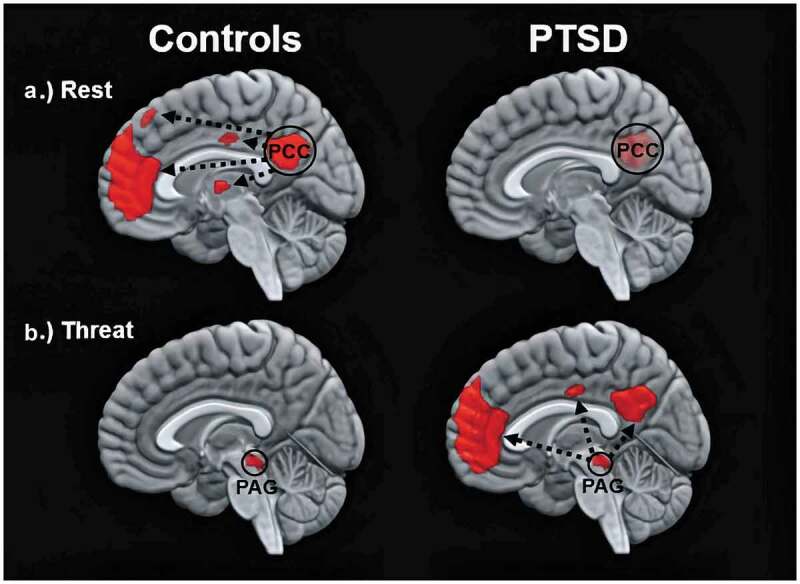
Trauma can profoundly affect the sense of self, where both cognitive and somatic disturbances to the sense of self are reported clinically by individuals with posttraumatic stress disorder (PTSD). These disturbances are captured eloquently by clinical accounts, such as, 'I do not know myself anymore,' 'I will never be able to experience normal emotions again,' and, 'I feel dead inside.' Self-related thoughts and experiences are represented neurobiologically by a large-scale, cortical network located along the brain's mid-line and referred to as the default mode network (DMN). Recruited predominantly during rest in healthy participants, the DMN is also active during self-referential and autobiographical memory processing - processes which, collectively, are thought to provide the foundation for a stable sense of self that persists across time and may be available for conscious access. In participants with PTSD, however, the DMN shows substantially reduced resting-state functional connectivity as compared to healthy individuals, with greater reductions associated with heightened PTSD symptom severity. Critically, individuals with PTSD describe frequently that their traumatic experiences have become intimately linked to their perceived sense of self, a perception which may be mediated, in part, by alterations in the DMN. Accordingly, identification of alterations in the functional connectivity of the DMN during rest, and during subliminal, trauma-related stimulus conditions, has the potential to offer critical insight into the dynamic interplay between trauma- and self-related processing in PTSD. Here, we discuss DMN-related alterations during these conditions, pointing further towards the clinical significance of these findings in relation to past- and present-centred therapies for the treatment of PTSD.
Overview
The claims and statistics of this paper haven’t been checked yet.
Free: it reads the open-access text and checks the first 5 claims that cite a source we can check. Create a free account to check every claim.
Integrity signals
Registry
Cites
Statistics
Figures
Verification
Claims the paper makes
The claims and statistics of this paper haven’t been checked yet.
Free: it reads the open-access text and checks the first 5 claims that cite a source we can check. Create a free account to check every claim.
Claims other papers make about this one
Each is checked against this paper’s own text: does it say what the citing paper says it does?
The source backs part of the claim, not all of it — or backs it for a different population, condition or comparison.
In the citing paper
“These experiences that reduce anxiety, reconfigure the sense of self in community and disengage loops of stress-evoking activation typically hidden below the level of awareness have also promoted the recent cultural selection of trance-inducing somatic and psychedelic therapies as break-through treatments for even the most intractable cases of severe psychological trauma (Lanius et al. 2020;”
From Cultural Evolution of Religion, Spirituality and Ritual: Impacts On Human Cooperation (2024) · cites this paper as Lanius et al. 2020
Experimental — accuracy not yet measuredThe source backs part of the claim, not all of it — or backs it for a different population, condition or comparison.
In the citing paper
“These individuals may seek to engage the SN and thus gain access to the DMN through intense or primally threatening somatic sensory experiences, such as car racing, extreme sports, and promiscuous sex ( van der Kolk, 1989 , 2015 ; Lanius et al., 2020 ).”
From The brain-body disconnect: A somatic sensory basis for trauma-related disorders (2022) · cites this paper as Lanius et al., 2020
Experimental — accuracy not yet measuredIn the citing paper
“Further, chronic childhood traumatization may alter development of SN and DMN circuitry, where highly activating or threatening sensory stimuli feel familiar or normal ( Lanius et al., 2020 ).”
From The brain-body disconnect: A somatic sensory basis for trauma-related disorders (2022) · cites this paper as Lanius et al., 2020
Self-check
Percentages, sums and reported differences re-computed from the paper’s own numbers.
The self-check needs the paper’s full text.
Citations
Cites
Diagnostic and Statistical Manual of Mental Disorders
American Psychiatric Association (2013) · doi:10.1176/appi.books.9780890425596 · Cited by 116,369
Diagnostic and Statistical Manual of Mental Disorders, 5th ed.
Carter, M. J. (2014) · Therapeutic Recreation Journal · Cited by 15,169
Ultrastructural Characterization of the Lower Motor System in a Mouse Model of Krabbe Disease
Cappello, V., Marchetti, L., Parlanti, P., Landi, S., Tonazzini, I., Cecchini, M., Piazza, V., & Gemmi, M. (2016) · Scientific Reports · doi:10.1038/s41598-016-0001-8 · Cited by 13,097
The Brain's Default Network: Anatomy, Function, and Relevance to Disease
Buckner, R. L., Andrews‐Hanna, J. R., & Schacter, D. L. (2008) · Annals of the New York Academy of Sciences · doi:10.1196/annals.1440.011 · Cited by 9,761 · cited 1×
“…imagery processes allow a memory to be re-experienced by recalling its more salient characteristics (i.e. emotional, sensory) – a process mediated by the medial-temporal subsystem (along with the posterior parietal cortex) (Buckner et al., 2008; Kim, 2012; Philippi, Tranel, Duff, & Rudrauf, 2013).”
BackgroundFunctional connectivity in the resting brain: a network analysis of the default mode hypothesis
Greicius, M. D., Krasnow, B., Reiss, A. L., & Menon, V. (2003) · Proceedings of the National Academy of Sciences · doi:10.1073/pnas.0135058100 · Cited by 6,358
Tulving, E. (1985) · Canadian Psychology / Psychologie canadienne · doi:10.1037/h0080017 · Cited by 4,638 · cited 2×
“self across time, occasionally referred to as ‘autonoetic consciousness’ (Fransson, 2005; Piolino et al., 2006; Tulving, 1985), where self-relevant information and events associate to produce our sense of self”
BackgroundThe construction of autobiographical memories in the self-memory system
Conway, M. A., & Pleydell-Pearce, C. W. (2000) · Psychological Review · doi:10.1037/0033-295x.107.2.261 · Cited by 4,089 · cited 1×
“…the self across time, occasionally referred to as ‘autonoetic consciousness’ (Fransson, 2005; Piolino et al., 2006; Tulving, 1985), where self-relevant information and events associate to produce our sense of self (Conway & Pleydell-Pearce, 2000; Levine, Svoboda, Hay, Winocur, & Moscovitch, 2002).”
BackgroundThe brain's default mode network
Raichle, M. E. (2015) · Annual Review of Neuroscience · doi:10.1146/annurev-neuro-071013-014030 · Cited by 3,904 · cited 2×
“…body of evidence suggests that self-referential processes, as well as past- and future-related autobiographical memory processing, are facilitated by a large-scale, intrinsic network known as the default mode network (DMN) (Greicius, Krasnow, Reiss, & Menon, 2003; for a review, see Raichle, 2015).”
BackgroundDevelopment, reliability, and validity of a dissociation scale
BERNSTEIN, E. M., & PUTNAM, F. W. (1986) · The Journal of Nervous and Mental Disease · doi:10.1097/00005053-198612000-00004 · Cited by 3,793 · cited 1×
“…like, ‘I feel dead inside,’ ‘I feel as if I am outside my body,’ ‘I feel like my body does not belong to me,’ or, ‘I feel like there is no boundary around my body’ (Bernstein & Putnam, 1986; Foa et al., 1999; Briere & Runtz, 2002; Frewen & Lanius, 2015; for a review, see Frewen et al., 2008, 2020).”
BackgroundBuckner, R. L., & Carroll, D. C. (2007) · Trends in Cognitive Sciences · doi:10.1016/j.tics.2006.11.004 · Cited by 2,691
Cited by
The brain-body disconnect: A somatic sensory basis for trauma-related disorders
Kearney, B. E., & Lanius, R. A. (2022) · Frontiers in Neuroscience · doi:10.3389/fnins.2022.1015749 · Cited by 154
“The SN also plays a role in adaptive switching between the central executive network (CEN), involved in focused attentional states, and the default mode network (DMN), active during introspective self-referential thought and social emotional processes (Amodio and Frith, 2006; Sridharan et al., 2008; Menon and Uddin, 2…”
BackgroundInfluentialSelf-citationBrewin, C. R., Atwoli, L., Bisson, J. I., Galea, S., Koenen, K. C., & Lewis‐Fernández, R. (2025) · World Psychiatry · doi:10.1002/wps.21269 · Cited by 142
“Disturbances in the sense of self, such as feeling the self to be fragmented or non-existent, have been linked to altered functioning in the default mode network 248 .”
The memory and identity theory of ICD-11 complex posttraumatic stress disorder.
Hyland, P., Shevlin, M. E., & Brewin, C. R. (2023) · Psychological Review · doi:10.1037/rev0000418 · Cited by 107
“PTSDs are associated with reduced functional connectivity in this network when it is at rest, as well as greater connectivity with the periaqueductal gray (PAG) in response to subliminal trauma cues (Akiki et al., 2018; Lanius et al., 2020).”
Nicholson, A. A., Ros, T., Densmore, M., Frewen, P., Neufeld, R. W. J., Théberge, J., Jetly, R., & Lanius, R. A. (2020) · NeuroImage Clinical · doi:10.1016/j.nicl.2020.102490 · Cited by 92
“…negative selfreferential thoughts, as well as to altered social cognition and autobiographical memory in the aftermath of trauma (Bluhm et al., 2009; Daniels et al., 2010; Van der Kolk, 2014; Tursich et al., 2015b; Akiki et al., 2017; Fenster et al., 2018; Frewen et al., 2020; Lanius et al., 2020).”
BackgroundSelf-citationNicholson, A. A., Siegel, M., Wolf, J., Narikuzhy, S., Roth, S. L., Hatchard, T., Lanius, R. A., Schneider, M. A., Lloyd, C., McKinnon, M. C., et al. (2022) · European Journal of Psychotraumatology · doi:10.1080/20008198.2021.2002572 · Cited by 66
“In parallel, traumatic events and chronic stress can profoundly impact the sense-of-self (Lanius et al., 2020).”
BackgroundSelf-citationLieberman, J. M., Rabellino, D., Densmore, M., Frewen, P., Steyrl, D., Scharnowski, F., Théberge, J., Neufeld, R. W. J., Schmahl, C. G., Jetly, R., et al. (2023) · Brain and Behavior · doi:10.1002/brb3.2883 · Cited by 53
“…that individuals living with PTSD can often report feeling as though their sense-of-self is inextricably fused with their experiences of trauma (Fenster et al., 2018; Frewen et al., 2011; Lanius et al., 2020; Liberzon & Abelson, 2016; Terpou et al., 2019; Terpou et al., 2020; Thome et al., 2020).”
BackgroundSelf-citationNicholson, A. A., Densmore, M., Frewen, P., Neufeld, R. W. J., Théberge, J., Jetly, R., Lanius, R. A., & Ros, T. (2023) · Brain Communications · doi:10.1093/braincomms/fcad068 · Cited by 49
“72 Furthermore, it has been suggested that hypoactive resting-state alpha is associated with disrupted E/I balance and DMN functioning 71 at rest in PTSD. 31,47,52,70 Indeed, using high-density EEG source analyses, alpha-rhythm reductions have been observed previously within the main hubs of the…”
Self-citationToward staging differentiation for posttraumatic stress disorder treatment
Nijdam, M. J., Vermetten, E. H. G. J. M., & McFARLANE, A. C. (2022) · Acta Psychiatrica Scandinavica · doi:10.1111/acps.13520 · Cited by 47
“In addition, self-referential processes, such as gaining insight and drawing inferences from one's own and others' emotional state, experiencing an embodied sense of self, and a continued experience of the self across time, have also been attributed mainly to the default mode network.(104) Resting-state functional con…”
BackgroundFord, J. D. (2021) · Journal of Child & Adolescent Trauma · doi:10.1007/s40653-021-00415-4 · Cited by 46
“, 2020), and associated alterations in brain network connectivity (Lanius et al., 2020), are operationalized as a view of oneself as irreparably damaged and defective (Herman, 1992).”
BackgroundReward Processing and Circuit Dysregulation in Posttraumatic Stress Disorder
Lokshina, Y., Nickelsen, T., & Liberzon, I. (2021) · Frontiers in Psychiatry · doi:10.3389/fpsyt.2021.559401 · Cited by 43
Kearney, B. E., Terpou, B. A., Densmore, M., Shaw, S. B., Théberge, J., Jetly, R., McKinnon, M. C., & Lanius, R. A. (2023) · NeuroImage: Clinical · doi:10.1016/j.nicl.2023.103426 · Cited by 33
Self-citationNicholson, A. A., Rabellino, D., Densmore, M., Frewen, P., Steyrl, D., Scharnowski, F., Théberge, J., Neufeld, R. W. J., Schmahl, C. G., Jetly, R., et al. (2021) · Brain and Behavior · doi:10.1002/brb3.2441 · Cited by 39
Self-citationPerkins, D., Ruffell, S., Day, K., Rubiano, D. P., & Sarris, J. J. (2023) · Frontiers in Neuroscience · doi:10.3389/fnins.2022.879221 · Cited by 54
Chaposhloo, M., Nicholson, A. A., Becker, S., McKinnon, M. C., Lanius, R. A., Shaw, S. B., & Initiative, A. D. N. (2023) · NeuroImage Clinical · doi:10.1016/j.nicl.2023.103417 · Cited by 35
Self-citationSelf-discontinuity in behavioral addictions: A psychodynamic framework
Santoro, G., Musetti, A., Costanzo, A., & Schimmenti, A. (2025) · Addictive Behaviors Reports · doi:10.1016/j.abrep.2025.100601 · Cited by 29
“…representation and regulation (Dvir et al., 2014; Gruhn & Compas, 2020), insecurity in attachment relationships (Midolo et al., 2020; Schimmenti & Bifulco, 2015), maladaptive personality functioning (Granieri et al., 2018), and disturbances in the sense of self (Lanius et al., 2020; Schore, 2002).”
Lieberman, J. M., Rabellino, D., Densmore, M., Frewen, P., Steyrl, D., Scharnowski, F., Théberge, J., Hosseini‐Kamkar, N., Neufeld, R. W. J., Jetly, R., et al. (2023) · Frontiers in Neuroscience · doi:10.3389/fnins.2023.1229729 · Cited by 21
Self-citationHyperexcitability: From Normal Fear to Pathological Anxiety and Trauma
Rosen, J. B., & Schulkin, J. A. (2022) · Frontiers in Systems Neuroscience · doi:10.3389/fnsys.2022.727054 · Cited by 25
Rabellino, D., Thome, J., Densmore, M., Théberge, J., McKinnon, M. C., & Lanius, R. A. (2022) · The Cerebellum · doi:10.1007/s12311-022-01467-4 · Cited by 21
“Specifically, a significant reduction of functional connectivity within the DMN at rest has been postulated to be associated with a disruption of the sense of self as a consequence of psychological trauma [62].”
BackgroundSelf-citationChildhood psychological maltreatment, sense of self, and PTSD symptoms in emerging adulthood
Watts, J. R., Lazzareschi, N. R., Liu, Y., & O’Sullivan, D. (2022) · Journal of Counseling & Development · doi:10.1002/jcad.12455 · Cited by 22
Acevedo, E. C., Uhler, S., White, K. P., & Al-Shawaf, L. (2024) · Journal of Psychoactive Drugs · doi:10.1080/02791072.2024.2314729 · Cited by 20
“Interestingly, negative self-referential beliefs are involved in a broad range of psychopathology (Lanius, Terpou, and McKinnon 2020; Lin, Callahan, and Moser 2018; Nejad, Fossati, and Lemogne 2013).”
Massullo, C., Imperatori, C., Fallani, F. D. V., Ardito, R. B., Adenzato, M., Palmiero, L., Carbone, G. A., & Farina, B. (2022) · Scientific Reports · doi:10.1038/s41598-022-08685-0 · Cited by 19
Malandrone, F., Catrambone, V., Carletto, S., Rossini, P. G., Moja, M. C., Oliva, F., Pagani, M., Valenza, G., & Ostacoli, L. (2024) · Journal of Affective Disorders · doi:10.1016/j.jad.2024.01.172 · Cited by 16
“…(Felmingham et al., 2008) as has the midbrain periaqueductal grey (PAG) (Rabellino et al., 2017; Terpou et al., 2020) considering its functional connectivity to the default mode network (DMN), mediating high-order, self-related processing and innate and defensive responses (Lanius et al., 2020).”
Guyon, R., Fernet, M., Couture, S., Tardif, M., Cousineau, M., & Godbout, N. (2023) · Archives of Sexual Behavior · doi:10.1007/s10508-023-02693-5 · Cited by 23
Schalkwijk, F. W., Someren, E. J. W. V., Nicolai, N. J., Uijttewaal, J. L., & Wassing, R. (2023) · Frontiers in Human Neuroscience · doi:10.3389/fnhum.2023.990581 · Cited by 16
“Usually, the personality of persons with many ACEs is characterized by feelings of shame, powerlessness, and lack of a sense of agency (Lanius et al., 2020).”
BackgroundThe role of early attachment experiences in modulating defensive peripersonal space
Fossataro, C., Adenzato, M., Bruno, M., Fontana, E., Garbarini, F., & Ardito, R. B. (2023) · Scientific Reports · doi:10.1038/s41598-023-30985-2 · Cited by 13
Trauma and the default mode network: review and exploratory study
Chan, A., Harvey, P. D., Hernandez-Cardenache, R., Alperin, N. J., Lee, S. H., Hunt, C., Petersen, N., Northoff, G., Robertson, N., Ouyang, J., et al. (2024) · Frontiers in Behavioral Neuroscience · doi:10.3389/fnbeh.2024.1499408 · Cited by 18
Agathos, J. A., Putica, A., Steward, T., Felmingham, K. L., O'Donnell, M. L., Davey, C. G., & Harrison, B. J. (2024) · Psychiatry Research Neuroimaging · doi:10.1016/j.pscychresns.2024.111888 · Cited by 12
Transforming Trauma through an Arts Festival: A Psychosocial Case Study
Bennett, J., Kenning, G., Gitau, L. W., Moran, R. J., & Wobcke, M. (2023) · Social Sciences · doi:10.3390/socsci12040249 · Cited by 10
Self-construal modulates default mode network connectivity in refugees with PTSD
Liddell, B. J., Das, P., Malhi, G. S., Jobson, L., Lau, W., Felmingham, K. L., Nickerson, A., Askovic, M., Aroche, J., Coello, M., et al. (2024) · Journal of Affective Disorders · doi:10.1016/j.jad.2024.06.009 · Cited by 12
Thome, J., Densmore, M., Terpou, B. A., Théberge, J., McKinnon, M. C., & Lanius, R. A. (2022) · Frontiers in Behavioral Neuroscience · doi:10.3389/fnbeh.2022.862192 · Cited by 12
“Critically, the aforementioned interaction profile between subcortical and cortical brain regions has recently been extended to include deep-layer brain regions involved in arousal and innate reflexive function (Harricharan et al., 2016; see also Holmes et al., 2018; Olive et al., 2018; Rabellino et al., 2018a, 2019;…”
BackgroundSelf-citationChaudhary, S., Hu, S., Hu, K., Dominguez, J. C., Chao, H. H., & Li, C. R. (2023) · Journal of Affective Disorders Reports · doi:10.1016/j.jadr.2023.100646 · Cited by 16
“Here, we observed heightened anxiety-linked amygdala connectivity both with DMN and SN regions during rest, likely suggesting a more entrenched state of stress (Lanius et al., 2020).”
BackgroundBrain connectivity disruptions in PTSD related to early adversity: a multimodal neuroimaging study
Nkrumah, R. O., Demirakça, T., von Schröder, C., Zehirlioğlu, L., Valencia, N., Grauduszus, Y., Vollstädt‐Klein, S., Schmahl, C. G., & Ende, G. (2024) · European Journal of Psychotraumatology · doi:10.1080/20008066.2024.2430925 · Cited by 13
“This variability may be influenced by factors such as trauma type, severity, chronicity, and study methodology (Lanius et al., 2020; Wang et al., 2016).”
InfluentialBroken Narratives by Stressful Life Events: An Intervention for Narrative Identity Reconstruction
Yusefzade, I., Hosseinian, S., Zamanshoar, E., & Soheili, F. (2023) · Journal of Contemporary Psychotherapy · doi:10.1007/s10879-023-09608-4 · Cited by 13
Valencia, N., Seeger, F. R., Seitz, K. I., Carius, L., Nkrumah, R. O., Schmitz, M., Bertsch, K., & Herpertz, S. C. (2024) · Journal of Psychiatric Research · doi:10.1016/j.jpsychires.2024.07.022 · Cited by 10
Leiderman, L. M., & Klein, R. H. (2021) · International Journal of Group Psychotherapy · doi:10.1080/00207284.2021.1991234 · Cited by 7
“…risk for the development of diagnosable psychological symptoms following trauma (Wortman & Silver, 1989), especially those with a personal history of mental illness such as PTSD or complex posttraumatic stress disorder (CPTSD) (Cloitre et al., 2020; Frewen et al., 2019; Lanius et al., 2020).”
BackgroundRudstam, G., Elofsson, U. O. E., Söndergaard, H. P., & Beck, B. D. (2023) · European Journal of Trauma & Dissociation · doi:10.1016/j.ejtd.2023.100353 · Cited by 11
Cultural Evolution of Religion, Spirituality and Ritual: Impacts On Human Cooperation
McNamara, R. A. (2024) · KZfSS Kölner Zeitschrift für Soziologie und Sozialpsychologie · doi:10.1007/s11577-024-00937-3 · Cited by 6
“…the level of awareness have also promoted the recent cultural selection of trance-inducing somatic and psychedelic therapies as break-through treatments for even the most intractable cases of severe psychological trauma (Lanius et al. 2020; Chamberlin 2019; Chi and Gold 2020; Luoma et al. 2020).”
Smith, M. K., & Ferguson, H. J. (2024) · Cortex · doi:10.1016/j.cortex.2024.03.012 · Cited by 8
“…self-other distinction Differences in self-other distinction e and hence self-bias e have been associated with a number of more transient neuropsychological and psychiatric conditions, including depression, anxiety, stress, and post-traumatic stress disorder (Eddy, 2022; Lanius et al., 2020).”
Correa, R., Rodriguez, N., & Bortolaso, M. (2021) · European Journal of Trauma & Dissociation · doi:10.1016/j.ejtd.2021.100227 · Cited by 6
A Systematic and Meta-Analytical Review of Acceptance and Commitment Therapy for PTSD
Rehman, S., Ghazali, S. R., & Elklit, A. (2025) · Journal of Loss and Trauma · doi:10.1080/15325024.2025.2565354 · Cited by 12
“One of the key concepts used in the ACT is cognitive flexibility, as it allows individuals to adapt their behaviors and responses to different changes in the environment (Dajani & Uddin, 2015; Dochat et al., 2021; Lanius et al., 2020; Uddin, 2021; Zhang et al., 2017).”
The Emotional Aftermath of Surviving an Attempted Intimate Partner Homicide
Avieli, H. (2024) · Qualitative Health Research · doi:10.1177/10497323241245643 · Cited by 5
“…stress the formation of a divide between life “ before ” and “ after ” the violent incident are also consistent with trauma literature (Janoff-Bulman, 1992; Lanius et al., 2020) that often describes this rent in survivors ’ lives and underscores the dif fi culty of bridging these two parts of…”
Talabi, F. O., Okunade, J. K., Aiyesimoju, A. B., Bello, S. A., Adelabu, O. T., Nwokolo, P. N., & Gever, V. C. (2023) · Current Psychology · doi:10.1007/s12144-023-05296-4 · Cited by 10
“Generally, researchers (Frewen et al., 2020; Lanius et al., 2020) agree that PTSD symptoms are associated with exposure to potentially horrifying events.”
Stirling, J., Wallace, Z., James, A., Shackel, R., & Elliott, J. M. (2025) · Australian and New Zealand Continence Journal · doi:10.1071/cj24042 · Cited by 6
Strekalova, T. V., Вячеславовна, Г. А., Costa-Nunes, J. P., Litavrin, A., de Munter, J., Lyundup, A., Umriukhin, A., Proshin, A. T., Kalueff, A. V., Grünblatt, E., et al. (2025) · International Journal of Molecular Sciences · doi:10.3390/ijms26146627 · Cited by 7
“This suggests that rat exposure elevates nociception, consistent with prior research linking enhanced pain sensitivity to PTSD [86,87].”
Gerge, A., Rudstam, G., & Söndergaard, H. P. (2025) · Frontiers in Psychology · doi:10.3389/fpsyg.2025.1454483 · Cited by 8
“According to the important findings of Lanius et al. (2020), therapists need to know what kind of clients they are sitting with.”
InfluentialLanius, R. A., Frewen, P., Nicholson, A. N., & McKinnon, M. C. (2021) · European Journal of Psychotraumatology · doi:10.1080/20008198.2020.1866410 · Cited by 5
Self-citationMatsuyanagi, K. (2025) · Applied Psychophysiology and Biofeedback · doi:10.1007/s10484-025-09701-5 · Cited by 7
Putica, A., Agathos, J. A., & Felmingham, K. L. (2025) · Nature Reviews Psychology · doi:10.1038/s44159-025-00479-1 · Cited by 8
“…processing have also been investigated, with particularly robust findings associating PTSD with deficient engagement and connectivity of regions in the default-mode network 139,146–152 (a distributed intrinsic brain network with broad roles in internal self-related mental processes 153–155 ).”
Beyond the Medical Gaze: Practicing Psychologically Informed Healthcare
Morton, L. (2025) · Oxford University Press eBooks · doi:10.1093/9780197804995.001.0001 · Cited by 4
Spiritual Victimology: Basic Principles
Eytan, S., & Ronel, N. (2023) · International Journal of Offender Therapy and Comparative Criminology · doi:10.1177/0306624x231170111 · Cited by 3
“However, perception of the self is distorted in the wake of traumatic events, especially when these occur at an early age (Lanius et al., 2020).”
Les altérations de la mémoire dans le trouble de stress post-traumatique
Silva, L. D. C., Laisney, M., Charretier, L., Eustache, F., & Quinette, P. (2023) · Biologie Aujourd hui · doi:10.1051/jbio/2023018 · Cited by 6
Experiences of trauma among persons living with psychosis in KwaZulu Natal, South Africa
Ntlantsana, V., Donda, M. B., Maru, M., Wambua, G. N., Chhagan, U., Paruk, S., Chiliza, B., & Ng, L. C. (2024) · PLOS mental health. · doi:10.1371/journal.pmen.0000070 · Cited by 3
Learning a Lesson: Spiritual Attributions of Sexual Trauma and Revictimization
Eytan, S., & Ronel, N. (2023) · International Journal of Offender Therapy and Comparative Criminology · doi:10.1177/0306624x231165423 · Cited by 4
“following traumatic events the perception of the self is distorted, especially when these occur at an early age (Lanius et al., 2020).”
BackgroundTrauma informed career counseling for young adults with mental health conditions
Lu, W., Yanos, P. T., Oursler, J. D., Beninato, J., Topitzes, D., Banko, A., Chung, W. E., & Stone, B. (2024) · Journal of Employment Counseling · doi:10.1002/joec.12236 · Cited by 3
Cheng, C. C. C., Tsang, M. H. L., Han, M., Zhang, J., Maes, M. H. J., Klugah‐Brown, B., Bore, M. C., & Becker, B. (2025) · Psychological Medicine · doi:10.1017/s0033291725102833 · Cited by 6
“Due to its core function and possibly causal contribution to free but not cued AM (Bonnici et al., 2018; Lanius et al., 2020), alterations in the DMN may reflect impaired-free AM recall in depression.”
Cognitive restructuring and thalamocortical circuit alterations in post-traumatic stress disorder
Agathos, J. A., Harrison, B. J., Felmingham, K. L., Davey, C. G., Bryant, R. A., Korgaonkar, M. S., Kung, P., Ince, S., Moffat, B. A., Glarin, R. K., et al. (2026) · Nature Mental Health · doi:10.1038/s44220-026-00614-8 · Cited by 3
Eytan, S., & Flint, T. (2023) · Springer eBooks · doi:10.1007/978-3-031-25924-1_34 · Cited by 3
Giving Voice to Women with Substance Use Disorder: Findings from Expressive Writing About Trauma
Jallo, N., Kinser, P. A., Eglovitch, M., Worcman, N., Webster, P., Alvanzo, A. A. H., Svikis, D. S., & Meshberg‐Cohen, S. (2024) · Women s Health Reports · doi:10.1089/whr.2023.0173 · Cited by 6
The phenomenology of dwelling in the past post-traumatic stress disorder & oppression
Walsh, E. K. (2024) · Phenomenology and the Cognitive Sciences · doi:10.1007/s11097-024-09990-x · Cited by 4
Jane, K., Gallagher, K., Livermore, P., Shoemark, H., & Robert, G. (2025) · Journal of Neonatal Nursing · doi:10.1016/j.jnn.2025.101674 · Cited by 2
Topel, M., & Ciccone, D. (2025) · European Journal of Psychotraumatology · doi:10.1080/20008066.2025.2572861 · Cited by 2
“Advances in psychotherapy have also explored the role of self-relatedness and identity reconstruction in alleviating PTSD symptoms, with research highlighting the involvement of the default mode network (DMN) (Ho et al., 2017; Lanius et al., 2020).”
Putting the Amygdala and Hippocampus in PTSD to Rest
Frewen, P., & Nicholson, A. A. (2026) · American Journal of Psychiatry · doi:10.1176/appi.ajp.20260188 · Cited by 2
Childhood Trauma, Cognition, and Eating Psychopathology: A Network Analysis
Pasquariello, K., Gansler, D. A., Ray, S., Pietrzykowski, M. O., Pulsifer, M. B., & Ralph‐Nearman, C. (2025) · Healthcare · doi:10.3390/healthcare13060630 · Cited by 2
“One pathway through which childhood trauma exposure may be related both to maladaptive eating patterns and cognitive problems is the sense of self, a characteristic on which trauma exposure can exert profound and lasting impacts [9].”
Network Specificity in Predicting Childhood Trauma Characteristics Using Effective Connectivity
Zhang, S., Zheng, W., Li, Z., & Wu, H. (2025) · ALPHA PSYCHIATRY · doi:10.31083/ap43988 · Cited by 2
“In PTSD, reduced FC within the DMN may lead to self-perception disturbance and link traumatic experiences to the sense of self [35].”
Lotfinia, S., Mayeli, S., Eiliaei, S., Shams, J., & Quidé, Y. (2026) · Neuroscience & Biobehavioral Reviews · doi:10.1016/j.neubiorev.2026.106699 · Cited by 1
Good Bedside Manner: Relational Safety In Healthcare
Morton, L. (2025) · Oxford University Press eBooks · doi:10.1093/9780197804995.003.0003 · Cited by 1
Rethinking chronic pain: a dissociative framework for psychodynamic practice
Ho, T., Ryan, M., & Dong, S. (2025) · Frontiers in Psychology · doi:10.3389/fpsyg.2025.1690309 · Cited by 3
“In Borderline Personality Disorder, such disruption manifests as an unstable, incoherent self—experienced as alien, shifting, and painfully fragmented (Lanius et al., 2020).”
Jetly, R., Frewen, P., Lieberman, J. M., Kearney, B. E., Al-Shamali, H. F., Bhat, V., Lanius, R. A., & Nicholson, A. A. (2026) · Journal of Military Veteran and Family Health · doi:10.3138/jmvfh-2025-0024 · Cited by 2
Self-citationThe heart of the self: An interoceptive perspective on the psychotherapeutic process
Hauke, G., & Critchley, H. (2026) · Consciousness and Cognition · doi:10.1016/j.concog.2026.104032 · Cited by 3
Taren, A. A., & Paulus, M. P. (2026) · European Journal of Psychotraumatology · doi:10.1080/20008066.2026.2636453 · Cited by 1
“Previous studies have shown reduced DMN connectivity in individuals with PTSD, with greater reductions correlating with more severe symptoms (Lanius et al., 2020); these PTSD-associated alterations in DMN appear to be complex, with one study suggesting that this is limited to the medial temporal…”
Sheynin, J. (2026) · Brain Connectivity · doi:10.1177/21580014261479966 · Cited by 1
Park, S. M., Lee, J., Choi, J., & Jung, H. Y. (2024) · Journal of Psychiatric Research · doi:10.1016/j.jpsychires.2024.04.009 · Cited by 1
Copeland, C., Reynolds, A. L., & Ackley, J. L. (2024) · Journal of Intercollegiate Sport · doi:10.17161/jis.v17i2.20761 · Cited by 1
“Since both self-perception and social support are critical to athletic identity (Schutte & McNeil, 2015) and impacted by traumatic experiences (Lanius et al, 2020), there are valid reasons to examine whether trauma influences athletic identity development.”
BackgroundGerge, A. (2024) · European Journal of Trauma & Dissociation · doi:10.1016/j.ejtd.2024.100442 · Cited by 2
Eye Movement Desensitization and Reprocessing in der Behandlung psychosomatischer Störungsbilder
Vock, S., & Tesarz, J. (2025) · Die Psychotherapie · doi:10.1007/s00278-024-00758-x · Cited by 1
Moore, T., & McDougall, S. (2025) · Australian Journal of Social Issues · doi:10.1002/ajs4.70072 · Cited by 1
Gerge, A. (2025) · European Journal of Trauma & Dissociation · doi:10.1016/j.ejtd.2025.100579 · Cited by 2
Perkins, D., Ruffell, S., Day, K., Pinzon, D., & Sarris, J. J. (2022) · doi:10.31219/osf.io/e5tjc · Cited by 1
Cheng, C. C. C., Tsang, H. L. M., Han, M., Zhang, J., Maes, M. H. J., Klugah‐Brown, B., Bore, M. C., & Becker, B. (2025) · medRxiv · doi:10.1101/2025.04.06.25325353 · Cited by 1
Trauma-Informed Leadership in the 21st Century
Elliott, K. (2021) · Advances in educational technologies and instructional design book series · doi:10.4018/978-1-7998-6967-2.ch018
Trauma-Informed Leadership in the 21st Century
Elliott, K. (2022) · IGI Global eBooks · doi:10.4018/978-1-6684-6315-4.ch027
Neurofeedback and developmental trauma: theory and practice
Fisher, S. F. (2023) · Elsevier eBooks · doi:10.1016/b978-0-323-89827-0.00012-7
Fuchshuber, J., Oberlerchner, H., & Löffler‐Stastka, H. (2023) · psychopraxis neuropraxis · doi:10.1007/s00739-023-00950-9
“Empirische Daten zeigen, dass trau-matische Erfahrungen zu einer lang an-haltenden Verringerung der funktionel-len Konnektivität innerhalb des DMN füh-ren [46], was mit dem verstärkten Einsatz primitiver Abwehrmechanismen im Zusammenhang mit traumatischen Erfah-rungen korrespondiert.”
BackgroundTraversing the Depths: Unraveling the Threads of Trauma in Ta-Nehisi Coates’ The Water Dancer
Zafar, L., Hafeez, S., & Syed, Y. (2023) · PAKISTAN LANGUAGES AND HUMANITIES REVIEW · doi:10.47205/plhr.2023(7-iv)38
McBride, H. L., & Joseph, A. J. (2024) · Counselling Psychology Quarterly · doi:10.1080/09515070.2024.2354272 · Cited by 1
“These findings confirm the existing research literature which has identified that changes to a person’s sense of self, including changing reflections on one’s past, are features of significantly stressful or traumatic life events (Lanius, Terpou, & McKinnon, 2020).”
Kendiliğin Gelişimi ve Nörobiyolojisi
Yerebakan, Ş. (2024) · Türkiye Bütüncül Psikoterapi Dergisi · doi:10.56955/bpd.1485946 · Cited by 2
Nicholson, A. A., Ros, T., Jetly, R., Hosseiny, F., & Lanius, R. A. (2024) · Journal of Military Veteran and Family Health · doi:10.3138/jmvfh-0718-0035
Self-citationNicholson, A. A., Ros, T., Jetly, R., Hosseiny, F., & Lanius, R. A. (2024) · Journal of Military Veteran and Family Health · doi:10.3138/jmvfh-0718-0014 · Cited by 18
Self-citationRoeckner, A. R. (2024) · Biological Psychiatry Cognitive Neuroscience and Neuroimaging · doi:10.1016/j.bpsc.2024.08.012
EMDR Therapy and the Working Memory Hypothesis
Smith, C. S., & Farrell, D. P. (2024) · Oxford University Press eBooks · doi:10.1093/oxfordhb/9780192898357.013.46
Farina, B. (2024) · QUADERNI DI PSICOTERAPIA COGNITIVA · doi:10.3280/qpc54-2024oa18656
Mohammadpour, F., Mohajerin, B., Kianimoghadam, A., & Yaztappeh, J. S. (2025) · International journal of high risk behaviors and addiction · doi:10.5812/ijhrba-154506 · Cited by 1
Scrivani, K., & Fu, J. S. (2025) · Health Communication · doi:10.1080/10410236.2025.2490315
“While this research shows that many are hesitant to construct identities that include PTSD due to issues with their sense of self (Lanius et al., 2020) and fear of adverse reactions (Guay et al., 2006), it does not examine how these individuals chose to construct their identity upon the disclosure…”
Steinke, H. R., & Meshelemiah, J. C. A. (2025) · Studies in Clinical Social Work Transforming Practice Education and Research · doi:10.1080/28376811.2025.2525416
Levin, M. B. (2025) · Psychoanalytic Inquiry · doi:10.1080/07351690.2025.2541554
“Notably, we see deactivation of the DMN in the highly dysregulated conditions of addiction (Zhang & Volkow, 2019), PTSD 2 (Lanius et al., 2020), and probably complicated grief (Mwilambwe-Tshilobo et al., 2019).”
Smith, D., Zepp, C., & Memmert, D. (2025) · Case Studies in Sport and Performance Psychology · doi:10.1123/csspp.2024-0036
The Cartesian Problem in Healthcare
Morton, L. (2025) · Oxford University Press eBooks · doi:10.1093/9780197804995.003.0002
Morton, L. (2025) · Oxford University Press eBooks · doi:10.1093/9780197804995.002.0008
Morton, L. (2025) · Oxford University Press eBooks · doi:10.1093/9780197804995.002.0009
Metadata
- Authors
- Lanius, R. A., Terpou, B. A., & McKinnon, M. C.
- Affiliations
- Western University (CA)
- Homewood Research Institute (CA)
- Corresponding author
- Lanius, Ruth A.
- Venue
- European Journal of Psychotraumatology
- Publisher
- Informa UK Limited
- Published
- 2020-10-23
- Volume
- 11
- Issue
- 1
- Pages
- 1807703-1807703
- ISSN
- 2000-8066 (ISSN-L)
- PMC
- PMC7594748
- OpenAlex
- W3094488261
- Cited by
- 164
- References
- 105
- Citations by year
- 2026: 32 · 2025: 66 · 2024: 25 · 2023: 23 · 2022: 10 · 2021: 7 · 2020: 1
- FWCI
- 4.10
- Type
- journal article
- Language
- en
- Open access
- gold
- doi.org
- Licence
- Locations
- European Journal of Psychotraumatology (publishedVersion, cc-by-nc)
- PubMed Central (publishedVersion, cc-by-nc)
- PubMed (publishedVersion)
- DOAJ (DOAJ: Directory of Open Access Journals) (submittedVersion, cc-by-sa)
- Funders
- The Canadian Institutes of Health Research (#365726)
- Canadian Institute for Military and Veterans Health Research (#W7714-145967/001/SV TA-27)
- Topics
- Social Sciences › Psychology › Clinical Psychology › Posttraumatic Stress Disorder Research
- Life Sciences › Neuroscience › Cognitive Neuroscience › Functional Brain Connectivity Studies
- Health Sciences › Medicine › Clinical Neurology › Traumatic Brain Injury Research
- Keywords
- post-traumatic stress disorder, default mode network, selfhood, resting-state functional connectivity, self-referential processing, autobiographical memory
About these checks
Registry, retraction, Cites and statistics results are computed, not judged, with one exception: a printed reference that no index lists is read once by a model before it counts as a citation error. Claims are extracted by a model and kept only when their quote appears verbatim in the text; each cited source is then checked, with a model’s help, for whether it says what the claim relies on. Those verdicts can be wrong — read the claim’s quote and the cited source before relying on one.
Statistics and arithmetic are recomputed, not judged.
Confidence bands are shown only for fields calibrated on our annotated test set. None is calibrated yet, so no band is shown.
What counts as a claim ›How we measure confidence ›How we check this ›
Are you an author, or do you see a problem with this page? Request a review
Data sources
Bibliographic data: Semantic Scholar, OpenAlex, Crossref.
Contains information from the Semantic Scholar Academic Graph Datasets, made available under the ODC Attribution License (ODC-BY 1.0).
Semantic Scholar’s data is described in: Kinney, R., et al. (2023). The Semantic Scholar Open Data Platform. arXiv:2301.10140.
