

Interferon-γ-induced activation of JAK1 and JAK2 suppresses tumor cell susceptibility to NK cells through upregulation of PD-L1 expression
Open accessThe DOI matches its Crossref record; 51 of the 51 references it cites were found in a registry or an index.
Abstract
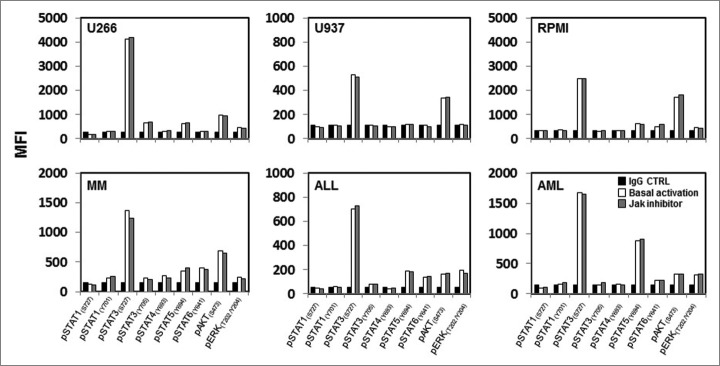
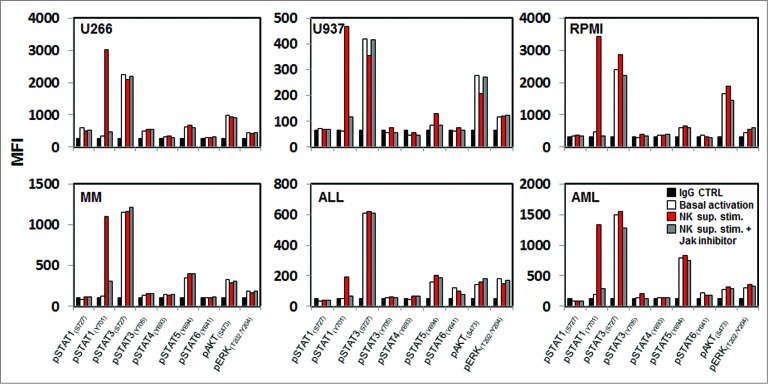
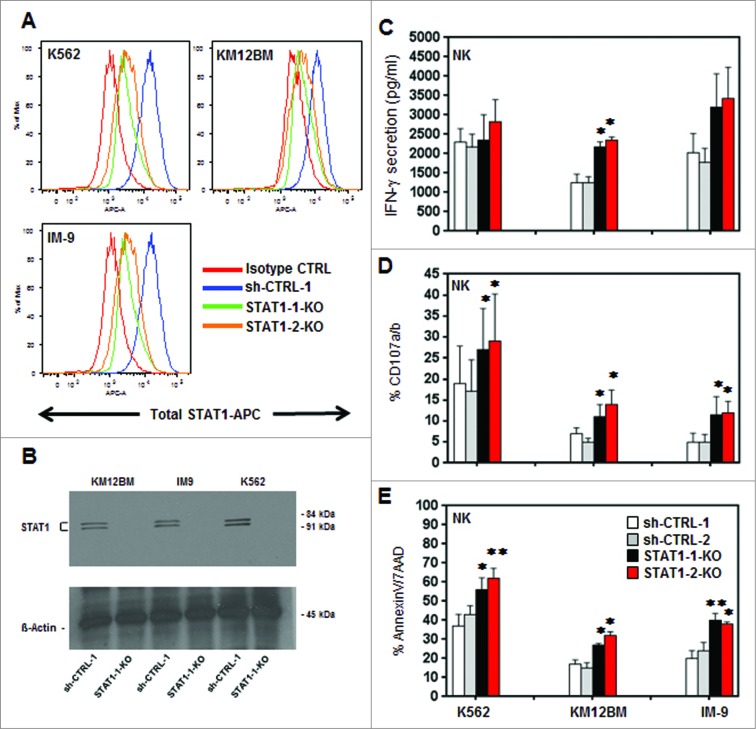
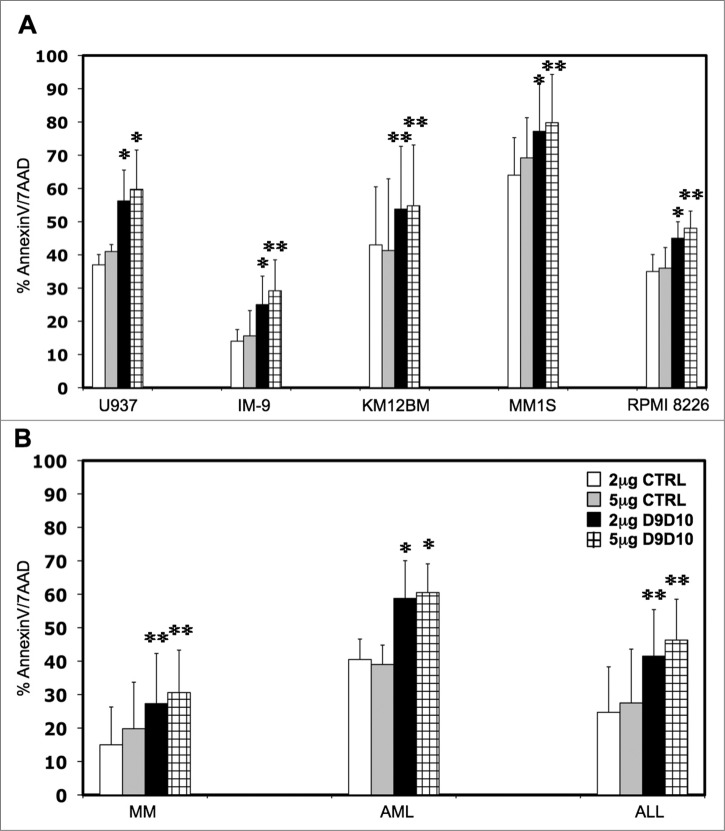
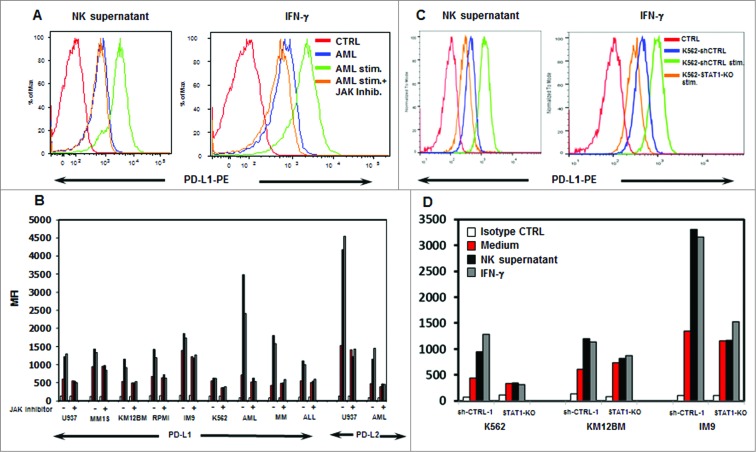
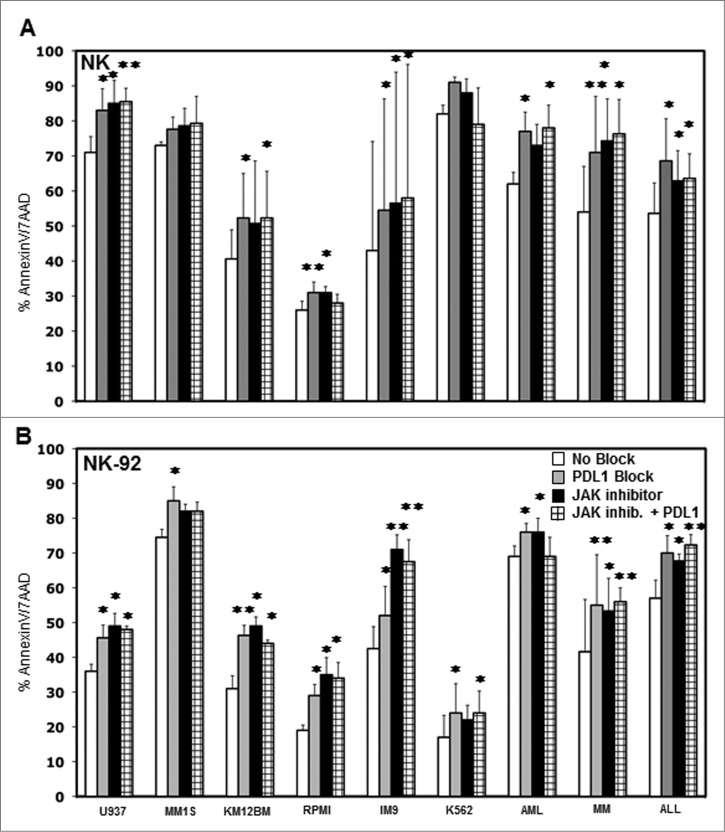
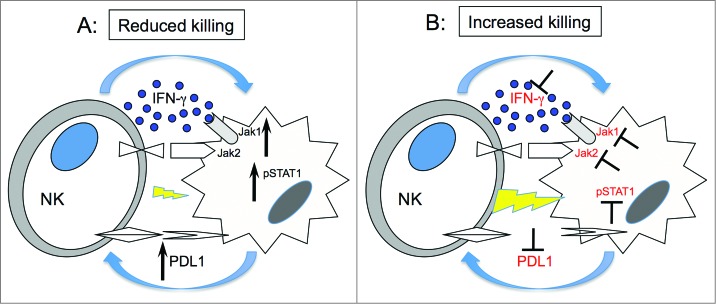
Inhibition of JAK1 or JAK2 in human tumor cells was previously shown to increase susceptibility of these cells to NK cell lysis. In the present study, we examined the cellular mechanisms that mediate this effect in hematopoietic tumor cell lines and primary tumor cells. Incubation of tumor cells with supernatant from activated NK cells or interferon-gamma (IFNγ)-induced activation of pSTAT1 and increased expression of PD-L1 without altering expression of other activating or inhibitory NK cell ligands. These functional effects were blocked by chemical JAK inhibition or shRNAs targeting JAK1, JAK2 or STAT1. Inhibition of IFNγ signaling also prevented the upregulation of PD-L1 and blocking PD-L1 resulted in increased tumor lysis by NK cells. These results show that NK cell activation and secretion of IFNγ results in activation of JAK1, JAK2 and STAT1 in tumor cells, resulting in rapid up-regulation of PD-L1 expression. Increased expression of PD-L1 results in increased resistance to NK cell lysis. Blockade of JAK pathway activation prevents increased PD-L1 expression resulting in increased susceptibility of tumor cells to NK cell activity. These observations suggest that JAK pathway inhibitors as well as PD-1 and PD-L1 antibodies may work synergistically with other immune therapies by preventing IFN-induced inhibition of NK cell-mediated tumor cell lysis.
Overview
The claims and statistics of this paper haven’t been checked yet.
Free: it reads the open-access text and checks the first 5 claims that cite a source we can check. Create a free account to check every claim.
Integrity signals
Registry
Cites
Statistics
Figures
Verification
Claims the paper makes
The claims and statistics of this paper haven’t been checked yet.
Free: it reads the open-access text and checks the first 5 claims that cite a source we can check. Create a free account to check every claim.
Claims other papers make about this one
Each is checked against this paper’s own text: does it say what the citing paper says it does?
The source backs part of the claim, not all of it — or backs it for a different population, condition or comparison.
In the citing paper
“Numerous studies have observed that exposure to interferon gamma (IFN γ ) rapidly induces PD-L1 expression both in cancer cell lines and in the tumor microenvironment [7-10].”
From Characterizing the molecular regulation of inhibitory immune checkpoints with multimodal single-cell screens (2021) · cites this paper as [10]
Experimental — accuracy not yet measured
Self-check
Percentages, sums and reported differences re-computed from the paper’s own numbers.
The self-check needs the paper’s full text.
Citations
Cites
Safety, activity, and immune correlates of anti–PD-1 antibody in cancer
Topalian, S. L., Hodi, F. S., Brahmer, J. R., Gettinger, S. N., Smith, D. C., McDermott, D. F., Powderly, J. D., Carvajal, R. D., Sosman, J. A., Atkins, M. B., et al. (2012) · New England Journal of Medicine · doi:10.1056/nejmoa1200690 · Cited by 12,628
Safety and activity of anti-PD-L1 antibody in patients with advanced cancer
Brahmer, J. R., Tykodi, S. S., Chow, L. Q. M., Hwu, W.-J., Topalian, S. L., Hwu, P., Drake, C. G., Camacho, L. H., Kauh, J., Odunsi, K., et al. (2012) · New England Journal of Medicine · doi:10.1056/nejmoa1200694 · Cited by 7,945 · cited 1×
“Inhibition of the PD-1 pathway enhances T cell tumor immunity and clinical trials in several diseases using either anti-PD-L1 or anti-PD-1 antibodies have shown clinical efficacy.(47,48) Although the role of PD-1 in the negative regulation of T cell immunity is well established, much less is known about PD-1/PD-L1 and…”
BackgroundDarnell, J. E., Kerr, L. M., & Stark, G. R. (1994) · Science · doi:10.1126/science.8197455 · Cited by 6,080 · cited 1×
“JAK kinases are associated with cytokine receptors and ligand binding of these receptors rapidly induces JAK phosphorylation, which in turn activates STAT transcription factors.(11) JAK kinases have also been reported to activate other kinases such as PI3K/AKT and ERK.”
BackgroundFreeman, G. J., Long, A. J., Iwai, Y., Bourque, K., Chernova, T., Nishimura, H., Fitz, L. J., Malenkovich, N., Okazaki, T., Byrne, M. C., et al. (2000) · The Journal of Experimental Medicine · doi:10.1084/jem.192.7.1027 · Cited by 5,294
Self-citationFunctions of natural killer cells
Vivier, E., Tomasello, E., Baratin, M., Walzer, T., & Ugolini, S. (2008) · Nature Immunology · doi:10.1038/ni1582 · Cited by 3,943 · cited 1×
“Impact of NK cell: tumor cell interaction on JAK1 and JAK2 signaling JAK1 and JAK2 are associated with the IFNg receptor(14) and NK cells are known to secrete IFNg and other cytokines after activation by target cells.(15,16) We therefore hypothesized that JAK1 and JAK2 were specifically activated by cytokines released…”
BackgroundInnate or adaptive immunity? The example of natural killer cells
Vivier, E., Raulet, D. H., Moretta, A., Caligiuri, M. A., Zitvogel, L., Lanier, L. L., Yokoyama, W. M., & Ugolini, S. (2011) · Science · doi:10.1126/science.1198687 · Cited by 2,824
Lanier, L. L. (2005) · Annual Review of Immunology · doi:10.1146/annurev.immunol.23.021704.115526 · Cited by 2,769 · cited 2×
“Expression of inhibitory and activating ligands on tumor cells incubated with NK supernatant or IFNg Tumor susceptibility to NK cell recognition is profoundly influenced by MHC class I expression as well as other inhibitory/ activating ligands.(19,20) IFNg is known to modulate expression of immunomodulary molecules on…”
BackgroundDong, H., Zhu, G., Tamada, K., & Chen, L. (1999) · Nature Medicine · doi:10.1038/70932 · Cited by 2,496 · cited 1×
“stimulation can induce up-regulation of PD-L1 in monocytes and other cell types.(41,42) One effect of IFNg is to enhance expression of MHC Class I, thus facilitating T cell recognition.”
BackgroundCaligiuri, M. A. (2008) · Blood · doi:10.1182/blood-2007-09-077438 · Cited by 1,905
Up on the tightrope: natural killer cell activation and inhibition
Lanier, L. L. (2008) · Nature Immunology · doi:10.1038/ni1581 · Cited by 1,656 · cited 1×
“NK cell functions are mediated in part through direct lysis of target cells.(4,5) In addition, NK cells are an important source of immunoregulatory cytokines such as IFNg, tumor necrosis factor-a (TNFa) and granulocyte macrophage colony-stimulating factor (GMCSF).”
Background
Cited by
Items 201–300 of 356
Immune Checkpoint Inhibitors in the Treatment of Lymphomas
Lepik, K. V. (2018) · Clinical oncohematology · doi:10.21320/2500-2139-2018-11-4-303-312 · Cited by 16
Wu, Y., Yu, S., & Qiao, H. (2022) · Frontiers in Pharmacology · doi:10.3389/fphar.2022.990445 · Cited by 16
“The JAK1/JAK2-STAT1 pathway has also been observed to stimulate IFN-γ secretion in NK cells (Bellucci et al., 2015).”
BackgroundPD-1/PD-L1 blockade in paediatric cancers: What does the future hold?
Moreno-Vicente, J., Beers, S. A., & Gray, J. C. (2019) · Cancer Letters · doi:10.1016/j.canlet.2019.04.025 · Cited by 16
Reddy, S. P., Sham, R., Smith, K., Gaire, B., Vančura, A., & Vancurova, I. (2025) · Journal of Biological Chemistry · doi:10.1016/j.jbc.2025.108339 · Cited by 15
Multi-layered control of PD-L1 expression in Epstein-Barr virus-associated gastric cancer
Miliotis, C., & Slack, F. J. (2020) · Journal of Cancer Metastasis and Treatment · doi:10.20517/2394-4722.2020.12 · Cited by 15
Marcucci, F., & Rumio, C. (2020) · Cellular and Molecular Life Sciences · doi:10.1007/s00018-020-03606-8 · Cited by 15
“Among these cytokines, interferon (IFN) γ stands out as the most frequently involved and, in fact, it has been shown being able to induce most of the changes that have been described in the previous section, such as the induction of genetic instability leading to the expression of mutated antigens [67], induction of E…”
BackgroundAn IFNγ/STAT1/JMJD3 Axis Induces ZEB1 Expression and Promotes Aggressiveness in Lung Adenocarcinoma
Yang, J., Wang, X., Huang, B. Y., Liu, R., Xiong, H., Ye, F., Zeng, C., Fu, X., & Li, L. (2021) · Molecular Cancer Research · doi:10.1158/1541-7786.mcr-20-0948 · Cited by 15
Role of lymphocytes, macrophages and immune receptors in suppression of tumor immunity
Singh, A., Anang, V., Kumari, K., Kottarath, S. K., & Verma, C. (2022) · Progress in molecular biology and translational science · doi:10.1016/bs.pmbts.2022.10.002 · Cited by 15
Immunotherapy for head and neck cancer: Fundamentals and therapeutic development
Okano, S. (2024) · Auris Nasus Larynx · doi:10.1016/j.anl.2024.05.001 · Cited by 15
Zhao, Y., Liu, D., Yang, W., He, W., Yan, J., & Yao, L. (2025) · Journal of Nanobiotechnology · doi:10.1186/s12951-025-03171-x · Cited by 14
Phillips, M. J., Alese, O. B., Horvat, N. K., Greene, E. R., Gbolahan, O. B., Coleman, K., Doxie, D. B., Parihar, V. C., Mahdi, Z. K., McCook‐Veal, A. A., et al. (2025) · OncoImmunology · doi:10.1080/2162402x.2025.2475620 · Cited by 14
Subramaniam, S., Rao, J. S. A., Ramdas, P., Ng, M. H., Kutty, M. K., Selvaduray, K. R., & Radhakrishnan, A. K. (2021) · Clinical & Experimental Immunology · doi:10.1111/cei.13650 · Cited by 14
“A study showed that silencing JAK1/2 gene expression and reduced expression of STAT1 contributes to enhanced NK cell activity in killing tumour cells [40].”
BackgroundJiao, Y., Yan, Z., & Yang, A. (2023) · International Journal of Molecular Sciences · doi:10.3390/ijms24076652 · Cited by 13
Chen, Z., Yao, M., Ao, X., Gong, Q., Yang, Y., Liu, J., Lian, Q., Xu, X. M., & Zuo, L. (2023) · Chinese Journal of Traumatology · doi:10.1016/j.cjtee.2023.11.003 · Cited by 13
Jeon, H. J., Lim, D., So, E., Kim, S., Jeong, J., Song, M., & Lee, H. J. (2024) · Acta Pharmaceutica Sinica B · doi:10.1016/j.apsb.2024.07.011 · Cited by 13
Masters of adaptation: How cancer and immune cell plasticity mediates tumor progression
Rosenbaum, S. R., Fields, K. M., & Ford, H. L. (2025) · PLoS Biology · doi:10.1371/journal.pbio.3003301 · Cited by 14
“In response to IFN γ release by CD8 + T cells and NK cells, tumor cells activate JAK–STAT signaling and up-regulate immunosuppressive proteins, such as PD-L1 and IDO [60,61] (Fig 2A), which support cancer cell resistance to cytotoxic killing by both T cells and NK cells [60–62].”
Hossain, S. M., Lynch‐Sutherland, C. F., Chatterjee, A., Macaulay, E. C., & Eccles, M. R. (2021) · Epigenomes · doi:10.3390/epigenomes5030016 · Cited by 13
“Again, trophoblastic cells increase interferon gamma (IFN-γ) expression through microenvironmental stimuli, including CD56+ decidual NK cells, which in turn upregulates PD-L1 expression [45].”
BackgroundLi, Q., Li, J., Sun, L., Sun, Y., Zhao, F., Liu, P., Peng, X., Xuan, X., Li, Y., Wang, P., et al. (2021) · Bioscience Reports · doi:10.1042/bsr20203573 · Cited by 13
“However, the immune regulatory capacity of MSCs is induced by inflammatory factors such as cytokines in the inflammatory microenvironment [8,46].”
Emerging immune checkpoint inhibitors for the treatment of oropharyngeal squamous cell carcinoma
Ravi, P., & Babu, S. (2024) · Oral Oncology Reports · doi:10.1016/j.oor.2024.100650 · Cited by 12
Bhanpattanakul, S., Tharasanit, T., Buranapraditkun, S., Sailasuta, A., Nakagawa, T., & Kaewamatawong, T. (2024) · Scientific Reports · doi:10.1038/s41598-024-68789-7 · Cited by 12
“It’s worth noting that IFN-γ can induce PD-L1 and PD-L2 expression, potentially facilitating tumour immune evasion 58–61 .”
CDK19 as a Potential HPV-Independent Biomarker for Recurrent Disease in HNSCC
Paulsen, F., Idel, C., Ribbat‐Idel, J., Kuppler, P., Klapper, L., Rades, D., Bruchhage, K., Wollenberg, B., Brägelmann, J., Perner, S., et al. (2020) · International Journal of Molecular Sciences · doi:10.3390/ijms21155508 · Cited by 12
Neurons upregulate PD-L1 via IFN/STAT1/IRF1 to alleviate damage by CD8+ T cells in cerebral malaria
Wang, Y., Shen, Y., Liang, J., Wang, S., Huang, Y., Zhu, Q., Zhang, X., Yu, K., Tong, G., Yang, C., et al. (2024) · Journal of Neuroinflammation · doi:10.1186/s12974-024-03114-7 · Cited by 11
“It was found that IFNγ-induced PD-L1 expression was mediated by IRF1 [21] in the human lung cancer cell line A549, NF-kB in melanoma [22], PI3K/mTOR pathway in glioma [23], STAT3 in T lymphoma [24], and JAK/STAT1 in hematopoietic tumor cells [25, 26], respectively.”
BackgroundYang, C., Fredua‐Agyeman, R., Hwang, S., Gorim, L. Y., & Strelkov, S. E. (2024) · Frontiers in Plant Science · doi:10.3389/fpls.2024.1389082 · Cited by 11
Altalbawy, F. M. A., Zwamel, A. H., Sanghvi, G. V., Roopashree, R., Kumari, M., Kashyap, A., S, G. S., & Panigrahi, R. (2025) · Pathology - Research and Practice · doi:10.1016/j.prp.2025.156074 · Cited by 11
Erythropoietin prevents LPS‐induced preterm birth and increases offspring survival
Zhang, J., Luo, X., Huang, C., Pei, Z., Xiao, H., Luo, X., Huang, S., & Chang, Y. (2020) · American Journal of Reproductive Immunology · doi:10.1111/aji.13283 · Cited by 11
Tumor-infiltrating CCR2+ inflammatory monocytes counteract specific immunotherapy
Bartneck, J., Hartmann, A., Stein, L., Arnold-Schild, D., Klein, M., Stassen, M., Marini, F., Pielenhofer, J., Meiser, S. L., Langguth, P., et al. (2023) · Frontiers in Immunology · doi:10.3389/fimmu.2023.1267866 · Cited by 11
The role of ncRNAs and exosomes in the development and progression of endometrial cancer
Niebora, J., Woźniak, S., Domagała, D., Data, K., Farzaneh, M., Zehtabi, M., Dari, M. A. G., Pour, F. K., Bryja, A., Kulus, M., et al. (2024) · Frontiers in Oncology · doi:10.3389/fonc.2024.1418005 · Cited by 11
Exosomal miR-552-5p Regulates the Role of NK Cells in EMT of Gastric Cancer via the PD-1/PD-L1 Axis
Qin, J., Yang, J., Cui, H., Feng, C., & Liu, A. (2024) · Journal of Cancer · doi:10.7150/jca.102360 · Cited by 11
Sardana, R., Mishra, S. K., Williamson, S. R., Mohanty, A., & Mohanty, S. K. (2020) · Seminars in Oncology · doi:10.1053/j.seminoncol.2020.09.002 · Cited by 11
Targeting cancer stem cells via integrin β4
Dobson, H. E., Ruan, S., Chang, A. E., Wicha, M. S., & Li, Q. (2021) · Oncotarget · doi:10.18632/oncotarget.27977 · Cited by 11
Бажанова, Е. Д., & Anisimov, V. N. (2016) · Doklady Biochemistry and Biophysics · doi:10.1134/s1607672916030169 · Cited by 11
Pandey, A., Rai, S. K., Ma, L., Higa, L., Khadka, V. S., Yang, H., & Deng, Y. (2026) · Advanced Science · doi:10.1002/advs.202518960 · Cited by 11
“…tumor destruction by acting as a cytotoxic cytokine with granzyme B and perforin, but it can also support immune suppression by stimulating production of checkpoint molecules like PD-L1, IDO, PD–L2, CTLA4, and Foxp3 [ 31 ], which reduce the tumor-killing capacity of T cells and NK cells [ 32 ].”
InfluentialMendonca, P., Kaur, S., Kirpal, B., & Soliman, K. F. A. (2024) · American Journal of Cancer Research · doi:10.62347/anxs3815 · Cited by 10
Lin, X., Zeng, T., Lin, J.-X., Zhang, Q., Cheng, H., Fang, S., Lin, S., Chen, Y., Xu, Y., & Lin, J. (2019) · Cancer Biology & Therapy · doi:10.1080/15384047.2019.1670520 · Cited by 10
Kong, T., Mabry, A., Highkin, M. K., Wang, A. Z., Hoog, J., Guo, Z., González-González, A., Thomas, S. N., Song, Y., Gao, F., et al. (2026) · Nature Communications · doi:10.1038/s41467-026-68570-6 · Cited by 9
“IFN γ is a canonical activator of JAK-STAT signaling and it has been shown that IFN γ drives PD-L1 expression 64 and upregulates other suppressive molecules like IDO1 65 .”
PARP inhibitor and immune checkpoint inhibitor have synergism efficacy in gallbladder cancer
Chen, Y., Fan, X., Lu, R., Zeng, S., & Gan, P. (2024) · Genes and Immunity · doi:10.1038/s41435-024-00280-9 · Cited by 9
Development of a peptide-based tumor-activated checkpoint inhibitor for cancer immunotherapy
Zhao, Z., Fetse, J., Mamani, U., Guo, Y., Li, Y., Patel, P., Liu, Y., Lin, C., Li, Y., Mustafa, B., et al. (2024) · Acta Biomaterialia · doi:10.1016/j.actbio.2024.12.051 · Cited by 9
Eghtedari, A. R., Vaezi, M. A., Safari, E., Salimi, V., Safizadeh, B., Babaheidarian, P., Abiri, A., Mahdinia, E., Mirzaei, A., Mokhles, P., et al. (2023) · Scientific Reports · doi:10.1038/s41598-023-47996-8 · Cited by 10
Nair, S. (2016) · Advances in Modern Oncology Research · doi:10.18282/amor.v2.i1.46 · Cited by 9
“Unfortunately, PD-L1 is currently a weak biomarker in clinical practice due to (a) expression levels: tumors with higher expression of PD-L1 often correlate with poor prognosis in several malignant tumors as compared to tumors with low expression of PD-L1 [27] ; (b) tumor heterogeneity: there are wide intra- and inter…”
BackgroundThe effect of IκK-16 on lipopolysaccharide-induced impaired monocytes
Galbraith, N. J., Manek, S. E., Walker, S., Bishop, C., Carter, J. V., Cahill, M. N., Gardner, S. A., Polk, H. C., & Galandiuk, S. (2017) · Immunobiology · doi:10.1016/j.imbio.2017.10.045 · Cited by 9
Biomarkers of therapeutic response with immune checkpoint inhibitors
Bindal, P., Gray, J. E., Boyle, T. A., Florou, V., & Puri, S. (2021) · Annals of Translational Medicine · doi:10.21037/atm-20-6396 · Cited by 10
“However, feedback inhibition of the IFN-γ signaling pathway can lead to the upregulation of PD-L1 and PD-L2 in the tumor and immune microenvironment compromising antitumor immunity (55,56).”
BackgroundChen, C., Guo, W., Wang, H., Cao, L., & Bai, O. (2025) · Frontiers in Immunology · doi:10.3389/fimmu.2025.1659011 · Cited by 8
García‐Rocha, R., Monroy-García, A., Vázquez-Cruz, A. L., Marín‐Aquino, L. A., Weiss‐Steider, B., Hernández‐Montes, J., Don‐López, C. A., Molina-Castillo, G., & Mora‐García, M. D. L. (2024) · Pharmaceuticals · doi:10.3390/ph17030397 · Cited by 9
“However, several additional TME-resident cytokines that can upregulate PD-L1 expression, including IL-1a, IL-10, IL-27, and IL-32g [12,13,54,55], have been identified.”
BackgroundMarín‐Aquino, L. A., Mora‐García, M. D. L., Moreno-Lafont, M. C., García‐Rocha, R., Montesinos, J. J., López‐Santiago, R., Sánchez‐Torres, L. E., Torres‐Pineda, D. B., Weiss‐Steider, B., Hernández‐Montes, J., et al. (2024) · Cell Biochemistry and Function · doi:10.1002/cbf.4010 · Cited by 9
Lebedev, T. D., Vagapova, E. R., Astashkova, O., Spirin, P., & Прасолов, В. С. (2020) · Molecular Biology · doi:10.31857/s0026898420020111 · Cited by 8
Sorting nexin 6 interacts with Cullin3 and regulates programmed death ligand 1 expression
Ghosh, C., Xing, Y., Li, S., Hoyle, R. G., Sun, M., Li, J., & Sun, Y. (2021) · FEBS Letters · doi:10.1002/1873-3468.14191 · Cited by 8
Schiele, P., Kolling, S., Rosnev, S., Junkuhn, C., Walter, A. L., von Einem, J. C., Stintzing, S., Schöning, W., Sauer, I. M., Modest, D. P., et al. (2024) · Cells · doi:10.3390/cells14010032 · Cited by 7
“…immune activation was shown to also induce immunosuppressive feedback mechanisms, e.g., the upregulation of the immune checkpoint ligand PDL1 [16], several clinical studies such as the FIRE-6 trial [17] currently investigate potential synergies between cetuximab and immune checkpoint…”
Montoyo-Pujol, Y. G., García-Escolano, M., Ponce, J., Delgado-García, S., Martín, T., Ballester, H., Castellón-Molla, E., Martínez-Peinado, P., Pascual-García, S., Sempere-Ortells, J. M., et al. (2023) · International Journal of Molecular Sciences · doi:10.3390/ijms24054478 · Cited by 7
“In addition, JAK2 has also been implicated in activating critical signaling pathways such as the PI3K/Akt or RAS/RAF/MAPK [42].”
BackgroundLautert-Dutra, W., Melo, C. M., Chaves, L. P., Crozier, C., Saggioro, F. P., dos Reis, R. B., Bayani, J., Bonatto, S. L., & Squire, J. A. (2024) · Molecular Cytogenetics · doi:10.1186/s13039-024-00680-6 · Cited by 7
“The ligands PD-L1 and PD-L2 are then upregulated in tumor, stromal, and immune infiltrate cells, and these ligands interact with PD-1 on tumor-infiltrating T cells, causing a decrease in their cytotoxic response [78, 79].”
BackgroundLebedev, T. D., Vagapova, E. R., Astashkova, O., Spirin, P., & Prassolov, V. (2020) · Molecular Biology · doi:10.1134/s0026893320020119 · Cited by 7
Qin, W., Zhao, B., Wang, D., Liu, J., Zhou, Y., Zhu, W., Huang, Y., Qiu, H., & Yuan, X. (2022) · Frontiers in Oncology · doi:10.3389/fonc.2022.922342 · Cited by 7
Workman, S., Jabbour, S. K., & Deek, M. P. (2023) · AME Medical Journal · doi:10.21037/amj-2022-01 · Cited by 7
“IFN-γ has been shown to be a critical driver of PD-L1 expression in both cancer and host cells (67,68).”
BackgroundBauer, M., Vaxevanis, C., Jaekel, N., Hackl, H., Wilfer, A., Zoellig, C., Hämmerle, M., Müller‐Tidow, C., Al‐Ali, H. K., Seliger, B., et al. (2025) · Leukemia · doi:10.1038/s41375-025-02706-3 · Cited by 6
Shen, M., Chen, Y., Xu, L., Zhu, R., Xue, X. Y., Tsai, Y., Keng, P., Lee, S. O., & Chen, Y. (2018) · International Journal of Oncology · doi:10.3892/ijo.2018.4394 · Cited by 6
“For the candidate signaling pathways, we selected the pathways that have been previously reported to be involved in PD-L1 regulation in cancer cells, including JAK1/2 (35,36), Stat3 (37,38), Akt-mTOR (39), NF-κ B (40), MAPK/Erk kinase (MEK), Erk (41,42), PI3K/Akt (39,43) and MAPK (44).”
Jung, S. Y., Papp, J. C., Pellegrini, M. A., Yu, H., & Sobel, E. M. (2021) · Biomolecules · doi:10.3390/biom11091379 · Cited by 5
Lac water extract inhibits IFN-γ signaling through JAK2-STAT1-IRF1 axis in human melanoma
Li, L., Yokoyama, S., Han, N., & Hayakawa, Y. (2018) · RSC Advances · doi:10.1039/c8ra02955e · Cited by 5
Xiong, F., Zhou, Y., Hao, Y.-T., Wei, G.-X., Chen, X., & Qiu, M. (2023) · Expert Review of Gastroenterology & Hepatology · doi:10.1080/17474124.2023.2232718 · Cited by 5
“First, anti-EGFR therapy can induce increased immunity responses within the intratumoral space by driving crosstalk between DCs and NK cells and recruiting cytotoxic T cells to the intratumoral space [23,28–30 ,40 ,46 ,47 ], therefore”
BackgroundPeng, X., Liu, C., Zhang, L., Chen, Y., Mao, L., Gao, S., Shi, X., & Zuo, L. (2024) · Frontiers in Pharmacology · doi:10.3389/fphar.2024.1365683 · Cited by 5
He, F., Moawad, M. H. E. D., Alsaied, M. A., Abdul‐Hafez, H. A., Alhadrami, H. A., Azhari, A., & Nawas, B. A. A. (2026) · Clinical & Translational Oncology · doi:10.1007/s12094-026-04316-6 · Cited by 4
“Resistant tumors tend to contain loss-of-function mutations in JAK1 or JAK2, the two kinases which mediate the IFN(g) signal, or in signal mediators such as the transcription factor STAT1 [72, 73].”
Laliotis, G., Kenney, A. D., Chavdoula, E., Orlacchio, A., Kaba, A., Ferlita, A. L., Anastas, V., Tsatsanis, C., Beane, J. D., Sehgal, L., et al. (2021) · Communications Biology · doi:10.1038/s42003-021-02668-z · Cited by 4
RetractedOuchaoui, A. A., Hadad, S. E. E., Aherkou, M., Elkamili, F., Mkamel, M., Ramli, Y., Kettani, A., & Bourais, I. (2024) · Bioinformatics and Biology Insights · doi:10.1177/11779322241298591 · Cited by 4
“14-16 In addition, this interaction induces apoptosis of T lymphocytes promoting tumor cell survival.”
Threading the Needle: Navigating Novel Immunotherapeutics in Pancreatic Ductal Adenocarcinoma
Demir, T., Moloney, C., & Mahalingam, D. (2025) · Cancers · doi:10.3390/cancers17050715 · Cited by 4
“Specific bacterial species, such as ackermansia bacilli , fecal bacilli, and clostridium faecalis , have been identified as effective enhancers of PD-1/PD-L1 antitumor immunotherapy [66].”
Guo, Y., Tong, C., Wu, Z., Lu, Y., Wang, Y., & Han, W. (2023) · Cancer Biology and Medicine · doi:10.20892/j.issn.2095-3941.2023.0324 · Cited by 4
“While strengthening endogenous immunity, IFN γ does not affect tumor angiogenesis 3 but promotes PD-L1 expression in tumor cells, thus leading to lymphocyte dysfunction through the PD-1-PD-L1 axis 17,18 .”
BackgroundThe Evolving Role of Lymph Node Resection in the Era of Immunotherapy for Non-Small Cell Lung Cancer
Jones, D., & Villena‐Vargas, J. (2025) · Seminars in Thoracic and Cardiovascular Surgery · doi:10.1053/j.semtcvs.2025.05.008 · Cited by 3
Natural and Engineered Cytokines as Cancer Therapeutics
O'Neal, P., Bharathkar, S. K., McCue, A. C., & Spangler, J. B. (2025) · Annual Review of Cancer Biology · doi:10.1146/annurev-cancerbio-070524-040306 · Cited by 3
“For example, IFN γ inhibits CD8 + T cells by disrupting granzyme release ( Jing et al. 2024) and promoting expression of immunosuppressive molecules (Bellucci et al. 2015).”
Opposing roles of YY1 and RKIP in cancer progression and therapy resistance
Rigopoulos, C. P., Baritaki, S., Georgakopoulos‐Soares, I., Bonavida, B., & Zaravinos, A. (2025) · Biochimica et Biophysica Acta (BBA) - Reviews on Cancer · doi:10.1016/j.bbcan.2025.189488 · Cited by 4
DNA-Damaging Agents Induce PD-L1 Expression through the Src-STAT1-IRF1 Pathway
Suzuki, Y., Nishibu, S., Nohara, A., Onuma, I., Zhou, Y., Sakurai, H., & Yokoyama, S. (2025) · Biological and Pharmaceutical Bulletin · doi:10.1248/bpb.b25-00610 · Cited by 3
Cytokine network in immunosuppression and tumor development in glioblastoma
Granda‐Díaz, R., Martínez-Pérez, A. G., Aguilar-García, C., & Sordo‐Bahamonde, C. (2026) · International review of cytology · doi:10.1016/bs.ircmb.2026.02.004 · Cited by 4
Henry, M., Buck, S. A., Al‐Qanber, B., Gadgeel, M., & Savaşan, S. (2022) · Leukemia & lymphoma/Leukemia and lymphoma · doi:10.1080/10428194.2021.2023744 · Cited by 3
(2024) · Jordan Journal of Biological Sciences · doi:10.54319/jjbs/170304 · Cited by 3
“This suppression is exerted through the activation and induction of immune checkpoint genes particularly PD-L1 and 2 expressed on the tumour cells as well as due to stimulation of binding to their immune inhibitory receptors PD-1(Abiko et al., 2015;Bellucci et al., 2015;Sharma et al., 2017).”
BackgroundFatima, M., Bashir, S., Raza, S. A., Alamgeer, Hassan, M. J., Bakar, M. A., Sheikh, A. Z., Tahseen, M., Sheikh, U., Loya, A., et al. (2025) · Frontiers in Oncology · doi:10.3389/fonc.2025.1495722 · Cited by 3
Meskini, R. E., Atkinson, D., Kulaga, A., Abdelmaksoud, A. A., Gumprecht, M., Pate, N., Hayes, S., Oberst, M. D., Kaplan, I. M., Raber, P. L., et al. (2021) · Molecular Cancer Research · doi:10.1158/1541-7786.mcr-20-0881 · Cited by 3
The Role of the JAK/STAT Signalling Pathway in Immunoregulation of Gastrointestinal Cancers
Vaddi, K. (2017) · Springer eBooks · doi:10.1007/978-3-319-43063-8_7 · Cited by 3
Mohanty, S. K., Mishra, S. K., Amin, M. B., Agaimy, A., & Fuchs, F. S. (2023) · Advances in Anatomic Pathology · doi:10.1097/pap.0000000000000395 · Cited by 3
Бажанова, Е. Д., & Teply, D. L. (2018) · IntechOpen eBooks · doi:10.5772/intechopen.72694 · Cited by 3
“Several studies have shown the suppressive role of prolyl isomerase pin1 in oxidative stressinduced apoptosis [5].”
BackgroundVemurafenib, cetuximab and camrelizumab in BRAF V600E-mutated/MSS metastatic colorectal cancer
Wei, G.-X., Zhou, Y., Cao, P., Leng, W.-B., Wang, L., Tang, J., & Qiu, M. (2025) · Journal of Translational Medicine · doi:10.1186/s12967-025-07312-6 · Cited by 1
“Activated NK cells that lyse tumor cells lead to the release of tumor antigens, which can be cross-presented by DCs to cytotoxic T cells, priming them for additional tumor cell killing activity [19–21].”
Mizuno, S., Mizuno, Y., Abe, K., Macy, A. M., Chong, K. K., Kobayashi, Y., Hastings, K. T., Hoon, D. S. B., & Bustos, M. A. (2026) · Cell Communication and Signaling · doi:10.1186/s12964-026-02710-9 · Cited by 2
“Previous studies showed that IFN-γ treatment promotes the upregulation of PD-L1 in MM tumor cells [35, 36].”
Chen, R., Rajasekaran, S., Xing, X., Zhang, Q., Steele, S. M., Wang, R., Babuharisankar, A. P., Lee, J. W., Storts, H., Fernandez, F., et al. (2026) · Cancer Letters · doi:10.1016/j.canlet.2026.218470 · Cited by 2
Khanolkar, A., Liu, G., & Schneider, B. M. S. (2023) · International Journal of Molecular Sciences · doi:10.3390/ijms241813937 · Cited by 2
O’Keefe, R. A., & Grandis, J. R. (2016) · Cancer drug discovery and develogment/Cancer drug discovery and development · doi:10.1007/978-3-319-42949-6_2 · Cited by 2
Novel Methods to Overcome Acquired Resistance to Immunotherapy
Zhao, X., Yuan, C., Rieth, J. M., Wangmo, D., & Subramanian, S. (2019) · Resistance to targeted anti-cancer therapeutics · doi:10.1007/978-3-030-21477-7_4 · Cited by 2
With Our Powers Combined: Exploring PARP Inhibitors and Immunotherapy
Kasherman, L., Karakasis, K., & Oza, A. M. (2021) · The Cancer Journal · doi:10.1097/ppo.0000000000000557 · Cited by 2
Laliotis, G. I. (2021) · bioRxiv (Cold Spring Harbor Laboratory) · doi:10.17632/853gfbbx7m · Cited by 2
Abdelrahman, D. I., Assaf, M. I., Rashed, H. E., Ibrahim, D. A., & mansy, M. I. A. (2019) · Zagazig University Medical Journal · doi:10.21608/zumj.2019.15879.1421 · Cited by 1
Mustafa, Z. S., Keorges, G. J., & Raziq, A. H. (2024) · Advanced medical journal · doi:10.56056/amj.2024.257 · Cited by 1
RBM10 inhibits pancreatic cancer development by suppressing immune escape through PD-1 expression
Gao, X., Zhang, X., Huang, J., Tan, Z., Yang, J., Yuan, L., Wang, P., Chen, F., Wu, H., Feng, C., et al. (2025) · Journal of Cancer · doi:10.7150/jca.111459 · Cited by 1
“Given that activation of the JAK1 and JAK2 pathways has been demonstrated to inhibit tumour cell susceptibility to NK cells by upregulating PD-L1 expression [39], we further investigated the activation status of the JAK-STAT pathway in RBM10-knockdown pancreatic cancer cells.”
Fukumoto, C., Sadhukhan, P., Shibata, M., Ugurlu, M. T., Goldberg, R. L., Sidransky, D., Marchionni, L., Sillé, F. C. M., & Hoque, M. O. (2025) · Cancers · doi:10.3390/cancers17152431 · Cited by 1
“These results indicate that epigenetic treatment works to attenuate an immunosuppressive TME, which is one of the important elements for cancer progression and therapeutic resistance; that is, epigenetic treatment has antitumor effects [38].”
González, J., Gaynor, J. J., & Ciancio, G. (2021) · Expert Review of Anticancer Therapy · doi:10.1080/14737140.2021.1878882 · Cited by 1
Investigating Functional Synergy Between PD-1 and TIGIT in Anti-Tumor Immunity and Autoimmunity
Birla, P. (2019) · Digital Access to Scholarship at Harvard (DASH) (Harvard University) · Cited by 1
Schiele, P. (2021) · doi:10.17169/refubium-30740 · Cited by 1
Grosjean, I. (2020) · theses.fr (ABES) · doi:10.70675/e7f35c29z0285z4b5eza681z739d2c40bafa · Cited by 1
Sorrentino, A. (2021) · heiDOK (Heidelberg University) · doi:10.11588/heidok.00023273 · Cited by 1
IFN-Gamma-Mediated Immunoevasive Strategies in Multiple Myeloma
Ciarlariello, P. D. (2016) · OhioLink ETD Center (Ohio Library and Information Network)
Role of IL-27 and TCR Stimulation in Inhibitory Receptor Expression
DeLong, J. H. (2018) · Scholarly Commons (University of Pennsylvania)
The impact of sex and species of cells in herpes simplex virus infection
Tseng, Y. (2019) · ANU Open Research (Australian National University) · doi:10.25911/5d77831416351
Exciting progress of cancer immunotherapy focusing on immune checkpoints
Peng, Y. (2020) · E3S Web of Conferences · doi:10.1051/e3sconf/202018503007
IFN-g-induced Jmjd3-Zeb1 axis contributes to an aggressive phenotype in lung adenocarcinomaPreprint
Yang, J., Wang, X., Huang, B. Y., Liu, R., Xiong, H., Ye, F., Zeng, C., Fu, X., & Li, L. (2020) · Research Square · doi:10.21203/rs.3.rs-75572/v1
Jiang, F., Ding, Y., Chen, T., Zhang, X., Ma, S., & Zhang, Y. J. (2021) · Research Square · doi:10.21203/rs.3.rs-394619/v1
Research progress of NK cell immunodeficiency in immune escape of acute leukemia
Zhang, Y., Yu, Z. S., & Li, H. (2021) · Trends in Immunotherapy · doi:10.24294/ti.v5.i2.1.1368
“reported IFN-γ or the supernatant of NK cells can induce leukemic cells to up regulate programmed death-1 ligand (PD-1)([31]).”
BackgroundInfluentialAdvances in the Treatment of Renal Cell Carcinoma
Reynolds, P., & Stewart, G. D. (2022) · MDPI eBooks · doi:10.3390/books978-3-0365-2934-9
Metadata
- Authors
- Bellucci, R., Martin, A., Bommarito, D., Wang, K., Hansen, S. H., Freeman, G. J., & Ritz, J.
- Affiliations
- Brigham and Women's Hospital (US)
- Dana-Farber Cancer Institute (US)
- Corresponding author
- Bellucci, Roberto
- Ritz, Jerome
- Venue
- OncoImmunology
- Publisher
- Informa UK Limited
- Published
- 2015-03-02
- Volume
- 4
- Issue
- 6
- Pages
- e1008824
- ISSN
- 2162-4011 (ISSN-L)
- 2162-402X
- PMC
- PMC4485824
- OpenAlex
- W1510735640
- Cited by
- 307
- References
- 51
- Citations by year
- 2026: 10 · 2025: 23 · 2024: 38 · 2023: 30 · 2022: 20 · 2021: 35 · 2020: 36 · 2019: 29 · 2018: 33 · 2017: 28 · 2016: 22 · 2015: 3
- FWCI
- 14.10
- Type
- journal article
- Language
- en
- Open access
- gold
- doi.org
- Licence
- cc-by-nc
- Locations
- OncoImmunology (publishedVersion, cc-by-nc)
- PubMed Central (publishedVersion, cc-by-nc)
- PubMed (publishedVersion)
- Digital Access to Scholarship at Harvard (DASH) (Harvard University) (submittedVersion, cc-by)
- Funders
- National Cancer Institute (P01CA142106, P50CA101942, R01CA183560, P01CA066996)
- Topics
- Life Sciences › Immunology and Microbiology › Immunology › Immune Cell Function and Interaction
- Health Sciences › Medicine › Oncology › Cancer Immunotherapy and Biomarkers
- Life Sciences › Immunology and Microbiology › Immunology › Cytokine Signaling Pathways and Interactions
- Keywords
- interferon-gamma, JAK1, JAK2, STAT1, PD-L1, NK cell-mediated lysis, NK cell resistance, tumor cell susceptibility, JAK inhibition, hematopoietic tumors, immune checkpoint blockade, PD-1, combination immunotherapy
About these checks
Registry, retraction, Cites and statistics results are computed, not judged, with one exception: a printed reference that no index lists is read once by a model before it counts as a citation error. Claims are extracted by a model and kept only when their quote appears verbatim in the text; each cited source is then checked, with a model’s help, for whether it says what the claim relies on. Those verdicts can be wrong — read the claim’s quote and the cited source before relying on one.
Statistics and arithmetic are recomputed, not judged.
Confidence bands are shown only for fields calibrated on our annotated test set. None is calibrated yet, so no band is shown.
What counts as a claim ›How we measure confidence ›How we check this ›
Are you an author, or do you see a problem with this page? Request a review
Data sources
Bibliographic data: Semantic Scholar, OpenAlex, Crossref.
Contains information from the Semantic Scholar Academic Graph Datasets, made available under the ODC Attribution License (ODC-BY 1.0).
Semantic Scholar’s data is described in: Kinney, R., et al. (2023). The Semantic Scholar Open Data Platform. arXiv:2301.10140.
