

The DOI matches its Crossref record; 165 of the 166 references it cites were found in a registry or an index, and 1 are not checked yet.
Cytokine patterns in cancer patients: A review of the correlation between interleukin 6 and prognosis
Open accessAbstract
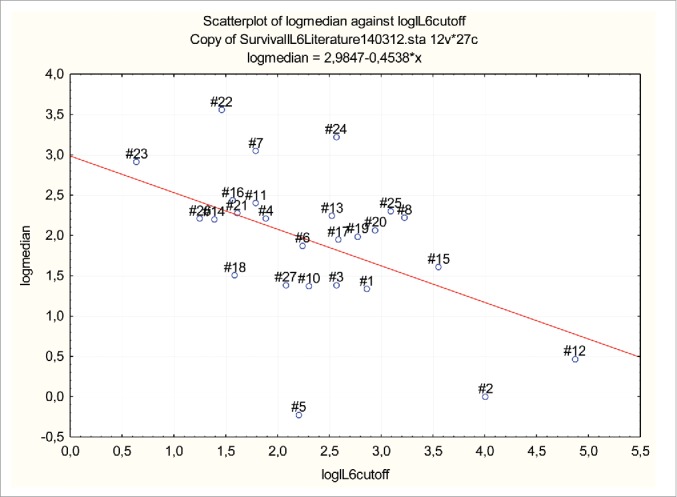
OBJECTIVE: In tumor patients, IL-6 appears to be one component of a consistent cancer-associated cytokine network resulting in both a systemic immune stimulation and a microenvironment of cancer-induced immune suppression that ultimately protects the cancer cells. IL-6 has been associated with prognosis in cancer patients, but so far a systemical analysis has not been carried out. METHODS: The present meta-analysis studies the relation between IL-6 serum levels and the prognosis of cancer patients in the available clinical literature of 100 articles published between 1993 and 2013 comprising 11,583 patients. RESULTS: The IL-6 serum level was described as significantly correlating with survival in 82/101 series comprising 85.6% of patients (9917/11,583) with 23 different cancer types. A total of 64 studies dichotomized patient cohorts according to various cut-off IL-6 serum levels: in 59/64 of these series corresponding to 94.5% of the reported patients (7694/8142) significant correlations between IL-6 serum level and survival were seen. The median survival of cancer patients had been determined above various cut-off levels of serum IL-6 in 24 dichotomized studies (26 cohorts). There was a highly significant inverse correlation between median survival of the cohorts with IL-6 serum level above cut-off (1272 patients) and their corresponding IL-6 cut-off values (Spearman R -0,48 p= < 0.001) following a linear regression when both parameters were log-transformed (p < 0.001). A significant correlation between increasing serum IL-6 and tumor stage or metastases was described in 39/44 studies and 91% of published patients (4221/4636) where clinical parameters had been specified. CONCLUSIONS: Closely associated with the patient's clinical condition and independent of the cancer histology, the increased IL-6 serum level uniformly appears to correlate with survival as paraneoplastic condition in later cancer stages independent of the cancer type. Modifications of this paraneoplastic immune reaction may offer new therapeutic options in cancer.
Overview
The claims and statistics of this paper haven’t been checked yet.
Run the check — free, no account needed. It reads the open-access text and checks the sources it cites.
Integrity signals
Registry
Cites
Statistics
Figures
Verification
Claims the paper makes
The claims and statistics of this paper haven’t been checked yet.
Run the check — free, no account needed. It reads the open-access text and checks the sources it cites.
Claims other papers make about this one
Each is checked against this paper’s own text: does it say what the citing paper says it does?
The cited source says what the claim attributes to it.
In the citing paper
“In addition, the correlation between IL-6 and the prognosis of 23 different cancer types was demonstrated (262).”
From IL-6 in inflammation, autoimmunity and cancer (2021) · cites this paper as [262]
Self-check
Percentages, sums and reported differences re-computed from the paper’s own numbers.
The self-check needs the paper’s full text.
Citations
Cites
Mantovani, A., Allavena, P., Sica, A., & Balkwill, F. (2008) · Nature · doi:10.1038/nature07205 · Cited by 11,399
Immunity, Inflammation, and Cancer
Grivennikov, S. I., Greten, F. R., & Karin, M. (2010) · Cell · doi:10.1016/j.cell.2010.01.025 · Cited by 10,755
Bettelli, E., Carrier, Y., Gao, W., Korn, T., Strom, T. B., Oukka, M., Weiner, H. L., & Kuchroo, V. K. (2006) · Nature · doi:10.1038/nature04753 · Cited by 6,992
Korn, T., Bettelli, E., Oukka, M., & Kuchroo, V. K. (2009) · Annual Review of Immunology · doi:10.1146/annurev.immunol.021908.132710 · Cited by 4,873
Chen, W., Jin, W., Hardegen, N. J., Lei, K.-J., Li, L., Marinos, N. J., McGrady, G., & Wahl, S. M. (2003) · The Journal of Experimental Medicine · doi:10.1084/jem.20030152 · Cited by 4,678
Veldhoen, M., Hocking, R. J., Atkins, C. J., Locksley, R. M., & Stockinger, B. (2006) · Immunity · doi:10.1016/j.immuni.2006.01.001 · Cited by 3,605
The Immunobiology of Cancer Immunosurveillance and Immunoediting
Dunn, G. P., Old, L. J., & Schreiber, R. D. (2004) · Immunity · doi:10.1016/j.immuni.2004.07.017 · Cited by 3,192
Transforming growth factor-β induces development of the TH17 lineage
Mangan, P. R., Harrington, L. E., O'Quinn, D. B., Helms, W. S., Bullard, D. C., Elson, C. O., Hatton, R. D., Wahl, S. M., Schoeb, T. R., & Weaver, C. T. (2006) · Nature · doi:10.1038/nature04754 · Cited by 3,087
Cancer and the chemokine network
Balkwill, F. (2004) · Nature Reviews Cancer · doi:10.1038/nrc1388 · Cited by 2,343
Hirano, T., Yasukawa, K., Harada, H., Taga, T., Watanabe, Y., Matsuda, T., Kashiwamura, S.-I., Nakajima, K., Koyama, K., Iwamatsu, A., et al. (1986) · Nature · doi:10.1038/324073a0 · Cited by 2,139 · cited 1×
“IL-6 induces the final maturation of B cells into antibody producing cells.(9,10) and, together with”
BackgroundVan Snick, J. (1990) · Annual Review of Immunology · doi:10.1146/annurev.iy.08.040190.001345 · Cited by 1,890
Gauldie, J., Richards, C. D., Harnish, D. C., Lansdorp, P. M., & Baumann, H. J. (1987) · Proceedings of the National Academy of Sciences · doi:10.1073/pnas.84.20.7251 · Cited by 1,635
Interleukin-6 family of cytokines and gp130.
Kishimoto, T., Akira, S., Narazaki, M., & Taga, T. (1995) · Blood · doi:10.1182/blood.v86.4.1243.bloodjournal8641243 · Cited by 1,362
Fantini, M. C., Becker, C., Monteleone, G., Pallone, F., Galle, P. R., & Neurath, M. F. (2004) · The Journal of Immunology · doi:10.4049/jimmunol.172.9.5149 · Cited by 1,158
Interleukin‐10: new perspectives on an old cytokine
Mosser, D. M., & Zhang, X. (2008) · Immunological Reviews · doi:10.1111/j.1600-065x.2008.00706.x · Cited by 1,077
Cytokine patterns in patients with cancer: a systematic review
Lippitz, B. E. (2013) · The Lancet Oncology · doi:10.1016/s1470-2045(12)70582-x · Cited by 922
Self-citationRole of tumor-associated macrophages in tumor progression and invasion
Mantovani, A., Schioppa, T., Porta, C., Allavena, P., & Sica, A. (2006) · Cancer and Metastasis Reviews · doi:10.1007/s10555-006-9001-7 · Cited by 901
IL-6: a regulator of the transition from neutrophil to monocyte recruitment during inflammation
Kaplanski, G. (2003) · Trends in Immunology · doi:10.1016/s1471-4906(02)00013-3 · Cited by 811
Hurst, S. M., Wilkinson, T. S., McLoughlin, R. M., Jones, S., Horiuchi, S., Yamamoto, N., Rose-John, S., Fuller, G. M., Topley, N., & Jones, S. A. (2001) · Immunity · doi:10.1016/s1074-7613(01)00151-0 · Cited by 811
Roca, H., Varsos, Z. S., Sud, S., Craig, M. J., Chi, Y., & Pienta, K. J. (2009) · Journal of Biological Chemistry · doi:10.1074/jbc.m109.042671 · Cited by 587
IL-6 signaling in autoimmunity, chronic inflammation and inflammation-associated cancer
Neurath, M. F., & Finotto, S. (2011) · Cytokine & Growth Factor Reviews · doi:10.1016/j.cytogfr.2011.02.003 · Cited by 584
Circulating interleukin‐6 predicts survival in patients with metastatic breast cancer
Salgado, R., Junius, S., Benoy, I. H., van Dam, P. A., Vermeulen, P., Marck, E. V., Huget, P., & Dirix, L. Y. (2002) · International Journal of Cancer · doi:10.1002/ijc.10833 · Cited by 435
Michalaki, V., Syrigos, K., Charles, P., & Waxman, J. (2004) · British Journal of Cancer · doi:10.1038/sj.bjc.6601814 · Cited by 406
Interleukin‐6 and its receptor in cancer: Implications for Translational Therapeutics
Hong, D. S., Angelo, L. S., & Kurzrock, R. (2007) · Cancer · doi:10.1002/cncr.22999 · Cited by 370
Serum interleukin‐6 levels reflect the disease status of colorectal cancer
Chung, Y., & Chang, Y. (2003) · Journal of Surgical Oncology · doi:10.1002/jso.10269 · Cited by 354
Serum interleukin 6 as a prognostic factor in patients with prostate cancer.
Nakashima, J., Tachibana, M., Horiguchi, Y., Oya, M., Ohigashi, T., Asakura, H., & Murai, M. (2000) · PubMed · Cited by 351
Negus, R. P. M., Stamp, G. W. H., Hadley, J., & Balkwill, F. R. (1997) · Europe PMC (PubMed Central) · Cited by 341
Interleukin‐6 predicts recurrence and survival among head and neck cancer patients
Duffy, S. A., Taylor, J. M. G., Terrell, J. E., Islam, M., Li, Y., Fowler, K. E., Wolf, G. T., & Teknos, T. N. (2008) · Cancer · doi:10.1002/cncr.23615 · Cited by 335
Involvement of IL–6 in the pathogenesis of inflammatory bowel disease and colon cancer
Atreya, R., & Neurath, M. F. (2005) · Clinical Reviews in Allergy & Immunology · doi:10.1385/criai:28:3:187 · Cited by 324
Bachelot, T., Ray-Coquard, I., Ménétrier‐Caux, C., Rastkha, M., Duc, A., & Blay, J. (2003) · British Journal of Cancer · doi:10.1038/sj.bjc.6600956 · Cited by 317
Zhang, G.-J., & Adachi, I. (1999) · PubMed · Cited by 306
How much is too much? Interleukin-6 and its signalling in atherosclerosis
Schuett, H., Luchtefeld, M., Grothusen, C., Grote, K., & Schieffer, B. (2009) · Thrombosis and Haemostasis · doi:10.1160/th09-05-0297 · Cited by 299
Interleukin‐6 Trans‐Signalling in Chronic Inflammation and Cancer
Scheller, J., Ohnesorge, N., & Rose‐John, S. (2006) · Scandinavian Journal of Immunology · doi:10.1111/j.1365-3083.2006.01750.x · Cited by 299
Tran, H. T., Liu, Y., Zurita, A. J., Lin, Y., Baker-Neblett, K. L., Martin, A.-M., Figlin, R. A., Hutson, T. E., Sternberg, C. N., Amado, R. G., et al. (2012) · The Lancet Oncology · doi:10.1016/s1470-2045(12)70241-3 · Cited by 258
Dominitzki, S., Fantini, M. C., Neufert, C. F., Nikolaev, A., Galle, P. R., Scheller, J., Monteleone, G., Rose‐John, S., Neurath, M. F., & Becker, C. (2007) · The Journal of Immunology · doi:10.4049/jimmunol.179.4.2041 · Cited by 228
Marin, V., Montero-Julian, F., Grès, S., Boulay, V., Bongrand, P., Farnarier, C., & Kaplanski, G. (2001) · Journal of Immunology · doi:10.4049/jimmunol.167.6.3435 · Cited by 227
Interleukin-6 Stimulates Circulating Blood-Derived Endothelial Progenitor Cell Angiogenesis in vitro
Fan, Y., Ye, J., Shen, F., Zhu, Y., Yeghiazarians, Y., Zhu, W. P., Chen, Y., Lawton, M. T., Young, W. L., & Yang, G. (2007) · Journal of Cerebral Blood Flow & Metabolism · doi:10.1038/sj.jcbfm.9600509 · Cited by 220
Oberholzer, A., Souza, S., Tschoeke, S. K., Oberholzer, C., Abouhamze, A. S., Pribble, J. P., & Moldawer, L. L. (2005) · PubMed · Cited by 219
Cancer‐promoting tumor‐associated macrophages: New vistas and open questions
Mantovani, A., Germano, G., Marchesi, F., Locatelli, M., & Biswas, S. K. (2011) · European Journal of Immunology · doi:10.1002/eji.201141894 · Cited by 211
Bellone, G., Smirne, C., Mauri, F. A., Tonel, E., Carbone, A., Buffolino, A., Dughera, L., Robecchi, A., Pirisi, M., & Emanuelli, G. (2005) · Cancer Immunology Immunotherapy · doi:10.1007/s00262-005-0047-0 · Cited by 209
Martı́n, F., Santolaria, F., Batista, N., Milena, A., González‐Reimers, E., Brito, M. J., & Oramás, J. (1999) · Cytokine · doi:10.1006/cyto.1998.0398 · Cited by 207
Prognostic significance of interleukin 6 serum levels in patients with ovarian cancer
Scambia, G., Testa, U., Panici, P. B., Foti, E., Martucci, R., Gadducci, A., Perillo, A., Facchini, V., Peschle, C., & Mancuso, S. (1995) · British Journal of Cancer · doi:10.1038/bjc.1995.71 · Cited by 198
Belluco, C., Nitti, D., Frantz, M., Toppan, P., Basso, D., Plebani, M., Lise, M., & Jessup, J. M. (2000) · Annals of Surgical Oncology · doi:10.1007/s10434-000-0133-7 · Cited by 196
Chang, C.-H., Hsiao, C.-F., Yeh, Y.-M., Chang, G., Tsai, Y.-H., Chen, Y.-M., Huang, M.-S., Chen, H.-L., Li, Y.-J., Yang, P.-C., et al. (2013) · International Journal of Cancer · doi:10.1002/ijc.27892 · Cited by 187
Kim, D.-K., Oh, S. Y., Kwon, H.-C., Lee, S., Kwon, K. A., Kim, B. G., Kim, S.-G., Kim, S., Jang, J. S., Kim, M. C., et al. (2009) · BMC Cancer · doi:10.1186/1471-2407-9-155 · Cited by 181
Négrier, S., Pérol, D., Ménétrier‐Caux, C., Escudier, B. J., Pallardy, M., Ravaud, A., Douillard, J., Chevreau, C., Lasset, C., & Blay, J. (2004) · Journal of Clinical Oncology · doi:10.1200/jco.2004.06.121 · Cited by 176
Interleukin 6 is a prognostic indicator of outcome in severe intra-abdominal sepsis
Patel, R. T., Deen, K. I., Youngs, D. J., Warwick, J., & Keighley, M. R. B. (1994) · British journal of surgery · doi:10.1002/bjs.1800810914 · Cited by 172
George, D. J., Halabi, S., Shepard, T. F., Sanford, B. L., Vogelzang, N. J., Small, E. J., & Kantoff, P. W. (2005) · Clinical Cancer Research · doi:10.1158/1078-0432.ccr-04-1560 · Cited by 168
Kinoshita, T., Ito, H., & Miki, C. (1999) · Cancer · doi:10.1002/(sici)1097-0142(19990615)85:12 · Cited by 168
Kurzrock, R., Redman, J. R., Cabanillas, F., JONES, D. M., Rothberg, J. M., & Talpaz, M. (1993) · PubMed · Cited by 168
Sánchez-Lara, K., Turcott, J. G., Juárez, E., Guevara‐Ramírez, P., Núñez-Valencia, C., Oñate-Ocaña, L. F., Flores, D., & Arrieta, O. G. (2012) · Nutrition and Cancer · doi:10.1080/01635581.2012.668744 · Cited by 164
Serum interleukin-6 levels correlate with prognosis in diffuse large-cell lymphoma
Seymour, J. F., Talpaz, M., Cabanillas, F., Wetzler, M., & Kurzrock, R. (1995) · Journal of Clinical Oncology · doi:10.1200/jco.1995.13.3.575 · Cited by 164
Fujimoto, M., Nakano, M., Terabe, F., Kawahata, H., Ohkawara, T., Han, Y., Ripley, B., Serada, S., Nishikawa, T., Kimura, A., et al. (2010) · The Journal of Immunology · doi:10.4049/jimmunol.0903314 · Cited by 160
Ashizawa, T., Okada, R., Suzuki, Y., Takagi, M., Yamazaki, T., Sumi, T., Aoki, T., Ohnuma, S., & Aoki, T. (2005) · Gastric Cancer · doi:10.1007/s10120-005-0315-x · Cited by 158
Role of Mononuclear Cells and Inflammatory Cytokines in Pancreatic Cancer-Related Cachexia
Martignoni, M. E., Kunze, P., Hildebrandt, W., Künzli, B. M., Berberat, P. O., Giese, T., Klöters, O., Hammer, J., Büchler, M. W., Giese, N. A., et al. (2005) · Clinical Cancer Research · doi:10.1158/1078-0432.ccr-05-0185 · Cited by 157
Serum IL-6, TNFα and CRP levels in Greek colorectal cancer patients: Prognostic implications
Nikiteas, N. I. (2005) · World Journal of Gastroenterology · doi:10.3748/wjg.v11.i11.1639 · Cited by 156
Mitsunaga, S., Ikeda, M., Shimizu, S., Ohno, I., Furuse, J., Inagaki, M., Higashi, S., Kato, H., Terao, K., & Ochiai, A. (2013) · British Journal of Cancer · doi:10.1038/bjc.2013.174 · Cited by 153
IL-6 expression predicts treatment response and outcome in squamous cell carcinoma of the esophagus
Chen, M., Chen, P.-T., Lu, M. S., Lin, P. Y., Chen, W., & Lee, K. (2013) · Molecular Cancer · doi:10.1186/1476-4598-12-26 · Cited by 151
Manzotti, C. N., Tipping, H., Perry, L., Mead, K. I., Blair, P. J., Zheng, Y., & Sansom, D. M. (2002) · European Journal of Immunology · doi:10.1002/1521-4141(2002010)32:10 · Cited by 142
Serum interleukin-6 levels reflect disease status of gastric cancer.
Wu, C.-H., Wang, S. R., Chao, M. F., Wu, T., Lui, W. Y., Peng, F., & W, C. (1996) · PubMed · Cited by 139
Ren, Y., Tsui, H., Poon, R. T. P., Ng, I. O., Li, Z., Chen, Y., Jiang, G., Lau, C. P.-Y., Yu, W., Bacher, M., et al. (2003) · International Journal of Cancer · doi:10.1002/ijc.11287 · Cited by 138
Serum Evaluation of Interleukin 6 in Ovarian Cancer Patients
Tempfer, C. M., Zeisler, H., Sliutz, G., Haeusler, G., Hanzal, E., & Kainz, C. (1997) · Gynecologic Oncology · doi:10.1006/gyno.1997.4726 · Cited by 133
Tsimberidou, A. M., Estey, E. H., Wen, S., Pierce, S. A., Kantarjian, H. M., Albitar, M. X., & Kurzrock, R. (2008) · Cancer · doi:10.1002/cncr.23785 · Cited by 132
Serial cytokine levels in patients with severe sepsis
Wu, H.-P., Chen, C.-K., Chung, K., Tseng, J., Hua, C., Liu, Y., Chuang, D., & Yang, C.-H. (2009) · Inflammation Research · doi:10.1007/s00011-009-0003-0 · Cited by 129
Ross (2009) · Oncology Reports · doi:10.3892/or_00000328 · Cited by 128
Afford, S. C., Pongracz, J. E., STOCKLEY, R. A., Crocker, J., & Burnett, D. A. (1992) · Journal of Biological Chemistry · doi:10.1016/s0021-9258(19)36655-4 · Cited by 125
Ravishankaran, P., & Karunanithi, R. (2011) · World Journal of Surgical Oncology · doi:10.1186/1477-7819-9-18 · Cited by 125
Kaminska, J. A., Kowalska, M. M., Kotowicz, B. U., Fuksiewicz, M., Głogowski, M., Wójcik, E., Chechlińska, M., & Steffen, J. A. (2006) · Oncology · doi:10.1159/000093002 · Cited by 118
Casasnovas, O., Mounier, N., Brice, P., Diviné, M., Morschhauser, F., Gabarre, J., Blay, J., Voillat, L., Lederlin, P., Stamatoullas, A., et al. (2007) · Journal of Clinical Oncology · doi:10.1200/jco.2006.08.1331 · Cited by 118
Rutkowski, P. L., Kaminska, J. A., Kowalska, M. M., Ruka, W., & Steffen, J. A. (2003) · Journal of Surgical Oncology · doi:10.1002/jso.10305 · Cited by 117
Kwon, K. A., Kim, S. H., Oh, S. Y., Lee, S., Han, J., Kim, K. H., Goh, R.-Y., Choi, H. J., Park, K., Roh, M. S., et al. (2010) · BMC Cancer · doi:10.1186/1471-2407-10-203 · Cited by 116
Serum interleukin-6 and -10 levels in patients with gastric cancer
Ikeguchi, M., Hatada, T., Yamamoto, M., Miyake, T., Matsunaga, T., Fukumoto, Y., Yamada, Y., Fukuda, K., Saito, H., & Tatebe, S. (2009) · Gastric Cancer · doi:10.1007/s10120-009-0509-8 · Cited by 116
Herbeuval, J., Lelièvre, E., Lambert, C., Dy, M., & Genin, C. (2004) · The Journal of Immunology · doi:10.4049/jimmunol.172.7.4630 · Cited by 115
Prognostic value of serum interleukin-6 in diffuse large-cell lymphoma
Preti, H. A., Cabanillas, F., Talpaz, M., Tucker, S. L., Seymour, J. F., & Kurzrock, R. (1997) · Annals of Internal Medicine · doi:10.7326/0003-4819-127-3-199708010-00002 · Cited by 112
Serum Concentrations of Cytokines and Lung Cancer Survival in African Americans and Caucasians
Enewold, L., Mechanic, L. E., Bowman, E. D., Zheng, Y., Yu, Z., Trivers, G., Alberg, A. J., & Harris, C. C. (2009) · Cancer Epidemiology Biomarkers & Prevention · doi:10.1158/1055-9965.epi-08-0705 · Cited by 108
Bozcuk, H. S., Uslu, G., Samur, M., Yıldız, M., Özben, T., Özdoğan, M., Artaç, M., Altunbaş, H., Akan, I., & Savaş, B. (2004) · Cytokine · doi:10.1016/j.cyto.2004.04.002 · Cited by 106
Circulating markers of angiogenesis, inflammation, and coagulation in patients with glioblastoma
Reynés, G., Vila, V., Martín, M. S., Parada, A., Fleitas, T., Regañón, E., & Martínez‐Sales, V. (2010) · Journal of Neuro-Oncology · doi:10.1007/s11060-010-0290-x · Cited by 106
Nixon, A. B., Pang, H., Starr, M. D., Friedman, P. N., Bertagnolli, M. M., Kindler, H. L., Goldberg, R. M., Venook, A. P., & Hurwitz, H. I. (2013) · Clinical Cancer Research · doi:10.1158/1078-0432.ccr-13-0926 · Cited by 104
Mroczko, B., Groblewska, M., Gryko, M., Kędra, B., & Szmitkowski, M. (2010) · Journal of Clinical Laboratory Analysis · doi:10.1002/jcla.20395 · Cited by 103
Systemic Inflammatory Response Predicts Prognosis in Patients with Advanced-Stage Colorectal Cancer
Sharma, R., Zucknick, M., London, R. M., Kacevska, M., Liddle, C., & Clarke, S. J. (2008) · Clinical Colorectal Cancer · doi:10.3816/ccc.2008.n.044 · Cited by 103
Andrews, B., Shariat, S. F., Kim, J., Wheeler, T. M., Slawin, K. M., & Lerner, S. P. (2002) · The Journal of Urology · doi:10.1016/s0022-5347(05)65348-7 · Cited by 102
Lambeck, A. J. A., Crijns, A. P. G., Leffers, N., Sluiter, W. J., ten Hoor, K. A., Braid, M., van der Zee, A. G. J., Daemen, T., Nijman, H. W., & Kast, W. M. (2007) · Clinical Cancer Research · doi:10.1158/1078-0432.ccr-06-1828 · Cited by 101
PROGNOSTIC VALUE OF CYTOKINES IN SIRS GENERAL MEDICAL PATIENTS
Rodrı́guez-Gaspar, M., Santolaria, F., Jarque-López, A., González‐Reimers, E., Milena, A., de la Vega, M.-J., Rodríguez-Rodríguez, E., & Gómez-Sirvent, J. L. (2001) · Cytokine · doi:10.1006/cyto.2001.0932 · Cited by 100
Rutkowski, P. L., Kaminska, J. A., Kowalska, M. M., Ruka, W., & Steffen, J. A. (2002) · International Journal of Cancer · doi:10.1002/ijc.10496 · Cited by 98
Utech, A. E., Tadros, E. M., Hayes, T. G., & Garcia, J. M. (2012) · Journal of Cachexia Sarcopenia and Muscle · doi:10.1007/s13539-012-0075-5 · Cited by 97
Songür, N., Kuru, B., Kalkan, F., Özdilekcan, Ç., Çakmak, H., & Hızel, N. (2004) · Tumori Journal · doi:10.1177/030089160409000207 · Cited by 96
Zhang, J., Patel, L. R., & Pienta, K. J. (2010) · Progress in molecular biology and translational science · doi:10.1016/b978-0-12-385071-3.00003-4 · Cited by 95
Vita, F. D., Romano, C. P., Orditura, M., Galizia, G., Martinelli, E., Lieto, E., & Catalano, G. (2001) · Journal of Interferon & Cytokine Research · doi:10.1089/107999001459150 · Cited by 95
Interleukin‐6 serum levels in patients with gynecological tumors
Scambia, G., Testa, U., Panici, P. B., Martucci, R., Foti, E., Petrini, M., Amoroso, M., Masciullo, V., Peschle, C., & Mancuso, S. (1994) · International Journal of Cancer · doi:10.1002/ijc.2910570305 · Cited by 93
Kimura, A., & Kishimoto, T. (2010) · International Immunopharmacology · doi:10.1016/j.intimp.2010.10.004 · Cited by 91
Serum levels of cytokines in patients with untreated primary lung cancer
Department Medical Oncology (1996) · Lung Cancer · doi:10.1016/s0169-5002(96)80030-4 · Cited by 91
Mantovani, G., Macciò, A., Madeddu, C., Mura, L., Massa, E., Mudu, M. C., Mulas, C., Lusso, M. R., Gramignano, G., & Piras, M. R. (2001) · Journal of Molecular Medicine · doi:10.1007/s001090100234 · Cited by 91
Ghani, R. A., ZAINUDIN, S., Kong, N. C. T., RAHMAN, A. F. A., WAFA, S. R. W. S. H., Mohamad, M. S. F., Manaf, M. R. A., & ISMAIL, R. (2006) · Nephrology · doi:10.1111/j.1440-1797.2006.00600.x · Cited by 91
Groblewska, M., Mroczko, B., Wereszczyńska-Siemiątkowska, U., Kędra, B., Łukaszewicz‐Zając, M., Baniukiewicz, A., & Szmitkowski, M. (2008) · Clinical Chemistry and Laboratory Medicine (CCLM) · doi:10.1515/cclm.2008.278 · Cited by 88
Interleukin-6: From identification of the cytokine to development of targeted treatments
Assier, É., Boissier, M., & Dayer, J. (2010) · Joint Bone Spine · doi:10.1016/j.jbspin.2010.07.007 · Cited by 88
Niitsu, N., Okamoto, M., Nakamine, H., Yoshino, T., Tamaru, J., Nakamura, S., Higashihara, M., & Hirano, M. (2002) · European Journal Of Haematology · doi:10.1034/j.1600-0609.2002.01609.x · Cited by 88
Interleukin-6, its role in fibrosing conditions
O’Reilly, S., Ciechomska, M., Cant, R., Hügle, T., & van Laar, J. M. (2012) · Cytokine & Growth Factor Reviews · doi:10.1016/j.cytogfr.2012.04.003 · Cited by 85
Inagaki, A., Ishida, T., Ishii, T., Komatsu, H., Iida, S., Ding, J., Yonekura, K., Takeuchi, S., Takatsuka, Y., Utsunomiya, A., et al. (2006) · International Journal of Cancer · doi:10.1002/ijc.21688 · Cited by 84
Yue, C., You, X., Zhao, L., Wang, H., Tang, F.-L., Zhang, F., Zhang, X., & He, W. (2009) · Rheumatology International · doi:10.1007/s00296-009-1179-x · Cited by 83
Fukuyama, T., Ichiki, Y., Yamada, S., Shigematsu, Y., Baba, T., Nagata, Y., Mizukami, M., Sugaya, M., Takenoyama, M., Hanagiri, T., et al. (2007) · Cancer Science · doi:10.1111/j.1349-7006.2007.00507.x · Cited by 79
Serum levels of interleukin-6 as a prognostic factor in advanced non-small cell lung cancer.
Vita, F. D., Orditura, M., Auriemma, A., Infusino, S., Roscigno, A., & Catalano, G. (1998) · Oncology Reports · doi:10.3892/or.5.3.649 · Cited by 75
Oberije, C., Aerts, H. J. W. L., Yu, S., Ruysscher, D. D., Menheere, P. P. C. A., Hilvo, M., van der Weide, H. L., Rao, B., & Lambin, P. (2010) · International Journal of Radiation Oncology*Biology*Physics · doi:10.1016/j.ijrobp.2010.06.011 · Cited by 74
Liu, Y., Starr, M. D., Bulusu, A., Pang, H., Wong, N. S., Honeycutt, W., Amara, A., Hurwitz, H. I., & Nixon, A. B. (2013) · Cancer Medicine · doi:10.1002/cam4.71 · Cited by 73
Essential Role of IL-6 Signaling Pathway in Keloid Pathogenesis
Ghazizadeh, M. (2007) · Journal of Nippon Medical School · doi:10.1272/jnms.74.11 · Cited by 73
Groeneveld, A. B. J., Tacx, A. N., Bossink, A. W. J., van Mierlo, G. J., & Hack, C. E. (2003) · Clinical Immunology · doi:10.1016/s1521-6616(02)00025-6 · Cited by 73
Walther, M., Johnson, B., Culley, D., Shah, R., Weber, J., Venzon, D., Yang, J. C., Linehan, W., & Rosenberg, S. (1998) · Journal of Urology · doi:10.1016/s0022-5347(01)63709-1 · Cited by 70
Łukaszewicz‐Zając, M., Mroczko, B., Gryko, M., Kędra, B., & Szmitkowski, M. (2010) · Clinical and Experimental Medicine · doi:10.1007/s10238-010-0114-5 · Cited by 69
Monfrecola, G., Gaudiello, F., Cirillo, T., Fabbrocini, G., Balato, A., & Lembo, S. (2013) · Clinical and Experimental Dermatology · doi:10.1111/ced.12018 · Cited by 62
Suh, S., Choi, Y. S., Yeom, C. H., Kwak, S. M., Yoon, H. M., Kim, D. G., Koh, S.-J., Park, J., Lee, M. A., Lee, Y. J., et al. (2013) · Supportive Care in Cancer · doi:10.1007/s00520-013-1878-4 · Cited by 59
Clinical significance of tissue expression of interleukin-6 in colorectal carcinoma.
Chung, Y., Chaen, Y.-L., & Hsu, C.-P. (2006) · PubMed · Cited by 59
Yamamura, M., Yamada, Y., Momita, S., Kamihira, S., & Tomonaga, M. (1998) · British Journal of Haematology · doi:10.1046/j.1365-2141.1998.00538.x · Cited by 58
Serum interleukin-6 as a prognostic biomarker in patients with metastatic melanoma
Hoejberg, L., Bastholt, L., Johansen, J. S., Christensen, I. J., Gehl, J., & Schmidt, H. (2012) · Melanoma Research · doi:10.1097/cmr.0b013e3283550aa5 · Cited by 57
Egler, R. A., Burlingame, S. M., Nuchtern, J. G., & Russell, H. V. (2008) · Clinical Cancer Research · doi:10.1158/1078-0432.ccr-07-5017 · Cited by 57
Heikkilä, K., Ebrahim, S. B. J., Rumley, A., Lowe, G. D. O., & Lawlor, D. A. (2007) · Cancer Epidemiology Biomarkers & Prevention · doi:10.1158/1055-9965.epi-07-0093 · Cited by 56
Pedersen, L. M., Klausen, T. W., Davidsen, U., & Johnsen, H. E. (2005) · Annals of Hematology · doi:10.1007/s00277-005-1020-x · Cited by 54
Vizio, B., Novarino, A., Giacobino, A., Cristiano, C., Prati, A., Ciuffreda, L., Montrucchio, G., & Bellone, G. (2012) · Experimental and Therapeutic Medicine · doi:10.3892/etm.2012.553 · Cited by 53
Yeh, K., Li, Y., Hsieh, L., Lu, C. H., Chou, W., Liaw, C., Tang, R., & Liao, S. (2010) · Japanese Journal of Clinical Oncology · doi:10.1093/jjco/hyq010 · Cited by 53
Viallon, A., Guyomarch, S., Marjollet, O., Berger, C., Carricajo, A., Robert, F., Laporte, S., Lambert, C., Page, Y., Zéni, F., et al. (2008) · European Journal of Emergency Medicine · doi:10.1097/mej.0b013e3280ec539b · Cited by 53
Lamb, G. W. A., McArdle, P., Ramsey, S., McNichol, A., Edwards, J., Aitchison, M., & McMillan, D. C. (2008) · British Journal of Urology · doi:10.1111/j.1464-410x.2008.07666.x · Cited by 52
Ujiie, H., Tomida, M., Akiyama, H., Nakajima, Y., Okada, D., Yoshino, N., Takiguchi, Y., & Tanzawa, H. (2012) · PubMed · Cited by 52
Necula, L. G., Chivu‐Economescu, M., Stanciulescu, E.-L., Bleoţu, C., Dima, S., Alexiu, I., Dumitru, A., Constantinescu, G., Popescu, I., & Diaconu, C. C. (2012) · PubMed · Cited by 52
Yoshitomi, M., Yutani, S., Matsueda, S., Ioji, T., Komatsu, N., Shichijo, S., Yamada, A., Itoh, K., Sasada, T., & Kinoshita, H. (2011) · Experimental and Therapeutic Medicine · doi:10.3892/etm.2011.424 · Cited by 51
High Serum Interleukin-6 Levels Correlate with a Shorter Failure-Free Survival in Indolent Lymphoma
Fayad, L., Cabanillas, F., Talpaz, M., McLaughlin, P. J., & Kurzrock, R. (1998) · Leukemia & lymphoma/Leukemia and lymphoma · doi:10.3109/10428199809057568 · Cited by 50
Yoon, J., Lafarge, S. T., Dawe, D. E., Lakhi, S., Kumar, R., Morales, C., Marshall, A. J., Gibson, S. B., & Johnston, J. B. (2012) · Leukemia & lymphoma/Leukemia and lymphoma · doi:10.3109/10428194.2012.666662 · Cited by 48
Łukaszewicz‐Zając, M., Mroczko, B., Kozłowski, M., Nikliński, J., Laudanski, J., & Szmitkowski, M. (2011) · Diseases of the Esophagus · doi:10.1111/j.1442-2050.2011.01242.x · Cited by 48
Validation of prognostic scores for survival in cancer patients beyond first-line therapy
Trédan, O., Ray-Coquard, I. L., Chvetzoff, G., Rebattu, P., Bajard, A., Chabaud, S., Pérol, D., Saba, C., Quiblier, F., Blay, J., et al. (2011) · BMC Cancer · doi:10.1186/1471-2407-11-95 · Cited by 46
Giachelia, M., Voso, M. T., Tisi, M. C., Martini, M., Bozzoli, V., Massini, G., D’Alò, F., Larocca, L. M., Leone, G. G. M., & Hohaus, S. (2011) · Leukemia & lymphoma/Leukemia and lymphoma · doi:10.3109/10428194.2011.621566 · Cited by 45
IL-6 and VEGF in small cell lung cancer patients.
Wójcik, E., Jakubowicz, J., Skotnicki, P., Sas-Korczyńska, B., & Kulpa, J. (2010) · PubMed · Cited by 45
Serum cytokines in follicular lymphoma. Correlation of TGF-β and VEGF with survival
Labidi‐Galy, S. I., Ménétrier‐Caux, C., Chabaud, S., Chassagne, C., Sebban, C., Gargi, T., Biron, P., Blay, J., & Ghesquières, H. (2009) · Annals of Hematology · doi:10.1007/s00277-009-0777-8 · Cited by 44
Shimazaki, J., Goto, Y., Nishida, K., Tabuchi, T., Motohashi, G., Ubukata, H., & Tabuchi, T. (2013) · Oncology · doi:10.1159/000350836 · Cited by 44
Guida, M., CASAMASSIMA, A., Monticelli, G., Quaranta, M., & Colucci, G. (2007) · Journal of Translational Medicine · doi:10.1186/1479-5876-5-51 · Cited by 43
Far, M. E., Fouda, M., Yahya, R. S., & Baz, H. E. (2004) · Journal of Physiology and Biochemistry · doi:10.1007/bf03167070 · Cited by 42
Koh, E., Iizasa, T., Yamaji, H., Sekine, Y., Hiroshima, K., Yoshino, I., & Fujisawa, T. (2012) · International Journal of Surgical Pathology · doi:10.1177/1066896911436274 · Cited by 41
Soubrane, C., Rixe, O., Méric, J., Khayat, D., & Mouawad, R. (2005) · Melanoma Research · doi:10.1097/00008390-200506000-00009 · Cited by 41
Fabre, E., Tabrizi, R., Coulon, V., Monnereau, A., Eghbali, H., Soubeyran, I., & Soubeyran, P. (2005) · Leukemia & lymphoma/Leukemia and lymphoma · doi:10.1080/10428190500361029 · Cited by 41
Schultz, N. A., Christensen, I. J., Werner, J., Giese, N. A., Jensen, B. V., Larsen, O. F., Bjerregaard, J. K., Pfeiffer, P., Calatayud, D., Nielsen, S. E., et al. (2013) · PLoS ONE · doi:10.1371/journal.pone.0067059 · Cited by 38
Arshad, A. R., Chung, W. Y., Steward, W. P., Metcalfe, M. S., & Dennison, A. R. (2012) · HPB · doi:10.1111/hpb.12002 · Cited by 38
Kita, H., Shiraishi, Y., Watanabe, K., Suda, K., Ohtsuka, K., Koshiishi, Y., & Goya, T. (2011) · Annals of Thoracic and Cardiovascular Surgery · doi:10.5761/atcs.oa.10.01627 · Cited by 38
Taş, F., Oğuz, H., Argon, A., Duranyıldız, D., Çamlıca, H., Yasasever, V., & Topuz, E. (2005) · Medical Oncology · doi:10.1385/mo:22:3:241 · Cited by 37
Montero, A. J., Diaz-Montero, C. M., Millikan, R. E., Liu, J., Do, K.-A., Hodges, S., Jonasch, E. W., McIntyre, B. W., Hwu, P., & Tannir, N. M. (2009) · Annals of Oncology · doi:10.1093/annonc/mdp054 · Cited by 35
Dean-Colomb, W. M., Hess, K. R., Young, E. J., Gornet, T. G., Handy, B. C., Moulder, S. L., Ibrahim, N. K., Pusztai, L., Booser, D. J., Valero, V., et al. (2012) · Breast Cancer Research and Treatment · doi:10.1007/s10549-012-2374-0 · Cited by 33
Prognostic value of interleukin-6 and interleukin-8 in laryngeal squamous cell cancer
Hao, W., Zhu, Y., & Zhou, H. (2012) · Medical Oncology · doi:10.1007/s12032-012-0333-6 · Cited by 32
Cândido, E. B., Silva, L. M., Teixeira‐Carvalho, A., Lamaita, R. M., Filho, R. M. P., Cota, B. D. C. V., & Filho, A. L. D. S. (2012) · Reproductive Sciences · doi:10.1177/1933719112466299 · Cited by 30
Intravenous Tocilizumab: A Review of Its Use in Adults with Rheumatoid Arthritis
Dhillon, S. (2013) · BioDrugs · doi:10.1007/s40259-013-0076-8 · Cited by 30
Duletić‐Načinović, A., Štifter, S., Marijić, B., Lučin, K., Valković, T., Petranović, D., & Jonjić, N. (2008) · Tumori Journal · doi:10.1177/030089160809400412 · Cited by 27
Su, C., Zhou, C., Zhou, S., & Xu, J. (2010) · Medical Oncology · doi:10.1007/s12032-010-9645-6 · Cited by 27
Chow, K., Chiou, S.-H., Ho, S.-P., Tsai, M.-H., Chen, C., Wang, L.-S., & Chi, K.-H. (2003) · Oncology Reports · doi:10.3892/or.10.4.813 · Cited by 27
Interleukin-1 beta and interleukin-6 release by peripheral blood monocytes in head and neck cancer
Gallo, O., Gori, A. M., Attanasio, M., Martini, F., Giusti, B., Boddi, M., Gallina, E., Fini, O., & Abbate, R. (1993) · British Journal of Cancer · doi:10.1038/bjc.1993.371 · Cited by 26
Parameters of biological activity in colorectal cancer.
Svobodová, Š., Topolčan, O., Holubec, L., Levý, M., Pecen, L., & Svacina, S. (2011) · PubMed · Cited by 26
Soluble immunological parameters and early prognosis of renal cell cancer patients.
KALLIO, J. P., Tammela, T. L. J., Marttinen, A. T., & Kellokumpu‐Lehtinen, P. (2001) · PubMed · Cited by 25
Fuksiewicz, M., Kowalska, M. M., Kotowicz, B. U., Rubach, M., Chechlińska, M., Pieńkowski, T., & Kaminska, J. A. (2010) · Clinical Chemistry and Laboratory Medicine (CCLM) · doi:10.1515/cclm.2010.278 · Cited by 20
IL-6 and IFN-γ regulation of IL-10 production by human colon carcinoma cells
Suzuki, S., Mita, S., Kamohara, H., Sakamoto, K., Ishiko, T., & Ogawa, M. (2001) · International Journal of Oncology · doi:10.3892/ijo.18.3.581 · Cited by 20
Özdemir, F., Aydın, F., Yılmaz, M., Kavgacı, H., Bektas, O., Mn, Y., & Aa, Y. (2004) · PubMed · Cited by 20
Plasma cytokine and P‐selectin levels in advanced malignancy
Nisio, M. D., Niers, T. M. H., Reitsma, P. H., & Buller, H. R. (2005) · Cancer · doi:10.1002/cncr.21485 · Cited by 18
Following up tumor-specific regulatory T cells in cancer patients
Zitvogel, L., Tanchot, C., Granier, C., & Tartour, É. (2013) · OncoImmunology · doi:10.4161/onci.25444 · Cited by 18
The value of serum S-100β and interleukins as tumour markers in advanced melanoma
Vuoristo, M.-S., Kellokumpu-Lehtinen, P., Laine, S., Parvinen, L.-M., Hahka‐Kemppinen, M., Korpela, M., & Kumpulainen, E. (2000) · Melanoma Research · doi:10.1097/00008390-200006000-00005 · Cited by 18
Contact stimulation of fibroblasts for tenascin production by melanoma cells
Ádám, B., Tóth, L., Pásti, G., Balázs, M., & Ádány, R. (2006) · Melanoma Research · doi:10.1097/01.cmr.0000205022.25397.86 · Cited by 17
Grim-Stieger, M., Keilani, M. Y., Mader, R. M., Marosi, C., Schmidinger, M., Zielinski, C. C., Fialka‐Moser, V., & Crevenna, R. (2008) · European Journal of Cancer Care · doi:10.1111/j.1365-2354.2007.00874.x · Cited by 15
Thomas, X., Hirschauer, C., Troncy, J., Assouline, D., Joly, M., Fiere, D. M., & Archimbaud, E. (1997) · Leukemia & lymphoma/Leukemia and lymphoma · doi:10.3109/10428199709039016 · Cited by 14
Ramsey, S., Aitchison, M., Graham, J., & McMillan, D. C. (2008) · British Journal of Urology · doi:10.1111/j.1464-410x.2008.07466.x · Cited by 14
The value of serum S-100β and interleukins as tumour markers in advanced melanoma
Vuoristo, M.-S., Kellokumpu-Lehtinen, P., Laine, S., et al. (2000) · Melanoma Research · doi:10.1097/00008390-200010030-00005 · Cited by 14
Guida, M., Riccobon, A., Biasco, G., Ravaioli, A., CASAMASSIMA, A., Freschi, A., Palma, M. D., Galligioni, E., Nortilli, R., Chiarion‐Sileni, V., et al. (2006) · Melanoma Research · doi:10.1097/01.cmr.0000200491.00841.5f · Cited by 9
Wang, Y., Miao, L., Liu, L., Cai, H., Ding, J., Ren, S., Zhou, C., & Schmid‐Bindert, G. (2013) · Chinese Medical Journal · doi:10.3760/cma.j.issn.0366-6999.20130578 · Cited by 8
Parameter der frühen Prädiktion des Sepsisverlaufs
Novotny, A., Emmanuel, K., Bartels, H., Siewert, J. R., & Holzmann, B. (2005) · Der Chirurg · doi:10.1007/s00104-005-1077-z · Cited by 7
Prognostic potential of cytokines, nitrates, and APACHE II score in sepsis.
Bencosme, A., Warner, A. M., Healy, D. P., & Verme-Gibboney, C. N. (1996) · PubMed · Cited by 7
Favaro, D., Santarosa, M., Quaia, M., & Galligioni, E. (1997) · Urologic Oncology Seminars and Original Investigations · doi:10.1016/s1078-1439(97)00036-7 · Cited by 6
Research works printed but not linked: 19
- Suzuki S, 2001, Int J Oncol, 18, 581
- De Vita F, 1998, Oncol Rep, 5, 649
- Bencosme A, 1996, Ann Clin Lab Sci, 26, 426
- 10.1097/01.shk.0000163802.46355.59 · DOI
- Svobodova S, 2011, Anticancer Res, 31, 373
- Ozdemir F, 2004, J Exp Clin Cancer Res, 23, 485
- Negus RP, 1997, Am J Pathol, 150, 1723
- Wu CW, 1996, Am J Gastroenterol, 91, 1417
- Chow KC, 2003, Oncol Rep, 10, 813
- Chung YC, 2006, Anticancer Res, 26, 3905
- Zhang GJ, 1999, Anticancer Res, 19, 1427
- Ujiie H, 2012, Anticancer Res, 32, 3251
- Katsumata N, 1996, Clin Cancer Res, 2, 553
- Wojcik E, 2010, Anticancer Res, 30, 1773
- Necula LG, 2012, J Gastrointestin Liver Dis, 21, 23
- Kallio JP, 2001, J Exp Clin Cancer Res, 20, 523
- Nakashima J, 2000, Clin Cancer Res, 6, 2702
- Mouawad R, 2006, Melanoma Res, 16, 335
- Kurzrock R, 1993, Cancer Res, 53, 2118
Cited by
Sorted by citations
IL-6 in inflammation, autoimmunity and cancer
Hirano, T. (2021) · International Immunology · doi:10.1093/intimm/dxaa078 · Cited by 1,453
“In addition, the correlation between IL-6 and the prognosis of 23 different cancer types was demonstrated (262).”
BackgroundC-Reactive Protein and Cancer—Diagnostic and Therapeutic Insights
Hart, P. C., Rajab, I. M., Alebraheem, M., & Potempa, L. A. (2020) · Frontiers in Immunology · doi:10.3389/fimmu.2020.595835 · Cited by 291
New therapeutic perspectives to manage refractory immune checkpoint-related toxicities
Martins, F., Sykiotis, G. P., Maillard, M. H., Fraga, M. C., Ribi, C., Küntzer, T., Michielin, O. A., Peters, S., Coukos, G., Spertini, F., et al. (2019) · The Lancet Oncology · doi:10.1016/s1470-2045(18)30828-3 · Cited by 190
Infectious Complications of Biological and Small Molecule Targeted Immunomodulatory Therapies
Davis, J. S., Ferreira, D., Paige, E. K., Gedye, C. A., & Boyle, M. (2020) · Clinical Microbiology Reviews · doi:10.1128/cmr.00035-19 · Cited by 193
Jin, Y. T., Kang, Y., Wang, M., Wu, B., Su, B., Yin, H., Tang, Y., Li, Q., Wei, W., Mei, Q., et al. (2022) · Signal Transduction and Targeted Therapy · doi:10.1038/s41392-022-00872-9 · Cited by 176
Metadata
- Authors
- Lippitz, B. E., & Harris, R. A.
- Affiliations
- Karolinska University Hospital (SE)
- Corresponding author
- Lippitz, Bodo E.
- Venue
- OncoImmunology
- Publisher
- Informa UK Limited
- Published
- 2016-05-03
- Volume
- 5
- Issue
- 5
- Pages
- e1093722
- ISSN
- 2162-4011 (ISSN-L)
- 2162-402X
- PMC
- PMC4910721
- OpenAlex
- W2365037335
- Cited by
- 248
- References
- 165
- Citations by year
- 2026: 21 · 2025: 21 · 2024: 33 · 2023: 19 · 2022: 35 · 2021: 30 · 2020: 28 · 2019: 29 · 2018: 16 · 2017: 16
- FWCI
- 2.05
- Type
- journal article
- Language
- en
- Open access
- gold
- doi.org
- Licence
- Locations
- OncoImmunology (publishedVersion, cc-by-nc)
- Europe PMC (PubMed Central) (publishedVersion, cc-by-nc)
- PubMed Central (publishedVersion, cc-by-nc)
- PubMed (publishedVersion)
- Topics
- Life Sciences › Immunology and Microbiology › Immunology › Cytokine Signaling Pathways and Interactions
- Health Sciences › Medicine › Oncology › Inflammatory Biomarkers in Disease Prognosis
- Life Sciences › Immunology and Microbiology › Immunology › Immune cells in cancer
- Keywords
- interleukin-6, serum IL-6, cancer prognosis, cancer survival, cytokine network, tumor microenvironment, immunosuppression, tumor stage, metastasis, cancer immunotherapy
About these checks
Registry, retraction, Cites and statistics results are computed, not judged, with one exception: a printed reference that no index lists is read once by a model before it counts as a citation error. Claims are extracted by a model and kept only when their quote appears verbatim in the text; each cited source is then checked, with a model’s help, for whether it says what the claim relies on. Those verdicts can be wrong — read the claim’s quote and the cited source before relying on one.
Statistics and arithmetic are recomputed, not judged.
Confidence bands are shown only for fields calibrated on our annotated test set. None is calibrated yet, so no band is shown.
What counts as a claim ›How we measure confidence ›How we check this ›
Are you an author, or do you see a problem with this page? Request a review
