

Cergutuzumab amunaleukin (CEA-IL2v), a CEA-targeted IL-2 variant-based immunocytokine for combination cancer immunotherapy: Overcoming limitations of aldesleukin and conventional IL-2-based immunocytokines
Open accessThe DOI matches its Crossref record; 66 of the 68 references it cites were found in a registry or an index.
Abstract
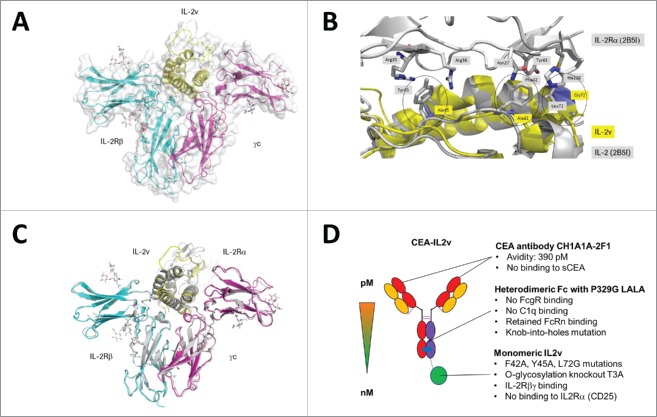
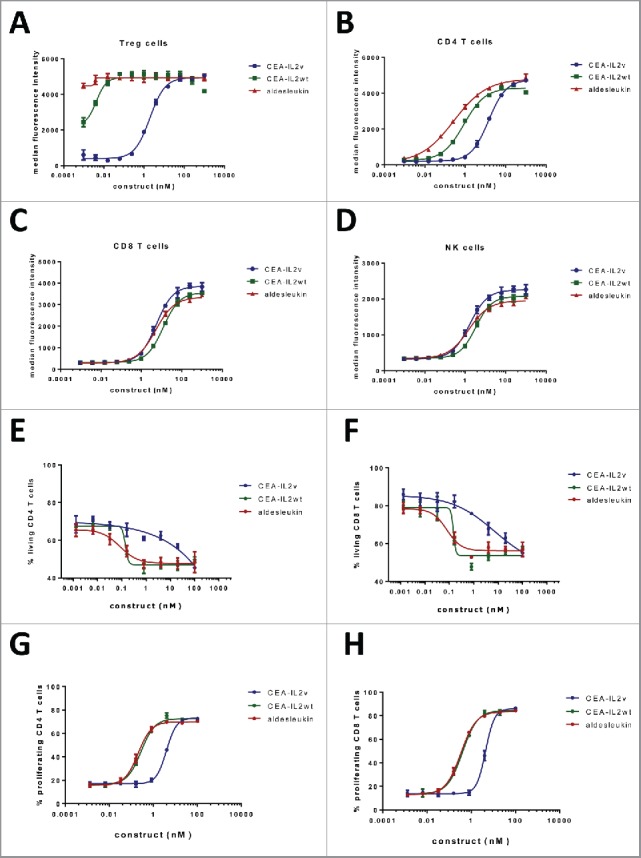
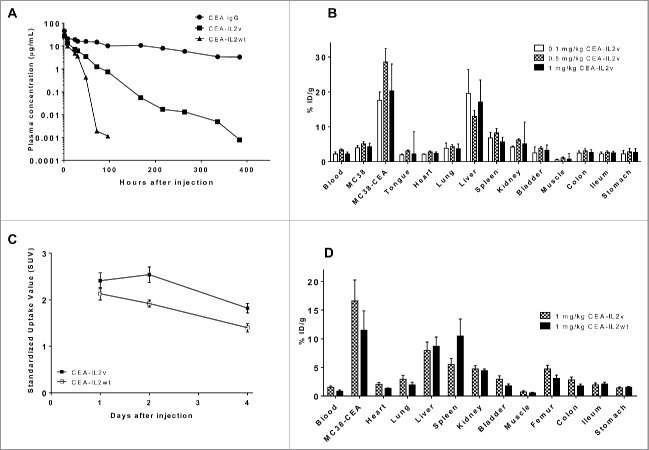
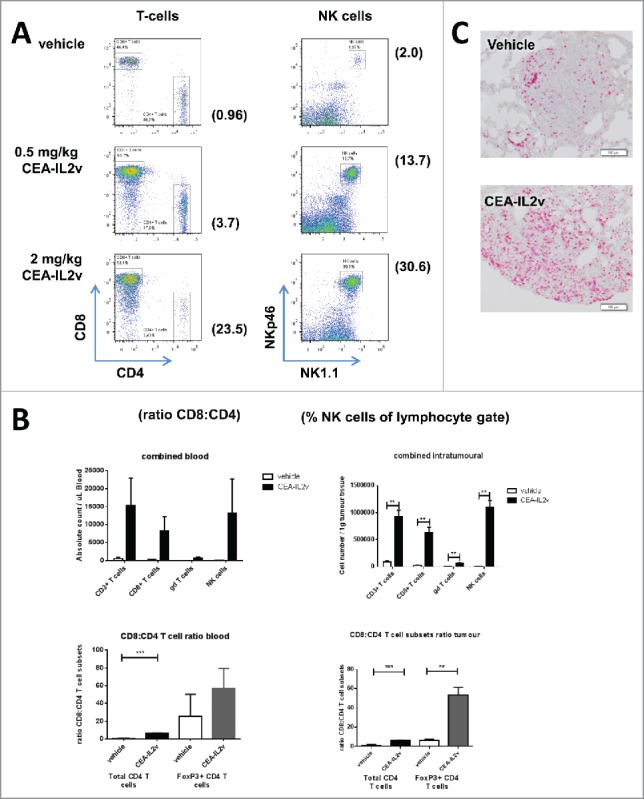
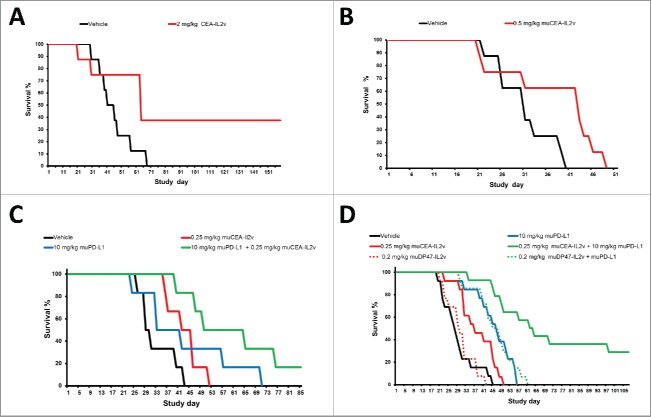
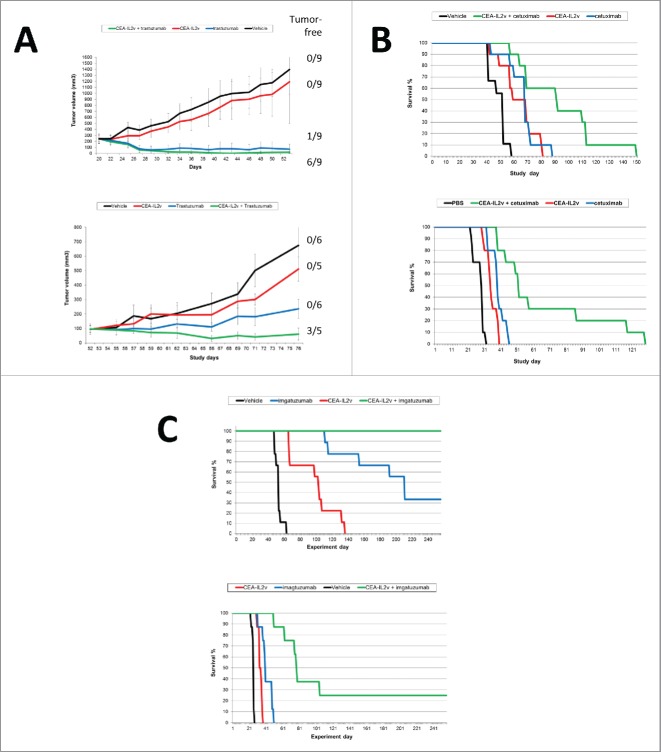
We developed cergutuzumab amunaleukin (CEA-IL2v, RG7813), a novel monomeric CEA-targeted immunocytokine, that comprises a single IL-2 variant (IL2v) moiety with abolished CD25 binding, fused to the C-terminus of a high affinity, bivalent carcinoembryonic antigen (CEA)-specific antibody devoid of Fc-mediated effector functions. Its molecular design aims to (i) avoid preferential activation of regulatory T-cells vs. immune effector cells by removing CD25 binding; (ii) increase the therapeutic index of IL-2 therapy by (a) preferential retention at the tumor by having a lower dissociation rate from CEA-expressing cancer cells vs. IL-2R-expressing cells, (b) avoiding any FcγR-binding and Fc effector functions and (c) reduced binding to endothelial cells expressing CD25; and (iii) improve the pharmacokinetics, and thus convenience of administration, of IL-2. The crystal structure of the IL2v-IL-2Rβγ complex was determined and CEA-IL2v activity was assessed using human immune effector cells. Tumor targeting was investigated in tumor-bearing mice using 89Zr-labeled CEA-IL2v. Efficacy studies were performed in (a) syngeneic mouse models as monotherapy and combined with anti-PD-L1, and in (b) xenograft mouse models in combination with ADCC-mediating antibodies. CEA-IL2v binds to CEA with pM avidity but not to CD25, and consequently did not preferentially activate Tregs. In vivo, CEA-IL2v demonstrated superior pharmacokinetics and tumor targeting compared with a wild-type IL-2-based CEA immunocytokine (CEA-IL2wt). CEA-IL2v strongly expanded NK and CD8+ T cells, skewing the CD8+:CD4+ ratio toward CD8+ T cells both in the periphery and in the tumor, and mediated single agent efficacy in syngeneic MC38-CEA and PancO2-CEA models. Combination with trastuzumab, cetuximab and imgatuzumab, all of human IgG1 isotype, resulted in superior efficacy compared with the monotherapies alone. Combined with anti-PD-L1, CEA-IL2v mediated superior efficacy over the respective monotherapies, and over the combination with an untargeted control immunocytokine. These preclinical data support the ongoing clinical investigation of the cergutuzumab amunaleukin immunocytokine with abolished CD25 binding for the treatment of CEA-positive solid tumors in combination with PD-L1 checkpoint blockade and ADCC competent antibodies.
Overview
The claims and statistics of this paper haven’t been checked yet.
Free: it reads the open-access text and checks the first 5 claims that cite a source we can check. Create a free account to check every claim.
Integrity signals
Registry
Cites
Statistics
Figures
Verification
Claims the paper makes
The claims and statistics of this paper haven’t been checked yet.
Free: it reads the open-access text and checks the first 5 claims that cite a source we can check. Create a free account to check every claim.
Claims other papers make about this one
Each is checked against this paper’s own text: does it say what the citing paper says it does?
The source backs part of the claim, not all of it — or backs it for a different population, condition or comparison.
In the citing paper
“Accordingly, the therapeutic activity of these mAbs correlates with the abundance of NK cells, is influenced by genetic polymorphisms affecting Fc g R functions, and can be boosted (at least preclinically) by immunotherapeutic interventions preventing NK dysfunction (e.g., IL2 or IL12 administration) (Gennari et al., 2004; Jaime-Ramirez et al., 2011; Klein et al., 2017; Kono et al., 2002; Musolino”
From Immunomodulation by targeted anticancer agents (2021) · cites this paper as Klein et al., 2017
Experimental — accuracy not yet measuredThe cited source says what the claim attributes to it.
In the citing paper
“redesign the next generation cytokines for therapeutic purposes, which are currently being tested and have shown beneficial effects in combination with ICB in preclinical studies”
From Hallmarks of response, resistance, and toxicity to immune checkpoint blockade (2021) · cites this paper as Klein et al., 2017
Self-check
Percentages, sums and reported differences re-computed from the paper’s own numbers.
The self-check needs the paper’s full text.
Citations
Cites
Zou, W., Wolchok, J. D., & Chen, L. (2016) · Science Translational Medicine · doi:10.1126/scitranslmed.aad7118 · Cited by 2,400 · cited 1×
“It interferes with the immune episode of cancer cells by interacting with the inhibitory PD-1 receptor on T cells.(42) In vitro studies showed that CEA-IL2v induces PD-L1 upregulation on tumor cells (Fig.”
BackgroundA function for interleukin 2 in Foxp3-expressing regulatory T cells
Fontenot, J. D., Rasmussen, J. P., Gavin, M. A., & Rudensky, A. Y. (2005) · Nature Immunology · doi:10.1038/ni1263 · Cited by 1,819 · cited 2×
“constitutively expressed on CD4CFoxP3C Tregs.(7) (Fig.”
InfluentialThe role of interleukin-2 during homeostasis and activation of the immune system
Boyman, O., & Sprent, J. (2012) · Nature Reviews Immunology · doi:10.1038/nri3156 · Cited by 1,657 · cited 1×
“binding, whereas the b and the g subunits mediate signal transduction.(3,4,6) IL-2Rbg is expressed on NK cells, monocytes, macrophages and resting CD4C and CD8C T cells, while IL-2Rabg”
BackgroundIL-2: The First Effective Immunotherapy for Human Cancer
Rosenberg, S. A. (2014) · The Journal of Immunology · doi:10.4049/jimmunol.1490019 · Cited by 1,289 · cited 1×
“In addition, systemic IL-2 treatment has been associated with severe cardiovascular, pulmonary, hepatic, gastrointestinal, neurologic and hematological side effects, such that it is only given to patients at specialized centers.(10) Preclinical experiments showed that IL-2-induced pulmonary edema is caused by interact…”
BackgroundPredicting immunogenic tumour mutations by combining mass spectrometry and exome sequencing
Yadav, M., Jhunjhunwala, S., Phung, Q. T., Lupardus, P., Tanguay, J., Bumbaca, S., Franci, C., Cheung, T. K., Fritsche, J., Weinschenk, T., et al. (2014) · Nature · doi:10.1038/nature14001 · Cited by 1,186
The biology of interleukin-2 and interleukin-15: implications for cancer therapy and vaccine design
Waldmann, T. A. (2006) · Nature Reviews Immunology · doi:10.1038/nri1901 · Cited by 1,178 · cited 1×
“binding, whereas the b and the g subunits mediate signal transduction.(3,4,6) IL-2Rbg is expressed on NK cells, monocytes, macrophages and resting CD4C and CD8C T cells, while IL-2Rabg”
BackgroundSelective Stimulation of T Cell Subsets with Antibody-Cytokine Immune Complexes
Boyman, O., Kovar, M., Rubinstein, M. P., Surh, C. D., & Sprent, J. (2006) · Science · doi:10.1126/science.1122927 · Cited by 870 · cited 1×
“IL-2-antibody complexes that no longer interact with CD25 and caused a strong preferential expansion of CD8C T-memory over CD4C T cells.(41) In a separate study, the kinetics of CD8C and NK cell proliferation following treatment with muCEA-IL2v was compared with muCEA-IL2wt.”
ResultConlon, K. C., Lugli, E., Welles, H. C., Rosenberg, S. A., Fojo, A. T., Morris, J. C., Fleisher, T. A., Dubois, S. P., Perera, L. P., Stewart, D. M., et al. (2015) · Journal of Clinical Oncology · doi:10.1200/jco.2014.57.3329 · Cited by 711
Carcinoembryonic antigen gene family: Molecular biology and clinical perspectives
Thompson, J. A., Grunert, F., & Zimmermann, W. (1991) · Journal of Clinical Laboratory Analysis · doi:10.1002/jcla.1860050510 · Cited by 608 · cited 1×
“95% of colorectal, 90% of pancreatic, 80% of gastric, 60% of non-small cell lung and 40% of breast cancer specimens staining positive for CEA with moderate or high intensity (data not shown), whereas in normal tissues only low-level CEA expression is found on the apical surface of glandular epithelia in the gastrointe…”
BackgroundExploiting a natural conformational switch to engineer an interleukin-2 ‘superkine’
Levin, A. M., Bates, D. L., Ring, A. M., Krieg, C., Lin, J. T., Su, L., Moraga, I., Raeber, M. E., Bowman, G. R., Novick, P., et al. (2012) · Nature · doi:10.1038/nature10975 · Cited by 552 · cited 1×
“ing to improved antitumor responses, and elicited less expansion of Tregs and reduced pulmonary edema.(45)”
Background
Research works printed but not linked: 1
- Bacac M, Fauti T, Sam J, Colombetti S, Weinzierl T, Ouaret D, Bodmer WF, Lehmann S, Hofer T, Hosse RJ et al. A Novel Carcinoembryonic Antigen T Cell Bispecific Antibody (Cea Tcb) for the Treatment of Solid Tumors. Clin Cancer Res 2016; 22(13): 3286- 97; PMID:26861458; http://dx.doi.org/25402018 10.1158/1078-0432.CCR-15-1696 26861458 · DOI · Paper page
Cited by
Items 201–281 of 281
Viitanen, R., Virtanen, H. E., Liljenbäck, H., Moisio, O., Li, X., Nicolini, V., Richard, M., Klein, C., Nayak, T. K., Jalkanen, S., et al. (2022) · Frontiers in Immunology · doi:10.3389/fimmu.2022.901693 · Cited by 6
“We have recently designed a novel genetically engineered variant of IL-2 (IL2v), which activates CD8 T cells and NK cells but does not bind to CD25 (15, 16).”
BackgroundMethodSelf-citationSehgal, A. N. A., Tauber, P. A., Stieger, R. B., Kratzer, B., & Pickl, W. F. (2023) · International Archives of Allergy and Immunology · doi:10.1159/000533677 · Cited by 5
A novel dual mechanism-of-action bispecific PD-1-IL-2v armed by a “βγ-only” interleukin-2 variant
Jiang, Y., Chen, C., Liu, Y., Wang, R., Feng, C., Cai, L., Chang, S., & Zhao, L. (2024) · Frontiers in Immunology · doi:10.3389/fimmu.2024.1369376 · Cited by 5
Zuo, K., Liu, N., Zhou, P., Zheng, M., Wang, L., Tang, T., Yang, Z., Chen, L., & Zhu, X. (2024) · Biomedicine & Pharmacotherapy · doi:10.1016/j.biopha.2024.117664 · Cited by 5
Activatable Photosensitizer Prodrug for Self‐Amplified Immune Therapy Via Pyroptosis
Liang, P., Ren, L., Yan, Y. H., Li, Z., Yang, F., Ren, T., Yuan, L., & Zhang, X. (2025) · Angewandte Chemie · doi:10.1002/ange.202419376 · Cited by 5
Rotta, G., Prodi, E., Seehusen, F., Bocci, M., Prisco, F., Gilardoni, E., Comacchio, C., Halin, C., Puca, E., Neri, D., et al. (2025) · Journal for ImmunoTherapy of Cancer · doi:10.1136/jitc-2024-010831 · Cited by 5
“7 8 13 While some groups have fused the IL-2 moiety to antibodies in IgG format, 14–16 we have extensively employed antibody fragments with faster clearance to reduce cytokine exposure to healthy organs while maintaining a long residence time in the neoplastic mass. 17 18 F8 is a fully human…”
Godfroid, C., Romero, J. F., Labiano, S., Chuang, C.-H., Kelemen, A., Wyss, T., Roh, V., Verdeil, G., Klein, C., Deak, L. C., et al. (2025) · Journal for ImmunoTherapy of Cancer · doi:10.1136/jitc-2024-009832 · Cited by 6
“18 Different IL-2v targeted strategies such as CEA-specific antibody (CEA-IL2v) 47 or FAP-IL2v 48 potentiate the efficacy of different T and NK cell-based immunotherapies.”
Self-citationImmunocytokines in cancer immunotherapy: opportunities and challenges
Wang, S., Yao, L., Cai, J., Gao, H., & Zhou, F. (2026) · Frontiers in Oncology · doi:10.3389/fonc.2025.1716612 · Cited by 4
Barendrecht, A., Peeters, H. H. C., Torres‐García, D., Shema, M. T., Sarris, A. J. C., David, S. T., Aba, G., Gall, C. M. L., Wilkovitsch, M., Verdoes, M., et al. (2025) · RSC Chemical Biology · doi:10.1039/d5cb00113g · Cited by 4
Montorfani, J., Hatterer, E., Chatel, L., Lesnier, A., Viandier, A., Daubeuf, B., Nouveau, L., Malinge, P., Calloud, S., Masternak, K., et al. (2025) · Journal for ImmunoTherapy of Cancer · doi:10.1136/jitc-2024-010650 · Cited by 3
Chen, J., Ren, E., Tao, Z., Lu, H., Huang, Y., Li, J., Chen, Y., Chen, Z., She, T., Yang, H., et al. (2025) · Drug Delivery · doi:10.1080/10717544.2025.2482195 · Cited by 3
“Usually, these il-2 variants are produced by either site-directed mutation or il-2Rα-binding masking (Klein et al., 2017, Ptacin et al., 2021), which fail to completely abrogate il-2Rα-binding while preserve il-2Rβγ-binding ability of il-2.”
InfluentialSalazar, U., Cioffi, P., Taşkoparan, B., Moraga, I., Mitra, S., & Berg, J. V. (2025) · Immuno-Oncology Technology · doi:10.1016/j.iotech.2025.101064 · Cited by 9
“57,64,65 However, this targeting is less effective with systemic administration, where the distribution of the fusion protein is influenced by the expression of cognate cytokine receptors.”
Engineering Fusion Proteins for Nanomedicine-Based Cytokine Therapy
de Dreu, A., de Bruin, K., Hokke, A. M., Schrijver, D. P., Beelen, D. N. H., Verhalle, L. M., Perez, M. C. C., Anbergen, T., Versteeg, I., Maas, R. J. F., et al. (2025) · Bioconjugate Chemistry · doi:10.1021/acs.bioconjchem.5c00182 · Cited by 4
Ma, L., Acuff, N. V., Ptacin, J. L., Caffaro, C. E., Jose, K. M. S., Aerni, H. R., Herman, R. W., Pavlova, Y., Pena, M. J., Chen, D. B., et al. (2025) · The Journal of Immunology · doi:10.1093/jimmun/vkaf142 · Cited by 4
Zhu, Y., Zhang, Q., Wei, C., Hu, Y., Gong, H., Liu, Y., Lai, H., Feng, Y., & Lin, Y. (2021) · Technology in Cancer Research & Treatment · doi:10.1177/15330338211037175 · Cited by 3
“Several immunotherapies targeting CEApositive tumors are currently under clinical trials, such as chimeric antigen receptor T (CAR-T) cells(10) and bispecific antibodies (BsAbs).(8,11) However, it has also been reported that CEA expression heterogeneity and plasticity conferred resistance to the CEA-targeting bispecif…”
BackgroundBeebe, K. D., Eisner, J. R., Guo, Y., Shibata, Y., Davison, J. M., Uronis, J., Farhangfar, C. J., Farhangfar, F., Mooney, J. M., Milburn, M. V., et al. (2024) · The Journal of Immunology · doi:10.4049/jimmunol.2300736 · Cited by 3
Metastatic melanoma: therapeutic agents in preclinical and early clinical development
Boos, L. A., Leslie, I., & Larkin, J. (2020) · Expert Opinion on Investigational Drugs · doi:10.1080/13543784.2020.1769066 · Cited by 4
Aniogo, E. C., Williams, L., Hong, T., Wong, P. W., Hui, S. K., Ghimire, H., Poku, E. K., Colcher, D. M., Yazaki, P. J., Shively, J. E., et al. (2025) · Cancers · doi:10.3390/cancers17091453 · Cited by 2
“We believe that these changes are critical for achieving potent and lasting anti-tumor immune responses, as shown previously by us and others [24,35].”
Relova-Hernández, E., Díaz-Bravo, A. B., Pedroso, R., Gonzalez-Cruz, M. Á., Gómez, T., Arias, E., Pérez‐Martínez, D., Álvarez-Arzola, R., Avellanet, J., Padrón, L., et al. (2025) · The Journal of Immunology · doi:10.1093/jimmun/vkaf208 · Cited by 2
Nishibori, S., Takeda, Y., Igase, M., & Mizuno, T. (2025) · Veterinary Immunology and Immunopathology · doi:10.1016/j.vetimm.2025.111000 · Cited by 2
Zhang, H., Li, G., Chen, C., Ding, J., Shen, H., Min, W., & Yang, P. (2026) · Journal of Medicinal Chemistry · doi:10.1021/acs.jmedchem.5c02668 · Cited by 2
Identification of new IL-7Rα small-molecule agonists: a multi-computational approach
Lee, J., Lee, K., & Koh, B. (2021) · SAR and QSAR in environmental research · doi:10.1080/1062936x.2021.1969684 · Cited by 2
Targeting Ovarian Cancer with IL-2 Cytokine/Antibody Complexes: A Summary and Recent Advances
Deng, Y., Reyes, R. M., Zhang, C., Conejo-Garcia, J. R., & Curiel, T. J. (2021) · Journal of Cellular Immunology · doi:10.33696/immunology.3.122 · Cited by 5
“These approaches include PEGylated IL-2 agonists [18,19,22,23], IL-2 fusion proteins [12,23], IL-2 and anti-IL2 mAb complexes [7,2426], IL-2 with the CD25 binding site genetically deleted [27] and IL-2 fused to CD25 [28] among others [23,29], aiming preferentially activate antitumor effector cells over Tregs, and in s…”
BackgroundEisner, J. R., Beebe, K. D., Mayhew, G. M., Shibata, Y., Guo, Y., Farhangfar, C. J., Farhangfar, F., Uronis, J. M., Mooney, J. M., Milburn, M. V., et al. (2022) · Cancer Research Communications · doi:10.1158/2767-9764.crc-21-0153 · Cited by 2
“New “next-generation” IL2 agents are also under clinical investigation, including NKTR-214 (10), THOR-707/SAR’245 (NCT04009681), ALKS-4230 (12), RO6874281 (11), which are designed for improved selectivity and tolerability, while maintaining or improving upon the antitumor activity of HD-IL2.”
BackgroundHigh-Affinity Fully Human Anti-EpCAM Antibody with Biased IL-2 Exhibits Potent Antitumor Activity
Wang, Z., Wang, M., Li, Q., Wu, Y., & Ying, T. (2024) · Biomolecules · doi:10.3390/biom14111399 · Cited by 2
Engstrom, A., Hannibal, T. D., Egli, J., Gauthier, B. E., Krarup, M. L., Gallo, D., Jensen, A. E., Cruchten, S. J. M. V., Bulera, S. J., Cornet, M., et al. (2025) · Regulatory Toxicology and Pharmacology · doi:10.1016/j.yrtph.2025.105855 · Cited by 3
ИНЖЕНЕРИЯ ТЕРАПЕВТИЧЕСКИХ АНТИТЕЛ: ТЕОРИЯ И ПРАКТИКА#, "Молекулярная биология"
Луговской, А. А. (2017) · Molecular Biology · doi:10.7868/s0026898417060027 · Cited by 2
Site-specific O-Glycosylation Analysis of Therapeutic Fc-fusion Protein by Mass Spectrometry
Hashii, N., & Ishii‐Watabe, A. (2018) · YAKUGAKU ZASSHI · doi:10.1248/yakushi.18-00020-2 · Cited by 2
Protein drug-drug interactions for therapeutic modalities
Liu, L., Evers, R., & Montgomery, D. L. (2020) · Elsevier eBooks · doi:10.1016/b978-0-12-820018-6.00013-2 · Cited by 2
Cancer Immunology and the Evolution of Immunotherapy
Nurieva, R., Divenko, M., & Kim, S. (2021) · Springer eBooks · doi:10.1007/978-3-030-56824-5_1 · Cited by 2
Les anticorps bispécifiques : une vieille histoire pleine d’avenir… avec les CAR-T !
Riffard, C., & Teillaud, J. (2021) · Bulletin du Cancer · doi:10.1016/j.bulcan.2021.02.016 · Cited by 2
Engineering Antibodies as Drugs: Principles and Practice
Lugovskoy, A. A. (2017) · Molecular Biology · doi:10.1134/s0026893317060097 · Cited by 3
A rationally-engineered IL-2 improves the antitumor effect of anti-CD20 therapy
Casadesús, A. V., Deligne, C., Diallo, B., Sosa, K., Josseaume, N., Mesa, C., León, K., Hernández, T., & Teillaud, J. (2020) · OncoImmunology · doi:10.1080/2162402x.2020.1770565 · Cited by 2
Conserved cysteines prevent C ‐mannosylation of mucin Cys domains
Albers, M. D., Tiemann, B., Kaynert, J. T., Pich, A., & Bakker, H. (2024) · FEBS Journal · doi:10.1111/febs.17152 · Cited by 2
“Next to TSRs, type I cytokine receptors form a second family of proteins that are typically C -mannosylated [14-18].”
Selectivity Approaches in Therapeutic Antibody Design
Fouad, M. A. (2025) · Journal of Medicinal Chemistry · doi:10.1021/acs.jmedchem.5c01830 · Cited by 1
Melero, I., Tabernero, J. M., Steeghs, N., Robbrecht, D. G. J., Peters, S., Rizvi, N. A., O'Reilly, E. M., Calvo, E., Eefsen, R. L., Leighl, N. B., et al. (2025) · Clinical Cancer Research · doi:10.1158/1078-0432.ccr-25-2440 · Cited by 1
“Mouse models have demonstrated synergistic effects between PD-L1 and IL2 therapies; Klein and colleagues (18) showed that the use of a PD-L1 inhibitor with a CA treatment regimen prolonged survival in mice, including rescue from exhaustion (23).”
InfluentialSelf-citationProgrammed Cell Death Protein 1-Interleukin-2 Bispecific Agents for Cancer Therapy
Xu, C. J., Yan, T., Wen, S., Wu, C., Chang, T., Kong, E., & Liu, H. P. (2026) · BioDrugs · doi:10.1007/s40259-026-00769-x · Cited by 1
“By eliminating interaction with CD25, the strategy aims to bypass CD25 dependency and preferentially activate stem-like CD8 ⁺ T cells (Tpex) [65–67].”
Lassen, U., van Brummelen, E. M. J., Melero, I., Angevin, E., Joensuu, H., Segal, N. H., Mau‐Sørensen, M., Steeghs, N., Rodriguez-Ruiz, M., Homicskó, K., et al. (2026) · ESMO Open · doi:10.1016/j.esmoop.2026.107697 · Cited by 2
Self-citationPost-Infarction Inflammatory Alterations
der Heiden, K. V., Krenning, B. J., Merkus, D., & Bernsen, M. R. (2021) · Springer eBooks · doi:10.1007/978-3-030-81131-0_5 · Cited by 1
Melero, I., Steeghs, N., Lassen, U., Homicskó, K., Tabernero, J. M., Cañamero, M., Roller, A., Duarte, J. M., Rossmann, E. D., Babitzki, G., et al. (2026) · Journal for ImmunoTherapy of Cancer · doi:10.1136/jitc-2025-012885 · Cited by 1
“6 14 Several IL-2 immunocytokines are in development, mainly in combination with other immune modulators due to a lack of clear and relevant activity of immunocytokine monotherapy, 15 16 but few have progressed beyond phase II trials.”
Self-citationNirschl, C. J., Subramanian, K. K., Brodkin, H. R., Domonkos, C., Dwyer, C. J., Hicklin, D. J., ISAACS, R. E., Ismail, N. S., LePrevost, J., Lewis, Y., et al. (2026) · Cancer Immunology Research · doi:10.1158/2326-6066.cir-25-0558 · Cited by 1
Yu, B., Yoo, D., Kim, K. H., Kim, T. W., Park, S., Kim, Y., Son, Y., Kim, J., Noh, I., Whang, C., et al. (2022) · Advanced Therapeutics · doi:10.1002/adtp.202100151 · Cited by 1
Ryff, J., & Pestka, S. (2019) · Springer eBooks · doi:10.1007/978-3-030-00710-2_27 · Cited by 1
Current approaches to assessing the biological activity of immunocytokines in vitro
Konoplina, K. M., Kosobokova, E. N., & Kosorukov, V. S. (2022) · Russian Journal of Biotherapy · doi:10.17650/1726-9784-2022-21-3-10-22 · Cited by 1
Elucidation of B-cell specific drug immunogenicity liabilities via a novel ex vivo assay
Looney, C. M., Ducret, A., Steiner, G., Dernick, K., Hartman, K., Siegel, M., Hickling, T. P., Odermatt, A., & Marban-Doran, C. (2025) · Frontiers in Immunology · doi:10.3389/fimmu.2025.1589483 · Cited by 1
Mao, Z., Fu, X., Dong, Z., Jian, X., Sun, J. M., & Wei, J. (2018) · Molecular Simulation · doi:10.1080/08927022.2018.1467013 · Cited by 1
“To enhance the anticancer efficacy of IL-2, several strategies, such as decreasing the affinity to IL-2Rα, (called as ‘no-α mutein’) [15,16] and increasing the affinity to IL-2Rβ (called as the agonistic IL-2 muteins) [17,18], have been reported [19].”
BackgroundImmunotoxines et immunocytokines
Contet, A., Caussanel, V., Beck, A., & Lowe, P. R. (2019) · médecine/sciences · doi:10.1051/medsci/2019205 · Cited by 2
Molecular and Macroscopic Therapeutic Systems for Cytokine‐Based Cancer Immunotherapy
Jin, S. M., Lee, S. N., Yoo, Y. J., & Lim, Y. T. (2021) · Advanced Therapeutics · doi:10.1002/adtp.202100026 · Cited by 2
Adoptive NK cell therapies in children with cancer: Clinical challenges and future possibilities
Nguyen, R., & Furman, W. L. (2021) · Elsevier eBooks · doi:10.1016/b978-0-12-824375-6.00018-7
Radioimaging of Activated T Cells in Preclinical and Clinical Cancer Investigations
Roxin, Á., & Bénard, F. (2021) · Springer eBooks · doi:10.1007/978-3-030-81261-4_3
Faculty Opinions recommendation of Current progress in innovative engineered antibodies.
Abdiche, Y. N. (2019) · Faculty Opinions – Post-Publication Peer Review of the Biomedical Literature · doi:10.3410/f.729268838.793560915
Alaofi, A. L. (2022) · Journal of Chemistry · doi:10.1155/2022/3646375
Immunotherapy in Gastrointestinal Cancer Focusing on CAR-T Cell Therapy
Mousavi, A., Gharibpoor, F., Razi, S., & Rezaei, N. (2023) · Interdisciplinary cancer research · doi:10.1007/16833_2023_152
Nirschl, C. J., Brodkin, H. R., Domonkos, C., Dwyer, C. J., Hicklin, D. J., Ismail, N. S., Seidel‐Dugan, C., Steiner, P., Steuert, Z., Sullivan, J. M., et al. (2023) · doi:10.1158/2326-6066.c.6653474
Dehghan, R., Parikhani, A. B., Cohan, R. A., Shokrgozar, M. A., Mirabzadeh, E., Ajdary, S., Zeinali, S., Ghaderi, H., Talebkhan, Y., & Behdani, M. (2024) · Current Pharmaceutical Design · doi:10.2174/0113816128295195240305060103
Review of Current Trends and Research on Clinical Immuno-Oncology
Kanirajan, X., Natarajan., P., Ganesh, H. R., Koteeswaran, K., & Kishorekumar, V. (2024) · International Journal of Pharmaceutical Sciences Review and Research · doi:10.47583/ijpsrr.2024.v84i03.015
“The tumor microenvironment (TME) is a complex ecosystem involving tumor cells, immune cells, and non-immune cells.”
BackgroundInfluentialImmunotherapy and Immunotherapeutic Drugs
Akkoç, H. (2024) · doi:10.69860/nobel.9786053359388.3
Lv, Y., Chen, J., Wang, C., Jin, Z., & Lou, J. J. (2024) · European Journal of Pharmacology · doi:10.1016/j.ejphar.2024.177159
Zanders, E. D. (2025) · Springer eBooks · doi:10.1007/978-3-031-93949-5_6 · Cited by 1
Zeng, Q., Kong, W., Qin, Y., Song, L., Liu, N., Liu, Z., Ji, C., Qi, G., Shi, W., & Lu, H. (2025) · bioRxiv (Cold Spring Harbor Laboratory) · doi:10.1101/2025.08.14.670432 · Cited by 1
Immunotherapy in Head and Neck Cancer
Crossman, B. E., Harmon, R. L., Iida, M., Lin, C. Y., Yoon, J. R., Pisick, E. P., Salgia, R., Glazer, T. A., Kimple, R. J., Bruce, J. Y., et al. (2025) · Cancer treatment and research · doi:10.1007/978-3-031-97242-3_7
Andersson, H., Uddback, I. E. M., Hermodsson, T., Celander, M., Shetty, A. K., Ljung, L., Nilsson, A., Sundstedt, A., von Schantz, L., Varas, L. A., et al. (2025) · Cancer Immunology Research · doi:10.1158/2326-6066.cir-25-0075 · Cited by 1
“However, CEACAM5 has limited expression in normal adult tissue (13), in which it is mainly expressed in a polar manner on the apical surface of colon epithelial cells, making it inaccessible for systemically administered CEACAM5-targeting antibodies (15, 16).”
吴, 奇. (2025) · Advances in Clinical Medicine · doi:10.12677/acm.2025.15123482
Wijngaarden, J. E., Jauw, Y. W. S., Zwezerijnen, G. J. C., de Wit-van der Veen, B. J., Vugts, D. J., Zijlstra, J. M., van Dongen, G. A. M. S., Boellaard, R., van Oordt, C. W. M. D. H., & Huisman, M. C. (2024) · Figshare · doi:10.6084/m9.figshare.25231220
Self-citationMaruri‐Avidal, L., Limsirichai, P., Gulizia, N., & Kirn, D. H. (2026) · Molecular Therapy Oncology · doi:10.1016/j.omton.2026.201153
Olğaç, S., Olğaç, A., Varan, G., & Teksin, Z. Ş. (2026) · ACS Omega · doi:10.1021/acsomega.5c12065
Novel design of interleukin-2 derivatives with reversed pH and potent antitumor activity
Liu, Y., Liu, Q., Zhao, W., Wang, Z. R., Zhong, G., Yi, J., Zheng, Y., Hao, X., Peng, D., Tang, D., et al. (2026) · European Journal of Medicinal Chemistry · doi:10.1016/j.ejmech.2026.118815
Translating IL-2/anti-IL-2 antibody complexes treatment for human tumor immunotherapy
Caudana, P. (2018) · theses.fr (ABES) · doi:10.70675/8a93b17bz416az4e49z9a3bz92c1c8a4cf8c
Immunothérapie et métabolisme tumorale
Benamor, S. B. (2017) · theses.fr (ABES) · doi:10.70675/2e5cbde1zb4faz4320zbd12z0a2ba777228b · Cited by 1
Kizlik‐Masson, C. (2018) · theses.fr (ABES) · doi:10.70675/25332178z3663z43b5zb134z384f5624cda7
Huang, F., Huang, J., Ye, F., Chen, S. C., Huang, W.-C., Hua, B., Li, E., Jiang, J., Kwan, J., Lin, H., et al. (2026) · iScience · doi:10.1016/j.isci.2026.115849
Natural Killer Cell‐Based Immunotherapy in HCC
Che, L., Xie, X., Yang, X., Zhu, S., & Zhou, Y. (2026) · Immunology · doi:10.1111/imm.70141
“First, engineered cytokine mutants with reduced CD25 binding (e.g., ‘non-α ’ IL-2) preferentially activate NK cells while minimizing Treg expansion and VLS risk [86, 87].”
Miura, D., Sekine, M., Hirono, L., Kato, Y., Yasunaga, M., Kumagai, I., & Asano, R. (2026) · Biochemical Engineering Journal · doi:10.1016/j.bej.2026.110260
Bi, Y., Wu, F., Mao, J., Azad, T., Liu, P., Zhou, X. Y., Xie, H., Hong, K., Qiu, X., Li, B., et al. (2026) · Frontiers in Immunology · doi:10.3389/fimmu.2026.1871551
“It is meant to lower off-target activation and stop triggers of exhaustion (47 – 51).”
Relova-Hernández, E., Díaz-Bravo, A. B., Cantero-Rodríguez, A., Álvarez-Arzola, R., Hernández-Álvarez, N., Carmenate, T., & Rojas, G. (2026) · Scientific Reports · doi:10.1038/s41598-026-61486-7
Cytokine fusion proteins for solid tumor therapy: mechanistic insights and clinical advances
Wang, Y., Zheng, J., Li, Z., Qu, J., Ren, Y., Cai, Z., Li, Y., Sun, W., Jiang, N., Cai, C., et al. (2026) · Journal of Hematology & Oncology · doi:10.1186/s13045-026-01842-2
“MDNA11 and RG7813 incorporate mutations, including F42A, Y45A, E62A, and L72G, to generate IL-2 non-alpha (IL-2nα) variants with reduced affinity for IL-2Rα [18, 19].”
Gao, H., Wang, S., 袁慧茹, Zhou, B., & Zhou, F. (2026) · Frontiers in Immunology · doi:10.3389/fimmu.2026.1756987 · Cited by 1
Immunocytokines in cancer: a safety perspective
Prajapati, K., Betts, C. J., & Stebbings, R. (2026) · Frontiers in Immunology · doi:10.3389/fimmu.2026.1894312
Li, Y., Zhao, X., Xie, M., & Elkord, E. (2026) · Molecular Biomedicine · doi:10.1186/s43556-026-00636-9
“Recently, immunomodulatory therapies [6], such as Teplizumab [7] and Abatacept [8, 9], have shown preliminary effects in early clinical applications, but the long-term efficacy remains to be improved.”
BindingDB (2022) · UC San Diego · doi:10.7270/q2h135tk
Metadata
- Authors
- Klein, C., Waldhauer, I., Nicolini, V. G., Freimoser-Grundschober, A., Nayak, T., Vugts, D. J., Dunn, C., Bolijn, M., Benz, J., Stihle, M., Lang, S., Roemmele, M., Hofer, T., van Puijenbroek, E., Wittig, D., Moser, S., Ast, O., Brünker, P., Gorr, I. H., Neumann, S., de Vera Mudry, M. C., Hinton, H., Crameri, F., Saro, J., Evers, S., Gerdes, C., Bacac, M., van Dongen, G., Moessner, E., & Umaña, P.
- Affiliations
- F. Hoffmann-La Roche AG (CH)
- Roche Pharma Research & Early Development, Roche Innovation Center Zurich, Schlieren, Switzerland
- Roche Pharma Research & Early Development, Department of Radiology & Nuclear Medicine, VU University Medical Center, Amsterdam, the Netherlands
- Amsterdam UMC Location Vrije Universiteit Amsterdam (NL)
- Roche Pharma AG (Germany) (DE)
- Roche Pharma Research & Early Development, Roche Innovation Center Basel, Basel, Switzerland
- Corresponding author
- Klein, Christian
- Umaña, Pablo
- ORCID
- Venue
- OncoImmunology
- Publisher
- Informa UK Limited
- Published
- 2017-01-11
- Volume
- 6
- Issue
- 3
- Pages
- e1277306
- ISSN
- 2162-4011 (ISSN-L)
- 2162-402X
- PMC
- PMC5384349
- OpenAlex
- W2572762406
- Cited by
- 281
- References
- 68
- Citations by year
- 2026: 21 · 2025: 35 · 2024: 39 · 2023: 31 · 2022: 27 · 2021: 40 · 2020: 26 · 2019: 33 · 2018: 20 · 2017: 9
- FWCI
- 18.47
- Type
- journal article
- Language
- en
- Open access
- gold
- doi.org
- Licence
- Locations
- OncoImmunology (publishedVersion, cc-by-nc)
- PubMed Central (publishedVersion, cc-by-nc-nd)
- PubMed (publishedVersion)
- Pure Amsterdam UMC (publishedVersion, other-oa)
- Amsterdam UMC (VU Amsterdam) - Institutional Repository (publishedVersion)
- DORA PSI (Paul Scherrer Institute) (submittedVersion, cc-by-nc-nd)
- DOAJ (DOAJ: Directory of Open Access Journals) (submittedVersion, cc-by-sa)
- Data Archiving and Networked Services (DANS) (submittedVersion)
- Funders
- Genentech
- Topics
- Life Sciences › Immunology and Microbiology › Immunology › Monoclonal and Polyclonal Antibodies Research
- Health Sciences › Medicine › Oncology › Cancer Immunotherapy and Biomarkers
- Life Sciences › Immunology and Microbiology › Immunology › Immunotherapy and Immune Responses
- Keywords
- immunocytokines, carcinoembryonic antigen, regulatory T cells, tumor targeting, pharmacokinetics, anti-PD-L1 combination therapy, antibody-dependent cellular cytotoxicity, natural killer cells, CD8+ T cells, trastuzumab, cetuximab, combination cancer immunotherapy, tumor-infiltrating lymphocytes
About these checks
Registry, retraction, Cites and statistics results are computed, not judged, with one exception: a printed reference that no index lists is read once by a model before it counts as a citation error. Claims are extracted by a model and kept only when their quote appears verbatim in the text; each cited source is then checked, with a model’s help, for whether it says what the claim relies on. Those verdicts can be wrong — read the claim’s quote and the cited source before relying on one.
Statistics and arithmetic are recomputed, not judged.
Confidence bands are shown only for fields calibrated on our annotated test set. None is calibrated yet, so no band is shown.
What counts as a claim ›How we measure confidence ›How we check this ›
Are you an author, or do you see a problem with this page? Request a review
Data sources
Bibliographic data: Semantic Scholar, OpenAlex, Crossref.
Contains information from the Semantic Scholar Academic Graph Datasets, made available under the ODC Attribution License (ODC-BY 1.0).
Semantic Scholar’s data is described in: Kinney, R., et al. (2023). The Semantic Scholar Open Data Platform. arXiv:2301.10140.
