

Cergutuzumab amunaleukin (CEA-IL2v), a CEA-targeted IL-2 variant-based immunocytokine for combination cancer immunotherapy: Overcoming limitations of aldesleukin and conventional IL-2-based immunocytokines
Open accessThe DOI matches its Crossref record; 66 of the 68 references it cites were found in a registry or an index.
Abstract
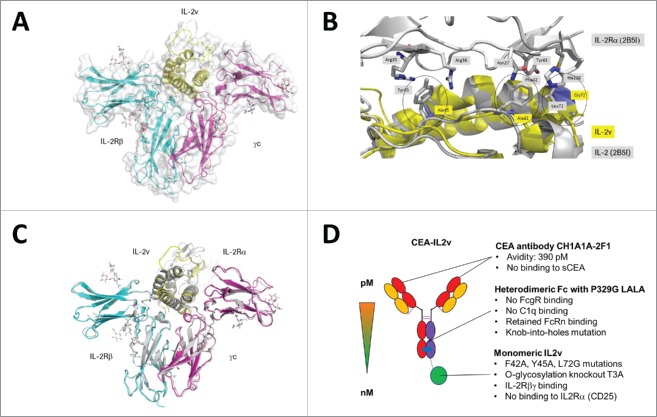
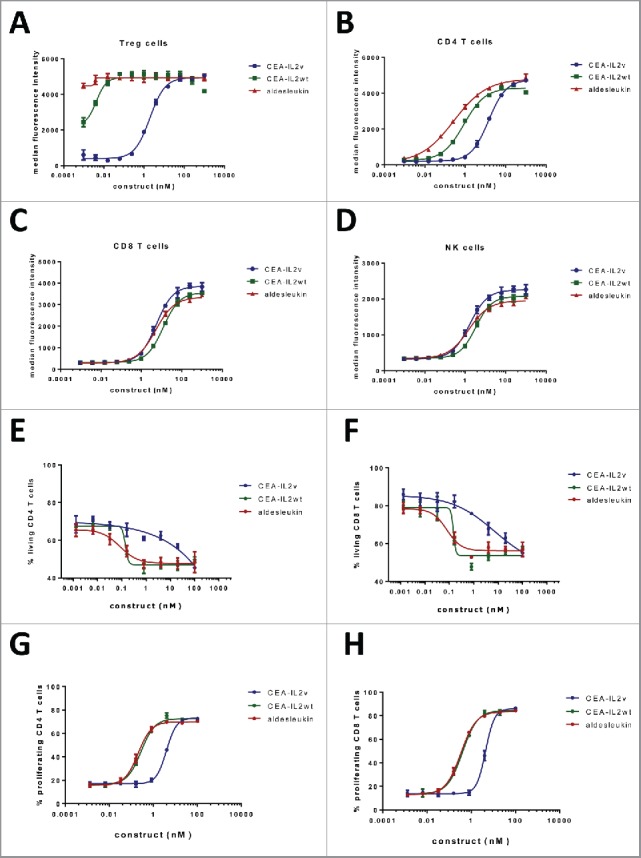
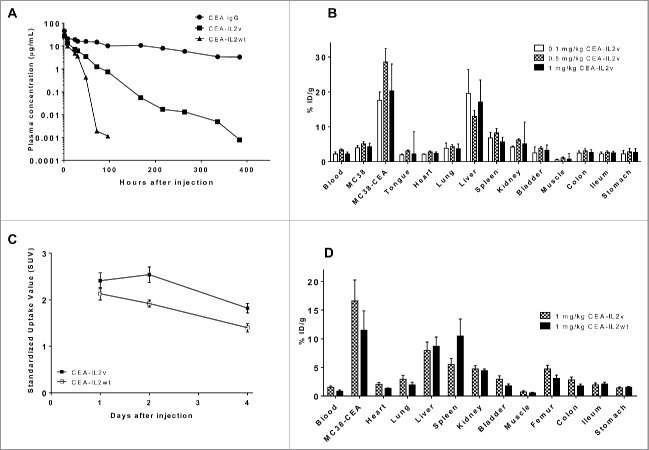
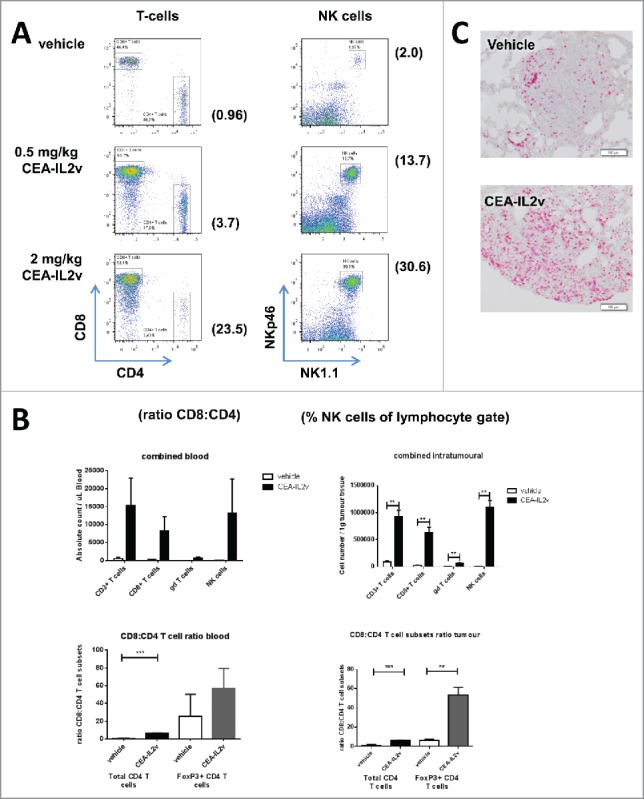
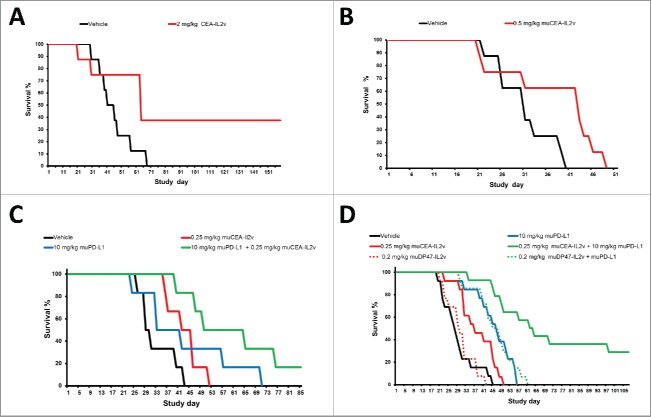
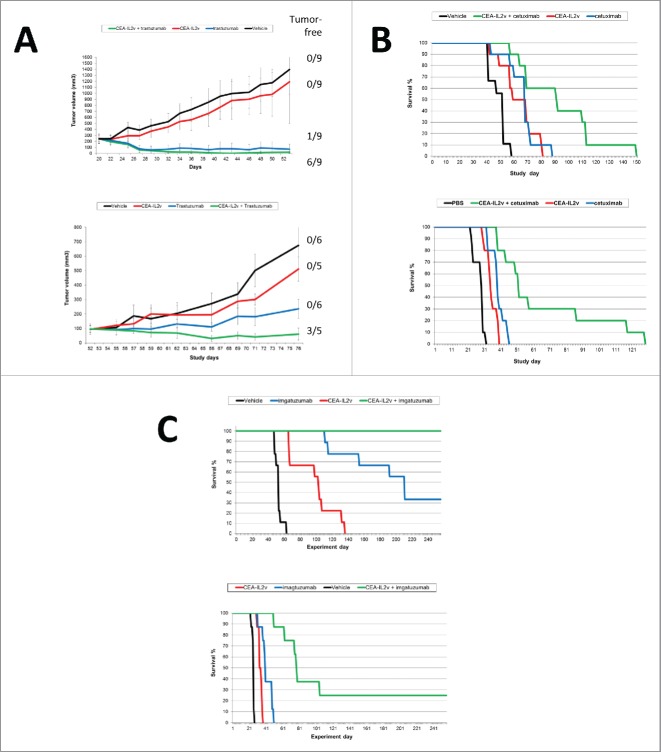
We developed cergutuzumab amunaleukin (CEA-IL2v, RG7813), a novel monomeric CEA-targeted immunocytokine, that comprises a single IL-2 variant (IL2v) moiety with abolished CD25 binding, fused to the C-terminus of a high affinity, bivalent carcinoembryonic antigen (CEA)-specific antibody devoid of Fc-mediated effector functions. Its molecular design aims to (i) avoid preferential activation of regulatory T-cells vs. immune effector cells by removing CD25 binding; (ii) increase the therapeutic index of IL-2 therapy by (a) preferential retention at the tumor by having a lower dissociation rate from CEA-expressing cancer cells vs. IL-2R-expressing cells, (b) avoiding any FcγR-binding and Fc effector functions and (c) reduced binding to endothelial cells expressing CD25; and (iii) improve the pharmacokinetics, and thus convenience of administration, of IL-2. The crystal structure of the IL2v-IL-2Rβγ complex was determined and CEA-IL2v activity was assessed using human immune effector cells. Tumor targeting was investigated in tumor-bearing mice using 89Zr-labeled CEA-IL2v. Efficacy studies were performed in (a) syngeneic mouse models as monotherapy and combined with anti-PD-L1, and in (b) xenograft mouse models in combination with ADCC-mediating antibodies. CEA-IL2v binds to CEA with pM avidity but not to CD25, and consequently did not preferentially activate Tregs. In vivo, CEA-IL2v demonstrated superior pharmacokinetics and tumor targeting compared with a wild-type IL-2-based CEA immunocytokine (CEA-IL2wt). CEA-IL2v strongly expanded NK and CD8+ T cells, skewing the CD8+:CD4+ ratio toward CD8+ T cells both in the periphery and in the tumor, and mediated single agent efficacy in syngeneic MC38-CEA and PancO2-CEA models. Combination with trastuzumab, cetuximab and imgatuzumab, all of human IgG1 isotype, resulted in superior efficacy compared with the monotherapies alone. Combined with anti-PD-L1, CEA-IL2v mediated superior efficacy over the respective monotherapies, and over the combination with an untargeted control immunocytokine. These preclinical data support the ongoing clinical investigation of the cergutuzumab amunaleukin immunocytokine with abolished CD25 binding for the treatment of CEA-positive solid tumors in combination with PD-L1 checkpoint blockade and ADCC competent antibodies.
Overview
The claims and statistics of this paper haven’t been checked yet.
Free: it reads the open-access text and checks the first 5 claims that cite a source we can check. Create a free account to check every claim.
Integrity signals
Registry
Cites
Statistics
Figures
Verification
Claims the paper makes
The claims and statistics of this paper haven’t been checked yet.
Free: it reads the open-access text and checks the first 5 claims that cite a source we can check. Create a free account to check every claim.
Claims other papers make about this one
Each is checked against this paper’s own text: does it say what the citing paper says it does?
The source backs part of the claim, not all of it — or backs it for a different population, condition or comparison.
In the citing paper
“Accordingly, the therapeutic activity of these mAbs correlates with the abundance of NK cells, is influenced by genetic polymorphisms affecting Fc g R functions, and can be boosted (at least preclinically) by immunotherapeutic interventions preventing NK dysfunction (e.g., IL2 or IL12 administration) (Gennari et al., 2004; Jaime-Ramirez et al., 2011; Klein et al., 2017; Kono et al., 2002; Musolino”
From Immunomodulation by targeted anticancer agents (2021) · cites this paper as Klein et al., 2017
Experimental — accuracy not yet measuredThe cited source says what the claim attributes to it.
In the citing paper
“redesign the next generation cytokines for therapeutic purposes, which are currently being tested and have shown beneficial effects in combination with ICB in preclinical studies”
From Hallmarks of response, resistance, and toxicity to immune checkpoint blockade (2021) · cites this paper as Klein et al., 2017
Self-check
Percentages, sums and reported differences re-computed from the paper’s own numbers.
The self-check needs the paper’s full text.
Citations
Cites
Zou, W., Wolchok, J. D., & Chen, L. (2016) · Science Translational Medicine · doi:10.1126/scitranslmed.aad7118 · Cited by 2,400 · cited 1×
“It interferes with the immune episode of cancer cells by interacting with the inhibitory PD-1 receptor on T cells.(42) In vitro studies showed that CEA-IL2v induces PD-L1 upregulation on tumor cells (Fig.”
BackgroundA function for interleukin 2 in Foxp3-expressing regulatory T cells
Fontenot, J. D., Rasmussen, J. P., Gavin, M. A., & Rudensky, A. Y. (2005) · Nature Immunology · doi:10.1038/ni1263 · Cited by 1,819 · cited 2×
“constitutively expressed on CD4CFoxP3C Tregs.(7) (Fig.”
InfluentialThe role of interleukin-2 during homeostasis and activation of the immune system
Boyman, O., & Sprent, J. (2012) · Nature Reviews Immunology · doi:10.1038/nri3156 · Cited by 1,657 · cited 1×
“binding, whereas the b and the g subunits mediate signal transduction.(3,4,6) IL-2Rbg is expressed on NK cells, monocytes, macrophages and resting CD4C and CD8C T cells, while IL-2Rabg”
BackgroundIL-2: The First Effective Immunotherapy for Human Cancer
Rosenberg, S. A. (2014) · The Journal of Immunology · doi:10.4049/jimmunol.1490019 · Cited by 1,289 · cited 1×
“In addition, systemic IL-2 treatment has been associated with severe cardiovascular, pulmonary, hepatic, gastrointestinal, neurologic and hematological side effects, such that it is only given to patients at specialized centers.(10) Preclinical experiments showed that IL-2-induced pulmonary edema is caused by interact…”
BackgroundPredicting immunogenic tumour mutations by combining mass spectrometry and exome sequencing
Yadav, M., Jhunjhunwala, S., Phung, Q. T., Lupardus, P., Tanguay, J., Bumbaca, S., Franci, C., Cheung, T. K., Fritsche, J., Weinschenk, T., et al. (2014) · Nature · doi:10.1038/nature14001 · Cited by 1,186
The biology of interleukin-2 and interleukin-15: implications for cancer therapy and vaccine design
Waldmann, T. A. (2006) · Nature Reviews Immunology · doi:10.1038/nri1901 · Cited by 1,178 · cited 1×
“binding, whereas the b and the g subunits mediate signal transduction.(3,4,6) IL-2Rbg is expressed on NK cells, monocytes, macrophages and resting CD4C and CD8C T cells, while IL-2Rabg”
BackgroundSelective Stimulation of T Cell Subsets with Antibody-Cytokine Immune Complexes
Boyman, O., Kovar, M., Rubinstein, M. P., Surh, C. D., & Sprent, J. (2006) · Science · doi:10.1126/science.1122927 · Cited by 870 · cited 1×
“IL-2-antibody complexes that no longer interact with CD25 and caused a strong preferential expansion of CD8C T-memory over CD4C T cells.(41) In a separate study, the kinetics of CD8C and NK cell proliferation following treatment with muCEA-IL2v was compared with muCEA-IL2wt.”
ResultConlon, K. C., Lugli, E., Welles, H. C., Rosenberg, S. A., Fojo, A. T., Morris, J. C., Fleisher, T. A., Dubois, S. P., Perera, L. P., Stewart, D. M., et al. (2015) · Journal of Clinical Oncology · doi:10.1200/jco.2014.57.3329 · Cited by 711
Carcinoembryonic antigen gene family: Molecular biology and clinical perspectives
Thompson, J. A., Grunert, F., & Zimmermann, W. (1991) · Journal of Clinical Laboratory Analysis · doi:10.1002/jcla.1860050510 · Cited by 608 · cited 1×
“95% of colorectal, 90% of pancreatic, 80% of gastric, 60% of non-small cell lung and 40% of breast cancer specimens staining positive for CEA with moderate or high intensity (data not shown), whereas in normal tissues only low-level CEA expression is found on the apical surface of glandular epithelia in the gastrointe…”
BackgroundExploiting a natural conformational switch to engineer an interleukin-2 ‘superkine’
Levin, A. M., Bates, D. L., Ring, A. M., Krieg, C., Lin, J. T., Su, L., Moraga, I., Raeber, M. E., Bowman, G. R., Novick, P., et al. (2012) · Nature · doi:10.1038/nature10975 · Cited by 552 · cited 1×
“ing to improved antitumor responses, and elicited less expansion of Tregs and reduced pulmonary edema.(45)”
Background
Research works printed but not linked: 1
- Bacac M, Fauti T, Sam J, Colombetti S, Weinzierl T, Ouaret D, Bodmer WF, Lehmann S, Hofer T, Hosse RJ et al. A Novel Carcinoembryonic Antigen T Cell Bispecific Antibody (Cea Tcb) for the Treatment of Solid Tumors. Clin Cancer Res 2016; 22(13): 3286- 97; PMID:26861458; http://dx.doi.org/25402018 10.1158/1078-0432.CCR-15-1696 26861458 · DOI · Paper page
Cited by
Hallmarks of response, resistance, and toxicity to immune checkpoint blockade
Morad, G., Helmink, B. A., Sharma, P., & Wargo, J. A. (2021) · Cell · doi:10.1016/j.cell.2021.09.020 · Cited by 1,648
A Paradigm Shift in Cancer Immunotherapy: From Enhancement to Normalization
Sanmamed, M. F., & Chen, L. (2018) · Cell · doi:10.1016/j.cell.2018.09.035 · Cited by 1,392
Cytokines in clinical cancer immunotherapy
Berraondo, P., Sanmamed, M. F., Ochoa, M. C., Etxeberria, I., Aznar, M. A., Pérez-Gracia, J. L., Rodríguez-Ruiz, M. E., Ponz-Sarvise, M., Castañón, E., & Melero, I. (2019) · British Journal of Cancer · doi:10.1038/s41416-018-0328-y · Cited by 1,205
Cold Tumors: A Therapeutic Challenge for Immunotherapy
Bonaventura, P., Shekarian, T., Alcazer, V., Valladeau-Guilemond, J., Valsesia-Wittmann, S., Amigorena, S., Caux, C., & Depil, S. (2019) · Frontiers in Immunology · doi:10.3389/fimmu.2019.00168 · Cited by 1,108
Combination strategies to maximize the benefits of cancer immunotherapy
Zhu, S., Zhang, T., Zheng, L., Liu, H., Song, W., Liu, D., Li, Z., & Pan, C.-X. (2021) · Journal of Hematology & Oncology · doi:10.1186/s13045-021-01164-5 · Cited by 654
“Both versions are currently in clinical development [151, 152].”
BackgroundIntratumoural administration and tumour tissue targeting of cancer immunotherapies
Melero, I., Castanon, E., Alvarez, M., Champiat, S., & Marabelle, A. (2021) · Nature Reviews Clinical Oncology · doi:10.1038/s41571-021-00507-y · Cited by 493
ImmunoPET: Concept, Design, and Applications
Wei, W., Rosenkrans, Z. T., Liu, J., Huang, G., Luo, Q.-Y., & Cai, W. (2020) · Chemical Reviews · doi:10.1021/acs.chemrev.9b00738 · Cited by 484
Influence of the Tumor Microenvironment on NK Cell Function in Solid Tumors
Melaiu, O., Lucarini, V., Cifaldi, L., & Fruci, D. (2020) · Frontiers in Immunology · doi:10.3389/fimmu.2019.03038 · Cited by 419
“The use of a novel monomeric carcinoembryonic-antigen (CEA)-targeted immunocytokine, or cergutuzumab amunaleukin (CEA-IL2v, RG7813), has shown success in preclinical models of colon cancer, resulting in a large expansion of NK cells and activation of T cells (186).”
BackgroundMénétrier-Caux, C., Ray-Coquard, I., Blay, J.-Y., & Caux, C. (2019) · Journal for ImmunoTherapy of Cancer · doi:10.1186/s40425-019-0549-5 · Cited by 339
PD-1 combination therapy with IL-2 modifies CD8+ T cell exhaustion program
Hashimoto, M., Araki, K., Cardenas, M. A., Li, P., Jadhav, R. R., Kissick, H. T., Hudson, W. H., McGuire, D. J., Obeng, R. C., Wieland, A., et al. (2022) · Nature · doi:10.1038/s41586-022-05257-0 · Cited by 326
“The IL-2(V) that we used in these studies was genetically modified to prevent binding to CD25 without affecting IL-2 structure or the interaction with IL-2R βγ 37 .”
MethodSelf-citationCurrent progress in innovative engineered antibodies
Strohl, W. R. (2018) · Protein & Cell · doi:10.1007/s13238-017-0457-8 · Cited by 279
“…the fusion of cytokines to antibodies to make immunocytokines that may target vasculature associated with tumors (Pasche et al., 2012; Hemmerli and Neri, 2014), tumor cell surface antigens (Klein et al., 2017), or targets that would assist in accumulation in inflamed joints (Hughes et al., 2014).”
BackgroundPD-1-cis IL-2R agonism yields better effectors from stem-like CD8+ T cells
Codarri Deak, L., Nicolini, V., Hashimoto, M., Karagianni, M., Schwalie, P. C., Lauener, L., Varypataki, E. M., Richard, M., Bommer, E., Sam, J., et al. (2022) · Nature · doi:10.1038/s41586-022-05192-0 · Cited by 280
Self-citationImmunomodulation by targeted anticancer agents
Petroni, G., Buqué, A., Zitvogel, L., Kroemer, G., & Galluzzi, L. (2021) · Cancer Cell · doi:10.1016/j.ccell.2020.11.009 · Cited by 212
Raeber, M. E., Sahin, D., Karakus, U., & Boyman, O. (2023) · eBioMedicine · doi:10.1016/j.ebiom.2023.104539 · Cited by 199
Effects of interleukin-2 in immunostimulation and immunosuppression
Pol, J. G., Caudana, P., Paillet, J., Piaggio, E., & Kroemer, G. (2020) · Journal of Experimental Medicine · doi:10.1084/jem.20191247 · Cited by 195
Immunomodulatory Effects of IL-2 and IL-15; Implications for Cancer Immunotherapy
Yang, Y., & Lundqvist, A. (2020) · Cancers · doi:10.3390/cancers12123586 · Cited by 189
Overcoming Resistance to Natural Killer Cell Based Immunotherapies for Solid Tumors
Nayyar, G., Chu, Y., & Cairo, M. S. (2019) · Frontiers in Oncology · doi:10.3389/fonc.2019.00051 · Cited by 177
Targeting oncogene and non-oncogene addiction to inflame the tumour microenvironment
Petroni, G., Buqué, A., Coussens, L. M., & Galluzzi, L. (2022) · Nature Reviews Drug Discovery · doi:10.1038/s41573-022-00415-5 · Cited by 160
Zheng, X., Wu, Y., Bi, J., Huang, Y., Cheng, Y., Li, Y., Wu, Y., Cao, G., & Tian, Z. (2022) · Cellular and Molecular Immunology · doi:10.1038/s41423-021-00786-6 · Cited by 169
“Phase I clinical trials of CEA-IL2v showed local accumulation in tumors, and it has been combined with atezolizumab (anti-PD-L1) in a phase Ib clinical study [58, 59].”
Bassani, B., Baci, D., Gallazzi, M., Poggi, A. D., Bruno, A., & Mortara, L. (2019) · Cancers · doi:10.3390/cancers11040461 · Cited by 167
“Recently, a CEA-targeted IL-2 variant-based immunocytokine that abolishes CD25 binding, has been used to overcome the concomitant IL-2-based suppressive Treg cell activation with encouraging results [185].”
ResultThe JAK-STAT pathway: from structural biology to cytokine engineering
Lv, Y., Qi, J., Babon, J. J., Cao, L., Fan, G.-H., Lang, J., Zhang, J., Mi, P., Kobe, B., & Wang, F. (2024) · Signal Transduction and Targeted Therapy · doi:10.1038/s41392-024-01934-w · Cited by 178
Mortara, L., Balza, E., Bruno, A., Poggi, A. D., Orecchia, P., & Carnemolla, B. (2018) · Frontiers in Immunology · doi:10.3389/fimmu.2018.02905 · Cited by 150
Engineering IL-2 to Give New Life to T Cell Immunotherapy
Overwijk, W. W., Tagliaferri, M. A., & Zalevsky, J. (2020) · Annual Review of Medicine · doi:10.1146/annurev-med-073118-011031 · Cited by 144
Tichet, M., Wullschleger, S., Chryplewicz, A., Fournier, N., Marcone, R., Kauzlaric, A., Homicskó, K., Deak, L. C., Umaña, P., Klein, C., et al. (2023) · Immunity · doi:10.1016/j.immuni.2022.12.006 · Cited by 148
Self-citationHsu, E. J., Cao, X., Moon, B., Bae, J., Sun, Z., Liu, Z., & Fu, Y. (2021) · Nature Communications · doi:10.1038/s41467-021-22980-w · Cited by 137
Protein-Based Therapeutic Killing for Cancer Therapies
Serna, N., Sánchez‐García, L., Unzueta, U., Díaz, R. G., Vázquez, E., Mangues, R., & Villaverde, A. (2017) · Trends in biotechnology · doi:10.1016/j.tibtech.2017.11.007 · Cited by 137
Strategies to therapeutically modulate cytokine action
Leonard, W. J., & Lin, J. (2023) · Nature Reviews Drug Discovery · doi:10.1038/s41573-023-00746-x · Cited by 138
Advances and applications of nanoparticles in cancer therapy
Huang, X., He, T., Liang, X., Xiang, Z., Liu, C., Zhou, S., Luo, R., Bai, L., Kou, X., Li, X., et al. (2024) · MedComm – Oncology · doi:10.1002/mog2.67 · Cited by 156
Noninvasive PET Imaging of T cells
Wei, W., Jiang, D., Ehlerding, E. B., Luo, Q., & Cai, W. (2018) · Trends in cancer · doi:10.1016/j.trecan.2018.03.009 · Cited by 125
“More recently, a mutant of IL2 (IL2v) with abolished CD25 binding, increased plasma half-life, and less toxicity [76], was radiolabeled using fluorine-18 and assessed in preclinical mouse models [51].”
MethodWaldhauer, I., Gonzalez‐Nicolini, V., Freimoser–Grundschober, A., Nayak, T. K., Fahrni, L., Hosse, R. J., Gerrits, D., Geven, E. J., Sam, J., Lang, S., et al. (2021) · mAbs · doi:10.1080/19420862.2021.1913791 · Cited by 118
Self-citationExosomes as smart drug delivery vehicles for cancer immunotherapy
Zhang, H., Wang, S., Sun, M., Cui, Y., Xing, J., Teng, L., Xi, Z., & Yang, Z. (2023) · Frontiers in Immunology · doi:10.3389/fimmu.2022.1093607 · Cited by 136
Engineering Strategies for Immunomodulatory Cytokine Therapies: Challenges and Clinical Progress
Pires, I. S., Hammond, P. T., & Irvine, D. J. (2021) · Advanced Therapeutics · doi:10.1002/adtp.202100035 · Cited by 131
Interleukin-2 and regulatory T cells in rheumatic diseases
Kolios, A. G. A., Tsokos, G. C., & Klatzmann, D. (2021) · Nature Reviews Rheumatology · doi:10.1038/s41584-021-00707-x · Cited by 127
Evolution of cell therapy for renal cell carcinoma
Wang, Y., Suarez, E. R., Kastrunes, G. M., de Campos, N. S. P., Abbas, R., Pivetta, R. S., Murugan, N., Chalbatani, G. M., D’Andrea, V. D., & Marasco, W. A. (2024) · Molecular Cancer · doi:10.1186/s12943-023-01911-x · Cited by 126
“Cergutuzumab, sharing the same IL-2 mutein, fused with a carcinoembryonic antigen (CEA) targeted antibody [65], is also being tested in the clinic as a single therapeutic (NCT02004106), or in combination with atezolizumab (NCT02350673) for the treatment of metastatic solid tumors.”
BackgroundMurer, P., & Neri, D. (2019) · New Biotechnology · doi:10.1016/j.nbt.2019.04.002 · Cited by 110
Ren, Z., Zhang, A., Sun, Z., Liang, Y., Ye, J., Qiao, J., Li, B., & Fu, Y. (2022) · Journal of Clinical Investigation · doi:10.1172/jci153604 · Cited by 101
“To make IL-2 selectively bind to CD8 + T cells, our group and others have tried to reduce the binding of IL-2 to Treg cells (28, 35).”
Xu, Y., Carrascosa, L. C., Yeung, Y. A., Chu, M. L.-H., Yang, W., Djuretic, I. M., Pappas, D. C., Zeytounian, J. L., Ge, Z., de Ruiter, V., et al. (2021) · Cancer Immunology Research · doi:10.1158/2326-6066.cir-21-0058 · Cited by 102
Hutmacher, C., & Neri, D. (2018) · Advanced Drug Delivery Reviews · doi:10.1016/j.addr.2018.09.002 · Cited by 100
Zhang, Z. Z., Gothe, F., Pennamen, P., James, J. R., McDonald, D., Mata, C. P., Modis, Y., Alazami, A. M., Acres, M. J., Haller, W., et al. (2019) · The Journal of Experimental Medicine · doi:10.1084/jem.20182304 · Cited by 101
“Starting models were derived from a crystal structure of IL-2RB in complex with IL2 – IL-2RB and IL-2 determined at 2.3 ˚ A resolution (PDB: 5M5E; Klein et al., 2017).”
InfluentialGill, A. L., Wang, P. H., Lee, J., Hudson, W. H., Ando, S., Araki, K., Hu, Y., Wieland, A., Im, S. J., Gavora, A. A., et al. (2023) · Science Immunology · doi:10.1126/sciimmunol.adg0539 · Cited by 99
IL-2 based cancer immunotherapies: an evolving paradigm
Rokade, S., Mehta-Damani, A., Oft, M., & Emmerich, J. (2024) · Frontiers in Immunology · doi:10.3389/fimmu.2024.1433989 · Cited by 93
Wu, W., Chia, T., Lu, J., Li, X., Guan, J., Li, Y., Fu, F., Zhou, S., Feng, Y., Deng, J., et al. (2023) · Nature Cancer · doi:10.1038/s43018-023-00612-0 · Cited by 94
“2a), likely due to avoidance of high-affinity receptor-mediated drug clearance 10,14 .”
Interleukin-2–based therapies in cancer
Raeber, M. E., Şahin, D., & Boyman, O. (2022) · Science Translational Medicine · doi:10.1126/scitranslmed.abo5409 · Cited by 88
Cazzamalli, S., Ziffels, B., Widmayer, F., Murer, P., Pellegrini, G., Pretto, F., Wulhfard, S., & Neri, D. (2018) · Clinical Cancer Research · doi:10.1158/1078-0432.ccr-17-3457 · Cited by 90
“The use of tumor-targeting antibody fusions as an avenue to increase the therapeutic index of IL2 has also been described in reports published by other groups (44, 45).”
BackgroundNext-generation cytokines for cancer immunotherapy
Xue, D., Hsu, E. J., Fu, Y., & Peng, H. (2021) · Antibody Therapeutics · doi:10.1093/abt/tbab014 · Cited by 96
Shen, S., Sckisel, G. D., Sahoo, A., Lalani, A., Otter, D. D., Pearson, J. T., DeVoss, J., Cheng, J., Casey, S. C., Case, R. B., et al. (2020) · Frontiers in Immunology · doi:10.3389/fimmu.2020.00832 · Cited by 82
Ribba, B., Boetsch, C., Nayak, T. K., Grimm, H. P., Charo, J., Evers, S., Klein, C., Tessier, J. J. L., Charoin, J. E., Phipps, A., et al. (2018) · Clinical Cancer Research · doi:10.1158/1078-0432.ccr-17-2953 · Cited by 77
“Like aldesleukin, upon administration it effectively drives the activation, proliferation and expansion of IL-2R positive cells [12].”
BackgroundSelf-citationTherapeutic strategies to remodel immunologically cold tumors
Wang, M., Wang, S., Desai, J., Trapani, J. A., & Neeson, P. J. (2020) · Clinical & Translational Immunology · doi:10.1002/cti2.1226 · Cited by 88
“Cergutuzumab amunaleukin is a CEA-targeted immune cytokine, which comprises a single IL-2 variant moiety with abolished CD25 binding and a carcinoembryonic antigen (CEA)-specific antibody (CEA-IL2v).(152) Superior efficacy was observed with CEA-IL-2v plus anti-PD-L1 in CEA-positive preclinical tumor models compared wi…”
ResultEngineering cytokines for cancer immunotherapy: a systematic review
Fu, Y., Tang, R., & Zhao, X. (2023) · Frontiers in Immunology · doi:10.3389/fimmu.2023.1218082 · Cited by 72
Lurje, I., Werner, W., Mohr, R. U., Roderburg, C., Tacke, F., & Hammerich, L. (2021) · Frontiers in Immunology · doi:10.3389/fimmu.2021.650486 · Cited by 85
Demaria, O., Gauthier, L., Vétizou, M., Blanchard-Alvarez, A., Vagne, C., Habif, G., Batista, L., Baron, W., Belaïd, N., Girard-Madoux, M. J. H., et al. (2022) · Cell Reports Medicine · doi:10.1016/j.xcrm.2022.100783 · Cited by 86
“IL-2 variants (IL-2vs) have been designed with point mutations that abolish binding to CD25, with the goal of limiting interaction with Tregs but retaining the ability to interact with CD122/CD132 and to promote NK and CD8 T cell activation and proliferation.(14) With the aim of further exploiting synthetic biology in…”
MethodAn IL-2-grafted antibody immunotherapy with potent efficacy against metastatic cancer
Şahin, D., Arenas-Ramirez, N., Rath, M., Karakus, U., Hümbelin, M., van Gogh, M., Borsig, L., & Boyman, O. (2020) · Nature Communications · doi:10.1038/s41467-020-20220-1 · Cited by 72
New Strategies Using Antibody Combinations to Increase Cancer Treatment Effectiveness
Corraliza-Gorjón, I., Somovilla-Crespo, B., Santamaría, S. S., García‐Sanz, J. A., & Kremer, L. (2017) · Frontiers in Immunology · doi:10.3389/fimmu.2017.01804 · Cited by 75
“Another trial for advanced or metastatic solid tumors expressing the carcinoembryonic antigen (CEA), combined atezolizumab and cergutuzumab amunaleukin [CEA-IL-2 variant (IL2v)] (218), alone or together with a pretreatment with the anti-CD20 mAb obinutuzumab (NCT02350673).”
BackgroundCytokine Based Immunotherapy for Cancer and Lymphoma: Biology, Challenges and Future Perspectives
Atallah‐Yunes, S. A., & Robertson, M. J. (2022) · Frontiers in Immunology · doi:10.3389/fimmu.2022.872010 · Cited by 72
Yin, N., Li, X., Zhang, X., Xue, S., Cao, Y., Niedermann, G., Lu, Y., & Xue, J. (2024) · Signal Transduction and Targeted Therapy · doi:10.1038/s41392-024-01826-z · Cited by 80
Nirschl, C. J., Brodkin, H. R., Hicklin, D. J., Ismail, N., Morris, K., Seidel‐Dugan, C., Steiner, P., Steuert, Z., Sullivan, J. M., Tyagi, E., et al. (2022) · Cancer Immunology Research · doi:10.1158/2326-6066.cir-21-0831 · Cited by 68
Weide, B., Eigentler, T., Catania, C., Ascierto, P. A., Cascinu, S., Becker, J. C., Hauschild, A., Romanini, A., Danielli, R., Dummer, R., et al. (2019) · Cancer Immunology Immunotherapy · doi:10.1007/s00262-019-02383-z · Cited by 65
A Bispecific Molecule Targeting CD40 and Tumor Antigen Mesothelin Enhances Tumor-Specific Immunity
Ye, S., Cohen, D. D., Belmar, N. A., Choi, D., Tan, S. S., Sho, M., Akamatsu, Y., Kim, H., Iyer, R. B., Cabel, J., et al. (2019) · Cancer Immunology Research · doi:10.1158/2326-6066.cir-18-0805 · Cited by 61
“A similar tumor-targeting strategy has also been used to generate IL2 immunocytokine to achieve tumor-localized activity of IL2 (21).”
InfluentialEngineered antibody fusion proteins for targeted disease therapy
Silver, A. B., Leonard, E. K., Gould, J. R., & Spangler, J. B. (2021) · Trends in Pharmacological Sciences · doi:10.1016/j.tips.2021.09.009 · Cited by 63
“For example, fusion of an IL-2 mutein with abolished IL-2Rα binding (IL-2v) to an anticarcinoembryonic antigen (CEA) antibody (CEA-IL2v; Figure 2B) inhibited tumor growth and enhanced survival in CEA+ tumor-bearing mice [51].”
BackgroundNext generation of multispecific antibody engineering
Kéri, D., Walker, M., Singh, I., Nishikawa, K. K., & Garcés, F. (2023) · Antibody Therapeutics · doi:10.1093/abt/tbad027 · Cited by 80
Hutmacher, C., Núñez, N. G., Liuzzi, A. R., Becher, B., & Neri, D. (2019) · Cancer Immunology Research · doi:10.1158/2326-6066.cir-18-0566 · Cited by 60
“Other companies have preferred to use IL2 fusions based on antibodies in full IgG format (51–53), sometimes with mutations on the IL2 moiety that reduce the affinity to the CD25 receptor (8).”
BackgroundHarnessing CD8 T cell responses using PD-1–IL-2 combination therapy
Hashimoto, M., Ramalingam, S. S., & Ahmed, R. (2023) · Trends in cancer · doi:10.1016/j.trecan.2023.11.008 · Cited by 58
Advances in the treatment of systemic lupus erythematosus
Scherlinger, M., Kolios, A. G. A., Kyttaris, V. C., & Tsokos, G. C. (2025) · Nature Reviews Drug Discovery · doi:10.1038/s41573-025-01242-0 · Cited by 63
“Antibody-coated nanoparticles carrying IL-2 have also been tested for this purpose 167–171 .”
Puca, E., Probst, P., Stringhini, M., Murer, P., Pellegrini, G., Cazzamalli, S., Hutmacher, C., Gouyou, B., Wulhfard, S., Matasci, M., et al. (2019) · International Journal of Cancer · doi:10.1002/ijc.32603 · Cited by 51
Current Trends in Cancer Immunotherapy
Filin, I. Y., Solovyeva, V. V., Kitaeva, K. V., Rutland, C. S., & Rizvanov, A. A. (2020) · Biomedicines · doi:10.3390/biomedicines8120621 · Cited by 51
Im, S. J., Lee, K., & Ha, S. (2024) · Experimental & Molecular Medicine · doi:10.1038/s12276-024-01301-3 · Cited by 62
“To achieve preferential delivery of IL-2-engineered protein into tumor cells and the TME, researchers have developed CEA-IL2v (termed cergutuzumab amunaleukin) 89 and FAP-IL2v (termed Simulkafusp alfa) 90 , which are immunocytokines comprising IL-2v and an Ab against CEA and FAP, respectively.”
MethodSynthesis and anti–tumour, immunomodulating activity of diosgenin and tigogenin conjugates
Michalak, O., Krzeczyński, P., Cieślak, M., Cmoch, P., Cybulski, M., Królewska‐Golińska, K., Kaźmierczak-Barańska, J., Trzaskowski, B., & Ostrowska, K. (2020) · The Journal of Steroid Biochemistry and Molecular Biology · doi:10.1016/j.jsbmb.2019.105573 · Cited by 48
Cha, S. E., Kujawski, M., Yazaki, P. J., Brown, C. E., & Shively, J. E. (2021) · OncoImmunology · doi:10.1080/2162402x.2021.1899469 · Cited by 49
“without an CD25 binding domain demonstrated that ICK therapy specifically targeted CEA Panc02 tumor in CEATg mice and that when combined with anti-PD1 therapy enhanced the tumor response.(60) Recently, we have shown that our humanized anti-CEA-IL2 ICK combined with stereotactic radiation therapy eradicated orthotopic…”
BackgroundProtein C-Mannosylation and C-Mannosyl Tryptophan in Chemical Biology and Medicine
Minakata, S., Manabe, S., Inai, Y., Ikezaki, M., Nishitsuji, K., Ito, Y., & Ihara, Y. (2021) · Molecules · doi:10.3390/molecules26175258 · Cited by 56
“IL-2 receptor Human N/A N/A [21] P14784”
BackgroundHarris, K. E., Lorentsen, K. J., Malik-Chaudhry, H. K., Loughlin, K., Basappa, H. M., Hartstein, S., Ahmil, G., Allen, N. S., Avanzino, B. C., Balasubramani, A., et al. (2021) · Scientific Reports · doi:10.1038/s41598-021-90096-8 · Cited by 46
The promise and perils of immunotherapy
Lesch, S., & Gill, S. I. (2021) · Blood Advances · doi:10.1182/bloodadvances.2021004453c · Cited by 48
van Brummelen, E. M. J., Huisman, M. C., der Veen, B. J. D. W., Nayak, T. K., Stokkel, M. P. M., Mulder, E. R., Hoekstra, O. S., Vugts, D. J., van Dongen, G. A. M. S., Verheul, H. M. W., et al. (2018) · Oncotarget · doi:10.18632/oncotarget.25343 · Cited by 42
Self-citationEngineered Cytokines for Cancer and Autoimmune Disease Immunotherapy
Uricoli, B., Birnbaum, L. A., Do, P., Kelvin, J., Jain, J., Costanza, E., Chyong, A., Porter, C. C., Rafiq, S., & Dreaden, E. C. (2021) · Advanced Healthcare Materials · doi:10.1002/adhm.202002214 · Cited by 46
Utilizing Immunocytokines for Cancer Therapy
Runbeck, E., Crescioli, S., Karagiannis, S. N., & Papa, S. (2021) · Antibodies · doi:10.3390/antib10010010 · Cited by 45
The application of Interleukin-2 family cytokines in tumor immunotherapy research
Zhou, Y., Quan, G., Liu, Y., Shi, N., Wu, Y., Zhang, R., Gao, X., & Luo, L. (2023) · Frontiers in Immunology · doi:10.3389/fimmu.2023.1090311 · Cited by 51
Activatable Photosensitizer Prodrug for Self‐Amplified Immune Therapy Via Pyroptosis
Liang, P., Ren, L., Yan, Y. H., Li, Z., Yang, F., Ren, T., Yuan, L., & Zhang, X. (2025) · Angewandte Chemie International Edition · doi:10.1002/anie.202419376 · Cited by 50
Lázaro‐Gorines, R., Ruiz‐de‐la‐Herrán, J., Navarro, R., Sanz, L., Álvarez‐Vallina, L., Martínez‐del‐Pozo, Á., Gavilanes, J. G., & Lacadena, J. (2019) · Scientific Reports · doi:10.1038/s41598-019-48285-z · Cited by 42
The challenges and molecular approaches surrounding interleukin-2-based therapeutics in cancer
Tang, A., & Harding, F. (2019) · Cytokine: X · doi:10.1016/j.cytox.2018.100001 · Cited by 40
“Certain approaches to address this issue, including the reduction of IL2 affinity relative to the tumor antigen-specific Fab domains [127], have yielded some improvement in increasing immunocytokine distribution to tumor sites.”
BackgroundRosen, D. B., Kvarnhammar, A. M., Laufer, B., Knappe, T. A., Karlsson, J. J., Hong, E., Lee, Y., Thakar, D., Zuniga, L. A., Bang, K., et al. (2022) · Journal for ImmunoTherapy of Cancer · doi:10.1136/jitc-2022-004991 · Cited by 42
The basic biology of NK cells and its application in tumor immunotherapy
Jiang, P., Jing, S., Sheng, G., & Jia, F. (2024) · Frontiers in Immunology · doi:10.3389/fimmu.2024.1420205 · Cited by 45
Toker, A., & Ohashi, P. S. (2019) · Advances in cancer research · doi:10.1016/bs.acr.2019.05.001 · Cited by 41
Quixabeira, D. C. A., Zafar, S., Santos, J. M., Cervera-Carrascón, V., Havunen, R., Kudling, T. V., Basnet, S., Anttila, M. O., Kanerva, A., & Hemminki, A. (2021) · Frontiers in Immunology · doi:10.3389/fimmu.2021.674400 · Cited by 38
Immunoreceptor Engineering and Synthetic Cytokine Signaling for Therapeutics
Scheller, J., Engelowski, E., Moll, J. M., & Floss, D. M. (2019) · Trends in Immunology · doi:10.1016/j.it.2019.01.001 · Cited by 39
Bogen, J. P., Hinz, S. C., Grzeschik, J., Ebenig, A., Krah, S., Zielonka, S., & Kolmar, H. (2019) · Frontiers in Immunology · doi:10.3389/fimmu.2019.01892 · Cited by 40
“To circumvent that problem, recent developments aimed at generating CEACAM5 targeting antibodies that exclusively recognize CEACAM5 in its membrane-bound form but not the shed protein (8).”
BackgroundWu, J., Bloch, N., Chang, A. Y., Bhavsar, R., Wang, Q., Crawford, A., DiLillo, D. J., Vazzana, K., Mohrs, K., Dudgeon, D., et al. (2024) · Cell Reports Medicine · doi:10.1016/j.xcrm.2024.101747 · Cited by 56
Steeghs, N., Gomez‐Roca, C., Rohrberg, K. S., Mau‐Sørensen, M., Robbrecht, D. G. J., Tabernero, J. M., Ahmed, S., Rodriguez-Ruiz, M. E., Ardeshir, C., Schmid, D., et al. (2024) · Clinical Cancer Research · doi:10.1158/1078-0432.ccr-23-3567 · Cited by 35
“4, 11).”
Self-citationKim, J., Kang, S., Kim, K. W., Heo, M.-G., Park, D.-I., Lee, J., Lim, N. J., Min, D., & Won, C. (2021) · Biomaterials · doi:10.1016/j.biomaterials.2021.121257 · Cited by 40
Recent and future perspectives on engineering interferons and other cytokines as therapeutics
Aung, T., Grubbe, W. S., Nusbaum, R. J., & Mendoza, J. L. (2022) · Trends in Biochemical Sciences · doi:10.1016/j.tibs.2022.09.005 · Cited by 35
Lipinski, B., Unmuth, L., Arras, P., Becker, S., Bauer, C., Toleikis, L., Krah, S., Doerner, A., Yanakieva, D., Boje, A. S., et al. (2023) · mAbs · doi:10.1080/19420862.2023.2236265 · Cited by 33
Interleukin 15 Pharmacokinetics and Consumption by a Dynamic Cytokine Sink
Hangasky, J. A., Waldmann, T. A., & Santi, D. V. (2020) · Frontiers in Immunology · doi:10.3389/fimmu.2020.01813 · Cited by 33
The advent of de novo proteins for cancer immunotherapy
Quijano‐Rubio, A., Ulge, U. Y., Walkey, C., & Silva, D. (2020) · Current Opinion in Chemical Biology · doi:10.1016/j.cbpa.2020.02.002 · Cited by 41
Heterodimeric Fc-fused IL12 shows potent antitumor activity by generating memory CD8+T cells
Jung, K., Ha, J.-H., Kim, J., Kim, J.-A., Kim, Y., Kim, C.-H., & Kim, Y. (2018) · OncoImmunology · doi:10.1080/2162402x.2018.1438800 · Cited by 38
“, IL12, IL23, IL27, and IL35) cytokines for anticancer therapy.(22,46)”
BackgroundManaging the Impact of Immunogenicity in an Era of Immunotherapy: From Bench to Bedside
Bray, K. M., Hartman, K., Steiner, G., Marban-Doran, C., Bessa, J., Campbell, N., Martin‐Facklam, M., Stubenrauch, K., Solier, C., Singer, T., et al. (2021) · Journal of Pharmaceutical Sciences · doi:10.1016/j.xphs.2021.03.027 · Cited by 33
Noninvasive imaging in cancer immunotherapy: The way to precision medicine
Du, Y., Qi, Y., Jin, Z., & Tian, J. (2019) · Cancer Letters · doi:10.1016/j.canlet.2019.08.009 · Cited by 30
Clinical translation of immunomodulatory therapeutics
Nash, A., Aghlara-Fotovat, S., Hernández, A., Scull, C. M., & Veiseh, O. (2021) · Advanced Drug Delivery Reviews · doi:10.1016/j.addr.2021.113896 · Cited by 32
Immune microenvironment of cervical cancer and the role of IL-2 in tumor promotion
Trujillo-Cirilo, L., Weiss‐Steider, B., Vargas-Ángeles, C. A., Corona-Ortega, M. T., & Rangel-Corona, R. (2023) · Cytokine · doi:10.1016/j.cyto.2023.156334 · Cited by 31
Steiner, G., Marban-Doran, C., Langer, J., Pimenova, T., Durán-Pacheco, G., Sauter, D., Langenkamp, A., Solier, C., Singer, T., Bray, K. M., et al. (2020) · Journal of Proteome Research · doi:10.1021/acs.jproteome.0c00309 · Cited by 30
Life-extended glycosylated IL-2 promotes Treg induction and suppression of autoimmunity
Ottolenghi, A., Bolel, P., Sarkar, R., Greenshpan, Y., Iraqi, M., Ghosh, S., Bhattacharya, B., Taylor, Z. V., Kundu, K., Radinsky, O., et al. (2021) · Scientific Reports · doi:10.1038/s41598-021-87102-4 · Cited by 31
Martin, C., Kizlik‐Masson, C., Pèlegrin, A., Watier, H., Viaud‐Massuard, M., & Joubert, N. (2017) · mAbs · doi:10.1080/19420862.2017.1412130 · Cited by 29
“with a significant increase of tumor cell and CD25-positive NK-cell lysis with 1 ng/ml of cetuximab.(12) In mice, CEA-IL2v”
BackgroundLuca, R. D., & Neri, D. (2018) · Cancer Immunology Immunotherapy · doi:10.1007/s00262-018-2194-0 · Cited by 28
Metadata
- Authors
- Klein, C., Waldhauer, I., Nicolini, V. G., Freimoser-Grundschober, A., Nayak, T., Vugts, D. J., Dunn, C., Bolijn, M., Benz, J., Stihle, M., Lang, S., Roemmele, M., Hofer, T., van Puijenbroek, E., Wittig, D., Moser, S., Ast, O., Brünker, P., Gorr, I. H., Neumann, S., de Vera Mudry, M. C., Hinton, H., Crameri, F., Saro, J., Evers, S., Gerdes, C., Bacac, M., van Dongen, G., Moessner, E., & Umaña, P.
- Affiliations
- F. Hoffmann-La Roche AG (CH)
- Roche Pharma Research & Early Development, Roche Innovation Center Zurich, Schlieren, Switzerland
- Roche Pharma Research & Early Development, Department of Radiology & Nuclear Medicine, VU University Medical Center, Amsterdam, the Netherlands
- Amsterdam UMC Location Vrije Universiteit Amsterdam (NL)
- Roche Pharma AG (Germany) (DE)
- Roche Pharma Research & Early Development, Roche Innovation Center Basel, Basel, Switzerland
- Corresponding author
- Klein, Christian
- Umaña, Pablo
- ORCID
- Venue
- OncoImmunology
- Publisher
- Informa UK Limited
- Published
- 2017-01-11
- Volume
- 6
- Issue
- 3
- Pages
- e1277306
- ISSN
- 2162-4011 (ISSN-L)
- 2162-402X
- PMC
- PMC5384349
- OpenAlex
- W2572762406
- Cited by
- 281
- References
- 68
- Citations by year
- 2026: 21 · 2025: 35 · 2024: 39 · 2023: 31 · 2022: 27 · 2021: 40 · 2020: 26 · 2019: 33 · 2018: 20 · 2017: 9
- FWCI
- 18.47
- Type
- journal article
- Language
- en
- Open access
- gold
- doi.org
- Licence
- Locations
- OncoImmunology (publishedVersion, cc-by-nc)
- PubMed Central (publishedVersion, cc-by-nc-nd)
- PubMed (publishedVersion)
- Pure Amsterdam UMC (publishedVersion, other-oa)
- Amsterdam UMC (VU Amsterdam) - Institutional Repository (publishedVersion)
- DORA PSI (Paul Scherrer Institute) (submittedVersion, cc-by-nc-nd)
- DOAJ (DOAJ: Directory of Open Access Journals) (submittedVersion, cc-by-sa)
- Data Archiving and Networked Services (DANS) (submittedVersion)
- Funders
- Genentech
- Topics
- Life Sciences › Immunology and Microbiology › Immunology › Monoclonal and Polyclonal Antibodies Research
- Health Sciences › Medicine › Oncology › Cancer Immunotherapy and Biomarkers
- Life Sciences › Immunology and Microbiology › Immunology › Immunotherapy and Immune Responses
- Keywords
- immunocytokines, carcinoembryonic antigen, regulatory T cells, tumor targeting, pharmacokinetics, anti-PD-L1 combination therapy, antibody-dependent cellular cytotoxicity, natural killer cells, CD8+ T cells, trastuzumab, cetuximab, combination cancer immunotherapy, tumor-infiltrating lymphocytes
About these checks
Registry, retraction, Cites and statistics results are computed, not judged, with one exception: a printed reference that no index lists is read once by a model before it counts as a citation error. Claims are extracted by a model and kept only when their quote appears verbatim in the text; each cited source is then checked, with a model’s help, for whether it says what the claim relies on. Those verdicts can be wrong — read the claim’s quote and the cited source before relying on one.
Statistics and arithmetic are recomputed, not judged.
Confidence bands are shown only for fields calibrated on our annotated test set. None is calibrated yet, so no band is shown.
What counts as a claim ›How we measure confidence ›How we check this ›
Are you an author, or do you see a problem with this page? Request a review
Data sources
Bibliographic data: Semantic Scholar, OpenAlex, Crossref.
Contains information from the Semantic Scholar Academic Graph Datasets, made available under the ODC Attribution License (ODC-BY 1.0).
Semantic Scholar’s data is described in: Kinney, R., et al. (2023). The Semantic Scholar Open Data Platform. arXiv:2301.10140.
