

The global burden and epidemiology of invasive non-typhoidal Salmonella infections
Open accessThe DOI matches its Crossref record; 33 of the 35 references it cites were found in a registry or an index, and 2 are not checked yet.
Abstract
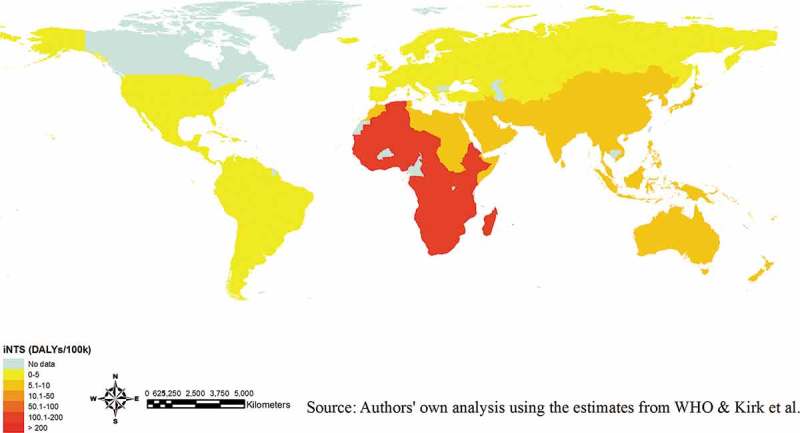
Invasive non-typhoidal Salmonella (iNTS) disease has emerged as a major public health concern. Yet, understanding of the global burden is incomplete, limited particularly by the breadth of blood culture-based surveillance systems that are able to accurately diagnose the etiology of bacteremia. The accessibility of whole genome sequencing has allowed for genetic characterization of pathogens, shedding light on its evolutionary history and sounding alerts for its future progression. iNTS disease is observed to be a particular threat in sub-Saharan Africa, with a case fatality rate greatly exceeding that of typhoid fever, and commonly affecting infants, young children and immunocompromised adults. While iNTS disease might also be a threat in Asia and Latin America, its burden is not well characterized, primarily owing to the lack of comprehensive reporting in these regions. Drug-resistant Salmonella enterica (S. enterica) serovars (e.g. Typhimurium sequence type 313 (ST313)) have emerged as a potential consequence of sustained antibiotic pressure. Genetic analyses have identified distinguished iNTS disease-causing strains that are particularly virulent in certain human host populations. Effective treatment strategies, including vaccination, are necessary; iNTS vaccines targeting the most common S. enterica serovars, Typhimurium, Enteritidis and Dublin, are currently in early developmental stages. Funding and political support is needed to promote vaccine development and implementation programs to ultimately reduce the threat of iNTS disease in high risk areas.
Overview
The claims and statistics of this paper haven’t been checked yet.
Free: it reads the open-access text and checks the first 5 claims that cite a source we can check. Create a free account to check every claim.
Integrity signals
Registry
Cites
Statistics
Figures
Verification
Claims the paper makes
The claims and statistics of this paper haven’t been checked yet.
Free: it reads the open-access text and checks the first 5 claims that cite a source we can check. Create a free account to check every claim.
Self-check
Percentages, sums and reported differences re-computed from the paper’s own numbers.
The self-check needs the paper’s full text.
Citations
Cites
The Global Burden of Nontyphoidal Salmonella Gastroenteritis
Majowicz, S. E., Musto, J., Scallan, E., Angulo, F. J., Kirk, M., O’Brien, S. J., Jones, T. F., Fazil, A., & Hoekstra, R. M. (2010) · Clinical Infectious Diseases · doi:10.1086/650733 · Cited by 2,442
Kirk, M. D., Pires, S. M., Black, R. E., Caipo, M., Crump, J. A., Devleesschauwer, B., Döpfer, D., Fazil, A., Fischer-Walker, C. L., Hald, T., et al. (2015) · PLoS Medicine · doi:10.1371/journal.pmed.1001921 · Cited by 1,625 · cited 10×
“However, as the isolation rate of iNTS disease-causing organisms was fairly low, it is likely that the burden of iNTS disease, while not insignificant, does not rival that of sub-Saharan Africa.”
BackgroundMethodInfluentialInvasive non-typhoidal salmonella disease: an emerging and neglected tropical disease in Africa
Feasey, N. A., Dougan, G., Kingsley, R. A., Heyderman, R. S., & Gordon, M. A. (2012) · The Lancet · doi:10.1016/s0140-6736(11)61752-2 · Cited by 1,014
Immunogenicity and Impact on Nasopharyngeal Carriage of a Nonavalent Pneumococcal Conjugate Vaccine
Mbelle, N., Huebner, R. E., Wasas, A. D., Kimura, A., Chang, I., & Klugman, K. P. (1999) · The Journal of Infectious Diseases · doi:10.1086/315009 · Cited by 515
Dagan, R., Melamed, R., Muallem, M., Piglansky, L., Greenberg, D., Abramson, O., Mendelman, P. M., Bohidar, N., & Yagupsky, P. (1996) · Journal of Infectious Diseases · doi:10.1093/infdis/174.6.1271 · Cited by 477
Global Burden of Invasive Nontyphoidal Salmonella Disease, 20101
Ao, T. T., Feasey, N. A., Gordon, M. A., Keddy, K. H., Angulo, F. J., & Crump, J. A. (2015) · Emerging Infectious Diseases · doi:10.3201/eid2106.140999 · Cited by 463 · cited 4×
“rising magnitude of iNTS disease has only become acutely apparent in recent decades, which may reflect a change in epidemiology or the parallel emergence of more precise reporting during this period.(5) A summary of recent studies reporting this disease can provide a better picture of the spread and magnitude of the b…”
BackgroundResultInfluentialCarriage of pneumococci after pneumococcal vaccination
Obaro, S. K., Adegbola, R., Banya, W., & Greenwood, B. (1996) · The Lancet · doi:10.1016/s0140-6736(05)65585-7 · Cited by 325
Marks, F., von Kalckreuth, V., Aaby, P., Adu-Sarkodie, Y., El Tayeb, M. A., Ali, M., Aseffa, A., Baker, S., Biggs, H. M., Bjerregaard-Andersen, M., et al. (2017) · The Lancet Global Health · doi:10.1016/s2214-109x(17)30022-0 · Cited by 306
Self-citationUche, I. V., MacLennan, C. A., & Saul, A. (2017) · PLOS Neglected Tropical Diseases · doi:10.1371/journal.pntd.0005118 · Cited by 232
Feasey, N. A., Hadfield, J., Keddy, K. H., Dallman, T. J., Jacobs, J., Deng, X., Wigley, P., Barquist, L., Langridge, G. C., Feltwell, T., et al. (2016) · Nature Genetics · doi:10.1038/ng.3644 · Cited by 217
Causes and outcomes of sepsis in southeast Asia: a multinational multicentre cross-sectional study
(2017) · The Lancet Global Health · doi:10.1016/s2214-109x(17)30007-4 · Cited by 179
Mocroft, A., Lundgren, J. D., Ross, M. J., Law, M. G., Reiss, P., Kirk, O., Smith, C. J., Wentworth, D. N., Neuhaus, J., Fux, C. A., et al. (2015) · PLoS Medicine · doi:10.1371/journal.pmed.1001809 · Cited by 159
Current perspectives on invasive nontyphoidal Salmonella disease
Haselbeck, A., Panzner, U., Im, J., Baker, S. G., Meyer, C. G., & Marks, F. (2017) · Current Opinion in Infectious Diseases · doi:10.1097/qco.0000000000000398 · Cited by 132 · cited 1×
“Such vaccines would be particularly relevant in areas where both iNTS disease and malaria are endemic.(24) Overall, preliminary advancements on the vaccine development front have been made, but political and financial support is”
BackgroundSelf-citationOkoro, C. K., Barquist, L., Connor, T. R., Harris, S. R., Clare, S., Stevens, M. P., Arends, M. J., Hale, C., Kane, L., Pickard, D. J., et al. (2015) · PLOS Neglected Tropical Diseases · doi:10.1371/journal.pntd.0003611 · Cited by 131 · cited 2×
“Dublin is more host-adapted to humans.(22) Recent investigation has suggested that multi drug-resistant (MDR) S.”
BackgroundNontyphoidal salmonella disease: Current status of vaccine research and development
Tennant, S. M., MacLennan, C. A., Simon, R., Martin, L. B., & Khan, M. (2016) · Vaccine · doi:10.1016/j.vaccine.2016.03.072 · Cited by 121
A Perspective on Invasive Salmonella Disease in Africa
Crump, J. A., & Heyderman, R. S. (2015) · Clinical Infectious Diseases · doi:10.1093/cid/civ709 · Cited by 112
Lan, N. P. H., Phuong, T. L. T., Huu, H. N., Thuy, L., Mather, A. E., Park, S. E., Marks, F., Thwaites, G. E., Châu, N. V. V., Thompson, C. N., et al. (2016) · PLoS neglected tropical diseases · doi:10.1371/journal.pntd.0004857 · Cited by 102
Self-citationCarden, S., Okoro, C. K., Dougan, G., & Monack, D. M. (2014) · Pathogens and Disease · doi:10.1093/femspd/ftu023 · Cited by 96
von Kalckreuth, V., Konings, F., Aaby, P., Adu-Sarkodie, Y., Ali, M., Aseffa, A., Baker, S., Breiman, R. F., Bjerregaard-Andersen, M., Clemens, J. D., et al. (2016) · Clinical Infectious Diseases · doi:10.1093/cid/civ693 · Cited by 85
Self-citationRamachandran, G., Perkins, D. J., Schmidlein, P. J., Tulapurkar, M. E., & Tennant, S. M. (2015) · PLoS neglected tropical diseases · doi:10.1371/journal.pntd.0003394 · Cited by 84 · cited 1×
“ST19, has shown that ST313 is more efficiently phagocytosed and more resistant to killing by human macrophages.(25)”
BackgroundSinwat, N., Angkittitrakul, S., Coulson, K. F., Pilapil, F. M. I. R., Meunsene, D., & Chuanchuen, R. (2016) · Journal of Medical Microbiology · doi:10.1099/jmm.0.000339 · Cited by 82 · cited 2×
“4% of samples collected to be positive for Salmonella in Thailand and the Lao People’s Democratic Republic, respectively.(15) In addition to this high prevalence of Salmonella, further molecular characterization of these Salmonella isolates revealed S.”
BackgroundPark, S. E., Pak, G. D., Aaby, P., Adu-Sarkodie, Y., Ali, M., Aseffa, A., Biggs, H. M., Bjerregaard-Andersen, M., Breiman, R. F., Crump, J. A., et al. (2016) · Clinical Infectious Diseases · doi:10.1093/cid/civ893 · Cited by 79
Self-citationAlmeida, F., Seribelli, A. A., da Silva, P., Medeiros, M. I. C., Rodrigues, D. D. P., Moreira, C. G., Allard, M. W., & Falcão, J. P. (2017) · Infection Genetics and Evolution · doi:10.1016/j.meegid.2017.03.009 · Cited by 46 · cited 2×
“While ST313 is prevalent in Africa, a clone exhibiting a differing MDR profile than its African counterpart has recently emerged in Brazil.(27) Whole genome sequencing revealed that two lineages of”
BackgroundContinuing Effectiveness of Serogroup A Meningococcal Conjugate Vaccine, Chad, 2013
Gamougam, K., Daugla, D. M., Toralta, J., Ngadoua, C., Fermon, F., Page, A., Djingarey, M. H., Caugant, D. A., Manigart, O., Trotter, C. L., et al. (2014) · Emerging infectious diseases · doi:10.3201/eid2101.140256 · Cited by 45
Khan, M. I., Ochiai, R. L., Von Seidlein, L., Dong, B., Bhattacharya, S. K., Agtini, M. D., Bhutta, Z. A., Do, G. C., Ali, M., Kim, D. R., et al. (2010) · Tropical Medicine & International Health · doi:10.1111/j.1365-3156.2010.02553.x · Cited by 44
Shahunja, K. M., Leung, D. T., Ahmed, T., Bardhan, P. K., Ahmed, D., Qadri, F., Ryan, E. T., & Chisti, M. J. (2015) · PLoS neglected tropical diseases · doi:10.1371/journal.pntd.0004066 · Cited by 41 · cited 1×
“Bangladesh, a CFR of 25% was observed for NTS bacteraemia patients hospitalized between 2009 and 2013.(19) In Malaysia, a”
BackgroundDekker, D., Krumkamp, R., Eibach, D., Sarpong, N., Boahen, K. G., Frimpong, M., Fechtner, E., Poppert, S., Hagen, R. M., Schwarz, N. G., et al. (2018) · BMC Infectious Diseases · doi:10.1186/s12879-018-2957-4 · Cited by 39 · cited 1×
“enterica serovars associated with human infection were found to be genetically distinct from those isolated from water well samples in the same setting.(23) This observation suggests that the S.”
BackgroundSelf-citationJeon, H. J., Pak, G. D., Im, J., Owusu‐Dabo, E., Adu‐Sarkodie, Y., Sow, A. G., Soura, A., Gasmelseed, N., Keddy, K. H., Bjerregaard-Andersen, M., et al. (2018) · Clinical Infectious Diseases · doi:10.1093/cid/ciy386 · Cited by 27
Self-citationVariations of InvasiveSalmonellaInfections by Population Size in Asante Akim North Municipal, Ghana
Espinoza, L. M. C., Nichols, C., Adu‐Sarkodie, Y., Al‐Emran, H. M., Baker, S. G., Clemens, J. D., Dekker, D. M., Eibach, D., Krumkamp, R., Boahen, K. G., et al. (2016) · Clinical Infectious Diseases · doi:10.1093/cid/civ787 · Cited by 25
Self-citationVigilancia por laboratorio de Salmonella enterica en casos clínicos humanos en Colombia 2005 a 2011
Rodríguez, E. C., Díaz, P., Moreno, J., Bautista, A., Montaño, L. A., Realpe, M. E., Gaspera, A. D., & Wiesner, M. (2016) · Enfermedades Infecciosas y Microbiología Clínica · doi:10.1016/j.eimc.2016.02.023 · Cited by 22
Phuong, T. L. T., Rattanavong, S., Vongsouvath, M., Davong, V., Lan, N. P. H., Campbell, J. I., Darton, T. C., Thwaites, G. E., Newton, P. N., Dance, D. A. B., et al. (2017) · Transactions of the Royal Society of Tropical Medicine and Hygiene · doi:10.1093/trstmh/trx076 · Cited by 22
Self-citationLaboratory surveillance of Salmonella enterica from human clinical cases in Colombia 2005–2011
Rodríguez, E. C., Díaz, P., Moreno, J., Bautista, A., Montaño, L. A., Realpe, M. E., Gaspera, A. D., & Wiesner, M. (2017) · Enfermedades infecciosas y microbiologia clinica (English ed ) · doi:10.1016/j.eimce.2017.06.006 · Cited by 20
Azizah, A., Fadzilah, M. N., Mariam, M., Siham, Z. A. A., Ariza, A., Noor Shafina, M. N., & Kaur, A. (2016) · PubMed · Cited by 20
Krumkamp, R., Kreuels, B., Sarpong, N., Boahen, K. G., Foli, G., Hogan, B., Jaeger, A., Reigl, L. S., Zeeb, H., Marks, F., et al. (2016) · Clinical Infectious Diseases · doi:10.1093/cid/civ950 · Cited by 16
Self-citationMastroeni, P., & Rossi, O. (2016) · Expert Review of Vaccines · doi:10.1080/14760584.2016.1189330 · Cited by 15
Cited by
Lamichhane, B., Mawad, A. M. M., Saleh, M., Kelley, W. G., Harrington, P. J., Lovestad, C. W., Amezcua, J., Sarhan, M. M., El Zowalaty, M. E., Ramadan, H., et al. (2024) · Antibiotics · doi:10.3390/antibiotics13010076 · Cited by 353
Marchello, C. S., Birkhold, M., Crump, J. A., Martin, L. B., Ansah, M. O., Breghi, G., Canals, R., Fiorino, F., Gordon, M. A., Kim, J.-H., et al. (2022) · The Lancet Infectious Diseases · doi:10.1016/s1473-3099(21)00615-0 · Cited by 258
Self-citationEberl, C., Weiss, A. S., Jochum, L. M., Durai Raj, A. C., Ring, D., Hussain, S., Herp, S., Meng, C., Kleigrewe, K., Gigl, M., et al. (2021) · Cell Host & Microbe · doi:10.1016/j.chom.2021.09.004 · Cited by 170
Salmonella Virulence and Immune Escape
Wang, M., Qazi, I. H., Wang, L., Zhou, G., & Han, H. (2020) · Microorganisms · doi:10.3390/microorganisms8030407 · Cited by 170
Prevention and Control of Human Salmonella enterica Infections: An Implication in Food Safety
Mkangara, M. (2023) · International Journal of Food Science · doi:10.1155/2023/8899596 · Cited by 254
“Invasive nontyphoidal Salmonella (iNTS) infection is not associated with diarrhoea; however, clinical features are similar to typhoid fever with symptoms of fever, respiratory difficulties, and hepatosplenomegaly [14].”
Background
Metadata
- Authors
- Balasubramanian, R., Im, J., Lee, J.-S., Jeon, H. J., Mogeni, O. D., Kim, J. H., Rakotozandrindrainy, R., Baker, S., & Marks, F.
- Affiliations
- Princeton University (US)
- International Vaccine Institute (KR)
- International Vaccine Institute, Seoul, Republic of Korea
- University of Antananarivo (MG)
- University of Cambridge (GB)
- Corresponding author
- Marks, Florian
- ORCID
- Venue
- Human Vaccines & Immunotherapeutics
- Publisher
- Informa UK Limited
- Published
- 2018-09-05
- Volume
- 15
- Issue
- 6
- Pages
- 1421-1426
- ISSN
- 2164-5515 (ISSN-L)
- 2164-554X
- PMC
- PMC6663144
- OpenAlex
- W2887144135
- Cited by
- 261
- References
- 33
- Citations by year
- 2026: 35 · 2025: 62 · 2024: 38 · 2023: 33 · 2022: 34 · 2021: 31 · 2020: 22 · 2019: 6
- FWCI
- 1.49
- Type
- journal article
- Language
- en
- Open access
- hybrid
- doi.org
- Locations
- Human Vaccines & Immunotherapeutics (publishedVersion, cc-by)
- Europe PMC (PubMed Central) (publishedVersion, cc-by)
- PubMed Central (publishedVersion, cc-by)
- PubMed (publishedVersion)
- DOAJ (DOAJ: Directory of Open Access Journals) (submittedVersion)
- Apollo (University of Cambridge) (submittedVersion, cc-by)
- Apollo (cc-by)
- Funders
- Bill & Melinda Gates Foundation (OPP1127988)
- Topics
- Life Sciences › Agricultural and Biological Sciences › Food Science › Salmonella and Campylobacter epidemiology
- Life Sciences › Immunology and Microbiology › Microbiology › Bacterial Infections and Vaccines
- Life Sciences › Immunology and Microbiology › Microbiology › Escherichia coli research studies
- Keywords
- invasive non-typhoidal Salmonella, Salmonella enterica, global burden, bacteremia, sub-Saharan Africa, case fatality rate, immunocompromised adults, children, antibiotic resistance, whole genome sequencing, vaccine development, Enteritidis, Dublin, typhoid fever
- MeSH terms
- Whole Genome Sequencing, Anti-Bacterial Agents, Humans, Salmonella Infections, Vaccination, Global Health, Bacteremia, Immunocompromised Host, Cost of Illness, Salmonella enterica, Salmonella Vaccines, Drug Resistance, Bacterial
About these checks
Registry, retraction, Cites and statistics results are computed, not judged, with one exception: a printed reference that no index lists is read once by a model before it counts as a citation error. Claims are extracted by a model and kept only when their quote appears verbatim in the text; each cited source is then checked, with a model’s help, for whether it says what the claim relies on. Those verdicts can be wrong — read the claim’s quote and the cited source before relying on one.
Statistics and arithmetic are recomputed, not judged.
Confidence bands are shown only for fields calibrated on our annotated test set. None is calibrated yet, so no band is shown.
What counts as a claim ›How we measure confidence ›How we check this ›
Are you an author, or do you see a problem with this page? Request a review
Data sources
Bibliographic data: Semantic Scholar, OpenAlex, Crossref.
Contains information from the Semantic Scholar Academic Graph Datasets, made available under the ODC Attribution License (ODC-BY 1.0).
Semantic Scholar’s data is described in: Kinney, R., et al. (2023). The Semantic Scholar Open Data Platform. arXiv:2301.10140.
