

E-grocery challenges and remedies: Global market leaders perspective
Open accessThe DOI matches its Crossref record; 74 of the 74 references it cites were found in a registry or an index.
Abstract
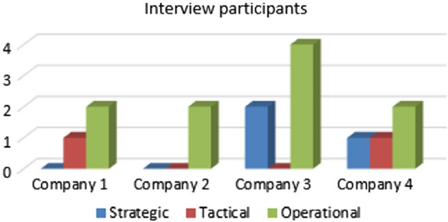
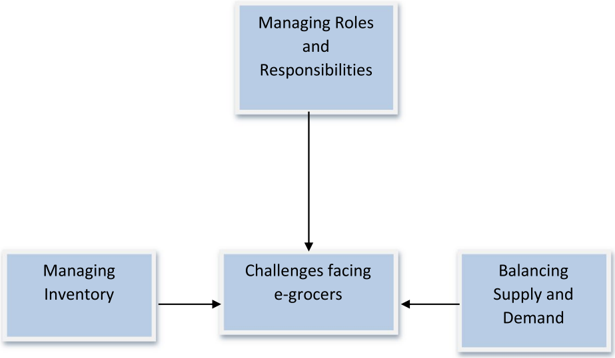
The purpose of the study is to identify logistic elements germane to e-grocery businesses, and to reveal the challenges collateral with each logistic element. Further, it strives to create a better understanding of specific remedies that have been employed by top e-grocery retailers to overcome existing challenges while aligning identified challenges with Turban’s framework. Extensive semi-structured interviews were conducted with management staff in three of the top ten global online grocery retailers and another that was a market leader in a European country. The qualitative data collected was transcribed and coded using a non-hierarchical axial coding to identify emerging themes in content analysis. The results expose a range of challenges that could be compartmentalised into three broad categories, in harmony with the different stages of the order fulfilment process. Interestingly, the study found that most challenges were operational rather than tactical or strategic in nature. While the study expands existing knowledge, its revelation that most challenges lie in the management of roles and responsibilities domain is instructive. This makes it imperative for practitioners to focus on this specific area if meaningful improvement in e-grocery retailing performance is to be realised. This research offers a systematic understanding of supply and distribution challenges, including remedies utilised to ameliorate the effect of the challenges from the perspectives of the top companies in the industry. These remedies can be invaluable for existing and emerging e-grocers.
Overview
The claims and statistics of this paper haven’t been checked yet.
Free: it reads the open-access text and checks the first 5 claims that cite a source we can check. Create a free account to check every claim.
Integrity signals
Registry
Cites
Statistics
Figures






















Verification
Claims the paper makes
The claims and statistics of this paper haven’t been checked yet.
Free: it reads the open-access text and checks the first 5 claims that cite a source we can check. Create a free account to check every claim.
Claims other papers make about this one
Each is checked against this paper’s own text: does it say what the citing paper says it does?
The source backs part of the claim, not all of it — or backs it for a different population, condition or comparison.
In the citing paper
“Online consumers are, however, quite different and generally need long shelf life for a fresh item (Mkansi et al., 2018;Singh, 2019).”
From Grocery omnichannel perishable inventories: performance measures and influencing factors (2023) · cites this paper as Mkansi et al., 2018
Experimental — accuracy not yet measuredThe source backs part of the claim, not all of it — or backs it for a different population, condition or comparison.
In the citing paper
“Mkansi et al. (2018) indicate that online consumers of perishables prefer to receive fresh products with the longest possible shelf life and dislike (and even reject) soon-expiring items.”
From Grocery omnichannel perishable inventories: performance measures and influencing factors (2023) · cites this paper as Mkansi et al., 2018
Experimental — accuracy not yet measured
Self-check
Percentages, sums and reported differences re-computed from the paper’s own numbers.
The self-check needs the paper’s full text.
Citations
Cites
(1984) · Cited by 81,983
Three Approaches to Qualitative Content Analysis
Hsieh, H.-F., & Shannon, S. E. (2005) · Qualitative Health Research · doi:10.1177/1049732305276687 · Cited by 44,601 · cited 1×
“Content analysis is a qualitative technique well-suited for interpreting meaning from the content of text data using three distinct approaches: conventional, direct and summative (Hsieh & Shannon, 2005).”
MethodCase Study Research: Design and Methods
Chaiklin, H. (1991) · The Journal of Nervous and Mental Disease · doi:10.1097/00005053-199102000-00025 · Cited by 39,535
Research Methods for Business Students
Saunders, M. N. K., Lewis, P., & Thornhill, A. R. (2003) · Cited by 18,357
Research methods for business: A skill building approach
(1993) · Long Range Planning · doi:10.1016/0024-6301(93)90168-f · Cited by 16,985
Hartley, J. (2004) · Essential Guide to Qualitative Methods in Organizational Research · doi:10.4135/9781446280119.n26 · Cited by 15,461
The Practice of Social Research
Neustadtl, A., & Babbie, E. (1989) · Teaching Sociology · doi:10.2307/1318433 · Cited by 14,398
The Practice of Social Research.
Williams, D. G., & Babbie, E. R. (1976) · Contemporary Sociology · doi:10.2307/2062956 · Cited by 7,194
International Journal of Applied Engineering Research
(2022) · International Journal of Applied Engineering Research · doi:10.37622/ijaer · Cited by 3,176
From Multi-Channel Retailing to Omni-Channel Retailing
Verhoef, P. C., Kannan, P. K., & Inman, J. J. (2015) · Journal of Retailing · doi:10.1016/j.jretai.2015.02.005 · Cited by 2,579
Research works printed but not linked: 8
- Centre for Retail Research. (2014). Online retailing: Britain, Europe and the US. Retrieved from http://www. retailresearch.org/onlineretailing.php https://doi.org/10.1080/23311975.2018.1459338
- Fernie, J., & Sparks, L. (2014). Logistics and retail management: Emerging issues and new challenges in the retail supply chain (4th ed.). London: Kogan Page.
- Institute of Grocery Distribution. (2015). UK grocery retailing. Retrieved from http://www.igd.com/Research/Retail/ retail-outlook/3371/UK-Grocery-Retailing/ Internet Retailer. (2014).
- U.S. online retail sales will grow 57% by 2018. Retrieved from https://www. digitalcommerce360.com/2014/05/12/ us-online-retail-sales-will-grow-57-2018/
- Lanzilotto, A., Martino, G., Gnoni, M. G., & Iannone, R. (2014). Impact analysis of a cross-channel strategy in the fashion retail industry: A conceptual framework. Conference XIX Summer School, Summer School "Francesco Turco, Senigallia (AN).
- Scott, J. E., & Scott, C. H. (2008, January). Online grocery order fulfilment trade-offs. In Proceedings of the 41st Hawaii International Conference on Systems Sciences (pp. 90).
- Statista, 2016, Global retail e-commerce sales volume from 2013 to 2018
- Statista. (2016). Global retail e-commerce sales volume from 2013 to 2018. Retrieved from https://www.statista.com/ statistics/222128/ global-e-commerce-sales-volume-forecast/ Statista. (2017). Annual retail e-commerce sales growth worldwide from 2014 to 2021. Retrieved from https:// www.statista.com/statistics/288487/ forecast-of-global-b2c-e-commerce-growt/
Cited by
E-business adoption costs and strategies for retail micro businesses
Mkansi, M. (2021) · Electronic Commerce Research · doi:10.1007/s10660-020-09448-7 · Cited by 92
Self-citationThe Research Topics on E-Grocery: Trends and Existing Gaps
Martín, J. C., Pagliara, F., & Román, C. (2019) · Sustainability · doi:10.3390/su11020321 · Cited by 87
Leyerer, M., Sonneberg, M.-O., Heumann, M., & Breitner, M. H. (2020) · Smart Cities · doi:10.3390/smartcities3030031 · Cited by 75
Mkansi, M., & Nsakanda, A. L. (2019) · Research in Transportation Economics · doi:10.1016/j.retrec.2019.100786 · Cited by 61
Self-citationMobile application supported urban-township e-grocery distribution
Mkansi, M., de Leeuw, S., & Amosun, O. (2019) · International Journal of Physical Distribution & Logistics Management · doi:10.1108/ijpdlm-10-2018-0358 · Cited by 58
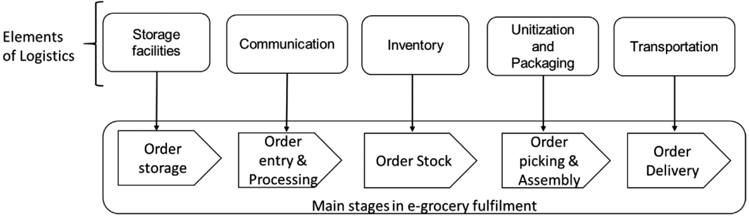
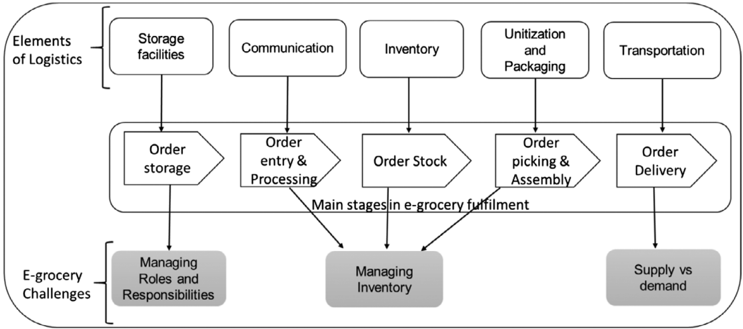
“…the fundamental elements of logistics germane to e-grocery retail such as order storage (storage and facilities), order entry and processing (communication), order stock (inventory), order delivery (transportation), and order picking and assembly (unitisation and packaging) (Mkansi et al., 2018).”
BackgroundMethodInfluentialSelf-citation
Metadata
- Authors
- Mkansi, M., Eresia-Eke, C., & Emmanuel-Ebikake, O.
- Affiliations
- University of South Africa (ZA)
- University of Pretoria (ZA)
- Edge Hill University (GB)
- Corresponding author
- Mkansi, Marcia
- Venue
- Cogent Business & Management
- Publisher
- Informa UK Limited
- Published
- 2018-01-01
- Volume
- 5
- Issue
- 1
- Pages
- 1459338
- ISSN
- 2331-1975 (ISSN-L)
- OpenAlex
- W2796071951
- Cited by
- 42
- References
- 74
- Citations by year
- 2026: 1 · 2025: 3 · 2024: 7 · 2023: 8 · 2022: 7 · 2021: 7 · 2020: 6 · 2019: 3
- FWCI
- 9.34
- Type
- journal article
- Language
- en
- Open access
- gold
- doi.org
- Licence
- Locations
- Cogent Business & Management (publishedVersion, cc-by)
- Edge Hill University Research Information Repository (Edge Hill University) (publishedVersion, cc-by)
- RePEc: Research Papers in Economics (submittedVersion)
- DOAJ (DOAJ: Directory of Open Access Journals) (submittedVersion, cc-by-sa)
- Econstor (Econstor) (submittedVersion, cc-by)
- Unisa Institutional Repository (University of South Africa) (submittedVersion)
- Topics
- Social Sciences › Business, Management and Accounting › Business and International Management › E-commerce and Technology Innovations
- Social Sciences › Transportation › Urban and Freight Transport Logistics
- Social Sciences › Decision Sciences › Management Science and Operations Research › Business Logistics and Inventory Control
- Keywords
- e-grocery, online grocery retailing, logistics challenges, order fulfillment, supply chain management, role management, operational challenges
About these checks
Registry, retraction, Cites and statistics results are computed, not judged, with one exception: a printed reference that no index lists is read once by a model before it counts as a citation error. Claims are extracted by a model and kept only when their quote appears verbatim in the text; each cited source is then checked, with a model’s help, for whether it says what the claim relies on. Those verdicts can be wrong — read the claim’s quote and the cited source before relying on one.
Statistics and arithmetic are recomputed, not judged.
Confidence bands are shown only for fields calibrated on our annotated test set. None is calibrated yet, so no band is shown.
What counts as a claim ›How we measure confidence ›How we check this ›
Are you an author, or do you see a problem with this page? Request a review
How to cite
Cite CoChat for the checks on this page, and the paper for its own findings.
- This page
- CoChat. (2026). Citation check: E-grocery challenges and remedies: Global market leaders perspective. https://app.cochat.ai/papers/10.1080/23311975.2018.1459338
- The paper
- Mkansi, M., Eresia-Eke, C., & Emmanuel-Ebikake, O. (2018). E-grocery challenges and remedies: Global market leaders perspective. Cogent Business & Management. https://doi.org/10.1080/23311975.2018.1459338
Data sources
Bibliographic data: Semantic Scholar, OpenAlex, Crossref.
Contains information from the Semantic Scholar Academic Graph Datasets, made available under the ODC Attribution License (ODC-BY 1.0).
Semantic Scholar’s data is described in: Kinney, R., et al. (2023). The Semantic Scholar Open Data Platform. arXiv:2301.10140.
