

Systematic literature review of Critical success factors on enterprise resource planning post implementation
Open accessThe DOI matches its Crossref record; 64 of the 65 references it cites were found in a registry or an index.
Abstract
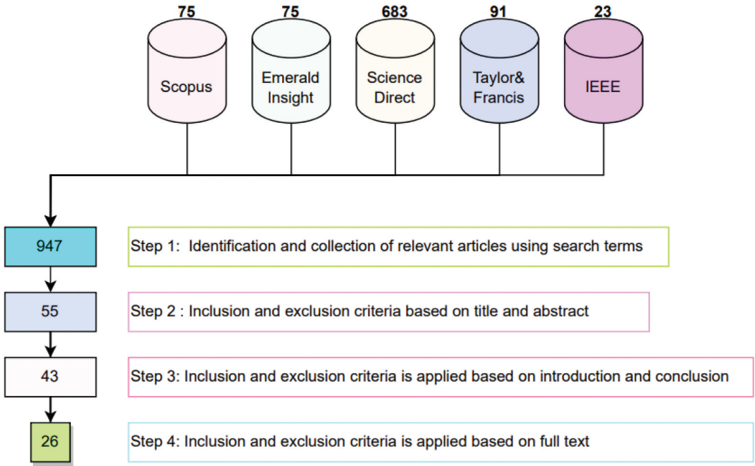
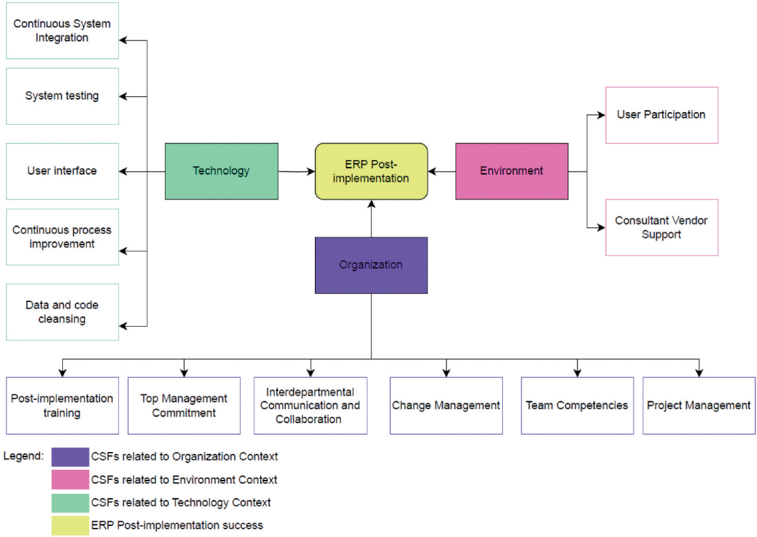
Following the implementation of Enterprise Resource Planning (ERP) systems, a myriad of challenges and issues may manifest, leading to inefficiencies and resistance from users, thereby impeding the anticipated benefits. While previous researchers have predominantly directed their attention toward the implementation phase, it is imperative to recognize the significance of the post-implementation phase in the ERP adoption process. This study aims to ascertain the critical success factors (CSFs) that contribute to the seamless integration of an ERP system into an organization’s operational processes post-implementation. To achieve this objective, a systematic literature review (SLR) was conducted between September and December 2022, employing the Kitchenham approach (2007) as the guiding methodology. The SLR was meticulously structured and comprised three principal phases: planning, execution, and reporting. After thoroughly assessing 26 articles from reputable sources, we successfully pinpointed 13 CSFs relevant to ERP post-implementation and grouped into the Technology-Organization-Environment (TOE) framework. The three most pivotal CSFs emerged as continuous system integration, post-implementation training, and active user participation. Among these CSFs, a remarkable discovery surfaced, highlighting the predominance of environmental and organizational factors over technological ones. Consequently, this research offers both practical and theoretical implications for organizations, enabling them to proactively address potential challenges that may arise after ERP implementation.
Overview
The claims and statistics of this paper haven’t been checked yet.
Free: it reads the open-access text and checks the first 5 claims that cite a source we can check. Create a free account to check every claim.
Integrity signals
Registry
Cites
Statistics
Figures






























Verification
Claims the paper makes
The claims and statistics of this paper haven’t been checked yet.
Free: it reads the open-access text and checks the first 5 claims that cite a source we can check. Create a free account to check every claim.
Claims other papers make about this one
Each is checked against this paper’s own text: does it say what the citing paper says it does?
The source backs part of the claim, not all of it — or backs it for a different population, condition or comparison.
In the citing paper
“Individual-level resistance emerges from fear of job displacement, competency concerns, and comfort with existing workflows.”
From Overcoming Resistance to SAP ERP Adoption Among Professionals - A Change Management Perspective (2025) · cites this paper as [2]
Experimental — accuracy not yet measuredThe source backs part of the claim, not all of it — or backs it for a different population, condition or comparison.
In the citing paper
“Resistance patterns in ERP implementation manifest across multiple organizational levels, creating compound effects that amplify implementation challenges [2].”
From Overcoming Resistance to SAP ERP Adoption Among Professionals - A Change Management Perspective (2025) · cites this paper as [2]
Experimental — accuracy not yet measuredThe source backs part of the claim, not all of it — or backs it for a different population, condition or comparison.
In the citing paper
“Organizational-level resistance stems from cultural factors, inadequate training infrastructure, and insufficient leadership commitment to change initiatives.”
From Overcoming Resistance to SAP ERP Adoption Among Professionals - A Change Management Perspective (2025) · cites this paper as [2]
Experimental — accuracy not yet measuredThe source backs part of the claim, not all of it — or backs it for a different population, condition or comparison.
In the citing paper
“Technical-level resistance occurs when system capabilities fail to align with user expectations or when integration complexities disrupt established operational procedures.”
From Overcoming Resistance to SAP ERP Adoption Among Professionals - A Change Management Perspective (2025) · cites this paper as [2]
Experimental — accuracy not yet measured
Self-check
Percentages, sums and reported differences re-computed from the paper’s own numbers.
The self-check needs the paper’s full text.
Citations
Cites
Brereton, P., Kitchenham, B. A., Budgen, D., Turner, M., & Khalil, M. (2007) · Journal of Systems and Software · doi:10.1016/j.jss.2006.07.009 · Cited by 2,394 · cited 5×
“…the first stage, which is planning, the review protocol was formulated using the Population, Intervention, Comparison, Results, and Context formula (Kitchenham, 2007) as demonstrated below: ● Population: enterprise resource planning, ERP system The next step is to determine the research questions…”
BackgroundMethodInfluentialDrazin, R. (1991) · The Journal of Technology Transfer · doi:10.1007/bf02371446 · Cited by 2,122 · cited 1×
“The TOE theory proposed by Tornatzky and Fleischer in 1990, aims to explain how organizations adopt, implement, and use information systems (IS) (Abu Ghazaleh et al., 2019; Louis, 1990).”
Backgroundprocesses of technological innovation
Tornatzky, L. G., Fleischer, M., & Chakrabarti, A. (1990) · Cited by 1,834
ERP implementation: a compilation and analysis of critical success factors
Finney, S., & Corbett, M. (2007) · Business Process Management Journal · doi:10.1108/14637150710752272 · Cited by 647 · cited 10×
“…phrases like “Executive support” and “Management support” fall under the category “Top management com-mitment”, which is deemed the most suitable and conveys the researcher’s interpretation, similar to what was undertaken in previous studies (Dezdar & Sulaiman, 2009; Finney & Corbett, 2007).”
BackgroundMethodResultInfluentialA systematic review of search-based testing for non-functional system properties
Afzal, W., Torkar, R., & Feldt, R. (2009) · Information and Software Technology · doi:10.1016/j.infsof.2008.12.005 · Cited by 447 · cited 1×
“The tollgate method recommended by prior scholars is employed to revisit the research articles identified during the primary collection phase of the study (Afzal et al., 2009; Khan et al., 2022).”
The implementation factors that influence the ERP (enterprise resource planning) benefits
Chou, S.-W., & Chang, Y.-C. (2008) · Decision Support Systems · doi:10.1016/j.dss.2008.06.003 · Cited by 340
Management Information Systems, Managing The Digital Firm, 12th Ed.
Kenneth, C., & Jane, P. L. (2012) · Cited by 293
Using T-O-E theoretical framework to study the adoption of ERP solution
Awa, H. O., Ukoha, O., & Emecheta, B. C. (2016) · Cogent Business & Management · doi:10.1080/23311975.2016.1196571 · Cited by 272 · cited 3×
“Earlier studies have effectively employed the TOE framework to pinpoint critical success factors (CSFs), albeit primarily within the context of adoption rather than the subsequent post-adoption phase (Awa et al., 2016).”
BackgroundMethodCritical success factors in enterprise resource planning systems: Review of the last decade
Shaul, L., & Tauber, D. (2013) · ACM Computing Surveys · doi:10.1145/2501654.2501669 · Cited by 271 · cited 2×
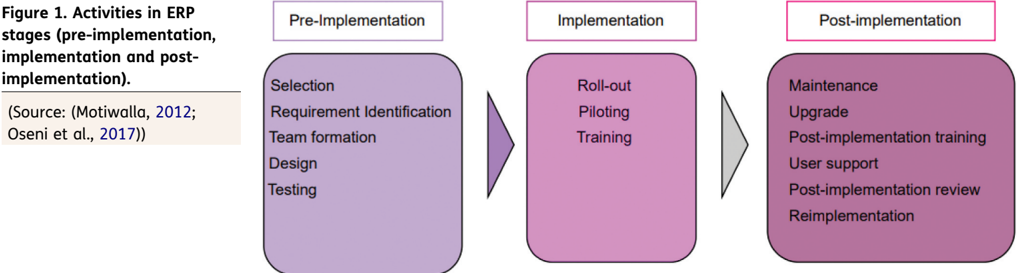
“There are three main phases in the ERP project life cycle as shown in Figure 1: Pre-implementation, Implementation, and Post-Implementation phase (Motiwalla, 2012; Shaul & Tauber, 2013; Xie et al., 2022).”
MethodWhat leads to post-implementation success of ERP? An empirical study of the Chinese retail industry
Zhu, Y., Li, Y., Wang, W., & Chen, J. (2010) · International Journal of Information Management · doi:10.1016/j.ijinfomgt.2009.09.007 · Cited by 261
Ram, J., Corkindale, D., & Wu, M.-L. (2013) · International Journal of Production Economics · doi:10.1016/j.ijpe.2013.01.032 · Cited by 247 · cited 3×
“Additionally, ERP systems require seamless integration, often giving rise to conflicts and necessitating the coordination of shared resources (Ram et al., 2013).”
BackgroundOrganizational performance effects of ERP systems usage: The impact of post-implementation changes
Nicolaou, A. I., & Bhattacharya, S. (2006) · International Journal of Accounting Information Systems · doi:10.1016/j.accinf.2005.12.002 · Cited by 233 · cited 1×
“Post-implementation review activities are conducted periodically during this phase to thoroughly assess the implementation process and determine whether the benefits of the ERP system have been achieved (Nicolaou, 2004; Nicolaou & Bhattacharya, 2006).”
BackgroundCauses influencing the effectiveness of the post‐implementation ERP system
Yu, C. (2005) · Industrial Management & Data Systems · doi:10.1108/02635570510575225 · Cited by 232 · cited 2×
“…studies have employed various grounded theories to explore factors impacting ERP implementation, including the Theory of Planned Behavior (TPB) (Mullins & Cronan, 2021; Yu, 2005), Technological Frames of Reference (TFR) (Abu Ghazaleh et al., 2019), and Task—Technology Fit (TTF) (Eid & Abbas, 2017).”
BackgroundERP issues and challenges: a research synthesis
Mahmood, F., Khan, A. Z., & Bokhari, R. H. (2019) · Kybernetes · doi:10.1108/k-12-2018-0699 · Cited by 227 · cited 3×
“Our use of frequency analysis to pinpoint critical success factors aligns with prior research (Ayat et al., 2021; Dezdar & Sulaiman, 2009; Mahmood et al., 2020).”
BackgroundMethodCritical success factors for software projects: A comparative study
Mohd, H. N. N., & Shamsul, S. (2011) · Scientific Research and Essays · doi:10.5897/sre10.1171 · Cited by 222 · cited 1×
“…was replicated for all the factors identified, mirroring methodologies employed in prior research endeavors (Ayat et al., 2021; Dezdar & Sulaiman, 2009; Nasir & Sahibuddin, 2011) A total of 13 codes were identified and are referred to as ERP Post-implementation CSFs in later/ subsequent sections.”
MethodERP system implementation in large enterprises—A systematic literature review
Ali, M., & Miller, L. (2017) · Journal of Enterprise Information Management · doi:10.1108/jeim-07-2014-0071 · Cited by 221 · cited 1×
“In addition to that, many studies focused predominantly on the implementation phase (Ali & Miller, 2017; Li et al., 2017; Salih et al., 2022).”
BackgroundSuccessful enterprise resource planning implementation: taxonomy of critical factors
Dezdar, S., & Sulaiman, A. (2009) · Industrial Management & Data Systems · doi:10.1108/02635570910991283 · Cited by 218 · cited 8×
“…phrases like “Executive support” and “Management support” fall under the category “Top management com-mitment”, which is deemed the most suitable and conveys the researcher’s interpretation, similar to what was undertaken in previous studies (Dezdar & Sulaiman, 2009; Finney & Corbett, 2007).”
BackgroundMethodResultInfluentialAntecedents of ERP systems implementation success: a study on Jordanian healthcare sector
Almajali, D. A., Masa'deh, R., & Tarhini, A. (2016) · Journal of Enterprise Information Management · doi:10.1108/jeim-03-2015-0024 · Cited by 181 · cited 1×
“In fact, the post-implementation phase signifies the emergence of real challenges and other critical risks (Almajali et al., 2016; Pan et al., 2011; Peng & Nunes, 2009a, 2009b).”
BackgroundSystematic Literature Review on Security Risks and its Practices in Secure Software Development
Khan, R. A., Khan, S. U., Khan, H. U., & Ilyas, M. (2022) · IEEE Access · doi:10.1109/access.2022.3140181 · Cited by 176 · cited 1×
“The tollgate method recommended by prior scholars is employed to revisit the research articles identified during the primary collection phase of the study (Afzal et al., 2009; Khan et al., 2022).”
MethodLaw, C. C. H., Chen, C. C., & Wu, B. J. P. (2009) · Computers in Industry · doi:10.1016/j.compind.2009.10.004 · Cited by 170 · cited 1×
“However, there is a scarcity in finding articles that comprehensively discuss the appropriate framework that can explain the successful use of ERP in the post-implementation phase (Ha & Ahn, 2014; Law et al., 2010; Oseni et al., 2017; Osnes et al., 2018).”
BackgroundRevisiting technology-organization-environment (T-O-E) theory for enriched applicability
Awa, H. O., Ukoha, O., & Igwe, S. R. (2017) · The Bottom Line · doi:10.1108/bl-12-2016-0044 · Cited by 166 · cited 4×
“The TOE model that promotes those dimensions has gained an advantage over other adoption models when it comes to examining technology adoption and product capabilities due to its inclusion of technological, environmental, and organizational aspect (Awa et al., 2017).”
BackgroundMethodInfluentialIfinedo, P., Rapp, B., Ifinedo, A., & Sundberg, K. (2010) · Computers in Human Behavior · doi:10.1016/j.chb.2010.03.020 · Cited by 164 · cited 1×
“Illustrations of factors integrated within the organizational dimension pertain to interdepartmental communication and collaboration culture (Abu Ghazaleh et al., 2019; Ifinedo et al., 2010); and top management’s commitment and support (Althonayan & Althonayan, 2017; Salih et al., 2022).”
BackgroundRethinking ERP success: A new perspective from knowledge management and continuous improvement
McGinnis, T. C., & Huang, Z. (2007) · Information & Management · doi:10.1016/j.im.2007.05.006 · Cited by 164 · cited 1×
“ERP implementation projects rarely have a fixed conclusion, necessitating ongoing enhancement efforts to extend the lifespan of these valuable systems (Ha & Ahn, 2014; McGinnis & Huang, 2007).”
BackgroundHa, Y. M., & Ahn, H. J. (2013) · Behaviour and Information Technology · doi:10.1080/0144929x.2013.799229 · Cited by 138 · cited 10×
“The absence of a proficient and dedicated ERP team can significantly impede ERP proficiency and understanding (Ha & Ahn, 2014).”
BackgroundMethodInfluentialQuality of postimplementation review for enterprise resource planning systems
Nicolaou, A. I. (2004) · International Journal of Accounting Information Systems · doi:10.1016/j.accinf.2004.02.002 · Cited by 134 · cited 2×
“Post-implementation review activities are conducted periodically during this phase to thoroughly assess the implementation process and determine whether the benefits of the ERP system have been achieved (Nicolaou, 2004; Nicolaou & Bhattacharya, 2006).”
BackgroundCritical success factors in ERP upgrade projects
Barth, C., & Koch, S. (2019) · Industrial Management & Data Systems · doi:10.1108/imds-01-2018-0016 · Cited by 130
Sun, H., Ni, W., & Lam, R. (2015) · Computers in Industry · doi:10.1016/j.compind.2014.12.005 · Cited by 130 · cited 2×
“Consequently, diligent monitoring and control of these factors is imperative throughout ERP projects (Sun et al., 2015).”
BackgroundCritical success factors in enterprise resource planning implementation
Saade, R. G., & Nijher, H. (2016) · Journal of Enterprise Information Management · doi:10.1108/jeim-03-2014-0028 · Cited by 103
Hasan, N., Miah, S. J., Bao, Y., & Hoque, M. R. (2019) · Enterprise Information Systems · doi:10.1080/17517575.2019.1612099 · Cited by 98 · cited 4×
“Instead, implementing ERP in an organization is an ongoing process that aims to integrate technology into the organizational environment (Ha & Ahn, 2014; Hasan et al., 2019).”
BackgroundMethodResultInfluentialRisks affecting ERP post‐implementation: Insights from a large Chinese manufacturing group
Pan, K., Nunes, M. B., & Peng, G. C. A. (2010) · Journal of Manufacturing Technology Management · doi:10.1108/17410381111099833 · Cited by 93
Surfacing ERP exploitation risks through a risk ontology
Peng, G. C. A., & Nunes, M. B. (2009) · Industrial Management & Data Systems · doi:10.1108/02635570910982283 · Cited by 87 · cited 3×
“In fact, the post-implementation phase signifies the emergence of real challenges and other critical risks (Almajali et al., 2016; Pan et al., 2011; Peng & Nunes, 2009a, 2009b).”
BackgroundMethodWortmann, J. C. (1998) · IFIP advances in information and communication technology · doi:10.1007/978-0-387-35321-0_2 · Cited by 80
Analysis of ERP implementation to develop a strategy for its success in developing countries
Malik, M. O., & Khan, N. (2021) · Production Planning & Control · doi:10.1080/09537287.2020.1784481 · Cited by 78 · cited 2×
“ERP systems consist of a collection of interconnected software modules and a central database, which have the potential to empower an organization to efficiently and effectively manage its resources (Malik & Khan, 2021; Vargas & Comuzzi, 2020).”
BackgroundMethodERP failure: A systematic mapping of the literature
Coşkun, E., Gezici, B., Aydos, M., Tarhan, A., & Garousi, V. (2022) · Data & Knowledge Engineering · doi:10.1016/j.datak.2022.102090 · Cited by 78 · cited 5×
“Notably, prior investigations into the success factors of ERP implementation have predominantly concentrated on the pre-implementation and go-live stages, often sidelining the crucial post-implementation phase (Coşkun et al., 2022; Kirmizi & Kocaoglu, 2022; Mahmood et al., 2020; Oseni et al., 2017).”
BackgroundInfluentialAyat, M., Imran, M., Ullah, A., & Kang, C. W. (2020) · International Journal of Managing Projects in Business · doi:10.1108/ijmpb-02-2020-0075 · Cited by 77 · cited 4×
“…in our study by extracting vital information from chosen articles and recognizing essential themes and concepts, thereby facilitating the acquisition of insights, the organization of information, and the identification of patterns within the literature (Ayat et al., 2021; Dezdar & Sulaiman, 2009).”
MethodInfluentialIdentification and assessment of risks associated with ERP post‐implementation in China
Peng, G. C. A., & Nunes, M. B. (2009) · Journal of Enterprise Information Management · doi:10.1108/17410390910993554 · Cited by 75 · cited 3×
“In fact, the post-implementation phase signifies the emergence of real challenges and other critical risks (Almajali et al., 2016; Pan et al., 2011; Peng & Nunes, 2009a, 2009b).”
BackgroundMethodA multi-dimensional model of Enterprise Resource Planning critical success factors
Vargas, M. A., & Comuzzi, M. (2019) · Enterprise Information Systems · doi:10.1080/17517575.2019.1678072 · Cited by 70 · cited 1×
“ERP systems consist of a collection of interconnected software modules and a central database, which have the potential to empower an organization to efficiently and effectively manage its resources (Malik & Khan, 2021; Vargas & Comuzzi, 2020).”
BackgroundCIOs' perspectives of critical success factors in ERP upgrade projects
Olson, D. L., & Zhao, F. (2007) · Enterprise Information Systems · doi:10.1080/17517570601088364 · Cited by 66 · cited 1×
“This study aims to offer fresh perspectives on Critical Success Factors (CSFs) with a specific emphasis on the frequently disregarded post-implementation phase—a domain often uncharted by previous researchers (Olson & Zhao, 2007; Saade & Nijher, 2016).”
BackgroundERP Systems in Multinational Enterprises: A literature Review of Post-implementation Challenges
Osnes, K. B., Olsen, J. R., Vassilakopoulou, P., & Hustad, E. (2018) · Procedia Computer Science · doi:10.1016/j.procs.2018.10.074 · Cited by 62 · cited 5×
“ERP solutions represent off-the-shelf software packages that integrate various operational aspects of a company by utilizing shared and unified databases, along with standardized workflows (Malik & Khan, 2021; Osnes et al., 2018; Wortmann, 1998).”
BackgroundMethodInfluentialEnterprise systems knowledge, beliefs, and attitude: A model of informed technology acceptance
Mullins, J. K., & Cronan, T. P. (2021) · International Journal of Information Management · doi:10.1016/j.ijinfomgt.2021.102348 · Cited by 60 · cited 2×
“…studies have employed various grounded theories to explore factors impacting ERP implementation, including the Theory of Planned Behavior (TPB) (Mullins & Cronan, 2021; Yu, 2005), Technological Frames of Reference (TFR) (Abu Ghazaleh et al., 2019), and Task—Technology Fit (TTF) (Eid & Abbas,…”
BackgroundInvestigating CSFs for the life cycle of ERP system from the perspective of IT governance
Li, H., Chang, S.-I., & Yen, D. C. (2016) · Computer Standards & Interfaces · doi:10.1016/j.csi.2016.10.013 · Cited by 59
E-government system evaluation: The case of users’ performance using ERP systems in higher education
Althonayan, M., & Althonayan, A. (2017) · Transforming Government People Process and Policy · doi:10.1108/tg-11-2015-0045 · Cited by 47 · cited 4×
“…(Alkraiji et al., 2022; Coşkun et al., 2022) Attaining success in ERP relies not solely on a stable system-supporting infrastructure but also on various socio-technical factors that exert substantial influence (Abu Ghazaleh et al., 2019; Althonayan & Althonayan, 2017; Eid & Abbas, 2017).”
BackgroundInfluentialLei, L., & Sun, Y. (2020) · Scientometrics · doi:10.1007/s11192-019-03338-y · Cited by 43 · cited 3×
“…in identifying the most pertinent articles: ● The selected articles originate from Quartile-1 and Quartile-2 Journal (based on Scimago Journal Rank) (Lei & Sun, 2020); ● Conference papers, which were not peer-reviewed, were excluded; ● Only publications written in English were included; ● Only…”
BackgroundInfluentialSalih, S. H., Abdelsalam, S., Hamdan, M., Abdelmaboud, A., Hamzah, M., Hilal, A. M., & Motwakel, A. (2022) · IEEE Access · doi:10.1109/access.2022.3202954 · Cited by 43
Salih, S. H., Abdelsalam, S., Hamdan, M., Ibrahim, A. O., Abulfaraj, A. W., Binzagr, F., Husain, O., & Abdallah, A. E. (2022) · Sustainability · doi:10.3390/su142315942 · Cited by 42 · cited 11×
“Instances of factors covered within the environmental dimension encompass user participation (Althonayan & Althonayan, 2017; Eid & Abbas, 2017) and the engagement with vendor support or consultants (Salih et al., 2022)”
BackgroundInfluentialPost-Implementation ERP Software Development: Upgrade or Reimplementation
Domagała, A., Grobler-Dębska, K., Wąs, J., & Kucharska, E. (2021) · Applied Sciences · doi:10.3390/app11114937 · Cited by 39 · cited 3×
“The rationale behind the significance of the post-implementation phase lies in the fact that ERP has entered a saturation period: small to large companies that have adopted ERP systems over the years (Domagała et al., 2021; Pan et al., 2011).”
BackgroundMethodXie, Y., Allen, C. J., & Ali, M. A. M. (2022) · Heliyon · doi:10.1016/j.heliyon.2022.e10044 · Cited by 39 · cited 1×
“There are three main phases in the ERP project life cycle as shown in Figure 1: Pre-implementation, Implementation, and Post-Implementation phase (Motiwalla, 2012; Shaul & Tauber, 2013; Xie et al., 2022).”
MethodUser adaptation and ERP benefits: moderation analysis of user experience with ERP
Eid, M. I. M., & Abbas, H. I. (2017) · Kybernetes · doi:10.1108/k-08-2015-0212 · Cited by 37 · cited 4×
“…studies have employed various grounded theories to explore factors impacting ERP implementation, including the Theory of Planned Behavior (TPB) (Mullins & Cronan, 2021; Yu, 2005), Technological Frames of Reference (TFR) (Abu Ghazaleh et al., 2019), and Task—Technology Fit (TTF) (Eid & Abbas, 2017).”
BackgroundInfluentialAlkraiji, A. I., Jayawickrama, U., Olan, F., Asaduzzaman, M., Nuwangi, S. M., & Gallage, S. (2020) · Enterprise Information Systems · doi:10.1080/17517575.2020.1845811 · Cited by 35
Promoting successful ERP post-implementation: a case study
Ghazaleh, M. A., Abdallah, S., & Zabadi, A. M. (2019) · Journal of Systems and Information Technology · doi:10.1108/jsit-05-2018-0073 · Cited by 34 · cited 16×
“Training improves user understanding of ERP, motivates active communication and collaboration among departments, and indicates employees’ grasp of ERP concepts (Abu Ghazaleh et al., 2019).”
BackgroundMethodInfluentialKırmızı, M., & Kocaoğlu, B. (2021) · Kybernetes · doi:10.1108/k-11-2020-0812 · Cited by 33 · cited 4×
“Pre-implementation phase consists of requirement planning activity, and vendor selection (Kirmizi & Kocaoglu, 2022; Motiwalla, 2012).”
BackgroundMethodInfluentialPost-Implementation ERP Usage: A Longitudinal Study of the Impact of Control and Empowerment
Maas, J., van Fenema, P. C., & Soeters, J. L. (2018) · Information Systems Management · doi:10.1080/10580530.2018.1503804 · Cited by 31 · cited 3×
“To enhance user engagement and mitigate the risk of low participation in ERP system usage, offering rewards to employees who achieve satisfactory results can serve as a motivating solution (Maas et al., 2018).”
BackgroundAmado, A., & Belfo, F. P. (2021) · Procedia Computer Science · doi:10.1016/j.procs.2021.01.205 · Cited by 31 · cited 3×
“Notably, error and data correction hold an increasingly pivotal role in this phase (Amado & Belfo, 2021).”
BackgroundInfluentialModel of post-implementation user participation within ERP advice network
Ju, P.-H., Wei, H.-L., & Tsai, C.-C. (2016) · Asia Pacific Management Review · doi:10.1016/j.apmrv.2015.11.001 · Cited by 31 · cited 2×
“Positive behaviors and activities exhibited by users during the systems development process enhance the system’s quality by providing developers with the necessary information (Ju et al., 2016).”
BackgroundA Framework for ERP Post-Implementation Amendments: A Literature Analysis
Oseni, T., Foster, S., Mahbubur, R., & Smith, S. P. (2017) · AJIS. Australasian journal of information systems/AJIS. Australian journal of information systems/Australian journal of information systems · doi:10.3127/ajis.v21i0.1268 · Cited by 28 · cited 6×
“Notably, prior investigations into the success factors of ERP implementation have predominantly concentrated on the pre-implementation and go-live stages, often sidelining the crucial post-implementation phase (Coşkun et al., 2022; Kirmizi & Kocaoglu, 2022; Mahmood et al., 2020; Oseni et al., 2017).”
BackgroundInfluentialEvaluating ERP Projects with multi-attribute decision support systems
Bokovec, K., Damij, T., & Rajkovič, T. (2015) · Computers in Industry · doi:10.1016/j.compind.2015.07.004 · Cited by 25 · cited 1×
“The identification of CSFs assumes indispensable importance in guiding companies throughout their system development endeavors, given the significant role CSFs play in addressing challenges during ERP system implementation (Bokovec et al., 2015).”
BackgroundThe ERP post-implementation stage: a knowledge transfer challenge
Goyette, S., Cassivi, L., Courchesne, M., & Elia, E. (2022) · International journal of information systems and project management · doi:10.12821/ijispm030201 · Cited by 24
Ghazaleh, M. A., Abdallah, S., & Khan, M. (2018) · International journal of organizational analysis · doi:10.1108/ijoa-03-2018-1375 · Cited by 22 · cited 17×
“Prior studies have employed various grounded theories to explore factors impacting ERP implementation, including the Theory of Planned Behavior (TPB) (Mullins & Cronan, 2021; Yu, 2005), Technological Frames of Reference (TFR) (Abu Ghazaleh et al., 2019), and Task—Technology Fit (TTF) (Eid & Abbas, 2017).”
BackgroundMethodInfluentialWang, Y., Greasley, A., & Albores, P. (2016) · Journal of Manufacturing Technology Management · doi:10.1108/jmtm-09-2015-0077 · Cited by 19 · cited 1×
“Numerous companies have reaped the rewards of implementing enterprise resource planning (ERP) systems, which include increased efficiency by shortening process cycle times, expediting document generation, eliminating errors, and eradicating redundant processes (Wang et al., 2016).”
BackgroundPost-implementation challenges of ERP system in pharmaceutical companies
Singh, S., Singh, S., & Misra, S. C. (2022) · International Journal of Quality & Reliability Management · doi:10.1108/ijqrm-10-2020-0333 · Cited by 19
A methodology for enterprise systems post-implementation change management
Comuzzi, M., & Parhizkar, M. (2017) · Industrial Management & Data Systems · doi:10.1108/imds-11-2016-0506 · Cited by 14 · cited 1×
“Change management activities also hold a crucial position, as there remains a potential for user resistance towards adopting the ERP system even after the system’s go-live phase (Comuzzi & Parhizkar, 2017).”
BackgroundKuranga, A., Maslin, M., & Maarop, N. B. (2021) · IOP Conference Series Materials Science and Engineering · doi:10.1088/1757-899x/1051/1/012022 · Cited by 10 · cited 1×
“As delineated by Rockart in 1979, CSFs encompass the essential components required for attaining success in ERP projects, a concept that continues to be utilized in contemporary research studies (Cooper, 2008; Kuranga et al., 2021).”
BackgroundThe Critical Success Factor Method: A review and practical example
Cooper, V. (2008) · RMIT Research Repository (RMIT University Library) · Cited by 9
Barbero (2014) · doi:10.1016/j · Cited by 1
Research works printed but not linked: 6
- 32. Kitchenham, B. (2004). Procedures for Undertaking Systematic Reviews (TR/SE-0401). Keele University. https://www.researchgate.net/publication/ 228756057
- 34. Kitchenham, B.: Guidelines for performing systematic literature reviews in software engineering. https://www.researchgate.net/publica tion/258968007
- 36. Laudon, K. C., & Laudon, J. P. (2018). Management infor- mation systems : Managing the digital firm (15th ed.) (15th ed.). Pearson.
- 40. Louis, G. T. (1990). The processes of technological inno- vation. Lexington Books.
- 45. Motiwalla, L. F. (2012). Enterprise system for manage- ment. Pearson Education.
- 62. Sommerville, I. (2016). Software engineering (10th ed.). Pearson Education Limited.
Cited by
Gupta, A. K., & Agarwal, P. (2024) · International Conference on Artificial Intelligence for Internet of Things (AIIoT) · doi:10.1109/aiiot58432.2024.10574785 · Cited by 45
“It encompasses tools for enterprise planning, financial integration, and hazard management [13].”
Model to explain use of E-Government service change
Mphahlele, N. S., Kekwaletswe, R. M., & Seaba, T. R. (2025) · Telematics and Informatics Reports · doi:10.1016/j.teler.2025.100190 · Cited by 34
Stages and critical success factors in ERP implementation: Insights from five case studies
Gilabert, S. F., Forés, B., & Alcamí, R. L. (2025) · Computer Science and Information Systems · doi:10.2298/csis240229030f · Cited by 4
Mphahlele, N. S., Kekwaletswe, R. M., & Seaba, T. R. (2024) · International Journal of Research in Business and Social Science (2147-4478) · doi:10.20525/ijrbs.v13i1.3044 · Cited by 5
“The SR method takes a form of structured approach for identification, sorting, evaluation, and synthesizes previous literature to arrive at answers to the research questions (Rjab et al., 2023; Butarbutar et al., 2023).”
BackgroundMethodInfluentialPrimadasa, R., Kusrini, E., Mansur, A., & Aziz, M. (2026) · Process Integration and Optimization for Sustainability · doi:10.1007/s41660-026-00717-w · Cited by 4
“The identification of CSFs followed a two-phase process designed to ensure transparency and reduce subjectivity (Butarbutar et al. 2023).”
Metadata
- Authors
- Butarbutar, Z. T., Handayani, P. W., Suryono, R. R., & Wibowo, W. S.
- Affiliations
- University of Indonesia (ID)
- Universitas Teknokrat Indonesia (ID)
- Corresponding author
- Butarbutar, Zenfrison Tuah
- Venue
- Cogent Business & Management
- Publisher
- Informa UK Limited
- Published
- 2023-10-08
- Volume
- 10
- Issue
- 3
- ISSN
- 2331-1975 (ISSN-L)
- OpenAlex
- W4387456820
- Cited by
- 42
- References
- 65
- Citations by year
- 2026: 22 · 2025: 12 · 2024: 7
- FWCI
- 3.75
- Type
- journal article
- Language
- en
- Open access
- gold
- doi.org
- Licence
- Locations
- Cogent Business & Management (publishedVersion, cc-by)
- Econstor (Econstor) (submittedVersion, cc-by)
- RePEc: Research Papers in Economics (submittedVersion)
- DOAJ (DOAJ: Directory of Open Access Journals) (submittedVersion, cc-by-sa)
- Funders
- Ministry of Communication and Informatics (B-301/BLSDM.1/LT.02.03/2/2023)
- Topics
- Social Sciences › Business, Management and Accounting › Management Information Systems › ERP Systems Implementation and Impact
- Social Sciences › Decision Sciences › Information Systems and Management › Technology Adoption and User Behaviour
- Social Sciences › Business, Management and Accounting › Strategy and Management › Corporate Governance and Management
- Keywords
- enterprise resource planning, success factors, post-implementation phase, ERP adoption, technology-organization-environment framework, user participation, user resistance, ERP implementation challenges
About these checks
Registry, retraction, Cites and statistics results are computed, not judged, with one exception: a printed reference that no index lists is read once by a model before it counts as a citation error. Claims are extracted by a model and kept only when their quote appears verbatim in the text; each cited source is then checked, with a model’s help, for whether it says what the claim relies on. Those verdicts can be wrong — read the claim’s quote and the cited source before relying on one.
Statistics and arithmetic are recomputed, not judged.
Confidence bands are shown only for fields calibrated on our annotated test set. None is calibrated yet, so no band is shown.
What counts as a claim ›How we measure confidence ›How we check this ›
Are you an author, or do you see a problem with this page? Request a review
Data sources
Bibliographic data: Semantic Scholar, OpenAlex, Crossref.
Contains information from the Semantic Scholar Academic Graph Datasets, made available under the ODC Attribution License (ODC-BY 1.0).
Semantic Scholar’s data is described in: Kinney, R., et al. (2023). The Semantic Scholar Open Data Platform. arXiv:2301.10140.
