

Time-motion analysis as a novel approach for evaluating the impact of environmental heat exposure on labor loss in agriculture workers
Open accessThe DOI matches its Crossref record; 33 of the 34 references it cites were found in a registry or an index.
Abstract
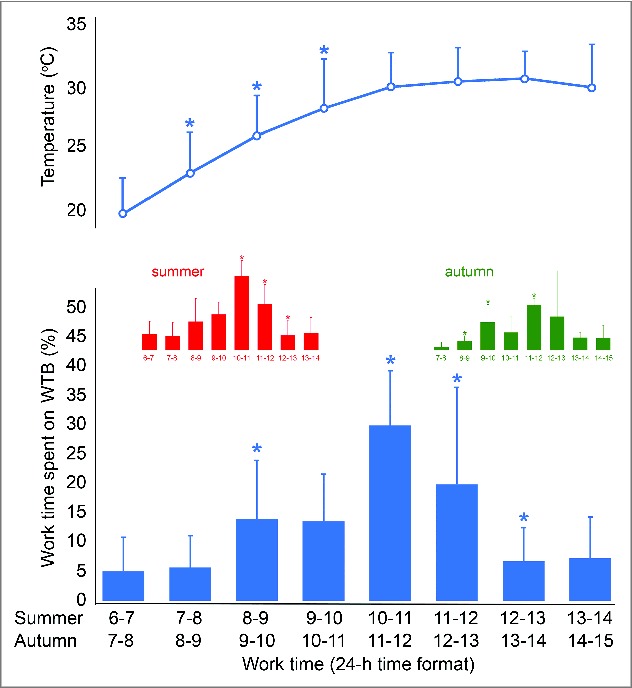
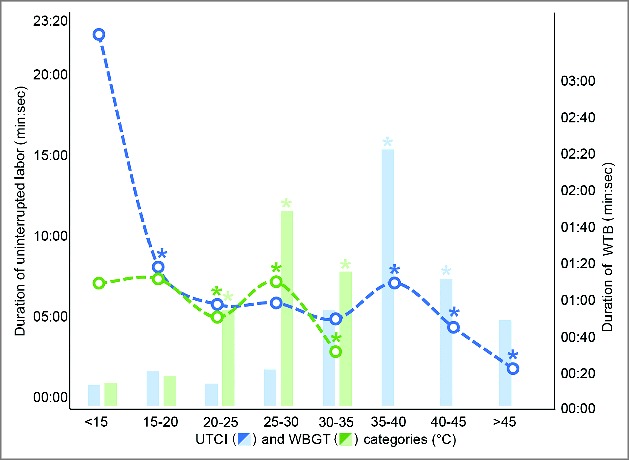
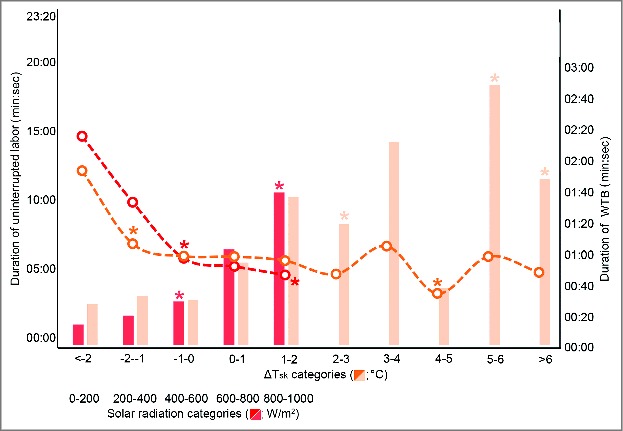
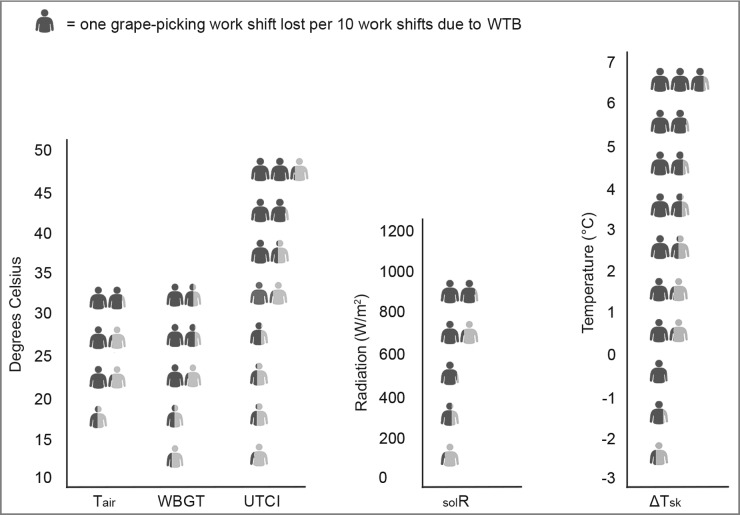
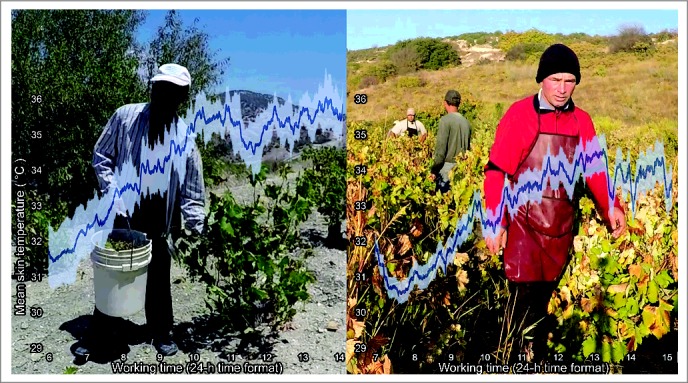
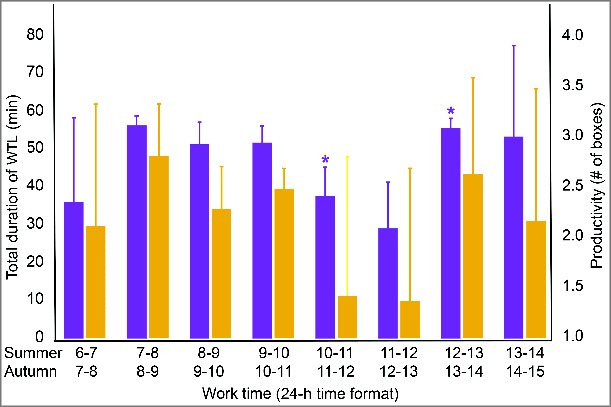
Introduction: In this study we (i) introduced time-motion analysis for assessing the impact of workplace heat on the work shift time spent doing labor (WTL) of grape-picking workers, (ii) examined whether seasonal environmental differences can influence their WTL, and (iii) investigated whether their WTL can be assessed by monitoring productivity or the vineyard manager's estimate of WTL. Methods: Seven grape-picking workers were assessed during the summer and/or autumn via video throughout four work shifts. Results: Air temperature (26.8 ± 4.8°C), wet bulb globe temperature (WBGT; 25.2 ± 4.1°C), universal thermal climate index (UTCI; 35.2 ± 6.7°C), and solar radiation (719.1 ± 187.5 W/m2) were associated with changes in mean skin temperature (1.7 ± 1.8°C) (p < 0.05). Time-motion analysis showed that 12.4% (summer 15.3% vs. autumn 10.0%; p < 0.001) of total work shift time was spent on irregular breaks (WTB). There was a 0.8%, 0.8%, 0.6%, and 2.1% increase in hourly WTB for every degree Celsius increase in temperature, WBGT, UTCI, and mean skin temperature, respectively (p < 0.01). Seasonal changes in UTCI explained 64.0% of the seasonal changes in WTL (p = 0.017). Productivity explained 36.6% of the variance in WTL (p < 0.001), while the vineyard manager's WTL estimate was too optimistic (p < 0.001) and explained only 2.8% of the variance in the true WTL (p = 0.456). Conclusion: Time-motion analysis accurately assesses WTL, evaluating every second spent by each worker during every work shift. The studied grape-picking workers experienced increased workplace heat, leading to significant labor loss. Monitoring productivity or the vineyard manager's estimate of each worker's WTL did not completely reflect the true WTL in these grape-picking workers.
Overview
The claims and statistics of this paper haven’t been checked yet.
Free: it reads the open-access text and checks the first 5 claims that cite a source we can check. Create a free account to check every claim.
Integrity signals
Registry
Cites
Statistics
Figures
Verification
Claims the paper makes
The claims and statistics of this paper haven’t been checked yet.
Free: it reads the open-access text and checks the first 5 claims that cite a source we can check. Create a free account to check every claim.
Claims other papers make about this one
Each is checked against this paper’s own text: does it say what the citing paper says it does?
The source backs part of the claim, not all of it — or backs it for a different population, condition or comparison.
In the citing paper
“This is probably related to the well-described effect of self-pacing that is known to act proactively to avoid an increase in workers’ core body temperature [13,25].”
From The Impacts of Sun Exposure on Worker Physiology and Cognition: Multi-Country Evidence and Interventions (2021) · cites this paper as [13]
Experimental — accuracy not yet measuredThe source backs part of the claim, not all of it — or backs it for a different population, condition or comparison.
In the citing paper
“However, recent data confirmed that these employees perform the vast majority of their work outdoors and are directly affected by sun exposure, leading to increased heat strain and impaired capacity for manual labor [10,11,12,13].”
From The Impacts of Sun Exposure on Worker Physiology and Cognition: Multi-Country Evidence and Interventions (2021) · cites this paper as [13]
Experimental — accuracy not yet measuredThe cited source says what the claim attributes to it.
In the citing paper
“Recent data from the European Commission project HEAT-SHIELD [23] show that higher skin temperature is linked with reduced capacity to perform manual labor, leading to significant economic losses [13,24].”
From The Impacts of Sun Exposure on Worker Physiology and Cognition: Multi-Country Evidence and Interventions (2021) · cites this paper as [13]
Self-check
Percentages, sums and reported differences re-computed from the paper’s own numbers.
The self-check needs the paper’s full text.
Citations
Cites
Faul, F., Erdfelder, E., Lang, A.-G., & Buchner, A. (2007) · Behavior Research Methods · doi:10.3758/bf03193146 · Cited by 65,971
A formula to estimate the approximate surface area if height and weight be known. 1916.
Bois, D. D., & Bois, E. F. D. (1989) · PubMed · Cited by 5,706
Du BOIS, D. (1916) · Archives of Internal Medicine · doi:10.1001/archinte.1916.00080130010002 · Cited by 4,342
A new weighting system for mean surface temperature of the human body
Ramanathan, N. L. (1964) · Journal of Applied Physiology · doi:10.1152/jappl.1964.19.3.531 · Cited by 1,883 · cited 1×
“2 (thigh C leg)].(22) The difference (DTsk) between the baseline Tsk (i.”
BackgroundDeriving the operational procedure for the Universal Thermal Climate Index (UTCI)
Bröde, P., Fiala, D., Błażejczyk, K., Holmér, I., Jendritzky, G., Kampmann, B., Tinz, B., & Havenith, G. (2012) · International Journal of Biometeorology · doi:10.1007/s00484-011-0454-1 · Cited by 1,243
Practical Assessment of Body Composition
Jackson, A. S., & Pollock, M. L. (1985) · The Physician and Sportsmedicine · doi:10.1080/00913847.1985.11708790 · Cited by 1,149 · cited 1×
“The latter was used to calculate body fat percentage according to the Jackson and Pollock equation.(19) Body surface area was calculated using the Du Bois formula.”
MethodKjellstrom, T., Holmer, I., & Lemke, B. (2009) · Global Health Action · doi:10.3402/gha.v2i0.2047 · Cited by 802
Self-citationPrediction of functional aerobic capacity without exercise testing
JACKSON, A. S., BLAIR, S. N., MAHAR, M. T., WIER, L. T., ROSS, R. M., & STUTEVILLE, J. E. (1990) · Medicine & Science in Sports & Exercise · doi:10.1249/00005768-199012000-00021 · Cited by 644 · cited 1×
“Maximal oxygen uptake was estimated using a non-exercise prediction model.(21)”
MethodEnergy cost and metabolic power in elite soccer: a new match analysis approach
OSGNACH, C., POSER, S., BERNARDINI, R., RINALDO, R., & DI PRAMPERO, P. E. (2010) · Medicine & Science in Sports & Exercise · doi:10.1249/mss.0b013e3181ae5cfd · Cited by 597 · cited 1×
“Time-motion analysis is a qualitative method that has been used for some time for the assessment of physical performance and work intensity in elite team sports.(29,30) In occupational settings, it is one of the recommended methods by the American Conference of Governmental Industrial Hygienists to assess hand activit…”
MethodHeat stress causes substantial labour productivity loss in Australia
Zander, K. K., Botzen, W. J. W., Oppermann, E., Kjellstrom, T., & Garnett, S. T. (2015) · Nature Climate Change · doi:10.1038/nclimate2623 · Cited by 459 · cited 1×
“2 billion USD).(15) Therefore, it is vital to identify means that will allow employees to be more productive despite using traditional work practices in their natural habitat and – at the same time – will protect their health and safety as well as improve job satisfaction.”
BackgroundSelf-citation
Research works printed but not linked: 2
- ACGIH Hand activity level In: 2001 TLVs and BEIs. Cincinnati (OH): ACGIH; 2001.
- International Organization for Standardization ISO standard 7243: hot environments – estimation of heat stress on working man based on the WBGT index (wet bulb globe temperature). Geneva: International Organization for Standardization; 1989.
Cited by
Hot weather and heat extremes: health risks
Ebi, K. L., Capon, A., Berry, P., Broderick, C., de Dear, R., Havenith, G., Honda, Y., Kovats, R. S., Ma, W., Malik, A., et al. (2021) · The Lancet · doi:10.1016/s0140-6736(21)01208-3 · Cited by 2,172
Self-citationFlouris, A. D., Dinas, P. C., Ioannou, L. G., Nybo, L., Havenith, G., Kenny, G. P., & Kjellstrom, T. (2018) · The Lancet Planetary Health · doi:10.1016/s2542-5196(18)30237-7 · Cited by 579
“4,6,26,33–35, 39–”
Self-citationCurrent and projected regional economic impacts of heatwaves in Europe
García-León, D., Casanueva, A., Standardi, G., Burgstall, A., Flouris, A. D., & Nybo, L. (2021) · Nature Communications · doi:10.1038/s41467-021-26050-z · Cited by 279
Self-citationOverview of Existing Heat-Health Warning Systems in Europe
Casanueva, A., Burgstall, A., Kotlarski, S., Messeri, A., Morabito, M., Flouris, A. D., Nybo, L., Spirig, C., & Schwierz, C. (2019) · International Journal of Environmental Research and Public Health · doi:10.3390/ijerph16152657 · Cited by 243
Self-citationOccupational heat strain in outdoor workers: A comprehensive review and meta-analysis
Ioannou, L. G., Foster, J., Morris, N. B., Piil, J. F., Havenith, G., Mekjavic, I. B., Kenny, G. P., Nybo, L., & Flouris, A. D. (2022) · Temperature · doi:10.1080/23328940.2022.2030634 · Cited by 208
“Our search resulted in 38 eligible ecological studies that involved monitoring experienced and acclimatized outdoor workers carrying out 41 jobs across 21 countries: Australia [64,66,80–82], Brazil [83], China [84,85], Cyprus [11,58,86], El Salvador [87], Greece [2,58], Cambodia [88], Guatemala [67], Hong Kong [89], I…”
BackgroundMethodInfluentialSelf-citationThe thermoregulation system and how it works
(2018) · Handbook of Clinical Neurology · doi:10.1016/b978-0-444-63912-7.00001-1 · Cited by 186
Foster, J., Smallcombe, J. W., Hodder, S., Jay, O., Flouris, A. D., Nybo, L., & Havenith, G. (2021) · International Journal of Biometeorology · doi:10.1007/s00484-021-02105-0 · Cited by 154
“Field studies demonstrate that functional/quality labour time is very sensitive to heat, with total output during work declining with increasing heat (Ioannou et al. 2017; Kalkowsky and Kampmann 2006; Sahu et al. 2013).”
BackgroundSelf-citationOn the use of wearable physiological monitors to assess heat strain during occupational heat stress
Notley, S. R., Flouris, A. D., & Kenny, G. P. (2018) · Applied Physiology, Nutrition, and Metabolism · doi:10.1139/apnm-2018-0173 · Cited by 124
Self-citationMorris, N. B., Jay, O., Flouris, A. D., Casanueva, A., Gao, C., Foster, J., Havenith, G., & Nybo, L. (2020) · Environmental Health · doi:10.1186/s12940-020-00641-7 · Cited by 110
Self-citationOccupational Heat Stress: Multi-Country Observations and Interventions
Ioannou, L. G., Mantzios, K., Tsoutsoubi, L., Nintou, E., Vliora, M., Gkiata, P., Dallas, C. N., Gkikas, G., Agaliotis, G., Sfakianakis, K., et al. (2021) · International Journal of Environmental Research and Public Health · doi:10.3390/ijerph18126303 · Cited by 107
“For example, job task requirements and complexities, self-pacing, and sun exposure are only some of the parameters that are difficult to consider in laboratory settings and are known to affect the physiological heat strain experienced by someone [7,28].”
BackgroundMethodSelf-citationGlobal labor loss due to humid heat exposure underestimated for outdoor workers
Parsons, L. A., Masuda, Y. J., Kroeger, T., Shindell, D. T., Wolff, N. H., & Spector, J. T. (2022) · Environmental Research Letters · doi:10.1088/1748-9326/ac3dae · Cited by 134
Ioannou, L. G., Tsoutsoubi, L., Mantzios, K., Gkikas, G., Piil, J. F., Dinas, P. C., Notley, S. R., Kenny, G. P., Nybo, L., & Flouris, A. D. (2021) · International Journal of Environmental Research and Public Health · doi:10.3390/ijerph18147698 · Cited by 91
“Recent data from the European Commission project HEAT-SHIELD [23] show that higher skin temperature is linked with reduced capacity to perform manual labor, leading to significant economic losses [13,24].”
BackgroundMethodInfluentialSelf-citationFoster, J., Smallcombe, J. W., Hodder, S., Jay, O., Flouris, A. D., & Havenith, G. (2021) · International Journal of Biometeorology · doi:10.1007/s00484-021-02212-y · Cited by 96
Self-citationEscalating environmental summer heat exposure—a future threat for the European workforce
Casanueva, A., Kotlarski, S., Fischer, A. M., Flouris, A. D., Kjellstrom, T. E., Lemke, B., Nybo, L., Schwierz, C., & Liniger, M. A. (2020) · Regional Environmental Change · doi:10.1007/s10113-020-01625-6 · Cited by 98
“…to heat exposure applying ISO recommendations The workers’ natural response to protect themselves against the risk of heat-related illnesses is to slow downwork intensity and/or limit working hours, thus minimizing body heat production and reducing heat exposure, respectively (Ioannou et al. 2017).”
BackgroundSelf-citationHeat waves and adaptation: A global systematic review
Kiarsi, M., Amiresmaili, M., Mahmoodi, M. R., Farahmandnia, H., Nakhaee, N., Zareiyan, A., & Aghababaeian, H. (2023) · Journal of Thermal Biology · doi:10.1016/j.jtherbio.2023.103588 · Cited by 87
Direct exposure of the head to solar heat radiation impairs motor-cognitive performance
Piil, J. F., Christiansen, L., Morris, N. B., Mikkelsen, C. J., Ioannou, L. G., Flouris, A. D., Lundbye-Jensen, J., & Nybo, L. (2020) · Scientific Reports · doi:10.1038/s41598-020-64768-w · Cited by 74
Self-citationFlouris, A. D., McGinn, R., Poirier, M. P., Louie, J. C., Ioannou, L. G., Tsoutsoubi, L., Sigal, R. J., Boulay, P., Hardcastle, S. G., & Kenny, G. P. (2018) · Temperature · doi:10.1080/23328940.2017.1381800 · Cited by 74
Self-citationAn Occupational Heat–Health Warning System for Europe: The HEAT-SHIELD Platform
Morabito, M., Messeri, A., Noti, P. A., Casanueva, A., Crisci, A., Kotlarski, S., Orlandini, S., Schwierz, C., Spirig, C., Kingma, B., et al. (2019) · International Journal of Environmental Research and Public Health · doi:10.3390/ijerph16162890 · Cited by 84
Self-citationOppermann, E., Kjellstrom, T. E., Lemke, B., Otto, M., & LEE, J. K. W. (2021) · Current Opinion in Environmental Sustainability · doi:10.1016/j.cosust.2021.04.006 · Cited by 86
Self-citationIndicators to assess physiological heat strain – Part 1: Systematic review
Ioannou, L. G., Mantzios, K., Tsoutsoubi, L., Notley, S. R., Dinas, P. C., Brearley, M. B., Epstein, Y., Havenith, G., Sawka, M. N., Bröde, P., et al. (2022) · Temperature · doi:10.1080/23328940.2022.2037376 · Cited by 84
Self-citationPerformance in complex motor tasks deteriorates in hyperthermic humans
Piil, J. F., Lundbye-Jensen, J., Trangmar, S. J., & Nybo, L. (2017) · Temperature · doi:10.1080/23328940.2017.1368877 · Cited by 68
“This may not be an option in all occupational settings where heat stress is an issue, but given the negative impact of environmental heat stress on productivity in many industries, 46,47 it is advisable to develop coping strategies that allows minimizing the in fl uence on productivity and safety.”
Self-citationIoannou, L. G., Tsoutsoubi, L., Mantzios, K., Vliora, M., Nintou, E., Piil, J. F., Notley, S. R., Dinas, P. C., Gourzoulidis, G. A., Havenith, G., et al. (2022) · Temperature · doi:10.1080/23328940.2022.2044739 · Cited by 72
“%) experienced (assessed work was their primary occupation) and acclimatized (i.e., living and working in the area for ≥2 months) workers (Table 1) during one to five work shifts (in total 893 full work shifts) performed in nine countries (Australia, Canada, Cyprus, Denmark, Greece, Qatar, Slovenia, Spain, and the Uni…”
BackgroundResultInfluentialSelf-citationPOULIANITI, K. P., HAVENITH, G., & FLOURIS, A. D. (2019) · Industrial Health · doi:10.2486/indhealth.2018-0075 · Cited by 58
Self-citationTakakura, J., Fujimori, S., Takahashi, K., Hasegawa, T., Honda, Y., Hanasaki, N., Hijioka, Y., & Masui, T. (2018) · Earth s Future · doi:10.1029/2018ef000883 · Cited by 68
“…Bodin et al., 2016; Chan & Yang, 2016; Chan et al., 2017; Crowe et al., 2010, 2013; Delgado Cortez, 2009; Hassan et al., 2017; Inaba & Mirbod, 2007; Ioannou et al., 2017; Maiti, 2008; Meade et al., 2017, 2015; Miller et al., 2011; Sahu et al., 2013; Vatani et al., 2016, summarized in Table S4).”
Climate projections of a multivariate heat stress index: the role of downscaling and bias correction
Casanueva, A., Kotlarski, S., Herrera, S., Fischer, A. M., Kjellstrom, T. E., & Schwierz, C. (2019) · Geoscientific model development · doi:10.5194/gmd-12-3419-2019 · Cited by 67
“In the context of working people, several studies have revealed the negative impact of heat stress on workers’ health (Pogačar et al., 2018) and labour productivity (Kjellstrom et al., 2009; Ioannou et al., 2017).”
Self-citationAnwer, S., Li, H., Antwi‐Afari, M. F., Umer, W., & Wong, A. Y. L. (2020) · International Journal of Environmental Research and Public Health · doi:10.3390/ijerph17155418 · Cited by 62
Foster, J., Smallcombe, J. W., Hodder, S., Jay, O., Flouris, A. D., Nybo, L., & Havenith, G. (2021) · International Journal of Biometeorology · doi:10.1007/s00484-021-02205-x · Cited by 60
Self-citationEffect of a Simulated Heat Wave on Physiological Strain and Labour Productivity
Ioannou, L. G., Mantzios, K., Tsoutsoubi, L., Panagiotaki, Z., Kapnia, A. K., Ciuha, U., Nybo, L., Flouris, A. D., & Mekjavic, I. B. (2021) · International Journal of Environmental Research and Public Health · doi:10.3390/ijerph18063011 · Cited by 51
“The minimum required sample size for investigating “repeated measures, within factors” was calculated using the results of a previous study [7], which identified that there is a 0.”
BackgroundMethodResultSelf-citationPogačar, T., Črepinšek, Z., Bogataj, L. K., & Nybo, L. (2017) · Acta agriculturae Slovenica · doi:10.14720/aas.2017.109.3.06 · Cited by 50
Self-citationThe HEAT-SHIELD project — Perspectives from an inter-sectoral approach to occupational heat stress
Morris, N. B., Piil, J. F., Morabito, M., Messeri, A., Levi, M., Ioannou, L. G., Ciuha, U., Pogačar, T., Kajfež Bogataj, L., Kingma, B., et al. (2021) · Journal of Science and Medicine in Sport · doi:10.1016/j.jsams.2021.03.001 · Cited by 47
Self-citationAl-Bouwarthan, M., Quinn, M., Kriebel, D., & Wegman, D. H. (2020) · Annals of Work Exposures and Health · doi:10.1093/annweh/wxaa029 · Cited by 62
Wearables for Measuring Health Effects of Climate Change–Induced Weather Extremes: Scoping Review
Koch, M., Matzke, I., Huhn, S., Gunga, H.-C., Maggioni, M. A., Munga, S., Obor, D., Sié, A., Boudo, V., Bunker, A., et al. (2022) · JMIR mHealth and uHealth · doi:10.2196/39532 · Cited by 44
“Studies examining occupational heat stress using wearables found physical effects similar to those mentioned above for other study populations, including cardiac strain and decreasing physical activity [44,49,61,63,75-77].”
BackgroundMethodInfluentialOccupational heat stress management: Does one size fit all?
Notley, S. R., Flouris, A. D., & Kenny, G. P. (2019) · American Journal of Industrial Medicine · doi:10.1002/ajim.22961 · Cited by 52
Self-citationFoster, J., Hodder, S., Goodwin, J., & Havenith, G. (2020) · Annals of Work Exposures and Health · doi:10.1093/annweh/wxaa082 · Cited by 65
Heat Waves Occurrence and Outdoor Workers’ Self-assessment of Heat Stress in Slovenia and Greece
Pogačar, T., Žnidaršič, Z., Bogataj, L. K., Flouris, A. D., Poulianiti, K., & Črepinšek, Z. (2019) · International Journal of Environmental Research and Public Health · doi:10.3390/ijerph16040597 · Cited by 50
Self-citationCiuha, U., Pogačar, T., Bogataj, L. K., Gliha, M., Nybo, L., Flouris, A. D., & Mekjavic, I. B. (2019) · Weather, Climate, and Society · doi:10.1175/wcas-d-19-0024.1 · Cited by 40
Self-citationZhao, M., Huang, X., Kjellstrom, T. E., LEE, J. K. W., Otto, M., Zhang, X., Romanello, M. B., Zhang, D., & Cai, W. (2022) · The Lancet Planetary Health · doi:10.1016/s2542-5196(22)00245-5 · Cited by 43
Self-citationA free software to predict heat strain according to the ISO 7933:2018
IOANNOU, L. G., TSOUTSOUBI, L., MANTZIOS, K., & FLOURIS, A. D. (2019) · Industrial Health · doi:10.2486/indhealth.2018-0216 · Cited by 40
Self-citationClimate Change and Heat Exposure: Impact on Health in Occupational and General Populations
Kenny, G. P., Notley, S. R., Flouris, A. D., & Grundstein, A. (2019) · Springer eBooks · doi:10.1007/978-3-030-27805-2_12 · Cited by 50
Self-citationHeat stress and the labour force
Dasgupta, S., ROBINSON, E. J. Z., Shayegh, S., Bosello, F., Park, R. J., & Gosling, S. N. (2024) · Nature Reviews Earth & Environment · doi:10.1038/s43017-024-00606-1 · Cited by 63
Smallcombe, J. W., Foster, J., Hodder, S., Jay, O., Flouris, A. D., & Havenith, G. (2022) · International Journal of Biometeorology · doi:10.1007/s00484-022-02370-7 · Cited by 44
Self-citationProjected Wine Grape Cultivar Shifts Due to Climate Change in New Zealand
Ausseil, A.-G., Law, R. M., Parker, A. K., Teixeira, E. I., & Sood, A. (2021) · Frontiers in Plant Science · doi:10.3389/fpls.2021.618039 · Cited by 36
“If temperatures increase, it is not only the impact on grapevines that need to be considered but also the increasing risk to workers’ exposure to summer heat at labor-intensive stages (Ioannou et al., 2017).”
BackgroundMorris, N. B., Levi, M., Morabito, M., Messeri, A., Ioannou, L. G., Flouris, A. D., Samoutis, G., Pogačar, T., Bogataj, L. K., Piil, J. F., et al. (2021) · Temperature · doi:10.1080/23328940.2020.1852049 · Cited by 36
Self-citationGlobal heating: Attention is not enough; we need acute and appropriate actions
Nybo, L., Kjellstrom, T., Bogataj, L. K., & Flouris, A. D. (2017) · Temperature · doi:10.1080/23328940.2017.1338930 · Cited by 36
Self-citationPogačar, T., Žnidaršič, Z., Bogataj, L. K., & Črepinšek, Z. (2020) · International Journal of Environmental Research and Public Health · doi:10.3390/ijerph17165829 · Cited by 34
“Most stakeholders agree that it is easiest and most efficient to introduce preplanned breaks during working time, but it must be clearly stated that this measure does not reduce workers’ productivity [38], which is a major concern of employers.”
BackgroundSelf-citationImpact of climate change on occupational health and safety: A review of methodological approaches
Ferrari, G. N., Leal, G. C. L., de Souza, R. C. T., & Galdámez, E. V. C. (2022) · Work · doi:10.3233/wor-211303 · Cited by 43
Physical activity and work activities in Florida agricultural workers
Mix, J. M., Elon, L., Mac, V., Flocks, J. D., Economos, J., Tovar‐Aguilar, A. J., Hertzberg, V., & McCauley, L. (2019) · American Journal of Industrial Medicine · doi:10.1002/ajim.23035 · Cited by 33
Moving in a hotter world: Maintaining adequate childhood fitness as a climate change countermeasure
Morrison, S. A. (2022) · Temperature · doi:10.1080/23328940.2022.2102375 · Cited by 34
“Heatwaves and high heat exposures are responsible for labor loss and health risks in industries like agriculture [75], and others [76], and although less is known regarding child labor in these circumstances, we know that hyperthermia can impair complex motor task performances [77], and direct exposure of solar heat t…”
BackgroundHavenith, G., Smallcombe, J. W., Hodder, S., Jay, O., & Foster, J. (2024) · Journal of Applied Physiology · doi:10.1152/japplphysiol.00613.2023 · Cited by 25
Ioannou, L. G., Testa, D. J., Tsoutsoubi, L., Mantzios, K., Gkikas, G., Agaliotis, G., Nybo, L., Babar, Z. R., & Flouris, A. D. (2023) · Journal of Immigrant and Minority Health · doi:10.1007/s10903-023-01493-2 · Cited by 23
“The same video recordings were analyzed on a second-bysecond basis [12, 30], to estimate the amount of time spent on unplanned breaks as well as the work intensity (in W/ m2) of each worker throughout the entire work shift [12, 30].”
MethodResultSelf-citationPiil, J. F., Mikkelsen, C. J., Junge, N., Morris, N. B., & Nybo, L. (2019) · International Journal of Environmental Research and Public Health · doi:10.3390/ijerph16050716 · Cited by 29
“Even though humans have a remarkable ability to adapt to environmental heat stress, the present findings emphasize the limitations for acclimatization to prevent the negative effects of high heat scenarios on productivity [27] and health [17].”
Self-citationTaylor, N. A. S., Lee, J., Kim, S., & Notley, S. R. (2021) · Journal of Thermal Biology · doi:10.1016/j.jtherbio.2021.102858 · Cited by 21
Indicators to assess physiological heat strain – Part 2: Delphi exercise
Ioannou, L. G., Dinas, P. C., Notley, S. R., Gofa, F., Gourzoulidis, G. A., Brearley, M. B., Epstein, Y., Havenith, G., Sawka, M. N., Bröde, P., et al. (2022) · Temperature · doi:10.1080/23328940.2022.2044738 · Cited by 20
“productivity [1,3,4,6], and it is projected to worsen with the ongoing global warming [9].”
BackgroundMethodSelf-citationChu, B., Luo, J., Wang, K., Xing, Z.-C., & Wang, H. (2024) · Advances in Climate Change Research · doi:10.1016/j.accre.2024.06.006 · Cited by 17
Considerations for occupational heat exposure: A scoping review
Cheveldayoff, P., Chowdhury, F., Shah, N., Burow, C. A., Figueiredo, M., Nguyen, N., Talbo, M. K., Jamasi, R., Katz, A., Pasquale, C., et al. (2023) · PLOS Climate · doi:10.1371/journal.pclm.0000202 · Cited by 25
O’Connor, F. K., Meade, R. D., Notley, S. R., Ioannou, L. G., Flouris, A. D., & Kenny, G. P. (2024) · American Journal of Industrial Medicine · doi:10.1002/ajim.23580 · Cited by 22
Self-citationThe Impact of Workplace Heat and Cold on Work Time Loss
Ioannou, L. G., Tsoutsoubi, L., Mantzios, K., Gkikas, G., Agaliotis, G., Koutedakis, Y., García-León, D., Havenith, G., Liang, J., Arkolakis, C., et al. (2025) · Journal of Occupational and Environmental Medicine · doi:10.1097/jom.0000000000003332 · Cited by 18
“14,23 Previous studies adopted metrics of productivity reflecting the total volume of output (e.g., goods produced) of multiple workers grouped together over an extended period of time.”
Self-citationEstimating economic losses from perceived heat stress in a global south country, Bangladesh
Bardhan, M., Patwary, M. M., Imran, S. A., Billah, S. M., Hasan, M., Disha, A. S., Kabir, M. P., Saha, C., Pitol, M. N. S., & Browning, M. H. E. M. (2024) · Urban Climate · doi:10.1016/j.uclim.2024.102072 · Cited by 18
Risk assessment for heat stress during work and leisure
Ioannou, L. G., Gkikas, G., Mantzios, K., Tsoutsoubi, L., & Flouris, A. D. (2021) · Elsevier eBooks · doi:10.1016/b978-0-323-85215-9.00004-0 · Cited by 19
Self-citationde Oliveira, B. F. A., da Silveira, I. H., Feitosa, R. C., Horta, M. A. P., Junger, W. L., & Hacon, S. D. S. (2019) · Anais da Academia Brasileira de Ciências · doi:10.1590/0001-3765201920180748 · Cited by 16
Flouris, A. D., Ioannou, L. G., Notley, S. R., & Kenny, G. P. (2021) · Journal of Occupational and Environmental Hygiene · doi:10.1080/15459624.2021.2001475 · Cited by 12
“…heat illness and has been also reported in previous observational studies (Brearley et al. 2015; Dehghan et al. 2015; Meade et al. 2015, 2016; Ioannou et al. 2017; Piil et al. 2018; Ioannou et al. 2021a) and reviews (Kenny et al. 2016; Flouris et al. 2018; Notley et al. 2018, 2019) covering…”
ResultSelf-citationSpatiotemporal changes in heat stress exposure in India, 1981-2023
Shah, A., Sugathan, A., Malghan, D. V., Kim, R., & Subramanian, S. V. (2025) · Nature Communications · doi:10.1038/s41467-025-64840-x · Cited by 19
Permatasari, N., Yovi, E. Y., & Kuncahyo, B. (2023) · Jurnal Sylva Lestari · doi:10.23960/jsl.v12i1.773 · Cited by 16
“Working at air temperatures of 33–34°C may cause a worker to lose 50% of their work capacity (ILO 2019; Ioannou et al. 2017).”
BackgroundIoannou, L. G., Ciuha, U., Fisher, J. T., Tsoutsoubi, L., Tobita, K., Bonell, A., Cotter, J. D., Kenny, G. P., Flouris, A. D., & Mekjavić, I. B. (2023) · Applied Sciences · doi:10.3390/app13158561 · Cited by 10
Self-citationQuartucci, C., Wibowo, R., Do, V., Böse‐O’Reilly, S., Nowak, D., Weilnhammer, V., Weinmann, T., & Rakete, S. (2024) · Journal of Occupational Medicine and Toxicology · doi:10.1186/s12995-024-00418-5 · Cited by 16
“It has been demonstrated that elevated temperatures at workplaces are an emerging occupational hazard that can reduce work capacity and motor-cognitive performance, adversely affecting productivity [4, 6, 7].”
BackgroundO’Connor, F. K., Meade, R. D., Notley, S. R., Ioannou, L. G., Flouris, A. D., & Kenny, G. P. (2024) · Journal of Occupational and Environmental Hygiene · doi:10.1080/15459624.2024.2406227 · Cited by 11
“However, the implementation of the PSI can prove problematic owing to logistical, practical (Taylor et al. 2014; Borg et al. 2017), and ethical (Kenny et al. 2012; Meade et al. 2015, 2016; Ioannou et al. 2017) challenges of recording core temperature and heart rate in the field.”
Self-citationUchiyama, K., King, J., Wallman, K. E., Taggart, S. M., Dugan, C., & Girard, O. (2022) · European Journal of Applied Physiology · doi:10.1007/s00421-022-04979-3 · Cited by 12
Cardiovascular responses to orthostasis during a simulated 3-day heatwave
Fisher, J. T., Ciuha, U., Ioannou, L. G., Simpson, L. L., Possnig, C., Lawley, J. S., & Mekjavić, I. B. (2022) · Scientific Reports · doi:10.1038/s41598-022-24216-3 · Cited by 10
Self-citationClimate Change, Occupational Heat Stress, Human Health, and Socioeconomic Factors
Kjellstrom, T. E., Oppermann, E., & LEE, J. K. W. (2020) · Handbook series in occupational health sciences · doi:10.1007/978-3-030-31438-5_37 · Cited by 13
Self-citationTaggart, S. M., Girard, O., Landers, G. J., Ecker, U. K. H., & Wallman, K. E. (2023) · Temperature · doi:10.1080/23328940.2023.2208516 · Cited by 14
Tetzlaff, E. J., Richards, B. J., Wagar, K. E., Harris‐Mostert, R. C., Journeay, W. S., O’Connor, F. K., & Kenny, G. P. (2024) · NEW SOLUTIONS A Journal of Environmental and Occupational Health Policy · doi:10.1177/10482911241298948 · Cited by 9
Self-citationJahangiri, H., Zamanian, Z., Daneshmandi, H., Seif, M., & Jamshidi, H. (2022) · Ergonomics · doi:10.1080/00140139.2022.2145375 · Cited by 8
“…increased accidents due to reduced decision-making (Spector et al. 2019; Tawatsupa et al. 2013; Taylor et al. 2015), cognitive impairments, particularly in complex mental tasks (Gaoua et al. 2011), and the need for more breaks that can impair productivity (Flouris et al. 2018; Ioannou et al. 2017).”
BackgroundPredicting Deep Body Temperature (Tb) from Forehead Skin Temperature: Tb or Not Tb?
Fisher, J. T., Ciuha, U., Tipton, M., Ioannou, L. G., & Mekjavić, I. B. (2022) · Sensors · doi:10.3390/s22030826 · Cited by 7
“9417), based on the results of a previous study [8,9].”
ResultSelf-citationMantzios, K., Ioannou, L. G., Nikolaki, E., Gkiata, P., Charachousou, G., Tsoutsoubi, L., Dinas, P. C., & Flouris, A. D. (2024) · Journal of Science in Sport and Exercise · doi:10.1007/s42978-024-00309-5 · Cited by 9
“Overall performance tends to decrease as core and skin temperatures increase [4, 11, 20, 43], emphasizing the importance of measuring/ estimating core body temperature in determining an athlete’s thermoregulatory strain during exercise [9].”
Self-citationO’Connor, F. K., Janetos, K. T., Richards, B. J., Harris‐Mostert, R. C., Wagar, K. E., Ioannou, L. G., McCormick, J. J., Meade, R. D., Tetzlaff, E. J., Sigal, R. J., et al. (2025) · American Journal of Industrial Medicine · doi:10.1002/ajim.70015 · Cited by 6
“This represents a significant shortcoming of current guidance as, dependent on task allocation, heavy ‐ intensity work can comprise a significant proportion of the work shift [14, 15, 32].”
Self-citationIoannou, L. G., Tsoutsoubi, L., Mantzios, K., Ciuha, U., Kenny, G. P., Nybo, L., Flouris, A. D., & Mekjavić, I. B. (2024) · Applied Physiology, Nutrition, and Metabolism · doi:10.1139/apnm-2024-0105 · Cited by 6
Self-citationIoannou, L. G., Tsoutsoubi, L., Nybo, L., Tsianos, G. I., & Flouris, A. D. (2018) · Human performance in extreme environments · doi:10.7771/2327-2937.1107 · Cited by 8
“The interaction of the heat exposure with exercise/work leads to increased physiological strain, which has a broad range of deleterious effects in athletic/work performance (Flouris & Schlader, 2015; Ioannou et al., 2017; Périard, Racinais, & Sawka, 2015).”
BackgroundSelf-citationAggravated Occupational Heat Stress Recognition and Mitigation in Slovenia
Pogačar, T., Žnidaršič, Z., Črepinšek, Z., & Bogataj, L. K. (2018) · Climate change management · doi:10.1007/978-3-030-03383-5_18 · Cited by 6
Self-citationFarnham, C., Yuan, J., & Emura, K. (2025) · Clean Technologies · doi:10.3390/cleantechnol7010009 · Cited by 5
“Workers in hot environments may need frequent breaks to reduce heat stress in accordance with worker health and safety standards and guidelines such as ISO 7933 [6], but this reduces productivity [7].”
Masanotti, G. M. (2019) · Biomedical Journal of Scientific & Technical Research · doi:10.26717/bjstr.2019.16.002865 · Cited by 6
Ioannou, L. G., Tsoutsoubi, L., Amorim, T., George, S., & Flouris, A. D. (2018) · Journal of Geriatric Medicine and Gerontology · doi:10.23937/2469-5858/1510040 · Cited by 3
“However, extreme ambient temperatures can variously affect the human cognitive [2], athletic [3], and work performances [4].”
BackgroundSelf-citationBongers, C. C. W. G., & Eijsvogels, T. M. H. (2018) · Temperature · doi:10.1080/23328940.2018.1462656 · Cited by 3
“For this purpose, the authors assessed the impact of wet bulb globe temperature (WBGT) on work time spent in irregular work breaks of grape-picking workers [2].”
BackgroundInfluentialPogačar, T., Bogataj, L. K., & Črepinšek, Z. (2018) · Acta agriculturae Slovenica · doi:10.14720/aas.2018.111.3.13 · Cited by 2
Self-citationPsychophysical Load During the Multistage Marathon des Sables: A Case Study
Ioannou, L. G., Tsoutsoubi, L., Tsianos, G. I., & Flouris, A. D. (2023) · Human performance in extreme environments · doi:10.7771/2327-2937.1156 · Cited by 1
“…that environmental heat stress increases human T sk (Ioannou et al., 2017, 2019), leading to a voluntary reduction in exercise/work intensity (i.e., self-paced exercise) (Ioannou et al., 2017; Sawka et al., 2012), which is one of the most sensitive behavioral responses during exercise in the heat.”
BackgroundResultSelf-citationKaufman, C. E., Morrissey, M. C., Marcelino, M., & Casa, D. J. (2025) · American Journal of Industrial Medicine · doi:10.1002/ajim.23734 · Cited by 4
Eggert, E., Gunga, H.-C., Sie, A. B., Ouèrmi, L., Ouédraogo, W. A., Kwaro, D., Sauerborn, R., Bunker, A., Barteit, S., Bärnighausen, T., et al. (2025) · The Lancet Planetary Health · doi:10.1016/j.lanplh.2025.101344 · Cited by 5
Nagashima, Y., Hisaoka, T., Sato, T., Ehara, Y., Horikawa, A., Shiohara, A., Mitsume, A., Mineo, S., & Yoshida, H. (2026) · Temperature · doi:10.1080/23328940.2026.2635186 · Cited by 1
Climate Change, Occupational Heat Stress, Human Health and Socio-Economic Factors
Kjellstrom, T. E., Oppermann, E., & LEE, J. K. W. (2020) · Springer eBooks · doi:10.1007/978-3-030-05031-3_37-1 · Cited by 2
Self-citationTerrestrial warming and cooling: Either or both?
Romanovsky, A. A. (2020) · Temperature · doi:10.1080/23328940.2020.1818914
Oriente Medio. Obama se hace oír.
Zarzuela, A. (2009) · Cambio 16
Koch, M., Matzke, I., Huhn, S., Gunga, H., Maggioni, M. A., Munga, S., Obor, D., Sié, A., Boudo, V., Bunker, A., et al. (2022) · doi:10.2196/preprints.39532
Oliveira, T. C. S., Dallacort, R., Dias, V. R. D. M., Melo, R. P., Terças‐Trettel, A. C. P., Tieppo, R. C., & do Nascimento, V. F. (2025) · Revista Brasileira de Climatologia · doi:10.55761/abclima.v36i21.18861
Kassem, N., Boutros, P., & Barteit, S. (2025) · Progress in molecular biology and translational science · doi:10.1016/bs.pmbts.2025.06.010
Labor Productivity Beyond Output
Ioannou, L. G., Tsoutsoubi, L., Mantzios, K., Gkikas, G., Agaliotis, G., Koutedakis, Y., García-León, D., Havenith, G., Liang, J., Arkolakis, C., et al. (2025) · Journal of Occupational and Environmental Medicine · doi:10.1097/jom.0000000000003551
Self-citationRest in a Warming Workplace: Resituating the Science and Policy of Non‐Work Under Climate Change
Mishra, P., & Parsons, L. (2026) · Geo Geography and Environment · doi:10.1002/geo2.70070 · Cited by 1
Chu, B., Zhu, Y. C., Luo, L., Luo, J., Liu, L., Li, D., Guo, Y., & Wang, H. (2026) · iScience · doi:10.1016/j.isci.2026.115923
The Impact of Climate Change on Productivity in India: Explorations with ARFIMA Model
Joshi, S., Gupta, S., & Kansil, R. (2026) · Indian Journal of Labour Economics · doi:10.1007/s41027-026-00621-4
Heat exposure, rest pauses, and productivity losses in outdoor work in Brazil
Bitencourt, D. P., Shibuya, E., da Cunha, I. D. Â., Roscani, R. C., Rothstein, J. R., & Fuentes, M. V. (2026) · Air Quality Atmosphere & Health · doi:10.1007/s11869-026-02040-2
Metadata
- Authors
- Ioannou, L. G., Tsoutsoubi, L., Samoutis, G., Bogataj, L. K., Kenny, G. P., Nybo, L., Kjellstrom, T., & Flouris, A. D.
- Affiliations
- University of Thessaly (GR)
- University of Nicosia (CY)
- Biotehnical Faculty, University of Ljubljana, Ljubljana, Slovenia
- University of Ottawa (CA)
- University of Copenhagen (DK)
- Centre for Technology Research & Innovation (Cyprus) (CY)
- Corresponding author
- Flouris, Andreas D.
- ORCID
- Venue
- Temperature
- Publisher
- Informa UK Limited
- Published
- 2017-07-03
- Volume
- 4
- Issue
- 3
- Pages
- 330-340
- ISSN
- 2332-8940 (ISSN-L)
- 2332-8959
- PMC
- PMC5605156
- OpenAlex
- W2736059161
- Cited by
- 103
- References
- 34
- Citations by year
- 2026: 7 · 2025: 9 · 2024: 10 · 2023: 9 · 2022: 14 · 2021: 15 · 2020: 11 · 2019: 12 · 2018: 11 · 2017: 4
- FWCI
- 7.69
- Type
- journal article
- Language
- en
- Open access
- hybrid
- doi.org
- Licence
- Locations
- Temperature (publishedVersion, cc-by-nc-nd)
- PubMed Central (publishedVersion, cc-by-nc-nd)
- PubMed (publishedVersion)
- Research at the University of Copenhagen (University of Copenhagen) (publishedVersion, cc-by-nc-nd)
- University of Thessaly Institutional Repository (University of Thessaly) (submittedVersion)
- Funders
- European Commission (668786, HORIZON2020)
- Topics
- Health Sciences › Medicine › Physiology (medical) › Thermoregulation and physiological responses
- Health Sciences › Medicine › Public Health, Environmental and Occupational Health › Occupational Health and Safety in Workplaces
- Health Sciences › Medicine › Public Health, Environmental and Occupational Health › Agriculture and Farm Safety
- Keywords
- time and motion study, labor loss, agricultural labor, skin temperature, Universal Thermal Climate Index, wet bulb globe temperature, solar radiation, seasonal variation, labor productivity, rest breaks, vineyard management
About these checks
Registry, retraction, Cites and statistics results are computed, not judged, with one exception: a printed reference that no index lists is read once by a model before it counts as a citation error. Claims are extracted by a model and kept only when their quote appears verbatim in the text; each cited source is then checked, with a model’s help, for whether it says what the claim relies on. Those verdicts can be wrong — read the claim’s quote and the cited source before relying on one.
Statistics and arithmetic are recomputed, not judged.
Confidence bands are shown only for fields calibrated on our annotated test set. None is calibrated yet, so no band is shown.
What counts as a claim ›How we measure confidence ›How we check this ›
Are you an author, or do you see a problem with this page? Request a review
Data sources
Bibliographic data: Semantic Scholar, OpenAlex, Crossref.
Contains information from the Semantic Scholar Academic Graph Datasets, made available under the ODC Attribution License (ODC-BY 1.0).
Semantic Scholar’s data is described in: Kinney, R., et al. (2023). The Semantic Scholar Open Data Platform. arXiv:2301.10140.
