

The DOI matches its Crossref record; 97 of the 98 references it cites were found in a registry or an index.
Reversion of the Malignant Phenotype of Human Breast Cells in Three-Dimensional Culture and In Vivo by Integrin Blocking Antibodies
Open accessAbstract
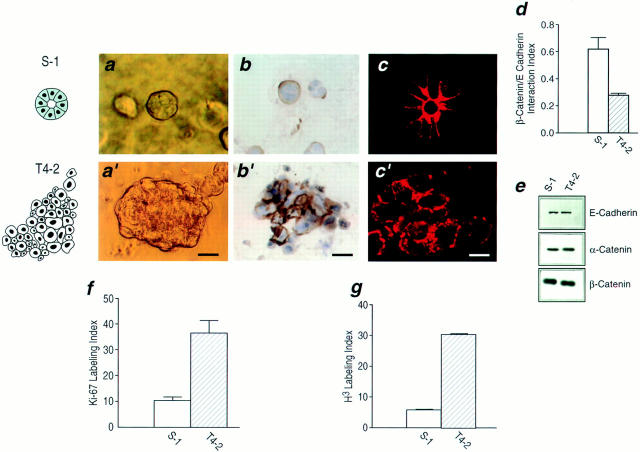
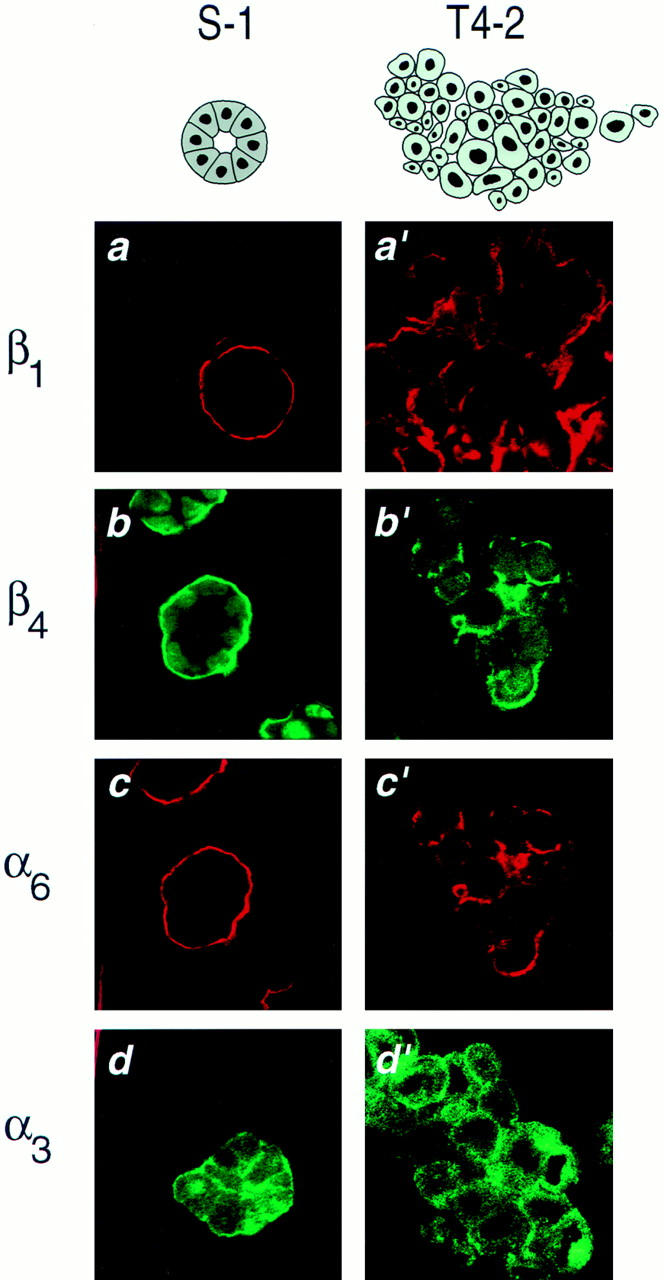
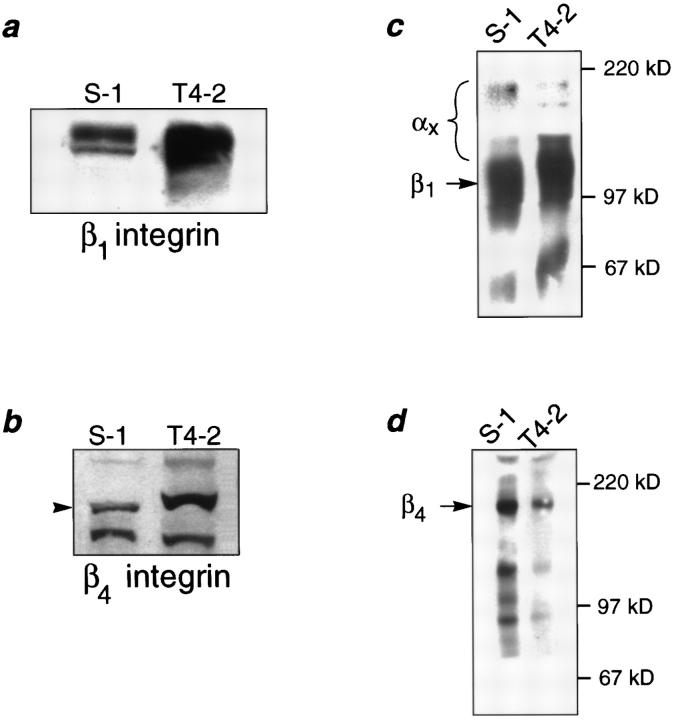
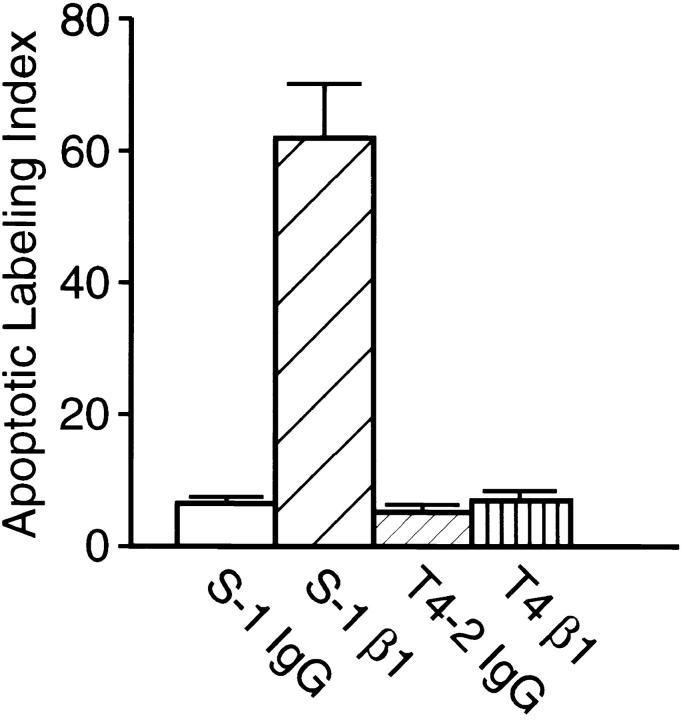
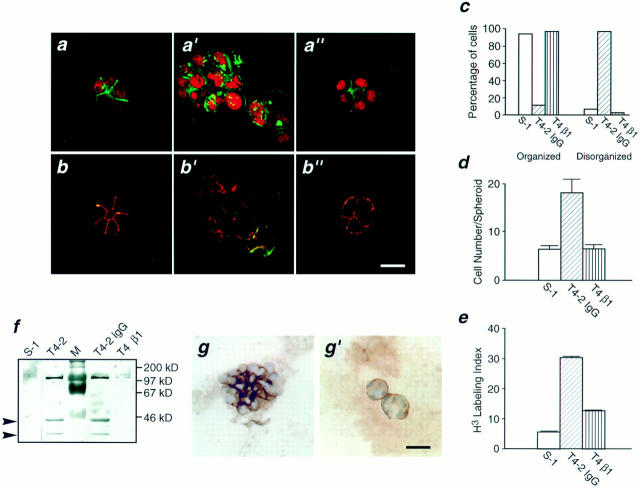
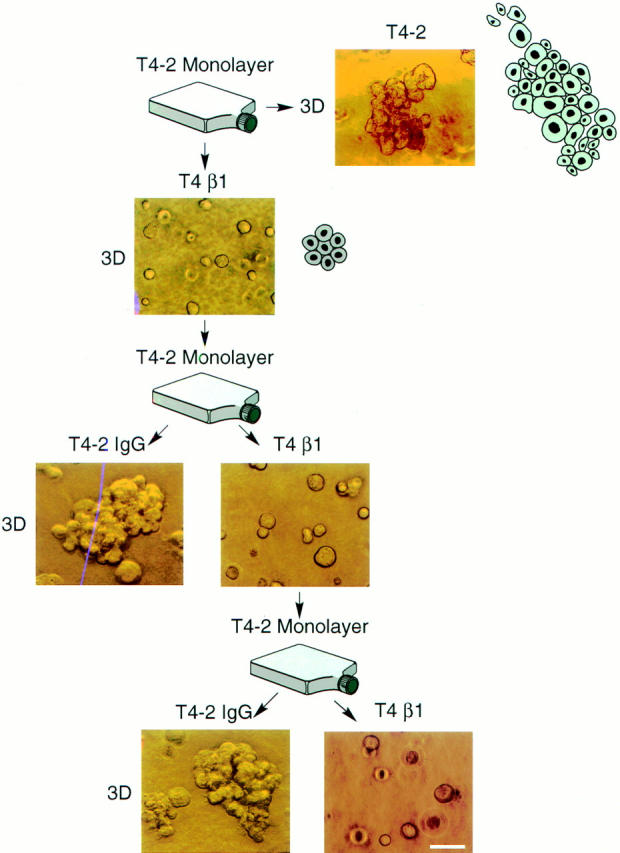
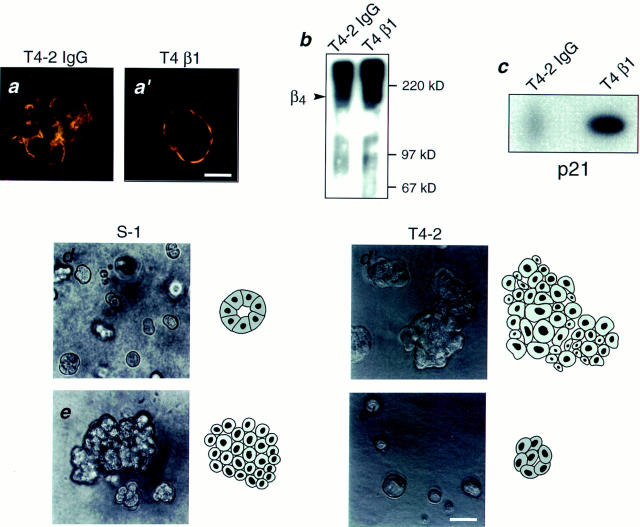
In a recently developed human breast cancer model, treatment of tumor cells in a 3-dimensional culture with inhibitory β1-integrin antibody or its Fab fragments led to a striking morphological and functional reversion to a normal phenotype. A stimulatory β1-integrin antibody proved to be ineffective. The newly formed reverted acini re-assembled a basement membrane and re-established E-cadherin–catenin complexes, and re-organized their cytoskeletons. At the same time they downregulated cyclin D1, upregulated p21cip,waf-1, and stopped growing. Tumor cells treated with the same antibody and injected into nude mice had significantly reduced number and size of tumors in nude mice. The tissue distribution of other integrins was also normalized, suggesting the existence of intimate interactions between the different integrin pathways as well as adherens junctions. On the other hand, nonmalignant cells when treated with either α6 or β4 function altering antibodies continued to grow, and had disorganized colony morphologies resembling the untreated tumor colonies. This shows a significant role of the α6/β4 heterodimer in directing polarity and tissue structure. The observed phenotypes were reversible when the cells were disassociated and the antibodies removed. Our results illustrate that the extracellular matrix and its receptors dictate the phenotype of mammary epithelial cells, and thus in this model system the tissue phenotype is dominant over the cellular genotype.
Overview
The claims and statistics of this paper haven’t been checked yet.
Run the check — free, no account needed. It reads the open-access text and checks the sources it cites.
Integrity signals
Registry
Cites
Statistics
Figures
Verification
Claims the paper makes
The claims and statistics of this paper haven’t been checked yet.
Run the check — free, no account needed. It reads the open-access text and checks the sources it cites.
Claims other papers make about this one
Each is checked against this paper’s own text: does it say what the citing paper says it does?
The cited source says what the claim attributes to it.
In the citing paper
“As a result, 2D cell culture tests sometimes provide misleading and nonpredictive data for in vivo responses. 1-3”
From Three-dimensional cell culture systems and their applications in drug discovery and cell-based biosensors (2014) · cites this paper as [2]
Self-check
Percentages, sums and reported differences re-computed from the paper’s own numbers.
The self-check needs the paper’s full text.
Citations
Cites
The p21 Cdk-interacting protein Cip1 is a potent inhibitor of G1 cyclin-dependent kinases.
Wade Harper, J. (1993) · Cell · doi:10.1016/0092-8674(93)90499-g · Cited by 5,651
Cell Adhesion: The Molecular Basis of Tissue Architecture and Morphogenesis
Gumbiner, B. M. (1996) · Cell · doi:10.1016/s0092-8674(00)81279-9 · Cited by 3,471
E-cadherin-mediated cell-cell adhesion prevents invasiveness of human carcinoma cells.
Frixen, U. H., Behrens, J., Sachs, M., Eberle, G., Voß, B., Warda, A., Löchner, D., & Birchmeier, W. (1991) · The Journal of Cell Biology · doi:10.1083/jcb.113.1.173 · Cited by 1,550
How does the extracellular matrix direct gene expression?
Bissell, M. J., Hall, H. G., & Parry, G. (1982) · Journal of Theoretical Biology · doi:10.1016/0022-5193(82)90388-5 · Cited by 1,522
Self-citationRegulation of development and differentiation by the extracellular matrix
Adams, J. C., & Watt, F. M. (1993) · Development · doi:10.1242/dev.117.4.1183 · Cited by 1,207
Integrin function: molecular hierarchies of cytoskeletal and signaling molecules.
Miyamoto, S., Teramoto, H., Coso, O. A., Gutkind, J. S., Burbelo, P. D., Akiyama, S. K., & Yamada, K. M. (1995) · The Journal of Cell Biology · doi:10.1083/jcb.131.3.791 · Cited by 1,204
Normal genetically mosaic mice produced from malignant teratocarcinoma cells.
Mintz, B., & Illmensee, K. (1975) · Proceedings of the National Academy of Sciences · doi:10.1073/pnas.72.9.3585 · Cited by 1,179
Suppression of ICE and Apoptosis in Mammary Epithelial Cells by Extracellular Matrix
Boudreau, N. J., Sympson, C. J., Werb, Z., & Bissell, M. J. (1995) · Science · doi:10.1126/science.7531366 · Cited by 1,174
Self-citationControl of adhesion-dependent cell survival by focal adhesion kinase.
Frisch, S. M., Vuori, K., Ruoslahti, E. I., & Chan-Hui, P.-Y. (1996) · The Journal of Cell Biology · doi:10.1083/jcb.134.3.793 · Cited by 1,122
PETERSEN, O. W., Rønnov‐Jessen, L., Howlett, A. R., & Bissell, M. J. (1992) · Proceedings of the National Academy of Sciences · doi:10.1073/pnas.89.19.9064 · Cited by 1,096
Self-citation
Research works printed but not linked: 2
- Berdichevsky, 1994, Integrin expression in relation to cell phenotype and malignant change in the human breast, Mol Cell Diff, 2, 255
- Boudreau, 1995, The embryonic environment and the extracellular matrix suppress oncogenic transformation by rous sarcoma virus in the chick embryo, Mol Cell Diff, 3, 261
Cited by
Sorted by citations
Calcium's Role in Mechanotransduction during Muscle Development
Damm, T. B., & Egli, M. (2014) · Cellular Physiology and Biochemistry · doi:10.1159/000356667 · Cited by 14,552
Tumour exosome integrins determine organotropic metastasis
Hoshino, A., Costa-Silva, B., Shen, T.-L., Rodrigues, G., Hashimoto, A., Tesic Mark, M., Molina, H., Kohsaka, S., Di Giannatale, A., Ceder, S., et al. (2015) · Nature · doi:10.1038/nature15756 · Cited by 5,101
Self-citationMatrix Crosslinking Forces Tumor Progression by Enhancing Integrin Signaling
Levental, K. R., Yu, H., Kass, L., Lakins, J. N., Egeblad, M., Erler, J. T., Fong, S. F. T., Csiszar, K., Giaccia, A., Weninger, W., et al. (2009) · Cell · doi:10.1016/j.cell.2009.10.027 · Cited by 4,101
Self-citationMicroenvironmental regulation of metastasis
Joyce, J. A., & Pollard, J. W. (2009) · Nature Reviews Cancer · doi:10.1038/nrc2618 · Cited by 3,684
The third dimension bridges the gap between cell culture and live tissue
Pampaloni, F., Reynaud, E. G., & Stelzer, E. H. K. (2007) · Nature Reviews Molecular Cell Biology · doi:10.1038/nrm2236 · Cited by 2,817
Metadata
- Authors
- Weaver, V. M., Petersen, O. W., Wang, F., Larabell, C. A., Briand, P., Damsky, C., & Bissell, M. J.
- Affiliations
- Lawrence Berkeley National Laboratory (US)
- Corresponding author
- Weaver, V.M.
- ORCID
- Weaver, V.M.
- Venue
- The Journal of Cell Biology
- Publisher
- Rockefeller University Press
- Published
- 1997-04-07
- Volume
- 137
- Issue
- 1
- Pages
- 231-245
- ISSN
- 0021-9525 (ISSN-L)
- 1540-8140
- PMC
- PMC2139858
- OpenAlex
- W1541555963
- Cited by
- 1,483
- References
- 98
- Citations by year
- 2026: 19 · 2025: 27 · 2024: 19 · 2023: 51 · 2022: 38 · 2021: 49 · 2020: 50 · 2019: 51 · 2018: 62 · 2017: 63 · 2016: 63 · 2015: 58 · 2014: 64 · 2013: 63 · 2012: 89
- FWCI
- 13.87
- Type
- journal article
- Language
- en
- Open access
- bronze
- doi.org
- Locations
- The Journal of Cell Biology (publishedVersion)
- PubMed Central (publishedVersion, cc-by-nc-sa)
- PubMed (publishedVersion)
- University of North Texas Digital Library (University of North Texas) (submittedVersion)
- OSTI OAI (U.S. Department of Energy Office of Scientific and Technical Information) (submittedVersion)
- eScholarship (California Digital Library) (submittedVersion)
- Research at the University of Copenhagen (University of Copenhagen) (submittedVersion)
- Lawrence Berkeley National Laboratory
- Funders
- U.S. Department of Defense (DE-AC02-05CH11231)
- U.S. Department of Energy (-AC02-05CH11231, DE-AC03-?, 05CH11231, DE AC02 05CH11231, DE-AC03-SF00098, DE-AC02-)
- Sundhed og Sygdom, Det Frie Forskningsråd
- National Institutes of Health (DE-AC02–05CH11231)
- Medical Research Council (DE-AC02-05CH11231)
- National Cancer Institute (CA-64786, R37CA064786, R01CA064786)
- Lawrence Berkeley National Laboratory (AC02‐05CH11231, DE-AC02-05CH11231, 05CH11231)
- Topics
- Health Sciences › Medicine › Immunology and Allergy › Cell Adhesion Molecules Research
- Life Sciences › Biochemistry, Genetics and Molecular Biology › Cell Biology › Cellular Mechanics and Interactions
- Health Sciences › Medicine › Oncology › Cancer Cells and Metastasis
- Keywords
- beta1 integrin, integrin blocking antibodies, breast cancer, 3D cell culture, E-cadherin-catenin complex, adherens junctions, extracellular matrix, mammary epithelial cells, cyclin D1, p21, tumor growth inhibition, cell polarity, tissue structure
- MeSH terms
- Animals, Antibodies, Monoclonal, Basement Membrane, Binding, Competitive, Breast Neoplasms, Cell Division, Extracellular Matrix, Female, Fluorescent Antibody Technique, Genotype, Humans, Immunoglobulin Fab Fragments, Phenotype, Transformation, Genetic, Tumor Cells, Cultured, Signal Transduction, Antigens, CD, Integrin beta1, Integrin beta4, Mice, Rats
About these checks
Registry, retraction, Cites and statistics results are computed, not judged, with one exception: a printed reference that no index lists is read once by a model before it counts as a citation error. Claims are extracted by a model and kept only when their quote appears verbatim in the text; each cited source is then checked, with a model’s help, for whether it says what the claim relies on. Those verdicts can be wrong — read the claim’s quote and the cited source before relying on one.
Statistics and arithmetic are recomputed, not judged.
Confidence bands are shown only for fields calibrated on our annotated test set. None is calibrated yet, so no band is shown.
What counts as a claim ›How we measure confidence ›How we check this ›
Are you an author, or do you see a problem with this page? Request a review
