

The DOI matches its Crossref record; 61 of the 65 references it cites were found in a registry or an index.
Spermine Inhibits Proinflammatory Cytokine Synthesis in Human Mononuclear Cells: A Counterregulatory Mechanism that Restrains the Immune Response
Open accessAbstract
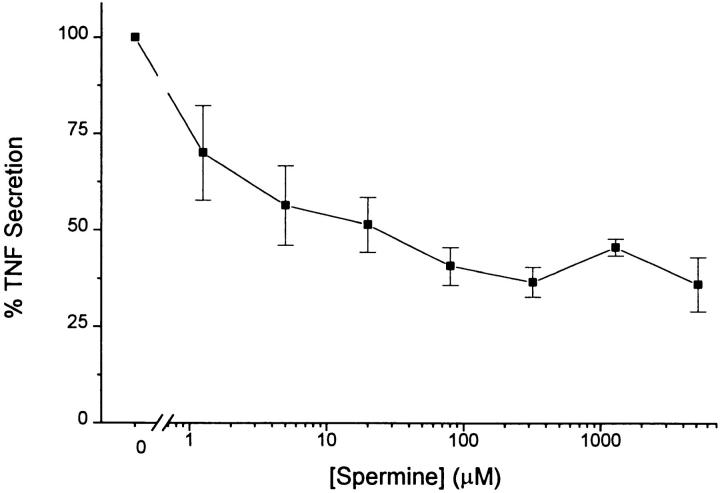
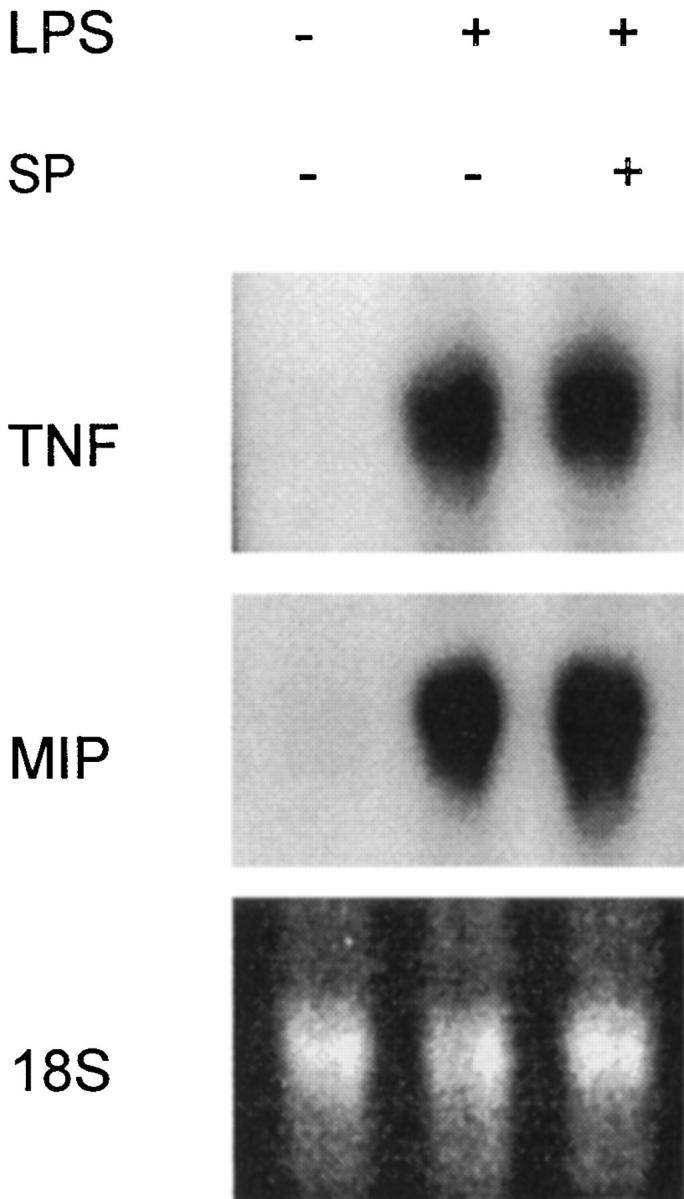
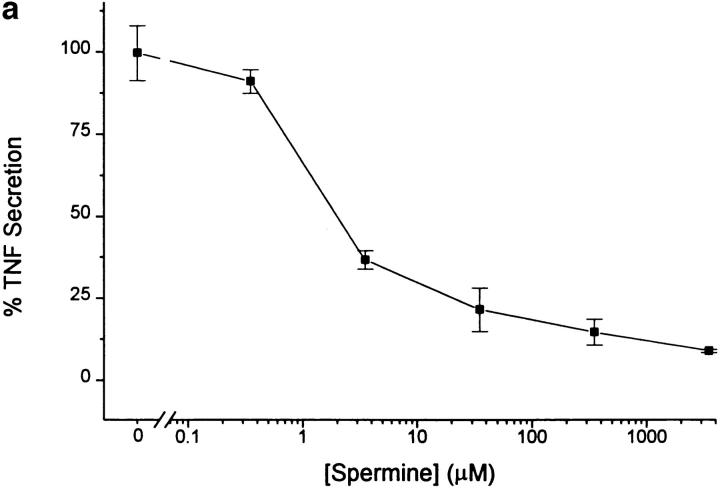
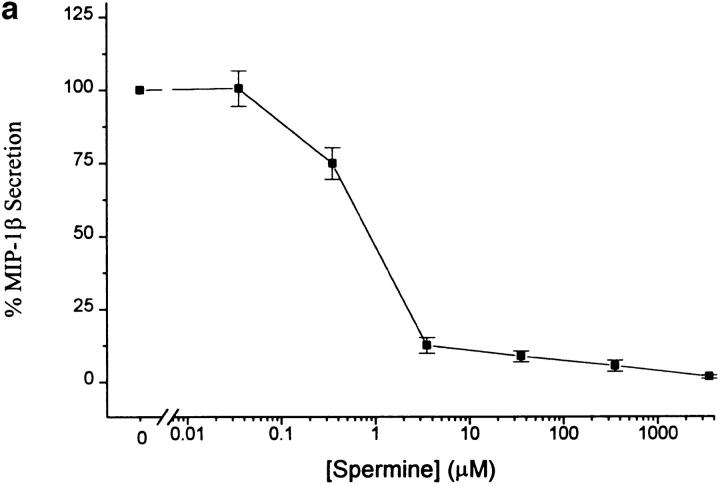
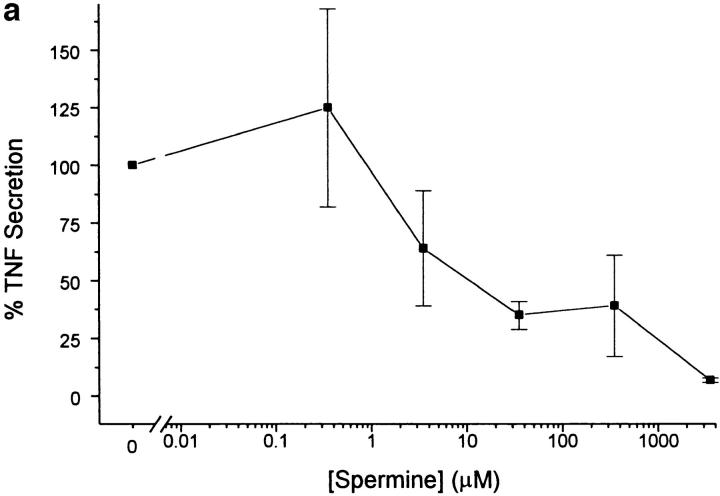
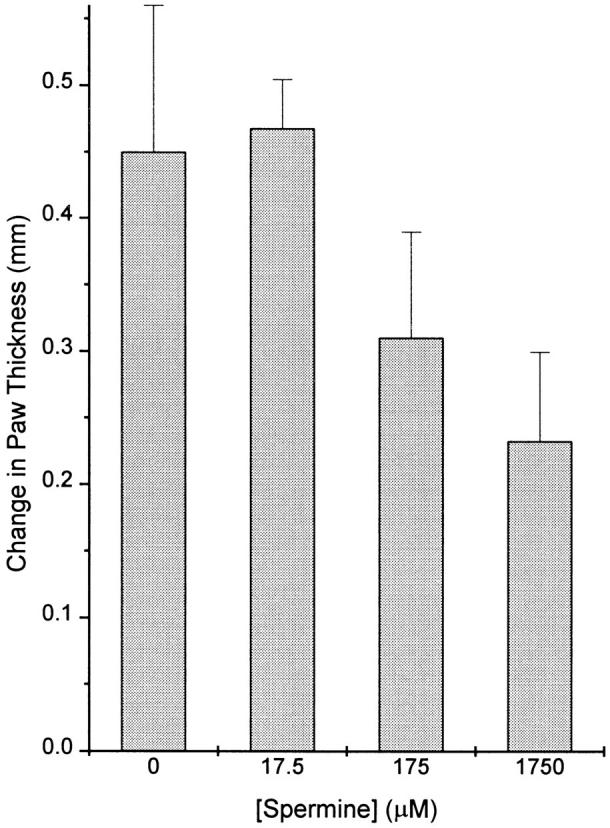
The local production of proinflammatory cytokines mediates the host response to inflammation, infection, and injury, whereas an overexpression of these mediators can injure or kill the host. Recently, we identified a class of multivalent guanylhydrazone compounds that are effective inhibitors of proinflammatory cytokine synthesis in monocytes/macrophages. The structure of one such cationic molecule suggested a molecular mimicry with spermine, a ubiquitous endogenous biogenic amine that increases significantly at sites of inflammation and infection. Here, we addressed the hypothesis that spermine might counterregulate the innate immune response by downregulating the synthesis of potentially injurious cytokines. When spermine was added to cultures of human peripheral blood mononuclear cells stimulated with lipopolysaccharide (LPS), it effectively inhibited the synthesis of the proinflammatory cytokines tumor necrosis factor (TNF), interleukin-1 (IL-1), IL-6, MIP-1alpha, and MIP-1beta. The inhibition of cytokine synthesis was specific and reversible, with significant inhibition of TNF synthesis occurring even when spermine was added after LPS. The mechanism of spermine-mediated cytokine suppression was posttranscriptional and independent of polyamine oxidase activity. Local administration of spermine in vivo protected mice against the development of acute footpad inflammation induced by carrageenan. These results identify a distinct molecular counterregulatory role for spermine in downregulating the monocyte proinflammatory cytokine response.
Overview
The claims and statistics of this paper haven’t been checked yet.
Run the check — free, no account needed. It reads the open-access text and checks the sources it cites.
Integrity signals
Registry
Cites
Statistics
Figures
Verification
Claims the paper makes
The claims and statistics of this paper haven’t been checked yet.
Run the check — free, no account needed. It reads the open-access text and checks the sources it cites.
Claims other papers make about this one
Each is checked against this paper’s own text: does it say what the citing paper says it does?
In the citing paper
“Extraneous spermine is taken up by monocytes and macrophages and selectively inhibits the LPS-induced expression of pro-inflammatory cytokines (M. Zhang et al., 1999; 1997).”
From Understanding the Holobiont: How Microbial Metabolites Affect Human Health and Shape the Immune System (2017) · cites this paper as M. Zhang et al., 1997
In the citing paper
“spermine administration exhibits protective anti-inflammatory effects in mouse models of both localized and systemic inflammation (Steege et al., 1999; M. Zhang et al., 1997; S. Zhu et al., 2009).”
From Understanding the Holobiont: How Microbial Metabolites Affect Human Health and Shape the Immune System (2017) · cites this paper as M. Zhang et al., 1997
Self-check
Percentages, sums and reported differences re-computed from the paper’s own numbers.
The self-check needs the paper’s full text.
Citations
Cites
Biologic basis for interleukin-1 in disease.
Dinarello, C. (1996) · Blood · doi:10.1182/blood.v87.6.2095.bloodjournal8762095 · Cited by 4,344
Shock and Tissue Injury Induced by Recombinant Human Cachectin
Tracey, K. J., Beutler, B., Lowry, S. F., Merryweather, J., Wolpe, S., Milsark, I. W., Hariri, R. J., Fahey, T. J., Zentella, A., Albert, J. D., et al. (1986) · Science · doi:10.1126/science.3764421 · Cited by 2,549
Self-citationAnti-cachectin/TNF monoclonal antibodies prevent septic shock during lethal bacteraemia
Tracey, K. J., Fong, Y., Hesse, D. G., Manogue, K. R., Lee, A. T., Kuo, G. C., Lowry, S. F., & Cerami, A. (1987) · Nature · doi:10.1038/330662a0 · Cited by 2,448
Self-citationPfeffer, K., Matsuyama, T., Kündig, T. M., Wakeham, A., Kishihara, K., Shahinian, A., Wiegmann, K., Ohashi, P. S., Krönke, M., & Mak, T. W. (1993) · Cell · doi:10.1016/0092-8674(93)90134-c · Cited by 1,677
Role of Transcriptional Activation of IκBα in Mediation of Immunosuppression by Glucocorticoids
Scheinman, R. I., Cogswell, P. C., Lofquist, A. K., & Baldwin, A. S. (1995) · Science · doi:10.1126/science.270.5234.283 · Cited by 1,676
Control of Cachectin (Tumor Necrosis Factor) Synthesis: Mechanisms of Endotoxin Resistance
Beutler, B., Krochin, N., Milsark, I. W., Luedke, C. E., & Cerami, A. (1986) · Science · doi:10.1126/science.3754653 · Cited by 1,268
Self-citationSampaio, E. P., Sarno, E. N., Gallily, R., Cohn, Z. A., & Kaplan, G. (1991) · The Journal of Experimental Medicine · doi:10.1084/jem.173.3.699 · Cited by 1,191
Deactivation of macrophages by transforming growth factor-β
Tsunawaki, S., Sporn, M. B., Ding, A. H., & Nathan, C. (1988) · Nature · doi:10.1038/334260a0 · Cited by 862
Gerard, C. M., Bruyns, C., Marchant, A., Abramowicz, D., Vandenabeele, P., Delvaux, A., Fiers, W., Goldman, M., & Velu, T. J. (1993) · The Journal of Experimental Medicine · doi:10.1084/jem.177.2.547 · Cited by 786
Fong, Y., Tracey, K. J., Moldawer, L. L., HESSE, D. G., Manogue, K., Kenney, J. S., Lee, A. T., Kuo, G. C., ALLISON, A. C., & Lowry, S. F. (1989) · The Journal of Experimental Medicine · doi:10.1084/jem.170.5.1627 · Cited by 640
Self-citation
Research works printed but not linked: 1
- Morgan, 1987, Polyamines, Essays Biochem, 23, 82
Cited by
Sorted by citations
Regulation of immune responses by L-arginine metabolism
Bronte, V., & Zanovello, P. (2005) · Nature Reviews Immunology · doi:10.1038/nri1668 · Cited by 1,775
Metabolism via Arginase or Nitric Oxide Synthase: Two Competing Arginine Pathways in Macrophages
Rath, M., ller, I. M. ⁄., Kropf, P., Closs, E. I., & Munder, M. (2014) · Frontiers in Immunology · doi:10.3389/fimmu.2014.00532 · Cited by 1,332
Spermidine in health and disease
Madeo, F., Eisenberg, T., Pietrocola, F., & Kroemer, G. (2018) · Science · doi:10.1126/science.aan2788 · Cited by 1,154
Postler, T. S., & Ghosh, S. (2017) · Cell Metabolism · doi:10.1016/j.cmet.2017.05.008 · Cited by 876
“Indeed, spermine administration exhibits protective anti-inflammatory effects in mouse models of both localized and systemic inflammation (ter Steege et al., 1999; Zhang et al., 1997; Zhu et al., 2009).”
BackgroundMunder, M., Eichmann, K., & Modolell, M. (1998) · The Journal of Immunology · doi:10.4049/jimmunol.160.11.5347 · Cited by 647
Metadata
- Authors
- Zhang, M., Caragine, T., Wang, H., Cohen, P. S., Botchkina, G., Soda, K., Bianchi, M., Ulrich, P., Cerami, A., Sherry, B., & Tracey, K. J.
- Affiliations
- North Shore University Hospital (US)
- Venue
- The Journal of Experimental Medicine
- Publisher
- Rockefeller University Press
- Published
- 1997-05-19
- Volume
- 185
- Issue
- 10
- Pages
- 1759-1768
- ISSN
- 0022-1007 (ISSN-L)
- 1540-9538
- PMC
- PMC2196317
- OpenAlex
- W2147886921
- Cited by
- 317
- References
- 65
- Citations by year
- 2026: 3 · 2025: 17 · 2024: 11 · 2023: 16 · 2022: 24 · 2021: 18 · 2020: 18 · 2019: 15 · 2018: 11 · 2017: 11 · 2016: 7 · 2015: 6 · 2014: 12 · 2013: 9 · 2012: 11
- FWCI
- 1.90
- Type
- journal article
- Language
- en
- Open access
- bronze
- doi.org
- Locations
- The Journal of Experimental Medicine (publishedVersion)
- PubMed Central (publishedVersion, cc-by-nc-sa)
- PubMed (publishedVersion)
- Topics
- Life Sciences › Biochemistry, Genetics and Molecular Biology › Molecular Biology › Polyamine Metabolism and Applications
- Life Sciences › Immunology and Microbiology › Immunology › Immune Response and Inflammation
- Life Sciences › Immunology and Microbiology › Immunology › Immune cells in cancer
- Keywords
- spermine, inflammatory cytokines, cytokine synthesis inhibition, monocytes, macrophages, lipopolysaccharide stimulation, TNF-α, interleukin-1, interleukin-6, MIP-1α, MIP-1β, innate immune response, counterregulation, carrageenan-induced inflammation, polyamines, post-transcriptional regulation
- MeSH terms
- Animals, Carrageenan, Cell Line, Cells, Cultured, Enzyme-Linked Immunosorbent Assay, Female, Homeostasis, Humans, Inflammation, Interleukin-1, Kinetics, Lipopolysaccharides, Macrophages, Mice, Inbred C3H, Monocytes, Spermine, Tumor Necrosis Factor-alpha, Interleukin-6, Cytokines, Macrophage Inflammatory Proteins, Mice, Chemokine CCL3, Chemokine CCL4
About these checks
Registry, retraction, Cites and statistics results are computed, not judged, with one exception: a printed reference that no index lists is read once by a model before it counts as a citation error. Claims are extracted by a model and kept only when their quote appears verbatim in the text; each cited source is then checked, with a model’s help, for whether it says what the claim relies on. Those verdicts can be wrong — read the claim’s quote and the cited source before relying on one.
Statistics and arithmetic are recomputed, not judged.
Confidence bands are shown only for fields calibrated on our annotated test set. None is calibrated yet, so no band is shown.
What counts as a claim ›How we measure confidence ›How we check this ›
Are you an author, or do you see a problem with this page? Request a review
