

The DOI matches its Crossref record; 26 of the 26 references it cites were found in a registry or an index.
Engagement of the Pd-1 Immunoinhibitory Receptor by a Novel B7 Family Member Leads to Negative Regulation of Lymphocyte Activation
Open accessAbstract
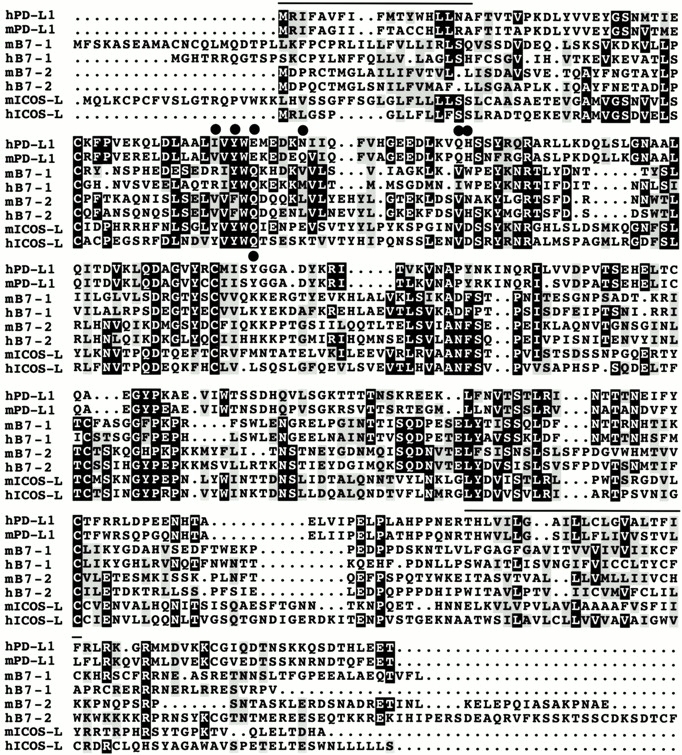
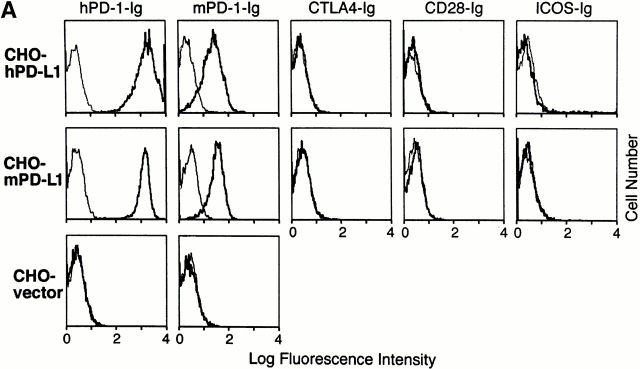
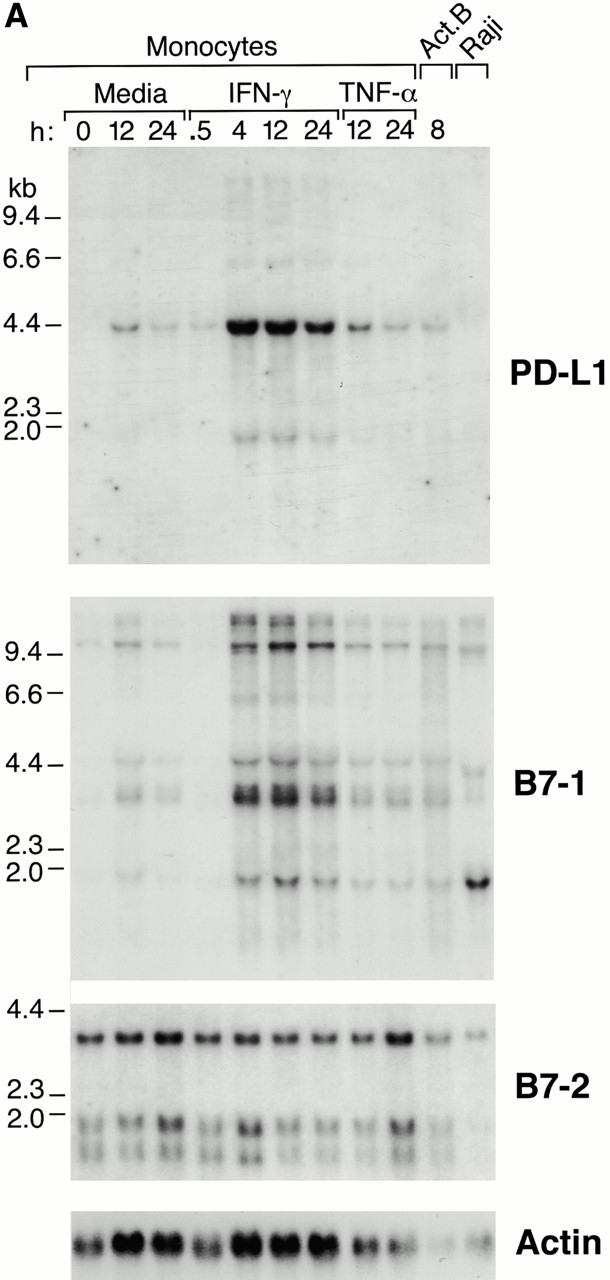
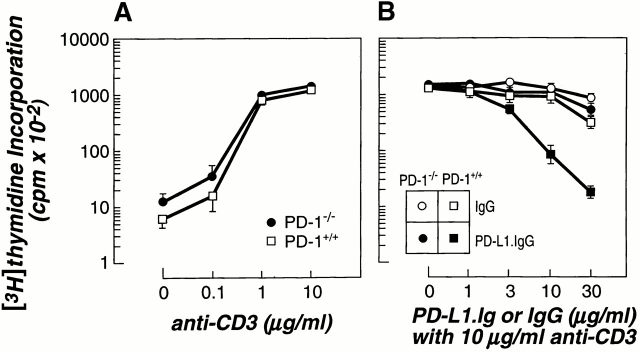
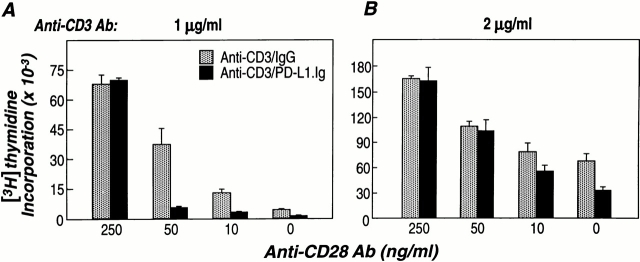
PD-1 is an immunoinhibitory receptor expressed by activated T cells, B cells, and myeloid cells. Mice deficient in PD-1 exhibit a breakdown of peripheral tolerance and demonstrate multiple autoimmune features. We report here that the ligand of PD-1 (PD-L1) is a member of the B7 gene family. Engagement of PD-1 by PD-L1 leads to the inhibition of T cell receptor-mediated lymphocyte proliferation and cytokine secretion. In addition, PD-1 signaling can inhibit at least suboptimal levels of CD28-mediated costimulation. PD-L1 is expressed by antigen-presenting cells, including human peripheral blood monocytes stimulated with interferon gamma, and activated human and murine dendritic cells. In addition, PD-L1 is expressed in nonlymphoid tissues such as heart and lung. The relative levels of inhibitory PD-L1 and costimulatory B7-1/B7-2 signals on antigen-presenting cells may determine the extent of T cell activation and consequently the threshold between tolerance and autoimmunity. PD-L1 expression on nonlymphoid tissues and its potential interaction with PD-1 may subsequently determine the extent of immune responses at sites of inflammation.
Overview
The claims and statistics of this paper haven’t been checked yet.
Run the check — free, no account needed. It reads the open-access text and checks the sources it cites.
Integrity signals
Registry
Cites
Statistics
Figures
Verification
Claims the paper makes
The claims and statistics of this paper haven’t been checked yet.
Run the check — free, no account needed. It reads the open-access text and checks the sources it cites.
Claims other papers make about this one
Each is checked against this paper’s own text: does it say what the citing paper says it does?
The cited source says what the claim attributes to it.
In the citing paper
“the inhibitory immune checkpoint CD274 (also known as PD-L1), which interacts with the PD-1 receptor on T cells to inhibit T-cell activation [5]”
From Characterizing the molecular regulation of inhibitory immune checkpoints with multimodal single-cell screens (2021) · cites this paper as [5]
In the citing paper
“PD-1 activity is therefore only relevant during simultaneous T cell activation, as its signal transduction can only come into effect during TCR-dependent signaling (39, 41, 48).”
From Anti-PD-1 and Anti-CTLA-4 Therapies in Cancer: Mechanisms of Action, Efficacy, and Limitations (2018) · cites this paper as [48]
In the citing paper
“Upon interaction with its ligands, programmed death-ligand 1 (PD-L1; a.k.a. B7-H1 or CD274) and PD-L2 (a.k.a. B7-DC or CD273), it can diminish immune responses (Freeman et al., 2000; Latchman et al., 2001).”
From Hallmarks of response, resistance, and toxicity to immune checkpoint blockade (2021) · cites this paper as Freeman et al., 2000
In the citing paper
“Similar to CTLA-4, engagement of PD-1 with its ligands, PD-L1 and PD-L2, leads to suppression of T cell immune responses (36,37).”
From Immune Checkpoint Inhibitors for the Treatment of Cancer: Clinical Impact and Mechanisms of Response and Resistance (2021) · cites this paper as [36]
In the citing paper
“Both PD-L1 and PD-L2 are expressed on hematopoietic and nonhematopoietic cells, including APCs and cancer cells (36,37).”
From Immune Checkpoint Inhibitors for the Treatment of Cancer: Clinical Impact and Mechanisms of Response and Resistance (2021) · cites this paper as [36]
Self-check
Percentages, sums and reported differences re-computed from the paper’s own numbers.
The self-check needs the paper’s full text.
Citations
Cites
Ishida, Y., Agata, Y., Shibahara, K., & Honjo, T. (1992) · The EMBO Journal · doi:10.1002/j.1460-2075.1992.tb05481.x · Cited by 3,259
Self-citationTivol, E. A., Borriello, F., Schweitzer, A. N., Lynch, W. P., Bluestone, J. A., & Sharpe, A. H. (1995) · Immunity · doi:10.1016/1074-7613(95)90125-6 · Cited by 2,914
Lymphoproliferative Disorders with Early Lethality in Mice Deficient in Ctla-4
Waterhouse, P., Penninger, J. M., Timms, E., Wakeham, A., Shahinian, A., Lee, K. P., Thompson, C. B., Griesser, H., & Mak, T. W. (1995) · Science · doi:10.1126/science.270.5238.985 · Cited by 2,766
Nishimura, H., Nose, M., Hiai, H., Minato, N., & Honjo, T. (1999) · Immunity · doi:10.1016/s1074-7613(00)80089-8 · Cited by 2,749
Self-citationDong, H., Zhu, G., Tamada, K., & Chen, L. (1999) · Nature Medicine · doi:10.1038/70932 · Cited by 2,496
Suda, T., Takahashi, T., Golstein, P., & Nagata, S. (1993) · Cell · doi:10.1016/0092-8674(93)90326-l · Cited by 2,494
Expression of the PD-1 antigen on the surface of stimulated mouse T and B lymphocytes
Agata, Y., Kawasaki, A., Nishimura, H., Ishida, Y., Tsubat, T., Yagita, H., & Honjo, T. (1996) · International Immunology · doi:10.1093/intimm/8.5.765 · Cited by 1,589
Self-citationT-cell co-stimulation through B7RP-1 and ICOS
Yoshinaga, S. K., Whoriskey, J. S., Khare, S. D., Sarmiento, U. M., Guo, J., Horan, T., Shih, G. C., Zhang, M., Coccia, M. A., Kohno, T., et al. (1999) · Nature · doi:10.1038/45582 · Cited by 772
The Emerging Role of CTLA-4 as an Immune Attenuator
Thompson, C. B., & Allison, J. P. (1997) · Immunity · doi:10.1016/s1074-7613(00)80366-0 · Cited by 633
Nishimura, H. (1998) · International Immunology · doi:10.1093/intimm/10.10.1563 · Cited by 500
Self-citationB7h, a Novel Costimulatory Homolog of B7.1 and B7.2, Is Induced by TNFα
Swallow, M. M., Wallin, J. J., & Sha, W. C. (1999) · Immunity · doi:10.1016/s1074-7613(00)80117-x · Cited by 453
Harper, K., Balzano, C., Rouvier, É., Mattéi, M., Luciani, M., & Golstein, P. (1991) · The Journal of Immunology · doi:10.4049/jimmunol.147.3.1037 · Cited by 432
Immunoreceptor tyrosine-based inhibition motifs
Vivier, É., & Daëron, M. (1997) · Immunology Today · doi:10.1016/s0167-5699(97)80025-4 · Cited by 388
Freedman, A. S., Freeman, G. J., Rhynhart, K. K., & Nadler, L. M. (1991) · Cellular Immunology · doi:10.1016/0008-8749(91)90091-o · Cited by 312
Self-citationStructure and Chromosomal Localization of the Human PD-1 Gene (PDCD1)
Shinohara, T., Taniwaki, M., Ishida, Y., Kawaichi, M., & Honjo, T. (1994) · Genomics · doi:10.1006/geno.1994.1562 · Cited by 255
Self-citationStructure and Dimerization of a Soluble Form of B7-1
Ikemizu, S., Gilbert, R. J. C., Fennelly, J. A., Collins, A. V., Harlos, K., Jones, E. Y., Stuart, D. I., & Davis, S. J. (2000) · Immunity · doi:10.1016/s1074-7613(00)80158-2 · Cited by 248
Ling, V., Wu, P. W., Finnerty, H. F., Bean, K. M., Spaulding, V., Fouser, L. A., Leonard, J. P., HUNTER, S. E., Zollner, R. S., Thomas, J. L., et al. (2000) · The Journal of Immunology · doi:10.4049/jimmunol.164.4.1653 · Cited by 230
Self-citationBoussiotis, V. A., Freeman, G. J., Grffiben, J. G., & Nadler, L. M. (1996) · Immunological Reviews · doi:10.1111/j.1600-065x.1996.tb00918.x · Cited by 155
Self-citationActivation-Induced Expression of Human Programmed Death-1 Gene in T-Lymphocytes
Vibhakar, R., Juan, G., Traganos, F., Darżynkiewicz, Z., & Finger, L. R. (1997) · Experimental Cell Research · doi:10.1006/excr.1997.3493 · Cited by 149
The Complexities of T‐Cell Co‐stimulation: CD28 and Beyond
Sperling, A. I., & Bluestone, J. A. (1996) · Immunological Reviews · doi:10.1111/j.1600-065x.1996.tb00924.x · Cited by 144
Blair, P. J., Riley, J. L., Levine, B. L., Lee, K. P., Craighead, N., Francomano, T., Perfetto, S. J., Gray, G. S., Carreno, B. M., & June, C. H. (1998) · PubMed · Cited by 135
Self-citationStructure and evolution of the extended B7 family
Henry-Berger, J., Miller, M. M., & Pontarotti, P. (1999) · Immunology Today · doi:10.1016/s0167-5699(98)01418-2 · Cited by 107
Nickoloff, B. J., Mitra, R. S., Lee, K., et al. (1993) · PubMed · Cited by 101
Freeman, G. J., Cardoso, A. A., Boussiotis, V. A., Anumanthan, A., Groves, R. W., Kupper, T. S., Clark, E. A., & Nadler, L. M. (1998) · The Journal of Immunology · doi:10.4049/jimmunol.161.6.2708 · Cited by 45
Self-citationCharacterization of murine Flt4 ligand/VEGF-C
Fitz, L. J., Morris, J. C., Towler, P., et al. (1997) · Oncogene · doi:10.1038/sj.onc.1201191 · Cited by 44
Self-citationThe costimulatory genes Cd80 and Cd86 are linked on mouse chromosome 16 and human chromosome 3
Reeves, R. H., Patch, D., Sharpe, A. H., et al. (1997) · Mammalian Genome · doi:10.1007/s003359900508 · Cited by 15
Research works printed but not linked: 2
- Byrne, 2000, Preparation of mRNA for expression monitoring, 22
- Freeman, 1992, CTLA-4 and CD28 are coexpressed in most T-cells after activation, J. Immunol., 149, 3795, 10.4049/jimmunol.149.12.3795 · DOI
Cited by
Sorted by citations
The blockade of immune checkpoints in cancer immunotherapy
Pardoll, D. M. (2012) · Nature Reviews Cancer · doi:10.1038/nrc3239 · Cited by 13,838
Safety, activity, and immune correlates of anti–PD-1 antibody in cancer
Topalian, S. L., Hodi, F. S., Brahmer, J. R., Gettinger, S. N., Smith, D. C., McDermott, D. F., Powderly, J. D., Carvajal, R. D., Sosman, J. A., Atkins, M. B., et al. (2012) · New England Journal of Medicine · doi:10.1056/nejmoa1200690 · Cited by 12,628
Safety and activity of anti-PD-L1 antibody in patients with advanced cancer
Brahmer, J. R., Tykodi, S. S., Chow, L. Q. M., Hwu, W.-J., Topalian, S. L., Hwu, P., Drake, C. G., Camacho, L. H., Kauh, J., Odunsi, K., et al. (2012) · New England Journal of Medicine · doi:10.1056/nejmoa1200694 · Cited by 7,945
Herbst, R. S., Baas, P., Kim, D.-W., Felip, E., Pérez-Gracia, J. L., Han, J.-Y., Molina, J., Kim, J.-H., Arvis, C. D., Ahn, M.-J., et al. (2016) · The Lancet · doi:10.1016/s0140-6736(15)01281-7 · Cited by 6,449
Pembrolizumab for the Treatment of Non–Small-Cell Lung Cancer
Garon, E. B., Rizvi, N. A., Hui, R., Leighl, N., Balmanoukian, A. S., Eder, J. P., Patnaik, A., Aggarwal, C., Gubens, M., Horn, L., et al. (2015) · New England Journal of Medicine · doi:10.1056/nejmoa1501824 · Cited by 6,198
Metadata
- Authors
- Freeman, G. J., Long, A. J., Iwai, Y., Bourque, K., Chernova, T., Nishimura, H., Fitz, L. J., Malenkovich, N., Okazaki, T., Byrne, M. C., Horton, H. F., Fouser, L., Carter, L., Ling, V., Bowman, M. R., Carreno, B. M., Collins, M., Wood, C. R., & Honjo, T.
- Affiliations
- Harvard University (US)
- bGenetics Institute, Wyeth-Ayerst Research, Cambridge, Massachusetts 02140
- Kyoto University (JP)
- ORCID
- Venue
- The Journal of Experimental Medicine
- Publisher
- Rockefeller University Press
- Published
- 2000-10-02
- Volume
- 192
- Issue
- 7
- Pages
- 1027-1034
- ISSN
- 0022-1007 (ISSN-L)
- 1540-9538
- PMC
- PMC2193311
- OpenAlex
- W2118471749
- Cited by
- 5,294
- References
- 26
- Citations by year
- 2026: 147 · 2025: 255 · 2024: 298 · 2023: 328 · 2022: 357 · 2021: 454 · 2020: 451 · 2019: 391 · 2018: 386 · 2017: 375 · 2016: 279 · 2015: 267 · 2014: 158 · 2013: 163 · 2012: 109
- FWCI
- 18.27
- Type
- journal article
- Language
- en
- Open access
- bronze
- doi.org
- Locations
- The Journal of Experimental Medicine (publishedVersion)
- PubMed Central (publishedVersion, cc-by-nc-sa)
- PubMed (publishedVersion)
- Funders
- Association pour la Recherche sur le Cancer
- Seerave Foundation
- E-Rare
- European Commission
- Agence Nationale de la Recherche (ANR-16-RHUS-0008)
- Fondation Leducq
- Institut National de la Santé et de la Recherche Médicale
- Fondation pour la Recherche Médicale
- Ligue Contre le Cancer
- Institut Universitaire de France
- Institut National Du Cancer
- National Institutes of Health (5p01ai041584-05)
- Horizon 2020 Framework Programme (GDW20171100085, GDW20181100051)
- High-end Foreign Experts Recruitment Plan of China (GDW20171100085, GDW20181100051)
- Labex Immuno-Oncology
- National Cancer Institute (CA 84500, R01CA084500)
- National Institute of Allergy and Infectious Diseases (AI 39671, AI 41584, P01AI039671)
- Topics
- Life Sciences › Immunology and Microbiology › Immunology › T-cell and B-cell Immunology
- Health Sciences › Medicine › Oncology › Cancer Immunotherapy and Biomarkers
- Life Sciences › Immunology and Microbiology › Immunology › Immunotherapy and Immune Responses
- Keywords
- PD-1, PD-L1, B7 family, T cell activation, lymphocyte proliferation, cytokine production, CD28 costimulation, antigen-presenting cells, dendritic cells, monocytes, interferon-gamma, autoimmunity, peripheral tolerance
- MeSH terms
- Amino Acid Sequence, Animals, Antigen-Presenting Cells, Antigens, Surface, Base Sequence, Cell Division, Humans, Ligands, Membrane Glycoproteins, Molecular Sequence Data, T-Lymphocytes, Signal Transduction, Antigens, CD, Gene Expression, CD3 Complex, DNA, Complementary, CD28 Antigens, B7-1 Antigen, Apoptosis Regulatory Proteins, Mice, B7-2 Antigen, Programmed Cell Death 1 Receptor
About these checks
Registry, retraction, Cites and statistics results are computed, not judged, with one exception: a printed reference that no index lists is read once by a model before it counts as a citation error. Claims are extracted by a model and kept only when their quote appears verbatim in the text; each cited source is then checked, with a model’s help, for whether it says what the claim relies on. Those verdicts can be wrong — read the claim’s quote and the cited source before relying on one.
Statistics and arithmetic are recomputed, not judged.
Confidence bands are shown only for fields calibrated on our annotated test set. None is calibrated yet, so no band is shown.
What counts as a claim ›How we measure confidence ›How we check this ›
Are you an author, or do you see a problem with this page? Request a review
