

The DOI matches its Crossref record; 26 of the 26 references it cites were found in a registry or an index.
Engagement of the Pd-1 Immunoinhibitory Receptor by a Novel B7 Family Member Leads to Negative Regulation of Lymphocyte Activation
Open accessAbstract
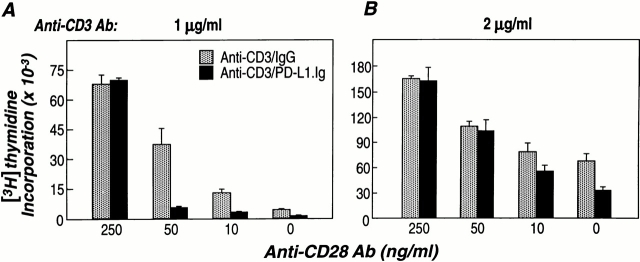
PD-1 is an immunoinhibitory receptor expressed by activated T cells, B cells, and myeloid cells. Mice deficient in PD-1 exhibit a breakdown of peripheral tolerance and demonstrate multiple autoimmune features. We report here that the ligand of PD-1 (PD-L1) is a member of the B7 gene family. Engagement of PD-1 by PD-L1 leads to the inhibition of T cell receptor-mediated lymphocyte proliferation and cytokine secretion. In addition, PD-1 signaling can inhibit at least suboptimal levels of CD28-mediated costimulation. PD-L1 is expressed by antigen-presenting cells, including human peripheral blood monocytes stimulated with interferon gamma, and activated human and murine dendritic cells. In addition, PD-L1 is expressed in nonlymphoid tissues such as heart and lung. The relative levels of inhibitory PD-L1 and costimulatory B7-1/B7-2 signals on antigen-presenting cells may determine the extent of T cell activation and consequently the threshold between tolerance and autoimmunity. PD-L1 expression on nonlymphoid tissues and its potential interaction with PD-1 may subsequently determine the extent of immune responses at sites of inflammation.
Overview
The claims and statistics of this paper haven’t been checked yet.
Run the check — free, no account needed. It reads the open-access text and checks the sources it cites.
Integrity signals
Registry
Cites
Statistics
Figures
Verification
Claims the paper makes
The claims and statistics of this paper haven’t been checked yet.
Run the check — free, no account needed. It reads the open-access text and checks the sources it cites.
Claims other papers make about this one
Each is checked against this paper’s own text: does it say what the citing paper says it does?
The cited source says what the claim attributes to it.
In the citing paper
“the inhibitory immune checkpoint CD274 (also known as PD-L1), which interacts with the PD-1 receptor on T cells to inhibit T-cell activation [5]”
From Characterizing the molecular regulation of inhibitory immune checkpoints with multimodal single-cell screens (2021) · cites this paper as [5]
In the citing paper
“PD-1 activity is therefore only relevant during simultaneous T cell activation, as its signal transduction can only come into effect during TCR-dependent signaling (39, 41, 48).”
From Anti-PD-1 and Anti-CTLA-4 Therapies in Cancer: Mechanisms of Action, Efficacy, and Limitations (2018) · cites this paper as [48]
In the citing paper
“Upon interaction with its ligands, programmed death-ligand 1 (PD-L1; a.k.a. B7-H1 or CD274) and PD-L2 (a.k.a. B7-DC or CD273), it can diminish immune responses (Freeman et al., 2000; Latchman et al., 2001).”
From Hallmarks of response, resistance, and toxicity to immune checkpoint blockade (2021) · cites this paper as Freeman et al., 2000
In the citing paper
“Similar to CTLA-4, engagement of PD-1 with its ligands, PD-L1 and PD-L2, leads to suppression of T cell immune responses (36,37).”
From Immune Checkpoint Inhibitors for the Treatment of Cancer: Clinical Impact and Mechanisms of Response and Resistance (2021) · cites this paper as [36]
In the citing paper
“Both PD-L1 and PD-L2 are expressed on hematopoietic and nonhematopoietic cells, including APCs and cancer cells (36,37).”
From Immune Checkpoint Inhibitors for the Treatment of Cancer: Clinical Impact and Mechanisms of Response and Resistance (2021) · cites this paper as [36]
Self-check
Percentages, sums and reported differences re-computed from the paper’s own numbers.
The self-check needs the paper’s full text.
Citations
Cites
Ishida, Y., Agata, Y., Shibahara, K., & Honjo, T. (1992) · The EMBO Journal · doi:10.1002/j.1460-2075.1992.tb05481.x · Cited by 3,259
Self-citationTivol, E. A., Borriello, F., Schweitzer, A. N., Lynch, W. P., Bluestone, J. A., & Sharpe, A. H. (1995) · Immunity · doi:10.1016/1074-7613(95)90125-6 · Cited by 2,914
Lymphoproliferative Disorders with Early Lethality in Mice Deficient in Ctla-4
Waterhouse, P., Penninger, J. M., Timms, E., Wakeham, A., Shahinian, A., Lee, K. P., Thompson, C. B., Griesser, H., & Mak, T. W. (1995) · Science · doi:10.1126/science.270.5238.985 · Cited by 2,766
Nishimura, H., Nose, M., Hiai, H., Minato, N., & Honjo, T. (1999) · Immunity · doi:10.1016/s1074-7613(00)80089-8 · Cited by 2,749
Self-citationDong, H., Zhu, G., Tamada, K., & Chen, L. (1999) · Nature Medicine · doi:10.1038/70932 · Cited by 2,496
Suda, T., Takahashi, T., Golstein, P., & Nagata, S. (1993) · Cell · doi:10.1016/0092-8674(93)90326-l · Cited by 2,494
Expression of the PD-1 antigen on the surface of stimulated mouse T and B lymphocytes
Agata, Y., Kawasaki, A., Nishimura, H., Ishida, Y., Tsubat, T., Yagita, H., & Honjo, T. (1996) · International Immunology · doi:10.1093/intimm/8.5.765 · Cited by 1,589
Self-citationT-cell co-stimulation through B7RP-1 and ICOS
Yoshinaga, S. K., Whoriskey, J. S., Khare, S. D., Sarmiento, U. M., Guo, J., Horan, T., Shih, G. C., Zhang, M., Coccia, M. A., Kohno, T., et al. (1999) · Nature · doi:10.1038/45582 · Cited by 772
The Emerging Role of CTLA-4 as an Immune Attenuator
Thompson, C. B., & Allison, J. P. (1997) · Immunity · doi:10.1016/s1074-7613(00)80366-0 · Cited by 633
Nishimura, H. (1998) · International Immunology · doi:10.1093/intimm/10.10.1563 · Cited by 500
Self-citation
Research works printed but not linked: 2
- Byrne, 2000, Preparation of mRNA for expression monitoring, 22
- Freeman, 1992, CTLA-4 and CD28 are coexpressed in most T-cells after activation, J. Immunol., 149, 3795, 10.4049/jimmunol.149.12.3795 · DOI
Cited by
Sorted by citations
The blockade of immune checkpoints in cancer immunotherapy
Pardoll, D. M. (2012) · Nature Reviews Cancer · doi:10.1038/nrc3239 · Cited by 13,838
Safety, activity, and immune correlates of anti–PD-1 antibody in cancer
Topalian, S. L., Hodi, F. S., Brahmer, J. R., Gettinger, S. N., Smith, D. C., McDermott, D. F., Powderly, J. D., Carvajal, R. D., Sosman, J. A., Atkins, M. B., et al. (2012) · New England Journal of Medicine · doi:10.1056/nejmoa1200690 · Cited by 12,628
Safety and activity of anti-PD-L1 antibody in patients with advanced cancer
Brahmer, J. R., Tykodi, S. S., Chow, L. Q. M., Hwu, W.-J., Topalian, S. L., Hwu, P., Drake, C. G., Camacho, L. H., Kauh, J., Odunsi, K., et al. (2012) · New England Journal of Medicine · doi:10.1056/nejmoa1200694 · Cited by 7,945
Herbst, R. S., Baas, P., Kim, D.-W., Felip, E., Pérez-Gracia, J. L., Han, J.-Y., Molina, J., Kim, J.-H., Arvis, C. D., Ahn, M.-J., et al. (2016) · The Lancet · doi:10.1016/s0140-6736(15)01281-7 · Cited by 6,449
Pembrolizumab for the Treatment of Non–Small-Cell Lung Cancer
Garon, E. B., Rizvi, N. A., Hui, R., Leighl, N., Balmanoukian, A. S., Eder, J. P., Patnaik, A., Aggarwal, C., Gubens, M., Horn, L., et al. (2015) · New England Journal of Medicine · doi:10.1056/nejmoa1501824 · Cited by 6,198
Primary, Adaptive, and Acquired Resistance to Cancer Immunotherapy
Sharma, P., Hu-Lieskovan, S., Wargo, J. A., & Ribas, A. (2017) · Cell · doi:10.1016/j.cell.2017.01.017 · Cited by 5,588
PD-1 and Its Ligands in Tolerance and Immunity
Keir, M. E., Butte, M. J., Freeman, G. J., & Sharpe, A. H. (2008) · Annual Review of Immunology · doi:10.1146/annurev.immunol.26.021607.090331 · Cited by 5,378
Self-citationTumor-associated B7-H1 promotes T-cell apoptosis: A potential mechanism of immune evasion
Dong, H., Strome, S. E., Salomao, D. R., Tamura, H., Hirano, F., Flies, D. B., Roche, P. C., Lu, J., Zhu, G., Tamada, K., et al. (2002) · Nature Medicine · doi:10.1038/nm730 · Cited by 5,025
The future of immune checkpoint therapy
Sharma, P., & Allison, J. P. (2015) · Science · doi:10.1126/science.aaa8172 · Cited by 4,878
A guide to cancer immunotherapy: from T cell basic science to clinical practice
Waldman, A. D., Fritz, J. M., & Lenardo, M. J. (2020) · Nature Reviews Immunology · doi:10.1038/s41577-020-0306-5 · Cited by 4,154
PD-L2 is a second ligand for PD-1 and inhibits T cell activation
Latchman, Y., Wood, C. R., Chernova, T., Chaudhary, D., Borde, M., Chernova, I., Iwai, Y., Long, A. J., Brown, J. A., Nunes, R., et al. (2001) · Nature Immunology · doi:10.1038/85330 · Cited by 2,955
Self-citationTop 10 Challenges in Cancer Immunotherapy
Hegde, P. S., & Chen, D. S. (2020) · Immunity · doi:10.1016/j.immuni.2019.12.011 · Cited by 2,238
Immune checkpoint targeting in cancer therapy: toward combination strategies with curative potential
Sharma, P., & Allison, J. P. (2015) · Cell · doi:10.1016/j.cell.2015.03.030 · Cited by 2,345
Pyroptosis: Mechanisms and Diseases
Yu, P., Zhang, X., Liu, N., Tang, L., Peng, C., & Chen, X. (2021) · Signal Transduction and Targeted Therapy · doi:10.1038/s41392-021-00507-5 · Cited by 2,353
Adverse effects of immune-checkpoint inhibitors: epidemiology, management and surveillance
Martins, F., Sofiya, L., Sykiotis, G. P., Lamine, F., Maillard, M., Fraga, M., Shabafrouz, K., Ribi, C., Cairoli, A., Guex-Crosier, Y., et al. (2019) · Nature Reviews Clinical Oncology · doi:10.1038/s41571-019-0218-0 · Cited by 2,314
Bagchi, S., Yuan, R., & Engleman, E. G. (2021) · Annual Review of Pathology: Mechanisms of Disease · doi:10.1146/annurev-pathol-042020-042741 · Cited by 2,189
PD-1 expression by tumour-associated macrophages inhibits phagocytosis and tumour immunity
Gordon, S. R., Maute, R. L., Dulken, B. W., Hutter, G., George, B. M., McCracken, M. N., Gupta, R., Tsai, J. M., Sinha, R., Corey, D., et al. (2017) · Nature · doi:10.1038/nature22396 · Cited by 2,247
Topalian, S. L., Sznol, M., McDermott, D. F., Kluger, H. M., Carvajal, R. D., Sharfman, W. H., Brahmer, J. R., Lawrence, D. P., Atkins, M. B., Powderly, J. D., et al. (2014) · Journal of Clinical Oncology · doi:10.1200/jco.2013.53.0105 · Cited by 2,222
Ahmadzadeh, M., Johnson, L. A., Heemskerk, B., Wunderlich, J. R., Dudley, M. E., White, D. E., & Rosenberg, S. A. (2009) · Blood · doi:10.1182/blood-2008-12-195792 · Cited by 1,766
Fuchs, C. S., Doi, T., Jang, R. W., Muro, K., Satoh, T., Machado, M., Sun, W., Jalal, S. I., Shah, M. A., Metges, J.-P., et al. (2018) · JAMA Oncology · doi:10.1001/jamaoncol.2018.0013 · Cited by 1,784
Seiwert, T. Y., Burtness, B., Mehra, R., Weiss, J., Berger, R., Eder, J. P., Heath, K., McClanahan, T., Lunceford, J., Gause, C., et al. (2016) · The Lancet Oncology · doi:10.1016/s1470-2045(16)30066-3 · Cited by 1,745
T cell costimulatory receptor CD28 is a primary target for PD-1–mediated inhibition
Hui, E., Cheung, J., Zhu, J., Su, X., Taylor, M. J., Wallweber, H. A., Sasmal, D. K., Huang, J., Kim, J. M., Mellman, I., et al. (2017) · Science · doi:10.1126/science.aaf1292 · Cited by 1,689
Hallmarks of response, resistance, and toxicity to immune checkpoint blockade
Morad, G., Helmink, B. A., Sharma, P., & Wargo, J. A. (2021) · Cell · doi:10.1016/j.cell.2021.09.020 · Cited by 1,648
Fibroblast Heterogeneity and Immunosuppressive Environment in Human Breast Cancer
Costa, A., Kieffer, Y., Scholer-Dahirel, A., Pelon, F., Bourachot, B., Cardon, M., Sirven, P., Magagna, I., Fuhrmann, L., Bernard, C., et al. (2018) · Cancer Cell · doi:10.1016/j.ccell.2018.01.011 · Cited by 1,705
Inhibitory B7-family molecules in the tumour microenvironment
Zou, W., & Chen, L. (2008) · Nature Reviews Immunology · doi:10.1038/nri2326 · Cited by 1,608
Lei, X., Lei, Y., Li, J.-K., Du, W.-X., Li, R.-G., Yang, J., Li, J., Li, F., & Tan, H.-B. (2020) · Cancer Letters · doi:10.1016/j.canlet.2019.11.009 · Cited by 1,470
Upregulation of PD-1 expression on HIV-specific CD8+ T cells leads to reversible immune dysfunction
Trautmann, L., Janbazian, L., Chomont, N., Said, E. A., Gimmig, S., Bessette, B., Boulassel, M.-R., Delwart, E., Sepulveda, H., Balderas, R. S., et al. (2006) · Nature Medicine · doi:10.1038/nm1482 · Cited by 1,565
Anti-PD-1 and Anti-CTLA-4 Therapies in Cancer: Mechanisms of Action, Efficacy, and Limitations
Seidel, J. A., Otsuka, A., & Kabashima, K. (2018) · Frontiers in Oncology · doi:10.3389/fonc.2018.00086 · Cited by 1,360
Hamanishi, J., Mandai, M., Iwasaki, M., Okazaki, T., Tanaka, Y., Yamaguchi, K., Higuchi, T., Yagi, H., Takakura, K., Minato, N., et al. (2007) · Proceedings of the National Academy of Sciences · doi:10.1073/pnas.0611533104 · Cited by 1,378
Self-citationPD-1 and PD-1 ligands: from discovery to clinical application
Okazaki, T., & Honjo, T. (2007) · International Immunology · doi:10.1093/intimm/dxm057 · Cited by 1,310
Distinct cellular mechanisms underlie anti-CTLA-4 and anti-PD-1 checkpoint blockade
Wei, S. C., Levine, J. H., Cogdill, A. P., Zhao, Y., Anang, N.-A. A. S., Andrews, M. C., Sharma, P., Wang, J., Wargo, J. A., Pe’er, D., et al. (2017) · Cell · doi:10.1016/j.cell.2017.07.024 · Cited by 1,302
Blockade of B7-H1 improves myeloid dendritic cell-mediated antitumor immunity
Curiel, T. J., Wei, S., Dong, H., Alvarez, X., Cheng, P., Mottram, P., Krzysiek, R., Knutson, K. L., Daniel, B., Zimmermann, M. C., et al. (2003) · Nature Medicine · doi:10.1038/nm863 · Cited by 1,314
Combination cancer immunotherapy and new immunomodulatory targets
Mahoney, K. M., Rennert, P. D., & Freeman, G. J. (2015) · Nature Reviews Drug Discovery · doi:10.1038/nrd4591 · Cited by 1,294
Self-citationYokosuka, T., Takamatsu, M., Kobayashi-Imanishi, W., Hashimoto-Tane, A., Azuma, M., & Saito, T. (2012) · Journal of Experimental Medicine · doi:10.1084/jem.20112741 · Cited by 1,161
Barroso-Sousa, R., Barry, W. T., Garrido-Castro, A. C., Hodi, F. S., Min, L., Krop, I. E., & Tolaney, S. M. (2018) · JAMA Oncology · doi:10.1001/jamaoncol.2017.3064 · Cited by 1,115
THE NOD MOUSE: A Model of Immune Dysregulation
Anderson, M. S., & Bluestone, J. A. (2005) · Annual Review of Immunology · doi:10.1146/annurev.immunol.23.021704.115643 · Cited by 1,113
Lv, M., Chen, M., Zhang, R., Zhang, W., Wang, C., Zhang, Y., Wei, X., Guan, Y., Liu, J., Feng, K., et al. (2020) · Cell Research · doi:10.1038/s41422-020-00395-4 · Cited by 1,040
Blockade of B7-H1 and PD-1 by monoclonal antibodies potentiates cancer therapeutic immunity
Hirano, F., Kaneko, K., Tamura, H., Dong, H., Wang, S., Ichikawa, M., Rietz, C., Flies, D. B., Lau, J. S., Zhu, G., et al. (2005) · Cancer Research · doi:10.1158/0008-5472.1089.65.3 · Cited by 1,018
PARP inhibitor upregulates PD-L1 expression and enhances cancer-associated immunosuppression
Jiao, S., Xia, W., Yamaguchi, H., Wei, Y., Chen, M.-K., Hsu, J.-M., Hsu, J. L., Yu, W.-H., Du, Y., Lee, H.-H., et al. (2017) · Clinical Cancer Research · doi:10.1158/1078-0432.ccr-16-3215 · Cited by 981
Brown, J. A., Dorfman, D. M., Ma, F.-R., Sullivan, E. L., Munoz, O., Wood, C. R., Greenfield, E. A., & Freeman, G. J. (2003) · The Journal of Immunology · doi:10.4049/jimmunol.170.3.1257 · Cited by 968
Self-citationNomi, T., Sho, M., Akahori, T., Hamada, K., Kubo, A., Kanehiro, H., Nakamura, S., Enomoto, K., Yagita, H., Azuma, M., et al. (2007) · Clinical Cancer Research · doi:10.1158/1078-0432.ccr-06-2746 · Cited by 889
PD-1 is a regulator of virus-specific CD8+ T cell survival in HIV infection
Petrovas, C., Casazza, J. P., Brenchley, J. M., Price, D. A., Gostick, E., Adams, W. C., Precopio, M. L., Schacker, T., Roederer, M., Douek, D. C., et al. (2006) · The Journal of Experimental Medicine · doi:10.1084/jem.20061496 · Cited by 889
BTLA is a lymphocyte inhibitory receptor with similarities to CTLA-4 and PD-1
Watanabe, N., Gavrieli, M., Sedy, J. R., Yang, J., Fallarino, F., Loftin, S. K., Hurchla, M. A., Zimmerman, N., Sim, J., Zang, X., et al. (2003) · Nature Immunology · doi:10.1038/ni944 · Cited by 883
A major chromatin regulator determines resistance of tumor cells to T cell–mediated killing
Pan, D., Kobayashi, A., Jiang, P., Ferrari de Andrade, L., Tay, R. E., Luoma, A. M., Tsoucas, D., Qiu, X., Lim, K., Rao, P., et al. (2018) · Science · doi:10.1126/science.aao1710 · Cited by 852
Sheppard, K.-A., Fitz, L. J., Lee, J. M., Benander, C., George, J. A., Wooters, J., Qiu, Y., Jussif, J. M., Carter, L. L., Wood, C. R., et al. (2004) · FEBS Letters · doi:10.1016/j.febslet.2004.07.083 · Cited by 791
Self-citationGettinger, S., Choi, J., Hastings, K., Truini, A., Datar, I., Sowell, R., Wurtz, A., Dong, W., Cai, G., Melnick, M. A., et al. (2017) · Cancer Discovery · doi:10.1158/2159-8290.cd-17-0593 · Cited by 787
Ohigashi, Y., Sho, M., Yamada, Y., Tsurui, Y., Hamada, K., Ikeda, N., Mizuno, T., Yoriki, R., Kashizuka, H., Yane, K., et al. (2005) · Clinical Cancer Research · doi:10.1158/1078-0432.ccr-04-1469 · Cited by 796
Disruption of CXCR2-Mediated MDSC Tumor Trafficking Enhances Anti-PD1 Efficacy
Highfill, S. L., Cui, Y., Giles, A. J., Smith, J. P., Zhang, H., Morse, E., Kaplan, R. N., & Mackall, C. L. (2014) · Science Translational Medicine · doi:10.1126/scitranslmed.3007974 · Cited by 767
“Signaling of PD1 on T cells via PD-L1 (B7-H1) or PD-L2 (B7-DC) inhibits T cell receptor–mediated activation by recruitment of the SHP2 phosphatase (2).”
BackgroundIFN-γ from lymphocytes induces PD-L1 expression and promotes progression of ovarian cancer
Abiko, K., Matsumura, N., Hamanishi, J., Horikawa, N., Murakami, R., Yamaguchi, K., Yoshioka, Y., Baba, T., Konishi, I., & Mandai, M. (2015) · British Journal of Cancer · doi:10.1038/bjc.2015.101 · Cited by 725
Human FOXP3+ Regulatory T Cell Heterogeneity and Function in Autoimmunity and Cancer
Wing, J. B., Tanaka, A., & Sakaguchi, S. (2019) · Immunity · doi:10.1016/j.immuni.2019.01.020 · Cited by 726
Yang, H., Bueso-Ramos, C., DiNardo, C., Estecio, M. R., Davanlou, M., Geng, Q.-R., Fang, Z., Nguyen, M., Pierce, S., Wei, Y., et al. (2014) · Leukemia · doi:10.1038/leu.2013.355 · Cited by 688
Cancer immunotherapy—immune checkpoint blockade and associated endocrinopathies.
Byun, D. J., Wolchok, J. D., Rosenberg, L. M., & Girotra, M. (2017) · Nature Reviews Endocrinology · doi:10.1038/nrendo.2016.205 · Cited by 685
Daud, A. I., Wolchok, J. D., Robert, C., Hwu, W.-J., Weber, J. S., Ribas, A., Hodi, F. S., Joshua, A. M., Kefford, R., Hersey, P., et al. (2016) · Journal of Clinical Oncology · doi:10.1200/jco.2016.67.2477 · Cited by 665
TREM2 Modulation Remodels the Tumor Myeloid Landscape Enhancing Anti-PD-1 Immunotherapy
Molgora, M., Esaulova, E., Vermi, W., Hou, J., Chen, Y., Luo, J., Brioschi, S., Bugatti, M., Omodei, A. S., Ricci, B., et al. (2020) · Cell · doi:10.1016/j.cell.2020.07.013 · Cited by 656
“lymphocyte associated antigen-4 (CTLA-4) and programmed death-1 (PD-1) (Freeman et al., 2000; Leach et al., 1996).”
Immune evasion mediated by PD-L1 on glioblastoma-derived extracellular vesicles
Ricklefs, F. L., Alayo, Q., Krenzlin, H., Mahmoud, A. B., Speranza, M. C., Nakashima, H., Hayes, J. L., Lee, K., Balaj, L., Passaro, C., et al. (2018) · Science Advances · doi:10.1126/sciadv.aar2766 · Cited by 610
Self-citationThe PD1:PD-L1/2 Pathway from Discovery to Clinical Implementation
Bardhan, K., Anagnostou, T., & Boussiotis, V. A. (2016) · Frontiers in Immunology · doi:10.3389/fimmu.2016.00550 · Cited by 606
Gao, J., Ward, J. F., Pettaway, C. A., Shi, L. Z., Subudhi, S. K., Vence, L. M., Zhao, H., Chen, J., Chen, H., Efstathiou, E., et al. (2017) · Nature Medicine · doi:10.1038/nm.4308 · Cited by 594
The B7 family member B7-H3 preferentially down-regulates T helper type 1–mediated immune responses
Suh, W.-K., Gajewska, B. U., Okada, H., Gronski, M. A., Bertram, E. M., Dawicki, W., Duncan, G. S., Bukczynski, J., Plyte, S., Elia, A., et al. (2003) · Nature Immunology · doi:10.1038/ni967 · Cited by 576
Cotton, A. D., Nguyen, D. P., Gramespacher, J. A., Seiple, I. B., & Wells, J. A. (2021) · Journal of the American Chemical Society · doi:10.1021/jacs.0c10008 · Cited by 551
Weber, J. S., Kudchadkar, R. R., Yu, B., Gallenstein, D., Horak, C. E., Inzunza, H. D., Zhao, X., Martinez, A. J., Wang, W., Gibney, G., et al. (2013) · Journal of Clinical Oncology · doi:10.1200/jco.2013.51.4802 · Cited by 535
Patsoukis, N., Brown, J., Petkova, V., Liu, F., Li, L., & Boussiotis, V. A. (2012) · Science Signaling · doi:10.1126/scisignal.2002796 · Cited by 529
Kinter, A. L., Godbout, E. J., McNally, J. P., Sereti, I., Roby, G. A., O’Shea, M. A., & Fauci, A. S. (2008) · The Journal of Immunology · doi:10.4049/jimmunol.181.10.6738 · Cited by 513
Jiang, X., Zhou, J., Giobbie-Hurder, A., Wargo, J., & Hodi, F. S. (2013) · Clinical Cancer Research · doi:10.1158/1078-0432.ccr-12-2731 · Cited by 485
Groeger, S., & Meyle, J. (2019) · Frontiers in Immunology · doi:10.3389/fimmu.2019.00208 · Cited by 473
Nakanishi, J., Wada, Y., Matsumoto, K., Azuma, M., Kikuchi, K., & Ueda, S. (2007) · Cancer Immunology, Immunotherapy · doi:10.1007/s00262-006-0266-z · Cited by 473
PD‐1/PD‐L1 pathway: Basic biology and role in cancer immunotherapy
Salmaninejad, A., Valilou, S. F., Shabgah, A. G., Aslani, S., Alimardani, M., Pasdar, A., & Sahebkar, A. (2019) · Journal of Cellular Physiology · doi:10.1002/jcp.28358 · Cited by 445
Role of the PD-1 pathway in the immune response
Riella, L. V., Paterson, A. M., Sharpe, A. H., & Chandraker, A. (2012) · American Journal of Transplantation · doi:10.1111/j.1600-6143.2012.04224.x · Cited by 444
“PD-L1 is expressed constitutively on murine T and B cells, DCs, macrophages, mesenchymal stem cells and bone marrow-derived mast cells (12,18), and induced to higher levels by inflammation.”
BackgroundThe emerging role of epigenetic therapeutics in immuno-oncology
Topper, M. J., Vaz, M., Marrone, K. A., Brahmer, J. R., & Baylin, S. B. (2020) · Nature Reviews Clinical Oncology · doi:10.1038/s41571-019-0266-5 · Cited by 433
Characterisation and management of dermatologic adverse events to agents targeting the PD-1 receptor
Belum, V. R., Benhuri, B., Postow, M. A., Hellmann, M. D., Lesokhin, A. M., Segal, N. H., Motzer, R. J., Wu, S., Busam, K. J., Wolchok, J. D., et al. (2016) · European Journal of Cancer · doi:10.1016/j.ejca.2016.02.010 · Cited by 418
Zhao, Y., Lee, C. K., Lin, C.-H., Gassen, R. B., Xu, X., Huang, Z., Xiao, C., Bonorino, C., Lu, L.-F., Bui, J. D., et al. (2019) · Immunity · doi:10.1016/j.immuni.2019.11.003 · Cited by 383
Baessler, A., & Vignali, D. A. A. (2024) · Annual Review of Immunology · doi:10.1146/annurev-immunol-090222-110914 · Cited by 420
Immune modulation by mesenchymal stem cells
Rasmusson, I. (2006) · Experimental Cell Research · doi:10.1016/j.yexcr.2006.03.019 · Cited by 374
Mühlbauer, M., Fleck, M., Schütz, C., Weiss, T., Froh, M., Blank, C., Schölmerich, J., & Hellerbrand, C. (2006) · Journal of Hepatology · doi:10.1016/j.jhep.2006.05.007 · Cited by 378
Immune-checkpoint proteins VISTA and PD-1 nonredundantly regulate murine T-cell responses
Liu, J., Yuan, Y., Chen, W., Putra, J., Suriawinata, A. A., Schenk, A. D., Miller, H. E., Guleria, I., Barth, R. J., Huang, Y. H., et al. (2015) · Proceedings of the National Academy of Sciences · doi:10.1073/pnas.1420370112 · Cited by 374
Murine B7-H3 is a negative regulator of T cells
Prasad, D. V. R., Nguyen, T., Li, Z., Yang, Y., Duong, J., Wang, Y., & Dong, C. (2004) · The Journal of Immunology · doi:10.4049/jimmunol.173.4.2500 · Cited by 368
PD-1 is a novel regulator of human B-cell activation
Thibult, M.-L., Mamessier, E., Gertner-Dardenne, J., Pastor, S., Just-Landi, S., Xerri, L., Chetaille, B., & Olive, D. (2013) · International Immunology · doi:10.1093/intimm/dxs098 · Cited by 365
p53, cancer and the immune response
Blagih, J., Buck, M. D., & Vousden, K. H. (2020) · Journal of Cell Science · doi:10.1242/jcs.237453 · Cited by 333
Constantinidou, A., Alifieris, C., & Trafalis, D. T. (2019) · Pharmacology & Therapeutics · doi:10.1016/j.pharmthera.2018.09.008 · Cited by 342
Liu, Y., Zugazagoitia, J., Ahmed, F. S., Henick, B. S., Gettinger, S. N., Herbst, R. S., Schalper, K. A., & Rimm, D. L. (2020) · Clinical Cancer Research · doi:10.1158/1078-0432.ccr-19-1040 · Cited by 322
Bellucci, R., Martin, A., Bommarito, D., Wang, K., Hansen, S. H., Freeman, G. J., & Ritz, J. (2015) · OncoImmunology · doi:10.1080/2162402x.2015.1008824 · Cited by 307
Self-citationLenalidomide Enhances Immune Checkpoint Blockade-Induced Immune Response in Multiple Myeloma
Görgün, G., Samur, M. K., Cowens, K. B., Paula, S., Bianchi, G., Anderson, J. E., White, R. E., Singh, A., Ohguchi, H., Suzuki, R., et al. (2015) · Clinical Cancer Research · doi:10.1158/1078-0432.ccr-15-0200 · Cited by 309
Gok Yavuz, B., Gunaydin, G., Gedik, M. E., Kosemehmetoglu, K., Karakoc, D., Ozgur, F., & Guc, D. (2019) · Scientific Reports · doi:10.1038/s41598-019-39553-z · Cited by 292
Inhibition of T–Cell Responses by Hepatic Stellate Cells Via B7–H1-Mediated T–Cell Apoptosis in Mice
Yu, M., Chen, C., Liang, X., Wang, L., Gandhi, C. R., Fung, J. J., Lu, L., & Qian, S. (2004) · Hepatology · doi:10.1002/hep.20488 · Cited by 301
Blockade of PD‐L1 (B7‐H1) augments human tumor‐specific T cell responses in vitro
Blank, C., Kuball, J., Voelkl, S., Wiendl, H., Becker, B., Walter, B., Majdic, O., Gajewski, T. F., Theobald, M., Andreesen, R., et al. (2006) · International Journal of Cancer · doi:10.1002/ijc.21775 · Cited by 297
Diehl, L., Schurich, A., Grochtmann, R., Hegenbarth, S., Chen, L., & Knolle, P. A. (2008) · Hepatology · doi:10.1002/hep.21965 · Cited by 291
Obesity accelerates T cell senescence in murine visceral adipose tissue
Shirakawa, K., Yan, X., Shinmura, K., Endo, J., Kataoka, M., Katsumata, Y., Yamamoto, T., Anzai, A., Isobe, S., Yoshida, N., et al. (2016) · Journal of Clinical Investigation · doi:10.1172/jci88606 · Cited by 271
Expression and regulation of the PD-L1 immunoinhibitory molecule on microvascular endothelial cells
Eppihimer, M., Gunn, J., Freeman, G., Greenfield, E., Chernova, T., Erickson, J., & Leonard, J. (2002) · Microcirculation · doi:10.1080/713774061 · Cited by 272
Self-citationAugmenting Immunotherapy Impact by Lowering Tumor TNF Cytotoxicity Threshold
Vredevoogd, D. W., Kuilman, T., Ligtenberg, M. A., Boshuizen, J., Stecker, K. E., de Bruijn, B., Krijgsman, O., Huang, X., Kenski, J. C. N., Lacroix, R., et al. (2019) · Cell · doi:10.1016/j.cell.2019.06.014 · Cited by 259
Current and emerging therapeutic approaches for colorectal cancer: A comprehensive review
Kumar, A., Gautam, V., Sandhu, A., Rawat, K., Sharma, A., & Saha, L. (2023) · World Journal of Gastrointestinal Surgery · doi:10.4240/wjgs.v15.i4.495 · Cited by 272
Papalexi, E., Mimitou, E. P., Butler, A. W., Foster, S., Bracken, B., Mauck, W. M., Wessels, H.-H., Hao, Y., Yeung, B. Z., Smibert, P., et al. (2021) · Nature Genetics · doi:10.1038/s41588-021-00778-2 · Cited by 237
Pance, K., Gramespacher, J. A., Byrnes, J. R., Salangsang, F., Serrano, J.-A. C., Cotton, A. D., Steri, V., & Wells, J. A. (2023) · Nature Biotechnology · doi:10.1038/s41587-022-01456-2 · Cited by 265
Nazareth, M. R., Broderick, L., Simpson-Abelson, M. R., Kelleher, R. J., Yokota, S. J., & Bankert, R. B. (2007) · The Journal of Immunology · doi:10.4049/jimmunol.178.9.5552 · Cited by 259
Baer, C., Squadrito, M. L., Laoui, D., Thompson, D., Hansen, S. K., Kiialainen, A., Hoves, S., Ries, C. H., Ooi, C.-H., & De Palma, M. (2016) · Nature Cell Biology · doi:10.1038/ncb3371 · Cited by 259
Collier, J. L., Weiss, S. A., Pauken, K. E., Sen, D. R., & Sharpe, A. H. (2021) · Nature Immunology · doi:10.1038/s41590-021-00949-7 · Cited by 237
Hudson, K., Cross, N., Jordan-Mahy, N., & Leyland, R. (2020) · Frontiers in Immunology · doi:10.3389/fimmu.2020.568931 · Cited by 243
Nielsen, C., Hansen, D., Husby, S., Jacobsen, B. B., & Lillevang, S. T. (2003) · Tissue Antigens · doi:10.1046/j.1399-0039.2003.00136.x · Cited by 232
Dinaciclib induces immunogenic cell death and enhances anti-PD1-mediated tumor suppression
Hossain, D. M. S., Javaid, S., Cai, M., Zhang, C., Sawant, A., Hinton, M., Sathe, M., Grein, J., Blumenschein, W., Pinheiro, E. M., et al. (2018) · Journal of Clinical Investigation · doi:10.1172/jci94586 · Cited by 216
Molecular pathways and therapeutic targets in lung cancer
Shtivelman, E., Hensing, T., Simon, G. R., Dennis, P. A., Otterson, G. A., Bueno, R., & Salgia, R. (2014) · Oncotarget · doi:10.18632/oncotarget.1891 · Cited by 220
“Interactions between PD-1 and its ligands attenuate immune responses [241], and, in the context of cancer, serve to protect tumor cells from cytotoxic T cells.”
BackgroundB7-H1-Induced Apoptosis as a Mechanism of Immune Privilege of Corneal Allografts
Hori, J., Wang, M., Miyashita, M., Tanemoto, K., Takahashi, H., Takemori, T., Okumura, K., Yagita, H., & Azuma, M. (2006) · The Journal of Immunology · doi:10.4049/jimmunol.177.9.5928 · Cited by 208
Wang, Y., Zhang, L., Xu, Z., Miao, L., & Huang, L. (2018) · Molecular Therapy · doi:10.1016/j.ymthe.2017.11.009 · Cited by 206
Metadata
- Authors
- Freeman, G. J., Long, A. J., Iwai, Y., Bourque, K., Chernova, T., Nishimura, H., Fitz, L. J., Malenkovich, N., Okazaki, T., Byrne, M. C., Horton, H. F., Fouser, L., Carter, L., Ling, V., Bowman, M. R., Carreno, B. M., Collins, M., Wood, C. R., & Honjo, T.
- Affiliations
- Harvard University (US)
- bGenetics Institute, Wyeth-Ayerst Research, Cambridge, Massachusetts 02140
- Kyoto University (JP)
- ORCID
- Venue
- The Journal of Experimental Medicine
- Publisher
- Rockefeller University Press
- Published
- 2000-10-02
- Volume
- 192
- Issue
- 7
- Pages
- 1027-1034
- ISSN
- 0022-1007 (ISSN-L)
- 1540-9538
- PMC
- PMC2193311
- OpenAlex
- W2118471749
- Cited by
- 5,294
- References
- 26
- Citations by year
- 2026: 147 · 2025: 255 · 2024: 298 · 2023: 328 · 2022: 357 · 2021: 454 · 2020: 451 · 2019: 391 · 2018: 386 · 2017: 375 · 2016: 279 · 2015: 267 · 2014: 158 · 2013: 163 · 2012: 109
- FWCI
- 18.27
- Type
- journal article
- Language
- en
- Open access
- bronze
- doi.org
- Locations
- The Journal of Experimental Medicine (publishedVersion)
- PubMed Central (publishedVersion, cc-by-nc-sa)
- PubMed (publishedVersion)
- Funders
- Association pour la Recherche sur le Cancer
- Seerave Foundation
- E-Rare
- European Commission
- Agence Nationale de la Recherche (ANR-16-RHUS-0008)
- Fondation Leducq
- Institut National de la Santé et de la Recherche Médicale
- Fondation pour la Recherche Médicale
- Ligue Contre le Cancer
- Institut Universitaire de France
- Institut National Du Cancer
- National Institutes of Health (5p01ai041584-05)
- Horizon 2020 Framework Programme (GDW20171100085, GDW20181100051)
- High-end Foreign Experts Recruitment Plan of China (GDW20171100085, GDW20181100051)
- Labex Immuno-Oncology
- National Cancer Institute (CA 84500, R01CA084500)
- National Institute of Allergy and Infectious Diseases (AI 39671, AI 41584, P01AI039671)
- Topics
- Life Sciences › Immunology and Microbiology › Immunology › T-cell and B-cell Immunology
- Health Sciences › Medicine › Oncology › Cancer Immunotherapy and Biomarkers
- Life Sciences › Immunology and Microbiology › Immunology › Immunotherapy and Immune Responses
- Keywords
- PD-1, PD-L1, B7 family, T cell activation, lymphocyte proliferation, cytokine production, CD28 costimulation, antigen-presenting cells, dendritic cells, monocytes, interferon-gamma, autoimmunity, peripheral tolerance
- MeSH terms
- Amino Acid Sequence, Animals, Antigen-Presenting Cells, Antigens, Surface, Base Sequence, Cell Division, Humans, Ligands, Membrane Glycoproteins, Molecular Sequence Data, T-Lymphocytes, Signal Transduction, Antigens, CD, Gene Expression, CD3 Complex, DNA, Complementary, CD28 Antigens, B7-1 Antigen, Apoptosis Regulatory Proteins, Mice, B7-2 Antigen, Programmed Cell Death 1 Receptor
About these checks
Registry, retraction, Cites and statistics results are computed, not judged, with one exception: a printed reference that no index lists is read once by a model before it counts as a citation error. Claims are extracted by a model and kept only when their quote appears verbatim in the text; each cited source is then checked, with a model’s help, for whether it says what the claim relies on. Those verdicts can be wrong — read the claim’s quote and the cited source before relying on one.
Statistics and arithmetic are recomputed, not judged.
Confidence bands are shown only for fields calibrated on our annotated test set. None is calibrated yet, so no band is shown.
What counts as a claim ›How we measure confidence ›How we check this ›
Are you an author, or do you see a problem with this page? Request a review
