

A novel subset of CD4+ TH2 memory/effector cells that produce inflammatory IL-17 cytokine and promote the exacerbation of chronic allergic asthma
Open accessThe DOI matches its Crossref record; 62 of the 63 references it cites were found in a registry or an index.
Abstract
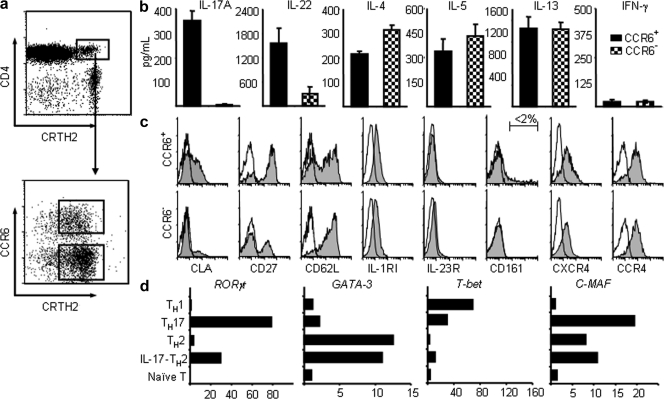
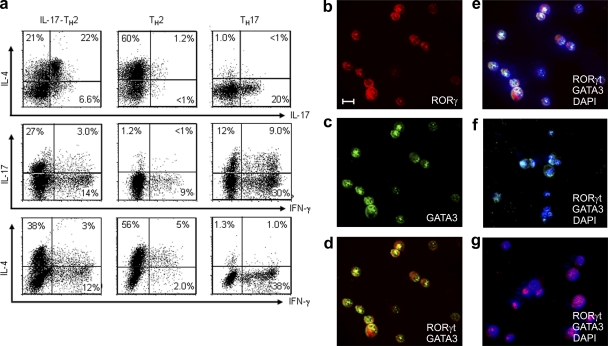
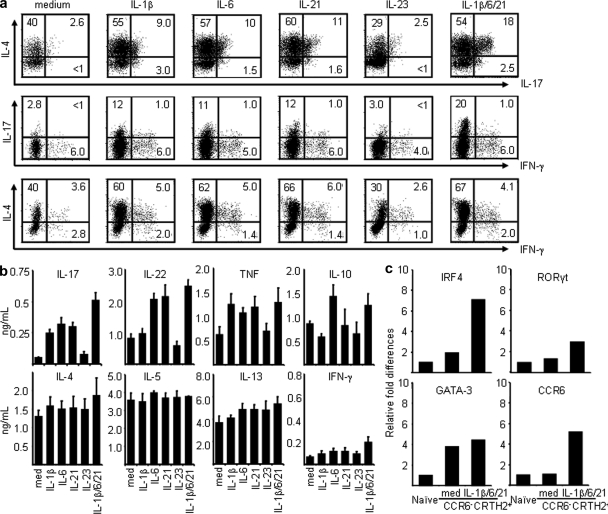
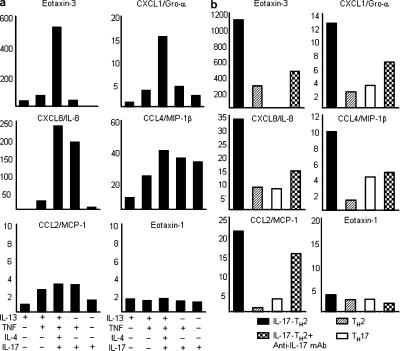
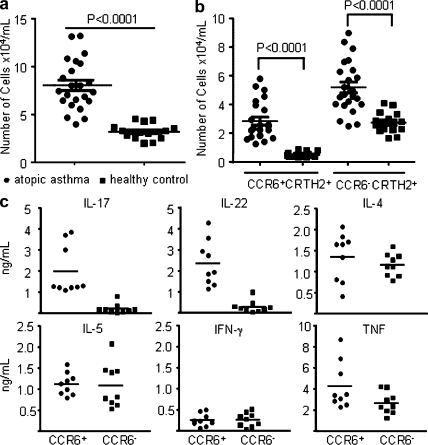
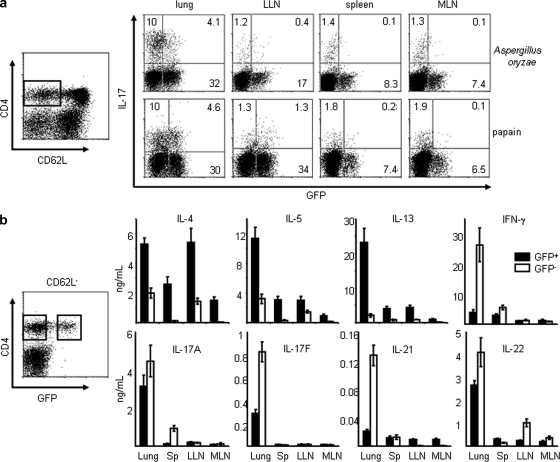
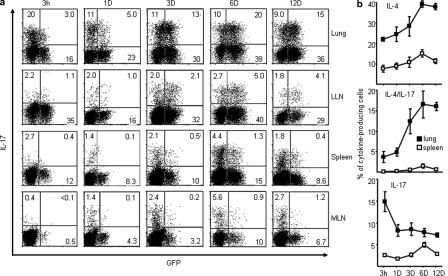
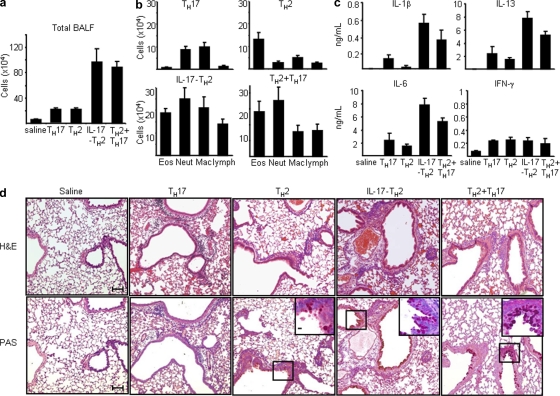
The inflammatory cytokine interleukin (IL)-17 is involved in the pathogenesis of allergic diseases. However, the identity and functions of IL-17–producing T cells during the pathogenesis of allergic diseases remain unclear. Here, we report a novel subset of TH2 memory/effector cells that coexpress the transcription factors GATA3 and RORγt and coproduce TH17 and TH2 cytokines. Classical TH2 memory/effector cells had the potential to produce IL-17 after stimulation with proinflammatory cytokines IL-1β, IL-6, and IL-21. The number of IL-17-TH2 cells was significantly increased in blood of patients with atopic asthma. In a mouse model of allergic lung diseases, IL-17–producing CD4+ TH2 cells were induced in the inflamed lung and persisted as the dominant IL-17–producing T cell population during the chronic stage of asthma. Treating cultured bronchial epithelial cells with IL-17 plus TH2 cytokines induced strong up-regulation of chemokine eotaxin-3, Il8, Mip1b, and Groa gene expression. Compared with classical TH17 and TH2 cells, antigen-specific IL-17–producing TH2 cells induced a profound influx of heterogeneous inflammatory leukocytes and exacerbated asthma. Our findings highlight the plasticity of TH2 memory cells and suggest that IL-17–producing TH2 cells may represent the key pathogenic TH2 cells promoting the exacerbation of allergic asthma.
Overview
The claims and statistics of this paper haven’t been checked yet.
Free: it reads the open-access text and checks the first 5 claims that cite a source we can check. Create a free account to check every claim.
Integrity signals
Registry
Cites
Statistics
Figures
Verification
Claims the paper makes
The claims and statistics of this paper haven’t been checked yet.
Free: it reads the open-access text and checks the first 5 claims that cite a source we can check. Create a free account to check every claim.
Claims other papers make about this one
Each is checked against this paper’s own text: does it say what the citing paper says it does?
In the citing paper
“Furthermore, IL-17-producing Th2 cell subsets participate in exacerbation of allergic asthma induced by Aspergillus (328).”
From Aspergillus fumigatus and Aspergillosis in 2019 (2019) · cites this paper as [328]
Self-check
Percentages, sums and reported differences re-computed from the paper’s own numbers.
The self-check needs the paper’s full text.
Citations
Cites
Ivanov, I. I., McKenzie, B. S., Zhou, L., Tadokoro, C. E., Lepelley, A., Lafaille, J. J., Cua, D. J., & Littman, D. R. (2006) · Cell · doi:10.1016/j.cell.2006.07.035 · Cited by 5,145
Harrington, L. E., Hatton, R. D., Mangan, P. R., Turner, H., Murphy, T. L., Murphy, K. M., & Weaver, C. T. (2005) · Nature Immunology · doi:10.1038/ni1254 · Cited by 4,742 · cited 2×
“The TH17 cell lineage possesses a unique genetic program and is described as an additional branch of the T helper cell subsets (Harrington et al., 2005; Park et al., 2005b; Ivanov et al., 2006).”
BackgroundA distinct lineage of CD4 T cells regulates tissue inflammation by producing interleukin 17
Park, H., Li, Z., Yang, X. O., Chang, S. H., Nurieva, R., Wang, Y.-H., Wang, Y., Hood, L., Zhu, Z., Tian, Q., et al. (2005) · Nature Immunology · doi:10.1038/ni1261 · Cited by 4,265 · cited 6×
“However, recent findings suggest that some cytokines, such as IL-1 (Tillie-Leblond et al., 1999; Nakae et al., 2003; Chung et al., 2009) and IL-21 (Fröhlich et al., 2007; Nurieva et al., 2007; Leonard et al., 2008; Yang et al., 2008), and the transcription factor IRF4 (Rengarajan et al., 2002; Brüstle et al., 2007; Ho…”
BackgroundInfluentialSelf-citationVeldhoen, M., Hocking, R. J., Atkins, C. J., Locksley, R. M., & Stockinger, B. (2006) · Immunity · doi:10.1016/j.immuni.2006.01.001 · Cited by 3,605 · cited 6×
“Studies in vitro demonstrated that the absence of TH2 and TH1 cytokines is the prerequisite for TH17 cell differentiation from naive T cells (Veldhoen et al., 2006) and producing TH2, classical TH2, classical TH17, or classical TH2 and TH17 cells generated in vitro, as described in Materials and…”
BackgroundInfluentialTransforming growth factor-β induces development of the TH17 lineage
Mangan, P. R., Harrington, L. E., O'Quinn, D. B., Helms, W. S., Bullard, D. C., Elson, C. O., Hatton, R. D., Wahl, S. M., Schoeb, T. R., & Weaver, C. T. (2006) · Nature · doi:10.1038/nature04754 · Cited by 3,087
Cua, D. J., Sherlock, J., Chen, Y., Murphy, C. A., Joyce, B., Seymour, B., Lucian, L., To, W., Kwan, S., Churakova, T., et al. (2003) · Nature · doi:10.1038/nature01355 · Cited by 2,906 · cited 2×
“…cells of the IL-17 cytokine family and the analysis of IL-23– mediated immune pathogenesis have led to the delineation of a new CD4+ T helper cell population termed TH17 (Yao et al., 1995b; Aarvak et al., 1999; Cua et al., 2003; Murphy et al., 2003; Harrington et al., 2005; Park et al., 2005a).”
BackgroundPredominant TH2-like Bronchoalveolar T-Lymphocyte Population in Atopic Asthma
Robinson, D. S., Hamid, Q., Ying, S., Tsicopoulos, A., Barkans, J., Bentley, A. M., Corrigan, C., Durham, S. R., & Kay, A. B. (1992) · New England Journal of Medicine · doi:10.1056/nejm199201303260504 · Cited by 2,768 · cited 1×
“The temporal recruitments and interplay between these two T helper subsets have been suggested as the cause of the heterogeneity in the pathology of severe asthma (Larché et al., 2003; Schmidt-Weber et al., 2007).”
BackgroundDevelopment, cytokine profile and function of human interleukin 17-producing helper T cells
Wilson, N. J., Boniface, K., Chan, J. R., McKenzie, B. S., Blumenschein, W. M., Mattson, J. D., Basham, B., Smith, K., Chen, T., Morel, F., et al. (2007) · Nature Immunology · doi:10.1038/ni1497 · Cited by 2,035 · cited 4×
“…25, 2010 Article 2487 that the TGF-, IL-21, or IL-23, as well as the proinflammatory cytokines IL-1 or IL-6, are important for the induction of IL-17 cytokine production (Mangan et al., 2006; Veldhoen et al., 2006; Wilson et al., 2007; Manel et al., 2008; Volpe et al., 2008; Yang et al., 2008).”
BackgroundInfluentialPhenotypic and functional features of human Th17 cells
Annunziato, F., Cosmi, L., Santarlasci, V., Maggi, L., Liotta, F., Mazzinghi, B., Parente, E., Filì, L., Ferri, S., Frosali, F., et al. (2007) · The Journal of Experimental Medicine · doi:10.1084/jem.20070663 · Cited by 1,861 · cited 2×
“1 c; Acosta-Rodriguez et al., 2007; Annunziato et al., 2007; Cosmi et al., 2008).”
BackgroundSurface phenotype and antigenic specificity of human interleukin 17–producing T helper memory cells
Acosta-Rodriguez, E. V., Rivino, L., Geginat, J., Jarrossay, D., Gattorno, M., Lanzavecchia, A., Sallusto, F., & Napolitani, G. (2007) · Nature Immunology · doi:10.1038/ni1467 · Cited by 1,828 · cited 4×
“1 c; Acosta-Rodriguez et al., 2007; Annunziato et al., 2007; Cosmi et al., 2008).”
BackgroundInfluential
Research works printed but not linked: 1
- Park H. Li Z. Yang X.O. Chang S.H. Nurieva R. Wang Y.H. Wang Y. Hood L. Zhu Z. Tian Q. Dong C. 2005b A distinct lineage of CD4 T cells regulates tissue inflammation by producing interleukin 17. Nat. Immunol. 6: 1133– 1141 10.1038/ni1261 16200068 PMC1618871 · DOI · Paper page
Cited by
Items 201–300 of 445
Depletion of major pathogenic cells in asthma by targeting CRTh2
Huang, T., Hazen, M., Shang, Y., Zhou, M., Wu, X., Yan, D., Lin, Z., Solon, M., Luis, E., Ngu, H., et al. (2016) · JCI Insight · doi:10.1172/jci.insight.86689 · Cited by 39
“poor lung function in these patients (25, 26).”
BackgroundResultMBD2 regulates differentiation and function of Th17 cells in neutrophils- dominant asthma via HIF-1α
Xu, L., Sun, W. J., Jia, A., Qiu, L. L., Xiao, B., Mu, L., Li, J. M., Zhang, X. F., Yan, W., Peng, C., et al. (2018) · Journal of Inflammation · doi:10.1186/s12950-018-0191-x · Cited by 42
Characterization and pro‐inflammatory potential of indoor mold particles
Holme, J. A., Øya, E., Afanou, A. K., Øvrevik, J., & Eduard, W. (2020) · Indoor Air · doi:10.1111/ina.12656 · Cited by 41
“Studies in mice and humans describe plasticity among TH17 and transitional stage TH1 effector populations in secreting IL-13 in response to inhalation of foreign antigens (231-233).”
BackgroundMirlekar, B. (2020) · Immunology Letters · doi:10.1016/j.imlet.2020.03.007 · Cited by 39
Ckless, K., Hodgkins, S. R., Ather, J. L., Martin, R., & Poynter, M. E. (2011) · Biochimica et Biophysica Acta (BBA) - General Subjects · doi:10.1016/j.bbagen.2011.03.005 · Cited by 41
“In addition, since NLRP3 activation regulates the secretion of IL-1β, an important cytokine that enables naïve (34), Foxp3+ regulatory (30, 33), effector/memory Th2 (32) CD4+ T cells, and γδT cells (35) to generate IL-17 and other Th17-associated cytokines, the potential for control of NLRP3 by ROS and RNS is an emerg…”
BackgroundActivin‐A: a novel critical regulator of allergic asthma
Kariyawasam, H. H., Semitekolou, M., Robinson, D. S., & Xanthou, G. (2011) · Clinical & Experimental Allergy · doi:10.1111/j.1365-2222.2011.03784.x · Cited by 36
Acupuncture Attenuated Inflammation and Inhibited Th17 and Treg Activity in Experimental Asthma
Wei, Y., Dong, M., Zhang, H., Lv, Y., Liu, J., Wei, K., Luo, Q., Sun, J., Liu, F., Xu, F., et al. (2015) · Evidence-based Complementary and Alternative Medicine · doi:10.1155/2015/340126 · Cited by 36
Airway epithelial regulation of allergic sensitization in asthma
Poynter, M. E. (2012) · Pulmonary Pharmacology & Therapeutics · doi:10.1016/j.pupt.2012.04.005 · Cited by 36
Chlorogenic acid ameliorated allergic rhinitis-related symptoms in mice by regulating Th17 cells
Shi, Z., Jiang, W., Chen, X., Xu, M., Wang, J., Lai, Y., & Zha, D. (2020) · Bioscience Reports · doi:10.1042/bsr20201643 · Cited by 35
Zhao, Y., Huang, Y., He, J., Li, C., Deng, W., Ran, X., & Wang, D. (2013) · Immunology Letters · doi:10.1016/j.imlet.2013.11.004 · Cited by 34
Rhinosinusitis and asthma-microbiome and new perspectives
Suzaki, H., Watanabe, S., & Pawankar, R. (2012) · Current Opinion in Allergy and Clinical Immunology · doi:10.1097/aci.0b013e32835b34f6 · Cited by 36
The Role of Th17 Cells and IL-17 in Th2 Immune Responses of Allergic Conjunctivitis
Meng, X.-T., Shi, Y.-Y., Zhang, H., & Zhou, H. (2020) · Journal of Ophthalmology · doi:10.1155/2020/6917185 · Cited by 38
“So, DC and eosinophils activated in AC may support +17 differentiation [62, 65, 79] (Figure 2).”
BackgroundA pathogenic integrated view explaining the different endotypes of asthma and allergic disorders
Maggi, E., Parronchi, P., Azzarone, B. G., & Moretta, L. (2022) · Allergy · doi:10.1111/all.15445 · Cited by 37
Jug r 2–reactive CD4+ T cells have a dominant immune role in walnut allergy
Archila, L. D., Jeong, D., Pascal, M., Bartra, J., Juan, M., Robinson, D. M., Farrington, M. L., & Kwok, W. W. (2015) · Journal of Allergy and Clinical Immunology · doi:10.1016/j.jaci.2015.01.029 · Cited by 37
Vultaggio, A., Nencini, F., Pratesi, S., Maggi, L., Guarna, A., Annunziato, F., Romagnani, S., Parronchi, P., & Maggi, E. (2011) · The Journal of Immunology · doi:10.4049/jimmunol.1002398 · Cited by 33
Ruan, H., Long, M., Li, J., Zhang, D., Feng, N., & Zhang, Y. (2024) · Advanced Healthcare Materials · doi:10.1002/adhm.202400637 · Cited by 32
Li, P., Tsang, M. S., Kan, L. L., Hou, T., Hon, S. S.-M., Chan, B. C.-L., Chu, I. M., Lam, C. W.-K., Leung, P., & Wong, C. K. (2021) · Molecules · doi:10.3390/molecules27010239 · Cited by 35
“Th17 has been shown to be related to Th2 production and can mediate goblet cell hyperplasia and promote mucin production in allergic disease [27].”
BackgroundLeptin favors Th17/Treg cell subsets imbalance associated with allergic asthma severity
Vollmer, C. M., Dias, A., Lopes, L. M., Kasahara, T. M., Delphim, L., da Silva, J. C. C., Lourenço, L. P., Gonçalves, H. C., Linhares, U. C., Gupta, S., et al. (2022) · Clinical and Translational Allergy · doi:10.1002/clt2.12153 · Cited by 36
“10,12‐15 Moreover, the mixed‐granulocytic endotype, characterized by elevated levels of eosinophils and neutrophils in bronchial‐ alveolar lavages, involves the induction of dual IL‐17 and IL‐4‐ secreting CD4 T‐cells in some patients with severe asthma.(16,17) Interestingly, in vitro studies have indeed revealed a gre…”
BackgroundPlasticity and heterogeneity of Th17 in immune-mediated kidney diseases
Krebs, C. F., & Panzer, U. (2017) · Journal of Autoimmunity · doi:10.1016/j.jaut.2017.12.005 · Cited by 32
Lim, H., Kim, Y. U., Drouin, S. M., Mueller‐Ortiz, S. L., Yun, K., Morschl, É., Wetsel, R. A., & Chung, Y. (2012) · PLoS ONE · doi:10.1371/journal.pone.0052666 · Cited by 30
“A recent study by Wang et al has elegantly shown the existence of Th2/Th17 cells expressing both GATA3 and RORct in inflamed lung [74].”
BackgroundKalailingam, P., Tan, H., Jain, N. K., Sng, M. K., Chan, J. S. K., Tan, N. S., & Thanabalu, T. (2017) · Scientific Reports · doi:10.1038/s41598-017-07125-8 · Cited by 32
MBD2-mediated Th17 differentiation in severe asthma is associated with impaired SOCS3 expression
Sun, W., Xiao, B., Jia, A., Qiu, L., Zeng, Q., Liu, D., Yuan, Y. L., Jia, J., Zhang, X., & Xiang, X. (2018) · Experimental Cell Research · doi:10.1016/j.yexcr.2018.08.010 · Cited by 30
Kadin, M. E. (2019) · Aesthetic Surgery Journal · doi:10.1093/asj/sjy250 · Cited by 30
Asthma Phenotypes and Biomarkers
Grunwell, J. R., & Fitzpatrick, A. M. (2025) · Respiratory Care · doi:10.1089/respcare.12352 · Cited by 31
Therapeutic potential of interleukin-17 in inflammation and autoimmune diseases
Yan, J.-W., Wang, Y., Peng, W., Tao, J., Wan, Y.-N., Li, B., Mei, B., Chen, B., Yao, H. C., Yang, G., et al. (2013) · Expert Opinion on Therapeutic Targets · doi:10.1517/14728222.2013.843669 · Cited by 30
“IL-17 can be secreted by natural killer (NK) cells, gdT cells, lymphoid-tissue inducer (LTi) cells, iNKT cells, mast cells, Th2 cells and neutrophils except for Th17 cells [6,18-22].”
BackgroundSelf-citationRedefining Approaches to Asthma
Arron, J. R., Scheerens, H., & Matthews, J. G. (2013) · Advances in pharmacology · doi:10.1016/b978-0-12-404717-4.00001-9 · Cited by 30
MBD2 Regulates Th17 Cell Differentiation and Experimental Severe Asthma by Affecting IRF4 Expression
Jia, A., Wang, Y., Sun, W., Xiao, B., Yan, W., Qiu, L., Mu, L., Xu, L., Li, J., Zhang, X., et al. (2017) · Mediators of Inflammation · doi:10.1155/2017/6249685 · Cited by 29
Self-citationObata‐Ninomiya, K., Ishiwata, K., Hisanobu, N., Endo, Y., Ichikawa, T., Onodera, A., Hirahara, K., Okamoto, Y., Kanuka, H., & Nakayama, T. (2018) · Proceedings of the National Academy of Sciences · doi:10.1073/pnas.1714731115 · Cited by 29
Carrageenan and insulin resistance in humans: a randomised double-blind cross-over trial
Wagner, R., Büttner, J., Heni, M., Fritsche, L., Kullmann, S., Wagmüller, M., Peter, A., Preissl, H. T., Machann, J., von Schwartzenberg, R. J., et al. (2024) · BMC Medicine · doi:10.1186/s12916-024-03771-8 · Cited by 29
“Interestingly, induction of a mixed Th2/Th17 cytokine profile has been shown to be associated with the development of more severe disease pathogenesis in allergic disorders [35].”
Dynamic control of Th2 cell responses by STAT3 during allergic lung inflammation in mice
Lim, H., Cho, M., Choi, G., Na, H., & Chung, Y. (2015) · International Immunopharmacology · doi:10.1016/j.intimp.2015.03.051 · Cited by 28
Microbiota, regulatory T cell subsets, and allergic disorders
Ohnmacht, C. (2016) · Allergo Journal International · doi:10.1007/s40629-016-0118-0 · Cited by 31
“is does not exclude that mixed 2/ 17 phenotypes of allergic disorders exist because genetic factors may unleash this reciprocal regulation and result in even more severe forms of allergic asthma [73, 74].”
BackgroundToll-like receptor-mediated involvement of innate immune cells in asthma disease
Zakeri, A., & Yazdi, F. G. (2016) · Biochimica et Biophysica Acta (BBA) - General Subjects · doi:10.1016/j.bbagen.2016.08.009 · Cited by 28
Churg–Strauss Syndrome: An evolving paradigm
Ramentol-Sintas, M., Martínez‐Valle, F., & Solans, R. (2012) · Autoimmunity Reviews · doi:10.1016/j.autrev.2012.07.009 · Cited by 28
“The presence of IL-17-producing Th2 cells in the lung of an animal model of allergic lung diseases during the first stages of the allergic inflammation has been demonstrated [53].”
BackgroundDaniero, J. J., Ekbom, D. C., Gelbard, A. H., Akst, L. M., & Hillel, A. T. (2017) · JAMA Otolaryngology–Head & Neck Surgery · doi:10.1001/jamaoto.2016.4126 · Cited by 27
T Cell Transcription Factors and Their Impact on HIV Expression
Michaels, K. K., Morales, A. E., & Henderson, A. J. (2013) · Virology Research and Treatment · doi:10.4137/vrt.s12147 · Cited by 27
Neuroinflammation: Extinguishing a blaze of T cells
Benallegue, N., Kébir, H., & Alvarez, J. I. (2022) · Immunological Reviews · doi:10.1111/imr.13122 · Cited by 26
Rebhahn, J. A., Deng, N., Sharma, G., Livingstone, A. M., Huang, S., & Mosmann, T. R. (2014) · European Journal of Immunology · doi:10.1002/eji.201444645 · Cited by 31
“Th1 cells can convert to IL-4-producing cells during a strongly Th2-polarizing helminth infection [62], Th2 cells can secrete IL-17 in asthma models [63], lymphocytic choriomeningitis virus (LCMV) infection reprograms Th2 cells to GATA3 + Tbet + “Th2 + 1” long-lived cells that secrete IFN-γ and…”
BackgroundFu, J., Heinrichs, J. L., & Yu, X. (2014) · Archivum Immunologiae et Therapiae Experimentalis · doi:10.1007/s00005-014-0284-z · Cited by 28
Martin, R. A., Ather, J. L., Daggett, R., Hoyt, L. R., Alcorn, J. F., Suratt, B. T., Weiss, D. J., Lundblad, L. K. A., & Poynter, M. E. (2013) · PLoS ONE · doi:10.1371/journal.pone.0074730 · Cited by 28
Serum potential biomarkers according to sputum inflammatory cell profiles in adult asthmatics
Hur, G. Y., Ye, Y., Yang, E., & Park, H. (2019) · The Korean Journal of Internal Medicine · doi:10.3904/kjim.2019.083 · Cited by 28
“Recently, the presence of dual-positive Th2/Th17 cells has been observed in the blood [3] and bronchoalveolar lavage fluid [4] of asthmatic patients.”
BackgroundUse of mepolizumab in adult patients with cystic fibrosis and an eosinophilic phenotype: case series
Zhang, L., Borish, L., Smith, A. R., Somerville, L., & Albon, D. P. (2020) · Allergy Asthma and Clinical Immunology · doi:10.1186/s13223-019-0397-3 · Cited by 26
The Concept of Pathogenic TH2 Cells: Collegium Internationale Allergologicum Update 2021
Bertschi, N., Bazzini, C., & Schlapbach, C. (2021) · International Archives of Allergy and Immunology · doi:10.1159/000515144 · Cited by 27
Elimination of CD4lowHLA-G+ T cells overcomes castration-resistance in prostate cancer therapy
Wang, C., Chen, J., Zhang, Q., Li, W., Zhang, S., Xu, Y., Wang, F., Zhang, B., Zhang, Y., & Gao, W. (2018) · Cell Research · doi:10.1038/s41422-018-0089-4 · Cited by 25
ILC2 Diversity, Location, and Function in Pulmonary Disease
Verma, M., Can, U. I., & Reinhardt, R. L. (2025) · Immunological Reviews · doi:10.1111/imr.70036 · Cited by 24
Riou, C., Strickland, N., Soares, A. P., Corleis, B., Kwon, D. S., Wherry, E. J., Wilkinson, R. J., & Burgers, W. A. (2016) · The Journal of Immunology · doi:10.4049/jimmunol.1502094 · Cited by 26
Nadeem, A., Ahmad, S. F., Al-Harbi, N. O., Siddiqui, N. M., Ibrahim, K. E., & Attia, S. M. (2018) · Biochemical Pharmacology · doi:10.1016/j.bcp.2018.05.011 · Cited by 24
Emerging Complexity in CD4+T Lineage Programming and Its Implications in Colorectal Cancer
Ditoro, D. F., & Basu, R. (2021) · Frontiers in Immunology · doi:10.3389/fimmu.2021.694833 · Cited by 25
“Co-expression of GATA3 and Th2 cytokines in Th17 cells is also documented (99).”
BackgroundDifferential serum protein markers and the clinical severity of asthma
Meyer, N., Nuss, S. J., Siebenhüner, A. R., Akdiş, C. A., Menz, G., & Rothe, T. (2014) · Journal of Asthma and Allergy · doi:10.2147/jaa.s53920 · Cited by 28
Nurwati, I., Purwanto, B. T., Mudigdo, A., Saputra, K., Prasetyo, D. H., & Muthmainah, M. (2019) · Acupuncture in Medicine · doi:10.1177/0964528418818705 · Cited by 23
Subchronic exposures to fungal bioaerosols promotes allergic pulmonary inflammation in naïve mice
Nayak, A. P., Green, B. J., Lemons, A. R., Marshall, N. B., Goldsmith, W. T., Kashon, M. L., Anderson, S. E., Germolec, D. R., & Beezhold, D. H. (2016) · Clinical & Experimental Allergy · doi:10.1111/cea.12724 · Cited by 24
Hirahara, K., Mato, N., Hagiwara, K., & Nakayama, T. (2018) · Journal of Leukocyte Biology · doi:10.1002/jlb.mr1117-456r · Cited by 25
Acupuncture for Asthma: Its Potential Significance in Clinical Practice
Nurwati, I., Muthmainah, M., & Huda, K. N. (2020) · Medical Acupuncture · doi:10.1089/acu.2020.1443 · Cited by 23
“In addition, IL-17 is also produced by Th2 cells.(21) IL-17 attracts neutrophils,(21,32) which can destroy the elastin of the airway and pulmonal tissue by producing serine protease neutrophil elastase.”
BackgroundThe role of inflammatory cytokines in the development of idiopathic subglottic stenosis
Motz, K., & Gelbard, A. H. (2020) · Translational Cancer Research · doi:10.21037/tcr.2019.12.37 · Cited by 22
“Although crucial in protecting the host from invasion by many types of pathogens, dysregulated IL-17A production can drive chronic inflammation (19-21) with subsequent tissue damage and fibrinogenesis (22,23).”
BackgroundT cell landscape in the microenvironment of human solid tumors
Maggi, E., Munari, E., Landolina, N., Mariotti, F. R., Azzarone, B. G., & Moretta, L. (2024) · Immunology Letters · doi:10.1016/j.imlet.2024.106942 · Cited by 23
Clinical implications of CD4+ T cell subsets in adult atopic asthma patients
Wiest, M. J., Upchurch, K., Yin, W., Ellis, J., Xue, Y., Lanier, B. Q., Millard, M., Joo, H., & Oh, S. (2018) · Allergy Asthma and Clinical Immunology · doi:10.1186/s13223-018-0231-3 · Cited by 23
“It has been previously reported that memory T cells are associated with chronic inflammatory diseases [22, 23].”
BackgroundBobic, S., Seys, S., Vooght, V. D., Callebaut, I., Hox, V., Dooms, C., Vinckier, S., Jonckx, B., Saint‐Remy, J., Stassen, J., et al. (2012) · American Journal of Respiratory Cell and Molecular Biology · doi:10.1165/rcmb.2011-0152oc · Cited by 22
Morales-Primo, A. U., Becker, I., Zamora, C., & Zamora‐Chimal, J. (2024) · Immune Network · doi:10.4110/in.2024.24.e14 · Cited by 24
“These cells were generated after stimulation with IL-1 β , IL-6 and IL-21 cytokines (129).”
BackgroundTh-17 regulatory cytokines inhibit corticosteroid induced airway structural cells apoptosis
Halwani, R., Sultana, A., Al-Kufaidy, R., Jamhawi, A., Vazquez‐Tello, A., & Al‐Muhsen, S. (2016) · Respiratory Research · doi:10.1186/s12931-015-0307-2 · Cited by 22
Chen, A., Diaz-Soto, M. P., Sanmamed, M. F., Adams, T. S., Schupp, J. C., Gupta, A., Britto, C. J., Sauler, M., Yan, X., Liu, Q., et al. (2021) · Respiratory Research · doi:10.1186/s12931-021-01709-9 · Cited by 22
“In addition to finding increased expression of JAK1 in unstimulated cells of SA, we found high expression of pro-inflammatory genes including IL32, a cytokine with pro-inflammatory and antiviral activity [50]; genes involved in Th2 inflammation [36, 37]; and CCL4, involved in asthma exacerbations [51].”
BackgroundPelaia, C., PELAIA, G., Crimi, C., LONGHINI, F., LOMBARDO, N., Savino, R., SCIACQUA, A., & Vatrella, A. (2022) · Minerva Medica · doi:10.23736/s0026-4806.21.07296-7 · Cited by 20
Kim, D., McAlees, J. W., Bischoff, L. J., Kaur, D., Houshel, L., Gray, J. K., Hargis, J. M., Davis, X. D., Dudas, P. L., Deshmukh, H. S., et al. (2018) · Clinical & Experimental Allergy · doi:10.1111/cea.13301 · Cited by 21
Unravelling the complexity of tissue inflammation in uncontrolled and severe asthma
Erjefalt, J. S. (2018) · Current Opinion in Pulmonary Medicine · doi:10.1097/mcp.0000000000000536 · Cited by 20
Innate lymphoid cells and cytokines of the novel subtypes of helper T cells in asthma
Sherkat, R., Yazdani, R., Ganjalıkhani-Hakemi, M., Homayouni, V., Farahani, R., Hosseini, M., & Rezaei, A. (2014) · Asia Pacific Allergy · doi:10.5415/apallergy.2014.4.4.212 · Cited by 19
“Th17 lymphocytes have been shown as a T-cell subset that produces high levels of IL-17 in response to inf lammatory cytokines such as IL-1β, IL-6, and IL-23 [37-39].”
BackgroundAltered T cell plasticity favours Th17 cells in early arthritis
Leipe, J., Pirronello, F., Schulze‐Koops, H., & Skapenko, A. (2020) · Rheumatology · doi:10.1093/rheumatology/kez660 · Cited by 20
Coppock, G., Aronson, L. R., Park, J., Qiu, C., Park, J., DeLong, J. H., Radaelli, E., Suszták, K., & Hunter, C. A. (2020) · The Journal of Immunology · doi:10.4049/jimmunol.1901463 · Cited by 20
Geevarghese, B., & Weinberg, A. (2014) · Human Vaccines & Immunotherapeutics · doi:10.4161/hv.27908 · Cited by 21
Immunological basis of reversible and fixed airways disease
Tubby, C., Harrison, T. W., Todd, I., & Fairclough, L. C. (2011) · Clinical Science · doi:10.1042/cs20110062 · Cited by 18
Introduction to “allergic inflammation”
Nakayama, T. (2017) · Immunological Reviews · doi:10.1111/imr.12566 · Cited by 18
Arhgef12 drives IL17A-induced airway contractility and airway hyperresponsiveness in mice
Fong, V., Hsu, A., Wu, E. E., Looney, A. P., Ganesan, P., Ren, X., Sheppard, D., Wicher, S. A., Thompson, M. A., Britt, R. D., et al. (2018) · JCI Insight · doi:10.1172/jci.insight.123578 · Cited by 20
Kato, T., Tada‐Oikawa, S., Wang, L., Murata, M., & Kuribayashi, K. (2013) · Toxicology and Applied Pharmacology · doi:10.1016/j.taap.2013.08.029 · Cited by 22
“, 2010) and have emerged as an additional player in the regulation of allergic inflammation especially during sensitization phase (Cosmi et al., 2010; Nakae et al., 2002; SchnyderCandrian et al., 2006; Wang et al., 2010), seem not play a role in the exacerbation of airway inflammation by TBT.”
BackgroundCD4+ T cells in inflammatory diseases: pathogenic T-helper cells and the CD69–Myl9 system
Nakayama, T., Hirahara, K., Kimura, M. Y., Iwamura, C., Kiuchi, M., Kokubo, K., Onodera, A., Hashimoto, K., & Motohashi, S. (2021) · International Immunology · doi:10.1093/intimm/dxab053 · Cited by 19
Kazani, S. D., & Israel, E. (2012) · American Journal of Respiratory and Critical Care Medicine · doi:10.1164/rccm.201204-0634up · Cited by 17
“In this regard, late in 2010, Wang and colleagues identified a novel subset of CD4(1) memory effector cells that produce IL-17 that are elevated in the circulation of patients with asthma (56).”
BackgroundKianmehr, M., Rezaee, S. A., Mahmoudi, M., Ghorani, V., & Boskabady, M. H. (2018) · Journal of Cellular Biochemistry · doi:10.1002/jcb.27812 · Cited by 17
“Overproduction of IL‐17 by the Th2 cells also caused an increase in neutrophils, eosinophils, macrophages, and lymphocytes in animal models of asthma.(31,32) Therefore, carvacrol may also contribute to the treatment of asthma by suppression of IL‐17 gene expression.”
Guidi, R., Wedeles, C. J., & Wilson, M. S. (2020) · Non-Coding RNA · doi:10.3390/ncrna6010010 · Cited by 19
“It is important to note that plasticity between the subsets is also now widely documented and accepted with many studies identifying TH2 (GATA3+IL-4+) cells that either co-express or fully convert to express TH1-defining features (T-bet and IFNγ) [2], TH2 cells that convert to express TH17-defining features (RoRγt and…”
BackgroundHeme oxygenase‐1 alleviates eosinophilic inflammation by inhibiting STAT3‐SOCS3 signaling
Lin, X., Lv, J., Ge, D., Bai, H., Yang, Y., & Wu, J. (2020) · Pediatric Pulmonology · doi:10.1002/ppul.24759 · Cited by 18
IL-17A plays a critical role in RSV infection in children and mice
Long, X., Xie, J., Luo, R., Yu, G., Liu, E., Deng, Y., & Long, X. (2023) · Virology Journal · doi:10.1186/s12985-023-01990-8 · Cited by 17
Wang, W., Jing, W., & Liu, Q. (2018) · Frontiers in Pediatrics · doi:10.3389/fped.2018.00255 · Cited by 17
“The level of IL-10 was found to be reduced significantly in T cells of peripheral blood during the onset of allergic asthma (42).”
BackgroundEarly Surgical Management of Thermal Airway Injury: A Case Series
Jayawardena, A. D. L., Lowery, A. S., Wootten, C. T., Dion, G. R., Summitt, J. B., McGrane, S., & Gelbard, A. H. (2018) · Journal of Burn Care & Research · doi:10.1093/jbcr/iry059 · Cited by 17
IL-17 and “TH2-high” asthma: Adding fuel to the fire?
Bhakta, N. R., & Erle, D. J. (2014) · Journal of Allergy and Clinical Immunology · doi:10.1016/j.jaci.2014.07.034 · Cited by 17
“More recently, in a challenge to the traditional discrete categorization of TH subtypes, populations of CD4(1) T cells that express both IL-17A/F and type 2 cytokines have been identified in the lungs of mice with allergic airway disease and blood from asthmatic patients.(10,11) These cells were identified by cell-sur…”
BackgroundAsthma Inflammatory Phenotypes: How Can We Distinguish Them?
Plavšić, A., Nikolic, B. B., Milenkovic, B. A., Mišković, R., Kusić, N., Dimitrijevic, M., Arandjelović, S., Milošević, K., Buha, I., & Tomić-Spirić, V. (2024) · Journal of Clinical Medicine · doi:10.3390/jcm13020526 · Cited by 16
“Also, a dual Th2/Th17 subset can lead to inflammatory cell recruitment and asthma exacerbations [69].”
BackgroundMeng, K., Xu, W., Miura, T., Suzuki, S., Chiyotanda, M., Tanaka, S., Sugiyama, K., Kawashima, H., & Hirano, T. (2018) · Experimental Dermatology · doi:10.1111/exd.13671 · Cited by 16
Lim, H., Kim, Y. U., Yun, K., Drouin, S. M., & Chung, Y. (2013) · Immunology Letters · doi:10.1016/j.imlet.2013.10.003 · Cited by 17
Kannan, Y., & Wilson, M. S. (2013) · Journal of Clinical & Cellular Immunology · doi:10.4172/2155-9899.s12-011 · Cited by 19
“Although differentiated αβ+CD4+ T cells can adopt different effector/ regulatory characteristics, there is significant flexibility between their phenotypes [15-18].”
BackgroundBiomarkers in asthma, potential for therapeutic intervention
Pasha, M. A., Hopp, R. J., Habib, N., & Tang, D. D. (2024) · Journal of Asthma · doi:10.1080/02770903.2024.2361783 · Cited by 18
Rochman, Y., Kotliar, M., Klingler, A. M., Rochman, M., Alameh, M., Melamed, J. R., Osswald, G. A., Caldwell, J. M., Felton, J. M., Mack, L. E., et al. (2025) · Journal of Clinical Investigation · doi:10.1172/jci194080 · Cited by 18
Interleukin‐1 Links Autoimmune and Autoinflammatory Pathophysiology in Mixed‐Pattern Psoriasis
Frers, R. K., Losada, M. E. O., Kobiec, T., Herrera, M. I., Udovin, L., Kusnier, C. F., & Capani, F. (2021) · Mediators of Inflammation · doi:10.1155/2021/2503378 · Cited by 18
Patterson, A. R., Bolcas, P. E., Lampe, K., Cantrell, R., Ruff, B. P., Lewkowich, I. P., Hogan, S. P., Janssen, E. M., Bleesing, J., Hershey, G. K. K., et al. (2018) · Journal of Allergy and Clinical Immunology · doi:10.1016/j.jaci.2018.10.018 · Cited by 16
“These cells have been associated with pathology in patients with several autoimmune diseases and asthma, respectively.(2,3,26-31) Interestingly, the mLNs of Gimap5 mice contained similar numbers of total CD4(1) T cells compared with WT littermates, but a greater frequency expressed T-bet, Gata-3, or RORgt compared wit…”
Liudahl, S. M., & Coussens, L. M. (2017) · Elsevier eBooks · doi:10.1016/b978-0-12-809819-6.00008-3 · Cited by 14
Hirahara, K., Aoki, A., & Nakayama, T. (2021) · Allergology International · doi:10.1016/j.alit.2021.02.001 · Cited by 15
Th17 Cells Demonstrate Stable Cytokine Production in a Proallergic Environment
Glosson, N. L., Sehra, S., Stritesky, G. L., Yu, Q., Awe, O., Pham, D., Bruns, H. A., & Kaplan, M. H. (2014) · The Journal of Immunology · doi:10.4049/jimmunol.1401202 · Cited by 14
“allergic mice, however the origin of the Th2/Th17 effector/memory population is not completely understood (49, 50).”
Modeling the Role of TGF-β in Regulation of the Th17 Phenotype in the LPS-Driven Immune System
Lee, S., Hwang, H. J., & Kim, Y. (2014) · Bulletin of Mathematical Biology · doi:10.1007/s11538-014-9946-6 · Cited by 14
“For instance, in an experiment by Wang et al. (2010), IRF4 and RORγ gene expression was up-regulated by a certain class of cytokines (IL-1β , IL-6, and IL-21), resulting in IL-17 production in Th2 cells in vitro.”
Tang, W., Liu, F., Chen, Y., Song, L., Dai, W., Li, C. R., Weng, D., & Chen, J. (2014) · Mediators of Inflammation · doi:10.1155/2014/570894 · Cited by 14
Demirca, B. P., Çağan, H. H., Kıykım, A. A., Arig, U., Arpa, M., Virlan, A. T., Ozen, A. O., Karakoç-Aydıner, E., Barış, S., & Barlan, I. B. (2015) · Respiratory Medicine · doi:10.1016/j.rmed.2015.07.007 · Cited by 14
T-helper cells flexibility: the possibility of reprogramming T cells fate
Khantakova, J. N., & Sennikov, S. V. (2023) · Frontiers in Immunology · doi:10.3389/fimmu.2023.1284178 · Cited by 14
Exploring the role of neutrophils in infectious and noninfectious pulmonary disorders
Arora, A., & Singh, A. (2023) · International Reviews of Immunology · doi:10.1080/08830185.2023.2222769 · Cited by 14
“Studies have reported an increased IL-17 expression in patients with asthma [148–151] which is involved in secretion of GM-CSF from macrophages and fibroblasts leading to differentiation of CD34 progenitor cells into neutrophils as well as activation of macrophages and fibroblasts resulting in…”
BackgroundInteraction of Interleukin-17A with a Th2 Response in a Mouse Model of Allergic Airway Inflammation
Peters, K., Ernst, S., & Peters, M. (2023) · Cells · doi:10.3390/cells12131774 · Cited by 13
“In a T cell transfer model of atopic asthma in mice, IL-17 producing TH2 cells exacerbated asthma more strongly than conventional TH2 or TH17 cells alone [15].”
BackgroundPassmore, C., Makidon, P. E., O’Konek, J. J., Zahn, J., Pannu, J., Hamouda, T., Bitko, V., Myc, A., Lukacs, N. W., Fattom, A., et al. (2013) · Human Vaccines & Immunotherapeutics · doi:10.4161/hv.27383 · Cited by 13
“IL-17 has been indicated for its role in autoimmunity and asthma.(31,32) However, it has also been discovered to play a key role in the clearance of many respiratory pathogens, including Mucocutaneous candidiasis and Mycobacterium tuberculosis.”
BackgroundNeonatal Pulmonary Host Defense
Good, M. L., Kolls, J. K., & Empey, K. M. (2016) · Elsevier eBooks · doi:10.1016/b978-0-323-35214-7.00130-x · Cited by 17
Impact of Enhancer of Zeste Homolog 2 on T Helper Cell-Mediated Allergic Rhinitis
Hou, T., Chen, M.-R., Chou, Y., Kan, P.-C., Tsai, Y.-T., & Cha, T. (2017) · Frontiers in Immunology · doi:10.3389/fimmu.2017.00790 · Cited by 13
“A higher level of IL-17-producing Th2 cells has also been reported in patients with atopic asthma and a mouse model of allergic lung diseases (30).”
BackgroundVroman, H. H., Das, T., Bergen, I. M., van Hulst, J. A. C., Ahmadi, F., Loo, G., Lubberts, E., Hendriks, R. W., & Kool, M. (2018) · Clinical & Experimental Allergy · doi:10.1111/cea.13262 · Cited by 13
Metadata
- Authors
- Wang, Y.-H., Voo, K. S., Liu, B., Chen, C.-Y., Uygungil, B., Spoede, W., Bernstein, J. A., Huston, D. P., & Liu, Y.-J.
- Affiliations
- Cincinnati Children's Hospital Medical Center (US)
- The University of Texas MD Anderson Cancer Center (US)
- University of Cincinnati (US)
- Texas A&M Health Science Center (US)
- Corresponding author
- Wang, Yui-Hsi
- Liu, Yong-Jun
- Venue
- Journal of Experimental Medicine
- Publisher
- Rockefeller University Press
- Published
- 2010-10-04
- Volume
- 207
- Issue
- 11
- Pages
- 2479-2491
- ISSN
- 0022-1007 (ISSN-L)
- 1540-9538
- PMC
- PMC2964570
- OpenAlex
- W2119636028
- Cited by
- 431
- References
- 63
- Citations by year
- 2026: 8 · 2025: 8 · 2024: 18 · 2023: 12 · 2022: 16 · 2021: 31 · 2020: 30 · 2019: 24 · 2018: 30 · 2017: 32 · 2016: 35 · 2015: 40 · 2014: 37 · 2013: 44 · 2012: 27
- FWCI
- 23.83
- Type
- journal article
- Language
- en
- Open access
- bronze
- doi.org
- Locations
- The Journal of Experimental Medicine (publishedVersion)
- Europe PMC (PubMed Central) (publishedVersion, cc-by-nc-sa)
- PubMed Central (publishedVersion, cc-by-nc-sa)
- PubMed (publishedVersion)
- OakTrust (Texas A&M University Libraries) (submittedVersion)
- Funders
- Sandler Foundation
- National Institutes of Health (5u19ai071130-05)
- National Institute of Allergy and Infectious Diseases (U19 AI071130-01, U19-AI071130, R01AI090129, R01AI061645)
- Topics
- Health Sciences › Medicine › Pulmonary and Respiratory Medicine › Asthma and respiratory diseases
- Life Sciences › Immunology and Microbiology › Immunology › T-cell and B-cell Immunology
- Life Sciences › Immunology and Microbiology › Immunology › IL-33, ST2, and ILC Pathways
- Keywords
- IL-17, Th2 cells, allergic asthma, asthma exacerbations, T cell plasticity, GATA3, RORγt, memory T cells, eotaxin-3, chemokine expression, bronchial epithelial cells
- MeSH terms
- Animals, Asthma, Chronic Disease, Gene Expression Regulation, Humans, Immunologic Memory, Mice, Inbred BALB C, Lymphocyte Subsets, Cytokines, Th2 Cells, Interleukin-17, GATA3 Transcription Factor, Mice, Nuclear Receptor Subfamily 1, Group F, Member 3
About these checks
Registry, retraction, Cites and statistics results are computed, not judged, with one exception: a printed reference that no index lists is read once by a model before it counts as a citation error. Claims are extracted by a model and kept only when their quote appears verbatim in the text; each cited source is then checked, with a model’s help, for whether it says what the claim relies on. Those verdicts can be wrong — read the claim’s quote and the cited source before relying on one.
Statistics and arithmetic are recomputed, not judged.
Confidence bands are shown only for fields calibrated on our annotated test set. None is calibrated yet, so no band is shown.
What counts as a claim ›How we measure confidence ›How we check this ›
Are you an author, or do you see a problem with this page? Request a review
Data sources
Bibliographic data: Semantic Scholar, OpenAlex, Crossref.
Contains information from the Semantic Scholar Academic Graph Datasets, made available under the ODC Attribution License (ODC-BY 1.0).
Semantic Scholar’s data is described in: Kinney, R., et al. (2023). The Semantic Scholar Open Data Platform. arXiv:2301.10140.
