

A novel subset of CD4+ TH2 memory/effector cells that produce inflammatory IL-17 cytokine and promote the exacerbation of chronic allergic asthma
Open accessThe DOI matches its Crossref record; 62 of the 63 references it cites were found in a registry or an index.
Abstract
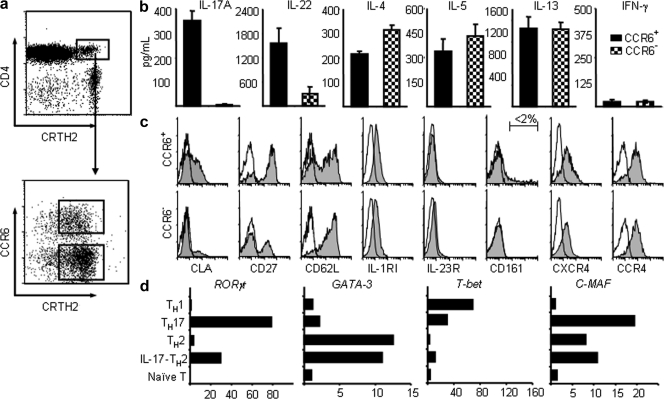
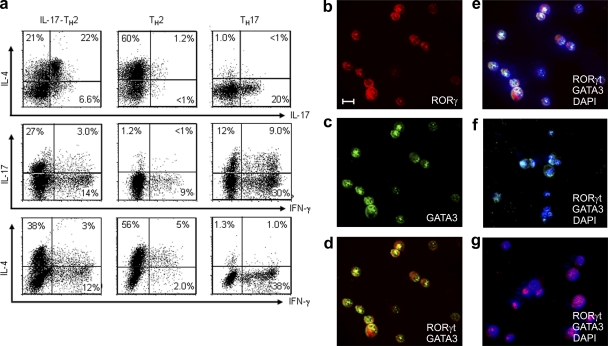
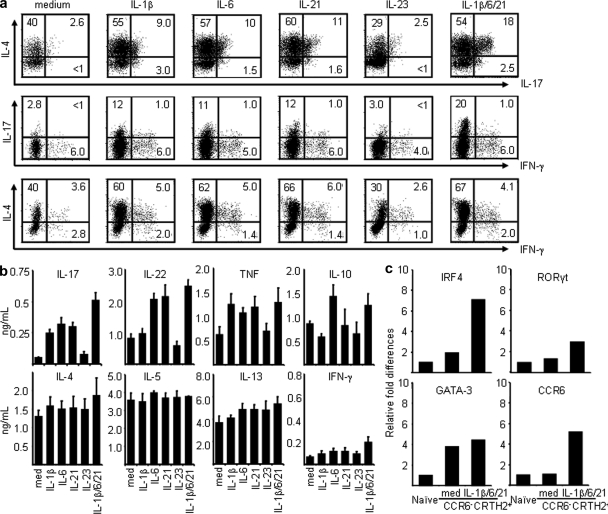
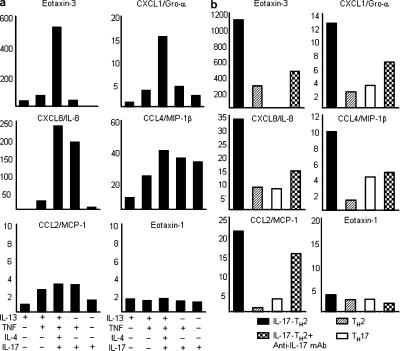
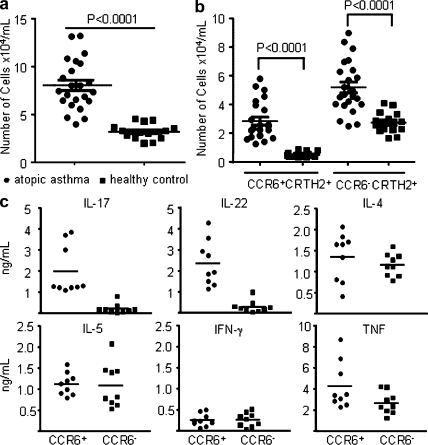
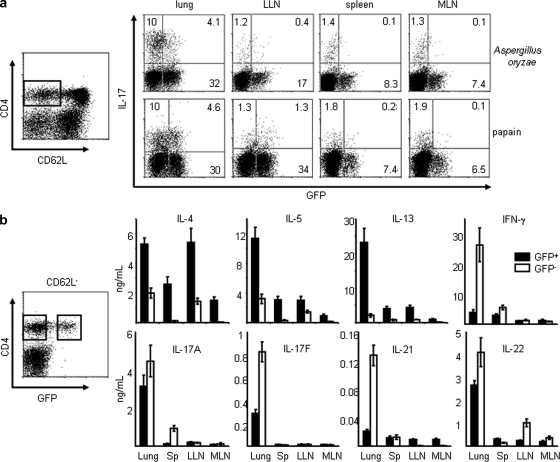
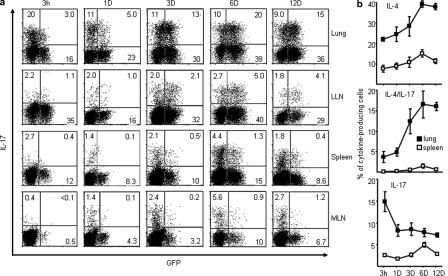
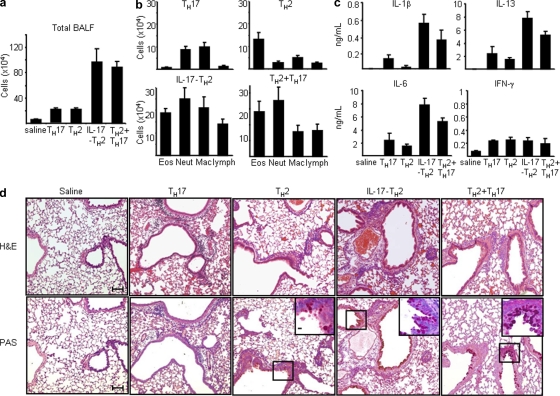
The inflammatory cytokine interleukin (IL)-17 is involved in the pathogenesis of allergic diseases. However, the identity and functions of IL-17–producing T cells during the pathogenesis of allergic diseases remain unclear. Here, we report a novel subset of TH2 memory/effector cells that coexpress the transcription factors GATA3 and RORγt and coproduce TH17 and TH2 cytokines. Classical TH2 memory/effector cells had the potential to produce IL-17 after stimulation with proinflammatory cytokines IL-1β, IL-6, and IL-21. The number of IL-17-TH2 cells was significantly increased in blood of patients with atopic asthma. In a mouse model of allergic lung diseases, IL-17–producing CD4+ TH2 cells were induced in the inflamed lung and persisted as the dominant IL-17–producing T cell population during the chronic stage of asthma. Treating cultured bronchial epithelial cells with IL-17 plus TH2 cytokines induced strong up-regulation of chemokine eotaxin-3, Il8, Mip1b, and Groa gene expression. Compared with classical TH17 and TH2 cells, antigen-specific IL-17–producing TH2 cells induced a profound influx of heterogeneous inflammatory leukocytes and exacerbated asthma. Our findings highlight the plasticity of TH2 memory cells and suggest that IL-17–producing TH2 cells may represent the key pathogenic TH2 cells promoting the exacerbation of allergic asthma.
Overview
The claims and statistics of this paper haven’t been checked yet.
Free: it reads the open-access text and checks the first 5 claims that cite a source we can check. Create a free account to check every claim.
Integrity signals
Registry
Cites
Statistics
Figures
Verification
Claims the paper makes
The claims and statistics of this paper haven’t been checked yet.
Free: it reads the open-access text and checks the first 5 claims that cite a source we can check. Create a free account to check every claim.
Claims other papers make about this one
Each is checked against this paper’s own text: does it say what the citing paper says it does?
In the citing paper
“Furthermore, IL-17-producing Th2 cell subsets participate in exacerbation of allergic asthma induced by Aspergillus (328).”
From Aspergillus fumigatus and Aspergillosis in 2019 (2019) · cites this paper as [328]
Self-check
Percentages, sums and reported differences re-computed from the paper’s own numbers.
The self-check needs the paper’s full text.
Citations
Cites
Ivanov, I. I., McKenzie, B. S., Zhou, L., Tadokoro, C. E., Lepelley, A., Lafaille, J. J., Cua, D. J., & Littman, D. R. (2006) · Cell · doi:10.1016/j.cell.2006.07.035 · Cited by 5,145
Harrington, L. E., Hatton, R. D., Mangan, P. R., Turner, H., Murphy, T. L., Murphy, K. M., & Weaver, C. T. (2005) · Nature Immunology · doi:10.1038/ni1254 · Cited by 4,742 · cited 2×
“The TH17 cell lineage possesses a unique genetic program and is described as an additional branch of the T helper cell subsets (Harrington et al., 2005; Park et al., 2005b; Ivanov et al., 2006).”
BackgroundA distinct lineage of CD4 T cells regulates tissue inflammation by producing interleukin 17
Park, H., Li, Z., Yang, X. O., Chang, S. H., Nurieva, R., Wang, Y.-H., Wang, Y., Hood, L., Zhu, Z., Tian, Q., et al. (2005) · Nature Immunology · doi:10.1038/ni1261 · Cited by 4,265 · cited 6×
“However, recent findings suggest that some cytokines, such as IL-1 (Tillie-Leblond et al., 1999; Nakae et al., 2003; Chung et al., 2009) and IL-21 (Fröhlich et al., 2007; Nurieva et al., 2007; Leonard et al., 2008; Yang et al., 2008), and the transcription factor IRF4 (Rengarajan et al., 2002; Brüstle et al., 2007; Ho…”
BackgroundInfluentialSelf-citationVeldhoen, M., Hocking, R. J., Atkins, C. J., Locksley, R. M., & Stockinger, B. (2006) · Immunity · doi:10.1016/j.immuni.2006.01.001 · Cited by 3,605 · cited 6×
“Studies in vitro demonstrated that the absence of TH2 and TH1 cytokines is the prerequisite for TH17 cell differentiation from naive T cells (Veldhoen et al., 2006) and producing TH2, classical TH2, classical TH17, or classical TH2 and TH17 cells generated in vitro, as described in Materials and…”
BackgroundInfluentialTransforming growth factor-β induces development of the TH17 lineage
Mangan, P. R., Harrington, L. E., O'Quinn, D. B., Helms, W. S., Bullard, D. C., Elson, C. O., Hatton, R. D., Wahl, S. M., Schoeb, T. R., & Weaver, C. T. (2006) · Nature · doi:10.1038/nature04754 · Cited by 3,087
Cua, D. J., Sherlock, J., Chen, Y., Murphy, C. A., Joyce, B., Seymour, B., Lucian, L., To, W., Kwan, S., Churakova, T., et al. (2003) · Nature · doi:10.1038/nature01355 · Cited by 2,906 · cited 2×
“…cells of the IL-17 cytokine family and the analysis of IL-23– mediated immune pathogenesis have led to the delineation of a new CD4+ T helper cell population termed TH17 (Yao et al., 1995b; Aarvak et al., 1999; Cua et al., 2003; Murphy et al., 2003; Harrington et al., 2005; Park et al., 2005a).”
BackgroundPredominant TH2-like Bronchoalveolar T-Lymphocyte Population in Atopic Asthma
Robinson, D. S., Hamid, Q., Ying, S., Tsicopoulos, A., Barkans, J., Bentley, A. M., Corrigan, C., Durham, S. R., & Kay, A. B. (1992) · New England Journal of Medicine · doi:10.1056/nejm199201303260504 · Cited by 2,768 · cited 1×
“The temporal recruitments and interplay between these two T helper subsets have been suggested as the cause of the heterogeneity in the pathology of severe asthma (Larché et al., 2003; Schmidt-Weber et al., 2007).”
BackgroundDevelopment, cytokine profile and function of human interleukin 17-producing helper T cells
Wilson, N. J., Boniface, K., Chan, J. R., McKenzie, B. S., Blumenschein, W. M., Mattson, J. D., Basham, B., Smith, K., Chen, T., Morel, F., et al. (2007) · Nature Immunology · doi:10.1038/ni1497 · Cited by 2,035 · cited 4×
“…25, 2010 Article 2487 that the TGF-, IL-21, or IL-23, as well as the proinflammatory cytokines IL-1 or IL-6, are important for the induction of IL-17 cytokine production (Mangan et al., 2006; Veldhoen et al., 2006; Wilson et al., 2007; Manel et al., 2008; Volpe et al., 2008; Yang et al., 2008).”
BackgroundInfluentialPhenotypic and functional features of human Th17 cells
Annunziato, F., Cosmi, L., Santarlasci, V., Maggi, L., Liotta, F., Mazzinghi, B., Parente, E., Filì, L., Ferri, S., Frosali, F., et al. (2007) · The Journal of Experimental Medicine · doi:10.1084/jem.20070663 · Cited by 1,861 · cited 2×
“1 c; Acosta-Rodriguez et al., 2007; Annunziato et al., 2007; Cosmi et al., 2008).”
BackgroundSurface phenotype and antigenic specificity of human interleukin 17–producing T helper memory cells
Acosta-Rodriguez, E. V., Rivino, L., Geginat, J., Jarrossay, D., Gattorno, M., Lanzavecchia, A., Sallusto, F., & Napolitani, G. (2007) · Nature Immunology · doi:10.1038/ni1467 · Cited by 1,828 · cited 4×
“1 c; Acosta-Rodriguez et al., 2007; Annunziato et al., 2007; Cosmi et al., 2008).”
BackgroundInfluential
Research works printed but not linked: 1
- Park H. Li Z. Yang X.O. Chang S.H. Nurieva R. Wang Y.H. Wang Y. Hood L. Zhu Z. Tian Q. Dong C. 2005b A distinct lineage of CD4 T cells regulates tissue inflammation by producing interleukin 17. Nat. Immunol. 6: 1133– 1141 10.1038/ni1261 16200068 PMC1618871 · DOI · Paper page
Cited by
Lambrecht, B. N., & Hammad, H. (2015) · Nature Immunology · doi:10.1038/ni.3049 · Cited by 1,673
Aspergillus fumigatus and Aspergillosis in 2019
Latgé, J.-P., & Chamilos, G. (2019) · Clinical Microbiology Reviews · doi:10.1128/cmr.00140-18 · Cited by 1,400
Functional Specialization of Interleukin-17 Family Members
Iwakura, Y., Ishigame, H., Saijo, S., & Nakae, S. (2011) · Immunity · doi:10.1016/j.immuni.2011.02.012 · Cited by 1,289
Understanding Asthma Phenotypes, Endotypes, and Mechanisms of Disease
Kuruvilla, M. E., Lee, F. E.-H., & Lee, G. B. (2019) · Clinical Reviews in Allergy & Immunology · doi:10.1007/s12016-018-8712-1 · Cited by 1,228
“The AECs respond rapidly to stimuli with release of cytokines termed alarmins, which then propagate ensuing adaptive type 2 immune pathways.”
BackgroundInfluentialThe airway epithelium in asthma
Lambrecht, B. N., & Hammad, H. (2012) · Nature Medicine · doi:10.1038/nm.2737 · Cited by 921
TH2 cell development and function
Walker, J. A., & McKenzie, A. N. J. (2018) · Nature Reviews Immunology · doi:10.1038/nri.2017.118 · Cited by 632
Harnessing the plasticity of CD4+ T cells to treat immune-mediated disease
DuPage, M., & Bluestone, J. A. (2016) · Nature Reviews Immunology · doi:10.1038/nri.2015.18 · Cited by 513
An IL-9 fate reporter demonstrates the induction of an innate IL-9 response in lung inflammation
Wilhelm, C., Hirota, K., Stieglitz, B., Van Snick, J., Tolaini, M., Lahl, K., Sparwasser, T., Helmby, H., & Stockinger, B. (2011) · Nature Immunology · doi:10.1038/ni.2133 · Cited by 481
Human Anti-fungal Th17 Immunity and Pathology Rely on Cross-Reactivity against Candida albicans
Bacher, P., Hohnstein, T., Beerbaum, E., Röcker, M., Blango, M. G., Kaufmann, S., Röhmel, J., Eschenhagen, P., Grehn, C., Seidel, K., et al. (2019) · Cell · doi:10.1016/j.cell.2019.01.041 · Cited by 473
T H 2 and T H 17 inflammatory pathways are reciprocally regulated in asthma
Choy, D. F., Hart, K. M., Borthwick, L. A., Shikotra, A., Nagarkar, D. R., Siddiqui, S., Jia, G., Ohri, C. M., Doran, E., Vannella, K. M., et al. (2015) · Science Translational Medicine · doi:10.1126/scitranslmed.aab3142 · Cited by 450
New Paradigms in Type 2 Immunity
Pulendran, B., & Artis, D. (2012) · Science · doi:10.1126/science.1221064 · Cited by 401
Th2 Cells in Health and Disease
Nakayama, T., Hirahara, K., Onodera, A., Endo, Y., Hosokawa, H., Shinoda, K., Tumes, D. J., & Okamoto, Y. (2017) · Annual Review of Immunology · doi:10.1146/annurev-immunol-051116-052350 · Cited by 400
Environmental exposures and mechanisms in allergy and asthma development
Murrison, L. B., Brandt, E. B., Myers, J. B., & Hershey, G. K. K. (2019) · Journal of Clinical Investigation · doi:10.1172/jci124612 · Cited by 391
Wambre, E., Bajzik, V., DeLong, J. H., O’Brien, K., Nguyen, Q.-A., Speake, C., Gersuk, V. H., DeBerg, H. A., Whalen, E., Ni, C., et al. (2017) · Science Translational Medicine · doi:10.1126/scitranslmed.aam9171 · Cited by 391
IL-17 in Severe Asthma. Where Do We Stand?
Chesné, J., Braza, F., Mahay, G., Brouard, S., Aronica, M., & Magnan, A. (2014) · American Journal of Respiratory and Critical Care Medicine · doi:10.1164/rccm.201405-0859pp · Cited by 377
CD4 T Helper Cell Subsets and Related Human Immunological Disorders
Zhu, X., & Zhu, J. (2020) · International Journal of Molecular Sciences · doi:10.3390/ijms21218011 · Cited by 373
Kudo, M., Ishigatsubo, Y., & Aoki, I. (2013) · Frontiers in Microbiology · doi:10.3389/fmicb.2013.00263 · Cited by 348
Pathophysiology of allergic inflammation
Barnes, P. J. (2011) · Immunological Reviews · doi:10.1111/j.1600-065x.2011.01020.x · Cited by 361
“For example, a novel type of CD4 cell that co-expresses GATA3 and ROR-ct and coproduces Th2 cytokines and IL-17 have been described in mice and might may play a key role in exacerbations, when increased eosinophils and neutrophils are found (167).”
BackgroundT Helper Cell Differentiation, Heterogeneity, and Plasticity
Zhu, J. (2018) · Cold Spring Harbor Perspectives in Biology · doi:10.1101/cshperspect.a030338 · Cited by 351
“Besides T-bet/RORγt coexpressing cells, GATA3/T-bet coexpressing cells have been detected in helminth-infected animals (Peine et al. 2013) and GATA3/RORγt coexpressing cells are found in asthmatic mice and patients (Cosmi et al. 2010; Wang et al. 2010).”
BackgroundHeterogeneity of Human CD4 + T Cells Against Microbes
Sallusto, F. (2016) · Annual Review of Immunology · doi:10.1146/annurev-immunol-032414-112056 · Cited by 336
“(123) found T cells with a Th2/Th17 phenotype in healthy individuals and, at a higher frequency, in patients with atopic asthma.”
BackgroundType 2 immunity: Expanding our view
Lloyd, C. M., & Snelgrove, R. J. (2018) · Science Immunology · doi:10.1126/sciimmunol.aat1604 · Cited by 334
Principles and therapeutic applications of adaptive immunity
Chi, H., Pepper, M., & Thomas, P. G. (2024) · Cell · doi:10.1016/j.cell.2024.03.037 · Cited by 330
Th17 cells: new players in asthma pathogenesis: T lymphocytes and asthma phenotypes
Cosmi, L., Liotta, F., Maggi, E., Romagnani, S., & Annunziato, F. (2011) · Allergy · doi:10.1111/j.1398-9995.2011.02576.x · Cited by 326
“In fact it has been recently reported in mice that the proinflammatory cytokines IL-1b, IL-6, and IL-21 could directly induce the up-regulation of IRF4 and RORct gene expression and the production of IL-17 in classical Th2 memory cells in vitro, suggesting a substantial phenotypic plasticity in response to inflammator…”
BackgroundIrvin, C., Zafar, I., Good, J., Rollins, D., Christianson, C., Gorska, M. M., Martin, R. J., & Alam, R. (2014) · Journal of Allergy and Clinical Immunology · doi:10.1016/j.jaci.2014.05.038 · Cited by 317
“11 The dualpositive cells emerge from TH2 cells in the presence of TH17inducing cytokines: IL-1b, IL-6, and IL-21.(12) These dual-positive blood cells also express CCR6.”
BackgroundInfluentialTh17-mediated inflammation in asthma
Newcomb, D. C., & Peebles, R. S. (2013) · Current Opinion in Immunology · doi:10.1016/j.coi.2013.08.002 · Cited by 315
“IL-17A, IL-17F, and IL-22 are increased in the bronchoalveolar lavage (BAL) fluid and bronchial biopsies of patients with moderate and severe asthma, and have been positively correlated with disease severity and AR [8–11].”
BackgroundLung Dendritic Cells in Respiratory Viral Infection and Asthma: From Protection to Immunopathology
Lambrecht, B. N., & Hammad, H. (2012) · Annual Review of Immunology · doi:10.1146/annurev-immunol-020711-075021 · Cited by 302
Commensal-specific T cell plasticity promotes rapid tissue adaptation to injury
Harrison, O. J., Linehan, J. L., Shih, H.-Y., Bouladoux, N., Han, S.-J., Smelkinson, M., Sen, S. K., Byrd, A. L., Enamorado, M., Yao, C., et al. (2019) · Science · doi:10.1126/science.aat6280 · Cited by 300
A cellular and molecular view of T helper 17 cell plasticity in autoimmunity
Stadhouders, R., Lubberts, E., & Hendriks, R. W. (2018) · Journal of Autoimmunity · doi:10.1016/j.jaut.2017.12.007 · Cited by 282
Diesel exhaust particle induction of IL-17A contributes to severe asthma
Brandt, E. B., Kovacic, M. B., Lee, G. B., Gibson, A. M., Acciani, T. H., Le Cras, T. D., Ryan, P. H., Budelsky, A. L., & Khurana Hershey, G. K. (2013) · Journal of Allergy and Clinical Immunology · doi:10.1016/j.jaci.2013.06.048 · Cited by 265
“We have identified a population of IL-17A and IL-13 double-producing CD4(1) effector T cells in HDM- and DEP-coexposed mice similar to the recently described IL-17A– and IL-13–producing T cells.(41,42) Wang et al(41) demonstrated that the TH17-polarizing cytokines IL-1b, IL-6, and IL-21 are capable of inducing classic…”
Lindestam Arlehamn, C. S., Gerasimova, A., Mele, F., Henderson, R., Swann, J., Greenbaum, J. A., Kim, Y., Sidney, J., James, E. A., Taplitz, R., et al. (2013) · PLoS Pathogens · doi:10.1371/journal.ppat.1003130 · Cited by 275
“The protein sequences were parsed into all possible 15mer peptides (n = 1,568,148), for each of which binding to 22 different HLA DR, DP and DQ class II alleles most commonly expressed in the general population (Table S2) was predicted using the IEDB HLA class II ‘consensus’ prediction method [64].”
MethodT helper cells plasticity in inflammation
Cosmi, L., Maggi, L., Santarlasci, V., Liotta, F., & Annunziato, F. (2014) · Cytometry Part A · doi:10.1002/cyto.a.22348 · Cited by 249
Th17 Cell Plasticity and Functions in Cancer Immunity
Guéry, L., & Hugues, S. (2015) · BioMed Research International · doi:10.1155/2015/314620 · Cited by 261
“Those cells exhibit features of both Th17 andTh2 lineages, that is, the expression of transcription factors GATA3 and Ror𝛾t and the secretion of the cytokines IL-17, IL-22, IL-4, IL-5, and IL-13 [48, 49].”
BackgroundChoi, Y. S., Yang, J. A., Yusuf, I., Johnston, R. J., Greenbaum, J., Peters, B., & Crotty, S. (2013) · The Journal of Immunology · doi:10.4049/jimmunol.1202963 · Cited by 232
“All mice were housed in ventilated racks with HEPA filters and provided with irradiated PicoLab Rodent Diet (20-5053) food.”
BackgroundMethodSerum Amyloid A Activates the NLRP3 Inflammasome and Promotes Th17 Allergic Asthma in Mice
Ather, J. L., Ckless, K., Martin, R., Foley, K. L., Suratt, B. T., Boyson, J. E., Fitzgerald, K. A., Flavell, R. A., Eisenbarth, S. C., & Poynter, M. E. (2011) · The Journal of Immunology · doi:10.4049/jimmunol.1100500 · Cited by 239
“In addition, in the human disease and in mouse models of severe allergic asthma, CD4 T cell production of IL-17 can originate from a population of CRTh2 effector cells/memory cells that are capable of secreting Th2 cytokines and coexpressing the transcription factors GATA3 and retinoic acid-related orphan receptor gt,…”
BackgroundThe paradox of Th17 cell functions in tumor immunity
Asadzadeh, Z., Mohammadi, H., Safarzadeh, E., Hemmatzadeh, M., Mahdian-shakib, A., Jadidi-Niaragh, F., Azizi, G., & Baradaran, B. (2017) · Cellular Immunology · doi:10.1016/j.cellimm.2017.10.015 · Cited by 219
T cell homing to epithelial barriers in allergic disease
Islam, S. A., & Luster, A. D. (2012) · Nature Medicine · doi:10.1038/nm.2760 · Cited by 221
The Interleukin-33-p38 Kinase Axis Confers Memory T Helper 2 Cell Pathogenicity in the Airway
Endo, Y., Hirahara, K., Iinuma, T., Shinoda, K., Tumes, D. J., Asou, H. K., Matsugae, N., Obata-Ninomiya, K., Yamamoto, H., Motohashi, S., et al. (2015) · Immunity · doi:10.1016/j.immuni.2015.01.016 · Cited by 226
“…produce large amounts of 294 Immunity 42, 294–308, February 17, 2015 ª2015 Elsevier Inc. interleukin-5 (IL-5), IL-17, or interferon-g (IFN-g) in addition to IL-4 and IL-13 (Endo et al., 2014; Endo et al., 2011; Hegazy et al., 2010; Islam et al., 2011; Upadhyaya et al., 2011; Wang et al., 2010).”
Pouring fuel on the fire: Th17 cells, the environment, and autoimmunity
Burkett, P. R., Meyer zu Horste, G., & Kuchroo, V. K. (2015) · Journal of Clinical Investigation · doi:10.1172/jci78085 · Cited by 226
McLoughlin, R. M., & Mills, K. H. G. (2011) · Journal of Allergy and Clinical Immunology · doi:10.1016/j.jaci.2011.02.012 · Cited by 201
“Currently, the development of mAbs that directly target TH2 cytokine signaling pathways is showing promise in clinical trials for the treatment of asthma.19 In apparent contrast to the predominating effects of TH2 cells, however, TH1 cells have also been implicated in the asthma disease process.20 In addition, underst…”
BackgroundT helper 17 cell heterogeneity and pathogenicity in autoimmune disease
Ghoreschi, K., Laurence, A., Yang, X.-P., Hirahara, K., & O'Shea, J. J. (2011) · Trends in Immunology · doi:10.1016/j.it.2011.06.007 · Cited by 206
Mucosal Resident Memory CD4 T Cells in Protection and Immunopathology
Turner, D. L., & Farber, D. L. (2014) · Frontiers in Immunology · doi:10.3389/fimmu.2014.00331 · Cited by 199
Alternative Pathways of IL-1 Activation, and Its Role in Health and Disease
Pyrillou, K., Burzynski, L. C., & Clarke, M. C. H. (2020) · Frontiers in Immunology · doi:10.3389/fimmu.2020.613170 · Cited by 185
“However, circulating human Th17 precursor cells (CCR6+ CD161+ CD4+) do not express Il1r1 mRNA (111), and a subset of Th2 cells with the ability to express IL-17 (CRTH2+ CD4+) contain very low levels of IL-1R1 protein (112).”
BackgroundDefining the human T helper 17 cell phenotype
Annunziato, F., Cosmi, L., Liotta, F., Maggi, E., & Romagnani, S. (2012) · Trends in Immunology · doi:10.1016/j.it.2012.05.004 · Cited by 191
Single-cell RNA sequencing identifies inflammatory tissue T cells in eosinophilic esophagitis
Wen, T., Aronow, B. J., Rochman, Y., Rochman, M., KC, K., Dexheimer, P. J., Putnam, P., Mukkada, V., Foote, H., Rehn, K., et al. (2019) · Journal of Clinical Investigation · doi:10.1172/jci125917 · Cited by 190
Recent advances in understanding the Th1/Th2 effector choice
Butcher, M. J., & Zhu, J. (2021) · Faculty Reviews · doi:10.12703/r/10-30 · Cited by 175
Human asthma phenotypes: from the clinic, to cytokines, and back again
Bhakta, N. R., & Woodruff, P. G. (2011) · Immunological Reviews · doi:10.1111/j.1600-065x.2011.01032.x · Cited by 186
“Th17-mediated inflammation may also co-exist with the Th2-high phenotype and augment Th2 responses (136, 137).”
The interplay between genetic and environmental factors in the pathogenesis of atopic dermatitis
Otsuka, A., Nomura, T., Rerknimitr, P., Seidel, J. A., Honda, T., & Kabashima, K. (2017) · Immunological Reviews · doi:10.1111/imr.12545 · Cited by 185
Specification of type 2 innate lymphocytes by the transcriptional determinant Gfi1
Spooner, C. J., Lesch, J., Yan, D., Khan, A. A., Abbas, A., Ramirez-Carrozzi, V., Zhou, M., Soriano, R., Eastham-Anderson, J., Diehl, L., et al. (2013) · Nature Immunology · doi:10.1038/ni.2743 · Cited by 176
The Potential Role of Interleukin-17 in Severe Asthma
Wang, Y.-H., & Wills-Karp, M. (2011) · Current Allergy and Asthma Reports · doi:10.1007/s11882-011-0210-y · Cited by 171
“Notably, IL-23 is not required for the induction of IL-17 production by classical Th2 memory cells due to their lack of IL-23R [48].”
BackgroundSelf-citationMassoud, A. H., Charbonnier, L.-M., Lopez, D., Pellegrini, M., Phipatanakul, W., & Chatila, T. A. (2016) · Nature Medicine · doi:10.1038/nm.4147 · Cited by 177
Increased IL-17A expression in granulomas and in circulating memory T cells in sarcoidosis
ten Berge, B., Paats, M. S., Bergen, I. M., van den Blink, B., Hoogsteden, H. C., Lambrecht, B. N., Hendriks, R. W., & KleinJan, A. (2012) · Rheumatology · doi:10.1093/rheumatology/ker316 · Cited by 169
Fang, D., & Zhu, J. (2017) · Journal of Experimental Medicine · doi:10.1084/jem.20170494 · Cited by 175
“In addition, GATA3/T-bet and GATA3/RORγt dual expressors are found in mice or humans during type 2 immune responses such as helminth infection and asthmatic inflammation (Cosmi et al., 2010; Wang et al., 2010; Peine et al., 2013).”
BackgroundIL-17A as an Inducer for Th2 Immune Responses in Murine Atopic Dermatitis Models
Nakajima, S., Kitoh, A., Egawa, G., Natsuaki, Y., Nakamizo, S., Moniaga, C. S., Otsuka, A., Honda, T., Hanakawa, S., Amano, W., et al. (2014) · Journal of Investigative Dermatology · doi:10.1038/jid.2014.51 · Cited by 169
Distinct spatial and temporal roles for Th1, Th2, and Th17 cells in asthma
Luo, W., Hu, J., Xu, W., & Dong, J. (2022) · Frontiers in Immunology · doi:10.3389/fimmu.2022.974066 · Cited by 193
Mechanisms underlying helper T-cell plasticity: Implications for immune-mediated disease
Hirahara, K., Poholek, A., Vahedi, G., Laurence, A., Kanno, Y., Milner, J. D., & O’Shea, J. J. (2013) · Journal of Allergy and Clinical Immunology · doi:10.1016/j.jaci.2013.03.015 · Cited by 161
Mitson-Salazar, A., Yin, Y., Wansley, D. L., Young, M., Bolan, H., Arceo, S., Ho, N., Koh, C., Milner, J. D., Stone, K. D., et al. (2016) · Journal of Allergy and Clinical Immunology · doi:10.1016/j.jaci.2015.08.007 · Cited by 163
T2-“Low” Asthma: Overview and Management Strategies
Fitzpatrick, A. M., Chipps, B. E., Holguín, F., & Woodruff, P. G. (2020) · The Journal of Allergy and Clinical Immunology In Practice · doi:10.1016/j.jaip.2019.11.006 · Cited by 170
IL-1 and T Helper Immune Responses
Santarlasci, V., Cosmi, L., Maggi, L., Liotta, F., & Annunziato, F. (2013) · Frontiers in Immunology · doi:10.3389/fimmu.2013.00182 · Cited by 146
“Indeed, Cosmi and colleagues (28) demonstrated the lack of IL-1-RI mRNA on human established Th2 clones, while Wang and colleagues (29) observed a slight membrane expression of the receptor on freshly enriched human CRTH2 positive cells, being CRTH2 a surface molecule selectively expressed by human Th2 cells (30, 31).”
BackgroundDynamic role of epithelium-derived cytokines in asthma
Bartemes, K. R., & Kita, H. (2012) · Clinical Immunology · doi:10.1016/j.clim.2012.03.001 · Cited by 154
“A novel subset of memory “Th2 cells” that produces IL-17 and exacerbates airway inflammation has also been identified [5].”
Mechanism of TH2/TH17-predominant and neutrophilic TH2/TH17-low subtypes of asthma
Liu, W., Liu, S., Verma, M., Zafar, I., Good, J. T., Rollins, D. R., Groshong, S., Gorska, M. M., Martin, R. J., & Alam, R. (2016) · Journal of Allergy and Clinical Immunology · doi:10.1016/j.jaci.2016.08.032 · Cited by 152
“The presence of dual-positive TH2/TH17 cells has been described in the blood of asthmatic patients.(10) Using flow cytometric detection of bronchoalveolar lavage (BAL) cytokineexpressing T cells, we recently reported 3 endotypes of asthma: TH2-predomnant, TH2/TH17-predominant, and TH2/TH17-low asthma.”
Brockmann, L., Giannou, A., Gagliani, N., & Huber, S. (2017) · International Journal of Molecular Sciences · doi:10.3390/ijms18051033 · Cited by 144
“These cells are present in patients suffering from allergic asthma, and in mice it has been demonstrated that these IL-4 producing TH17 cells have greater potential to induce asthma than conventional TH2 cells [117,118].”
BackgroundMucocutaneous IL-17 immunity in mice and humans: host defense vs. excessive inflammation
Li, J., Casanova, J.-L., & Puel, A. (2018) · Mucosal Immunology · doi:10.1038/mi.2017.97 · Cited by 146
Newcomb, D. C., Cephus, J. Y., Boswell, M. G., Fahrenholz, J. M., Langley, E. W., Feldman, A. S., Zhou, W., Dulek, D. E., Goleniewska, K., Woodward, K. B., et al. (2015) · Journal of Allergy and Clinical Immunology · doi:10.1016/j.jaci.2015.05.046 · Cited by 158
Brandt, E. B., Biagini Myers, J. M., Acciani, T. H., Ryan, P. H., Sivaprasad, U., Ruff, B., LeMasters, G. K., Bernstein, D. I., Lockey, J. E., LeCras, T. D., et al. (2015) · Journal of Allergy and Clinical Immunology · doi:10.1016/j.jaci.2014.11.043 · Cited by 138
Molecular Targets for Biological Therapies of Severe Asthma
Pelaia, C., Crimi, C., Vatrella, A., Tinello, C., Terracciano, R., & Pelaia, G. (2020) · Frontiers in Immunology · doi:10.3389/fimmu.2020.603312 · Cited by 185
TH17 cells and corticosteroid insensitivity in severe asthma
Xie, Y., Abel, P. W., Casale, T. B., & Tu, Y. (2021) · Journal of Allergy and Clinical Immunology · doi:10.1016/j.jaci.2021.12.769 · Cited by 151
Cytokine targets in airway inflammation
Schuijs, M. J., Willart, M. A. M., Hammad, H., & Lambrecht, B. N. (2013) · Current Opinion in Pharmacology · doi:10.1016/j.coph.2013.03.013 · Cited by 152
“These cells are probably recruited to the airways by IL-17-producing cells that also produce IL-4 [38].”
BackgroundMixed T Helper Cell Signatures In Chronic Rhinosinusitis with and without Polyps
Derycke, L., Eyerich, S., Crombruggen, K. V., Perez-Novo, C. A., Holtappels, G., Ruyck, N. D., Gevaert, P., & Bachert, C. (2014) · PLoS ONE · doi:10.1371/journal.pone.0097581 · Cited by 152
“In contrast we could not observe Th2 cells producing IL-17 or IFNc which is different from the data found in allergic asthma and atopic dermatitis patients [21].”
ResultExtracellular vesicles: novel communicators in lung diseases
Mohan, A., Agarwal, S., Clauss, M. A., Britt, N. S., & Dhillon, N. K. (2020) · Respiratory Research · doi:10.1186/s12931-020-01423-y · Cited by 151
“Th17 cells release IL-17 and other cytokines and chemokines reported to be present in the BALF fluid of severe and moderate asthma patients [155, 156].”
BackgroundAllergic airway inflammation: key players beyond the Th2 cell pathway
Hirose, K., Iwata, A., Tamachi, T., & Nakajima, H. (2017) · Immunological Reviews · doi:10.1111/imr.12540 · Cited by 146
Cytokine‐regulated Th17 plasticity in human health and diseases
Cerboni, S., Gehrmann, U., Preite, S., & Mitra, S. (2020) · Immunology · doi:10.1111/imm.13280 · Cited by 138
Asthma: The importance of dysregulated barrier immunity
Lambrecht, B. N., & Hammad, H. (2013) · European Journal of Immunology · doi:10.1002/eji.201343730 · Cited by 139
IL-17–producing ST2+ group 2 innate lymphoid cells play a pathogenic role in lung inflammation
Cai, T., Qiu, J., Ji, Y., Li, W., Ding, Z., Suo, C., Chang, J., Wang, J., He, R., Qian, Y., et al. (2018) · Journal of Allergy and Clinical Immunology · doi:10.1016/j.jaci.2018.03.007 · Cited by 134
“A previous study identified a population of memory/ effector IL-17(1) TH2 cells, numbers of which were found to be increased in peripheral blood of patients with atopic asthma.(33) IL-17(1) TH2 cells are GATA3 (1)RORgt(1) cells that concomitantly produce IL-5 and IL-13.”
InfluentialIL-17–high asthma with features of a psoriasis immunophenotype
Östling, J., van Geest, M., Schofield, J. P. R., Jevnikar, Z., Wilson, S. J., Ward, J., Lutter, R., Shaw, D. E., Bakke, P. S., Caruso, M., et al. (2019) · Journal of Allergy and Clinical Immunology · doi:10.1016/j.jaci.2019.03.027 · Cited by 128
Harker, J. A., & Lloyd, C. M. (2023) · The Journal of Experimental Medicine · doi:10.1084/jem.20221094 · Cited by 134
Pathogenic memory type Th2 cells in allergic inflammation
Endo, Y., Hirahara, K., Yagi, R., Tumes, D. J., & Nakayama, T. (2013) · Trends in Immunology · doi:10.1016/j.it.2013.11.003 · Cited by 133
Anti-inflammatory mechanisms of the novel cytokine interleukin-38 in allergic asthma
Sun, X., Hou, T., Cheung, E. C. W., Iu, T. N.-T., Tam, V. W.-H., Chu, I. M., Tsang, M. S., Chan, P. K. S., Lam, C. W.-K., & Wong, C. K. (2019) · Cellular and Molecular Immunology · doi:10.1038/s41423-019-0300-7 · Cited by 130
Helper T-cell differentiation and plasticity: insights from epigenetics
Hirahara, K., Vahedi, G., Ghoreschi, K., Yang, X.-P., Nakayamada, S., Kanno, Y., O’Shea, J. J., & Laurence, A. (2011) · Immunology · doi:10.1111/j.1365-2567.2011.03483.x · Cited by 119
Helper T‐cell identity and evolution of differential transcriptomes and epigenomes
Vahedi, G., C. Poholek, A., Hand, T. W., Laurence, A., Kanno, Y., O'Shea, J. J., & Hirahara, K. (2013) · Immunological Reviews · doi:10.1111/imr.12037 · Cited by 109
“It also explains the flexible expression of Bcl6 and how a novel GATA3- and RORct-expressing subset of Th2 memory/effector cells can arise (187).”
BackgroundIL-33 dysregulates regulatory T cells and impairs established immunologic tolerance in the lungs
Chen, C.-C., Kobayashi, T., Iijima, K., Hsu, F.-C., & Kita, H. (2017) · Journal of Allergy and Clinical Immunology · doi:10.1016/j.jaci.2017.01.015 · Cited by 111
“A novel subset of memory CD4(1) cells that produces both TH2-type cytokines and IL-17 has also been identified in patients with severe asthma.(5) Thus a fundamental question remains as to why airway tolerance is compromised in patients with allergic airway diseases.”
Self-citationHolstein, J., Solimani, F., Baum, C., Meier, K., Pollmann, R., Didona, D., Tekath, T., Dugas, M., Casadei, N., Hudemann, C., et al. (2020) · Journal of Allergy and Clinical Immunology · doi:10.1016/j.jaci.2020.11.008 · Cited by 119
NAD+ protects against EAE by regulating CD4+ T-cell differentiation
Tullius, S. G., Biefer, H. R. C., Li, S., Trachtenberg, A. J., Edtinger, K., Quante, M., Krenzien, F., Uehara, H., Yang, X., Kissick, H. T., et al. (2014) · Nature Communications · doi:10.1038/ncomms6101 · Cited by 107
Modulation of IL-4/IL-13 cytokine signaling in the context of allergic disease
Shankar, A., McAlees, J. W., & Lewkowich, I. P. (2022) · Journal of Allergy and Clinical Immunology · doi:10.1016/j.jaci.2022.06.012 · Cited by 111
Interleukin-17 cytokine signalling in patients with asthma
Lindén, A., & Dahlén, B. (2014) · European Respiratory Journal · doi:10.1183/09031936.00002314 · Cited by 103
Idiopathic subglottic stenosis is associated with activation of the inflammatory IL‐17A/IL‐23 axis
Gelbard, A. H., Katsantonis, N., Mizuta, M., Newcomb, D. C., Rotsinger, J. E., Rousseau, B., Daniero, J. J., Edell, E. S., Ekbom, D. C., Kasperbauer, J. L., et al. (2016) · The Laryngoscope · doi:10.1002/lary.26098 · Cited by 102
Chien, J., Lin, C. ‐., Yang, K., Lin, C., Kao, J., & Tsai, Y. (2013) · Clinical & Experimental Allergy · doi:10.1111/cea.12119 · Cited by 100
Ullah, M. A., Revez, J. A., Loh, Z., Simpson, J., Zhang, V., Bain, L., Varelias, A., Rose‐John, S., Blumenthal, A., Smyth, M. J., et al. (2015) · Journal of Allergy and Clinical Immunology · doi:10.1016/j.jaci.2015.02.032 · Cited by 110
Th17 and Non-Classic Th1 Cells in Chronic Inflammatory Disorders: Two Sides of the Same Coin
Cosmi, L., Liotta, F., Maggi, E., Romagnani, S., & Annunziato, F. (2014) · International Archives of Allergy and Immunology · doi:10.1159/000363502 · Cited by 124
Role of Innate Lymphocytes in Infection and Inflammation
Koyasu, S., & Moro, K. (2012) · Frontiers in Immunology · doi:10.3389/fimmu.2012.00101 · Cited by 107
“…can cause occupational asthma (Novey et al., 1979) and has been used in allergic models because it has a strong www.frontiersin.org May 2012 | Volume 3 | Article 101 | 7 adjuvant activity in the induction of asthma-like symptoms and airway hypersensitivity (Oboki et al., 2010; Wang et al., 2010).”
MethodZhang, Z., Biagini Myers, J. M., Brandt, E. B., Ryan, P. H., Lindsey, M., Mintz-Cole, R. A., Reponen, T., Vesper, S. J., Forde, F., Ruff, B., et al. (2017) · Journal of Allergy and Clinical Immunology · doi:10.1016/j.jaci.2016.02.031 · Cited by 98
“TH17 differentiation–related factors (IL-23, IL-6), which were induced by fungal exposure, have been reported to promote TH2 cells to differentiate into TH2/TH17 double-positive cells (see Fig E2, D).(52) In conclusion, fungi have potent immunomodulatory properties (independent of fungal sensitization) and promote pro…”
IL-13 Regulates Th17 Secretion of IL-17A in an IL-10–Dependent Manner
Newcomb, D. C., Boswell, M. G., Huckabee, M. M., Goleniewska, K., Dulek, D. E., Reiss, S., Lukacs, N. W., Kolls, J. K., & Peebles, R. S. (2011) · The Journal of Immunology · doi:10.4049/jimmunol.1102216 · Cited by 98
T cells in asthma: Influences of genetics, environment, and T-cell plasticity
Lloyd, C. M., & Saglani, S. (2013) · Journal of Allergy and Clinical Immunology · doi:10.1016/j.jaci.2013.02.016 · Cited by 102
Bullone, M., Carriero, V. M. A., Bertolini, F., Folino, A., Mannelli, A., Stefano, A. D., Gnemmi, I., Torchio, R., & Ricciardolo, F. L. M. (2019) · European Respiratory Journal · doi:10.1183/13993003.00068-2019 · Cited by 101
Epigenetic regulation of T‐helper cell differentiation, memory, and plasticity in allergic asthma
Tumes, D. J., Papadopoulos, M., Endo, Y., Onodera, A., Hirahara, K., & Nakayama, T. (2017) · Immunological Reviews · doi:10.1111/imr.12560 · Cited by 99
Kurebayashi, Y., Nagai, S., Ikejiri, A., & Koyasu, S. (2013) · Genes to Cells · doi:10.1111/gtc.12039 · Cited by 103
“Bronchoalveolar lavage fluid (BALF) from asthma patients contains high amounts of IL-4/IL-17A double-positive CD4+ T cells (Wang et al. 2010), and moderate-to-severe human asthma patients have more IL-17A-positive cells in bronchial submucosa than mild asthma patients (Chakir et al. 2003).”
BackgroundTH17 cells in asthma and inflammation
Aujla, S. J., & Alcorn, J. F. (2011) · Biochimica et Biophysica Acta (BBA) - General Subjects · doi:10.1016/j.bbagen.2011.02.002 · Cited by 103
Transcriptional Profiling of Th2 Cells Identifies Pathogenic Features Associated with Asthma
Seumois, G., Zapardiel-Gonzalo, J., White, B., Singh, D., Schulten, V., Dillon, M., Hinz, D., Broide, D. H., Sette, A., Peters, B., et al. (2016) · The Journal of Immunology · doi:10.4049/jimmunol.1600397 · Cited by 91
Gao, H., Ying, S., & Dai, Y. (2017) · Journal of Immunology Research · doi:10.1155/2017/3743048 · Cited by 106
“IL-17 levels have been found to be elevated in the bronchial tissues [13], sputum [14], serum [15], and bronchoalveolar lavage fluids [16] in patients with asthma.”
BackgroundTranscription factor interplay in T helper cell differentiation
Evans, C. M., & Jenner, R. G. (2013) · Briefings in Functional Genomics · doi:10.1093/bfgp/elt025 · Cited by 91
Fungal Exposure and Asthma: IgE and Non-IgE-Mediated Mechanisms
Zhang, Z., Reponen, T. A., & Hershey, G. K. K. (2016) · Current Allergy and Asthma Reports · doi:10.1007/s11882-016-0667-9 · Cited by 96
Metadata
- Authors
- Wang, Y.-H., Voo, K. S., Liu, B., Chen, C.-Y., Uygungil, B., Spoede, W., Bernstein, J. A., Huston, D. P., & Liu, Y.-J.
- Affiliations
- Cincinnati Children's Hospital Medical Center (US)
- The University of Texas MD Anderson Cancer Center (US)
- University of Cincinnati (US)
- Texas A&M Health Science Center (US)
- Corresponding author
- Wang, Yui-Hsi
- Liu, Yong-Jun
- Venue
- Journal of Experimental Medicine
- Publisher
- Rockefeller University Press
- Published
- 2010-10-04
- Volume
- 207
- Issue
- 11
- Pages
- 2479-2491
- ISSN
- 0022-1007 (ISSN-L)
- 1540-9538
- PMC
- PMC2964570
- OpenAlex
- W2119636028
- Cited by
- 431
- References
- 63
- Citations by year
- 2026: 8 · 2025: 8 · 2024: 18 · 2023: 12 · 2022: 16 · 2021: 31 · 2020: 30 · 2019: 24 · 2018: 30 · 2017: 32 · 2016: 35 · 2015: 40 · 2014: 37 · 2013: 44 · 2012: 27
- FWCI
- 23.83
- Type
- journal article
- Language
- en
- Open access
- bronze
- doi.org
- Locations
- The Journal of Experimental Medicine (publishedVersion)
- Europe PMC (PubMed Central) (publishedVersion, cc-by-nc-sa)
- PubMed Central (publishedVersion, cc-by-nc-sa)
- PubMed (publishedVersion)
- OakTrust (Texas A&M University Libraries) (submittedVersion)
- Funders
- Sandler Foundation
- National Institutes of Health (5u19ai071130-05)
- National Institute of Allergy and Infectious Diseases (U19 AI071130-01, U19-AI071130, R01AI090129, R01AI061645)
- Topics
- Health Sciences › Medicine › Pulmonary and Respiratory Medicine › Asthma and respiratory diseases
- Life Sciences › Immunology and Microbiology › Immunology › T-cell and B-cell Immunology
- Life Sciences › Immunology and Microbiology › Immunology › IL-33, ST2, and ILC Pathways
- Keywords
- IL-17, Th2 cells, allergic asthma, asthma exacerbations, T cell plasticity, GATA3, RORγt, memory T cells, eotaxin-3, chemokine expression, bronchial epithelial cells
- MeSH terms
- Animals, Asthma, Chronic Disease, Gene Expression Regulation, Humans, Immunologic Memory, Mice, Inbred BALB C, Lymphocyte Subsets, Cytokines, Th2 Cells, Interleukin-17, GATA3 Transcription Factor, Mice, Nuclear Receptor Subfamily 1, Group F, Member 3
About these checks
Registry, retraction, Cites and statistics results are computed, not judged, with one exception: a printed reference that no index lists is read once by a model before it counts as a citation error. Claims are extracted by a model and kept only when their quote appears verbatim in the text; each cited source is then checked, with a model’s help, for whether it says what the claim relies on. Those verdicts can be wrong — read the claim’s quote and the cited source before relying on one.
Statistics and arithmetic are recomputed, not judged.
Confidence bands are shown only for fields calibrated on our annotated test set. None is calibrated yet, so no band is shown.
What counts as a claim ›How we measure confidence ›How we check this ›
Are you an author, or do you see a problem with this page? Request a review
Data sources
Bibliographic data: Semantic Scholar, OpenAlex, Crossref.
Contains information from the Semantic Scholar Academic Graph Datasets, made available under the ODC Attribution License (ODC-BY 1.0).
Semantic Scholar’s data is described in: Kinney, R., et al. (2023). The Semantic Scholar Open Data Platform. arXiv:2301.10140.
