

The DOI matches its Crossref record; 117 of the 118 references it cites were found in a registry or an index.
Inflammatory signaling regulates hematopoietic stem and progenitor cell development and homeostasis
Open accessAbstract
Inflammation exerts multiple effects on the early hematopoietic compartment. Best studied is the role of proinflammatory cytokines in activating adult hematopoietic stem and progenitor cells to dynamically replenish myeloid lineage cells in a process known as emergency myelopoiesis. However, it is increasingly appreciated that the same proinflammatory signaling pathways are used in diverse hematopoietic scenarios. This review focuses on inflammatory signaling in the emergence of the definitive hematopoietic compartment during embryonic life, and tonic inflammatory signals derived from commensal microbiota in shaping the adult hematopoietic compartment in the absence of pathogenic insults. Insights into the unique and shared aspects of inflammatory signaling that regulate hematopoietic stem and progenitor cell function across the lifespan and health span of an individual will enable better diagnostic and therapeutic approaches to hematopoietic dysregulation and malignancies.
Overview
The claims and statistics of this paper haven’t been checked yet.
Run the check — free, no account needed. It reads the open-access text and checks the sources it cites.
Integrity signals
Registry
Cites
Statistics
Figures
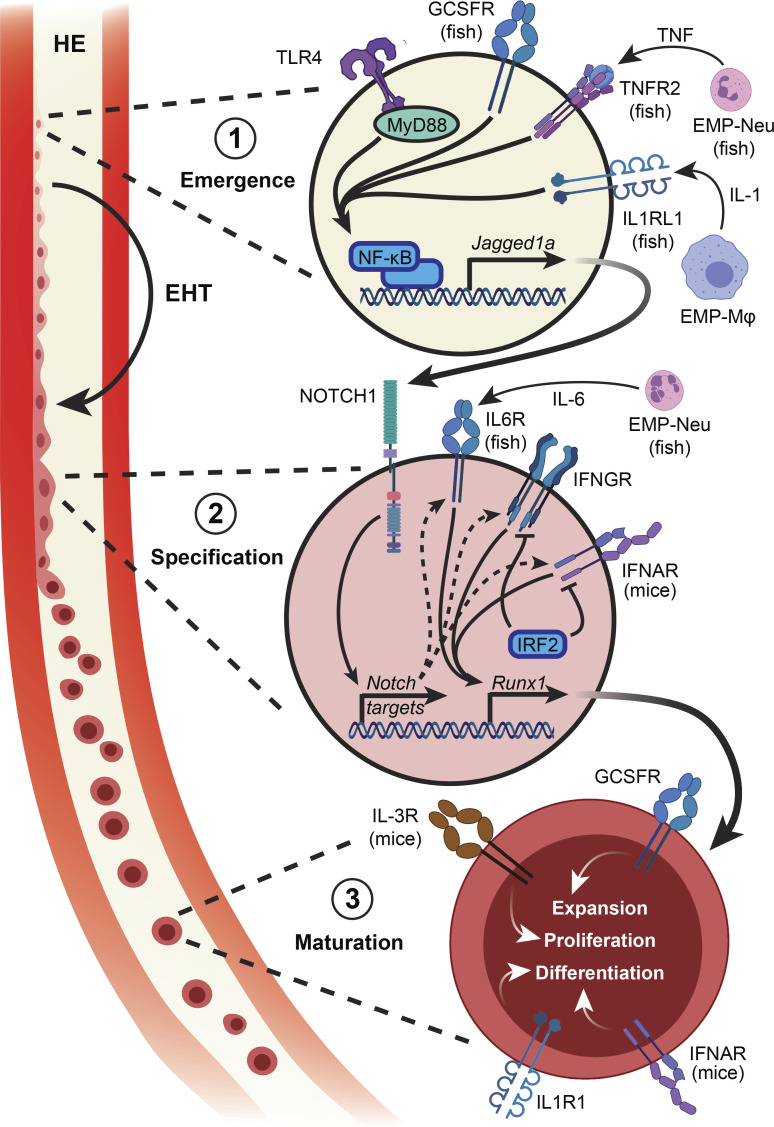
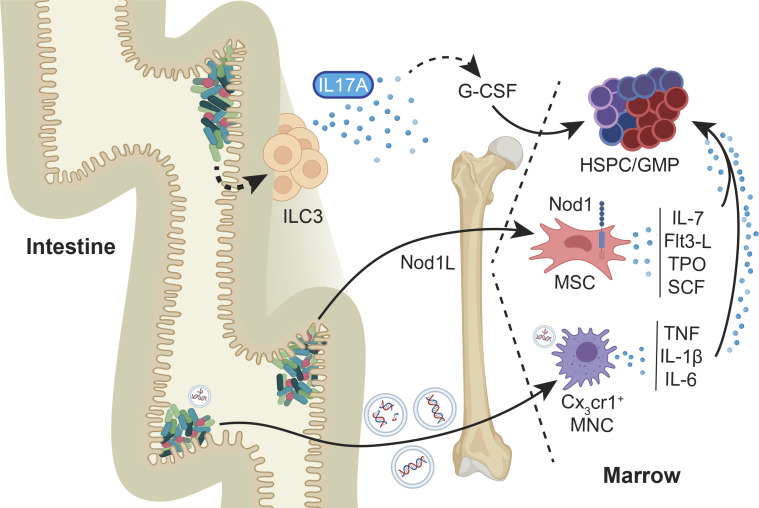
Verification
Claims the paper makes
The claims and statistics of this paper haven’t been checked yet.
Run the check — free, no account needed. It reads the open-access text and checks the sources it cites.
Claims other papers make about this one
Each is checked against this paper’s own text: does it say what the citing paper says it does?
The source backs part of the claim, not all of it — or backs it for a different population, condition or comparison.
In the citing paper
““Emergency” myelopoiesis is a critical response to physiological insults that supplies the host with enough innate immune cells to fight infections and/or contribute to the repair and immunosurveillance of damaged tissues (Caiado et al., 2021; Collins et al., 2021).”
From PU.1 is required to restrain myelopoiesis during chronic inflammatory stress (2023) · cites this paper as Collins et al., 2021
Experimental — accuracy not yet measured
Self-check
Percentages, sums and reported differences re-computed from the paper’s own numbers.
The self-check needs the paper’s full text.
Citations
Cites
The Placenta Harbors a Unique Microbiome
Aagaard, K., Ma, J., Antony, K. M., Ganu, R., Petrosino, J., & Versalovic, J. (2014) · Science Translational Medicine · doi:10.1126/scitranslmed.3008599 · Cited by 2,494
Wilson, A., Laurenti, E., Oser, G., van der Wath, R. C., Blanco-Bose, W., Jaworski, M., Offner, S., Dunant, C. F., Eshkind, L., Bockamp, E., et al. (2008) · Cell · doi:10.1016/j.cell.2008.10.048 · Cited by 1,908
Signals from the gut microbiota to distant organs in physiology and disease
Schroeder, B. O., & Bäckhed, F. (2016) · Nature Medicine · doi:10.1038/nm.4185 · Cited by 1,409
IFNα activates dormant haematopoietic stem cells in vivo
Essers, M. A. G., Offner, S., Blanco-Bose, W. E., Waibler, Z., Kalinke, U., Duchosal, M. A., & Trumpp, A. (2009) · Nature · doi:10.1038/nature07815 · Cited by 1,368
Perez-Muñoz, M. E., Arrieta, M.-C., Ramer-Tait, A. E., & Walter, J. (2017) · Microbiome · doi:10.1186/s40168-017-0268-4 · Cited by 1,096
Runx1 is required for the endothelial to haematopoietic cell transition but not thereafter
Chen, M. J., Yokomizo, T., Zeigler, B. M., Dzierzak, E. A., & Speck, N. A. (2009) · Nature · doi:10.1038/nature07619 · Cited by 1,030
Haematopoietic stem cells derive directly from aortic endothelium during development
Bertrand, J. Y., Chi, N. C., Santoso, B., Teng, S., Stainier, D. Y. R., & Traver, D. (2010) · Nature · doi:10.1038/nature08738 · Cited by 1,025
Blood stem cells emerge from aortic endothelium by a novel type of cell transition
Kissa, K., & Herbomel, P. (2010) · Nature · doi:10.1038/nature08761 · Cited by 961
Lieschke, G. J., Grail, D., HODGSON, G. S., Metcalf, D., Stanley, E. G., Cheers, C., Fowler, K., Basu, S., Zhan, Y., & Dunn, A. (1994) · Blood · doi:10.1182/blood.v84.6.1737.1737 · Cited by 956
In vivo imaging of haematopoietic cells emerging from the mouse aortic endothelium
Boisset, J.-C., van Cappellen, W. A., Andrieu‐Soler, C., Galjart, N., Dzierzak, E. A., & Robin, C. (2010) · Nature · doi:10.1038/nature08764 · Cited by 951
Cited by
Sorted by citations
Hematopoietic stem cells through the ages: A lifetime of adaptation to organismal demands
Kasbekar, M., Mitchell, C. A., Proven, M. A., & Passegue, E. A. (2023) · Cell stem cell · doi:10.1016/j.stem.2023.09.013 · Cited by 130
Self-citationThe impact of interleukin-6 (IL-6) and mesenchymal stem cell-derived IL-6 on neurological conditions
Kerkis, I., da Silva, Á. R. D. B. P., & Araldi, R. P. (2024) · Frontiers in Immunology · doi:10.3389/fimmu.2024.1400533 · Cited by 94
Myeloid progenitor dysregulation fuels immunosuppressive macrophages in tumours
Hegde, S., Giotti, B., Soong, B. Y., Halász, L., Bérichel, J. L., Schaefer, M. M., Kloeckner, B., Mattiuz, R., Park, M. D., Magen, A., et al. (2025) · Nature · doi:10.1038/s41586-025-09493-y · Cited by 52
Maternal inflammation regulates fetal emergency myelopoiesis
Collins, A., Swann, J. W., Proven, M. A., Patel, C. M., Mitchell, C. A., Kasbekar, M., Dellorusso, P. V., & Passegue, E. A. (2024) · Cell · doi:10.1016/j.cell.2024.02.002 · Cited by 39
Self-citationSanchez, J. F., Maknojia, A., & King, K. Y. (2024) · Blood · doi:10.1182/blood.2023021174 · Cited by 41
Xie, J., Sheng, M., Rong, S., Zhou, D., Wang, C., Wu, W., Huang, J., Sun, Y., Wang, Y., Chen, P., et al. (2023) · Leukemia · doi:10.1038/s41375-023-02055-z · Cited by 39
IRF1 regulates self-renewal and stress responsiveness to support hematopoietic stem cell maintenance
Nilsson, A. R., Xian, H., Shalapour, S., Cammenga, J., & Karin, M. (2023) · Science Advances · doi:10.1126/sciadv.adg5391 · Cited by 33
Modeling the Effects of Protracted Cosmic Radiation in a Human Organ‐on‐Chip Platform
Tavakol, D. N., Nash, T. R., Kim, Y., Graney, P. L., Liberman, M., Fleischer, S., Lock, R. I., O'Donnell, A., Andrews, L., Ning, D., et al. (2024) · Advanced Science · doi:10.1002/advs.202401415 · Cited by 30
Emergency myelopoiesis in solid cancers
Aliazis, K., Yenyuwadee, S., Phikulsod, P., & Boussiotis, V. A. (2024) · British Journal of Haematology · doi:10.1111/bjh.19656 · Cited by 34
Zhong, D., Jiang, H., Zhou, C., Ahmed, A., Li, H., Wei, X., Lian, Q., Tastemel, M., Xin, H., Ge, M., et al. (2023) · Cell Reports · doi:10.1016/j.celrep.2023.112116 · Cited by 26
The fetal programming effect of maternal immune activation (MIA) on the offspring’s immune system
Hofsink, N., Groenink, L., & Plösch, T. (2024) · Seminars in Immunopathology · doi:10.1007/s00281-024-01023-8 · Cited by 25
Ecological insights into hematopoiesis regulation: unraveling the influence of gut microbiota
Zheng, K., Wei, Z., & Li, W. (2024) · Gut Microbes · doi:10.1080/19490976.2024.2350784 · Cited by 22
Xu, Y., Murphy, A. J., & Fleetwood, A. J. (2022) · International Journal of Molecular Sciences · doi:10.3390/ijms23042234 · Cited by 23
Mou, R., Ma, J., Ju, X., Wu, Y., Chen, Q., Li, J., Shang, T., Chen, S., Yang, Y., Li, Y., et al. (2024) · Cell Stem Cell · doi:10.1016/j.stem.2024.09.018 · Cited by 20
Qin, L., Yue, H., Gong, Z., Guo, Y., Li, D., Ma, L., YiXi, Z., He, J., Li, Z., Li, G., et al. (2024) · Proceedings of the National Academy of Sciences · doi:10.1073/pnas.2409597121 · Cited by 18
Microbial Sensing by Hematopoietic Stem and Progenitor Cells
Barman, P. K., & Goodridge, H. S. (2022) · Stem Cells · doi:10.1093/stmcls/sxab007 · Cited by 19
Regulation of lymphoid-myeloid lineage bias through regnase-1/3-mediated control of Nfkbiz
Uehata, T., Yamada, S., Ori, D., Vandenbon, A., Giladi, A., Jelinski, A., Murakawa, Y., Watanabe, H., Takeuchi, K., Toratani, K., et al. (2023) · Blood · doi:10.1182/blood.2023020903 · Cited by 17
Acute and Chronic Tnf-α-Induced Effects on Hematopoietic Stem Cells are Fully Reversible
Nilsson, A. R., Hidalgo, I., Bryder, D., & Pronk, C. J. (2022) · iScience · doi:10.1016/j.isci.2023.106341 · Cited by 17
Zhang, Y., Kang, Z., Liu, M., Wang, L., & Liu, F. (2024) · Developmental Cell · doi:10.1016/j.devcel.2024.02.010 · Cited by 15
TLR2 regulates hair follicle cycle and regeneration via BMP signaling
Xiong, L., Zhevlakova, I., West, X. Z., Gao, D., Murtazina, R., Horak, A. J., Brown, J. M., Molokotina, I., Podrez, E. A., & Byzova, T. V. (2024) · eLife · doi:10.7554/elife.89335.3 · Cited by 15
PU.1 is required to restrain myelopoiesis during chronic inflammatory stress
Chavez, J. S., Rabe, J. L., Niño, K. E., Wells, H. H., Gessner, R. L., Mills, T. S., Hernandez, G., & Pietras, E. M. (2023) · Frontiers in Cell and Developmental Biology · doi:10.3389/fcell.2023.1204160 · Cited by 14
““Emergency”myelopoiesis is a critical response to physiological insults that supplies the host with enough innate immune cells to fight infections and/or contribute to the repair and immunosurveillance of damaged tissues (Caiado et al., 2021; Collins et al., 2021).”
BackgroundA microbiome-macrophage-iron axis guides stressed hematopoietic stem cell fate
Caiado, F., & Manz, M. G. (2022) · Cell stem cell · doi:10.1016/j.stem.2022.01.009 · Cited by 13
Hematopoietic stem cell a reservoir of innate immune memory
Ruffinatto, L., Groult, Y., Iacono, J., Sarrazin, S., & de Laval, B. (2024) · Frontiers in Immunology · doi:10.3389/fimmu.2024.1491729 · Cited by 14
Maintenance of hematopoietic stem cells by tyrosine-unphosphorylated STAT5 and JAK inhibition
Williams, M., Wang, X., Bastos, H. P., Grondys-Kotarba, G., Johnson, C., Mende, N., Calderbank, E. F., Wantoch, M., Park, H. J., Wu, Q., et al. (2024) · Blood Advances · doi:10.1182/bloodadvances.2024014046 · Cited by 17
Badran, O., Darawshe, A., Sharif, S., Yosef, S., & Bar‐Sela, G. (2025) · The Breast · doi:10.1016/j.breast.2025.104568 · Cited by 11
Kovuru, N., Mochizuki‐Kashio, M., Menna, T. N., Jeffrey, G., Hong, Y., Yoon, Y. M., Zhang, Z., & Kurre, P. (2024) · Nature Communications · doi:10.1038/s41467-024-46159-1 · Cited by 11
IκBα controls dormancy in hematopoietic stem cells via retinoic acid during embryonic development
Thambyrajah, R., Maqueda, M., Fadlullah, M. Z. H., Proffitt, M., Neo, W. H., Guillén, Y., Casado-Peláez, M., Molinero, P. H., Brujas, C., Castelluccio, N., et al. (2024) · Nature Communications · doi:10.1038/s41467-024-48854-5 · Cited by 15
IFN-I-mediated neutropoiesis bias drives neutrophil priming and inflammatory comorbidities
Li, Y., Chen, Y., Deng, C., Niu, Y., Yang, Y., Sun, S., Hu, Z., Wei, Y., Xu, M., Huang, Y., et al. (2025) · Theranostics · doi:10.7150/thno.110859 · Cited by 10
Basal type I interferon signaling has only modest effects on neonatal and juvenile hematopoiesis
Li, Y., Yang, W., Wang, H. C., Patel, R. M., Casey, E. B., Denby, E., & Magee, J. A. (2023) · Blood Advances · doi:10.1182/bloodadvances.2022008595 · Cited by 9
Obukohwo, O. M., Ben‐Azu, B., Nwangwa, E. K., Ejiro, O. P., Igweh, J. C., & Adeogun, A. E. (2024) · Toxicology Reports · doi:10.1016/j.toxrep.2024.04.004 · Cited by 10
Zhang, M., Gou, Z., Qu, Y., & Su, X. (2024) · Frontiers in Immunology · doi:10.3389/fimmu.2024.1456891 · Cited by 9
Balandrán, J. C., Zamora-Herrera, G., Romo‐Rodríguez, R., & Pelayo, R. (2022) · Journal of Interferon & Cytokine Research · doi:10.1089/jir.2022.0028 · Cited by 11
Bordenave, J., Gajda, D., Michonneau, D., Vallet, N., Chevalier, M. F., Clappier, E., Lemaire, P., Mathis, S., Robin, M., Xhaard, A., et al. (2024) · Journal of Clinical Investigation · doi:10.1172/jci180331 · Cited by 9
The impact of prenatal inflammation on hematopoietic development
Tseng, N. A., & Beaudin, A. E. (2023) · Current Opinion in Hematology · doi:10.1097/moh.0000000000000770 · Cited by 8
CAR T cell–mediated bone marrow inflammation causes hematotoxicity and favors clonal hematopoiesis
Khelil, M. B., Arbab, A., Srikanthan, J., Marcos-Kovandzic, L., Vergé, V., Pagès, A., Rengassamy, J., Amine-Hneineh, R., Aglave, M., Jelin, R., et al. (2025) · Science Translational Medicine · doi:10.1126/scitranslmed.adu9790 · Cited by 10
TLR2 regulates hair follicle cycle and regeneration via BMP signaling
Xiong, L., Zhevlakova, I., West, X. Z., Gao, D., Murtazina, R., Horak, A. J., Brown, J. M., Molokotina, I., Podrez, E. A., & Byzova, T. V. (2023) · eLife · doi:10.7554/elife.89335 · Cited by 21
Feng, C., Tie, R., Xin, S., Chen, Y., Li, S., Chen, Y., Hu, X., Zhou, Y., Liu, Y., Hu, Y., et al. (2024) · BMC Biology · doi:10.1186/s12915-024-01939-5 · Cited by 8
Clearing the Haze: How Does Nicotine Affect Hematopoiesis before and after Birth?
Cool, T., y Baena, A. R., & Forsberg, E. C. (2021) · Cancers · doi:10.3390/cancers14010184 · Cited by 6
Shrestha, P., Shrestha, R., & Kleinerman, E. S. (2025) · Journal for ImmunoTherapy of Cancer · doi:10.1136/jitc-2025-012510 · Cited by 6
Erythropoiesis in health and disease: Distinguishing defective and ineffective erythropoiesis
Hoss, S. E., Lizarralde-Iragorri, M. A., Maciel, T. T., & Hermine, O. (2026) · HemaSphere · doi:10.1002/hem3.70297 · Cited by 8
E3 ubiquitin ligase on the biological properties of hematopoietic stem cell
Zhan, Q., Wang, J., Zhang, H., & Zhang, L. (2023) · Journal of Molecular Medicine · doi:10.1007/s00109-023-02315-6 · Cited by 5
Li, Y., Seet, C. S., Mack, R. M., Joshi, K., Runde, A. P., Hagen, P. A., Barton, K., Breslin, P., Kini, A. R., Ji, H., et al. (2023) · Stem Cell Reports · doi:10.1016/j.stemcr.2023.11.003 · Cited by 5
Liu, Z., Liu, G., Lin, Z., Chen, Y., Chen, P., Hu, Y., Yu, B., & Jiang, N. (2024) · Stem Cell Research & Therapy · doi:10.1186/s13287-024-03781-6 · Cited by 5
Andricovich, J., Lap, C. J. G., & Tzatsos, A. (2025) · Blood · doi:10.1182/blood.2024026417 · Cited by 6
Romo‐Rodríguez, R., Anda, K. V. G.-D., López-Blanco, J. A., Zamora-Herrera, G., Cortés-Hernández, P., Santos‐López, G., Márquez‐Domínguez, L., Vilchis-Ordóñez, A., Ramírez-Ramírez, D., Balandrán, J. C., et al. (2023) · Archives of Medical Research · doi:10.1016/j.arcmed.2023.03.003 · Cited by 6
Crosse, E. I., Binagui-Casas, A., Gordon-Keylock, S. A. M., Александрович, Р. С., Tamagno, S., Olofsson, D., Anderson, R. A., & Medvinsky, A. (2023) · Development · doi:10.1242/dev.201972 · Cited by 5
Zhang, X., Ding, C., & Zhao, Z. (2023) · Functional & Integrative Genomics · doi:10.1007/s10142-023-01005-3 · Cited by 5
Bobba, S., Howard, N. C., Das, S., Ahmed, M., Khan, N., Marchante, I. S., Barreiro, L. B., Sanz, J., Divangahi, M., & Khader, S. A. (2023) · Infection and Immunity · doi:10.1128/iai.00201-23 · Cited by 5
Impact of macrophage differentiation on hematopoietic function enhancement by Shenzhu ErKang Syrup
Li, Y., Teng, M., Yang, H., Li, S., Liu, X., Zhang, J., Qiu, Y., & Li, L.-Z. (2024) · Aging · doi:10.18632/aging.205358 · Cited by 5
Zebrafish models of inflammation in hematopoietic development and disease
Ketharnathan, S., Rajan, V., Prykhozhij, S. V., & Berman, J. N. (2022) · Frontiers in Cell and Developmental Biology · doi:10.3389/fcell.2022.955658 · Cited by 4
Lim, J. S., Kim, C. R., Shin, K. S., Park, H. J., & Yoon, T. J. (2022) · Journal of Medicinal Food · doi:10.1089/jmf.2022.k.0079 · Cited by 4
IκBα controls dormancy induction in Hematopoietic stem cell development via retinoic acidPreprint
Thambyrajah, R., Fadlullah, M. Z. H., Proffitt, M., Neo, W. H., Guillén, Y., Casado-Peláez, M., Molinero, P. H., Brujas, C., Castelluccio, N., González, J., et al. (2022) · bioRxiv (Cold Spring Harbor Laboratory) · doi:10.1101/2022.11.17.516971 · Cited by 4
IFN alpha signaling drives hematopoietic stem cells malfunction under acute inflammation
Han, X., Zhao, M., Wang, K., Ma, W., Wu, B., Yu, Y., Liang, X., Mo, W., Chen, X., Zhou, M. D., et al. (2025) · International Immunopharmacology · doi:10.1016/j.intimp.2025.114012 · Cited by 3
Vijaykumar, A., Helbling, P. M., Thelen, F., Fazio, S., Mun, Y., Pereira, A. L., Zielińska, K. A., Büschl, P., Zerjatke, T., Loosli, K., et al. (2026) · Developmental Cell · doi:10.1016/j.devcel.2026.01.011 · Cited by 3
Chen, H., Wang, S., Dong, R., Yu, P., Li, T., Hu, L., Wang, M., Qian, Z., Zhou, H., Yue, X., et al. (2025) · Advanced Science · doi:10.1002/advs.202413091 · Cited by 3
Ju, B., Xiu, N.-N., Xu, J. M. S., Yang, X., Sun, X.-Y., & Zhao, X.-C. (2023) · World Journal of Clinical Cases · doi:10.12998/wjcc.v11.i17.4105 · Cited by 3
Menegatti, S., Potts, B., Paredes, R., García-Alegría, E., Baker, S. M., & Kouskoff, V. (2023) · iScience · doi:10.1016/j.isci.2023.107583 · Cited by 3
Helbling, P. M., Vijaykumar, A., Gomariz, Á., Zerkatje, T., Zielińska, K. A., Loosli, K., Isringhausen, S., Nagasawa, T., Roeder, I., Manz, M. G., et al. (2023) · bioRxiv (Cold Spring Harbor Laboratory) · doi:10.1101/2023.09.12.554625 · Cited by 3
IL-27 limits HSPC differentiation during infection and protects from stem cell exhaustion
Aldridge, D. L., Lanzar, Z. R., Phan, A. T., Christian, D. A., Pardy, R. D., Min, B., Kedl, R. M., & Hunter, C. A. (2025) · eLife · doi:10.7554/elife.105876.3 · Cited by 2
Borges, J. C. D. O., Correa, I. S., Gimenes, G. M., Ferreira, L. D. A., Silva, M. A. R. D. M., Pauferro, J. R. B., Lobato, T. B., Alves, A. C. D. A., Pereira, A. C. G., Souza, K. O., et al. (2025) · Molecular and Cellular Endocrinology · doi:10.1016/j.mce.2025.112716 · Cited by 2
Kalogeraki, M., Rondeau, V., Nader, Z. A., Espéli, M., & Balabanian, K. (2026) · iScience · doi:10.1016/j.isci.2026.114921 · Cited by 2
Quevedo, A., Parikh, S., Reinstine, J., Chamseddine, P., Gaskins, J., Whalen, C., Biscette, S. M., & Pasic, R. P. (2024) · American Journal of Obstetrics and Gynecology · doi:10.1016/j.ajog.2024.07.006 · Cited by 2
Cros, A., Rigamonti, A., de Juan, A., Coillard, A., Rieux-Laucat, M., Tabtim-On, D., Papillon, E., Goudot, C., Cepika, A., Banchereau, R., et al. (2025) · Journal of Clinical Investigation · doi:10.1172/jci189937 · Cited by 2
TLR2 Regulates Hair Follicle Cycle and Regeneration via BMP SignalingPreprint
Xiong, L., Zhevlakova, I., West, X. Z., Gao, D., Murtazina, R., Horak, A. J., Brown, J. M., Molokotina, I., Podrez, E. A., & Byzova, T. V. (2023) · bioRxiv (Cold Spring Harbor Laboratory) · doi:10.1101/2023.08.14.553236 · Cited by 2
Bnip3lb-driven mitophagy sustains expansion of the embryonic hematopoietic stem cell poolPreprint
Meader, E., Walcheck, M. T., Leder, M. R., Jing, R., Wrighton, P. J., Sugden, W. W., Najia, M. A. T., Oderberg, I. M., Taylor, V. M., LeBlanc, Z. C., et al. (2024) · bioRxiv (Cold Spring Harbor Laboratory) · doi:10.1101/2024.09.23.614531 · Cited by 2
IL-27 limits HSPC differentiation during infection and protects from stem cell exhaustionPreprint
Aldridge, D. L., Lanzar, Z. R., Phan, A. T., Christian, D. A., Pardy, R. D., Min, B., Kedl, R. M., & Hunter, C. A. (2025) · eLife · doi:10.7554/elife.105876 · Cited by 2
Allara, M., & Girard, J. R. (2024) · BioEssays · doi:10.1002/bies.202300142 · Cited by 1
Jang, G., Park, R., Esteva, E., Hsu, P.-F., Feng, J., Upadhaya, S., Sawai, C. M., Aifantis, I., Fooksman, D., & Reizis, B. (2025) · The Journal of Experimental Medicine · doi:10.1084/jem.20240587 · Cited by 2
Chong, Y., Li, X., Peng, Z., Wang, Z., Fu, D., Huang, Z. L., & Chong, T. (2025) · Annals of Human Genetics · doi:10.1111/ahg.70002 · Cited by 1
Wu, M., Rudenko, Y., & Griffin, C. T. (2026) · Development · doi:10.1242/dev.205538 · Cited by 1
Aging mechanisms and rejuvenation strategies for hematopoietic stem cells
Zhang, Y., Xu, Y., Shi, W., Cao, D., Guo, D.-A., & Yue, R. (2026) · Genome biology · doi:10.1186/s13059-026-04119-6 · Cited by 1
Human HSPC clones balance stochastic diversification with cytokine-induced differentiation
Colin, E., Brook, D., Izraeli, J., Milman, O., Lifshitz, A., Bacharach, T., Chapal-Ilani, N., Shlush, L. I., & Tanay, A. (2026) · Blood · doi:10.1182/blood.2026033834 · Cited by 2
Statkiewicz, M., Rumieńczyk, I., Pakulska, U., Obacz, M., Kulecka, M., Cendrowski, J., Cubulska-Lubak, M., Kaniuga, E., Sandowska-Markiewicz, Z., Ślusarczyk‐Kacprzyk, W., et al. (2026) · Cells · doi:10.3390/cells15151414 · Cited by 1
Emergency granulopoiesis and innate immune memory in inflammatory bowel disease
Pires, S., & Longman, R. (2026) · Trends in Immunology · doi:10.1016/j.it.2026.07.004 · Cited by 1
Lopez, A. G., Vasile, B., Kolling, Y., Ivir, M., Gutiérrez, F., Alvarez, S., & Salva, S. (2024) · Microbes and Infection · doi:10.1016/j.micinf.2024.105311 · Cited by 2
HES1 is required for mouse fetal hematopoiesis
Zhu, A. Z., Ma, Z., Wolff, E. V., Lin, Z., Gao, Z. J., Li, X., & Du, W. (2024) · Stem Cell Research & Therapy · doi:10.1186/s13287-024-03836-8 · Cited by 2
Chen, D.-W., Wafula, E. K., & Kurre, P. (2024) · Oncotarget · doi:10.18632/oncotarget.28642 · Cited by 1
Connexin 41.8 governs timely haematopoietic stem and progenitor cell specification
Petzold, T., Brivio, S., Linnerz, T., Watanabe, M., Gerhardt, H., & Bertrand, J. Y. (2025) · Biology Open · doi:10.1242/bio.062118 · Cited by 1
Acute and Chronic Tnf-α-Induced Effects on Hematopoietic Stem Cells are Fully ReversiblePreprint
Nilsson, A. J. S. R., Hidalgo, I., Bryder, D., & Pronk, C. J. (2022) · SSRN Electronic Journal · doi:10.2139/ssrn.4169244 · Cited by 1
TLR2 Regulates Hair Follicle Cycle and Regeneration via BMP SignalingPreprint
Xiong, L., Zhevlakova, I., West, X. Z., Gao, D., Murtazina, R., Horak, A. J., Brown, J. M., Molokotina, I., Podrez, E. A., & Byzova, T. V. (2024) · eLife · doi:10.7554/elife.89335.2 · Cited by 1
Williams, M., Wang, X., Bastos, H. P., Grondys-Kotarba, G., Johnson, C. S., Mende, N., Calderbank, E. F., Wantoch, M., Park, H. J., Wu, Q., et al. (2024) · bioRxiv (Cold Spring Harbor Laboratory) · doi:10.1101/2024.05.29.596460 · Cited by 1
Semaphorin 4A maintains functional diversity of the hematopoietic stem cell poolPreprint
Toghani, D., Gupte, S., Zeng, S., Mahammadov, E., Crosse, E. I., Seyedhassantehrani, N., Burns, C. S., Gravano, D. M., Radtke, S., Kiem, H., et al. (2024) · bioRxiv (Cold Spring Harbor Laboratory) · doi:10.1101/2024.11.12.622506 · Cited by 1
Burgener, S. S., Milner, M. T., Dey, S., Morgan, P. K., Blackmore, D. G., Frampton, E., Miller, G. C., de Oliveira, M. D., Kenney, K. M., Bajracharya, R., et al. (2025) · bioRxiv (Cold Spring Harbor Laboratory) · doi:10.1101/2025.04.28.651119 · Cited by 1
IL-27 limits HSPC differentiation during infection and protects from stem cell exhaustionPreprint
Aldridge, D. L., Lanzar, Z. R., Phan, A. T., Christian, D. A., Pardy, R. D., Min, B., Kedl, R. M., & Hunter, C. A. (2025) · eLife · doi:10.7554/elife.105876.2 · Cited by 1
Maternal IL-10 restricts fetal emergency myelopoiesisPreprint
Collins, A., Swann, J. W., Proven, M. A., Patel, C. M., Mitchell, C. A., Kasbekar, M., Dellorusso, P. V., & Passegue, E. A. (2023) · bioRxiv (Cold Spring Harbor Laboratory) · doi:10.1101/2023.09.13.557548
Self-citationTLR2 Regulates Hair Follicle Cycle and Regeneration via BMP SignalingPreprint
Xiong, L., Zhevlakova, I., West, X. Z., Gao, D., Murtazina, R., Horak, A. J., Brown, J. M., Molokotina, I., Podrez, E. A., & Byzova, T. V. (2023) · eLife · doi:10.7554/elife.89335.1
The Immune System and Hematopoietic Stem Cells
Elshimali, Y., Chatty, E. M., & Vadgama, J. V. (2024) · Elsevier eBooks · doi:10.1016/b978-0-443-15717-2.00094-9
‘Nomadic’ Hematopoietic Stem Cells Navigate the Embryonic Landscape
Narayan, A. B., Hariom, S. K., Mukherjee, A. P., Das, D., Nair, A., & Nelson, E. J. R. (2025) · Stem Cell Reviews and Reports · doi:10.1007/s12015-025-10843-6
Advances in Modern Medical Research on the Hematopoietic Effect of Qi and Blood Replenishing Drugs
段, 爽. (2025) · Medical Diagnosis · doi:10.12677/md.2025.151017
IL-27 limits HSPC differentiation during infection and protects from stem cell exhaustionPreprint
Aldridge, D. L., Lanzar, Z. R., Phan, A. T., Christian, D. A., Pardy, R. D., Min, B., Kedl, R. M., & Hunter, C. A. (2025) · eLife · doi:10.7554/elife.105876.1
rapunzel5 is necessary for normal hematopoietic development in zebrafishPreprint
Thapa, S., Dowell, W. R., Harris, E. Y., & Stachura, D. L. (2025) · bioRxiv (Cold Spring Harbor Laboratory) · doi:10.1101/2025.08.09.669486
Plasmin activity and sterile inflammation synergize to promote lethal embryonic liver degenerationPreprint
Wu, M., & Griffin, C. T. (2025) · bioRxiv (Cold Spring Harbor Laboratory) · doi:10.1101/2025.09.16.676624
Oberlin, E., Clay, D., & Louache, F. (2025) · Encyclopédie médico-chirurgicale. Hématologie · doi:10.1016/s1155-1984(24)49066-3
Tao, H., Luo, X., Song, J., Wang, F., Xie, Y., Fan, R., Sun, X., Huang, Q., & Zhang, Y. (2025) · Cell Death and Disease · doi:10.1038/s41419-025-08110-0
Additional file 1 of HES1 is required for mouse fetal hematopoiesis
Zhu, A. Z., Ma, Z., Wolff, E. V., Lin, Z., Gao, Z. J., Li, X., & Du, W. (2024) · Figshare · doi:10.6084/m9.figshare.26401928
Gpr171 regulates embryonic hematopoietic stem cell emergence via ERK1/2 and Notch signaling
Zhou, K., Liu, H. Y., Zhu, K., Yu, L., Xu, P., & Li, Y. (2026) · Proceedings of the National Academy of Sciences · doi:10.1073/pnas.2516989123
Bnip3lb-driven mitophagy maintains fate of the embryonic hematopoietic stem cell pool
Meader, E., Walcheck, M. T., Leder, M. R., Delaney, P., Falchetti, M., Jing, R., Li, C., Kambli, N. K., Wrighton, P. J., Sugden, W. W., et al. (2026) · Nature Communications · doi:10.1038/s41467-026-69593-9
IFN-γ induces hematopoietic stem cell myelopoiesis through Meis1 in tumor
Han, X., Zhao, M., Wang, K., Ma, W., Zhu, S., Zhou, R., Yu, U., Jiang, B., Bai, X., Lei, P., et al. (2026) · Stem Cell Research & Therapy · doi:10.1186/s13287-026-04968-9 · Cited by 1
Statkiewicz, M., Rumieńczyk, I., Pakulska, U., Obacz, M., Kulecka, M., Cendrowski, J., Cubulska-Lubak, M., Kaniuga, E., Sandowska-Markiewicz, Z., Ślusarczyk‐Kacprzyk, W., et al. (2026) · Research Square · doi:10.21203/rs.3.rs-8989018/v1
Sheneni, V. D., Anorue, E. C., Joshua, P. E., Ugwuene, F. O., & Agwu, L. O. (2026) · Drug and Chemical Toxicology · doi:10.1080/01480545.2026.2665456
Metadata
- Authors
- Collins, A., Mitchell, C. A., & Passegué, E.
- Affiliations
- Columbia University Irving Medical Center (US)
- Columbia Stem Cell Initiative, Columbia University Irving Medical Center, New York, NY 1
- Corresponding author
- Collins, Amélie
- Venue
- Journal of Experimental Medicine
- Publisher
- Rockefeller University Press
- Published
- 2021-06-15
- Volume
- 218
- Issue
- 7
- ISSN
- 0022-1007 (ISSN-L)
- 1540-9538
- PMC
- PMC8210624
- OpenAlex
- W3168900950
- Cited by
- 111
- References
- 118
- Citations by year
- 2026: 24 · 2025: 24 · 2024: 32 · 2023: 22 · 2022: 8 · 2021: 1
- FWCI
- 2.75
- Type
- journal article
- Language
- en
- Open access
- hybrid
- doi.org
- Licence
- Locations
- The Journal of Experimental Medicine (publishedVersion, cc-by-nc-sa)
- PubMed Central (publishedVersion, cc-by-nc-sa)
- PubMed (publishedVersion)
- Funders
- National Institute of Diabetes and Digestive and Kidney Diseases (K08-DK124657)
- Louis V. Gerstner Jr. Scholar Award
- National Institutes of Health
- National Heart, Lung, and Blood Institute (R35-HL135763)
- Topics
- Health Sciences › Medicine › Hematology › Hematopoietic Stem Cell Transplantation
- Health Sciences › Medicine › Hematology › Blood disorders and treatments
- Life Sciences › Immunology and Microbiology › Immunology › Cytokine Signaling Pathways and Interactions
- Keywords
- inflammatory signaling, hematopoietic stem and progenitor cells, emergency myelopoiesis, inflammatory cytokines, definitive hematopoiesis, embryonic hematopoiesis, commensal microbiota, hematopoietic homeostasis, myeloid lineage, hematologic malignancies
- MeSH terms
- Animals, Hematopoiesis, Hematopoietic Stem Cells, Homeostasis, Humans, Inflammation, Stem Cells, Signal Transduction, Myeloid Cells, Myelopoiesis
About these checks
Registry, retraction, Cites and statistics results are computed, not judged, with one exception: a printed reference that no index lists is read once by a model before it counts as a citation error. Claims are extracted by a model and kept only when their quote appears verbatim in the text; each cited source is then checked, with a model’s help, for whether it says what the claim relies on. Those verdicts can be wrong — read the claim’s quote and the cited source before relying on one.
Statistics and arithmetic are recomputed, not judged.
Confidence bands are shown only for fields calibrated on our annotated test set. None is calibrated yet, so no band is shown.
What counts as a claim ›How we measure confidence ›How we check this ›
Are you an author, or do you see a problem with this page? Request a review
