

An overview of phase-change memory device physics
Open accessThe DOI matches its Crossref record; 177 of the 177 references it cites were found in a registry or an index.
Abstract
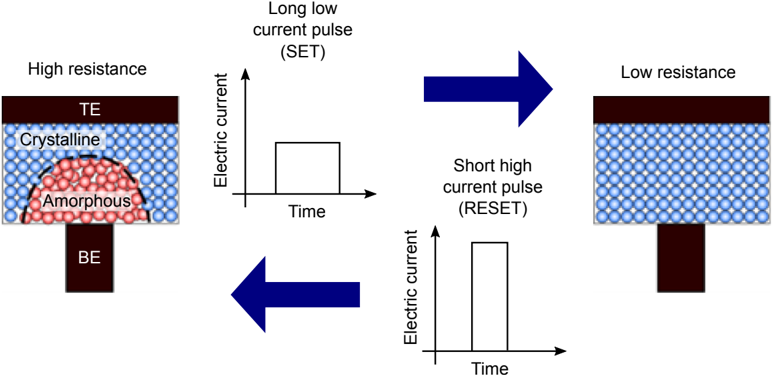
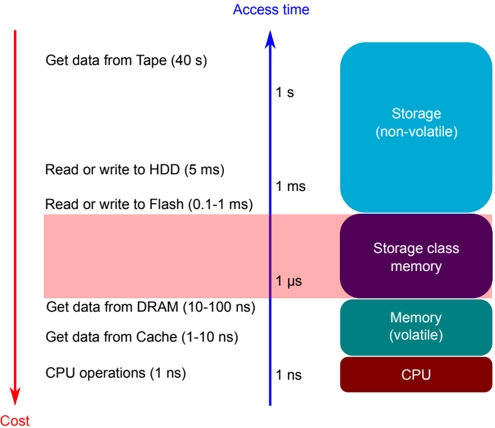
Phase-change memory (PCM) is an emerging non-volatile memory technology that has recently been commercialized as storage-class memory in a computer system. PCM is also being explored for non-von Neumann computing such as in-memory computing and neuromorphic computing. Although the device physics related to the operation of PCM have been widely studied since its discovery in the 1960s, there are still several open questions relating to their electrical, thermal, and structural dynamics. In this article, we provide an overview of the current understanding of the main PCM device physics that underlie the read and write operations. We present both experimental characterization of the various properties investigated in nanoscale PCM devices as well as physics-based modeling efforts. Finally, we provide an outlook on some remaining open questions and possible future research directions.
Overview
The claims and statistics of this paper haven’t been checked yet.
Free: it reads the open-access text and checks the first 5 claims that cite a source we can check. Create a free account to check every claim.
Integrity signals
Registry
Cites
Statistics
Figures
Verification
Claims the paper makes
The claims and statistics of this paper haven’t been checked yet.
Free: it reads the open-access text and checks the first 5 claims that cite a source we can check. Create a free account to check every claim.
Claims other papers make about this one
Each is checked against this paper’s own text: does it say what the citing paper says it does?
The cited source says what the claim attributes to it.
In the citing paper
“In many materials, such as phase-change memory (PCM)22,23, resistive random-access memory (ReRAM)24,25, conductive bridge RAM (CBRAM)26,27, or electro-chemical random-access memory (ECRAM)28,29, these conductances are effectively continuous physical quantities, and stored weights are not quantized.”
From Hardware-aware training for large-scale and diverse deep learning inference workloads using in-memory computing-based accelerators (2023) · cites this paper as [23]
Self-check
Percentages, sums and reported differences re-computed from the paper’s own numbers.
The self-check needs the paper’s full text.
Citations
Cites
Electronic Processes in Non-Crystalline Materials
Mott, N. F., Davis, E. A., & Lösche, A. (1972) · Kristall und Technik Band 7, Heft 4 · doi:10.1515/9783112653326-018 · Cited by 9,295
Temperature dependence of the energy gap in semiconductors
Varshni, Y. P. (1967) · Physica · doi:10.1016/0031-8914(67)90062-6 · Cited by 5,469
Formation of Glasses from Liquids and Biopolymers
Angell, C. A. (1995) · Science · doi:10.1126/science.267.5206.1924 · Cited by 4,799
Supercooled liquids and the glass transition
Debenedetti, P. G., & Stillinger, F. H. (2001) · Nature · doi:10.1038/35065704 · Cited by 4,643
Electronic processes in non-crystalline materials
Jonscher, A. K. (1972) · Thin Solid Films · doi:10.1016/0040-6090(72)90068-5 · Cited by 4,014
Phase-change materials for rewriteable data storage
Wuttig, M., & Yamada, N. (2007) · Nature Materials · doi:10.1038/nmat2009 · Cited by 3,655
Reversible Electrical Switching Phenomena in Disordered Structures
Ovshinsky, S. R. (1968) · Physical Review Letters · doi:10.1103/physrevlett.21.1450 · Cited by 3,144
Relaxation in glassforming liquids and amorphous solids
Angell, C. A., Ngai, K. L., McKenna, G. B., McMillan, P. F., & Martin, S. W. (2000) · Journal of Applied Physics · doi:10.1063/1.1286035 · Cited by 2,238
Valence-Alternation Model for Localized Gap States in Lone-Pair Semiconductors
Kastner, M., Adler, D., & Fritzsche, H. (1976) · Physical Review Letters · doi:10.1103/physrevlett.37.1504 · Cited by 1,318
Integrated all-photonic non-volatile multi-level memory
Ríos, C., Stegmaier, M., Hosseini, P., Wang, D., Scherer, T., Wright, C. D., Bhaskaran, H., & Pernice, W. H. P. (2015) · Nature Photonics · doi:10.1038/nphoton.2015.182 · Cited by 1,312
Research works printed but not linked: 36
- Choi Y et al 2012 Int. Solid-State Conf. Digest of Technical Papers (ISSCC) (IEEE, 2012) pp 46-8
- Chen Y et al 2006 Int. Electron Devices Meeting (IEEE, 2006) pp 1-4
- Tominaga J, Simpson R, Fons P and Kolobov A, 2010 Int. Electron Devices Meeting (IEEE) pp 22-3
- Kim I S 2010 Symp. on VLSI Technology (IEEE) pp 203-4
- Liang J, Jeyasingh R G D, Chen H Y and Wong H S P 2011 Symp. on VLSI Technology (IEEE) pp 100-1
- Zheng Q, Wang Y and Zhu J 2017 J. Phys. D: Appl. Phys. 50 243002
- Athmanathan A, Krebs D, Sebastian A, Le Gallo M, Pozidis H and Eleftheriou E 2015 Int. Conf. on Simulation of Semiconductor Processes and Devices (SISPAD) (IEEE) pp 289-92
- Ferreira A P, Zhou M, Bock S, Childers B, Melhem R and Mossé D Proc. Conf. on Design, Automation and Test Europe (European Design and Automation Association, 2010) pp 914-9
- Wu J Chen W Khwa S Yu T Wang J Tseng Y C and Diaz C H 2018 Proc. Int. Electron Devices Meeting (IEDM) (IEEE) pp 27-6
- Zuliani P, Conte A and Cappelletti P 2019 Proc. of Symp. on VLSI Technology (IEEE) pp T192-T193
- Disegni F et al 2019 Proc. of Symp. on VLSI Circuits (IEEE) pp C204-5
- Burr G W et al 2017 Adv Phys. X 2 89
- Castro D T et al 2007 IEEE Int. Electron Devices Meeting pp 315-8
- Lee J, Asheghi M and Goodson K E 2012 Nanotechnology 23 205201
- Orava J, Greer A L, Gholipour B, Hewak D W and Smith C E 2012 Nat. Mater. 11 279 · DOI · Paper page
- Le Roux S and Jund P 2007 J. Phys.: Condens. Matter 19 196102
- Stanisavljevic M, Pozidis H, Athmanathan A, Papandreou N, Mittelholzer T and Eleftheriou E 2016 IEEE 8th Int. Memory Workshop (IMW) pp 1-4
- Tsendin K D 2007 J. Optoelectron Adv. M. 9 3035
- Le Gallo M, Tuma T, Zipoli F, Sebastian A and Eleftheriou E 2016 Proc. Eur. Solid State Device Conf. (ESSDERC) (IEEE) pp 373-6
- Jost P C G 2013 Charge transport in phase change materials PhD Thesis RWTH Aachen
- Longeaud C and Tobbeche S 2009 J. Phys.: Condens. Matter 21 045508
- Le Gallo M, Kaes M, Sebastian A and Krebs D 2015 New J. Phys. 17 093035
- Shih Y H et al 2009 IEEE Electron Devices Meeting (IEDM) (IEEE) pp 1-4
- Ongaro R and Pillonnet A 1991 Science Measurement and Technology IEE Proc. A 138 127
- Stanisavljevic M, Athmanathan A, Papandreou N, Pozidis H and Eleftheriou E 2015 Proc. IRPS pp 5B.6.1-6
- Sebastian A, Krebs D, Le Gallo M, Pozidis H and Eleftheriou E 2015 Proc. IRPS pp MY.5.1-6
- Gallo M L, Sebastian A, Krebs D, Stanisavljevic M and Eleftheriou E 2016 Proc. IEEE Int. Reliability Symp. (IRPS) pp MY.1.1-6
- Papandreou N, Sebastian A, Pantazi A, Breitwisch M, Lam C, Pozidis H and Eleftheriou E 2011 IEEE Int. Electron Devices Meeting (IEEE) pp 3-5
- Cheon J et al 2015 Proc. Custom Integrated Conf. (CICC) (IEEE) pp 1-4
- Fantini P, Beneventi G B, Calderoni A, Larcher L, Pavan P and Pellizzer F 2008 IEEE Int. Electron Devices Meeting (IEDM) (IEEE) pp 1-4
- Fugazza D, Ielmini D, Lavizzari S and Lacaita A 2009 IEEE Electron Devices Meeting (IEDM) (IEEE) pp 1-4
- Giannopoulos I, Sebastian A, Gallo M L, Jonnalagadda V P, Sousa M, Boon M N and Eleftheriou E 2018 IEEE Int. Electron Devices Meeting (IEDM) pp 27.7.1-4
- Rizzi M, Spessot A, Fantini P and Ielmini D 2011 Appl. Phys. Lett. 99 223513 · DOI
- Close G, Frey U, Breitwisch M, Lung H, Lam C, Hagleitner C and Eleftheriou E 2010 Int. Electron Devices Meeting (IEDM) pp 29-5
- Pozidis H, Papandreou N, Sebastian A, Mittelholzer T, BrightSky M, Lam C and Eleftheriou E 2012 IEEE Int. Memory Workshop pp 1-4
- BrightSky M et al 2015 Proc. Int. Electron Devices Meeting (IEDM) (IEEE) pp 3-6
Cited by
Items 201–300 of 487
Green materials in semiconductors: perspective from the IRDS beyond-CMOS roadmap
Ueda, A., Akinaga, H., Agarwal, S., Hagmann, J. A., Das, S., Marinella, M. J., & Chen, A. (2025) · Nanotechnology · doi:10.1088/1361-6528/adb041 · Cited by 6
“…[46–50] conducting bridge memory (CBRAM) [35, 51], ferroelectric memory (FeRAM and FeFET) [52, 53], magnetic memory (MRAM) [54–56], phase change memory (PCM) [57, 58] and electrochemical memory (ECRAM) [59, 60], are highly scalable and may offer a path to continue on-chip memory density scaling.”
Emerging horizons in phase-change materials for non-volatile memory
Chen, Y., Le, Y., Chen, L., Liu, H., Sun, T., Liu, X., Zhang, F., Li, H., Hu, X., Peng, Y., et al. (2025) · Materials Today Advances · doi:10.1016/j.mtadv.2025.100571 · Cited by 11
Impact of process-induced variability on multi-bit phase change memory devices
Kumari, S., Durai, S., & Manivannan, A. (2022) · Microelectronics Journal · doi:10.1016/j.mejo.2022.105638 · Cited by 6
Kim, D., Jang, J. T., Kim, C., Kim, H. W., Hong, E., Ban, S., Shin, M., Lee, H., Lee, H. D., Mo, H.-S., et al. (2022) · IEEE Transactions on Electron Devices · doi:10.1109/ted.2022.3231818 · Cited by 6
“Specifically, among various candidates, the phase-change memory (PCM) that relies on reversible transitions between the crystalline and amorphous phases of the chalcogenide Ge2Sb2Te5 layer enables faster switching (speeds up to tens of nanoseconds) [2] and achieves higher densities (hundreds of gigabits) [3], [4].”
BackgroundAgarwal, S., Lohia, P., & Dwivedi, D. K. (2023) · Journal of Thermal Analysis and Calorimetry · doi:10.1007/s10973-023-12440-6 · Cited by 6
“Keywords Theoretical models · Activation energy · Crystallization kinetics · Thermal stability · Phase-change materials Introduction In this era of science and technology, amorphous chalcogenides have drawn significant observation of researchers and scientists due to numerous applications in the field of switching and…”
BackgroundResistive switching behaviors of PbHfO3 RRAM at atomic scale
Wang, C., Tsai, M., Lo, H., Chen, J.-Y., Huang, C., Chu, Y., & Wu, W. (2025) · Journal of Alloys and Compounds · doi:10.1016/j.jallcom.2025.178684 · Cited by 6
Cui, D., Wang, J., & Zhou, J. (2025) · Journal of Alloys and Compounds · doi:10.1016/j.jallcom.2025.179764 · Cited by 6
Basu, S., & Hwang, G. S. (2023) · Acta Materialia · doi:10.1016/j.actamat.2023.118813 · Cited by 6
Sapui, B., Krautter, J., Mayahinia, M., Jafari, A., Gnad, D. R. E., Meschkov, S., & Tahoori, M. B. (2023) · IEEE European Test Symposium (ETS) · doi:10.1109/ets56758.2023.10173981 · Cited by 9
Resistance Drift in Melt-Quenched Ge2Sb2Te5 Phase Change Memory Line Cells at Cryogenic Temperatures
Talukder, A. B. M. H., Kashem, M. T. B., Khan, R. S., Dirisağlık, F., Gokirmak, A., & Silva, H. (2024) · ECS Journal of Solid State Science and Technology · doi:10.1149/2162-8777/ad2332 · Cited by 6
FussyCache: A Caching Mechanism for Emerging Storage Hierarchies
Gupta, J., Kant, K., & Abouelwafa, A. (2020) · IEEE International Conference on Cloud Computing Technology and Science · doi:10.1109/cloudcom49646.2020.00010 · Cited by 6
“The phase change memory (PCM) based devices ( [13]), when available, are expected to have significant differences in read and write speed because of the basic nature of the operations (write performed by melting of material and its cooling, whereas read is simply a check on the conductivity…”
BackgroundThermal and Electronic Properties of Ba2MnSe3
Ojo, O. P., Gunatilleke, W. D. C. B., Biacchi, A. J., Wang, H., & Nolas, G. S. (2023) · Inorganic Chemistry · doi:10.1021/acs.inorgchem.2c04048 · Cited by 6
Exploring Security Solutions and Vulnerabilities for Embedded Non-Volatile Memories
Tisha, Z. T., Muldavin, J., & Guin, U. (2024) · IEEE Computer Society Annual Symposium on VLSI · doi:10.1109/isvlsi61997.2024.00072 · Cited by 8
“Memory cells in MRAM consist of two magnetic storage elements stacked with a thin insulating tunnel barrier between them as shown in Figure 1(c).”
1 Transistor‐Dynamic Random Access Memory as Synaptic Element for Online Learning
Bashir, M. Y., Sharma, P., & Sahay, S. (2025) · Advanced Intelligent Systems · doi:10.1002/aisy.202400912 · Cited by 5
Kim, N., Park, J., Na, H., & Kim, S. (2025) · Advanced Materials Technologies · doi:10.1002/admt.202500651 · Cited by 5
Explicating the phase evolution in As and Se co-doped Ge2Sb2Te5 films for phase change memory
Parveen, S., Bhatt, N., Whab, A., Khan, M. R., Singh, F., & Pumlianmunga (2025) · Materials Science in Semiconductor Processing · doi:10.1016/j.mssp.2025.110095 · Cited by 5
Khan, S., Panneerselvam, S., & Manivannan, A. (2025) · ACS Applied Electronic Materials · doi:10.1021/acsaelm.5c01848 · Cited by 5
Chen, Z., Wang, L., Cheng, W., Tong, H., & Miao, X. (2022) · IEEE Transactions on Electron Devices · doi:10.1109/ted.2022.3224702 · Cited by 5
“Referring to the thermal instability model for conductance switching in chalcogenide semiconductors [12], [13], the temperature of the current”
BackgroundImpedance Spectroscopy of Ferroelectric Capacitors and Ferroelectric Tunnel Junctions
Benatti, L., Vecchi, S., & Puglisi, F. M. (2022) · IEEE International Integrated Reliability Workshop final report · doi:10.1109/iirw56459.2022.10032741 · Cited by 5
“Thus, innovative circuit designs [1]–[3] and emerging memory concepts [4]– [6] are currently actively investigated to overcome the CMOS”
BackgroundTellurium self-diffusion in amorphous Ge2Sb2Te5 phase change materials
Gong, Q., Jiang, H., Toinin, J. P., Peterlechner, M., Putero, M., Portavoce, A., Divinski, S. V., & Wilde, G. (2023) · Acta Materialia · doi:10.1016/j.actamat.2023.119146 · Cited by 5
A nanoribbon device for analog phase change memory targeting neural network applications
Li, X., Zhao, R., Tong, H., & Miao, X. (2023) · Applied Physics Letters · doi:10.1063/5.0154995 · Cited by 5
OML-PCM: optical multi-level phase change memory architecture for embedded computing systems
Mohseni, M., & Novin, A. H. (2023) · Engineering Research Express · doi:10.1088/2631-8695/ad0fc4 · Cited by 5
Pady, J., Costa, J. C., Ramsdale, C. M., Alkhalil, F. M., Nevill, A., Craciun, M. F., & Wright, C. D. (2024) · physica status solidi (RRL) - Rapid Research Letters · doi:10.1002/pssr.202300425 · Cited by 5
Karimzadeh, F., & Raychowdhury, A. (2024) · IEEE Access · doi:10.1109/access.2024.3373709 · Cited by 5
“Thanks to low latency and an appropriate ON/OFF ratio and data parallelism, RRAM based CIM achieves energy-efficient read (RD) and the feasibility of multi-bit encoding [20], [21], [22], [23].”
BackgroundGlassy Synaptic Time Dynamics in Molecular La0.7Sr0.3MnO3/Gaq3/AlOx/Co Spintronic Crossbar Devices
Shumilin, A. V., Neha, P., Benini, M., Rakshit, R. K., Singh, M., Graziosi, P., Cecchini, R., Gnoli, L., Prezioso, M., Bergenti, I., et al. (2024) · Advanced Electronic Materials · doi:10.1002/aelm.202300887 · Cited by 7
Hsu, C.-C., Wu, W.-C., Xiao, Z.-K., Jhang, W.-C., Qiu, Z.-R., & Kim, S. (2024) · Physica B Condensed Matter · doi:10.1016/j.physb.2024.416681 · Cited by 5
Effect of SiO2 interfacial layer on InGaZnO-based memristors for neuromorphic computing applications
Myoung, S. J., Shin, D. H., Kim, D., Kim, C., Bae, J., Choi, S.-J., Kim, D. M., Woo, J., & Kim, D. H. (2024) · Ceramics International · doi:10.1016/j.ceramint.2024.12.203 · Cited by 5
The physics and promise of phase change memory in non-von Neumann computing and machine learning
Mishra, A., Dwivedi, D. K., & Singh, P. K. (2025) · Journal of Materials Chemistry C · doi:10.1039/d5tc02344k · Cited by 5
Percolation with plasticity for neuromorphic systems
Karpov, V. G., Serpen, G., & Patmiou, M. (2020) · Journal of Physics Complexity · doi:10.1088/2632-072x/abb88c · Cited by 5
Mohseni, M., Alkhayyat, A. H., Srikaanth, P. B., Alrubaie, A. J., Alguno, A. C., Capangpangan, R. Y., & Singh, B. K. (2022) · Journal of Nanomaterials · doi:10.1155/2022/6822884 · Cited by 6
Deep Neural Network Memory Performance and Throughput Modeling and Simulation Framework
Gabbay, F., Aharoni, R. L., & Schweitzer, O. (2022) · Mathematics · doi:10.3390/math10214144 · Cited by 5
Impact of analog memory device failure on in-memory computing inference accuracy
Li, N., Tsai, H.-Y. S., Narayanan, V., & Rasch, M. J. (2023) · APL Machine Learning · doi:10.1063/5.0131797 · Cited by 5
García-Lechuga, M., Solis, J., & Siegel, J. (2023) · Springer series in optical sciences/SPringer series in optical sciences · doi:10.1007/978-3-031-14752-4_7 · Cited by 7
Ali, A., Abbas, H., Li, J., & Ang, D. S. (2023) · Applied Physics Letters · doi:10.1063/5.0149760 · Cited by 5
DoW-KV: A DPU-offloaded and Write-optimized Key-Value Store on Disaggregated Persistent Memory
Zhang, Y., Li, G., Wan, J., Wang, J., Li, J., Yao, T. Q., Wu, H., & Wang, D. (2023) · IEEE International Conference on Cluster Computing (CLUSTER) · doi:10.1109/cluster52292.2023.00030 · Cited by 5
“As an alternative to Optane DCPMM, there are several persistent medias that are being actively investigated, such as STT-RAM [37], ReRAM [38], and PCM [39].”
MethodNonvolatile Memristive Effect in Few-Layer CrI3 Driven by Electrostatic Gating
Fu, Z., Samarawickrama, P., Zhu, Y., Mao, Z. Q., Wang, W., Watanabe, K., Taniguchi, T., Tang, J., Ackerman, J., & Tian, J. (2023) · Nano Letters · doi:10.1021/acs.nanolett.3c03926 · Cited by 5
Wu, R., Shen, Z., Yang, Z., & Shu, J. (2024) · IEEE International Symposium on High-Performance Computer Architecture (HPCA) · doi:10.1109/hpca57654.2024.00092 · Cited by 8
“In this paper, we mainly elaborate the design techniques of our work for PCM, as it has already been the first-to-market as a storage-class memory product [7], [12], [57].”
MethodStress Buildup Upon Crystallization of GeTe Thin Films: Curvature Measurements and Modelling
Tholapi, R., Gallard, M., Burle, N., Guichet, C., Escoubas, S., Putero, M., Mocuta, C., Richard, M., Chahine, R., Sabbione, C., et al. (2020) · Nanomaterials · doi:10.3390/nano10061247 · Cited by 5
Jin, S., Kang, S., Kim, H., Lee, J., Nam, I., Shim, T., Song, Y., & Park, J. (2021) · Electronics Letters · doi:10.1049/ell2.12337 · Cited by 5
Arai, H., Hirofuchi, T., & Imamura, H. (2021) · Physical Review Applied · doi:10.1103/physrevapplied.16.064068 · Cited by 5
Enhanced Thermal Confinement in Phase-Change Memory Targeting Current Reduction
Camaret, C. D., Bourgeois, G., Cueto, O., Meli, V., Martin, S., Despois, D., Beugin, V., Castellani, N., Cyrille, M. C., Andrieu, F., et al. (2022) · European Solid-State Device Research Conference · doi:10.1109/essderc55479.2022.9947190 · Cited by 5
“Moreover, we think that phenomena related to electric field activated conduction in the chalcogenide (not considered in the used tool), would contribute to an even higher gain from the heater thermal isolation on the thermal efficiency of the PCM cell [13].”
BackgroundMultilevel Non-Volatile Memristive Response in e-Textile
Khanna, S. P., Singh, S., Suman, C. K., Kumar, N., & Dabi, A. (2022) · IEEE Transactions on Electron Devices · doi:10.1109/ted.2022.3227523 · Cited by 5
“The stored state persists even after the removal of the energization pulse and can be read by measuring the resistance of the device [1], [2], [3], [4], [5], [6].”
BackgroundKashem, M. T. B., Scoggin, J., Woods, Z., Silva, H., & Gokirmak, A. (2023) · physica status solidi (RRL) - Rapid Research Letters · doi:10.1002/pssr.202200419 · Cited by 5
Crystallization dynamics probed by transient resistance in phase change memory cells
Ordan, E., Nir-Harwood, R.-G., Dahan, M. M., Keller, Y., & Yalon, E. (2024) · Journal of Applied Physics · doi:10.1063/5.0202152 · Cited by 4
Benchmarking Test-Time DNN Adaptation at Edge with Compute-In-Memory
Fan, Z., Wan, Z., Liu, C.-K., Lu, A., Bhardwaj, K., & Raychowdhury, A. (2024) · ACM Journal on Autonomous Transportation Systems · doi:10.1145/3665898 · Cited by 5
Novel PET-Metal Fiber-Based Yarn Memristor as a Synaptic Device
Lohr, W., Bothra, S., Kumar, N., Singh, S., Khanna, S. P., & Hadimani, R. L. (2024) · IEEE Transactions on Magnetics · doi:10.1109/tmag.2024.3409190 · Cited by 5
“Memristors, short for memory resistors, are a type of solid-state electrical component that can adjust their resistance based on the history of the electric charge that has flowed through them [15], [16], [17].”
BackgroundEnergy Efficiency Enhancement of SCM-Based Systems: Write-Friendly Coding
Chen, Y.-S., Wu, C.-F., Chang, Y.-H., & Kuo, T. (2022) · IEEE Transactions on Computer-Aided Design of Integrated Circuits and Systems · doi:10.1109/tcad.2022.3204231 · Cited by 4
“Recently, many emerging SCM devices are currently under development or fully developed [4], including spin-transfer torque random access memory (STT-MRAM) [5], racetrack skyrmion [6], resistive random-access memory (ReRAM) [7], [8] and phase-change memory (PCM) [8], [9].”
BackgroundKalem, Ş., Tekin, S. B., Kaya, Z. E., Jalaguier, E., Roelofs, R., Yıldırım, S., Yavuzçetin, Ö., & Wenger, C. (2023) · Materials Science in Semiconductor Processing · doi:10.1016/j.mssp.2023.107346 · Cited by 4
Evidence for Ge2Sb2Te5 phase formation upon crystallization of Ge-doped Sb2Te3 phase change films
Miao, L., & Chen, L. (2024) · Vacuum · doi:10.1016/j.vacuum.2024.113411 · Cited by 4
Side-Channel Attack with Fault Analysis on Memristor-based Computation-in-Memory
Sapui, B., Meschkov, S., & Tahoori, M. B. (2024) · IEEE International On-Line Testing Symposium (IOLTS) · doi:10.1109/iolts60994.2024.10616088 · Cited by 5
“Although existing memory technologies, such as SRAM or DRAM, can be employed in CiM, a more promising approach is to take advantage of emerging memristive devices such as Phase Change Memory (PCM) [3], Redox-based RAM (ReRAM) [4], and Spin Transfer Torque Magnetic RAM (STT-MRAM) [5].”
MethodIn-memory encryption using the advanced encryption standard
Kovats, T., Rameshan, N., Karunaratne, K. G., Giannopoulos, I., & Sebastian, A. (2025) · Philosophical Transactions of the Royal Society A Mathematical Physical and Engineering Sciences · doi:10.1098/rsta.2023.0396 · Cited by 4
“To read out the stored value, a low voltage is applied and the resulting current proportional to the device resistance is measured [18].”
Self-citationEvent-Based Simulation of Stochastic Memristive Devices for Neuromorphic Computing
El–Geresy, W., Papavassiliou, C., & Gündüz, D. (2025) · IEEE Transactions on Computer-Aided Design of Integrated Circuits and Systems · doi:10.1109/tcad.2025.3607670 · Cited by 4
“(Added, rather than subtracted, for λ ′ down ).”
Accurate Weight Mapping in a Multi-Memristive Synaptic Unit
Martemucci, M., Kersting, B., Khaddam-Aljameh, R., Boybat, I., Nandakumar, S. R., Egger, U., BrightSky, M. J., Bruce, R. L., Gallo, M. L., & Sebastian, A. (2021) · IEEE International Symposium on Circuits and Systems proceedings · doi:10.1109/iscas51556.2021.9401558 · Cited by 5
Self-citationSelf-assembled magnetic heterostructure of Co/DLC films
Chow, Y.-T., Jiang, P., Chang, C.-H.-T., Shen, T.-S., Lee, Y.-S., Tsay, J.-S., & Lin, C.-R. (2021) · Nanotechnology · doi:10.1088/1361-6528/ac21ec · Cited by 4
Data Leakage through Self-Terminated Write Schemes in Memristive Caches
Krautter, J., Mayahinia, M., Gnad, D. R. E., & Tahoori, M. B. (2022) · Asia and South Pacific Design Automation Conference (ASP-DAC) · doi:10.1109/asp-dac52403.2022.9712492 · Cited by 4
Emerging memories and their applications in neuromorphic computing
Wang, Z., Nasrin, S., Islam, R., Haque, A., & Karim, M. A. U. (2023) · Elsevier eBooks · doi:10.1016/b978-0-323-91832-9.00005-1 · Cited by 5
Chen, Y.-S., Chang, Y.-H., & Kuo, T. (2023) · IEEE Transactions on Computer-Aided Design of Integrated Circuits and Systems · doi:10.1109/tcad.2023.3241563 · Cited by 4
Choi, W., Kim, G., Kim, H. Y., Yoo, C., Jeon, J. W., Park, B., Jeon, G., Jeon, S., Kang, S., Lee, Y., et al. (2023) · ACS Applied Electronic Materials · doi:10.1021/acsaelm.2c01757 · Cited by 4
Adaptive Regression Prefetching Algorithm by Using Big Data Application Characteristics
Zhang, M., Tang, Q., Kim, J.-G., Burgstaller, B., & Kim, S. (2023) · Applied Sciences · doi:10.3390/app13074436 · Cited by 4
A Nonvolatile Bipolar Optical Fiber Memory Based on Phase Change Materials
Sun, J., Li, H., Qin, Y., Cheng, S., Mou, J., Gao, J., Zhang, Y. X., & Liu, Z. (2023) · ACS Photonics · doi:10.1021/acsphotonics.3c01022 · Cited by 4
Sun, Y., Meng, F., & Wang, Y. (2024) · ACS Applied Electronic Materials · doi:10.1021/acsaelm.4c01337 · Cited by 4
Exploring the Feasibility of Using 3-D XPoint as an In-Memory Computing Accelerator
Zabihi, M., Resch, S., Cılasun, H., Chowdhury, Z. I., Zhao, Z., Karpuzcu, U. R., Wang, J., & Sapatnekar, S. S. (2021) · IEEE Journal on Exploratory Solid-State Computational Devices and Circuits · doi:10.1109/jxcdc.2021.3112238 · Cited by 4
Su, F., & Hu, Y. (2024) · Applied Surface Science · doi:10.1016/j.apsusc.2024.160836 · Cited by 3
Kaneda, M., Tsuruoka, S., Shinya, H., Fukushima, T., Endo, T., Tadano, Y., Takeda, T., Masago, A., Tanaka, M., Katayama‐Yoshida, H., et al. (2025) · Advanced Functional Materials · doi:10.1002/adfm.202415648 · Cited by 3
Park, S. H., Park, J., Kim, S., Park, J., Jung, P., Ji, S., & Choi, C. (2025) · Applied Surface Science · doi:10.1016/j.apsusc.2025.163350 · Cited by 3
Cui, D., & Wang, J. (2025) · Calphad · doi:10.1016/j.calphad.2025.102892 · Cited by 3
Park, S., Koo, M., & Kim, S. (2025) · Journal of Physics D Applied Physics · doi:10.1088/1361-6463/ae23dd · Cited by 3
“These transitions, driven by Joule heating through precisely controlled electrical stimuli, serve as the foundation for data storage and erasure in PRAM [29].”
Bhatt, N., Parveen, S., Whab, A., Sulania, I., & Pumlianmunga (2025) · Journal of Alloys and Compounds · doi:10.1016/j.jallcom.2025.185212 · Cited by 3
Phase‐Change Memory for Cryogenic In‐Memory Computing
Lombardo, D., Gautam, S., Ferraris, A., Gallo, M. L., Bragaglia, V., Sebastian, A., & Sarwat, S. G. (2026) · Advanced Functional Materials · doi:10.1002/adfm.202525704 · Cited by 5
Self-citationNamade, L. D., Patil, A. R., Bodake, T. R., Mohite, S. V., Dongale, T. D., Sutar, S. S., Kim, Y., & Rajpure, K. Y. (2026) · Materials Research Bulletin · doi:10.1016/j.materresbull.2026.114197 · Cited by 3
Török, T. N., Fehérvári, J. G., Mészáros, G., Pósa, L., & Halbritter, A. (2022) · ACS Applied Nano Materials · doi:10.1021/acsanm.2c00722 · Cited by 3
Bala, N., & Thakur, A. (2022) · Journal of Materials Science Materials in Electronics · doi:10.1007/s10854-022-08365-9 · Cited by 3
On-Chip Reconfigurable Focusing through Low-Loss Phase Change Materials Based Metasurfaces
Nisar, M. S., Iqbal, S., & Zhou, L. (2022) · Micromachines · doi:10.3390/mi13122185 · Cited by 3
Ho, T. T.-T., Lee, H., & Kwon, Y. (2023) · ACS Applied Electronic Materials · doi:10.1021/acsaelm.2c01327 · Cited by 3
Quantification of fcc-Ge2Sb2Te5 stoichiometry variations
Roland, G., Portavoce, A., Bertoglio, M., Descoins, M., Remondina, J., Lorut, F., & Putero, M. (2023) · Materialia · doi:10.1016/j.mtla.2023.101885 · Cited by 3
Reliability analysis and mitigation for analog computation-in-memory: from technology to application
Mayahinia, M., Hezayyin, H. G., & Tahoori, M. B. (2024) · IEEE VLSI Test Symposium (VTS) · doi:10.1109/vts60656.2024.10538514 · Cited by 5
“Spin transfer torque magnetic RAM (STT-MRAM) [4], redox-based RAM (ReRAM) [5], [6], and phase change memory (PCM) [7] are promising NVM technologies.”
BackgroundHsu, C.-C., Cai, Z.-L., Hsu, M.-Y., Jhang, W.-C., & Kim, S. (2025) · Materials Science in Semiconductor Processing · doi:10.1016/j.mssp.2025.109297 · Cited by 3
Decastri, D., & Borghi, F. (2025) · Recent Patents on Nanotechnology · doi:10.2174/0118722105335459241210043513 · Cited by 3
Investigations of the phase change properties of (Ge2Sb2Te5)(1-x)(GeS2)(x) 0 ≤ x ≤ 0.25 films
Parveen, S., Bhatt, N., Whab, A., Venkatesh, R., & Pumlianmunga (2025) · Journal of Materials Science Materials in Electronics · doi:10.1007/s10854-025-15084-4 · Cited by 3
Sengottaiyan, R., & Manivannan, A. (2020) · physica status solidi (b) · doi:10.1002/pssb.202000451 · Cited by 3
Capacitance Behavior With Voltage Bias in Phase-Change Memory for Fast Operation
Chen, Z., Tong, H., Li, X., Wang, L., Wang, C., & Miao, X. (2021) · IEEE Transactions on Electron Devices · doi:10.1109/ted.2021.3114264 · Cited by 3
Neuromorphic Devices Based on Chalcogenide Materials
Chen, J., Lu, Y., Yang, Z., Li, Y., & Miao, X. (2021) · Wiley eBooks · doi:10.1002/9783527835317.ch4 · Cited by 4
DynaPAT: A Dynamic Pattern-Aware Encoding Technique for Robust MLC PCM-Based Deep Neural Networks
Nguyen, T.-H., Imran, M., & Yang, J.-S. (2022) · International Conference on Computer Aided Design · doi:10.1145/3508352.3549400 · Cited by 4
“(approximately 10 years at room temperature [5]).”
ResultInfluentialOptimally designed tunable phase change material-based narrowband perfect absorber
Tripathi, D., & Hegde, R. S. (2023) · Journal of Nanophotonics · doi:10.1117/1.jnp.17.016004 · Cited by 5
Turfanda, A., & Ünlü, H. (2023) · Journal of Applied Physics · doi:10.1063/5.0139576 · Cited by 3
Nevzorov, A. A., Александрович, М. В., Eliseev, N. N., Kiselev, A. V., Burtsev, A. A., Ionin, V. V., Khmelenin, D. N., & Анатольевич, Л. А. (2023) · Applied Physics Letters · doi:10.1063/5.0147844 · Cited by 3
Eliseev, N. N., Nevzorov, A. A., Александрович, М. В., Kiselev, A. V., Burtsev, A. A., Ionin, V. V., & Анатольевич, Л. А. (2023) · Scientific and technical journal of information technologies mechanics and optics · doi:10.17586/2226-1494-2023-23-5-911-919 · Cited by 3
Kim, D.-I., Kawaji, M., Sato, H., Kawamura, R., Tamaki, R., Kusaba, S., Wang, Y., Shuang, Y., Sutou, Y., Katayama, I., et al. (2023) · Japanese Journal of Applied Physics · doi:10.35848/1347-4065/ad13a7 · Cited by 3
Configuring phase-change materials for photonics
Ríos, C., & Youngblood, N. (2024) · Elsevier eBooks · doi:10.1016/b978-0-12-823491-4.00004-7 · Cited by 3
Thermal Confinement by Monolayer MoS2 for Reduced RESET Current in Phase Change Memory Pillar Cells
Muneer, S., Chowdhury, M. A. H., Kabiruzzaman, M., Shahnewaz, S., Noor, N., & Hossain, M. (2024) · ACS Applied Electronic Materials · doi:10.1021/acsaelm.4c00721 · Cited by 3
Frommelius, A., Wirth, K. G., Ohlerth, T., Siebenkotten, D., Wintersteller, S., Abouserie, A., Du, H., Mayer, J., Yarema, M., Taubner, T., et al. (2024) · Small · doi:10.1002/smll.202402257 · Cited by 3
Synaptogen: A Cross-Domain Generative Device Model for Large-Scale Neuromorphic Circuit Design
Hennen, T., Brackmann, L., Ziegler, T., Siegel, S., Menzel, S., Waser, R. M., Wouters, D. J., & Bedau, D. (2024) · IEEE Transactions on Electron Devices · doi:10.1109/ted.2024.3427616 · Cited by 5
“…because Synaptogen focuses on directly reproducing measured quantities in a generalized way, the same concept can also be adapted to different memory technologies based on other physical effects, such as ferroelectric, magnetic, correlated electron, and phase change memories [29], [30], [31], [32].”
BackgroundDelay-Conditioned Generative Modelling of Resistive Drift in Memristors
El–Geresy, W., Papavassiliou, C., & Gündüz, D. (2026) · ACM Journal on Emerging Technologies in Computing Systems · doi:10.1145/3821412 · Cited by 3
“An approach to doing this in a computationally simple manner is left as future work.”
Compact Modeling of Phase Change Memory with Parameter Extractions
Ding, F., Li, X., Chen, Y., Song, Z., Wang, R., Prawoto, C. C., Chan, M., Zhang, L., & Huang, R. (2022) · European Solid-State Device Research Conference · doi:10.1109/essderc55479.2022.9947167 · Cited by 3
“By utilizing joule heat generated by electrical pulse, a PCM cell can switch between high and low resistance states[6].”
MethodVPU-CIM: A 130nm, 33.98 TOPS/W RRAM based Compute-In-Memory Vector Co-Processor
J, C. M., Rayapati, V., Rao, N., & Suri, M. (2024) · 2024 IEEE International Symposium on Circuits and Systems (ISCAS) · doi:10.1109/iscas58744.2024.10558155 · Cited by 2
“Recent research focuses on using memory technologies such as Resistive RAM (RRAM) [1] [2] [3] [4] [5] [6], Magnetoresistive RAM (MRAM) [7], and Phase Change RAM (PCRAM) [8].”
MethodKanche, M., Adwaith, D. V. S., Sai, P., Kotha, V. R., Valasa, S., Bhukya, S., Tayal, S., Malishetty, N., & Vadthiya, N. (2025) · Physica Scripta · doi:10.1088/1402-4896/add660 · Cited by 2
Exploration of thin film CoFe2O4 memristors with asymmetric electrodes
Seetala, K., Clower, W., Hartmann, M. J., & Zivanovic, S. R. (2025) · Thin Solid Films · doi:10.1016/j.tsf.2025.140758 · Cited by 2
Sisyphus: Cross-Layer Efficiency Across NVM Technologies in Compute-in-Memory Architectures
Nezhadi, A., Chatzopoulos, O., Mayahinia, M., Papadimitriou, G. N., Tahoori, M. B., & Gizopoulos, D. (2025) · IEEE International Test Conference (ITC) · doi:10.1109/itc58126.2025.00028 · Cited by 3
Lee, S. B., Kim, J., Paeng, J., Kang, S.-G., Kwon, J., Ahn, C. W., & Kim, H. S. (2025) · Journal of Non-Crystalline Solids · doi:10.1016/j.jnoncrysol.2025.123920 · Cited by 2
K., M. N., Singh, R. S., Kumar, P. C., Naik, R., & Madhavan, V. E. (2025) · Materials Advances · doi:10.1039/d5ma01008j · Cited by 2
Metadata
- Authors
- Le Gallo, M., & Sebastian, A.
- Affiliations
- IBM Research - Zurich (CH)
- Venue
- Journal of Physics D: Applied Physics
- Publisher
- IOP Publishing
- Published
- 2020-03-30
- Volume
- 53
- Issue
- 21
- Pages
- 213002
- ISSN
- 0022-3727 (ISSN-L)
- 1361-6463
- OpenAlex
- W3007317489
- Cited by
- 460
- References
- 177
- Citations by year
- 2026: 51 · 2025: 92 · 2024: 94 · 2023: 95 · 2022: 69 · 2021: 43 · 2020: 16
- FWCI
- 21.70
- Type
- journal article
- Language
- en
- Open access
- hybrid
- doi.org
- Licence
- cc-by
- iopscience.iop.org/info/page/text-and-data-mining (tdm)
- creativecommons.org/licenses/by/4.0 (vor)
- Locations
- Journal of Physics D Applied Physics (publishedVersion, cc-by)
- Funders
- H2020 European Research Council (682675)
- Topics
- Physical Sciences › Materials Science › Materials Chemistry › Phase-change materials and chalcogenides
- Physical Sciences › Engineering › Electrical and Electronic Engineering › Advanced Memory and Neural Computing
- Physical Sciences › Materials Science › Electronic, Optical and Magnetic Materials › Transition Metal Oxide Nanomaterials
- Keywords
- phase-change memory, device physics, non-volatile memory, storage class memory, in-memory computing, neuromorphic computing, read and write operations, physics-based modeling, thermal dynamics, structural dynamics
About these checks
Registry, retraction, Cites and statistics results are computed, not judged, with one exception: a printed reference that no index lists is read once by a model before it counts as a citation error. Claims are extracted by a model and kept only when their quote appears verbatim in the text; each cited source is then checked, with a model’s help, for whether it says what the claim relies on. Those verdicts can be wrong — read the claim’s quote and the cited source before relying on one.
Statistics and arithmetic are recomputed, not judged.
Confidence bands are shown only for fields calibrated on our annotated test set. None is calibrated yet, so no band is shown.
What counts as a claim ›How we measure confidence ›How we check this ›
Are you an author, or do you see a problem with this page? Request a review
Data sources
Bibliographic data: Semantic Scholar, OpenAlex, Crossref.
Contains information from the Semantic Scholar Academic Graph Datasets, made available under the ODC Attribution License (ODC-BY 1.0).
Semantic Scholar’s data is described in: Kinney, R., et al. (2023). The Semantic Scholar Open Data Platform. arXiv:2301.10140.
