

An overview of phase-change memory device physics
Open accessThe DOI matches its Crossref record; 177 of the 177 references it cites were found in a registry or an index.
Abstract
Phase-change memory (PCM) is an emerging non-volatile memory technology that has recently been commercialized as storage-class memory in a computer system. PCM is also being explored for non-von Neumann computing such as in-memory computing and neuromorphic computing. Although the device physics related to the operation of PCM have been widely studied since its discovery in the 1960s, there are still several open questions relating to their electrical, thermal, and structural dynamics. In this article, we provide an overview of the current understanding of the main PCM device physics that underlie the read and write operations. We present both experimental characterization of the various properties investigated in nanoscale PCM devices as well as physics-based modeling efforts. Finally, we provide an outlook on some remaining open questions and possible future research directions.
Overview
The claims and statistics of this paper haven’t been checked yet.
Free: it reads the open-access text and checks the first 5 claims that cite a source we can check. Create a free account to check every claim.
Integrity signals
Registry
Cites
Statistics
Figures
Verification
Claims the paper makes
The claims and statistics of this paper haven’t been checked yet.
Free: it reads the open-access text and checks the first 5 claims that cite a source we can check. Create a free account to check every claim.
Claims other papers make about this one
Each is checked against this paper’s own text: does it say what the citing paper says it does?
The cited source says what the claim attributes to it.
In the citing paper
“In many materials, such as phase-change memory (PCM)22,23, resistive random-access memory (ReRAM)24,25, conductive bridge RAM (CBRAM)26,27, or electro-chemical random-access memory (ECRAM)28,29, these conductances are effectively continuous physical quantities, and stored weights are not quantized.”
From Hardware-aware training for large-scale and diverse deep learning inference workloads using in-memory computing-based accelerators (2023) · cites this paper as [23]
Self-check
Percentages, sums and reported differences re-computed from the paper’s own numbers.
The self-check needs the paper’s full text.
Citations
Cites
Electronic Processes in Non-Crystalline Materials
Mott, N. F., Davis, E. A., & Lösche, A. (1972) · Kristall und Technik Band 7, Heft 4 · doi:10.1515/9783112653326-018 · Cited by 9,295
Temperature dependence of the energy gap in semiconductors
Varshni, Y. P. (1967) · Physica · doi:10.1016/0031-8914(67)90062-6 · Cited by 5,469
Formation of Glasses from Liquids and Biopolymers
Angell, C. A. (1995) · Science · doi:10.1126/science.267.5206.1924 · Cited by 4,799
Supercooled liquids and the glass transition
Debenedetti, P. G., & Stillinger, F. H. (2001) · Nature · doi:10.1038/35065704 · Cited by 4,643
Electronic processes in non-crystalline materials
Jonscher, A. K. (1972) · Thin Solid Films · doi:10.1016/0040-6090(72)90068-5 · Cited by 4,014
Phase-change materials for rewriteable data storage
Wuttig, M., & Yamada, N. (2007) · Nature Materials · doi:10.1038/nmat2009 · Cited by 3,655
Reversible Electrical Switching Phenomena in Disordered Structures
Ovshinsky, S. R. (1968) · Physical Review Letters · doi:10.1103/physrevlett.21.1450 · Cited by 3,144
Relaxation in glassforming liquids and amorphous solids
Angell, C. A., Ngai, K. L., McKenna, G. B., McMillan, P. F., & Martin, S. W. (2000) · Journal of Applied Physics · doi:10.1063/1.1286035 · Cited by 2,238
Valence-Alternation Model for Localized Gap States in Lone-Pair Semiconductors
Kastner, M., Adler, D., & Fritzsche, H. (1976) · Physical Review Letters · doi:10.1103/physrevlett.37.1504 · Cited by 1,318
Integrated all-photonic non-volatile multi-level memory
Ríos, C., Stegmaier, M., Hosseini, P., Wang, D., Scherer, T., Wright, C. D., Bhaskaran, H., & Pernice, W. H. P. (2015) · Nature Photonics · doi:10.1038/nphoton.2015.182 · Cited by 1,312
Research works printed but not linked: 36
- Choi Y et al 2012 Int. Solid-State Conf. Digest of Technical Papers (ISSCC) (IEEE, 2012) pp 46-8
- Chen Y et al 2006 Int. Electron Devices Meeting (IEEE, 2006) pp 1-4
- Tominaga J, Simpson R, Fons P and Kolobov A, 2010 Int. Electron Devices Meeting (IEEE) pp 22-3
- Kim I S 2010 Symp. on VLSI Technology (IEEE) pp 203-4
- Liang J, Jeyasingh R G D, Chen H Y and Wong H S P 2011 Symp. on VLSI Technology (IEEE) pp 100-1
- Zheng Q, Wang Y and Zhu J 2017 J. Phys. D: Appl. Phys. 50 243002
- Athmanathan A, Krebs D, Sebastian A, Le Gallo M, Pozidis H and Eleftheriou E 2015 Int. Conf. on Simulation of Semiconductor Processes and Devices (SISPAD) (IEEE) pp 289-92
- Ferreira A P, Zhou M, Bock S, Childers B, Melhem R and Mossé D Proc. Conf. on Design, Automation and Test Europe (European Design and Automation Association, 2010) pp 914-9
- Wu J Chen W Khwa S Yu T Wang J Tseng Y C and Diaz C H 2018 Proc. Int. Electron Devices Meeting (IEDM) (IEEE) pp 27-6
- Zuliani P, Conte A and Cappelletti P 2019 Proc. of Symp. on VLSI Technology (IEEE) pp T192-T193
- Disegni F et al 2019 Proc. of Symp. on VLSI Circuits (IEEE) pp C204-5
- Burr G W et al 2017 Adv Phys. X 2 89
- Castro D T et al 2007 IEEE Int. Electron Devices Meeting pp 315-8
- Lee J, Asheghi M and Goodson K E 2012 Nanotechnology 23 205201
- Orava J, Greer A L, Gholipour B, Hewak D W and Smith C E 2012 Nat. Mater. 11 279 · DOI · Paper page
- Le Roux S and Jund P 2007 J. Phys.: Condens. Matter 19 196102
- Stanisavljevic M, Pozidis H, Athmanathan A, Papandreou N, Mittelholzer T and Eleftheriou E 2016 IEEE 8th Int. Memory Workshop (IMW) pp 1-4
- Tsendin K D 2007 J. Optoelectron Adv. M. 9 3035
- Le Gallo M, Tuma T, Zipoli F, Sebastian A and Eleftheriou E 2016 Proc. Eur. Solid State Device Conf. (ESSDERC) (IEEE) pp 373-6
- Jost P C G 2013 Charge transport in phase change materials PhD Thesis RWTH Aachen
- Longeaud C and Tobbeche S 2009 J. Phys.: Condens. Matter 21 045508
- Le Gallo M, Kaes M, Sebastian A and Krebs D 2015 New J. Phys. 17 093035
- Shih Y H et al 2009 IEEE Electron Devices Meeting (IEDM) (IEEE) pp 1-4
- Ongaro R and Pillonnet A 1991 Science Measurement and Technology IEE Proc. A 138 127
- Stanisavljevic M, Athmanathan A, Papandreou N, Pozidis H and Eleftheriou E 2015 Proc. IRPS pp 5B.6.1-6
- Sebastian A, Krebs D, Le Gallo M, Pozidis H and Eleftheriou E 2015 Proc. IRPS pp MY.5.1-6
- Gallo M L, Sebastian A, Krebs D, Stanisavljevic M and Eleftheriou E 2016 Proc. IEEE Int. Reliability Symp. (IRPS) pp MY.1.1-6
- Papandreou N, Sebastian A, Pantazi A, Breitwisch M, Lam C, Pozidis H and Eleftheriou E 2011 IEEE Int. Electron Devices Meeting (IEEE) pp 3-5
- Cheon J et al 2015 Proc. Custom Integrated Conf. (CICC) (IEEE) pp 1-4
- Fantini P, Beneventi G B, Calderoni A, Larcher L, Pavan P and Pellizzer F 2008 IEEE Int. Electron Devices Meeting (IEDM) (IEEE) pp 1-4
- Fugazza D, Ielmini D, Lavizzari S and Lacaita A 2009 IEEE Electron Devices Meeting (IEDM) (IEEE) pp 1-4
- Giannopoulos I, Sebastian A, Gallo M L, Jonnalagadda V P, Sousa M, Boon M N and Eleftheriou E 2018 IEEE Int. Electron Devices Meeting (IEDM) pp 27.7.1-4
- Rizzi M, Spessot A, Fantini P and Ielmini D 2011 Appl. Phys. Lett. 99 223513 · DOI
- Close G, Frey U, Breitwisch M, Lung H, Lam C, Hagleitner C and Eleftheriou E 2010 Int. Electron Devices Meeting (IEDM) pp 29-5
- Pozidis H, Papandreou N, Sebastian A, Mittelholzer T, BrightSky M, Lam C and Eleftheriou E 2012 IEEE Int. Memory Workshop pp 1-4
- BrightSky M et al 2015 Proc. Int. Electron Devices Meeting (IEDM) (IEEE) pp 3-6
Cited by
Embedded Devices for Neuromorphic Time-Series Assessment
Mazumder, A. N., Hosseini, M., & Mohsenin, T. (2022) · Research Explorer (The University of Manchester) · doi:10.13016/m2ksy0-wxr3 · Cited by 652
Accurate deep neural network inference using computational phase-change memory
Joshi, V., Le Gallo, M., Haefeli, S., Boybat, I., Nandakumar, S. R., Piveteau, C., Dazzi, M., Rajendran, B., Sebastian, A., & Eleftheriou, E. (2020) · Nature Communications · doi:10.1038/s41467-020-16108-9 · Cited by 490
Self-citationAccurate deep neural network inference using computational phase-change memory
Joshi, V., Gallo, M. L., Haefeli, S., Boybat, I., Nandakumar, S. R., Piveteau, C., Dazzi, M., Rajendran, B., Sebastian, A., & Eleftheriou, E. S. (2020) · RePEc: Research Papers in Economics · doi:10.3929/ethz-b-000416797 · Cited by 379
Self-citationFrom Ferroelectric Material Optimization to Neuromorphic Devices
Mikolajick, T., Park, M. H., Begon‐Lours, L., & Slesazeck, S. (2023) · Advanced Materials · doi:10.1002/adma.202206042 · Cited by 215
Rasch, M. J., Mackin, C., Le Gallo, M., Chen, A., Fasoli, A., Odermatt, F., Li, N., Nandakumar, S. R., Narayanan, P., Tsai, H., et al. (2023) · Nature Communications · doi:10.1038/s41467-023-40770-4 · Cited by 213
“In many materials, such as phase-change memory (PCM) 22,23 , resistive random-access memory (ReRAM) 24,25 , conductive bridge RAM (CBRAM) 26,27 , or electro-chemical random-access memory (ECRAM) 28,29 , these conductances are effectively continuous physical quantities, and stored weights are not…”
BackgroundSelf-citationUnveiling the structural origin to control resistance drift in phase-change memory materials
Zhang, W., & Ma, E. (2020) · Materials Today · doi:10.1016/j.mattod.2020.07.016 · Cited by 186
Roadmap to neuromorphic computing with emerging technologies
Mehonić, A., Ielmini, D., Roy, K., Mutlu, O., Kvatinsky, S., Serrano‐Gotarredona, T., Linares-Barranco, B., Spiga, S., Savel'ev, S. E., Balanov, A. G., et al. (2024) · APL Materials · doi:10.1063/5.0179424 · Cited by 200
Self-citationMimicking Neuroplasticity via Ion Migration in van der Waals Layered Copper Indium Thiophosphate
Chen, J., Zhu, C., Cao, G., Liu, H., Bian, R., Wang, J., Li, C., Chen, J., Fu, Q., Liu, Q., et al. (2021) · Advanced Materials · doi:10.1002/adma.202104676 · Cited by 150
Khaddam-Aljameh, R., Stanisavljevic, M., Fornt Mas, J., Karunaratne, G., Brändli, M., Liu, F., Singh, A., Müller, S. M., Egger, U., Petropoulos, A., et al. (2022) · IEEE Journal of Solid-State Circuits · doi:10.1109/jssc.2022.3140414 · Cited by 144
Self-citationKireev, D., Liu, S., Jin, H., Xiao, T. P., Bennett, C. H., Akinwande, D., & Incorvia, J. A. C. (2022) · Nature Communications · doi:10.1038/s41467-022-32078-6 · Cited by 135
Electrical programmable multilevel nonvolatile photonic random-access memory
Meng, J., Gui, Y., Nouri, B. M., Ma, X., Zhang, Y., Popescu, C., Kang, M., Miscuglio, M., Peserico, N., Richardson, K. A., et al. (2023) · Light Science & Applications · doi:10.1038/s41377-023-01213-3 · Cited by 122
Materials for high-temperature digital electronics
Pradhan, D. K., Moore, D. C., Francis, A. M., Kupernik, J., Kennedy, W. J., Glavin, N. R., Olsson, R. H., & Jariwala, D. (2024) · Nature Reviews Materials · doi:10.1038/s41578-024-00731-9 · Cited by 122
“116,117 However, for practical purposes the robustness of the remnant magnetization in these structures is reduced in favor of low switching power by employing very thin magnetic conductive layers.”
BackgroundIn-Memory Computing with Resistive Memory Circuits: Status and Outlook
Pedretti, G., & Ielmini, D. (2021) · Electronics · doi:10.3390/electronics10091063 · Cited by 112
“Previous simulation results have shown that the recognition accuracy can range between about 82% for PCMO-based RRAM and a highest possible accuracy of about 94% for perfectly linear and symmetric characteristics in the case of a 3-layer neural network for MNIST recognition [103].”
BackgroundInfluentialPhase-Change Memory for In-Memory Computing
Syed, G. S., Gallo, M. L., & Sebastian, A. (2025) · Chemical Reviews · doi:10.1021/acs.chemrev.4c00670 · Cited by 97
Self-citationGSST phase change materials and its utilization in optoelectronic devices: A review
Sahoo, D., & Naik, R. (2021) · Materials Research Bulletin · doi:10.1016/j.materresbull.2021.111679 · Cited by 84
A review on properties, applications, and deposition techniques of antimony selenide
Mamta, M., Singh, Y., Maurya, K. K., & Singh, V. N. (2021) · Solar Energy Materials and Solar Cells · doi:10.1016/j.solmat.2021.111223 · Cited by 76
Strategic Development of Memristors for Neuromorphic Systems: Low‐Power and Reconfigurable Operation
Lee, J. W., Han, J., Kang, B., Hong, Y. J., Lee, S., & Jeon, I. (2025) · Advanced Materials · doi:10.1002/adma.202413916 · Cited by 81
Interfacing Biology and Electronics with Memristive Materials
Tzouvadaki, I., Gkoupidenis, P., Vassanelli, S., Wang, S., & Prodromakis, T. (2023) · Advanced Materials · doi:10.1002/adma.202210035 · Cited by 67
Phase-change materials for energy-efficient photonic memory and computing
Zhou, W. Y., Farmakidis, N., Feldmann, J., Li, X., Tan, J., He, Y., Wright, C. D., Pernice, W. H. P., & Bhaskaran, H. (2022) · MRS Bulletin · doi:10.1557/s43577-022-00358-7 · Cited by 66
Bulk‐Switching Memristor‐Based Compute‐In‐Memory Module for Deep Neural Network Training
Wu, Y., Wang, Q., Wang, Z., Wang, X., Ayyagari, B., Krishnan, S. A., Chudzik, M. P., & Lu, W. D. (2023) · Advanced Materials · doi:10.1002/adma.202305465 · Cited by 67
Recent Progress in Neuromorphic Computing from Memristive Devices to Neuromorphic Chips
Xiao, Y., Gao, C., Jin, J., Sun, W., Wang, B., Bao, Y., Liu, C., Huang, W., Zeng, H., & Yu, Y. (2024) · Advanced Devices & Instrumentation · doi:10.34133/adi.0044 · Cited by 68
Cao, Y., Su, J., Xiao, Y., Ren, J., Algadi, H., Eszhanov, B., Сартаева, А., Huang, J., Guo, Z., Тыныбеков, Б., et al. (2025) · International Journal of Biological Macromolecules · doi:10.1016/j.ijbiomac.2025.141377 · Cited by 69
Yoon, J., Chang, M., Khwa, W.-S., Chih, Y.-D., Chang, M., & Raychowdhury, A. (2021) · IEEE Journal of Solid-State Circuits · doi:10.1109/jssc.2021.3101209 · Cited by 68
“PCRAM provides a moderate ON / OFF current ratio, thereby facilitating reliable CIM operation [15].”
MethodFarmakidis, N., Youngblood, N., Lee, J. S., Feldmann, J., Lodi, A., Li, X., Aggarwal, S., Zhou, W. Y., Bogani, L., Pernice, W. H. P., et al. (2022) · Advanced Science · doi:10.1002/advs.202200383 · Cited by 62
An overview of critical applications of resistive random access memory
Zahoor, F., Nisar, A., Bature, U. I., Abbas, H., Bashir, F. I., Chattopadhyay, A., Kaushik, B. K., Alzahrani, A., & Hussin, F. A. (2024) · Nanoscale Advances · doi:10.1039/d4na00158c · Cited by 60
Thermal Management in Neuromorphic Materials, Devices, and Networks
Torres, F., Basaran, A. C., & Schuller, I. K. (2022) · Advanced Materials · doi:10.1002/adma.202205098 · Cited by 61
Yang, H., Zou, Y., & Cui, H. (2024) · National Science Open · doi:10.1360/nso/20230056 · Cited by 61
“Consequently, these minute crystals continue to expand through this mechanism, gradually reaching a size where they can sustain rapid crystal growth [37,39,40].”
BackgroundWang, Z., Song, Y., Zhang, G., Luo, Q., Xu, K., Gao, D., Yu, B., Loke, D. K., Zhong, S., & Zhang, Y. (2024) · International Journal of Extreme Manufacturing · doi:10.1088/2631-7990/ad2fea · Cited by 55
“…from an amorphous state to a crystalline state or vice versa, its amorphous and crystalline states exhibit different reflective and resistive properties, so that the amorphous and crystalline states can be used to store data by representing ‘0’ and ‘1’, respectively (figures 7(c) and (d)) [50, 51].”
BackgroundKhan, A. I., Yu, H., Zhang, H. R., Goggin, J. R., Kwon, H., Wu, X., Perez, C., Neilson, K. M., Asheghi, M., Goodson, K. E., et al. (2023) · Advanced Materials · doi:10.1002/adma.202300107 · Cited by 52
Nanometer‐Scale Uniform Conductance Switching in Molecular Memristors
Goswami, S., Deb, D., Tempez, A., Chaigneau, M., Rath, S. P., Lal, M., Ariando, A., Williams, R. S., Goswami, S., & Venkatesan, T. (2020) · Advanced Materials · doi:10.1002/adma.202004370 · Cited by 52
Projected Mushroom Type Phase‐Change Memory
Sarwat, S. G., Philip, T. M., Chen, C.-T., Kersting, B., Bruce, R. L., Cheng, C., Li, N., Saulnier, N., BrightSky, M. J., & Sebastian, A. (2021) · Advanced Functional Materials · doi:10.1002/adfm.202106547 · Cited by 55
Self-citationA Survey on Optical Phase-Change Memory: The Promise and Challenges
Shafiee, A., Pasricha, S., & Nikdast, M. (2023) · IEEE Access · doi:10.1109/access.2023.3241146 · Cited by 51
“state [10], [26], [27], [28], [29], [30].”
Bai, J., He, D., Dang, B., Liu, K., Yang, Z., Wang, J., Zhang, X., Wang, Y., Tao, Y., & Yang, Y. (2024) · Advanced Materials · doi:10.1002/adma.202401060 · Cited by 48
Structural transformation and phase change properties of Se substituted GeTe
Shekhawat, R., Pamuluri, H., Madhavan, V. E., & Ramesh, K. (2021) · Scientific Reports · doi:10.1038/s41598-021-87206-x · Cited by 47
Amorphous topological matter: Theory and experiment
Corbae, P., Hannukainen, J. D., Marsal, Q., Muñoz‐Segovia, D., & Grushin, A. G. (2023) · Europhysics Letters (EPL) · doi:10.1209/0295-5075/acc2e2 · Cited by 60
Recent Progress in Multiterminal Memristors for Neuromorphic Applications
Leng, Y., Zhang, Y., Lv, Z., Wang, J., Xie, T., Zhu, S., Qin, J., Xu, R., Zhou, Y., & Han, S. (2023) · Advanced Electronic Materials · doi:10.1002/aelm.202300108 · Cited by 43
Mechanisms of resistive switching in two-dimensional monolayer and multilayer materials
Kaniselvan, M., Jeon, Y.-R., Mladenović, M., Luisier, M., & Akinwande, D. (2025) · Nature Materials · doi:10.1038/s41563-025-02170-5 · Cited by 43
“This drift has been attributed to the structural configurations of the amorphous phase and their relaxation over time and temperature changes 72 .”
Phase change memory materials and their applications
Kozyukhin, S. A., Lazarenko, P., Popov, A. I., & Еременко, И. Л. (2022) · Russian Chemical Reviews · doi:10.1070/rcr5033 · Cited by 42
Wang, R., Song, Z., Song, W., Xin, T., Lv, S., Song, S., & Liu, J. (2021) · InfoMat · doi:10.1002/inf2.12233 · Cited by 41
Kim, S., Ji, H., Park, K., So, H., Kim, H., Kim, S., & Choi, W. Y. (2024) · ACS Nano · doi:10.1021/acsnano.4c06942 · Cited by 43
Development of Photonic In-Sensor Computing Based on a Mid-Infrared Silicon Waveguide Platform
Liu, X., Zhang, Z., Zhou, J., Liu, W., Zhou, G., & Lee, C. (2024) · ACS Nano · doi:10.1021/acsnano.4c04052 · Cited by 40
Refractive Uses of Layered and Two-Dimensional Materials for Integrated Photonics
Singh, A., Jo, S. S., Li, Y., Wu, C., Li, M., & Jaramillo, R. (2020) · ACS Photonics · doi:10.1021/acsphotonics.0c00915 · Cited by 43
Brain-inspired computing systems: a systematic literature review
Zolfagharinejad, M., Alegre-Ibarra, U., Chen, T., Kinge, S., & van der Wiel, W. G. (2024) · The European Physical Journal B · doi:10.1140/epjb/s10051-024-00703-6 · Cited by 39
Tutorial on memristor-based computing for smart edge applications
Gebregiorgis, A., Singh, A., Yousefzadeh, A., Wouters, D. J., Bishnoi, R., Catthoor, F., & Hamdioui, S. (2023) · Memories - Materials Devices Circuits and Systems · doi:10.1016/j.memori.2023.100025 · Cited by 41
Recent developments in phase‐change memory
Ehrmann, A., Błachowicz, T., Ehrmann, G., & Grethe, T. (2022) · Applied Research · doi:10.1002/appl.202200024 · Cited by 39
Rocha, T. T. M., Trevizoli, P. V., & de Oliveira, R. N. (2023) · Solar Energy · doi:10.1016/j.solener.2022.12.035 · Cited by 40
Phase-Change Memory from Molecular Tellurides
Schenk, F. M., Zellweger, T., Kumaar, D., Bošković, D., Wintersteller, S., Solokha, P., NEGRI, S. D., Emboras, A., Wood, V. C., & Yarema, M. (2023) · ACS Nano · doi:10.1021/acsnano.3c10312 · Cited by 36
Recent Advancements in Emerging Neuromorphic Device Technologies
Woo, J., Kim, J. H., Im, J., & Moon, S. E. (2020) · Advanced Intelligent Systems · doi:10.1002/aisy.202000111 · Cited by 37
Memory-centric neuromorphic computing for unstructured data processing
Sung, S. H., Kim, T., Shin, H., Namkung, H., Im, T. H., Wang, H. S., & Lee, K. J. (2021) · Nano Research · doi:10.1007/s12274-021-3452-6 · Cited by 36
Erickson, J. R., Shah, V., Wan, Q., Youngblood, N., & Xiong, F. (2022) · Optics Express · doi:10.1364/oe.446984 · Cited by 36
In-memory factorization of holographic perceptual representations
Langenegger, J., Karunaratne, G., Hersche, M., Benini, L., Sebastian, A., & Rahimi, A. (2023) · Nature Nanotechnology · doi:10.1038/s41565-023-01357-8 · Cited by 36
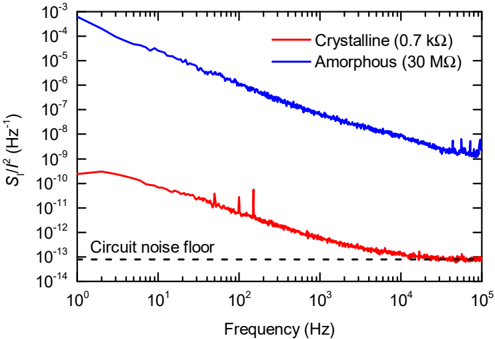
“In addition to this, there is read noise that exhibits a 1 / f spectral characteristic and random telegraph noise (see Supplementary Note 3 for more details) 40 .”
Self-citationKundale, S. S., Kamble, G. U., Patil, P. P., Patil, S. L., Rokade, K. A., Khot, A. C., Nirmal, K. A., Kamat, R. K., Kim, K. H., An, H.-M., et al. (2023) · Nanomaterials · doi:10.3390/nano13121879 · Cited by 36
“Recently, electrochemically fabricated GeSbTe-based PCM devices with excellent non-volatile memory properties have also been reported [69].”
BackgroundInfluentialKhaddam-Aljameh, R., Francese, P. A., Benini, L., & Eleftheriou, E. S. (2020) · IEEE Transactions on Very Large Scale Integration (VLSI) Systems · doi:10.1109/tvlsi.2020.3037871 · Cited by 34
“…architectures, which enforce a dogmatic separation of the processing unit and the memory subsystem, requires reevaluating the well-established charge-based memory technologies, such as SRAM, DRAM, and Flash [1]–[3], as well as the emerging resistance-based nonvolatile memory technologies [4], [5].”
BackgroundMondal, I., Attri, R., Rao, T. S., Yadav, B., & Kulkarni, G. U. (2024) · Applied Physics Reviews · doi:10.1063/5.0220628 · Cited by 32
Fu, X., Liang, Z., Shuai, W., Li, Y., Ning, H., Su, G., Lu, X., Xie, W., Yao, R., & Peng, J. (2023) · Advanced Functional Materials · doi:10.1002/adfm.202308127 · Cited by 30
Exploring the configurational space of amorphous graphene with machine-learned atomic energies
El‐Machachi, Z., Wilson, M., & Deringer, V. L. (2022) · Chemical Science · doi:10.1039/d2sc04326b · Cited by 28
Asymmetric GaN/ZnO Engineered Resistive Memory Device for Electronic Synapses
Khan, M. U., Furqan, C. M., Kim, J., Khan, S. A., Saqib, Q. M., Chougale, M. Y., Shaukat, R. A., Kang, M. H., Kobayashi, N. P., Bae, J., et al. (2022) · ACS Applied Electronic Materials · doi:10.1021/acsaelm.1c01006 · Cited by 27
Emerging phase change memory devices using non-oxide semiconducting glasses
Agarwal, S., Lohia, P., & Dwivedi, D. K. (2022) · Journal of Non-Crystalline Solids · doi:10.1016/j.jnoncrysol.2022.121874 · Cited by 26
Obstructed insulators and flat bands in topological phase-change materials
Marsal, Q., Varjas, D., & Grushin, A. G. (2023) · Physical review. B./Physical review. B · doi:10.1103/physrevb.107.045119 · Cited by 29
Chen, Z., Li, X., Zhu, X., Liu, H., Tong, H., & Miao, X. (2023) · IEEE Transactions on Industrial Electronics · doi:10.1109/tie.2023.3319711 · Cited by 26
“The typical value for PCM device in RESET state is 0.1 and it has been observed that in PCM devices, the larger the resistance, the larger the drift coefficient [32].”
MethodInfluentialAryana, K., Popescu, C., Sun, H., Aryana, K., Kim, H. J., Julian, M., Islam, M. R., Ríos, C., Gu, T., Hu, J., et al. (2025) · Advanced Materials · doi:10.1002/adma.202414031 · Cited by 25
Abbas, Y., Rezeq, M., Nayfeh, A. M., & Saadat, I. (2021) · Applied Physics Letters · doi:10.1063/5.0063515 · Cited by 26
Kheir, O. A. E., & Bernasconi, M. (2021) · Nanomaterials · doi:10.3390/nano11092382 · Cited by 24
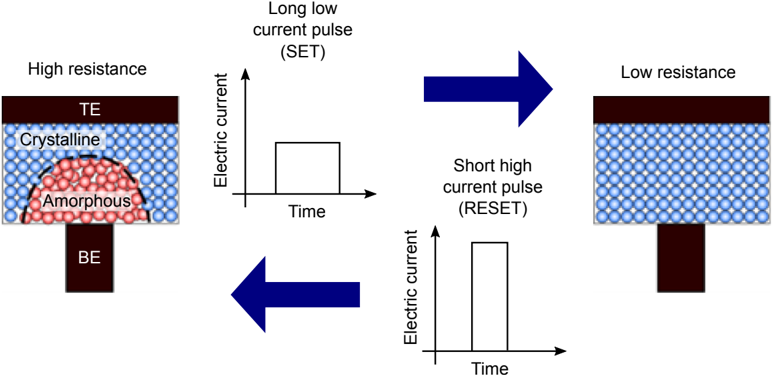
“During set, longer and less intense current pulses at a voltage above the Ovonic threshold [10] raise the temperature in between the glass transition temperature Tg and the melting temperature to induce the recrystallization of the amorphous material [1,3,11,12].”
BackgroundAntolini, A., Zavalloni, F., Lico, A., Quqa, S., Greco, L., Mangia, M., Pareschi, F., Pasotti, M., & Scarselli, E. F. (2025) · Sensors · doi:10.3390/s25123618 · Cited by 22
Hu, Y., Zheng, L., Li, J., Huang, Y., Wang, Z., Lu, X., Yu, L., Wang, S., Sun, Y., Ding, S., et al. (2022) · Advanced Science · doi:10.1002/advs.202205694 · Cited by 22
Konstantinou, K., Mavračić, J., Mocanu, F. C., & Elliott, S. R. (2020) · physica status solidi (b) · doi:10.1002/pssb.202000416 · Cited by 22
Dynamic resistive switching devices for neuromorphic computing
Wu, Y., Wang, X., & Lu, W. D. (2021) · Semiconductor Science and Technology · doi:10.1088/1361-6641/ac41e4 · Cited by 24
“To RESET the region to the amorphous phase, a high and short RESET pulse is applied to heat the material above the melting temperature and then freeze the amorphous state through rapid quenching [44].”
The critical role of materials and device geometry on performance of RRAM and memristor: Review
Shaikh, M. T. A. S., Prasad, C. V., Kim, K. J., & Rim, Y. S. (2025) · Materials Today Physics · doi:10.1016/j.mtphys.2025.101715 · Cited by 20
Solution-based manufacturing of 2D materials for memristive device applications
Nam, K., Kim, G. Y., Rhee, D., Park, H., Jariwala, D., & Kang, J. (2025) · International Journal of Extreme Manufacturing · doi:10.1088/2631-7990/add634 · Cited by 22
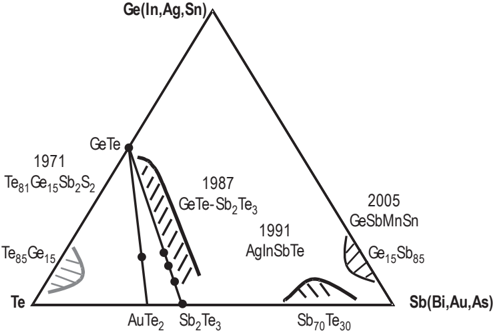
“…telluride (Ge 2 Sb 2 Te 5 , or GST) is the most commonly used resistive switching material for PCM behavior, although other chalcogenide glasses with varying compositions along the quasi-binary GeTe–Sb 2 Te 3 line in the Ge-Sb-Te ternary phase diagram are also actively investigated [152, 153] .”
Bae, D., Lee, D., Jung, J.-S., Kim, S., & Kim, H. (2021) · Ceramics International · doi:10.1016/j.ceramint.2021.04.212 · Cited by 20
Successive crystallization in indium selenide thin films for multi-level phase-change memory
Xu, Z., Yuan, Y., Song, S., Song, Z., Liu, R., & Zhai, J. (2023) · Applied Surface Science · doi:10.1016/j.apsusc.2023.157642 · Cited by 20
Crystallization behavior of MnTe/GeTe stacked thin films for multi-level phase change memory
Yuan, Y., Xu, Z., Song, S., Song, Z., Liu, R., & Zhai, J. (2023) · Applied Surface Science · doi:10.1016/j.apsusc.2023.158362 · Cited by 20
Biomimic and bioinspired soft neuromorphic tactile sensory system
Kang, K., Kim, K., Baek, J. H., Lee, D. J., & Yu, K. J. (2024) · Applied Physics Reviews · doi:10.1063/5.0204104 · Cited by 21
Boniardi, M., Baldo, M., Allegra, M., & Redaelli, A. (2024) · Advanced Electronic Materials · doi:10.1002/aelm.202400599 · Cited by 21
On the Chemical Bonding of Amorphous Sb2Te3
Mocanu, F. C., Konstantinou, K., Mavračić, J., & Elliott, S. R. (2020) · physica status solidi (RRL) - Rapid Research Letters · doi:10.1002/pssr.202000485 · Cited by 20
Duan, R., Sun, J., Zhang, Y. X., Li, H., Li, Y., & Liu, Z. (2022) · ACS Photonics · doi:10.1021/acsphotonics.1c01453 · Cited by 21
A review of compact modeling for phase change memory
Ding, F., Peng, B., Li, X., Zhang, L., Wang, R., Song, Z., & Huang, R. (2022) · Journal of Semiconductors · doi:10.1088/1674-4926/43/2/023101 · Cited by 19
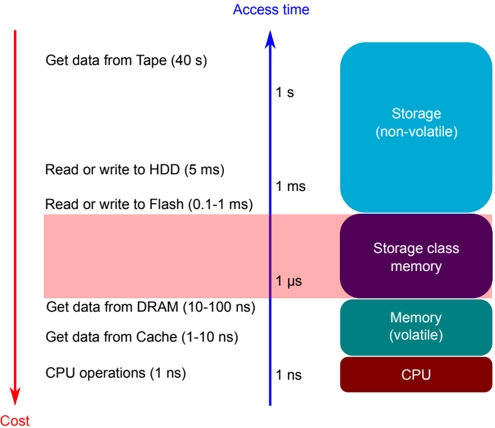
“PCM is one of the strong candidates for SCM applications[1, 3].”
BackgroundYang, Z., Zhang, D., Cai, J., Gong, C., He, Q., Xu, M., Tong, H., & Miao, X. (2022) · Applied Physics Letters · doi:10.1063/5.0127160 · Cited by 19
Vasilopoulos, A., Büchel, J., Kersting, B., Lammie, C., Brew, K. W., Choi, S., Philip, T. M., Saulnier, N., Narayanan, V., Gallo, M. L., et al. (2023) · IEEE Transactions on Electron Devices · doi:10.1109/ted.2023.3321014 · Cited by 19
“In PCM devices, the conductance variations are mostly attributed to the 1/f noise and the intrinsic structural relaxation of the amorphous phase [8].”
BackgroundSelf-citationDutta, M., Brivio, S., & Spiga, S. (2024) · Advanced Electronic Materials · doi:10.1002/aelm.202400221 · Cited by 21
Tunability of Sb2Se3 phase change material for multi-domain optoelectronics
Murali, K., Thekkekara, L. V., Rahman, M. A., Sen, S., Shvedov, V. G., Izdebskaya, Y. V., Zou, C., Tawfik, S. A., Shadrivov, I. V., Sriram, S., et al. (2024) · Applied Materials Today · doi:10.1016/j.apmt.2024.102338 · Cited by 19
Karunaratne, G., Hersche, M., Langeneager, J., Cherubini, G., Gallo, M. L., Egger, U., Brew, K. W., Choi, S., Ok, K. M., Silvestre, C., et al. (2022) · European Solid-State Circuits Conference (ESSCIRC) · doi:10.1109/esscirc55480.2022.9911329 · Cited by 24
“The limited number of updates and the application of SET pulses with low energy ensure that the durability of PCM is not significantly affected [9], [10].”
BackgroundSelf-citationShekhawat, R., Madhavan, V. E., & Ramesh, K. (2022) · Journal of Alloys and Compounds · doi:10.1016/j.jallcom.2022.164897 · Cited by 18
Spatio‐Temporal Correlations in Memristive Crossbar Arrays due to Thermal Effects
Schön, D., & Menzel, S. (2023) · Advanced Functional Materials · doi:10.1002/adfm.202213943 · Cited by 19
Neuromorphic one-shot learning utilizing a phase-transition material
Galloni, A. R., Yuan, Y., Zhu, M., Yu, H., Bisht, R. S., Wu, C. M., Grienberger, C., Ramanathan, S., & Milstein, A. D. (2024) · Proceedings of the National Academy of Sciences · doi:10.1073/pnas.2318362121 · Cited by 18
Measurement of Onset of Structural Relaxation in Melt‐Quenched Phase Change Materials
Kersting, B., Sarwat, S. G., Gallo, M. L., Brew, K. W., Walfort, S., Saulnier, N., Salinga, M., & Sebastian, A. (2021) · Advanced Functional Materials · doi:10.1002/adfm.202104422 · Cited by 18
Self-citationOnline Training of Spiking Recurrent Neural Networks with Phase-Change Memory SynapsesPreprint
Demirağ, Y., Frenkel, C., Payvand, M., & Indiveri, G. (2021) · arXiv (Cornell University) · doi:10.48550/arxiv.2108.01804 · Cited by 18
“In practice however, the programming operations of such devices suffer from write noise, read noise, and the electrical conductance drift [32].”
BackgroundHigh-temperature memristors enabled by interfacial engineering
Zhao, J., Jorgensen, C. S., Mahalingam, K., Bowers, C. T., Sugimoto, W., Ito, K., Kim, S. J., Zhao, R., Xu, Y., Liao, H.-T., et al. (2026) · Science · doi:10.1126/science.aeb9934 · Cited by 17
Influence of nuclear quantum effects on the electronic properties of amorphous carbon
Kundu, A., Song, Y., & Galli, G. (2022) · Proceedings of the National Academy of Sciences · doi:10.1073/pnas.2203083119 · Cited by 17
“Amorphous semiconductors are interesting materials for countless applications including thermoelectric (1, 2), solid-state memory (3), and photovoltaic devices (4, 5) and for the development of optical fiber technologies (6).”
BackgroundStructural spillage: An efficient method to identify noncrystalline topological materials
Muñoz‐Segovia, D., Corbae, P., Varjas, D., Hellman, F., Griffin, S. M., & Grushin, A. G. (2023) · Physical Review Research · doi:10.1103/physrevresearch.5.l042011 · Cited by 17
Jiang, K., Li, S., Chen, F., Zhu, L., & Li, W. (2023) · Science and Technology of Advanced Materials · doi:10.1080/14686996.2023.2252725 · Cited by 17
“…temperature Tc, below melting point Tm) for the SET/write operation at a temperature of ∼ 500 K; and recrystallized from the crystalline state under the application of a short high current pulse (above Tc) for the RESET/erase operation at a temperature > 1000 K, as shown in Figure 1(b) [24].”
MethodBhatt, N., Parveen, S., Whab, A., & Pumlianmunga (2024) · Journal of Physics D Applied Physics · doi:10.1088/1361-6463/ad5605 · Cited by 17
“Advanced computing architecture, such as Neuromorphic based computing the existing memory or storage technologies (flash memory, DRAM, SRAM, HDD, and SSD) and finding an alternative technology [6].”
Chen, Z., Zhao, X., Bengel, C., Liu, F., Li, K., Menzel, S., & Du, N. (2024) · Scientific Reports · doi:10.1038/s41598-024-74667-z · Cited by 20
“…with a switching mechanism dependent on phase transitions from amorphous to crystalline states, altering electrical resistance for data storage 52,53 ; spintronic materials, such as CoFeB, are utilized in magnetic random access memory (MRAM) through magnetic tunnel junction (MTJ) structures,…”
BackgroundTsitsas, N. L., & Foteinopoulou, S. (2022) · Optical Materials Express · doi:10.1364/ome.469112 · Cited by 17
The design of analogue in-memory computing tiles
Singh, A., Gallo, M. L., Vasilopoulos, A., Luquin, J., Narayanan, P., Burr, G. W., & Sebastian, A. (2025) · Nature Electronics · doi:10.1038/s41928-025-01537-5 · Cited by 21
“50,51), and that of spin-transfer torque MRAM often falls below 2 (ref.”
Self-citationGo, S., Wang, Q., Lim, K. G., Lee, T. H., Bajalović, N., & Loke, D. K. (2022) · Advanced Science · doi:10.1002/advs.202204453 · Cited by 16
Qiao, C., Wang, S., Chen, L., Liu, B., Bai, S., Gu, R., Wang, S., Wang, C., Ho, K., Miao, X., et al. (2023) · Applied Physics Letters · doi:10.1063/5.0166245 · Cited by 16
Nonvolatile Memristive Materials and Physical Modeling for In‐Memory and In‐Sensor Computing
Go, S., Lim, K.-G., Lee, T. H., & Loke, D. K. (2024) · Small Science · doi:10.1002/smsc.202300139 · Cited by 16
Advancements in memory technologies for artificial synapses
Sehgal, A., Dhull, S., Roy, S., & Kaushik, B. K. (2024) · Journal of Materials Chemistry C · doi:10.1039/d3tc04131j · Cited by 17
Prospects and challenges of electrochemical random-access memory for deep-learning accelerators
Cui, J., Liu, H., & Cao, Q. (2024) · Current Opinion in Solid State and Materials Science · doi:10.1016/j.cossms.2024.101187 · Cited by 17
“3 b ) [35].”
Metadata
- Authors
- Le Gallo, M., & Sebastian, A.
- Affiliations
- IBM Research - Zurich (CH)
- Venue
- Journal of Physics D: Applied Physics
- Publisher
- IOP Publishing
- Published
- 2020-03-30
- Volume
- 53
- Issue
- 21
- Pages
- 213002
- ISSN
- 0022-3727 (ISSN-L)
- 1361-6463
- OpenAlex
- W3007317489
- Cited by
- 460
- References
- 177
- Citations by year
- 2026: 51 · 2025: 92 · 2024: 94 · 2023: 95 · 2022: 69 · 2021: 43 · 2020: 16
- FWCI
- 21.70
- Type
- journal article
- Language
- en
- Open access
- hybrid
- doi.org
- Licence
- cc-by
- iopscience.iop.org/info/page/text-and-data-mining (tdm)
- creativecommons.org/licenses/by/4.0 (vor)
- Locations
- Journal of Physics D Applied Physics (publishedVersion, cc-by)
- Funders
- H2020 European Research Council (682675)
- Topics
- Physical Sciences › Materials Science › Materials Chemistry › Phase-change materials and chalcogenides
- Physical Sciences › Engineering › Electrical and Electronic Engineering › Advanced Memory and Neural Computing
- Physical Sciences › Materials Science › Electronic, Optical and Magnetic Materials › Transition Metal Oxide Nanomaterials
- Keywords
- phase-change memory, device physics, non-volatile memory, storage class memory, in-memory computing, neuromorphic computing, read and write operations, physics-based modeling, thermal dynamics, structural dynamics
About these checks
Registry, retraction, Cites and statistics results are computed, not judged, with one exception: a printed reference that no index lists is read once by a model before it counts as a citation error. Claims are extracted by a model and kept only when their quote appears verbatim in the text; each cited source is then checked, with a model’s help, for whether it says what the claim relies on. Those verdicts can be wrong — read the claim’s quote and the cited source before relying on one.
Statistics and arithmetic are recomputed, not judged.
Confidence bands are shown only for fields calibrated on our annotated test set. None is calibrated yet, so no band is shown.
What counts as a claim ›How we measure confidence ›How we check this ›
Are you an author, or do you see a problem with this page? Request a review
Data sources
Bibliographic data: Semantic Scholar, OpenAlex, Crossref.
Contains information from the Semantic Scholar Academic Graph Datasets, made available under the ODC Attribution License (ODC-BY 1.0).
Semantic Scholar’s data is described in: Kinney, R., et al. (2023). The Semantic Scholar Open Data Platform. arXiv:2301.10140.
