

An overview of phase-change memory device physics
Open accessThe DOI matches its Crossref record; 177 of the 177 references it cites were found in a registry or an index.
Abstract
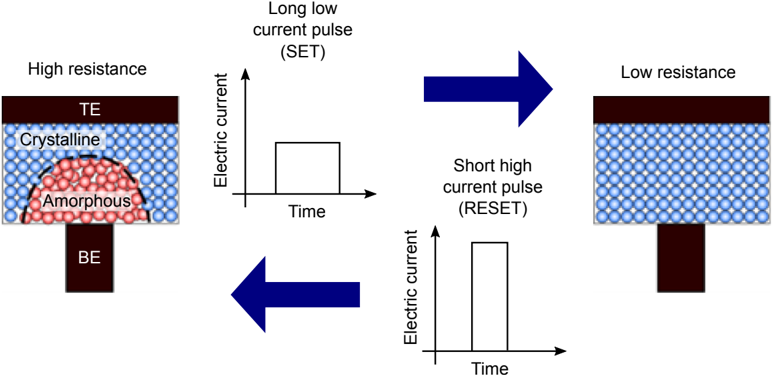
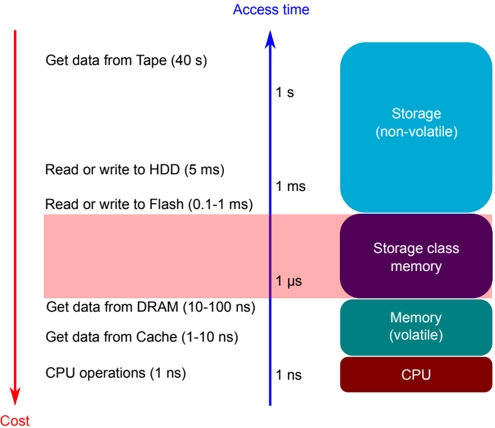
Phase-change memory (PCM) is an emerging non-volatile memory technology that has recently been commercialized as storage-class memory in a computer system. PCM is also being explored for non-von Neumann computing such as in-memory computing and neuromorphic computing. Although the device physics related to the operation of PCM have been widely studied since its discovery in the 1960s, there are still several open questions relating to their electrical, thermal, and structural dynamics. In this article, we provide an overview of the current understanding of the main PCM device physics that underlie the read and write operations. We present both experimental characterization of the various properties investigated in nanoscale PCM devices as well as physics-based modeling efforts. Finally, we provide an outlook on some remaining open questions and possible future research directions.
Overview
The claims and statistics of this paper haven’t been checked yet.
Free: it reads the open-access text and checks the first 5 claims that cite a source we can check. Create a free account to check every claim.
Integrity signals
Registry
Cites
Statistics
Figures
Verification
Claims the paper makes
The claims and statistics of this paper haven’t been checked yet.
Free: it reads the open-access text and checks the first 5 claims that cite a source we can check. Create a free account to check every claim.
Claims other papers make about this one
Each is checked against this paper’s own text: does it say what the citing paper says it does?
The cited source says what the claim attributes to it.
In the citing paper
“In many materials, such as phase-change memory (PCM)22,23, resistive random-access memory (ReRAM)24,25, conductive bridge RAM (CBRAM)26,27, or electro-chemical random-access memory (ECRAM)28,29, these conductances are effectively continuous physical quantities, and stored weights are not quantized.”
From Hardware-aware training for large-scale and diverse deep learning inference workloads using in-memory computing-based accelerators (2023) · cites this paper as [23]
Self-check
Percentages, sums and reported differences re-computed from the paper’s own numbers.
The self-check needs the paper’s full text.
Citations
Cites
Electronic Processes in Non-Crystalline Materials
Mott, N. F., Davis, E. A., & Lösche, A. (1972) · Kristall und Technik Band 7, Heft 4 · doi:10.1515/9783112653326-018 · Cited by 9,295
Temperature dependence of the energy gap in semiconductors
Varshni, Y. P. (1967) · Physica · doi:10.1016/0031-8914(67)90062-6 · Cited by 5,469
Formation of Glasses from Liquids and Biopolymers
Angell, C. A. (1995) · Science · doi:10.1126/science.267.5206.1924 · Cited by 4,799
Supercooled liquids and the glass transition
Debenedetti, P. G., & Stillinger, F. H. (2001) · Nature · doi:10.1038/35065704 · Cited by 4,643
Electronic processes in non-crystalline materials
Jonscher, A. K. (1972) · Thin Solid Films · doi:10.1016/0040-6090(72)90068-5 · Cited by 4,014
Phase-change materials for rewriteable data storage
Wuttig, M., & Yamada, N. (2007) · Nature Materials · doi:10.1038/nmat2009 · Cited by 3,655
Reversible Electrical Switching Phenomena in Disordered Structures
Ovshinsky, S. R. (1968) · Physical Review Letters · doi:10.1103/physrevlett.21.1450 · Cited by 3,144
Relaxation in glassforming liquids and amorphous solids
Angell, C. A., Ngai, K. L., McKenna, G. B., McMillan, P. F., & Martin, S. W. (2000) · Journal of Applied Physics · doi:10.1063/1.1286035 · Cited by 2,238
Valence-Alternation Model for Localized Gap States in Lone-Pair Semiconductors
Kastner, M., Adler, D., & Fritzsche, H. (1976) · Physical Review Letters · doi:10.1103/physrevlett.37.1504 · Cited by 1,318
Integrated all-photonic non-volatile multi-level memory
Ríos, C., Stegmaier, M., Hosseini, P., Wang, D., Scherer, T., Wright, C. D., Bhaskaran, H., & Pernice, W. H. P. (2015) · Nature Photonics · doi:10.1038/nphoton.2015.182 · Cited by 1,312
Research works printed but not linked: 36
- Choi Y et al 2012 Int. Solid-State Conf. Digest of Technical Papers (ISSCC) (IEEE, 2012) pp 46-8
- Chen Y et al 2006 Int. Electron Devices Meeting (IEEE, 2006) pp 1-4
- Tominaga J, Simpson R, Fons P and Kolobov A, 2010 Int. Electron Devices Meeting (IEEE) pp 22-3
- Kim I S 2010 Symp. on VLSI Technology (IEEE) pp 203-4
- Liang J, Jeyasingh R G D, Chen H Y and Wong H S P 2011 Symp. on VLSI Technology (IEEE) pp 100-1
- Zheng Q, Wang Y and Zhu J 2017 J. Phys. D: Appl. Phys. 50 243002
- Athmanathan A, Krebs D, Sebastian A, Le Gallo M, Pozidis H and Eleftheriou E 2015 Int. Conf. on Simulation of Semiconductor Processes and Devices (SISPAD) (IEEE) pp 289-92
- Ferreira A P, Zhou M, Bock S, Childers B, Melhem R and Mossé D Proc. Conf. on Design, Automation and Test Europe (European Design and Automation Association, 2010) pp 914-9
- Wu J Chen W Khwa S Yu T Wang J Tseng Y C and Diaz C H 2018 Proc. Int. Electron Devices Meeting (IEDM) (IEEE) pp 27-6
- Zuliani P, Conte A and Cappelletti P 2019 Proc. of Symp. on VLSI Technology (IEEE) pp T192-T193
- Disegni F et al 2019 Proc. of Symp. on VLSI Circuits (IEEE) pp C204-5
- Burr G W et al 2017 Adv Phys. X 2 89
- Castro D T et al 2007 IEEE Int. Electron Devices Meeting pp 315-8
- Lee J, Asheghi M and Goodson K E 2012 Nanotechnology 23 205201
- Orava J, Greer A L, Gholipour B, Hewak D W and Smith C E 2012 Nat. Mater. 11 279 · DOI · Paper page
- Le Roux S and Jund P 2007 J. Phys.: Condens. Matter 19 196102
- Stanisavljevic M, Pozidis H, Athmanathan A, Papandreou N, Mittelholzer T and Eleftheriou E 2016 IEEE 8th Int. Memory Workshop (IMW) pp 1-4
- Tsendin K D 2007 J. Optoelectron Adv. M. 9 3035
- Le Gallo M, Tuma T, Zipoli F, Sebastian A and Eleftheriou E 2016 Proc. Eur. Solid State Device Conf. (ESSDERC) (IEEE) pp 373-6
- Jost P C G 2013 Charge transport in phase change materials PhD Thesis RWTH Aachen
- Longeaud C and Tobbeche S 2009 J. Phys.: Condens. Matter 21 045508
- Le Gallo M, Kaes M, Sebastian A and Krebs D 2015 New J. Phys. 17 093035
- Shih Y H et al 2009 IEEE Electron Devices Meeting (IEDM) (IEEE) pp 1-4
- Ongaro R and Pillonnet A 1991 Science Measurement and Technology IEE Proc. A 138 127
- Stanisavljevic M, Athmanathan A, Papandreou N, Pozidis H and Eleftheriou E 2015 Proc. IRPS pp 5B.6.1-6
- Sebastian A, Krebs D, Le Gallo M, Pozidis H and Eleftheriou E 2015 Proc. IRPS pp MY.5.1-6
- Gallo M L, Sebastian A, Krebs D, Stanisavljevic M and Eleftheriou E 2016 Proc. IEEE Int. Reliability Symp. (IRPS) pp MY.1.1-6
- Papandreou N, Sebastian A, Pantazi A, Breitwisch M, Lam C, Pozidis H and Eleftheriou E 2011 IEEE Int. Electron Devices Meeting (IEEE) pp 3-5
- Cheon J et al 2015 Proc. Custom Integrated Conf. (CICC) (IEEE) pp 1-4
- Fantini P, Beneventi G B, Calderoni A, Larcher L, Pavan P and Pellizzer F 2008 IEEE Int. Electron Devices Meeting (IEDM) (IEEE) pp 1-4
- Fugazza D, Ielmini D, Lavizzari S and Lacaita A 2009 IEEE Electron Devices Meeting (IEDM) (IEEE) pp 1-4
- Giannopoulos I, Sebastian A, Gallo M L, Jonnalagadda V P, Sousa M, Boon M N and Eleftheriou E 2018 IEEE Int. Electron Devices Meeting (IEDM) pp 27.7.1-4
- Rizzi M, Spessot A, Fantini P and Ielmini D 2011 Appl. Phys. Lett. 99 223513 · DOI
- Close G, Frey U, Breitwisch M, Lung H, Lam C, Hagleitner C and Eleftheriou E 2010 Int. Electron Devices Meeting (IEDM) pp 29-5
- Pozidis H, Papandreou N, Sebastian A, Mittelholzer T, BrightSky M, Lam C and Eleftheriou E 2012 IEEE Int. Memory Workshop pp 1-4
- BrightSky M et al 2015 Proc. Int. Electron Devices Meeting (IEDM) (IEEE) pp 3-6
Cited by
Items 401–487 of 487
ADVANCING MEMORY DENSITY: A NOVEL DESIGN FOR MULTIPLE-BIT-PER-CELL PHASE CHANGE MEMORY
Çinar, İ. (2024) · Konya Journal of Engineering Sciences · doi:10.36306/konjes.1507600
Cross-Layer Reliability Evaluation of In-Memory Similarity Computation
Nezhadi, A., Mayahinia, M., & Tahoori, M. B. (2024) · IEEE International Test Conference (ITC) · doi:10.1109/itc51657.2024.00024
Wei, J., Zhang, Q., Xiang, Y., Gong, X., Xie, Y., & Liu, W. (2024) · Electronics · doi:10.3390/electronics14010039
Effects of Gese2 Doping on the Phase Change Properties of Ge2sb2te5 FilmsPreprint
Parveen, S., Bhatt, N., Whab, A., Venkatesh, R., Kamble, R. B., Hmar, J. J. L., & Pumlianmunga (2024) · SSRN Electronic Journal · doi:10.2139/ssrn.5074208
Ultra-low resistance drift in Ga-Sb films with growth-dominated crystallization mode
Wu, T., Wang, G., Shen, X., Chen, Y., & Zhu, J. (2025) · Ceramics International · doi:10.1016/j.ceramint.2025.01.314
Influence of Gese2 on the Phase Change Memory Properties of Ge2sb2te5 FilmsPreprint
Parveen, S., Bhatt, N., Whab, A., Venkatesh, R., Kamble, R. B., Hmar, J. J. L., & Pumlianmunga (2025) · SSRN Electronic Journal · doi:10.2139/ssrn.5120708
Finite Element Simulations of Phase Change Memory Devices Using Semiconductor Physics
Muneer, S., & Noor, N. (2024) · IEEE Nanotechnology Materials and Devices Conference (NMDC) · doi:10.1109/nmdc58214.2024.10894482
Low-Power High-Speed Neuromorphic Integrated Circuits
Kumar, R., & Nagar, B. C. (2025) · IGI Global eBooks · doi:10.4018/979-8-3693-8084-0.ch008
From flexibility to functionality: N-doped Sb films on PEEK for next-gen memory devices
Wang, X., Zhang, J., Zhao, S., Wang, K., & Qiu, R. (2025) · Journal of Materials Science · doi:10.1007/s10853-025-10852-3
Analog In-Memory Computing for the Synthetic Aperture Radar Polar Format Algorithm
Richardson, D. K., Xiao, T. P., West, R. D., Bennett, C. H., & Agarwal, S. (2025) · IEEE Transactions on Radar Systems · doi:10.1109/trs.2025.3570977
“5 and 6 show the di ff erences in error for three device types: phase-change memory (PCM) [32], [33], resistive random access memory (ReRAM) [34], and silicon-oxide-nitride-oxide–silicon (SONOS) [35].”
Wei, J., Zhang, Q., Xiang, Y., & Gong, X. (2025) · Electronics · doi:10.3390/electronics14102080
Liu, R., Liu, L. L., Li, A., Chen, Y., Zhang, H., Feng, D., Xu, J., Lu, X., Zhai, J., Song, Z., et al. (2025) · Applied Surface Science · doi:10.1016/j.apsusc.2025.163750
DBC: Drift-aware Binary Code for Drift-tolerant Deep Neural Networks
Choi, I., Chung, J., & Yang, J.-S. (2025) · ACM/IEEE Design Automation Conference (DAC) · doi:10.1109/dac63849.2025.11132851
“To address the challenges, emerging non-volatile memory technologies, such as phase-change memory (PCM), are being explored as promising alternatives to charge-based storage devices or as new storage-class memory layers within conventional memory hierarchies [4].”
Zhou, S., Wu, R., Li, H., Lin, Z., Zheng, C., Shen, Z., Zhong, Y., Nan, F., Zhang, Y., & Shu, J. (2026) · ACM Transactions on Storage · doi:10.1145/3767319
“In this article, we mainly elaborate the design techniques of our work for PCM, as it has already been the first-to-market as a storage-class memory product [4, 26, 59].”
Electronic Properties and Stacking Ordering in Layered GeTe-Rich (GeTe) m (Sb 2 Te 3 ) n
Riva, F. R., Cecchi, S., Prili, S., Kheir, O. A. E., Placidi, E., Sbroscia, M., Fattorini, A. D., Calvi, S., Longo, M., Bernasconi, M., et al. (2025) · ACS Applied Electronic Materials · doi:10.1021/acsaelm.5c01185
Espiari, A., Padberg, H., Kiehn, A., Schnieders, K., Zhang, J., Mußler, G., Wiefels, S., Jalil, A. R., & Grützmacher, D. (2025) · Materials · doi:10.3390/ma18204681
ThRIve: Thermally Robust CNN Inference via Low-Rank Adaptation in Heterogeneous PIM Architectures
Sharma, V., Dhingra, P., Doppa, J. R., & Pande, P. P. (2025) · ACM Transactions on Design Automation of Electronic Systems · doi:10.1145/3774328 · Cited by 1
“This forms the basis for defining a hardware-aware retraining procedure to mitigate the effects of thermal noise.”
Near-optimal PCM wear leveling under adversarial attacks
Lange, T., Naor, J. S., & Yadgar, G. (2025) · Performance Evaluation · doi:10.1016/j.peva.2025.102522
Nanoscale phase separation in Al0.4–Sb0.6 alloy for phase change memory applications
Ume, R., Gong, H., Tokranov, V. E., Yakimov, M., Brew, K. W., Cohen, G. M., Lavoie, C., Beckmann, K., Cady, N. C., & Oktyabrsky, S. R. (2025) · AIP Advances · doi:10.1063/5.0277910
A Device‐Level Compact Model for Mushroom‐Type Phase Change Memory
Menzel, S., Kersting, B., Ahmad, R. W., Sebastian, A., & Sarwat, S. G. (2025) · Advanced Electronic Materials · doi:10.1002/aelm.202500496
“Crucially, the phase configuration is a critical parameter and determines the key device characteristics, such as the threshold voltages 12,13 , the resistance drift 14,15 , and the retention characteristics 4,16 .”
Self-citationMilardovich, D. (2024) · reposiTUm (TU Wien) · doi:10.34726/hss.2024.121663 · Cited by 1
Erickson, J. R. (2023) · D-Scholarship@Pitt (University of Pittsburgh)
Co-designing log-structured merge key-value stores with a non-volatile storage hierarchy
Adão, R. (2024) · RepositóriUM (Universidade do Minho)
Kombination Resistiver und Ferroelektrischer Schaltmechanismen in HfO2-basierten Bauelementen
Max, B. (2021) · Qucosa (Saxon State and University Library Dresden)
Hardware Modellering en Exploratie Voor Edge AI-versnelling
Houshmand, P. (2025) · Lirias (KU Leuven)
Wang, Y., Gao, S., Wu, L., & Hu, Y. (2025) · Applied Surface Science · doi:10.1016/j.apsusc.2025.165568
Locking Tetrahedral Ge Coordination Enables Stable Multilevel Phase-Change Memory
Liu, R., Liu, L., Chen, Y., Zhang, H., Liu, K., Feng, D., Zhai, J., Zhou, X., Song, S., & Song, Z. (2026) · ACS Applied Materials & Interfaces · doi:10.1021/acsami.5c18011
Staudigl, F., & Leupers, R. (2025) · Synthesis lectures on engineering, science, and technology · doi:10.1007/978-3-032-09586-2_2
Yan, S., Qian, Z., Fu, X., Zeyu, G. U. O., Li, Z., Wang, J., Wang, L., Wu, Z., Xu, X., Dou, C., et al. (2026) · IEEE Transactions on Computer-Aided Design of Integrated Circuits and Systems · doi:10.1109/tcad.2026.3660209
“Phase-change memory (PCM), an emerging nonvolatile memory and on-chip cache candidate, su ff ers from high write energy and poor thermal stability [33], [34].”
Thermomagnetic mechanism of phase change materials for reconfigurable sensing
Mengesha, W. G. (2026) · Discover Materials · doi:10.1007/s43939-026-00582-x
CARE-PCM: Classification and Analysis of Reliability with Efficient Models for PCM
Montano, Y., & Asadinia, M. (2026) · IEEE Annual Computing and Communication Workshop and Conference (CCWC) · doi:10.1109/ccwc67433.2026.11393756
Phase equilibria and thermodynamic modeling of the Ge-Te-Bi ternary system
Zhou, J., Wang, J., Hu, B., & Cui, D. (2026) · Calphad · doi:10.1016/j.calphad.2026.102929
Khan, S., Pannerselvam, S., & Manivannan, A. (2025) · IEEE International Conference on Emerging Electronics (ICEE) · doi:10.1109/icee67165.2025.11409812
Fu, B., Wu, W., Zhang, P., Zhou, Z., Li, Y., Yong, K., & Fan, X. (2026) · Ceramics International · doi:10.1016/j.ceramint.2026.03.257
SMDG: Enhancing In-Memory Dynamic Graph Processing With Storage-Class Memory
Weng, T., Sha, M., Zhou, X., Lu, J., Huang, W., Li, K., & Tan, K. (2026) · IEEE Transactions on Knowledge and Data Engineering · doi:10.1109/tkde.2026.3676514
“Wepresent SMDG, a framework leveraging Storage-Class Memory [24], [25] (SCM) for large-scale dynamic graph processing.”
Unveiling the crystallization behavior of amorphous Te driven by pressure
Qiao, C., Wang, C., Liu, C., Xu, Q., Yuan, S., Wang, S., Wang, S. W. S., Xu, M., & Miao, X. (2026) · Journal of Materials Chemistry C · doi:10.1039/d6tc00250a
Mishra, A. K., & Pandey, S. K. (2026) · Semiconductor Science and Technology · doi:10.1088/1361-6641/ae57d1
High-Performance Automotive-Grade Phase-Change Memory Based on Single-Phase In 3 Sb 1 Te 2
Khan, S., Panneerselvam, S., & Manivannan, A. (2026) · ACS Applied Electronic Materials · doi:10.1021/acsaelm.6c00054
Joule-Lenz Law with Hyperbolic Heat Conduction Equation for an Amorphous Chalcogenide Semiconductor
Sovtus, N. V., & Mynbaev, K. D. (2026) · Reviews on advanced materials and technologies · doi:10.17586/2687-0568-2026-8-1-22-29
Toward the Next generation of Non Volatile Phase-Change Memory Targeting Ultra-Low Power Consumption
Serra, A. (2021) · theses.fr (ABES) · doi:10.70675/61021c11zeb57z48cfz8711z276b621683d4
Effets des radiations de l’environnement spatial sur les mémoires spintroniques
Coi, O. (2021) · theses.fr (ABES) · doi:10.70675/77538e1czc58fz4863zb2a7ze62ffa13b539
Advanced characterization for the development of innovative non-volatile memories
Prazakova, L. (2022) · theses.fr (ABES) · doi:10.70675/257fa37ez1413z473fz967az2e1fa00967f3
Phases topologiques dans les matériaux amorphes
Marsal, Q. (2022) · theses.fr (ABES) · doi:10.70675/db507f6azbf7bz45ddz9af8z9cceeeefcd6f
Ultrafast acoustic phonon and strain dynamics in ferroic materials
Gu, R. (2022) · theses.fr (ABES) · doi:10.70675/775a0360z6616z430bz8d6dz226348c4e649
Multiferroic oxide nanostructures : multi-resistance states
Khanas, A. (2023) · theses.fr (ABES) · doi:10.70675/304fde00z651ez48fdzb674z33da9c013443
Resistance level modulation in PCM memory for neuromorphic applications
Trabelsi, A. (2024) · theses.fr (ABES) · doi:10.70675/1f52dc06z40c1z406azab5fzffe198b94b1c · Cited by 1
Mott insulators for memory technologies : V2O3Cr thin films characterization and integration
Laborie, L. (2023) · theses.fr (ABES) · doi:10.70675/eb6d5484zc998z4623z9621zb1118645861c · Cited by 1
Palhares, J. H. Q. (2024) · theses.fr (ABES) · doi:10.70675/48a36fbcze95ez430dzbd4bz985b904d48d3
Radiation pattern reconfigurable antennas based on Phase Change Materials (PCM) integration
Carrizales-Juarez, R. (2024) · theses.fr (ABES) · doi:10.70675/cb5f8b5bza85fz47f9z9157zb4076651487d
simulations and modeling of HfO2-based OxRAM memories
Hirchaou, Y. (2024) · theses.fr (ABES) · doi:10.70675/dfdf0e85zb29dz4983zabd3z541967636157
Novel 3D 1T1R RRAM architecture for memory-centric hyperdimensional computing
Dubreuil, T. (2023) · theses.fr (ABES) · doi:10.70675/688d1f31zda52z4c68z82d7z880325a9f3ac · Cited by 1
Élucidation des mécanismes électroniques dans des memristors organiques
Tomasso, C. J. (2023) · theses.fr (ABES) · doi:10.70675/374fe14az5147z4799zac4aze1c9393b34d5
Reganaz, L. (2024) · theses.fr (ABES) · doi:10.70675/8a8c196ez95d7z468czabf2z768bdddceef5 · Cited by 1
Large-scale atomistic modeling of complex materials and application to advanced memories
Lee, S.-H. (2023) · theses.fr (ABES) · doi:10.70675/4c2b88bcz7962z4614zb000z7e0d8a80081f
Exploring learning techniques for edge AI taking advantage of non-volatile memories
Martemucci, M. (2024) · theses.fr (ABES) · doi:10.70675/ec79fa4cz56b6z4c04z86b9zd771c8285800 · Cited by 1
Υλοποίηση νευρομορφικών υπολογισμών με δικτυώματα μνημών μεταβλητής αντίστασης
Tsioustas, C. (2026) · DSpace - NTUA (National Technical University of Athens) · doi:10.26240/heal.ntua.31922
Bang, S., Park, S., Shekhar, S., Oh, Y. W., & Hong, S. (2026) · Advanced Functional Materials · doi:10.1002/adfm.202520251
Viollet, V., Prenat, G., Muktash, A. A., Popon, C., Anghel, L., & Lecoq, X. (2026) · IEEE Latin American Test Symposium (LATS) · doi:10.1109/lats70329.2026.11480313
“This work uses PCM, which is based on current-driven phase change in chalcogenide alloys [10].”
Bhatt, N., Parveen, S., Whab, A., & Pumlianmunga (2026) · Materials Science in Semiconductor Processing · doi:10.1016/j.mssp.2026.110756
Li, L., Song, M., Gu, H., Hu, Z., & Lu, Y. (2026) · Applied Physics Letters · doi:10.1063/5.0314841
Adapting Emerging Nonvolatile Memristor Technology for RF Applications
Purushothama, J. M., Ding, Y., Desmulliez, M. P. Y., Goussetis, G., Vena, A., Gadhafi, R., & Perret, E. (2026) · Wiley eBooks · doi:10.1002/9783527847419.ch26
Liu, G., Lu, M., Wang, K., Zhu, F., & Li, S. (2026) · ACM SIGMETRICS International Conference on Measurement and Modeling of Computer Systems (SIGMETRICS) · doi:10.1145/3801489.3806855
Dunton, O. R., Arbaugh, T., & Starr, F. W. (2026) · The Journal of Physical Chemistry C · doi:10.1021/acs.jpcc.5c08466
Carbon doping in GeTe drives differences in local structure and properties
Langhout, J. D., Kelley, M. D., Alverson, D., Barnes, L., Mercier, C., Olds, D., Adams, D. P., & Butala, M. M. (2026) · Journal of Materials Chemistry C · doi:10.1039/d6tc01061j
Liu, G., Lu, M., Wang, K., Zhu, F., & Li, S. (2026) · Proceedings of the ACM on Measurement and Analysis of Computing Systems · doi:10.1145/3805632 · Cited by 1
“Issues such as cell uniformity, reliability, endurance, retention, and disturbance remain unresolved [30, 56].”
Haidar, A., Kostka, P., Ntinas, V. G., & Tetzlaff, R. (2026) · IEEE Journal on Emerging and Selected Topics in Circuits and Systems · doi:10.1109/jetcas.2026.3701542
A Data-Driven Framework for Modeling Non-Idealities in Analog In-Memory Computing Hardware
Vasilopoulos, A., Kersting, B., Büchel, J., Sebastian, A., & Gallo, M. L. (2026) · IEEE Journal on Emerging and Selected Topics in Circuits and Systems · doi:10.1109/jetcas.2026.3705427
“For example, PCM devices su ff er from significant conductance drift and read noise [30], due to the properties of the phase change material in the amorphous phase, while RRAM devices su ff er from stochastic filament formation [16], leading to significant programming errors.”
Self-citationResearch on optimization of chemical mechanical polishing process for titanium nitride electrodes
Pengcheng, L. E. N. G., Wang, R., Weili, L. I. U., & Zhitang, S. O. N. G. (2026) · Gongneng cailiao yu qijian xuebao · doi:10.3724/jfmd.2605064
Multifunctional electrochemical memory stabilized by phase coexistence
Oh, S., Gross, A. L., Christensen, A., Zhu, J., Finnegan, P. S., Sugar, J. D., Bishop, S. R., Gilbert, S. J., Williams, R. S., Balbuena, P. B., et al. (2026) · Science Advances · doi:10.1126/sciadv.aee1908
Covalent enhancement mechanism in sulfur-based glass for ovonic threshold switching applications
Li, X.-D., Ding, N., Tu, Z., & Liu, L. M. (2026) · Journal of Science Advanced Materials and Devices · doi:10.1016/j.jsamd.2026.101231
Liu, G., Lu, M., Wang, K., Zhu, F., & Li, S. (2026) · ACM SIGMETRICS Performance Evaluation Review · doi:10.1145/3820171.3806855
Trust, but Verify: Reliable Compute-in-Memory via Double-Reference Sensing and Selective Recompute
Nezhadi, A., Chatzopoulos, O., Gizopoulos, D., & Tahoori, M. B. (2026) · IEEE International On-Line Testing Symposium (IOLTS) · doi:10.1109/iolts69666.2026.11633847
“Among CiM technologies, non-volatile memories (NVMs) [14]–[16] offer key advantages.”
Computation in Memory for Reliable and Energy-Efficient Diabetic Retinopathy Screening
Diware, S., Chilakala, K., & Bishnoi, R. (2025) · Springer eBooks · doi:10.1007/978-3-032-09253-3_8
Dielectric Electroactive Polymers for Memory Applications
Tung, Y., Lin, Y.-C., & Shih, C. (2026) · Royal Society of Chemistry eBooks · doi:10.1039/9781837678150-00294
Band-engineering in area-dependent InGaZnO(IGZO)-based memristive devices
Yuan, P., Wittberg, C., Deuermeier, J., Pereira, M., Liu, Y.-P., Mueller, D. N., Kiazadeh, A., & Dittmann, R. (2026) · Frontiers in Nanotechnology · doi:10.3389/fnano.2026.1870683
Innovations in arithmetic for neuromorphic computing
Fernandez-Hart, T. (2026) · Brunel University Research Archive (BURA) (Brunel University London)
Evaluation of memristor-based computer architectures
Reiser, D. (2025) · Ros Dok Rostocker Dokumentenserver (Universitätsbibliothek Rostock) · doi:10.18453/rosdok_id00005772
Singh, R. S., Mubaris, N. K., & Madhavan, V. E. (2026) · Materials Science in Semiconductor Processing · doi:10.1016/j.mssp.2026.111130
Paasio, E., Thomann, S., Anu, A., Li, X., Ranta, R., Srivari, P., Muhammad, S., Mazumder, S., Mariam, J., Padovani, A., et al. (2026) · Microsystems & Nanoengineering · doi:10.1038/s41378-026-01429-4
Kochaev, A. I., Sibatov, R. T., & Kitsyuk, E. P. (2026) · Journal of Computational Electronics · doi:10.1007/s10825-026-02636-y
A probabilistic circuit with phase change memory nanodevices & pass transistor logic selectors
Muneer, S., Zaman, S., Ashik, M. A. A., Hasan, T. M., Hafiz, F., & Noor, N. (2026) · Memories - Materials Devices Circuits and Systems · doi:10.1016/j.memori.2026.100149
Molecular origins of polymorphic phase transitions for dynamic organic electronics
Davies, D. (2022) · Illinois Digital Environment for Access to Learning and Scholarship (University of Illinois at Urbana-Champaign)
Space Data Centers (SDCs): Rethinking Computing Infrastructure Beyond Earth
Ahmed, S. T., Farahani, B., Chakrabarty, K., & Firouzi, F. (2026) · IEEE International Conference on Omni-layer Intelligent Systems (COINS) · doi:10.1109/coins69995.2026.11715566
“After programming, the amorphous phase structurally relaxes and conductance decays as a power law [11], [12], with ν ≈ 0 .”
Energy-Efficient Pore-Confined Phase Change Memory Using Current-Crowding Effect: A Simulation Study
Ahmed, R. U., Mallajosyula, A. T., Saini, B., & Ganguly, U. (2026) · Communications in computer and information science · doi:10.1007/978-3-032-26305-6_36
Metadata
- Authors
- Le Gallo, M., & Sebastian, A.
- Affiliations
- IBM Research - Zurich (CH)
- Venue
- Journal of Physics D: Applied Physics
- Publisher
- IOP Publishing
- Published
- 2020-03-30
- Volume
- 53
- Issue
- 21
- Pages
- 213002
- ISSN
- 0022-3727 (ISSN-L)
- 1361-6463
- OpenAlex
- W3007317489
- Cited by
- 460
- References
- 177
- Citations by year
- 2026: 51 · 2025: 92 · 2024: 94 · 2023: 95 · 2022: 69 · 2021: 43 · 2020: 16
- FWCI
- 21.70
- Type
- journal article
- Language
- en
- Open access
- hybrid
- doi.org
- Licence
- cc-by
- iopscience.iop.org/info/page/text-and-data-mining (tdm)
- creativecommons.org/licenses/by/4.0 (vor)
- Locations
- Journal of Physics D Applied Physics (publishedVersion, cc-by)
- Funders
- H2020 European Research Council (682675)
- Topics
- Physical Sciences › Materials Science › Materials Chemistry › Phase-change materials and chalcogenides
- Physical Sciences › Engineering › Electrical and Electronic Engineering › Advanced Memory and Neural Computing
- Physical Sciences › Materials Science › Electronic, Optical and Magnetic Materials › Transition Metal Oxide Nanomaterials
- Keywords
- phase-change memory, device physics, non-volatile memory, storage class memory, in-memory computing, neuromorphic computing, read and write operations, physics-based modeling, thermal dynamics, structural dynamics
About these checks
Registry, retraction, Cites and statistics results are computed, not judged, with one exception: a printed reference that no index lists is read once by a model before it counts as a citation error. Claims are extracted by a model and kept only when their quote appears verbatim in the text; each cited source is then checked, with a model’s help, for whether it says what the claim relies on. Those verdicts can be wrong — read the claim’s quote and the cited source before relying on one.
Statistics and arithmetic are recomputed, not judged.
Confidence bands are shown only for fields calibrated on our annotated test set. None is calibrated yet, so no band is shown.
What counts as a claim ›How we measure confidence ›How we check this ›
Are you an author, or do you see a problem with this page? Request a review
Data sources
Bibliographic data: Semantic Scholar, OpenAlex, Crossref.
Contains information from the Semantic Scholar Academic Graph Datasets, made available under the ODC Attribution License (ODC-BY 1.0).
Semantic Scholar’s data is described in: Kinney, R., et al. (2023). The Semantic Scholar Open Data Platform. arXiv:2301.10140.
