

Surface albedo following biochar application in durum wheat
Open accessThe DOI matches its Crossref record; 42 of the 43 references it cites were found in a registry or an index.
Abstract
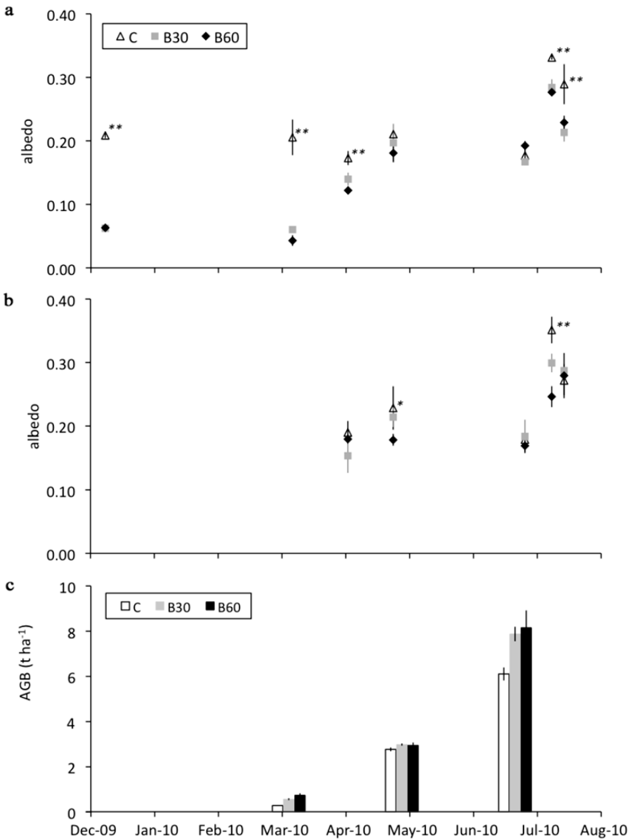
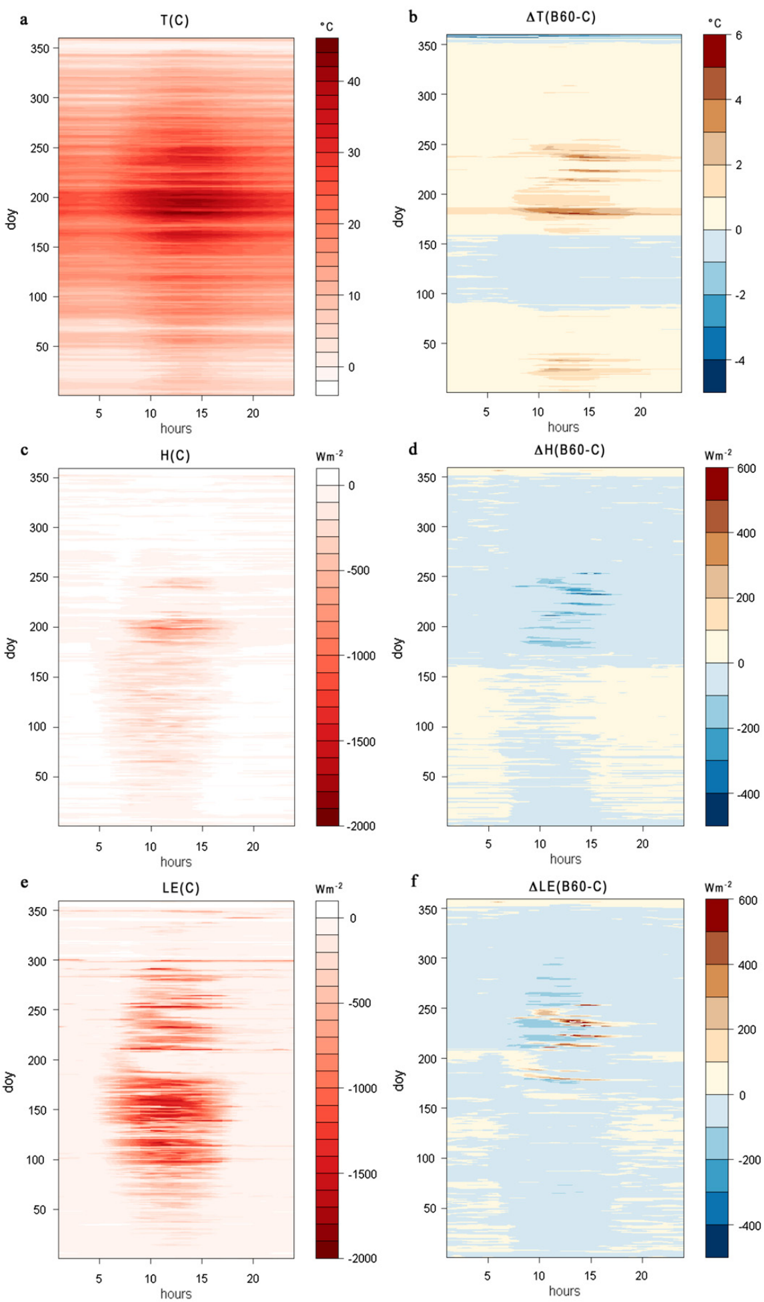
The agronomic use of charcoal from biomass pyrolysis (biochar) represents an interesting option for increasing soil fertility and sequestering atmospheric CO 2 . However, before moving toward large-scale biochar applications, additional research must evaluate all possible land–atmosphere feedbacks. Despite the increasing number of studies investigating the effect of biochar on soil physical, chemical and biological properties, only a few have been done on surface albedo variations on agricultural lands. The present work had the aim of characterizing the annual albedo cycle for a durum wheat crop in Central Italy, by means of a spectroradiometer measurement campaign. Plots treated with biochar, at a rate of 30–60 t ha −1 , showed a surface albedo decrease of up to 80% (after the application) with respect to the control in bare soil conditions, while this difference tended to decrease during the crop growing season, because of the prevailing effect of canopy development on the radiometer response. After the post-harvesting tillage, the soil treated with biochar again showed a lower surface albedo value (<20–26% than the control), while the measurements taken in the second year after application suggested a clear decrease of biochar influence on soil color. The modeling of the surface energy balance highlighted changes in the partitioning of heat fluxes and in particular a substantial increase of ground heat fluxes on an annual basis.
Overview
The claims and statistics of this paper haven’t been checked yet.
Free: it reads the open-access text and checks the first 5 claims that cite a source we can check. Create a free account to check every claim.
Integrity signals
Registry
Cites
Statistics
Figures
Verification
Claims the paper makes
The claims and statistics of this paper haven’t been checked yet.
Free: it reads the open-access text and checks the first 5 claims that cite a source we can check. Create a free account to check every claim.
Claims other papers make about this one
Each is checked against this paper’s own text: does it say what the citing paper says it does?
The source backs part of the claim, not all of it — or backs it for a different population, condition or comparison.
In the citing paper
“Studies suggest that alterations in albedo could decrease the climate mitigation potential of biochar by 20 e 26% [45]”
From Life cycle assessment of biochar as a green sorbent for soil remediation (2024) · cites this paper as [45]
Experimental — accuracy not yet measuredThe cited source says what the claim attributes to it.
In the citing paper
“Changes in surface albedo due to the darkening of soils after biochar application could result in warming feedback that reduces the climate mitigation potential of biochar”
From Life cycle assessment of biochar as a green sorbent for soil remediation (2024) · cites this paper as [45]
Self-check
Percentages, sums and reported differences re-computed from the paper’s own numbers.
The self-check needs the paper’s full text.
Citations
Cites
A decimal code for the growth stages of cereals
ZADOKS, J. C., CHANG, T. T., & KONZAK, C. F. (1974) · Weed Research · doi:10.1111/j.1365-3180.1974.tb01084.x · Cited by 10,173
Forests and Climate Change: Forcings, Feedbacks, and the Climate Benefits of Forests
Bonan, G. B. (2008) · Science · doi:10.1126/science.1155121 · Cited by 6,238
Changes in Atmospheric Constituents and in Radiative Forcing
Forster, P. M. D. F., Ramaswamy, V., Artaxo, P. E., Berntsen, T. K., Betts, R., Fahey, D. W., Haywood, J., Lean, J. L., Lowe, D. C., Myhre, G., et al. (2007) · elib (German Aerospace Center) · Cited by 5,209
Sustainable biochar to mitigate global climate change
Woolf, D., Amonette, J. E., Street-Perrott, F. A., Lehmann, J., & Joseph, S. (2010) · Nature Communications · doi:10.1038/ncomms1053 · Cited by 2,680 · cited 2×
“Mitigation potentials of biochar were estimated to be as high as 12% of current anthropogenic CO2 emissions (Woolf et al 2010), something that might be possibly achieved under a win–win framework leading to a substantial enhancement of soil fertility (Sohi et al 2010), increased crop yields and…”
BackgroundInfluentialA review of biochar and its use and function in soil
Sohi, S. P., Krull, E., Lopez-Capel, E., & Bol, R. (2010) · Advances in Agronomy · doi:10.1016/s0065-2113(10)05002-9 · Cited by 2,240
Peixoto, J. P., & Oort, A. H. (1992) · Medical Entomology and Zoology · Cited by 1,943
Agronomic values of greenwaste biochar as a soil amendment
Chan, K. Y., Van Zwieten, L., Meszaros, I., Downie, A., & Joseph, S. (2007) · Soil Research · doi:10.1071/sr07109 · Cited by 1,902
Lehmann, J., Pereira da Silva, J., Steiner, C., Nehls, T., Zech, W., & Glaser, B. (2003) · Plant and Soil · doi:10.1023/a:1022833116184 · Cited by 1,878 · cited 1×
“Most of the recent research on biochar focused on its effect on plant productivity (Lehmann et al 2003, Yamato et al 2006, Chan et al 2007, Rondon et al 2007, Van Zwieten et al 2008, Baronti et al 2010, Vaccari et al 2011).”
BackgroundLehmann, J. (2007) · Frontiers in Ecology and the Environment · doi:10.1890/1540-9295(2007)5[381:bitb]2.0.co;2 · Cited by 1,714 · cited 1×
“The application of charred biomass residues (biochar) to soils is considered one of the most promising strategies to sustainably sequester atmospheric CO2 in agricultural soils (Lehmann 2007, Woodward et al 2009, Sohi et al 2010).”
Background
Research works printed but not linked: 1
- Van Zwieten L, Kimber S, Sinclair K, Chan K Y and Downie A 2008 Biochar: potential for climate change mitigation, improved yield and soil health Proc. 23rd Annu. Conf. of the Grassland Society of NSW pp 30-3
Cited by
Biochar and its effects on plant productivity and nutrient cycling: A meta-analysis
Biederman, L. A., & Harpole, W. S. (2013) · GCB Bioenergy · doi:10.1111/gcbb.12037 · Cited by 1,737
“Physical condi- tions change with biochar; its dark color alters thermal dynamics and facilitates rapid germination, allowing more time for growth compared with controls (Genesio et al., 2012).”
BackgroundSoil carbon sequestration and biochar as negative emission technologies
Smith, P. (2016) · Global Change Biology · doi:10.1111/gcb.13178 · Cited by 910
“SCS has no influence on albedo, but biochar can darken the soil surface due to the addition of substantial quantities of dark material to the soil (Genesio et al., 2012), which has been shown to increase soil temperature measurably.”
BackgroundMethodInfluentialImpact of biochar application on plant water relations in Vitis vinifera (L.)
Baronti, S., Vaccari, F. P., Miglietta, F., Calzolari, C., Lugato, E., Orlandini, S., Pini, R., Zulian, C., & Genesio, L. (2014) · European Journal of Agronomy · doi:10.1016/j.eja.2013.11.003 · Cited by 307
“polycyclic aromatic hydrocarbons) and the possible impact of changes in surface albedo of bare soils that unavoidably follows biochar application (Genesio et al., 2012; Verheijen et al., 2013).”
BackgroundSelf-citationBiochar application to soil for climate change mitigation by soil organic carbon sequestration
Lorenz, K., & Lal, R. (2014) · Journal of Plant Nutrition and Soil Science · doi:10.1002/jpln.201400058 · Cited by 299
The role of soil in regulation of climate
Lal, R., Monger, C., Nave, L., & Smith, P. (2021) · Philosophical Transactions of the Royal Society B · doi:10.1098/rstb.2021.0084 · Cited by 286
Effects of straw biochar application on soil temperature, available nitrogen and growth of corn
Feng, W., Yang, F., Cen, R., Liu, J., Qu, Z., Miao, Q., & Chen, H. (2020) · Journal of Environmental Management · doi:10.1016/j.jenvman.2020.111331 · Cited by 216
Tisserant, A., & Cherubini, F. (2019) · Land · doi:10.3390/land8120179 · Cited by 186
“Reduction in soil albedo can be mitigated by management choices: by tilling, which may mitigate the decrease in soil albedo after biochar application [71], though black spots on cropland with historical charcoal deposits (>120 years) are still visible [201]; by choosing crops with earlier canopy development [225] or c…”
BackgroundInfluentialBiochar impacts on soil water dynamics: knowns, unknowns, and research directions
Acharya, B. S., Dodla, S. K., Wang, J. J., Pavuluri, K., Darapuneni, M., Dattamudi, S., Maharjan, B., & Kharel, G. (2024) · Biochar · doi:10.1007/s42773-024-00323-4 · Cited by 176
“Certain studies suggest that BC can alter soil albedo and heat fluxes, influencing soil moisture, surface energy balance, global radiative forcing, and climatic feedback (Genesio et al. 2012; Verheijen et al. 2013).”
Genesio, L., Miglietta, F., Baronti, S., & Vaccari, F. P. (2014) · Agriculture Ecosystems & Environment · doi:10.1016/j.agee.2014.11.021 · Cited by 170
“…flowering (Ebadi et al., 1996) when it was proved that the changes of soil reflectivity (albedo) that follows biochar application may affect energy fluxes partitioning with a positive increase of soil temperatures (Genesio et al., 2012) and a consequent enhanced temperature regime at canopy level.”
BackgroundSelf-citationSingh, R., Babu, J. N., Kumar, R., Srivastava, P., Singh, P., & Raghubanshi, A. S. (2015) · Ecological Engineering · doi:10.1016/j.ecoleng.2015.01.011 · Cited by 165
Can biochar reduce soil greenhouse gas emissions from aMiscanthus bioenergy crop?
Case, S. D. C., McNamara, N. P., Reay, D. S., & Whitaker, J. (2014) · GCB Bioenergy · doi:10.1111/gcbb.12052 · Cited by 158
McCormack, S. A., Ostle, N., Bardgett, R. D., Hopkins, D. W., & Vanbergen, A. J. (2013) · GCB Bioenergy · doi:10.1111/gcbb.12046 · Cited by 147
“A decrease in soil albedo will increase soil temperatures, particularly in equatorial latitudes, leading to decreased soil moisture content (Genesio et al., 2012; Oguntunde et al., 2008).”
BackgroundTammeorg, P., Simojoki, A., Mäkelä, P., Stoddard, F. L., Alakukku, L., & Helenius, J. (2014) · Plant and Soil · doi:10.1007/s11104-013-1851-5 · Cited by 142
Usowicz, B., Lipiec, J., Łukowski, M., Marczewski, W., & Usowicz, J. (2016) · Soil and Tillage Research · doi:10.1016/j.still.2016.03.009 · Cited by 136
Hu, Y., Sun, B., Wu, S., Feng, H., Gao, M., Zhang, B., & Liu, Y. (2021) · The Science of The Total Environment · doi:10.1016/j.scitotenv.2021.146560 · Cited by 136
Albedo Impact on the Suitability of Biochar Systems To Mitigate Global Warming
Meyer, S., Bright, R. M., Fischer, D., Schulz, H., & Glaser, B. (2012) · Environmental Science & Technology · doi:10.1021/es302302g · Cited by 113
Yue, Y., Guo, W. N., Lin, Q. M., Li, G., & Zhao, X. (2016) · Journal of Soil and Water Conservation · doi:10.2489/jswc.71.6.467 · Cited by 129
Effects of biochar amendment on soil thermal conductivity, reflectance, and temperature
Zhang, Q., Wang, Y., Wu, Y., Wang, X., Du, Z., Liu, X., & Song, J. (2013) · Soil Science Society of America Journal · doi:10.2136/sssaj2012.0180 · Cited by 128
Ecotoxicological characterization of biochars: Role of feedstock and pyrolysis temperature
Domene, X., Enders, A., Hanley, K., & Lehmann, J. (2015) · Science of The Total Environment · doi:10.1016/j.scitotenv.2014.12.035 · Cited by 115
“, 2013), but also by indirect effects, such as a decreased albedo (Genesio and Miglietta, 2012) if associated with excessive soil heating or drying.”
BackgroundThe Biological Effects of Biochar on Soil’s Physical and Chemical Characteristics: A Review
Zhu, Z., Zhang, Y., Tao, W., Zhang, X., Xu, Z., & Xu, C. (2025) · Sustainability · doi:10.3390/su17052214 · Cited by 123
“While biochar application also increased electrostatic repulsion and van der Waals forces within the soil, the increases in these attractive forces outweighed the repulsive forces, and the soil’s aggregate stability was enhanced [52].”
Guest, G., Bright, R. M., Cherubini, F., & Strømman, A. H. (2013) · Environmental Impact Assessment Review · doi:10.1016/j.eiar.2013.05.002 · Cited by 119
Net-zero approaches must consider Earth system impacts to achieve climate goals
Zickfeld, K., MacIsaac, A., Canadell, J. G., Fuss, S., Jackson, R. B., JONES, C. D., Lohila, A., Matthews, H. D., Peters, G. P., Rogelj, J., et al. (2023) · Nature Climate Change · doi:10.1038/s41558-023-01862-7 · Cited by 111
“In contrast, the application of biochar to agricultural soils can result in lower surface albedo and hence local warming 50,51 .”
BackgroundHuang, M., Yang, L., Qin, H., Jiang, L., & Zou, Y. (2013) · Field Crops Research · doi:10.1016/j.fcr.2013.08.010 · Cited by 107
The Application of Biochar in the EU: Challenges and Opportunities
Montanarella, L., & Lugato, E. (2013) · Agronomy · doi:10.3390/agronomy3020462 · Cited by 81
“In fact, biochar alters the soil albedo and the surface energy balance [54], reducing the overall climate mitigation benefit [55].”
Self-citationEnvironmental hotspots in the life cycle of a biochar-soil system
Muñoz, E., Curaqueo, G., Cea, M., Vera, L., & Navia, R. (2017) · Journal of Cleaner Production · doi:10.1016/j.jclepro.2017.04.163 · Cited by 94
“Some of these studies indicate that the application of biochar to soil can induce a radiative forcing by changing the surface albedo (Genesio et al., 2012).”
BackgroundIrfan, M., Hussain, Q., Khan, K. S., Akmal, M., Ijaz, S. S., Hayat, R., Khalid, A., Azeem, M., & Rashid, M. A. (2019) · Arabian Journal of Geosciences · doi:10.1007/s12517-019-4239-x · Cited by 102
Giagnoni, L., Maienza, A., Baronti, S., Vaccari, F. P., Genesio, L., Taiti, C., Martellini, T., Scodellini, R., Cincinelli, A., Costa, C., et al. (2019) · Geoderma · doi:10.1016/j.geoderma.2019.03.011 · Cited by 102
Self-citationKochanek, J., Soo, R. M., Martinez, C., Dakuidreketi, A., & Mudge, A. M. (2021) · Resources Conservation and Recycling · doi:10.1016/j.resconrec.2021.106109 · Cited by 102
Effect of biochar addition on soil respiration partitioning and root dynamics in an apple orchard
Ventura, M., Zhang, C., Baldi, E., Fornasier, F., Sorrenti, G., Panzacchi, P., & Tonon, G. (2014) · European Journal of Soil Science · doi:10.1111/ejss.12095 · Cited by 95
“This discrepancy can be explained by the smaller amount of biochar that we applied compared with that added by Genesio et al. (2012), and by the presence of apple tree canopy cover, which reduces the amount of solar radiation at soil level.”
BackgroundChange, I. P. O. C. (2022) · Cambridge University Press eBooks · doi:10.1017/9781009157988.006 · Cited by 98
Khan, M. A., Basir, A., Fahad, S., Adnan, M., Saleem, M. H., Iqbal, A., Amanullah, Al‐Huqail, A. A., Alosaimi, A. A., Saud, S., et al. (2022) · Frontiers in Plant Science · doi:10.3389/fpls.2022.879788 · Cited by 88
Yan, Q., Dong, F., Li, J., Duan, Z., Yang, F., Li, X., Lu, J., & Li, F. (2019) · European Journal of Soil Science · doi:10.1111/ejss.12863 · Cited by 81
“Applying biochar to darker soil reduced the albedo and created warmer soil conditions (Genesio et al., 2012).”
BackgroundThe impacts of biochar on carbon sequestration, soil processes, and microbial communities: a review
Enebe, M. C., Ray, R. L., & Griffin, R. W. (2025) · Biochar · doi:10.1007/s42773-025-00499-3 · Cited by 82
“But with tillage and crop canopy development comes a lower surface albedo and decreased soil temperature under biochar treatment (Genesio et al. 2012).”
Life cycle assessment of biochar as a green sorbent for soil remediation
Osman, A. I., Farghali, M., & Rashwan, A. K. (2024) · Current Opinion in Green and Sustainable Chemistry · doi:10.1016/j.cogsc.2024.100882 · Cited by 76
Tisserant, A., Morales, M., Cavalett, O., O'Toole, A., Weldon, S., Rasse, D. P., & Cherubini, F. (2022) · Resources, Conservation and Recycling · doi:10.1016/j.resconrec.2021.106030 · Cited by 73
Carbon Sequestration and Fertility after Centennial Time Scale Incorporation of Charcoal into Soil
Criscuoli, I., Alberti, G., Baronti, S., Favilli, F., Martinez, C., Calzolari, C., Pusceddu, E., Rumpel, C., Viola, R., & Miglietta, F. (2014) · PLoS ONE · doi:10.1371/journal.pone.0091114 · Cited by 67
“These effects are associated with improvements in soil physical [6] and chemical properties [7], microbiological activity [8], temperature increase due to changes in surface albedo [9], hormesis (i.”
BackgroundSelf-citationDevelopment of biomass-derived biochar for agronomic and environmental remediation applications
Waqas, M., Asam, Z.-U.-Z., Rehan, M., Anwar, M. N., Khattak, R. A., Ismail, I. M. I., Tabatabaei, M., & Nizami, A. (2020) · Biomass Conversion and Biorefinery · doi:10.1007/s13399-020-00936-2 · Cited by 71
Wang, X., Li, Y., Wang, H., Wang, Y., Biswas, A., Chau, H. W., Liang, J., Zhang, F., Bai, Y., Wu, S., et al. (2022) · CATENA · doi:10.1016/j.catena.2022.106414 · Cited by 69
Li, Y., Feng, H., Chen, J., Lu, J., Wu, W., Liu, X., Li, C., Dong, Q., & Siddique, K. H. M. (2022) · CATENA · doi:10.1016/j.catena.2021.105979 · Cited by 67
Biochar and high-carbon wood ash effects on soil and vegetation in a boreal clearcut
Bieser, J. M. H., & Thomas, S. C. (2019) · Canadian Journal of Forest Research · doi:10.1139/cjfr-2019-0039 · Cited by 48
“These results indicate biochar 478 impacts on surface albedo and potential negative feedback effects and 479 implications for enhanced soil CO2 flux, as highlighted in Genesio et al. 2012, 480 were highly transient in this case.”
BackgroundSustainable scale-up of negative emissions technologies and practices: where to focus
Cobo, S., Negri, V., Valente, A., Reiner, D. M., Hamelin, L., Dowell, N. M., & Guillén‐Gosálbez, G. (2023) · Environmental Research Letters · doi:10.1088/1748-9326/acacb3 · Cited by 58
“Biochar application to soils is likely to reduce the surface albedo, which decreases the climate mitigation benefits of this NETP (Genesio et al 2012, Meyer et al 2012).”
BackgroundA Critical Analysis of Meso- and Macrofauna Effects Following Biochar Supplementation
Domene, X. (2016) · Elsevier eBooks · doi:10.1016/b978-0-12-803433-0.00011-4 · Cited by 53
Verheijen, F. G. A., Jeffery, S., van der Velde, M., Penížek, V., Beland, M., Bastos, A. C., & Keizer, J. J. (2013) · Environmental Research Letters · doi:10.1088/1748-9326/8/4/044008 · Cited by 52
“Further work integrating these albedo effects seems urgently needed, particularly when considering: (i) the proposed widespread application of biochar [1]; (ii) the sensitivity of global and regional climates to changes in surface albedo [24]; (iii) the potential implications for soil temperature regimes [14, 22, 23]…”
BackgroundInfluentialMaienza, A., Baronti, S., Cincinelli, A., Martellini, T., Grisolia, A., Miglietta, F., Renella, G., Stazi, S. R., Vaccari, F. P., & Genesio, L. (2017) · Agronomy for Sustainable Development · doi:10.1007/s13593-017-0458-2 · Cited by 52
“In addition, since bacterial proliferation also depends on moisture and temperature (Maienza and Bååth, 2014), the increase of total microbial biomass observed in BB treatment could reflect enhanced soil water retention (Baronti et al. 2014) and increased soil thermal capacity (Genesio et al. 2012).”
BackgroundSelf-citationAzeem, M., Hayat, R., Hussain, Q., Tahir, M. I., Imran, M., Abbas, Z., Sajid, M., Latif, A., & Irfan, M. (2019) · Arabian Journal of Geosciences · doi:10.1007/s12517-019-4482-1 · Cited by 50
Gao, Y., Li, T., Fu, Q., Li, H., Liu, D., Ji, Y., Li, Q., & Cai, Y. (2020) · The Science of The Total Environment · doi:10.1016/j.scitotenv.2020.138007 · Cited by 50
Schäfer, S., Lawrence, M., Stelzer, H., Born, W., Low, S., Aaheim, A., Adriázola, P., Betz, G., Boucher, O., Carius, A., et al. (2015) · MPG.PuRe (Max Planck Society) · Cited by 49
Pant, D., Shah, K. K., Sharma, S., Bhatta, M., Tripathi, S., Pandey, H. P., Tiwari, H., Shrestha, J., & Bhat, A. K. (2023) · Journal of soil science and plant nutrition · doi:10.1007/s42729-023-01215-5 · Cited by 48
Sustainability, certification, and regulation of biochar
VERHEIJEN, F. G. A., Montanarella, L., & Bastos, A. C. (2012) · Pesquisa Agropecuária Brasileira · doi:10.1590/s0100-204x2012000500003 · Cited by 47
“…categories, since mitigating global climate change by lowering atmospheric albedo is usually stated as one of its main objectives (Woolf et al., 2010), and the soil surface albedo has been shown to decrease after biochar application (Genesio et al., 2012), thereby potentially warming the planet.”
BackgroundHuang, M., Zhou, X., Chen, J., Cao, F., Jiang, L., & Zou, Y. (2017) · Communications in Soil Science and Plant Analysis · doi:10.1080/00103624.2016.1253725 · Cited by 47
“On the other hand, it has been hypothesized that biochar addition may decrease soil albedo and consequently increase the soil temperature (Genesio et al. 2012; Meyer et al. 2012), but there is no direct evidence of a significant effect of biochar addition on the soil temperature in the field.”
BackgroundAn energy‐biochar chain involving biomass gasification and rice cultivation in Northern Italy
Lugato, E., Vaccari, F. P., Genesio, L., Baronti, S., Pozzi, A., Rack, M., Woods, J., Simonetti, G., Montanarella, L., & Miglietta, F. (2012) · GCB Bioenergy · doi:10.1111/gcbb.12028 · Cited by 48
“…biochar application as soil amendment: the long-term stability of biochar in soil has not been fully demonstrated, the safety for human health not fully assessed, while the impact on the radiative balance due to changes in soil albedo has only been partially addressed (Genesio et al., 2012).”
BackgroundSelf-citationBiochar–macrofauna interplay: Searching for new bioindicators
Castracani, C., Maienza, A., Grasso, D. A., Genesio, L., Malcevschi, A., Miglietta, F., Vaccari, F. P., & Mori, A. (2015) · The Science of The Total Environment · doi:10.1016/j.scitotenv.2015.07.019 · Cited by 46
Self-citationAlmond shell biochar: characterization and application in soilless cultivation of Eruca sativa
Zabaleta, R., Sanchez, E. Y., Fabani, M. P., Mazza, G., & Rodríguez, R. (2023) · Biomass Conversion and Biorefinery · doi:10.1007/s13399-023-04002-5 · Cited by 44
“…using bio-char as substrate are as follows: (a) the changes caused in parameters as color, percentage of radiation, and hence thermal conductivity [82]; (b) the immobilization and deactivation of pathogenic enzymes [83]; (c) the presence of nanoparticles that adhere to the seed and root surfaces,…”
Biochar Benefits Green Infrastructure: Global Meta-Analysis and Synthesis
Liao, W., Halim, M. A., Kayes, I., Drake, J. A. P., & Thomas, S. C. (2023) · Environmental Science & Technology · doi:10.1021/acs.est.3c04185 · Cited by 45
Liu, Y., Yang, S., Lu, H., & Wang, Y. (2018) · Soil and Tillage Research · doi:10.1016/j.still.2018.04.008 · Cited by 42
Abiola, W. A., Diogo, R. V. C., Tovihoudji, P. G., Mien, A. K., & Schalla, A. (2023) · Frontiers in Soil Science · doi:10.3389/fsoil.2023.1136327 · Cited by 41
“Through its dark color, biochar alters soil thermal dynamics and facilitates rapid crop germination (24).”
BackgroundEffects of Biochar Application and Irrigation Methods on Soil Temperature in Farmland
Ding, Y., Gao, X., Qu, Z., Jia, Y., Hu, M., & Li, C. (2019) · Water · doi:10.3390/w11030499 · Cited by 41
“[23] found that surface albedo decreased by up to 80% after the application of biochar to the control sites in bare soil conditions, at a rate of 30 t ha−1.”
Effects of Biochar on the C Use Efficiency of Soil Microbial Communities: Components and Mechanisms
Giagnoni, L., & Renella, G. (2022) · Environments · doi:10.3390/environments9110138 · Cited by 41
Biochar and Soil Carbon Sequestration
Lal, R. (2016) · SSSA Special Publications · doi:10.2136/sssaspecpub63.2014.0042.5 · Cited by 40
Mechler, M. A. A., Jiang, R. W., Silverthorn, T., & Oelbermann, M. (2018) · Biomass and Bioenergy · doi:10.1016/j.biombioe.2018.08.019 · Cited by 34
Research and Application of Biochar in Europe
Conte, P., Schmidt, H., & Cimò, G. (2015) · SSSA special publication series · doi:10.2136/sssaspecpub63.2014.0050 · Cited by 34
Quantifying negative radiative forcing of non-permanent and permanent soil carbon sinks
Leifeld, J., & Keel, S. G. (2022) · Geoderma · doi:10.1016/j.geoderma.2022.115971 · Cited by 32
Graf, A., Wohlfahrt, G., Aranda-Barranco, S., Arriga, N., Brümmer, C., Ceschia, É., Ciais, P., Desai, A. R., Lonardo, S. D., Gharun, M., et al. (2023) · Communications Earth & Environment · doi:10.1038/s43247-023-00958-4 · Cited by 31
“We are not aware of published studies on such a general relation, except for biochar application that caused decrease in surface albedo 21,44 and a weak relation between albedo and soil organic carbon found by Post, et al. 45 .”
Joardar, J. C., Mondal, B., & Sikder, S. (2020) · SN Applied Sciences · doi:10.1007/s42452-020-03596-z · Cited by 30
Mimicking biochar-albedo feedback in complex Mediterranean agricultural landscapes
Bozzi, E., Genesio, L., Toscano, P., Pieri, M., & Miglietta, F. (2015) · Environmental Research Letters · doi:10.1088/1748-9326/10/8/084014 · Cited by 32
“Being a carbon-based substance, in fact, biochar has a very low reflectivity (Oguntunde et al 2008), and its addition to agricultural soils is demonstrated to affect the background colour of the treated cropland and, hence, surface albedo and energy flux partitioning (Genesio et al 2012).”
BackgroundResultSelf-citationLiqun, X., Weiming, Z., Wu, D., YanYan, S., Honggui, Z., Wenqi, G., Meng, J., & Chen, W. (2020) · Soil and Tillage Research · doi:10.1016/j.still.2020.104762 · Cited by 29
Microbial Ecology Analysis of Biochar-Augmented Soils
Ralebitso-Senior, T. K., & Orr, C. H. (2016) · Elsevier eBooks · doi:10.1016/b978-0-12-803433-0.00001-1 · Cited by 28
Short-term effects of biochar on soil CO2 efflux in boreal Scots pine forests
Zhu, X., Zhu, T., Pumpanen, J., Palviainen, M., Zhou, X., Kulmala, L., Bruckman, V. J., Köster, E., Köster, K., Aaltonen, H., et al. (2020) · Annals of Forest Science · doi:10.1007/s13595-020-00960-2 · Cited by 27
Effects of Biochar on Fluxes and Turnover of Carbon in Boreal Forest Soils
Zhao, P., Palviainen, M., Köster, K., Berninger, F. A., Bruckman, V. J., & Pumpanen, J. (2018) · Soil Science Society of America Journal · doi:10.2136/sssaj2018.04.0149 · Cited by 25
Abbas, F., Hammad, H. M., Anwar, F., Farooque, A. A., Jawad, R., Bakhat, H. F., Naeem, M. A., Ahmad, S., & Qaisrani, S. A. (2021) · Sustainability · doi:10.3390/su13052599 · Cited by 24
“[77] the biochar application to the soils changes the natural state and thermal dynamics of the soil thereby promoting crop growth.”
BackgroundBiochar to Improve Crops Yield and Quality Under a Changing Climate
Khan, M. A., Basir, A., Adnan, M., Fahad, S., Ali, J., Mussart, M., Mian, I. A., Ahmad, M., Saleem, M. H., Naseem, W., et al. (2023) · Sustainable agriculture reviews · doi:10.1007/978-3-031-26983-7_2 · Cited by 24
Biochar and Its Potential to Deliver Negative Emissions and Better Soil Quality in Europe
Tisserant, A., Hu, X., Liu, Q., Xie, Z., Zhao, W., & Cherubini, F. (2023) · Earth s Future · doi:10.1029/2022ef003246 · Cited by 23
“…can also induce changes in biophysical factors that are relevant for the local climate, such as reduced albedo due to darkening of the soil or modifications of land cover properties influencing radiation and moisture fluxes (Fischer et al., 2019; Genesio et al., 2012; Verheijen et al., 2013).”
BackgroundThomas, S. C. (2020) · Canadian Journal of Forest Research · doi:10.1139/cjfr-2019-0386 · Cited by 22
Koide, R. T., Nguyen, B. T., Skinner, R. H., Dell, C. J., Adler, P. R., Drohan, P. J., Licht, M., Matthews, M. B., Nettles, R., Ricks, K. D., et al. (2018) · BioEnergy Research · doi:10.1007/s12155-018-9940-1 · Cited by 21
Liu, J., Desjardins, R. L., Wang, S., Worth, D. E., Qian, B., & Shang, J. (2021) · Journal of Environmental Management · doi:10.1016/j.jenvman.2021.113938 · Cited by 20
lnternational governance issues on climate engineering Information for policymakers
Florin, M., Rouse, P., Hubert, A., Honegger, M., & Reynolds, J. L. (2020) · Infoscience (Ecole Polytechnique Fédérale de Lausanne) · doi:10.5075/epfl-irgc-277726 · Cited by 19
Response of surface albedo and soil carbon dioxide fluxes to biochar amendment in farmland
Zhang, Y., Hu, X., Zou, J., Zhang, D., Chen, W., Liu, Y., Chen, Y., & Wang, X. (2017) · Journal of Soils and Sediments · doi:10.1007/s11368-017-1889-8 · Cited by 18
“This result is consistent with Genesio’s research, who found that there was no difference in surface albedo in response to the biochar application rate from 30 to 60 t ha−1 (Genesio et al. 2012).”
BackgroundResultMedina, J., Calabi-Floody, M., Aponte, H., Santander, C., Paneque, M., Meier, S., Panettieri, M., Cornejo, P., Borie, F., & Knicker, H. (2021) · Agronomy · doi:10.3390/agronomy11040767 · Cited by 18
Soil Carbon Sequestration and Biochar
Vetter, S. H., Abdalla, M., Kuhnert, M., & Smith, P. (2022) · Royal Society of Chemistry eBooks · doi:10.1039/9781839165245-00194 · Cited by 18
Use of Biochar in Organic Farming
DeLuca, T. H., & Gao, S. (2019) · Springer eBooks · doi:10.1007/978-3-030-04657-6_3 · Cited by 17
Adejumo, S. A., Owoseni, O., & Mur, L. A. J. (2020) · Journal of environmental chemical engineering · doi:10.1016/j.jece.2020.104764 · Cited by 17
Dehkordi, R. H., Pelgrum, H., & Meersmans, J. (2021) · GIScience & Remote Sensing · doi:10.1080/15481603.2021.2016262 · Cited by 16
“A similar conclusion was made by Genesio et al. (2012) who reported a notable decrease in α0 due to biochar enrichment in soils of Tuscany, Italy, planted with winter durum wheat.”
BackgroundLippi, P., Mattii, G. B., & Cataldo, E. (2025) · Phyton · doi:10.32604/phyton.2025.059997 · Cited by 14
“Genesio et al. [99] amended a silty loam soil cultivated with wheat with 30 and 60 t/ha of biochar from coppiced woodlands pyrolyzed at 500°C.”
Economic feasibility of biochar for carbon stock enhancement in Finnish agricultural soils
Jokubė, M., Hyyrynen, M., Pihlainen, S., & Hyytiäinen, K. (2025) · Carbon Management · doi:10.1080/17583004.2025.2465328 · Cited by 14
“Albedo could be considered as darker surfaces increase soil temperature and water evaporation, and emit heat fluxes [76].”
Zhao, B., Li, L., Zhao, Y., & Zhang, X. (2020) · International Agrophysics · doi:10.31545/intagr/127802 · Cited by 14
“, 2018), which may in turn affect the surface reflectance and temperature of the soil (Genesio et al., 2012).”
BackgroundGraef, H. A., Kiobia, D. O., Saidia, P. S., Kahimba, F. C., Graef, F., & Eichler‐Löbermann, B. (2018) · Communications in Soil Science and Plant Analysis · doi:10.1080/00103624.2018.1547392 · Cited by 14
“However, the dark-colored biochar can also decrease surface albedos, thereby increasing soil temperatures (Genesio et al. 2012), and reduce pore modal suction (energy that is necessary for water to flow out from pores) (Baiamonte et al. 2015).”
BackgroundMak‐Mensah, E., Sam, F. E., Kaito, I. O. I. S., Zhao, W., Zhang, D., Zhou, X., Wang, X., Zhao, X., & Wang, Q. (2021) · PeerJ · doi:10.7717/peerj.11889 · Cited by 14
Chen, Z., Jin, P., Liu, Q., Zhang, Y., Hu, T., Wang, H., Zhou, R., Zhang, J., Lin, X., & Xie, Z. (2025) · Field Crops Research · doi:10.1016/j.fcr.2025.109743 · Cited by 13
Xue, P., Hou, R., Fu, Q., Li, T., Li, M., Liu, D., & Li, Q. (2023) · Journal of environmental chemical engineering · doi:10.1016/j.jece.2023.110928 · Cited by 13
Dewi, R. K., Gong, Y., Huang, Q., Li, P., Hashimi, R., & Komatsuzaki, M. (2023) · Soil and Tillage Research · doi:10.1016/j.still.2023.105977 · Cited by 13
Criscuoli, I., Baronti, S., Alberti, G., Rumpel, C., Giordan, M., Camin, F., Ziller, L., Martinez, C., Pusceddu, E., & Miglietta, F. (2016) · Plant and Soil · doi:10.1007/s11104-016-3046-3 · Cited by 12
“…gases’ emissions has been questioned because of the possible priming effect on the native soil 86 organic matter (Ventura et al. 2015; Fang et al. 2015), the induced changes in the surface albedo (Genesio et al. 2012) 87 and the possible associated C aerosol emissions (Genesio et al. 2016).”
BackgroundSelf-citationJia, Y., Xu, Z., Zhang, D., Yang, W., Ding, Y., Li, C., Gao, L., Siddique, K. H. M., & Qu, Z. (2024) · Agronomy · doi:10.3390/agronomy14092028 · Cited by 9
“Research has shown that a significant proportion of the overall organic carbon content in soil is concentrated within the uppermost 20 cm layer, ranging from 74.23% to 82.20% [38].”
BackgroundInfluentialBiochar addition affects the microfood web structure of soil animals: A meta-analysis
Yuan, F., Hu, X., Wang, S., Ma, L., Zhang, Z., Song, L., Li, H., Yao, B., & Zhou, H. (2024) · CATENA · doi:10.1016/j.catena.2024.108647 · Cited by 9
The Impact of Coal Pollution on Soil Microbial Diversity and Community Structure
Zhang, W., Nie, X., Zhao, T., & Liu, X. (2025) · Journal of soil science and plant nutrition · doi:10.1007/s42729-025-02232-2 · Cited by 8
“…in CCS, resulting in negligible impact on soil TP. Coal particles, being black and highly absorptive of light, reduce infrared reflectance at lower temperatures, thereby increasing soil specific heat capacity and thermal conductivity, leading to greater energy absorption (Genesio et al. 2012 ).”
Benefits and trade-offs of soil organic carbon sequestration
Rumpel, C., Henry, B. K., Chenu, C., AgroParisTech, U. E. I., & Amiraslani, F. (2022) · Burleigh Dodds series in agricultural science · doi:10.19103/as.2022.0106.06 · Cited by 8
Wang, H., Fan, J., Shao, M., Wang, X., Wang, J., & Hao, M. (2024) · European Journal of Soil Science · doi:10.1111/ejss.13497 · Cited by 7
“Genesio et al. (2012) showed that biochar decreased the soil reflectance by 40% to prevent the soil from absorbing more energy, which then reduced the daytime soil temperature.”
BackgroundBiochar of Prosopis juliflora for Improving Crops Germination and Growth on Sandy–Loam Soil
Ali, J., Mohammed, A. S., & Mekonnen, A. B. (2023) · Advances in Agriculture · doi:10.1155/2023/1483976 · Cited by 7
Short-term cropland responses to temperature extreme events during late winter
Simon, G. D., Alberti, G., Vedove, G. D., Peressotti, A., Zaldei, A., & Miglietta, F. (2013) · Biogeosciences · doi:10.5194/bg-10-5545-2013 · Cited by 7
“…use of biochar, the dark carbonaceous residue of biomass pyrolysis, may in fact have similar effects to our soil warming treatment, as its application prior to sowing can lead to a substantial decrease in surface albedo in the period that precedes full canopy cover (Genesio et al., 2012).”
BackgroundSelf-citationBiochar Application for Greenhouse Gases Mitigation
Demir, Ö. (2019) · Green energy and technology · doi:10.1007/978-3-030-20637-6_2 · Cited by 7
Experimental Investigation of Thermo-Physical Properties of Soil Using Solarisation Technology
Al-Shammary, A. A. G., Kouzani, A. Z., Kaynak, A., Khoo, S., & Norton, M. (2017) · American Journal of Applied Sciences · doi:10.3844/ajassp.2017.649.661 · Cited by 7
“…of agricultural and especially in applications concerning soil energy balance (Alrtimi et al., 2016; An et al., 2016; Andújar Márquez et al., 2016; Genesio et al., 2012; Logsdon et al., 2010; Rajeev and Kodikara, 2016; Ravazzani et al., 2015; Usowicz et al., 2016; Wu et al., 2017; Xiukang et al.,…”
BackgroundMethod
Metadata
- Authors
- Genesio, L., Miglietta, F., Lugato, E., Baronti, S., Pieri, M., & Vaccari, F. P.
- Affiliations
- Istituto di Biometeorologia (IT)
- Fondazione Edmund Mach (IT)
- Corresponding author
- Genesio, L
- Venue
- Environmental Research Letters
- Publisher
- IOP Publishing
- Published
- 2012-02-22
- Volume
- 7
- Issue
- 1
- Pages
- 014025
- ISSN
- 1748-9326 (ISSN-L)
- OpenAlex
- W2159549262
- Cited by
- 142
- References
- 43
- Citations by year
- 2026: 5 · 2025: 14 · 2024: 10 · 2023: 13 · 2022: 10 · 2021: 18 · 2020: 12 · 2019: 9 · 2018: 10 · 2017: 6 · 2016: 6 · 2015: 8 · 2014: 6 · 2013: 11 · 2012: 4
- FWCI
- 14.12
- Type
- journal article
- Language
- en
- Open access
- gold
- doi.org
- Licence
- cc-by
- Locations
- Environmental Research Letters (publishedVersion, cc-by)
- CINECA IRIS Institutional Research Information System (Fondazione Edmund Mach) (submittedVersion, other-oa)
- Florence Research (University of Florence) (submittedVersion)
- INFM-OAR (INFN Catania) (submittedVersion, other-oa)
- Funders
- European Commission (265179)
- Topics
- Life Sciences › Agricultural and Biological Sciences › Soil Science › Soil Carbon and Nitrogen Dynamics
- Physical Sciences › Environmental Science › Ecology › Remote Sensing in Agriculture
- Physical Sciences › Environmental Science › Environmental Engineering › Soil Moisture and Remote Sensing
- Keywords
- biochar, surface albedo, durum wheat, land-atmosphere interactions, soil color, surface energy balance, soil heat flux, biomass pyrolysis, carbon sequestration, soil fertility
About these checks
Registry, retraction, Cites and statistics results are computed, not judged, with one exception: a printed reference that no index lists is read once by a model before it counts as a citation error. Claims are extracted by a model and kept only when their quote appears verbatim in the text; each cited source is then checked, with a model’s help, for whether it says what the claim relies on. Those verdicts can be wrong — read the claim’s quote and the cited source before relying on one.
Statistics and arithmetic are recomputed, not judged.
Confidence bands are shown only for fields calibrated on our annotated test set. None is calibrated yet, so no band is shown.
What counts as a claim ›How we measure confidence ›How we check this ›
Are you an author, or do you see a problem with this page? Request a review
Data sources
Bibliographic data: Semantic Scholar, OpenAlex, Crossref.
Contains information from the Semantic Scholar Academic Graph Datasets, made available under the ODC Attribution License (ODC-BY 1.0).
Semantic Scholar’s data is described in: Kinney, R., et al. (2023). The Semantic Scholar Open Data Platform. arXiv:2301.10140.
