

Technical potentials and costs for reducing global anthropogenic methane emissions in the 2050 timeframe –results from the GAINS model
Open accessThe DOI matches its Crossref record; 58 of the 60 references it cites were found in a registry or an index.
Abstract
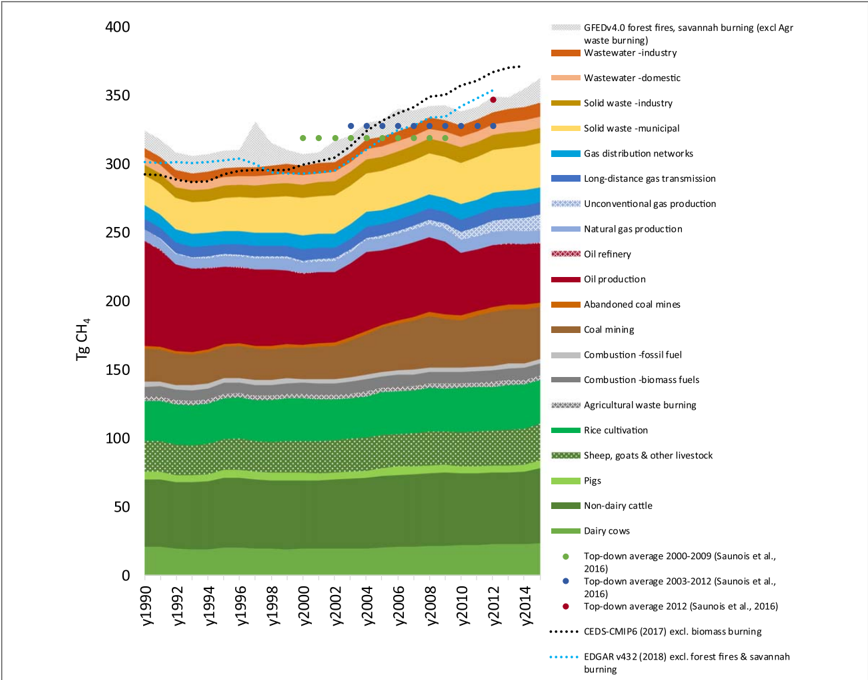
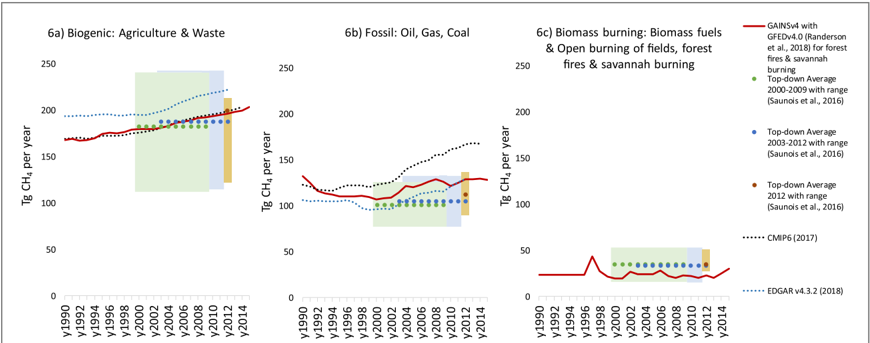
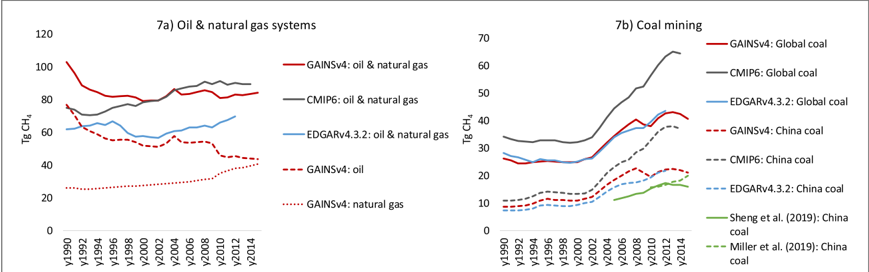
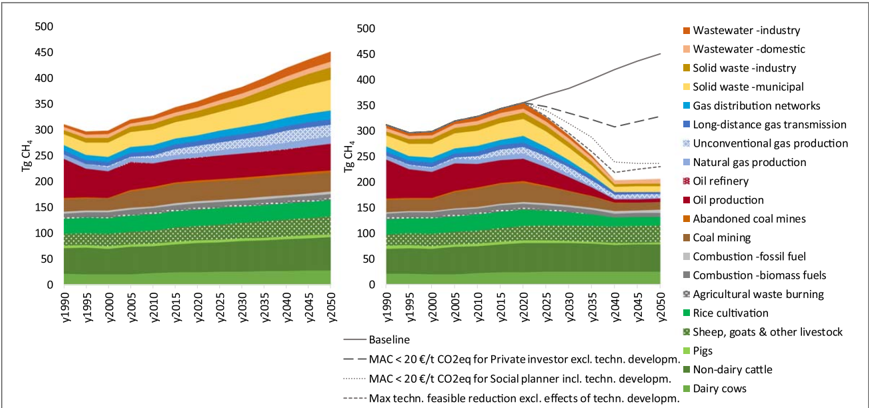
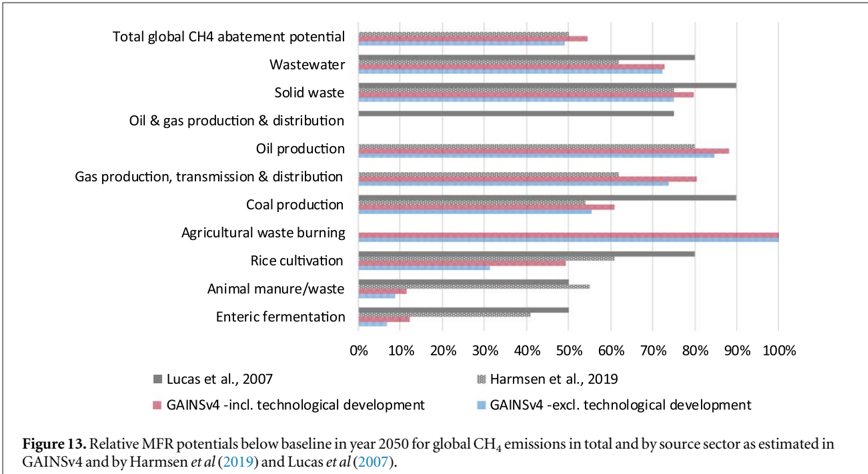
Methane is the second most important greenhouse gas after carbon dioxide contributing to human-made global warming. Keeping to the Paris Agreement of staying well below two degrees warming will require a concerted effort to curb methane emissions in addition to necessary decarbonization of the energy systems. The fastest way to achieve emission reductions in the 2050 timeframe is likely through implementation of various technical options. The focus of this study is to explore the technical abatement and cost pathways for reducing global methane emissions, breaking reductions down to regional and sector levels using the most recent version of IIASA’s Greenhouse gas and Air pollution Interactions and Synergies (GAINS) model. The diverse human activities that contribute to methane emissions make detailed information on potential global impacts of actions at the regional and sectoral levels particularly valuable for policy-makers. With a global annual inventory for 1990–2015 as starting point for projections, we produce a baseline emission scenario to 2050 against which future technical abatement potentials and costs are assessed at a country and sector/technology level. We find it technically feasible in year 2050 to remove 54 percent of global methane emissions below baseline, however, due to locked in capital in the short run, the cumulative removal potential over the period 2020–2050 is estimated at 38 percent below baseline. This leaves 7.7 Pg methane released globally between today and 2050 that will likely be difficult to remove through technical solutions. There are extensive technical opportunities at low costs to control emissions from waste and wastewater handling and from fossil fuel production and use. A considerably more limited technical abatement potential is found for agricultural emissions, in particular from extensive livestock rearing in developing countries. This calls for widespread implementation in the 2050 timeframe of institutional and behavioural options in addition to technical solutions.
Overview
The claims and statistics of this paper haven’t been checked yet.
Free: it reads the open-access text and checks the first 5 claims that cite a source we can check. Create a free account to check every claim.
Integrity signals
Registry
Cites
Statistics
Figures
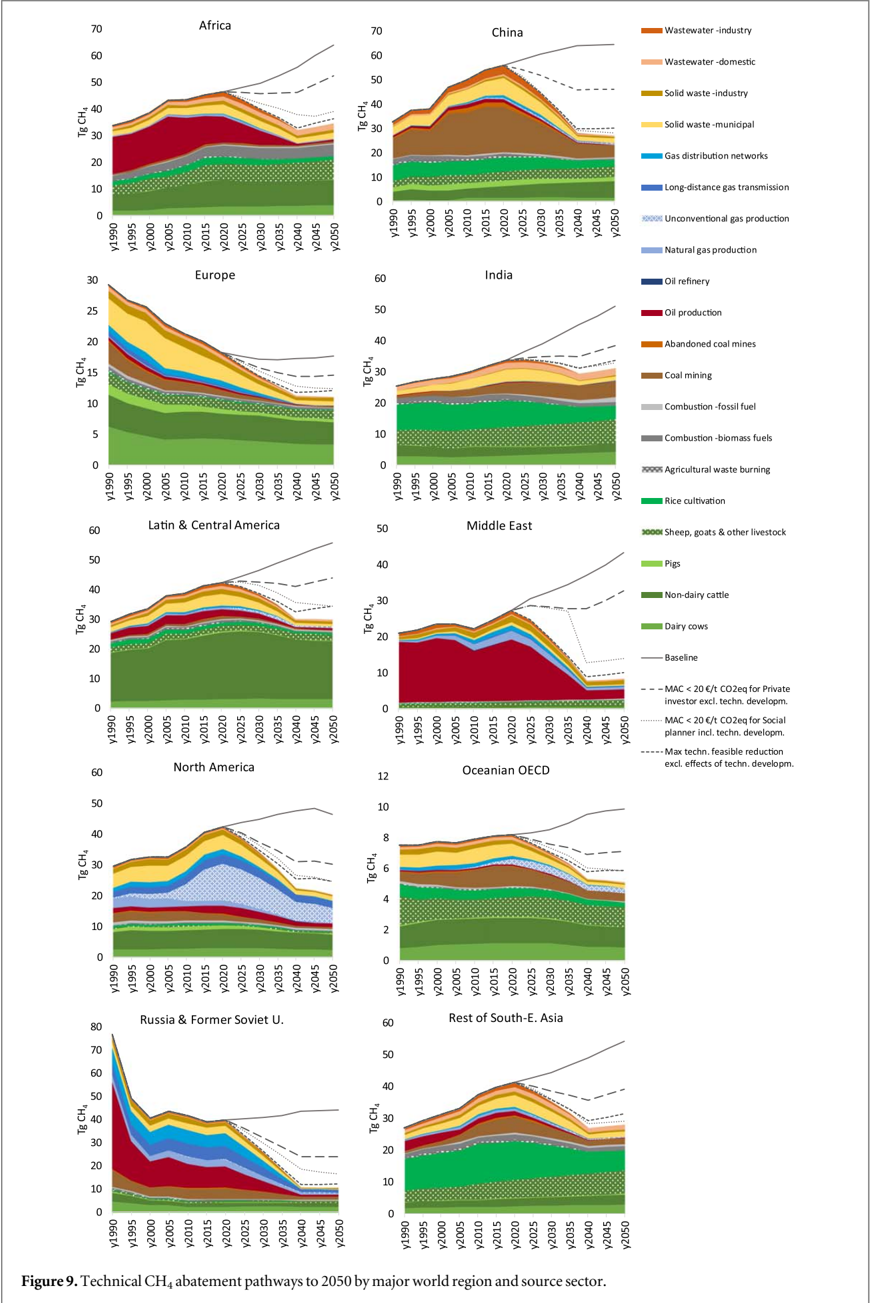
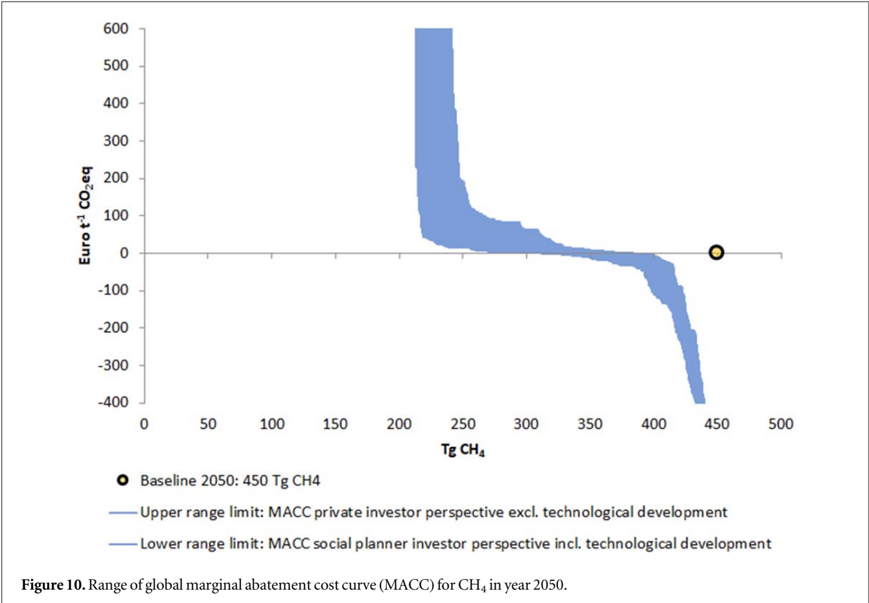
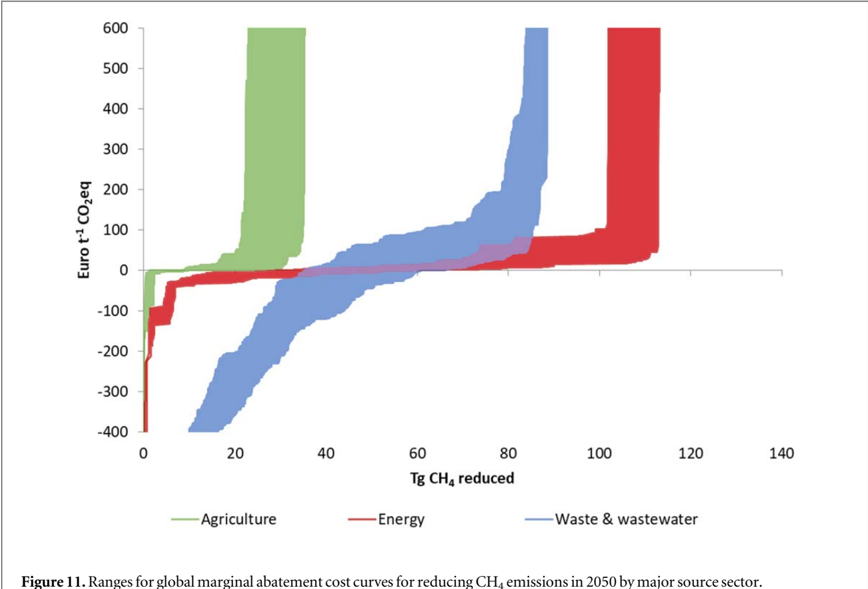
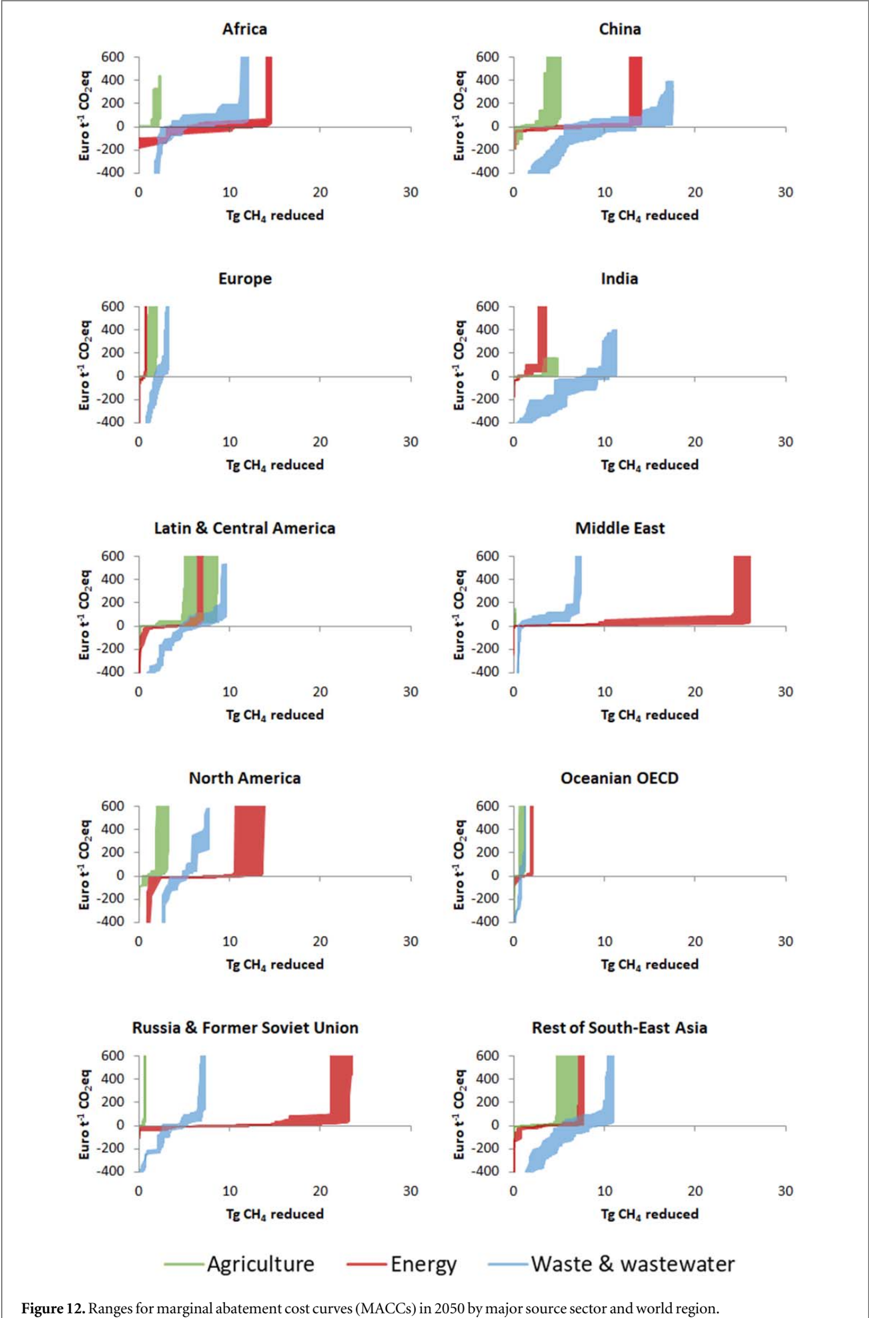
Verification
Claims the paper makes
The claims and statistics of this paper haven’t been checked yet.
Free: it reads the open-access text and checks the first 5 claims that cite a source we can check. Create a free account to check every claim.
Claims other papers make about this one
Each is checked against this paper’s own text: does it say what the citing paper says it does?
The source backs part of the claim, not all of it — or backs it for a different population, condition or comparison.
In the citing paper
“Work focused on GHG and air pollution suggest that landfills contribute about 15% to global anthropogenic CH4 emissions30”
From Potential for future reductions of global GHG and air pollutants from circular waste management systems (2022) · cites this paper as [30]
Experimental — accuracy not yet measuredThe source backs part of the claim, not all of it — or backs it for a different population, condition or comparison.
In the citing paper
“If current MSW management will prevail into the future, average CH4 emissions will increase by 71% (49–55 Tg CH4) over the amount emitted in 2015, thereby contributing to 13% of the global CH4 anthropogenic emissions estimated at 450 Tg/yr in 205030.”
From Potential for future reductions of global GHG and air pollutants from circular waste management systems (2022) · cites this paper as [30]
Experimental — accuracy not yet measuredThe source backs part of the claim, not all of it — or backs it for a different population, condition or comparison.
In the citing paper
“We estimate that MSW handling accounts for 8% (30 Tg/yr) of the global CH4 anthropogenic emissions estimated at 344 Tg/yr in 201530.”
From Potential for future reductions of global GHG and air pollutants from circular waste management systems (2022) · cites this paper as [30]
Experimental — accuracy not yet measuredThe source backs part of the claim, not all of it — or backs it for a different population, condition or comparison.
In the citing paper
“Our estimations indicate that current CH4 emissions from MSW handling account for 8% (30 Tg) of the global CH4 anthropogenic emissions estimated at 344 Tg in 201530.”
From Potential for future reductions of global GHG and air pollutants from circular waste management systems (2022) · cites this paper as [30]
Experimental — accuracy not yet measured
Self-check
Percentages, sums and reported differences re-computed from the paper’s own numbers.
The self-check needs the paper’s full text.
Citations
Cites
Food in the Anthropocene: the EAT–Lancet Commission on healthy diets from sustainable food systems
Willett, W., Rockström, J., Loken, B., Springmann, M., Lang, T., Vermeulen, S., Garnett, T., Tilman, D., DeClerck, F., Wood, A., et al. (2019) · The Lancet · doi:10.1016/s0140-6736(18)31788-4 · Cited by 10,880 · cited 1×
“…2050 timeframe of behavioural options, e.g., human diet changes that reducemeat andmilk consumption (e.g, Springmann et al 2016, Clune et al 2017,Willett et al 2019) and general institutional and social reforms indirectlymitigating greenhouse gas emissions in developing countries (Evans and…”
Background(2023) · doi:10.1126/science · Cited by 6,063
Stabilization wedges: solving the climate problem for the next 50 years with current technologies
Pacala, S., & Socolow, R. (2004) · Science · doi:10.1126/science.1100103 · Cited by 3,114
World agriculture towards 2030/2050: the 2012 revision
Alexandratos, N., Bruinsma, J., Alexandratos, N., & Bruinsma, J. (2012) · RePEc: Research Papers in Economics · doi:10.22004/ag.econ.288998 · Cited by 3,093
(2013) · Cited by 2,540
Simultaneously Mitigating Near-Term Climate Change and Improving Human Health and Food Security
Shindell, D., Kuylenstierna, J. C. I., Vignati, E., van Dingenen, R., Amann, M., Klimont, Z., Anenberg, S. C., Muller, N., Janssens-Maenhout, G., Raes, F., et al. (2012) · Science · doi:10.1126/science.1210026 · Cited by 1,382 · cited 1×
“Thismeans CH4 accounts for about 40 percent of greenhouse gases’ contribution to short-term global warming, whichmakes it an obvious candidate to target for fast climate changemitigation in the 2050 timeframe (Shindell et al 2012).”
BackgroundSelf-citationAnalysis and valuation of the health and climate change cobenefits of dietary change
Springmann, M., Godfray, H. C. J., Rayner, M., & Scarborough, P. (2016) · Proceedings of the National Academy of Sciences · doi:10.1073/pnas.1523119113 · Cited by 1,262 · cited 1×
“…calls for widespread implementation in the 2050 timeframe of behavioural options, e.g., human diet changes that reducemeat andmilk consumption (e.g, Springmann et al 2016, Clune et al 2017,Willett et al 2019) and general institutional and social reforms indirectlymitigating greenhouse gas…”
BackgroundAssessment of methane emissions from the U.S. oil and gas supply chain
Alvarez, R. A., Zavala-Araiza, D., Lyon, D. R., Allen, D. T., Barkley, Z. R., Brandt, A. R., Davis, K. J., Herndon, S. C., Jacob, D. J., Karion, A., et al. (2018) · Science · doi:10.1126/science.aar7204 · Cited by 1,187
The global methane budget 2000–2012
Saunois, M., Bousquet, P., Poulter, B., Peregon, A., Ciais, P., Canadell, J. G., Dlugokencky, E. J., Etiope, G., Bastviken, D., Houweling, S., et al. (2016) · Earth System Science Data · doi:10.5194/essd-8-697-2016 · Cited by 1,060
Self-citationSystematic review of greenhouse gas emissions for different fresh food categories
Clune, S., Crossin, E., & Verghese, K. (2017) · Journal of Cleaner Production · doi:10.1016/j.jclepro.2016.04.082 · Cited by 1,017 · cited 1×
“…in the 2050 timeframe of behavioural options, e.g., human diet changes that reducemeat andmilk consumption (e.g, Springmann et al 2016, Clune et al 2017,Willett et al 2019) and general institutional and social reforms indirectlymitigating greenhouse gas emissions in developing…”
Background
Research works printed but not linked: 2
- 39. IPCC 2013 Climate change: the physical science basis. Contribution of working group I to the Fifth assessment report of the intergovernmental panel on climate change Intergovernmental Panel on Climate Change ed T F Stocker, D Qin, G-K Plattner, M Tignor, S K Allen, J Boschung, A Nauels, Y Xia, V Bex, P M Midgley et al (Cambridge, United Kingdom and New York, NY, USA: Cambridge University Press) 2013978-1-107-05799-1
- 40. IPCC 2018 Global warming of 1.5°C. An IPCC Special Report on the impacts of global warming of 1.5°C above pre-industrial levels and related global greenhouse gas emission pathways, in the context of strengthening the global response to the threat of climate change, sustainable development, and efforts to eradicate poverty Intergovernmental Panel on Climate Change ed V Masson-Delmotte et al (Geneva: Intergovernmental Panel on Climate Change) (https://ipcc.ch/sr15/download/#chapter)
Cited by
Items 101–200 of 303
Li, N., Wang, J., Liu, R., & Höök, M. (2023) · Sustainable Production and Consumption · doi:10.1016/j.spc.2023.12.002 · Cited by 20
Wang, H., Shen, J., Gao, J., Wang, W., Zhu, L., Gu, Y., & Wang, T. (2024) · Energy · doi:10.1016/j.energy.2024.133007 · Cited by 19
Exploring the bounds of methane catalysis in the context of atmospheric methane removal
Tsopelakou, A. M., Stallard, J. C., Archibald, A. T., Fitzgerald, S., & Boies, A. (2024) · Environmental Research Letters · doi:10.1088/1748-9326/ad383f · Cited by 18
“Studies have estimated that current technologies can achieve significant methane emissions reductions ( ∼ 50 % ), but there remains a need for more approaches that enable ambient methane removal [2].”
BackgroundAleisa, E., & Alsaleh, A. (2024) · Journal of Engineering Research · doi:10.1016/j.jer.2024.09.005 · Cited by 18
Kilometre-scale simulations over Fennoscandia reveal a large loss of tundra due to climate warming
Lagergren, F., Björk, R. G., Andersson, C., Belušić, D., Björkman, M. P., Kjellström, E., Lind, P., Lindstedt, D., Olenius, T., Pleijel, H., et al. (2024) · Biogeosciences · doi:10.5194/bg-21-1093-2024 · Cited by 17
Dunn, J. B., Greene, K., Vasquez-Arroyo, E., Awais, M., Gómez-Sanabria, A., Kyle, P. G., Palatnik, R. R., Schaeffer, R., Zhou, P., Aissaoui, B., et al. (2024) · Environmental Science & Technology Letters · doi:10.1021/acs.estlett.4c00280 · Cited by 18
Self-citationThe Energy Modeling Forum (EMF)-30 study on short-lived climate forcers: introduction and overview
Smith, S. J., Klimont, Z., Drouet, L., Harmsen, M. J. H. M., Luderer, G., Riahi, K., van Vuuren, D. P., & Weyant, J. P. (2020) · Climatic Change · doi:10.1007/s10584-020-02938-5 · Cited by 17
Self-citationMitigation of non-CO 2 greenhouse gases from Indian agriculture sector
Patange, O., Purohit, P., Avashia, V., Klimont, Z., & GARG, A. K. (2024) · Environmental Research Letters · doi:10.1088/1748-9326/ad4e4e · Cited by 16
“The EF could vary based on the control measure (m) whose implementation depends on alternate policies scenarios and technology penetration rates (Winiwarter et al 2018, Amann et al 2020, Höglund-Isaksson et al 2020).”
BackgroundMethodSelf-citationGlobal Fossil Methane Emissions Constrained by Multi‐Isotopic Atmospheric Methane Histories
Fujita, R., Graven, H., Zazzeri, G., Hmiel, B., Petrenko, V. V., Smith, A. M., II, Michel, S., & Morimoto, S. (2025) · Journal of Geophysical Research Atmospheres · doi:10.1029/2024jd041266 · Cited by 16
Evaluating China’s Role in Achieving the 1.5 °C Target of the Paris Agreement
Xiong, W., Tanaka, K., Ciais, P., & Yan, L. (2022) · Energies · doi:10.3390/en15166002 · Cited by 16
Strategies for variable regulation of methanogenesis efficiency and velocity
Efremenko, E. N., Stepanov, N., Senko, O. V., Maslova, O. V., Volikov, A. B., Zhirkova, A., & Perminova, I. V. (2022) · Applied Microbiology and Biotechnology · doi:10.1007/s00253-022-12148-x · Cited by 16
Yang, G., Liu, M., Gao, Y., Han, S., Meng, F., Ju, T., & Jiang, J. (2024) · Environmental Science and Pollution Research · doi:10.1007/s11356-024-33042-1 · Cited by 15
“Landfilling is the prevailing garbage disposal method, contributing ~ 15% of global man-made CH 4 emissions (Höglund-Isaksson et al. 2020; Zhao et al. 2019).”
Physical and practical constraints on atmospheric methane removal technologies
Pennacchio, L., Mikkelsen, M. K., Krogsbøll, M., van Herpen, M. M. J. W., & Johnson, M. S. (2024) · Environmental Research Letters · doi:10.1088/1748-9326/ad7041 · Cited by 15
van Caspel, W. E., Klimont, Z., Heyes, C., & Fagerli, H. (2024) · Atmospheric chemistry and physics · doi:10.5194/acp-24-11545-2024 · Cited by 16
Self-citationGuo, F., Dai, F., Gong, P., & Zhou, Y. (2025) · Earth system science data · doi:10.5194/essd-17-4799-2025 · Cited by 14
He, Z., Shen, J., Zhu, Y., Feng, J., & Pan, X. (2023) · Chemosphere · doi:10.1016/j.chemosphere.2023.138623 · Cited by 13
Rahimdel, M. J., Giv, M. J., & Bahonar, M. R. (2023) · Geotechnical and Geological Engineering · doi:10.1007/s10706-023-02695-z · Cited by 14
“Methane gas recovery, not only secures the mining environment but also the ventilation costs of mine are reduced and accordingly the adverse consequences such as green-house gas emissions are reduced (Höglund-Isaksson et al. 2020).”
Tenkanen, M., Tsuruta, A., van der Gon, H. D., Höglund-Isaksson, L., Leppänen, A., Markkanen, T., Petrescu, A. M. R., Raivonen, M., Aaltonen, H., & Aalto, T. (2025) · Atmospheric chemistry and physics · doi:10.5194/acp-25-2181-2025 · Cited by 17
Self-citationDecarbonizing Water: The Potential to Apply the Voluntary Carbon Market toward Global Water Security
Ecklu, J., Barstow, C. K., MacDonald, L., Fankhauser, K., Johnson, A. A. T., Adler, I., Ehrhardt, D., & Thomas, E. (2024) · ACS ES&T Water · doi:10.1021/acsestwater.4c00149 · Cited by 11
Behrendt, J., Smith, S. J., Yu, S., Chen, S., Zhang, H., Zhu, M., Williams, J., Cheng, X., Dule, A. A., Li, W., et al. (2025) · Earth s Future · doi:10.1029/2024ef005298 · Cited by 11
Liu, Q., & Teng, F. (2025) · One Earth · doi:10.1016/j.oneear.2025.101417 · Cited by 11
Production Profile of Farms and Methane and Nitrous Oxide Emissions
Kołoszko-Chomentowska, Z., Sieczko, L., & Trochimczuk, R. (2021) · Energies · doi:10.3390/en14164904 · Cited by 11
“[53], the possibilities of reducing methane and nitrous oxide emissions from agriculture are limited and technological solutions are insufficient.”
BackgroundMashiyi, N., Shikwambana, L., & Kganyago, M. (2024) · Geocarto International · doi:10.1080/10106049.2024.2306266 · Cited by 11
Flood, V. A., Strong, K., Whaley, C. H., Walker, K. A., Blumenstock, T., Hannigan, J. W., Mellqvist, J. M., Notholt, J., Palm, M., Röhling, A. N., et al. (2024) · Atmospheric chemistry and physics · doi:10.5194/acp-24-1079-2024 · Cited by 11
Liu, W., Li, N., Gao, P., Di, X., Liu, L., & Li, G. K. (2024) · Resources Conservation and Recycling · doi:10.1016/j.resconrec.2024.107831 · Cited by 11
He, X., & Lei, L. (2020) · Separation and Purification Technology · doi:10.1016/j.seppur.2020.118180 · Cited by 11
Inclusion of Camelina sativa Seeds in Ewes’ Diet Modifies Rumen Microbiota
Christodoulou, C., Mavrommatis, A., Loukovitis, D., Symeon, G. K., Dotas, V., Kotsampasi, B., & Tsiplakou, E. (2023) · Animals · doi:10.3390/ani13030377 · Cited by 11
“Nevertheless, it is essential to evaluate mitigation strategies and advanced precision feeding techniques, considering that methane (CH4) emissions are expected to rise by 30% by 2050 as a result of meat and milk increasing demands [5].”
BackgroundMethane Emissions in the ESG Framework at the World Level
Costantiello, A., Laureti, L., Quarto, A., Leogrande, A., & Magazzino, C. (2025) · Methane · doi:10.3390/methane4010003 · Cited by 10
Pennacchio, L., van Herpen, M. M. J. W., Meidan, D., Saiz‐Lopez, A., & Johnson, M. S. (2025) · ACS Earth and Space Chemistry · doi:10.1021/acsearthspacechem.4c00283 · Cited by 10
Fragkou, E., Tsegas, G., Alyuz-Ozdemir, U., Hänninen, R., Moldanová, J., Jütterström, S., Majamäki, E., Jalkanen, J.-P., Sokhi, R. S., Kukkonen, J., et al. (2025) · Atmospheric Environment · doi:10.1016/j.atmosenv.2025.121347 · Cited by 10
Förster, E., Huntrieser, H., Lichtenstern, M., Pätzold, F., Bretschneider, L., Schlerf, A., Bollmann, S., Lampert, A., Nęcki, J., Jagoda, P., et al. (2025) · Atmospheric measurement techniques · doi:10.5194/amt-18-7153-2025 · Cited by 10
Ghavam, S., Taylor, C. M., & Styring, P. (2021) · Frontiers in Energy Research · doi:10.3389/fenrg.2021.600071 · Cited by 10
Nugrahaeningtyas, E., Lee, J., Lee, D.-J., Kim, J., & Park, K.-H. (2025) · Journal of Animal Science and Technology · doi:10.5187/jast.2024.e7 · Cited by 10
Differences in anthropogenic greenhouse gas emissions estimates explained
Lamb, W. F., Andrew, R. M., Jones, M. W., Nicholls, Z., Peters, G. P., Smith, C., Saunois, M., Grassi, G., Pongratz, J., Smith, S. J., et al. (2026) · Earth system science data · doi:10.5194/essd-18-2549-2026 · Cited by 9
Höglund-Isaksson, L., Winiwarter, W., Purohit, P., Gómez-Sanabria, A., Rafaj, P., Warnecke, L., & Schöpp, W. (2021) · IIASA PURE (International Institute of Applied Systems Analysis) · Cited by 9
Self-citationThe value of early methane mitigation in preserving Arctic summer sea ice
Sun, T., Ocko, I., & Hamburg, S. P. (2022) · Environmental Research Letters · doi:10.1088/1748-9326/ac4f10 · Cited by 9
Chlorine-mediated methane activation: an efficient photocatalytic pathway to valuable chemicals
da Silva, M. A. R., Cunha, C. S., Silva, L. L. B., Farias, I. G., & Teixeira, I. F. (2025) · Chemical Communications · doi:10.1039/d4cc06303a · Cited by 8
Global coal trade induces large CH4 emissions
Guo, J., Gao, J., Yan, K., Zhang, B., & Liu, H. (2025) · iScience · doi:10.1016/j.isci.2025.112073 · Cited by 8
“43 In addition, the coal sector’s significant potential in reducing CH 4 emissions 44,45 and the co-benefits of emissions mitigation 46 have been recognized.”
Kivimäki, E., Tenkanen, M., Aalto, T., Buchwitz, M., Luojus, K., Pulliainen, J. T., Rautiainen, K., Schneising, O., Sundström, A., Tamminen, J., et al. (2025) · Biogeosciences · doi:10.5194/bg-22-5193-2025 · Cited by 8
The economics of emissions in rice production: a survey-data-driven approach in Vietnam
Chu, L. (2023) · Fulbright Review of Economics and Policy · doi:10.1108/frep-08-2023-0031 · Cited by 7
Carbon cycle and climate feedbacks under CO 2 and non-CO 2 overshoot pathways
Melnikova, I., Ciais, P., Tanaka, K., Shiogama, H., Tachiiri, K., Yokohata, T., & Boucher, O. (2025) · Earth System Dynamics · doi:10.5194/esd-16-257-2025 · Cited by 7
Anthropogenic Emissions Inventories of Air Pollutants
Granier, C., Liousse, C., McDonald, B., & Middleton, P. B. (2023) · Springer eBooks · doi:10.1007/978-981-15-2760-9_5 · Cited by 8
İm, U., Tsigaridis, K., Bauer, S. E., Shindell, D. T., Olivié, D., Wilson, S., Sørensen, L. L., Langen, P. L., & Eckhardt, S. (2025) · Environmental Research Climate · doi:10.1088/2752-5295/adb3c0 · Cited by 6
“The ECLIPSE V6b emissions dataset is a further evolution of the scenarios established in the EU funded ECLIPSE project (Stohl et al 2015, Klimont et al 2017).”
InfluentialHayes, F., Sharps, K., van Caspel, W. E., Klimont, Z., Heyes, C., & Fagerli, H. (2025) · Environmental Pollution · doi:10.1016/j.envpol.2025.126654 · Cited by 6
Self-citationCastles in the Sky: Revisiting the global methane pledge
Guo, J., Gao, J., Yan, K., Zhang, B., & Liu, H. (2025) · Energy Policy · doi:10.1016/j.enpol.2025.114785 · Cited by 7
Liu, W., Li, N., Liu, L., Gao, P., Di, X., & Li, G. K. (2025) · Resources Conservation and Recycling · doi:10.1016/j.resconrec.2025.108625 · Cited by 6
Liang, S., Wang, K., Duan, W., & Ma, Y. (2025) · Resources Conservation and Recycling · doi:10.1016/j.resconrec.2025.108738 · Cited by 6
He, J., Naik, V., & Horowitz, L. W. (2026) · AGU Advances · doi:10.1029/2025av001822 · Cited by 6
“Both CEDS (EXP1) and EDGAR v5.”
InfluentialMajdouline, C., Khamar, M., Jalil, M. H. E., Cherkaoui, E., & Zouahri, A. (2023) · International Journal of Environmental Studies · doi:10.1080/00207233.2023.2231274 · Cited by 6
“But, the same study suggests that effective reduction strategies could bring these emissions down to 11 Tg a −1 [14].”
BackgroundSensitivity of Wintertime Arctic Black Carbon to Removal Processes and Regional Alaskan Sources
Ioannidis, E., Law, K. S., Raut, J., Marelle, L., Onishi, T., Andrews, E. J., Ohata, S., Mori, T., Morris, S. M., Kondo, Y., et al. (2025) · Journal of Geophysical Research Atmospheres · doi:10.1029/2024jd042885 · Cited by 5
“…and Air Quality Impacts of Short‐Lived Pollutants version 6 (ECLIPSE v6b) inventory, with a resolution of 50 km are used in the simulations at quasi‐hemispheric and regional scale for winter 2013–2014 (Amann et al., 2011; Höglund‐Isaksson et al., 2020; Klimont et al., 2017; Whaley et al., 2022).”
Self-citationOutdoor air pollution due to transportation, landfill, and incinerator
Astuti, R. D. P., & Rauf, A. U. (2024) · Elsevier eBooks · doi:10.1016/b978-0-443-16088-2.00006-5 · Cited by 5
Unraveling the dynamics of atmospheric methane: the impact of anthropogenic and natural emissions
Fu, B., Jiang, Y., Chen, G., Lu, M., Lai, Y., Suo, X., & Li, B. (2024) · Environmental Research Letters · doi:10.1088/1748-9326/ad4617 · Cited by 5
“0 [32], and GAINSv4 [33].”
Design and implementation of a new module to evaluate the cost of air pollutant abatement measures
Bessagnet, B., Pisoni, E., Thunis, P., & Mascherpa, A. (2022) · Journal of Environmental Management · doi:10.1016/j.jenvman.2022.115486 · Cited by 5
The African Regional Greenhouse Gases Budget (2010-2019)Preprint
Ernst, Y., Archibald, S. A., Chevallier, F., Ciais, P., Fischer, C. G., Gaubert, B., Higginbottom, T. P., Higgins, S. I., Lawal, S., Lacroix, F. K. M., et al. (2023) · ESS Open Archive · doi:10.22541/essoar.169866878.81035511/v1 · Cited by 5
Methane Abatement Costs in the Oil and Gas Industry: Survey and Synthesis
Aldy, J. E., Reinhardt, F. L., & Stavins, R. N. (2025) · National Bureau of Economic Research · doi:10.3386/w33564 · Cited by 5
Clean Air and Climate Solutions for ASEAN
United Nations Environment Programme (2025) · United Nations Environment Programme eBooks · doi:10.59117/20.500.11822/47268 · Cited by 4
Chen, M., Li, S., Su, X., Feng, Y., & Peng, Y. (2025) · Resources Conservation and Recycling · doi:10.1016/j.resconrec.2025.108343 · Cited by 4
Advancing low-emission rice farming in Vietnam: a government-led carbon market approach
Do, T. N., Le, L., Nguyen, N.-M., & Chu, L. (2026) · Climate and Development · doi:10.1080/17565529.2026.2646235 · Cited by 4
The Efficiencies and Products of Dilute Methane Oxidation in a Chlorine Radical Photoreactor
Randall, R., Kessler, M., Jackson, R. B., & Majumdar, A. (2026) · Environmental Science & Technology · doi:10.1021/acs.est.6c04737 · Cited by 4
Deepshikha, D., Chandra, N., Höglund-Isaksson, L., Patra, P. K., & Dey, S. (2025) · Environmental Science & Technology · doi:10.1021/acs.est.4c06201 · Cited by 4
Self-citationAndersson, C., Olenius, T., Alpfjord, H., Almroth‐Rosell, E., Björk, R. G., Björkman, M. P., Moldan, F., & Engardt, M. (2025) · The Science of The Total Environment · doi:10.1016/j.scitotenv.2025.179083 · Cited by 4
Feng, R., Fan, K.-W., & Qi, Z. (2025) · Atmosphere · doi:10.3390/atmos16111245 · Cited by 4
“Abating CH 4 emissions means economic costs [75].”
InfluentialRöckmann, T., Menoud, M., van Es, J., van der Veen, C., Maazallahi, H., Jagoda, P., Nęcki, J., Bartyzel, J., Korbeń, P., Defratyka, S., et al. (2026) · Atmospheric chemistry and physics · doi:10.5194/acp-26-723-2026 · Cited by 4
Mei, A., Ragazzo, A. V., Rantica, E., & Fontinovo, G. (2023) · AgriEngineering · doi:10.3390/agriengineering5030090 · Cited by 4
Circular Biowaste Management and its Contribution to the Sustainable Development Goals
Lenkiewicz, Z. (2023) · Royal Society of Chemistry eBooks · doi:10.1039/9781837671984-00224 · Cited by 4
ÖNDER, G. T. (2026) · Clean Technologies and Environmental Policy · doi:10.1007/s10098-026-03538-0 · Cited by 4
GHG Emission Mitigation of Turkish Agriculture Sector: Potential and Cost Assessment
Sarica, K., Dellal, İ., Kollugil, E. T., & Ersoy, A. E. (2023) · Mitigation and Adaptation Strategies for Global Change · doi:10.1007/s11027-023-10073-6 · Cited by 4
“In the international context, feed changes and biogas digester options have also been studied in the context of livestock and manure management (Höglund-Isaksson et al. 2020).”
BackgroundCatalytic efficiencies for atmospheric methane removal in the high-chlorine regimePreprint
Pennacchio, L., van Herpen, M. M. J. W., Meidan, D., Saiz‐Lopez, A., & Johnson, M. S. (2023) · ChemRxiv · doi:10.26434/chemrxiv-2023-3r8sf · Cited by 4
Im, U., Shindell, D. T., Tsigaridis, K., Bauer, S. E., Olivié, D., Wilson, S., Sørensen, L. L., Langen, P. L., Eckhardt, S., Höglund-Isaksson, L., et al. (2026) · Geophysical Research Letters · doi:10.1029/2025gl118967 · Cited by 3
“Further details on assumptions for the CLE and MTFR scenarios for CH 4 can be found in Höglund‐Isaksson et al. (2020).”
Self-citationLimiting warming by CO2 and methane mitigation in an expanded scenario space
Weber, K., Knutti, R., Brun, L., & Brunner, C. (2026) · Communications Earth & Environment · doi:10.1038/s43247-026-03832-1 · Cited by 3
“CH 4 mitigation is compelling precisely because it aligns multiple objectives: it is technically feasible with known and untapped potential 12,18,20,56 , economically attractive with national bene fi ts even without global cooperation 57,58 , and affects global temperatures in the near-term by…”
He, C., Lu, X. H., Li, S., Huang, X., Xiao, H., Song, C., Li, T., Yuan, W., & Fan, S. (2026) · ACS ES&T Air · doi:10.1021/acsestair.5c00446 · Cited by 3
Rethinking energy transition strategies for the European Union amid rising energy prices
Meng, W., Nieto, J., Guan, D., Meng, J., Sander, R., Pöschl, U., Hubacek, K., Su, H., Tao, S., & Cheng, Y. (2026) · Proceedings of the National Academy of Sciences · doi:10.1073/pnas.2609606123 · Cited by 3
Global methane emissions from rice paddies are now increasingly quantifiable
Mehla, M. K., Singh, A., Jeong, J., & Ran, L. (2026) · Communications Earth & Environment · doi:10.1038/s43247-026-03902-4 · Cited by 3
“Forexample,IIASA ’ sGAINShasa more policy-oriented approach, with focus on mitigation potential of different alternatives and future scenarios, model assumes that methane emissions from intermittently fl ooded rice are directly half of those from continuously fl ooded rice 132 .”
Biogas as methane mitigation path on dairy cattle waste management
Herliatika, A., & Widiawati, Y. (2022) · IOP Conference Series Earth and Environmental Science · doi:10.1088/1755-1315/1041/1/012085 · Cited by 3
“Total methane in biogas purified using nylon 5μm for 20 minutes is 67,5971% [7].”
Methodvan Herpen, M. M. J. W., Pennacchio, L., Brashear, C., Mikkelsen, M. K., Saiz‐Lopez, A., Röckmann, T., & Johnson, M. S. (2025) · Journal of Geophysical Research Atmospheres · doi:10.1029/2024jd041156 · Cited by 3
Arora, A., Gadhavi, H., Ramachandran, S., & Rajesh, T. A. (2025) · Atmospheric Environment · doi:10.1016/j.atmosenv.2025.121367 · Cited by 3
Managing solid waste to co-control carbon and nitrogen leakage in China
Xu, X., Zhan, J., Chen, T., Zhang, X., Zou, Y., & Gu, B. (2025) · Resources Conservation and Recycling · doi:10.1016/j.resconrec.2025.108603 · Cited by 3
Effect of Surface Methane Controls on Ozone Concentration and Rice Yield in Asia
Tatsumi, K. (2023) · Atmosphere · doi:10.3390/atmos14101558 · Cited by 3
Tarımsal Üretimde Sera Gazı Emisyonları ve Karbon Ayak İzi Yönetimi
Öztürk, H. H. (2024) · Akademisyen Kitabevi eBooks · doi:10.37609/akya.2986 · Cited by 3
Targeting methane emissions to mitigate the risk of climate overshoot
OECD (2025) · OECD Net Zero+ Policy Papers · doi:10.1787/5fa37719-en · Cited by 3
Borowski, M. J., Zwolińska-Glądys, K., & Szmuk, A. (2023) · Mininig - Informatics Automation and Electrical Engineering · doi:10.7494/miag.2023.2.554.7 · Cited by 2
Vast and hidden urban methane emissions from the Russia–Ukraine war
Feng, Z., Hu, R., Pan, Y., Xv, Q., Zhang, J., Wang, Q., Cao, K.-Q., Liu, S., Baklanov, A. A., Christensen, J. H., et al. (2025) · Nature Cities · doi:10.1038/s44284-025-00309-8 · Cited by 2
“…existing bottom-up and top-down inventory estimates (which may underestimate actual emissions), this magnitude represents approximately 3%–5% of reported US anthropogenic hourly rates, ~2%–6% of Russian rates and ~30%–35% of Australian rates (Supplementary Text 2 and Supplementary Table 2) 21–25 .”
Design and evaluation of a novel two‐phase partitioning bioreactor to enhance methane mass transfer
Bertrand, R. S., Dizon, L. S., Holmes, W. E., Fortela, D. L. B., CHISTOSERDOV, A. Y., Hernandez, R. A., Zappi, M. E., & Revellame, E. D. (2025) · Journal of Chemical Technology & Biotechnology · doi:10.1002/jctb.70063 · Cited by 2
Enabling a Digital Earth for methane emissions management with equal-area discrete global grids
Li, M. E., & Liang, S. H. L. (2026) · International Journal of Digital Earth · doi:10.1080/17538947.2025.2607210 · Cited by 2
“Several global and continental‐scale inventories exist, such as EDGAR, GFEI, GAINS, and CAMS-REG (Höglund-Isaksson et al. 2020; Scarpelli et al. 2020; Kuenen et al. 2022; Scarpelli, Jacob, Grossman, et al. 2022; Crippa et al. 2023; Scarpelli et al. 2025).”
InfluentialMengistu, A. G., Tsuruta, A., Berchet, A., Thompson, R. L., Tenkanen, M., Lindqvist, H., Markkanen, T., Leppänen, A., Laitinen, A., Martinez, A., et al. (2026) · Atmospheric chemistry and physics · doi:10.5194/acp-26-12295-2026 · Cited by 2
Self-citationHuman-in-the-loop based framework for solid waste dumps detection in remote sensing images
Wang, L., Xiao, P., Zhang, X., Song, Y., Guo, L., Wang, D., & Zhang, Y. (2026) · International Journal of Applied Earth Observation and Geoinformation · doi:10.1016/j.jag.2026.105133 · Cited by 2
The economics of elusive methane diplomacy: forecasting 2030 emissions in China, India, and Russia
Gurbanov, S., Mikayilov, J. I., & Talmachou, A. (2026) · Humanities and Social Sciences Communications · doi:10.1057/s41599-026-06920-x · Cited by 2
de Lima, G. M., & Schirmer, W. N. (2024) · Revista Geama · Cited by 2
Manure Management to Reduce Methane Emissions
Rad, A. K., Etesami, H., Astaikina, A., & Streletskii, R. A. (2023) · Springer eBooks · doi:10.1007/978-3-031-32789-6_3 · Cited by 2
Khazaei, M., Ebrahimi, S., Samarghandi, H., Boloorchian, M., & Abbasabadarabi, S. (2026) · Systemic Practice and Action Research · doi:10.1007/s11213-026-09776-z · Cited by 2
Singh, N., & Mina, U. (2023) · Environmental Monitoring and Assessment · doi:10.1007/s10661-023-10979-3 · Cited by 2
The economic consequences of air pollution policies in Arctic Council countries: A sectoral analysis
Valriberas, D. O., Lanzi, E., Klimont, Z., & Dingenen, R. V. (2023) · OECD environment working papers · doi:10.1787/19875eaf-en · Cited by 2
Self-citationNiamir, L., Riahi, K., Brutschin, E., Byers, E., Gómez-Sanabria, A., Kaltenegger, K., Kamei, M., Kiesewetter, G., Kılkış, Ş., Klimont, Z., et al. (2024) · IIASA PURE (International Institute of Applied Systems Analysis) · doi:10.5281/zenodo.10703436 · Cited by 2
Self-citationEcklu, J., Johnson, A. A. T., Landon, T., & Thomas, E. (2024) · Water · doi:10.3390/w16182578 · Cited by 1
Current Estimates on Greenhouse Gas Emissions in China Between 1970 and 2023
Yao, S., Fan, K.-W., Qi, Z., Feng, R., & Zhou, B. (2025) · Atmosphere · doi:10.3390/atmos16111276 · Cited by 1
Majdouline, C., Ajmani, S., Jalil, M. H. E., Khamar, M., Cherkaoui, E., & Zouahri, A. (2026) · Euro-Mediterranean Journal for Environmental Integration · doi:10.1007/s41207-026-01082-3 · Cited by 1
“Urban areas generate large quantities of Municipal Solid Waste (MSW), of which organic waste represents a dominant fraction, accounting for nearly 50% of total MSW Bank Group 2018), potentially doubling methane emissions from MSW landfills to nearly 60 Tg·y⁻¹ (Höglund-Isaksson et al. 2020).”
Yinhe, D., Shu, Y., Sun, H., Liu, S., Ma, Z., Höglund-Isaksson, L., & Gao, Q. (2026) · Atmosphere · doi:10.3390/atmos17040419 · Cited by 1
Self-citationDynamic safe nitrogen boundary for maintaining surface water quality in China
Zou, Y., Wu, J., Xu, X., Deng, O., Duan, J., Zhan, J., Wang, M., Ros, G. H., VRIES, W. D., & Gu, B. (2026) · Science Advances · doi:10.1126/sciadv.aeb4368 · Cited by 1
“A specific framework for cost quantification can be found in Zhang et al. ( 62 ) and the GAINS model ( 64 , 65 ).”
Machine-learning-based estimates of global natural vegetated wetland methane emissions (2000–2025)
Li, M., Jackson, R. B., Saunois, M., Ciais, P., Poulter, B., Canadell, J. G., Patra, P. K., Tian, H., Zhang, Z., Fluet‐Chouinard, E., et al. (2026) · Earth system science data · doi:10.5194/essd-18-3507-2026 · Cited by 1
Global methane emission estimates from a dual-isotope inversion: new constraints from δ D-CH 4
Dasgupta, B., Pandey, S., Houweling, S., Menoud, M., van der Veen, C., Miller, J. B., Riddell‐Young, B., Michel, S., Sperlich, P., Morimoto, S., et al. (2026) · Atmospheric chemistry and physics · doi:10.5194/acp-26-8601-2026 · Cited by 1
Metadata
- Authors
- Höglund-Isaksson, L., Gómez-Sanabria, A., Klimont, Z., Rafaj, P., & Schöpp, W.
- Affiliations
- International Institute for Applied Systems Analysis (AT)
- Venue
- Environmental Research Communications
- Publisher
- IOP Publishing
- Published
- 2020-02-01
- Volume
- 2
- Issue
- 2
- Pages
- 025004
- ISSN
- 2515-7620 (ISSN-L)
- OpenAlex
- W3006221284
- Cited by
- 242
- References
- 60
- Citations by year
- 2026: 35 · 2025: 44 · 2024: 41 · 2023: 41 · 2022: 35 · 2021: 35 · 2020: 9
- FWCI
- 11.17
- Type
- journal article
- Language
- en
- Open access
- gold
- doi.org
- Licence
- cc-by
- creativecommons.org/licenses/by/4.0/ (vor, 26 d)
- iopscience.iop.org/info/page/text-and-data-mining (tdm, 26 d)
- Locations
- Environmental Research Communications (publishedVersion, cc-by)
- IIASA PURE (International Institute of Applied Systems Analysis) (acceptedVersion, cc-by)
- Funders
- Naturvårdsverket (NV-00168-18)
- Topics
- Physical Sciences › Environmental Science › Global and Planetary Change › Atmospheric and Environmental Gas Dynamics
- Social Sciences › Economics, Econometrics and Finance › Economics and Econometrics › Climate Change Policy and Economics
- Physical Sciences › Energy › Renewable Energy, Sustainability and the Environment › Renewable energy and sustainable power systems
- Keywords
- methane emissions, abatement costs, greenhouse gas emissions reduction, Paris Agreement, fossil fuel production, agricultural methane emissions, livestock methane emissions, GAINS model, climate policy
About these checks
Registry, retraction, Cites and statistics results are computed, not judged, with one exception: a printed reference that no index lists is read once by a model before it counts as a citation error. Claims are extracted by a model and kept only when their quote appears verbatim in the text; each cited source is then checked, with a model’s help, for whether it says what the claim relies on. Those verdicts can be wrong — read the claim’s quote and the cited source before relying on one.
Statistics and arithmetic are recomputed, not judged.
Confidence bands are shown only for fields calibrated on our annotated test set. None is calibrated yet, so no band is shown.
What counts as a claim ›How we measure confidence ›How we check this ›
Are you an author, or do you see a problem with this page? Request a review
Data sources
Bibliographic data: Semantic Scholar, OpenAlex, Crossref.
Contains information from the Semantic Scholar Academic Graph Datasets, made available under the ODC Attribution License (ODC-BY 1.0).
Semantic Scholar’s data is described in: Kinney, R., et al. (2023). The Semantic Scholar Open Data Platform. arXiv:2301.10140.
