

Technical potentials and costs for reducing global anthropogenic methane emissions in the 2050 timeframe –results from the GAINS model
Open accessThe DOI matches its Crossref record; 58 of the 60 references it cites were found in a registry or an index.
Abstract
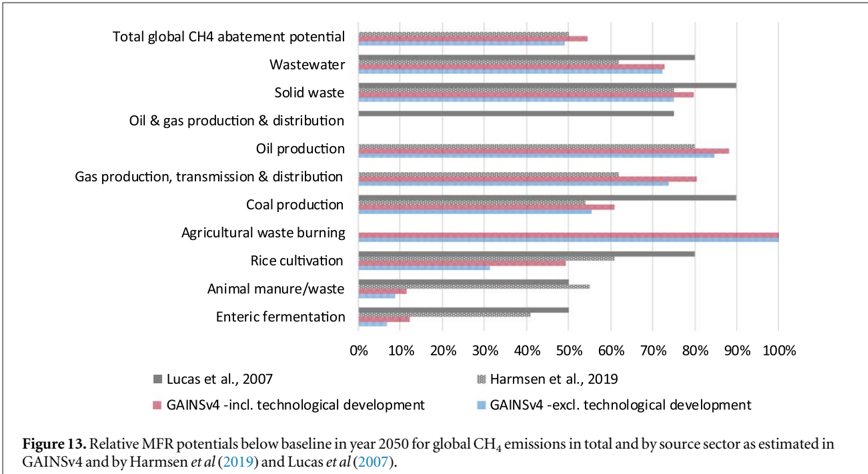
Methane is the second most important greenhouse gas after carbon dioxide contributing to human-made global warming. Keeping to the Paris Agreement of staying well below two degrees warming will require a concerted effort to curb methane emissions in addition to necessary decarbonization of the energy systems. The fastest way to achieve emission reductions in the 2050 timeframe is likely through implementation of various technical options. The focus of this study is to explore the technical abatement and cost pathways for reducing global methane emissions, breaking reductions down to regional and sector levels using the most recent version of IIASA’s Greenhouse gas and Air pollution Interactions and Synergies (GAINS) model. The diverse human activities that contribute to methane emissions make detailed information on potential global impacts of actions at the regional and sectoral levels particularly valuable for policy-makers. With a global annual inventory for 1990–2015 as starting point for projections, we produce a baseline emission scenario to 2050 against which future technical abatement potentials and costs are assessed at a country and sector/technology level. We find it technically feasible in year 2050 to remove 54 percent of global methane emissions below baseline, however, due to locked in capital in the short run, the cumulative removal potential over the period 2020–2050 is estimated at 38 percent below baseline. This leaves 7.7 Pg methane released globally between today and 2050 that will likely be difficult to remove through technical solutions. There are extensive technical opportunities at low costs to control emissions from waste and wastewater handling and from fossil fuel production and use. A considerably more limited technical abatement potential is found for agricultural emissions, in particular from extensive livestock rearing in developing countries. This calls for widespread implementation in the 2050 timeframe of institutional and behavioural options in addition to technical solutions.
Overview
The claims and statistics of this paper haven’t been checked yet.
Free: it reads the open-access text and checks the first 5 claims that cite a source we can check. Create a free account to check every claim.
Integrity signals
Registry
Cites
Statistics
Figures
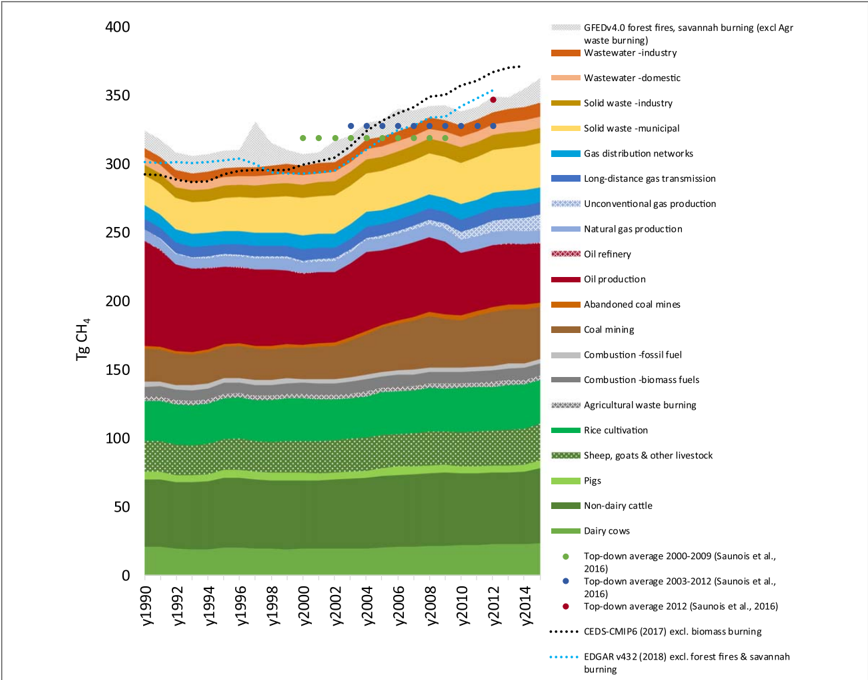
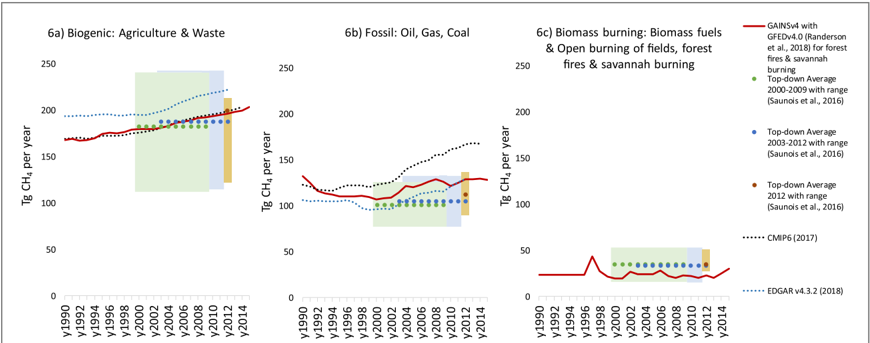
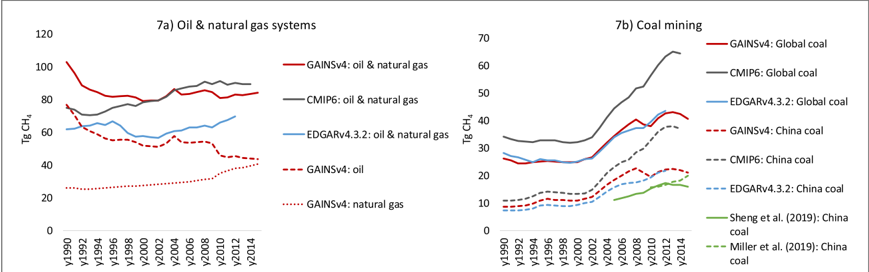
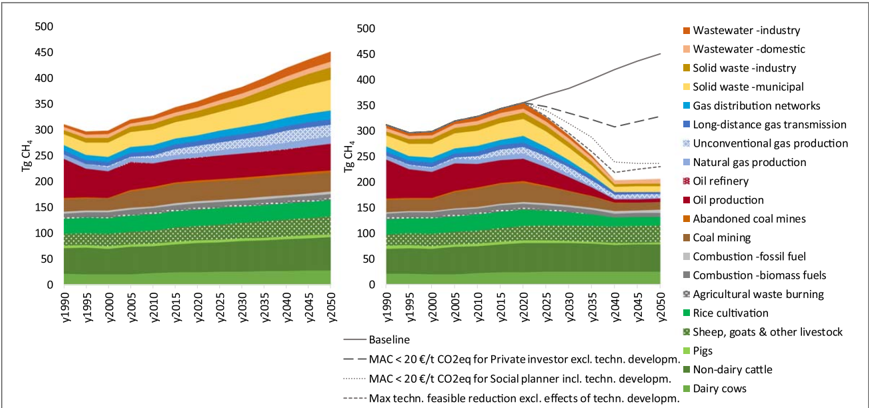
Verification
Claims the paper makes
The claims and statistics of this paper haven’t been checked yet.
Free: it reads the open-access text and checks the first 5 claims that cite a source we can check. Create a free account to check every claim.
Claims other papers make about this one
Each is checked against this paper’s own text: does it say what the citing paper says it does?
The source backs part of the claim, not all of it — or backs it for a different population, condition or comparison.
In the citing paper
“Work focused on GHG and air pollution suggest that landfills contribute about 15% to global anthropogenic CH4 emissions30”
From Potential for future reductions of global GHG and air pollutants from circular waste management systems (2022) · cites this paper as [30]
Experimental — accuracy not yet measuredThe source backs part of the claim, not all of it — or backs it for a different population, condition or comparison.
In the citing paper
“If current MSW management will prevail into the future, average CH4 emissions will increase by 71% (49–55 Tg CH4) over the amount emitted in 2015, thereby contributing to 13% of the global CH4 anthropogenic emissions estimated at 450 Tg/yr in 205030.”
From Potential for future reductions of global GHG and air pollutants from circular waste management systems (2022) · cites this paper as [30]
Experimental — accuracy not yet measuredThe source backs part of the claim, not all of it — or backs it for a different population, condition or comparison.
In the citing paper
“We estimate that MSW handling accounts for 8% (30 Tg/yr) of the global CH4 anthropogenic emissions estimated at 344 Tg/yr in 201530.”
From Potential for future reductions of global GHG and air pollutants from circular waste management systems (2022) · cites this paper as [30]
Experimental — accuracy not yet measuredThe source backs part of the claim, not all of it — or backs it for a different population, condition or comparison.
In the citing paper
“Our estimations indicate that current CH4 emissions from MSW handling account for 8% (30 Tg) of the global CH4 anthropogenic emissions estimated at 344 Tg in 201530.”
From Potential for future reductions of global GHG and air pollutants from circular waste management systems (2022) · cites this paper as [30]
Experimental — accuracy not yet measured
Self-check
Percentages, sums and reported differences re-computed from the paper’s own numbers.
The self-check needs the paper’s full text.
Citations
Cites
Food in the Anthropocene: the EAT–Lancet Commission on healthy diets from sustainable food systems
Willett, W., Rockström, J., Loken, B., Springmann, M., Lang, T., Vermeulen, S., Garnett, T., Tilman, D., DeClerck, F., Wood, A., et al. (2019) · The Lancet · doi:10.1016/s0140-6736(18)31788-4 · Cited by 10,880 · cited 1×
“…2050 timeframe of behavioural options, e.g., human diet changes that reducemeat andmilk consumption (e.g, Springmann et al 2016, Clune et al 2017,Willett et al 2019) and general institutional and social reforms indirectlymitigating greenhouse gas emissions in developing countries (Evans and…”
Background(2023) · doi:10.1126/science · Cited by 6,063
Stabilization wedges: solving the climate problem for the next 50 years with current technologies
Pacala, S., & Socolow, R. (2004) · Science · doi:10.1126/science.1100103 · Cited by 3,114
World agriculture towards 2030/2050: the 2012 revision
Alexandratos, N., Bruinsma, J., Alexandratos, N., & Bruinsma, J. (2012) · RePEc: Research Papers in Economics · doi:10.22004/ag.econ.288998 · Cited by 3,093
(2013) · Cited by 2,540
Simultaneously Mitigating Near-Term Climate Change and Improving Human Health and Food Security
Shindell, D., Kuylenstierna, J. C. I., Vignati, E., van Dingenen, R., Amann, M., Klimont, Z., Anenberg, S. C., Muller, N., Janssens-Maenhout, G., Raes, F., et al. (2012) · Science · doi:10.1126/science.1210026 · Cited by 1,382 · cited 1×
“Thismeans CH4 accounts for about 40 percent of greenhouse gases’ contribution to short-term global warming, whichmakes it an obvious candidate to target for fast climate changemitigation in the 2050 timeframe (Shindell et al 2012).”
BackgroundSelf-citationAnalysis and valuation of the health and climate change cobenefits of dietary change
Springmann, M., Godfray, H. C. J., Rayner, M., & Scarborough, P. (2016) · Proceedings of the National Academy of Sciences · doi:10.1073/pnas.1523119113 · Cited by 1,262 · cited 1×
“…calls for widespread implementation in the 2050 timeframe of behavioural options, e.g., human diet changes that reducemeat andmilk consumption (e.g, Springmann et al 2016, Clune et al 2017,Willett et al 2019) and general institutional and social reforms indirectlymitigating greenhouse gas…”
BackgroundAssessment of methane emissions from the U.S. oil and gas supply chain
Alvarez, R. A., Zavala-Araiza, D., Lyon, D. R., Allen, D. T., Barkley, Z. R., Brandt, A. R., Davis, K. J., Herndon, S. C., Jacob, D. J., Karion, A., et al. (2018) · Science · doi:10.1126/science.aar7204 · Cited by 1,187
The global methane budget 2000–2012
Saunois, M., Bousquet, P., Poulter, B., Peregon, A., Ciais, P., Canadell, J. G., Dlugokencky, E. J., Etiope, G., Bastviken, D., Houweling, S., et al. (2016) · Earth System Science Data · doi:10.5194/essd-8-697-2016 · Cited by 1,060
Self-citationSystematic review of greenhouse gas emissions for different fresh food categories
Clune, S., Crossin, E., & Verghese, K. (2017) · Journal of Cleaner Production · doi:10.1016/j.jclepro.2016.04.082 · Cited by 1,017 · cited 1×
“…in the 2050 timeframe of behavioural options, e.g., human diet changes that reducemeat andmilk consumption (e.g, Springmann et al 2016, Clune et al 2017,Willett et al 2019) and general institutional and social reforms indirectlymitigating greenhouse gas emissions in developing…”
BackgroundAmann, M., Bertok, I., Borken-Kleefeld, J., Cofala, J., Heyes, C., Höglund-Isaksson, L., Klimont, Z., Nguyen, B., Posch, M., Rafaj, P., et al. (2011) · Environmental Modelling & Software · doi:10.1016/j.envsoft.2011.07.012 · Cited by 828 · cited 2×
“…abatement and cost pathways for reducing global CH4 emissions in the 2020–2050 timeframe, breaking reductions down to regional and sector levels using themost recent version of IIASA’s Greenhouse gas andAir pollution Interactions and Synergies (GAINS)model (Amann et al 2011), denotedGAINSv4 (2019).”
MethodSelf-citationSocial influence approaches to encourage resource conservation: a meta-analysis
Abrahamse, W., & Steg, L. (2013) · Global Environmental Change · doi:10.1016/j.gloenvcha.2013.07.029 · Cited by 802 · cited 1×
“Further abatement potential from institutional changes (Evans and Steven 2009) and behavioural changes (Abrahamse and Steg 2013, Camilleri et al 2019)will be necessary butmay take longer to realize.”
BackgroundNisbet, E. G., Manning, M. R., Dlugokencky, E. J., Fisher, R. E., Lowry, D., Michel, S. E., Myhre, C. L., Platt, S. M., Allen, G., Bousquet, P., et al. (2019) · Global Biogeochemical Cycles · doi:10.1029/2018gb006009 · Cited by 735 · cited 2×
“The latter development would offer a possible explanation to observed increases in atmospheric CH4 frombiogenic sources in tropical regions (Nisbet et al 2014, 2019).”
BackgroundGlobal atmospheric methane: budget, changes and dangers
Dlugokencky, E. J., Nisbet, E. G., Fisher, R., & Lowry, D. (2011) · Philosophical Transactions of the Royal Society A: Mathematical, Physical and Engineering Sciences · doi:10.1098/rsta.2010.0341 · Cited by 715
The Use of Standards and Prices for Protection of the Environment
Baumol, W. J., & Oates, W. E. (1971) · The Swedish Journal of Economics · doi:10.2307/3439132 · Cited by 563
Nisbet, E. G., Dlugokencky, E. J., & Bousquet, P. (2014) · Science · doi:10.1126/science.1247828 · Cited by 547 · cited 2×
“The latter development would offer a possible explanation to observed increases in atmospheric CH4 frombiogenic sources in tropical regions (Nisbet et al 2014, 2019).”
BackgroundHristov, A. N., Oh, J.-A., Lee, C., Meinen, R. J., Montes, F., OTT, T. L., Firkins, J. L., Rotz, A. C., Dell, C. J., Adesogan, C., et al. (2013) · Wageningen University & Research Publications · Cited by 499
Johansson, L. S., Leckner, B., Gustavsson, L., Cooper, D., Tullin, C., & Potter, A. (2004) · Atmospheric Environment · doi:10.1016/j.atmosenv.2004.04.020 · Cited by 488
Global Fire Emissions Database, Version 4.1 (GFEDv4)
Randerson, J. T., van der Werf, G. R., Giglio, L., Collatz, G. J., & Kasibhatla, P. S. (2015) · Oak Ridge National Laboratory Distributed Active Archive Center for Biogeochemical Dynamics · doi:10.3334/ornldaac/1293 · Cited by 436
Methods for Global Survey of Natural Gas Flaring from Visible Infrared Imaging Radiometer Suite Data
Elvidge, C., Zhizhin, M., Baugh, K., Hsu, F.-C., & Ghosh, T. (2015) · Energies · doi:10.3390/en9010014 · Cited by 402
Pollution control innovations and the Clean Air Act of 1990
Popp, D. (2003) · Journal of Policy Analysis and Management · doi:10.1002/pam.10159 · Cited by 388
Consumers underestimate the emissions associated with food but are aided by labels
Camilleri, A. R., Larrick, R. P., Hossain, S., & Patino-Echeverri, D. (2019) · Nature Climate Change · doi:10.1038/s41558-018-0354-z · Cited by 332
Reconciling divergent estimates of oil and gas methane emissions
Zavala-Araiza, D., Lyon, D. R., Alvarez, R. A., Davis, K. J., Harriss, R., Herndon, S. C., Karion, A., Kort, E. A., Lamb, B. K., Lan, X., et al. (2015) · Proceedings of the National Academy of Sciences · doi:10.1073/pnas.1522126112 · Cited by 310
China’s coal mine methane regulations have not curbed growing emissions
Miller, S. M., Michalak, A. M., Detmers, R. G., Hasekamp, O. P., Bruhwiler, L. M. P., & Schwietzke, S. (2019) · Nature Communications · doi:10.1038/s41467-018-07891-7 · Cited by 236 · cited 1×
“Recent results of inversemodels (Miller et al 2019, Sheng et al 2019)find considerably lowerCH4 emissions from coalmining inChina, indicating that also estimates byGAINSv4 and EDGAR4.”
ResultInventory of anthropogenic methane emissions in mainland China from 1980 to 2010
Peng, S., Piao, S., Bousquet, P., Ciais, P., Li, B., Lin, X., Tao, S., Wang, Z., Zhang, Y., & Zhou, F. (2016) · Atmospheric Chemistry and Physics · doi:10.5194/acp-16-14545-2016 · Cited by 212
Udo, H. M. J., Aklilu, H. A., Phong, L. T., Bosma, R. H., Budisatria, I. G. S., Patil, B. R., Samdup, T., & Bebe, B. O. (2011) · Livestock Science · doi:10.1016/j.livsci.2011.03.020 · Cited by 192 · cited 1×
“…technical abatement potential for this group of farmers, because enhanced productivitymay not be of primary interest when considering that livestock oftenfills a dual purpose; beside providingmilk andmeat it also functions as amean to store assets andmanage risks over time (FAO2008,Udo et al 2011).”
BackgroundOmara, M., Sullivan, M. R., Li, X., Subramanian, R., Robinson, A. L., & Presto, A. A. (2016) · Environmental Science & Technology · doi:10.1021/acs.est.5b05503 · Cited by 183
Lovett, D. K., Shalloo, L., Dillon, P., & O’Mara, F. P. (2005) · Agricultural Systems · doi:10.1016/j.agsy.2005.03.006 · Cited by 177 · cited 1×
“…is important as a one-eyed focus on increased productivity leads to deteriorating animal health and fertility and a risk that system emissions increase due to a need to keep a larger fraction of unproductive replacement animals in the stock (Lovett et al 2006, Berglund 2008, Bell et al 2011).”
BackgroundLong-term reduction potential of non-CO2 greenhouse gases
Lucas, P. L., van Vuuren, D. P., Olivier, J. G. J., & den Elzen, M. G. J. (2007) · Environmental Science & Policy · doi:10.1016/j.envsci.2006.10.007 · Cited by 171 · cited 2×
“TheGAINSv4model results add to a limited number of independently developed bottom-up estimates of technical abatement potentials and costs to reduce global CH4 emissions in the 2050 timeframe (Lucas et al 2007,Harmsen et al 2019).”
MethodGlobal anthropogenic methane emissions 2005–2030: technical mitigation potentials and costs
Höglund-Isaksson, L. (2012) · Atmospheric Chemistry and Physics · doi:10.5194/acp-12-9079-2012 · Cited by 167 · cited 1×
“Similar efforts have been presented for the 2030 timeframe, e.g., Höglund-Isaksson (2012) estimatedmarginal abatement cost curves using an earlier version of theGAINS model andUSEPA (2006, 2012) presented corresponding cost curves for all non-CO2 greenhouse gases with (Beach et al 2015, Beach et al…”
MethodSelf-citationMunicipal solid waste generation in China: influencing factor analysis and multi-model forecasting
Chhay, L., Reyad, M. A. H., Suy, R., Islam, M. R., & Mian, M. M. (2018) · Journal of Material Cycles and Waste Management · doi:10.1007/s10163-018-0743-4 · Cited by 147
Sheng, J., Song, S., Zhang, Y., Prinn, R. G., & Janssens‐Maenhout, G. (2019) · Environmental Science & Technology Letters · doi:10.1021/acs.estlett.9b00294 · Cited by 145 · cited 2×
“Three recent studies (Peng et al., 2016; Miller et al., 2019; Sheng et al., 2019) quantify CH4 emissions bottom‐up from Chinese coalmines with Miller et al.”
BackgroundResultGenetic Improvement of Dairy Cow Reproductive Performance
Berglund, B. (2008) · Reproduction in Domestic Animals · doi:10.1111/j.1439-0531.2008.01147.x · Cited by 141 · cited 1×
“…is important as a one-eyed focus on increased productivity leads to deteriorating animal health and fertility and a risk that system emissions increase due to a need to keep a larger fraction of unproductive replacement animals in the stock (Lovett et al 2006, Berglund 2008, Bell et al 2011).”
BackgroundRussian anthropogenic black carbon: Emission reconstruction and Arctic black carbon simulation
Huang, K., Fu, J. S., Prikhodko, V. Y., Storey, J. M., Romanov, A., Hodson, E. L., Cresko, J., Morozova, I., Ignatieva, Y., & Cabaniss, J. (2015) · Journal of Geophysical Research: Atmospheres · doi:10.1002/2015jd023358 · Cited by 129
Emissions Database for Global Atmospheric Research
Greet, J.-M., Crippa, M., Guizzardi, D., Muntean, M., & Schaaf, E. (2017) · Joint Research Centre (European Commission) · doi:10.2904/jrc_dataset_edgar · Cited by 124
Kahan, D. (2008) · Cited by 113
Dalsøren, S. B., Myhre, G., Hodnebrog, Ø., Myhre, C. L., Stohl, A., Pisso, I., Schwietzke, S., Höglund-Isaksson, L., Helmig, D., Reimann, S., et al. (2018) · Nature Geoscience · doi:10.1038/s41561-018-0073-0 · Cited by 109 · cited 1×
“…for historical years to 2015, reflecting recent findings from the literature, and including several methodological improvements of emission estimations, e.g., for the oil and gas sectors (Höglund-Isaksson 2017, Dalsøren et al 2018) andwaste andwastewater sectors (Gómez-Sanabria et al 2018).”
BackgroundSelf-citationStructural change as a key component for agricultural non-CO2 mitigation efforts
Frank, S., Beach, R., Havlík, P., Valin, H., Herrero, M., Mosnier, A., Hasegawa, T., Creason, J., Ragnauth, S., & Obersteiner, M. (2018) · Nature Communications · doi:10.1038/s41467-018-03489-1 · Cited by 106 · cited 2×
“GAINSv4 is slightlymore conservative than Beach et al (2015) in the estimate for 2030, butwell within the range estimated in Frank et al (2018).”
BackgroundMethodBeach, R. H., Creason, J., Ohrel, S. B., Ragnauth, S., Ogle, S., Li, C., Ingraham, P., & Salas, W. (2015) · Journal of Integrative Environmental Sciences · doi:10.1080/1943815x.2015.1110183 · Cited by 96 · cited 2×
“GAINSv4 is slightlymore conservative than Beach et al (2015) in the estimate for 2030, butwell within the range estimated in Frank et al (2018).”
BackgroundMethodLong-term marginal abatement cost curves of non-CO2 greenhouse gases
Harmsen, J., van Vuuren, D. P., Nayak, D. R., Hof, A. F., Höglund-Isaksson, L., Lucas, P., Nielsen, J. B., Smith, P., & Stehfest, E. (2019) · Environmental Science & Policy · doi:10.1016/j.envsci.2019.05.013 · Cited by 96
Self-citationBottom-up simulations of methane and ethane emissions from global oil and gas systems 1980 to 2012
Höglund-Isaksson, L. (2017) · Environmental Research Letters · doi:10.1088/1748-9326/aa583e · Cited by 95 · cited 9×
“3.2 can primarily be attributed to higher annual emissions fromwastewater sources than inGAINSv4 (see table 5.3 inHöglund-Isaksson et al 2015), in particular for Africa and South-East Asia whereGAINSv4 assumes poor conditions for CH4 formation in areas lacking proper infrastructure for centralizedwastewater collection.”
BackgroundInfluentialSelf-citationMitigation potential and costs for global agricultural greenhouse gas emissions1
Beach, R. H., DeAngelo, B. J., Rose, S., Li, C., Salas, W., & DelGrosso, S. J. (2008) · Agricultural Economics · doi:10.1111/j.1574-0862.2008.00286.x · Cited by 91 · cited 1×
“…estimatedmarginal abatement cost curves using an earlier version of theGAINS model andUSEPA (2006, 2012) presented corresponding cost curves for all non-CO2 greenhouse gases with (Beach et al 2015, Beach et al 2008) and Frank et al (2018) presenting results specifically for the agricultural sector.”
MethodThe 21st-century great food transformation
Lucas, T., & Horton, R. C. (2019) · The Lancet · doi:10.1016/s0140-6736(18)33179-9 · Cited by 89
Kjällstrand, J., & Olsson, M. (2004) · Biomass and Bioenergy · doi:10.1016/j.biombioe.2003.08.014 · Cited by 65
Low emissions from wood burning in an ecolabelled residential boiler
Olsson, M., & Kjällstrand, J. (2005) · Atmospheric Environment · doi:10.1016/j.atmosenv.2005.11.008 · Cited by 64
AMAP Assessment 2015: Methane as an Arctic climate forcer.
Monitoring, A., & Assessment Programme (2015) · Cited by 62
Inventory of methane emissions from livestock in China from 1980 to 2013
Yu, J., Peng, S., Chang, J., Ciais, P., Dumas, P., Lin, X., & Piao, S. L. (2018) · Atmospheric Environment · doi:10.1016/j.atmosenv.2018.04.029 · Cited by 54
Xue, B., Wang, L. Z., & Yan, T. (2014) · Agriculture Ecosystems & Environment · doi:10.1016/j.agee.2014.06.002 · Cited by 51
Christensen, T. R., Arora, V. K., Gauss, M., Höglund-Isaksson, L., & Parmentier, F. W. (2019) · Scientific Reports · doi:10.1038/s41598-018-37719-9 · Cited by 46 · cited 1×
“Human activities contributemore toCH4 emissions than natural sources (Saunois et al 2016) and a swift reduction in anthropogenic CH4 can even offset climate change impacts of amassive release of natural CH4 from smelting Arctic permafrost (Christensen et al 2019).”
BackgroundSelf-citationEffects of genetic line and feeding system on methane emissions from dairy systems
Bell, M., Wall, E., Simm, G., & Russell, G. (2011) · Animal Feed Science and Technology · doi:10.1016/j.anifeedsci.2011.04.049 · Cited by 43 · cited 1×
“…is important as a one-eyed focus on increased productivity leads to deteriorating animal health and fertility and a risk that system emissions increase due to a need to keep a larger fraction of unproductive replacement animals in the stock (Lovett et al 2006, Berglund 2008, Bell et al 2011).”
BackgroundGómez-Sanabria, A., Höglund-Isaksson, L., Rafaj, P., & Schöpp, W. (2018) · Advances in Geosciences · doi:10.5194/adgeo-45-105-2018 · Cited by 39
Self-citationAn overview of present knowledge on methane emission from biomass burning
Delmas, R. A. (1994) · Nutrient Cycling in Agroecosystems · doi:10.1007/bf00748936 · Cited by 36
Evans, M., & Roshchanka, V. (2014) · Atmospheric Environment · doi:10.1016/j.atmosenv.2014.04.026 · Cited by 19 · cited 1×
“In addition, as described by Evans and Roshchanka (2014) and assumed inHöglund-Isaksson (2017), venting of associated petroleum gas declined significantly in Russia due to an increase inflaring.”
BackgroundNon-CO2 greenhouse gas emissions in the EU-28 from 2005 to 2050: GAINS model methodology
Höglund-Isaksson, L., Winiwarter, W., Purohit, P., Gómez-Sanabria, A., Rafaj, P., Schöpp, W., & Borken, J. (2016) · IIASA PURE (International Institute of Applied Systems Analysis) · Cited by 13
Self-citationSmall and Medium scale Industries in Asia: Energy and Environment -Brick and Ceramic Sectors
Jayawardhana, L. C., Visvanathan, C., & Kumar, S. (2003) · doi:10.13140/rg.2.1.1024.2648 · Cited by 13
Innovation effects of the Swedish NOx charge
Höglund-Isaksson, L., & Sterner, T. (2010) · IIASA PURE (International Institute of Applied Systems Analysis) · Cited by 11
Self-citationMethane emissions are lower from reindeer fed lichens compared to a concentrate feed
Hansen, K. K., Sundset, M. A., Folkow, L. P., Nilsen, M., & Mathiesen, S. D. (2018) · Polar Research · doi:10.1080/17518369.2018.1505396 · Cited by 8
Chapter 5: Anthropogenic methane sources, emissions and future projections
Lena, H.-I., Allison, T., Kupiainen, K., Rao, S., & Greet, J.-M. (2015) · Joint Research Centre (European Commission) · Cited by 7
Research works printed but not linked: 2
- 39. IPCC 2013 Climate change: the physical science basis. Contribution of working group I to the Fifth assessment report of the intergovernmental panel on climate change Intergovernmental Panel on Climate Change ed T F Stocker, D Qin, G-K Plattner, M Tignor, S K Allen, J Boschung, A Nauels, Y Xia, V Bex, P M Midgley et al (Cambridge, United Kingdom and New York, NY, USA: Cambridge University Press) 2013978-1-107-05799-1
- 40. IPCC 2018 Global warming of 1.5°C. An IPCC Special Report on the impacts of global warming of 1.5°C above pre-industrial levels and related global greenhouse gas emission pathways, in the context of strengthening the global response to the threat of climate change, sustainable development, and efforts to eradicate poverty Intergovernmental Panel on Climate Change ed V Masson-Delmotte et al (Geneva: Intergovernmental Panel on Climate Change) (https://ipcc.ch/sr15/download/#chapter)
Cited by
The Global Methane Budget 2000–2017
Saunois, M., Stavert, A. R., Poulter, B., Bousquet, P., Canadell, J. G., Jackson, R. B., Raymond, P. A., Dlugokencky, E. J., Houweling, S., Patra, P. K., et al. (2019) · doi:10.5194/essd-2019-128 · Cited by 2,760
Self-citationThe Global Methane Budget 2000–2017
Saunois, M., Stavert, A. R., Poulter, B., Bousquet, P., Canadell, J. G., Jackson, R. B., Raymond, P. A., Dlugokencky, E. J., Houweling, S., Patra, P. K., et al. (2020) · Earth System Science Data · doi:10.5194/essd-12-1561-2020 · Cited by 2,711
Self-citationThe global methane budget 2000–2012
Saunois, M., Bousquet, P., Poulter, B., Peregon, A., Ciais, P., Canadell, J. G., Dlugokencky, E. J., Etiope, G., Bastviken, D., Houweling, S., et al. (2016) · Earth System Science Data · doi:10.5194/essd-8-697-2016 · Cited by 1,060
Self-citationThe future of hydrogen: Challenges on production, storage and applications
Rasul, M. G., Hazrat, M. A., Sattar, M. A., Jahirul, M. I., & Shearer, M. J. (2022) · Energy Conversion and Management · doi:10.1016/j.enconman.2022.116326 · Cited by 856
(2023) · Climate Change 2021 – The Physical Science Basis · doi:10.1017/9781009157896.008 · Cited by 637
Metadata
- Authors
- Höglund-Isaksson, L., Gómez-Sanabria, A., Klimont, Z., Rafaj, P., & Schöpp, W.
- Affiliations
- International Institute for Applied Systems Analysis (AT)
- Venue
- Environmental Research Communications
- Publisher
- IOP Publishing
- Published
- 2020-02-01
- Volume
- 2
- Issue
- 2
- Pages
- 025004
- ISSN
- 2515-7620 (ISSN-L)
- OpenAlex
- W3006221284
- Cited by
- 242
- References
- 60
- Citations by year
- 2026: 35 · 2025: 44 · 2024: 41 · 2023: 41 · 2022: 35 · 2021: 35 · 2020: 9
- FWCI
- 11.17
- Type
- journal article
- Language
- en
- Open access
- gold
- doi.org
- Licence
- cc-by
- creativecommons.org/licenses/by/4.0/ (vor, 26 d)
- iopscience.iop.org/info/page/text-and-data-mining (tdm, 26 d)
- Locations
- Environmental Research Communications (publishedVersion, cc-by)
- IIASA PURE (International Institute of Applied Systems Analysis) (acceptedVersion, cc-by)
- Funders
- Naturvårdsverket (NV-00168-18)
- Topics
- Physical Sciences › Environmental Science › Global and Planetary Change › Atmospheric and Environmental Gas Dynamics
- Social Sciences › Economics, Econometrics and Finance › Economics and Econometrics › Climate Change Policy and Economics
- Physical Sciences › Energy › Renewable Energy, Sustainability and the Environment › Renewable energy and sustainable power systems
- Keywords
- methane emissions, abatement costs, greenhouse gas emissions reduction, Paris Agreement, fossil fuel production, agricultural methane emissions, livestock methane emissions, GAINS model, climate policy
About these checks
Registry, retraction, Cites and statistics results are computed, not judged, with one exception: a printed reference that no index lists is read once by a model before it counts as a citation error. Claims are extracted by a model and kept only when their quote appears verbatim in the text; each cited source is then checked, with a model’s help, for whether it says what the claim relies on. Those verdicts can be wrong — read the claim’s quote and the cited source before relying on one.
Statistics and arithmetic are recomputed, not judged.
Confidence bands are shown only for fields calibrated on our annotated test set. None is calibrated yet, so no band is shown.
What counts as a claim ›How we measure confidence ›How we check this ›
Are you an author, or do you see a problem with this page? Request a review
Data sources
Bibliographic data: Semantic Scholar, OpenAlex, Crossref.
Contains information from the Semantic Scholar Academic Graph Datasets, made available under the ODC Attribution License (ODC-BY 1.0).
Semantic Scholar’s data is described in: Kinney, R., et al. (2023). The Semantic Scholar Open Data Platform. arXiv:2301.10140.
