

Technical potentials and costs for reducing global anthropogenic methane emissions in the 2050 timeframe –results from the GAINS model
Open accessThe DOI matches its Crossref record; 58 of the 60 references it cites were found in a registry or an index.
Abstract
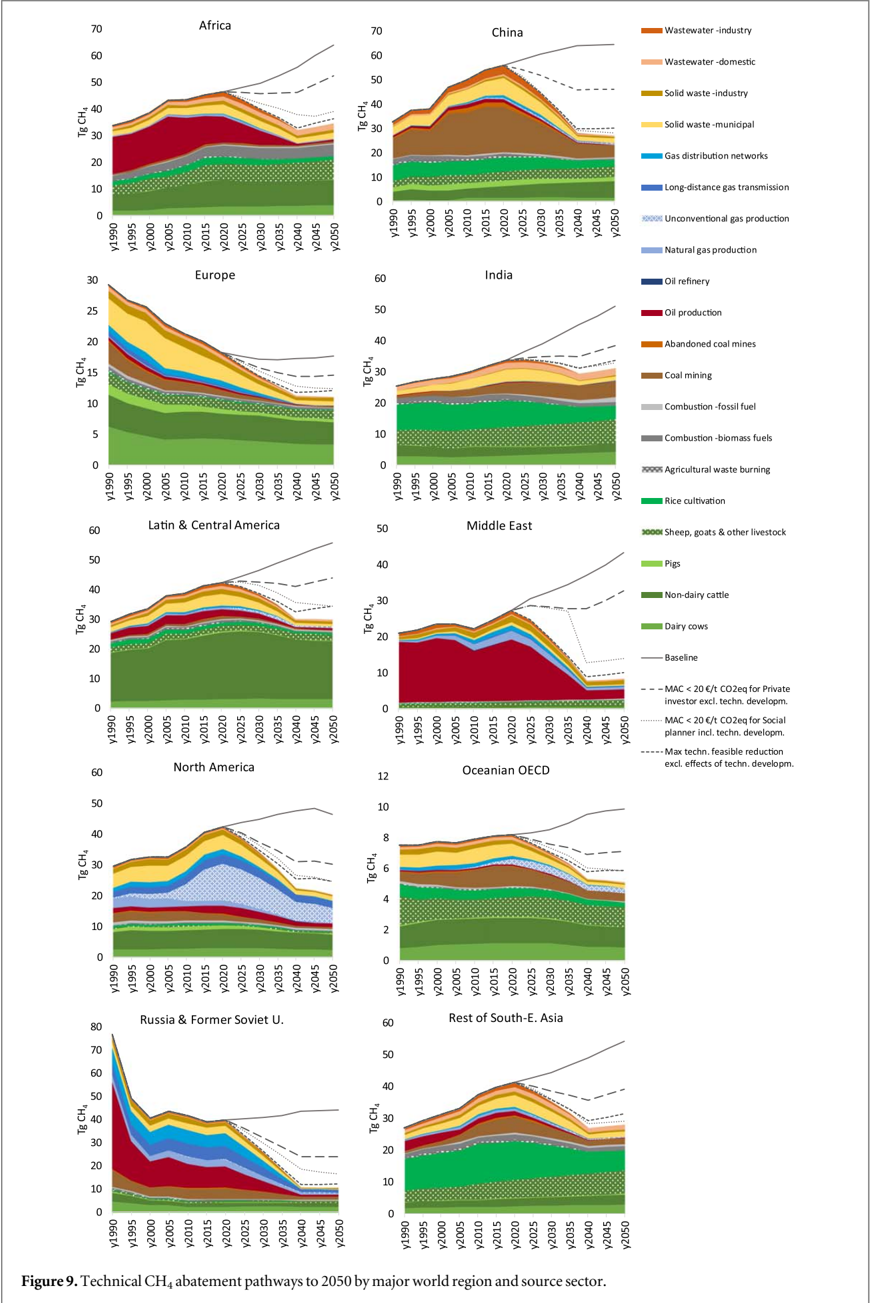
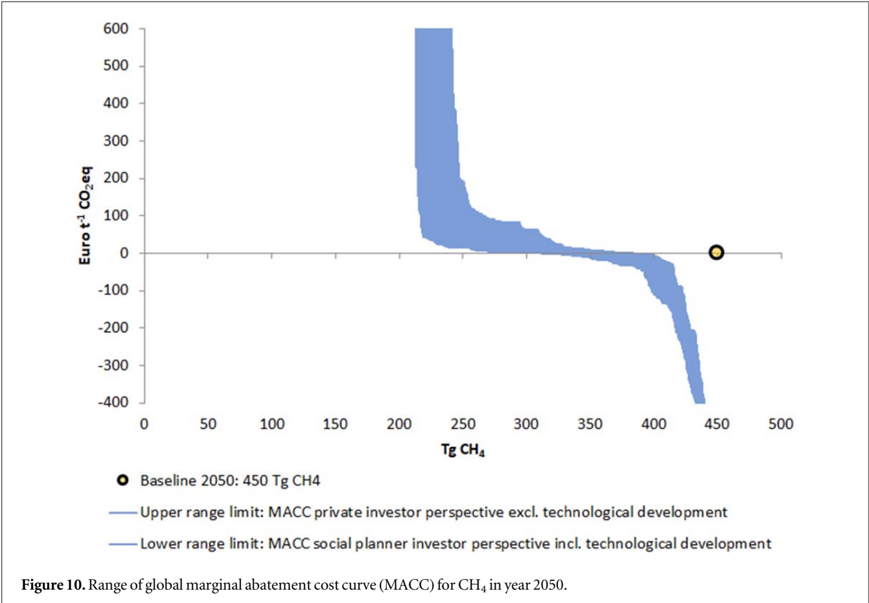
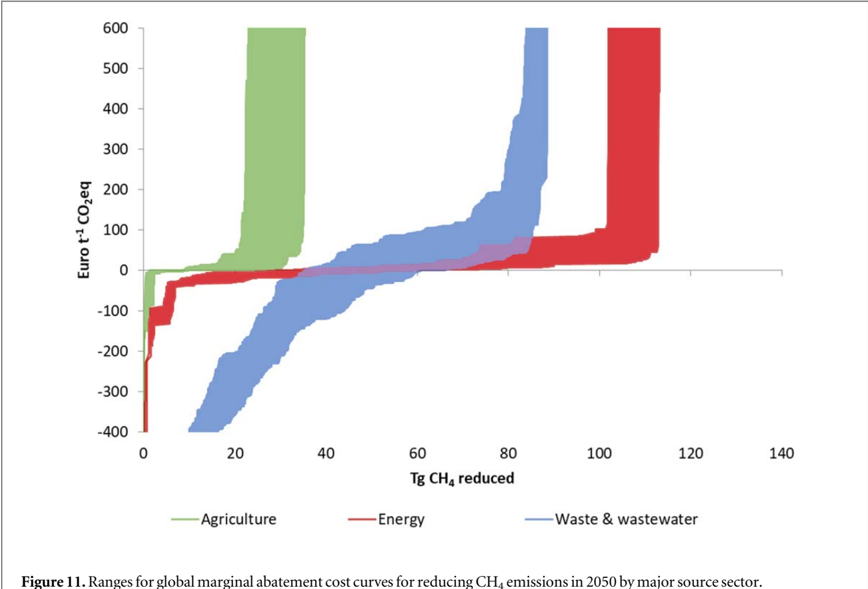
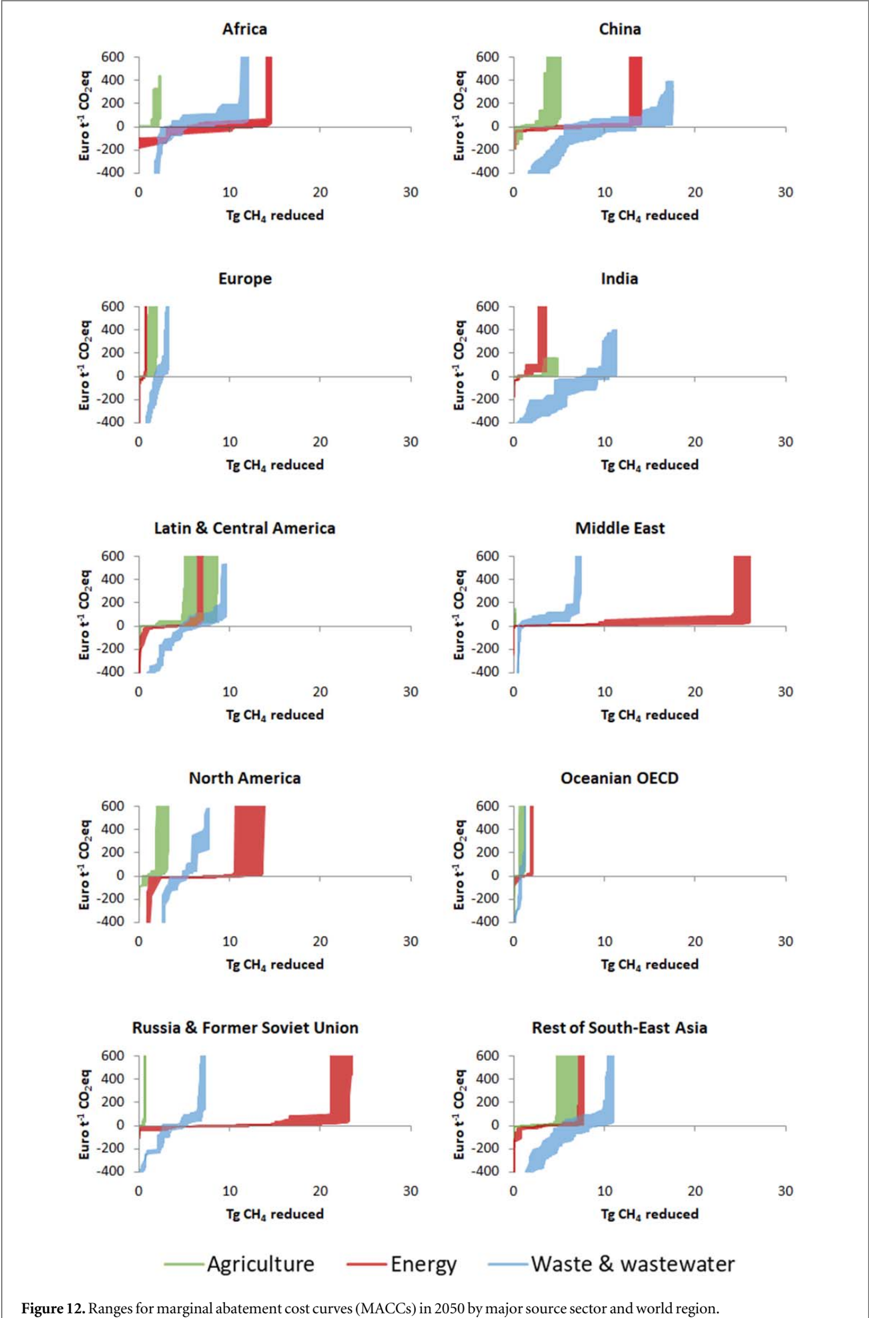
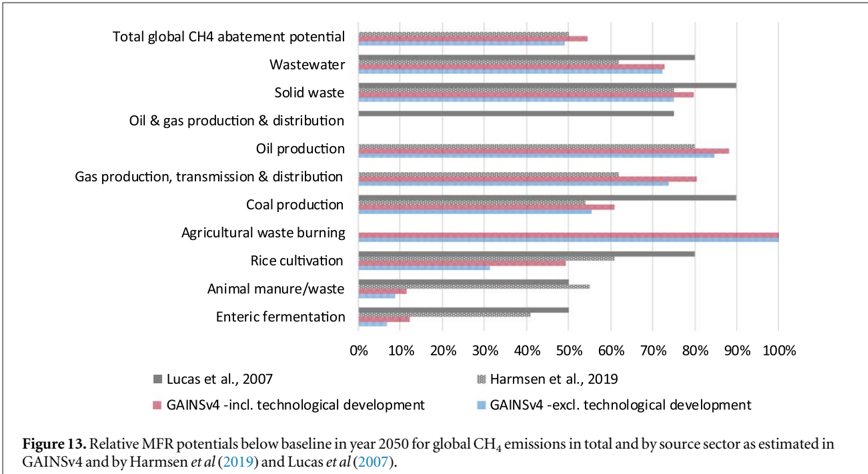
Methane is the second most important greenhouse gas after carbon dioxide contributing to human-made global warming. Keeping to the Paris Agreement of staying well below two degrees warming will require a concerted effort to curb methane emissions in addition to necessary decarbonization of the energy systems. The fastest way to achieve emission reductions in the 2050 timeframe is likely through implementation of various technical options. The focus of this study is to explore the technical abatement and cost pathways for reducing global methane emissions, breaking reductions down to regional and sector levels using the most recent version of IIASA’s Greenhouse gas and Air pollution Interactions and Synergies (GAINS) model. The diverse human activities that contribute to methane emissions make detailed information on potential global impacts of actions at the regional and sectoral levels particularly valuable for policy-makers. With a global annual inventory for 1990–2015 as starting point for projections, we produce a baseline emission scenario to 2050 against which future technical abatement potentials and costs are assessed at a country and sector/technology level. We find it technically feasible in year 2050 to remove 54 percent of global methane emissions below baseline, however, due to locked in capital in the short run, the cumulative removal potential over the period 2020–2050 is estimated at 38 percent below baseline. This leaves 7.7 Pg methane released globally between today and 2050 that will likely be difficult to remove through technical solutions. There are extensive technical opportunities at low costs to control emissions from waste and wastewater handling and from fossil fuel production and use. A considerably more limited technical abatement potential is found for agricultural emissions, in particular from extensive livestock rearing in developing countries. This calls for widespread implementation in the 2050 timeframe of institutional and behavioural options in addition to technical solutions.
Overview
The claims and statistics of this paper haven’t been checked yet.
Free: it reads the open-access text and checks the first 5 claims that cite a source we can check. Create a free account to check every claim.
Integrity signals
Registry
Cites
Statistics
Figures
Verification
Claims the paper makes
The claims and statistics of this paper haven’t been checked yet.
Free: it reads the open-access text and checks the first 5 claims that cite a source we can check. Create a free account to check every claim.
Claims other papers make about this one
Each is checked against this paper’s own text: does it say what the citing paper says it does?
The source backs part of the claim, not all of it — or backs it for a different population, condition or comparison.
In the citing paper
“Work focused on GHG and air pollution suggest that landfills contribute about 15% to global anthropogenic CH4 emissions30”
From Potential for future reductions of global GHG and air pollutants from circular waste management systems (2022) · cites this paper as [30]
Experimental — accuracy not yet measuredThe source backs part of the claim, not all of it — or backs it for a different population, condition or comparison.
In the citing paper
“If current MSW management will prevail into the future, average CH4 emissions will increase by 71% (49–55 Tg CH4) over the amount emitted in 2015, thereby contributing to 13% of the global CH4 anthropogenic emissions estimated at 450 Tg/yr in 205030.”
From Potential for future reductions of global GHG and air pollutants from circular waste management systems (2022) · cites this paper as [30]
Experimental — accuracy not yet measuredThe source backs part of the claim, not all of it — or backs it for a different population, condition or comparison.
In the citing paper
“We estimate that MSW handling accounts for 8% (30 Tg/yr) of the global CH4 anthropogenic emissions estimated at 344 Tg/yr in 201530.”
From Potential for future reductions of global GHG and air pollutants from circular waste management systems (2022) · cites this paper as [30]
Experimental — accuracy not yet measuredThe source backs part of the claim, not all of it — or backs it for a different population, condition or comparison.
In the citing paper
“Our estimations indicate that current CH4 emissions from MSW handling account for 8% (30 Tg) of the global CH4 anthropogenic emissions estimated at 344 Tg in 201530.”
From Potential for future reductions of global GHG and air pollutants from circular waste management systems (2022) · cites this paper as [30]
Experimental — accuracy not yet measured
Self-check
Percentages, sums and reported differences re-computed from the paper’s own numbers.
The self-check needs the paper’s full text.
Citations
Cites
Food in the Anthropocene: the EAT–Lancet Commission on healthy diets from sustainable food systems
Willett, W., Rockström, J., Loken, B., Springmann, M., Lang, T., Vermeulen, S., Garnett, T., Tilman, D., DeClerck, F., Wood, A., et al. (2019) · The Lancet · doi:10.1016/s0140-6736(18)31788-4 · Cited by 10,880 · cited 1×
“…2050 timeframe of behavioural options, e.g., human diet changes that reducemeat andmilk consumption (e.g, Springmann et al 2016, Clune et al 2017,Willett et al 2019) and general institutional and social reforms indirectlymitigating greenhouse gas emissions in developing countries (Evans and…”
Background(2023) · doi:10.1126/science · Cited by 6,063
Stabilization wedges: solving the climate problem for the next 50 years with current technologies
Pacala, S., & Socolow, R. (2004) · Science · doi:10.1126/science.1100103 · Cited by 3,114
World agriculture towards 2030/2050: the 2012 revision
Alexandratos, N., Bruinsma, J., Alexandratos, N., & Bruinsma, J. (2012) · RePEc: Research Papers in Economics · doi:10.22004/ag.econ.288998 · Cited by 3,093
(2013) · Cited by 2,540
Simultaneously Mitigating Near-Term Climate Change and Improving Human Health and Food Security
Shindell, D., Kuylenstierna, J. C. I., Vignati, E., van Dingenen, R., Amann, M., Klimont, Z., Anenberg, S. C., Muller, N., Janssens-Maenhout, G., Raes, F., et al. (2012) · Science · doi:10.1126/science.1210026 · Cited by 1,382 · cited 1×
“Thismeans CH4 accounts for about 40 percent of greenhouse gases’ contribution to short-term global warming, whichmakes it an obvious candidate to target for fast climate changemitigation in the 2050 timeframe (Shindell et al 2012).”
BackgroundSelf-citationAnalysis and valuation of the health and climate change cobenefits of dietary change
Springmann, M., Godfray, H. C. J., Rayner, M., & Scarborough, P. (2016) · Proceedings of the National Academy of Sciences · doi:10.1073/pnas.1523119113 · Cited by 1,262 · cited 1×
“…calls for widespread implementation in the 2050 timeframe of behavioural options, e.g., human diet changes that reducemeat andmilk consumption (e.g, Springmann et al 2016, Clune et al 2017,Willett et al 2019) and general institutional and social reforms indirectlymitigating greenhouse gas…”
BackgroundAssessment of methane emissions from the U.S. oil and gas supply chain
Alvarez, R. A., Zavala-Araiza, D., Lyon, D. R., Allen, D. T., Barkley, Z. R., Brandt, A. R., Davis, K. J., Herndon, S. C., Jacob, D. J., Karion, A., et al. (2018) · Science · doi:10.1126/science.aar7204 · Cited by 1,187
The global methane budget 2000–2012
Saunois, M., Bousquet, P., Poulter, B., Peregon, A., Ciais, P., Canadell, J. G., Dlugokencky, E. J., Etiope, G., Bastviken, D., Houweling, S., et al. (2016) · Earth System Science Data · doi:10.5194/essd-8-697-2016 · Cited by 1,060
Self-citationSystematic review of greenhouse gas emissions for different fresh food categories
Clune, S., Crossin, E., & Verghese, K. (2017) · Journal of Cleaner Production · doi:10.1016/j.jclepro.2016.04.082 · Cited by 1,017 · cited 1×
“…in the 2050 timeframe of behavioural options, e.g., human diet changes that reducemeat andmilk consumption (e.g, Springmann et al 2016, Clune et al 2017,Willett et al 2019) and general institutional and social reforms indirectlymitigating greenhouse gas emissions in developing…”
Background
Research works printed but not linked: 2
- 39. IPCC 2013 Climate change: the physical science basis. Contribution of working group I to the Fifth assessment report of the intergovernmental panel on climate change Intergovernmental Panel on Climate Change ed T F Stocker, D Qin, G-K Plattner, M Tignor, S K Allen, J Boschung, A Nauels, Y Xia, V Bex, P M Midgley et al (Cambridge, United Kingdom and New York, NY, USA: Cambridge University Press) 2013978-1-107-05799-1
- 40. IPCC 2018 Global warming of 1.5°C. An IPCC Special Report on the impacts of global warming of 1.5°C above pre-industrial levels and related global greenhouse gas emission pathways, in the context of strengthening the global response to the threat of climate change, sustainable development, and efforts to eradicate poverty Intergovernmental Panel on Climate Change ed V Masson-Delmotte et al (Geneva: Intergovernmental Panel on Climate Change) (https://ipcc.ch/sr15/download/#chapter)
Cited by
The Global Methane Budget 2000–2017
Saunois, M., Stavert, A. R., Poulter, B., Bousquet, P., Canadell, J. G., Jackson, R. B., Raymond, P. A., Dlugokencky, E. J., Houweling, S., Patra, P. K., et al. (2019) · doi:10.5194/essd-2019-128 · Cited by 2,760
Self-citationThe Global Methane Budget 2000–2017
Saunois, M., Stavert, A. R., Poulter, B., Bousquet, P., Canadell, J. G., Jackson, R. B., Raymond, P. A., Dlugokencky, E. J., Houweling, S., Patra, P. K., et al. (2020) · Earth System Science Data · doi:10.5194/essd-12-1561-2020 · Cited by 2,711
Self-citationThe global methane budget 2000–2012
Saunois, M., Bousquet, P., Poulter, B., Peregon, A., Ciais, P., Canadell, J. G., Dlugokencky, E. J., Etiope, G., Bastviken, D., Houweling, S., et al. (2016) · Earth System Science Data · doi:10.5194/essd-8-697-2016 · Cited by 1,060
Self-citationThe future of hydrogen: Challenges on production, storage and applications
Rasul, M. G., Hazrat, M. A., Sattar, M. A., Jahirul, M. I., & Shearer, M. J. (2022) · Energy Conversion and Management · doi:10.1016/j.enconman.2022.116326 · Cited by 856
(2023) · Climate Change 2021 – The Physical Science Basis · doi:10.1017/9781009157896.008 · Cited by 637
Global Methane Budget 2000–2020
Saunois, M., Martinez, A., Poulter, B., Zhang, Z., Raymond, P. A., Regnier, P., Canadell, J. G., Jackson, R. B., Patra, P. K., Bousquet, P., et al. (2025) · Earth System Science Data · doi:10.5194/essd-17-1873-2025 · Cited by 427
Self-citationGlobal assessment of oil and gas methane ultra-emitters
Lauvaux, T., Giron, C., Mazzolini, M., d’Aspremont, A., Duren, R., Cusworth, D., Shindell, D., & Ciais, P. (2022) · Science · doi:10.1126/science.abj4351 · Cited by 423
“We evaluate the industry spending required to eliminate those methane emissions based on analyses of mitigation costs recently produced by several groups: the International Energy Agency (IEA, 2021), the US Environmental Protection Agency (US EPA, 2019), and the International Institute for Applied Systems Analysis (II…”
MethodOcko, I. B., Sun, T., Shindell, D., Oppenheimer, M., Hristov, A. N., Pacala, S. W., Mauzerall, D. L., Xu, Y., & Hamburg, S. P. (2021) · Environmental Research Letters · doi:10.1088/1748-9326/abf9c8 · Cited by 385
“For abatement potentials at no cost (‘economically feasible’), we use marginal abatement cost curve assessments developed by four sources: IEA (2017), EPA (2019), Harmsen et al (2019), and Höglund-Isaksson et al (2020).”
BackgroundMethodInfluentialBeyond CO2 equivalence: The impacts of methane on climate, ecosystems, and health
Mar, K. A., Unger, C., Walderdorff, L., & Butler, T. (2022) · Environmental Science & Policy · doi:10.1016/j.envsci.2022.03.027 · Cited by 331
Gómez-Sanabria, A., Kiesewetter, G., Klimont, Z., Schoepp, W., & Haberl, H. (2022) · Nature Communications · doi:10.1038/s41467-021-27624-7 · Cited by 306
Self-citationMitigation Pathways Compatible with Long-term Goals
(2023) · Climate Change 2022 - Mitigation of Climate Change · doi:10.1017/9781009157926.005 · Cited by 288
(2023) · Climate Change 2022 - Mitigation of Climate Change · doi:10.1017/9781009157926.004 · Cited by 253
Using satellites to uncover large methane emissions from landfills
Maasakkers, J. D., Varon, D. J., Elfarsdóttir, A., McKeever, J., Jervis, D., Mahapatra, G., Pandey, S., Lorente, A., Borsdorff, T., Foorthuis, L. R., et al. (2022) · Science Advances · doi:10.1126/sciadv.abn9683 · Cited by 207
Reducing global air pollution: the scope for further policy interventions
Amann, M., Kiesewetter, G., Schöpp, W., Klimont, Z., Winiwarter, W., Cofala, J., Rafaj, P., Höglund-Isaksson, L., Gomez-Sabriana, A., Heyes, C., et al. (2020) · Philosophical Transactions of the Royal Society A: Mathematical, Physical and Engineering Sciences · doi:10.1098/rsta.2019.0331 · Cited by 204
“From such a perspective, measures that reduce only CH4 but would not affect PM precursor emissions could cut global CH4 by more than half in 2040 [72].”
BackgroundSelf-citationMinx, J. C., Lamb, W. F., Andrew, R. M., Canadell, J. G., Crippa, M., Döbbeling, N., Forster, P. M., Guizzardi, D., Olivier, J., Peters, G. P., et al. (2021) · Earth System Science Data · doi:10.5194/essd-13-5213-2021 · Cited by 200
(IPCC), I. P. O. C. C. (2023) · Cambridge University Press eBooks · doi:10.1017/9781009157926.008 · Cited by 244
Reviews and syntheses: Arctic fire regimes and emissions in the 21st century
McCarty, J. L., Aalto, J., Paunu, V.-V., Arnold, S. R., Eckhardt, S., Klimont, Z., Fain, J. J., Evangeliou, N., Venäläinen, A., Tchebakova, N. M., et al. (2021) · Biogeosciences · doi:10.5194/bg-18-5053-2021 · Cited by 183
“…sectors of GAINS ECLIPSEv6b (https://iiasa.ac.at/web/home/research/researchPrograms/air/ Global_emissions.html, last access: 13 September 2021; Höglund-Isaksson et al., 2020) and biomass burning from GFAS at the global scale (left) and above 50 and 60◦ N. Globally, residential combustion,…”
Self-citationRegional trends and drivers of the global methane budget
Stavert, A. R., Saunois, M., Canadell, J. G., Poulter, B., Jackson, R. B., Regnier, P., Lauerwald, R., Raymond, P. A., Allen, G. H., Patra, P. K., et al. (2022) · Global Change Biology · doi:10.1111/gcb.15901 · Cited by 179
“Globally BU emissions inventories together with satellite biomass burning products, indicate a roughly 50:50 split between Biofuels and Biomass Burning, however, this is not common across individual regions (Höglund-Isaksson et al., 2020; Janssens-Maenhout et al., 2019; Randerson, Chen, van der Werf, Rogers, & Morton,…”
InfluentialUnlocking bacterial potential to reduce farmland N2O emissions
Hiis, E. G., Vick, S. H. W., Molstad, L., Røsdal, K., Jonassen, K. R., Winiwarter, W., & Bakken, L. R. (2024) · Nature · doi:10.1038/s41586-024-07464-3 · Cited by 173
Delayed emergence of a global temperature response after emission mitigation
Samset, B. H., Fuglestvedt, J. S., & Lund, M. T. (2020) · Nature Communications · doi:10.1038/s41467-020-17001-1 · Cited by 169
Shen, L., Jacob, D. J., Gautam, R., Omara, M., Scarpelli, T. R., Lorente, A., Zavala‐Araiza, D., Lu, X. H., Chen, Z., & Lin, J. (2023) · Nature Communications · doi:10.1038/s41467-023-40671-6 · Cited by 167
Thorpe, A. K., Green, R. O., Thompson, D. R., Brodrick, P. G., Chapman, J. W., Elder, C. D., Irakulis‐Loitxate, I., Cusworth, D., Ayasse, A. K., Duren, R., et al. (2023) · Science Advances · doi:10.1126/sciadv.adh2391 · Cited by 158
“Largely driven by population growth ( 60 ), global solid waste sector emissions are expected to double by 2050 with uncertainties remaining high ( 61 ).”
BackgroundMethane emissions from landfills differentially underestimated worldwide
Wang, Y., Fang, M., Lou, Z., He, H., Guo, Y., Pi, X., Wang, Y., Yin, K., & Fei, X. (2024) · Nature Sustainability · doi:10.1038/s41893-024-01307-9 · Cited by 150
“…the current inventory, the whole world can achieve up to 30–40 Tg per year of CH 4 emission reduction in the waste sector with net negative marginal abatement costs by 2030, which is already equivalent to the possible reduction in the oil and gas sector (30–50 Tg per year) at the same cost 7,37 .”
Pan-Arctic seasonal cycles and long-term trends of aerosol properties from 10 observatories
Schmale, J., Sharma, S., Decesari, S., Pernov, J., Massling, A., Hansson, H.-C., von Salzen, K., Skov, H., Andrews, E., Quinn, P. K., et al. (2022) · Atmospheric Chemistry and Physics · doi:10.5194/acp-22-3067-2022 · Cited by 133
“4 based on the ECLIPSEv6b (Höglund-Isaksson et al., 2020) and CMIP6 emission data between 1970 and 2014 (Hoesly et al., 2018).”
MethodAll options, not silver bullets, needed to limit global warming to 1.5 °C: a scenario appraisal
Warszawski, L., Kriegler, E., Lenton, T. M., Gaffney, O., Jacob, D., Klingenfeld, D., Koide, R., Costa, M. M., Messner, D., Nakićenović, N., et al. (2021) · Environmental Research Letters · doi:10.1088/1748-9326/abfeec · Cited by 125
Wang, J., Ciais, P., Smith, P., Yan, X., Kuzyakov, Y. V., Liu, S., Li, T., & Zou, J. (2023) · Global Change Biology · doi:10.1111/gcb.16631 · Cited by 116
Skeie, R. B., Hodnebrog, Ø., & Myhre, G. (2023) · Communications Earth & Environment · doi:10.1038/s43247-023-00969-1 · Cited by 117
Effects of global ship emissions on European air pollution levels
Jonson, J. E., Gauss, M., Schulz, M., Jalkanen, J.-P., & Fagerli, H. (2020) · Atmospheric chemistry and physics · doi:10.5194/acp-20-11399-2020 · Cited by 110
Shindell, D. T., Sadavarte, P., Aben, I., Bredariol, T. D. O., Dreyfus, G., Höglund-Isaksson, L., Poulter, B., Saunois, M., Schmidt, G. A., Szopa, S., et al. (2024) · Frontiers in Science · doi:10.3389/fsci.2024.1349770 · Cited by 110
Self-citationGhosh, A., Kumar, S., & Das, J. (2023) · Journal of Environmental Management · doi:10.1016/j.jenvman.2023.117708 · Cited by 109
The role of future anthropogenic methane emissions in air quality and climate
Staniaszek, Z., Griffiths, P. T., Folberth, G., O’Connor, F. M., Abraham, N. L., & Archibald, A. T. (2022) · npj Climate and Atmospheric Science · doi:10.1038/s41612-022-00247-5 · Cited by 107
“Höglund-Isaksson et al.(12)) and direct air capture(13,14).”
Path to net zero is critical to climate outcome
Sun, T., Ocko, I., Sturcken, E., & Hamburg, S. P. (2021) · Scientific Reports · doi:10.1038/s41598-021-01639-y · Cited by 96
Tibrewal, K., Ciais, P., Saunois, M., Martinez, A., Lin, X., Thanwerdas, J., Deng, Z., Chevallier, F., Giron, C., Albergel, C., et al. (2024) · Communications Earth & Environment · doi:10.1038/s43247-023-01190-w · Cited by 97
Sustainable wastewater management through nitrogen-cycling microorganisms
Liu, T., Duan, H., Lücker, S., Zheng, M., Daims, H., Yuan, Z., & Guo, J. (2024) · Nature Water · doi:10.1038/s44221-024-00307-5 · Cited by 97
European anthropogenic AFOLU greenhouse gas emissions: a review and benchmark data
Petrescu, A. M. R., Peters, G. P., Janssens-Maenhout, G., Ciais, P., Tubiello, F. N., Grassi, G., Nabuurs, G.-J., Leip, A., Carmona-Garcia, G., Winiwarter, W., et al. (2020) · Earth System Science Data · doi:10.5194/essd-12-961-2020 · Cited by 83
Self-citationChen, Z., Jacob, D. J., Gautam, R., Omara, M., Stavins, R. N., Stowe, R. C., Nesser, H. O., Sulprizio, M. P., Lorente, A., Varon, D. J., et al. (2023) · Atmospheric chemistry and physics · doi:10.5194/acp-23-5945-2023 · Cited by 101
Harmsen, M. J. H. M., Tabak, C., Höglund-Isaksson, L., Humpenöder, F., Purohit, P., & van Vuuren, D. P. (2023) · Nature Communications · doi:10.1038/s41467-023-38577-4 · Cited by 91
Self-citationWaste biorefinery to produce renewable energy: Bioconversion process and circular bioeconomy
Ahmed, S. F., Kabir, M., Mehjabin, A., Zuhara, F. T., Ahmed, S., Mannan, S., Mofijur, M., AlMomani, F. A., Badruddin, I. A., & Kamangar, S. (2023) · Energy Reports · doi:10.1016/j.egyr.2023.09.137 · Cited by 90
A continued role of short-lived climate forcers under the Shared Socioeconomic Pathways
Lund, M. T., Aamaas, B., Stjern, C. W., Klimont, Z., Berntsen, T. K., & Samset, B. H. (2020) · Earth System Dynamics · doi:10.5194/esd-11-977-2020 · Cited by 79
Self-citationA roadmap to achieve the global methane pledge
Malley, C. S., Borgford‐Parnell, N., Haeussling, S., Howard, I. C., Lefèvre, E. N., & Kuylenstierna, J. (2023) · Environmental Research Climate · doi:10.1088/2752-5295/acb4b4 · Cited by 75
“…the largest technical mitigation potential in fossil fuel production and waste sectors, and lower technical mitigation potential from agricultural methane emission sources (Lucas et al 2007, Höglund-Isaksson 2012, Harmsen et al 2020, Höglund-Isaksson et al 2020, Smith et al 2020, UNEP CCAC 2021).”
BackgroundMethodInfluentialPetrescu, A. M. R., Qiu, C., Ciais, P., Thompson, R. L., Peylin, P., McGrath, M. J., Solazzo, E., Janssens‐Maenhout, G., Tubiello, F. N., Bergamaschi, P., et al. (2021) · Earth system science data · doi:10.5194/essd-13-2307-2021 · Cited by 71
Self-citationDairy Manure Co-composting with Wood Biochar Plays a Critical Role in Meeting Global Methane Goals
Harrison, B. P., Gao, S., Gonzales, M. L., Thao, T., Bischak, E., Ghezzehei, T. A., Berhe, A. A., Díaz, G., & Ryals, R. A. (2022) · Environmental Science & Technology · doi:10.1021/acs.est.2c03467 · Cited by 67
Purohit, P., Höglund-Isaksson, L., Dulac, J., Shah, N., Wei, M., Rafaj, P., & Schöpp, W. (2020) · Atmospheric chemistry and physics · doi:10.5194/acp-20-11305-2020 · Cited by 68
Self-citationGreenhouse gas emissions from livestock: sources, estimation, and mitigation
Nugrahaeningtyas, E., Lee, J., & Park, K.-H. (2024) · Journal of Animal Science and Technology · doi:10.5187/jast.2024.e86 · Cited by 71
Integrated carbon and nitrogen management for cost-effective environmental policies in China
Xu, X., Zhang, X., Zou, Y., Chen, T., Zhan, J., Cheng, L., Winiwarter, W., Zhang, S., Vitousek, P. M., VRIES, W. D., et al. (2025) · Science · doi:10.1126/science.ads4105 · Cited by 66
Atmospheric methane and nitrous oxide: challenges alongthe path to Net Zero
Nisbet, E. G., Dlugokencky, E. J., Fisher, R., France, J. L., Lowry, D. C., Manning, M., Michel, S., & Warwick, N. J. (2021) · Philosophical Transactions of the Royal Society A Mathematical Physical and Engineering Sciences · doi:10.1098/rsta.2020.0457 · Cited by 64
Huang, Z., Hu, P., Liu, J., Shen, F., Zhang, Y., Chai, K., Ying, Y., Kang, C., Zhang, Z., & Ji, H. (2022) · Separation and Purification Technology · doi:10.1016/j.seppur.2022.120446 · Cited by 64
An assessment of China’s methane mitigation potential and costs and uncertainties through 2060
Khanna, N. Z., Lin, J., Liu, X., & Wang, W. (2024) · Nature Communications · doi:10.1038/s41467-024-54038-y · Cited by 64
“4c, d. Based on a review of several studies of non-CO 2 mitigation measures and China-speci fi c abatement costs — i.e., EPA 23 , Höglund-Isaksson 29 , Höglund-Isaksson et al. 30 , and Yang et al. 31 signi fi cantly higher fi sh production and revenue that far offsets the additional costs of the system 32 .”
Global satellite survey reveals uncertainty in landfill methane emissions
Dogniaux, M., Maasakkers, J. D., Girard, M., Jervis, D., McKeever, J., Schuit, B. J., Sharma, S. K., Lopez-Noreña, A., Varon, D. J., & Aben, I. (2025) · Nature · doi:10.1038/s41586-025-09683-8 · Cited by 67
“Methane emissions from solid waste currently amount to 38 million tonnes per year, roughly 10% of total anthropogenic methane emissions 2 , and could reach 60 million tonnes annually by 2050 11 .”
InfluentialWhaley, C. H., Mahmood, R., von Salzen, K., Winter, B., Eckhardt, S., Arnold, S. R., Beagley, S. R., Becagli, S., Chien, R., Christensen, J. H., et al. (2022) · Atmospheric chemistry and physics · doi:10.5194/acp-22-5775-2022 · Cited by 66
Self-citationIqbal, A., Yasar, A., Nizami, A., Sultan, I. A., & Sharif, F. (2022) · Sustainability · doi:10.3390/su141912680 · Cited by 60
“Th re is also a need at the international lev l to offer high carbon prices for landfill m thane reduction to low-income countries, which will help attain sustainab lity in the industry under the Paris agre men ’s prerogative [62].”
BackgroundAbernethy, S., Kessler, M., & Jackson, R. B. (2023) · Environmental Research Letters · doi:10.1088/1748-9326/acf603 · Cited by 55
“However, ∼ 40% of anthropogenic emissions are estimated to be technologically infeasible to avoid [2, 3].”
BackgroundWang, Y., Zhu, Z., Dong, H., Zhang, X., Wang, S., & Gu, B. (2024) · Nature Food · doi:10.1038/s43016-024-01010-0 · Cited by 55
Chandra, N., Patra, P. K., Fujita, R., Höglund-Isaksson, L., Umezawa, T., Goto, D., Morimoto, S., Vaughn, B. H., & Röckmann, T. (2024) · Communications Earth & Environment · doi:10.1038/s43247-024-01286-x · Cited by 52
“In this study, we used several bottom-up CH 4 estimates from different inventories, which are more realistic based on varying statistics but suffer from observation-based validation 4 .”
InfluentialSelf-citationLarge methane mitigation potential through prioritized closure of gas-rich coal mines
Liu, Q., Teng, F., Nielsen, C., Zhang, Y., & Wu, L. (2024) · Nature Climate Change · doi:10.1038/s41558-024-02004-3 · Cited by 51
“Considering the dynamic effects of mine closures on AMM and CMM, our results suggest a later and higher peak of China’s coal methane emissions than previous analyses 4–9, 16,20 , 36, 37 (Fig.”
Shen, N., Tan, J., Wang, W., Xue, W., Wang, Y., Huang, L., Yan, G., Song, Y., & Li, L. (2024) · Environment International · doi:10.1016/j.envint.2024.108958 · Cited by 48
Global trend of methane abatement inventions and widening mismatch with methane emissions
Jiang, J., Yin, D., Sun, Z., Ye, B., & Zhou, N. (2024) · Nature Climate Change · doi:10.1038/s41558-024-01947-x · Cited by 46
Béres, R., Junginger, M., & van den Broek, M. A. (2024) · Advances in Applied Energy · doi:10.1016/j.adapen.2024.100166 · Cited by 45
A Brief Review on Changes in Air Pollution Scenario over South Asia during COVID-19 Lockdown
Mishra, M., & Kulshrestha, U. C. (2021) · Aerosol and Air Quality Research · doi:10.4209/aaqr.200541 · Cited by 44
“…and Kabul owing to data availability limitations, however Karachi was taken as representative city for Pakistan) of South Asia, as estimated by recent version of IIASA's Greenhouse gas and Air pollution Interactions and Synergies (GAINS) model for the year 2020 (Höglund-Isaksson et al. , 2020).”
Present and future aerosol impacts on Arctic climate change in the GISS-E2.1 Earth system model
İm, U., Tsigaridis, K., Faluvegi, G., Langen, P. L., French, J. P., Mahmood, R., Thomas, M. A., von Salzen, K., Thomas, D. C., Whaley, C. H., et al. (2021) · Atmospheric chemistry and physics · doi:10.5194/acp-21-10413-2021 · Cited by 45
“In addition, we investigate the impacts from two different emission inventories – Eclipse V6b (Höglund-Isaksson et al., 2020; Klimont et al., 2021) vs. CMIP6 (Hoesly et al., 2018; van Marle et al., 2017; Feng et al., 2020) – as well as differences between atmosphere-only vs. fully coupled…”
BackgroundMethodInfluentialSelf-citationHayek, M., & Miller, S. M. (2021) · Environmental Research Letters · doi:10.1088/1748-9326/ac02ef · Cited by 44
Global biomethane and carbon dioxide removal potential through anaerobic digestion of waste biomass
Feng, Y., & Rosa, L. (2024) · Environmental Research Letters · doi:10.1088/1748-9326/ad1e81 · Cited by 42
“…Gt CO 2 equivalent, the burning and decomposition of agriculture residues and livestock manure would generate 1.6 Gt CO 2 equivalent [49], and the decomposition of organic matter in municipal solid waste results in CH 4 emission [150, 151], which would contribute to 0.8 Gt CO 2 equivalent [152].”
BackgroundInfluentialSafeguarding Groundwater Nitrate within Regional Boundaries in China
Xu, X., Zou, Y., Pan, H., Zhang, R., & Gu, B. (2024) · Environmental Science & Technology · doi:10.1021/acs.est.4c08197 · Cited by 42
Filho, W. L., Vidal, D. G., Dinis, M. A. P., Lambrechts, W., de Vasconcelos, C. R. P., Molthan‐Hill, P., Abubakar, I. R., Dunk, R. M., Salvia, A. L., & Sharifi, A. (2023) · Energy Sustainability and Society · doi:10.1186/s13705-023-00384-6 · Cited by 43
“Low costs technology to control emissions from waste and wastewater handling and fossil fuel production and use are available through waste recycling and wastewater treatment plants [76] and further efforts in developing countries, those with the poorest management systems will significantly impact the reduction of gl…”
Background(IPCC), I. P. O. C. C. (2023) · Cambridge University Press eBooks · doi:10.1017/9781009157926.014 · Cited by 45
Black carbon emissions from flaring in Russia in the period 2012–2017
Böttcher, K., Paunu, V.-V., Kupiainen, K., Zhizhin, M. N., Matveev, A., Savolahti, M., Klimont, Z., Väätäinen, S., Lamberg, H., & Karvosenoja, N. (2021) · Atmospheric Environment · doi:10.1016/j.atmosenv.2021.118390 · Cited by 43
Self-citationHe, Z., Zhu, Y., Feng, J., Ji, Q., Chen, X., & Pan, X. (2021) · Soil Biology and Biochemistry · doi:10.1016/j.soilbio.2021.108387 · Cited by 40
Misconel, S., Prina, M. G., Hobbie, H., Möst, D., & Sparber, W. (2022) · Journal of Cleaner Production · doi:10.1016/j.jclepro.2022.133173 · Cited by 39
Petrescu, A. M. R., Qiu, C., McGrath, M. J., Peylin, P., Peters, G. P., Ciais, P., Thompson, R. L., Tsuruta, A., Brunner, D., Kuhnert, M., et al. (2023) · Earth system science data · doi:10.5194/essd-15-1197-2023 · Cited by 37
Self-citationMoore, D. P., Li, N. P., Song, C., Zhu, J., Yi, H., Tao, L., McSpiritt, J., Sevostianov, V. I., Wendt, L. P., Rojas‐Robles, N. E., et al. (2025) · Nature Water · doi:10.1038/s44221-025-00490-z · Cited by 36
“In addition to calls to decrease the amount of untreated wastewater to mitigate GHG emissions 38,39 , significant population growth is likely, especially in cities, leading to more centralized wastewater treatment.”
Wilson, D. C., Paul, J., Ramola, A., & Filho, C. S. (2024) · Waste Management & Research The Journal for a Sustainable Circular Economy · doi:10.1177/0734242x241262717 · Cited by 36
“It has thus received much focus in international efforts to meet the Paris commitment to limit global heating to 1.5°C (Höglund-Isaksson et al., 2020; Ocko et al., 2021; UNEP and CCAC, 2021); the Global Methane Pledge (2021) was launched at COP26 in Glasgow and had 155 participating countries by…”
BackgroundInfluentialGlobal greenhouse gas reconciliation 2022
Deng, Z., Ciais, P., Hu, L., Martinez, A., Saunois, M., Thompson, R. L., Tibrewal, K., Peters, W., Byrne, B., Grassi, G., et al. (2025) · Earth system science data · doi:10.5194/essd-17-1121-2025 · Cited by 35
Jonson, J. E., Fagerli, H., Scheuschner, T., & Tsyro, S. G. (2022) · Atmospheric chemistry and physics · doi:10.5194/acp-22-1311-2022 · Cited by 34
Sun, X., Wang, P., Ferris, T., Lin, H., Dreyfus, G., Gu, B., Zaelke, D., & Yi, W. A. N. G. (2022) · Advances in Climate Change Research · doi:10.1016/j.accre.2022.06.003 · Cited by 35
Eichler, A., Legrand, M., Jenk, T. M., Preunkert, S., Andersson, C., Eckhardt, S., Engardt, M., Plach, A., & Schwikowski, M. (2023) · The Cryosphere · doi:10.5194/tc-17-2119-2023 · Cited by 34
Yang, X., Kuru, E., Zhang, X., Zhang, S., Wang, R., Ye, J., Yang, D., Klemeš, J. J., & Wang, B. (2023) · Journal of Cleaner Production · doi:10.1016/j.jclepro.2023.137693 · Cited by 34
Singh, U., Algren, M., Schoeneberger, C., Lavallais, C. M., O’Connell, M. G., Oke, D., Liang, C., Das, S., Salas, S. D., & Dunn, J. B. (2022) · iScience · doi:10.1016/j.isci.2022.105661 · Cited by 32
“and Höglund-Isaksson et al.(120) for costs.”
Qi, Z., & Feng, R. (2024) · Journal of Environmental Management · doi:10.1016/j.jenvman.2024.123568 · Cited by 31
Gauss, M., Bartnicki, J., Jalkanen, J.-P., Nyiri, A., Klein, H., Fagerli, H., & Klimont, Z. (2021) · Atmospheric Environment · doi:10.1016/j.atmosenv.2021.118377 · Cited by 31
“While nitrogen is generally considered as the primary limiting nutrient for phytoplankton in marine ecosystems (Howarth, 1998; Howarth and Marino, 2006), there are thresholds above which nutrient loads exceed the capacity for assimilation of nutrient-enhanced production and degradation of…”
BackgroundSelf-citationGao, J., Guan, C., & Zhang, B. (2021) · The Science of The Total Environment · doi:10.1016/j.scitotenv.2021.151076 · Cited by 31
Biochar-composting substantially reduces methane and air pollutant emissions from dairy manure
Harrison, B. P., Moo, Z., Perez-Agredano, E., Gao, S., Zhang, X., & Ryals, R. A. (2024) · Environmental Research Letters · doi:10.1088/1748-9326/ad1ad2 · Cited by 32
Practical paths towards quantifying and mitigating agricultural methane emissions
Nisbet, E. G., Manning, M., Lowry, D. C., Fisher, R., Lan, X., Michel, S., France, J. L., Nisbet, R. E. R., Bakkaloglu, S., Leitner, S., et al. (2025) · Proceedings of the Royal Society A Mathematical Physical and Engineering Sciences · doi:10.1098/rspa.2024.0390 · Cited by 29
Kriipsalu, M., Somani, M., Pehme, K.-M., Tamm, O., Truu, J., Truu, M., & Orupõld, K. (2023) · Process Safety and Environmental Protection · doi:10.1016/j.psep.2023.02.048 · Cited by 29
Delaying methane mitigation increases the risk of breaching the 2 °C warming limit
Nzotungicimpaye, C.-M., MacIsaac, A., & Zickfeld, K. (2023) · Communications Earth & Environment · doi:10.1038/s43247-023-00898-z · Cited by 30
Frank, S., Havlík, P., Tabeau, A., Witzke, P., Boere, E., Bogonos, M., Депперманн, А., van Dijk, M., Höglund-Isaksson, L., Janssens, C., et al. (2021) · Environmental Research Letters · doi:10.1088/1748-9326/ac2967 · Cited by 28
Self-citationComparative Review of Aerobic and Anaerobic Composting for the Reduction of Organic Waste
Mckenzie, I., Seecharran, D., Jaikishun, S., & Ansari, A. A. (2022) · Agricultural Reviews · doi:10.18805/ag.r-191 · Cited by 26
Zhang, L., Tang, Q., Li, L., Xu, H., Zheng, H., Wang, J., Hua, Y., Ren, L., & Tang, J. (2022) · Journal of Environmental Management · doi:10.1016/j.jenvman.2022.115374 · Cited by 26
Pianta, S., & Brutschin, E. (2022) · Politics and Governance · doi:10.17645/pag.v10i3.5462 · Cited by 27
Misconel, S. (2024) · Energy Strategy Reviews · doi:10.1016/j.esr.2024.101323 · Cited by 26
Comparison of observation- and inventory-based methane emissions for eight large global emitters
Petrescu, A. M. R., Peters, G. P., Engelen, R. J., Houweling, S., Brunner, D., Tsuruta, A., Matthews, B., Patra, P. K., Belikov, D., Thompson, R. L., et al. (2024) · Earth system science data · doi:10.5194/essd-16-4325-2024 · Cited by 29
Self-citationGlobal Identification of Solid Waste Methane Super Emitters Using Hyperspectral Satellites
Zhang, X., Maasakkers, J. D., Roger, J., Guanter, L., Sharma, S. K., Lama, S., Tol, P. J. J., Varon, D. J., Cusworth, D., Howell, K., et al. (2025) · Environmental Science & Technology · doi:10.1021/acs.est.4c14196 · Cited by 25
Bottom‐Up Evaluation of the Methane Budget in Asia and Its Subregions
Ito, A., Patra, P. K., & Umezawa, T. (2023) · Global Biogeochemical Cycles · doi:10.1029/2023gb007723 · Cited by 24
“Estimation methods that use statistical data and models can also cover longer time periods than is possible with a top-down approach; the latter can cover only periods for which atmospheric measurement data are available, whereas the former can both cover historical periods and offer projections for the future based o…”
BackgroundMethodMavrommatis, A., Skliros, D., Simoni, M., Righi, F., Flemetakis, E., & Tsiplakou, E. (2021) · Sustainability · doi:10.3390/su13020607 · Cited by 24
“Simultaneously, methane (CH4) emissions are expected to rise by 30% until 2050, as a result of meat and milk increasing demands if mitigation strategies are not implemented [5].”
BackgroundWang, Y., Xu, W., Cong, Q., Wang, Y., Wang, W., Zhang, W., Zhu, Z., & Dong, H. (2023) · Environmental Research · doi:10.1016/j.envres.2023.116613 · Cited by 22
İklim Değişikliğinin Yönetimi ve Tarım Sektörü
Kara, K. Ö., & Yereli, A. B. (2022) · Afet ve Risk Dergisi · doi:10.35341/afet.1100932 · Cited by 22
Global methane action pays for itself at least six times over
Stoerk, T., Rising, J., Shindell, D. T., & Dietz, S. (2025) · Science · doi:10.1126/science.adu7392 · Cited by 21
Vernon, N., Mylonas, V., Black, S., Minnett, D., & Parry, I. W. H. (2022) · IMF Staff Climate Notes · doi:10.5089/9798400224256.066 · Cited by 21
Qin, Y., Zhou, M., Pan, D., Klimont, Z., Gingerich, D. B., Mauzerall, D. L., Zhao, L., He, G., & Bielicki, J. M. (2021) · Environmental Science & Technology · doi:10.1021/acs.est.1c03685 · Cited by 21
Self-citationLimiting Overshoot: Navigating exceedance of 1.5°C and pathways towards return
United Nations Environment Programme (2026) · United Nations Environment Programme eBooks · doi:10.59117/20.500.11822/49857 · Cited by 31
Sun, S., Ma, L., & Li, Z. (2023) · The Science of The Total Environment · doi:10.1016/j.scitotenv.2023.167116 · Cited by 20
Metadata
- Authors
- Höglund-Isaksson, L., Gómez-Sanabria, A., Klimont, Z., Rafaj, P., & Schöpp, W.
- Affiliations
- International Institute for Applied Systems Analysis (AT)
- Venue
- Environmental Research Communications
- Publisher
- IOP Publishing
- Published
- 2020-02-01
- Volume
- 2
- Issue
- 2
- Pages
- 025004
- ISSN
- 2515-7620 (ISSN-L)
- OpenAlex
- W3006221284
- Cited by
- 242
- References
- 60
- Citations by year
- 2026: 35 · 2025: 44 · 2024: 41 · 2023: 41 · 2022: 35 · 2021: 35 · 2020: 9
- FWCI
- 11.17
- Type
- journal article
- Language
- en
- Open access
- gold
- doi.org
- Licence
- cc-by
- creativecommons.org/licenses/by/4.0/ (vor, 26 d)
- iopscience.iop.org/info/page/text-and-data-mining (tdm, 26 d)
- Locations
- Environmental Research Communications (publishedVersion, cc-by)
- IIASA PURE (International Institute of Applied Systems Analysis) (acceptedVersion, cc-by)
- Funders
- Naturvårdsverket (NV-00168-18)
- Topics
- Physical Sciences › Environmental Science › Global and Planetary Change › Atmospheric and Environmental Gas Dynamics
- Social Sciences › Economics, Econometrics and Finance › Economics and Econometrics › Climate Change Policy and Economics
- Physical Sciences › Energy › Renewable Energy, Sustainability and the Environment › Renewable energy and sustainable power systems
- Keywords
- methane emissions, abatement costs, greenhouse gas emissions reduction, Paris Agreement, fossil fuel production, agricultural methane emissions, livestock methane emissions, GAINS model, climate policy
About these checks
Registry, retraction, Cites and statistics results are computed, not judged, with one exception: a printed reference that no index lists is read once by a model before it counts as a citation error. Claims are extracted by a model and kept only when their quote appears verbatim in the text; each cited source is then checked, with a model’s help, for whether it says what the claim relies on. Those verdicts can be wrong — read the claim’s quote and the cited source before relying on one.
Statistics and arithmetic are recomputed, not judged.
Confidence bands are shown only for fields calibrated on our annotated test set. None is calibrated yet, so no band is shown.
What counts as a claim ›How we measure confidence ›How we check this ›
Are you an author, or do you see a problem with this page? Request a review
Data sources
Bibliographic data: Semantic Scholar, OpenAlex, Crossref.
Contains information from the Semantic Scholar Academic Graph Datasets, made available under the ODC Attribution License (ODC-BY 1.0).
Semantic Scholar’s data is described in: Kinney, R., et al. (2023). The Semantic Scholar Open Data Platform. arXiv:2301.10140.
