

Metabolic adaptation is an illusion, only present when participants are in negative energy balance
Open accessThe DOI matches its Crossref record; 42 of the 42 references it cites were found in a registry or an index.
Abstract
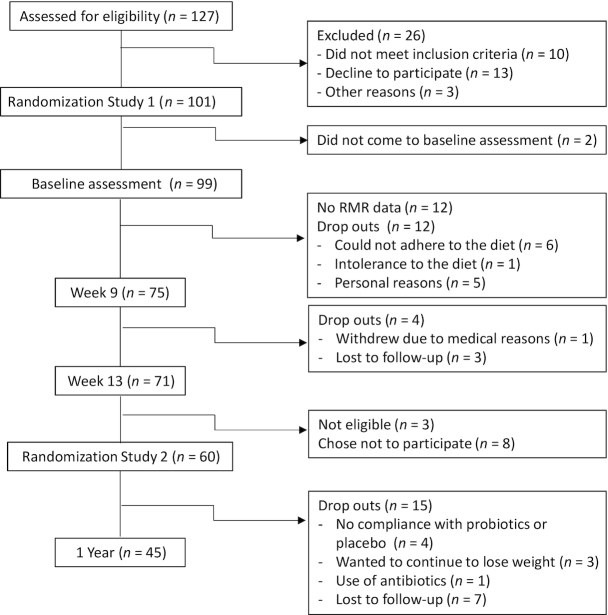
BACKGROUND: The existence of metabolic adaptation, following weight loss, remains a controversial issue. To our knowledge, no study has evaluated the role of energy balance (EB) in modulating metabolic adaptation. OBJECTIVES: The aim of this study was to determine if metabolic adaptation, at the level of resting metabolic rate (RMR), is modulated by participants' EB status. A secondary aim was to investigate if metabolic adaptation was associated with weight regain. METHODS: Seventy-one individuals with obesity (BMI: 34.6 ± 3.4 kg/m2; age: 45.4 ± 8.2 y; 33 men) enrolled in a 1000-kcal/d diet for 8 wk, followed by 4 wk of weight stabilization and a 9-mo weight loss maintenance program. Body weight/composition and RMR were measured at baseline, week 9 (W9), week 13 (W13), and 1 y (1Y). Metabolic adaptation was defined as a significantly different (lower or higher) measured compared with predicted RMR. RESULTS: Participants lost on average 14 kg by W9, followed by weight stabilization at W13, and regained 29% of their initial weight loss at 1Y. Metabolic adaptation was found at W9 (-92 ± 110 kcal/d, P < 0.001) and W13 (-38 ± 124 kcal/d, P = 0.011) but was not correlated with weight regain. A significant reduction in metabolic adaptation was seen between W9 and W13 (-53 ± 101 kcal/d, P < 0.001). In a subset of participants who gained weight between W9 and W13 (n = 33), no metabolic adaptation was seen at W13 (-26.8 ± 121.5 kcal/d, P = 0.214). In a subset of participants with data at all time points (n = 45), metabolic adaptation was present at W9 and W13 (-107 ± 102 kcal/d, P < 0.001 and -49 ± 128 kcal/d, P = 0.013) but not at 1Y (-7 ± 129, P = 0.701). CONCLUSION: After weight loss, metabolic adaptation at the level of RMR is dependent on the EB status of the participants, being reduced to half after a period of weight stabilization. Moreover, metabolic adaptation does not predict weight regain at 1Y follow-up. These trials were registered at clinicaltrials.gov as NCT02944253 and NCT03287726.
Overview
The claims and statistics of this paper haven’t been checked yet.
Free: it reads the open-access text and checks the first 5 claims that cite a source we can check. Create a free account to check every claim.
Integrity signals
Registry
Cites
Statistics
Figures
Verification
Claims the paper makes
The claims and statistics of this paper haven’t been checked yet.
Free: it reads the open-access text and checks the first 5 claims that cite a source we can check. Create a free account to check every claim.
Claims other papers make about this one
Each is checked against this paper’s own text: does it say what the citing paper says it does?
The cited source says what the claim attributes to it.
In the citing paper
“After 4 weeks of weight stabilization, the magnitude of this change decreased by half and was no longer detectable after 1 year [61].”
From Dietary and Behavioral Strategies for Weight Loss and Weight Loss Maintenance: A Narrative Review (2025) · cites this paper as [61]
The cited source says what the claim attributes to it.
In the citing paper
“AT is commonly cited as a 10%–15% reduction beyond predicted reductions in REE [194], but the current evidence shows that this may be a significant overestimation, especially in weight-stable conditions [195,196].”
From International Society of Sports Nutrition position stand: diets for body weight reduction (2026) · cites this paper as [196]
In the citing paper
“In one study, 9 weeks of weight loss resulted in a reduction in total energy expenditure of approximately 100 kcal/day.”
From Dietary and Behavioral Strategies for Weight Loss and Weight Loss Maintenance: A Narrative Review (2025) · cites this paper as [61]
Self-check
Percentages, sums and reported differences re-computed from the paper’s own numbers.
The self-check needs the paper’s full text.
Citations
Cites
Changes in Energy Expenditure Resulting from Altered Body Weight
Leibel, R. L., Rosenbaum, M., & Hirsch, J. (1995) · New England Journal of Medicine · doi:10.1056/nejm199503093321001 · Cited by 2,012 · cited 12×
“As such, in overweight premenopausal women who had lost 10–12 kg, no metabolic adaptation was found in NREE when measurements were done in controlled conditions of weight stability (31–34).”
BackgroundInfluentialCompher, C., Frankenfield, D., Keim, N., & Roth-Yousey, L. (2006) · Journal of the American Dietetic Association · doi:10.1016/j.jada.2006.02.009 · Cited by 923 · cited 1×
“RMR was measured by indirect calorimetry (Vmax Encore 29N; Care Fusion) using a canopy system and standard operating procedures (27).”
MethodPersistent metabolic adaptation 6 years after “The Biggest Loser” competition
Fothergill, E., Guo, J., Howard, L., Kerns, J. C., Knuth, N. D., Brychta, R., Chen, K. Y., Skarulis, M. C., Walter, M., Walter, P. J., et al. (2016) · Obesity · doi:10.1002/oby.21538 · Cited by 672
Nordic Nutrition Recommendations 2012
Nordic Council of Ministers, N. C. O. M. (2008) · Nordic Nutrition Recommendations 2012 · doi:10.6027/nord2014-002 · Cited by 629
Rosenbaum, M., Hirsch, J., Gallagher, D. A., & Leibel, R. L. (2008) · The American Journal of Clinical Nutrition · doi:10.1093/ajcn/88.4.906 · Cited by 444
Adaptive thermogenesis in humans
Rosenbaum, M., & Leibel, R. L. (2010) · International Journal of Obesity · doi:10.1038/ijo.2010.184 · Cited by 349
Variation in Total Body Water with Muscle Glycogen Changes in Man
Olsson, K., & Saltin, B. (1970) · Acta Physiologica Scandinavica · doi:10.1111/j.1748-1716.1970.tb04764.x · Cited by 264 · cited 1×
“It has been estimated that glycogen stores are on average 400–500 g (29, 30), with 3–4 g of water bound to each gram of glycogen (29).”
BackgroundMetabolic Slowing with Massive Weight Loss despite Preservation of Fat-Free Mass
Johannsen, D. L., Knuth, N. D., Huizenga, R., Rood, J. C., Ravussin, E., & Hall, K. D. (2012) · The Journal of Clinical Endocrinology & Metabolism · doi:10.1210/jc.2012-1444 · Cited by 254
Brennan, I. M., Feltrin, K. L., Nair, N. S., Hausken, T., Little, T. J., Gentilcore, D., Wishart, J. M., Jones, K. L., Horowitz, M., & Feinle-Bisset, C. (2009) · American Journal of Physiology-Gastrointestinal and Liver Physiology · doi:10.1152/ajpgi.00051.2009 · Cited by 226 · cited 1×
“Given that both the RMR and appetite of normally ovulating women have been shown to vary across the menstrual cycle (22, 23) but not in those who take oral contraception (24), we included in this study postmenopausal women and premenopausal women taking oral contraceptives or with a normal menstrual cycle (28 ± 2 d) (…”
MethodWeinsier, R. L., Nagy, T. R., Hunter, G. R., Darnell, B. E., Hensrud, D. D., & Weiss, H. L. (2000) · The American Journal of Clinical Nutrition · doi:10.1093/ajcn/72.5.1088 · Cited by 208
Self-citation
Research works printed but not linked: 1
- 20. Larson DE, Ferraro RT, Robertson DS, Ravussin E Energy metabolism in weight-stable postobese individuals. Am J Clin Nutr. 1995; 62(4): 735– 9. 7572701 10.1093/ajcn/62.4.735 · DOI
Cited by
Obesity-induced and weight-loss-induced physiological factors affecting weight regain
van Baak, M. A., & Mariman, E. C. M. (2023) · Nature Reviews Endocrinology · doi:10.1038/s41574-023-00887-4 · Cited by 121
“In individuals who have lost weight but are still in negative energy balance when the level of metabolic adaptation is measured, the metabolic adaptation will be more pronounced than in individuals who are in energy balance at the time of the measurement 39 .”
BackgroundInfluentialRuddick-Collins, L. C., Morgan, P. J., Fyfe, C., Filipe, J. A. N., Horgan, G. W., Westerterp, K. R., Johnston, J. D., & Johnstone, A. M. (2022) · Cell Metabolism · doi:10.1016/j.cmet.2022.08.001 · Cited by 101
“a reduction in RMR linked to reduced body mass and changes in body composition (Coutinho et al., 2018; Martins et al., 2020).”
BackgroundResting Energy Expenditure: From Cellular to Whole‐Body Level, a Mechanistic Historical Perspective
Heymsfield, S. B., Smith, B., Dahle, J. H., Kennedy, S., Fearnbach, N., Thomas, D. M., Bosy‐Westphal, A., & Müller, M. J. (2021) · Obesity · doi:10.1002/oby.23090 · Cited by 79
“There are many published versions of these statistical REE prediction models that also include age, sex, and other covariates (67,68).”
BackgroundTirzepatide did not impact metabolic adaptation in people with obesity, but increased fat oxidation
Ravussin, E., Sanchez-Delgado, G., Martin, C. K., Beyl, R. A., Greenway, F. L., O’Farrell, L. S., Roell, W. C., Qian, H.-R., Li, J., Nishiyama, H., et al. (2025) · Cell Metabolism · doi:10.1016/j.cmet.2025.03.011 · Cited by 72
The Impact of the Rate of Weight Loss on Body Composition and Metabolism
Fogarasi, A., Gonzalez, K. D., Dalamaga, Μ., & Magkos, F. (2022) · Current Obesity Reports · doi:10.1007/s13679-022-00470-4 · Cited by 47
Are metabolic adaptations to weight changes an artefact?
Müller, M. J., Heymsfield, S. B., & Bosy-Westphal, A. (2021) · The American Journal of Clinical Nutrition · doi:10.1093/ajcn/nqab184 · Cited by 41
Bays, H. E., Golden, A., & Tondt, J. (2022) · Obesity Pillars · doi:10.1016/j.obpill.2022.100034 · Cited by 34
“This effect may be mainly during periods of active negative energy balance, with post weight reduction resting metabolic rate potentially most dependent on the patient's energy balance [32].”
BackgroundRevisiting the Compensatory Theory as an explanatory model for relapse in obesity management
Martins, C., Dutton, G. R., Hunter, G. R., & Gower, B. A. (2020) · American Journal of Clinical Nutrition · doi:10.1093/ajcn/nqaa243 · Cited by 33
Self-citationMetabolic adaptation delays time to reach weight loss goals
Martins, C., Gower, B. A., & Hunter, G. R. (2022) · Obesity · doi:10.1002/oby.23333 · Cited by 32
“We have confirmed these findings in two recent studies (19,20) by showing that metabolic adaptation at the level of RMR, after weight loss, was not associated with weight regain up to 2 years of follow- up.”
BackgroundResultSelf-citationMetabolic Adaptations to Weight Loss: A Brief Review
Martínez-Gómez, M. G., & Roberts, B. M. (2022) · Journal of Strength & Conditioning Research · doi:10.1519/jsc.0000000000003991 · Cited by 32
Martins, C., Roekenes, J. A., Gower, B. A., & Hunter, G. R. (2021) · Nutrition & Metabolism · doi:10.1186/s12986-021-00587-8 · Cited by 33
“Despite the lack of association between metabolic adaptation and increased risk for weight regain (8, 9, 18), this phenomenon seems to be of clinical relevance in modulating weight loss in the short-term, in response to lifestyle interventions.”
BackgroundMethodSelf-citationOliveira, V., Kwitek, A. E., Sigmund, C. D., Morselli, L. L., & Grobe, J. L. (2021) · Hypertension · doi:10.1161/hypertensionaha.120.14513 · Cited by 31
Does Modern Lifestyle Favor Neuroimmunometabolic Changes? A Path to Obesity
Marques, C. G., Quaresma, M. V. L. D. S., Nakamoto, F. P., Magalhães, A. C. O., Lucin, G. A., & dos Santos, R. V. T. (2021) · Frontiers in Nutrition · doi:10.3389/fnut.2021.705545 · Cited by 31
“However, recent evidence suggests that metabolic adaptation is irrelevant, and it is possibly not associated with weight regain (38, 39).”
BackgroundWeight loss induces changes in adaptive thermogenesis in female and male physique athletes
Isola, V., Hulmi, J. J., Petäjä, P., Helms, E. R., Karppinen, J. E., & Ahtiainen, J. P. (2023) · Applied Physiology, Nutrition, and Metabolism · doi:10.1139/apnm-2022-0372 · Cited by 30
Siedler, M. R., De Souza, M. J., Albracht-Schulte, K., Sekiguchi, Y., & Tinsley, G. M. (2023) · Sports Medicine · doi:10.1007/s40279-023-01856-7 · Cited by 22
Magkos, F. (2022) · Nutrition Reviews · doi:10.1093/nutrit/nuac006 · Cited by 29
Adaptive thermogenesis after moderate weight loss: magnitude and methodological issues
Nunes, C. L., Jesus, F., Francisco, R., Matias, C. N., Heo, M., Heymsfield, S. B., Bosy-Westphal, A., Sardinha, L. B., Martins, P., Minderico, C. S., et al. (2022) · European Journal of Nutrition · doi:10.1007/s00394-021-02742-6 · Cited by 22
“(A) mREE was adjusted for FM and FFM by linear regression and AT was assessed as the difference between an adjusted REE at baseline and after 4 months (for this approach, pREE was not used) [31]; (B) AT was assessed simply by subtracting pREE (assessed through one of the four aforementioned equations) from mREE (indir…”
MethodThe Mystery of Energy Compensation
Halsey, L. G. (2021) · Physiological and Biochemical Zoology · doi:10.1086/716467 · Cited by 25
“…bymost, but not all (Mitchell et al. 2017), that BMR in humans decreases in response to a negative energy balance at the organismal level (see also Martins et al. 2020), evenwhen statistically accounting for changes in bodymass and condition (Leibel et al. 1995; Martin et al. 2007; Schwartz and…”
BackgroundAre we giving too much weight to lean mass loss?
Bolte, J., Smelter, A. A., & Norton, L. (2025) · Molecular Metabolism · doi:10.1016/j.molmet.2025.102253 · Cited by 22
“In summary, metabolic adaptation does occur during periods of caloric deficits; however, evidence suggests that this relative metabolic slowing resolves once a eucaloric state is reinstated and chronic weight maintenance is achieved [164].”
Managing weight and glycaemic targets in people with type 2 diabetes—How far have we come?
Blüher, M., Ceriello, A., Davies, M., Rodbard, H., Sattar, N., Schnell, O., Tonchevska, E., & Giorgino, F. (2022) · Endocrinology, Diabetes & Metabolism · doi:10.1002/edm2.330 · Cited by 20
“54,55 The body weight variability (BWV) after weight loss should also be addressed since it is associated with greater cardiovascular risk in people with T2D, as shown in post hoc analyses of clinical trials.”
Martins, C., Roekenes, J. A., Rehfeld, J. F., Hunter, G. R., & Gower, B. A. (2023) · American Journal of Clinical Nutrition · doi:10.1016/j.ajcnut.2023.10.010 · Cited by 22
Self-citationDietary and Behavioral Strategies for Weight Loss and Weight Loss Maintenance: A Narrative Review
Żurawski, T., & Bartosiewicz, A. (2025) · Nutrients · doi:10.3390/nu18010012 · Cited by 18
“After 4 weeks of weight stabilization, the magnitude of this change decreased by half and was no longer detectable after 1 year [61].”
Metabolic adaptation after combined resistance and aerobic exercise training in older women
Martins, C., Gower, B. A., & Hunter, G. R. (2022) · Obesity · doi:10.1002/oby.23450 · Cited by 18
“(8,9), or potentially a combination of both.”
BackgroundSelf-citationDynamic changes in energy expenditure in response to underfeeding: a review
Egan, A. M., & Collins, A. L. (2021) · Proceedings of The Nutrition Society · doi:10.1017/s0029665121003669 · Cited by 16
“(103,135) reported that one in three weight-reduced subjects exhibited greater-than-predicted declines in EE, only half of which experienced metabolic adaptation beyond 167.4 kJ/d (40 kcal/d) (145) .”
InfluentialTorres, S. Y. L., Aukan, M. I., Gower, B. A., & Martins, C. (2024) · Obesity · doi:10.1002/oby.24031 · Cited by 16
“Second, all participants were in negative EB, thereby validating comparisons among groups because the magnitude of AT has been shown to be modulated by the EB status of the participants [7, 39].”
BackgroundResultSelf-citationOn adaptive thermogenesis: just another weight-loss tale?
Magkos, F. (2020) · American Journal of Clinical Nutrition · doi:10.1093/ajcn/nqaa262 · Cited by 16
“found that metabolic adaptation after active weight loss or after weight stabilization did not predict weight regain at 1 y (9).”
BackgroundMethodInfluentialHalsey, L. G., Areta, J. L., & Koehler, K. (2023) · Philosophical Transactions of the Royal Society B · doi:10.1098/rstb.2022.0217 · Cited by 7
“(b) Evidence of metabolic adaptation in response to diet-induced weight loss Although there is an ongoing debate about the existence, magnitude and true implications of metabolic adaptations [19,20], there is evidence from human experiments that metabolic adaptations are indeed apparent in response to calorierestricte…”
BackgroundJouhki, I., Sarin, H. V., Jauhiainen, M., O’Connell, T. M., Isola, V., Ahtiainen, J. P., Hulmi, J. J., & Perola, M. (2024) · Scandinavian Journal of Medicine and Science in Sports · doi:10.1111/sms.14553 · Cited by 11
“37 Based on the present results, it seems that at least some of the changes are quickly reverted to baseline once EA is improved without restoring fat mass, including lipoprotein triglycerides, glucose, ketone bodies (3-hydroxybutyrate and acetone), amino acids, and creatinine.”
BackgroundMetabolic adaptation: is it really an illusion?
Ravussin, E., & Redman, L. M. (2020) · The American Journal of Clinical Nutrition · doi:10.1093/ajcn/nqaa308 · Cited by 11
“In a recent provocative study in 71 participants, Martins and colleagues (3) show that metabolic adaptation at the level of resting metabolic rate (RMR) is indeed present and quite variable (−92 ± 110 kcal/d) after 8 wk of energy restriction leading to significant weight loss (14 kg on average).”
BackgroundDahle, J. H., Ostendorf, D. M., Pan, Z., MacLean, P. S., Bessesen, D. H., Heymsfield, S. B., Melanson, E. L., & Catenacci, V. A. (2021) · Obesity · doi:10.1002/oby.23234 · Cited by 11
“Most studies have suggested that AT dissipates as weight loss stabilizes (8,10,11,12) and completely disappears during weight maintenance (13-15), although long-term persistence has been re-ported in some populations (9,16,17).”
BackgroundNguyen, A. T., Amigo, Z., McDuffie, K., MacQueen, V. C., Bell, L. D., Truong, L. K., Batchi, G., & McMillin, S. M. (2024) · Endocrinology Diabetes & Metabolism · doi:10.1002/edm2.475 · Cited by 10
“It is well documented that decreases in resting energy expenditure occur upon diet-induced weight loss in humans [28], and these shifts in metabolic rate are likely spurred by a negative energy balance [29, 30].”
BackgroundDanielak, A., & Magierowski, M. (2025) · Pharmacological Research · doi:10.1016/j.phrs.2025.107741 · Cited by 9
Martins, C., Bryan, D. R., Sweatt, S. K., Garvey, W. T., Fontaine, K. R., Dutton, G. R., & Gower, B. A. (2025) · Obesity · doi:10.1002/oby.24201 · Cited by 8
“This is important, as EB has been shown to modulate the reduction in EE observed with weight loss [41].”
InfluentialSelf-citationDavis, A. E., Smyers, M. E., Beltz, L. A., Mehta, D. M., Britton, S. L., Koch, L. G., & Novak, C. M. (2021) · Experimental Physiology · doi:10.1113/ep089434 · Cited by 8
“This is because reducedweight and negative energy balance stemming from food restriction suppress metabolic rate and physical activity (Martins et al., 2020; Redman et al., 2009; Yamada et al., 2013).”
BackgroundNunes, C. L., Jesus, F., Francisco, R., Hopkins, M., Sardinha, L. B., Martins, P., Minderico, C. S., & Silva, A. M. (2022) · European Journal of Nutrition · doi:10.1007/s00394-022-02951-7 · Cited by 9
“However, the findings are not consistent, as some studies suggest that AT exists and works as a barrier to WL and its maintenance [38], while others indicate that AT is not a predictor of weight regain [17, 39].”
BackgroundAssociation between ketosis and metabolic adaptation at the level of resting metabolic rate
Martins, C., Roekenes, J. A., Hunter, G. R., & Gower, B. A. (2021) · Clinical Nutrition · doi:10.1016/j.clnu.2021.06.029 · Cited by 7
Self-citationArcher, E., & Hill, J. O. (2022) · Progress in Cardiovascular Diseases · doi:10.1016/j.pcad.2022.10.003 · Cited by 6
The Role of Cheat Meals in Dieting: A Scoping Review of Physiological and Psychological Responses
Tsang, J. H., Poon, E. T., Trexler, E. T., Wong, S. H., Zheng, C., & Sun, F. (2025) · Nutrition Reviews · doi:10.1093/nutrit/nuaf077 · Cited by 5
“Our group previously demonstrated in a systematic review and meta-analysis of 7 studies that incorporating intermittent breaks during dieting can potentially mitigate the compensatory reduction in RMR. 13 In our current review, only 2 studies compared the incorporation of ad libitum feeding episodes with CER and that…”
InfluentialAdaptive thermogenesis during energy deficits: a different explanation
Westerterp, K. R. (2022) · European Journal of Clinical Nutrition · doi:10.1038/s41430-022-01107-4 · Cited by 5
Lawton, S. B. R., Wagner, V. A., Nakagawa, P., Segar, J. L., Sigmund, C. D., Morselli, L. L., & Grobe, J. L. (2024) · Hypertension · doi:10.1161/hypertensionaha.124.20524 · Cited by 5
Is weight cycling clinically harmful?
Magkos, F., & Stefan, N. (2026) · The Lancet Diabetes & Endocrinology · doi:10.1016/s2213-8587(26)00037-9 · Cited by 4
Weight History Correlates of Resting Energy Expenditure in Women With Bulimia Nervosa
Singh, S., Mayer, L., Rosenbaum, M., & Lowe, M. R. (2024) · International Journal of Eating Disorders · doi:10.1002/eat.24250 · Cited by 4
Istfan, N. W. (2025) · American Journal of Physiology-Endocrinology and Metabolism · doi:10.1152/ajpendo.00487.2024 · Cited by 4
Rocha, G., Donoso, I. A. P., & Canales, A. (2022) · Revista médica de Chile · doi:10.4067/s0034-98872022000500575 · Cited by 3
“Although these compensatory mechanisms have been related to the reduction of FM, FFM during weight loss 18,19 , there is still controversy regarding the actual existence of metabolic adaptation and its possible effects on weight loss and body composition 21-23 .”
BackgroundReply to E Ravussin and L Redman
Martins, C., Roekenes, J. A., Salamati, S., Gower, B. A., & Hunter, G. R. (2020) · American Journal of Clinical Nutrition · doi:10.1093/ajcn/nqaa309 · Cited by 3
Self-citationDo we really know what drives relapse in obesity management?
Martins, C. (2021) · European Journal of Internal Medicine · doi:10.1016/j.ejim.2021.06.030 · Cited by 3
Self-citationThe Modern Concepts of Energy Balance and Energy Availability in Sports
Андреевна, Б. Е., & Lyudinina, A. Y. (2024) · Human Physiology · doi:10.1134/s0362119724701111 · Cited by 2
“In the context of prolonged energy restriction, AT can lead to a general decrease in REE by 5–10% of the initial values [49]; in response to a sharp loss of BM, the decrease in REE can reach 40– 50% [50, 51].”
Metabolic adaptation: Confounding the critics
Krakoff, J. A., & Chang, D. C. (2022) · Obesity · doi:10.1002/oby.23362 · Cited by 1
Campos, G. G. G., & Santos, A. C. D. C. P. (2025) · Research Society and Development · doi:10.33448/rsd-v14i6.49018 · Cited by 1
Tang, M., Wang, J., Xiang, Y., & Xu, R. (2025) · Frontiers in Nutrition · doi:10.3389/fnut.2025.1543263 · Cited by 1
“To date, the nature of MA remains unclear, with some studies underscore the importance (3–7) while others not (8, 9), establishing its existence facilitates different strategies and nutritional interventions, thus preventing body weight regain.”
Yu, R., Li, A., Qi, Y., Hu, J., Peng, F., Cao, S., Rong, S., & Zhang, H. (2026) · Metabolites · doi:10.3390/metabo16020106 · Cited by 1
“This approach may help mitigate metabolic compensation associated with binge eating or excessive dietary restriction [88,89], thereby attenuating adverse metabolic consequences of energy imbalance.”
Xie, J., Yang, Y., Chen, W., (45927), L. W., Weng, S., Lyu, Q., & Cao, G. (2026) · Current Obesity Reports · doi:10.1007/s13679-026-00722-7 · Cited by 1
“Caloric restriction, as a traditional weight loss strategy, often fails to overcome metabolic adaptation, defined as the compensatory decline in metabolic rate that occurs in response to an energy deficit during weight loss, which in turn promotes weight regain [3, 4].”
Julié, S., Lambert, C., Masurier, J., Marcantei, C., Tarrit, B., Julian, V., Dutheil, F., de Saint-Vincent, S., Pereira, B., Duclos, M., et al. (2026) · Clinical Nutrition ESPEN · doi:10.1016/j.clnesp.2026.103463 · Cited by 1
International Society of Sports Nutrition position stand: diets for body weight reduction
Aragon, A. A., Campbell, B. I., Schoenfeld, B. J., Stout, J. R., Kalman, D., Arciero, P. J., Arent, S. M., Kreider, R. B., Taylor, L. W., Bannock, L., et al. (2026) · Journal of the International Society of Sports Nutrition · doi:10.1080/15502783.2026.2740266
“AT is commonly cited as a 10%–15% reduction beyond predicted reductions in REE [194], but the current evidence shows that this may be a significant overestimation, especially in weight-stable conditions [195,196].”
Martins, N. (2020) · White Rose eTheses Online (University of Leeds, The University of Sheffield, University of York)
Dugdale, P., Rieger, E., & Dyball, R. (2023) · Oxford University Press eBooks · doi:10.1093/oso/9780197567579.003.0010
The Modern Concepts of Energy Balance and Energy Availability in Sports
Андреевна, Б. Е., & Lyudinina, A. Y. (2024) · Human Physiology · doi:10.31857/s0131164624060101
Martins, C., Gower, B. A., & Hunter, G. R. (2025) · Obesity Science & Practice · doi:10.1002/osp4.70054
“participants when measurements of body composition and EE are taken [3, 4], as well as lack of adjustment for changes in the composition of fat‐free mass (FFM) [7].”
Self-citationMoize, V. L., Piaggi, P., Martínez-Saludes, I., Torres, F., Viaplana, J., Jiménez, A., de Hollanda, A., Ibarzábal, A., & Vidal, J. (2026) · Obesity Surgery · doi:10.1007/s11695-026-08561-0
Pfotenhauer, K. M. (2026) · The Conversation · doi:10.64628/aai.qkpu6qk7y
Como o corpo perde peso? Especialista em obesidade explica que não existe uma fórmula única
Pfotenhauer, K. M. (2026) · The Conversation · doi:10.64628/ade.exq7e7977
Lastovka, N., Stanfar, K., Ghajar, M., Bailey, A., Byham-Gray, L. D., & Radler, D. R. (2026) · Nutrition Reviews · doi:10.1093/nutrit/nuag093
Song, J., & Liu, H. (2026) · Clinical Nutrition ESPEN · doi:10.1016/j.clnesp.2026.104991
Farsi, F., Sarvi, D. G., Abbasi, M., & Hasani‐Ranjbar, S. (2026) · International Journal of Endocrinology · doi:10.1155/ije/5558442
“Glycosuria following SGLT2 inhibitor use may cause similar metabolic changes, while the precise molecular pathways are still unknown [59].”
InfluentialChninou, Y., Edholm, J., Engvall, J., Wahlqvist, S., Schien, C., Winkvist, A., & Otten, J. (2026) · JMIR Diabetes · doi:10.2196/93074
“Consistent with this interpretation, Martins et al [20] showed that the apparent metabolic adaptation observed immediately after weight loss was substantially attenuated after weight stabilization, suggesting that part of the reduction in REE reflects ongoing negative energy balance rather than a…”
On the interpretation of diet-specific metabolic effects following weight loss
Magkos, F. (2026) · Cell Metabolism · doi:10.1016/j.cmet.2026.09.010
Metadata
- Authors
- Martins, C., Roekenes, J., Salamati, S., Gower, B. A., & Hunter, G. R.
- Affiliations
- Norwegian University of Science and Technology (NO)
- St Olav's University Hospital (NO)
- University of Alabama at Birmingham (US)
- Venue
- The American Journal of Clinical Nutrition
- Publisher
- Elsevier BV
- Published
- 2020-11
- Volume
- 112
- Issue
- 5
- Pages
- 1212-1218
- ISSN
- 0002-9165 (ISSN-L)
- PMC
- PMC7657334
- OpenAlex
- W3081489550
- Cited by
- 65
- References
- 42
- Citations by year
- 2026: 13 · 2025: 9 · 2024: 6 · 2023: 7 · 2022: 12 · 2021: 13 · 2020: 5
- FWCI
- 4.74
- Type
- journal article
- Language
- en
- Open access
- hybrid
- doi.org
- Licence
- cc-by-nc
- www.elsevier.com/tdm/userlicense/1.0/ (tdm)
- creativecommons.org/licenses/by-nc/4.0/ (vor)
- Locations
- American Journal of Clinical Nutrition (publishedVersion, cc-by-nc)
- PubMed Central (publishedVersion, cc-by-nc)
- PubMed (publishedVersion)
- NORA - Norwegian Open Research Archives (submittedVersion, cc-by-nc)
- Funders
- Norwegian University of Science and Technology
- Liaison Committee for Education, Research, and Innovation in Central Norway
- Topics
- Life Sciences › Neuroscience › Endocrine and Autonomic Systems › Regulation of Appetite and Obesity
- Health Sciences › Medicine › Public Health, Environmental and Occupational Health › Obesity, Physical Activity, Diet
- Health Sciences › Medicine › Surgery › Bariatric Surgery and Outcomes
- Keywords
- metabolic adaptation, resting metabolic rate, energy balance, negative energy balance, weight loss, weight regain, obesity, weight loss maintenance, caloric restriction, weight stabilization, metabolic rate prediction, body composition, fat-free mass
- MeSH terms
- Adaptation, Physiological, Adult, Energy Metabolism, Female, Humans, Male, Middle Aged, Obesity, Weight Loss, Probiotics
About these checks
Registry, retraction, Cites and statistics results are computed, not judged, with one exception: a printed reference that no index lists is read once by a model before it counts as a citation error. Claims are extracted by a model and kept only when their quote appears verbatim in the text; each cited source is then checked, with a model’s help, for whether it says what the claim relies on. Those verdicts can be wrong — read the claim’s quote and the cited source before relying on one.
Statistics and arithmetic are recomputed, not judged.
Confidence bands are shown only for fields calibrated on our annotated test set. None is calibrated yet, so no band is shown.
What counts as a claim ›How we measure confidence ›How we check this ›
Are you an author, or do you see a problem with this page? Request a review
Data sources
Bibliographic data: Semantic Scholar, OpenAlex, Crossref.
Contains information from the Semantic Scholar Academic Graph Datasets, made available under the ODC Attribution License (ODC-BY 1.0).
Semantic Scholar’s data is described in: Kinney, R., et al. (2023). The Semantic Scholar Open Data Platform. arXiv:2301.10140.
